Category: Health

Essence of wisdom, page one.

By three methods we may learn wisdom: First, by reflection, which is noblest; Second, by imitation, which is easiest; and third by experience, which is the bitterest.

Thus spoke Confucius, albeit not in the English language!  But, nonetheless, those words from so, so long ago (he lived to the age of 73 – from 551 until 479 BCE) resonate very strongly 2,500 years later.

That was the easy bit!

I’m not entirely clear as to why a variety of items that have crossed my ‘in-box’ in recent days seem to offer some sort of cohesive sense.  But they do to me and I’m going to draw them together. I will leave you to be the judge as to how well it worked!

Thus over the next three days I am going to reflect on three topics.  The challenge of how we humans make sense of the world, how we confuse what we do with what is best for us, surely the essence of wisdom, and the growing gap between the wisdom of millions of citizens and their leaders.

I should quickly add that much of my musings are due to this scribe standing on the shoulders of giants than seeing clearly from his own level.

Today, I shall start with the brain. Your brain, my brain, the brains of humans.  The reason this trilogy starts with the brain is that, ultimately, everything we humans think, feel and do comes from this brain of ours.  Our brain is who we are.

Let me offer you this video made by Bristol University in England.  Just a little over 6 minutes long it sets out the functional story of our brain.

(An animated tour around the human brain commissioned for Brain Awareness Week in 2010)

But there is so much more to this ancient body organ.

The Big Think website has been publishing a series called The 21st Century Brain. The latest episode published on November 6th was called Consciousness: The Black Hole of Neuroscience.  It starts thus:

What’s the Big Idea?

“By the word ‘thought’ (‘pensée’) I understand all that of which we are conscious as operating in us.” –Renee Descartes

The simplest description of a black hole is a region of space-time from which no light is reflected and nothing escapes. The simplest description of consciousness is a mind that absorbs many things and attends to a few of them. Neither of these concepts can be captured quantitatively. Together they suggest the appealing possibility that endlessness surrounds us and infinity is within.

But our inability to grasp the immaterial means we’re stuck making inferences, free-associating, if we want any insight into the unknown. Which is why we talk obscurely and metaphorically about “pinning down” perception and “hunting for dark matter” (possibly a sort of primordial black hole). The existence of black holes was first hypothesized a decade after Einstein laid the theoretical groundwork for them in the theory of relativity, and the phrase “black hole” was not coined until 1968.

Likewise, consciousness is still such an elusive concept that, in spite of the recent invention of functional imaging – which has allowed scientists to visualize the different areas of the brain – we may not understand it any better now than we ever have before. “We approach [consciousness] now perhaps differently than we have in the past with our new tools,” says neuroscientist Joy Hirsch.

Later on is this:

So there’s no reason to assume that consciousness is eternally inexplicable. However, it may never be explained through neurobiology, says David Chalmers, the philosopher who originally made the distinction. “In so many other fields physical explanation has been successful… but there seems to be this big gap in the case of consciousness,” he says. “It’s just very hard to see how [neurological] interactions are going to give you subjective experience.”

The fascinating essay concludes:

It’s no different than any other aspect of the brain that we cannot presently explain, she [Hirsch] says:

For example, we don’t understand how the brain creates colors. That’s a perception that is very private – I don’t know that your perception of blue is like my perception of blue, for example. Smells are another one. I don’t know that your perception of the smell of an orange is like mine. These are the hard problems of neuroscience and philosophy that we haven’t made a great deal of progress on.

What do you think? Is the distinction between “hard problems” and “soft problems” useful, or reductive? Does the brain create consciousness? Will we ever empirically understand where it comes from or how it works?

But it was one of the comments to the piece that jumped off the screen at me. From Beatriz Valdes and slightly edited by me, the comment offered:

Human consciousness happens in the human brain.  The human brain’s functions are rooted in what the human senses relay to it.  Self consciousness, consciousness of what is around us, is the result of thinking.  There would be no thoughts if the brain were a tabula rasa (Latin for blank slate), had no input from the senses. Therefore, consciousness is quite local, quite mortal, quite dependent on the gray matter inside our skulls.

Local and mortal.  Very profound (I think!).

So, if you like me suffer from time to time from understanding oneself, don’t worry.  There are plenty of others – aren’t there?  As Professor Dan Dennett makes it all clear below.

Philosopher Dan Dennett makes a compelling argument that not only don’t we understand our own consciousness, but that half the time our brains are actively fooling us.

Philosopher and scientist Dan Dennett argues that human consciousness and free will are the result of physical processes and are not what we traditionally think they are. His 2003 book Freedom Evolves explores the way our brains have evolved to give us — and only us — the kind of freedom that matters.

Good, glad that’s all clear. 😉

Stay with me for ‘page two’ of Essence of wisdom coming out tomorrow.

Will the New Year be a profound ‘wake-up’ call?

2013 may be the year that ends any uncertainty about what we are doing to our planet.

Introduction

Regular readers of Learning from Dogs will be familiar with the occasional posts that are presented here, courtesy of Tom Engelhardt of Tom Dispatch.  I am so grateful to Tom’s blanket permission to republish essays from a Tom Dispatch author.  So it is that today sees the republishing of a recent essay on Tom Dispatch by Rebecca Solnit.  It articulates beautifully what 2013 might represent.  So without further ado, here’s Rebecca’s essay prefaced by Tom’s introduction.

oooOOOooo

Tomgram: Rebecca Solnit, 2013 as Year Zero for Us — and Our Planet

[Note for TomDispatch Readers:  It’s that time again.  Another year-ending moment for this website, which began as a no-name listserv in October 2001 and went online as TomDispatch in December 2002, thanks to Ham Fish of the Nation Institute.  It’s been plugging away ever since as a “regular antidote to the mainstream media,” doing its best to connect the unconnected dots in our world.  (Click here to check out a little piece I wrote for the Moyers & Company website this week about what I call “isolation journalism” in the mainstream media where connections are seldom made.) 

With today’s post, we’re closing down for 2012, but expect us back on January 3rd renewed and ready for a new year full of surprises.  In the meantime, profuse thanks are due to the stalwart crew who keep TD going: Managing Editor Nick Turse, who will continue to follow the U.S. military as it garrisons the planet in 2013 and will have a remarkable new book on the Vietnam War published as well; Associate Editor Andy Kroll, who will again be on the economic beat for us; Dimitri Siavelis and Joe Duax, who keep the site miraculously shipshape and ready to roll; Christopher Holmes, proofer-extraordinaire who holds error eternally at bay (or at least to a surprising minimum) in our dispatches; and Erika Eichelberger, our maestro of social media, who has brought TD Facebook page and Twitter feed alive this year.  (Check us out there if you haven’t yet!)  Special thanks are due as well to Andy Breslau, Taya Kitman, and the rest of the staff of the Nation Institute, who continue to stick with us through thick and thin, and finally to Lannan Foundation, which may be last in this list but is certainly first in what it’s done for TomDispatch.  Surrounded by such a crowd, life couldn’t be better. 

Finally, of course, my deepest thanks to TomDispatch readers all over this country and around the world, whose readership and support make all the difference. Your emails to this site offer tips, catch errors, offer criticism, and reveal unknown worlds to me.  They are always read (even when, hard as I try, I’m too busy to answer).  What more could I ask? Have a good holiday. See you all in 2013! Tom]

In weather terms, 2012 in New York City began for me with crocuses.  On an early February day in a week in which the temperature hit 60 degrees, I spotted their green shoots pushing up through the bare ground of a local park on a morning walk — just as if it were spring.  The year was ending last weekend as I wandered with a friend past a communal garden in the same park and noticed that, in a December week in which the temperatures were in the mid-50s, the last few roses were still in bloom.

In between, in that park on a dark night in late October I watched a white-capped Hudson River roiling like some enraged beast, preparing for a storm surge that would flood lower Manhattan, plunging it into darkness and so turning it into “little North Korea,” briefly making true islanders out of New Yorkers and flooding out whole communities.  That, of course, was Hurricane Sandy, the Frankenstorm surprise of New York’s year (though anything but a worst case scenario).  And then, there was the American 2012 in which heat eternally set records and we experienced something close to an “endless summer.”

If climate change had a personality in this year of so many grim records — wildfiresdroughtheatcarbon dioxide emissions — it would definitely be saying: “I’m not the thing your grandchildren will have to deal with, I’m yours!”

In such a new world of upheaval, tradition matters.  And there is one inviolable tradition at TomDispatch: Rebecca Solnit has the last word — as she has for years, peering into the future, sizing up the past, weighing alternatives to what is, and last year considering a season of being Occupied.  Now, for the first time in a long while, weather and climate change are a growing American preoccupation.  Of course, climate change is an area long occupied by the giant energy companies whose compassion extends no further than their bottom lines (which, like the heat, continue to set historical records).  Solnit in her year-ending, TomDispatch-closing piece suggests that it’s time for us to occupy the topic ourselves, and do our best to ensure that this planet, 2013 and beyond, remains a habitable place for us, our children, and our grandchildren.  There could be no more powerful New Year’s wish. Tom

The Sky’s the Limit 
The Demanding Gifts of 2012
By Rebecca Solnit

As this wild year comes to an end, we return to the season of gifts. Here’s the gift you’re not going to get soon: any conventional version of Paradise. You know, the place where nothing much happens and nothing is demanded of you. The gifts you’ve already been given in 2012 include a struggle over the fate of the Earth. This is probably not exactly what you asked for, and I wish it were otherwise — but to do good work, to be necessary, to have something to give: these are the true gifts. And at least there’s still a struggle ahead of us, not just doom and despair.

Think of 2013 as the Year Zero in the battle over climate change, one in which we are going to have to win big, or lose bigger.  This is a terrible thing to say, but not as terrible as the reality that you can see in footage of glaciers vanishing, images of the entire surface of the Greenland Ice Shield melting this summer, maps of Europe’s future in which just being in southern Europe when the heat hits will be catastrophic, let alone in more equatorial realms.

For millions of years, this world has been a great gift to nearly everything living on it, a planet whose atmosphere, temperature, air, water, seasons, and weather were precisely calibrated to allow us — the big us, including forests and oceans, species large and small — to flourish. (Or rather, it was we who were calibrated to its generous, even bounteous, terms.) And that gift is now being destroyed for the benefit of a few members of a single species.

The Earth we evolved to inhabit is turning into something more turbulent and unreliable at a pace too fast for most living things to adapt to. This means we are losing crucial aspects of our most irreplaceable, sublime gift, and some of us are suffering the loss now — from sea snails whose shells are dissolving in acidified oceans to Hurricane Sandy survivors facing black mold and bad bureaucracy to horses starving nationwide because a devastating drought has pushed the cost of hay so high to Bolivian farmers failing because the glaciers that watered their valleys have largely melted.

This is not just an issue for environmentalists who love rare species and remote places: if you care about childrenhealthpovertyfarmersfoodhunger, or the economy, you really have no choice but to care about climate change.

The reasons for acting may be somber, but the fight is a gift and an honor. What it will give you in return is meaning, purpose, hope, your best self, some really good company, and the satisfaction of being part of victories also to come.  But what victory means needs to be imagined on a whole new scale as the news worsens.

Unwrapping the Victories

“Unhappy is the land that needs a hero,” Galileo famously says in Bertold Brecht’s play about that renegade scientist, but at least, the hero has the possibility of doing something about that unhappiness, as, for instance, the Sierra Club has. It’s led the fight against big coal, helping prevent 168 coal-powered plants from opening and retiring 125 dirty coal plants.  The aim of its Beyond Coal campaign is to retire all 522 such plants in the United States, which would be a colossal triumph.

Its’ victories also capture what a lot of our greenest gifts look like: nothing. The regions that weren’t fracked, the coal plants that didn’t open, the mountaintops that weren’t blasted by mining corporations, the children who didn’t get asthma or mercury poisoning from coal emissions, the carbon that stayed in the Earth and never made it into the atmosphere.  The Keystone XL tar sands pipeline bringing the dirtiest of dirty energy from Canada to the Gulf Coast might have already opened without the activists who ringed the White House and committed themselves across the continent.

In eastern Texas, for instance, extraordinary acts of civil disobedience have been going on continuously since August, including three blockaders who this month crawled inside a length of the three-foot-in-diameter pipeline and refused to leave. People have been using their bodies, getting in the way of heavy equipment, and going to jail in an effort to prevent the pipeline from being built. A lot of them are the same kind of robust young people who kept the Occupy encampments going earlier in 2012, but great-grandmothers, old men, and middle-aged people like me have been crucial players, too.

Meanwhile in British Columbia, where pipeline profiteers were looking into alternate routes to transport their climate-destroying products abroad, members of the Wet’suwet’en nation evicted surveyors and politely declared war on them. In Ohio and New York, the fight against fracking is going strong. Across the Atlantic, France has banned fracking, while Germany has made astounding progress toward using carbon-neutral energy sources. If solar works there, we have no excuse. And as Ellen Cantarow wrote at TomDispatch of the anti-fracking movement in New York State, “Caroline, a small hamlet in Tompkins County (population 3,282), is the second town in the state to get 100% of its electricity through wind power and one of the most recent to pass a fracking ban.”

Everywhere people are at work to build a better world in which we — and some of the beauty of this world — will be guaranteed to survive. Everywhere they are at war with the forces threatening us and the planet. I usually avoid war metaphors, but this time it’s barely a metaphor. Our side isn’t violent, but it is engaged in a battle, and people are putting their bodies on the line and their lives behind the cause. The other side is intent on maximizing its profit at the cost of nearly everything.

My father, a high-school student during the Second World War, followed the campaigns closely with pins on a wall map to represent troops and battles. You could map North America that way now and see, when you added up the struggles against drilling in the Arctic, fracking, mountaintop removal, and the various other depredations of big coal and big oil, that remarkable things are already being done. In this war, resistance has been going on for a long time, so overlooked by the mainstream media it might as well be as underground as the French Resistance back then.

A lot of it is on a small scale, but if you connect the pieces you get a big picture of the possible, the hopeful, and the powerful. Think of each of those small acts of defending the Earth as a gift to you. And think of your own power, a gift always latent within you that demands you give back.

If you’re reading this, you’re already in the conversation. No matter who you are, or where, there is something for you to do: educate yourself and others, write letters, organize or join local groups, participate in blockades and demonstrations, work on divestment from oil corporations (if you’re connected to a university), and make this issue central to the conversations and politics of our time.

I’ve started working directly on various projects with 350.org, whose global impact and reinvention of activist tactics I’ve long admired.  Its creator Bill McKibben has evolved from a merely great writer to a pivotal climate organizer and a gift to all of us.

The world you live in is not a given; much of what is best in it has been built through the struggles of passionate activists over the last centuries.  They won us many freedoms and protected many beauties. Count those gifts among your growing heap.

Drawing the Line

Here’s another gift you’ve already received: the lines in the battle to come are being ever more clearly drawn. Clarity is a huge asset. It helps when you know where you stand, who stands with you — and who against you.

We have returned to class war in conflicts around the world — including the Chicago Teacher’s Strike of 2012 and the Walmart protests in this country (which led to 1,197 actions nationwide in support of that company’s underpaid workers on Black Friday), as well as the great student uprisings in Quebec and Mexico City.

There has, of course, been a war against working people and the poor for decades, only we didn’t call it “class war” when just the rich were fighting hard. We called it corporate globalization, the race to the bottom, tax cuts and social-service cuts, privatization, neoliberalism, and a hundred other things.  Now that the poor are fighting back, we can call it by its old name. Perhaps what the conservatives have forgotten is that if you return us to the grim divides and dire poverty of the nineteenth century, you might also be returning us to the revolutionary spirit of that century.

This time, though, it’s not only about work and money.  The twenty-first century class war is engulfing the natural world on which everything rests. We can see how clearly the great environmental battle of our time is about money, about who benefits from climate destruction (the very few) and who loses (everyone else for all time to come and nearly every living thing). This year, Hurricane Sandy and a crop-destroying, Mississippi-River-withering drought that had more than 60% of the nation in its grip made it clear that climate change is here and it’s now and it hurts.

In 2012, many have come to see that climate change is an economic issue, and that economics is a moral and ecological issue.  Why so little has been done about the state of the climate in the past three decades has everything to do with who profits. Not long ago, too many Americans were on the fence, swayed by the oil company propaganda war about whether climate change even exists.

However, this month, according to the Associated Press, “Four out of every five Americans said climate change will be a serious problem for the United States if nothing is done about it.” That widespread belief suggests that potentially broad support now exists and may be growing for a movement that makes climate change — the broiling of the Earth — central, urgent, and everybody’s business.

Ten years ago too, many people thought the issue could be addressed, if at all, through renunciatory personal virtue in private life: buying Priuses, compact fluorescents, and the like. Now most people who care at all know that the necessary changes won’t happen through consumer choice alone.  What’s required are pitched battles against the most powerful (and profitable) entities on Earth, the oil and energy companies and the politicians who serve them instead of us.

That clarity matters and those conflicts are already underway but need to grow.  That’s our world right now, clear as a cold winter day, sharp as broken glass.

Putting Aside Paradise

When I remember the world I grew up in, I see the parts of it that were Paradise — and I also see all the little hells. I was a kid in California when it had the best public education system in the world and universities were nearly free and the economy was not so hard on people and the rich paid a lot of taxes. The weather was predictable and we weren’t thinking about it changing any time before the next ice age.

That was, however, the same California where domestic violence was not something the law took an interest in, where gays and lesbians were openly discriminated against, where almost all elected officials were white men, where people hadn’t even learned to ask questions about exclusion and racism.

Which is to say, paradises are always partial and, when you look backward, it’s worth trying to see the whole picture. The rights gained over the past 35 years were fought for, hard, while so much of what was neglected — including public education, tuition, wages, banking regulation, corporate power, and working hours — slid into hell.

When you fight, you sometimes win; when you don’t, you always lose.

Here’s another gift we have right now: the young. There are quite a lot of heroes among them, including the Dreamers or Dream Act activists standing up for immigrants; the occupiers who challenged Wall Street in its home and elsewhere around the country, became the unofficial first responders who aided the victims of Hurricane Sandy, and have camped out on the doorstep of Goldman Sachs’s CEO these last few months; the young who blockaded that tar-sands pipeline, supplied the tremendous vitality of 350.org globally, and have just begun to organize to pressure universities to divest from fossil fuel companies on 192 campuses across the country.

In 2012, they rose up from Egypt and Russia to Canada and Chile. They are fighting for themselves and their future, but for us, too. They have remarkably few delusions about how little our world is prepared to offer most of them. They know that the only gifts they’ll get are the ones they can wrestle free from the powers that be.

Paradise is overrated. We dream of the cessation of misery, but who really wants a world without difficulty? We learn through mistakes and suffering. These are the minerals that harden our bones and the milestones on the roads we travel. And we are made to travel, not to sit still.

Take pleasure in the route. There is terrible suffering of many kinds in many places, but solidarity consists of doing something about it, not being miserable. In this heroic age, survival is also going to require seeing what fragments of paradise are still around us, what still blooms, what’s still unimaginably beautiful about rivers, oceans, and evening skies, what exhilaration there is in witnessing the stubbornness of small children and their discovery of a world we think we know. All these are gifts as well.

Ice Breaking Up

As you gear up for 2013, don’t forget that 2012 has been an extraordinary year. Who ever thought we’d see Aung San Suu Kyi elected to office in her native Burma and free to travel after so many years of house arrest? Who expected that the United Nations would suddenly vote to give Palestine observer state status? Who foresaw that the silly misinterpretations of Mayan prophesy would be overtaken by the Mayan Zapatistas, who rose once again last Friday? (Meanwhile, Canada’s Native people started a dynamic movement around indigenous rights and the environment that has led to everything from flash-mob dances in an Edmonton Mall to demonstrations in Ottawa.)

Who thought that Occupy Wall Street, roundly dismissed by the mainstream on its one-year anniversary, would spawn two superhero projects, Occupy Sandy and Strike Debt? (Who among the police officers clubbing and tear-gassing the young Occupiers in 2011 thought that a year later these would be the people with the power and the generosity to come to their aid when a climate-fed storm wrecked their homes?) Keep it in mind: the future is not predictable.  Sometimes, the world changes suddenly and in profound ways. Sometimes we make it do so.

Steven Spielberg’s new film Lincoln is a reminder about what it means to fight for what matters most. Permanently freeing five million slaves and abolishing slavery forever meant renouncing a cheap power source in use for more than 200 years. Doing so was initially inconceivable and then a matter of indifference except to the slaves themselves and small groups of abolitionists.  Next, it was daringly radical, then partisan, with the whole nation taking sides, the fuel for a terrible war.  Finally, it was the law of the land. Today, we need to give up on, or at least radically reduce our reliance on, another set of power sources: oil, coal, and natural gas.

This is, among other things, a war of the imagination: the carbon profiteers and their politicians are hoping you don’t connect the dots, or imagine the various futures we could make or they could destroy, or grasp the remarkably beautiful and complex ways the natural world has worked to our benefit and is now being sabotaged, or discover your conscience and voice, or ever picture how different it could all be, how different it will need to be.

They are already at war against the wellbeing of our Earth. Their greed has no limits, their imagination nothing but limits. Fight back. You have the power. It’s one of your gifts.

Rebecca Solnit has seen salmon migrate and polar bears nap, and she’s seen blockaders defend foreclosed homes and shut down oil refineries: all of it was beautiful. She is the author of A Paradise Built in Hell, among many other works. She has been writing TomDispatch’s year-end essays since 2004 and she hopes to see you in the streets in 2013 and at the White House on February 17th.

Follow TomDispatch on Twitter @TomDispatch and join us on Facebook.  Check out the newest Dispatch book, Nick Turse’s The Changing Face of Empire: Special Ops, Drones, Proxy Fighters, Secret Bases, and Cyberwarfare.

Copyright 2012 Rebecca Solnit

oooOOOooo

A fascinating look at the coming New Year.  What interesting times we live in.

Lighting the future

A really clever and innovative idea – the gravity light.

Saw this item on the Australian Permaculture Research website on the 18th.

Lighting in much of the ‘developing’ world is provided via expensive and polluting kerosene. Kerosene lamps are dangerous, require constant replenishment, and come with significant negative health impacts.

So, for the potential benefit of millions of people, London based designers, Martin Riddiford and Jim Reeves, have spent four years working on an inexpensive, safe and health-neutral alternative — a gravity powered LED light! It’s clever, and well intentioned. Nice!

Martin and Jim initially looked at creating a light that would be powered by solar, as would most of us. But the idea of utilising gravity took hold of them — where the end user can do away with the need for expensive solar panels and batteries, which use a lot of resources in their manufacture — and the gravity light was born. The gravity light will work whether it’s day or night, sunny or cloudy.

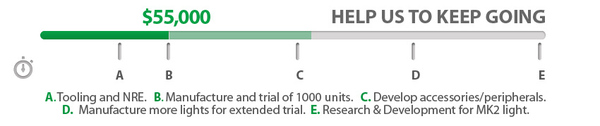
At time of writing, Martin and Jim’s Indiegogo campaign to raise funds has already surpassed its basic goal of $55,000, but if you wish to donate it’ll help them further their goal of refining the design to make it even more useful, efficient and inexpensive.

Then it was only a moment to track down the project on a website called Indiegogo, from which one reads,

20121214100413-fill_bar2

GravityLight is a revolutionary new approach to storing energy and creating illumination. It takes only 3 seconds to lift the weight which powers GravityLight, creating 30 minutes of light on its descent. For free.

Following the initial inspiration of using gravity, and years of perspiration, we have refined the design and it is now ready for production. We need your help to fund the tooling, manufacture and distribution of at least 1000 gravity powered lights. We will gift them to villagers in both Africa and India to use regularly. The follow-up research will tell us how well the lights met their needs, and enable us to refine the design for a more efficient MK2 version. Once we have proved the design, we will be looking to link with NGOs and partners to distribute it as widely as possible. When mass produced the target cost for this light is less than $5.

Why GravityLight?

Did you know that there are currently over 1.5 billion people in the World who have no reliable access to mains electricity? These people rely, instead, on biomass fuels (mostly kerosene) for lighting once the sun goes down.

Go here and read the information in full and admire the photographs.  But I will include this from the end of the item.

Credentials

We are Martin Riddiford and Jim Reeves, London based designers who have spent 4 years developing GravityLight as an off-line project. We work for therefore.com, which has over 20 years of experience in designing and developing hand held computing and communication products for a host of pioneers including Psion, Toshiba, NEC, TomTom, Inmarsat, ICO, Sepura, Racal Acoustics, Voller Energy, FreePlay and SolarAid.

We’re using a tried and tested manufacturer who has the right expertise to make GravityLight. We have some links to partner organisations in Africa and need to do the same for India. If you’re part of an organisation and would like to get involved then please contact us. We are particularly looking for contacts in South America.

Visit our skunk-works website here www.deciwatt.org.

Our movie soundtrack kindly created by Belinda from the bush the tree and me.

Check out John Keane’s great Solar For Africa blog.

I am sure all who read this will wish Martin and Jim the very best of luck.


Just very grateful.

Yet another aspect of what we learn from dogs.

This is Hazel.

Hazel

As I write these words, Hazel is laying down on the carpet just next to me.  She was dumped on the street outside Jean’s Mexican house back in early 2010.  Hazel was still in milk and probably had had her puppies taken from her and sold for a few pesos.  Who knows!

But her gratitude for being rescued by Jean is boundless.  Most nights she sleeps on our bed, curled up tightly behind my back.  Her love for her world here in Oregon is beautiful and pure.  As they say, dogs do not lie about love.

So what’s this leading up to?

Simply setting the scene for a wonderful TED video by Louie Schwartzberg, first seen by me on Christine’s blog 350 or bust.

Watch and be grateful for all the beautiful things in the world.

louieschwartzberg

Louie Schwartzberg is an award-winning cinematographer, director, and producer whose notable career spans more than three decades providing breathtaking imagery for feature films, television shows, documentaries and commercials.

This piece includes his short film on Gratitude and Happiness. Brother David Steindl-Rast’s spoken words, Gary Malkin’s musical compositions and Louie’s cinematography make this a stunningly beautiful piece, reminding us of the precious gift of life, and the beauty all around us.

As a visual artist, Louie has created some of the most iconic and memorable film moments of our time. He is an innovator in the world of time-lapse, nature, aerial and “slice-of-life” photography – the only cinematographer in the world who has literally been shooting 24 hours a day, 7 days a week continuously for more than 30 years.

Louie was recognized as one of the top 70 Cinematographers for the On Film Kodak Salute Series. He is a member of the Directors Guild of America and the Academy of Motion Pictures Arts and Sciences.

Louie is credited by many with pioneering the contemporary stock footage industry by founding Energy Film Library, a global company with a network of 12 foreign offices, which was acquired by Getty Images in 1997. Motion picture clients of his cinematic artistry include Sex in the City, The Bourne Ultimatum, Die Hard 4, Syriana, Crash, Men in Black and classics such as American Beauty, Koyaanisqatsi and E.T. among others.

Louie went on to found BlackLight Films, a creative production company specializing in producing original theatrical feature, large format films, HD and TV programming.

In 2004, BlackLight Films completed production of the theatrical feature film, America’s Heart &Soul, distributed theatrically by Walt Disney Pictures. In 2006, BlackLight Films completed a series of HD shorts, Louie Films, for the launch of Buena Vista Home Entertainment’s Blu-Ray DVD releases. In 2007, the company produced a 1-hour special, Chasing the Light, which aired nationally on PBS.

Past projects include the 35mm film Seasons of the Vine for Disney’s California Adventure Theme Park and a 26-half hour series, America!, for The Hallmark Channel.

Louie has won two Clio Awards for Best Environmental Broadcast Spot, an Emmy nomination for Best Cinematography for the Discovery Channel Special, Oceans of Air, and the Heartland Film Festival’s Truly Moving Picture Award for Walt Disney Pictures’ feature film release America’s Heart & Soul.

Louie completed production on a feature length nature documentary, Wings of Life, to be theatrically released worldwide, under Walt Disney Pictures’ new production banner, Disneynature. The film was released in France (March 2011) under the title Pollen and won the Roscar Award for Best Cinematography at the 2011 Wild Talk Africa Film Festival.

Louie spoke at the TED 2011 conference in Long Beach, CA and has been a regular presenter at the annual Bioneers Conference in San Francisco. Currently, Louie is in production with National Geographic to produce Hidden Worlds, a 3D Imax film.

To underline the gratitude that I have to be here surrounded by such beautiful countryside, let me close with this picture recently taken from our bedroom window.

Deer

We are what we eat.

A thought-provoking presentation on the role of food in our society.

The last time I used this title for a post was back on July 20th.  However, the topic then was very different to today’s theme.  Then I wrote about how the genetic modification of our food represents as big a danger to the long-term survival  of man as does the damage to our biosphere.

So this comes as a very pleasant contrast.  I am indebted to Yves Smith’s blog Naked Capitalism for drawing this presentation to my attention. As was written in that NK post,

This is a super presentation by Ray Patel for Michael Pollan’s class at Berkeley, Edible Education 103. The presentation and the question period together come to about an hour.  Ray Patel follows after Michael Pollan handles administrative stuff and then does an introduction.

There are plenty of charts, but I really enjoy the anecdote on Northern Malawi at minute 43:54 — too long for me to transcribe, so I’ll quote Patel’s closing line:

What makes it really sail is not just the democracy, but the joy which comes through people cooking together as equals and eating together as equals.

Bon apetit!

Published on Dec 7, 2012
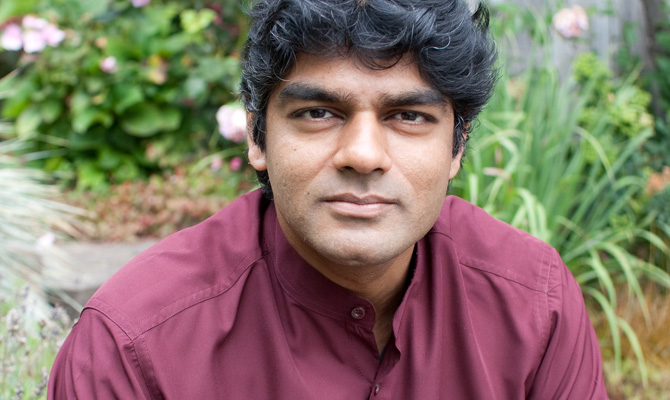
Raj Patel is an award-winning writer, activist, and academic. He has degrees from the University of Oxford, the London School of Economics, and Cornell University, has worked for the World Bank and WTO, and protested against them around the world.

He’s currently a visiting scholar at UC Berkeley’s Center for African Studies, an Honorary Research Fellow at the School of Development Studies at the University of KwaZulu-Natal, and a fellow at The Institute for Food and Development Policy, also known as Food First. He is currently an IATP Food and Community Fellow.

He has testified about the causes of the global food crisis to the U.S. House Financial Services Committee and is an Advisor to the United Nations Special Rapporteur on the Right to Food. In addition to numerous scholarly publications, he regularly writes for The Guardian, and has contributed to the LA Times, NYTimes.com, The San Francisco Chronicle, The Mail on Sunday, and The Observer. His first book was Stuffed and Starved: The Hidden Battle for the World Food System and his latest, The Value of Nothing, is a New York Times best-seller.

raj_patel

Raj Patel’s website is a great reference so do spend a little time wandering through the material.  For example, this item jumped off the page for me.

What I Did This Summer

By Raj on 08/11/2012

The good folk at Canada’s Globe & Mail asked me to write a piece called “What I Did This Summer.” Never having written one before, I thought I’d channel my inner 12 year old.

Cuzco, Peru: This summer I started to write a book and film a documentary with my hero. His name is Steve James. He filmed ‘Hoop Dreams’ which was about basketball and hope and disappointment and race and inequality and America. Our film is called “Generation Food”. It is about how we will eat in the future.

So I went to Japan. People used to live long lives in Okinawa because of the traditional diet. Lots of people lived until 100. Now grandparents are burying their children. They don’t eat as they used to. When the Americans came with their military base, they brought fast food for the GIs. Everybody eats it now. I visited farmers who plant crops on US bases. They did it so often that the Americans gave up and just let them do it. I ate goat sashimi because it would have been rude not to.

Won’t reproduce it in full as I haven’t sought permission.  So do go here to read it.  But I just can’t resist offering you Raj Patel’s closing words.

I have learned that: People are kind. Everyone has contradictions. Raw goat tastes funny, but it’s not as bad as Cuban food. The world is more beautiful than I imagined. There is more hope for the future of food than I dared to believe, against impossible odds. And it comes from unlikely places.

And after the summer, I was never the same again.

What a lovely sentiment to end on.

The dirt beneath our feet.

A film about dirt that opens eyes!

dirt-splsh

I have mentioned the website of the Permaculture Research Institute of Australia before.  It’s a fabulous resource for many aspects of moving towards a more sustainable lifestyle, and not just for Australians.

A few days ago, their regular posting included a link to this:

Dirt: The Movie

DIRT! The Movie — directed and produced by Bill Benenson and Gene Rosow — takes you inside the wonders of the soil. It tells the story of Earth’s most valuable and underappreciated source of fertility — from its miraculous beginning to its crippling degradation. The opening scenes of the film dive into the wonderment of the soil. Made from the same elements as the stars, plants and animals, and us, “dirt is very much alive.” Though, in modern industrial pursuits and clamor for both profit and natural resources, our human connection to and respect for soil has been disrupted. “Drought, climate change, even war are all directly related to the way we are treating dirt.”

DIRT! the Movie — narrated by Jaime Lee Curtis — brings to life the environmental, economic, social and political impact that the soil has. It shares the stories of experts from all over the world who study and are able to harness the beauty and power of a respectful and mutually beneficial relationship with soil.

DIRT! the Movie is simply a movie about dirt. The real change lies in our notion of what dirt is. The movie teaches us: “When humans arrived 2 million years ago, everything changed for dirt. And from that moment on, the fate of dirt and humans has been intimately linked.” But more than the film and the lessons that it teaches, DIRT the Movie is a call to action.

Here’s the trailer to the film.

And here’s the movie’s website.

The link to the film on the PRI Australia’s website is here: Dirt: The Movie.

So plan on sitting down somewhere and enjoying a full-length film about dirt.  It will hold you spellbound.

To nurture a garden is to feed not just on the body, but the soul.  Alfred Austin

Looking out to the horizon

The concluding Part Five of The Sufficiency Economy

So here we are.  Friday and the last part of this stimulating essay by Dr. Samuel Alexander.  I do hope you have found all five chapters not only of interest but also that they have stimulated new ways of thinking.  Because the only way humanity is going to pull itself into a new, sustainable way of living is by thinking ‘outside the box’.

oooOOOooo

THE SUFFICIENCY ECONOMY
ENVISIONING A PROSPEROUS WAY DOWN
Samuel Alexander
Simplicity Institute Report 12s, 2012

Dr Samuel Alexander is co-director of the Simplicity Institute and a lecturer with the Office for Environmental Programs, University of Melbourne.

5. The Ambiguous Charge of Utopiansim

This time, like all times, is a very good one, if we but know what to do with it. – R.W. Emerson

With the notion of a sufficiency economy now broadly sketched out, and some issues about the transition raised for consideration, it may be worthwhile stepping back from the analysis to consider the vision as a whole. This should provide a new perspective and perhaps raise new issues that deserve attention. One objection that can be easily anticipated is that the notion of a sufficiency economy, as I have described it, is fundamentally utopian in its outlook, and in this section I will respond to this objection briefly.

5.1. Four Responses

The charge of utopianism can be dealt with in at least the following four ways. First, if the charge is meant to imply that the goal of economic sufficiency, as opposed to economic growth, is unrealistic, then there is a sense in which that charge must be turned on its head. It is limitless growth on a finite planet that is unrealistic. After all, what could be more utopian, in the pejorative sense, than the neoclassical growth model which takes as ‘given’ certain non-physical parameters (e.g. market price, preferences, technology, wealth distribution, etc.) but on that basis purports to be independent of the biophysical laws of nature? Recognising the biophysical (and other) limits to growth may indeed require a radical new approach to how economies are structured, as I have argued it does; but this would be in recognition of certain realities, not in any attempt to transcend them.

In a second sense, however, the charge of utopianism should be embraced, not as an indictment, but as a defence. ‘Without the hypothesis that a different world is possible,’ Genevieve Decrop has recently stated, ‘there can be no politics, but only the administrative management of men [sic] and things’ (as quoted in Latouche, 2009: 32). In this sense, the sufficiency economy is indeed a utopian vision, arising out of a defiant faith that a different world is possible. But as Serge Latouche (2009: 32) has aptly explained with respect to the degrowth movement, ‘Far from representing a flight of fancy, it is an attempt to explore the objective possibility of its implementation.’ With a nod to Latouche, the sufficiency economy described above should be understood in similar terms. Imagining the alternative is the first step toward its realisation.

But there is a third sense in which the sufficiency economy is not utopian at all – not if ‘utopia’ refers to that which does not and could never exist. Granted, there is no economy that resembles closely the one described above, which is of a growth economy that has gone through the transition to sufficiency. Nevertheless, almost all the features of the sufficiency economy do find reflection in existing economies in the developed world (and elsewhere). Indeed, real-world examples of sufficiency in practice are everywhere bubbling beneath the surface, threatening to expand into the mainstream; some are in the process of doing so, albeit slowly. For example, there are nascent movements based on notions such as voluntary simplicity, eco-villages, permaculture, transition towns, slow food, degrowth, steady-state economics, etc., all of which can be understood to be exemplifying the practice of sufficiency in disparate but overlapping ways. What this indicates is that a sufficiency economy is not at all a utopian fantasy, but rather an embryonic, fragmented reality struggling away beneath the existing economy, trying to replace that economy with something fundamentally different. It is easy to forget that social movements constantly surprise us, often moving from tiny subcultures to the cultural mainstream with startling speed. Rather than despair, we should proceed on the assumption that more surprises could still lie in store of us.

Finally, some might claim that the sufficiency economy is utopian – again, in the pejorative sense – for the reason that it posits a transformation of economy that relies on a cultural embrace of low-consumption lifestyles of sufficiency, or rather lifestyles of ‘voluntary simplicity,’ as the phrase is more widely known. Human beings are essentially consumers with insatiable material desires, the objection might run, and the sufficiency economy will never voluntarily emerge because voluntary simplicity asks people to act against their personal interests. Any response to this point should begin with the social critique of consumer culture, which would be based on the large and robust body of hedonics research ratifying what many people, perhaps, know intuitively, namely, that ‘beyond a certain threshold, more material wealth is a poor substitute for community cohesion, healthy relationships, a sense of purpose, connection with nature, and other dimensions of human happiness’ (Talberth, 2008: 21). Since the evidence suggests that many people in affluent societies are above such a ‘threshold,’ there are strong grounds for thinking that reducing consumption in such cases would actually increase personal happiness. Relying on the expansion of the Voluntary Simplicity Movement would be more problematic, of course, if voluntary simplicity were a living strategy founded solely upon altruism, or if it implied sacrificing personal well-being for the sake of ecological health. But plainly its foundations are less demanding. Although many in the Voluntary Simplicity Movement are indeed motivated by humanitarian and ecological concerns, the most promising sign for the expansion of the movement lies in the fact that almost all those who practise simplicity report being happier in their lifestyle choice, despite a voluntary reduction or restraint in income and consumption (Alexander and Ussher, 2012). A utopian theory of economic transformation seems much less utopian, I would suggest – as would any theory of social reorganisation – when it is based upon a living strategy that is demonstrably in people’s best interests, including their own happiness.

For all these reasons, I contend that the sufficiency economy is not utopian in any problematic sense. The prospects of its imminent realisation, I admit, seem slim; and certainly it will depend on human beings working relatively well together as the challenges ahead intensify. But human beings share a universal desire to work toward a better life, and if that energy can be harnessed and the transition wisely negotiated, then the sufficiency economy will be quite achievable. Seemingly impossible things have happened before.

6. Conclusion

The challenges that will be faced on the path to a sufficiency economy can hardly be overstated. One of them not considered above is our genetic composition, which is not well suited to dealing effectively or thoughtfully with long-term issues. Historically we had to worry about immediate dangers such as tigers, other tribes, staying warm, and getting enough food; now we also have to get our heads around and respond effectively to the seemingly distant and abstract issues of climate change and peak oil. Evidently, this does not come easy to us. Secondly, the very task of decarbonising our economies as far as possible will be much harder and more unsettling than most people think. As you read these words, look around your room and consider what material artefacts are not, in some way, the product of fossil fuels. Is there anything? My point is that the sufficiency economy described above is not about turning off the lights and taking shorter showers. It is about embracing a fundamentally different way of life and a fundamentally different economy. If we do not voluntarily embrace these differences, however, and instead persist with the goal of universal affluence, then soon enough ecological and / or economic systems will collapse and we will be faced with fundamental change all the same, only with much more suffering. As I noted earlier, we can go the easier way (which will not be easy), or the harder way (which will be unspeakably tragic), depending on our attitudes and actions. We are free to choose our fate, and presently we are in the process of doing so.

I have hardly presented the full picture of the sufficiency economy and I acknowledge that various issues, probably most issues, are controversial and will be contested. That is the way it will be, and that is the way it should be. What is important is that the debate gets drawn away from the question of how to maintain the existing system, toward the urgent and necessary question of what new system should replace the existing system. In this sense the humble notion of a sufficiency economy can be seen as the revolutionary proposal that it is. It will not, of course, be easy to build a new, simpler way of life from within industrial civilisation. Everything will conspire against us. But various social movements already in existence provide a glimmer of hope in these dark times, and that glimmer is everyday growing brighter.

In all movements for change, including the broad movements for justice and sustainability, it is important occasionally to hold up for examination what one understands to be the clearest expression of one’s highest hopes and ideals. That is what I have tried to do in this essay, albeit in an incomplete way. No doubt some will find the threads of underlying positivity utterly indigestible, and already I can sense the trolls gathering, waiting to unleash their pure, unconstructive negativity. But let them fester in their own negativity, while the rest of us (including the constructive critics) set about building the new economy out of the emerging ashes of Empire. All we can do is our best, and we should die trying, not because we think we will succeed, but because if we do not try, something noble in our hearts and spirits will be lost.

Notes:

  1. In forming the following views I have been influenced and inspired by many people, the most significant of whom I would like to acknowledge. With respect to material simplicity and ‘the good life,’ Henry Thoreau (1982) has by far been the greatest influence on my world view, followed by William Morris (2004) and the Greek and Roman Stoics (e.g. Seneca, 2004). I am also greatly indebted to my colleagues and fellow authors at the Simplicity Institute – Ted Trainer, Mark Burch, David Holmgren, and Simon Ussher – all of whom, in their own way, have deeply influenced the following discussion (see Simplicity Institute, 2012). The work of Ernst Schumacher (1973) and the Club of Rome (Meadows et al, 2004) first introduced me to the ‘limits to growth’ analysis, and Serge Latouche (2003; 2009) introduced me to the insight that degrowth, not merely zero-growth, is what is needed to achieve sustainability in overdeveloped nations. With respect to energy, Howard and Elisabeth Odum (2001) and Joseph Tainter (1988) have been my biggest influences, showing me how central energy is to the world we live in. I must also mention and thank Rob Hopkins (2008) and the Transition Movement, for providing what I consider to be the most promising framework for bringing about a just and sustainable, post-carbon world.
  2. It may be that tar-sealed roads and existing water infrastructure can be reimagined into decentralised water management systems, but for present purposes I will treat that as a distant possibility on the grounds that the systems for distributing and treating water collected in this manner are still undeveloped. Furthermore, I do not have the knowledge to understand how difficult it would be to secure water for consumption in this manner.
  3. I will not argue against privatisation models here, other than note that in the sufficiency economy I envision, private companies that serve narrow shareholder interests cannot be left in charge of the provision of basic needs. Instead, the universal provision basic needs, such as water, must be considered a social duty that ultimately remains under social control. No one, for example, should be denied water on the grounds that they are too poor.
  4. http://en.wikipedia.org/wiki/Water_supply_and_sanitation_in_the_United_States
  5. http://www.abs.gov.au/ausstats/abs@.nsf/Lookup/CAE301277A675941CA257956000E646E?opendocument
  6. http://www.waterfootprint.org/?page=files/UnitedKingdom
  7. http://hdr.undp.org/en/media/HDR06-complete.pdf p34.
  8. I will currently assume the continuation of some form of monetary economy, an issue that I will give further attention below.
  9. Between 2008-9, water in Australia (where I am writing from) was on average $1.93 per 1,000 litres, and for industry water averaged $0.12 per 1,000 litres. See Australian Bureau of Statistics:
    http://www.abs.gov.au/ausstats/abs@.nsf/Lookup/by%20Subject/1301.0~2012~Main%20Features~Water~279
  10. See http://www.abc.net.au/science/articles/2007/11/28/2103395.htm [accessed 22 December 2011].
  11. See Sustain, ‘Eating Oil: Food Supply in a Changing Climate,’ see:
    http://www.sustainweb.org/pdf/eatoil_sumary.PDF [accessed 2 October 2012].
  12. To provide a real-world example, when oil rose to $147 in 2008, it became cheaper to make steel in the US, since the high price of oil added $90 ton to steel production, making Chinese imports less economic than local production. See Jeff Rubin (2009) 150. See also, Peter North, ‘Eco-localisation as a Progressive Response to Peak Oil and Climate Change – A Sympathetic Critique’ 42 Geoforum (2010) 585.
  13. E.g.,http://www.transport.wa.gov.au/mediaFiles/AT_TS_P_ThetruthabouttravelinPerth.pdf
  14. E.g., http://www.planning.org.au/documents/item/363

References:

  • Alexander, S., ed., 2009. Voluntary Simplicity: The Poetic Alternative to Consumer Culture, Stead & Daughters, Whanganui.
  • Alexander, S., 2010. ‘Deconstructing the Shed: Where I Live and What I Live For’ 18 Concord Saunterer: The Journal of Thoreau Studies 125.
  • Alexander, S., 2011a. ‘The Voluntary Simplicity Movement: Reimagining the Good Life beyond Consumer Culture.’ 7(3) International Journal of Environmental, Cultural, Economic, and Social Sustainability 133.
  • Alexander, S., 2011b. ‘Property beyond Growth: Toward a Politics of Voluntary Simplicity’ (doctoral thesis, Melbourne Law School, University of Melbourne) available at http://papers.ssrn.com/sol3/papers.cfm?abstract_id=1941069 [accessed 5 May 2011]
  • Alexander, S., 2012a. ‘Planned Economic Contraction: The Emerging Case for Degrowth’ 21(3) Environmental Politics, 349. [Working paper available here.]
  • Alexander, S., 2012b, ‘Resilience through Simplification: Revisiting Tainter’s Theory of Collapse’ Simplicity Institute Report 12h.
  • Alexander, S., 2012c, ‘Degrowth, Expensive Oil, and the New Economics of Energy’ Real-World Economics Review 40.
  • Alexander, S., 2012d, ‘The Optimal Material Threshold: Toward an Economics of Sufficiency’ Real-World Economics Review 2.
  • Alexander, S., 2012e, ‘Radical Simplicity and the Middle-Class: Exploring the Lifestyle Implications of a “Great Disruption”’ Simplicity Institute Report 12p.
  • Alexander, S., 2012f ‘Degrowth Implies Voluntary Simplicity: Overcoming Barriers to Sustainable Consumption’ Simplicity Institute Report 12b.
  • Alexander, S., and Ussher, S. 2012. ‘The Voluntary Simplicity Movement: A Multi-National Survey Analysis in Theoretical Context,’ 12(1) Journal of Consumer Culture 66. [Working paper available here.]
  • Alexander, S., Trainer, T., and Ussher, S., 2012. ‘The Simpler Way: A Practical Action Plan for Living More on Less’ Simplicity Institute Report 12a.
  • Astyk, S., 2012. Making Home: Adapting Our Homes and Our Lives to Settle in Place. New Society Publishers, Gabriola Island.
  • Beckerman, W., 2002. A Poverty of Reason: Sustainable Development and Economic Growth, Independent Institute, Oakland, CA.
  • Brown, L. 2011. World on the Edge: How to Prevent Environmental and Economic Collapse. W. W. Norton and Co., New York.
  • Brown, K., and Kasser, T., 2005, ‘Are Psychological and Ecological Well-being Compatible? The Role of Values, Mindfulness, and Lifestyle. Social Indicators Research’, 74, 349-368.
  • Burch, M. 2012a, ‘Simplicity and Economy’ Simplicity Institute Report 12q.
  • Burch, M., 2012b. ‘Mindfulness: The Doorway to Simple Living’ Simplicity Institute Report 12n.
  • Burch, M., 2012c, ‘Educating for Simple Living’ Simplicity Institute Report 12j.
  • Burch, M., 2012d. ‘The Simplicity Exercises: A Sourcebook for Simplicity Educators’ Simplicity Institute Report 12k.
  • Daly, H., 1996, Beyond Growth: The Economics of Sustainable Development, Beacon Press, Boston.
  • Friedrichs, J., 2010. ‘Global Energy Crunch: How Different Parts of the World Would React to a Peak Oil Scenario’ 38 Energy Policy 4562.
  • Gilding, P., 2011. The Great Disruption: How the Climate Crisis will Transform the Global Economy. London, Bloomsbury.
  • Global Footprint Network, 2012. Reports available at:
    http://www.footprintnetwork.org/en/index.php/GFN/ [accessed at 31 March 2012].
  • Greer, J.M., 2008. The Long Descent. New Society Publishers, Gabriola Island.
  • Greer, J.M. 2009. The Ecotechnic Future. New Society Publishers, Gabriola Island.
  • Hansen, J. et al., 2008, ‘Target Atmospheric CO2: Where Should Humanity Aim? Available at http://www.columbia.edu/~jeh1/2008/TargetCO2_20080407.pdf [accessed 31 March 2012].
  • Hicks, J., 1959. Essays in World Economics. Clarendon Press, Oxford.
  • Hirsch R., R., Bezdek, and R. Wendling, (2010) The Impending World Energy Mess. Burlington: Apoge Prime.
  • Heinberg, R. 2011. The End of Growth: Adapting to Our New Economic Reality, New Society Publishers, Gabriola Island.
  • Holmgren, D., 2002, Permaculture: Principles and Pathways beyond Sustainability, Holmgren Design Services, Hepburn.
  • Holmgren, D. 2012. ‘Retrofitting the Suburbs for the Energy Descent Future’ Simplicity Institute Report 12i.
  • Hopkins, R., 2008, The Transition Handbook: From Oil Dependency to Local Resilience, Green Books, Totnes, Devon.
  • Hudson, M., 2012. ‘Debts that Can’t be Repaid, Won’t be.’ Available at: http://michael-hudson.com/2012/04/debts-that-cant-be-paid-wont-be/ [accessed 1 November 2012].
  • International Energy Agency (IEA), 2010a. World Energy Outlook 2010: Executive Summary, IEA Report, available at http://www.iea.org/Textbase/npsum/weo2010sum.pdf (accessed 22 December 2011).
  • International Energy Agency (IEA), 2010b. Key World Energy Statistics. Available at: http://www.iea.org/textbase/nppdf/free/2010/key_stats_2010.pdf [accessed 20 June, 2012].
  • Intergovernmental Panel of Climate Change (IPCC), 2007. ‘Climate Change 2007 – The Physical Science Basis’ available at http://www.ipcc.ch/publications_and_data/publications_and_data_reports.shtml [accessed 29 June 2011.
  • Jackson, T., 2005. ‘Live Better by Consuming Less? Is There a Double Dividend in Sustainable Consumption?’ Journal of Industrial Ecology, 9, 19-36.
  • Jackson, T., 2009. Prosperity without Growth: Economics for a Finite Planet, Earthscan, London.
  • Jeavons, J. 2012 (8th ed). How to Grow More Vegetables. Ten Speed Press, Berkeley.
  • Jenkins, J. 2005, 3rd ed. The Humanure Handbook: A Guide to Composting Human Manure. Chelsea Green Publishing. White River Junction, VT.
  • Kasser, T., 2002. The High Price of Materialism, MIT Press, Cambridge, Mass.
  • Korowics, D., 2012. ‘Trade-Off: Financial System Supply-Chain Cross-Contagion: A Study in Global Systemic Collapse’ (Metis Risk Consulting, 30th June, revised, 2012).
  • Lane, R. 2000. The Loss of Happiness in Market Democracies. Yale University Press, New Haven.
  • Latouche, S., 2003. ‘Would the West actually be Happier with Less? The World Downscaled’ Le Monde Diplomatique (English Version) <http://www.hartford-hwp.com/archives/27/081.html&gt; at 10 November 2011.
  • Latouche, S., 2009. Farewell to Growth Polity Press, Cambridge, UK.
  • MacRae, R. et al. 2010. ‘Could Toronto Provide 105 of its Fresh Vegetable Requirements from within its own Boundaries? Matching Consumption Requirements with Growing Space’ 1(2) Journal of Agriculture, Food Systems, and Community Development.
  • Meadows, D., Randers, J. and Meadows, D., 2004. Limits to Growth: The 30-year Update, White River Junction, Vt., Chelsea Green Pub.
  • Moriarty, P. and D. Honnery, 2008. ‘Low-Mobility: The Future of Transport’ Futures 40: 865.
  • Morris, W. 2004. New from Nowhere and Other Writings. Penguin, London.
  • Murphy, D. and Hall, C., 2011. ‘Energy Return on Investment, Peak Oil, and the End of Economic Growth’ Annals of the New York Academy of Sciences 1219: 52.
  • North, P. 2010. ‘Eco-localisation as a Progressive Response to Peak Oil and Climate Change – A Sympathetic Critique’ 42 Geoforum (2010) 585.
  • Odum, E. and Odum, H., 2001. A Prosperous Way Down: Principles and Policies. University Press of Colorado, Colorado.
  • Percy, E. et al, 2010. ‘Planning for Peak Oil: Learning from Cuba’s “Special Period”’ 163(4) Urban Design and Planning 169.
  • Pickett, K., and Wilkinson, R. 2010. The Spirit Level: Why Greater Equality Makes Societies Stronger, Penguin, London.
  • Princen, T. 2005. The Logic of Sufficiency. Cambridge, Mass., MIT Press.
  • Purdey, S. 2010. Economic Growth, the Environment, and International Relations: The Growth Paradigm. Routledge, New York.
  • Rubin, J., 2009. Why Your World is About to Get a Whole Lot Smaller. London: Virgin.
  • Rubin, J., 2012. The End of Growth: But is that all bad? Random House, Toronto.
  • Schumacher, E., 1973. Small is Beautiful: Economics as if People Mattered. Blond and Briggs, London.
  • Sen, A. 1998. ‘The Living Standard,’ in Crocker, D. and Linden, T. (eds), Ethics of Consumption. Rowman and Littlefield, New York.
  • Seneca, 2004. Letters from a Stoic. Penguin, London.
  • Simplicity Institute, 2012. Reports available at http://www.simplicityinstitute.org/publications [accessed 9 August 2012].
  • Sorrell, S. 2010. 2 ‘Energy, Economic Growth, and Environmental Sustainability: Five Propositions,’ 1784.
  • Suwankitti, W. and Pongquan, S. Enhancement of Rural Livelihoods in Thailand: An Application of Sufficiency Economy Approach in Community Economic Development. Lambert Academic Publishing, Saarbrucken.
  • Tainter, J., 1988. The Collapse of Complex Societies. Cambridge University Press, Cambridge.
  • Talberth, J., 2008. ‘A New Bottom Line for Progress,’ in State of the World <http://www.worldwatch.org/files/pdf/SOW08_chapter_2.pdf&gt; at 10 September 2010
  • Tham, J-C., 2010. Money and Politics: The Democracy We Can’t Afford. University of New South Wales Press, Sydney.
  • Thoreau, H. 1982. The Portable Thoreau, edited by Bode, C. Penguin, New York.
  • Trainer, T. 2010. The Transition to a Sustainable and Just World, Envirobook, Sydney.
  • Trainer, T., 2011. ‘The Radical Implications of Zero Growth Economy’ 57 Real World Economics Review 71.
  • Trainer, T., 2012a. ‘But Can’t Technological Advance Solve the Problems?’ Simplicity Institute Report 12g.
  • Trainer, T., 2012b. ‘Can Renewable Energy Sustain Consumer Societies? A Negative Case.’ Simplicity Institute Report 12e.
  • Trainer, T., 2012c. ‘How Cheaply Could We Live and Still Flourish?’ in Alexander, S., Trainer, T., and Ussher, S., ‘The Simpler Way: A Practical Action Plan for Living More on Less’ Simplicity Institute Report 12a.
  • Trainer, T., 2012d. ‘”Education” under Consumer-Capitalism, and The Simpler Way Alternative’ Simplicity Institute Report 12m.
  • Tverberg, G., 2012a. ‘Oil Supply Limits and the Continuing Financial Crisis’ 37(1) Energy 27-34.
  • United Nations Development Program (UNDP), 2007/8. ‘Human Development Report’ available at: http://hdr.undp.org/en/reports/global/hdr2007-2008/ [accessed 30 April 2011].
  • United Nations Department of Social and Economic Affairs (UNDSEA), 2011. See ‘Global Population to pass 10 billion by 2100, UN Projections indicate’ available at http://www.un.org/apps/news/story.asp?NewsID=38253&Cr=population&Cr1#.UJ3soY5EC5Y [accessed at 10 January 2012].
  • Woodward, D. and Simms, A., 2006. ‘Growth Isn’t Working: The Uneven Distribution of Benefits and Costs from Economic Growth’ available at http://www.neweconomics.org/publications/growth-isn%E2%80%99t-working [accessed 10 April 2010].
  • World Bank, 2009, ‘World Development Indicators’ available at http://data.worldbank.org/indicator [accessed at 29 June 2011].

oooOOOooo

May I close this post by thanking Dr. Alexander and the Simplicity Institute for their support in the republication of this essay in Learning from Dogs.

Down is the new up.

Part Four of The Sufficiency Economy

I am delighted to find that this essay by Dr. Alexander has been extremely well-received by you.  On Monday, there were 1,458 viewings, Tuesday there were 1,546 viewings and today (Wednesday – the day I am writing this) already over 700 viewings at 9.20am local time (PST).

The wealth of evidence that is surfacing just now as to the seriousness of our present global predicament is mind-blowing.  Indeed, a couple of the more important articles that have ‘crossed my screen’ this week will be published next week on Learning from Dogs.

In the third part of Dr. Alexander’s essay that was published yesterday, Doing nothing is not an option, the primary theme was predicated as follows:

The growth paradigm has reached, more or less, the ‘limits to growth,’ and this means that we must move away from growth-based economies if we are to avoid exacerbating existing ecological crises to the point of catastrophe. Billions of lives are at stake, as are the biodiversity and climatic balance of our planet.

Today’s essay offers a strong, positive framework for how humanity has to change – let me repeat that for emphasis – how humanity HAS to change! 

oooOOOooo

THE SUFFICIENCY ECONOMY
ENVISIONING A PROSPEROUS WAY DOWN
Samuel Alexander
Simplicity Institute Report 12s, 2012

Dr Samuel Alexander is co-director of the Simplicity Institute and a lecturer with the Office for Environmental Programs, University of Melbourne.

4. Envisioning a Prosperous Way Down

The following exposition of the sufficiency economy is a challenging mixture of utopian and dystopian speculation. It is utopian (or at least optimistic) in the sense that I present a picture of the sufficiency economy that depends upon human beings working relatively well together to meet the challenges ahead, rather than degenerating into a war of all against all at the first signs of trouble. I also assume that a culture of consumption has arisen in which sufficiency rather than affluence is widely considered the path to human flourishing. I believe these are necessary elements to any ‘prosperous way down’ (Odum and Odum, 2001). What follows is dystopian in the limited sense that the analysis accepts that there will be no smooth transition beyond the growth economy, and that consumer lifestyles will be taken from many people against their will – although perhaps ‘realistic’ is a better word than ‘dystopian’ here. Focused broadly on urban contexts in the developed world, the following analysis is structured by considering various aspects of the sufficiency economy, for the purpose of presenting a vision of the alternative way of life it implies.

However the future plays out – and let’s face it, no one really knows – what is certain is that the same events will be much less difficult and cause much less suffering if they are anticipated to some extent and prepared for (Alexander, 2012e; Burch, 2012b). I hope the following analysis might assist in both these regards.

4.1. Water

I will begin with the issue of water security, this being one of the most essential biophysical needs. The first point to note is that in most urban (including suburban) contexts, the amount of roof space available to collect water would be insufficient to secure the necessary water supplies for such dense populations.(2) What this means is that urban contexts require the water mains to exist, for if they failed for more than a day or so, most people would quickly perish. Given that most people now live in urban contexts, it is fair to say that the first thing a sufficiency economy must do is ensure that the water mains continues to function. This may sound like a trite observation, and it is, but since our present exploration is considering the economic foundations of a very different way of life, the foundations are where we must start. Accordingly, a sufficiency economy must at least have the energy supply and stability to maintain the water mains at a sufficiently high level of regularity and safety, something resembling the existing model, but hopefully more efficient.(3) The alternative is mass population die-off and probably significant re-ruralisation (where there would be more room for large water tanks).

Despite the mains system in a sufficiency economy remaining something close to what we have today, attitudes to water consumption and collection would undergo a revolution. To provide some hard numbers, average household water consumption in the United States is around 370 litres(4); in Australia it is around 230 litres per day(5); and in Britain it is about 150 litres(6). At the other end of the spectrum, institutions like the United Nations and the World Health Organisation hold that 20 litres per person, per day, is close to the minimum needed for bare subsistence(7), and that figure is sometimes used as a baseline in refugee camps. In a sufficiency economy, I propose that domestic water consumption per person would need to fall to somewhere between 50-70 litres per person, per day, which is enough to live a dignified existence without leaving much room for waste.

Reduced water consumption should occur partly out of the desire for ecological preservation – for example, a desire to preserve river systems – but I should expect economic incentives to play a large part too. Assuming fresh water becomes increasing scarce as populations increase and the climate warms (Brown, 2011), the price of water must inevitably rise, and rise significantly(8). Currently, water is grossly underpriced(9). In itself, expensive water will provide a strong incentive for people to reduce their wasteful consumption, and much of this can occur with very little hardship at all. Government or community regulation of some sort may have to provide further incentives, in certain contexts, at least, as well as some baseline supply guarantees, irrespective of ability to pay.

In order to reduce water consumption (for either ecological or economic reasons, or both), various steps would be taken. First of all, every household would maximise its roof water collection via water tanks. Those households that prepare first will easily be able to purchase water tanks and pipes from hardware stores, but as times get tougher (e.g. plastics and concrete become harder to produce, source, or afford), more people will have to creatively use whatever containers and pipes they can salvage or make themselves. We will all become proficient in creating and connecting systems of water collection and reuse. Greywater systems, for example, will become the household norm, including the use of tank water to flush the toilet or simply collecting water when showering to flush the toilet. Eventually, composting toilets will be widely used (at least in suburbia), with huge implications on water consumption.

In order to reduce charges from the increasingly expensive mains supply, tank water will be used whenever possible, especially for watering productive gardens (more on food below). In those times when people are required to draw from the mains, there is much room for conservation. Being conscientious of water consumption when preparing food and cleaning dishes is one space for conservation, and never watering (or even having) lawns is another. But perhaps the largest savings in the domestic sphere can come from how we wash ourselves and our clothes. Showers could easily be reduced to a minute or two without interfering with their primary goal of keeping us clean and hygienic. In fact, if required we could remain sufficiently hygienic by cleaning ourselves with a bucket of water and some soap. It may be a requirement of a dignified life to be able to wash oneself regularly – achievable with a bucket of water and some soap – but we could live with dignity without showering or bathing in the accustomed fashion. Clothes would probably be washed less regularly, which might bring some balance to a culture that is arguably excessively concerned with cleanliness.

Innumerable other water-saving strategies could easily demonstrate that high water consumption is really a product of wastefulness, such that great reductions would not take away from us anything that is actually necessary for a good life. The critical point to note, which applies to all aspects of life discussed below, is that the same reductions in consumption (whether voluntary or enforced) would be experienced in totally different ways, depending on the mindset that was brought to experience. Fortunately, that mindset is within our control, even if the circumstances may not always be.

4.2. Food

A foundational issue for any economy is how it sources and produces its food, and this issue sits next to water on the list of essential needs. The globalised, industrial food production system currently in existence is highly unsustainable for various reasons. Not only are industrial farming techniques causing the severe and widespread erosion of nutrient-rich topsoil (which takes many hundreds of years to rejuvenate), but also the industrialised system is extremely fossil fuel dependent. Natural gas is needed to produce commercial fertilisers, and oil is needed to produce commercial pesticides, to fuel farm machinery, and to create the plastics used in packaging. Most importantly, however, are the extremely long supply chains that reach all around the world and which are dependent therefore on oil for transport. In Australia, for example, a basket of food from the supermarket typically travels 70,000 kilometres from producer to consumer (if the distance each item travels is aggregated)(10). With respect to the UK, one study has the figure at 241,000 kilometres(11). This fossil fuel dependency is highly problematic not only due to its link to climate change, but also because it will not be economically sustainable as oil continues to get more expensive.

In a sufficiency economy, food production would be highly localised and organic, and based on permaculture or ‘biointensive’ principles (Holmgren, 2002; Jeavons, 2012). Ideally this transition would be voluntarily embraced at once, but more likely is that it will be ushered in by the pressures of declining oil supplies and increasing prices. Cuba, during its ‘special period,’ provides a real world example of some such transition (Percy et al, 2010; Friedrichs, 2010). When the Soviet Union collapsed, Cuba almost over night found itself with drastically reduced oil supplies, and this necessitated an immediate shift away from energy-intensive, industrialised food production, toward a system of local and organic production. Notably, the government played a large role in facilitating this transition, but the driving force for change came from the grassroots level, as people realised they had to produce their own food or starve. The Cuban experience has some parallels with the ‘relief gardens’ that arose during the Great Depression and the ‘victory gardens’ during World War II. Necessity has always been a great motivator to grow food.

One of the most significant implications of the transition away from industrial food production is the increased labour needed for organic production. Environmentalists too often overlook this issue. While it widely accepted that organic production can be more productive per acre than industrial food production (Jeavons, 2012), organic production is also vastly more labour intensive. The increased labour requirements arise primarily from the absence of mechanised farm machinery, but organic fertiliser production and pest control are also typically more time intensive than industrialised techniques (although permaculture practices can reduce or negate this disparity through things like companion planting). What this means is that organic food production is entirely capable of feeding the world, but do so it will require a huge increase in the provision of agricultural labour. This must be accepted as an implication of the transition to a sufficiency economy, however it is one that has a large silver lining. Not only will it reconnect communities with the local land base upon which they depend for subsistence, but many health benefits will flow from moving away from sedentary office or factory work toward the more active and outdoor work of farming. Governments must do everything they can to support localised, organic agriculture, starting by putting a price on carbon.

As well as a proliferation of organic farms on the urban periphery, a sufficiency economy would also aim to maximise organic food production within the urban boundary. This would involve digging up lawns and turning them into productive vegetable gardens, and planting fruit trees in all available spaces. Nature strips would be cultivated; parks would be turned into small farms or community gardens; suitable roofs would become productive, herbs would grow on balconies and windowsills, and generally all food producing potential would be realised. Most suburban backyards would keep chickens for eggs, and perhaps even small livestock, such as goats for milk and cheese. Animals are also a great source of manure for compost, and many permaculturalists build animals into their organic systems. While it will probably be far too energy intensive to dig up tar-sealed roads, there is still great potential for building raised beds on driveways, some footpaths or roads, and car parks. Mushrooms could be cultivated on the shady side of the house, and household or neighbourhood aquaculture systems could provide urban centres with some of their fish supply.

Even in a sufficiency economy, however, we can expect our households to ‘import’ various foods in various forms, if not from around the world, then certainly from rural contexts. This, in fact, would be an absolute necessity in urban contexts, because growing space simply does not permit anywhere near strict self-sufficiency. A recent study of Toronto, Canada, for example, concluded that the city could possibly produce 10% of its own fruit and vegetables, if available growing space within the city’s boundaries were converted to agriculture (MacRae et al, 2010). This implies that even if urban agriculture were enthusiastically embraced, the city would still need to import 90% of its fruit and vegetables, to say nothing of its meat, minerals, and other goods. While some cities may be able to do somewhat better (e.g. Havana), the Toronto study clearly shows that urbanites around the world are extremely dependent on functioning food production and distribution systems.

Food consumption, not just production, would change drastically in a sufficiency economy. As already implied, the consumption of food would be organic and highly localised, and this also means that people would eat ‘in season’ in order to avoid having to import non-seasonal foods from the other side of the world. Preserving foods in season would be the most appropriate way to access those foods out of season. Generally, food would be unprocessed and require no disposable packaging, and people would eat much less meat (especially red meat) or become vegetarian, due to the intolerable environmental impacts of excessive meat and fish consumption. This reduction in meat consumption could also open up huge tracts of land for human food production that are currently used to produce grain for animals. People would also eat less meat and fish because the sufficiency economy would internalise all externalities, therefore greatly increasing their relative price and thus their relative demand.

Finally, as well as composting human waste for ‘humanure’ via composting toilets (Jenkins, 2005), a sufficiency economy would vigilantly compost all its organic food wastes in order to supply the growing need for organic fertilisers, and this would also vastly reduce the amount of so-called ‘waste’ that is currently ‘wasted’ by being sent to landfill. One might even say that in a sufficiency economy a good bag of compost will typically be more valuable than a bag of gold, and if readers cannot understand that, perhaps they will not understand much about the sufficiency economy.

4.3. Clothing

Continue reading “Down is the new up.”

Doing nothing is not an option

Part Three of The Sufficiency Economy

A recent item on Naked Capitalism under their links section, deserves being highlighted.  It was a reference to a recent report on OilPrice under the heading of Why Current Methods to Combat Climate Change Don’t Work  Let me offer a taster:

World leaders seem to have their minds made up regarding what will fix world CO2 emissions problems. Their list includes taxes on gasoline consumption, more general carbon taxes, cap and trade programs, increased efficiency in automobiles, greater focus on renewables, and more natural gas usage.

Unfortunately, we live in a world economy with constrained oil supply. Because of this, the chosen approaches have a tendency to backfire if some countries fail to adopt them. But even if everyone adopted them, it is not at all clear that they would provide the promised benefits.

The Kyoto Protocol was adopted in 1997. If emissions had risen at the average rate that they did during the 1987 to 1997 period (about 1% per year), emissions in 2011 would be 18% lower than they actually were. While there were many other things going on at the same time, the much higher rise in emissions in recent years is not an encouraging sign.

The standard fixes don’t work for several reasons ….

Not going any further because the author, Gail Tverberg has given me permission to reproduce her article and I shall be doing that next Monday.  If you can’t wait until then the article may be read on Gail’s website.

So yesterday, Dr. Alexander set out a series of aspects that showed just how challenging is the present global predicament.  The fundamental argument being that growth is now utterly inappropriate for where mankind now is at the end of 2012.  Part three of the essay examines how, whether we like it or not, change is on its way.

oooOOOooo

THE SUFFICIENCY ECONOMY
ENVISIONING A PROSPEROUS WAY DOWN
Samuel Alexander
Simplicity Institute Report 12s, 2012

Dr Samuel Alexander is co-director of the Simplicity Institute and a lecturer with the Office for Environmental Programs, University of Melbourne.

3. Embracing Life After Growth (Before it Embraces Us)

Earlier I mentioned that eventually we are likely to have a sufficiency economy whether we choose it or not. It should now be clearer why this is so. The growth paradigm has reached, more or less, the ‘limits to growth,’ and this means that we must move away from growth-based economies if we are to avoid exacerbating existing ecological crises to the point of catastrophe. Billions of lives are at stake, as are the biodiversity and climatic balance of our planet. But even if we do not choose to give up on growth, energy and resource constraints are in the process of bringing growth to an end all the same, and no amount of ‘quantitative easing’ or technological advances are going to provide an escape from this biophysical reality. When, in the foreseeable future, the world reaches the ‘end of growth,’ we will have a form of ‘sufficiency economy’ imposed upon us, in the sense at least that we will have to make do, as best we can, without further growth. This may well imply radically reduced consumption, compared to levels prevalent in consumer societies today, because when growth-based economies do not grow, debts cannot be repaid, and economic contraction, not merely stagnation, tends to ensue. If this situation is not well managed – for example, if we persist blindly with expectations of limitless growth and continue to structure our economies accordingly – then this phase in history is probably going to mark the beginning of civilisational collapse, although it is impossible to be sure whether this would be a rapid breakdown of the existing order (Korowics, 2012) or a slow deterioration over many decades (Greer, 2008).

Nevertheless, the fact that there are biophysical limits to growth from which we cannot escape sometimes obscures the fact that living within those limits is something that we should want to do, simply to be good stewards of Earth. It is obviously in our self-interest to preserve the life-support systems upon which all life depends, a point that is too often overlooked. Furthermore, the social and psychological evidence noted immediately above implies that ‘the good life’ does not actually consist in the consumption of material things, contrary to the promises of advertisements, and this means that denying ourselves consumer lifestyles need not be considered a hardship, as the ‘voluntary simplicity’ movement, for example, already understands (Alexander and Ussher, 2012). Certainly, consumer culture must not be accepted as the peak of civilisation. We must explore alternative ways to flourish without relying on material abundance, and I will argue that embracing a sufficiency economy is one means of doing so, and probably a necessary means. I will now briefly elaborate on some of the values underlying the sufficiency economy then proceed to unpack their practical implications in some detail.

3.1. The Principle of Sufficiency – ‘Enough, for Everyone, Forever’

The fundamental aim of a sufficiency economy, as I define it, is to create an economy that provides ‘enough, for everyone, forever.’ In other words, economies should seek to universalise a material standard of living that is sufficient for a good life but which is ecologically sustainable into the deep future. Once that is achieved, further growth in material wealth would not be an economic priority. As noted above, for individuals and economies that are already overconsuming, the attainment of sufficiency implies not merely resisting further growth, but first entering a phase of planned economic contraction. Once sustainable sufficiency has been attained, prosperity should be sought in various low-impact, non-materialistic forms of well being, such as enjoying social relationships, experiencing connection with nature, engaging in meaningful work or spiritual practice, or exploring various forms of peaceful, creative activity. There are no limits to the scale or diversity of qualitative improvement of life in a sufficiency economy, but to achieve sustainability in a world of seven billion people (and counting), material standards of living must not aim for consumer affluence but only for what is minimally sufficient for a good life. The basic economic reasoning here is that once basic material needs are met, human beings are not so strictly bound by materialistic concerns and are thus free to dedicate more of their energy and attention to things other than increasing material living standards. ‘As wealth increases,’ John Hicks (1959: xiii) once wrote, ‘wealth itself becomes (or should become) less important,’ a dynamic that Hicks mischievously called ‘the diminishing marginal significance of economics.’

These broad comments obviously require (and will receive below) more concrete expression, but they nevertheless provide a normative starting point that contrasts sharply with the materialistic ‘more is better’ ethos underpinning existing growth economies. The sufficiency economy is based on an alternative economic perspective that accepts that ‘just enough is plenty,’ and this alternative perspective implies that producing more than is sufficient is not required for an individual or society to flourish. In the words of Henry Thoreau (1982: 568): ‘Superfluous wealth can buy superfluities only.’ Furthermore, we have already seen that the growth paradigm has produced high-impact economic systems that are grossly unsustainable and certainly not universalisable, so the sufficiency economy treats consumer lifestyles, and the growth economies that are required to support them, as neither desirable nor sustainable.

Determining exactly what level of material provision is ‘sufficient’ cannot be defined with any analytical precision, and will always be context and culturally specific (Sen, 1998). But material sufficiency can be broadly understood to include meeting basic biophysical needs for food and water, shelter, and clothing, as well as having access to basic medical services and some minimal level of social education. Access to extra energy supplies for heating will also be required in certain climates, and since energy is required to sustain any level of social complexity, some indeterminate level of energy supply, beyond food, fire, and labour, should also be considered a basic requirement for a full, human life. (Only those anarcho-primitivists, I presume, who think hunter-gathering is the only acceptable form of social organisation, would object to there being a basic need for energy beyond food, fire, and labour.) Sustainability may not necessarily mean living like the Amish – I am sure people will creatively salvage the wastes of industrial civilisation to live in ways that lie beyond the Amish lifestyles for some time. But using the Amish as a rough touchstone or benchmark may not be so far from the truth. At least this evokes a serious image of what low-consumption ‘simple living’ could look like in an energy descent context, a scenario that is entirely absent from mainstream sustainability discourse (perhaps because such simplicity of life is politically unpalatable). The most important point to understand is that nothing much resembling consumer lifestyles today are sustainable or universalisable.

Although these comments on sufficiency remain highly indeterminate – especially with respect to the amount of energy required – my position is that the concept of sufficiency is so important to sustainability discourse that its indeterminacy must not be a reason to reject it. I contend that universal sufficiency, like justice, is a fuzzy goal towards which humanity should be moving, and the most important thing is that there is a debate over the meaning of sufficiency and an attempt to practice our theory as best we can (Princen, 2005). Currently, in the developed nations, at least, sufficiency does not enter our economic or political vocabulary, which is why so few are asking the question, ‘How much is enough?’, and why fewer still are trying to answer it.

In an age that has done so much to link ‘the good life’ with material abundance, some will think the pursuit of sufficiency means giving up happy and fulfilling lives, but such an objection is based on a particular conception of human beings that the sufficiency perspective I am outlining rejects (Alexander, 2012d). If it were true that happiness and fulfilment consisted in the consumption and accumulation of ever more material things, then, admittedly, a sufficiency economy would seem to be inconsistent with ‘the good life.’ But that is far too narrow a conception of the good life and it is based on a misunderstanding of human beings. It may be that affluence can produce well being, but that does not prove that well being depends on affluence. Indeed, the conception of human beings upon which the sufficiency economy is based is one in which there are an infinite variety of fulfilling lives that can be lived while consuming no more than an equitable share of nature. Put more directly, the sufficiency economy is based on the premise that ‘a simple life’ can be ‘a good life,’ a truth that is obscured only to those who have not sufficiently explored their imaginations. Since consumerist conceptions of ‘the good life’ are causing devastating social and ecological problems, it follows that our economies should promote conceptions of the good life based on far lower resource and energy consumption, and that is the defining characteristic of the sufficiency economy.

3.2. The Macro-Economic and Lifestyle Implications of Energy Descent

The necessity of highly reduced energy consumption is perhaps the critical issue (Odum and Odum, 2001). Such a reduction will arise whether it is enforced by declining oil supplies or voluntarily embraced as a response to climate change. However, even the most progressive ecological economists who argue for decarbonising the economy do not seem to realise quite how revolutionary this proposal is – which is not to say the proposal is misconceived (Hansen et al, 2008), only that its economic implications may be misunderstood. If the global economy managed to wean itself off fossil fuels over the next few decades in response to climate change, then a ‘steady state’ economy would be impossible, if a steady state is meant to imply maintaining anything like existing levels of affluence. It would be impossible because fossil fuels currently make up around 80% of global energy supply (IEA, 2010b: 6), and given the close relationship between energy and economics, nothing like existing production or distribution could be maintained when we are talking about that level of energy reduction. Without fossil fuels, the world just would not have the energy supply to maintain a steady state of economic output; the economy would have to contract significantly. This is not a consequence many people seem to understand or dare to acknowledge, but it is a reality that we must not shy away from if a post-carbon world is indeed what we seek.

The implications of drastically reduced energy consumption primarily means two things for economies. First, it means significantly reduced production and consumption, commensurate with the available energy supply. In order to meet basic needs for all, this will require much more efficient use of energy and a radical reassessment of how best to use what limited energy is available (Alexander 2012b). Secondly, energy descent will mean an inevitable transition to highly localised forms of economic activity, for the reason that trade over large distances would be simply too energy-intensive and costly to afford, especially in an era of stagnating or declining oil supplies and rising prices (Rubin, 2009).

In short, a sufficiency economy is an economy that has low energy and resource requirements (relative to developed economies) but which sufficiently provides for mostly local needs using mostly local resources. These defining features of a sufficiency economy may receive some vague support in certain areas of the ‘deep green’ literature on sustainability, but to date almost no attention has been given to describing in any detail what economic life would be like if such an economy were ever to arise (but see Morris, 2004; Trainer, 2010; Burch, 2012a). Accordingly, the remainder of this essay is dedicated to providing some of those details, in the hope of advancing the debate on what real sustainability actually means for daily life. Until we have some clearer vision of the alternative society, it is very difficult to work effectively and prosperously toward its realisation.

(The full set of references will be included in the concluding Part Five to be published on Friday.)

Part Four – Envisioning a Prosperous Way Down will be published on Learning from Dogs tomorrow.

The simpler life

Part Two of The Sufficiency Economy.

I do hope that you read Part One of The Sufficiency Economy published yesterday on Learning from Dogs.  There Dr. Alexander of the Simplicity Institute set out the obvious, well obvious if one reflects for even a few moments, as this small extract demonstrates:

…. precisely what consumer capitalism lacks – a purpose, a reason for existence. It is a means without an end, like a tool without a task. What makes this state of affairs all the more challenging is that the era of growth economics appears to be coming to a close, due to various financial, ecological, and energy constraints, and this is leaving growth-based economies without the very capacity for growth which defined them historically.

Before moving to part two, the global predicament, more about the Simplicity Institute, an organisation of which I had been unaware prior to a few days ago.  The Institute’s opening web page reads thus:

Given that the essential factor in our global predicament is overconsumption, the most obvious principle for a sustainable society is that those who are over-consuming must move to far more materially ‘simple’ lifestyles. This does not mean deprivation or hardship. It means focusing on what is sufficient to live well. Most of our basic needs can be met in quite simple and low-impact ways, while maintaining a high quality of life.

The Simplicity Institute seeks to facilitate the rapid transition away from growth-based, consumer societies toward sustainable and more rewarding societies based on material sufficiency. We seek to understand what a society would look like if it were based on this ‘simpler’ way of living and how we might get there.

We are also developing networks of active collaboration between existing participants in the Simplicity Movement, in the hope of providing educational tools and resources to help mainstream the idea that ‘simpler lifestyles’ provide a high quality alternative to consumer capitalist society.

I would also encourage you to read about Their Mission and their Publications, one of which is the subject of this week’s postings. Finally, do offer your own experiences by completing their Simple Living Survey.

So on to Part Two where Dr. Alexander examines the global predicament facing all of us.

oooOOOooo

THE SUFFICIENCY ECONOMY
ENVISIONING A PROSPEROUS WAY DOWN
Samuel Alexander
Simplicity Institute Report 12s, 2012

Dr Samuel Alexander is co-director of the Simplicity Institute and a lecturer with the Office for Environmental Programs, University of Melbourne.

2. The Global Predicament

If a path to the better there be, it begins with a full look at the worst. –Thomas Hardy

Below I outline various social, ecological, economic, and energy-related problems, which together provide the background against which the sufficiency economy should be understood. Most people, including many environmentalists, seem to believe that Western-style lifestyles, and the growth economies that support them, can be sustained and even globalised, provided the world transitions to systems of renewable energy and produces commodities more cleanly and efficiently. This assumption is reflected especially clearly in international political discourse on environmental issues (e.g. UNDP, 2007/8), which consistently pushes the message that we can decouple economic growth from ecological impact, or even that we need more economic growth in order to fund environmental protection initiatives or otherwise save the planet (Beckerman, 2002). The following review casts considerable doubt on the possibility of any technological ‘fix’ to existing problems. Each of the problems, on their own, provides ground for radically rethinking the nature of existing economic structures and goals. When considered together, I believe the case for fundamental change is compelling.

2.1. Ecological Overshoot and the Limits of Technology

The ecological footprint of the global economy now exceeds the sustainable carrying capacity of the planet by 50%, and overall things continue to get worse (Global Footprint Network, 2012). Old growth forests continue to be cut down at alarming rates; fresh water is getting scarcer; fish stocks and biodiversity more generally continue to decline; top-soil continues to erode; the climate continues to change and become less stable; and overall the pollution and wastes from human economic activity continue to degrade the ecosystems upon which all life depends (see generally, Brown, 2011). While this is hardly news, the full implications of our predicament are typically grossly under-estimated. The mainstream view on how to achieve sustainability is to exploit science and technology in order to produce more cleanly and efficiently, thereby decoupling economic activity from its destructive environmental impacts. But despite decades of extraordinary technological advance, the overall impacts of economic activity continue to increase (Jackson, 2009: Ch 4). To be sure, human beings are getting better at producing commodities more cleanly and efficiently, but we are also producing more commodities, and it turns out that those production increases outweigh the efficiency gains in production, leading to an overall increase in the impacts of economic activity, not a decrease. Efficiency without sufficiency is lost. We must always remember that technology is a two-edged sword, in the sense that it provides us with tools both to protect and destroy the natural environment, and human beings are exploiting both forms enthusiastically, especially the latter. Technology might give us solar panels and electric cars, for example, but it also gives us the ability to cut down rainforests easily, empty the oceans, and drill for oil in thousands of feet of water in the Gulf of Mexico.

Granted, technology never ceases to amaze, but the very awe it evokes seduces many into faithfully investing it with limitless powers. When we actually do the math, however, the impossibility of a technological fix to environmental problems becomes perfectly clear. If the developed nations were to grow their economies at a modest 2% over coming decades and by 2050 the poorest nations had caught up – which more or less seems to be the goal of ‘development’ – then by that stage the global economy, which is already in ecological overshoot, would be almost 15 times larger than it is today (Jackson, 2009: 81). This means, for example, that if we are to meet the moderate emissions targets of the IPCC (2007) then the carbon intensity of global economic output must be 130 times lower than it is today, requiring 11% reductions every year. Even with the unprecedented technological advances of recent decades, the efficiency improvements over the period 1990-2007 were merely 0.7% per year (Jackson, 2009: 79). These hard numbers ought to shatter the faith of techno-optimists. They show that it is delusional to think that technology alone is going to be able to solve the ecological crises we face, because the extent of absolute decoupling required is simply too great (Trainer, 2012a). Humanity must exploit appropriate technologies at every opportunity, of course, but first and foremost what is needed is a new mode of economy, one that recognises and accepts that growth-based, energy-intensive consumer societies are grossly unsustainable and certainly not universalisable.

2.2. Poverty amidst Plenty

The fact that the global economy is already in ecological overshoot is even more challenging when we bear in mind that in the poorest parts of the world today great multitudes are living lives oppressed by extreme poverty (World Bank, 2009). The global challenge, therefore, in terms of humanitarian justice and ecological sustainability, can be stated as follows: The human community must find a way to raise the material standards of living of the world’s poorest people – who surely have a right to develop their economic capacities in some form – while at the same time reducing humanity’s overall ecological footprint (Meadows et al, 2004: p. xv). What is clear is that the current ‘trickle down’ approach to poverty alleviation is neither working nor ecologically sustainable, as evidenced by a report from the New Economics Foundation (Woodard and Simms, 2006). This study shows that between 1990 and 2001, for every $100 of growth in the world’s average income per capita, merely $0.60 contributed to reducing poverty below the ‘$1 per day’ line. This means that to achieve $1 of poverty reduction at that ratio, an extra $166 of global production and consumption is required. Not only do these figures expose global growth as an extremely inefficient means of reducing poverty, it also implies that the amount of growth needed to alleviate poverty would be, without question, environmentally unsupportable. Accordingly, we must find a new path to poverty alleviation beyond the conventional ‘development’ agenda, one based on equitable distribution and new structures, not limitless growth.

2.3. Overpopulation

What exacerbates the ecological and humanitarian crises outlined above is the fact that, according to the United Nations, global human population is expected to exceed nine billion by mid-century and reach ten billion toward the end of the century (UNDSEA, 2011). Obviously, this will intensify greatly the already intense competition over access to the world’s limited natural resources and it will put even more pressure on Earth’s fragile ecosystems. It is of the utmost importance that population stabilises as soon as possible and is significantly reduced in some equitable manner. But we have known about the ‘population bomb’ for many decades and still it continues to explode, albeit at a slowing pace. We need either new strategies here or much greater commitment to existing strategies (and probably both). But even if humanity somehow managed to stabilise population at once and thereby avoid the expected increases, the global economy would nevertheless remain in gross ecological overshoot. The primary task, therefore – given we have the population we have – must be to reduce the ecological impact of our economic activity, partly by exploiting all appropriate technologies, and partly by stabilising and reducing population over time, but mainly by reimagining ‘the good life’ beyond consumer culture and learning how to step more lightly on the planet (Alexander, 2011a; 2009). This means giving up the destructive dream of ‘consumer affluence.’ The developed nations certainly cannot lecture the developing nations about how expanding populations are putting immense strain on Earth’s ecosystems while at the same time indulging in ever-higher levels of consumption. Accordingly, if the developed nations are serious about reducing global impact on the environment, as they claim they are, then before looking overseas they must first show the world that they are prepared to step more lightly themselves. Overpopulation is too easily used as a scapegoat to deflect attention away from the more fundamental problem of overconsumption.

2.4. The Fantasy of Limitless Economic Growth

Despite the fact that the global economy is already in dangerous ecological overshoot, every nation on the planet still aims to grow its economy, without apparent limit. Economic development of some form is still obviously required in the poorest parts of the world, as noted, simply in order to provide for basic needs. But if the poorest nations are to have any ‘ecological room’ to do so – especially when population growth is taken into account – it follows by force of logic that the overdeveloped rich nations should not continue growing their own economies. Indeed, sustainability demands that the richest nations initiate a process of planned economic contraction, or ‘degrowth’ (Alexander, 2012a), with the aim of eventually arriving at some ‘steady-state’ economy within ecological limits. This confronting logic has proven easy enough for the rich nations to ignore, but it is impossible to escape. Not only must the growth paradigm inevitably collide with biophysical reality, it is in fact in the process of doing so (Meadows et al, 2004).

Needless to say, however, there are no signs that the richest nations are prepared to give up the pursuit of growth, certainly not for reasons of global equity or ecological conservation. The great obstacle that lies in the way of a macroeconomics ‘beyond growth’ is the dominant ideology of growth economics that quite explicitly treats growth in GDP as the best measure of national progress and politico-economic competency (Purdey, 2010). In fact, the growth paradigm is so deeply entrenched in mainstream political discourse in the developed nations (and increasingly elsewhere) that it is hard to imagine any of the major political parties, whether on the Left or the Right, daring to pursue or even seriously contemplate a post-growth alternative. This arguably gives rise to an acute and disturbing contradiction: We must give up the pursuit of growth, but cannot.

Empire thus marches on.

2.5. Expensive Oil and other Energy Issues

Even if the world never chooses to question the growth paradigm – which seems the most likely scenario – the peaking of crude oil suggests that the era of global growth is coming to an end nevertheless (Heinberg, 2011; Rubin, 2012). While there is still debate about the exact timing of peak oil, it is now widely accepted that crude oil production, if it has not already peaked, will peak sometime in the foreseeable future, and then, after a corrugated plateau, enter terminal decline. Since oil demand is expected to keep on rising, however, the reduction of oil supply will inevitably lead to sharply increasing oil prices (Hirsch et al, 2010). This dynamic is already well underway, with the price of oil multiplying several times during the last decade or so. There are of course vast reserves of non-conventional oil still available in the tar sands of Canada and Venezuela, and in the shale oil deposits in the United States and elsewhere, but these non-conventional reserves have a far lower energy return on investment (Murphy and Hall, 2011), making them much more expensive and slower to produce. Accordingly, the issue is not that human beings will ever run out of oil; the issue is that we have already run out of cheap oil.

This is hugely significant because oil is not just another commodity – it is the lifeblood of industrial civilisation. This is evidenced by the fact that the world currently consumes around 90 million barrels every day (IEA, 2010a). When the costs of oil increase significantly, this adds extra costs to transport, mechanised labour, plastics, and industrial food production, among many other things, and this pricing dynamic sucks discretionary expenditure and investment away from the rest of the economy, causing debt defaults, economic stagnation, recessions, or even longer-term depressions. That seems to be what we are seeing around the world today, with the risk of worse things to come (Tverberg, 2012a).

Moreover, as Ted Trainer (2012b) and others have argued, renewable energy, even if it were embraced whole-heartedly and on a global scale, would never be able to sustain the expansion of complex, energy-intensive consumer societies, especially with the global population growing. If this diagnosis is basically correct, it provides further grounds for thinking that the growth paradigm has no future. I hasten to add that this is not an argument against renewable energy. The climate science is very clear that we must abandon fossil fuels as far as possible and as soon as possible (e.g. Hansen et al, 2008). But the limitations of renewable energy do suggest that we cannot respond to climate change by embracing renewables and have a growth-based economy.

Furthermore, nuclear energy’s potential to provide the energy required to maintain growth economies is fiercely debated. What is beyond debate, however, is that nuclear energy also has a long list of limitations, time lags, dangers, and huge financial costs, and ever since Fukushima the prospects of a nuclear renaissance have looked very slim indeed. At best nuclear energy would only assist in decarbonising the economy to some extent, but it would not solve the myriad other ecological and social problems inherent to the growth paradigm, and could well exacerbate some of them. Accordingly, nuclear provides no escape from the limits to growth. What is needed is a transition to renewable energy systems, but this implies a civilisation with much lower social complexity, and with very different structures and non-affluent lifestyles. We cannot run an industrial civilisation on renewables, and an industrial civilisation powered by nuclear (if that is even feasible) remains unsustainable due its underlying growth imperative.

Whether the transition beyond growth occurs voluntarily or is imposed by force of biophysical limits remains to be seen. It scarcely needs remarking that a planned, voluntary transition would be the desired path (see Alexander, 2012b).

2.6. Economic Instability

Closely linked to the rising price of oil, but with some independent issues too, is the economic instability that has been plaguing the world economy in recent years. In the prosperous decades after World War II, developed nations especially became accustomed to consistently high levels of economic growth, and this gave them and their governments and inhabitants a false confidence that they could borrow vast amounts of money and rely on future growth to pay those debts back. In other words, the enormous national and private debts that have been taken on in recent decades were based on the assumption that future growth would be similar to growth in recent decades. But because there is such a close relationship between energy and economic growth, expensive oil is suffocating the debt-ridden global economy, just as it is trying to recover. Without systemic change or some debt ‘jubilee,’ the trillions of dollars of outstanding debt essentially ‘locks’ the world into continued growth. But as Michael Hudson (2012) states, ‘debts that can’t be repaid, won’t be,’ and the consequences of widespread debt defaults will not be good news.

Unfortunately, mainstream economists, including those in government, seem oblivious to the close relationship between energy, debt, and economy, and this means they are unable to see that expensive oil is one of the primary underlying causes of today’s economic instability. Consequently, they craft their intended solutions (e.g. stimulus packages, quantitative easing, low interest rates to encourage borrowing, etc) based on flawed, growth-based thinking, not recognising that the new economics of energy (Alexander, 2012c) means that the growth model, which assumes cheap energy inputs, is now dangerously out-dated. When growth-based economies do not grow, household, firms, and nations struggle to repay their debts, and quickly things begin to unravel in undesirable ways.

2.7 Consumer Malaise

Finally, what makes the problems outlined above all the more troubling is the fact that high consumption lifestyles, so often held up as the peak of human development, are in many cases engendering an unexpected discontent or malaise among those who live them (Lane, 2000; Pickett and Wilkinson, 2010). There is in fact a mounting body of sociological and psychological evidence (Kasser, 2002; Alexander, 2012d) indicating that lives orientated around achieving high levels of consumption often result in such things as time poverty, stress, physical and mental illness, wasteful status competition, loss of community, disconnection from nature, unhappiness, and even a sense of meaninglessness or alienation in life – to say nothing of the ecological impacts associated with consumer lifestyles.

This evidence, however, troubling though it is, arguably provides something of a silver lining to the admittedly grim situation outlined above (Jackson, 2005; Brown and Kasser, 2005). If high consumption lifestyles are not even a trustworthy path to personal well being, this raises the tantalising possibility that members of the global consumer class could live more fulfilling and meaningful lives by reducing their consumption, perhaps in exchange for more time, while at the same time reducing their ecological footprint, reducing their dependence on oil, and leaving more resources for those in greater need. Indeed, when considering the problems outlined above – especially when considering them together and their interrelatedness – it would seem that any effective response to our global predicament depends to a large extent on those overconsuming moving to far more materially ‘simple’ ways of life, with far lower energy requirements. This implies not merely huge lifestyle changes, but fundamental systemic change. Understandably, perhaps, this is not a message many people seem to want to hear, but I contend that the strength of the line of reasoning makes embracing some form of ‘sufficiency economy’ the most coherent response to the global predicament.

(The full set of references will be included in the concluding Part Five to be published on Friday.)

Part Three – Embracing Life After Growth (Before it Embraces Us) will be published on Learning from Dogs tomorrow.