A couple of weeks ago, back on the 14th, I posted a warning about leaving dogs in cars if there was the slightest risk of the car being left in the sun.
I feel no embarrassment whatsoever to repeat that warning. This time by republishing an item that was published on Monday on Care2 Causes.
ooOOoo
Firefighters Rescue Dogs Baking Alive in 160 Degree Car
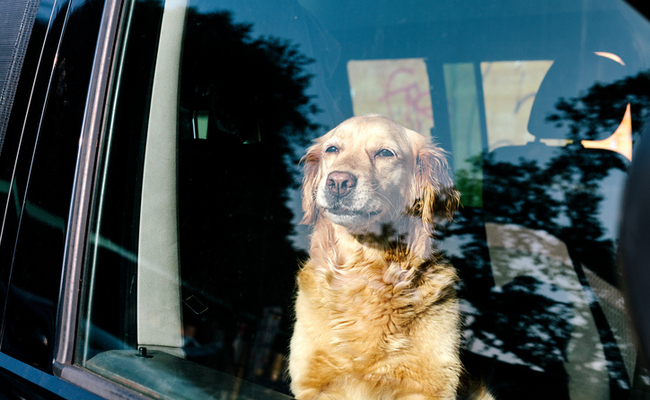
In yet another outrageous case of neglect, three Sacramento, Calif., dogs were found baking alive inside a car that had reached 160 degrees Fahrenheit (71 C).
A Sacramento Fire Department crew circled the vehicle parked at a shopping mall. Using a thermometer designed to detect the car’s internal temperature, the crew quickly determined that the dogs weren’t just hot, they were literally cooking.
The dog seen here panting on the car’s dashboard was immediately taken from the vehicle, and the other two were removed by Animal Control because they were exhibiting aggressive behavior.
This is not the first time that firefighters in Sacramento have had to rescue dogs from a hot car. In fact, they filmed one such rescue last summer.
If you see a dog in a hot car, please take action. Remember, one phone call may not be enough. Wait and see it through to be sure authorities arrive.
Photo Credit: Sacramento Fire Department
ooOOoo
The original article includes a video that is on Facebook that I seem unable to include within this post. But please go here and view it for yourself. (It will require you to log in to your Facebook account.)
Also, please share the information on this post and the one on the 14th as far and wide as you can.
Those of you that read my republication of Deborah’s article yesterday, Six ways dogs help us heal, would undoubtedly have picked up that one of those six ways was Dogs give us physical comforting. They snuggle and lie in our laps.
If we ever needed proof of that quality of comforting then an article from the Care2 site offers such evidence in spades.
ooOOoo
Comfort Dogs Provide Furry Solace to People in Orlando
They were deployed to Newtown. They were deployed to Boston. And now comfort dogs have made their way from around the U.S. to Orlando, Fla., to comfort those affected by yet another terror attack — the deadliest mass shooting in U.S. history that occurred on June 12 at the Pulse, an LGBT nightclub.
The dogs are available for anyone who needs a hug or a furry neck to absorb their tears. They wear vests with the irresistible invitation, “I’m Friendly. Please pet me.”
About a dozen dogs and 20 handlers from the nonprofit are currently in Orlando.
“Your blood pressure goes down when you pet a dog, you feel more comfortable and people end up talking,” Hetzner said. “They’re good listeners, they’re non-judgmental, they’re confidential.”
The dogs will be in Orlando for at least a week, providing comfort to survivors, first responders and Pulse employees. They’ve visited hospitals (many are trained to climb into hospital beds and calmly lie there) and counseling centers, and joined more than 10,000 people at a June 13 candlelight vigil for the victims.
LCC K-9 Comfort Dogs, based in Northbrook, Ill., deploys trained therapy dogs from around the country to areas where tragedies and disasters have occurred, as well as to local churches, hospitals and nursing homes. The nonprofit was created in 2008 after five students were killed at Northern Illinois University. To help ease students’ stress, handlers brought their therapy dogs to the campus, and the effort proved to be very successful.
When it started out, the nonprofit had four comfort dogs. Eight years later, it has more than 100 dogs in 23 states. The dogs are all golden retrievers — Hetzner told the Huffington Post this is because they’re a lovable breed by nature. “Also, because of their fur, they leave a little of themselves with everyone they meet,” he said.
Starting when they’re 8 months old, the comfort dogs-to-be and their handlers go through 12 to 14 months of intensive training before being deployed to areas that need them. Their travel expenses are covered by donations.
“Our dogs have to be able to relate with all age groups and stay calm in all circumstances,” Hetzner told the Huffington Post.
One of the LCC K-9 Comfort Dogs who was flown to Orlando is 5-year-old Gracie of Davenport, Iowa. She’s a comfort-providing veteran, having previously consoled people after the Sandy Hook massacre and in the aftermath of devastating tornadoes in Illinois and Oklahoma.
Gracie is known as one of the sweetest of all the LCC comfort dogs, Jane Marsh-Johnson, one of her handlers, told BuzzFeed News. “She’s always got a big smile.”
Therapy dogs are also helping people in Orlando cope. Zoey and her owner, Marc Gelbke, have been in town since Monday, comforting visitors to the GLBT Community Center of Central Florida. Zoey will also visit a church and hospital, and is available by request, free of charge, through the Loving Paws of Clermont to anyone in the Orlando area who needs a hug.
“We encourage those [in Orlando] who are grieving to sit down on the floor and pet dogs like Gracie,” Marsh-Johnson said.
“The dogs do more for those suffering than human beings can do.”
Care2 stands in solidarity with the LGBTQ community in Orlando, and against all forms of violence and discrimination.
I was reminded of the incredible healing power of our dogs in a recent article published by author Deborah Taylor-French.
Before going on to that article let me say a little more about Deborah. Most easily done by offering what is detailed in her bio:
Deborah Taylor-French, M.A.
Deborahwrites mysteries full of dogs, positive dog leadership and animal rescue. Deborah was awarded and served as a guest artist for California’s Artists in the Schools. As an arts educator, Deborah has led over a hundred residences and teacher workshops.
An active member of Redwood Writers, Deborah continues to serve as Author Support Facilitator. Redwood Writers is the largest branch of the California Writers Club. The true story of Sydney’s adoption, “Punk Rocker With A Poodle Brain” is published in “Vintage Voices Four Part Harmony.” Her fiction and memoir published in eight volumes of the Redwood Writers Anthology.
Deborah was also very supportive over my book and wrote an endorsement:
In “Learning From Dogs” author Paul Handover returns us to our origins where we find how early humans and dogs mutual survival and social relations. Visit the rich evidence of man and dog’s co-evolution. Dive into this man and species adventure. Reading this changes out perspective on dogs, wolves and humankind. Most importantly, “Learning From Dogs” values life on planet earth while offering ideas on peaceful co-evolution. Handover holds out a hand to readers, a hand called hope. A gem of a book.
They hear into the distance beyond our hearing range. Dogs alert us to the approach of other people and animals. With their gift of night vision, dogs often guide us, just go camping with your dog or walk a dog at night.
Examples: Therapy dogs of every kind help the blind, the mobility challenged plus visit the sick and in-firmed. Dogs sniff out cancerous tumors, this field is now being explored by science with the goal of creating a laboratory replica of how dogs detect cancer. Many dog lovers witness their dogs seeking out members coping with illness. The world over has many truth stories of dogs comforting the sick or dying.
Dogs sensing seizeures before they happen so they can maneuver their person to a safe position, such as sitting or lying down.
Give back to dogs
Want to help homeless dogs and cats but can’t adopt?
Click here and visit The Animal Rescue Site. Through this site you can download an app, which gives money to feed needy shelterless pets. This app is called Pet to Give. Just like its title, every pet gives a selected shelterless funds to feed dogs and cats.
Check out the Greater Good. I like it because they respect my time. When I signed up for email updates, I learned that I could put in vacation holds on email updates. This is the only site informational source that I have never unsubscribed from.
Please share to spread the ways dogs heal us. In this terrible time following the mass murder in Orlando, Florida, I hope we all will spread loving kindness and healing.
Don’t have a dog right now?
No problem. Make dog friends.
If you do not have a dog, take some fresh sugar snap peas (cut or break them up for small dogs) sit in a park. As dog walkers if their dog is friendly with new people. Once the dog’s person says it’s okay to greet the dog, LET THE DOG COME TO YOU. A friendly dog will wag his or her tail and slink up to sniff your hand. After you have a relaxed connection, ask the dog’s person if you can give him or her a treat. Show them the snap peas. Hold one in the palm of your hand and let the dog eat off your hand like a dinner plate. There you go. You’ve made a good friend. Now go make another.
For eight years we lived in an apartment and could not have any pets. I missed having a dog so much. Most dog lovers know that pain and will be sympathetic. Dogs always have enough love for everyone.
ooOOoo
Hope you loved this as much as Jean and I did.
Please come back tomorrow where we continue the theme of the ways in which our dogs comfort us.
Is it me or is the world becoming crazier each new day!
What with the ‘Remain/Leave’ EU referendum coming up in my old country and Presidential politics in my new country it seems these days as though the need for healing is growing in leaps and bounds. Thank goodness for being able to hug a dog or two (and Jean) to be reminded of what matters most of all.
I was reminded of the incredible healing power of our dogs in a recent article published by author Deborah Taylor-French. That will be republished tomorrow, with Deborah’s kind permission. However, I wanted to make this message last for more than a single post and to achieve that I’m republishing a guest post that appeared in this place towards the end of last year.
But first my introduction to that guest post.
Forget about the big world out there, be loved by our dogs.
Monday’s post about the precariousness of man’s future on this planet if we don’t prevent the melting of the Antarctic ice sheet was a bit gloomy, however true it might be. The gloom continued with yesterday’s post about the VW scandal illustrating the “unethical culture endemic in business”.
So what a nice change to think about the way that our pets keep us bright, cheerful and healthy.
All of which is my way of introducing a guest post from Vee Cecil. Now I am fairly cautious about guest posts from those who want to promote their businesses, for obvious reasons. But Vee’s essay is so lovely that it truly deserves to be shared.
Firstly, here is the email that Vee sent me back in August,
Hi!
In the U.S., 91 percent of pet owners say they consider their pet to be a member of the family. And for good reason! Our pets are constant sources of comfort and companionship.
What many pet owners may not realize is how great their furry family members are for their physical and mental health. For example, studies have shown that pet owners have lower blood pressure than people who don’t have pets and that being around pets also makes us “less anxious and less stressed.” And that’s just the beginning. There are many other wonderful health benefits that result from owning a pet.
May I write an article for learningfromdogs.com on this topic? The article will be approximately 500 words, unique to your site, and complete with resources.
Please let me know – I am always looking to spread the word about how we can be healthier and happier and having a pet is a great way to achieve both!
Best,
Vee
Here then is that article.
ooOOoo
Feeling Under the Weather? Learn More About the Amazing Healing Powers of Pets
Ask any dog owner and you’ll find out just how remarkable a dog can be. They can turn a terrible day into an amazing one with one lick of the face or wag of the tail. But more and more studies are showing that our four-legged friends might be even more awesome than we previously thought.
As TheWashington Post explains, research is showing that being around dogs can help us feel better and less stressed, while also improving our physical health. For example, the article cites studies which found that our pets can lead to “lower blood pressure, lower resting heart rates and less risk of hypertension.”
And that’s not all. Here are four other health issues and how dogs help their human companions:
Cancer. As this CBSNews.com article explains, a recent study at Mount Sinai Beth Israel found that therapy dogs had a very positive impact on patients receiving chemo therapy. The patients showed improvements in “emotional well-being and quality of life.” The director of the program that provided the therapy dogs also noted that patients felt less stressed and anxious. The article notes that this was a ground-breaking study as the impact of therapy dogs on cancer patients hadn’t been examined before.
Alzheimer’s Disease. Therapy dogs are also proving to be extremely helpful for patients with Alzheimer’s. In this article, a man with early on-set Alzheimer’s explains how his therapy dog helps him with daily tasks. Through the help of his therapy dog, the man says his stress and anxiety levels have significantly reduced.
Surgery recovery. Chances are if you were recovering from a painful surgery you wouldn’t turn down a snuggle from a pet. But, as The Telegraph shows, researchers have found that pets can do more than just provide you with a little tender loving care. A study led by a researcher from Loyola University found that pet therapy can reduce the amount of pain patients experience after surgery. In fact, according to the article, the patients in the study, who had had joint replacement surgery, “needed 50 per cent less pain medication if they used pet therapy.”
Diabetes. And perhaps most remarkable of all is what therapy dogs can be trained to do for diabetics. In this case, dogs put their acute sense of smell to good use. As this article explains, dogs exhibiting a better-than-average sense of smell can be trained to help diabetics. Once trained these dogs use their sense of smell to detect signs of hypoglycemia and low blood sugar (based on their human companion’s breath). They’re also trained to get a sugary food for their diabetic, get help if the person goes into diabetic shock, and more.
As more research is conducted to see the benefits of not only service dogs, but pets too, it will be interesting to see how dogs are woven into more medical treatments. They are truly amazing creatures, who can help us mind, body, and soul.
***
Vee Cecil keeps busy by being a wellness coach, personal trainer and bootcamp instructor in Kentucky. She also recently launched a blog where she shares her passion for health by writing about her favorite tips, activities and recipes.
ooOOoo
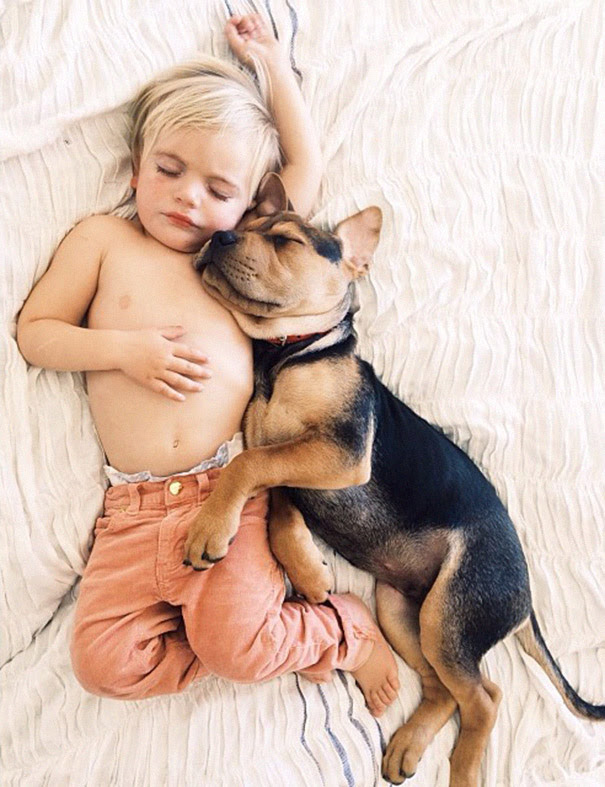
If proof was needed of the quality of a relationship that can exist between a person and a dog then just look at the following photograph.
It has healing power stamped all over it; for the young boy and the Shepherd Dog!
Not exclusively the domain of the male human species!
As most of you know yesterday was Father’s Day. But offering memorial pictures of our recently deceased Hazel was far more important.
Nonetheless, I had seen an item published over on the Care2 site that I wanted to share with you. Namely, that amazing dads are also a feature of the animal kingdom. Granted, not all animals but nevertheless of sufficient importance to attract the attention of The Smithsonian. Or in their words:
Most mammal dads wouldn’t exactly win the “Best Father of the Year” award.
Engaged fathers—those who care for their offspring or bring home the bacon so their female mates can focus on childcare—are present in only about 10 percent of mammal species. But for the rare few who do stick around, the rewards can be myriad: new research finds that parenting efforts pay big dividends for offspring and mates alike. Stay-at-home dads appear to boost reproductive success among their mates by enabling them to breed more frequently and produce larger litters, according to a study published this week in the journal Nature Communications.
Editor’s note: This post is a Care2 favorite, back by popular demand. It was originally posted on June 14, 2014. Enjoy!
Not all non-human animal dads are cut out for family life, but there are a number of species who have become known for their role as fathers who deserve a salute, from giant water bugs who carry dozens of eggs on their backs to males who actually get pregnant and dads who operate solo as single parents. This Father’s Day, it’s time to celebrate some of the amazing dads from the animal kingdom who go above and beyond when it comes raising and protecting their young.
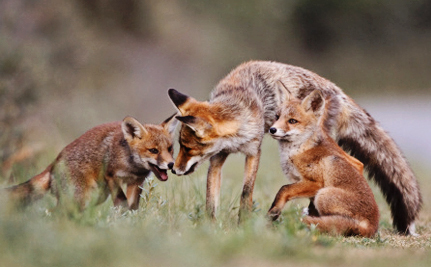
Red Fox
Male red foxes aren’t just loving mates, but excited and protective fathers. They take on the task of providing food for their mates every few hours for about a month after she gives birth. Then they take on the role of teacher – but teachers who like to take time out to play. Even when it’s time to get serious and teach their young how to start finding their own food, fox dads help them out and make sure they don’t really go hungry by hiding it near their dens.
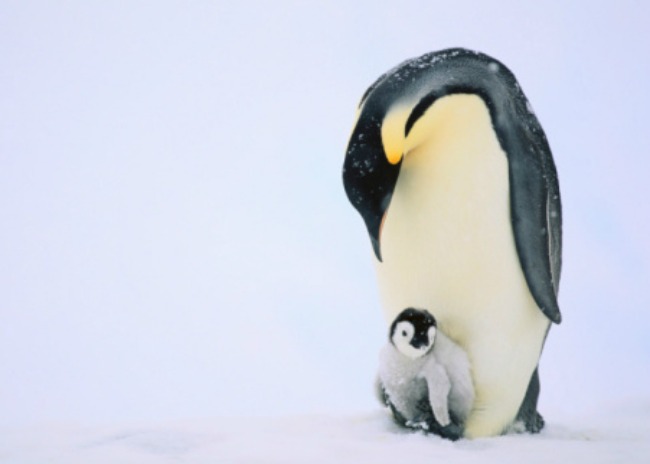
Emperor Penguin
After females lay a single precious egg, Emperor penguin dads take over the responsibility of incubating it by balancing it precariously on their feet and keeping it warm under their feathers in the frigid Antarctic weather while mothers go off to feed. Dads can go for about two months without eating until the egg hatches, at which point he will feed it before mother’s return to give them a break from baby-duty.
Emperor Penguin Protecting Offspring from the Cold
Sea Horse
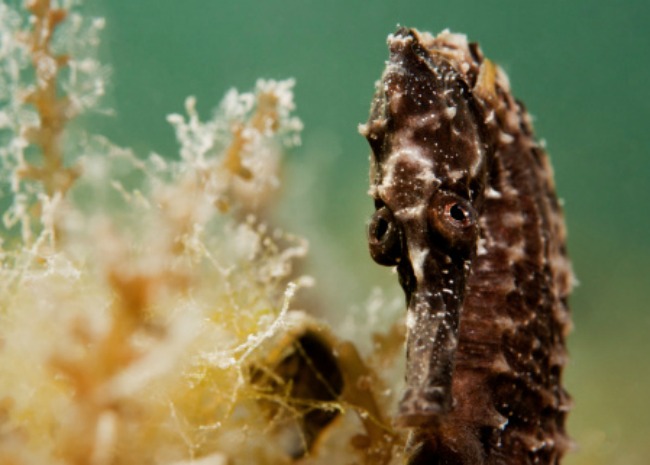
Seahorses, who are also known to mate for life, have reverse roles; the females compete for males, and the males don’t just play a role in pregnancy, but actually get pregnant. Females deposit their eggs in the male’s pouch, where he fertilizes and carries them until tiny baby seahorses emerge fully developed. According to Science Daily, the process of male pregnancy is unique to the fish family Syngnathidae, which also includes pipefish and sea dragons.
Black seahorse among seaweed
Spotted Sandpiper
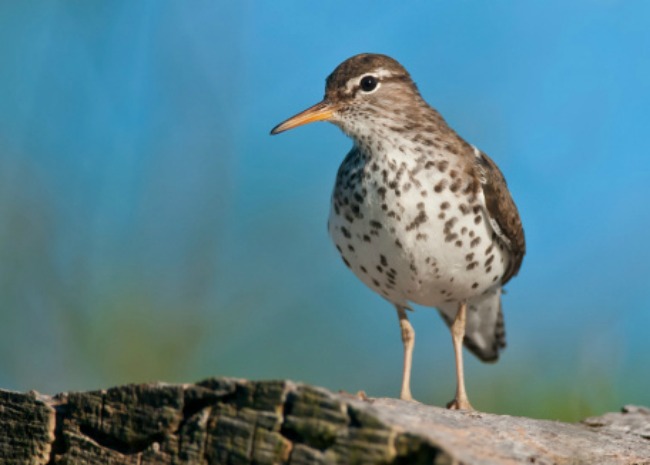
It doesn’t happen every time, but sandpipers have been found to reverse roles where female sandpipers establish and defend territory, while taking on multiple male partners. After luring a male to mate with and laying her eggs, she takes off to find another mate. Dad meanwhile stays to incubate the eggs and becomes the primary caregiver for the young for the first few weeks of their lives.
Spotted Sandpiper
Gray Wolf
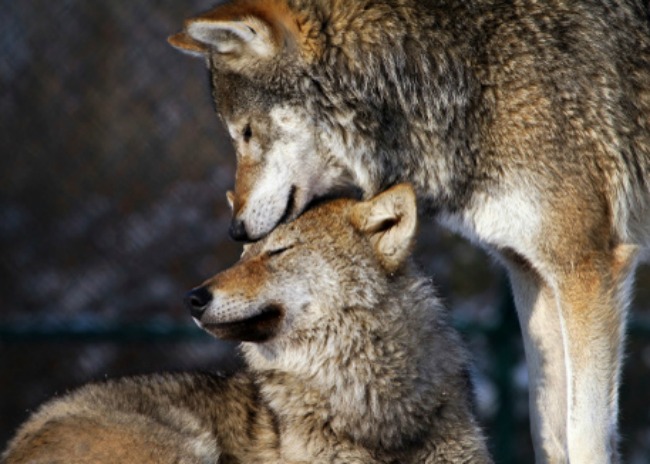
Despite the myths surrounding wolves that make them out to be villains, alpha male are loving, loyal and protective mates, fathers and leaders. Also known to mate for life, males who breed will guard their partners and pups while they’re in the den and take on the responsibility of finding everyone food. Even as pups grow older, dads will take on the role of teacher, helping them learn their role in the pack and the world.
Mother and son
Great Horned Owl
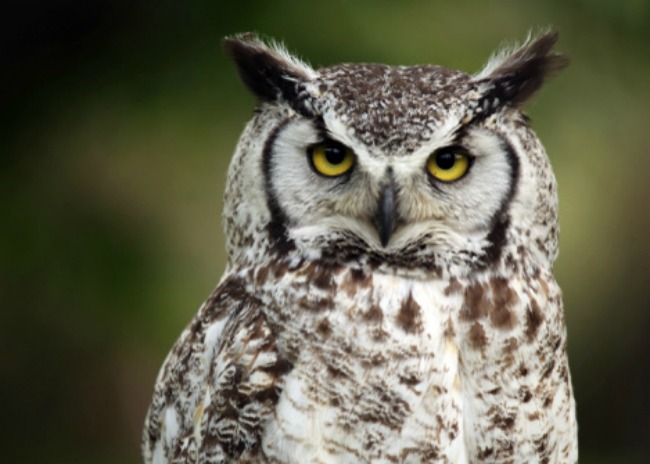
Great horned owl dads are the stereotypical breadwinners in their families. After finding the perfect home with their mates, male great horned owls take on the role of provider by hunting enough to feed himself and his mate, who is bigger than he is, before taking on the added responsibility of hunting for their young when they hatch.
Grumpy Owl
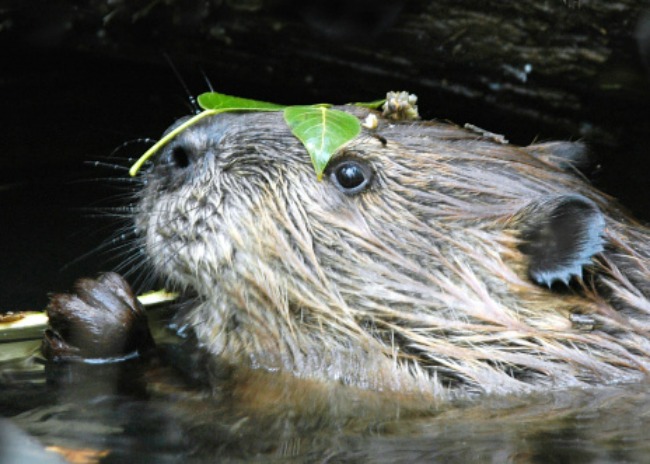
North American Beaver
Beaver dads are devoted family men, handymen and providers in the animal world. They mate for life and take on a co-parenting role in raising their young until they’re about 2-years-old, while helping care for them and teaching them how to become successful ecosystem engineers before they go off and start families of their own.
In 2012, a beaver in Martinez, Calif., known as “Dad” raised fears about what would happen to his young after his mate died from an infection, but he showed us he could do it all as a single father of three.
Beaver Wearing Leaf
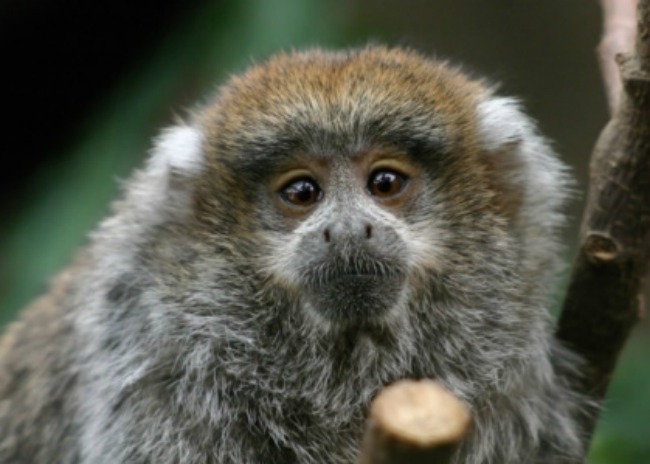
Titi Monkey
Male titi monkeys, who are known for monogamous relationships, are also known for the strong bond they build with their young as primary caregivers. Except for time spent with mom nursing, babies spend the rest of their time being carried around, cared for and protected by their fathers for the first few months of their lives.
Titi Monkey
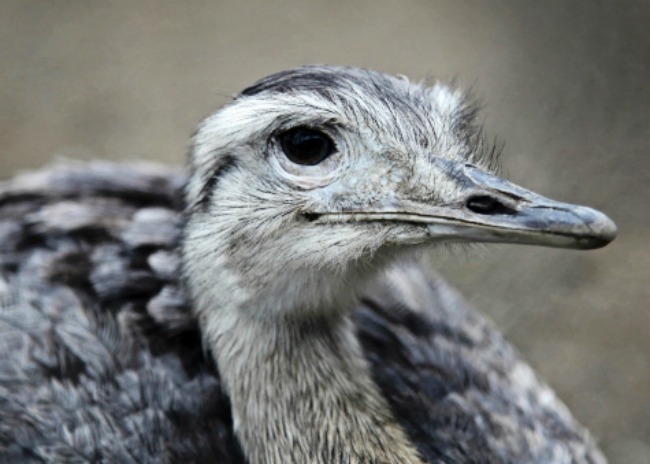
Rhea
As members of a polygamous species, male rheas have a lot of partners, but when it comes to child-rearing these dads pull their weight and then some. Males can have up to a dozen or so female partners who all lay eggs in a nest he builds before they leave. Males then take on the role of incubating and guarding what can be more than 50 eggs for close to two months before taking on the role of a single parent after they hatch. Males have also been known to adopt orphaned chicks who have been separated from their brood.
Nandu Greater Rhea
Darwin’s Frog
Darwin’s frog dads, who are native to South America, have come up with a neat and bizarre way to protect their offspring from predators. While they breed like other amphibians, where females lay eggs in the water that are fertilized by males, the males of this species take the fertilized eggs into their mouths, store them in their vocal sacs and keep them there until they’re fully developed frogs — at which point he throws them up.
Except that the precise moment of the Summer Solstice is later today or Monday, June 20, 2016 at 3:34 PM PDT to be exact. In universal time (UTC) that is Monday, June 20, 2016 at 22:34 UTC.
However, it is a rather special solstice and all will be explained in tomorrow’s post, albeit a little under nine hours after the event!
Jean and I were awoken around 2:15am to the sounds of Hazel having some trouble breathing.
We both were instantly out of bed and comforting her.
A little later she stopped breathing and then her heart ceased to beat. It was 2:25.
There has been so much interest and concern over her from you all that I wanted to post this without delay. We will be arranging to have the exact cause of death determined so that, too, may be shared with you all.
I will also write up an eulogy to be published in a few days time.
Hot, fine weather does carry a risk – for our dogs.
A week today will see us celebrating the Summer Solstice and for much of the Northern Hemisphere the heat of the summer days soon will be upon us. Both we and our dogs love taking a bit of sunshine but equally for both species the danger of heat stroke is not to be underestimated.
So it seemed highly appropriate to republish an article that was presented over on Care2 a couple of weeks ago.
ooOOoo
Five Factors That Put a Dog at Risk for Heatstroke
Summer can be an incredibly fun season for dogs and their active owners. There are walks to go on, boat rides to take and beaches to explore!
But for all the fantastic opportunities summertime offers, there are also a number of seasonal dangers. A serious one that all dog owners should keep in mind is heatstroke. While all dogs are at risk of heatstroke, there are a few factors that can make your dog more vulnerable. From the genetic predisposition of certain breeds to the dangers some outdoor dogs face, here are five heatstroke risk factors to be aware of — and avoid.
Congenital Defects or Underlying Respiratory Problems
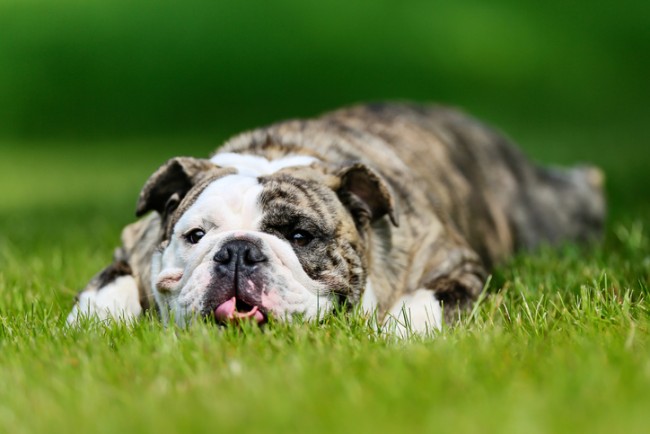
Upper-airway problems, as seen in flat-faced dogs like Pugs and Boxers, are some of the most common risk factors for heatstroke in dogs exposed to higher temperatures, according to Dr. Debbie Mandell, staff veterinarian and adjunct associate professor at the University of Pennsylvania’s Matthew J. Ryan Veterinary Hospital. As dogs get hotter, they pant to cool down, and brachycephalic breeds have a difficult time breathing so hard in hot conditions.
Brachycephalic airway syndrome isn’t the only potential issue. Large and medium breeds, like Labs and Pit Bulls, can experience laryngeal paralysis, and collapsing trachea commonly affects small dogs like Pomeranians and Yorkies. With both conditions, the dogs’ airways swell as they pant, which causes them to pant harder. That in turn increases the swelling and can create a dangerous situation quite quickly.
Not Being Acclimated to Hot Weather
That sunny weather can be so inviting that it’s nearly impossible to remain indoors, especially if you — and your dog — have been stuck inside for months. But it’s important to remember that even if you’ve been hitting the gym during the cooler months, your dog might not have built up the same tolerance for activity. And if you take him out to run or play with you, he’s not going to know when to stop, even if he reaches the brink of collapse due to heat stress, Dr. Mandell says.
So what’s a responsible dog owner to do? First of all, start with a visit to your vet, so you’re sure your dog is healthy enough for increased exercise. Second, exercise restraint when it comes to, well, exercise. Start off slowly and build up your dog’s fitness very gradually. Third, make sure you know the signs of heat stress (like excessive panting and drooling, a fast pulse and gums that have changed in color from pink to bright red) and be prepared to help your dog cool down before it becomes an emergency. If your dog vomits or has bloody diarrhea, you should call your veterinarian immediately.
Being Kept Outdoors Without Access to Shade and Water
It’s not only indoor dogs who aren’t used to the heat who can find themselves at heatstroke risk — dogs who live primarily outdoors can land in trouble come summertime, too, if they’re left without shade and water. Of course, it’s best for dogs to be kept primarily indoors, but if a dog must be mostly outdoors, always provide a cool area out of the sun and plenty of fresh water.
Being Left In the Car
When it comes to ways to avoid heatstroke risk, never, ever leave a pet in a hot car. The temperature inside a car can reach over 120 degrees in minutes, Dr. Mandell says. And no, cracking the window doesn’t make enough of a difference to help.
Should you see an animal locked inside a hot car, there are ways to safely rescue it. The Humane Society of the United States and the ASPCA recommend that you write down the car’s make, model and license plate; attempt to locate the owner; and call animal control or your local police department for help.
Obesity and Thick Fur
Obesity can make dogs more susceptible to a whole host of health issues, including heatstroke. That’s because not all heat escapes dogs through the respiratory system; in fact, some heat loss occurs through the skin. But the layer of fat in obese pets can limit their ability to cool themselves that way.
That layer of fat under the skin serves as insulation and can prevent some of that heat from getting to the skin to be released. Thick fur can create the same problem, so furry dog breeds, like Newfoundlands and Great Pyrenees are at similar risk.
By Kristen Seymour | Vetstreet.com
ooOOoo
If any reader has further advice and tips to help others then please don’t hesitate to leave a comment.
Yes, Pharaoh was born on June 3rd., 2003 in Devon, South-West England close to where I was living at that time.
I deliberately didn’t mention it yesterday as I wanted to devote both days this weekend in celebration of this wonderful doggy friend.
Pharaoh being held by Sandra Tucker, of Jutone, the breeder. Date around late Summer in 2003.
So rather than write reams about this wonderful relationship that I have had with Pharaoh all I am going to do both today and tomorrow is to share with you a few memories of these fantastic years.
As a young dog Pharaoh was up for anything new. This picture of him on the Dart Valley Steam Railway in South Devon.Never could bring myself to take off with Pharaoh in the back of this old Piper Super Cub (Reg: R-151) but he enjoyed no end of taxying around the grass airfield in Devon. Picture taken in July, 2006.Pharaoh digging on a Devon beach in January, 2008 days after I had returned from Mexico and meeting Jean for the first time.That incredible, intense face of his! Photograph taken in Devon before Pharaoh and I travelled out to Mexico.Pharaoh now settled in to life in San Carlos, Mexico. Picture taken in March, 2009.Fast forward to all of us living up at 5,000 ft in Payson, Arizona, some 80 miles North-East of Phoenix. Photo taken the last day of the year in 2010.Enjoying the warm grass in July, 2012 just a few weeks before we discovered our present home in Southern Oregon.
Hope you can return tomorrow for my usual Picture Parade as it will be exclusively more photographs of Pharoah.
The last food recall that was shared with you all was the one on the 12th March concerning Dave’s Pet Food made by Purina.
ooOOoo
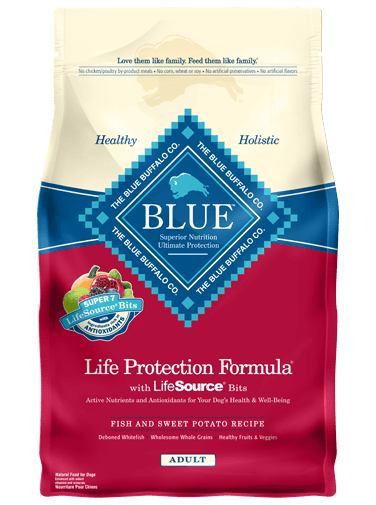
Blue Buffalo Dog Food Recall of May 2016
May 31, 2016 — Blue Buffalo Company of Wilton, Connecticut, has confirmed that it is voluntarily recalling a limited batch of its Life Protection Formula Dog Food product due to the presence of excessive moisture and mold.
What’s Being Recalled?
The company is voluntarily recalling a single batch of its Blue Buffalo Life Protection Formula Fish and Sweet Potato Recipe for Dogs with the following batch information:
Blue Buffalo Life Protection Formula Fish and Sweet Potato Recipe
30 pound bag
Best by date: April 11, 2017
Batch data: AH 2A 12:08-14:00
What Caused the Recall?
According to a company representative, the voluntary recall was initiated due the discovery of excessive moisture and mold.
The recall is limited to a single batch that was manufactured during one 2 hour period.
What to Do?
Customers are invited to return affected product to the place of purchase for a full refund.
Those with questions may call Blue Buffalo Customer Service at 855-201-4331 between 8 am and 5 pm ET, Monday through Friday.
U.S. citizens can report complaints about FDA-regulated pet food products by calling the consumer complaint coordinator in your area.
At all levels and in so many ways it is life-giving.
Animals must see touch as a natural way of living. We humans are less natural about touch especially with people that we don’t know so well. Not everyone, of course, but as a general statement it is probably not wrong.
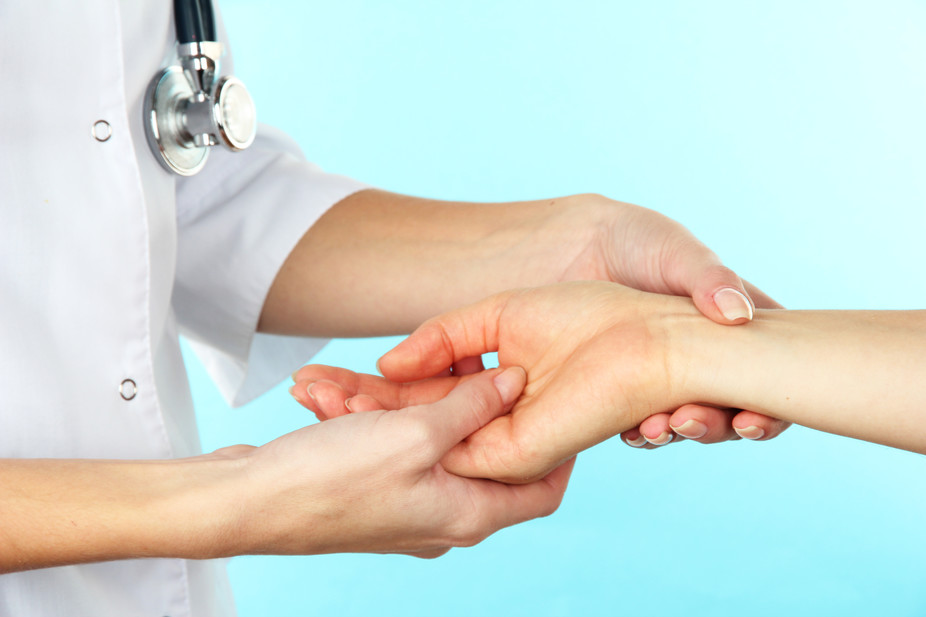
The topic of touch has come to me today as a result of a recent item read over on The Conversation blogsite; specifically about the importance of touch between a doctor and his or her patient. Here it is republished within the terms of The Conversation:
In contemporary health care, touch – contact between a doctor’s hand and a patient – appears to be on its way out. The expanding role of CT and MRI imaging is decreasing reliance on touch as a way of making diagnoses. Pressures to move patients through the system more quickly leave health professionals with fewer opportunities to make contact. Our experience suggests that when doctors spend fewer minutes with patients, less time is available for touch.
Yet despite the rise of scanners, robots and other new medical technologies, the physician’s hand remains one of medicine’s most valuable diagnostic tools. Touch creates a human bond that is particularly needed in this increasingly hands-off, impersonal age. Medical practice is replete with situations where touch does more than any words to comfort and reassure.
The USC psychologist Leo Buscaglia, whose habit of hugging those he met soon earned him the sobriquet “Doctor Love,” bemoaned our neglect of touch in his book, “Love,” in these terms:
Too often we underestimate the power of a touch, a smile, a kind word, a listening ear, an honest compliment, or the smallest act of caring, all of which have the potential to turn a life around.
For thousands of years, touch has been recognized as an essential part of the healing arts. Native American healers relied on touch to draw out sickness, and kings and queens were long believed to possess the “Royal Touch,” through which the mere laying on of hands could heal. The Bible contains numerous stories of the healing power of touch.
Touch is an essential part of our well-being
An indication of our need for touch can be found among our primate relatives. Psychologists have observed that many such species spend upwards of five hours of each day touching one another, partly through grooming. For many human beings, however, the daily dose of touching would be measured not in hours but minutes, perhaps even seconds.
Lack of touch can be hazardous to health. In experiments with primates some 60 years ago,
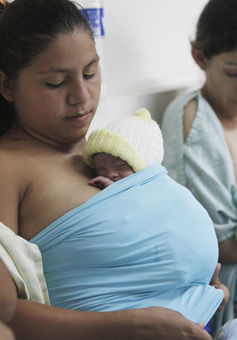
A young mother participates in a ‘Kangaroo Mother’ program at the National Maternity Hospital in El Salvador. Luis Galdamez/Reuters
researcher Harry Harlow demonstrated that young monkeys deprived of touch did not grow and develop normally. Mere food, water and shelter are not sufficient – to thrive, such creatures need to touch and be touched.
The same can be said for human beings. During the 20th century, wars landed many babies in orphanages, where their caretakers observed that no matter how well the infants were fed, they would fail to thrive unless they were held and cuddled on a frequent basis. Touch offers no vitamins or calories, yet it plays a vital role in sustaining life.
More recent studies have corroborated these findings. “Kangaroo care,” using papoose-like garments to keep babies close to their mothers, decreases the rate at which they develop blood infections. Touching also improves weight gain and decreases the amount of time that newborns need to remain in the hospital.
Touch creates a bond between doctor and patient
Novelist and physician Abraham Verghese has argued that touching is one of the most important features of the patient-physician interaction. When he examines a patient, he is not merely collecting information with which to formulate a diagnosis, but also establishing a bond that provides comfort and reassurance.
The notion that touch can reassure and comfort has a scientific basis. Ten years ago researchers used MRI scans to look at the brains of women undergoing painful stimuli. When subjects experience pain, certain areas of the brain tend to “light up.” The researchers studied subjects when they were alone, when they were holding a stranger’s hand, and when they were holding their husband’s hand.
They found the highest levels of pain activation when the women were alone. When they were holding a stranger’s hand, the pain response was decreased. And levels of activation were lowest of all when they were holding their husband’s hand. Interesting, the higher the quality of subjects’ marriages, the more pain responses were blunted.
Touch from parents helps kids in intensive care
We have been studying this phenomenon in our own institution, looking at the effect of touch not only on patients but on the parents of patients admitted to the pediatric intensive care unit.
The project, called ROSE (Reach Out, Soothe, and Embrace), sought to determine whether increasing opportunities to touch patients could promote parent well-being without compromising patient safety.
Instead of merely determining whether patients could be taken off the ventilator or fed, we also identified patients who could be safely touched and even held in their parents’ arms. When a patient was deemed safe to hold, a magnet bearing the image of a red rose embraced by two hands was placed on the door to the patient’s room.
While we are still analyzing the results and further study is needed to fully delineate the health benefits of touch, several findings are already clear.
First, increasing opportunities for touch does not compromise patient safety. Second, the subjective well-being of family members is enhanced when touching is encouraged. Third, promoting touch empowers family members to become more involved in their child’s care.
To be sure, inappropriate and unsafe touching can be harmful. But when touch is encouraged in the right ways and for the right reasons, it is good for patients, family, friends and health professionals alike. Touch is one of the most fundamental and effective ways to create a sense of connection and community among human beings.
In the words of the 20th-century theologian Henri Nouwen, who wrote in his book, “Out of Solitude”:
When we honestly ask ourselves which person in our lives means the most to us, we often find that it is those who, instead of giving advice, solutions, or cures, have chosen rather to share our pain and touch our wounds with a warm and tender hand.
So next time you find yourself confronted by a person in distress, remember the power of touch. Medicines and words both have healing power, but so does touch, and it is perhaps the most widely available, financially responsible and safest tool in the healing arts. When we touch, we connect, and when we connect, we create a healing bond for which there is simply no substitute.
ooOOoo
“When we touch, we connect, and when we connect, we create a healing bond for which there is simply no substitute.”
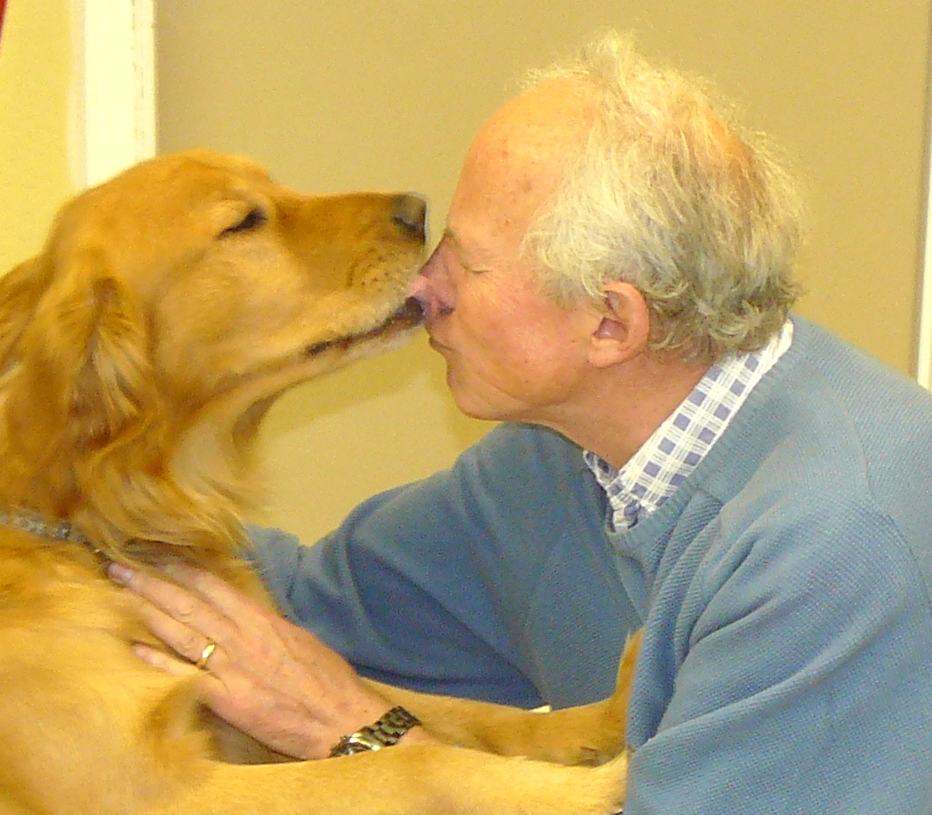
Jean with my mother back in July, 2014.
The healing touch!
Or to repeat the elegant words of Leo Buscaglia:
Too often we underestimate the power of a touch, a smile, a kind word, a listening ear, an honest compliment, or the smallest act of caring, all of which have the potential to turn a life around.
 By: Laura S. June 27, 2016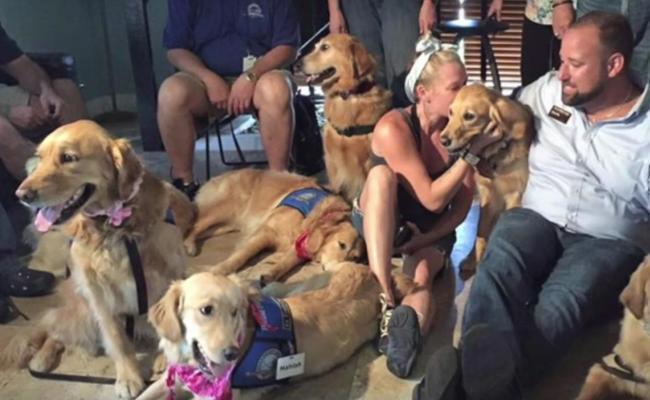










 Learning from Dogs