Category: Government

The view from the window.

Perhaps ancient man is still alive and well in all of us.

Two delightful events have provided the fuel for today’s post which, I warn you, is much more the personal mental ramble than the usual daily post on Learning from Dogs.  So, health warning, continue reading at your own risk, or be safe and switch off now!

Before getting in to my perambulations, just a word of thanks to you for your support.  Last month, there were 31,291 viewers of Learning from Dogs and 71 of you have chosen to subscribe.  I am humbled by your interest.  Don’t ever hesitate to give me feedback or, if you prefer, comment to a specific post.

OK, to the theme of today.

On Wednesday I had an enjoyable lunch with a friend from here in Payson, Dennis L.  Sitting in the Crosswinds restaurant at Payson airport is one of the most beautiful eating spots in terms of the view from the window.  So it’s a very conducive place to relax and try put the world to rights!  Conversation ranged across a variety of topics but frequently touched on the lunacy of so many things to do with man, especially when it comes to the government of peoples.

Dennis and I also acknowledged that entering politics with a set of passionate ideals, as we were sure many persons did, would quickly run up against the skein of vested interests that must permeate governments from top to bottom.

Yes Minister was a satirical comedy written by Antony Jay and Jonathan Lynn that ran for many years.  It was extraordinarily funny, here’s a 3-minute clip,

That programme underlined, far better than anything else, how governments most probably work in reality.

Dennis and I were clear, as so many millions of other global citizens must be, that the complexity of commerce, politics, national interests, global finance, and more, had created ‘systems’ of decision making that were utterly disconnected with the needs of mankind having a long and stable future on the only finite home around, Planet Earth.

Then today (Thursday), Jean and I attended our regular weekly gardening course at the local college in Payson.  Today’s subject was Arizona’s Climate and the tutor, Mike C., was a professional climatologist and meteorologist.  It was fascinating, indeed, totally absorbing.  Mike’s graphs and slides about the climate, some showing data for the last 1,000 years, underlined the incredible complexity and interconnectedness of the processes that made up the global climate system.

Once again that use of the word ‘complexity’.  He confirmed that there was no scientific doubt that the world was warming as a result of changes to the Earth’s atmosphere, science certain most of it is caused by increasing concentrations of greenhouse gases produced by human activities such as deforestation and burning fossil fuels.

Mike closed the session with an interesting reflection.  He reminded the audience that mankind is still essentially wired, in evolutionary terms, to know how to react to an attacking tiger or similar wild beast, as in the fight or flee response, than know how to deal with such complex, despite intellectually obvious, threats as global climate change, rising sea levels and many other totally unsustainable practices.  Mike held the view that only when man had the threat in his face equivalent to that of the attacking tiger would there be a wholesale change.

On the home page of this blog, I write,

As man’s companion, protector and helper, history suggests that dogs were critically important in man achieving success as a hunter-gatherer.  Dogs ‘teaching’ man to be so successful a hunter enabled evolution, some 20,000 years later, to farming,  thence the long journey to modern man.  But in the last, say 100 years, that farming spirit has become corrupted to the point where we see the planet’s plant and mineral resources as infinite.  Mankind is close to the edge of extinction, literally and spiritually.

In the context of homo sapiens, Latin for “wise man” or “knowing man”, then we know that modern man, anatomically, originated in Africa about 200,000 years ago.  Modern man only evolved from hunter/gatherer to farmer around 10,000 years ago, a tiny proportion of H. sapiens existence and, in evolutionary terms, no time at all.

The DNA of the domesticated dog separated from that of the wolf around 100,000 years ago.  No one knows for sure when man and dog came together but there is archaeological evidence of dogs being buried in mens’ graves around 30,000 years ago.  That’s an association over a huge time period.

Dennis and Mike, between them, triggered in my mind something fundamental.  Perhaps modern society, with all it’s bizarre behaviours and so many totally illogical practises (especially, in terms of a long-term relationship with our planet), could be understood.  Understood from the perspective of our social behaviours, built so much on technology, having raced far on to the point where they are now practically out of sight of our instinctive evolutionary behaviours.  We really don’t know how to change those core behaviours.

In contrast, dogs have remained much more stable with regard to their evolutionary progress and their external world.  Consider that the last big change for the domesticated dog was the association with man and that is at least three times as long ago as man becoming farming man.  No wonder when we curl up with our dog it has echoes of a time thousands of years before we could even spell the word, ‘politician’.  Echoes of a stability that seems now so way beyond reach.

And the view from the window of the Crosswinds ……

Mogollon Rim, North of Payson, AZ., in Winter

All Watched Over by Machines of Loving Grace

Three very thought-provoking films

Over the last week we have watched all three 0ne-hour films made by the BBC, aired in 2011,  under the title of the heading of this post, All Watched Over by Machines of Loving Grace.  The films are available on the website Top Documentary Films, the direct link is here.  As that website explains,

A series of films about how humans have been colonized by the machines they have built. Although we don’t realize it, the way we see everything in the world today is through the eyes of the computers. It claims that computers have failed to liberate us and instead have distorted and simplified our view of the world around us.

1. Love and Power. This is the story of the dream that rose up in the 1990s that computers could create a new kind of stable world. They would bring about a new kind global capitalism free of all risk and without the boom and bust of the past. They would also abolish political power and create a new kind of democracy through the Internet where millions of individuals would be connected as nodes in cybernetic systems – without hierarchy.

2. The Use and Abuse of Vegetational Concepts. This is the story of how our modern scientific idea of nature, the self-regulating ecosystem, is actually a machine fantasy. It has little to do with the real complexity of nature. It is based on cybernetic ideas that were projected on to nature in the 1950s by ambitious scientists. A static machine theory of order that sees humans, and everything else on the planet, as components – cogs – in a system.

3. The Monkey in the Machine and the Machine in the Monkey. This episode looks at why we humans find this machine vision so beguiling. The film argues it is because all political dreams of changing the world for the better seem to have failed – so we have retreated into machine-fantasies that say we have no control over our actions because they excuse our failure.

Adam Curtis is a documentary film maker, whose work includes The Power of Nightmares,The Century of the SelfThe Mayfair SetPandora’s BoxThe Trap and The Living Dead.

As was eluded, the three films are deeply thought-provoking.  There is a ‘taster’ to the first film on YouTube, as below,

Adam Curtis, the film maker, has a blog site under the BBC Blogs umbrella.  The entry on that blog-site by Adam in connection with these films is here, and makes interesting reading.  It also includes a longer trailer than the one from YouTube, above.

Finally, there are comprehensive writings on all three films on the WikiPedia website here.  To give you a taste, here’s what was written about the third film,

The Monkey In The Machine and the Machine in the Monkey

This programme looked into the selfish gene theory which holds that humans are machines controlled by genes which was invented by William Hamilton. Adam Curtis also covered the source of ethnic conflict that was created by Belgian colonialism’s artificial creation of a racial divide and the ensuing slaughter that occurred in the Democratic Republic of the Congo, which is a source of raw materialfor computers and cell phones.

William Hamilton went to Kisangani in the Democratic Republic of the Congo while the Second Congo War was raging. He went there to collect Chimpanzee faeces to test his theory that HIV was due to a medical mistake. Unfortunately he caught malaria, for which he took aspirin, which caused a haemorrhage and he died. However his selfish gene theory lived on.

In 1960 Congo had become independent from Belgium, but governance promptly collapsed, and towns became battle grounds as soldiers fought for control of the mines. America and the Belgians organised a coup and the elected leader was assassinated, creating chaos. The Western mining operations were largely unaffected however.

Bill Hamilton was a solitary man, and he saw everything through the lens of Darwin’s theory of evolution. When he wanted to know why some ants and humans gave up their life for others, he went to Waterloo station and stared at humans for hours, and looked for patterns. In 1963 he realised that most of the behaviours of humans was due to genes, and looking at the humans from the genes’ point of view. Humans were machines that were only important for carrying genes, and that it made sense for a gene to sacrifice a human if it meant that another copy of the gene elsewhere would prosper.

In the 1930s Armand Denis made films that told the world about Africa. However, his documentary gave fanciful stories about Rwanda’s Tutsis being a noble ruling elite originally from Egypt, whereas the Hutus were a peasant race. In reality they were racially the same and the Belgian rulers had ruthlessly exploited the myth. But when it came to create independence, liberal Belgians felt guilty, and decided that the Hutus should overthrow the Tutsi rule. This led to a blood bath, as the Tutsis were then seen as aliens and were slaughtered.

So, all in all, this is a great personal recommendation and, it goes without saying, those of you that do watch the films and want to comment, would love to hear from you.

The Changing Face of Society

A powerful and compelling essay from Tom Engelhardt

First, a preamble from me.

There have been a number of references to Tom Engelhardt’s writings on Learning from Dogs over the last 12 months; if you want to browse through them why not start with TomDispatch – The Great American Carbon Bomb.  Frequently, Tom writes an introductory piece to an essay from a guest author; Tom has generously given me written permission to republish any of his writings.

But his latest essay is 100% Tom and beautifully written.  My instinct is to agree with Tom’s conclusions entirely.  The reason you hear a slight hesitation in that last sentence is because I was not born an American, indeed only became a permanent USA resident this last April.  From the perspective of  a Londoner born in 1944, I suspect not too many years Tom’s senior, much of Tom’s essay really resonates with me.

OK, that’s enough from me.  Whoops, sorry, a few more words.  Tom’s essay is long, but so what!  Guess what I am saying is don’t be put off by the length, just make a mental note that if you haven’t got a quiet 15 minutes now, then wait until you have.  The essay will be compelling, I can guarantee it.  Especially if you are one of the many Learning from Dogs readers that is outside the USA – this provides very great insight into the Occupy Wall Street movement and the changes in society that are going to flow from that movement, flow around the globe.

Tomgram: Engelhardt, Wall Street by the Book Posted by Tom Engelhardt at 8:00pm, October 30, 2011.

OWS at Valley Forge
A (Self-)Graduation Speech for the Occupiers of Zuccotti Park 

By Tom Engelhardt

Once the Arab Spring broke loose, people began asking me why this country was still so quiet.  I would always point out that no one ever expects or predicts such events.  Nothing like this, I would say, happens until it happens, and only then do you try to make sense of it retrospectively.

Sounds smart enough, but here’s the truth of it: whatever I said, I wasn’t expecting you.  After this endless grim decade of war and debacle in America, I had no idea you were coming, not even after Madison.

You took me by surprise.  For all I know, you took yourself by surprise, the first of you who arrived at Zuccotti Park and, inspired by a bunch of Egyptian students, didn’t go home again.  And when the news of you penetrated my world, I didn’t pay much attention.  So I wasn’t among the best and brightest when it came to you.  But one thing’s for sure: you’ve had my attention these last weeks.  I already feel years younger thanks to you (even if my legs don’t).

Decades ago in the Neolithic age we now call “the Sixties,” I was, like you: outraged.  I was out in the streets (and in the library).  I was part of the anti-Vietnam War movement.  I turned in my draft card, joined a group called the Resistance, took part in the radical politics of the moment, researched the war, became a draft counselor, helped organize an anti-war Asian scholars group — I was at the time preparing to be a China scholar, before being swept away — began writing about (and against) the war, worked as an “underground” printer (there was nothing underground about us, but it sounded wonderful), and finally became an editor and journalist at an antiwar news service in San Francisco.

In that time of turmoil, I doubt I spent a moment pondering this irony: despite all those years in college and graduate school, the most crucial part of my education — learning about the nature of American power and how it was wielded — was largely self-taught in my off-hours.  And I wasn’t alone.  In those days, most of us found ourselves in a frenzy of teaching (each other), reading, writing — and acting.  That was how I first became an editor (without even knowing what an editor was): simply by having friends shove their essays at me and ask for help.

Those were heady years, as heady, I have no doubt, as this moment is for you.  But that doesn’t mean our moments were the same.  Not by a long shot.  Here’s one major difference: like so many of the young of that distant era, I was surfing the crest of a wave of American wealth and wellbeing.  We never thought about, but also never doubted, that if this moment ended, there would be perfectly normal jobs — good ones — awaiting us, should we want them.  It never crossed our minds that we couldn’t land on our feet in America, if we cared to.

In that sense, while we certainly talked about putting everything on the line, we didn’t; in truth, economically speaking, we couldn’t. Although you, the occupiers of Zuccotti Park and other encampments around the country, are a heterogeneous crew, many of you, I know, graduated from college in recent years.

Most of you were ushered off those leafy campuses (or their urban equivalents) with due pomp and ceremony, and plenty of what passes for inspiration.  I’m ready to bet, though, that in those ceremonies no one bothered to mention that you (and your parents) had essentially been conned, snookered out of tens of thousands of dollars on the implicit promise that such an “education” would usher you into a profession or at least a world of decent jobs.

As you know better than I, you got soaked by the educational equivalent of a subprime mortgage.  As a result, many of you were sent out of those gates and directly — as they say of houses that are worth less than what’s owed on their mortgages — underwater.

You essentially mortgaged your lives for an education and left college weighed down with so much debt — a veritable trillion-dollar bubble of it — that you may never straighten up, not if the 1% have their way.  Worse yet, you were sent into a world just then being stripped of its finery, where decent jobs were going the way of TVs with antennas and rotary telephones.

Lost Worlds and Utopia

Here’s a weakness of mine: graduation speeches.  I like their form, if not their everyday reality, and so from time to time give them unasked at TomDispatch.com, speeches for those of us already out in the world and seldom credited for never stopping learning.

In this case, though, don’t think of me as your graduation speaker.  Think of this as a self-graduation.  And this time, it’s positives all the way to the horizon.  After all, you haven’t incurred a cent of debt, because you and those around you in Zuccotti Park are giving the classes you took.  First, you began educating yourself in the realities of post-meltdown America, and then, miraculously enough, you went and educated many of the rest of us as well.

You really did change the conversation in this country in a heartbeat from, as Joshua Holland wroteat Alternet.org, “a relentless focus on the deficit to a discussion of the real issues facing Main Street: the lack of jobs… spiraling inequality, cash-strapped American families’ debt-loads, and the pernicious influence of money in politics that led us to this point” — and more amazingly yet, at no charge.

In other words, I’m not here, like the typical graduation speaker, to inspire you.  I’m here to tell you how you’ve inspired me.   In the four decades between the moment when I imagined I put everything on the line and the moment when you actually did, wealth and income inequalitiesexploded in ways unimaginable in the 1960s.  For ordinary Americans, the numbers that translated into daily troubles began heading downhill in the 1990s, the Clinton years, and only a fraudulent bubble in home values kept the good times rolling until 2008.

Then, of course, it burst big time.  But you know all this.  Who knows better than you the story of the financial and political flim-flam artists who brought this country to its knees, made out like bandits, and left the 99% in the dust?  Three years of stunned silence followed, as if Americans simply couldn’t believe it, couldn’t take it in — if, that is, you leave aside the Tea Party movement.

But give those aging, angry whites credit.  They were the first to cry out for a lost world (while denouncing some of the same bank bailouts and financial shenanigans you have).  That was before, in a political nano-second, the phrase “Tea Party” was essentially trademarked, occupied, and made the property of long-time Republican operatives, corporate cronies, and various billionaires.

That won’t happen to you.  Among your many strengths, the lack of a list of demands that so many of your elders have complained about, your inclusiveness, and your utopian streak — the urge to create a tiny, thoroughly democratic new society near the beating financial heart of the old one — will make you far harder to co-opt.  Add in the fact that, while any movement taking on inequity and unfairness is political, you are also, in the usual sense of the term, a strikingly apolitical movement.  Again, this is, to my mind, part of your strength.  It ensures that neither the Democratic Party nor left sects will find it easy to get a toehold in your environs.  Yes, in the long run, if you last and grow (as I suspect you will), a more traditional kind of politics may form around you, but it’s unlikely to abscond with you as those Republican operatives did with the Tea Party.

Actuarially, the Tea Party is a movement of the past in mourning for a lost world and the good life that went with it.  All you have to do is look at the sudden, post-2008 burst of poverty in the suburbs, that golden beacon of the post-World War II American dream, to know that something unprecedented is underway.

Once upon a time, no one imagined that an American world of home ownership and good jobs, of cheap gas and cheaper steaks, would ever end.  Nonetheless, it was kneecapped over the last few decades and it’s not coming back.  Not for you or your children, no matter what happens economically.

So don’t kid yourself: whether you know it or not, young as you are, you’re in mourning, too, or Occupy Wall Street wouldn’t exist. Unlike the Tea Party, however, you are young, which means that you’re also a movement of the unknown future, which is your strength.

Self-Education U.

Let me fess up here to my fondness for libraries (even though I find their silence unnerving).  As a child, I lived in the golden age of your lost world, but as something of an outsider.  The 1950s weren’t a golden age for my family, and they weren’t particularly happy years for me.  I was an only child, and my escape was into books.  Less than a block from where I lived was a local branch of the New York City public library and, in those days before adult problems had morphed into TV fare, I repaired there, like Harriet the Spy, to get the scoop on the mysterious world of grown-ups.  (The only question then was whether the librarian would let you out of the children’s section; mine did.)

I remembering hauling home piles of books, including John Toland’s But Not in Shame, Isaac Asimov’s space operas, and Désirée (a racy pop novel about a woman Napoleon loved), often with little idea what they were and no one to guide me.  On the shelves in my small room were yet more books, including most of the Harvard Five Foot Shelf, a collection of 51 classic volumes.  My set had been rescued from somebody’s flooded basement, their spines slightly warped and signs of mildew on some of them.  But I can still remember taking them off my shelf with a certain wonder: Dana’s Two Years Before the Mast (thrilling!), Darwin’s The Origins of the Species(impenetrable), Homer’s The Odyssey (Cyclops!), and so on.

Books — Johannes Gutenberg’s more than 500-year-old “technology” — were my companions, my siblings, and also my building blocks.  To while away the hours, I would pile them up to create the landscape — valleys and mountains — within which my toy soldiers fought their battles.  So libraries and self-education, that’s a program in my comfort zone.

Though my route seemed happenstantial at the time, it’s probably no accident that, 35 years ago, I ended up as a book editor on the periphery of mainstream publishing and stayed there.  After all, it was a paid excuse to retreat to my room with books (to-be) and, if not turn them into mountains and valleys, then at least transform them into a kind of eternal play and self-education.

All of which is why, on arriving for the first time at your encampment in Zuccotti Park and taking that tiny set of steps down from Broadway, I was moved to find myself in, of all things, an informal open-air library.  The People’s Library no less, even if books sorted by category in plastic bins on tables isn’t exactly the way I once imagined The Library.

Still, it couldn’t be more appropriate for Occupy Wall Street, with its long, open-air meetings, its invited speakers and experts, its visiting authors, its constant debates and arguments, that feeling when you’re there that you can talk to anyone.

Like the best of library systems, it’s a Self-Education U., or perhaps a modern version of theChautauqua adult education movement.  Your goal, it seems, is to educate yourselves and then the rest of us in the realities and inequities of twenty-first century American life.

Still, for the advanced guard of your electronic generation to commit itself so publicly to actual books, ones you can pick up, leaf through, hand to someone else — that took me by surprise.  Those books, all donations, are flowing in from publishers (including Metropolitan Books, where I work, and Haymarket Books, which publishes me), private bookstores, authors, and well, just about anyone.  As I stood talking with some of you, the librarians of Zuccotti Park, I watched people arriving, unzipping backpacks, and handing over books.

Of the thousands of volumes you now have, some, as in any library, are indeed taken out and returned, but some not. As Bill Scott, a librarian sitting in front of a makeshift “reference table” in muffler and jacket told me, “The books are donated to us and we donate them to others.”

A youthful-looking 42, Scott, an associate professor of English at the University of Pittsburgh, is spending his sabbatical semester camped out in the park.  His book, Troublemakers, is just about to be published and he’s bubbling with enthusiasm.  He’s ordered a couple of copies to donate himself.  “It’s my first book ever.  I’ve never even held it in my hands.  To shelve the first copy in the People’s Library, it’s like all the strands of my life coming together!”

Think of it: Yes, your peers in the park were texting and tweeting and streaming up a video storm.  They were social networking circles around the 1%, the mayor, the police, and whoever else got in their way.  Still, there you all were pushing a technology already relegated by many to the trash bin of cultural history.  You were betting your bottom dollar on the value to your movement of real books, the very things that kept me alive as a kid, that I’ve been editing, publishing, and even writingfor more than three decades.

“I Wanted Something Productive to Do”

That library — in fact, those libraries at Occupy Boston, Occupy Washington, Occupy San Francisco, and other encampments — may be the least commented upon part of your movement.  And yet, you set your library up not as an afterthought or a sideline, but almost as soon as you began imagining a society worth living in, a little world of your own.  You didn’t forget the books, which means you didn’t forget about education.  I mean, a real education.

This was both generous of you and, quite simply, inspiring.  Who would have expected that the old-fashioned, retro book would be at the heart of this country’s great protest movement of a tarnished new century?

When asked how the library began, librarian “Scales” (aka Sam Smith), an unemployed, 20-year-old blond dancer still in shorts on a chilly fall day, responded, “Nobody knows exactly who started it. It was like an immaculate conception.  It was just here.”  If the movement itself were a book, that might stand as its epigraph.  Even if Occupy Wall Street indeed did start somewhere (as did its library), the way it has exploded globally in a historical nanosecond, does give it exactly the feeling Scales described.

When asked why he himself was here, he simply said, “I wanted something productive to do.”

In an economy where “production” is gone with the wind, that makes the deepest sense to me.  Who doesn’t want to be productive in life?  Why should a generation that Wall Street and Washington seem perfectly happy to sideline not want to produce something of their own, as they now have?

I was no less touched, while listening in on a long meeting of the Library Working Group one Saturday afternoon amid the chaos of Zuccotti Park — crowd noise all around us, a band playing nearby — when the woman standing next to me interrupted your meeting.  She identified herself as an elected legislator from an upstate New York county who had driven down to see Occupy Wall Street for herself.  She just wanted you, the librarians, to know that she supported what you were doing and that, while her county was still funding its libraries, it was getting ever harder to do so, given strapped state and local budgets.

In other words, as education is priced out of the reach of so many Americans and in many communities library hours are cut back or local libraries shut down, you’ve opened for business.

Here are just a few things that you, the librarians of Zuccotti Park, said to me:

Bill Scott: “Part of the reason we’re down here is because we live in a society which promotes the idea that education should be bought and sold on the open market.  We want to establish it as a human right.  What the People’s Library proves is that books belong to the people, as does education.  People with student-loan debt find their freedom and options limited.  It severely limited my options.  I’m still crawling out from under a ton of debt.”

Zachary Loeb, who in what passes for real life is an actual librarian: “I’m working part time, so I wake up every morning and spend two hours sending out resumes, but the work isn’t out there.  My training’s in archiving, but nobody’s hiring.  I got a degree in library science, not philosophy, which I wanted to go into, to be on a job track.  Obviously, I’m not.  Lots of people are here because the work situation is abysmal.

“I’ve been an activist for a long time.  I read [the magazine] Adbusters and saw the call to occupy Wall Street.  I was down here on the first day.  I think we’ve changed the conversation in this country.  We’ve given people permission to stand up, to talk to each other, test their ideas out against each other, and consider decisions that shouldn’t simply be made by the powerful in Washington.”

Frances Mercanti-Anthony, out-of-work actress (“my last play closed in August”) and comic writer: “Knowledge is the greatest weapon we have.  What we’re doing is offering knowledge to people who have been disenfranchised.  Our online database of books [in the People’s Library] stands as a great symbol of the movement, of democracy, of knowledge, and sharing.”

Lighting Up the Landscape

Here’s what you’ve done: your anger and your thoughtfulness — what you don’t know and don’t mind not knowing, as well as what you do know — has lit up a previously dismal landscape.  And every move made by those who want to get rid of you has only spurred your growth.

I’m a pretty levelheaded guy, but call me a little starry-eyed right now and I don’t mind at all.  It’s something to feel this way for the first time in I don’t know how long, and whatever happens from now on, I can thank you for that — and for the sudden sense of possibility that goes with it.

Only six weeks into your movement, with so little known about where you’re going or what will happen, it’s undoubtedly early for graduation ceremonies.  Still, let’s face it, you’ve been growing up fast and, for all we know, these could have been the six weeks that changed the world.  Anyway, there’s no limit out here, where you can make your own traditions, on how often you can graduate yourself.

So I say, go for it.  Mark your progress thus far.  Self-graduate.  You don’t need me.   I’ll stay here and borrow a book from your library — and later, when I’m done, just as you suggest, I’ll donate it to someone else.

Shoulder your handmade signs.  Lift them high.  Chant your chants.  Let the drummers play as you march.  Head out toward Wall Street, toward the future, looking back over your shoulder, remembering exactly what your elders squandered, the world they left you, the debts they piled on you.  And the next time they start telling you what you should do with your movement, take it with a grain of salt.  The future, after all, is yours, not theirs.  It may be the only thing you have, exactly because it’s so beautifully unknown, so deeply unpredictable.  It’s your advantage over them because it’s one thing that Washington and Wall Street have no more way of controlling than you do.

In a world of increasing misery, you carry not just your debts, but ours too.  It’s a burden no one should shoulder, especially with winter bearing down, and that 1% of adults waiting for the cold to make tempers short, hoping you’ll begin to fall out, grow discouraged, and find life too miserable to bear, hoping that a New York winter will freeze you out of your own movement.

I take heart that last weekend, on a beautiful fall day, you, the librarians, were already discussing the need to buy “Alaska-style” sleeping bags and a generator which would give you heat; that you, like the mayor, are looking ahead and planning for winter.  This, after all, could be your Valley Forge.  As actress-librarian Mercanti-Anthony told me:  “We have the whole world behind us at this point.  We want to stand our ground for the long haul.  If we can make it through the winter, this occupation is here to stay.”

And she just might be right.  So head out now, and whatever you do, don’t go home.  It’s underwater anyway, and we need you.  We really do.  The world’s in a hell of a mess, but what a time for you to take it in your own hands and do your damnedest.

Tom Engelhardt, co-founder of the American Empire Project and the author of The American Way of War: How Bush’s Wars Became Obama’s as well as The End of Victory Culture, runs the Nation Institute’s TomDispatch.com. His latest book, The United States of Fear(Haymarket Books), will be published in November. To listen to Timothy MacBain’s latest Tomcast audio interview in which Engelhardt discusses the Occupy Wall Street movement and what hope means in our time click here, or download it to your iPod here.

Copyright 2011 Tom Engelhardt

The Keystone XL pipeline

“Have the courage to say no. Have the courage to face the truth.  Do the right thing because it is right.  These are the magic keys to living your life with integrity.”

The above is attributed to W. Clement Stone, a businessman, philanthropist and author who died in 2002, aged 100.  It seemed an appropriate quotation with which to introduce a recent article by Bill McKibben, on the Grist blog, about the proposed Keystone XL pipeline.

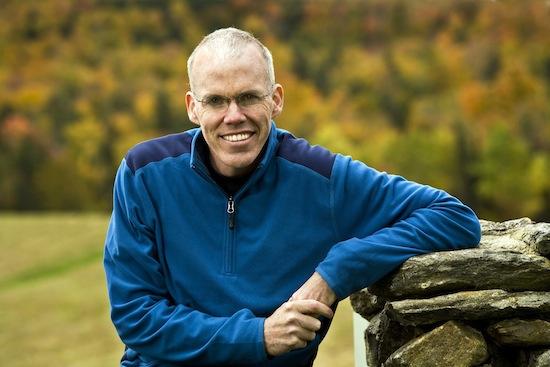
Bill McKibben

Keystone pipeline’s last defense: Cold, hard cash

What do you do if you’ve lost an argument?

Say you really really want to build a big pipeline from the tar sands of Alberta so that you can sell your bitumen to the world

But 20 of the nation’s top scientists have written to the president to say it’s a terrible idea — and the planet’s leading climatologist says burning the tar sands would be “game over for the climate.” And nine recent winners of the Nobel Peace Prize have condemned the plan. And Robert Redford has just made a video explaining why the plan is an attack on the nation’s heartland. Then, if you’re a poor forlorn oil industry feeling unloved and under assault, what do you do?

There’s really only one answer: Flash your wad.

As we get to the final chapters of the Keystone pipeline saga (the president has said he’ll make his decision by year’s end), money’s the only argument these guys have left.

They managed to buy a favorable environmental review from the U.S. State Department, which helpfully outsourced the job to a company that was a “major client” of TransCanada, the pipeline builder.

And yesterday, they proposed a $100 million “performance bond” to the state of Nebraska, whose Republican governor and senator have come out against the pipeline. The money is apparently designed to pay for damage to the Ogallala Aquifer if the pipeline starts to leak.

Meanwhile, when 33 Democratic representatives sent a letter to the White House demanding a rejection of the plan, lobbyists for TransCanada rounded up their own list of lawmakers from the president’s party to issue a rejoinder. But they only found 22. And what do you know — they included nine of the top 10 Democratic recipients of oil money in the House. On average the signatories received over 4.25 times more oil money than the average House Democrat in the 112th Congress. That would be 325 percent more. That would be how the game is played.

The other side — that is, scientists, Nobelists, and the kind of average people who went to jail in record numbers this summer to block the plan — doesn’t have that kind of money. We’ve had to figure out other currencies to work in: spirit, passion, creativity. We’ve spent our bodies, putting them on the line. The odds are still against us, but the odds are changing; we’re on a roll as we head toward Nov. 6, when we’ll ring the White House with people, exactly one year before the election. (You can sign up here.)

But every once in a while we get to play the money game too! While TransCanada was out there setting the $100 million price on the Ogallala Aquifer, this news story rolled across my screen. It described a big Democratic giver, Barbarina Heyerdahl. She gave 120 grand to Obama and the Democratic National Committee over the last three years, not to mention knocking on doors for the 2008 campaign. But she said Keystone is a bridge too far, that “she won’t be writing any more checks to Obama if he approves the carbon conduit that’s become the focus of the climate-change movement. ‘It’s a baseline issue,’ she says.”

I have no doubt that, even with Heyerdahl and other donors accounted for, the oil industry has all the money they need to win this fight. The Koch brothers are the third and fourth richest men in America, and they filed papers in Canada declaring their “direct and substantial” interest in the project. If money’s the only thing that matters, they’ll carry the day.

But if money’s the only thing that matters, we’re done for anyway. So we’ll keep using science and art and courage. And we’ll hope that Barack Obama hasn’t sold his soul. We’re going to find out in the next few weeks.

Bill McKibben is founder of 350.org and Schumann Distinguished Professor at Middlebury College in Vermont. He also serves on Grist’s Board of Directors.

Bill’s website may be found here.  Also, please PLEASE watch the video made by Robert Redford.  Only 3 mins 25 seconds long, the ink to the video is here.

Finally, a YouTube video from Tars and Action.

All that’s necessary for the forces of evil to win in the world is for enough good men to do nothing.” Edmund Burke

Hearing clearly?

Perhaps intuition is all we have to hear clearly.

John O’Donohue, in yesterday’s post, touched on the essence of today’s theme, “The greatest philosophers admit that to a large degree all knowledge comes through the senses. The senses are our bridge to the world.

Dogs, of course, demonstrate powerfully how their senses provide a ‘bridge to the world’.

This odd collection of writings (ramblings?)  that comprise Learning from Dogs is based around the ‘i’ word – Integrity.  The banner on the home page proclaims Dogs are integrous animals. We have much to learn from them. Ergo, dogs offer a powerful metaphor for the pressing need for integrity among those that ‘manage’ our societies.

Thus my senses are more tuned, than otherwise, to the conversations in the world out there that support the premise that unless we, as in modern man, radically amend our attitudes and behaviours, then the species homo sapiens is going to hell in a hand-basket!

End of preamble!

Professor Bill Mitchell is one person who recently touched my senses.  As his Blog outlines he is an interesting fellow,

(Photo taken in August 2011 in Melbourne, Australia)

Bill Mitchell is the Research Professor in Economics and Director of the Centre of Full Employment and Equity (CofFEE), at the University of Newcastle, NSW Australia.

He is also a professional musician and plays guitar with the Melbourne Reggae-Dub band – Pressure Drop. The band was popular around the live music scene in Melbourne in the late 1970s and early 1980s. The band reformed in late 2010.

He also plays with a Newcastle swing blues band – The Blues Box. You can find music and other things on his Home Page.

Professor Mitchell’s Blog is not for the faint-hearted, it can be pretty technical at times.  Nevertheless, I have been a daily subscriber for a couple of months now.

On the 24th, Prof. Bill wrote a long article under the heading of ‘What if economists were personally liable for their advice‘.  I want to quote a little from that article.  Starting with,

Economists have a strange way of writing up briefing documents. There is an advanced capacity to dehumanise economic advice and ignore the most important economic and social problems (unemployment and poverty) in favour of promoting non-issues (like public debt ratios). It reminds me sometimes of how the Nazis who were brutal in the extreme in the execution of their ideology sat around getting portraits of themselves taken with their loving families etc. The training of economists creates an advanced state of separation from human issues and an absence of empathy.

In a sense, we all understand this, this use of language to separate us from our collective humanity.  A random Google search came up with this.  A statement by British Prime Minister, David Cameron, to Parliament on the 24th regarding Europe, as in,

Mr Speaker, let me turn to yesterday’s European Council.

This European Council was about three things.

Sorting out the problems of the Eurozone.

Promoting growth in the EU.

And ensuring that as the Eurozone develops new arrangements for governance, the interests of those outside the Eurozone are protected.

This latter point touches directly on the debate in this House later today, and I will say a word on this later in my statement.

Resolving the problems in the Eurozone is the urgent and over-riding priority facing not only the Eurozone members, but the EU as a whole – and indeed the rest of the world economy.

Britain is playing a positive role proposing the three vital steps needed to deal with this crisis – the establishment of a financial firewall big enough to contain any contagion; the credible recapitalisation of European banks; and a decisive solution to the problems in Greece.

Read the last paragraph.  Wonderful words that seem to make sense to the casual listener but picking up on Prof. Bill, an utter ‘separation from human issues and an absence of empathy‘.  There is no humanity in those words from the British Prime Minister.  We all know there are hundreds of other examples from mouthpieces all across our global society.  Back to Bill Mitchell’s article,

Linkiesta say:

Greece has failed. To say this is not another report of investment banks or research centers, but directly Troika officials who have just completed their review on Hellenic public finance. Linkiesta is in possession of the entire report of the troika, composed of officials from the International Monetary Fund (IMF), European Central Bank (ECB) and European Commission.

I have a rule of thumb that I use when considering documents such as these. The rule is to assess how strong the concern for unemployment is. How often is unemployment mentioned? The answer is zero. The document never mentions the word or concept.

So obsessed are the Troika and their bean counters about public debt stabilisation that they have completely lost sight of one of the worst problems an economy can encounter – the failure to generate work for all.

Read those last words again, “completely lost sight of one of the worst problems an economy can encounter – the failure to generate work for all“.  One last extract from the article,

There is absolutely no historical evidence which shows that when all nations are contracting or stagnant and private spending is flat (or contracting) that cutting public spending will create growth.

So why did these economists think that a nation would grow when all components of spending were strongly indicated to fall or were being actually cut? The answer lies in acknowledging that they operate in an ideologically blinkered world and are never taken to account for their policy mistakes. They are unaccountable and do not suffer income losses when the nations they dispense advice to and impose policies on behave contrary to the “expectation” which results in millions being unemployed.

In my view, my profession should be liable for the advice it gives and economists should be held personally liable for damages if their advice causes harm to other individuals. If the economists in the IMF and elsewhere were held personally responsible then the advice would quickly change because they would be “playing” with their own fortunes and not the fortunes of an amorphous group of Greeks that they have never met.

Very powerful words that strike at the heart of the matter, that of integrity. (If you want to read it in full, then the article is here.)

Let me move on a little.  The 24th also saw a powerful essay on Yves Smith’s Blog Naked Capitalism, from Philip Pilkington, a journalist and writer living in Dublin, Ireland.  Here’s a taste of what Mr. Pilkington wrote.

Every now and then a terrible thought enters my mind. It runs like this: what if the theatre of the Eurocrisis is really and truly a political power-game being cynically played by politicians from the core while the periphery burns?

Yes, of course, we can engage in polemic and say that such is the case. But in doing so we are trying to stoke emotion and generally allowing our rhetorical flourish to carry the argument. At least, that is what I thought. I had heard this rhetoric; I had engaged in it to some extent myself; but I had never really believed it. Only once or twice, in my nightmares, I had thought that, maybe, just maybe, it might have some truth.

Can you see the parallels between Prof. Mitchell and Philip Pilkington?  The latter wrote, “a political power-game being cynically played by politicians from the core while the periphery burns“, the former wrote, “If the economists in the IMF and elsewhere were held personally responsible then the advice would quickly change because they would be “playing” with their own fortunes and not the fortunes of an amorphous group of Greeks that they have never met.”

It’s clearly obvious to all those that have commented to both the Bill Mitchell and Philip Pilkington items.  That is, in my words, a complete lack of integrity, truth and a commitment to serve the people, from so many in places of influence and power.

We all sense this, hear it so clearly, a separation from human issues and an absence of empathy.

We have so much to learn, so much sense to learn, from dogs!

————–

Footnote.  Had just completed the above when I came across a piece by Patrick Cockburn in last Sunday’s Independent newspaper, that starts thus,

World View: A sense of injustice is growing. Elite politicians and notorious wrongdoers appear immune as ordinary Greeks reel from wage and job cuts

Up close, the most striking feature of the reforms being forced on Greece by its international creditors is their destructiveness and futility. The pay cuts, tax rises, cuts and job losses agreed to by parliament in Athens last week will serve only to send the economy into a steeper tailspin, even if it extracted a much-needed €8bn in bailout money from the EU leaders. “Nothing but a lost war could be worse than this situation,” one left-wing ex-minister tells me. “What is worse, no party or political group in Greece is offering real solutions to our crisis.

Say no more!

Common sense

The ways of our carbon-consuming past & present cannot be continued into the future.

In many ways that sub-heading above is not controversial for millions of citizens of Planet Earth.  The challenge is in changing behaviours, ending old habits of energy use, and working towards a truly sustainable relationship with the only planetary home we have!

Some time ago, I wrote about Lester Brown’s book, World on the Edge, quickly following it up with Plan B Movie for Planet Earth.  Since reading Lester’s book, I have subscribed to the Blog/website Earth Policy Institute, Lester Brown is President of EPI.

Like many others, Jean and I are of the view that the Keystone XL Pipeline is not required.  Last week there was an update from EPI about this subject illustrating how the pipeline is not required.  That update is published in full, as follows,

Plan B Updates

OCTOBER 06, 2011

U.S. Gasoline Use Declining: Keystone XL Pipeline Not Needed

Lester R. Brown

As the debate unfolds about whether to build a 1,711-mile pipeline to carry crude oil from the tar sands in Canada to refineries in Texas, the focus is on the oil spills and carbon emissions that inevitably come with it. But we need to ask a more fundamental question. Do we really need that oil?

The United States currently consumes more gasoline than the next 16 countries combined. Yes, you read that right. Among them are China, Japan, Russia, Germany, and Brazil. (See data.)

But now this is changing. Not only is the affluence that sustained this extravagant gasoline consumption eroding, but the automobile-centered lifestyle that was considered part of the American birthright is fading as well. U.S. gasoline use has dropped 5 percent in four years.

Four key developments are set to further reduce U.S. gasoline use: a shrinking car fleet, a decline in the miles driven per car, dramatic mandated future gains in new car fuel efficiency, and the shift from gasoline to electricity to power our cars.

The U.S. fleet appears to have peaked at 250 million vehicles in 2008. From 1994 through 2007, new-car sales were in the range of 15–17 million per year. Since then they have totaled 10–13 million per year, and they are unlikely to top 14 million again. Retirees likely will exceed sales of new cars throughout this decade.

The contraction that began when the fleet dropped from 250 million in 2008 to 248 million in 2010 is likely to continue. Sales of new cars are not matching those of earlier years in part because the economic prospect has dimmed and in part because we are still urbanizing. Today 82 percent of us live in urban areas where cars are becoming less essential.

On top of urbanization, we also have a change in the manner in which young people socialize. For teenagers in rural communities a half century ago, getting a driver’s license and something to drive—a car, a pickup, or even a farm truck—was a rite of passage. That’s what everyone did.

This too is changing. Today’s teenagers, most of whom grew up in an urban setting, socialize through smartphones and the Internet. For many of them, a car is of little interest. The number of licensed teenage drivers in this country—the car owners of the future—has dropped from a peak of 12 million in 1978 to 10 million today.

Cities are also being redesigned for people. Among other things, this means cities are becoming pedestrian- and bicycle-friendly, with ready access to public transit.

Many cities are building a cycling infrastructure of bicycle trails, dedicated bike lanes, and bike racks for parking. Bike-sharing programs are showing up, too. In Washington, D.C., the Capital Bikeshare program that began in 2010 has expanded to 116 stations with 1,100 bicycles. Within the first year, some 16,000 riders signed up for annual membership in the program. Denver and Chicago have similar bike share programs. And New York City is about to launch a huge program of its own.

The second reason that gasoline use is falling is the decline in miles driven per car. This is partly in response to economic uncertainty and the high price of gasoline. When gas costs nearly $4 a gallon, people think twice before jumping in a car and using a gallon of gasoline to pick up a half-gallon of milk.

A third trend that is reducing gasoline use is the rising fuel efficiency of the U.S. automobile fleet. New cars sold in 2008 averaged 27 miles per gallon. But in early 2009, President Obama raised the average fuel efficiency standard so that those sold in 2016 will get 36 miles per gallon. Additional standards announced in 2011 mean that new cars sold in 2025 will use less than half as much gasoline as the 2008 models.

The game changer in reducing gasoline use is going to come as drivers shift from gasoline to electrically powered vehicles, including plug-in hybrids and all-electric cars. General Motors recently introduced the Chevrolet Volt, designed to run largely on electricity, and Nissan unveiled the Leaf, an all-electric vehicle. Beyond these, Toyota is accepting orders for the plug-in version of its Prius hybrid, the pacesetter in fuel efficiency. It will be followed by a steady flow of new plug-in hybrid and all-electric car models coming to market.

Although these electrically powered vehicles are typically more costly to buy, the day-to-day cost of operating them is extraordinarily low. An analysis by Professor Michael McElroy at Harvard indicates that running a car on wind-generated electricity could cost less than the equivalent of 80-cent-a-gallon gasoline.

With the auto fleet shrinking, with the average car being driven less, with the fuel use of new cars to be cut in half by 2025, and with electricity starting to replace gasoline as a fuel, why do we need to build a pipeline to bring crude oil from Canada’s tar sands to oil refineries in Texas? The answer is we don’t.

Lester R. Brown is president of the Earth Policy Institute and author of World on the Edge.

Copyright © 2011 Earth Policy Institute

There’s a footnote that I would like to add from the Center for Biological Diversity (great website!) that came out in a recent newsletter.

Here it is,

Lawsuit Seeks to Halt Work on Controversial Keystone XL Pipeline

Keystone Pipeline

The hotly contested Keystone XL pipeline hasn’t been approved for construction, but federal officials don’t seem to care; they’ve allowed the pipeline company to mow down 100 miles of native prairie grasslands in Nebraska to clear the way — before any public hearings were held on whether Keystone XL should move forward at all.

The Center for Biological Diversity and Friends of the Earth filed a lawsuit in federal court in Omaha Wednesday to halt that work. Specifically, we’re challenging decisions by the State Department and U.S. Fish and Wildlife Service to allow work to begin before a decision’s been made on the pipeline or the public hearings, which look like little more than a sham at this point.

If approved, TransCanada’s 1,700-mile pipeline would carry up to 35 million gallons of oil a day from tar sands in Canada to refineries in Texas. Not only will this project add fuel to the global climate crisis, but the pipeline will cut across Nebraska’s legendary Sandhills, hundreds of rivers and streams, and the Ogallala Aquifer, which provides drinking water for millions of people. TransCanada’s existing pipeline, called Keystone 1, has reportedly leaked 14 times since it started operating in June 2010.

Please will there be some common sense over this?

Can modernisation be “ecological”?

Three guest posts from Martin Lack of Lack of Environment, today the concluding Part Three

Hope you have been following the previous two parts of this essay from Martin.  Part One can be read here; Part Two here.

————————-

Can modernisation be “ecological”? – Part 3

This is the third and final part of my mini-critique of the school of environmental thought known as Ecological Modernisation.
——————-
Newsflash: Today [Sept. 27th.] is Earth Overshoot Day for 2011. This was a genuine coincidence (i.e. I did not know this when I decided to do this 3-part story). See paragraph 2 below…
——————-

Where are we now?
In his seminal 1968 article on ‘The Tragedy of the Commons’, Garrett Hardin had observed that it was not possible to achieve Jeremy Bentham’s hedonistic goal of “the greatest good for the greatest number” because, at the level of the individual, to do so would require food and/or energy to be used for subsistence purposes only (Hardin 1968: 1243). In 1977, William Ophuls agreed that the optimum population is not the maximum possible, which appears to imply that, if necessary, artificial limits to growth should be imposed. Furthermore, he explicitly stated that, “…this optimum level… may be as little as fifty percent of the theoretical maximum…” (Ophuls 1977: 28).

Mathis Wackernagel et al have recently provided “…evidence that human activities have exceeded the biosphere’s capacity since the 1980s. This overshoot can be expressed as the extent to which human area demand exceeds nature’s supply. Whereas humanity’s load corresponded to 70% of the biosphere’s capacity in 1961; this percentage grew to 120% by 1999.” However, the authors also pointed out that, if… “12% of the bioproductive area was set aside to protect other species; the demand line crosses the supply line in the early 1970s rather than the 1980s” (Wackernagel et al 2002: 9268-9)(emphasis mine).

In laboratory-controlled studies, the size of a population of, say, fruit flies can be shown to depend on the scarcity or abundance of food; and the presence or absence of predators. However, in 2005, Meadows et al pointed out that a growing population “…will slow and stop in a smooth accommodation with its limits… only if it receives accurate, prompt signals telling it where it is with respect to its limits, and only if it responds to those signals quickly and accurately” (Meadows et al 2005: 157).

This pursuit of the resulting “S-curve” is sometimes referred to as the demographic transition of an increasingly affluent society through three stages: (1) high birth and death rates; (2) high birth rate but low death rate; and (3) low birth and death rates. However, in a section entitled ‘Why Technology and Markets Alone Can’t Avoid Overshoot’, Meadowset al also pointed out that if we put off dealing with limits to growth we are more likely to come up against several of them simultaneously (ibid: 223).

Even though no-one seems to want to talk about population control today, neither Hardin nor Malthus was the first to raise this contentious subject because, as Philip Kreager has pointed out, this dubious honour goes to Aristotle’s treatise on Politics within which, “…population is a recurring topic, extensively discussed and integral to the overall argument…” (Kreager 2008: 599). Furthermore, according to Theodore Lianos, although Aristotle was thinking at the scale of a city rather than a country, the great philosopher recognised that there was an optimum population size, which depended on the land area controlled by the city (for food production purposes), which could be determined by, “the land-population ratio that produces enough material goods so that the citizens can live a wise and generous life, comfortable but not wasteful nor luxurious” (Lianos 2010: 3).

Conclusions
It has been demonstrated that dematerialisation alone cannot deal with the problem of resource depletion unless the increase in unit efficiency is greater than the increase in scale of production (i.e. something that cannot be sustainable indefinitely).

Furthermore, whereas it may be possible to partially decouple environmental degradation from economic growth, pursuit of this as a sole objective is a dangerous strategy. This is because to do so is to remain ambivalent about the existence and significance of limits to growth; indeed it is to deny that growth itself may be the problem.

In the final analysis, the only thing that will be sustainable is progression towards the steady-state economy proposed by Daly and others; combined with qualitative development instead of quantitative growth. Therefore, the only form of modernisation that could be ecological is one that places the intrinsic value of vital resources such as clean air and clean water – and the inherent value of a beautiful landscape – well above the instrumental value of money or precious metals.
——————-
References:
Hardin, G. (1968), ‘The Tragedy of the Commons’, Science, 168, pp.1243-8.
Kreager, P. (2008), ‘Aristotle and open population thinking’, Population and Development Review 14(34), pp.599-629.
Lianos, T. (2010), ‘Aristotle’s Macroeconomic Model of the City-State’.
Meadows D, et al (2005), Limits to Growth: the 30-Year Update, London: Earthscan.
Ophuls, W. (1977), Ecology and the Politics of Scarcity, San Francisco: Freeman and Co..
Wackernagel, M. et al (2002), ‘Tracking the ecological overshoot of the human economy’,Proc. of the National Academy of Sciences [USA], 99(14), pp.9266-9271.

Can modernisation be “ecological”?

Three guest posts from Martin Lack of Lack of Environment, today Part Two

As previously mentioned, Martin came to the attention of Learning from Dogs when making a comment to the second part of my Sceptical Voices essay.   This is the second part of an essay that Martin wrote that is worthy of deep consideration.  Part One can be read here; the concluding Part Three next Monday, the 10th.

————————-

Can modernisation be “ecological”? – Part 2

What is the problem with Modernity?
The problem is that the accumulation of personal wealth has become the sole objective of many people in modern society; and perpetual growth is posited as a means whereby even the poorest might achieve it. However, the New International Version of the Bible records the Apostle Paul as having written, “For the love of money is a root of all kinds of evil…” (1 Timothy 6:10); and economists and politicians have argued about this for centuries…

According to Jon Elster, it was Karl Marx that coined the term ‘money fetishism’ to describe the belief that money (and/or precious metals) have intrinsic (use) value rather than just instrumental (exchange) value, which Marx felt was as misguided as the religious practice of endowing inanimate objects with supernatural powers (Elster 1986: 56-7). However, the terms use value and exchange value were first put forward by Aristotle (384-322 BC) who, according to Daly, also recognised the danger of focusing on the latter (i.e. whereby the accumulation of wealth becomes an end in itself). Therefore, Daly suggests that the paperless economy (where no useable commodities actually change hands) is the ultimate destiny for money fetishism (Daly 1992: 186).

In 1987, the World Commission on the Environment and Development (WCED) was clearly keen to try and settle an argument and, therefore, made the following quite astonishing assertion: “Growth has no set limits in terms of population or resource use beyond which lies ecological disaster” (Brundtland et al 1987: 45). Instead, WCED gave us the much-touted – but ill-defined – concept of sustainable development (SD). However, in stark contrast to the WCED report, Carter much more recently observed that SD “…will require a fundamental transformation in attitudes to economic growth, consumption, production and work” (Carter 2007: 48). This appears to be a subtle acknowledgement of the legitimacy of Herman Daly’s insistence of the need for a move to a steady-state economy; precisely because infinite growth is impossible in a closed system.

A basic tenet of Daly’s thesis is that economic activity does not take place in a vacuum and that economic – not just ecological – collapse awaits us unless we recognise the limited capacity of the ecosystem within which we operate: “Of all the fields of study, economics is the last one that should seek to be ‘value-free’, lest it deserve Oscar Wilde’s remark that an economist ‘is a man that knows the price of everything and the value of nothing.’” (Daly 1992: 4).

On 22 December 2010, the BBC broadcast a Panorama programme entitled “What Price Cheap Food” containing the startling revelation that, in the two years between 1 November 2008 and 1 November 2010, town planners approved applications for at least 577 new supermarkets across the UK. The programme also revealed that so-called “mega farms” (i.e. factory farming of cows and pigs – “dairy-go-rounds” and “sty scrappers” respectively) will be the next ‘big idea’ imported from the USA. The potential mega farm operators argue that there is significant scope for recycling and energy from waste schemes to be incorporated, although environmentalists would question (1) the wisdom of concentrating potentially polluting activities; and (2) the ethics of factory farming (which undoubtedly goes against the grain of green consumerism). However, although the potential for economies of scale cannot be denied, this could all be seen as symptomatic of what Daly called “growthmania“.

Growthmania versus Limits to Growth
One of the world’s most famous deniers of Limits to Growth arguments is Julian Simon, who once famously won a bet with Paul Ehrlich that the price of any commodity would reduce with the passage of time. Nevertheless, how can anyone deny that the Earth’s resource base or its capacity to accommodate human beings is anything other than limited? Quite easily, apparently: In 1994, Simon claimed that “humanity now has the ability (or knowledge) to make it possible to feed, clothe, and supply energy to an ever-growing population for the next 7 billion years.”

However, the stupidity of such a dangerously fallacious argument was exposed 2 years later by Paul and Anna Ehrlich, who pointed out that at 1994 growth rates, “it would take only 774 years for the 1994 population of 5.6 billion to increase to the point where there were 10 human beings for each square meter of ice-free land on the planet!” Furthermore, they pointed out that if growth did not decline from 1994 levels, it would take only 1900 years for the mass of the human population to equal the mass of the Earth! (Ehrlich and Ehrlich 1996: 66).

Fortunately, the UN now believes (May 2011) that the human population on this planet will probably stabilise by the end of the current Century at somewhere between 10 and 15 billion. The only trouble with that is that, we may well have already exceeded the ecological carrying capacity of the planet, and are therefore causing extreme stress to the global ecosystem; of which the most obvious symptom is AGW.
—————-
References:
Daly, H. (1992), Steady State Economics (2nd ed), London: Earthscan.
Elster, J. (1986), An Introduction to Karl Marx, Cambridge: Cambridge University Press.
Ehrlich, P. and Ehrlich, A. (1996), Betrayal of Science and Reason, New York: Island Press.

Can modernisation be “ecological”?

Three guest posts from Martin Lack of Lack of Environment, today Part One

Martin came to the attention of Learning from Dogs when making a comment to the second part of my Sceptical Voices essay.  Since then, he and I have exchanged a number of emails.  Over the next few days, I would like to re-publish an essay that Martin wrote that is worthy of deep consideration.  Here is Part One.  Part Two will be on Friday and Part Three next Monday, the 10th.

————————-

Can modernisation be “ecological”? – Part 1

This is the first of a series of posts based on an essay with this title that I wrote earlier this year as part of the requirements for my MA in Environmental Politics.

Introduction
There are two possible ways of understanding the question; as to require a critique ofEcological Modernisation (EM) as a school of environmental thought or perhaps, far more demandingly, a critique of modernity itself. Although the main intention of this essay is to do the latter; it will inevitably do the former as well.

Definitions
In order to answer this question, it is essential to define what is meant by ‘ecological’; ‘modernisation’; and the theory of EM to which it has given rise:
– In the context of the question, ‘ecological’ is taken to mean thinking, behaviour, and policy that are ‘environmentally-friendly’; rather than merely or predominantly anthropocentric (i.e. concerned with human needs and interests).
– To understand what is implied by the term ‘modernisation’, it is necessary to define what is meant by the word ‘modernity’ because people often conflate the term with industrialisation or even capitalism. However, whereas both of the latter were forged in the industrial revolution of the late eighteenth and early nineteenth century, modernity has its roots in the scientific revolution of “the Enlightenment” in the eighteenth century.
– The theory – if not the practice – of EM emerged from Germany in the early 1980s. Whereas the social scientists Joseph Huber and Martin Jänicke are most-commonly credited with having originated the term, it is probably Arthur Mol that brought it to the attention of the English-speaking world in 1996, when he quoted Huber as having (somewhat enigmatically) said, ‘…all ways out of the environmental crisis lead us further into modernity.’ Thankfully, Mol then went on to explain that EM theory therefore seeks to repair “…a structural design fault of modernity: the institutionalised destruction of nature.” (Mol 1996: 305).

In addition to the above, it is important to differentiate the terms ‘modernity’ and ‘civilisation’: Civilisation pre-dates the Enlightenment by several millennia; and is often equated with the development of agriculture, settled communities, and cities. However, since past civilisations have come and gone, is there any reason to think that our modern civilisation will be any different? This should not be seen as the question of a wannabe anarchist; as it is merely an acknowledgement of human history.

According to John Dryzek, the rhetoric of the EM discourse is reassuringly optimistic; and would have us believe that we can retain a healthy environment without having to sacrifice the benefits of progress (Dryzek 2005: 171). More recently, echoing both Mol and Dryzek, Neil Carter has defined EM as a “…policy strategy that aims to restructure capitalist political economy along more environmentally benign lines based on the assumption that economic growth and environmental protection can be reconciled.” (Carter 2007: 7).

It is in this context that Carter used the term “decoupling” to refer the idea of breaking any direct causal link between economic growth and environmental degradation; but also suggested that “dematerialisation” of manufacturing processes (i.e. the reduction of environmental resources consumed per unit of production) would be essential (2007: 227). However, if we take the manufacturing of motor cars as an example, the rate of fossil fuel consumption will always accelerate unless the percentage increases engine fuel efficiency is greater than the percentage increases in the number of cars. Therefore, since the former must exponentially decline towards zero, the logical conclusion is that we must control the demand for the latter.
—————
References:
Carter, N. (2007), The Politics of the Environment (2nd ed), Cambridge: Cambridge University Press.
Dryzek, J. (2005), The Politics of the Earth (2nd ed), Oxford: Oxford University Press.
Mol, A. (1996), ‘Ecological Modernisation and Institutional Reflexivity: Environmental Reform in the Late Modern Age’, Environmental Politics, 5(2), pp.302-23.

Transitions, pt One

Reflections on these present times.

Want a brilliant idea for tomorrow? Stay in the present!

Dogs do this wonderfully.  I am told that followers of Zen Buddhism discover peace and grace from embracing the present. But is there more to this?  Is there some deeper psychology involved?  Does our species have an intrinsic challenge in terms of staying in the present?

My musings on this arise from a couple of recent conversations.

The first was with Peter McCarthy from the Bristol area of West England.  Peter and I go back a few years (at my age, everything goes back a few years!) and at one stage I did some work for Peter’s company, Telecom Potential.  Just a quick aside, Peter’s company was based in the magnificent Clevedon Hall, a mansion built in 1853 as a family home for Conrad William Finzel, a German-born businessman.  Here’s a picture of one of the rooms,

A room at Clevedon Hall

Peter, like me, is sure that the period in which the world now appears to be, is not some cyclical downturn, not some temporary departure from the national growth and employment ambitions promoted by so many countries.  No! This one is different.

Peter is sure that a major transition is under way, as big as any of the great societal upheavals of the past.  And, for me, a fascinating comment from Peter was his belief that the key attitude required for the next years would be innovation.  Peter reminded me that we tend to think of innovation as applying to things physical, scientific and technical.  But Peter sensed that it would be in the area of social innovation where key changes would arise and, from which, these large societal changes would flow.

Then a day later I was chatting with one of the founders of a brilliant new authentication process, Pin Plus. It is a very smart solution to a major global problem, the weaknesses of traditional password user-authentication systems.

On the face of it, Pin Plus is obviously a better and more secure way of authenticating users, and a number of key test customers have borne this out.  Jonathan C was speaking of the challenges of convincing companies to have faith in this new process.  This is what he said,

More than once, indeed many times, I am told by prospects something along the lines that the IT world has been looking so hard and so long for a password solution that a solution can’t possibly exist.

Let’s ponder that for a moment.  Are we saying that a far-sighted approach to the potential for change is not an easy place for some, probably many, human brains?

Indeed, Jonathan and I mused that here we were, both speaking via Skype, an internet telephony service, both of us looking at different web sites in support of many of the points that we were discussing and totally dependent, in terms of our mentoring relationship, on the technology of the internet, a multi-node packet-switched communications system that was a direct result of the American shock of seeing the Russians launch the world’s first artificial satellite, Sputnik 1, into low earth orbit on the 4th October, 1957.

Launch of Sputnik 1

At that time, it would have seemed impossible for anyone on the planet to see that the American response to Sputnik 1 would eventually lead to the vast packet-switched network that is now the modern Internet.

But why do we regard the ability to look into the future so utterly out of reach of the common man?  Look at this, the Internet Timeline here.  Look how quickly the response to Sputnik1 gathered pace.  See how Leonard Kleinrock of MIT way back in May, 1961, presented a paper on the theory of packet-switching in large communications networks.

So maybe there’s a blindness with humans.  A blindess that creates the following bizarre characteristics,

  • Whatever is going on in our lives at present we assume will go on forever.  I.e. the boom times will never end, or the period of doom and gloom is endless.
  • Our obsession with how things are now prevents us from reflecting on those signs that indicate changes are under way, even when the likely conclusions are unmistakeable.  The ecological and climatic changes being the most obvious example of this strange blindness that mankind possesses.
  • Yet, unlike animals and some spiritual groups of humans, truly living in the present appears incredibly difficult for man.
  • However, the history of mankind shows that our species is capable of huge change, practically living in constant change for the last few millennia, and that a very small proportion of a society, see yesterday’s article, is all that is required to create a ‘tipping point’.

I want to continue with this theme but conscious that there is still much to be written.  So, dear reader, I shall pause and pick this up tomorrow.

Just stay in the present for twenty-four hours!