Category: Government

Starting a veterinary clinic

Like any new start-up of a business venture, this requires knowledge, skills and quite a bit of luck!

I am delighted to offer this guest post by Penny.

ooOOoo

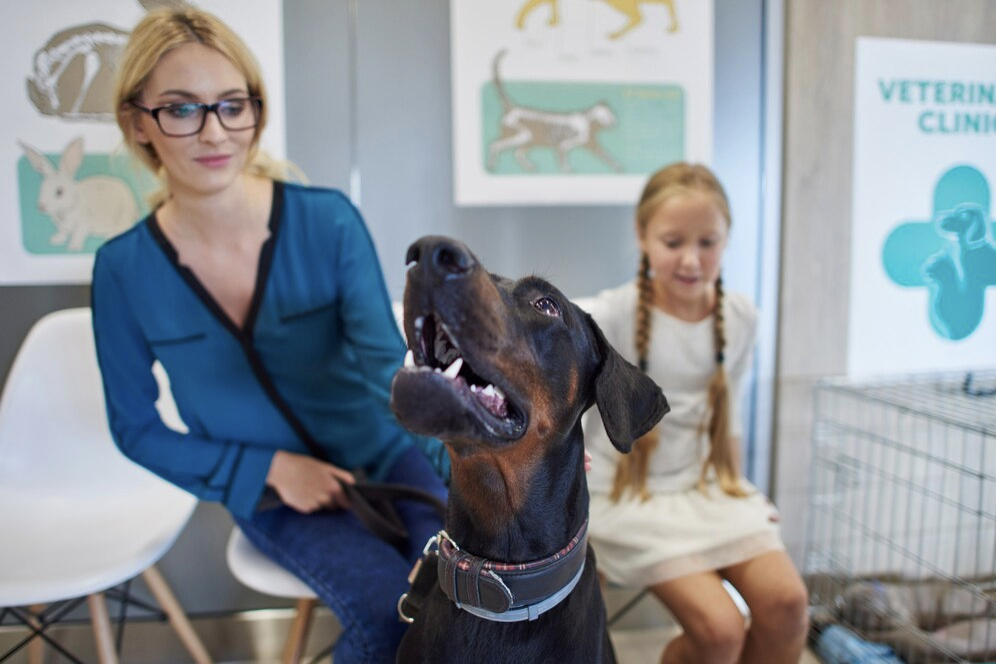
Image: Freepik

Vision to Reality: Building a Profitable Vet Clinic

Launching a veterinary clinic is a significant endeavor that requires meticulous planning and strategic decision-making. This venture combines a passion for animal care with the intricacies of managing a successful business. Aspiring clinic owners must navigate several critical steps to lay a strong foundation and ensure operational excellence. Starting your own clinic promises not only to fulfill a dream of helping animals but also to establish a thriving enterprise in the community.

Build a Strong Foundation with an Effective Marketing Strategy

A robust marketing strategy is essential to attract potential clients in the digital era. Establishing a professional online presence through a user-friendly website that details your services, team, and location builds trust among pet owners. Engage actively on social media with regular updates and client testimonials to showcase your expertise and commitment to animal care. Forge partnerships with local pet-related businesses to increase visibility and drive traffic to your clinic, enhancing both your and your partners’ customer bases.

Craft a Clear and Detailed Business Plan

A well-constructed business plan acts as your clinic’s roadmap, detailing your mission, services offered, and the specific target market. Identify your niche early—whether it’s specializing in certain animals or treatments—to attract the appropriate clientele. Include comprehensive financial projections and a marketing budget in your plan to ensure financial preparedness and support your clinic’s promotional activities.

Enhance Your Business Knowledge by Pursuing an MBA

Running a veterinary clinic demands a blend of clinical and business expertise. Pursuing a master’s of business administration online can boost your proficiency in key business areas such as strategy, management, and finance. An MBA not only deepens your understanding of business operations but also enhances leadership skills and self-assessment capabilities. These competencies are essential for balancing the medical and business demands of your clinic, ensuring its long-term success.

Safeguard Your Business with Proper Insurance

Operating a veterinary clinic comes with inherent risks, making comprehensive insurance coverage essential. Essential policies include malpractice insurance to handle legal issues and general liability insurance for accidents on your premises. Property insurance is crucial to protect your clinic’s infrastructure and equipment against unexpected events. Consulting with an insurance expert can ensure that you have thorough coverage to protect against potential financial setbacks.

Invest in High-Quality Veterinary Equipment

Providing top-tier care necessitates investing in high-quality veterinary equipment. Essential tools like X-ray machines, surgical instruments, and lab equipment should be of the highest standard to ensure accurate diagnoses and treatments. Modern technologies, such as digital imaging systems, not only enhance patient care but also improve operational efficiency. While the initial cost may be higher, investing in quality equipment pays off in the long run by boosting efficiency and minimizing errors.

Secure the Necessary Funding for Your Clinic

Securing sufficient funding is critical when starting a veterinary clinic. Estimate your startup costs accurately to understand your financial needs, including equipment, premises, staffing, and marketing. Explore diverse financing options, such as bank loans, private investors, and specialty medical practice loans that might offer favorable terms. Adequate initial funding prevents cash flow problems and supports your clinic’s growth trajectory.

Choose the Right Location for Your Clinic

The location of your clinic is pivotal to its success, necessitating a spot with a high demand for veterinary services. Conduct thorough market research to choose a community rich in pet owners who need your services. Select a location that is accessible, visible, and has ample parking to ensure convenience for your clients. Proximity to complementary services like pet groomers or dog trainers can further enhance client traffic and provide expansion opportunities.

Opening a veterinary clinic is both challenging and rewarding, demanding a careful blend of dedication and strategic foresight. Success in this field not only enhances the well-being of pets but also contributes positively to the local community. It requires ongoing commitment to adapt and grow in a dynamic environment. Ultimately, the fulfillment of running a successful veterinary clinic comes from both the impact on animal health and the achievement of entrepreneurial goals.

Discover the timeless wisdom that dogs offer at Learning from Dogs, where integrity and living in the present are celebrated. Dive into our content and embrace the lessons from our four-legged friends.

ooOOoo

This is a skilled summary of the needs of opening a vet’s clinic. And thank you, Penny, for your last paragraph. It has been a pleasure!

Ancient times

This attracted me very much, and I wanted to share it with you.

The opening paragraph of this article caught my eye so I read it fully. As it was published in The Conversation then that meant I could republish it.

ooOOoo

Centuries ago, the Maya storm god Huracán taught that when we damage nature, we damage ourselves

James L. Fitzsimmons, Middlebury

The ancient Maya believed that everything in the universe, from the natural world to everyday experiences, was part of a single, powerful spiritual force. They were not polytheists who worshipped distinct gods but pantheists who believed that various gods were just manifestations of that force.

Some of the best evidence for this comes from the behavior of two of the most powerful beings of the Maya world: The first is a creator god whose name is still spoken by millions of people every fall – Huracán, or “Hurricane.” The second is a god of lightning, K’awiil, from the early first millennium C.E.

As a scholar of the Indigenous religions of the Americas, I recognize that these beings, though separated by over 1,000 years, are related and can teach us something about our relationship to the natural world.

Huracán, the ‘Heart of Sky’

Huracán was once a god of the K’iche’, one of the Maya peoples who today live in the southern highlands of Guatemala. He was one of the main characters of the Popol Vuh, a religious text from the 16th century. His name probably originated in the Caribbean, where other cultures used it to describe the destructive power of storms.

The K’iche’ associated Huracán, which means “one leg” in the K’iche’ language, with weather. He was also their primary god of creation and was responsible for all life on earth, including humans.

Because of this, he was sometimes known as U K’ux K’aj, or “Heart of Sky.” In the K’iche’ language, k’ux was not only the heart but also the spark of life, the source of all thought and imagination.

Yet, Huracán was not perfect. He made mistakes and occasionally destroyed his creations. He was also a jealous god who damaged humans so they would not be his equal. In one such episode, he is believed to have clouded their vision, thus preventing them from being able to see the universe as he saw it.

Huracán was one being who existed as three distinct persons: Thunderbolt Huracán, Youngest Thunderbolt and Sudden Thunderbolt. Each of them embodied different types of lightning, ranging from enormous bolts to small or sudden flashes of light.

Despite the fact that he was a god of lightning, there were no strict boundaries between his powers and the powers of other gods. Any of them might wield lightning, or create humanity, or destroy the Earth.

Another storm god

The Popol Vuh implies that gods could mix and match their powers at will, but other religious texts are more explicit. One thousand years before the Popol Vuh was written, there was a different version of Huracán called K’awiil. During the first millennium, people from southern Mexico to western Honduras venerated him as a god of agriculture, lightning and royalty.

A drawing showing a reclining god-like figure with a large snake around him.
The ancient Maya god K’awiil, left, had an ax or torch in his forehead as well as a snake in place of his right leg. K5164 from the Justin Kerr Maya archive, Dumbarton Oaks, Trustees for Harvard University, Washington, D.C.

Illustrations of K’awiil can be found everywhere on Maya pottery and sculpture. He is almost human in many depictions: He has two arms, two legs and a head. But his forehead is the spark of life – and so it usually has something that produces sparks sticking out of it, such as a flint ax or a flaming torch. And one of his legs does not end in a foot. In its place is a snake with an open mouth, from which another being often emerges.

Indeed, rulers, and even gods, once performed ceremonies to K’awiil in order to try and summon other supernatural beings. As personified lightning, he was believed to create portals to other worlds, through which ancestors and gods might travel.

Representation of power

For the ancient Maya, lightning was raw power. It was basic to all creation and destruction. Because of this, the ancient Maya carved and painted many images of K’awiil. Scribes wrote about him as a kind of energy – as a god with “many faces,” or even as part of a triad similar to Huracán.

He was everywhere in ancient Maya art. But he was also never the focus. As raw power, he was used by others to achieve their ends.

Rain gods, for example, wielded him like an ax, creating sparks in seeds for agriculture. Conjurers summoned him, but mostly because they believed he could help them communicate with other creatures from other worlds. Rulers even carried scepters fashioned in his image during dances and processions.

Moreover, Maya artists always had K’awiil doing something or being used to make something happen. They believed that power was something you did, not something you had. Like a bolt of lightning, power was always shifting, always in motion.

An interdependent world

Because of this, the ancient Maya thought that reality was not static but ever-changing. There were no strict boundaries between space and time, the forces of nature or the animate and inanimate worlds.

People walking through knee-deep water on a flooded street with building on either side and electric wires overhead.
Residents wade through a street flooded by Hurricane Helene, in Batabano, Mayabeque province, Cuba, on Sept. 26, 2024. AP Photo/Ramon Espinosa

Everything was malleable and interdependent. Theoretically, anything could become anything else – and everything was potentially a living being. Rulers could ritually turn themselves into gods. Sculptures could be hacked to death. Even natural features such as mountains were believed to be alive.

These ideas – common in pantheist societies – persist today in some communities in the Americas.

They were once mainstream, however, and were a part of K’iche’ religion 1,000 years later, in the time of Huracán. One of the lessons of the Popol Vuh, told during the episode where Huracán clouds human vision, is that the human perception of reality is an illusion.

The illusion is not that different things exist. Rather it is that they exist independent from one another. Huracán, in this sense, damaged himself by damaging his creations.

Hurricane season every year should remind us that human beings are not independent from nature but part of it. And like Hurácan, when we damage nature, we damage ourselves.

James L. Fitzsimmons, Professor of Anthropology, Middlebury

This article is republished from The Conversation under a Creative Commons license. Read the original article.

ooOOoo

It is such a powerful message, that when we damage nature, we damage ourselves.

But I am unaware, no we are both unaware of a solution, and there doesn’t appear to be a government desire to make this the number one topic.

Please, if there is anyone who reads this post and has a more positive message then we would be very keen to hear from you.

August’s video of felling our trees

August has produced a find video and it is presented today.

August Hunicke has completed the editing of the video he shot while taking down the very tall trees alongside our house on the 24th and 25th of last September.

It is shared with all of you today.

When a Smooth Job Meets Bad Company

The team involved in the project were shown in this previous post.

The Heart Wall in London

I love this!

I am writing this having listened to a programme on BBC Radio 4. (Was broadcast on Radio 4 on Tuesday, August 13th.) It shows how many, many people can have a really positive response to a dastardly negative occurrence such as the Covid outbreak or a pandemic.

ooOOoo

Photo by Nick Fewings on Unsplash

Why are those lost to COVID not formally memorialised? How politics shapes what we remember

Mark Honigsbaum, City, University of London

Every Friday, volunteers gather on the Albert Embankment at the River Thames in London to lovingly retouch thousands of red hearts inscribed on a Portland stone wall directly opposite the Houses of Parliament. Each heart is dedicated to a British victim of COVID. It is a deeply social space – a place where the COVID bereaved come together to honour their dead and share memories.

The so-called National Covid Memorial Wall is not, however, officially sanctioned. In fact, ever since activists from COVID-19 Bereaved Families for Justice (CBFFJ) daubed the first hearts on the wall in March 2021 it has been a thorn in the side of the authorities.

Featured in the media whenever there is a new revelation about partygate, the wall is a symbol of the government’s blundering response to the pandemic and an implicit rebuke to former prime minister Boris Johnson and other government staff who breached coronavirus restrictions.

As one writer put it, viewed from parliament the hearts resemble “a reproachful smear of blood”. Little wonder that the only time Johnson visited the wall was under the cover of darkness to avoid the TV cameras. His successor Rishi Sunak has been similarly reluctant to acknowledge the wall or say what might take its place as a more formal memorial to those lost in the pandemic.

Though in April the UK Commission on COVID Commemoration presented Sunak with a report on how the pandemic should be remembered, Sunak has yet to reveal the commission’s recommendations.

Lady Heather Hallett, the former high court judge who chairs the public inquiry into COVID, has attempted to acknowledge the trauma of the bereaved by commissioning a tapestry to capture the experiences of people who “suffered hardship and loss” during the pandemic. Yet such initiatives are no substitute for state-sponsored memorials.

What is remembered and what is forgotten?

This political vacuum is odd when you consider that the United Kingdom, like other countries, engages in many other commemorative activities central to national identity. The fallen of the first world war and other military conflicts are commemorated in a Remembrance Sunday ceremony held every November at the Cenotaph in London, for example.

But while wars lend themselves to compelling moral narratives, it is difficult to locate meaning in the random mutations of a virus. And while wars draw on a familiar repertoire of symbols and rituals, pandemics have few templates.

For instance, despite killing more than 50 million globally, there are virtually no memorials to the 1918-1919 “Spanish” influenza pandemic. Nor does the UK have a memorial to victims of HIV/AIDS. As the memory studies scholar Astrid Erll puts it, pandemics have not been sufficiently “mediated” in collective memory.

As a rule, they do not feature in famous paintings, novels or films or in the oral histories passed down as part of family lore. Nor are they able to draw on familiar cultural materials such as poppies, gun carriages, catafalques and royal salutes. Without such symbols and schemata, Erll argues, we struggle to incorporate pandemics into our collective remembering systems.

This lacuna was brought home to me last September when tens of thousands of Britons flocked to the south bank of the Thames to pay their respects to Britain’s longest serving monarch. By coincidence, the police directed the queue for the late Queen’s lying-in-state in Westminster Hall over Lambeth Bridge and along Albert Embankment.

But few of the people I spoke to in the queue seemed to realise what the hearts signified. It was as if the spectacle of a royal death had eclipsed the suffering of the COVID bereaved, rendering the wall all but invisible.

Waiting for answers

Another place where the pandemic could be embedded in collective memory is at the public inquiry. Opening the preliminary hearing last October into the UK’s resilience and preparedness for a pandemic, Lady Hallett promised to put the estimated 6.8 million Britons mourning the death of a family member or friend to COVID at the heart of the legal process. “I am listening to them; their loss will be recognised,” she said.

But though Lady Hallett has strategically placed photographs of the hearts throughout the inquiry’s offices in Bayswater and has invited the bereaved to relate their experiences to “Every Story Matters”, the hearing room is dominated by ranks of lawyers. And except when a prominent minister or official is called to testify, the proceedings rarely make the news.

This is partly the fault of the inquiry process itself. The hearings are due to last until 2025, with the report on the first stage of the process not expected until the summer of 2024. As Lucy Easthope, an emergency planner and veteran of several disasters, puts it: “one of the most painful frustrations of the inquiry will be temporal. It will simply take too long.”

The inquiry has also been beset by bureaucratic obfuscation, not least by the Cabinet Office which attempted (unsuccessfully in the end) to block the release of WhatsApp messages relating to discussions between ministers and Downing Street officials in the run-up to lockdown.

To the inquiry’s critics, the obvious parallel is with the Grenfell inquiry, which promised to “learn lessons” from the devastating fire that engulfed the west London tower in 2017 but has so far ended up blurring the lines of corporate responsibility and forestalling a political reckoning.

The real work of holding the government to account and making memories takes place every Friday at the wall and the other places where people come together to spontaneously mourn and remember absent loved ones. These are the lives that demand to be “seen”. They are the ghosts that haunt our amnesic political culture.

Mark Honigsbaum, Senior Lecturer in Journalism, City, University of London

This article is republished from The Conversation under a Creative Commons license. Read the original article.

plus Wikipedia have a long article on the National Covid Memorial Wall. That then takes us to the website for the wall.

ooOOoo

As was written in the last sentence of the article; ‘They are the ghosts that haunt our amnesic political culture.

Humans are a strange lot and I most certainly count myself in!

The weather conundrum!

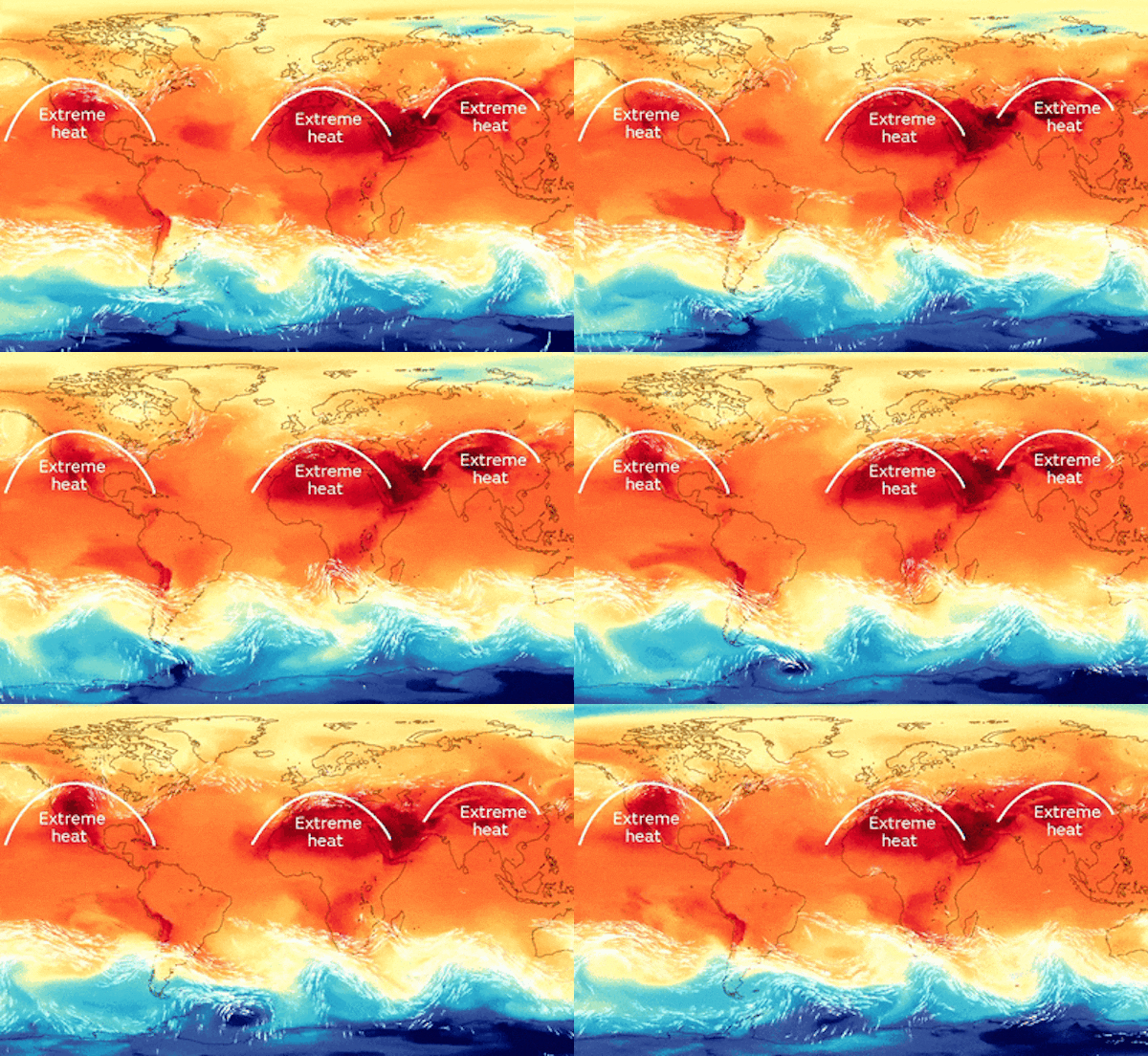
We are in an era of unknown weather, across the world!

Niccolò Ubalducci Photographer
Photo by Niccolò Ubalducci

ooOOoo

The climate is changing so fast that we haven’t seen how bad extreme weather could get

Simon H. Lee, University of St Andrews; Hayley J. Fowler, Newcastle University, and Paul Davies, Newcastle University

Published: July 30, 2024

Extreme weather is by definition rare on our planet. Ferocious storms, searing heatwaves and biting cold snaps illustrate what the climate is capable of at its worst. However, since Earth’s climate is rapidly warming, predominantly due to fossil fuel burning, the range of possible weather conditions, including extremes, is changing.

Scientists define “climate” as the distribution of possible weather events observed over a length of time, such as the range of temperatures, rainfall totals or hours of sunshine. From this they construct statistical measures, such as the average (or normal) temperature. Weather varies on several timescales – from seconds to decades – so the longer the period over which the climate is analysed, the more accurately these analyses capture the infinite range of possible configurations of the atmosphere.

Typically, meteorologists and climate scientists use a 30-year period to represent the climate, which is updated every ten years. The most recent climate period is 1991-2020. The difference between each successive 30-year climate period serves as a very literal record of climate change.

This way of thinking about the climate falls short when the climate itself is rapidly changing. Global average temperatures have increased at around 0.2°C per decade over the past 30 years, meaning that the global climate of 1991 was around 0.6°C cooler than that in 2020 (when accounting for other year-to-year fluctuations), and even more so than the present day.

A moving target for climate modellers

If the climate is a range of possible weather events, then this rapid change has two implications. First, it means that part of the distribution of weather events comprising a 30-year climate period occurred in a very different background global climate: for example, northerly winds in the 1990s were much colder than those in the 2020s in north-west Europe, thanks to the Arctic warming nearly four times faster than the global average. Statistics from three decades ago no longer represent what is possible in the present day.

Second, the rapidly changing climate means we have not necessarily experienced the extremes that modern-day atmospheric and oceanic warmth can produce. In a stable climate, scientists would have multiple decades for the atmosphere to get into its various configurations and drive extreme events, such as heatwaves, floods or droughts. We could then use these observations to build up an understanding of what the climate is capable of. But in our rapidly changing climate, we effectively have only a few years – not enough to experience everything the climate has to offer.

Extreme weather events require what meteorologists might call a “perfect storm”. For example, extreme heat in the UK typically requires the northward movement of an air mass from Africa combined with clear skies, dry soils and a stable atmosphere to prevent thunderstorms forming which tend to dissipate heat.

Such “perfect” conditions are intrinsically unlikely, and many years can pass without them occurring – all while the climate continues to change in the background. Based on an understanding of observations alone, this can leave us woefully underprepared for what the climate can now do, should the right weather conditions all come together at once.

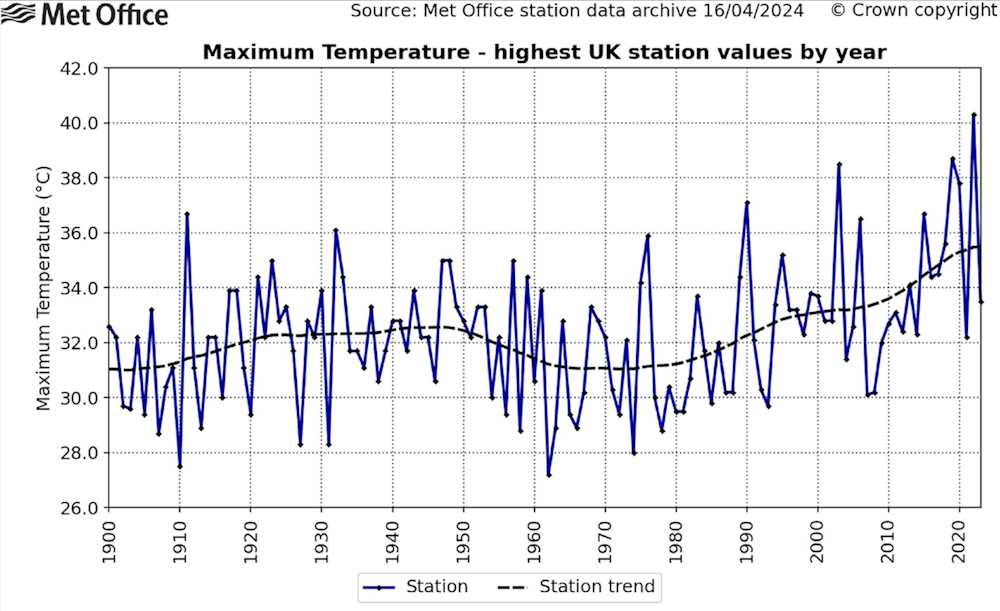
Startling recent examples include the extreme heatwave in the Pacific north-west of North America in 2021, in which temperatures exceeded the previous Canadian record maximum by 4.6°C. Another is the occurrence of 40°C in the UK in summer 2022, which exceeded the previous UK record maximum set only three years earlier by 1.6°C. This is part of the reason why the true impact of a fixed amount of global warming is only evident after several decades, but of course – since the climate is changing rapidly – we cannot use this method anymore.

Playing with fire

To better understand these extremes, scientists can use ensembles: many runs of the same weather or climate model that each slightly differ to show a range of plausible outcomes. Ensembles are routinely used in weather prediction, but can also be used to assess extreme events which could happen even if they do not actually happen at the time.

When 40°C first appeared in ensemble forecasts for the UK before the July 2022 heatwave, it revealed the kind of extreme weather that is possible in the current climate. Even if it had not come to fruition, its mere appearance in the models showed that the previously unthinkable was now possible. In the event, several naturally occurring atmospheric factors combined with background climate warming to generate the record-shattering heat on July 19 that year.

The highest observed temperature each year in the UK, from 1900 to 2023

A graph showing the highest observed temperature in the UK between 1900 and 2023.
The hottest days are getting hotter in the UK. Met Office/Kendon et al. 2024

Later in summer 2022, after the first occurrence of 40°C, some ensemble weather forecasts for the UK showed a situation in which 40°C could be reached on multiple consecutive days. This would have posed an unprecedented threat to public health and infrastructure in the UK. Unlike the previous month, this event did not come to pass, and was quickly forgotten – but it shouldn’t have been.

It is not certain whether these model simulations correctly represent the processes involved in producing extreme heat. Even so, we must heed the warning signs.

Despite a record-warm planet, summer 2024 in the UK has been relatively cool so far. The past two years have seen global temperatures far above anything previously observed, and so potential extremes have probably shifted even further from what we have so far experienced.

Just as was the case in August 2022, we’ve got away with it for now – but we might not be so lucky next time.

Simon H. Lee, Lecturer in Atmospheric Science, University of St Andrews; Hayley J. Fowler, Professor of Climate Change Impacts, Newcastle University, and Paul Davies, Chief Meteorologist, Met Office and Visiting Professor, Newcastle University

This article is republished from The Conversation under a Creative Commons license. Read the original article.

ooOOoo

That last sentence says it all: “Just as was the case in August 2022, we’ve got away with it for now – but we might not be so lucky next time.”

I am giving a talk, The Next Ten Years, next Saturday to our local Freethinkers group in Grants Pass. Close to the start of the presentation I say: “The Global Temperature anomaly, as of last year, 2023, is 1.17 C, 2.11 F, above the long-term average from 1951 to 1980. The 10 most recent years are the warmest years on record.

Finally, I am getting on in age and part of me wants to die, hopefully naturally, before more climate extremes are reached, but then another part of me would like to experience it!

Dogs rescued from ‘Park Fire’.

That’s the fire in California that is growing so quickly!

There are so many stories around about these dogs being rescued. I have chosen the YouTube video which is the CBS News, Chicago, presentation.

A homeowner was forced to leave their truck behind with the adult rottweiler and her puppies. The owner told rescuers where they were, but the intense fire blocked access to the truck. Several days later, rescuers spotted the dogs from a helicopter and landed to get them.

Wildfire prevention

This is a precarious time of the year!

We live just outside Merlin in Southern Oregon. We have 13 acres of which roughly half is wooded. With the year-on-year warming wildfires are never far from our minds during our Summer. Here’s a part of a message from OPB.

What’s happening

High temperatures are in the forecast along the Interstate 5 corridor, the Willamette Valley and in Central and Eastern Oregon. More than a quarter million acres across multiple counties in Eastern Oregon are ablaze with wildfires, and that could mean smoke and haze, especially in Central and northeastern Oregon.

A view of the southern portion of the Lone Rock Fire in north-central Oregon on Wednesday, July 17, 2024.
A view of the southern portion of the Lone Rock Fire in north-central Oregon on Wednesday, July 17, 2024.Courtesy InciWeb 

Hot weather persists

The National Weather Service is anticipating a hot weekend across much of Oregon and Southwest Washington. The agency on Friday issued a heat advisory along the Interstate 5 corridor from Battle Ground, Washington to Cottage Grove, Oregon from 11 a.m. to 11 p.m. Saturday. Temperatures could reach the mid-90s.

From central Oregon east towards Burns a heat advisory is in place from 11 a.m. Saturday to 11 p.m. Monday. Harney County could see temperatures over 100 degrees over the weekend.

Which neatly serves as an introduction to an article from The Conversation about protecting one’s home.

ooOOoo

How to protect your home from wildfires – here’s what fire prevention experts say is most important

Bryce Young, University of Montana and Chris Moran, University of Montana

Extreme heat has already made 2024 a busy wildfire year. More acres had burned by mid-July than in all of 2023, and several communities had lost homes to wildfires.

As fire season intensifies across the West, there are steps homeowners can take to make their homes less vulnerable to burning and increase the likelihood that firefighters can protect their property in the event of a wildfire.

We research wildfire risk to homes and communities. Here’s what decades of research suggest homeowners in high-fire-risk areas can do to protect their properties.

Two photos show the house with the fire behind it and after the fire, with burned land around it but the house untouched.
This house near Cle Elum, Wash., survived a 2012 wildfire because of the defensible space around the structure, including a lack of trees and brush close to the house, according to state officials. AP Photo/Elaine Thompson

Small improvements make big differences

A structure’s flammability depends on both the materials that were used to build it and the design of the building. In general, the vulnerability of a house is determined by its weakest point.

The roof, windows, siding and vents are all vulnerable points to pay attention to.

Roof: The roof provides a landing pad where airborne embers can accumulate like snowflakes. Roofs with lots of valleys can collect pine needles and leaves, which can be ignited by flying embers. This is why it’s important for the roof itself to be made of Class A non-flammable material like clay tiles or asphalt shingles, and why roof maintenance, including cleaning gutters, is important. Embers can easily find their way under peeling shingles, through gaps of clay tiles, or into gutters where pine needles and leaves can accumulate.

Windows: If windows are exposed to heat, they can shatter and allow fire inside the home, where curtains can easily ignite. Even double-paned windows can be shattered by the heat of a burning shed 30 feet away, unless the window glass is tempered, making it stronger. Fire-resistant shutters made of metal, if closed before a fire arrives, can offer additional protection. https://www.youtube.com/embed/HjA9yLP1icg?wmode=transparent&start=0 A life-size test with blowing embers at IBHS’s fire lab shows ways homes are at risk form a nearby fire.

Siding: Materials like stucco are non-flammable, while cedar shake siding will burn. Your exterior siding should be non-flammable, but the siding is only as strong as its weakest point. If there are holes in the siding, plug them with caulk to prevent embers from reaching the wooden frame in your walls. Ideally, there will be a 6- to 12-inch concrete foundation between the ground and the bottom of your siding material.

Vents: Reducing risk from vents is easy and affordable and can drastically reduce the flammability of your home. Make sure that one-eighth inch or finer metal mesh is installed over all vents to keep embers out of your attic and your home’s interior.

Controlling your home ignition zone

A home’s vulnerability also depends on the area around it, referred to as the home ignition zone.

The risk in your home ignition zone depends on things such as the slope of your land and the ecosystem surrounding your home. Here are a few guidelines the National Fire Protection Association recommends, both to reduce the chance of flames reaching your home and make it easier for firefighters to defend it.

Zone 1 – Within 5 feet

From the home’s exterior to 5 feet away, you want to prevent flames from coming in contact with windows, siding, vents and eaves. The gold standard is to have only non-flammable material in Zone 1.

The most common risks are having flammable mulch, plants, firewood, lawn furniture, decks and fences. These items have been a primary reason homes burned in many wildfires, including the 2018 Camp Fire that destroyed much of Paradise, California, and the 2012 Waldo Canyon Fire near Colorado Springs, Colorado.

An illustration of a house with rings at different distances around it and advice for each ring.
Fire protection guidelines take into consideration the surrounding ecosystem. Here some examples based on the National Fire Protection Association’s guidelines. Bryce Young, CC BY

Replacing mulch with gravel or pavers and having only short, sparse plants that don’t touch the house can help reduce the risk.

Wooden decks and fences can burn even if they are well-maintained. Replacing them with non-flammable materials or installing a thin sheet of metal on the house where the siding touches a wooden deck or fence can help protect the home. Mesh screens can prevent the accumulation of debris and embers under the deck.

Zone 2 – 5 to 30 feet away

In the next ring, between 5 and 30 feet from the home, the lawn should be green and short. This is Zone 2.

Be sure to rake up pine needles and leaves and take care to prune the lowest tree branches at least 6 feet high.

There should be about 18 feet of space between trees on a flat slope, and the spacing should increase with slope because steeper terrain drives faster, more intense fires. Walks, pathways, patios, decks and firewood can be kept in this zone.

Zone 3 – 30 to 100 feet away

Beyond Zone 2 and out to about 100 feet from the home is Zone 3. In this area, be sure to give sheds and propane tanks their own defensible space, just like around the house, and prune all low branches to 6 feet.

You can contact your local emergency management office or community wildfire nonprofit to learn more about grant funding that can offset the costs of pruning and removing trees on a forested property.

Beyond 100 feet may extend past your property boundary, but the adjacent house can still be fuel for a wildfire. That’s why it’s smart to plan with your neighbors as you’re reinforcing your own home. Once one house catches fire, house-to-house fire spread is facilitated by closer distances between buildings.

Be prepared

While most U.S. government spending aims to mitigate wildfire hazard on national forests, it is up to residents and communities themselves to reduce their vulnerability to a wildfire disaster.

Following the guidelines required by your community or state and those outlined above can help. Communities can also take steps to reduce fire risk and make fires easier to control by developing a community wildfire protection plan, exploring their wildfire risk, and adopting wildfire-specific building codes.

As the nation rolls into fire season, make sure your property is prepared. And when the call to evacuate comes, know where to go and get the heck out.

Bryce Young, Graduate Student Researcher, Fire Center, University of Montana and Chris Moran, Post-doctoral Researcher, Fire Center, University of Montana

This article is republished from The Conversation under a Creative Commons license. Read the original article.

ooOOoo

Where we live is beautiful and earlier this year we had a great deal of rain. But the summers are dry; that is a function of the climate in this part of the world. So for July so far we have had no rain and that is normal. Also no rain in July in 2023.

The three zones, as described earlier in this post, are very helpful.

A delightful story

About a blind man and his dog being rescued.

Today’s post is a short video that has no sound. But don’t let that stop you from watching it.

Blind man and dog rescued after days stuck on trail.

A 55-year-old blind man and his dog have been rescued from the Rogue River trail in South-Western Oregon. They began hiking on the trail on July 3 or 4 with a friend. During the hike, the man began to experience heat exhaustion, so the friend left to try to call emergency services. A US Coast Guard helicopter crew airlifted them to safety and the man and his dog were taken to emergency medical services.

My understanding is that they were rescued on July 11th, just a week ago.

An article on ageing

Musings on getting older and older!

I shall be 80 in November; I was born in London some six months before the end of World War II in Europe. I was the result of an affair between my father, Frederick, and my mother, Elizabeth. My father died in December, 1956 when I had recently become twelve years old.

I think that age spans have their own characteristics. So, for example, a person in their 20’s or their 40’s cannot sense what it is like to be in their 70’s or 80’s. Just a theory of mine and I have no evidence that this is a fact.

But as an introduction to today’s post it serves the task perfectly. And today’s post comes from The Conversation.

(And when I was writing this on the 11th July Biden was still the US President. My hunch is that he will not be by the 16th!)

ooOOoo

‘The immortal Gods alone have neither age nor death’

President Joe Biden, left, and first lady Jill Biden depart following a presidential debate with Donald Trump on June 27, 2024, in Atlanta. AP Photo/Gerald Herbert

Rachel Hadas, Rutgers University – Newark

President Joe Biden’s current fraught situation, showcasing both his weakness and his determination, is dramatic because it touches upon more than the political moment and more than one man’s character.

After his disastrous debate performance sparked calls for him to step aside as the Democratic presidential candidate, Biden’s position is not only inextricably entangled with issues of temperament and family dynamics. There’s also the challenge of making a crucial decision swiftly, at a moment when no decision is easy or clearly right.

And that’s not all. Biden has come to symbolize both the biological challenges and the existential poignancy of aging – of aging in power, certainly, but also just the unrelenting wear and tear of growing old.

The pressure of all these factors makes Biden a tragic figure.

Others reluctant to step down

To see this clamorous moment in the light of the past doesn’t make living in the present easier, but it does widen the perspective. Biden is far from the first person in a position of power who has been reluctant to step down – even when common sense or sheer weariness might dictate otherwise. In recent history, Supreme Court Justice Ruth Bader Ginsburg is often cited as an unfortunate example, and there are many other figures historians can cite.

Literature has always been concerned not only with people in power but also with the life cycle and the complexities of family relationships. Myths stay fresh and timeless; as we age, our understanding of a myth may change.

As the poet Eavan Boland writes in “The Pomegranate:”

“And the best thing about the legend is I can enter it anywhere. And have.”

The immense cohort of aging baby boomers, of whom I am one, is likely to sympathize with Biden because he has come to symbolize the vulnerability of aging – vulnerability to humiliation and, more subtly, to isolation.

A woman sitting in a room puts her face in her hands, covering her eyes.
Tonya Morris reacts at Tillie’s Lounge in Cincinnati during the presidential debate between President Joe Biden and the Republican candidate, former President Donald Trump, on June 27, 2024. AP Photo/Carolyn Kaster

Age ‘is not protection against suffering’

Greek poets like Homer and Sophocles present old age realistically.

In Homer’s “Iliad,” the elderly Nestor endlessly reminisces. Although listened to respectfully, he is a figure from an earlier generation whose role in war has dwindled to that of counselor.

Priam, the old king of Troy, heartbroken after the death of his son Hector, still finds the energy to berate his surviving sons as they clumsily hitch the mules that will draw the cart loaded with ransom so Priam can redeem his dead son’s body from the warrior who killed him, Achilles.

The subsequent moment of recognition between Priam and Achilles is one of the most poignant in literature, not least because the sight of old Priam reminds Achilles of his own aged father. Achilles might be expected to be enraged, but seeing Priam turns his anger to grief. Achilles knows he won’t see his father, Peleus, again. Being old is no protection against suffering; the aged Priam, mourning his son Hector, is assailed by the same desolate grief as Achilles.

In Shakespeare’s “Henry IV,” the once jovial and resilient Falstaff, publicly rejected and insulted by Prince Hal, is old, vulnerable – and alone. Macbeth, widowed and isolated, seems to have aged decades in the course of the play; he thinks forlornly of the comforts old age might be expected to provide: “honor, love, obedience, troops of friends.”

King Lear opens the tragedy named for him by ostensibly retiring. He announces his “intent/To shake all cares and business from our age,/Committing them to younger strengths, while we/Unburdened crawl toward death.”

But Lear refuses to cede control. Finally, as he sinks into confusion, he discovers humility and compassion – too late. Lear is reunited in prison with his loyal daughter Cordelia, who hasn’t been afraid to speak truth to power but who also has never ceased to love him – but she is summarily executed, and Lear, heartbroken, dies.

Decision requires ‘rare detachment’

Political commentator Bill Maher has called ageism the last respectable prejudice. It’s as if age and its accompanying disabilities create a force field keeping others at a distance. Or perhaps age bestows a universally recognized vulnerability on people who seemed powerful.

Either way, old people can seem somehow separated from the rest of us.

It’s hard even to imagine President Biden alone; on the contrary, he is apparently surrounded by loyal family and advisers. But the vulnerability of old age was on full display in the first presidential debate. News reports convey how hard it has become for anyone outside Biden’s tight circle to really see or know him.

One of the countless contrasts between Biden and Donald Trump is Biden’s almost sphinxlike unknowability, especially now. With Trump, as has frequently been noted, what you see is what you get. For better or for worse, his qualities are consistently on full display.

Age has been traditionally associated with wisdom, yet the wisdom old age can bestow seems out of reach for a figure still in the thick of politics. Lear’s “all-licensed” Fool rebukes the king: “Thou shouldst not have been old till thou had been wise.”

Only withdrawing from the fray might bestow some tranquility. But the vision to make the difficult decision to withdraw requires a kind of detachment that seems to be very rare in history, and not common in literature either.

An old man being comforted by two women, with a soldier in front of him.
The aged and blind Oedipus at Colonus, in an 1800 drawing by Bertel Thorvaldsen, says, ‘The immortal Gods alone have neither age nor death! All other things almighty Time disquiets.’ Sepia Times/Universal Images Group via Getty Images

‘Almighty time disquiets’

Greek tragedy does offer an eloquent example of just such wisdom.

Sophocles’s “Oedipus at Colonus” is a play about an old man written by an old man – Sophocles was in his 90s when the drama was presented.

The aged, self-blinded and self-exiled former king Oedipus, guided by his loyal daughter, finds himself in Colonus, a holy district outside Athens. When Theseus, the ruler of Athens, arrives on the scene, Oedipus’s words to him transcend both the immediate situation and Oedipus’s dire backstory.

“The immortal
Gods alone have neither age nor death!
All other things almighty Time disquiets.
Earth wastes away; the body wastes away;
Faith dies, distrust is born.
And imperceptibly the spirit changes
Between a man and his friend, or between two cities ….
… but time goes on,
Unmeasured Time, fathering numberless
Nights, unnumbered days ….”

By touching upon the shared human condition of mortality, as well as another universal, the inevitability of change, this speech bestows a stark tranquility on the situation.

Oedipus knows that he has come to Colonus to die, and his words convey a vision that seems to issue from beyond the grave. His detachment has an authority that now seems almost out of the reach of any of us, let alone a politician. But it’s good to remember that such qualities exist.

Of course this is a different moment. The looming juggernaut that Trump represents makes it hard for Biden’s supporters, or any Democrats, to be calm. Nevertheless, it’s useful to think about the potential strengths, as well as the vulnerabilities, of age.

The widespread anxiety now rampant among Biden’s supporters is sometimes mocked as unjustified panic. Time, as Oedipus might remind us, will tell. I personally find this anxiety touching and heartening for its humanity; there’s widespread compassion for Biden’s vulnerability.

In the ugly spectacle of American politics, it’s hard to keep humanity in sight. Literature can remind us of what we already know about growing old, about change, and about mortality.

Rachel Hadas, Professor of English, Rutgers University – Newark

This article is republished from The Conversation under a Creative Commons license. Read the original article.

ooOOoo

I cannot add anything to this first-class post!

Picture Parade Four Hundred and Forty

Memories of July 4th!

This was seen online in the afternoon of July 4th.

Dogs have appeared at U.K. polling stations wearing bows, rosettes and colourful leads as the public go to vote in the British General Election. The hashtag #dogsatpollingstations has become a highlight of election days for animal lovers on social media as people share photos of themselves exercising their pets and democratic rights at the same time. This year did not disappoint, with dogs on X, formerly known as Twitter, photographed in badges, bows and colourful leashes.

It is an alternative to the normal Picture Parade.