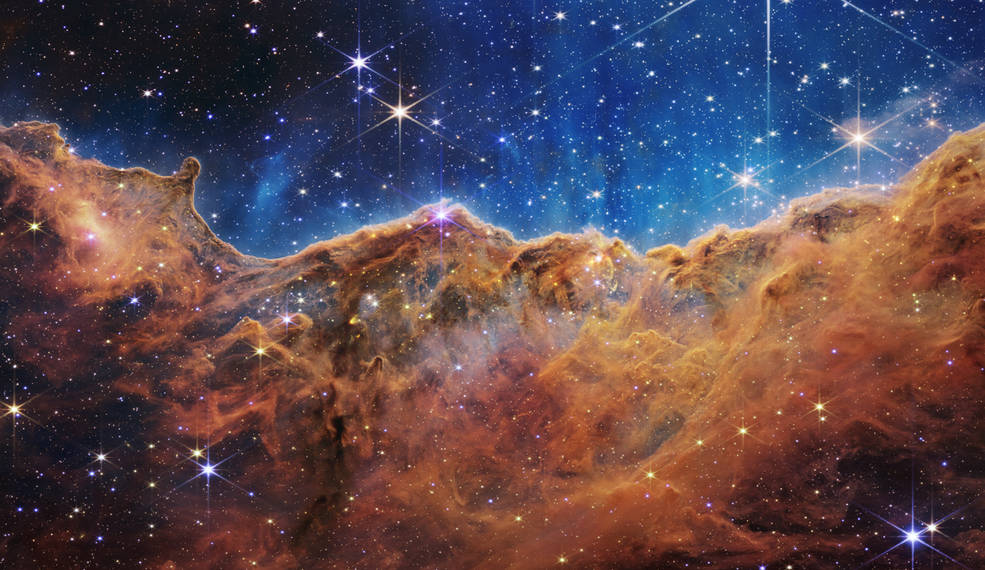
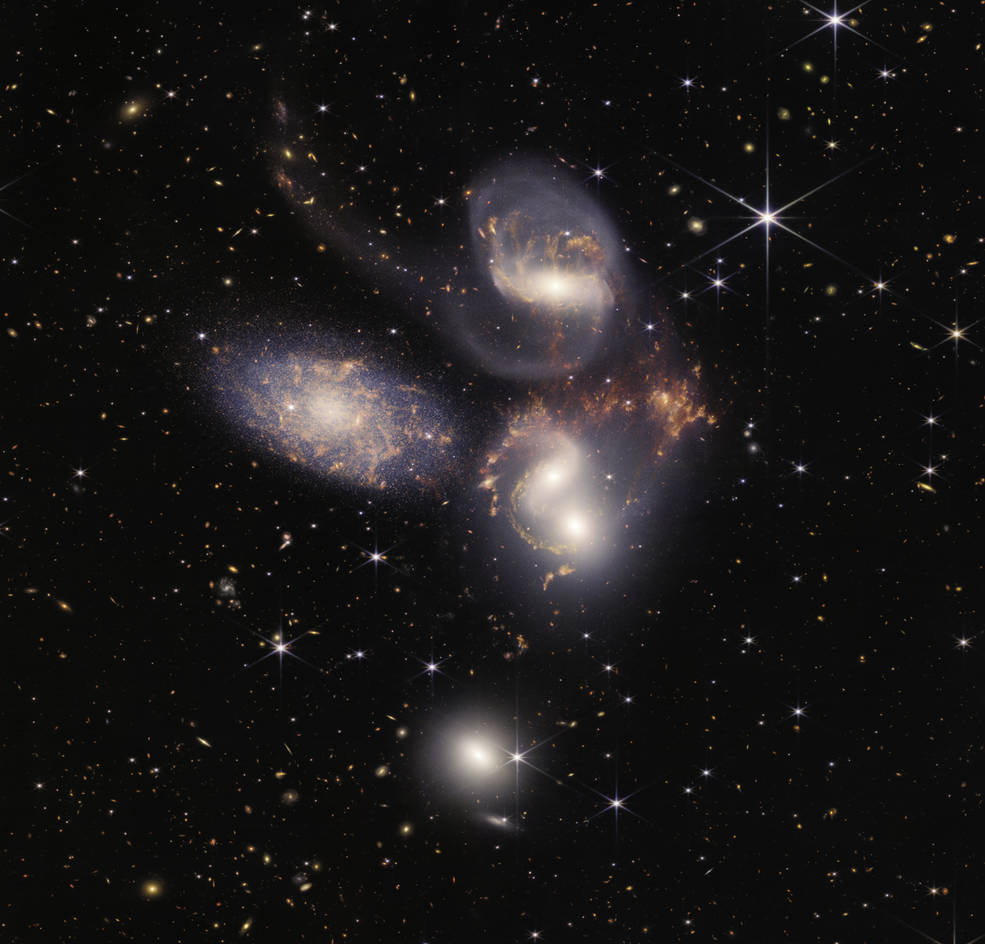
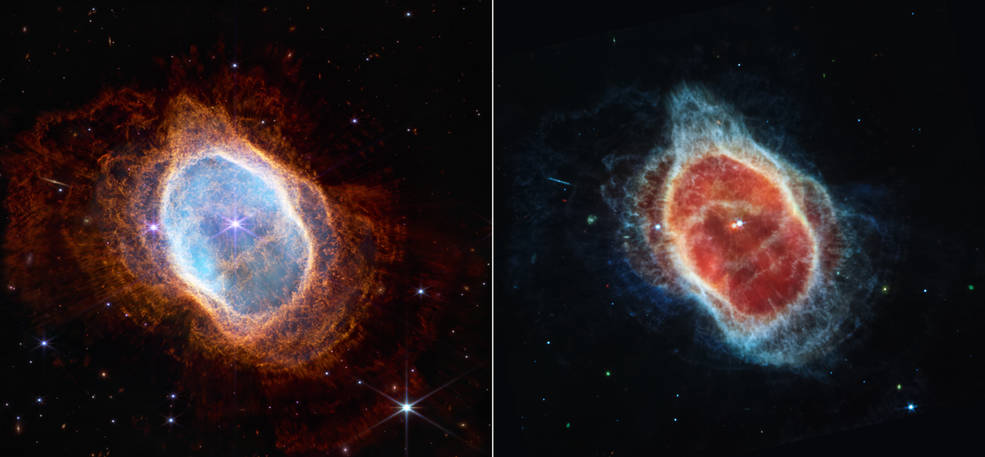
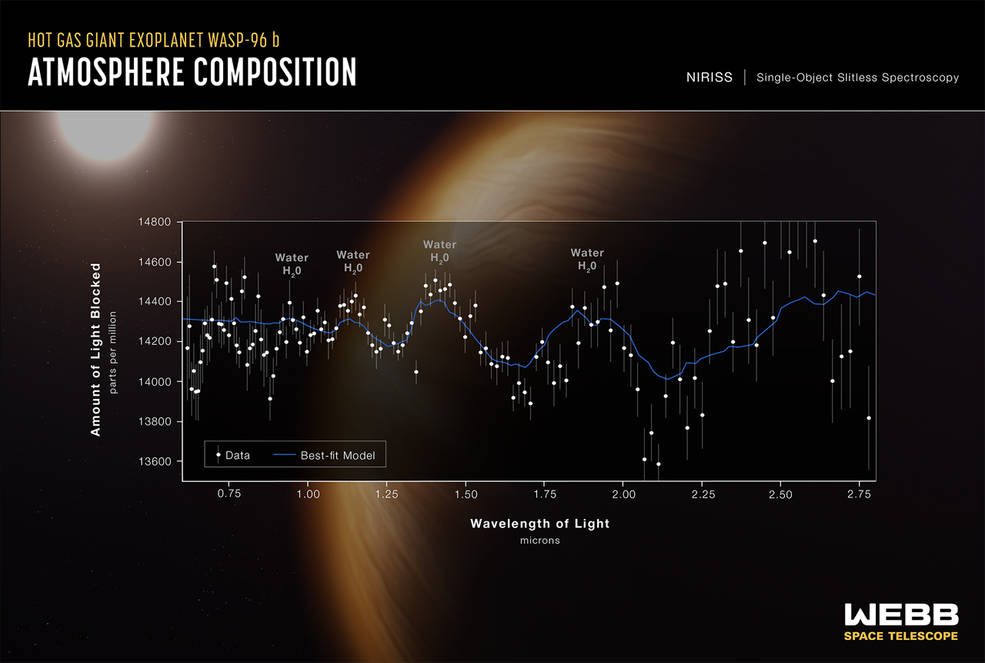
This story shows how we are connected to our dogs!
Jesse Lee, the dog, shows how one elderly man somehow connected with her. More later but first the story from The Dodo.
ooOOoo
Man Sees Tiny Speck On Cliff In The Distance And Immediately Knows It’s A Dog In Need
“He was funny because I couldn’t see her without my binoculars, and he said he knew the ‘dot’ was an animal because he’s never seen that dot there before.”
An elderly man was having his morning coffee outside his motorcycle shop one day when he noticed something unusual on a cliff in the distance. He quickly concluded that the tiny speck he was seeing was actually a stuck animal in need of help, so he contacted the Humane Society of the Pikes Peak Region (HSPPR), and they sent two animal law enforcement officers to check it out.
The officers couldn’t see the dog without a little extra help, but the man never had any doubt that she was there and desperately needed help.
“He was funny because I couldn’t see her without my binoculars, and he said he knew the ‘dot’ was an animal because he’s never seen that dot there before,” Officer Kailie Barker told The Dodo.
The dog was stuck on a small ledge about 150 feet above a creek. They weren’t sure how long she’d been there and immediately started coming up with a plan to rescue her.
“It took two and a half hours total to be able to find out exactly where she was, how we were going to get to her, obtaining the equipment and formulating an exact plan,” Barker said.
The officers were able to obtain some climbing gear, and once they were ready, Barker rappelled down to the stuck dog — who was so excited that someone had finally come to help her.
“She was obviously very scared. She had her body pressed into the dirt, she was wagging her tail quickly and was trying to crawl towards us when she very first saw us,” Barker said. “The dirt kept sliding out from under her, but she kept trying. When I was down on the cliffside with her, she tried crawling towards me again. When I finally got to her, she kept licking my hands and face.”
Once the dog had been brought to safety, they read her collar and discovered that her name was Jessie Lee. They took her back to HSPPR, where the staff was able to find her family’s contact information. It turns out she had been missing for two weeks and was found only a few blocks away from her home. Her family had searched for her every single day and was absolutely overjoyed that someone had found her.
Luckily, Jessie Lee wasn’t injured after her ordeal and was able to head home to her family shortly after being rescued. It was the perfect happy ending, all thanks to the officers who rescued her — and the man who knew that tiny speck in the distance was actually a dog.
ooOOoo
(All photographs courtesy of the HUMANE SOCIETY OF THE PIKES PEAK REGION)
Time and time again men and women spot something that they know is a dog. Even though it is a tiny speck or a creature in the darkness.
It is this fundamental relationship that binds us humans to our dogs, whether we know them or not!
Jessie Lee was alright and, to repeat the closing sentence above: ‘It was the perfect happy ending, all thanks to the officers who rescued her — and the man who knew that tiny speck in the distance was actually a dog.‘
p.s. I was reading the draft article out to Jeannie yesterday evening and she said that I had previously published it, and not so long ago! Whoops!
The article from George Monbiot came into my mailbox quite recently. Now of course Mr. Monbiot has a living to make and him publishing articles in the Guardian newspaper is normal. But I sensed that in this particular post he was worried. Worried about the situation regarding the planet and, by implication, all those who live on it.
I read yesterday on the UK Met Office blog about HILL events.
HILL events go beyond traditional weather extremes, potentially taking the climate system into uncharted territories. For example, much of the UK’s climate is predicated on two large elements of the climate system: the North Atlantic jet stream, a core of strong winds five to seven miles above the Earth’s surface, and the Atlantic Meridional Overturning Circulation (AMOC), a system of ocean currents which transports warm water northwards in the Atlantic.
Later on in that Met Office article it was said:
Prof Richard Betts MBE is the Head of Climate Impacts Research in the Met Office Hadley Centre and a Professor at the University of Exeter. Prof Betts, who led the team which prepared the Technical Report for the UK’s 3rd Climate Change Risk Assessment (CCRA3), is calling for a monitoring, attribution and prediction system that can provide early warning of HILLs. Professor Betts said: “With rising global temperatures, we are edging closer to the thresholds for more and more HILL events. Greater research into these events will help scientists advise policy makers on their thresholds and impacts.”
A week ago I wrote with real pride about the achievements of the James Webb Space Telescope (JWST). Later on I felt some shame that the focus on the real issue, that of climate change, was too low a priority for the US, let alone the world! Then I looked up the US expenditure on the military. Here’s a small quote from WikiPedia: “In May 2021, the President’s defense budget request for fiscal year 2022 (FY2022) is $715 billion, up $10 billion, from FY2021’s $705 billion.”[1] That puts the JWST into perspective. JWST cost ten billion dollars.
Expand one’s mind and just think of the global cost of war!
Here’s George Monbiot. Republished with his permission.
ooOOoo
Losing It
10th January, 2022
Faced with the gathering collapse of the biosphere, and governments’ refusal to take the necessary action, how do we stop ourselves from falling apart?
By George Monbiot, published in the Guardian 4th January 2022
No wonder journalists have slated it. They’ve produced a hundred excuses not to watch the climate breakdown satire Don’t Look Up: it’s “blunt”, it’s “shrill”, it’s “smug”. But they will not name the real problem: it’s about them. The movie is, in my view, a powerful demolition of the grotesque failures of public life. And the sector whose failures are most brutally exposed is the media.
While the film is fast and funny, for me, as for many environmental activists and climate scientists, it seemed all too real. I felt as if I were watching my adult life flash past me. As the scientists in the film, trying to draw attention to the approach of a planet-killing comet, bashed their heads against the Great Wall of Denial erected by the media and sought to reach politicians with 10-second attention spans, all the anger and frustration and desperation I’ve felt over the years boiled over.
Above all, when the scientist who had discovered the comet was pushed to the bottom of the schedule by fatuous celebrity gossip on a morning TV show and erupted in fury, I was reminded of my own mortifying loss of control on Good Morning Britain in November. It was soon after the Cop26 climate conference in Glasgow, where we had seen the least serious of all governments (the UK was hosting the talks) failing to rise to the most serious of all issues. I tried, for the thousandth time, to explain what we are facing, and suddenly couldn’t hold it in any longer. I burst into tears on live TV.
I still feel deeply embarrassed about it. The response on social media, like the response to the scientist in the film, was vituperative and vicious. I was faking. I was hysterical. I was mentally ill. But, knowing where we are and what we face, seeing the indifference of those who wield power, seeing how our existential crisis has been marginalised in favour of trivia and frivolity, I now realise that there would be something wrong with me if I hadn’t lost it.
In fighting any great harm, in any age, we find ourselves confronting the same forces: distraction, denial and delusion. Those seeking to sound the alarm about the gathering collapse of our life-support systems soon hit the barrier that stands between us and the people we are trying to reach, a barrier called the media. With a few notable exceptions, the sector that should facilitate communication thwarts it.
It’s not just its individual stupidities that have become inexcusable, such as the platforms repeatedly given to climate deniers. It is the structural stupidity to which the media are committed. It’s the anti-intellectualism, the hostility to new ideas and aversion to complexity. It’s the absence of moral seriousness. It’s the vacuous gossip about celebrities and consumables that takes precedence over the survival of life on Earth. It’s the obsession with generating noise, regardless of signal. It’s the reflexive alignment with the status quo, whatever it may be. It’s the endless promotion of the views of the most selfish, odious and antisocial people, and the exclusion of those who are trying to defend us from catastrophe, on the grounds that they are “worthy”, “extreme” or “mad” (I hear from friends in the BBC that these terms are still used there to describe environmental activists).
Even when these merchants of distraction do address the issue, they tend to shut out the experts and interview actors, singers and other celebs instead. The media’s obsession with actors vindicates Guy Debord’s predictions in his book The Society of the Spectacle, published in 1967. Substance is replaced by semblance, as even the most serious issues must now be articulated by people whose work involves adopting someone else’s persona and speaking someone else’s words. Then the same media, having turned them into spokespeople, attack these actors as hypocrites for leading a profligate lifestyle.
Similarly, it’s not just the individual failures by governments at Glasgow and elsewhere that have become inexcusable, but the entire framework of negotiations. As crucial Earth systems might be approaching their tipping point, governments still propose to address the issue with tiny increments of action, across decades. It’s as if, in 2008, when Lehman Brothers collapsed and the global financial system began to sway, governments had announced that they would bail out the banks at the rate of a few million pounds a day between then and 2050. The system would have collapsed 40 years before their programme was complete. Our central, civilisational question, I believe, is this: why do nations scramble to rescue the banks but not the planet?
So, as we race towards Earth system collapse, trying to raise the alarm feels like being trapped behind a thick plate of glass. People can see our mouths opening and closing, but they struggle to hear what we are saying. As we frantically bang the glass, we look ever crazier. And feel it. The situation is genuinely maddening. I’ve been working on these issues since I was 22, and full of confidence and hope. I’m about to turn 59, and the confidence is turning to cold fear, the hope to horror. As manufactured indifference ensures that we remain unheard, it becomes ever harder to know how to hold it together. I cry most days now.
Now there is very little that we folk can do. We can do our best but it all comes to nought. The real change is for governments, especially the governments of the US, China, Russia, the UK, and Europe, to make a difference soon.
A beautiful example of humans in the supreme invention and deployment of JWST.
(A reminder that Tuesday is a ‘non-doggie’ day.)
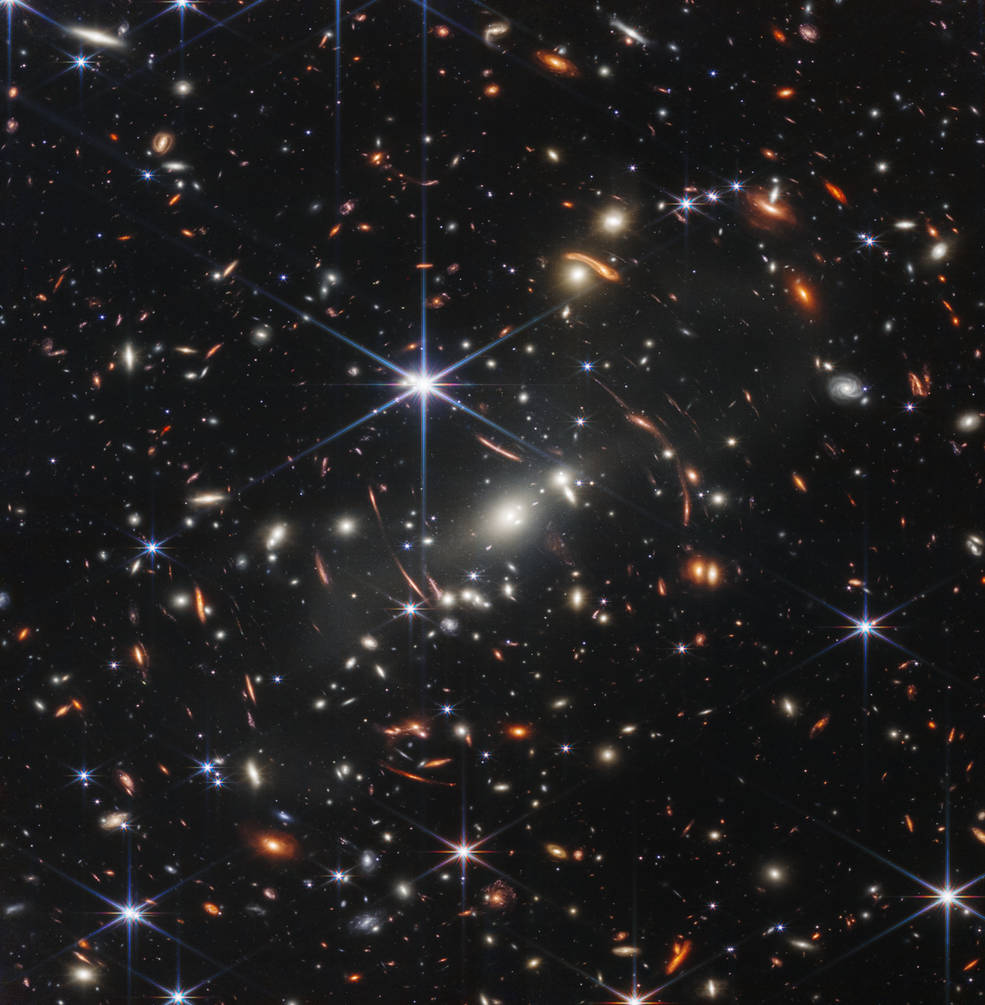
JWST is astounding. It will look back to the beginnings of the universe, just 200 million light-years after the Big Bang, or possibly further back in time. Because of the way that the universe stretches out and causes light to go red, as it were, JWST will be searching for images from the cosmos in the infrared.
I recently listened to a 30-minute programme on BBC Sounds. It was a BBC Discovery episode about the JWST. Recorded before the launch it was, nonetheless, a deeply fascinating programme about what JWST will be looking for.
Many years ago I found myself teaching at a unit attached to Exeter University. I was teaching sales and marketing. I can’t remember clearly the events that produced the meeting between myself and Chris Snuggs. But I recall the outcome.
Chris was the director of studies at a French institute named ISUGA. Let me borrow from their website:
The ISUGA Europe-Asia International BBA Bachelor’s degree is a 4-year cursus following the Baccalaureate or High School diploma which combines studying International Business and Marketing with learning an Asian or English language and comprising university exchange stays, as well as internships in French and International businesses.
ISUGA is located in Quimper, Western Brittany relatively close to Devon in England where I was living.
In Chris’ words: “It must have been through them that we got your name when we needed someone to teach Selling. Now I come to think of it, we HAD someone lined up for a whole week and he CANCELLED on us, so you were a last-minute replacement.”
For quite a few years I went across to Quimper to teach for Chris. Mainly by ferry from Plymouth to Roscoff. During the summer months I flew to Quimper from Exeter in our group-owned TB20. (The picture below is of the type only not our aircraft.)
A Socata TB20
Since that day we have remained in reasonable contact and I regard Chris as good friend.
A few days ago Chris published on his blog his account of his journey from Quimper back to Ramsgate, in east Kent. It was hilarious and I asked Chris if I could publish it and share with everyone.
Chris not only said yes but insisted on improving it (his words) including expanding it to what it is below.
So with no further ado, here is Chris’ post.
ooOOoo
“A DOG’s Travel Across Northern France” … as in “Doddering Old Git”
I am officially a “Senior Citizen”, but as such prefer much of what passes for “The Good Old Days” when in this case we were called “Old Age Pensioners” – MUCH less PC and wokeish AND more realistic – but DOGS sounds much better (and more informative) than OAPs.
A simple trip to Blighty to see the family for XMAS was not supposed to be a saga, but it turned out to be one:
Like ET, I was going home, though not quite as far – though it probably seemed like it.
I got about 3 hours sleep max Thursday night/Friday morning; worried about oversleeping even though I had THREE electronic wake-up devices.
I got up at 04:30 to finalize packing and clean up (the worst of) my mess.
I went out into the street in front of the house at 06:45 to await the taxi – it was raining, albeit not heavily.
The taxi was 5 minutes late, but the driver didn’t apologize. (I was going to say “woman driver” but I believe that sex differentiation is no longer allowed.)
I tried to help her (it, hir, shim?) load my heavy suitcase into *** boot (car, not footwear).
I lightly touched the car with the suitcase, and shim said: “Mind my car. Your suitcase is too heavy.”
I nearly said: “So are you, but it’s probably your hormones or your genes.” but decided that discretion was the better part of insult as I had to catch a train ……
We got to the station in plenty of time, only for me then to find that the train was due to go from platform C (usually it’s A as you leave the entrance hall).
I then found out/remembered that there is no lift at Quimper station. “This is not going to be my day,” I thought …
As I approached the stairs down to the access tunnel, I pretended to be a Doddery Old Git on the point of collapse (no comments please) and a nice young man helped me with the case.
Same procedure with a different bloke to go up to platform C. I actually tried this ploy with a pretty young lady first, but just got a funny look ….
Eventually got onto the right and very crowded train; my “This is not a gasmask” COVID mask was very reassuring as the virus probably had a field day circulating the carriage. I got some more funny looks, but two people asked me where I got my mask, so I am thinking of merchandising them ….
Got to Paris 4 hours later – showed a railway worker my little map where the taxi was supposed to be waiting and he pointed me in direction X saying authoritatively: “Tout au bout.” (“right at the end” for those who left school at 14).
Seemed a bit iffy to me (I vaguely remembered having gone somewhere else the last time I had done the journey, but couldn’t remember where. Does that happen to you?), but I followed his directions in the obviously-idiotic belief that someone actually working in a place would know where the taxis would be.
Of course, there was no sign of a taxi area at the distant far end of the HUGE Montparnasse Station, so I asked another railway bod.
He pointed in the 180° opposite direction and said the same as the first bloke, so I had to retrace my steps and go another 200 metres past where I had started to one of the no doubt multiple exits.
On exiting I was surrounded by some Middle Eastern gentlemen (without beards as it happens) who were desperate to take me somewhere.
I told them I had booked a taxi already and they suddenly lost interest.
I then got a call on my posh new mobile, but as with every other mobile I have ever owned it is specifically designed so that one cannot easily answer a call – first there is always some other leftover screen on the thing which by the time you have got rid of the caller has given up, and second you have to SWIPE to even see a green button which you then press – and I don’t know who invented SWIPE but hanging, drawing and quartering while being burned alive in oil over a period of several hours would be a suitable punishment.
This was all way beyond me, so I missed the call.
Miraculously, however, I did manage to call back and it was in fact the driver.
After two or three calls in each direction we managed to find each other physically as well as phonally.
We set off for La Gare du Nord, which should be about 15 minutes max by road – but it took us an hour and a quarter … (This was Paris in the rain on Friday at lunchtime – but I did learn a few new French swearwords from the driver.)
Fortunately, I had plenty of time between trains and so managed to find and embark on my TER to Calais.
This was an uneventful trip except that I was opposite a young mother with an inquisitive baby who kept looking at me for some reason (the baby not the woman ….).
I thought about playing with the baby but did not want to be arrested as a paedophile. I did plonk a small orange on the little table between us thinking she might want to play with it, but I got a funny look from her mother …. so I picked it up (the orange not the baby) and ate it – getting more funny looks. Strange … I get that all the time.
There was no internet on the TER so I tried to doze, but dozing with a high-decibel baby one metre away is a skill I have not yet mastered – and probably never will.
Arrived at Calais station – it took me 10 minutes to find the lift to get to the exit: in fact, one has to be led across an actual line by a railway bod and then take the lift – which is conveniently hidden.
But once outside the station I got a taxi right away. (a rare plus chalked up!)
I was dropped at the port outside a little hut marked “Billets”: (“tickets” for the linguistically-challenged).
This was weird – there used to be a big hall full of foot-passengers, but it has all changed – there IS a big hall, but it is empty except for two WWI biplanes. “Perhaps they want to fly us over?” I thought.
Went into the ticket office to be told my boat was cancelled (no explanation was offered) and they would try to get me on the next one. I never did understand why they would “try” (there was hardly anyone else there), but it seems they had to wait for a phone call.
It was a very small cabin with four guichets (Would you like a French dictionary for XMAS?) and three simple chairs, on one of which – after having my particulars scrutinized and recorded – I was invited to sit – which I did, not sure whether I should show appreciation or keep going with the scowl I could feel coming on ….
Behind the desks several women came and went, but spent all the time yacking to one another about women stuff while three of us sat waiting in stony and in my case exhausted silence (it was by now 18:00 and I had been up since 04:30).
I eventually got up and complained, something that comes naturally to we DOGs. I said I did not understand the delay, that I needed a coffee and a toilet break and that the least they could do was install some beds in their little office for those in my situation (and condition) who had to wait overnight for information about getting on a replacement ferry. I wanted to add a question about whether they had been trained in defibrillation techniques but by then I had run out of breath.
The charming young lady smiled and said they had none of the things that might alleviate my stress (adding the word “understandable” would have been nice) but that the large hall opposite might be open, and if not she could lend me a key to open it and visit the convenience.
I couldn’t be bothered to try to work out why she wouldn’t know whether the hall was open or not and that what I in fact most urgently needed was to get out of there without bothering with keys I would probably lose – which I did.
I then walked round the large hall three or four times admiring the WWI planes and wondering if the Red Baron had ever flown one of them. The fresh air and exercise refill renewed the oxygen supply to my needy brain.
I eventually staggered back to the ticket office and sat down on my hard chair again. I was tempted to feign a loud snore but as with the taxi driver in the morning decided that discretion was the better part of valour.
15 minutes later a phone call came and I was summoned to the guichet and given my ticket.
“Great,” I thought. “At last we can get outta here.”
THEN she told us that in 40 minutes someone would come to drive us to the boat.
I was fast losing the will to live, but thought that another dose of circling the large airplane hall might at least get my blood circulating again.
I told her where I was going and mentioned the hall and the planes (to be fair she did laugh at my joke about flying us across the Channel), but said: “That’s all run by the Chamber of Commerce.”, and of course we all know that no lunacy is beyond THAT organization.
I left after asking if she could send out a rescue party if I did not return – and she smiled again …. Smiles don’t of course achieve anything practical but they do at least make the pain somewhat more tolerable.
I came back half an hour later, having admired the bi-planes once again and wondered whether the Red Baron had ever flown one – and indeed a lady driver soon turned up as predicted to drive us to the boat. (another rare plus chalked up …)
We had to go up and down two or three kerbs (nowhere lowered for people to wheel their too-heavy suitcases) and eventually got onto a bus.
Had to go up a multiply-zig-zagged ramp to get onto the boat, but I played the Doddery Old Git card again and someone helped with my case.
I had thought of taking my walking-stick on this trip to boost the DOG sympathy factor, but could not work out how I could possibly carry it simultaneously with the rest of my baggage.
I asked a boatbod what time we would be leaving and then arrive in Dover, and he said: “in 15 minutes and 20:00.”
40 minutes later we still had not left, so I asked someone else when we would be leaving and was told in 15 minutes.
We actually left 30 minutes later, and I decided that being 100% wrong in a prediction was not actually that bad as these things go.
When I asked yet anOTHER bod WHY there had been another delay he just rolled his eyes and said something about the Captain which I didn’t understand – but was past caring.
Ten minutes later I asked the next available bod what time we would arrive in Dover and was told 20:30.
This was well past the time my taxi was booked, so I called to inform Eddy, the driver.
Fortunately, making calls on mobiles is easier than receiving them, so that was OK.
On the boat I got talking to a foot-passenger couple (there were only EIGHT of us!).
They were very nice and I gave them Taxi Supremo Andy’s phone number as they had nothing arranged for their arrival.
When we eventually got to Dover, there were no more checks (even though they made us walk through a maze of corridors in the totally empty border-control and customs instead of going straight to the taxi area – maybe they were filming us secretly?) and we eventually got to where I hoped to find Eddy the Driver.
However, there are huge roadworks going on just inside the port entrance and all the usual roads are blocked off and/or rerouted.
There was of course no sign of Eddy – OR any other taxis. Foot-passengers have a VERY low priority …..
Grateful for my phone once again, I called Eddy who said he was ALREADY in the port but had got lost.
Taxi-drivers getting lost is a bit ominous, so I assumed he was even more of a DOG than I am. Still, we DOGs have to stick together …..
I told him where we were ….. right near the entrance just past the roundabout at the bottom of the long clifftop descent to the port. For those who know Dover this is the easiest part of the entire port (or indeed of England) to find …..
Three exchanged calls later we finally met up physically as well as phonally – which was a reminder of Paris. In future, I am going to fix a GPS signal to myself and ensure my driver has military-standard tracking equipment. Perhaps Nathalie can arrange that?
Eddy was as suspected a bit of a DOG – but like me, very nice …… I asked if he could drop off my friends from the boat at Dover railway station before taking me back to Ramsgate – which he agreed to.
So we took them up the road to the station, where they unloaded their stuff from the boot.
I did think about getting out to check they didn’t take any of my four bits of luggage, but I was very tired and also thought that it would be impossible to confuse the grotty things I was carrying with any of their posh stuff from Parisian shops.
They gave Eddy an extra £8 for the slight detour. As I said they were very nice even if the lady’s perception and memory banks were highly undeveloped.
We then at last set off for Ramsgate, but Eddy took a wrong turn and we ended up driving towards Canterbury.
It takes a really advanced stage of dodderation to get lost driving from Dover to Ramsgate, so I will be contacting “The Guinness Book of Records”.
I decided against advising Eddy to do a U-turn in the pitch dark, and after driving four miles up a dual-carriageway we eventually got to a roundabout, retraced our wheels and made our way back to Dover.
Miraculously finding the right road to Ramsgate this time, we set off on the last lap. By now I was desperately hanging onto life by a thread.
Halfway to Ramsgate Eddy got a call from Taxiboss Andy’s Missus:
“The couple you dropped off at the station just rang; it seems they have got a package belonging to one of the other passengers.” ME! NO, I AM NOT MAKING THIS UP …..
…. but they were nice people and apparently said they would wait at the station for us to come and pick up the bag.
I tried to keep calm, but remembered Einstein’s famous dictum. (SEE BELOW)
We stopped to check the boot and I saw that they had taken a plastic bag with two boxes of wine for my sister Maggie and another box of boiled eggs and fishsticks essential for my diet.
I asked Eddy if he minded going back, and he agreed to instantly – even without being promised any more dosh.
So back we went to the station, picked up the bag and Eddy collected another £10 for his trouble. (As I said, nice people …)
Off we set for Ramsgate again, and this time Eddy did not get lost ……. even we DOGs are capable of learning.
I eventually got to Ramsgate around 22:30 instead of the anticipated 20:00 – and of course I felt obliged to give Eddy a generous tip even though he DID get lost twice. Actually, everything in France had gone pretty smoothly as planned; it only went really tits-up when we got to Dover. I of course blame BREXIT ……
How was your day?
PS No insult to real dogs is intended in this account. As we know, if the world were ruled by dogs we would all be safer and happier, though the absence of tv and the internet would be a shame.
PPS I was fortunate to be able to employ Paul for brief periods over a number of years to teach business students about Selling and Marketing during my time as Director of Studies of a business school in France. His teaching was highly impressive, but even more so his habit of flying his own plane to Quimper. In this and many other ways he was and remains unique. As I told the students: “Listen to Paul’s advice and one day you will fly your own plane.”
Let me say straight away that I am an atheist. Apart from a couple of wobbles in my life I have always been that way. I believe in the sanctity of the truth and wherever possible that is a scientific truth. Jean also is a non-theist. That’s why we enjoy so much the meetings of our local Rogue Valley Humanists & Freethinkers Group. Indeed, this video was first shown to the group at the last meeting.
Now Kurt Andersen, born August 1954, is an American writer and he has his own website as well as a long entry on Wikipedia.
In January, 2020 Kurt made a video. It is nearly 50 minutes long and it is on YouTube. I have inserted this video below. If you can, please watch it and, even better, give me your thoughts.
How can we make sense of America’s current “post-factual,” “post-truth,” “fake news” moment? By looking to America’s past. All the way back. To the wishful dreams and make-believe fears of the country’s first settlers, the madness of the Salem witch trials, the fantasies of Hollywood, the anything-goes 1960s, the gatekeeper-free internet, the profusion of reality TV….all the way up to and most especially including President Donald Trump. In this fascinating and lively talk, Kurt Andersen brings to life the deep research behind and profound implications of his groundbreaking, critically acclaimed and bestselling latest work. Connecting the dots in a fresh way to define America’s character—from the religious fanatics and New Age charlatans to talk-radio rabble-rousers and online conspiracy theorists—Andersen explains our national susceptibility to fantasy and how our journey has brought us to where we are today. Kurt Andersen is a brilliant analyst and synthesizer of historical and cultural trends, a bestselling novelist, a groundbreaking media entrepreneur, and the host of public radio’s Studio 360. Join CFI and find out how we are protecting critical thought and science by visiting: https://centerforinquiry.org This talk took place at the CSICon 2019 in Las Vegas on October 19, 2019
There have been two recent articles on head-tilting in dogs. One was published by Springer Link and was a scientific report; the Abstract as follows:
Little is known about head-tilts in dogs. Based on previous investigations on the head turning and the lateralised brain pattern of human speech processing in dogs, we hypothesised that head-tilts may be related to increased attention and could be explained by lateralised mental functions. We observed 40 dogs during object-label knowledge tests and analysed head-tilts occurring while listening to humans requesting verbally to fetch a familiar toy. Our results indicate that only dogs that had learned the name of the objects tilted their heads frequently. Besides, the side of the tilt was stable across several months and tests. Thus, we suggest a relationship between head-tilting and processing relevant, meaningful stimuli.
The other report was a more easy read, so to speak, and is from Treehugger and that is the one that I shall share with you.
Ask your dog a question, and there’s a good chance he’ll tilt his head as he ponders his response.
The head tilt is a cute canine maneuver that gives the impression your pup is paying attention to you. But there’s been little scientific research analyzing the behavior.
In a new study of “gifted” dogs, researchers found that dogs that can easily learn the names of their toys tilt their heads when their owners ask them to fetch a specific toy. And they typically tilt their heads consistently to the same side.1
Data was collected during the Genius Dog Challenge, a series of experiments that were broadcast on social media, showing dogs retrieving their toys by name. The information was also collected during an earlier study that researched how some dogs are able to learn the names of many of their toys.2
These dogs were dubbed “gifted word learners” by researchers.
“We started studying this phenomenon after we realised that all of us observed this behaviour very often when we were testing the gifted word learner (GWL) dogs,” lead researcher Andrea Sommese, from the Family Dog Project at the Eötvös Loránd University in Budapest, tells Treehugger.
“It’s such a cute, common behaviour but we didn’t know why our dogs were doing it and most of all, why so often!”
Gifted Learners
For their work, researchers searched globally for two years, looking for dogs that had the ability to quickly memorize the names of their toys. They also created the Genius Dog Challenge, a research project and social media campaign, to find even more brilliant pups.3
They found six border collies that live in different countries, who all learned toy names just while playing with their owners. For the challenge, these gifted word learners had a week to learn the names of six toys. During the second stage, they had a week to try to learn the names of a dozen toys.4
“In all our experiments we found that the GWL dogs were tilting the head very often. It wasn’t just during the challenge but also when we were testing them every month,” Sommese says.
“We believe that there is a relationship between head tilting and processing relevant, and meaningful stimuli as our GWL dogs only showed this behaviour during the test when their owners were saying the name of a toy.”
In one experiment, researchers observed 40 dogs for three months as they attempted to learn the names of two new toys. The dogs sat or stood in front of their owners when they were asked to fetch one of the toys by pronouncing its name. (For example, “bring rope!”) The dogs would then go to another room and attempt to retrieve the correct toy.1
The researchers found that the gifted word learner dogs tilted their heads 43% of the time versus the typical dogs that only tilted in 2% of trials.1
Dogs, horses, and other animals—including humans—show asymmetry in the way they perceive the world around them. They prefer one ear, eye, hand (or paw) over the other when interacting with the environment.5
“A typical way to show asymmetry, especially in humans, is handedness. Most of us are right-handed but there are still left-handed people around. The same can happen to animals,” Sommese says.
“Of course, it doesn’t always have to be a ‘hand’ or a paw in their case, it can be an eye or an ear. For instance, in dogs, even the inclination their tails have when they’re wagging is a sign of asymmetrical behaviour.”
In the study, researchers found that the dogs also showed asymmetry, nearly always tilting their heads to the same side.1
What About Typical Dogs?
Researchers say the findings suggest there’s a connection between head tilting and processing relevant and meaningful stimuli.5
But their results are limited because they only studied these brilliant pups who have learned toy names.
“Even if typical dogs are not able to learn the names of many toys as we showed with our previous study, typical dogs still tilt their head,” Sommese says. “It seems that even in them this might be in response to meaningful stimuli—but we don’t know what meaningful means for a typical dog just yet.”
lead researcher Andrea Sommese, from the Family Dog Project at the Eötvös Loránd University in Budapest
ooOOoo
Now I see The Smithsonian magazine has jumped on the bandwagon. Here is a small piece from their article:
“The next step is asking more questions to get at what the head tilt really means,” says Monique Udell, a human-animal interaction researcher at Oregon State University who wasn’t involved in the work, to Rachel Fritts of Science. “Can we use head tilting to predict word-learning aptitude, or attention, or memory?”
But The Smithsonian has to be thanked for mentioning Monique Udell because one can quickly find her details:
Monique Udell
Dr. Udell is the Director of the Human-Animal Interaction Laboratory and teaches courses on Animal Behavior & Cognition, Applied Animal Behavior, Animal Learning, Behavior Modification and Enrichment within the Department of Animal & Rangeland Sciences at OSU.
Her research interests include:
Human-animal interactions & bonding, including animal training and animal assisted intervention programs aimed at improving the lives of humans and animals through mutually beneficial interactions.
Lifetime and evolutionary factors influencing the social development and wellbeing of canines (dogs and wolves), domestic cats, and other captive and domesticated species.
Evaluating and improving the welfare of animals living as companion, working, or production animals.
More details can be found at the Human-Animal Interaction lab website: TheHumanAnimalBond.com
What is happening to Earth’s climate needs attention NOW!
Two charts recently from the BBC News.
The 10 years to the end of 2019 have been confirmed as the warmest decade on record by three global agencies.
According to Nasa, Noaa and the UK Met Office, last year was the second warmest in a record dating back to 1850. The past five years were the hottest in the 170-year series, with the average of each one more than 1C warmer than pre-industrial.
The Met Office says that 2020 is likely to continue this warming trend.2016 remains the warmest year on record, when temperatures were boosted by the El Niño weather phenomenon.
This is the reality.
It affects every part of the world and it affects everyone. BUT! We, as in you and me, and everyone else, still haven’t got it.
The recent COP26 was progress and, especially, the next convention being held in a year’s time is important. But it is a long way from where we need to be. A very long way.
Patrice Ayme is someone that I follow and there have been times when I have gladly republished his posts. With his permission I should add.
Recently he published a post called Cataclysmic Seven Degree Centigrade Rise and I wanted to share it with you. Here is is:
ooOOoo
CATACLYSMIC SEVEN DEGREES CENTIGRADE RISE
Abstract: Expected rise of temperature in mountains correspond to a seven degree C rise. This informs global heating: in the long run, it will also be 7C. Large systems (Antarctica, Greenland) have greater thermal inertia, so their temperatures rise slower… But they will rise as much. In other words the so-called “forcing” by man-made greenhouse gases (which corresponds to 600 ppm of CO2) is universal, but the smaller the system, the faster the temperature rise…
****
Geographical systems with little thermal inertia (mountain glaciers) show an accelerated rate of heating of these parts which is only compatible with a seven (7) degrees rise in Celsius by 2100… A rise the IPCC of the UN considers impossible… But INERTIA says that it IS happening. The first thing this implies is that most forests will burn… worldwide. Then the ice shelves in Antarctica will follow.
TEMPS RISING ULTRA FAST IN MOUNTAINS
Anybody familiar with mountains worldwide know that temperatures are rising extremely fast: large glaciers I used to know have completely disappeared.. As in Chacaltaya, Bolivia. Or Portage, Alaska. The closest glacier to an Alpine village I went to as a child has been replaced by a larch forest (melezes)… One reason for this is that mountains are smaller in frozen mass than immense ensembles like Greenland and Antarctica. Moreover, the mountains’ permafrost is not as cold.
From 1984 to 2017, the upper reaches of the fires in the Sierra Nevada of California rose more than 1,400 feet. Now the temperature in the lower atmosphere decreases by 7C every 1,000 meters. There are many potential factors to explain why fires go higher (although some contradict each other). To avoid paralysis by analysis, I will assume the rise in fires is all due to temperature rise. So what we have here is a 2.5C rise in 33 years.
….FROM SMALLER THERMAL INERTIA:
Mountain thermal capacity is accordingly reduced relative to those of Greenland and Antarctica. The proportionality factors are gigantic. Say the permafrost of a mountain range is of the order of 10^4 square kilometers, at a depth of one kilometer (typical of the Sierra Nevada of California or the Alps at a temp of -3C. By comparison, Antarctica is 14x 10^6 sq km at a depth of 4 kilometers of permafrost at a temp of -30C. Thinking in greater depth reveals the proportions to be even greater: individual mountains are of the order of square kilometers. This means that (using massively simplified lower bounds), Antarctica has a mass of cold which is at least 4 orders of magnitude higher than a mountain range: to bring Antarctica to seriously melt, as mountain ranges are right now, would require at least 10,000, ten thousand times, as much heat (or maybe even a million, or more, when considering individual mountains).
As it is, mountains are exposed to a heat bath which makes their permafrost unsustainable. From their small thermal inertia, mountains warm up quickly. Greenland and Antarctica, overall, are exposed to the same bath, the same “forcing”, but because they are gigantic and gigantically cold, they resist more: they warm up, but much slower (moreover as warmer air carries more snow, it snows more while Antarctica warms up).
I have looked, in details at glaciologists records, from the US to Europe… Everywhere glaciologists say the same thing: expect a rise of the permafrost line of 1,000 meters… That corresponds to a SEVEN DEGREE CENTIGRADE RISE. Basically, while glaciers were found down to 2,500 meters in the Alps (some can still be seen in caves)… Expect that, in a few decades, none will occur below 3,500 meters… Thus speak the specialists, the glaciologists…
Mount Hood, Oregon, in August 1901 on the left, and August 2015, on the right. The Eliot glacier, front and center, which used to sprawl for miles, is in the process of disappearing completely.
What is happening then, when most climate scientists speak of holding the 1.5 C line (obviously completely impossible, even if humanity stopped emitting CO2 immediately)???… Or when they admit that we are on a 2.7C future in 2100? Well, those scientists have been captured by the establishment… They say what ensure their prosperous careers… At a global rise of 2.7 C, we get a migration of the permafrost line of around 500 kilometers towards the poles… Catastrophic, yes, but still, Antarctica will not obviously start to melt, big time.
If it came to light that a seven degree centigrade rise is a real possibility, authorities would turn around and really do some things, which may destabilize the worldwide plutocratic establishment: carbon tariffs are an obvious example. Carbon tariffs could be imposed next week… and they would have a big impact of the CO2 production. So why are carbon tariffs not imposed? Carbon tariffs would destabilize the deindustrialization gravy train: by employing who are basically slaves in poor countries, plutocrats make themselves ever wealthier, while making sure there would be no insurrection at home… A trick already used in imperial Rome, by the Senatorial aristocracy/plutocracy. That would be highly effective… By the way, without saying so, of course, and maybe even unwittingly, this is basically what Trump had started to do…
The devil has these ways which the commons do not possess…
That would stop the crafty, dissembling nonsense that countries such as France are at 4.6 tons per capita of CO2 emissions per year… That’s only true when all the CO2 emitted to produce the goods the French need is NOT counted.. including deforestation in Brazil to grow soybean. With them counted, one gets to 11 tons or so, more than double… The wonderful graph of CO2 emissions collapsing in Europe is the same graph as collapsing industrial production…
The devil has these ways the commons have not even detected…
Carbon tariffs would be a way to solve two wrongs in one shot: the wrong of deindustrialization, of corrupt pseudo-leaders not putting the most advanced countries, their own countries, first… And the wrong of producing too much CO2.
Little fixes will go a long way, as long as they incorporate hefty financing fundamentally researching new energy (it does not really matter which type, as long as it is fundamental…)
Patrice Ayme
ooOOoo
Now this isn’t some academic treatise that doesn’t affect the likes of you and me. This is, as I have said, the harsh reality of NOW!
Here’s a photo of me and Jeannie together with Andy and Trish taken in March, 2018. On the edge of Crater Lake.
Then this is a stock photograph of Crater Lake taken in March, 2020.
Taken by Valerie Little
Not a great deal of difference but the trees in the photo above aren’t encased in snow as is the tree in the 2018 photo.
Now there is important news to bring you from COP 26. On Sunday Boris Johnson said:
Scientists say this would limit the worst impacts of climate change.
During a Downing Street news conference, Mr Johnson said:
“We can lobby, we can cajole, we can encourage, but we cannot force sovereign nations to do what they do not wish to do”
“For all our disagreements, the world is undeniably heading in the right direction”
The “tipping point has been reached in people’s attitudes” – with leaders “galvanised and propelled by their electorates”
But “the fatal mistake now would be to think that we in any way cracked this thing”
Mr Johnson said that despite the achievements of the summit, his reaction was “tinged with disappointment”.
He said there had been a high level of ambition – especially from countries where climate change was already “a matter of life and death”.
And “while many of us were willing to go there, that wasn’t true of everybody”, he admitted.But he added the UK could not compel nations to act. “It’s ultimately their decision to make and they must stand by it.”
That point about attitudes is interesting. Who would have thought, say, five years ago, that attitudes had changed so dramatically by late-2021.
One hopes that we will come to our collective senses but I can’t see the CO2 index being returned to its normal range without machines taking the excessive CO2 out of the atmosphere. Because, as was quoted on The Conversation nearly a year ago:
On Wednesday this week, the concentration of carbon dioxide in the atmosphere was measured at at 415 parts per million (ppm). The level is the highest in human history, and is growing each year.
Finally, my daughter, Maija, and my son-in-law, Marius, had a child some ten years ago. He is my grandson and I left England before he was born. He is Morten and he is a bright young spark.
Morten
Morten and all the hundreds of thousands of young persons like him are going to have to deal with the world as they find it!
Time and time again dogs do things which cause me to wonder about the way that dogs think and behave. One would think that with so many dogs here at home my days of wondering would be over but the truth is that the more I stay engaged with dog blogs, such as The Dodo, the more I realise that I am only skimming the surface of dogs.
That is my introduction to this post about a Turkish dog.
ooOOoo
Stray Dog Takes The Train All By Himself Every Day
“He knows where to go and has a purpose.”
By Lily Feinn, Published on the 8th October, 2021.
Meet Boji — a stray dog who’s bringing joy to commuters every day.
A few months ago, Istanbul’s public transportation department noticed a large, brown dog riding the buses, trams, subways and ferries. The dog, whom they dubbed Boji, seems to know exactly where he’s going any time he steps on or off the train.
INSTAGRAM/BOJI_IST
“Two months ago, we noticed a dog trying to use our trams, metros and our trains and he knows where to go and he knows where to get out,” Aylin Erol, head of customer relations at Metro Istanbul, told CNN. “It was quite interesting and we have started to follow him. And it was really an interesting pattern. It’s something like that he knows where to go and has a purpose.”
In mid-August, public transit officials picked Boji up and brought him to a vet for a health check. Boji also received a microchip which is connected to a mobile application, allowing the Metro Istanbul customer relations department to keep tabs on his whereabouts and wellbeing.
Boji’s frequent travels have made him a celebrity on public transit. When he’s not napping on a tram seat, rushing to catch a train, or enjoying the breeze on the ferry, he’s always happy to pose for selfies with commuters and receive lots of pets and treats.
INSTAGRAM/BOJI_IST
The good boy has proven himself to be the most polite passenger you’ll ever encounter.
“Boji knows all the rules of travel, gives way to the disembarking passengers, waits, enters the train, and calmly finds a place for himself,” wrote Cumhuriyet. “When he misses the subway, he runs after the subway.”
INSTAGRAM/BOJI_IST
Boji visits at least 29 stations and travels approximately 18 miles a day around the city, saying hi to his adoring fans along the way. While most commuters can’t wait to get off the subway or bus, for Boji, it’s where he’s most comfortable.
“I think it’s very beautiful,” passenger Abdulkadir Yalçın told Cumhuriyet. “It adds joy to the subway. It makes us smile. It’s the first time I’ve encountered such a thing.”
INSTAGRAM/BOJI_IST
Luckily, the good boy doesn’t have to pay a fare to hop on his preferred bus or train. For Boji, it’s just home.
ooOOoo
Isn’t that amazing! I wonder, however, how he stays fit and healthy? But whatever, it is a delightful story.
Chris Impey writes about his specialty in observational cosmology.
This has nothing to do with life, nothing that we are dealing with in our daily affairs, and has nothing to do with our dear dogs. BUT! This is incredibly interesting! Incredibly and beautifully interesting!
ooOOoo
The most powerful space telescope ever built will look back in time to the Dark Ages of the universe
Hubble took pictures of the oldest galaxies it could – seen here – but the James Webb Space Telescope can go back much farther in time. NASA
Some have called NASA’s James Webb Space Telescope the “telescope that ate astronomy.” It is the most powerful space telescope ever built and a complex piece of mechanical origami that has pushed the limits of human engineering. On Dec. 18, 2021, after years of delays and billions of dollars in cost overruns, the telescope is scheduled to launch into orbit and usher in the next era of astronomy.
I’m an astronomer with a specialty in observational cosmology – I’ve been studying distant galaxies for 30 years. Some of the biggest unanswered questions about the universe relate to its early years just after the Big Bang. When did the first stars and galaxies form? Which came first, and why? I am incredibly excited that astronomers may soon uncover the story of how galaxies started because James Webb was built specifically to answer these very questions.
The Universe went through a period of time known as the Dark Ages before stars or galaxies emitted any light. Space Telescope Institute
The ‘Dark Ages’ of the universe
Excellent evidence shows that the universe started with an event called the Big Bang 13.8 billion years ago, which left it in an ultra-hot, ultra-dense state. The universe immediately began expanding after the Big Bang, cooling as it did so. One second after the Big Bang, the universe was a hundred trillion miles across with an average temperature of an incredible 18 billion F (10 billion C). Around 400,000 years after the Big Bang, the universe was 10 million light years across and the temperature had cooled to 5,500 F (3,000 C). If anyone had been there to see it at this point, the universe would have been glowing dull red like a giant heat lamp.
Throughout this time, space was filled with a smooth soup of high energy particles, radiation, hydrogen and helium. There was no structure. As the expanding universe became bigger and colder, the soup thinned out and everything faded to black. This was the start of what astronomers call the Dark Ages of the universe.
The soup of the Dark Ages was not perfectly uniform and due to gravity, tiny areas of gas began to clump together and become more dense. The smooth universe became lumpy and these small clumps of denser gas were seeds for the eventual formation of stars, galaxies and everything else in the universe.
Although there was nothing to see, the Dark Ages were an important phase in the evolution of the universe.
The Dark Ages ended when gravity formed the first stars and galaxies that eventually began to emit the first light. Although astronomers don’t know when first light happened, the best guess is that it was several hundred million years after the Big Bang. Astronomers also don’t know whether stars or galaxies formed first.
Current theories based on how gravity forms structure in a universe dominated by dark matter suggest that small objects – like stars and star clusters – likely formed first and then later grew into dwarf galaxies and then larger galaxies like the Milky Way. These first stars in the universe were extreme objects compared to stars of today. They were a million times brighter but they lived very short lives. They burned hot and bright and when they died, they left behind black holes up to a hundred times the Sun’s mass, which might have acted as the seeds for galaxy formation.
Astronomers would love to study this fascinating and important era of the universe, but detecting first light is incredibly challenging. Compared to massive, bright galaxies of today, the first objects were very small and due to the constant expansion of the universe, they’re now tens of billions of light years away from Earth. Also, the earliest stars were surrounded by gas left over from their formation and this gas acted like fog that absorbed most of the light. It took several hundred million years for radiation to blast away the fog. This early light is very faint by the time it gets to Earth.
But this is not the only challenge.
As the universe expands, it continuously stretches the wavelength of light traveling through it. This is called redshift because it shifts light of shorter wavelengths – like blue or white light – to longer wavelengths like red or infrared light. Though not a perfect analogy, it is similar to how when a car drives past you, the pitch of any sounds it is making drops noticeably. Similar to how a pitch of a sound drops if the source is moving away from you, the wavelength of light stretches due to the expansion of the universe.
By the time light emitted by an early star or galaxy 13 billion years ago reaches any telescope on Earth, it has been stretched by a factor of 10 by the expansion of the universe. It arrives as infrared light, meaning it has a wavelength longer than that of red light. To see first light, you have to be looking for infrared light.
Telescope as a time machine
Enter the James Webb Space Telescope.
Telescopes are like time machines. If an object is 10,000 light-years away, that means the light takes 10,000 years to reach Earth. So the further out in space astronomers look, the further back in time we are looking.
The James Webb Space Telescope was specifically designed to detect the oldest galaxies in the universe. NASA/JPL-Caltech, CC BY-SA
The strategy will be to stare deeply at one patch of sky for a long time, collecting as much light and information from the most distant and oldest galaxies as possible. With this data, it may be possible to answer when and how the Dark Ages ended, but there are many other important discoveries to be made. For example, unraveling this story may also help explain the nature of dark matter, the mysterious form of matter that makes up about 80% of the mass of the universe.
James Webb is the most technically difficult mission NASA has ever attempted. But I think the scientific questions it may help answer will be worth every ounce of effort. I and other astronomers are waiting excitedly for the data to start coming back sometime in 2022.
The dark ages of the universe that lasted for millions of years until gravity started to form some order out of the ‘soup’.
I don’t know about you but the winter nights, when the sky is clear, have me waiting outside for the dogs to come in looking up at the night sky just lost in the sheer wonder of it all.
Indeed until a short time ago it was thought that the dog evolved from the grey wolf but recently I read that the dog evolved as its own species.
But the following is a republication of an article on Oregon Wild about wolves returning to the State of Oregon.
ooOOoo
Wolves in Oregon
Gray wolves (Canis lupus) were once common in Oregon, occupying most of the state. However, a deliberate effort to eradicate the species was successful by the late 1940s.
In fact, trouble for wolves began almost 100 years earlier, in the years before Oregon became a state. In 1843 the first wolf bounty was established and Oregon’s first legislative session was called in part to address the “problem of marauding wolves.” By 1913, people could collect a $5 state bounty and an Oregon State Game Commission bounty of $20. The last recorded wolf bounty was paid out in 1947.
After an absence of over half a century, wolves began to take their first tentative steps towards recovery. Having dispersed from Idaho, the native species is once again trying to make a home in Oregon. One of the first sightings came in 1999 when a lone wolf was captured near the middle fork of the John Day River, put in a crate and quickly returned to Idaho by government wildlife agents. In 2000, two wolves were found dead – one killed by a car, the other illegally shot.
In 2006, a flurry of sightings led biologists to believe a number of wild wolves were living in Northeast Oregon near the Wallowa Mountains and the Eagle Cap Wilderness. Sadly, a wolf found shot to death near La Grande in May 2007 clearly indicated wolves had arrived in the area.
After that sad chapter, wolves began to establish a fragile foothold in the state. In July 2008 pups were confirmed to a wolf named Sophie by the Oregon Wild wolf pack (and B-300 to government biologists). Those pups represented the first wolves in Oregon in nearly 60 years! A second set of six pups were confirmed and videotaped in November 2009. The following July, a third litter of pups was confirmed.
Unfortunately, the news was tempered with additional poaching and heavy-handed state management. After peaking at 26 confirmed wolves, wolf recovery stalled out in 2011. While some wolves dispersed from the Imnaha Pack, only one pup was confirmed to Oregon’s best-known pack, and two pups were confirmed in one of the state’s other two packs (the Walla Walla and Wenaha). Oregon’s confirmed wolf population fell to 17, and then to 14, when the state killed three more wolves (two on purpose) and poachers killed a fourth.
In 2011, wolves in Eastern Oregon lost their federal protections due to an unprecedented congressional budget rider sponsored by Montana Sen. John Tester. Hours later, Oregon used their new authority to kill two wolves and issue dozens of landowner kill permits at the request of the livestock industry.
Meanwhile, anti-wildlife interests and their political allies pushed over half a dozen bills in Salem aimed at making it easier to kill wolves and undermine wolf recovery. Most of the bills were defeated, but a compensation fund and new predator killing fund were approved.
Wolf hunts in nearby states also threaten the region’s fragile recovery. When wolves were federally delisted the region was home to an estimated population of about 1,700 wolves. Over 1,000 were killed in the first two seasons alone.
The large tracts of pristine and unspoiled Wilderness and roadless areas in Northeast Oregon are vital components in the successful recovery of wolves, and other wildlife too. (Ed: see the photograph below of the wild lands of Oregon.) The reappearance of wolves, wolverines, and other endangered wildlife in Oregon further underscores the importance of protecting those roadless areas that remain on public land.
Anticipating the eventual return of wolves, the state of Oregon completed a Wolf Conservation and Management Plan in 2005 aimed at making rational decisions in the light of day that would lead to wolf recovery. Though state polling put support for wolf recovery at over 70 percent, the plan was weak, allowed the state to kill wolves, and set scientifically indefensible recovery goals.
Even so, the plan was actively opposed by the Oregon Cattlemen’s Association. They argued in their minority report that “wolves are being used as a biological weapon” and that wolves are a non-native species that citizens should have the right to shoot without permits.
Oregon Wild and other conservationists generally – if reluctantly – agreed to honor the compromise embodied in the plan. Most believed lethal control would be an option of last resort and conservation would be a priority.
After the state shot two young wolves in response to the first livestock depredations in over half a century, it was clear the state was willing to address the concerns of the livestock industry by killing wolves.
In 2010, the plan was reviewed and revised. The public process took the better part of a year and demonstrated that support for wolf recovery had grown. Over 90 percent of a staggering 20,000 public comments were in favor of stronger protections for Oregon’s endangered gray wolves. Oregon Wild joined other conservationists and the Oregon public in defending the plan against continued attacks. Though the plan survived relatively intact, most of the approved changes made it easier to kill wolves.
In 2011, a lone wolf from the Imnaha Pack generated international headlines when he became the first in Western Oregon since 1947, and then the first in California in nearly a century. The story of Journey (OR-7) provided a welcome opportunity to step away from the unnecessary controversy manufactured by those opposed to wolf recovery and instead reflect on the positive story of a native species retaking its rightful place on the landscape.
Since 2012, wolf recovery in Oregon has slowly started to get back on track. Although the population has increased over the last several years, in 2015, and with only 78 known adult wolves in the state, the Oregon Department of Fish and Wildlife and its Commission decided to prematurely strip wolves of state Endangered Species Act protections — despite what peer reviewed, independent scientists recommended. Shortly after, lawmakers in Salem passed HB 4040: a bill that statutorily affirmed the delisting of Oregon’s wolves. The passage of HB 4040 essentially blocked the ability of conservation organizations to bring forth a lawsuit challenging the merits of the Commission’s decision.
The latest update to the Wolf Conservation and Management Plan — which was approved by the Commission in June of 2019 — significantly erodes protections for wolves by lowering the threshold for when the state can kill wolves, removing requirements for non lethal conflict deterrence, and opening the door toward public hunting and trapping.
For many, wolves are a symbol of freedom, wilderness, and the American west, and Oregon’s wolf country contains some of the most spectacular landscapes in the world. Science continues to demonstrate the positive impacts of wolves on the landscape and the critical role played by big predators, and interest in their return is fueling tourism in Oregon’s wolf country and elsewhere in the west.
Still, wolves are threatened by a purposeful campaign of misinformation and fear. This webpage shoots down many of the common myths about wolves. A small number of vocal anti-wolf activists, along with industry lobbyists and their political allies, continue to work to undermine already weak protections for wolves and other wildlife.
The Future
For a state that prides itself on its green reputation, the extermination of wolves is one of our greatest environmental tragedies. Their return represents an opportunity at redemption.
Most Oregonians value native wildlife and believe wolves have a rightful place on the landscape. We are happy to know the silence of a hike in the Eagle Cap might be broken by the lonely howl of a wolf. If that howl is to remain, it’s critical that those who value wolves and other native wildlife stand up and speak up on their behalf.
ooOOoo
Plus there were photographs embedded within the text that I thought would be better appreciated if they were offered separately. Here they are:
oooo
oooo
oooo
oooo
Finally a collection of wolf photographs from a link on Oregon Wild that is no longer in use. I downloaded these pictures in 2016!