Last Sunday the BBC (Radio 4) broadcast a programme entitled Are You Ready. The programme was presented by Lucy Easthope: “Lucy Easthope is on a mission to find out how we can become better prepared as individuals and as a society.”
It was thirty-minutes long and contained very useful information. I wanted to share further information found online.
Be prepared for a blackout with this emergency kit! Don’t get caught in the dark – watch this video to see what essentials you need to have on hand. In this video I want to help you be prepared for when the power goes OUT. Your emergency kit can be a lifeline when the lights go out. With these preps, you can help keep you and your loved one’s safe. Don’t wait until it’s too late – start preparing now for peace of mind in 2024 and beyond. Watch till the end and I’ll share with you 3 ADDITIONAL items that are non-nucket items but can be a HUGE blessing in a power outage.
As a former Red Cross emergency volunteer in London, I have experienced that events such as blackouts, gas leaks and floods aren’t as uncommon as we would like to think. I have a camping bag as a “go bag” containing: * toilet roll * soap * toothbrush and toothpaste * a change of clothes, walking shoes and a raincoat * a blanket * a first-aid kit with added blister plasters and water filtration tablets * 2 large bottles of water * four days’ worth of non-perishable snacks (cereal bars, crackers, flapjack type things) * a battery and solar-powered radio * a battery and solar-powered torch * a map and compass * a small address book containing my loved ones’ home addresses.
There you are.
I thought we had a ‘go bag’ prepared but it must have been me thinking of it and nothing more.
Time to turn ideas into actions! Plus we have two dogs plus two caged birds that would not be left behind.
P.S. I have found the two large boxes we had purchased a while ago plus a list of the items to be taken in the event of an emergency. However these were in the garage and had been forgotten. So now they are in the home and will be prepared for use in that emergency.
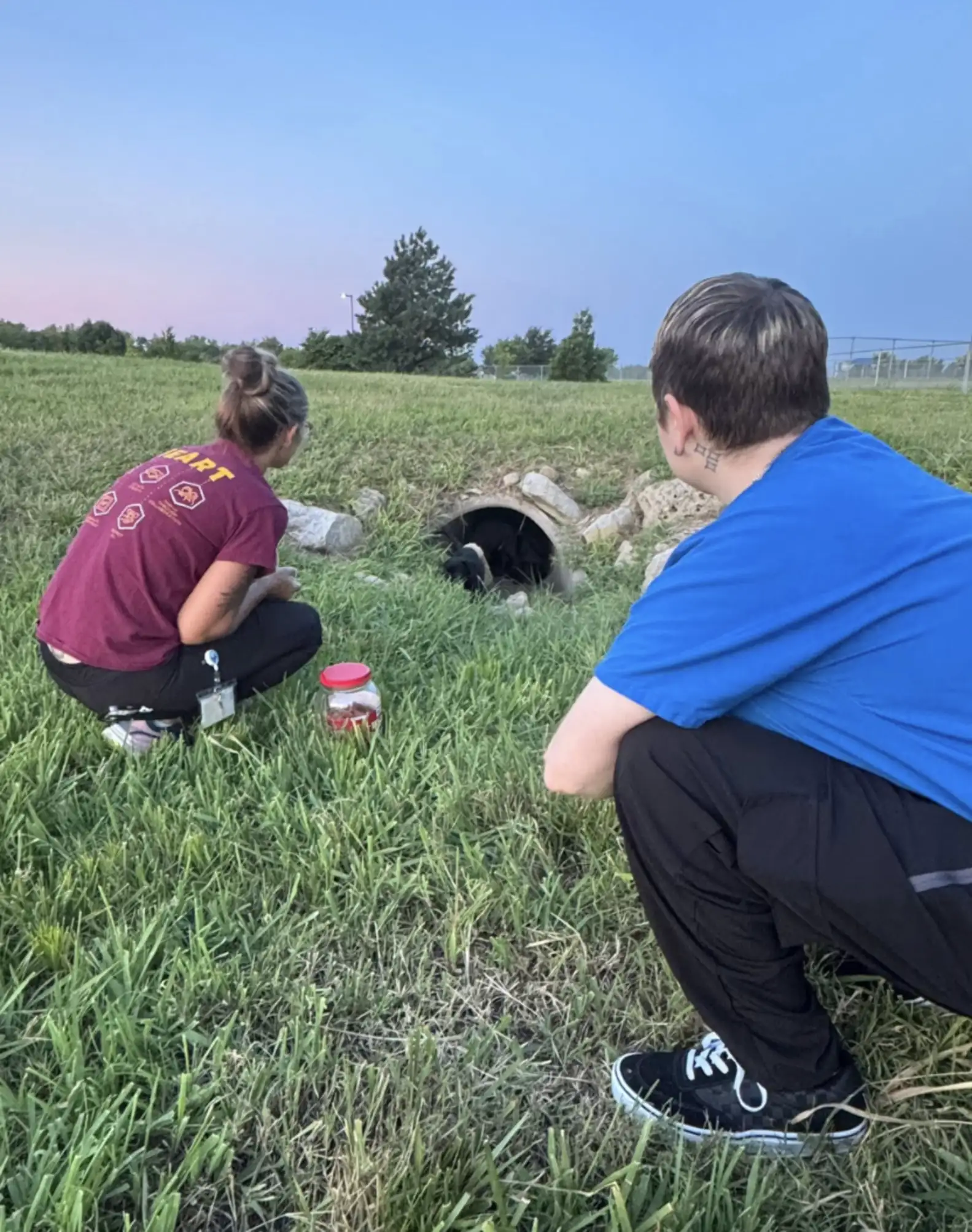
In a field near the Kansas Humane Society’s Murfin Animal Care Campus, a concrete storm drain peeks out of the green grass, its circular opening extending into a black tunnel below. One morning this past July, humane society team members arrived at work and heard a heartbreaking sound echoing from within this drain — the sound of animals crying for help.
Kansas Humane Society
The rescuers hurried over and found the source of the noise. There, cowering inside, were six little puppies left to fend for themselves.
KANSAS HUMANE SOCIETY
Using treats as a tasty incentive, the team coaxed each puppy out from the hole. The pups served a mandatory stray hold at the Wichita Animal Shelter next door. Then they returned to the Kansas Humane Society for further care.
KANSAS HUMANE SOCIETY
Staff members gave the pups a comfortable place to recover. They named the dogs Abby, Ellie, Greg, Lev, Mike and Tommy, and made sure each of them received the necessary vaccines and medical attention needed to grow up healthy and strong.
KANSAS HUMANE SOCIETY
“The puppies were very wiggly, especially Ellie,” a representative from Kansas Humane Society told The Dodo. “All were friendly and very social.”
Local news stations soon began covering the amazing rescue, urging community members to adopt or foster the pups. Within two days, every puppy was either adopted or put on hold for adoption.
KANSAS HUMANE SOCIETY
Today, Abby, Ellie, Greg, Lev, Mike and Tommy are all safe in their forever homes, and rescuers couldn’t be happier.
“We hope their futures are full of love, cuddles and treats,” the representative said.
Every week, millions of Americans toss their recyclables into a single bin, trusting that their plastic bottles, aluminum cans and cardboard boxes will be given a new life.
But what really happens after the truck picks them up?
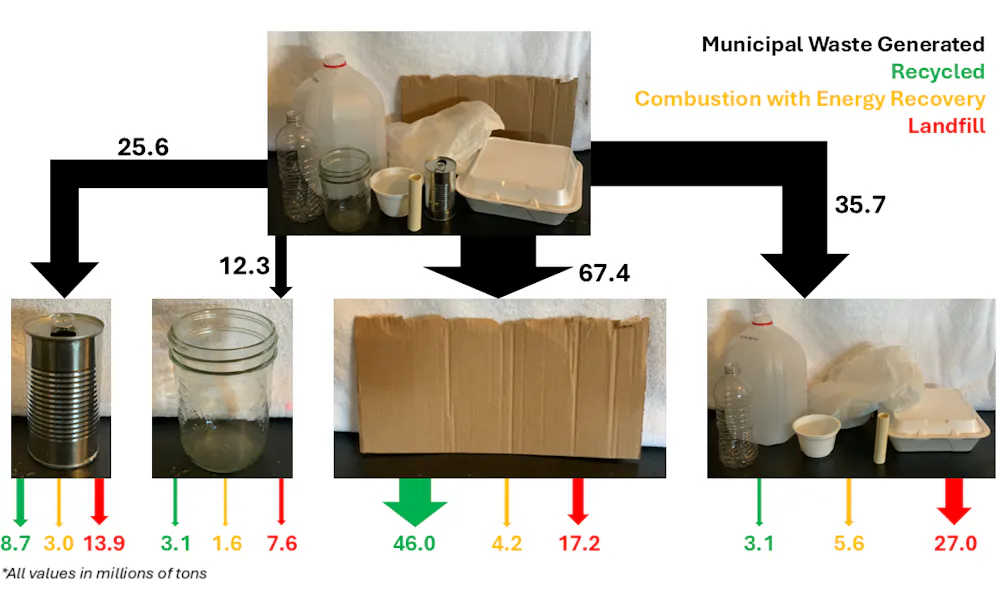
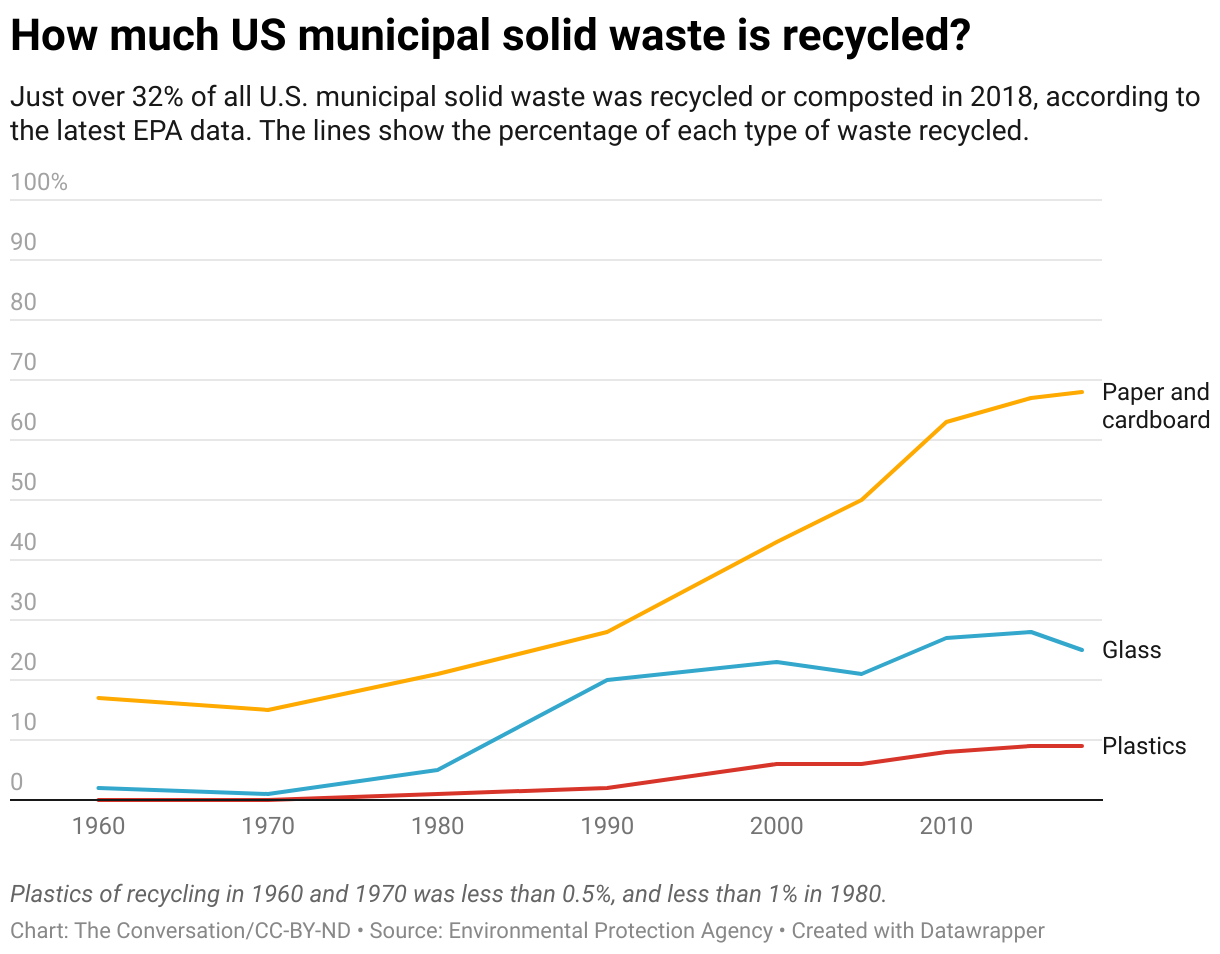
Plastics are among the biggest challenges. Only about 9% of the plastic generated in the U.S. actually gets recycled, according to the Environmental Protection Agency. Some plastic is incinerated to produce energy, but most of the rest ends up in landfills instead.
A breakdown of U.S. recycling by millions of tons shows about two-thirds of all paper and cardboard gets a second life, but only about a third of metal, a quarter of glass and less than 10% of plastics do. Alex Jordan/University of Wisconsin-Stout
So, what makes plastic recycling so difficult? As an engineer whose work focuses on reprocessing plastics, I have been exploring potential solutions.
How does single-stream recycling work?
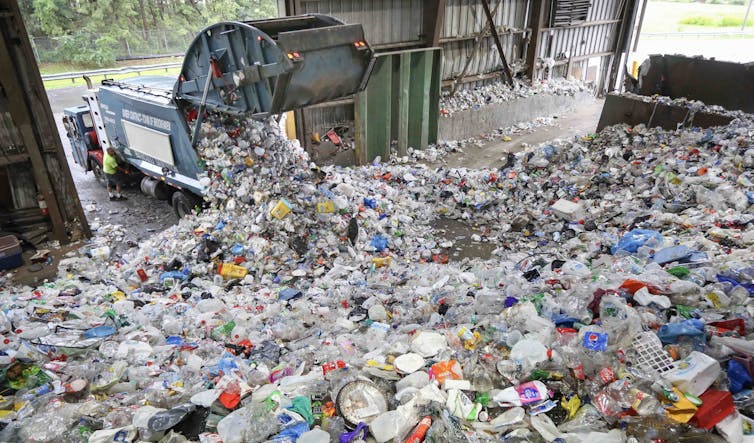
In cities that use single-stream recycling, consumers put all of their recyclable materials − paper, cardboard, plastic, glass and metal − into a single bin. Once collected, the mixed recyclables are taken to a materials recovery facility, where they are sorted.
First, the mixed recyclables are shredded and crushed into smaller fragments, enabling more effective separation. The mixed fragments pass over rotating screens that remove cardboard and paper, allowing heavier materials, including plastics, metals and glass, to continue along the sorting line.
The basics of a single-stream recycling system in Pennsylvania. Source: Van Dyk Recycling Solutions.
Magnets are used to pick out ferrous metals, such as steel. A magnetic field that produces an electrical current with eddies sends nonferrous metals, such as aluminum, into a separate stream, leaving behind plastics and glass.
The glass fragments are removed from the remaining mix using gravity or vibrating screens.
That leaves plastics as the primary remaining material.
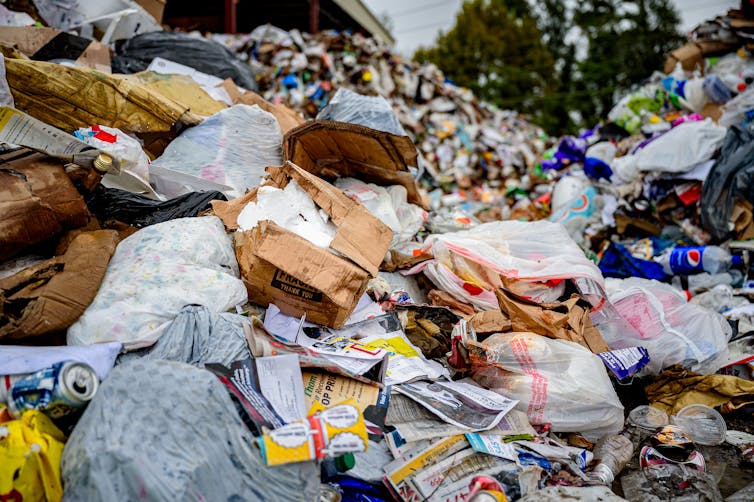
While single-stream recycling is convenient, it has downsides. Contamination, such as food residue, plastic bags and items that can’t be recycled, can degrade the quality of the remaining material, making it more difficult to reuse. That lowers its value.
Having to remove that contamination raises processing costs and can force recovery centers to reject entire batches.
Plastic bags, food residue and items that can’t be recycled can contaminate a recycling stream. City of Greenville, N.C./Flickr
Which plastics typically can’t be recycled?
Each recycling program has rules for which items it will and won’t take. You can check which items can and cannot be recycled for your specific program on your municipal page. Often, that means checking the recycling code stamped on the plastic next to the recycling icon.
These are the toughest plastics to recycle and most likely to be excluded in your local recycling program:
Symbol 3 – Polyvinyl chloride, or PVC, found in pipes, shower curtains and some food packaging. It may contain harmful additives such as phthalates and heavy metals. PVC also degrades easily, and melting can release toxic fumes during recycling, contaminating other materials and making it unsafe to process in standard recycling facilities.
Symbol 4 – Low-density polyethylene, or LDPE, is often used in plastic bags and shrink-wrap. Because it’s flexible and lightweight, it’s prone to getting tangled in sorting machinery at recycling plants.
Symbol 6 – Polystyrene, often used in foam cups, takeout containers and packing peanuts. Because it’s lightweight and brittle, it’s difficult to collect and process and easily contaminates recycling streams.
Which plastics to include
That leaves three plastics that can be recycled in many facilities:
Symbol 5 – Polypropylene, PP, used in products such as pill bottles, yogurt cups and plastic utensils.
However, these aren’t accepted in some facilities for reasons I’ll explain.
Taking apart plastics, bead by bead
Some plastics can be chemically recycled or ground up for reprocessing, but not all plastics play well together.
Simple separation methods, such as placing ground-up plastics in water, can easily remove your soda bottle plastic (PET) from the mixture. The ground-up PET sinks in water due to the plastic’s density. However, HDPE, used in milk jugs, and PP, found in yogurt cups, both float, and they can’t be recycled together. So, more advanced and expensive technology, such as infrared spectroscopy, is often required to separate those two materials.
Once separated, the plastic from your soda bottle can be chemically recycled through a process called solvolysis.
It works like this: Plastic materials are formed from polymers. A polymer is a molecule with many repeating units, called monomers. Picture a pearl necklace. The individual pearls are the repeating monomer units. The string that runs through the pearls is the chemical bond that joins the monomer units together. The entire necklace can then be thought of as a single molecule.
During solvolysis, chemists break down that necklace by cutting the string holding the pearls together until they are individual pearls. Then, they string those pearls together again to create new necklaces.
Other chemical recycling methods, such as pyrolysis and gasification, have drawn environmental and health concerns because the plastic is heated, which can release toxic fumes. But chemical recycling also holds the potential to reduce both plastic waste and the need for new plastics, while generating energy.
The problem of yogurt cups and milk jugs
The other two common types of recycled plastics − items such as yogurt cups (PP) and milk jugs (HDPE) − are like oil and water: Each can be recycled through reprocessing, but they don’t mix.
If polyethylene and polypropylene aren’t completely separated during recycling, the resulting mix can be brittle and generally unusable for creating new products.
Chemists are working on solutions that could increase the quality of recycled plastics through mechanical reprocessing, typically done at separate facilities.
One promising mechanical method for recycling mixed plastics is to incorporate a chemical called a compatibilizer. Compatibilizers contain the chemical structure of multiple different polymers in the same molecule. It’s like how lecithin, commonly found in egg yolks, can help mix oil and water to make mayonnaise − part of the lecithin molecule is in the oil phase and part is in the water phase.
In the case of yogurt cups and milk jugs, recently developed block copolymers are able to produce recycled plastic materials with the flexibility of polyethylene and the strength of polypropylene.
Improving recycling
Research like this can make recycled materials more versatile and valuable and move products closer to a goal of a circular economy without waste.
However, improving recycling also requires better recycling habits.
You can help the recycling process by taking a few minutes to wash off food waste, avoiding putting plastic bags in your recycling bin and, importantly, paying attention to what can and cannot be recycled in your area.
Since then, information overload continues unabated, and many people are rightfully confused by an onslaught of conflicting health information. Even expert advice is often contradictory.
On top of that, people sometimes deliberately distort research findings to promote a certain agenda. For example, trisodium phosphate is a common food additive in cakes and cookies that is used to improve texture and prevent spoilage, but wellness influencers exploit the fact that a similarly named substance is used in paint and cleaning products to suggest it’s dangerous to your health.
Such claims can proliferate quickly, creating widespread misconceptions and undermining trust in legitimate scientific research and medical advice. Social media’s rise as a news and information source further fuels the spread of pseudoscientific views.
Misinformation is rampant in the realm of health and nutrition. Findings from nutrition research is rarely clear-cut because diet is just one of many behaviors and lifestyle factors affecting health, but the simplicity of using food and supplements as a cure-all is especially seductive.
I am an assistant professor specializing in medical education and science communication. I also train scientists and future health care professionals how to communicate their science to the general public.
In my view, countering the voices of social media influencers and health activists promoting pseudoscientific health claims requires leaning into the science of disease prevention. Extensive research has produced a body of evidence-based practices and public health measures that have consistently been shown to improve the health of millions of people around the world. Evaluating popular health claims against the yardstick of this work can help distinguish which ones are based on sound science.
To parse pseudoscientific claims from sound advice about health and nutrition, it’s crucial to evaluate the information’s source. tadamichi/Getty Images
Navigating the terrain of tangled information
Conflicting information can be found on just about everything we eat and drink.
That’s because a food or beverage is rarely just good or bad. Instead, its health effects can depend on everything from the quantity a person consumes to their genetic makeup. Hundreds of scientific studies describe coffee’s health benefits and, on the flip side, its health risks. A bird’s-eye view can point in one direction or another, but news articles and social media posts often make claims based on a single study.
Things can get even more confusing with dietary supplements because people who promote them often make big claims about their health benefits. Take apple cider vinegar, for example – or ACV, if you’re in the know.
Apple cider vinegar has been touted as an all-natural remedy for a variety of ailments, including digestive issues, urinary health and weight management. Indeed, some studies have shown that it might help lower cholesterol, in addition to having other health benefits, but overall those studies have small sample sizes and are inconclusive.
Advocates of this substance often claim that one particular component of it – the cloudy sediment at the bottom of the bottle termed “the mother” – is especially beneficial because of the bacteria and yeast it contains. But there is no research that backs the claim that it offers any health benefits.
It’s also important to keep in mind that the global dietary supplements industry is worth more than US$150 billion per year, so companies – and wellness influencers – selling supplements have a financial stake in convincing the public of their value.
Misinformation about nutrition is nothing new, but that doesn’t make it any less confusing.
How nutrition science gets twisted
There’s no doubt that good nutrition is fundamental for your health. Studies consistently show that a balanced diet containing a variety of essential nutrients can help prevent chronic diseases and promote overall well-being.
However, pseudoscientific claims often twist such basic facts to promote the idea that specific diets or supplements can prevent or treat illness. For example, vitamin C is known to play a role in supporting the immune system and can help reduce the duration and severity of colds.
Some companies overstate the benefits while underplaying the hazards.
For example, wellness influencers have promoted raw milk over pasteurized milk as a more natural and nutritious choice, but consuming it is risky. Unpasteurized milk can contain harmful bacteria that leads to gastrointestinal illness and, in some cases, much more serious and potentially life-threatening diseases such as avian influenza, or bird flu.
The lure of dietary myths has led people with cancer to replace proven science-backed treatments, such as chemotherapy or radiation, with unproven and misleading nutrition programs.
How to spot less-than-solid science
Pseudoscience exploits your insecurities and emotions, taking advantage of your desire to live the healthiest life possible.
While the world around you may be uncertain and out of your control, you want to believe that at the very least, you have control over your own health. This is where the wellness industry steps in.
What makes pseudoscientific claims so confusing is that they use just enough scientific jargon to sound believable. Supplements or powders that claim to “boost immunity” often list ingredients such as adaptogens and superfoods. While these words sound real and convincing, they actually don’t mean anything in science. They are terms created by the wellness industry to sell products.
I’ve researched and written about reliable ways to distinguish science facts from false health claims. To stay alert and find credible information, I’d suggest you follow a few key steps.
First, check your emotions – strong emotional reactions, such as fear and anger, can be a red flag.
Next, check that the author has experience or expertise in the field of the topic. If they’re not an expert, they might not know what they are talking about. It’s always a good idea to make sure the source is reputable – ask yourself, would this source be trusted by scientists?
Finally, search for references that back up the information. If very little or nothing else exists in the science world to back up the claims, you may want to put your trust in a different source.
Following these steps will separate the facts from fake news and empower you to make evidence-based decisions.
Pratyush has been very patient with me. He first contacted me regarding sending in a guest post many months ago. At first I thought it was a spam email and then realised that was a mistake. Then stuff my end got in the way, and so on.
But I’m delighted to publish this today, and should add that Pratyush is based in India!
ooOOoo
Winter is here — When you have a golden retriever at home.
Golden Retrievers are great family dogs with a lovely personality, good intelligence, and adaptability. Golden Retrievers are built for colder climates and have plenty of thick, insulating double coats to keep them warm; however, special considerations should still be taken in winter weather to promote the health, comfort, and happiness of your Golden. Below is a complete guide outlining things to be aware of when looking after Golden Retrievers in winter.
Keep Their Paw Pads Safe From Cold and Salt
Although Golden Retrievers enjoy an outdoor adventure, winter can be tough on the pads of their sensitive paws. Winter storms bring snow and ice, which lead to dry skin, cracking and irritation — not to mention the damage from road salt. When they return from walks, be sure to wash their paws properly to get rid of salt or other chemicals. You can apply a paw balm to protect and moisturize your puppy’s paws, make sure you opt for a non-toxic product. Depending on how cold it gets where you live, you may resort to dog booties for their feet when they go outside.
Change Their Diet with the Seasons
Golden Retrievers are energetic, active dogs, and if they’re out in the cold playing during winter, they might need a boost in energy levels. This additional energy expenditure may require you to make minor adjustments in their calorie intake. Over feeding allows them to gain weight, so, consult your Veterinarian to make any alternate diet plan. And they have free fresh water forever, as well during chills when dehydration is possible.
Keep Them Warm Indoors
Golden Retrievers do have a thick double coat which insulates them against the cold but they still need an indoor space to feel warm and comfortable. Give them a warm bed in a wind-free part of your home. If your floors are tiled or wooden, place a blanket or mat under them when they sleep for additional warmth. Do not shave or trim coats too short in winter, it is their natural protection against the cold.
Limit Bathing During Winter
Now, bathing your Golden Retriever too often in winter will remove the natural oils on your dog’s skin which can cause drying of the skin and irritations. Rather, give them a bath only when needed and use a conditioning dog shampoo that helps restore their skin. If your kitty has a bath, be sure to dry them off well so that they don’t catch a chill. Until they are allowed to roam free, blow them dry using a pet safe hair dryer on low or towel drying set properly.
Monitor Their Time Outdoors
Golden Retrievers love to romp and play in the snow, however too much time spent out in freezing conditions can cause hypothermia or frostbite. Do not leave them outside too long and keep an eye on them for signs that they may be feeling cold like shivering or lifting their feet off the ground. On very cold days, keep them busy with something indoors, puzzle toys or activities.
Regular Grooming is Essential
The thick coat of a Golden Retriever can mat and tangle in winter weather. Grooming is also a great way to keep the insulation quality of their coat intact and helps to avoid skin problems. Groom at least three times a week to minimize loose fur, matting,and spread natural oils. Look for any possible drying or skin irritation and when in doubt contact your vet.
Ensure Proper Exercise
Golden Retrievers are energetic dogs that enjoy getting out, and they still need exercise in the winter. On the flip side — snowy or slick conditions may elevate the risk of injuries. Keep them on a leash so they cannot run onto frozen surfaces and only walk in safe areas. If you cannot take them outdoors for exercise, make opportunities indoors to play– fetch or hide-and-seek can help expend some energy.
Watch for Signs of Illness
Cold climates could contribute to Golden Retrievers developing a cold or respiratory infection. Look out for any coughing, sneezing or lethargy. If you observe unusual behavior or signs of illness, take action and contact your veterinarian. Make sure they are vaccinated against seasonal diseases.
Offer Enrichment and Mental Stimulation
When the weather grows chilly, it can restrain outdoor actions that need to be carried out in the hot sun so exercise for a Golden Retriever should be maintained indoor as well. Keep their mind active with interactive toys, treat-dispensing puzzles or by teaching them new tricks. Physical exercise is very important, especially during the colder season when outdoor playtime becomes scarce, but so does mental stimulation.
Watch Over Older Dogs
For older Golden Retrievers, the cold can aggravate any existing joint problems e.g. arthritis. Keep them a warm, cozy resting space and try orthopedic beds to relieve them of joint problems. Consider discussing with your vet promoting joint health, supplements that help in the cold months or medications.
Conclusion
Taking care of a Golden Retriever in winter is all about comfort, health and happiness. However, though their double coat does provide some protection against the cold, they need you to help them get through winter safely and comfortably. With the right protection for their paws, some diet changes, and keeping them warm and active, your golden retriever can enjoy the winter just like humans. Take good care of them and they will love the winter season as much as you do!
ooOOoo
There is great advice in this guest post and for anyone with Golden Retrievers this post is spot on. To be honest, the advice presented is applicable to all breeds of dogs.
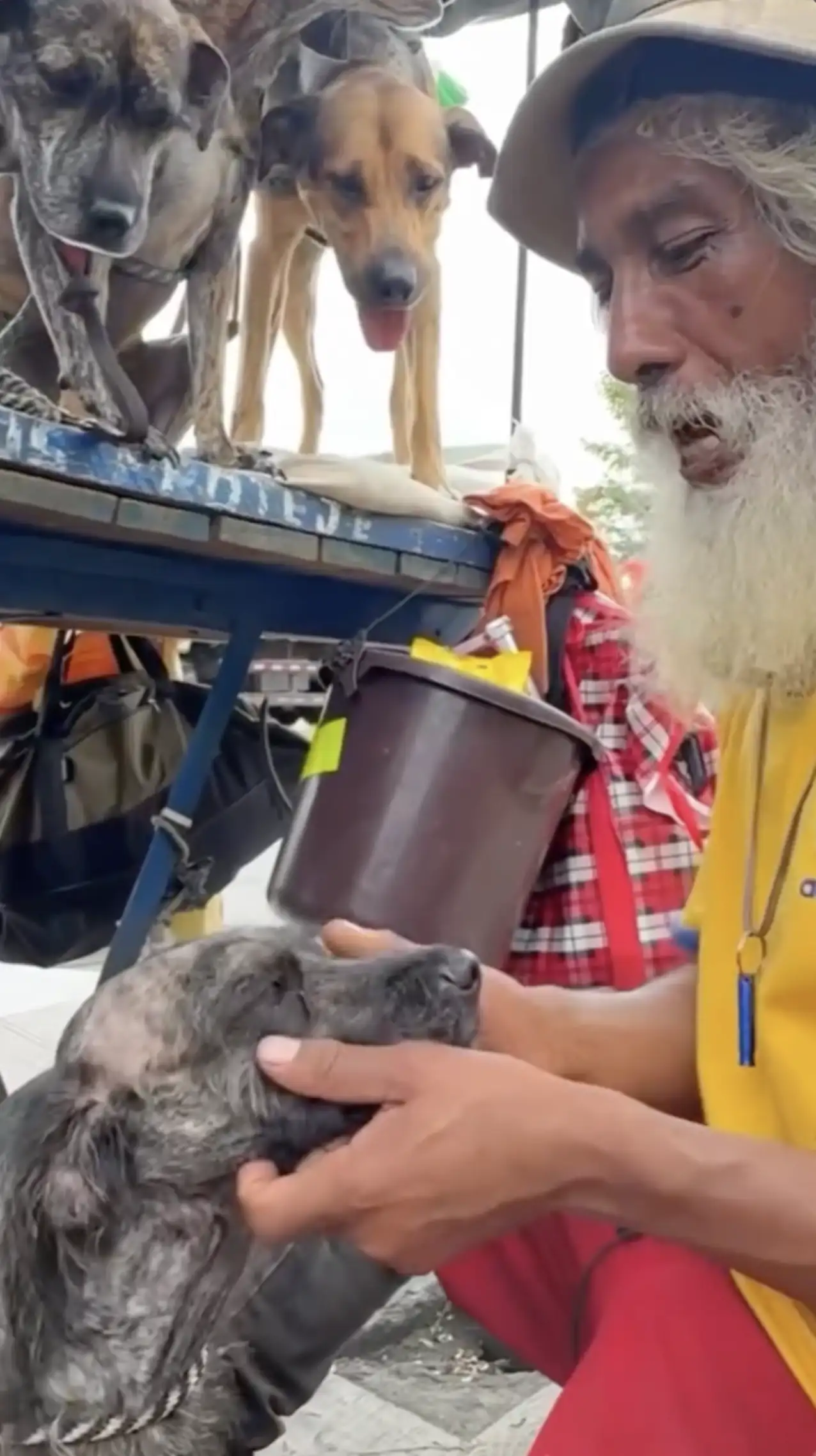
They say that home is where the heart is, and that couldn’t be more true for a man named Rubén and his pack of rescued dogs.
Despite not having a home of his own, Rubén, who goes by Noé, is dedicated to sharing his space and resources with every homeless dog in his Colombian city. Whether they’ve been left behind at a stop light or abandoned in an apartment, Noé believes in giving each dog he meets a second chance at love.
“They are living beings,” Noé said in an interview with IguanaTV. “They are everything to me.”
Noé’s pack is ever-growing, as he readily collects abandoned dogs of all ages and sizes. While it all started with just one dog, his furry family is now large enough to require a double-decker push cart.
Each dog has their own unique backstory, but they’re all loved by Noé just the same.
“This is Rocky. They left him tied up there at that traffic light,” Noé said. “These two girls are named Ears and Cheeks. I’ve had them since they were little. They were also abandoned.”
Rocky, Ears and Cheeks ride on the top level of the push cart with their siblings, a pit bull named Tyson and a German shepherd named Shakira. Below them, senior pups Tembleque, Parkinson and Morochito happily take in the world around them.
“These dogs down below are the oldest,” Noé said. “Little Morochito here was left for me while I was sleeping outside of [the store].”
The pups may have heartbreaking pasts, but their sadness has faded since being adopted by Noé. When they’re not actively traveling around the city with their beloved dad, the pack of dogs can usually be found enjoying a fresh meal made by Noé.
“I buy them milk, carrots and oats, and I combine them with ground meat and seeds,” Noé said. “I make them a hearty meal so that they eat well.”
Seeing the pups lap up their meals brings joy to Noé, even when he hasn’t eaten yet.
“They eat first,” Noé said. “My food is less important to me.”
Once the pups have finished eating, Noé usually snacks on an arepa and some coffee before heading off with his pack again. With his dogs by his side, Noé feels a sense of purpose and peace.
“The dogs keep me busy and give me a reason to wake up every day,” Noé said. “They don’t care if I’m bearded, toothless, dirty or clean. They only care that I’m by their side.”
This growing companionship is beyond fulfilling for Noé. Even on his most challenging days, Noé knows he can always lean on his beloved pack of rescued dogs for unconditional support.
“A dog’s love is the best there is,” Noé said.
ooOOoo
The two photographs are presented by INSTAGRAM/@IGUANATV. (And the article is published with the kind permission of The Dodo.)
One can’t do better than repeat that last sentence: “A dog’s love is the best there is,”.















 Learning from Dogs
