Category: Food

This is the woman I love!

Today is our anniversary.

Yes, November 20th, 2010 was the day we became married.

And in celebration of that day, and more generally in meeting Jean some three years previously, I want to republish the following. For when I met my darling Jeannie she had been vegetarian for many years and in turn we both became vegan.

ooOOoo

Why people become vegans: The history, sex and science of a meatless existence

By    Assistant Professor of Marketing, University of Oregon

November 19, 2018

At the age of 14, a young Donald Watson watched as a terrified pig was slaughtered on his family farm. In the British boy’s eyes, the screaming pig was being murdered. Watson stopped eating meat and eventually gave up dairy as well.

Later, as an adult in 1944, Watson realized that other people shared his interest in a plant-only diet. And thus veganism – a term he coined – was born.

Flash-forward to today, and Watson’s legacy ripples through our culture. Even though only 3 percent of Americans actually identify as vegan, most people seem to have an unusually strong opinion about these fringe foodies – one way or the other.

As a behavioral scientist with a strong interest in consumer food movements, I thought November – World Vegan Month – would be a good time to explore why people become vegans, why they can inspire so much irritation and why many of us meat-eaters may soon join their ranks.

Early childhood experiences can shape how we feel about animals – and lead to veganism, as it did for Donald Watson. HQuality/Shutterstock.com

It’s an ideology not a choice

Like other alternative food movements such as locavorism, veganism arises from a belief structure that guides daily eating decisions.

They aren’t simply moral high-grounders. Vegans do believe it’s moral to avoid animal products, but they also believe it’s healthier and better for the environment.

Also, just like Donald Watson’s story, veganism is rooted in early life experiences.

Psychologists recently discovered that having a larger variety of pets as a child increases tendencies to avoid eating meat as an adult. Growing up with different sorts of pets increases concern for how animals are treated more generally.

Thus, when a friend opts for Tofurky this holiday season, rather than one of the 45 million turkeys consumed for Thanksgiving, his decision isn’t just a high-minded choice. It arises from beliefs that are deeply held and hard to change.

Sutton and Sons is a vegan fish and chip restaurant in London. Reuters/Peter Nicholls

Veganism as a symbolic threat

That doesn’t mean your faux-turkey loving friend won’t seem annoying if you’re a meat-eater.

The late celebrity chef Anthony Bourdain famously quipped that meat avoiders “are the enemy of everything good and decent in the human spirit.”

Why do some people find vegans so irritating? In fact, it might be more about “us” than them.

Most Americans think meat is an important part of a healthy diet. The government recommends eating 2-3 portions (5-6 ounces) per day of everything from bison to sea bass. As tribal humans, we naturally form biases against individuals who challenge our way of life, and because veganism runs counter to how we typically approach food, vegans feel threatening.

Humans respond to feelings of threat by derogating outgroups. Two out of 3 vegans experience discrimination daily, 1 in 4 report losing friends after “coming out” as vegan, and 1 in 10 believe being vegan cost them a job.

Veganism can be hard on a person’s sex life, too. Recent research finds that the more someone enjoys eating meat, the less likely they are to swipe right on a vegan. Also, women find men who are vegan less attractive than those who eat meat, as meat-eating seems masculine.

The fake meat at one Fort Lauderdale restaurant supposedly tastes like real meat. AP Photo/J. Pat Carter

Crossing the vegan divide

It may be no surprise that being a vegan is tough, but meat-eaters and meat-abstainers probably have more in common than they might think.

Vegans are foremost focused on healthy eating. Six out of 10 Americans want their meals to be healthier, and research shows that plant-based diets are associated with reduced risk for heart disease, certain cancers, and Type 2 diabetes.

It may not be surprising, then, that 1 in 10 Americans are pursuing a mostly veggie diet. That number is higher among younger generations, suggesting that the long-term trend might be moving away from meat consumption.

In addition, several factors will make meat more costly in the near future.

Meat production accounts for as much as 15 percent of all greenhouse gas emissions, and clear-cutting for pasture land destroys 6.7 million acres of tropical forest per year. While some debate exists on the actual figures, it is clear that meat emits more than plants, and population growth is increasing demand for quality protein.

Seizing the opportunity, scientists have innovated new forms of plant-based meats that have proven to be appealing even to meat-eaters. The distributor of Beyond Meat’s plant-based patties says 86 percent of its customers are meat-eaters. It is rumored that this California-based vegan company will soon be publicly traded on Wall Street.

Even more astonishing, the science behind lab-grown, “cultured tissue” meat is improving. It used to cost more than $250,000 to produce a single lab-grown hamburger patty. Technological improvements by Dutch company Mosa Meat have reduced the cost to $10 per burger.

Watson’s legacy

Even during the holiday season, when meats like turkey and ham take center stage at family feasts, there’s a growing push to promote meatless eating.

London, for example, will host its first-ever “zero waste” Christmas market this year featuring vegan food vendors. Donald Watson, who was born just four hours north of London, would be proud.

Watson, who died in 2006 at the ripe old age of 95, outlived most of his critics. This may give quiet resolve to vegans as they brave our meat-loving world.

ooOOoo

Well all I can say is that if Donald Watson can do it then so can Jeannie and me.

Lidl Recalls Orlando Brand Dog Food

Yet another dog food recall.

ooOOoo

Lidl Recalls Orlando Brand Dog Food

November 9, 2018

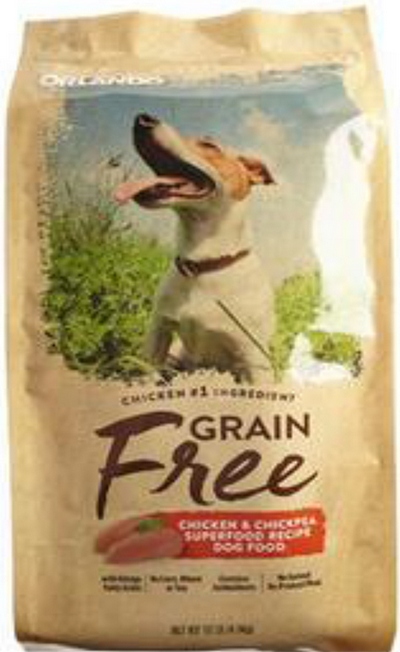
Lidl USA is voluntarily recalling specific lots of Orlando brand Grain Free Chicken & Chickpea Superfood Recipe Dog Food because the products may contain elevated levels of Vitamin D.

What’s Recalled?

The recalled Orlando brand products include the following lot numbers manufactured between March 3, 2018 and May 15, 2018:

  • TI1 3 Mar 2019
  • TB2 21 Mar 2019
  • TB3 21 Mar 2019
  • TA2 19 Apr 2019
  • TB1 15 May 2019
  • TB2 15 May 2019

Elevated Vitamin D Levels

Dogs consuming elevated levels of Vitamin D could exhibit symptoms such as vomiting, loss of appetite, increased thirst, increased urination, excessive drooling, and weight loss.

Customers with dogs who have consumed this product and are exhibiting these symptoms should contact their veterinarian as soon as possible.

No other products sold by Lidl are impacted by the recall.

This is a voluntary recall and is being conducted in cooperation with the U.S. Food and Drug Administration.

What to Do?

Customers who have purchased this product with the affected lot codes should stop feeding it to their dogs and discard the product immediately or return it to their nearest Lidl store for a full refund.

Customers who have questions about this recall should call the Lidl US Customer Care Hotline at 844-747-5435, 8 AM to 9 PM Eastern time, 7 days a week.

U.S. citizens can report complaints about FDA-regulated pet food products by calling the consumer complaint coordinator in your area.

Or go to http://www.fda.gov/petfoodcomplaints.

Canadians can report any health or safety incidents related to the use of this product by filling out the Consumer Product Incident Report Form.

Get Dog Food Recall Alerts by Email

Get free dog food recall alerts sent to you by email. Subscribe to The Dog Food Advisor’s emergency recall notification system.

ooOOoo

Please share this amongst all your friends.

Back to getting rid of worms!

OK, so it’s another guest post but useful nonetheless.

I have published a number of posts over the years on the topic of getting rid of worms.  But this deserves republishing as it uses things around the house.

ooOOoo

How to Get Rid of Worms in Dogs At Home, Without Going to the Vet

By Ashley Turner.

Did you know that there are five different types of worms your dog can get including heartworms, hookworms, roundworms, tapeworms, and whipworms? If you don’t treat them, they can lead to several complications for your dog including poor growth, slowed development, anemia, and possibly death.

However, before you treat the worm infestation, you have to know what to look for. We’ll cover the common signs and how to get rid of worms in dogs, so you know how to safely and effectively treat this parasite before it leads to health complications for your dog.

Common Clues Your Dog Has a Parasite Infection

With some internal parasites, a diagnosis can be tricky because there may not be any obvious signs that something is wrong with your dog. However, there are also several common symptoms or clues that can point to an internal parasite infection, and they include:

  • Bloating – Does your dog look bloated whether or not they’ve eaten? Having continuous bloat or seeming generally uncomfortable can be a sign of worms.
  • Coughing – Your dog naturally coughs from time to time just like a person will. However, if you notice your dog starting to cough more than normal or go on extended coughing fits, this is a sign of worms.
  • Fever – You may notice that your dog is running a fever with this type of infection. It can come and go, and it normally won’t stay constant.
  • Lethargy – Sudden changes in appetite or lethargy is common as the worms advance. This can also come with vomiting that gets worse over time.
  • Scooting – Scooting refers to your dog dragging it’s butt across the floor. It looks like they’re “scooting” across the floor when they do this.
  • Stool Problems – Your dog’s stool may be loose or covered in mucus when they go to the bathroom. Additionally, you may notice worms in their stool or what looks like small grains of rice.

Different Types of Worms

While there are five types of worms, only four types are intestinal worms, but we’re going to cover all five types. We’ll go over what each worm is, how it’s transmitted, and symptoms specific to that type of parasite infection.

Heartworms

Heartworms are almost completely preventable, but they’re also one of the most damaging and scary types of parasitic infection your dog can get. Heartworms live and thrive in your dog’s heart and in the large blood vessels, and they can grow to be over 12 inches long.

Heartworms are transmitted by a mosquito biting your dog and transmitting the heartworm larvae into your dog’s blood where it travels to their heart. These worms can cause coughing, difficulty breathing, and death in more severe cases, so prevention is the key with this parasite.

Hookworms

Hookworms are small worms with hook-like attachments on their mouths that attach to your dog’s intestinal wall. They feed on your dog’s blood, and they eject their eggs out into your dog’s intestines and into their feces.

These parasites can get into your dog’s body through your dog licking and cleaning themselves, ingesting feces or dirt, through milk by nursing puppies, or by the worms burrowing through their pads on the bottom of their feet. Since it feeds on blood, these types of worms can cause anemia, and this is especially dangerous to young puppies or older dogs.

Roundworms

Roundworms live in your dog’s small intestine, and they’re a slightly larger parasite that grows up to seven inches long and look are long and thin like spaghetti noodles. The roundworms attach to your dog’s intestine and feed on your dog’s blood as well as the nutrients from their food.

Roundworms are one of the most common parasite infections your dog can get, and your dog can get roundworm by eating infected rodents or birds, as well as through the mother dog’s milk. Common symptoms of roundworms include a potbellied look, weight loss, dull coat, and abdominal pain.

Tapeworms

Tapeworms are flat and long worms that attach to your dog’s intestines, but you can also see them on your dog’s rear end and in their feces as small, white specs that look like grains of rice. They feed on the nutrients your dog gets from their food, and there may not be any warning signs.

There are 14 different species of tapeworms, but one of the most common ways your dog gets an infection is through flea eggs. Also, if your dog eats meat that is contaminated with these worms, they can transfer from the meat to your dog and cause lethargy and weight loss.

Whipworms

Whipworms thrive in your dog’s cecum, and they’re two to three inches long with a tapered end that resembles a whip. They attach to your dog’s mucus membrane, and they feed on your dog’s blood.

Your dog can get a whipworm infection through eating soil or drinking water that is contaminated with feces containing whipworm eggs. You may notice bloody feces with this infection and a more severe infection can lead to worse complications or even death in otherwise healthy dogs.

Preventing Worms in Dogs

Prevention is the key when it comes to these parasites because it’s much easier to take preventative steps than to treat the resulting infection. There are several things that you can do to prevent these worms, and they include:

  • Make sure that you clean your yard regularly and remove any feces that you can see, and you should plan on doing this at least once a week. Over time, these feces can get infested with worms, and they can transmit to your dog if they eat it or get it on their coat and then ingest it when they clean themselves.
  • Your vet will prescribe deworming medications, and it’s important that you give these medications to your dog as recommended by your veterinarian. It’s especially important that you do this when your dog is young because puppies usually get at least three rounds of dewormer to help prevent infections as they grow.
  • If you can’t prevent your dog from getting worms, you can help to catch it quickly before the infection advances. Make sure that you’re routinely checking your dog’s fur, feces, and rear for the worms themselves, larvae, or any eggs.

How to Get Rid of Worms Naturally

Although you may want to take your dog to the veterinarian to get a professional’s opinion, there are several things that you can do at home to keep your dog healthy, happy, and free of a parasitic infection.

Apple Cider Vinegar

Almost all homes have apple cider vinegar around because it has powerful antibacterial and antimicrobial properties that make it an excellent cleaning agent. It’s natural and safe for your dog to digest, and this makes it a popular remedy for getting rid of worms.

To give this remedy to your dog, start by adding one-fourth of a teaspoon to their food or water each day, and slowly increase this over a week until you get to one teaspoon. Once you get to a teaspoon, you can keep giving them this amount each day to keep the worms away.

Black Cumin and Pumpkin Seeds

Both black cumin and pumpkin seeds along with black cumin oil are safe for your dog, and they work to prevent, expel, and maintain your dog’s worm-free state. You want to give your dog between a half and a whole teaspoon of black cumin seed each day in their food, but remember to heat it first to get rid of the very bitter aftertaste.

Pumpkin seeds work very well if you grind them before you add them to your dog’s food, and you want to add around one-fourth of a teaspoon for every 10 pounds of body weight. For black cumin oil, use half of what you use for black cumin seeds, and it’s always a good idea to start at the lower end of the dosage and work your way up to the full dose.

Chamomile

Chamomile is popular for having anti-inflammatory properties, but it’s a slower acting herb where parasites are concerned that works by reducing any discomfort your dog may have. You can make a chamomile tincture and add it to your dog’s food or water twice a day at 0.25 to 0.50 milliliters per every 20 pounds of body weight.

To make your chamomile tincture by mixing:

  • 1/2 to 1 cup of dried Chamomile flowers
  • 1 1/2 to 1 3/4 cups of boiling water
  • 1 1/2 to 1 3/4 cups rum or vodka
  • Quart glass jar with an airtight lid

Add your flowers to the bottom of the jar and pour the boiling water over the flowers. Next, pour the rum or vodka into the water and flower mixture until the jar is full and seal the lid.

Once it’s sealed, store it in a cool and dry place for four to six weeks and shake it for a few minutes each day. After four to six weeks, open the jar, strain the liquid, and it’s now ready to add to your dog’s water or food once a day.

Dried Coconut

Dried coconut is excellent for getting rid of worms due to its fiber content, and it can help expel up to 90 percent of any parasitic worms that your dog may have in under 24 hours. You do want to start your dog on a lower quantity and slowly work your way up to the regular dose over the span of a week or two to avoid digestive upset.

The maintenance dose you want to eventually end up with is one teaspoon for small dogs, two teaspoons for medium dogs, and one tablespoon for large dogs once a day sprinkled over their food. You may want to start with half of a dose or a quarter of a dose and work your way up to the full dose.

Garlic

As long as your dog isn’t on blood thinners, feeding them garlic can help to rid them of any parasitic worms. Garlic helps to remove mucus from your dog’s stomach lining, and this makes it more difficult for the worms to attach and thrive.

You do want to give your dog fresh cloves of garlic, and let it sit at room temperature for at least 15 to 20 minutes before you chop it and add it to their food because this will allow the garlic to release an amino acid called allicin. The suggested feeding guidelines are as follows:

  • Small Dogs – One-quarter of a clove of garlic twice per day.
  • Medium Dogs – One half of a clove of garlic twice per day.
  • Large Dogs – Three-quarters of a clove of garlic twice per day.
  • Giant Dogs – One clove of garlic twice per day.

Vegetables and Fruits

Anything with high levels of vitamin A is an excellent home remedy to help slow down and eradicate an infection of parasitic worms. You don’t want to feed your dog too much of these fruits and vegetables because it can cause digestive upset, especially when you first introduce it into their diet.

You may want to start feeding your dog a half of a teaspoon of fruits or vegetables for every 10 pounds of body weight once a day for at least a week to get them used to it. After a week, you can increase this dose to a half of a teaspoon for every 10 pounds of body weight twice a day at mealtimes.

Fruits and vegetables that have high levels of vitamin A include:

  • Raw Carrot
  • Squash
  • Watercress
  • Pumpkin
  • Cantaloupe
  • Asparagus
  • Apricots
  • Apples

Getting rid of worms in dogs can be an ongoing process that takes time and effort on your part. But, once you get rid of them, keeping your dog healthy, happy, and worm free is a relatively easy process, especially if you use one or more of our natural worm remedies.

ooOOoo

I don’t know about you but we found it incredibly useful.

Yet more dog food recalls

These are taking priority over the text for yesterday’s Picture Parade.

And there are two of them.

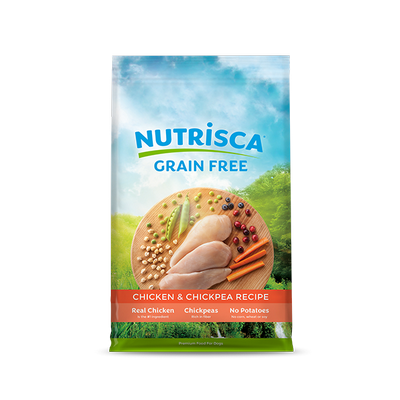
Nutrisca Dog Food Recall | November 2018

November 3, 2018 — Nutrisca, of Saint Louis, MO, is voluntarily recalling one formula of Nutrisca dry dog food because it contains elevated levels of vitamin D.

Nutrisca did not include an image with its FDA news release. So, the following image has been copied from the company’s website and provided in good faith by The Dog Food Advisor.

What’s Recalled?

  • Nutrisca Chicken and Chickpea Dry Dog Food
    Package Size: 4 pounds
    Bag UPC: 8-84244-12495-7
    Best By Dates: February 25, 2020 thru September 13, 2020
  • Nutrisca Chicken and Chickpea Dry Dog Food
    Package Size: 15 pounds
    Bag UPC: 8-84244-12795-8
    Best By Dates: February 25, 2020 thru September 13, 2020
  • Nutrisca Chicken and Chickpea Dry Dog Food
    Package Size: 28 pounds
    Bag UPC: 8-84244-12895-5
    Best By Dates: February 25, 2020 thru September 13, 2020

Bags affected have a Best By Date code of February 25, 2020 through September 13, 2020. The Best By Date code can be found on the back or bottom of each bag.

The products were distributed to retail stores nationwide.

What Caused the Recall?

Nutrisca became aware of the elevated levels of vitamin D after receiving complaints from three pet owners of vitamin D toxicity after consuming the product.

An investigation revealed a formulation error led to the elevated vitamin D in the product.

About Elevated Vitamin D

Dogs ingesting elevated levels of Vitamin D may exhibit symptoms such as vomiting, loss of appetite, increased thirst, increased urination, excessive drooling, and weight loss.

Vitamin D when consumed at very high levels can lead to serious health issues in dogs including renal dysfunction.

Consumers with dogs who have consumed any of the products listed above and are exhibiting these symptoms, should contact their veterinarian.

What to Do?

Consumers should stop feeding the products listed above.

Consumers who have purchased any of the products affected by this recall should dispose of it or return it to the place of purchase for a full refund.

Consumers with questions may contact Nutrisca at 888-279-9420 from 8 AM to 5 PM Central Standard time, Monday through Friday, or by email at consumerservices@nutrisca.com for more information.

No other Nutrisca products, including Nutrisca Chicken & Chickpea wet dog foods are impacted.

All other Nutrisca dog and cat food products are safe to feed to pets.

According to the company…

“This is a voluntary recall and is being conducted in cooperation with the U.S. Food and Drug Administration.

“We genuinely regret that this has occurred as we place the highest priority on the health of pets.”

U.S. citizens can report complaints about FDA-regulated pet food products by calling the consumer complaint coordinator in your area.

Or go to http://www.fda.gov/petfoodcomplaints.

Canadians can report any health or safety incidents related to the use of this product by filling out the Consumer Product Incident Report Form.

oooo

Natural Life Pet Products Dog Food Recall

November 3, 2018 — Natural Life Pet Products of Saint Louis, MO, is voluntarily recalling its Chicken and Potato dry dog food due to it containing elevated levels of Vitamin D.

What’s Recalled?

No product image was included with the official news release.

  • Natural Life Chicken and Potato Dry Dog Food
    Package Size: 17.5 pounds
    Bag UPC: 0-12344-08175-1

Bags affected have a Best By Date code of May 29, 2020 through August 10, 2020. The Best By Date code can be found on the back or bottom of each bag.

The products were distributed to retail stores in:

  • Alabama
  • California
  • Florida
  • Georgia
  • North Carolina
  • South Carolina
  • Tennessee
  • Virginia

What Caused the Recall?

Natural Life Pet Products became aware of the elevated levels of vitamin D after receiving complaints from three pet owners of vitamin D toxicity after consuming the product.

An investigation revealed a formulation error led to the elevated vitamin D in the product.

About Elevated Vitamin D Levels

Consumers should stop feeding the product listed above.

Dogs ingesting elevated levels of Vitamin D may exhibit symptoms such as vomiting, loss of appetite, increased thirst, increased urination, excessive drooling, and weight loss.

Vitamin D when consumed at very high levels can lead to serious health issues in dogs including renal dysfunction.

Consumers with dogs who have consumed the product listed above and are exhibiting these symptoms, should contact their veterinarian.

What to Do?

Consumers who have purchased the product affected by this recall should dispose of it or return it to the place of purchase for a full refund.

Consumers with questions may contact Natural Life Pet Products at 888-279-9420 from 8 AM to 5 PM Central Standard time, Monday through Friday, or by email at consumerservices@nutrisca.com for more information.

This is a voluntary recall and is being conducted in cooperation with the U.S. Food and Drug Administration.

U.S. citizens can report complaints about FDA-regulated pet food products by calling the consumer complaint coordinator in your area.

Or go to http://www.fda.gov/petfoodcomplaints.

oooo

Please, please good people, you take care of your dogs.

We live in the country!

Yesterday was all about a dead deer.

In fact it started on Thursday with a local owner not taking care of a couple of dogs. I’m not sure about whether or not the dogs are being cared for but there have been a number of cases suggesting that they were thin and also that they were running wild.

Then yesterday it took a turn for the worse shortly after 7am. I was on my way back to the house having fed the horses and then heard an animal calling out. I paused trying to identify this animal. It was located very close to our border on the Northern side.

Then the noise stopped and I thought nothing more of it. Later on I realised that it was animal in serious pain. Too late now to attempt to save it.

A little later I went across to the area where the calling had been coming from. There, just alongside our fence but on the other side of it, lay a young deer. It was dead but still warm.

Then about 10:30 yesterday when after I had called animal control I decided to revisit the location and take a couple of pictures.

oooo

It was tragic! The loss of a wild animal. In fairness, one that the dogs themselves are not responsible for. Dogs will be dogs.

Meantime, I pondered on what might have evolved differently had I intervened when I first heard the animal in pain.

It was not a good feeling.

What a way to spend a Sunday!

Poor little Sweeny!

Last Sunday, Sweeny not having eaten for 3 days, it was felt that we could not leave it any longer and decided to take Sweeny to Southern Oregon Veterinary Specialty Center.  They are an emergency 24-hour a day service.  It turned out to be a longer day that we had anticipated.

For we arrived at 9:15 am and didn’t leave until 5:15 pm.

Even then we were still left with some uncertainty.

For the long rigmarole of tests didn’t come to a firm conclusion.

A part of the SOVMC invoice.

Luckily we could leave taking dear Sweeny back with us but the results from the Fine needle aspirate won’t be through until Tuesday or Wednesday. (P.S. Just heard by phone that the results should be through in the next hour. Ergo: Monday evening.)

If it is Tuesday that will be better than Wednesday.

For on Wednesday we leave for a short holiday in Mexico.

In fairness, the house is being looked after by Jana Stewart but it will still be better to know before we leave.

That leads me to say that for the next ten days the regularity of blogging is going to be variable; to say the least.

Changing the world.

The problem is not plastic. It is consumerism.

I closed yesterday’s Letter to the Moon with the last sentence from a recent essay from George Monbiot: “Defending the planet means changing the world.

Shortly, I will be republishing, with Mr. Monbiot’s generous permission, the whole of that essay.

But first I am going to reproduce in full what arrived via email from George in the early hours of yesterday morning.

If you are within reach of London please go, or if not do leave a comment on the wall.

Hi Paul,

I’m contacting you because you’re one of the people who emailed me as part of the overwhelming response to my columns In Memoriam, and Incompetence By Design, where I mentioned that ‘some of us are now mobilising to turn the great enthusiasm for wildlife and natural beauty in this country into political action, and to fight the dismantling of the laws that protect our precious wild places’.

Many of you asked what I meant by ‘Watch this space’. The mobilisation starts next Saturday, in London, with The People’s Walk for Wildlife. It’s not a demonstration, nor a rally – it’s a gentle, family-friendly day. The only kind of strength we need is strength in numbers – to show that many thousands of us care deeply about the vanishing of wild mammals, butterflies, mayflies, songbirds and fish, and that we want the Government to commit properly to protecting those that remain.

On Saturday 22nd September, we’ll gather at Reformers Tree, Hyde Park at 10.00am; entertainment will start at 12 noon. At 1pm we’ll walk from Hyde Park Corner, via Piccadilly, St James, Pall Mall, and Cockspur St, to Whitehall. Please come along if you can. Download the birdsong app to play as we go. Bring friends, dress up as your favourite plant or animal or just come as yourself!

I’m looking forward to walking for the missing millions – I hope you can join me!

George
P.S. If you can’t make it, you can still contribute by adding your message of support to the Walk’s Wonder Wall – every post is valuable proof that you care.

Now on to that post.

ooOOoo

Plastic Soup

The problem is not plastic. It is consumerism.

By George Monbiot, published in the Guardian 5th September 2018

Do you believe in miracles? If so, please form an orderly queue. Plenty of people imagine we can carry on as we are, as long as we substitute one material for another. Last month, a request to Starbucks and Costa to replace their plastic coffee cups with cups made from corn starch was retweeted 60,000 times, before it was deleted.

Those who supported this call failed to ask themselves where the corn starch would come from, how much land is needed to grow it or how much food production it will displace. They overlooked the damage this cultivation would inflict: growing corn (maize) is notorious for causing soil erosion, and often requires heavy doses of pesticides and fertilisers.

The problem is not just plastic. The problem is mass disposability. Or, to put it another way, the problem is pursuing, on the one planet known to harbour life, a four-planet lifestyle. Regardless of what we consume, the sheer volume of consumption is overwhelming the Earth’s living systems.

Don’t get me wrong. Our greed for plastic is a major environmental blight, and the campaigns to limit its use are well-motivated and sometimes effective. But we cannot address our environmental crisis by swapping one over-used resource for another. When I challenged that call, some people asked me, “so what should we use instead?”. The right question is “how should we live?”. But systemic thinking is an endangered species.

Part of the problem is the source of the plastic campaigns: David Attenborough’s Blue Planet II series. The first six episodes had strong, coherent narratives. But the seventh episode, which sought to explain the threats facing the wonderful creatures the series revealed, darted from one issue to another. We were told we could “do something” about the destruction of ocean life. We were not told what. There was no explanation of why the problems are happening, what forces are responsible and how they can be engaged.

Amid the general incoherence, one contributor stated “It comes down, I think, to us each taking responsibility for the personal choices in our everyday lives. That’s all any of us can be expected to do.” This perfectly represents the mistaken belief that a better form of consumerism will save the planet. The problems we face are structural: a political system captured by commercial interests and an economic system that seeks endless growth. Of course we should try to minimise our own impacts, but we cannot confront these forces merely by “taking responsibility” for what we consume.

Unfortunately, these are issues that the BBC in general, and David Attenborough in particular, avoid. I admire Attenborough in many ways, but I am no fan of his environmentalism. For many years, it was almost undetectable. When he did at last speak out, he consistently avoided challenging power, either speaking in vague terms or focusing on problems for which powerful interests are not responsible. I believe this tendency may explain Blue Planet’s skirting of the obvious issues.

The most obvious is the fishing industry, that turns the astonishing lifeforms the rest of the series depicted into seafood. Throughout the oceans, this industry, driven by our appetites and protected by governments, is causing cascading ecological collapse. Yet the only fishery the programme featured was among the 1% that are in recovery. It was charming to see how Norwegian herring boats seek to avoid killing orcas, but we were given no idea of how unusual it is.

Even marine plastics is in large part a fishing issue. It turns out that 46% of the Great Pacific Garbage Patch, that has come to symbolise our throwaway society, is composed of discarded nets, and much of the rest consists of other kinds of fishing gear. Abandoned fishing materials tend to be far more dangerous to marine life than other forms of waste. As for the bags and bottles contributing to the disaster, the great majority arise in poorer nations, without good disposal systems. But because this point was not made, we look to the wrong places for solutions.

From this misdirection arise a thousand perversities. One prominent environmentalist posted a picture of the king prawns she had just bought, celebrating the fact that she had persuaded the supermarket to put them in her own container, rather than a plastic bag, and linking this to the protection of the seas. But buying prawns causes many times more damage to marine life than any plastic in which they are wrapped. Prawn fishing has the highest rates of bycatch of any fishery: scooping up vast numbers of turtles and other threatened species. Prawn farming is just as bad, eliminating great tracts of mangrove forests, crucial nurseries for thousands of species.

We are kept remarkably ignorant of such issues. As consumers, we are confused, bamboozled and almost powerless. This is why corporate power has gone to such lengths to persuade us to see ourselves this way. The BBC’s approach to environmental issues is highly partisan, siding with a system that has sought to transfer responsibility for structural forces to individual shoppers. It is only as citizens, taking political action, that we can promote meaningful change.

The answer to the question “how should we live?” is “simply”. But living simply is highly complicated. In Aldous Huxley’s Brave New World, the government massacred the Simple Lifers. This is generally unnecessary: today they can be safely marginalised, insulted and dismissed. The ideology of consumption is so prevalent that it has become invisible: it is the plastic soup in which we swim.

One-planet living means not only seeking to reduce our own consumption, but also mobilising against the system that promotes the great tide of junk. This means fighting corporate power, changing political outcomes and challenging the growth-based, world-consuming system we call capitalism.

As the famous Hothouse Earth paper published last month, that warned of the danger of flipping the planet into a new, irreversible climatic state, concluded, “incremental linear changes … are not enough to stabilize the Earth system. Widespread, rapid, and fundamental transformations will likely be required to reduce the risk of crossing the threshold”. Disposable coffee cups made from new materials are not just a non-solution. They are a perpetuation of the problem. Defending the planet means changing the world.

http://www.monbiot.com

ooOOoo

Share this! Please!

Examining one’s navel!

Venturing into strange lands. A collection of items has been crossing my ‘in-box’ in recent weeks and while many of the topics are, on the face it, not connected, for reasons I am not entirely sure about they seem to fall under the same umbrella; as in being of the same coherent theme. Let me list some of these topics: the age of the universe; climate change; CO2 levels; the certainty of death; the history of the last half-million years; what our dogs teach us; and more! Naturally, Jeannie and I have been kicking around these topics, aided and abetted by Dan Gomez, my Californian friend of some 40 years (and my ‘Best Man’ when Jean and I were married in 2010 and, more or less directly, the catalyst of me and Jean meeting in 2007!) But I get the sense that many of you wonderful people that follow this place also scratch your head not infrequently and ponder on these ‘interesting’ times. I don’t have any answers. But I do want to share how, over the last few weeks, I have been seeking some meaning, some peace, to the big issues that have the potential to make these times pretty uncomfortable if not a tad scary. I shall not be extending this introspection each day but probably ( and I’m guessing) a couple of times a week I shall be dipping into the barrel! Starting off with climate change, maybe tomorrow or Wednesday. But what of today! Today I am publishing another Dog Food Recall alert that came out late last week!

ooOOoo

Performance Dog Pet Food Recall

September 12, 2018 — Bravo Packing, Inc. of Carneys Point, New Jersey, is recalling all Performance Dog products, a frozen raw pet food, because they have the potential to be contaminated with Salmonella.

What’s Recalled?

The following products are affected by the recall:
  • Performance Dog Package Size: 2-pound plastic sleeve Mfg Date Code: 071418
  • Performance Dog Package Size: 5-pound plastic sleeve Mfg Date Code: 071418
Performance Dog comes frozen in 2-pound and 5-pound plastic sleeves. The recalled product has manufacture date code 071418. The manufacture date codes are printed on the boxes that contain the plastic sleeves, but not on the individual plastic sleeves. Therefore, if the cardboard box has been discarded, there are no unique identification numbers on the individual sleeves that allow customers to determine that they possess the recalled products. If you purchased this product since July 14, 2018 and cannot determine whether it is affected by the recall, the FDA recommends that you exercise caution and throw the product away.

About Salmonella

Salmonella can cause illness in animals eating the products, as well as people who handle contaminated pet products, especially if they have not thoroughly washed their hands after having contact with the products, infected animals or any surfaces exposed to these products. Healthy people infected with Salmonella should monitor themselves for some or all of the following symptoms: nausea, vomiting, diarrhea or bloody diarrhea, abdominal cramping and fever. Rarely, Salmonella can result in more serious ailments, including arterial infections, endocarditis (an infection of the heart muscle), arthritis, muscle pain, eye irritation and urinary tract symptoms. People who have these symptoms after having contact with this product or an animal that has eaten this product should contact their healthcare providers. Pets with Salmonella infections may be lethargic and have diarrhea or bloody diarrhea, fever, and vomiting. Some pets will have decreased appetite, fever and abdominal pain. Pets exposed to contaminated food can be infected without showing symptoms. If your pet has consumed the recalled product and has these symptoms, please contact your veterinarian. Infected animals can also shed Salmonella through their feces and saliva, spreading pathogens into the home environment and to humans and other animals in the household. No human or animal illnesses have been reported to date.

What Caused the Recall?

Bravo Packing, Inc. is voluntarily recalling this product after a sample of Performance Dog, collected during an FDA inspection, tested positive for Salmonella. Performance Dog generally works with the distributor Tefco, located in Brooklyn , New York, that fills orders to brick-and-mortar retail stores or to consumers directly.

What to Do?

Consumers with questions should contact Bravo Packing, Inc. at 856-299-1044 (Monday thru Friday, 6 AM to 2 PM, Saturday 4 AM to 9 AM ET) or through the company’s website at http://www.bravopacking.com. U.S. citizens can report complaints about FDA-regulated pet food products by calling the consumer complaint coordinator in your area. Or go to http://www.fda.gov/petfoodcomplaints. Canadians can report any health or safety incidents related to the use of this product by filling out the Consumer Product Incident Report Form.

Get Dog Food Recall Alerts by Email

Get free dog food recall alerts sent to you by email. Subscribe to The Dog Food Advisor’s emergency recall notification system.

ooOOoo

So there we are! Wonder if I get the prize for the most weird of topics brought together in the same post!

Dog and Cat food recall

Steve’s Real Food Recalls Dog and Cat Foods

This came in yesterday and is shared with you as per normal.

Steve’s Real Food Recalls Dog and Cat Foods

September 7, 2018 — Steve’s Real Food of Salt Lake City, Utah is voluntarily recalling limited quantities of its raw frozen dog and cat foods due to possible contamination with Salmonella and Listeria bacteria.

What’s Recalled?

The affected products were nationally distributed and are identified with the following UPC codes and “Best by” dates located on the front of the bag.

  • Steve’s Real Food Turducken Recipe
    Package size: 5-pounds
    Lot number: J155
    Best By Date: 6/4/19
    UPC: 6-91730-15304-5
  • Quest Emu Diet
    Package size: 2-pounds
    Lot number: B138
    Best By Date: 5/18/19
    UPC: 6-91730-17103-2
  • Quest Beef Diet
    Package size: 2-pounds
    Lot number: A138
    Best By Date: 5/18/19
    UPC: 6-91730-17101-8

About Salmonella and Listeria

Salmonella and L. mono can affect animals eating the products and there is risk to humans from handling contaminated pet products.

Symptoms of infection in people include nausea, vomiting, diarrhea or bloody diarrhea, abdominal cramping and fever.

Consumers exhibiting these signs after having contact with this product should contact their healthcare providers.

Pets with Salmonella and/or L. mono infections may be lethargic and have diarrhea or bloody diarrhea, fever, and vomiting.

Some pets will have only decreased appetite, fever and abdominal pain.

Infected, but otherwise healthy pets can be carriers and infect other animals or humans.

If your pet has consumed the recalled product and has these symptoms, please contact your veterinarian.

What Caused the Recall?

This recall is being initiated after the firm was notified by the Washington Department of Agriculture when sample was collected and tested positive for Salmonella and/or Listeria.

The firm did conduct its own test which produced a negative result for both Salmonella and Listeria monocytogenes.

However, because of the company’s commitment to overall safety and quality, Steve’s Real Food is conducting a voluntary recall of these products.

Consumers should also follow the safe handling tips published on the Steve’s Real Food packaging, when disposing of the affected product.

No pet or human illnesses from this product have been reported to date.

This recall is being made with the knowledge of the U.S. Food and Drug Administration.

What to Do?

Consumers are encouraged to check the lot code and best buy date of the affected pet foods.

Any product with the noted lot code and best buy dates should be returned to the specialty retailer where product was purchased for a full refund.

Consumers with questions may contact Steve’s Real Food at 888-526-1900, Monday through Friday, 9 am to 4 pm MT.

U.S. citizens can report complaints about FDA-regulated pet food products by calling the consumer complaint coordinator in your area.

Or go to http://www.fda.gov/petfoodcomplaints.

Canadians can report any health or safety incidents related to the use of this product by filling out the Consumer Product Incident Report Form.

Get Dog Food Recall Alerts by Email

Get free dog food recall alerts sent to you by email. Subscribe to The Dog Food Advisor’s emergency recall notification system.

Again, as I usually say, do share this with all the dog and cat lovers you know/

Thanks.

A little birdie told me!

… not to be in such a hurry to shut the garage door!

I went out to the garage yesterday morning to sort out a few things and found a small bird almost fast asleep in a trolley cart I use about the place.

It clearly had got caught inside the garage when I closed the electric door the previous evening. (Some of the local birds do come in to the garage to feast on insects and spiders that they come across.)

(That’s sawdust in the bottom of the cart.)

I called Jeannie to come out and look at the little chap and she had the brilliant idea of feeding the bird some of the bird food we give our two parakeets. Plus, she brought out a bowl of water.

It worked!

In next to no time the aforesaid bird had had sufficient to eat and it was time to relax in the warm air.

Twenty minutes later he had flown away!

OK!!

The real point of today’s post is to advise you that my son, Alex, and his longterm partner, Lisa, are staying with us for a few days and quite naturally blogging is going to be on the back-burner.

Rather than go ‘silent’ I am going to share with you over the next six days a beautiful series of posts on the clouds.

Will explain more tomorrow!