We areresearchers affiliated with Arizona State University’s scientist opinion panel survey, known as SciOPS, a 5-year research program designed to monitor, understand and improve how scientists communicate with the public. We wanted to know more about the reality inside today’s universities as researchers grapple with Trump administration policies.
Alongwithourcolleagues, we fielded a survey of randomly sampled members of the academic science community participating in the SciOPS panel. We obtained responses from 280 scientists from several fields, including biology, chemistry, civil and environmental engineering, computer and information science engineering, geography and public health from 131 universities.
Our results show dramatic, mostly negative, effects of federal policy changes on researchers, the research system and American competitiveness.
Declines in federal funding have had knock-on effects. Around one-quarter of scientists reported that state and local and university internal funding have also declined. Another 9% reported that internal funding has increased, presumably as universities have provided emergency funds to researchers to support critical studies.
According to the scientists who responded to our survey, Trump administration policies have also affected the scientific workforce pipeline, hampering their ability to recruit internationally and domestically.
We hypothesize that these hiring issues can be related to visa and immigration policies, which make it difficult for international graduate students and postdocs to work in the U.S. or attend international conferences. Just over half of scientists in our survey reported that international students or postdocs have expressed concerns to them about deportation.
Concerns about longer-term career impacts are also to blame for trouble recruiting the next generation of researchers. Over 80% of surveyed scientists reported that graduate students or postdocs on their research team have increased concerns about future job prospects.
These impacts have taken a toll on scientists’ professional work environment and overall outlook. Over two-thirds reported more work-related stress and almost half reported increased workloads since January 2025. About half reported decreased work motivation.
How are scientists and engineers reacting?
We found scientists’ responses to be a mixture of resilience, acquiescence and considering an exit.
While many scientists said they were less motivated at work, most reported no change in their efforts to obtain federal research funding. Small proportions did report successfully increasing their efforts to obtain funding from non-federal sources.
Our survey also asked scientists whether they had taken any self-censoring actions since January 2025 due to concern over potential negative consequences for their work or career. Over half reported having reviewed or adjusted key words in research proposals, and almost half said they’d reframed research topics. Forty-three percent had also cautioned students or collaborators to be careful what they say publicly and more than a third had abandoned plans on one or more research topics.
Although scientists are adopting strategies to cope with the new challenges, nearly two-thirds of the scientists in our sample appear to be considering one or more other career options.
Scientists look to the long term
Scientists and engineers in our sample have strong opinions about the impacts of current U.S. science policy. A large majority (87%) believe the administration’s actions have influenced research priorities more than previous administrations. Most scientists in our survey had a negative opinion of the Trump administration’s overall changes to science policy.
Scientists in our sample believed that administration policies have had a negative effect on the future scientific workforce and the ability of scientists and engineers in the U.S. to produce breakthroughs and discoveries and contribute to national welfare.
Large majorities believe these policies have harmed public perceptions of the integrity of U.S. scientists (85%) and hurt public trust in science (84%).
Academic scientists’ reactions to the Trump administration’s changes to science policy are perhaps not surprising given the perceived level of threat these actions represent to the research community. What is less certain is whether the dramatic changes we are currently witnessing – cuts to grant funding, politicization of research, downsizing of federal agencies, restrictive immigration policies, attacks on the autonomy of higher education and more – are temporary or if they represent the initial phase of a transition to a new research environment with less federal support for American science.
The last paragraph contains the essence of the argument, as in a temporary change or the first phase of an environment with less federal support for science.
On yesterday’s World This Weekend the programme was entirely devoted to a speech that John Major gave on February 16th. His theme was: “We are moving into a more dangerous world“
Mr. George Monbiot offers a deeply personal, deeply powerful reason to change!
I have long followed George Monbiot’s writings. Both for his writing skills and the many times he really spells it out. As in spelling out the madness of our present ways! Frequently I find him very inspiring. However, his latest essay In Memoriam is one of the best ones that I have read. It is a plea from George Monbiot to see what we are doing to our wildlife and our ecosystems.
It is republished here with George Monbiot’s very kind permission. I have taken the liberty of including a few recent photographs of the wildlife that graces our acres here in Oregon.
ooOOoo
In Memoriam
As our wildlife and ecosystems collapse, remembering is a radical act.
By George Monbiot, published in the Guardian 29th June 2018
It felt as disorientating as forgetting my pin number. I stared at the caterpillar, unable to attach a name to it. I don’t think my mental powers are fading: I still possess an eerie capacity to recall facts and figures and memorise long screeds of text. This is a specific loss. As a child and young adult, I delighted in being able to identify almost any wild plant or animal. And now it has gone. This ability has shrivelled from disuse: I can no longer identify them because I can no longer find them.
Perhaps this forgetfulness is protective. I have been averting my eyes. Because I cannot bear to see what we have done to nature, I no longer see nature itself. Otherwise, the speed of loss would be unendurable. The collapse can be witnessed from one year to the next. The swift decline of the swift (down 25% in five years) is marked by the loss of the wild screams that, until very recently, filled the skies above my house. My ambition to see the seabird colonies of the Shetlands and St Kilda has been replaced by the intention never to visit those islands during the breeding season: I could not bear to see the empty cliffs, whose populations have crashed by some 90% this century.
I have lived long enough to witness the vanishing of wild mammals, butterflies, mayflies, songbirds and fish that I once feared my grandchildren would experience: it has all happened faster than even the pessimists predicted. Walking in the countryside or snorkelling in the sea is now as painful to me as an art lover would find her visits to a gallery, if on every occasion another Old Master had been cut from its frame.
The cause of this acceleration is no mystery. The United Nations reports that our use of natural resources has tripled in 40 years. The great expansion of mining, logging, meat production and industrial fishing is cleansing the planet of its wild places and natural wonders. What economists proclaim as progress, ecologists recognise as ruin.
We have a fatal weakness: a failure to perceive incremental change. As natural systems shift from one state to another, we almost immediately forget what we have lost. I have to make a determined effort to remember what I saw in my youth. Could it really be true that every patch of nettles, at this time of year, was reamed with caterpillar holes? That flycatchers were so common I scarcely gave them a second glance? That the rivers, around the autumn equinox, were almost black with eels?
Others seem oblivious. When I have criticised current practice, farmers have sent me images of verdant monocultures of perennial rye grass, with the message “look at this and try telling me we don’t look after nature”. It’s green, but it’s about as ecologically rich as an airport runway. One of my readers, Michael Groves, records the shift he has seen in the field beside his house, where the grass, that used to be cut for hay, is now cut for silage. Watching the cutters being driven at great speed across the field, he realised that any remaining wildlife would be shredded. Soon afterwards, he saw a roe deer standing in the mown grass. She stayed throughout the day and the following night. When he went to investigate, he found her fawn, its legs amputated. “I felt sickened, angry and powerless … how long had it taken to die?”. That “grass-fed meat” the magazines and restaurants fetishise? This is the reality.
When our memories are wiped as clean as the land, we fail to demand its restoration. Our forgetting is a gift to industrial lobby groups and the governments that serve them. Over the past few months, I have been told repeatedly that the environment secretary, Michael Gove, gets it. I have said so myself: he genuinely seems to understand what the problems are and what needs to be done. Unfortunately, he doesn’t do it.
He cannot be blamed for all of the fiascos to which he has put his name. The 25-year plan for nature was, it seems, gutted by the Prime Minister’s office. The environmental watchdog he proposed was defanged by the Treasury (it has subsequently been lent some dentures by Parliament). Other failures are all his own work. In response to lobbying from sheep farmers, he has allowed ravens, a highly intelligent and long-lived species just beginning to recover from centuries of persecution, to be killed once more. There are 24 million sheep in this country and 7400 pairs of ravens. Why must all other species give way to the white plague?
Responding to complaints that most of our national parks are wildlife deserts, Gove set up a commission to review them. But governments choose their conclusions in advance, through the appointments they make. A more dismal, backward-looking and uninspiring panel would be hard to find: not one of its members, as far as I can tell, has expressed a desire for significant change in our national parks, and most of them, if their past statements are anything to go by, are determined to keep them in their sheepwrecked and grouse-trashed state.
Now the lobbyists demand a New Zealand settlement for farming after Brexit: deregulated, upscaled, hostile to both wildlife and the human eye. If they get their way, no landscape, however treasured, will be safe from broiler sheds and mega-dairy units, no river protected from run-off and pollution, no songbird saved from local extinction. The merger between Bayer and Monsanto brings together the manufacturer of the world’s most lethal pesticides with the manufacturer of the world’s most lethal herbicides. Already the concentrated power of these behemoths is a hazard to democracy; together they threaten both political and ecological disaster. Labour’s environment team have scarcely a word to say about any of it. Similarly, the big conservation groups, as usual, have gone missing in inaction.
We forget even our own histories. We fail to recall, for example, that the Dower report, published in 1945, envisaged wilder national parks than we now possess, and that the conservation white paper the government issued in 1947 called for the kind of large-scale protection that is considered edgy and innovative today. Remembering is a radical act.
That caterpillar, by the way, was a six spot burnet: the larva of a stunning iridescent black and pink moth that once populated my neighbourhood and my mind. I will not allow myself to forget again: I will work to recover the knowledge I have lost. For I now see that without the power of memory, we cannot hope to defend the world we love.
For just two days ago I published a post under the heading of Meat is Heat. It featured an essay by Michael Greger. He of the website NutritionFacts.org. That essay promoted the message:
What we eat may have more of an impact on global warming than what we drive.
Just cutting out animal protein intake one day of the week could have a powerful effect. Meatless Mondays alone could beat out a whole week of working from home and not commuting.
Many of you read that post.
On the same day that I published that post, George Monbiot published an article in The Guardian newspaper that offered the same message, albeit coming at it from a different place but nonetheless just as critically important.
Here it is republished with Mr. Monbiot’s very kind permission.
ooOOoo
We Can’t Keep Eating Like This
This is the question everyone should be attending to – where is the food going to come from?
By George Monbiot, published in the Guardian 11th December 2017
Brexit; the crushing of democracy by billionaires; the next financial crash; a rogue US president: none of them keeps me awake at night. This is not because I don’t care – I care very much. It’s only because I have a bigger question on my mind. Where is the food going to come from?
By mid-century there will be two or three billion more people on Earth. Any one of the issues I am about to list could help precipitate mass starvation. And this is before you consider how they might interact.
The trouble begins where everything begins: with soil. The UN’s famous projection that, at current rates of soil loss, the world has 60 years of harvests left, appears to be supported by a new set of figures. Partly as a result of soil degradation, yields are already declining on 20% of the world’s croplands.
Now consider water loss. In places such as the North China Plain, the central United States, California and north-western India – among the world’s critical growing regions – levels of the groundwater used to irrigate crops are already reaching crisis point. Water in the Upper Ganges aquifer, for example, is being withdrawn at 50 times its recharge rate. But, to keep pace with food demand, farmers in South Asia expect to use between 80 and 200% more water by 2050. Where will it come from?
The next constraint is temperature. One study suggests that, all else being equal, with each degree Celsius of warming the global yield of rice drops by 3%, wheat by 6% and maize by 7%. This could be optimistic. Research published in the journal Agricultural & Environmental Letters finds that 4°C of warming in the US Corn Belt could reduce maize yields by between 84 and 100%.
The reason is that high temperatures at night disrupt the pollination process. But this describes just one component of the likely pollination crisis. Insectageddon, caused by the global deployment of scarcely-tested pesticides, will account for the rest. Already, in some parts of the world, workers are now pollinating plants by hand. But that’s viable only for the most expensive crops.
Then there are the structural factors. Because they tend to use more labour, grow a wider range of crops and work the land more carefully, small farmers, as a rule, grow more food per hectare than large ones. In the poorer regions of the world, people with less than 5 hectares own 30% of the farmland but produce 70% of the food. Since 2000, an area of fertile ground roughly twice the size of the United Kingdom has been seized by land grabbers and consolidated into large farms, generally growing crops for export rather than the food needed by the poor.
While these multiple disasters unfold on land, the seas are being sieved of everything but plastic. Despite a massive increase in effort (bigger boats, bigger engines, more gear), the worldwide fish catch is declining by roughly 1% a year, as populations collapse. The global land grab is mirrored by a global seagrab: small fishers are displaced by big corporations, exporting fish to those who need it less but pay more. Around 3 billion people depend to a large extent on fish and shellfish protein. Where will it come from?
All this would be hard enough. But as people’s incomes increase, their diet tends to shift from plant protein to animal protein. World meat production has quadrupled in 50 years, but global average consumption is still only half that of the UK – where we eat roughly our bodyweight in meat every year – and just over a third of the US level. Because of the way we eat, the UK’s farmland footprint (the land required to meet our demand) is 2.4 times the size of its agricultural area. If everyone aspires to this diet, how do we accommodate it?
The profligacy of livestock farming is astonishing. Already, 36% of the calories grown in the form of grain and pulses – and 53% of the protein – are used to feed farm animals. Two-thirds of this food is lost in conversion from plant to animal. A graph produced last week by Our World in Data suggests that, on average, you need 0.01m2 of land to produce a gram of protein from beans or peas, but 1m2 to produce it from beef cattle or sheep: a difference of 100-fold.
It’s true that much of the grazing land occupied by cattle and sheep cannot be used to grow crops. But it would otherwise have sustained wildlife and ecosystems. Instead, marshes are drained, trees are felled and their seedlings grazed out, predators are exterminated, wild herbivores fenced out and other lifeforms gradually erased as grazing systems intensify. Astonishing places – such as the rainforests of Madagascar and Brazil – are laid waste to make room for yet more cattle.
Because there is not enough land to meet both need and greed, a global transition to eating animals means snatching food from the mouths of the poor. It also means the ecological cleansing of almost every corner of the planet.
The shift in diets would be impossible to sustain even if there were no growth in the human population. But the greater the number of people, the greater the hunger meat eating will cause. From a baseline of 2010, the UN expects meat consumption to rise by 70% by 2030 (this is three times the rate of human population growth). Partly as a result, the global demand for crops could double (from the 2005 baseline) by 2050. The land required to grow them does not exist.
When I say this keeps me up at night, I mean it. I am plagued by visions of starving people seeking to escape from grey wastes, being beaten back by armed police. I see the last rich ecosystems snuffed out, the last of the global megafauna – lions, elephants, whales and tuna – vanishing. And when I wake, I cannot assure myself that it was just a nightmare.
Other people have different dreams: the fantasy of a feeding frenzy that need never end, the fairytale of reconciling continued economic growth with a living world. If humankind spirals into societal collapse, these dreams will be the cause.
There are no easy answers, but the crucial change is a shift from an animal to a plant-based diet. All else being equal, stopping both meat production and the use of farmland to grow biofuels could provide enough calories for another 4 billion people and double the protein available for human consumption. Artificial meat will help: one paper suggests it reduces water use by at least 82% and land use by 99%.
The next Green Revolution will not be like the last one. It will rely not on flogging the land to death, but on reconsidering how we use it and why. Can we do this, or do we – the richer people now consuming the living planet – find mass death easier to contemplate than changing our diet?
As many of you know Jeannie and I changed our diet to a vegan diet some four weeks ago. It was done more for personal health reasons than from an awareness of the difference that it made to the future of the planet. But over the last few weeks we have had our eyes opened to the broader benefits of not eating meat. George Monbiot spells out the urgency of change for all of us, especially the richer people in the richer countries.
Am I hopeful that there will be a mass awareness of the need to change? I truly just don’t know. I will close be repeating Mr. Monbiot’s closing sentence.
Can we do this, or do we – the richer people now consuming the living planet – find mass death easier to contemplate than changing our diet?
All you good people who stick with this blog know that the majority of the posts are to do with dogs or cats in one form or another.
Yet, I am cognizant of the fact that no one can completely hide, metaphorically speaking, in the warm fur of our favourite dog or cat and let the rest of the world go tits up. From time to time I read an article or an essay that touches on something fundamentally important to a civil society and am compelled to share same with you.
Regulars know that I am a great admirer of the writings of essayist George Monbiot. He is a very regular contributor to The Guardian newspaper. Just a few days ago, Mr. Monbiot published an essay that really does need to be read as widely as possible. It is called Missing Link and is republished here with George Monbiot’s very kind permission.
ooOOoo
Missing Link
21st July 2017
How a secretive network built around a Nobel prizewinner set out to curtail our freedoms
By George Monbiot, published in the Guardian 19th July 2017
It’s the missing chapter: a key to understanding the politics of the past half century. To read Nancy MacLean’s new book Democracy in Chains: the deep history of the radical right’s stealth plan for America is to see what was previously invisible.
The history professor’s work on the subject began by accident. In 2013 she stumbled across a deserted clapboard house on the campus of George Mason University in Virginia. It was stuffed with the unsorted archives of a man who had died that year, whose name is probably unfamiliar to you: James McGill Buchanan. She writes that the first thing she picked up was a stack of confidential letters concerning millions of dollars transferred to the university by the billionaire Charles Koch.
Her discoveries in that house of horrors reveal how Buchanan, in collaboration with business tycoons and the institutes they founded, developed a hidden programme for suppressing democracy on behalf of the very rich. The programme is now reshaping politics, and not just in the US.
Buchanan was strongly influenced by both the neoliberalism of Friedrich Hayek and Ludwig von Mises and the property supremacism of John C Calhoun, who argued, in the first half of the 19th century, that freedom consists of the absolute right to use your property – including your slaves – however you may wish. Any institution that impinges on this right is an agent of oppression, exploiting men of property on behalf of the undeserving masses.
James Buchanan brought these influences together to create what he called “public choice theory”. He argued that a society could not be considered free unless every citizen has the right to veto its decisions. What he meant by this was that no one should be taxed against their will. But the rich were being exploited by people who use their votes to demand money that others have earned, through involuntary taxes to support public spending and welfare. Allowing workers to form trade unions and imposing graduated income taxes are forms of “differential or discriminatory legislation” against the owners of capital.
Any clash between what he called “freedom” (allowing the rich to do as they wished) and democracy should be resolved in favour of freedom. In his book The Limits of Liberty, he noted that “despotism may be the only organisational alternative to the political structure that we observe.” Despotism in defence of freedom.
His prescription was what he called a “constitutional revolution”: creating irrevocable restraints to limit democratic choice. Sponsored throughout his working life by wealthy foundations, billionaires and corporations, he develop both a theoretical account of what this constitutional revolution would look like and a strategy for implementing it.
He explained how attempts to desegregate schooling in the American South could be frustrated by setting up a network of state-sponsored private schools. It was he who first proposed the privatisation of universities and the imposition of full tuition fees on students: his original purpose was to crush student activism. He urged the privatisation of Social Security and of many other functions of the state. He sought to break the links between people and government and demolish trust in public institutions. He aimed, in short, to save capitalism from democracy.
In 1980, he was able to put the programme into action. He was invited to Chile, where he helped the Pinochet dictatorship to write a new constitution, which, partly through the clever devices Buchanan proposed, has proved impossible to reverse in its entirety. Amid the torture and killings, he advised the government to extend its programmes of privatisation, austerity, monetary restraint, deregulation and the destruction of trade unions: a package that helped trigger economic collapse in 1982.
None of this troubled the Swedish Academy, that, through his devotee at Stockholm University, Assar Lindbeck, in 1986 awarded James Buchanan the Nobel Memorial Prize for economics. It is one of several decisions that have turned this prize toxic.
But his power really began to be felt when Charles Koch, currently the seventh richest man in the US, decided that Buchanan held the key to the transformation he sought. Koch saw even such ideologues as Milton Friedman and Alan Greenspan as “sellouts”, as they sought to improve the efficiency of government rather than destroying it altogether. But Buchanan took it all the way.
MacLean says that Charles Koch poured millions into Buchanan’s work at George Mason University, whose law and economics departments look as much like corporate-funded thinktanks as they do academic faculties. He employed the economist to select the revolutionary “cadre” that would implement his programme (Murray Rothbard, at the Cato Institute that Koch founded, had urged the billionaire to study Lenin’s techniques and apply them to the libertarian cause). Between them, they began to develop a programme for changing the rules.
The papers Nancy Maclean discovered show that Buchanan saw stealth as crucial. He told his collaborators that “conspiratorial secrecy is at all times essential.” Instead of revealing their ultimate destination, they would proceed by incremental steps. For example, in seeking to destroy the Social Security system, they would claim to be saving it, arguing that it would fail without a series of radical “reforms”. (The same argument is used by those attacking the NHS over here). Gradually they would build a “counter-intelligentsia”, allied to a “vast network of political power” that would eventually become the new establishment.
Through the network of thinktanks that Koch and other billionaires have sponsored, through their transformation of the Republican Party, and the hundreds of millions they have poured into state congressional and judicial races, through the mass colonisation of Trump’s administration by members of this network and lethally effective campaigns against everything from public health to action on climate change, it would be fair to say that Buchanan’s vision is maturing in the USA.
But not just there. Reading this book felt like a demisting of the window through which I see British politics. The bonfire of regulations highlighted by the Grenfell Tower disaster, the destruction of state architecture through austerity, the budgeting rules, the dismantling of public services, tuition fees and the control of schools: all these measures follow Buchanan’s programme to the letter. I wonder how many people are aware that David Cameron’s free schools project originated with an attempt to hamper racial desegregation in the American South.
In one respect, Buchanan was right: there is an inherent conflict between what he called “economic freedom” and political liberty. Complete freedom for billionaires means poverty, insecurity, pollution and collapsing public services for everyone else. Because we will not vote for this, it can be delivered only through deception and authoritarian control. The choice we face is between unfettered capitalism and democracy. You cannot have both.
Buchanan’s programme amounts to a prescription for totalitarian capitalism. And his disciples have only begun to implement it. But at least, thanks to Maclean’s discoveries, we can now apprehend the agenda. One of the first rules of politics is know your enemy. We’re getting there.
I found it very difficult to write these closing thoughts; as is obvious as you read this sentence!
Looking up quotations online under the headings of fairness or equality brought up many that could have worked here. Yet they seemed too trite, too obvious, too remote from the reality of what Mr. Monbiot describes here today.
So let me leave you with this: US income inequality is the highest it’s been since 1928. (Source: Pew Research.) But worse than that, US wealth inequality is even greater than income inequality. (Source: Pew Research.) (I’m certain that this is not exclusive to the USA.)
A fair question one might think. Because this blog is primarily about what we humans should be learning from our dogs. Well, I do see a connection, a message of learning for us. Stay with me for a while.
But first, here’s how I open up Chapter 18 Sharing in my book – Learning from Dogs.
Here’s a silly story that made me laugh when I first came across it.
A man in a casino walks past three men and a dog playing poker.
“Wow!” he says, “That’s a very clever dog.“
“He’s not that clever,” replies one of the other players.
“Every time he gets a good hand he wags his tail.“
This clever dog couldn’t hide his happiness and had to share it by wagging his tail. OK, it was a little bit of fictional fun but we all recognise that inherent quality in our dogs, how they share so much of themselves in such an easy and natural fashion.
Now if one was being pedantic one would say that sharing is not the same as equality. Yet I see them as two separate seats in life’s common carriage.
Many lovers of dogs know that when they lived a life in the wild, slowly evolving from the grey wolf, they replicated, naturally, the pack characteristics of wolves. As in the pack size was around 25 to 30 animals. Yes, there was a hierarchy in the pack but that really only presented itself in the status of three animals: the female ‘alpha’ dog; the male ‘beta’ dog; the ‘omega’ dog that could be of either gender. Ninety percent of the pack were animals on equal standing. If only that was how we humans lived.
A few days ago there was an essay published on The Conversation blogsite under the title of Why poverty is not a personal choice, but a reflection of society.
It opened with this photograph.
A homeless camp in Los Angeles, where homelessness has risen 23 percent in the past year, in May 2017. AP Photo/Richard Vogel
Let me emphasize this: “A homeless camp in Los Angeles, where homelessness has risen 23 percent in the past year, in May 2017.”
Here are two small extracts from that article:
Author: Shervin Assari Research Investigator of Psychiatry, Public Health, and Poverty Solutions, University of Michigan
As someone who studies poverty solutions and social and health inequalities, I am convinced by the academic literature that the biggest reason for poverty is how a society is structured. Without structural changes, it may be very difficult if not impossible to eliminate disparities and poverty.
About 13.5 percent of Americans are living in poverty. Many of these people do not have insurance, and efforts to help them gain insurance, be it through Medicaid or private insurance, have been stymied. Medicaid provides insurance for the disabled, people in nursing homes and the poor.
Four states recently asked the Centers for Medicare and Medicaid Services for permission to require Medicaid recipients in their states who are not disabled or elderly to work.
This request is reflective of the fact that many Americans believe that poverty is, by and large, the result of laziness, immorality and irresponsibility.
In yesterday’s post celebrating July 4th, where I shared that lovely picture sent to me by Neil Kelly from my Devon days, there was an exchange of comments between me and author Colin Chappell. Colin is the author of the book Who Said I Was Up For Adoption.
First, in response to Colin saying “That pic really says it all doesn’t it!”, I replied:
No question. Indeed, one might ‘read’ that picture at many levels. From the level of providing a smile for the day all the way through to a very profound observation on life itself.
Colin then replied to me:
I ‘ll go straight for the profound perspective! As I recently noted on another blog, I cannot recall anybody from history who became famous for their material possessions. In fact, I recently read an article written after an individual had surveyed a few thousand gravestones… and they drew the same conclusion. There was not a single epitaph which alluded to a material possession. Dogs know all that intuitively, so why does our superior (?) mind have trouble grasping such a simple perspective?
I then responded by saying that I thought it would make a fabulous introduction to today’s post. The heart of which I am now coming to.
Here in our local city, Grants Pass, there is a Freethinkers and Humanists group. They meet once a month. Jerry Reed from that group some time ago recommended to me reading the book The Spirit Level authored by Richard Wilkinson and Kate Pickett.
Jerry and I were exchanging emails in the last couple of days and he reminded me of that book.
There it was sitting on my bookshelf with a bookmark in at page 62. For reasons that escape me, I had become distracted and forgotten to stay with the book. Despite me being very interested in the proposition.
I said as much in an email reply to Jerry. He then replied to my email with this:
Hey, that happens to me a lot too, very frequently. So, I frequently settle for a video that might capture the essence of the book in considerably less time, while also maintaining my attention much better.
So, if you want a video about what Wilkinson has to say, here’s the one I recommend:
Here is that video. It is a little under 17 minutes long. Please watch it.
Published on Oct 24, 2011
http://www.ted.com We feel instinctively that societies with huge income gaps are somehow going wrong. Richard Wilkinson charts the hard data on economic inequality, and shows what gets worse when rich and poor are too far apart: real effects on health, lifespan, even such basic values as trust.
I haven’t got anything profound to say by way of closing today’s post.
But what I will say is that if our societies, especially in certain countries not a million miles from home, more closely emulated the sharing and caring that we see in our dogs then that really would be wonderful.
As you all know, my world is dominated by love. My love for my Jeannie and all the wonderful creatures that inhabit this home and these few acres here in Southern Oregon. Time and time again I share with you stories and articles that I come across that underpin that loving umbrella. Time and time again I am deeply moved by your interest in my scribbles. As I said, my world is dominated by love, and your friendship across this blogging world added to Jean’s love for and attachment to me, has created a little paradise for me.
But! (And you may have sensed there was a ‘But’ coming up.)
But that doesn’t mean that I am immune to being deeply affected by other, more worldly issues, that are as far away from love as one could imagine; more accurately, as far away from love for this wonderful planet as one could imagine.
So for today and the next two days I am going to share with you the pain and angst that I do feel, and feel all too easily, at what we, as in the collective global ‘we’, are up to. Madness doesn’t even seem to touch it!
Today, I am going to republish a recent TomDispatch essay, with Tom’s very kind permission. Tomorrow, I am going to contrast what fellow Brit James Lovelock has been predicting for years with where we really are heading in terms of the future of Planet Earth. Then on Friday, I will finish up with an essay by Professor Ronald Pies regarding the “twisted relationships to truth”.
Donald Trump, now preparing to lead the country into the latest version of our endless wars, recently offered this look back at American military prowess: “We have to start winning wars again. I have to say, when I was young, in high school and college, everybody used to say we never lost a war. We never lost a war, remember?… And now we never win a war. We never win. And don’t fight to win.”
It was a curious bit of “history.” Logically, his memories should have been of victory-less wars, given the ones of his growing up years: Korea and Vietnam (which he evidently avoided thanks to a trumped-up medical condition and whose massive oppositional movement he seems to have ignored).
Born in July 1944, [Ed: I’m a November 1944 baby.] I’m two years older than President Trump and so understand just where he’s coming from: the movies. In those years of his youth and mine, sitting in the darkness catching Hollywood’s vivid version of reality, we both watched Americans win wars ad infinitum. In fact, this is hardly the first time I’ve thought about the on-screen wars of my childhood, actual war, and an American president. Here’s what I wrote back in January 2006, while considering the experiences of George W. Bush and Dick Cheney:
“In the 1940s and 1950s, when the generation of men now ruling over us were growing up, boys could disappear into a form of war play — barely noticed by adults and hardly recorded anywhere — that was already perhaps a couple of hundred years old. In this kind of play, there was no need to enact the complicated present by recreating a junior version of an anxiety-ridden Cold War garrison state… For children in those years, there was still a sacramental, triumphalist version of American history, a spectacle of slaughter in which they invariably fell before our guns. This spectacle could be experienced in any movie theater, and then played out in backyards and on floors with toy six guns (or sticks) or little toy bluecoats, Indians, and cowboys, or green, inch-high plastic sets of World War II soldiers. As play, for those who grew up in that time, it was sunshine itself, pure pleasure. The Western (as well as its modern successor, the war film) was on screen everywhere then.
“When those children grew up (barely), some of them went off to Vietnam, dreaming of John Wayne-like feats as they entered what they came to call ‘Indian country,’ while others sallied off to demonstrate against the war dressed either in the cast-off World War II garb of their fathers or in the movie-inspired get-ups of the former enemy of another age — headbands and moccasins, painted faces, love beads… as well as peace (now drug) pipes. Sometimes, they even formed themselves into ‘tribes.’
“As it turns out, though, there was a third category of young men in those years: those who essentially steered clear of the Vietnam experience, who, as our vice president put it inelegantly but accurately, had ‘other priorities in the sixties.’ Critics have sometimes spoken of such Bush administration figures as ‘chickenhawks’ for their lack of war experience. But this is actually inaccurate. They were warriors of a sort — screen warriors. They had an abundance of combat experience because, unlike their peers, they never left the confines of those movie theaters, where American war was always glorious, our military men always out on some frontier, and the Indians, or their modern equivalents, always falling by their scores before our might as the cavalry bugle sounded or the Marine Hymn welled up. By avoiding becoming either the warriors or the anti-warriors of the Vietnam era, they managed to remain quite deeply embedded in centuries of triumphalist frontier mythology. They were, in a sense, the Peter Pans of American war play.
“…From that same childhood undoubtedly came President Bush’s repeated urge to dress up in an assortment of ‘commander-in-chief’ military outfits, much in the style of a G.I. Joe ‘action figure.’ (Think: doll). It’s visibly clear that our president has long found delight — actual pleasure — in his war-making role, as he did in his Top Gun, ‘mission accomplished’ landing on that aircraft carrier back in 2003…”
Only the other day, Donald Trump made his own landing on an aircraft carrier and strode its deck togged out in a USS Gerald R. Ford green bomber jacket and baseball cap, showing similar pleasure in the experience. It should have had an eerie resonance for us all as we pondered just where our next movie commander-in-chief might lead us. Who could have imagined that, so many decades after the onscreen childhood that The Donald and I shared, we’d all still be at the movies and, as TomDispatch regular and American Nuremberg author Rebecca Gordon points out today, in an American world of forever war as well? Tom American Carnage Fighting the Forever War
By Rebecca Gordon
In his inaugural address, President Trump described a dark and dismal United States, a country overrun by criminal gangs and drugs, a nation stained with the blood seeping from bullet-ridden corpses left at scenes of “American carnage.” It was more than a little jarring.
Certainly, drug gangs and universally accessible semi-automatic weapons do not contribute to a better life for most people in this country. When I hear the words “American carnage,” however, the first thing I think of is not an endless string of murders taking place in those mysterious “inner cities” that exist only in the fevered mind of Donald Trump. The phrase instead evokes the non-imaginary deaths of hundreds of thousands of people in real cities and rural areas outside the United States. It evokes the conversion of millions of ordinary people into homeless refugees. It reminds me of the places where American wars seem never to end, where new conflicts seem to take up just as the old ones are in danger of petering out. These sites of carnage are the cities and towns, mountains and deserts of Iraq, Afghanistan, Yemen, Libya, and other places that we don’t even find out about unless we go looking. They are the places where the United States fights its endless wars.
During the 2016 election campaign, Donald Trump often sounded like a pre-World War II-style America First isolationist, someone who thought the United States should avoid foreign military entanglements. Today, he seems more like a man with a uniform fetish. He’s referred to his latest efforts to round up undocumented immigrants in this country as “a military operation.” He’s similarly stocked his cabinet with one general still on active duty, various retired generals, and other military veterans. His pick for secretary of the interior, Montana Congressman Ryan Zinke, served 23 years as a Navy SEAL.
Clearly, these days Trump enjoys the company of military men. He’s more ambivalent about what the military actually does. On the campaign trail, he railed against the folly that was — and is — the (second) Iraq War, maintaining with questionable accuracy that he was “totally against” it from the beginning. It’s not clear, however, just where Trump thinks the folly lies — in invading Iraq in the first place or in failing to “keep” Iraq’s oil afterward. It was a criticism he reprised when he introduced Mike Pompeo as his choice to run the CIA. “Mike,” he explained, “if we kept the oil, you probably wouldn’t have ISIS because that’s where they made their money in the first place.” Not to worry, however, since as he also suggested to Pompeo, “Maybe we’ll have another chance.” Maybe the wrong people had just fought the wrong Iraq war, and Donald Trump’s version will be bigger, better, and even more full of win!
Perhaps Trump’s objection is simply to wars we don’t win. As February ended, he invited the National Governors Association to share his nostalgia for the good old days when “everybody used to say ‘we haven’t lost a war’ — we never lost a war — you remember.” Now, according to the president, “We never win a war. We never win. And we don’t fight to win. We don’t fight to win. So we either got to win, or don’t fight it at all.”
The question is, which would Trump prefer: Winning or not fighting at all? There’s probably more than a hint of an answer in his oft-repeated campaign promise that we’re “going to win so much” we’ll “get tired of winning.” If his fetish for winning — whether it’s trade wars or shooting wars — makes you feel a little too exposed to his sexual imagination, you’re probably right. In one of his riffs on the subject, he told his audience that they would soon be pleading they had “a headache” to get him to stop winning so much — as if they were 1950s housewives trying to avoid their bedroom duty. But daddy Trump knows best:
“And I’m going to say, ‘No, we have to make America great again.’ You’re gonna say, ‘Please.’ I said, ‘Nope, nope. We’re gonna keep winning.’”
There’s more than a hint of where we’re headed in Trump’s recent announcement that he’ll be asking Congress for a nearly 10% increase in military spending, an additional annual $54 billion for the Pentagon as part of what he calls his “public safety and national security budget.” You don’t spend that kind of money on toys unless you intend to play with them.
Trump explained his reasoning, in his trademark idiolect, his unique mangling of syntax and diction:
“This is a landmark event, a message to the world, in these dangerous times of American strength, security, and resolve. We must ensure that our courageous servicemen and women have the tools they need to deter war and when called upon to fight in our name only do one thing, win. We have to win.”
So it does look like the new president intends to keep on making war into the eternal future. But it’s worth remembering that our forever wars didn’t begin with Donald J. Trump, not by a long shot.
The Forever Wars
Joe Haldeman’s 1974 novel, The Forever War, which won the three major science fiction prizes, a Hugo, a Nebula, and a Locus, was about a soldier involved in a war between human beings and the Taurans, an alien race. Because of the stretching of time when traveling at near light-speed (as Einstein predicted), while soldiers like Haldeman’s hero passed a few years at a time at a front many light-years from home, the Earth they’d left behind experienced the conflict as lasting centuries. Published just after the end of the Vietnam War — fought for what seemed to many Americans like centuries in a land light-years away — The Forever War was clearly a reflection of Haldeman’s own experience in Vietnam and his return to an unrecognizable United States, all transposed to space.
In 1965, Haldeman had been drafted into that brutal conflict, probably one of those that Donald Trump thinks we didn’t “fight to win.” It certainly seemed like a forever war while it lasted, especially if you included the French colonial war that preceded it. But it did finally end, decisively, with an American loss (although, in a sense, it’s still being fought out by the thousands of Vietnam veterans who live on the streets of our country).
After the attacks of 9/11 and George W. Bush’s declaration of a Global War on Terror, some people found the title of Haldeman’s novel a useful shorthand for what seemed to be an era of permanent war. It gave us a way of describing then-Secretary of Defense Donald Rumsfeld’s vision of a new kind of war against an enemy located, as he told NBC’s Meet the Press on September 30, 2001, “not just in Afghanistan. It is in 50 or 60 countries and it simply has to be liquidated. It has to end. It has to go out of business.”
More than 15 years later, after a decade and a half of forever war in the Greater Middle East and parts of Africa, al-Qaeda and the Taliban are still in business, along with a set of new enemies, including Boko Haram in Nigeria, Chad, Niger, and Cameroon; al-Shabaab in Somalia; and ISIS, which, if we are to believe the president and his cronies, is pretty much everywhere, including Mexico. In a war against a tactic (terrorism) or an emotion (terror), it’s hardly surprising that our enemies have just kept proliferating, and with them, the wars. It’s as if Washington were constantly bringing jets, drones, artillery, and firepower of every sort to bear on a new set of Taurans in another galaxy.
Decades before Haldeman’s Forever War, George Orwell gave us an unforgettable portrait of a society controlled by stoking permanent hatred for a rotating cast of enemies. In 1984, the countries of the world have coalesced into three super-nations — Oceania, Eurasia, and Eastasia. Winston Smith, the novel’s protagonist, recalls that, since his childhood, “war had been literally continuous, though strictly speaking it had not always been the same war.” Smith joins thousands of other citizens of Oceania in their celebration of Hate Week and observes the slick substitution of one enemy for another on the sixth day of that week:
“…when the great orgasm was quivering to its climax and the general hatred of Eurasia had boiled up into such delirium that if the crowd could have got their hands on the two thousand Eurasian war-criminals who were to be publicly hanged on the last day of the proceedings, they would unquestionably have torn them to pieces — at just this moment it had been announced that Oceania was not after all at war with Eurasia. Oceania was at war with Eastasia. Eurasia was an ally.”
Except that there is no actual announcement. Rather, the Party spokesman makes the substitution in mid-oration:
“The speech had been proceeding for perhaps twenty minutes when a messenger hurried onto the platform and a scrap of paper was slipped into the speaker’s hand. He unrolled and read it without pausing in his speech. Nothing altered in his voice or manner, or in the content of what he was saying, but suddenly the names were different. Without words said, a wave of understanding rippled through the crowd. Oceania was at war with Eastasia!
And it had always been thus. “Oceania was at war with Eastasia. Oceania had always been at war with Eastasia.”
1984 is, of course, a novel. In our perfectly real country, human memories work better than they do in Orwell’s Oceania. Or do they? The United States is at war with Iraq. The United States has always been at war with Iraq. Except, of course, when the United States sided with Iraq in its vicious, generation-destroying conflict with Iran in the 1980s. Who today remembers Ronald Reagan’s “tilt toward Iraq” and against Iran? They’re so confusing, those two four-letter countries that start with “I.” Who can keep them straight, even now that we’ve tilted back toward what’s left of Iraq — Trump has even removed it from his latest version of his Muslim ban list — and threateningly against Iran?
Many Americans do seem to adapt to a revolving enemies list as easily as the citizens of Oceania. Every few years, I ask my college students where the terrorists who flew the planes on 9/11 came from. At the height of the (second and still unfinished) Iraq War, when many of them had brothers, sisters, lovers, even fathers fighting there, my students were certain the attackers had all been Iraqis. A few years later, when the “real men” were trying to gin up a new opportunity to “go to Tehran,” my students were just as sure the terrorists had been from Iran. I haven’t asked in a couple of years now. I wonder whether today I’d hear that they were from Syria, or maybe that new country, the Islamic State?
I don’t blame my students for not knowing that the 9/11 attackers included 15 Saudis, two men from the United Arab Emirates (UAE), one Egyptian, and one Lebanese. It’s not a fact that’s much trumpeted anymore. You certainly wouldn’t guess it from where our military aid and American-made weaponry goes. After Afghanistan ($3.67 billion) and Israel ($3.1 billion), Egypt is the next largest recipient of that aid at $1.31 billion in 2015.
Of course, military aid to other countries is a windfall for U.S. arms manufacturers. Like food money and other forms of foreign aid from Washington, the countries receiving it are often obligated to spend it on American products. In other words, much military “aid” is actually a back-door subsidy to companies like Boeing and Lockheed Martin. Being wealthy oil states, the Saudis and the UAE, of course, don’t need subsidies. They buy their U.S. arms with their own money — $3.3 billion and $1.3 billion worth of purchases respectively in 2015. And they’re putting that weaponry to use, with U.S. connivance and — yes, it should make your head spin in an Orwellian fashion — occasional support from al-Qaeda in the Arabian Peninsula, by taking sides in a civil war in Yemen. U.S.-made fighter planes and cluster bombs have put more than seven million Yemenis in imminent danger of starvation.
War Without End, When Did You Begin?
When did our forever war begin? When did we start to think of the president as commander-in-chief first, and executor of the laws passed by Congress only a distant second?
Was it after 9/11? Was it during that first Iraq war that spanned a few months of 1990 and 1991? Or was it even earlier, during the glorious invasion of the tiny Caribbean island of Grenada in 1983, codenamed Operation Urgent Fury? That was the first time the military intentionally — and successfully — kept the press sequestered from the action for the first 48 hours of that short-lived war. They did the same thing in 1989, with the under-reported invasion of Panama, when somewhere between 500 and 3,500 Panamanians died so that the United States could kidnap and try an erstwhile ally and CIA asset, the unsavory dictator of that country, Manuel Noriega.
Or was it even earlier? The Cold War was certainly a kind of forever war, one that began before World War II ended, as the United States used its atomic attacks on Hiroshima and Nagasaki to, as we now say, “send a message” to the Soviet Union. And it didn’t end until that empire imploded in 1991.
Maybe it began when Congress first abdicated its constitutional right and authority to declare war and allowed the executive branch to usurp that power. The Korean War (1950-1953) was never declared. Nor were the Vietnam War, the Grenada invasion, the Panama invasion, the Afghan War, the first and second Iraq wars, the Libyan war, or any of the wars we’re presently involved in. Instead of outright declarations, we’ve had weasely, after-the-fact congressional approvals, or Authorizations for the Use of Military Force, that fall short of actual declarations of war.
The framers of the Constitution understood how important it was to place the awesome responsibility for declaring war in the hands of the legislative branch — of, that is, a deliberative body elected by the people — leaving the decision on war neither to the president nor the military. Indeed, one of the charges listed against King George III in the Declaration of Independence was: “He has affected to render the Military independent of and superior to the Civil power.”
Thomas Jefferson, John Adams, and the others who met in the stifling heat of that 1776 Philadelphia summer, close enough to battle to hear the boom of British cannons, decided they could no longer abide a king who allowed the military to dominate a duly constituted civil government. For all their many faults, they were brave men who, even with war upon them, recognized the danger of a government controlled by those whose sole business is war.
Since 9/11, this country has experienced at least 15 years of permanent war in distant lands. Washington is now a war capital. The president is, first and foremost, the commander-in-chief. The power of the expanding military (as well as paramilitary intelligence services and drone assassination forces, not to mention for-profit military contractors of all sorts) is emphatically in presidential hands. Those hands, much discussed in the 2016 election campaign, are now Donald Trump’s and, as he indicated in his recent address to Congress, he seems hell-bent on restoring the military to the superiority it enjoyed under King George. That is a danger of the first order.
For those looking for answers to the crisis in liberal democracy, this may well be it.
In yesterday’s post Tensions abound in many societies I offered a viewpoint that the ‘left’ arguing with the ‘right’ in politics was utterly inappropriate. Simply for we, as in the people who live on this planet, have to start working together if we wish to have a future for mankind on Planet Earth.
Yesterday’s post also referred to Inductive and Deductive Reasoning with me proposing that the future had to be built on a universally acknowledged relationship between ’cause’ and ‘effect’. A relationship that was built on a clear axiom, or theorem; as we see all around us in both the physical and natural worlds.
This idea does take a little time to filter through and I would be the first to say that I had to spend quite a while reflecting on the idea to fully understand the difference, the power, of deductive reasoning. Plus how something that was a behaviourial ‘law’ could be seen as much as an axiom as is, for example, the calculation of the speed of light, or the relationship of gravity to mass.
His thesis is that there is a direct relationship between “… about how well dispersed economic decision-making power is and how much control and financial security people have over their lives.“
That relationship is the core message of his essay.
In other words, as I see it, there is an axiom, a theorem, that governs the relationship between the leadership process of a country and the degree to which that country’s society could be classed as a democratic society.
If 2016 brought Brexit, Donald Trump and a backlash against cosmopolitan visions of globalisation and society, the great fear for 2017 is further shocks from right-wing populists like Geert Wilders in Holland and Marine Le Pen in France. A new mood of intolerance, xenophobia and protectionist economics seems to be in the air.
In a world of zero-hour contracts, Uber, Deliveroo and the gig economy, access to decent work and a sustainable family income remains the main fault line between the winners and losers from globalisation. Drill into the voter data behind Brexit and Trump and they have much to do with economically marginalised voters in old industrial areas, from South Wales to Nord-Pas-de-Calais, from Tyneside to Ohio and Michigan.
These voters’ economic concerns about industrial closures, immigrants and businesses decamping to low-wage countries seemed ignored by a liberal elite espousing free trade, flexible labour and deregulation. They turned instead to populist “outsiders” with simplistic yet ultimately flawed political and economic narratives.
Much has been said about the crisis of liberal political democracy, but these trends look inextricably linked with what is sometimes referred to as economic democracy. This is about how well dispersed economic decision-making power is and how much control and financial security people have over their lives. I’ve been involved in a project to look at how this compares between different countries. The results say much about the point we have reached, and where we might be heading in future.
The index
Our economic democracy index looked at 32 countries in the OECD (omitting Turkey and Mexico, which had too much missing data). While economic democracy tends to focus on levels of trade union influence and the extent of cooperative ownership in a country, we wanted to take in other relevant factors.
We added three additional indicators: “workplace and employment rights”; “distribution of economic decision-making powers”, including everything from the strength of the financial sector to the extent to which tax powers are centralised; and “transparency and democratic engagement in macroeconomic decision-making”, which takes in corruption, accountability, central bank transparency and different social partners’ involvement in shaping policy.
What is striking is the basic difference between a more “social” model of northern European capitalism and the more market-driven Anglo-American model. Hence the Scandinavian countries score among the best, with their higher levels of social protection, employment rights and democratic participation in economic decision-making. The reverse is true of the more deregulated, concentrated and less democratic economies of the English-speaking world. The US ranks particularly low, with only Slovakia below it. The UK too is only 25th out of 32.
Economic Democracy Index, figures from 2013. Andrew Cumbers
Interestingly, France ranks relatively highly. This reflects its strong levels of job protection and employee involvement in corporate decision-making – the fact that the far right has been strong in France for a number of years indicates its popularity stems from race at least as much as economics.
Yet leading mainstream presidential candidates François Fillon and Emmanuel Macron are committed to reducing France’s protections. These are often blamed – without much real evidence – for the country’s sluggish job creation record. There is a clear danger both here and in the Netherlands that a continuing commitment to such neoliberal labour market policies might push working class voters further towards Le Pen and Wilders.
One other notable disparity in the index is between the scores of Austria and Germany, despite their relatively similar economic governance. Germany’s lower ranking reflects the growth of labour market insecurity and lower levels of job protection, particularly for part-time workers as part of the Hartz IV labour market reforms in the 1990s that followed reunification.
The index also highlights the comparatively poor levels of economic democracy in the “transition” economies of eastern Europe. The one very interesting exception is Slovenia, which merits further study. It might reflect both its relatively stable transition from communism and the civil war in the former Yugoslavia, and the continuing presence of active civil society elements in the trade union and cooperative movements. Southern European economies also tend to rank below northern European countries, as does Japan.
Poverty and inequality
The index provides strong evidence that xenophobic politics may be linked to changing levels of economic participation and empowerment – notwithstanding the French data. We found that the greater the poverty and inequality in a country, the lower the rates of economic democracy.
These findings suggest, for example, that the Anglo-American-led attack on trade unions and flexible labour policies may actually drive up poverty and inequality by cutting welfare benefits and driving up individual employment insecurity. While the OECD itself advocated these policies until recently, countries with high levels of economic democracy such as Norway, Denmark and Iceland have much lower levels of poverty than countries such as the US and UK.
Far right activists in Budapest, Hungary, February 2016. EPA
Far-right populism is on the march everywhere, including the Nordic countries. But Brexit, Trump and the more serious shift to the far right in Eastern Europe have been accompanied by diminishing economic security and rights at work, disenfranchised trade unions and cooperatives, and economic decision-making concentrated among financial, political and corporate elites.
We will monitor these scores in future to see what happens over time. It will be interesting to see how the correlations between economic democracy, poverty and voting patterns develop in the coming years. For those looking for answers to the crisis in liberal democracy, this may well be it.
ooOOoo
I shall be writing to Professor Cumbers asking if my analysis of that relationship is supported by his research.
For if it is then we do have a very clear axiom that few would disagree with. That is the political consensus this world needs now.
Dogs ‘teaching’ man to be so successful a hunter enabled evolution, some 20,000 years later, to farming, thence the long journey to modern man. But in the last, say 100 years, that farming spirit has become corrupted to the point where we see the planet’s plant and mineral resources as infinite. Mankind is close to the edge of extinction, literally and spiritually.
I continue that theme in Part Two of my book (Chapter 7: This Twenty-First Century)
Bad news sells! Bad news also causes stress and worry. In my previous explanation, I explained that the last thing you want is a catalogue of all the things that have that power to cause you stress and worry. However, I do see three fundamental aspects of this new century that have their roots in that loss of principles that I referred to in the previous chapter. They are
1. the global financial system,
2. the potential for social disorder, and
3. the process of government.
Because they are at the heart of how the coming years will pan out.
The first aspect, our global financial system, was selected because it underpins all our lives in so many ways. When I was living in southwest England I was a client of Kauders Portfolio Services[1]. The founder of the company, David Kauders, published[2] a book, The Greatest Crash, in 2011. It was an obvious read for me at that time and I still have the book on my shelves here in Oregon.
David explained that whether we like it or not, our lives are inextricably caught up in the twin dependencies of the global financial system: credit and debt. As he wrote in his opening chapter:
Households can barely afford their existing debts, let alone take on more. Since households now prefer not to borrow, indeed some even choose to pay back debt, it follows that those who have already borrowed, as a group, can no longer contribute to economic expansion.
People can be divided into borrowers and savers. With existing borrowers unable to afford or unwilling to take on extra debt, can new borrowers be found instead? Those who do not need to borrow are unlikely to volunteer. Except for the young wishing to buy houses, facing the reality that house prices are beyond their pockets, where are the new borrowers?
Businesses are also under pressure. There has been an inadequate recovery from recession, business prospects are poor as households cut back their spending. Lack of bank lending is a symptom rather than a cause, for if existing businesses were to be given more credit, they would probably be unlikely to find profitable growth opportunities in a world of austerity.
Later on in the book David describes this as “the financial system limit”. In other words, the period of growth and expansion, especially of financial and economic expansion, has come to an end in a structural sense. This was his perspective from 2011.
Recently, I chose to reread The Greatest Crash. What struck me forcibly, reading the book again some four years later on, was how visible this “system limit” appeared in the world today. Everywhere there are signs that the era of growth has come to an end. Many countries are now indebted to a point that reinforces the proposition of there being a financial system limit. The United States is greatly in debt[3] but the only thing mitigating that situation, for the time being anyway, is that the American dollar is the quasi dominant global currency.
The changing nature of the global population is also reinforcing the fact that this is the end of a long period of growth. Even without embracing the question of how much longer we can increase the number of people living on a finite planet, the demographics spell out a greater-than-even chance of a decline in consumption and economic activity. Simply because in all regions of the planet, except for India where there is still a growing youth element in the country, people are ageing. To state the obvious, ageing persons do not consume as much as middle-aged and younger persons.
Thus, the world’s economy that is just around the corner is certainly going to be very different to what it has been in the past. It is not being widely discussed. Worse than that, there is a widespread assumption adopted by many governments that a return to the “normal” economic growth of previous times is a given. Many do not share that assumption.
The second aspect that isn’t being spoken about is the potential for massive, widespread social disorder. All summed up in just three words: greed, inequality, and poverty. Just three words that metaphorically appear to me like a round, wooden lid hiding a very deep, dark well. That lifting this particular lid, the metaphorical one, exposes an almost endless drop into the depths of where our society appears to have fallen.
Even the slightest raising of awareness of where this modern global world is heading is scary. I have in mind the author Thomas Piketty who warned[4] that, “the inequality gap is toxic, dangerous.” Then there was the news in 2015[5] that, “Billionaires control the vast majority of the world’s wealth, 67 billionaires already own half the world’s assets; by 2100 we’ll have 11 trillionaires, while American worker income has stagnated for a generation.”
The third and final aspect that isn’t being widely discussed is the process of government. Not from the viewpoint of “left” or “right”, Labour or Conservative, Democratic or Republican (insert the labels appropriate to your own country), that is being discussed ad nauseum, but from the viewpoint of good government. It might be a terrible generalisation but it is still a fair criticism to say that many peoples of many countries have lost faith in their governments.
There appears to be a chronic absence of open debate about the need for good government, what that good government would look like, and how do societies bring it about.
If we were a dog pack, then our leader, our female mentor dog, would have moved us all to a new, pristine territory!
So, dear reader, you can understand why a recent article over on Naked Capitalism spoke to me. It was penned by Satyajit Das, a former banker and the author of a number of books. Both Satyajit and Yves, of Naked Capitalism, were delighted to offer me permission to republish the full post.
Yves here. If you’ve read Das regularly, one of the characteristics of his writing is wry detachment. The shift to a sense of foreboding is a big departure.
By Satyajit Das, a former banker and author whose latest book, The Age of Stagnation, is now available. The following is an edited excerpt from Age of Stagnation (published with the permission of Prometheus Books)
If you look for truth, you may find comfort in the end; if you look for comfort you will not get either comfort or truth, only . . . wishful thinking to begin, and in the end, despair. C.S. Lewis
The world is entering a period of stagnation, the new mediocre. The end of growth and fragile, volatile economic conditions are now the sometimes silent background to all social and political debates. For individuals, this is about the destruction of human hopes and dreams.
One Offs
For most of human history, as Thomas Hobbes recognised, life has been ‘solitary, poor, nasty, brutish, and short’. The fortunate coincidence of factors that drove the unprecedented improvement in living standards following the Industrial Revolution, and especially in the period after World War II, may have been unique, an historical aberration. Now, different influences threaten to halt further increases, and even reverse the gains.
Since the early 1980s, economic activity and growth have been increasingly driven by financialisation – the replacement of industrial activity with financial trading and increased levels of borrowing to finance consumption and investment. By 2007, US$5 of new debt was necessary to create an additional US$1 of American economic activity, a fivefold increase from the 1950s. Debt levels had risen beyond the repayment capacity of borrowers, triggering the 2008 crisis and the Great Recession that followed. But the world shows little sign of shaking off its addiction to borrowing. Ever-increasing amounts of debt now act as a brake on growth.
Growth in international trade and capital flows is slowing. Emerging markets that have benefited from and, in recent times, supported growth are slowing.
Rising inequality and economic exclusion also impacts negatively upon activity.
Financial problems are compounded by lower population growth and ageing populations; slower increases in productivity and innovation; looming shortages of critical resources, such as water, food and energy; and manmade climate change and extreme weather conditions.
The world requires an additional 64 billion cubic metres of water a year, equivalent to the annual water flow through Germany’s Rhine River. Agronomists estimate that production will need to increase by 60–100 percent by 2050 to feed the population of the world. While the world’s supply of energy will not be exhausted any time soon, the human race is on track to exhaust the energy content of hundreds of millions years’ worth of sunlight stored in the form of coal, oil and natural gas in a few hundred years. 10 tons of pre-historic buried plant and organic matter converted by pressure and heat over millennia was needed to create a single gallon (4.5 litres) of gasoline.
Europe is currently struggling to deal with a few million refugees fleeing conflicts in the Middle East. How will the world deal with hundreds of millions of people at risk of displacement as a resulting of rising sea levels?
Extend and Pretend
The official response to the 2008 crisis was a policy of ‘extend and pretend’, whereby authorities chose to ignore the underlying problem, cover it up, or devise deferral strategies to ‘kick the can down the road’. The assumption was that government spending, lower interest rates, and the supply of liquidity or cash to money markets would create growth. It would also increase inflation to help reduce the level of debt, by decreasing its value.
It was the grifter’s long con, a confidence trick with a potentially large payoff but difficult to pull off. Houses prices and stock markets have risen, but growth, employment, income and investment have barely recovered to pre-crisis levels in most advanced economies. Inflation for the most part remains stubbornly low.
In countries that have ‘recovered’, financial markets are, in many cases, at or above pre-crisis prices. But conditions in the real economy have not returned to normal. Must-have latest electronic gadgets cannot obscure the fact that living standards for most people are stagnant. Job insecurity has risen. Wages are static, where they are not falling. Accepted perquisites of life in developed countries, such as education, houses, health services, aged care, savings and retirement, are increasingly unattainable.
In more severely affected countries, conditions are worse. Despite talk of a return to growth, the Greek economy has shrunk by a quarter. Spending by Greeks has fallen by 40 percent, reflecting reduced wages and pensions. Reported unemployment is 26 percent of the labour force. Youth unemployment is over 50 percent. One commentator observed that the government could save money on education, as it was unnecessary to prepare people for jobs that did not exist.
Future generations may have fewer opportunities and lower living standards than their parents. A 2013 Pew Research Centre survey conducted in thirty-nine countries asked whether people believed that their children would enjoy better living standards: 33 percent of Americans believed so, as did 28 percent of Germans, 17 percent of British and 14 percent of Italians. Just 9 percent of French people thought their children would be better off than previous generations.
The Deadly Cure
Authorities have been increasingly forced to resort to untested policies including QE forever and negative interest rates. It was an attempt to buy time, to let economies achieve a self-sustaining recovery, as they had done before. Unfortunately the policies have not succeeded. The expensively purchased time has been wasted. The necessary changes have not been made.
There are toxic side effects. Global debt has increased, not decreased, in response to low rates and government spending. Banks, considered dangerously large after the events of 2008, have increased in size and market power since then. In the US the six largest banks now control nearly 70 percent of all the assets in the US financial system, having increased their share by around 40 percent.
Individual countries have sought to export their troubles, abandoning international cooperation for beggar-thy-neighbour strategies. Destructive retaliation, in the form of tit-for-tat interest rate cuts, currency wars, and restrictions on trade, limits the ability of any nation to gain a decisive advantage.
The policies have also set the stage for a new financial crisis. Easy money has artificially boosted prices of financial assets beyond their real value. A significant amount of this capital has flowed into and destabilised emerging markets. Addicted to government and central bank support, the world economy may not be able to survive without low rates and excessive liquidity.
Authorities increasingly find themselves trapped, with little room for manoeuvre and unable to discontinue support for the economy. Central bankers know, even if they are unwilling to publicly acknowledge it, that their tools are inadequate or exhausted, now possessing the potency of shamanic rain dances. More than two decades of trying similar measures in Japan highlight their ineffectiveness in avoiding stagnation.
Heart of the Matter
Conscious that the social compact requires growth and prosperity, politicians, irrespective of ideology, are unwilling to openly discuss the real issues. They claim crisis fatigue, arguing that the problems are too far into the future to require immediate action. Fearing electoral oblivion, they have succumbed to populist demands for faux certainty and placebo policies. But in so doing they are merely piling up the problems.
Policymakers interrogate their models and torture data, failing to grasp that ‘many of the things you can count don’t count [while] many of the things you can’t count really count’. The possibility of a historical shift does not inform current thinking.
It is not in the interest of bankers and financial advisers to tell their clients about the real outlook. Bad news is bad for business. The media and commentariat, for the most part, accentuate the positive. Facts, they argue, are too depressing. The priority is to maintain the appearance of normality, to engender confidence.
Ordinary people refuse to acknowledge that maybe you cannot have it all. But there is increasingly a visceral unease about the present and a fear of the future. Everyone senses that the ultimate cost of the inevitable adjustments will be large. It is not simply the threat of economic hardship; it is fear of a loss of dignity and pride. It is a pervasive sense of powerlessness.
For the moment, the world hopes for the best of times but is afraid of the worst. People everywhere resemble Dory, the Royal Blue Tang fish in the animated film Finding Nemo. Suffering from short-term memory loss, she just tells herself to keep on swimming. Her direction is entirely random and without purpose.
Reckoning Postponed
The world has postponed, indefinitely, dealing decisively with the challenges, choosing instead to risk stagnation or collapse. But reality cannot be deferred forever. Kicking the can down the road only shifts the responsibility for dealing with it onto others, especially future generations.
A slow, controlled correction of the financial, economic, resource and environmental excesses now would be serious but manageable. If changes are not made, then the forced correction will be dramatic and violent, with unknown consequences.
During the last half-century each successive economic crisis has increased in severity, requiring progressively larger measures to ameliorate its effects. Over time, the policies have distorted the economy. The effectiveness of instruments has diminished. With public finances weakened and interest rates at historic lows, there is now little room for manoeuvre. Geo-political risks have risen. Trust and faith in institutions and policy makers has weakened.
Economic problems are feeding social and political discontent, opening the way for extremism. In the Great Depression the fear and disaffection of ordinary people who had lost their jobs and savings gave rise to fascism. Writing of the period, historian A.J.P. Taylor noted: ‘[the] middle class, everywhere the pillar of stability and respectability . . . was now utterly destroyed . . . they became resentful . . . violent and irresponsible . . . ready to follow the first demagogic saviour . . .’
The new crisis that is now approaching or may already be with us will be like a virulent infection attacking a body whose immune system is already compromised.
As Robert Louis Stevenson knew, sooner or later we all have to sit down to a banquet of consequences.
There is no question that we are living in interesting times!
Back in the old country there was a popular saying: “There are liars, damn liars, and politicians.” I am insufficiently aware of politics in both my new home country, the US of A, and my new home state, Oregon, to know if that saying is equally pertinent to life in America as it was in Great Britain – I suspect that it is.
So what’s getting ‘my knickers in a twist’ today? Namely the state of the world economy.
There seems to be so much spin and counter-spin that getting to the truth of what is going on, economically speaking, is not straightforward.
Which is why a recent article posted by Raúl Ilargi Meijerover on The Automatic Earth jumped out at me. To my eyes, it really did cover the truth of what’s going on. And to double-check my analysis I shared it with Dan Gomez, no stranger to global finances, and he found it useful. Indeed, this was Dan’s reply: “That’s pretty much it. This should be the top of the world news every week until governments become accountable. All the other big issues of the day pale compare to the backlash from this sclerotic thinking. Good luck to all of us.”
Raúl has very kindly given me his permission to republish this. It’s not an easy read but that doesn’t detract from the value of the essay.
ooOOoo
Why This Slump Has Legs
January 18, 2016Posted by Raúl Ilargi Meijer
Berenice Abbott Columbus Circle, Manhattan 1936
We’ve only really been in two weeks of trading in the new year, things are looking pretty bad to say the least, so predictably the press are asking -and often answering- questions about when the slump will be over. Rebound, recovery, the usual terminology. When will we get back to growth?
For me personally, but that’s just me, that last question sounds a bit more stupid every single time I hear and read it. Just a bit, but there’s been a lot of those bits, more than I care to remember. Luckily, the answer is easy. The slump will not be over for a very long time, there will be no rebound or recovery, and please stop talking about a return to growth unless you can explain what you want to grow into.
I’m sorry, I know that’s not what you want to hear, but life’s a bitch and so’s the economy. You’ve lived on pink fumes for a long time, most of you for their whole lives, but reality dictates that real ‘growth’ stopped decades ago, and you never figured that out because, and I quote here (see below), you and the world you’re part of became “addicted to borrowing money, spending it, and passing this off as ‘growth’”.
That you believed this was actual growth, however, is on you. You fell for a scam and you’re going to have to pay the price. If there’s one single thing people are good at, it’s lying. It’s as old as human history, and it happens every day, so you’re no exception to any rule. You’re perhaps just not particularly clever.
How do we know a ‘recovery’ is so far off it’s really no use to even talk about it? As I said, it’s easy. Let me lead this in with a graph I saw just today, which deals with a topic the Automatic Earth has covered a lot: marginal debt, or more precisely, the productivity/growth gained from each additional dollar of debt.
Please note, this particular graph deals with private non-financial debt only, we’ll get to other kinds of added debt, but that restriction is actually quite illuminating.
Now of course, you have to wonder about the parameters the St. Louis Fed uses for its data and graphs, and whether ‘growth’ was all that solid in the run up to 2008. There’s plenty of very valid arguments that would say growth in the 1960’s was a whole lot more solid than that in the naughties, after the Glass-Steagall repeal, and after the dot.com blubber.
However, that’s not what I want to take away from this, I use this to show what has happened since 2008, more than before, when it comes to “passing debt off as ‘growth’”.
But it’s another thing that has happened since 2008, or rather not happened, that points out to us why this slump will have legs. That is, in 2008 a behemoth bubble started bursting, and it was by no means just US housing market. That bubble should have been allowed to fully deflate, because that is the only way to allow an economy to do a viable restart.
Instead, all that has been done since 2008, QE, ZIRP, the works, has been aimed at keeping a facade ‘alive’, and aimed at protecting the interests of the bankers and other rich parties. That facade, expressed most of all in rising stock markets, has allowed for societies to be gutted while people were busy watching the S&P rise to 2,100 and the Kardashians bare 2,100 body parts.
It was all paid for, apart from western QE, with $28 trillion and change of newfangled Chinese debt. The problem with this is that if you find yourself in a bubble and you don’t go through the inevitable deleveraging process that follows said bubble in a proper fashion, you’re not only going to kill economies, you’ll destroy entire societies.
And that is not just morally repugnant, it also works as much against the rich as it does against the poor. It’s just that that is a step too far for most people to understand. That even the rich need a functioning society, and that inequality as we see it today is a real threat to everyone.
Recognizing this simple fact, and the consequences that follow from it, is nothing new. It’s why in days of old, there were debt jubilees. It’s also why we still quote the following from Marriner Eccles, chairman of the Federal Reserve under FDR and Truman from 1934-1948, in his testimony to the Senate Committee on the Investigation of Economic Problems in 1933, which prompted FDR to make him chairman in the first place.
It is utterly impossible, as this country has demonstrated again and again, for the rich to save as much as they have been trying to save, and save anything that is worth saving. They can save idle factories and useless railroad coaches; they can save empty office buildings and closed banks; they can save paper evidences of foreign loans; but as a class they cannot save anything that is worth saving, above and beyond the amount that is made profitable by the increase of consumer buying.
It is for the interests of the well to do – to protect them from the results of their own folly – that we should take from them a sufficient amount of their surplus to enable consumers to consume and business to operate at a profit. This is not “soaking the rich”; it is saving the rich. Incidentally, it is the only way to assure them the serenity and security which they do not have at the present moment.
Everything would all be so much simpler if only more people understood this, that you need a – fleeting, ever-changing equilibrium- to prosper.
Instead, we’re falling into that same trap again. Or, more precisely, we already have. We have been fighting debt with more debt and built the facade put up by the Fed, the BoJ and the ECB, central banks that all face the same problems and all take the same approach: save the rich at the cost of the poor. Something Eccles said way back when could not possibly work.
Anyway, so here are the graphs that prove to us why the slump has legs. There’s been no deleveraging, the no. 1 requirement after a bubble bursts. There’s only been more leveraging, more debt has been issued, and while households have perhaps deleveraged a little bit, though that is likely strongly influenced by losses on homes etc. plus the fact that people were simply maxed out.
First, global debt and the opposite of deleveraging:
And global debt from a longer, 65 year, more historical perspective:
It’s a global debt graph, but it’s perhaps striking to note that big ‘growth’ spurts happened in the days when Reagan, Clinton and Obama were the respective US presidents. Not so much in the Bush era.
Next, China. What we’re looking at is what allowed the post 2008 global economic facade to have -fake- credibility, an insane rise in debt, largely spent on non-productive overinvestment, overcapacity highways to nowhere and many millions of empty apartments, in what could have been a cool story had not Beijing gone all-out on performance enhancing financial narcotics.
Today, the China Ponzi is on its last legs, and so is the global one, because China was the last ‘not-yet-conquered’ market large enough to provide the facade with -fleeting- credibility. Unless Elon Musk gets us to Mars very soon, there are no more such markets.
So US debt will have to come down too, belatedly, with China, and it will have to do that now. because there are no continents to conquer and hide the debt behind. We’re all going to regret engaging in the debt game, and not letting the bubble deflate in an orderly fashion when we still could, but all those thoughts are too late now.
What the facade has wrought is not just the idea that deleveraging was not needed (though it always is, after every single bubble), but that net US household worth rose by 55% in the 6-7 years since the bottom of the crisis, an artificial bottom fabricated with…more debt, with QE, and ZIRP.
Meanwhile, in today’s world, as stock markets go down at a rapid clip, China, having lost control of a market system it never had the control over that Politburos are ever willing to acknowledge they don’t have, plays a game of Ponzi whack-a-mole, with erratic ‘policies’ such as circuit breakers and CIA-style renditions of fund managers and the like.
And all the west can do is watch them fumble the ball, and another one, and another. And this whole thing is nowhere near the end.
China bad loans have now become a theme, but the theme doesn’t mean a thing without including the shadow banking system, which in China has been given the opportunity to grow like a tumor, on which Beijing’s grip is limited, and which has huge claims on local party officials forced by the Politburo to show overblown growth numbers. If you want to address bad loans, that’s where they are.
Chinese credit/debt graphs paint only a part of the picture if and when they don’t include shadow banks, but keeping their role hidden is one of Xi’s main goals, lest the people find out how bad things really are and start revolting. But they will anyway. That makes China a very unpredictable entity. And unpredictable means volatile, and that means even more money flowing out of, and being lost in, markets.
The ‘least worst’ place to be for what money will be left is US dollars, US treasuries and perhaps metals. But there’ll be a whole lot less left than just about anyone thinks. That’s the price of deleveraging.
The price of not deleveraging, on the other hand, is what we see in the markets today. And there is no cure. It must be done. The price for keeping up the facade rises sharply with each passing day, and the effort will in the end be futile. All bubbles have limited lifespans.
I’ll close this with a few recent words from Tim Morgan, who puts it so well I don’t feel the need to try and do it better.
In order to set the Ponzi economy into some context, let’s put some figures on it. In the United States, total “real economy” debt (which excludes inter-bank borrowing) increased by $19.4 trillion – in real, inflation-adjusted terms – between 2000 and 2014, whilst real GDP expanded by only $3.7 trillion. Britain, meanwhile, added £1.9 trillion of new debt for less than £400bn on “growth” over the same period. I spent part of the holiday period unearthing quite how much debt countries added for each dollar of “growth” over a period starting at the end of 2000 and ending in mid-2015.
Unsurprisingly, the league is topped by Portugal ($5.65 for each $1 of growth), Ireland ($5.42) and Greece ($5.39). Britain’s ratio ($3.46) is somewhat flattering, in that the UK has used asset sales as well as borrowing to sustain its consumption. The average for the Eurozone ($3.54) covers ratios as diverse as Germany (just $1.87) and France ($4.22).
China’s $2.56 looks unexceptional until you note that the more recent (post-2007) number is much worse. Economies which seem to have been growing without too much borrowing (such as Brazil and Russia) are now experiencing dramatic worsening in their ratios, generally in the wake of tumbling commodity prices.
In the proverbial nutshell, then, the world has become addicted to borrowing money, spending it, and passing this off as “growth”. This is a copybook example of a pyramid scheme, which in turn means that the world’s most influential economic mentor is neither Keynes nor Hayek, but Charles Ponzi.
[..] How, in the absence of growth, can inflated capital values be sustained? The answer, of course, is that they can’t. Like all Ponzi schemes, this ends with a bang, not a whimper. This is why I find forecasts of a ‘big fall’ or ‘sharp correction’ in markets hard to swallow. Ponzi schemes don’t end gradually, any more than someone can fall off a cliff gradually, or be “slightly pregnant”.
The Ponzi economy simply continues for as long as irrationality prevails, and then implodes. Capital markets, though, are the symptom, not the cause. The fundamental problem is an inability to escape from an addictive practice of manufacturing supposed “growth” on the basis of borrowed money.
There may be shallow lulls in the asset markets, nothing ever only falls down in a straight line in the real world, but that debt I’ve described here will and must come down and be deleveraged.
The process will in all likelihood lead to warfare, and to refugee movements the likes of which the world has never seen just because of the sheer numbers of people added in the past 50 years.
When your children reach your age, they will not live in a world that you ever thought was possible. But they will still have to live in it, and deal with it. They will no longer have the facade you’ve been staring at for so long now, to lull them into a complacent sleep. And the Kardashians will no longer be looking so attractive either.
ooOOoo
If you found your mind wandering somewhat as you tried to stay focussed on the essay, just go back and read the closing two paragraphs.
The process will in all likelihood lead to warfare, and to refugee movements the likes of which the world has never seen just because of the sheer numbers of people added in the past 50 years.
When your children reach your age, they will not live in a world that you ever thought was possible. But they will still have to live in it, and deal with it. They will no longer have the facade you’ve been staring at for so long now, to lull them into a complacent sleep. And the Kardashians will no longer be looking so attractive either.
As I said at the start: we are living in interesting times!
 see what we have done to nature, I no longer see nature itself. Otherwise, the speed of loss would be unendurable. The collapse can be witnessed from one year to the next. The swift decline of the swift (
 I have lived long enough to witness the vanishing of
  my readers, Michael Groves, records the shift he has seen in the field beside his house, where the grass, that used to be cut for hay, is now cut for silage. Watching the cutters being driven at great speed across the field, he realised that any remaining wildlife would be shredded. Soon afterwards, he saw a roe deer standing in the mown grass. She stayed throughout the day and the following night. When he went to investigate, he found her fawn, its legs amputated. “I felt sickened, angry and powerless … how long had it taken to die?”. That “grass-fed meat” the magazines and restaurants fetishise? This is the reality.

 In yesterday’s
  month. Jerry Reed from that group some time ago recommended to me reading the book The Spirit Level authored by Richard Wilkinson and Kate Pickett.


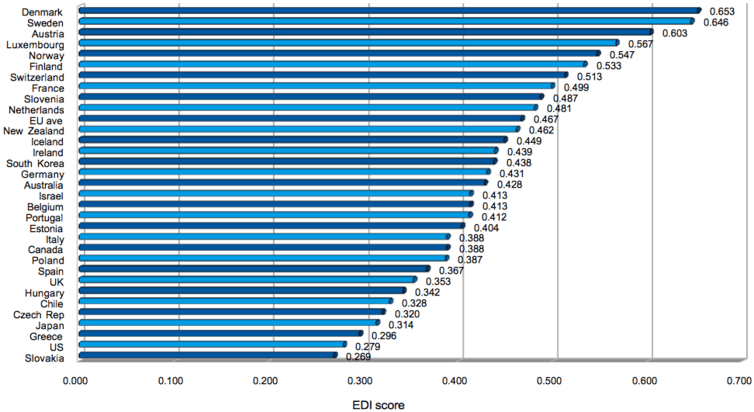


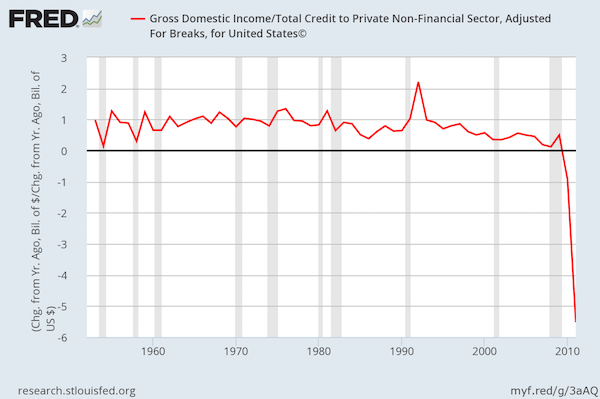


 Learning from Dogs