Category: Environment

Those solar flares

Plenty of news stories to choose from.

A massive solar storm is expected to hit Earth, possibly impacting our communication grids.

NOAA presented a report for May 12th that said:

EVENT:
A coronal mass ejection (CME) is an eruption of solar material. When they arrive at Earth, a geomagnetic storm can result. Watches at this level are very rare.
TIMING:
Several CMEs are anticipated to merge and arrive at Earth on May 12th.
EFFECTS:
The general public should visit our webpage to keep properly informed. The aurora mav become
visible over much of the northern half of the country, and maybe as far south as Alabama to
northern California.

Meanwhile, Earth.com presented the following (and it is a long but extremely interesting report):
Update: New solar flare, secondary peak today in this “Extreme” solar storm

By Eric Ralls, Earth.com staff writer

Update — May 12, 2024 at 8:04 PM EDT

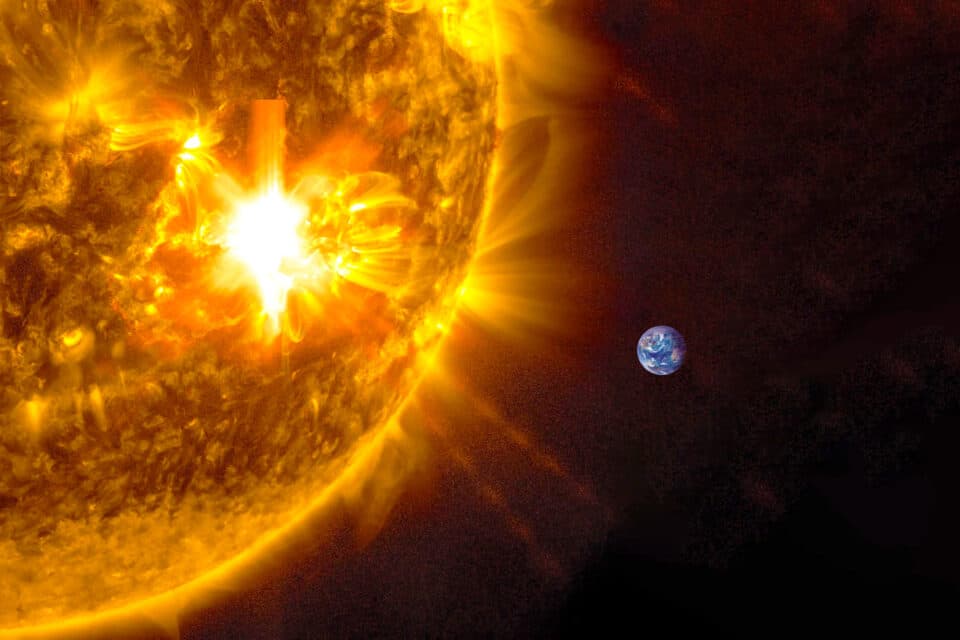
The Sun released another powerful burst of energy today, known as a solar flare, reaching its peak intensity at 12:26 p.m. Eastern Time. The flare originated from a region on the Sun’s surface called sunspot Region 3664, which has been quite active lately.

NASA’s Solar Dynamics Observatory, a spacecraft that keeps a constant eye on our nearest star, was able to capture a striking image of this latest solar outburst.

Solar flares are immense explosions on the Sun that send energy, light and high speed particles into space. They occur when the magnetic fields in and around the Sun reconnect, releasing huge amounts of stored magnetic energy. Flares are our solar system’s most powerful explosive events.

The NOAA’s Space Weather Prediction Center (SWPC) has extended the Geomagnetic Storm Warning until the afternoon of May 13, 2024.

Understanding different classes of solar flares

Today’s flare was classified as an X1.0 flare. Solar flares are categorized into classes based on their strength, with X-class flares being the most intense. The number provides additional information about the flare’s strength within that class. An X1 flare is ten times more powerful than an M1 flare.

These energetic solar eruptions can significantly impact Earth’s upper atmosphere and near-Earth space environment. Strong flares can disrupt high-frequency radio communications and GPS navigation signals. The particle radiation and X-rays from flares can also pose potential risks to astronauts in space.

Additionally, the magnetic disturbances from flares, if particularly strong, have the ability to affect electric power grids on Earth, sometimes causing long-lasting blackouts.

However, power grid problems are more commonly caused by coronal mass ejections (CMEs), another type of powerful solar eruption often associated with strong flares.

Scientists are always on alert, monitoring the Sun for these explosive events so that any potential impacts can be anticipated and prepared for. NASA’s Solar Dynamics Observatory, along with several other spacecraft, help provide this early warning system.

Stay tuned to Earth.com and the Space Weather Prediction Center (SWPC) for updates.

Update — May 12, 2024 at 9:41 AM EDT

The ongoing geomagnetic storm is expected to intensify later today, Sunday, May 12, 2024. Several intense Coronal Mass Ejections (CMEs), traveling from the Sun at speeds up to 1,200 miles per second, are anticipated to reach the Earth’s outer atmosphere by late afternoon.

Over the past two days, preliminary reports have surfaced regarding power grid irregularities, degradation of high-frequency communications, GPS outages, and satellite navigation issues. These disruptions are likely to persist as the geomagnetic storm strengthens.

Auroras visible across the continental United States

Weather permitting, auroras will be visible again tonight over most of the continental United States. This spectacular display of lights is a direct result of the ongoing geomagnetic storm.

The threat of additional strong solar flares and CMEs, which ultimately result in spectacular aurora displays, will persist until the large and magnetically complex sunspot cluster, NOAA Region 3664, rotates out of view of the Earth. This is expected to occur by Tuesday, May 14, 2024.

Solar activity remains at moderate to high levels

Solar activity has been at moderate levels over the past 24 hours. Region 3664 produced an M8.8/2b flare, the strongest of the period, on May 11 at 15:25 UTC. A CME signature was observed, but an Earth-directed component is not suspected.

Solar activity is expected to remain at high levels from May 12-14, with M-class and X-class flares anticipated, primarily due to the flare potential of Region 3664.

Energetic particle flux and solar wind enhancements

The greater than 10 MeV proton flux reached minor to moderate storm levels on May 10. Additional proton enhancements are likely on May 13-14 due to the flare potential and location of Region 3664.

The solar wind environment has been strongly enhanced due to continued CME activity. Solar wind speeds reached a peak of around 620 miles/second on May 12 at 00:55 UTC. 

A strongly enhanced solar wind environment and continued CME influences are expected to persist on May 12-13, and begin to wane by May 14.

Geomagnetic field reaches G4 “Severe” storm levels

The geomagnetic field reached G4 (Severe) geomagnetic storm levels in the past 24 hours due to continued CME activity. 

Periods of G3 (Strong) geomagnetic storms are likely, with isolated G4 levels possible, on May 12. Periods of G1-G3 (Minor-Strong) storming are likely on May 13, and periods of G1 (Minor) storms are likely on May 14.

Stay informed and enjoy the light show

As the geomagnetic storm rages on, we must remain vigilant and prepared for the potential consequences. Monitor official sources for updates on the storm’s progress and any further disruptions to our technological infrastructure. 

Take a moment to step outside tonight and marvel at the incredible auroras painting the night sky — a stunning reminder of the raw power and beauty of our Sun.

While these solar storms can cause temporary inconveniences, they also provide us with an opportunity to reflect on our place in the universe and the awe-inspiring forces that shape our world.

Stay tuned to Earth.com and the Space Weather Prediction Center (SWPC) for updates.

Understanding geomagnetic solar storms

Geomagnetic storms are disturbances in the Earth’s magnetic field caused by the interaction between the solar wind and the planet’s magnetosphere. These storms can have significant impacts on technology, infrastructure, and even human health.

Causes of geomagnetic storms

Geomagnetic storms typically originate from the Sun. They are caused by two main phenomena:

  • Coronal Mass Ejections (CMEs): Massive bursts of plasma and magnetic fields ejected from the Sun’s surface.
  • Solar Flares: Intense eruptions of electromagnetic radiation from the Sun’s surface.

When these events occur, they send charged particles streaming towards Earth at high speeds, which can take anywhere from one to five days to reach our planet.

Effects on Earth’s magnetic field

As the charged particles from CMEs and solar flares reach Earth, they interact with the planet’s magnetic field. This interaction causes the magnetic field lines to become distorted and compressed, leading to fluctuations in the strength and direction of the magnetic field.

Impacts on technology and infrastructure

Geomagnetic storms can have significant impacts on various aspects of modern technology and infrastructure:

  • Power Grids: Strong geomagnetic storms can induce currents in power lines, causing transformers to overheat and potentially leading to widespread power outages.
  • Satellite Communications: Charged particles can damage satellite electronics and disrupt communication signals.
  • GPS and Navigation Systems: Geomagnetic disturbances can interfere with the accuracy of GPS and other navigation systems.
  • Radio Communications: Storms can disrupt radio signals, affecting communication systems that rely on HF, VHF, and UHF bands.

Aurora Foundation

One of the most visually striking effects of geomagnetic storms is the formation of auroras, also known as the Northern and Southern Lights.

As charged particles collide with Earth’s upper atmosphere, they excite oxygen and nitrogen atoms, causing them to emit light in various colors.

Monitoring and forecasting

Scientists continuously monitor the Sun’s activity and use various instruments to detect and measure CMEs and solar flares.

This data helps them forecast the timing and intensity of geomagnetic storms, allowing for better preparedness and mitigation of potential impacts.

Historical geomagnetic storms

Some of the most notable geomagnetic storms in history include:

  • The Carrington Event (1859): The most powerful geomagnetic storm on record, which caused widespread telegraph system failures and auroras visible as far south as the Caribbean.
  • The Halloween Storms (2003): A series of powerful geomagnetic storms that caused power outages in Sweden and damaged transformers in South Africa.
  • The Quebec Blackout (1989): A geomagnetic storm that caused a massive power outage affecting millions of people in Quebec, Canada.

Understanding geomagnetic storms is crucial for protecting our technology-dependent world and mitigating the potential risks associated with these powerful space weather events.

—–

Like what you read? Subscribe to our newsletter for engaging articles, exclusive content, and the latest updates.

Check us out on EarthSnap, a free app brought to you by Eric Ralls and Earth.com.

Picture Parade Four Hundred and Thirty-One

Yet more from Unsplash.

Photo by Harshit Suryawanshi on Unsplash

Photo by Erin Minuskin on Unsplash

Photo by Brooke Winters on Unsplash

Photo by Tamara Bellis on Unsplash

Photo by William Krause on Unsplash

Photo by Liviu Roman on Unsplash

Photo by Taylor Kopel on Unsplash

There you are, another week gone!

This was a very lucky moment

A hiker in Arizona saw a dog hiding, and scared!

This is such a lovely tale and one that defies all the odds.

ooOOoo

Hiker Stops In His Tracks When He Sees ‘Amber Eyes’ Peeking Out From Crevice

No one has any idea how she got up there ⛰️

By Caitlin Jill Anders, Published on May 3, 2024

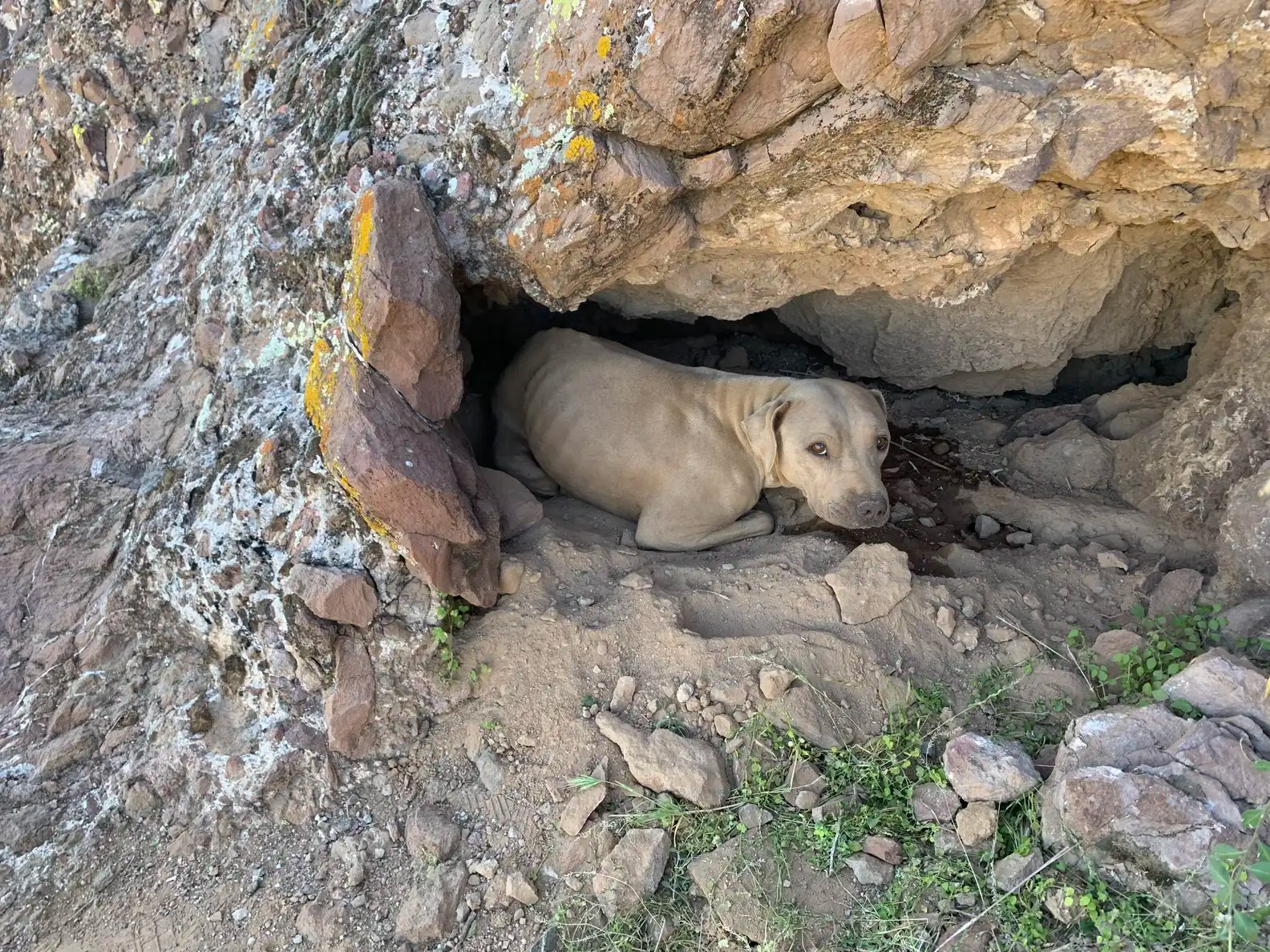
A Good Samaritan was hiking a narrow, slippery trail on Lookout Mountain in Phoenix, Arizona, and was very focused on his hike until something caught his eye. He was about half a mile up the mountain and a little off the beaten path when he caught a glimpse of light reflecting off of something — and was shocked to realize it was a pair of amber eyes.

The eyes belonged to a very scared dog huddled up in a tiny hole in the side of the mountain. She was completely blending in with her surroundings, and if she hadn’t had such piercing eyes, the hiker may not have noticed her. He had no idea how she’d managed to get up there, but it was clear that she’d been stuck for a while and might not be able to last much longer.

The Good Samaritan quickly contacted the Arizona Humane Society (AHS), who sent two emergency animal medical technicians, Tracey Miiller and Ruthie Jesus, out to help while he waited with the pup until they arrived. The dog was definitely scared but seemed open to getting help.

“This Good Samaritan waited probably almost two hours, and then we found this incredible dog, who incidentally is literally the same color as the dirt,” Jesus said in a press release. “She blends in so much, the complainant told us that he wanted to call her Bright Eyes because when he hiked past her, that was literally the only thing he saw was her amber bright eyes staring back at him.”

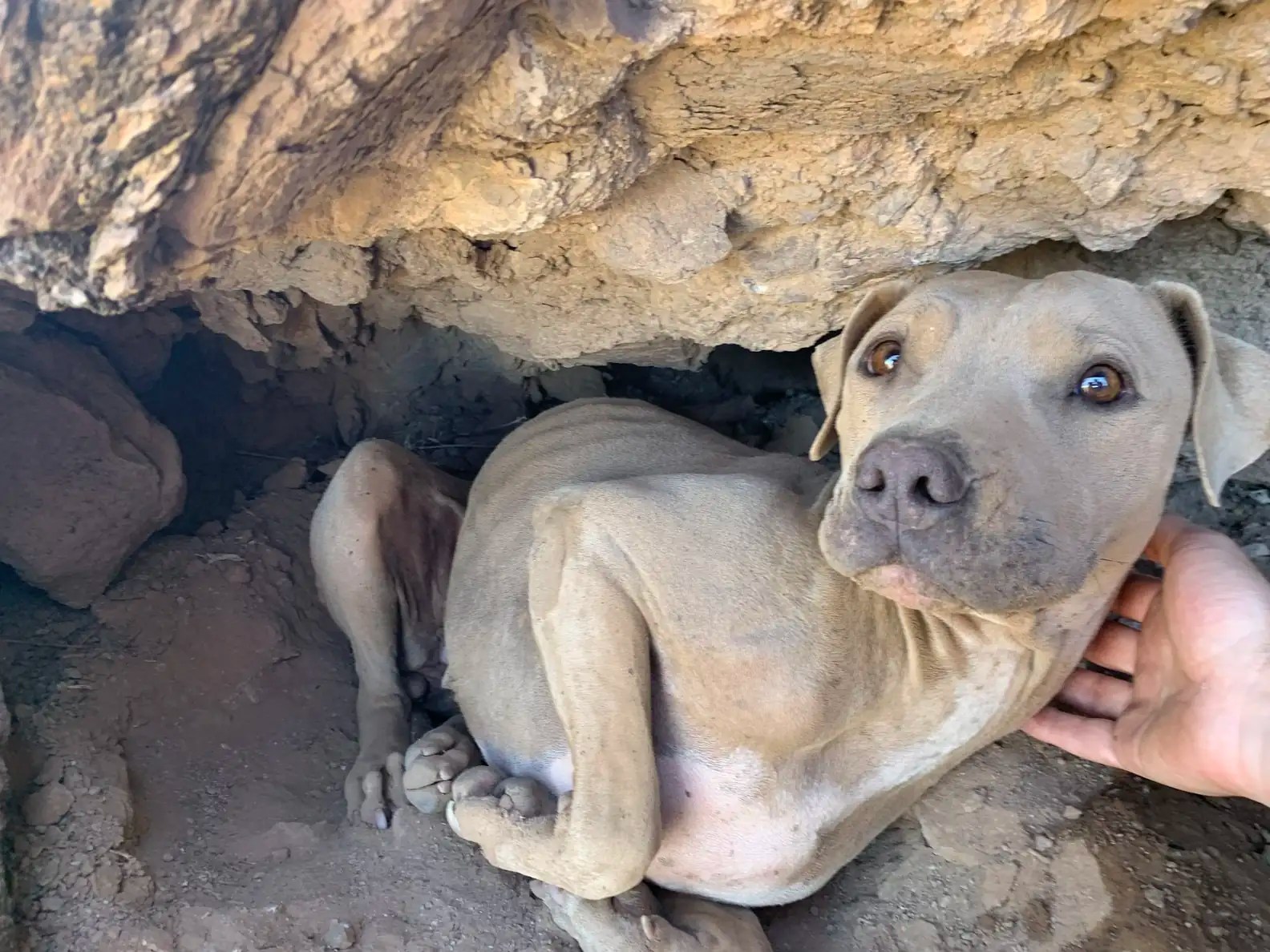
After a quick and careful assessment on the side of the mountain, the technicians determined that Bright Eyes was dangerously dehydrated with cut-up paws and a wound on her rear end.

“She was really sweet and letting me pet her head, but she absolutely did not want to come out of that den, so I kind of had to just sort of pull her out,” Jesus said.

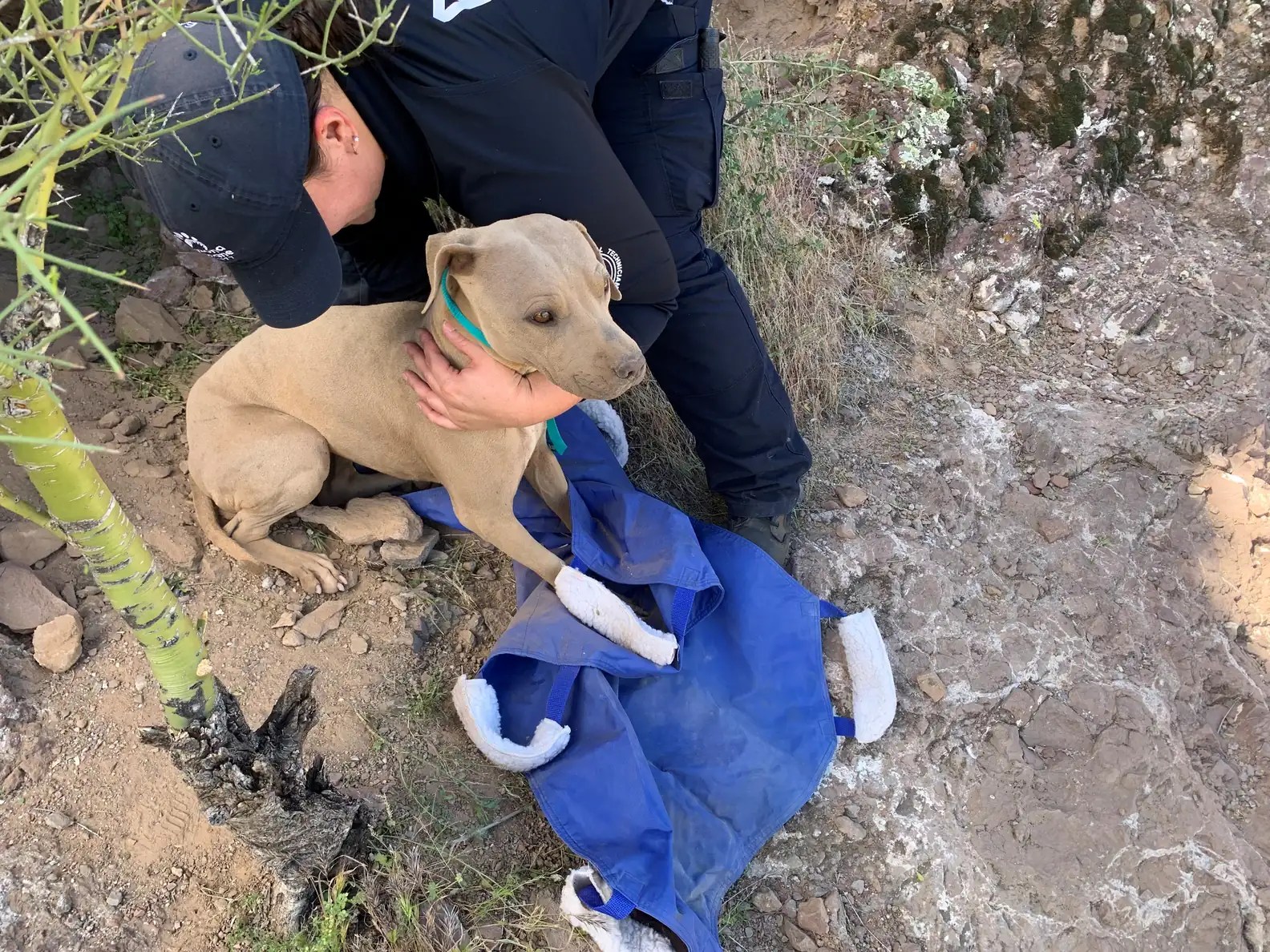
She was definitely too weak to walk with her rescuers down the mountain, so the technicians took turns carrying her until they reached the ambulance. Bright Eyes was calm the whole time, so grateful to finally be safe.

“She actually really just relaxed and seemed to enjoy being carried down the mountain,” Jesus said. “But it was a very teeny-tiny rocky trail that was pretty slick, and so Tracey and I took turns carrying her down the mountain, and she was just an absolute angel. She knew we were getting her to safety.”

It’s still a mystery as to how or why Bright Eyes ended up on the mountain in the first place, but the important thing is someone found her and now she’s getting the care she needs.

“We were so elated to be able to get her,” Jesus said. “She was just so dehydrated. I think she’d probably been up there several days and that was probably her last day, and this Good Samaritan really just saved her life.”

ooOOoo

Frankly, there’s nothing more to add to this account. For it captured all that so many people do for dogs.

P.S. All the above photographs were supplied by the Arizona Humane Society. Please take a look at their website.

Picture Parade Four Hundred and Twenty-Nine, not!

It is about Whale songs and is just a fabulous sound!

Last Friday there was an item on the BBC about whale song. It appears I can publish the article for you all. It is my choice over my regular Sunday Picture Parade. I hope you agree! Update: The track just 26 seconds long cannot be reproduced in this post.

ooOOoo

Whale song mystery solved by scientists

21 February 2024, By Helen Briggs and Victoria Gill,Science correspondents, BBC News

Humpback whale breaching near Bering Island, Kamchatka, Russia – Olga Filatova, University of Southern Denmark

Scientists have worked out how some of the largest whales in the ocean produce their haunting and complex songs.

Humpbacks and other baleen whales have evolved a specialised “voice box” that enables them to sing underwater. 

The discovery, published in the journal Nature, has also revealed why the noise we make in the ocean is so disruptive for these ocean giants. 

Whale song is restricted to a narrow frequency that overlaps with the noise produced by ships. 
“Sound is absolutely crucial for their survival, because it’s the only way they can find each other to mate in the ocean,” explained Prof Coen Elemans, of the University of Southern Denmark, who led the study. 

Blue whales return to ‘safe’ tropical haven
Orcas ‘learning from adults’ to target boats
Study to measure the oceans’ ‘year of quiet’

“[These are some] of the most enigmatic animals that ever lived on the planet,” he told BBC News. “They are amongst the biggest animals, they’re smart and they’re highly social.”

Humpback whale song (For whatever reason the track cannot be listened to on this blog. That is a great shame as the song is magnificent. So please go to the BBC website for this; the link is https://www.bbc.com/news/science-environment-68358414 )

Baleen whales are a group of 14 species, including the blue, humpback, right, minke and gray whale. Instead of teeth, the animals have plates of what is called baleen, through which they sieve huge mouthfuls of tiny creatures from the water.

Exactly how they produce complex, often haunting songs has been a mystery until now. Prof Elemans said it was “super-exciting” to have figured it out.

A diver descends between three juvenile humpback whales the size of buses – Karim Iliya

He and his colleagues carried out experiments using larynxes, or “voice boxes”, that had been carefully removed from three carcasses of stranded whales – a minke, a humpback and a sei whale. They then blew air through the massive structures to produce the sound. 

In humans, our voices come from vibrations when air passes over structures called vocal folds in our throat. Baleen whales, instead, have a large U-shaped structure with a cushion of fat at the top of the larynx.

This vocal anatomy allows the animals to sing by recycling air, and it prevents water from being inhaled.

Artwork indicating the cartilages of the larynx in a humpback whale – Patricia Jaqueline Matic, Vienna

The researchers produced computer models of the sounds and showed that baleen whale song is restricted to a narrow frequency which overlaps with noise produced by shipping vessels. 

“They cannot simply choose to, for example, sing higher to avoid the noise we make in the ocean,” explained Prof Elemans. 

His study demonstrated how our ocean noise could prevent whales from communicating over long distances. That knowledge could be vital for the conservation of humpbacks, blue whales and other endangered giants of the sea.

It also provides insight into questions that researchers have been asking for decades about these eerie songs, which some sailors used to attribute to ghosts or mythical sea creatures.

Whale communication expert Dr Kate Stafford, from Oregon State University, called the study “groundbreaking”. 

“The production and reception of sound is the most important sense for marine mammals, so any studies that elucidate how they make sounds has the potential to move the field forward,” she told BBC News.

Researchers say evidence of the harm ocean noise pollution can do has been building for decades –
Alamy

The research also paints an evolutionary picture – of how the ancestors of whales returned to the oceans from the land, and the adaptations that made it possible to communicate underwater.

The way so-called toothed whales produce sound is better understood, because the animals are easier to study. These marine mammals, which include dolphins, orcas, sperm whales and porpoises, blow air through a special structure in their nasal passages.

Dr Ellen Garland, from the Sea Mammal Research Unit at the University of St Andrews, said: “I’ve always wondered exactly how baleen whales – especially humpbacks, which my research is focused on – actually produce the variety of sounds they do.

“Studying large whales is extremely challenging at the best of times, but trying to uncover how they produce sound when you may not even be able to see them underwater while vocalising is an added level of difficulty, so these researchers have been very creative.”

Dr Stafford added that the mammals’ ability to make such complex vocal signals was “remarkable” and highlighted “how special these animals are”.

ooOOoo

There! I do hope you all agree that this was very worthwhile. Plus, you all got to listen to those twenty-six seconds of the very beautiful sound.

Picture Parade Four Hundred and Twenty-Seven

And it has to be the 2024 Eclipse.

(With thanks to Unsplash.)

April 8th, 2024

Photo by Jeni Holland on Unsplash

Photo by Luis Olmos on Unsplash

Photo by Nikhil Mitra on Unsplash

Photo by Stephen Walker on Unsplash

Photo by Nikhil Mitra on Unsplash

These are just a few of the photographs available on Unsplash. These and the others are just wonderful.

A dog train, no less!

Looking after their ex-rescue dogs.

This was an article on The Dodo and I thought it should be shared with you because it is a wonderful way of transporting their dogs.

ooOOoo

Couple Builds A ‘Dog Train’ To Take Their Rescue Pups Out On Little Adventures

“They just love it. They absolutely love it.”

By Stephen Messenger Published on the 15th March, 2022.

On Friday evenings, just before sunset, the din of traffic on the roads around Lehigh Acres, Florida, gives way to a sound far more pleasing — the cheerful chorus of happy pups on the move.

It’s at this time, like clockwork, a dog train takes to the streets just to brighten the lives of its furry passengers.

Alice E. Herrick

Alice Johnston and her husband, Paul, moved to Lehigh Acres about eight years ago, after years spent operating an animal rescue shelter in Costa Rica. But they didn’t relocate alone. They also brought along the more than a dozen dogs under their care there — all of whom had been saved from the streets.

Now in the suburbs, the Johnstons decided to get creative.

Alice E. Herrick

“We have so many dogs, of course we couldn’t walk them all or put them in the car to take them for a ride,” Alice Johnston told The Dodo. “So, my husband build a train so that we could take them out, drive around the community. He pulls the train with a lawnmower, and I ride a little scooter behind him to keep an eye on things, to make sure they’re safe.”

The happy gang is a sight to behold.

The idea for the Wonderland Express, as its known, was inspired by a Texas man who built a dog train for his own rescue pups. And the Johnstons’ dogs love it just as much.

“The dogs get so excited. They just love it. They absolutely love it,” Johnston said. “They know it’s Friday better than we do. It’s amazing how they know.”

But the pups aren’t the only ones thrilled about their weekly trips.

“We have people who wait for us every week [to pass by on the street],” Johnston said. “Some people come out and give the dogs treats. They really enjoy it.”

The Johnstons have put all that attention the train gets to some very good use.

“My husband has signs all over the train encouraging people to adopt, and not shop,” Johnston said. “There are so many homeless dogs, and they make wonderful pets. Anything we can do to encourage people to give these dogs a chance, we are happy to do it.”

The Johnstons don’t aim to publicize their Wonderland Express dog train, though they are glad people are happy to see it. For them, it’s all about their dogs’ enjoyment — and spreading the word about the joy of adopting.

“It gives us so much joy to know that dogs are getting a second chance,” Johnston said. “And it really gives us satisfaction knowing we’re giving our dogs a good life.”

ooOOoo

That last image I had real trouble with but I left it in the post just in case when it is published it comes out. But even without that photograph one gets the clear idea of the pleasure the Johnstons give to their dogs.

Perfect!

Our forests

The challenge in deciding what is best for our forests.

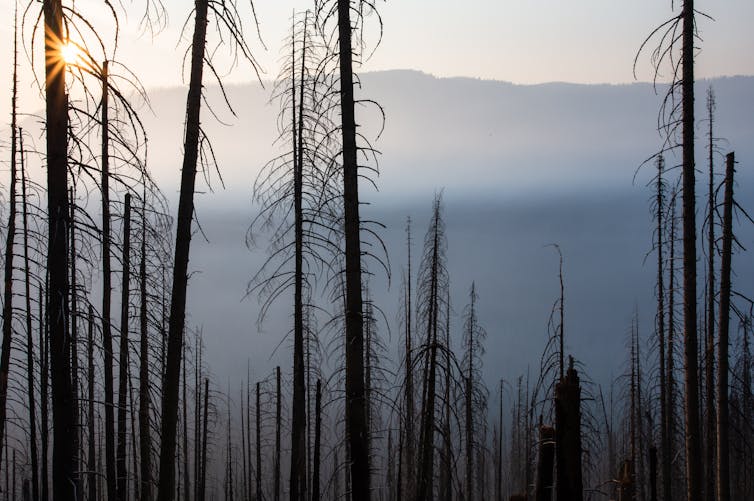
As a great many of you already know, we live in a rural area in Southern Oregon. It is a beautiful place and we look out to the East upon Mount Sexton. But locally a great many houses are built on rural sites with the local forest just yards away.

Thus it was with interest that an article on The Conversation website ‘spoke’ to me.

ooOOoo

Fighting every wildfire ensures the big fires are more extreme, and may harm forests’ ability to adapt to climate change

Extreme fires leave forests struggling to recover in a warming world. Mark Kreider

Mark Kreider, University of Montana

In the U.S., wildland firefighters are able to stop about 98% of all wildfires before the fires have burned even 100 acres. That may seem comforting, but decades of quickly suppressing fires has had unintended consequences.

Fires are a natural part of many landscapes globally. When forests aren’t allowed to burn, they become more dense, and dead branches, leaves and other biomass accumulate, leaving more fuel for the next fire. This buildup leads to more extreme fires that are even harder to put out. That’s why land managers set controlled burns and thin forests to clear out the undergrowth.

However, fuel accumulation isn’t the only consequence of fire suppression.

Fire suppression also disproportionately reduces certain types of fire. In a new study, my colleagues and I show how this effect, known as the suppression bias, compounds the impacts of fuel accumulation and climate change.

What happened to all the low-intensity fires?

Most wildfires are low-intensity. They ignite when conditions aren’t too dry or windy, and they can often be quickly extinguished.

The 2% of fires that escape suppression are those that are more extreme and much harder to fight. They account for about 98% of the burned area in a typical year.

The author and colleagues discuss changing wildfire in Montana and Idaho’s Bitterroot Mountains. By Mark Kreider.

In other words, trying to put out all wildfires doesn’t reduce the total amount of fire equally – instead, it limits low-intensity fires while extreme fires still burn. This effect is worsened by climate change.

Too much suppression makes fires more severe

In our study, we used a fire modeling simulation to explore the effects of the fire suppression bias and see how they compared to the effects of global warming and fuel accumulation alone.

Fuel accumulation and global warming both inherently make fires more severe. But over thousands of simulated fires, we found that allowing forests to burn only under the very worst conditions increased fire severity by the same amount as more than a century’s worth of fuel accumulation or 21st-century climate change.

The suppression bias also changes the way plants and animals interact with fire.

By removing low-intensity fires, humans may be changing the course of evolution. Without exposure to low-intensity fires, species can lose traits crucial for surviving and recovering from such events.

After extreme fires, landscapes have fewer seed sources and less shade. New seedlings have a harder time becoming established, and for those that do, the hotter and drier conditions reduce their chance of survival.

In contrast, low-intensity fires free up space and resources for new growth, while still retaining living trees and other biological legacies that support seedlings in their vulnerable initial years.

By quickly putting out low-intensity fires and allowing only extreme fires to burn, conventional suppression reduces the opportunities for climate-adapted plants to establish and help ecosystems adjust to changes like global warming.

Firefighters keep watch for smoke from a fire tower in the Coeur d’Alene National Forest, Idaho, in 1932. Forest Service photo by K. D. Swan

Suppression makes burned area increase faster

As the climate becomes hotter and drier, more area is burning in wildfires. If suppression removes fire, it should help slow this increase, right?

In fact, we found it does just the opposite.

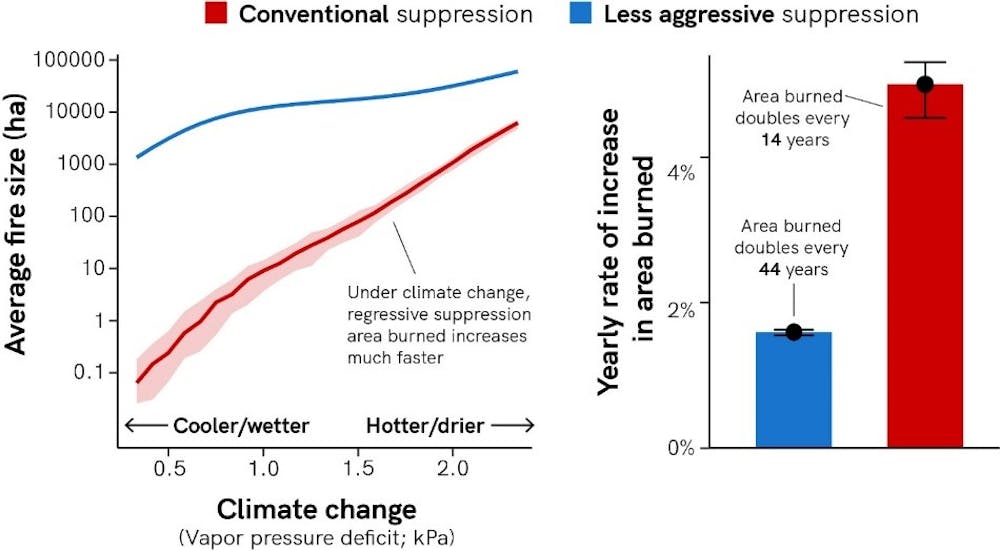
We found that while conventional suppression led to less total area burning, the yearly burned area increased more than three times faster under conventional suppression than under less aggressive suppression efforts. The amount of area burned doubled every 14 years with conventional fire suppression under simulated climate change, instead of every 44 years when low- and moderate-intensity fires were allowed to burn. That raises concerns for how quickly people and ecosystems will have to adapt to extreme fires in the future.

Two charts show fire area increasing faster in a warming climate climate under conventional fire suppression.
With conventional fire suppression, the average fire size will increase faster as the planet warms than it would under a less aggressive approach. Mark Kreider

The fact that the amount of area burned is increasing is undoubtedly driven by climate change. But our study shows that the rate of this increase may also be a result of conventional fire management.

The near total suppression of fires over the last century means that even a little additional fire in a more fire-prone future can create big changes. As climate change continues to fuel more fires, the relative increase in area burned will be much bigger.

This puts more stress on communities as they adapt to increased extreme wildfires, from dealing with more wildfire smoke to even changing where people can live.

A way forward

To address the wildfire crisis, fire managers can be less aggressive in suppressing low- and moderate-intensity fires when it is safe to do so. They can also increase the use of prescribed fire and cultural burning to clear away brush and other fuel for fires.

These low-intensity fires will not only reduce the risk of future extreme fires, but they also will create conditions that favor the establishment of species better suited to the changing climate, thereby helping ecosystems adapt to global warming.

Coexisting with wildfire requires developing technologies and approaches that enable the safe management of wildfires under moderate burning conditions. Our study shows that this may be just as necessary as other interventions, such as reducing the number of fires unintentionally started by human activities and mitigating climate change.

Mark Kreider, Ph.D. Candidate in Forest and Conservation Science, University of Montana

This article is republished from The Conversation under a Creative Commons license. Read the original article.

ooOOoo

The article makes a great deal of sense and presents a solution that may not be our first thought. But especially the message is fundamentally important, and please watch the video because it very clearly presents the benefits of the solution.

So we want more low-intensity fires! Please! Or to say it another way, we want more prescribed fires.

Water, water, everywhere, but …

A dramatic article from George Monbiot about water!

I read the latest from George Monbiot yesterday morning and was startled. Startled because I hadn’t thought of it before. Startled because here in Merlin, Southern Oregon we have had so much rain since the beginning of November, 2023 that our acres are swimming in the wet. Startled since that time also our Bummer Creek, which flows across our land, has been at record depths.

But this report is incredibly important and I wanted to share it with you, as I have Geo. Monbiot’s permission for so doing.

ooOOoo

Dry Run

Posted on11th March 2024

The mega-droughts in Spain and the US are a portent of a gathering global water crisis.

By George Monbiot, published in the Guardian 4th March 2024

There’s a flaw in the plan. It’s not a small one: it is an Earth-sized hole in our calculations. To keep pace with the global demand for food, crop production needs to grow by at least 50% by 2050. In principle, if nothing else changes, this is feasible, thanks mostly to improvements in crop breeding and farming techniques. But everything else is going to change.

Even if we set aside all other issues – heat impacts, soil degradation, epidemic plant diseases accelerated by the loss of genetic diversity – there is one which, without help from any other cause, could prevent the world’s people from being fed. Water.

A paper published in 2017 estimated that to match crop production to expected demand, water use for irrigation would have to increase by 146% by the middle of this century. One minor problem. Water is already maxed out.

In general, the dry parts of the world are becoming drier, partly through reduced rainfall; partly through declining river flow as mountain ice and snow retreats; and partly through rising temperatures causing increased evaporation and increased transpiration by plants. Many of the world’s major growing regions are now threatened by “flash droughts”, in which hot and dry weather sucks moisture from the soil at frightening speed. Some places, such as the southwest of the US, now in its 24th year of drought, may have switched permanently to a drier state. Rivers fail to reach the sea, lakes and aquifers are shrinking, species living in freshwater are becoming extinct at roughly five times the rate of species that live on land and major cities are threatened by extreme water stress.

Already, agriculture accounts for 90% of the world’s freshwater use. We have pumped so much out of the ground that we’ve changed the Earth’s spin. The water required to meet growing food demand simply does not exist.

That 2017 paper should have sent everyone scrambling. But as usual, it was ignored by policymakers and the media. Only when the problem arrives in Europe do we acknowledge that there’s a crisis. But while there is understandable panic about the drought in Catalonia and Andalusia, there’s an almost total failure among powerful interests to acknowledge that this is just one instance of a global problem, a problem that should feature at the top of the political agenda.

Though drought measures have triggered protests in Spain, this is far from the most dangerous flashpoint. The catchment of the Indus river is shared by three nuclear powers – India, Pakistan and China – and several highly unstable and divided regions already afflicted by hunger and extreme poverty. Today, 95% of the river’s dry season flow is extracted, mostly for irrigation. But water demand in both Pakistan and India is growing rapidly. Supply – temporarily boosted by the melting of glaciers in the Himalayas and the Hindu Kush – will, before long, peak and then go into decline.

Even under the most optimistic climate scenario, runoff from Asian glaciers is expected to peak before mid-century, and glacier mass will shrink by about 46% by 2100. Some analysts see water competition between India and Pakistan as a major cause of the repeated conflicts in Kashmir. But unless a new Indus waters treaty is struck, taking falling supplies into account, this fighting could be a mere prelude for something much worse.

There’s a widespread belief that these problems can be solved simply by enhancing the efficiency of irrigation: huge amounts of water are wasted in agriculture. So let me introduce you to the irrigation efficiency paradox. As better techniques ensure that less water is required to grow a given volume of crops, irrigation becomes cheaper. As a result, it attracts more investment, encourages farmers to grow thirstier, more profitable plants, and expands across a wider area. This is what happened, for instance, in the Guadiana river basin in Spain, where a €600m investment to reduce water use by improving the efficiency of irrigation has instead increased it.

You can overcome the paradox through regulation: laws to limit both total and individual water consumption. But governments prefer to rely on technology alone. Without political and economic measures, it doesn’t work.

Nor are other technofixes likely to solve the problem. Governments are planning massive engineering schemes to pipe water from one place to another. But climate breakdown and rising demand ensure that many of the donor regions are also likely to run dry. Water from desalination plants typically costs five or 10 times as much as water from the ground or the sky, while the process requires masses of energy and generates great volumes of toxic brine.

Above all, we need to change our diets. Those of us with dietary choice (in other words, the richer half of the world’s population) should seek to minimise the water footprint of our food. With apologies for harping on about it, this is yet another reason to switch to an animal-free diet, which reduces both total crop demand and, in most cases, water use. The water demand of certain plant products, especially almonds and pistachios in California, has become a major theme in the culture wars, as rightwing influencers attack plant-based diets. But, excessive as the watering of these crops is, more than twice as much irrigation water is used in California to grow forage plants to feed livestock, especially dairy cows. Dairy milk has much higher water demand even than the worst alternative (almond milk), and is astronomically higher than the best alternatives, such as oat or soya milk.

This is not to give all plant products a free pass: horticulture can make massive demands on water supplies. Even within a plant-based diet, we should be switching from some grains, vegetables and fruit to others. Governments and retailers should help us through a combination of stronger rules and informative labelling.

Instead, they do the opposite. Last month, at the behest of the EU’s agricultural commissioner, Janusz Wojciechowski, the European Commission deleted from its new climate plan the call to incentivise “diversified” (animal-free) protein sources. Regulatory capture is never stronger than in the food and farming sector.

I hate to pile yet more on to you, but some of us have to try to counter the endless bias against relevance in politics and most of the media. This is yet another of those massive neglected issues, any one of which could be fatal to peace and prosperity on a habitable planet. Somehow, we need to recover our focus.

http://www.monbiot.com

ooOOoo

Oh dear, oh dear!

One hates to be alarmist and yet Monbiot is a very smart reporter and this is truly important.

Oh dear, oh dear!

Listening to ancient folk

Returning to climate change.

We think that climate change is a relatively recent phenomenon. Wrong! And I am not going to say any more because this post from The Conversation covers it beautifully.

ooOOoo

What ancient farmers can really teach us about adapting to climate change – and how political power influences success or failure

A farmer paddles to his fields on an artificial island among canals, part of an ancient Aztec system known as chinampas, in 2021. AP Photo /Marco Ugarte

Chelsea Fisher, University of South Carolina

Published February, 26th, 2024

In dozens of archaeological discoveries around the world, from the once-successful reservoirs and canals of Angkor Wat in Cambodia to the deserted Viking colonies of Greenland, new evidence paints pictures of civilizations struggling with unforeseen climate changes and the reality that their farming practices had become unsustainable.

Among these discoveries are also success stories, where ancient farming practices helped civilizations survive the hard times.

Zuni farmers in the southwestern United States made it through long stretches of extremely low rainfall between A.D. 1200 and 1400 by embracing small-scale, decentralized irrigation systems. Farmers in Ghana coped with severe droughts from 1450 to 1650 by planting indigenous African grains, like drought-tolerant pearl millet.

Ancient practices like these are gaining new interest today. As countries face unprecedented heat waves, storms and melting glaciers, some farmers and international development organizations are reaching deep into the agricultural archives to revive these ancient solutions.

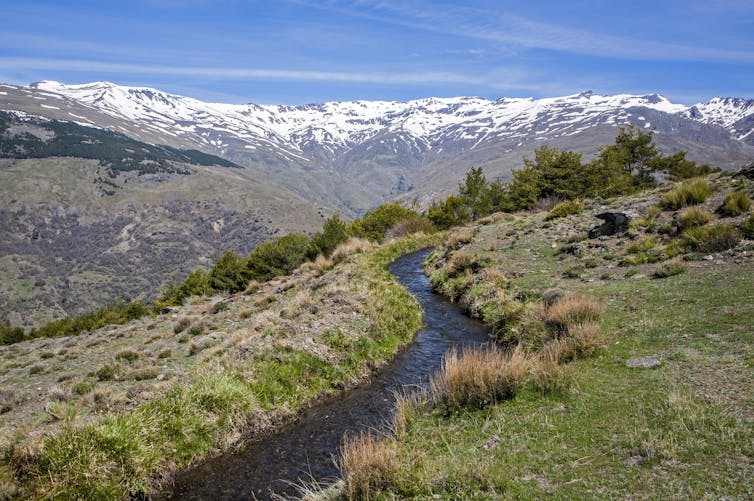
A canal running through a mountain side with snowy peaks in the background.
An ancient irrigation method used by the Moors involving water channels is being revisited in Spain. Geography Photos/Universal Images Group via Getty Images

Drought-stricken farmers in Spain have reclaimed medieval Moorish irrigation technology. International companies hungry for carbon offsets have paid big money for biochar made using pre-Columbian Amazonian production techniques. Texas ranchers have turned to ancient cover cropping methods to buffer against unpredictable weather patterns.

But grasping for ancient technologies and techniques without paying attention to historical context misses one of the most important lessons ancient farmers can reveal: Agricultural sustainability is as much about power and sovereignty as it is about soil, water and crops.

I’m an archaeologist who studies agricultural sustainability in the past. Discoveries in recent years have shown how the human past is full of people who dealt with climate change in both sustainable and unsustainable ways. Archaeologists are finding that ancient sustainability was tethered closely to politics. However, these dynamics are often forgotten in discussions of sustainability today.

Maya milpa farming: Forest access is essential

In the tropical lowlands of Mexico and Central America, Indigenous Maya farmers have been practicing milpa agriculture for thousands of years. Milpa farmers adapted to drought by gently steering forest ecology through controlled burns and careful woodland conservation.

The knowledge of milpa farming empowered many rural farmers to navigate climate changes during the notorious Maya Collapse – two centuries of political disintegration and urban depopulation between A.D. 800 to 1000. Importantly, later Maya political leaders worked with farmers to keep this flexibility. Their light-handed approach is still legible in the artifacts and settlement patterns of post-Collapse farming communities and preserved in the flexible tribute schedules for Maya farmers documented by 16th century Spanish monks.

Maya farmers and researchers explain milpa farming.

In my book, “Rooting in a Useless Land: Ancient Farmers, Celebrity Chefs, and Environmental Justice in Yucatán,” I trace the deep history of the Maya milpa. Using archaeology, I show how ancient farmers adapted milpa agriculture in response to centuries of drought and political upheaval.

Modern Maya milpa practices began drawing public attention a few years ago as international development organizations partnered with celebrity chefs, like Noma’s René Redzepi, and embraced the concept.

However, these groups condemned the traditional milpa practice of burning new areas of forest as unsustainable. They instead promoted a “no-burn” version to grow certified organic maize for high-end restaurants. Their no-burn version of milpa relies on fertilizers to grow maize in a fixed location, rather than using controlled fire ecology to manage soil fertility across vast forests.

The result restricted the traditional practices Maya farmers have used for centuries. It also fed into a modern political threat to traditional Maya milpa farming: land grabs.

Traditional milpa agriculture requires a lot of forested land, since farmers need to relocate their fields every couple of years. But that need for forest is at odds with hotel companies, industrial cattle ranches and green energy developers who want cheap land and see Maya milpa forest management practices as inefficient. No-burn milpa eases this conflict by locking maize agriculture into one small space indefinitely, instead of spreading it out through the forest over generations. But it also changes tradition.

Maya milpa farmers are now fighting to practice their ancient agricultural techniques, not because they’ve forgotten or lost those techniques, but because neocolonial land privatization policies actively undermine farmers’ ability to manage woodlands as their ancestors did.

Milpa farmers are increasingly left to either adopt a rebranded version of their heritage or quit farming all together – as many have done.

Mexico’s fragile artificial islands: Threats from development

When I look to the work of other archaeologists investigating ancient agricultural practices, I see these same entanglements of power and sustainability.

In central Mexico, chinampas are ancient systems of artificial islands and canals. They have enabled farmers to cultivate food in wetlands for centuries.

The continuing existence of chinampas is a legacy of deep ecological knowledge and a resource enabling communities to feed themselves.

Chinampa techniques use canals and artificial islands. This photo shows one in 1912. Karl Weule, Leitfaden der Voelkerkunde via Wikimedia
A well-maintained farming island among canals near Mexico City.
The chinampas of Xochimilco are a UNESCO world heritage site today, but development expanding from Mexico City has put their survival in danger. Sergei Saint via Flickr, CC BY-ND

But archaeology has revealed that generations of sustainable chinampa management could be overturned almost overnight. That happened when the expansionist Aztec Empire decided to re-engineer Lake Xaltocan for salt production in the 14th century and rendered its chinampas unusable.

Today, the future of chinampa agriculture hinges on a pocket of protected fields stewarded by local farmers in the marshy outskirts of Mexico City. These fields are now at risk as demand for housing drives informal settlements into the chinampa zone.

Andean raised fields: A story of labor exploitation

Traditional Andean agriculture in South America incorporates a diverse range of ancient cultivation techniques. One in particular has a complicated history of attracting revival efforts.

In the 1980s, government agencies, archaeologists and development organizations spent a fortune trying to persuade Andean farmers to revive raised field farming. Ancient raised fields had been found around Lake Titicaca, on the border of Peru and Bolivia. These groups became convinced that this relic technology could curb hunger in the Andes by enabling back-to-back potato harvests with no need for fallowing.

But Andean farmers had no connection to the labor-intensive raised fields. The practice had been abandoned even before the rise of Inca civilization in the 13th century. The effort to revive ancient raised field agriculture collapsed.

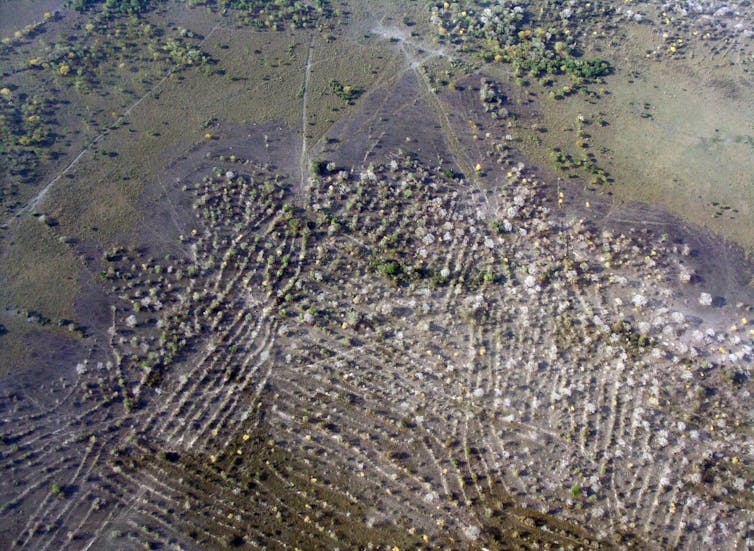
A view from a plane shows the outlines where fields were raised.
An aerial photograph shows pre-Colombian raised fields in Bolivia. Umberto Lombardo, University of Bern, Switzerland, CC BY-NC

Since then, more archaeological discoveries around Lake Titicaca have suggested that ancient farmers were forced to work the raised fields by the expansionist Tiwanaku empire during its peak between AD 500 and 1100. Far from the politically neutral narrative promoted by development organizations, the raised fields were not there to help farmers feed themselves. They were a technology for exploiting labor and extracting surplus crops from ancient Andean farmers.

Respecting ancient practices’ histories

Reclaiming ancestral farming techniques can be a step toward sustainable food systems, especially when descendant communities lead their reclamation. The world can, and I think should, reach back to recover agricultural practices from our collective past.

But we can’t pretend that those practices are apolitical.

The Maya milpa farmers who continue to practice controlled burns in defiance of land privatizers understand the value of ancient techniques and the threat posed by political power. So do the Mexican chinampa farmers working to restore local food to disenfranchised urban communities. And so do the Andean farmers refusing to participate in once-exploitive raised field rehabilitation projects.

Depending on how they are used, ancient agricultural practices can either reinforce social inequalities or create more equitable food systems. Ancient practices aren’t inherently good – it takes a deeper commitment to just and equitable food systems to make them sustainable.

Chelsea Fisher, Assistant Professor of Anthropology, University of South Carolina

This article is republished from The Conversation under a Creative Commons license. Read the original article.

ooOOoo

We like to think that the changing climate is a modern phenomenon but this article shows it is not. That sentence by Chelsea Fisher offers a route out of the present situation: “The world can, and I think should, reach back to recover agricultural practices from our collective past.”

A dog in an Arizona desert

For the last day in February, a wonderful story!

This is a post taken directly from The Dodo. It was published by The Dodo on the 8th February this year so it is very current.

ooOOoo

Sisters Driving Through Desert Spot A Lost Dog With Something Stuck To His Side

“He growled at us at first …”

By Caitlin Jill Anders, Published on February 8th, 2024

Vanessa Keating, Theresa Burge and Aubrey Metropulos, a group of full-time RVers and Vanlifers, were wandering around Bulldog Canyon in Arizona one day, looking for a specific type of cactus. They weren’t far from their campsite when they spotted someone tiny and furry, and quickly realized it was a dog out in the desert all alone.

They immediately knew they couldn’t leave the pup out there by himself and began the process of trying to win him over. Thankfully, it didn’t end up taking very long. The sweet dog was more than ready to be rescued.

“He growled at us at first and took some convincing to come over,” Keating told The Dodo. “It only took a few minutes for him to come up to my sister, Theresa, first, but he was still nervous. We quickly realized he had a cholla cactus stuck to the side of him, and once she pulled it off, he warmed up and got excited. So many kisses, and he even had the zoomies!”

Vanessa Keating

Once the cactus was safely removed from his fur, the lost dog felt so much better and jumped for joy that he’d finally be found. His new friends gave him all the cuddles he’d been missing and started asking around their campsite about him, trying to find his family. Unfortunately, they didn’t have any luck, but they refused to stop trying.

Vanessa Keating

The next day, they took the lost dog to get scanned for a microchip and were overjoyed when they discovered he had one. They got in touch with his dad, who told them the pup’s name was Echo, and quickly made arrangements for a long-awaited reunion.

“The reunion was amazing,” Keating said. “Lots of tears. He thought Echo had been eaten by a coyote and was giving up hope … He was so grateful and relieved.”

Echo had only been lost in the desert for a few days before he was found, thankfully, and he was so excited once he was back in his dad’s arms. He knew once the three women found him that they would be the ones to get him back home safely, and he was right.

ooOOoo

Echo is a lucky dog and being reunited with his Dad must have been magical. But then again, the three women that stopped to gain the attention of this lost dog, and then cuddled him and gave him perfect love are really special

So here’s to Vanessa, Theresa, and Aubrey. Well done all three of you.