“This is a once in a lifetime photo”, says Arron McNally. “There will never be one like it again”. A few evenings ago, the Cornish father of five was watching a spectacular electrical storm with his wife Krista Oflynn from their daughter Kelly’s bedroom window.
No doubt to allay the four-year-old’s fear of the storm, mum and dad started a competition to see who could snap the most spectacular fork of lightning on camera. “When I caught this one I knew I was the winner”, Arron (26) says. Scrolling back to see the picture he had taken of a particularly bright strike nearby, he immediately recognised the outline: “It was exactly the same shape as Cornwall – it was as if someone drew a map of the county in the sky”.
The incident is related in the Plymouth Herald, which covers parts of Cornwall and Devon, in the southwest of England. The paper quotes unnamed ‘experts’ who claim this is “the first time on record that a place has been struck by lightning which looks like the area itself”. While that sounds suspiciously like that old trick in the journalist’s book – faking an ‘anonymous source’ to use an unverifiable quote you came up with yourself – it is true that the resemblance is uncanny.
Cornwall is England’s southwesternmost county, a wedge-shaped peninsula dividing the Celtic Sea to its west from the English Channel to its east. The peninsula’s tip is known as Land’s End. On the other side of the county, the River Tamar separates Cornwall from Devon, and the rest of England. Some would even say: from England proper – Cornwall, although officially English, has its own Celtic history, culture and language. Some locals promote the separate Cornish identity (reviving the virtually extinct Kernowek language – see also #13) and even strive for larger political autonomy. In April 2014, the Cornish were granted minority status under the European Framework Convention for the Protection of National Minorities.
The bolt of lightning photographed by Arron McNally mirrors the geography of Cornwall in a few crucial areas. The main streak at the bottom and the secondary one on top together suggest the wedge shape of the county. Two protrusions at bottom left of the fiery constellation resemble Land’s End, the neighbouring Lizard peninsula (Britain’s southernmost) and Mount’s Bay between them. In fact, the Lizard is suggested twice, by a second downward stab of lightning to the right; next, a hint of the gentler curve of Falmouth Bay. The fainter, northerly streak of lightning also shows a passing resemblance to the northern Cornish coastline, from St. Ives Bay to where the line fades.
The ‘meteorologists’ quoted by the Herald may or may not be right in claiming that the Cornwall-shaped lightning is a ‘world first’ – how could you be sure of either? – this certainly isn’t the first time this blog has reported on weird territorial echoes.
Some time ago, this blog reported on a mysterious Nebraska-shaped field in Nebraska (see #426). And recently, we demonstrated how Belgium possesses a body double in one of its own provinces (see #659). But, most strangely of all: this is not the first time that Cornwall’s shapely contour has been shown to possess a curious double (see #555). And they say lightning never strikes twice…
Apologies again for today’s post being largely the republication of other essays but looking after our guests is, as it should be, taking first priority.
The first one was something I read on the Cliff Mass weather blogsite. It was a forecast as to which of the lower US 48 States would remain habitable. It opens:
Will the Pacific Northwest be a Climate Refuge Under Global Warming?
As global warming takes hold later in the century, where will be the best place in the lower 48 states to escape its worst effects?
A compelling case can be made that the Pacific Northwest will be one of the best places to live as the earth warms. A potential climate refuge.
and offers this conclusion:
So what conclusion does one inevitably reach by studying the IPCC reports, the U.S. Climate Assessment, and the climate literature?
The Northwest is the place to be during global warming.
Temperatures will rise more slowly than most of the nation due to the Pacific Ocean (see below)
We will have plenty of precipitation, although the amount falling as snow will decline (will fall as rain instead). But we can deal with that by building more reservoir and dam capacity (and some folks on the eastern slopes of the Cascades have proposed to do exactly that).
The Pacific Ocean will keep heat waves in check and we don’t get hurricanes.
Sea level rise is less of a problem for us due to our substantial terrain and the general elevation rise of our shorelines. Furthermore, some of our land is actually RISING relatively to the sea level because we are still recovering from the last ice age (the heavy ice sheets pushed the land down and now it is still rebounding).
There is no indication that our major storms…cyclone-based winds (like the Columbus Day Storm)… will increase under global warming.
Increased precipitation may produce more flooding, but that will be limited to river valleys and can be planned for with better river management and zoning.
The second item was this:
Antarctica’s Point of No Return
POTSDAM – Recent satellite observations have confirmed the accuracy of two independent computer simulations that show that the West Antarctic ice sheet has now entered a state of unstoppable collapse. The planet has entered a new era of irreversible consequences from climate change. The only question now is whether we will do enough to prevent similar developments elsewhere.
What the latest findings demonstrate is that crucial parts of the world’s climate system, though massive in size, are so fragile that they can be irremediably disrupted by human activity. It is inevitable that the warmer the world gets, the greater the risk that other parts of the Antarctic will reach a similar tipping point; in fact, we now know that the Wilkes Basin in East Antarctica, as big or even bigger than the ice sheet in the West, could be similarly vulnerable.
There are not many human activities whose impact can reasonably be predicted decades, centuries, or even millennia in advance. The fallout from nuclear waste is one; humans’ contribution to global warming through greenhouse-gas emissions from burning fossil fuels, and its impact on rising sea levels, is another.
Indeed, the latest Intergovernmental Panel on Climate Change (IPCC) report stated, in uncharacteristically strong terms, that the sea level is “virtually certain” to continue to rise in the coming centuries or millennia. Moreover, the greater our emissions, the higher the seas will rise.
Simply, because the quicker that the awareness of the critical challenges ahead becomes widespread knowledge, right around the world, the quicker that there will be political movements to change our relationship with our planet.
It’s never about not needing governments, it’s always about needing the right sort of governments.
I have written previously on Learning from Dogs about the future having to be local if we are to stand any chance of coping with what is ahead. So it was a delight to read this post from Alex’s blog The Liberated Way. In my opinion, Alex is spot on the mark.
ooOOoo
The rise of localism
Posted on August 6, 2014
Globalism and central control is coming to an end.
Bees are localised, sustainable and self-reliant, something humanity will learn the hard way.
The first of a series of debates on Scottish independence from the UK took place yesterday, the vote for independence takes place next month. The campaign for Scottish independence is part of a larger paradigm shift away from globalism to localism around the world. Cornwall, Wales, Mercia, Yorkshire and Wessex are all campaigning for independence in the UK. Even in my town of Colchester we want to take back control of highways from external authorities.
The European elections this year resulted in a surge in anti-EU nationalistic parties doing well. UKIP which wants the UK to leave the EU was the clear winner in the UK in the European elections. The UN is increasingly seen as ineffective in the face of international crisis, often used by a few powerful nations, and ignored by practically everyone. Israel recently expressed the contempt nations now have for the UN by bombing UN schools in Gaza.
The USSR has broken up into small nations, as has Yugoslavia. Sudan split into two and Georgia into three nations. There is talk of California in the USA breaking into six states, and a growing but still small movements for other states breaking away from the Union altogether. The fighting in East Ukraine is as much about local Russians wanting to determine their own future as the international games of chess between the superpowers.
Flanders is seeking to break from Belgium; Catalonia and the Basque Country want to break from Spain; the city of Venice wants to break from Italy; Quebec is looking to break from Canada; Kurdistan and many other Peoples are seeking to form their own nation states out of the chaos of Iraq, Syria and Libya.
New forms of local currency such as the Totnes pound and electronic currencies such as Bitcoin challenge the bankers. Until recently my local council Essex Council was talking about creating its own bank for local people. Corporates such as Starbucks are considering creating their own currencies, in effect becoming their own banks. Multiple non-banking payment systems such as PayPal are now part of internet commerce. In the face of sanctions Russia has created their own version of VISA for citizens to pay their bills.
The internet has helped to break up the power of information monopolies where the citizen blogger is as effective as a journalist in the New York Times. The internet places greater power in the hands of the individual on the local level.
Water, energy, food and debt are the four great forces now driving the world politically, economically and socially. The many chasing a diminishing amount of resources drives people to fight or conserve their resources. Huge growing public and private debt is destroying nation states, driving the momentum to think local rather than global. The Greek economic crisis drove local people back to the land, to become self-sufficient, and create systems of trade outside of the global financial system.
I support localism, and I designed my business with localism in mind. The growing international crisis will force people to become local, sustainable and self-reliant. As the money runs out nations, communities and individuals will quickly learn that it is down to themselves to live or die.
A short film by Alan Watts and Terence McKenna. A film that makes a perfect postscript to yesterday’s post: The tracks we leave.
Published on Mar 3, 2013
Alan Watts and Terence McKenna talk about our need for a sense of unity as our global problems are getting worse and we have become enemies of our planet and each other.
My draft book of the same name as this blog is slowly coming together and I’m at the 30,000-word mark. A while ago, John Hurlburt, a good friend of this blog, was chatting to me and he spoke about the “interconnectedness of all conscious life”. It immediately appealed to me as a chapter in the book.
But while it was obvious to me that all conscious life is connected, for some time I struggled to achieve any clarity about what I wanted to write. Seeing that proverb kicked off the journey towards clarity.
Thus, today, I wanted to share the steps of that journey so far.
Over on the Skeptical Science blogsite there is a post, dated 15th April, 2010, with the title of Earth’s five mass extinction events. The author, John Cook, opens:
As climate changes, a major question is whether nature can adapt to the changing conditions? The answer lies in the past. Throughout Earth’s history, there have been periods where climate changed dramatically. The response was mass extinction events, when many species went extinct followed by a very slow recovery. The history of coral reefs gives us an insight into the nature of these events as reefs are so enduring and the fossil record of corals is relatively well known (Veron 2008). What we find is reefs were particularly impacted in mass extinctions, taking many millions of years to recover. These intervals are known as “reef gaps”.
Figure 1: Timeline of mass extinction events. The five named vertical bars indicate mass extinction events. Black rectangles (drawn to scale) represent global reef gaps and brick-pattern shapes show times of prolific reef growth (Veron 2008).
So what, one might ask?
Well, forget about millions of years ago. Just 12 days ago, there was a news item released by Stanford University. It read in full:
July 24, 2014
Stanford biologist warns of early stages of Earth’s 6th mass extinction event
Stanford Biology Professor Rodolfo Dirzo and his colleagues warn that this “defaunation” could have harmful downstream effects on human health.
The planet’s current biodiversity, the product of 3.5 billion years of evolutionary trial and error, is the highest in the history of life. But it may be reaching a tipping point.
In a new review of scientific literature and analysis of data published in Science, an international team of scientists cautions that the loss and decline of animals is contributing to what
Elephants and other large animals face an increased risk of extinction in what Stanford Biology Professor Rodolfo Dirzo terms “defaunation.” (Claudia Paulussen/Shutterstock)
appears to be the early days of the planet’s sixth mass biological extinction event.
Since 1500, more than 320 terrestrial vertebrates have become extinct. Populations of the remaining species show a 25 percent average decline in abundance. The situation is similarly dire for invertebrate animal life.
And while previous extinctions have been driven by natural planetary transformations or catastrophic asteroid strikes, the current die-off can be associated to human activity, a situation that the lead author Rodolfo Dirzo, a professor of biology at Stanford, designates an era of “Anthropocene defaunation.”
Across vertebrates, 16 to 33 percent of all species are estimated to be globally threatened or endangered. Large animals – described as megafauna and including elephants, rhinoceroses, polar bears and countless other species worldwide – face the highest rate of decline, a trend that matches previous extinction events.
Larger animals tend to have lower population growth rates and produce fewer offspring. They need larger habitat areas to maintain viable populations. Their size and meat mass make them easier and more attractive hunting targets for humans.
Although these species represent a relatively low percentage of the animals at risk, their loss would have trickle-down effects that could shake the stability of other species and, in some cases, even human health.
For instance, previous experiments conducted in Kenya have isolated patches of land from megafauna such as zebras, giraffes and elephants, and observed how an ecosystem reacts to the removal of its largest species. Rather quickly, these areas become overwhelmed with rodents. Grass and shrubs increase and the rate of soil compaction decreases. Seeds and shelter become more easily available, and the risk of predation drops.
Consequently, the number of rodents doubles – and so does the abundance of the disease-carrying ectoparasites that they harbor.
“Where human density is high, you get high rates of defaunation, high incidence of rodents, and thus high levels of pathogens, which increases the risks of disease transmission,” said Dirzo, who is also a senior fellow at the Stanford Woods Institute for the Environment. “Who would have thought that just defaunation would have all these dramatic consequences? But it can be a vicious circle.”
The scientists also detailed a troubling trend in invertebrate defaunation. Human population has doubled in the past 35 years; in the same period, the number of invertebrate animals – such as beetles, butterflies, spiders and worms – has decreased by 45 percent.
As with larger animals, the loss is driven primarily by loss of habitat and global climate disruption, and could have trickle-up effects in our everyday lives.
For instance, insects pollinate roughly 75 percent of the world’s food crops, an estimated 10 percent of the economic value of the world’s food supply. Insects also play a critical role in nutrient cycling and decomposing organic materials, which helps ensure ecosystem productivity. In the United States alone, the value of pest control by native predators is estimated at $4.5 billion annually.
Dirzo said that the solutions are complicated. Immediately reducing rates of habitat change and overexploitation would help, but these approaches need to be tailored to individual regions and situations. He said he hopes that raising awareness of the ongoing mass extinction – and not just of large, charismatic species – and its associated consequences will help spur change.
“We tend to think about extinction as loss of a species from the face of Earth, and that’s very important, but there’s a loss of critical ecosystem functioning in which animals play a central role that we need to pay attention to as well,” Dirzo said. “Ironically, we have long considered that defaunation is a cryptic phenomenon, but I think we will end up with a situation that is non-cryptic because of the increasingly obvious consequences to the planet and to human wellbeing.”
The coauthors on the report include Hillary S. Young, University of California, Santa Barbara; Mauro Galetti, Universidade Estadual Paulista in Brazil; Gerardo Ceballos, Universidad Nacional Autonoma de Mexico; Nick J.B. Isaac, of the Natural Environment Research Council Centre for Ecology and Hydrology in England; and Ben Collen, of University College London.
For more Stanford experts on ecology and other topics, visit Stanford Experts.
It hardly requires any imagination to realise that what we humans need in order to live, air, food, and clean water, is utterly dependant on us humans caring for the planet that sustains us. It’s all too easy just to take for granted that we will always have air, food and clean water. Now go back and read that last sentence from Professor Dirzo. [my emphasis]
We tend to think about extinction as loss of a species from the face of Earth, and that’s very important, but there’s a loss of critical ecosystem functioning in which animals play a central role that we need to pay attention to as well. Ironically, we have long considered that defaunation is a cryptic phenomenon, but I think we will end up with a situation that is non-cryptic because of the increasingly obvious consequences to the planet and to human wellbeing.
The tracks we leave! H’mmm.
Let me move on in my journey.
Over on the EarthSky blogsite there was an item about the mysterious giant crater that appeared suddenly in Siberia.
Mystery crater in Yamal peninsula probably caused by methane release
Thawing permafrost likely allowed methane gas to be released, creating the large hole in permafrost found in northern Russia, says the Russian team that investigated it.
UPDATE July 31, 2014.
Stories are popping up fast in various media this afternoon about a likely source of a reported, mysterious hole in permafrost in the Yamal region of northern Russia. This hole was
The first mysterious crater spotted by helicopter in the Yamal region of northern Russia. Image via Nature.
spotted by a helicopter pilot in mid-July; reindeer herders reported a second hole some days later. Eric Holthaus of Slate said that there is now:
… new (and definitive) evidence … that the Siberian holes were created via methane released from warming permafrost.
The evidence has come via the journal Nature, which published a story on its website today (July 31) featuring the findings of Andrei Plekhanov, a senior researcher at the Scientific Centre of Arctic Studies in Salekhard, Russia, and his team. This is the team that was sent in to investigate the first hole shortly after it was found. Holthaus said:
That team measured methane concentrations up to 50,000 times standard levels inside the crater.
The story in Nature said:
Air near the bottom of the crater contained unusually high concentrations of methane — up to 9.6% — in tests conducted at the site on 16 July … Plekhanov, who led an expedition to the crater, says that air normally contains just 0.000179% methane …
Plekhanov and his team believe that it is linked to the abnormally hot Yamal summers of 2012 and 2013, which were warmer than usual by an average of about 5°C. As temperatures rose, the researchers suggest, permafrost thawed and collapsed, releasing methane that had been trapped in the icy ground.
Holthaus pointed out:
Last week, the New York Times’ Andrew Revkin interviewed a Russian scientist who had also visited the hole and came to similar conclusions.
This newly reported evidence, just coming to light today, seems particularly scary given the story earlier this week about what the University of Stockholm called “vast methane plumes” found by scientists aboard the icebreaker Oden, which is now exploring and measuring methane release from the floor of the Arctic Ocean.
Build-up and release of gas from thawing permafrost most probable explanation, says Russian team.
My last step in the journey about our interconnectedness involves water.
Water scarcity may be the most underrated resource issue the world is facing today.
Seventy percent of world water use is for irrigation.
Each day we drink nearly 4 liters of water, but it takes some 2,000 liters of water — 500 times as much — to produce the food we consume.
1,000 tons of water is used to produce 1 ton of grain.
Between 1950 and 2000, the world’s irrigated area tripled to roughly 700 million acres. After several decades of rapid increase, however, the growth has slowed dramatically, expanding only 9 percent from 2000 to 2009. Given that governments are much more likely to report increases than decreases, the recent net growth may be even smaller.
The dramatic loss of momentum in irrigation expansion coupled with the depletion of underground water resources suggests that peak water may now be on our doorstep.
Today some 18 countries, containing half the world’s people, are overpumping their aquifers. Among these are the big three grain producers — China, India, and the United States.
Saudi Arabia is the first country to publicly predict how aquifer depletion will reduce its grain harvest. It will soon be totally dependent on imports from the world market or overseas farming projects for its grain.
While falling water tables are largely hidden, rivers that run dry or are reduced to a trickle before reaching the sea are highly visible. Among this group that has limited outflow during at least part of the year are the Colorado, the major river in the southwestern United States; the Yellow, the largest river in northern China; the Nile, the lifeline of Egypt; the Indus, which supplies most of Pakistan’s irrigation water; and the Ganges in India’s densely populated Gangetic basin.
(The rest of this important article including the many useful links may be read here.)
Now, despite the despondent theme of the contents of this post, I am not beating a ‘doom and gloom’ drum. What I am trying to point out is that we are all interconnected. Not just all of mankind but all conscious life. Ergo, the destruction of natural habitats, the loss of every species, even the unwarranted killing of a wild animal is, in a very real and tangible way, the destruction of our habitat, the loss of our species and the unwarranted killing of future generations of homo sapiens.
It seems that whichever way we look the interconnectedness of all conscious life is staring us full in the face. The utter madness of mankind’s group blindness is beyond comprehension.
It takes an ancient proverb from a people that lived in harmony with the planet to speak the truth. We ignore it at our peril.
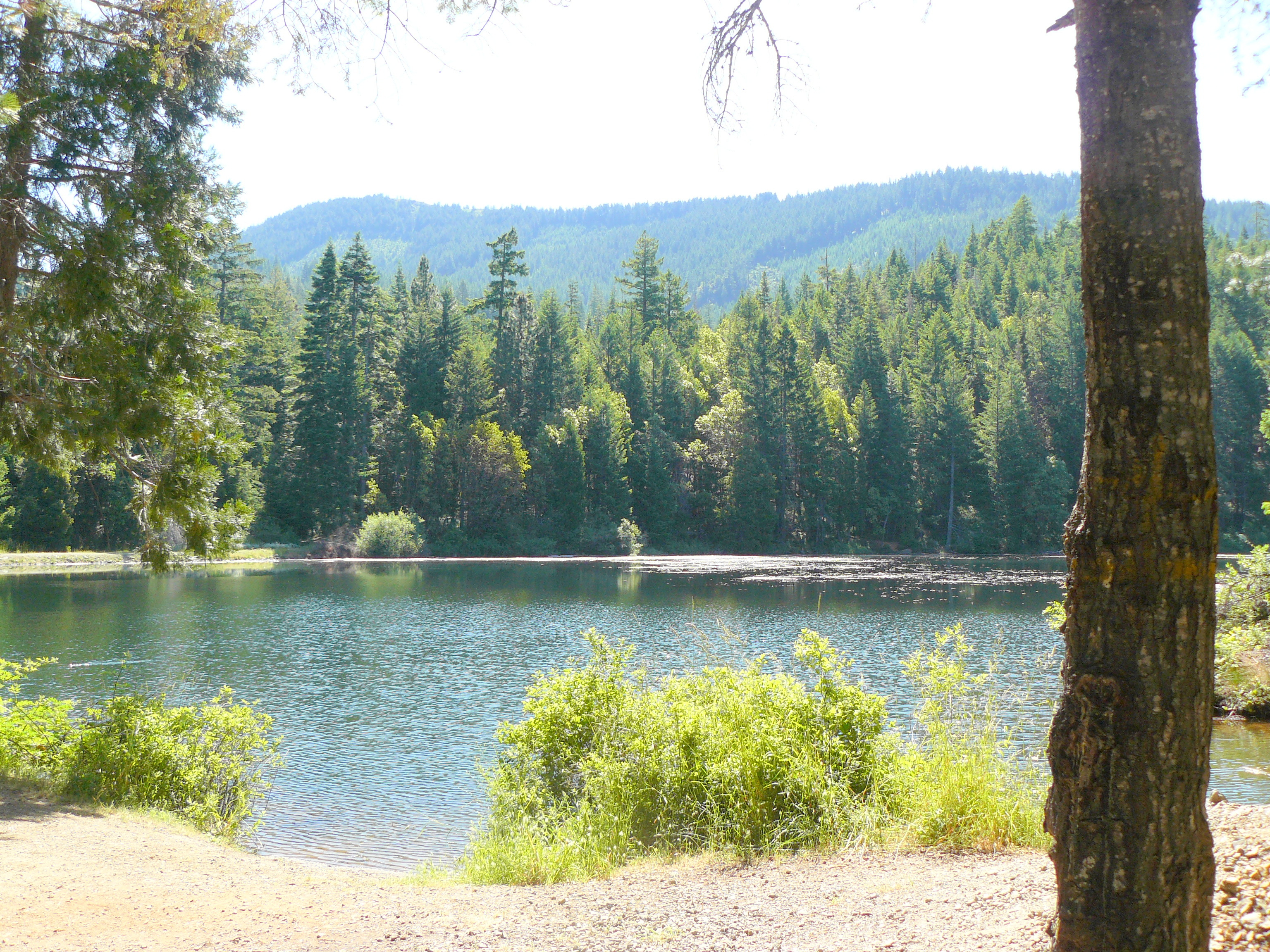
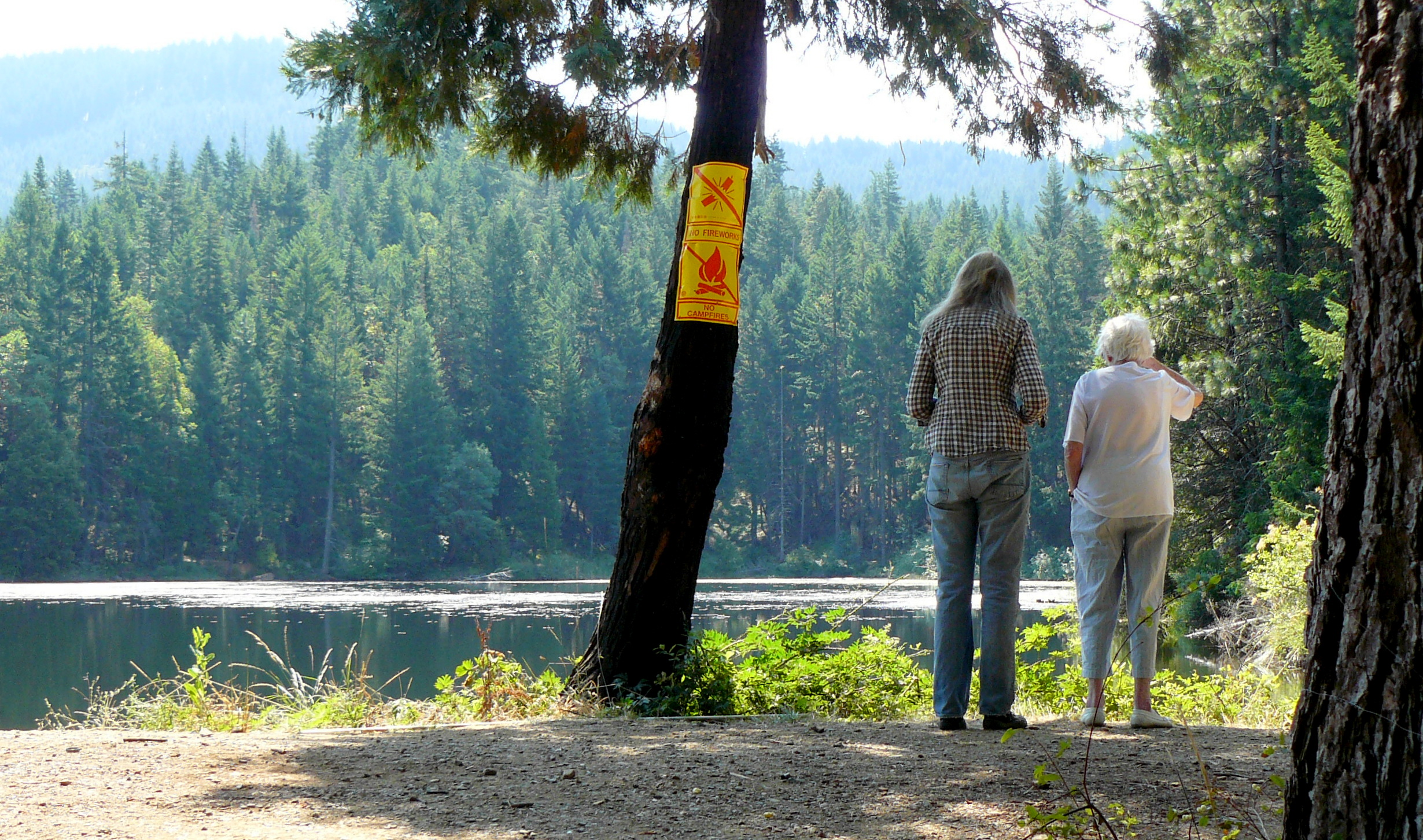
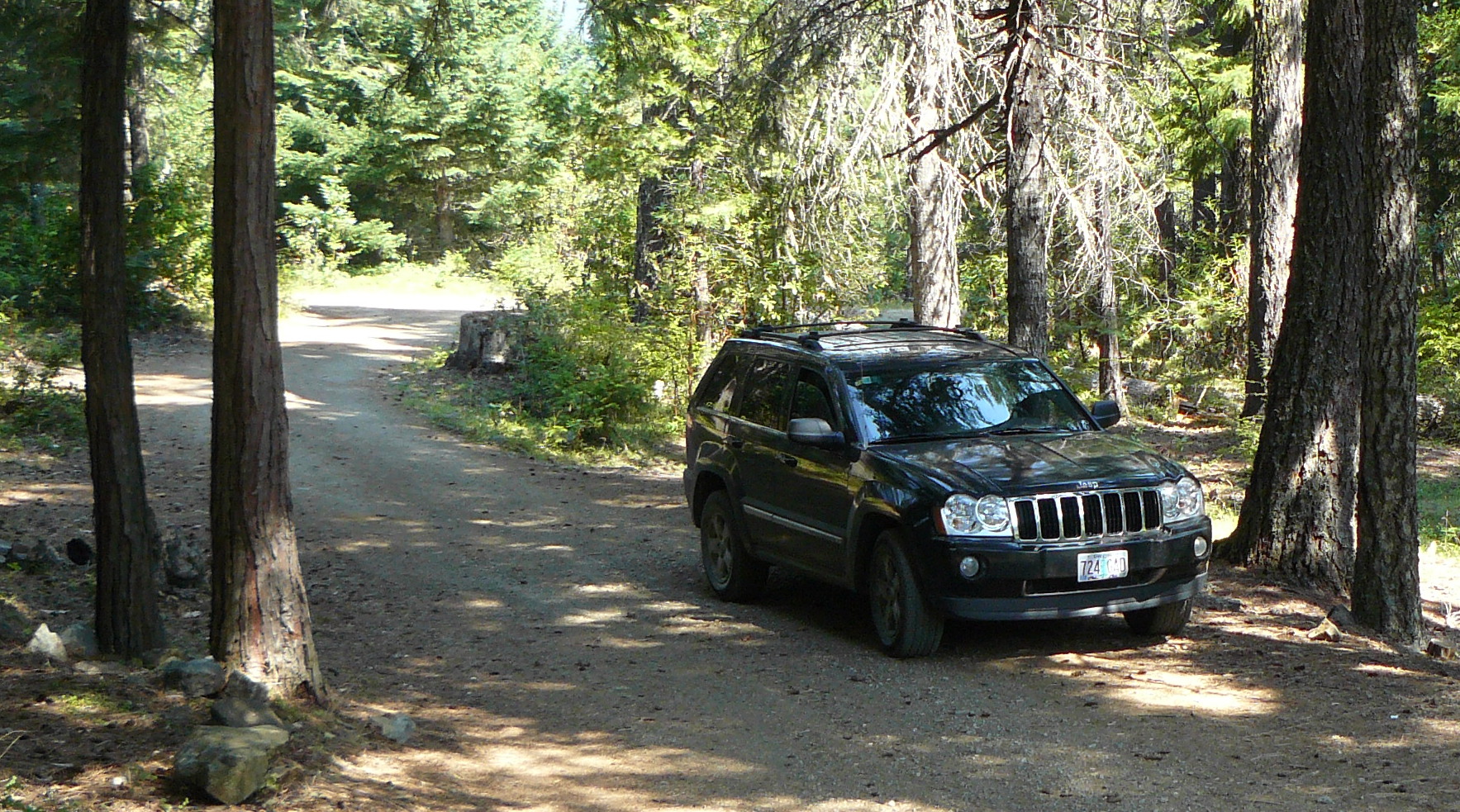
Many of you will know that Elizabeth, my mother from North-West London, is staying with us for a short while. Last Friday, it was decided to drive the 20 miles to the North and along Speaker Road into BLM land and thence up to Secesh Reservoir. This beautiful spot was previously written about in June when we first went to find Secesh. It seemed a perfect spot to take my mother.
Secesh Reservoir.
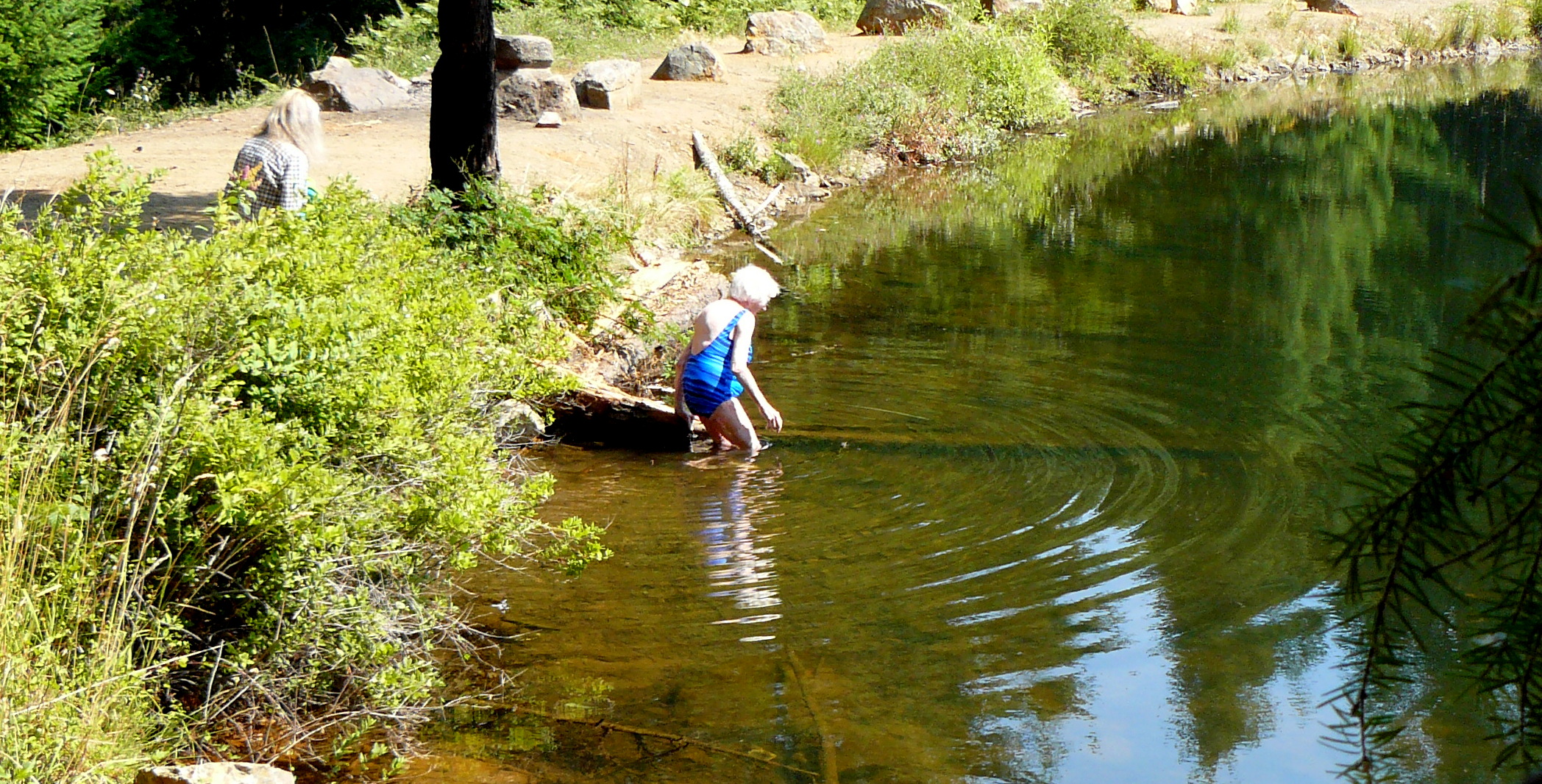
What neither Jean nor I had anticipated was that my mother was determined to swim in Secesh; the remote reservoir is at an altitude of 2,870 feet.
Checking out the best way in!
oooo
Gently does it!
oooo
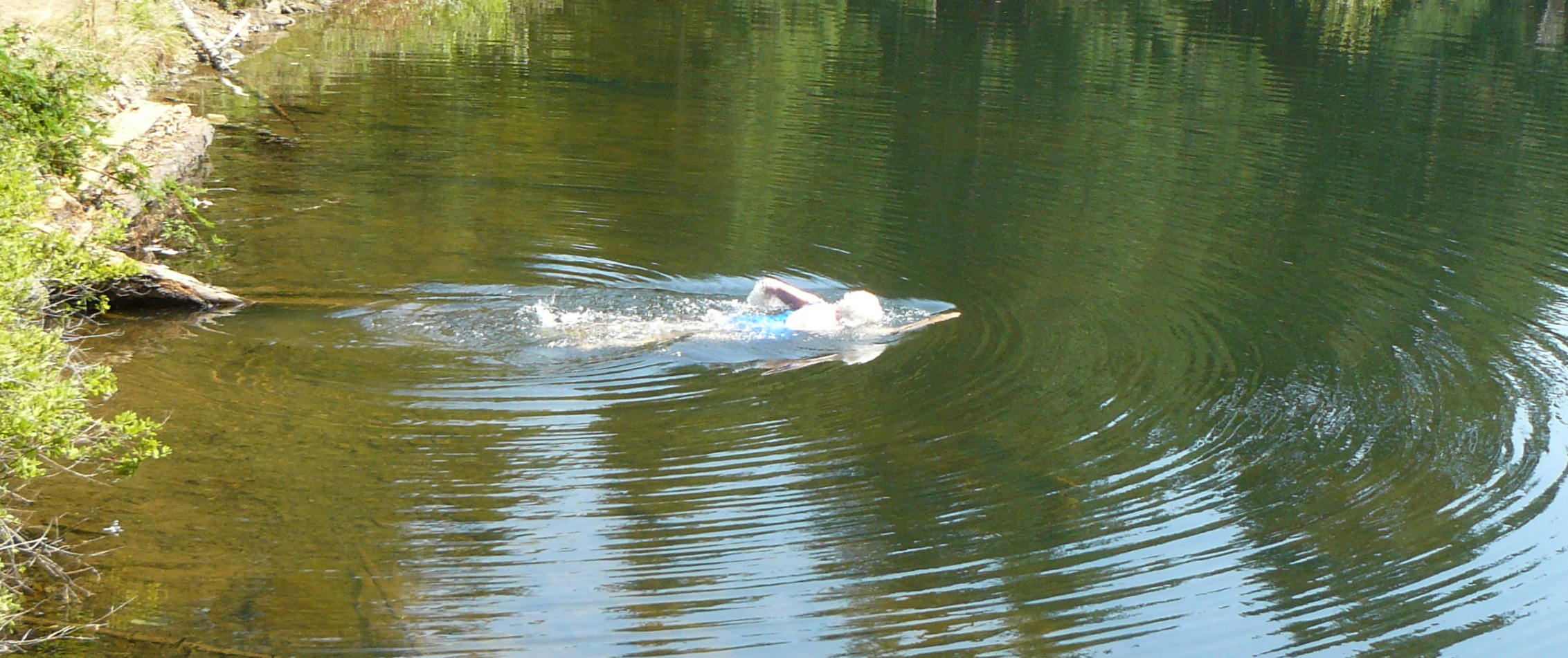
And away we go!
oooo
Fearless!
oooo
And safely back to the shore.
oooo
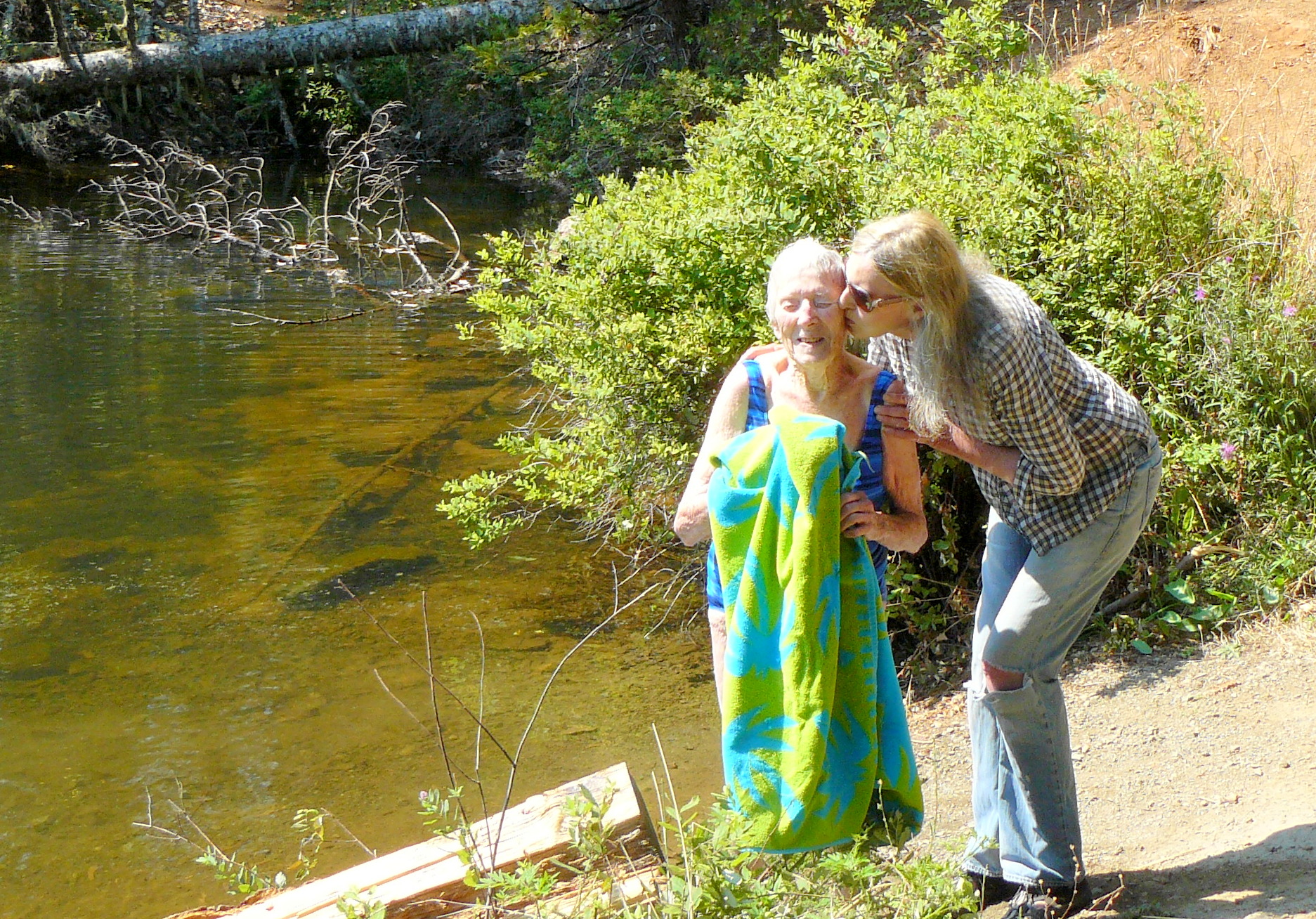
Jean expressing her love and admiration.
oooo
All good things come to a close.
oooo
Pity about the traffic noise! 😉
Oh, nearly forgot to mention that Elizabeth was born in 1919! That’s 94, by the way!
As I said in the sub-title, this takes some beating!
Undoubtedly, those of you that watched the George Monbiot speech in yesterday’s post will have been struck by at least two key aspects. The first being the utter absurdity in the way that we are being governed (UK and the USA) and the second that change can only come from people bonding at a local level. For it is within local communities that groups of people share their ideas and develop a vision for change that they can stand behind in an open and demonstrable manner.
The history of mankind is inseparable from the history of living in communities. It’s only in recent times that so many have chosen to live in cities and towns. Dogs, of course, offer a brilliant and wonderful example of the benefits of community life.
Back to George Monbiot. Here are some of Mr. Monbiot’s words towards the end of his speech. (My emphasis.)
As Lakoff has pointed out, these people are trying to do the right thing but they are completely failing to apply a frames analysis. A frame is a mental structure through which you understand an issue. Instead of framing the issue with our own values and describing and projecting our values – which is the only thing in the medium- to long-term that ever works – we are abandoning them and adopting instead the values of the people who are wrecking the environment. How could there be any long-term outcome other than more destruction?
There’s another way of looking at this, which says the same thing in different ways. All of us are somewhere along a spectrum between intrinsic values and extrinsic values. Extrinsic values are about reputation and image and money. They’re about driving down the street in your Ferrari and showing it to everyone. They are about requiring other people’s approbation for your own sense of well-being.
Intrinsic values are about being more comfortable with yourself and who you are. About being embedded in your family, your community, among your friends, and not needing to display to other people in order to demonstrate to yourself that you are worth something.
The desire for humans to belong to a community was highlighted in a recent article in Time Magazine under it’s Culture section (August 4th). The article was called Atheist “Churches” Gain Popularity—Even in the Bible Belt(again, my emphasis).
Jerry Dewitt (Left), A former Pentecostal minister, DeWitt now leads the secular Community Mission Chapel in Lake Charles, La. Mike Aus (Right), In September 2012, Aus began Houston Oasis, an atheist service that is considered a model for nonbelievers nationwide.
On a clear, Sunny July morning, as churchgoers all around Houston take to their pews, dozens of nonbelievers are finding seats inside a meeting room in a corporate conference center on the city’s west side to listen to a sermon about losing faith. But first there’s the weekly “community moment”–remarks on a chosen topic delivered by the group’s executive director, this time focused on how we’re hardwired to read sensationalized news–as well as announcements about an upcoming secular summer camp. In between, a musician sings softly of Albert Einstein.
The men speaking before the assembled gathering–executive director Mike Aus, who regularly leads the group, and Jerry DeWitt, a visitor who heads a similar gathering in Louisiana–are both deeply familiar with the idea of Sunday ritual.
Later in the article, Mike Aus (see picture above) goes on to say (once more, my emphasis):
There are a lot of people in the free-thought movement who say: Well, this is just mimicking church. But if we don’t offer regular human community and support for nonbelievers, it would be detrimental to the movement.
Whether we like it or not, change is being thrown at us by nature at an unprecedented scale; certainly unprecedented in the experience of homo sapiens. Our only hope is to turn away from the destructive agendas of our present governments all across the world and build change from the grassroots up.
The more that man tries to interfere the more that man screws up.
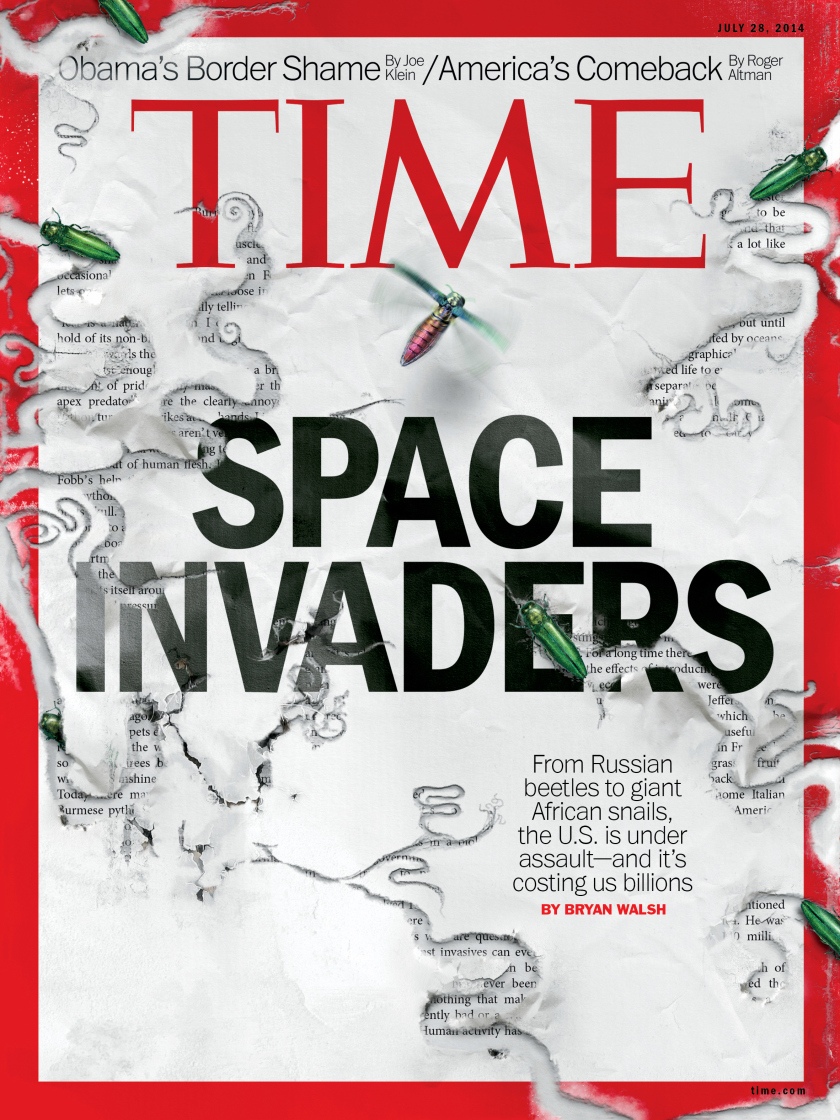
Jeannie and I subscribe to Time Magazine. This week’s edition had a pretty eye-catching cover that required a second look.
Illustration by Justin Metz for Time. Photo reference for emerald ash borer courtesy of PDCNR—Forestry Archive, Bugwood.org
That cover referred to the lead article concerning invasive species, “From giant snails to Asian carp, alien wildlife is on the move.“, written by Bryan Walsh. The essence of the article is that man’s global activities are responsible, albeit often unwittingly, for the movement of a wide range of species across national borders. My own reaction to the article was that it was typical of the many ‘scare’ stories the media present but that at the end of the day, nothing will change. However the last two paragraphs of the article did resonate with me.
Human beings have become the dominant force on the planet, so much so that many scientists believe we’ve entered an entirely new geological epoch: the Anthropocene. We have already been shaping the planet unintentionally, through greenhouse-gas emissions and global trade and every other facet of modern existence. The challenge now is to take responsibility for that power over the planet and use it for the right ends – all the while knowing that there is no single correct answer, no lost state of grace we can beat back toward.
How we respond to the thickening invasions that we ourselves loosed will be part of that answer – which is only just. There is one species that can claim to be the most dominant invasive of all time. From its origins in Africa, this species has spread to every corner of the world and every kind of climate. Everywhere it goes, it displaces natives, leaving extinction in its wake, altering habitat to suit its needs, with little regard for the ecological impact. Its numbers have grown nearly a millionfold, and its spread shows no sign of stopping. If that invasive species sounds familiar, it should. It’s us.
Thus with that article from Time in mind, it was very pertinent to see the latest essay from George Monbiot. It reinforces, in spades, the sentiment expressed by Bryan Walsh in those paragraphs above and is republished here on Learning from Dogs with the generous permission of George Monbiot.
ooOOoo
A One Way Street to Oblivion
As soon as an animal becomes extinct, a new bill proposes, it will be classified as “non-native”.
By George Monbiot, published on the Guardian’s website, 21st July 2014
Can any more destructive and regressive measures be crammed into one bill?
Already, the Infrastructure Bill, which, as time goes by, has ever less to do with infrastructure, looks like one of those US monstrosities into which a random collection of demands by corporate lobbyists are shoved, in the hope that no one notices.
So far it contains (or is due to contain) the following assaults on civilisation and the natural world:
– It exempts fracking companies from the trespass laws
– Brings in a legal requirement for the government to maximise the economic recovery of petroleum from the UK’s continental shelf. This is directly at odds with another legal requirement: to minimise the UK’s greenhouse gas emissions
– Introduces the possibility (through Clauses 21 and 22) of a backdoor route to selling off the public forest estate. When this was attempted before, it was thwarted by massive public protest.
– further deregulates the town and country planning system, making life even harder for those who wish to protect natural beauty and public amenities
Enough vandalism? Not at all. There’s yet another clause aimed at suppressing the natural world, which has, so far, scarcely been discussed outside parliament. If the Infrastructure Bill is passed in its current state, any animal species that “is not ordinarily resident in, or a regular visitor to, Great Britain in a wild state” will be classified as non-native and subject to potential “eradication or control”. What this is doing in an infrastructure bill is anyone’s guess.
At first wildlife groups believed it was just poor drafting, accidentally creating the impression that attempts to re-establish species which have become extinct here – such as short-haired bumblebees or red kites – would in future be stamped out. But the most recent Lords debate scotched that hope: it became clear that this a deliberate attempt to pre-empt democratic choice, in the face of rising public enthusiasm for the return of our lost and enchanting wildlife.
As Baroness Parminter, who argued unsuccessfully for changes to the bill, pointed out, it currently creates
“a one-way system for biodiversity loss, as once an animal ceases to appear in the wild, it ceases to be native.”
She also made the point that it’s not just extinct species which from now on will be treated as non-native, but, as the bill now stands, any species listed in Schedule 9 of the Wildlife and Countryside Act 1981.
Among those in Schedule 9 are six native species that have already been re-established in Britain (the capercaillie, the common crane, the red kite, the goshawk, the white-tailed eagle and the wild boar); two that are tentatively beginning to return (the night heron and the eagle owl); and four that have been here all along (the barn owl, the corncrake, the chough and the barnacle goose). All these, it seems, are now to be classified as non-native, and potentially subject to eradication or control.
After the usual orotund time-wasting by aristocratic layabouts (“my ancestor Sir Ewen Cameron of Lochiel, who was known as the great Sir Ewen … killed the last wolf in Scotland” etc), the minister promoting the bill, Baroness Kramer, made it clear that the drafting was no accident. All extinct species, it appears, are to be treated as non-native and potentially invasive. At no point did she mention any of the benefits their re-establishment might bring, such as restoring ecological function and bringing wonder and delight and enchantment back to this depleted land.
Here is a list, taken from Feral, of a few of the animals which have become extinct recently (in ecological terms) and which probably meet the bill’s new definition of non-native: “not ordinarily resident in, or a regular visitor to, Great Britain in a wild state”. Some would be widely welcomed; others not at all, but it’s clear that a debate about which species we might welcome back is one that many people in this country want to have, but that the government wants to terminate. There’s a longer list, with fuller explanations and a consideration of their suitability for re-establishment, in the book.
European Beaver: became extinct in Britain in the mid-18th Century, at the latest. Officially re-established in the Knapdale Forest, Argyll. Unofficially in the catchment of the River Tay and on the River Otter, in Devon.
Wolf: The last clear record is 1621 (not 1743 as commonly supposed). It was killed in Sutherland. As far as I can determine, neither Sir Ewen Cameron nor any of the other blood-soaked lairds and congenital twits from whom Lord Cameron of Dillington is descended were involved.
Lynx: The last known fossil remains date from the 6th Century AD, but possible cultural records extend into the 9th Century.
Wild Boar: The last truly wild boar on record were killed on the orders of Henry III in the Forest of Dean, in 1260. Four small populations in southern England, established after escapes and releases from farms and collections.
Elk or Moose (Alces alces): The youngest bones found in Britain are 3,900 years old. Temporarily released in 2008 into a 450-acre enclosure on the Alladale Estate, Sutherland.
Reindeer: The most recent fossil evidence is 8,300 years old. A free-ranging herd grazes on and around Cairn Gorm in the Scottish Highlands.
Wild horse: The most recent clearly-established fossil is 9,300 years old. Animals belonging to the last surviving subspecies of wild horse, Przewalski’s (Equus ferus przewalskii), graze Eelmoor Marsh in Hampshire.
Forest bison, or wisent: Likely to have become extinct here soon before the peak of glaciation, between 15,000 and 25,000 years ago. A herd was temporarily established at Alladale in 2011.
Brown bear: probably exterminated around 2000 years ago.
Wolverine: survived here until roughly 8,000 years ago.
Lion: the last record of a lion in the region is a bone from an animal that lived in the Netherlands – then still connected to Britain – 10,700 years ago.
Spotted hyaena: around 11,000 years ago.
Hippopotamus: it was driven out of Britain by the last glaciation, around 115,000 years ago, and hunted to extinction elsewhere in Europe about 30,000 years ago.
Grey whale: the most recent palaentological remains, from Devon, belonged to a whale that died around 1610 AD.
Walrus: late Bronze Age, in the Shetland Islands.
European Sturgeon: possibly as recently as the 19th Century.
Blue stag beetle: probably 19th Century.
Eagle owl: the last certain record is from the Mesolithic, 9,000-10,000 years old . But a possible Iron Age bone has been found at Meare in Somerset. Now breeding in some places, after escaping from collections.
Goshawk: wiped out in the 19th Century. Unofficially re-established in the 20th Century, through a combination of deliberate releases and escapes from falconers.
Common crane: last evidence of breeding in Britain was in 1542. Cranes re-established themselves through migration in the Norfolk Broads in 1979, and have bred there since then. Now breeding in two other places in eastern England. Re-introduced in 2010 to the Somerset Levels.
White Stork: last recorded nesting in Edinburgh in 1416. In 2004 a pair tried to breed on an electricity pole in Yorkshire. In 2012 a lone bird built a nest on top of a restaurant in Nottinghamshire.
Spoonbill: the last breeding records are 1602 in Pembrokeshire and 1650 in East Anglia. In 2010 a breeding colony established itself at Holkham in Norfolk.
Night Heron: last bred here in either the 16th or 17th Century, at Greenwich. Today it is a scarce visitor.
Dalmatian Pelican: remains have been found from the Bronze Age in the Cambridgeshire Fens and from the Iron Age in the Somerset levels, close to Glastonbury. A single mediaeval bone has been found in the same place.
These and many others are now to be classified as officially non-native, unless this nonsense can be stopped.
Incidentally, determining what is and isn’t a native species, let alone what “should” or “should not” be living here, is a much more complicated business than you might imagine, as Ken Thompson’s interesting book, Where Do Camels Belong?, makes clear. He also points out that some species which are initially greeted with horror and considered an ecological menace soon settle down as local wildlife learns to prey on them or to avoid them. Sometimes they perform a useful ecological role by filling the gaps created by extinction. He overstates his case, and glosses over some real horror stories, but his book is an important counterweight to attempts to create a rigid distinction between native and non-native wildlife.
Many species introduced to this country by human beings are now cherished as honorary members of our native wildlife. Here are just a few I’ve come across. How many of you knew that they were all brought here by people?:
Brown hare
Little owl
Field poppy
Corncockle
Crack willow
Greater burdock
Pheasant’s eye
Cornflower
Wormwood
Mayweed
White campion
Isn’t this an interesting subject? Unfortunately government ministers seem to know to know nothing about it and to care even less. They are crashing through the middle of delicate interactions between people and the natural world like bulldozers in a rainforest.
I will close today’s post with another, very recent, story in The Guardian, that opens, thus:
Wild beaver kits born in Devon
Thursday 17 July 2014
One of the first wild beavers to be seen in England in centuries and due to be taken into captivity has given birth to three young.
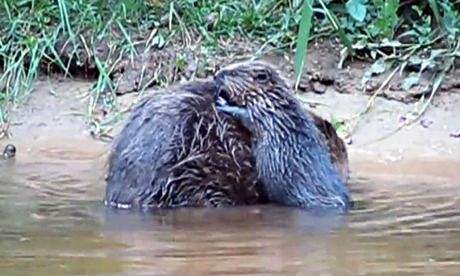
Local retired environmentalist Tom Buckley captured the three young beavers climbing all over their mother. Photograph: Tom Buckley/Apex
A wild beaver due to be taken into captivity has given birth to at least three young.
The young, known as kits, were born to the family of two adult and one juvenile European beavers (Castor fiber) that were spotted living on the river Otter in Devon earlier this year, in what was believed to be the first sighting of the species in the wild in England in 500 years.
All that is left for me to do is to quote a little from a recent letter from John Hurlburt.
Our future depends on the air we breathe. Our lives depend upon rivers of living water. Our health requires the blessings of organic agriculture. Our energy streams through us from the cosmos.
We are warrior animals. Peace must come from within. Non-violence is our best choice. We have the magnificent opportunity to wake up as an animal that is grateful and sings in harmony with the Earth.
The present is surrounded by the past and the future. We float on the wings of compassion and wisdom with a sacred responsibility for the Nature of all Creation.
A team of scientists take to the skies in one of the world’s largest airships, for a unique exploration of Earth’s most precious and mysterious environment – the atmosphere.
In an example of what might be called a massive change of topic from yesterday’s post on Integrity and democracy, today’s offering to you, dear reader, is about the magnificent atmosphere upon which we all depend.
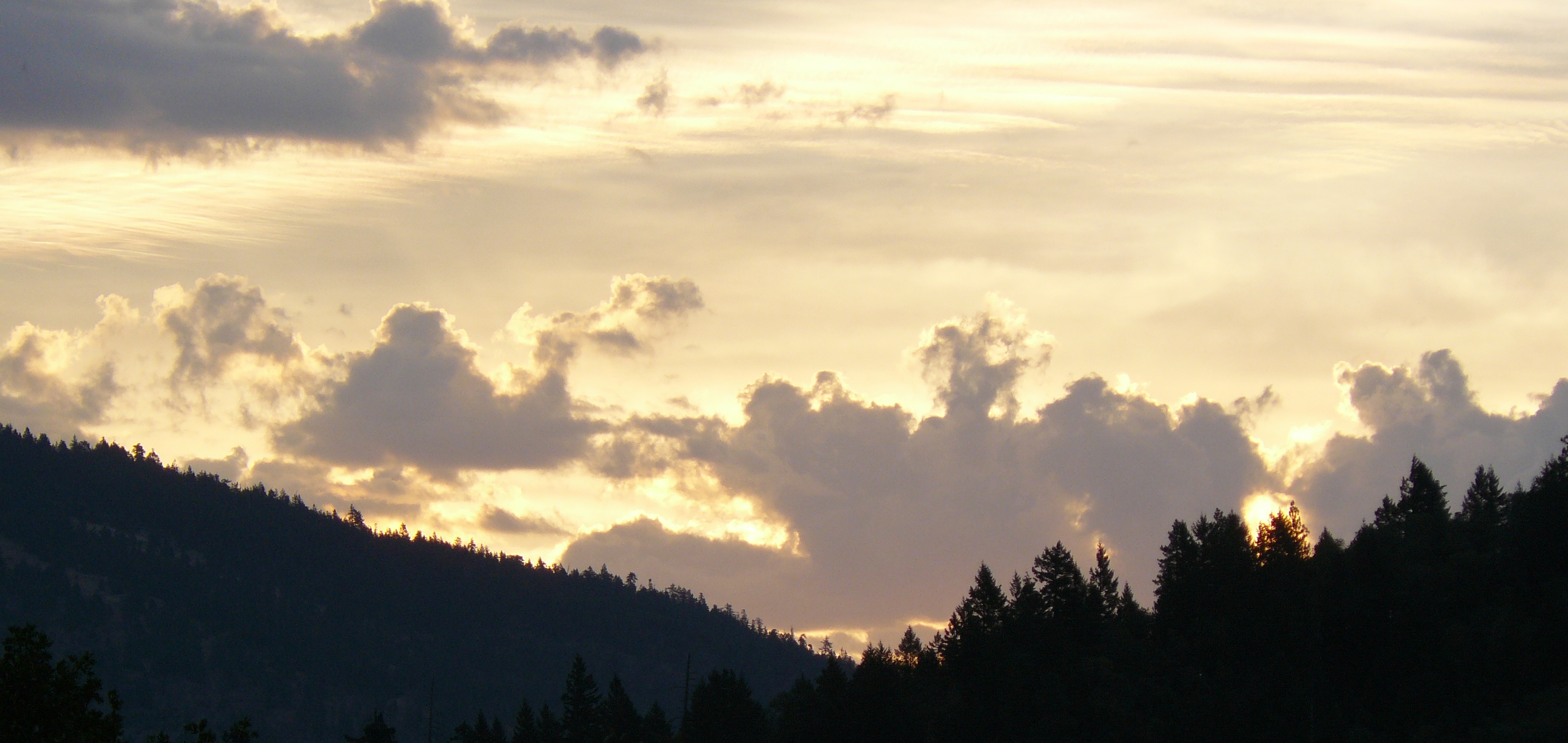
Here’s a clue.
Sunrise to our North-East at a little after 7am on Sunday, 13th July, 2014.
Every Breath We Take: Understanding Our Atmosphere
The air around us is not just empty space; it is an integral part of the chemistry of life. Plants are made from carbon dioxide, nitrogen nourishes the soil and oxygen gives us the energy we need to keep our hearts pumping and our brains alive. But how did we come to understand what air is made of? How did we come to know that this invisible stuff around us contains anything at all?
Gabrielle Walker tells the remarkable story of the quest to understand the air. It’s a tale of heroes and underdogs, chance encounters and sheer blind luck that spans the entire history of science. It began as a simple desire to further our knowledge of the natural world, but it ended up uncovering raw materials that have shaped our modern world, unravelling the secrets of our own physiology and revealing why we are here at all.
There is much more to explore on the website, including this trailer to the programme.
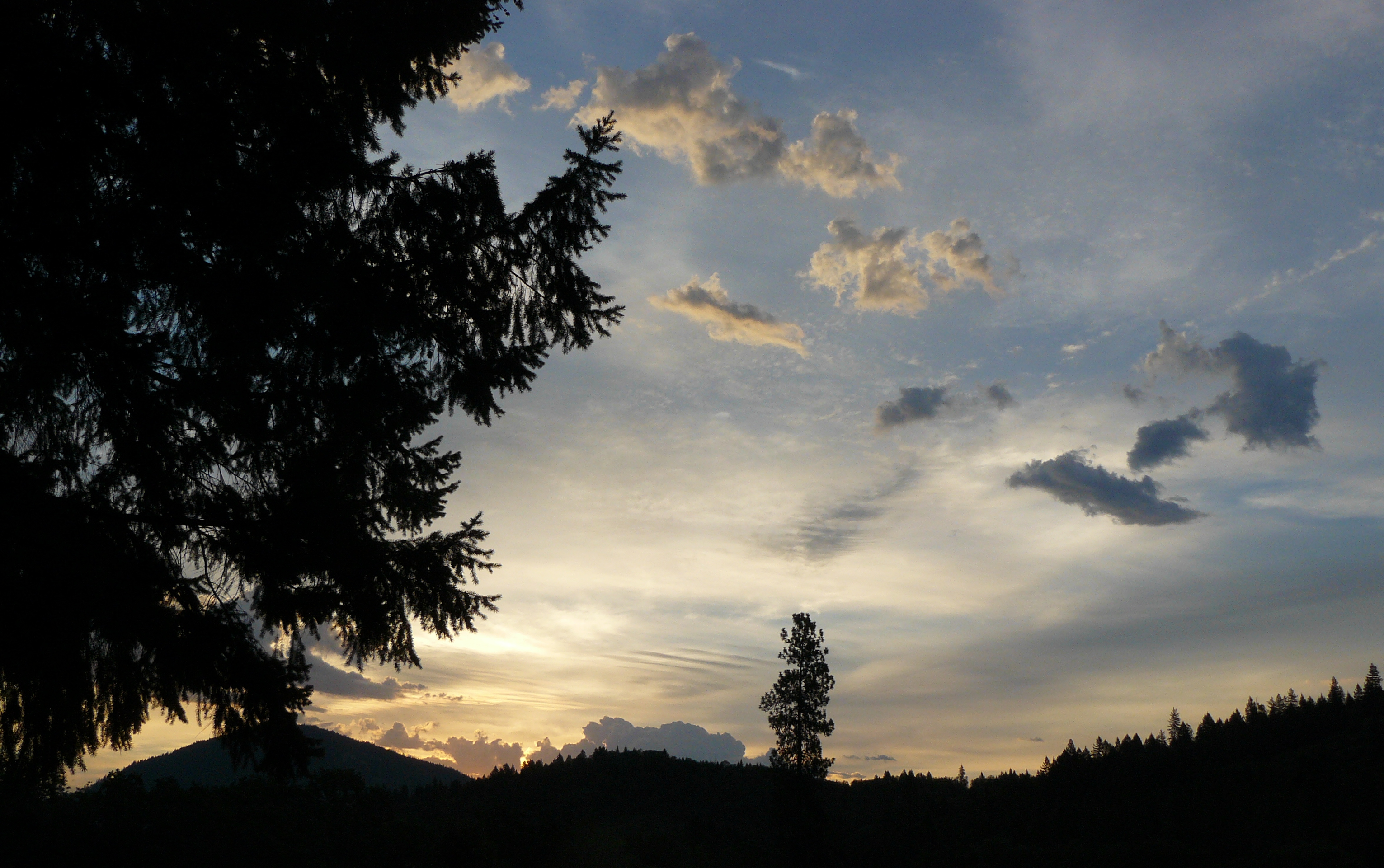
Oh, here’s another ‘clue’ from Oregon.
Same morning, same sunrise.
The presenter of the BBC series is Felicity Aston who writes on her BBC Blog:
I joined Operation Cloud Lab: Secrets Of The Skies as the expedition leader and also as a meteorologist.
The plan was to fly from Florida to California, looking at the science of the skies.
But as well as scientists, there were plenty of other people on the team including three pilots, a ground crew of 14 that followed the airship by road and a full production team including two camera crews. Not everyone could be on board at once – the airship would never have got off the ground!
But I was really fortunate to spend a lot of time on board and flew most of the way across the continent.
Exploring in three dimensions rather than being limited to making observations from the ground was a revelation to me.
The clouds in the tropics around the Gulf of Mexico are huge, and being in the sky with them really brought home the vast scale of the forces at work.
Towering cumulus cloud in Florida.
We were able to travel over, under and through these monsters, revealing that clouds are about as far from the popular image of light and fluffy floating puffs of cotton wool as you can get! They are dense and heavy and full of destructive energy.
I remember looking down at the cloud layer from a plane as a child, and daydreaming about exploring this new world of unknown places, so I was very excited the first time we flew straight through a cloud.
I leaned out of the airship as far as I dared into the heart of a cloud and found that it was a dark, damp mass of floating fog (of course!) – no mysterious worlds – my childhood fantasies were crushed!
There’s more to read on her blog as well as some stupendous photographs of clouds.
So if this gives you a thrill then don’t delay in watching the full-length Episode One on YouTube before it gets taken down. (Warning: if you watch the opening first few minutes you will be hooked for the full hour!)
Now to close with, yes you guessed it, my final ‘clue’ from Oregon.
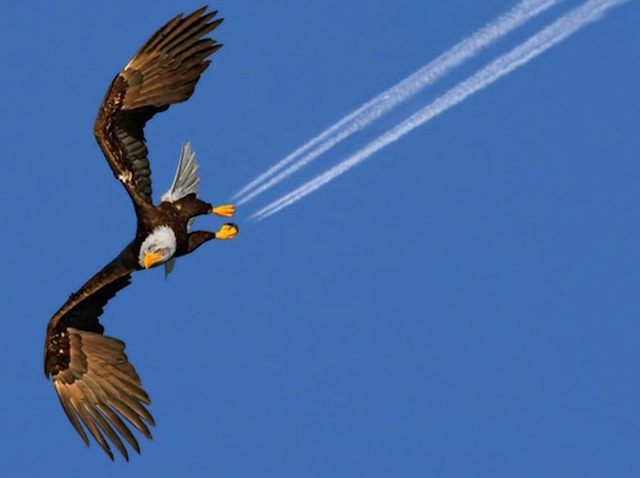
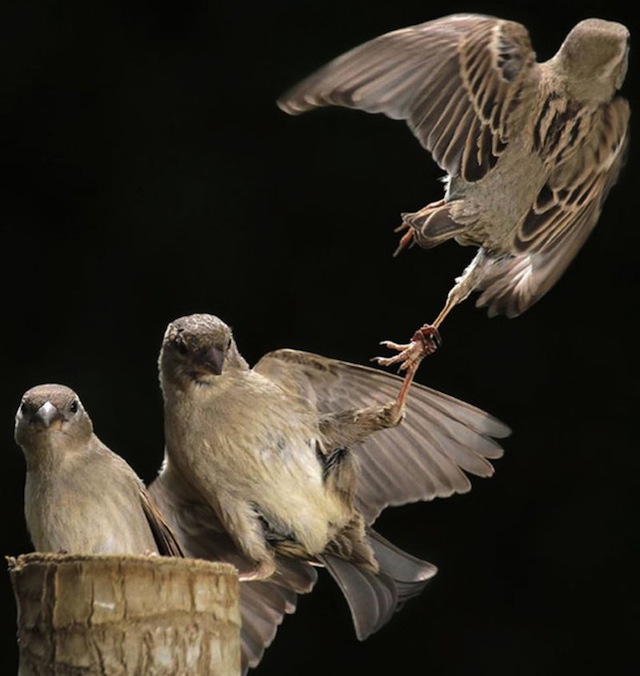
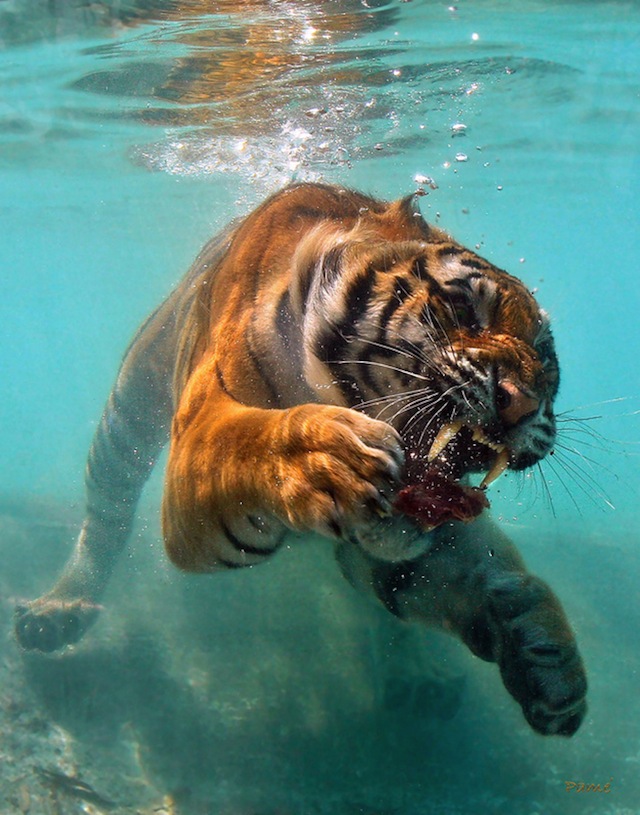
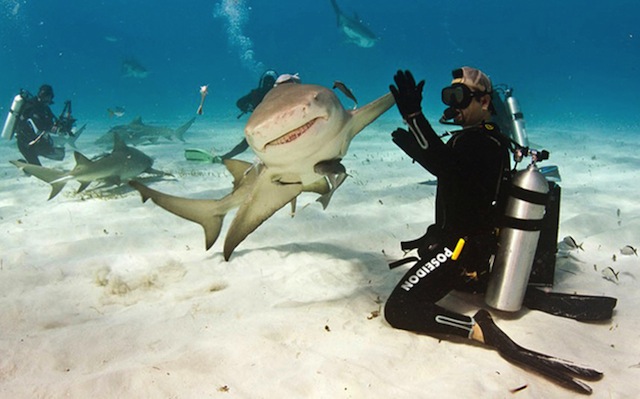
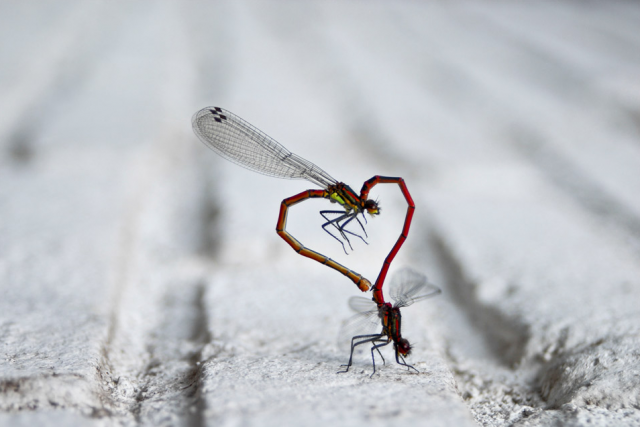
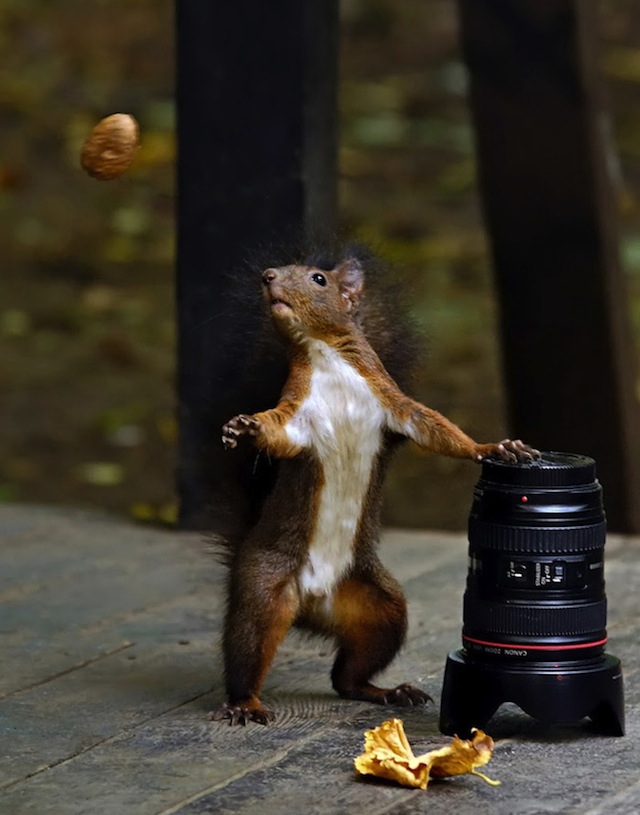
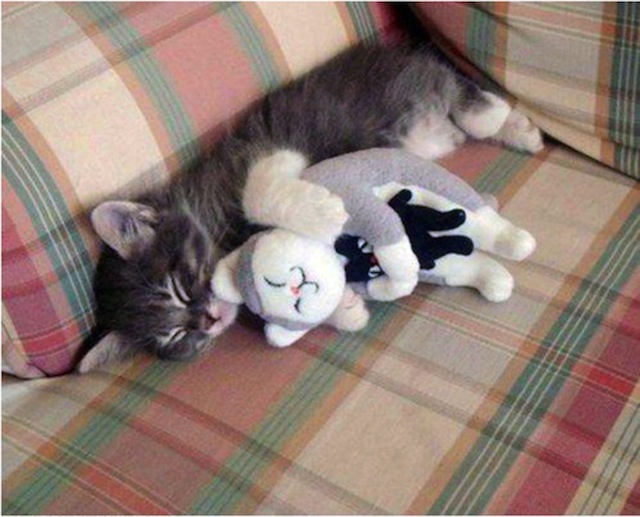
As I said in last week’s picture parade, “A friend from Payson, Arizona, Lew Levenson, recently sent across a set of 38 astounding photographs, all on the theme of perfectly timed shots.” Despite the fact that they had previously appeared in this place, your responses were do delightful that I have no problem in staying with these pictures over the next few Sundays.
oooo
oooo
oooo
oooo
oooo
oooo
oooo
oooo
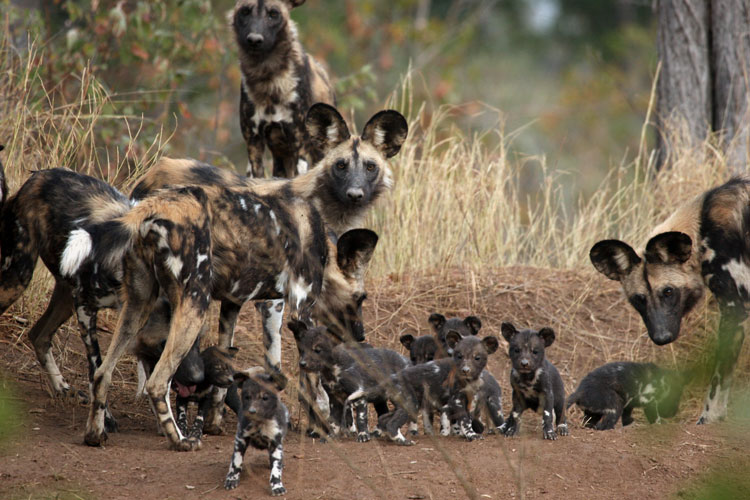
Each picture gives one such a warm and cuddly feeling!











 Learning from Dogs