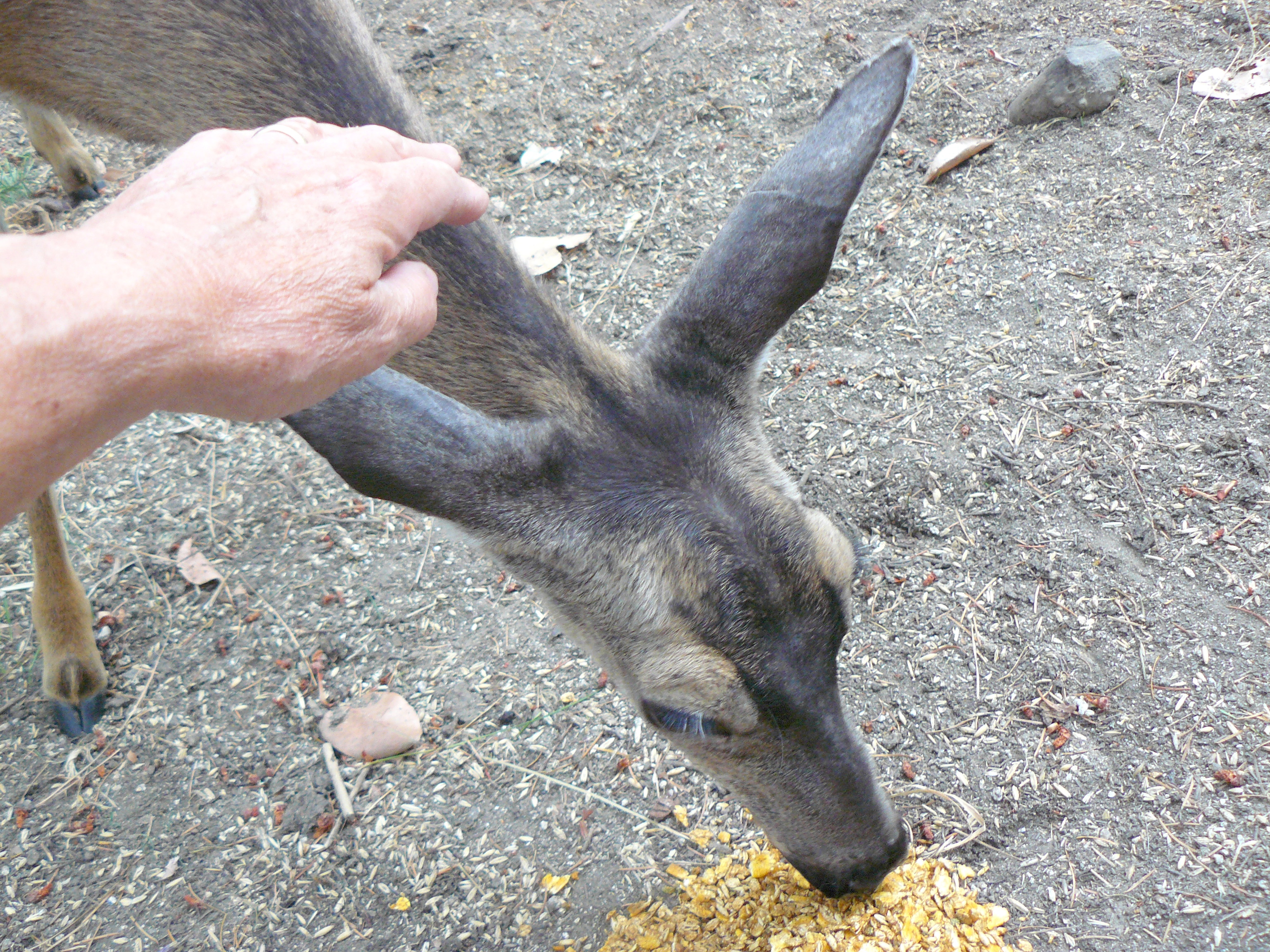
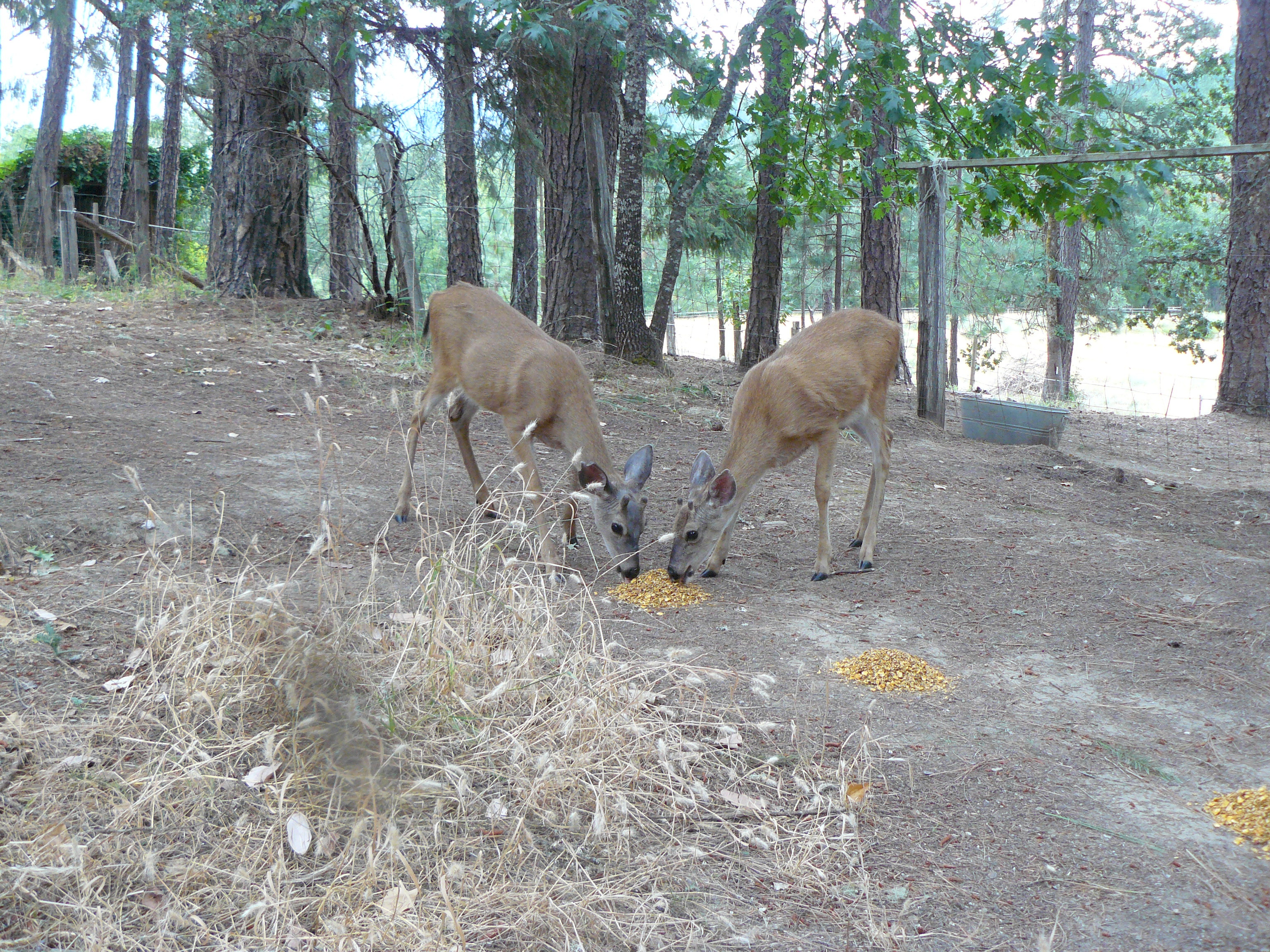
Continuing the photographs of the deer that visit our property.
(The first set of photographs was a week ago.)
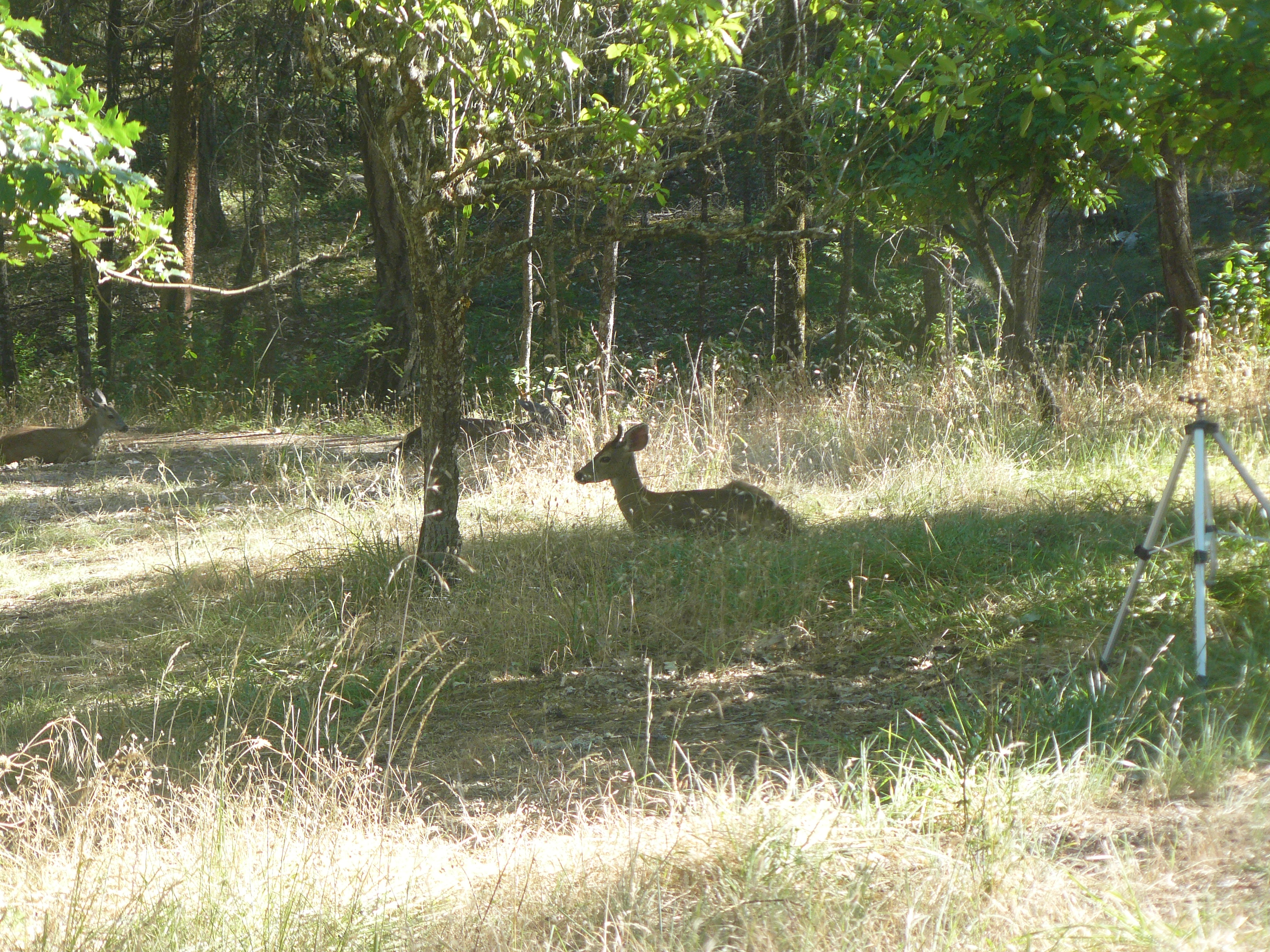 oooo
oooo
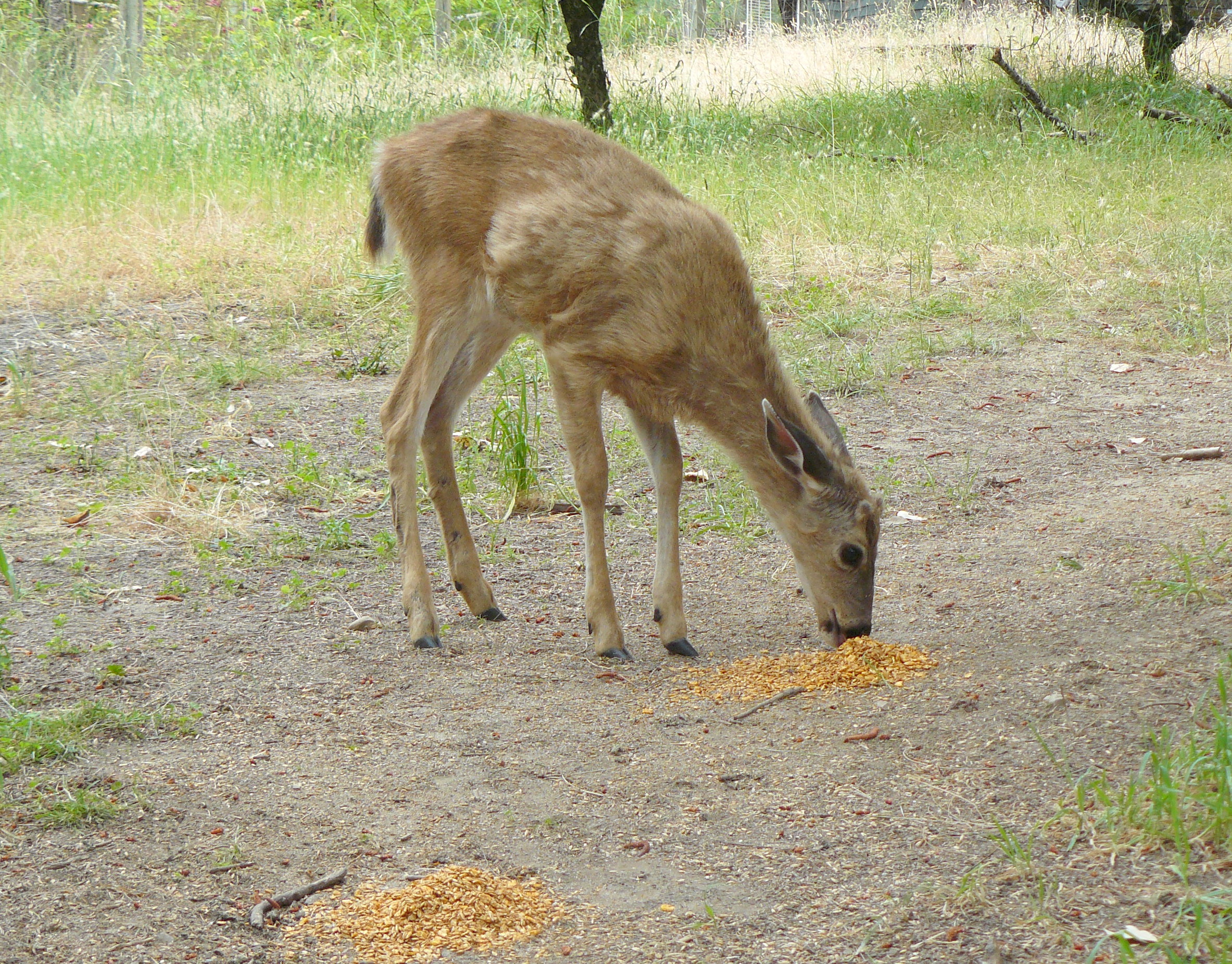 oooo
oooo
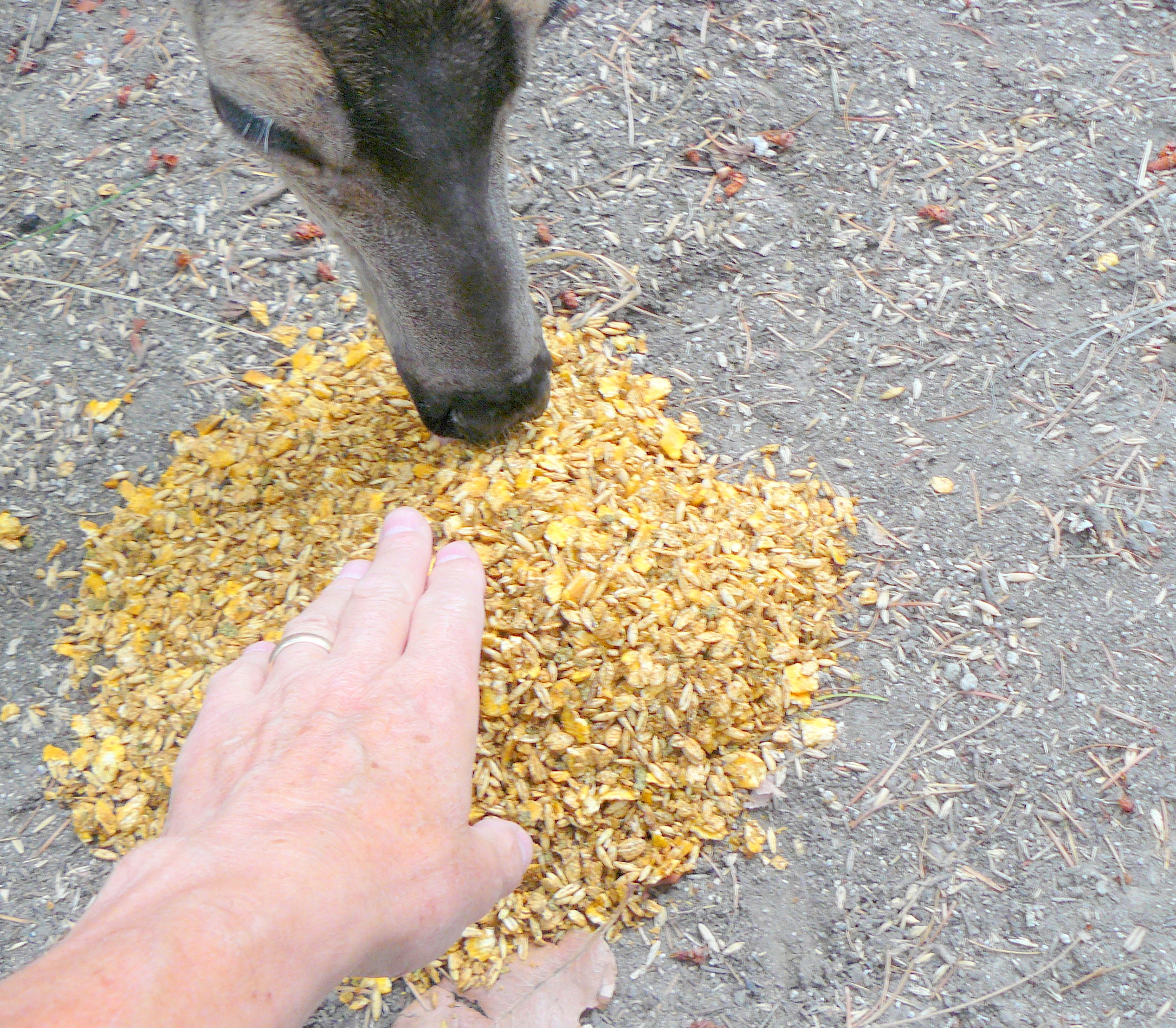 oooo
oooo
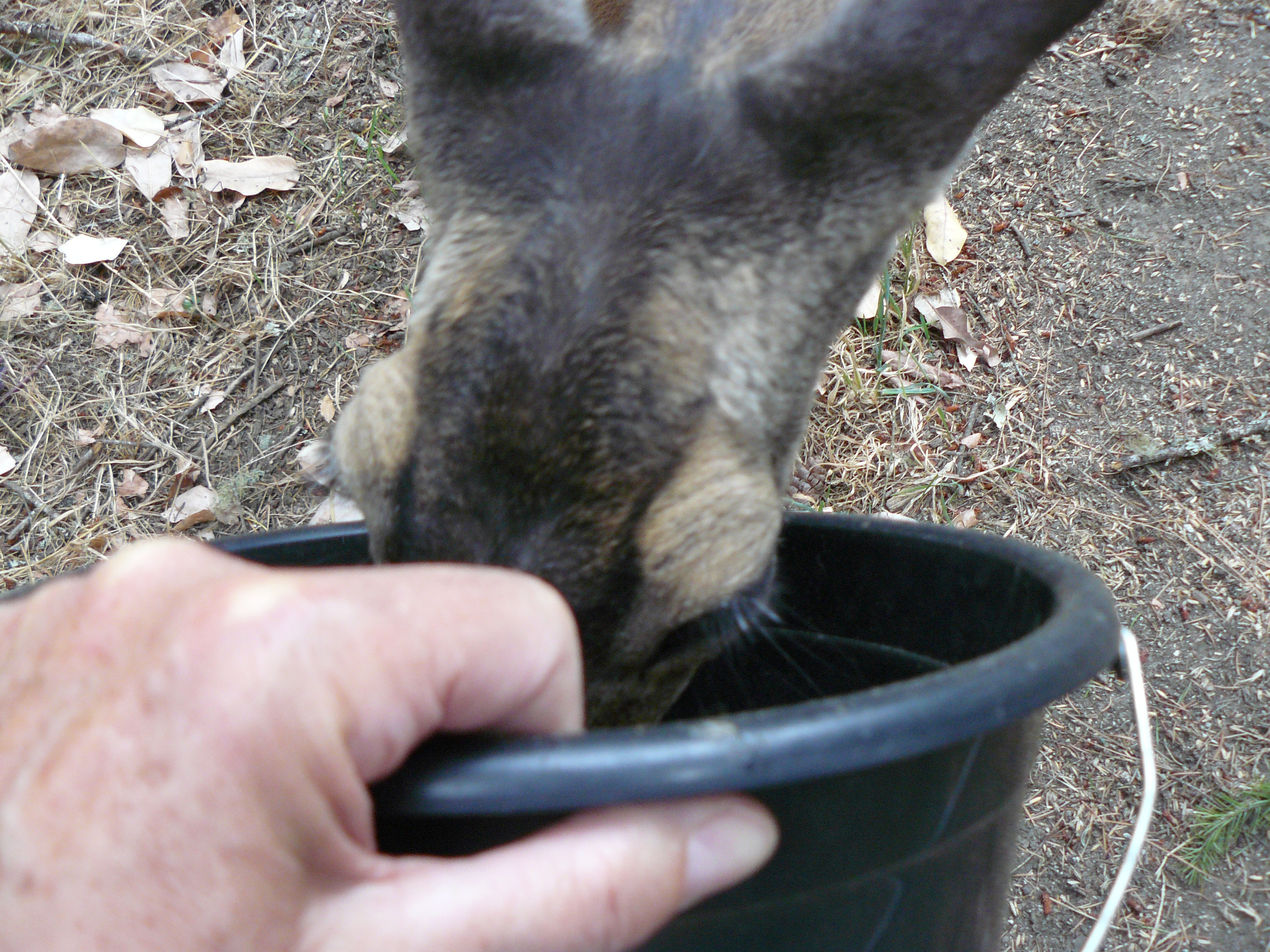 oooo
oooo
 oooo
oooo
 oooo
oooo
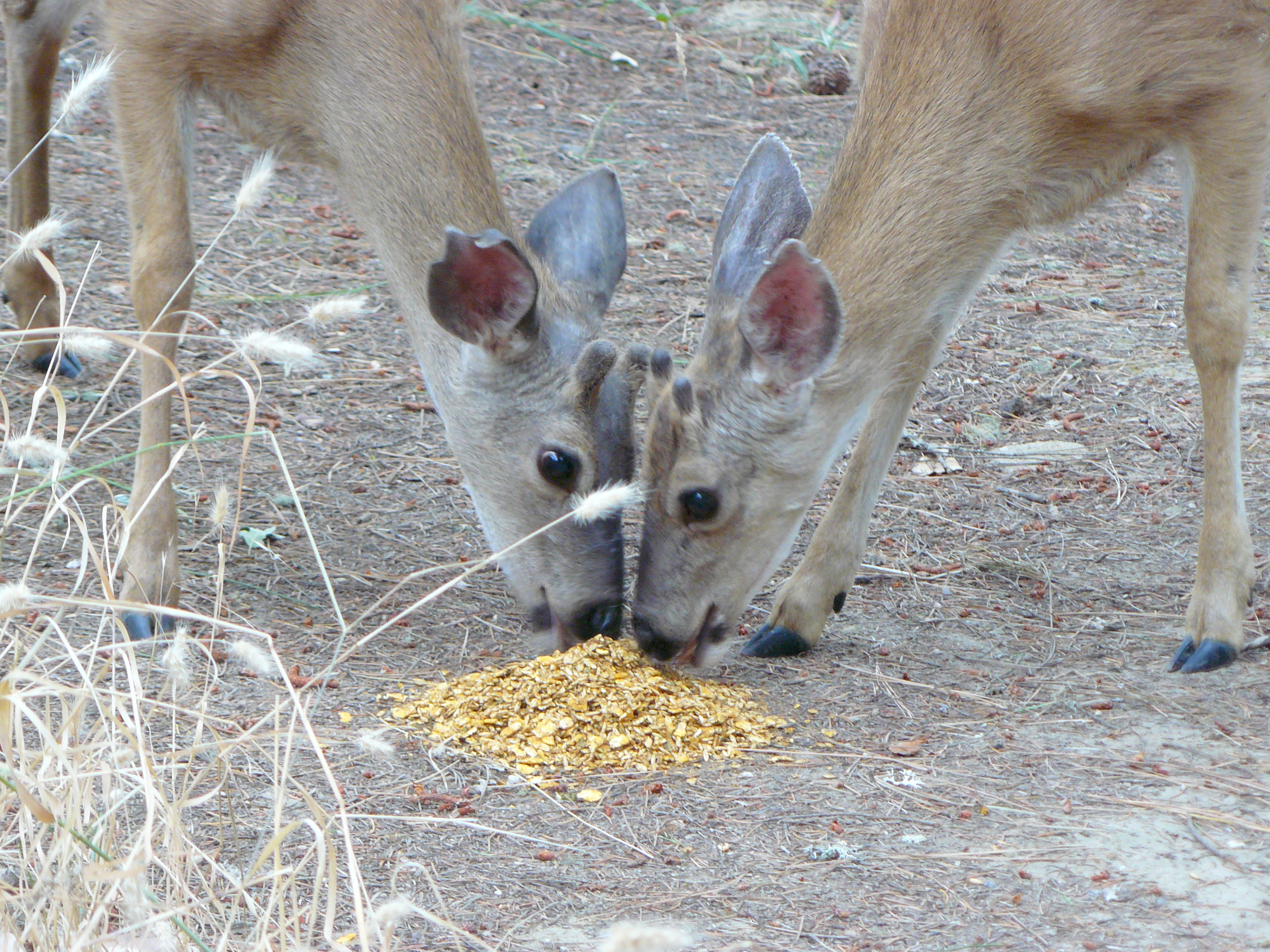 Hope you all share the same warm feeling that Jean and I enjoy seeing these pictures.
Dogs are animals of integrity. We have much to learn from them.
Category: Environment
Continuing the photographs of the deer that visit our property.
(The first set of photographs was a week ago.)
oooo
oooo
oooo
oooo
oooo
oooo
Hope you all share the same warm feeling that Jean and I enjoy seeing these pictures.
even our deaf dogs!
Another day yesterday where my creative juices had evaporated; if that’s what creative juices do!
But that doesn’t devalue the following article in the slightest! An article that was recently read on the Care2 blogsite and is republished here for your pleasure.
ooOOoo

 By: Laura Goldman August 3, 2016
This essay from George Monbiot just has to be read as widely as possible.
Dear followers of this blog know that from time to time I dip into politics. I do so because something I read strikes me with such force that I want others to read the article or essay. Not infrequently, my ‘dip’ is in the form of republishing an essay from George Monbiot who, long ago, gave me blanket permission to republish his essays. That is the case today.
I was inspired to write my book, subsequently self-published last December, because I truly believe that the values that we see in our longest animal companions are values that we, as in our societies, from top to bottom, have to embrace if we are to stand any chance of surviving as a species.
Reflect on the fact that dogs do not lie, they do not set out to deceive or influence others for their own personal gain and they are utterly creatures of integrity.
OK, I can hear some of you thinking that dogs are dogs and humans are humans and it’s just plain daft to link the two in this fashion. My only answer to that is to read the book or, at the very least, download and read the first twenty-five pages (for free). Better still purchase the book and have 50% of my net income donated to the Rogue Valley Humane Society.
On the 28th July, George Monbiot published an essay entitled So Much For Sovereignty. I read the essay and, frankly, was apalled at what George was describing: the background of the UK’s new international trade secretary, Liam Fox, recently appointed by Theresa May.
Read it for yourself and see if you react the same way that I did!
ooOOoo
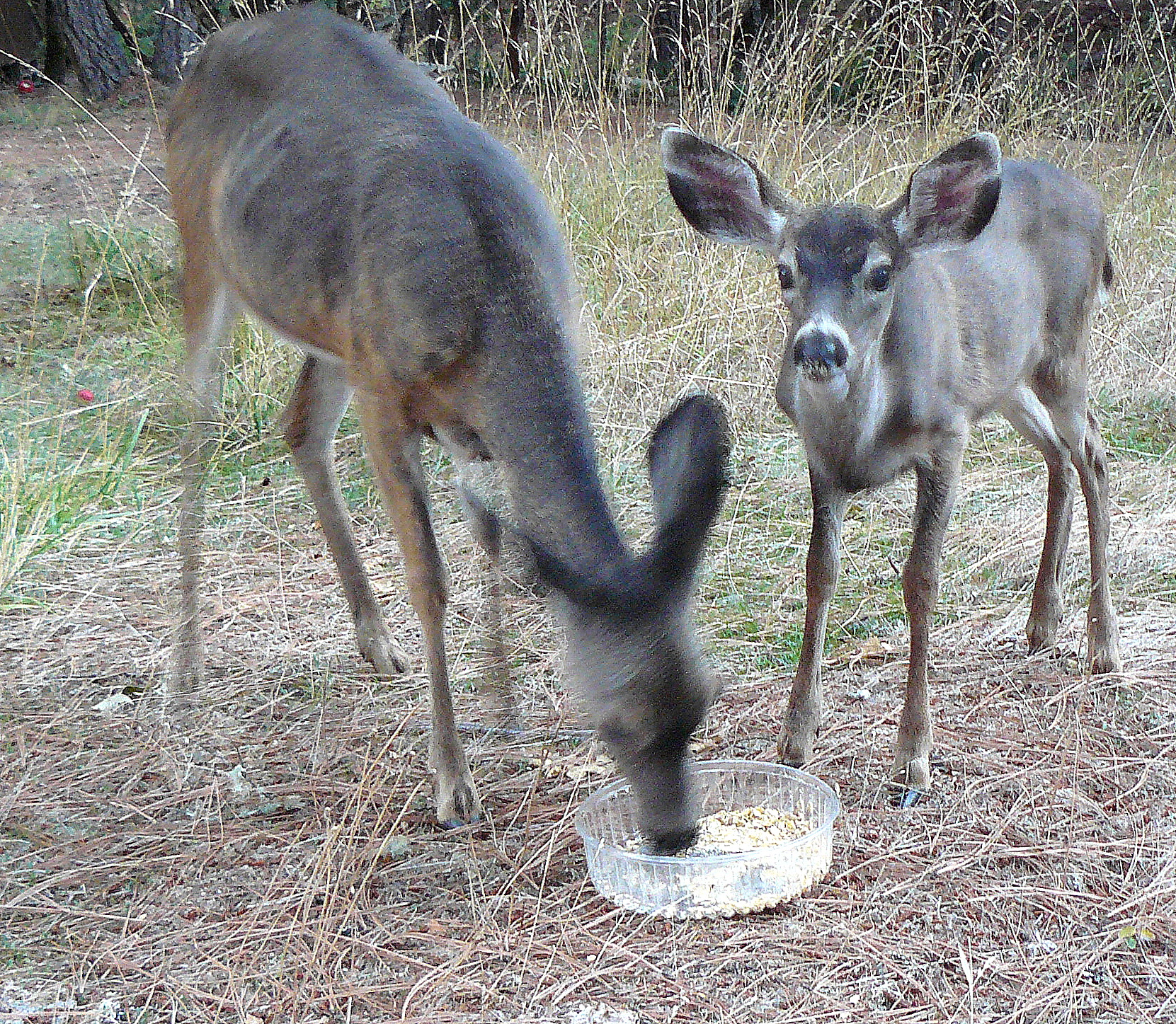
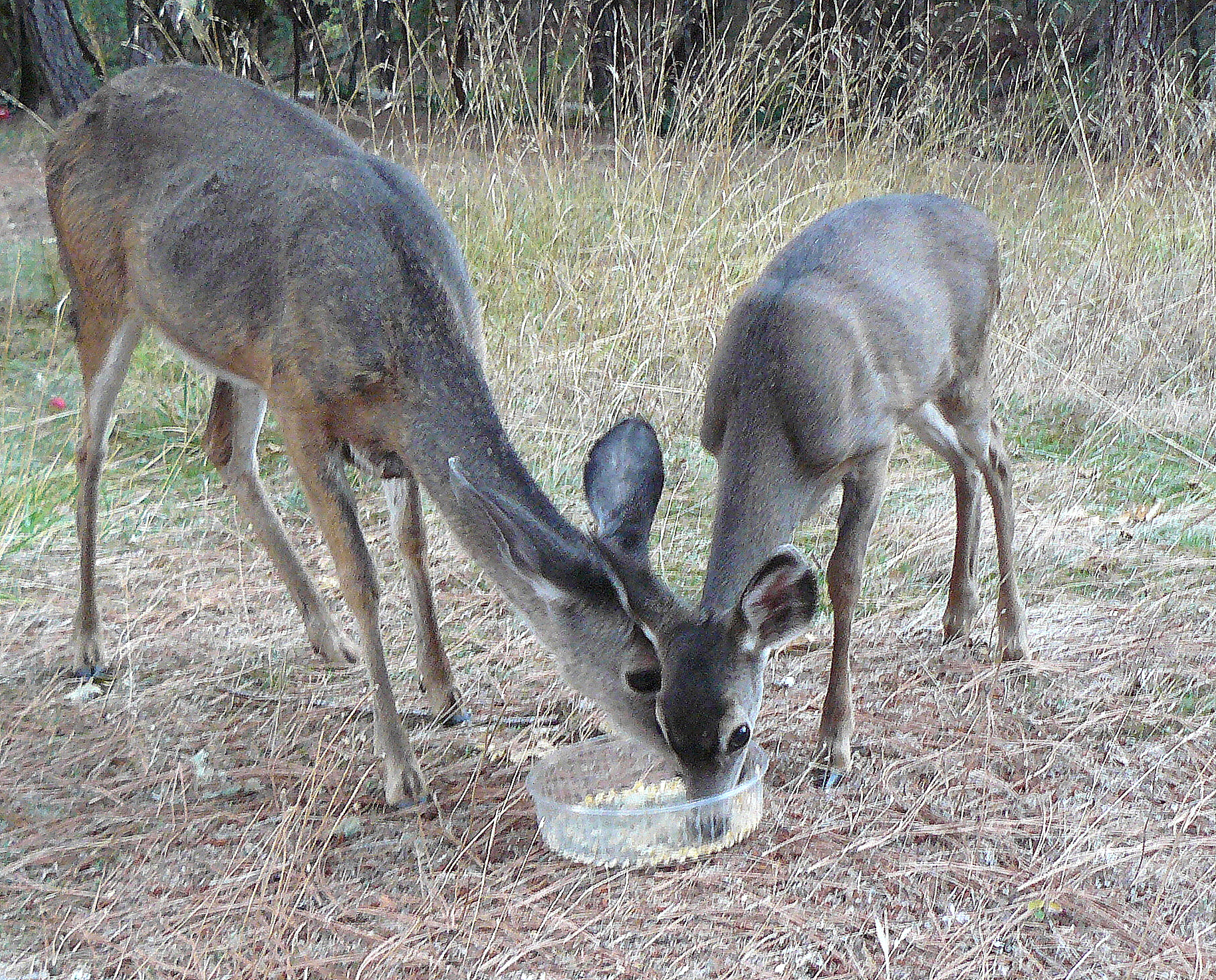
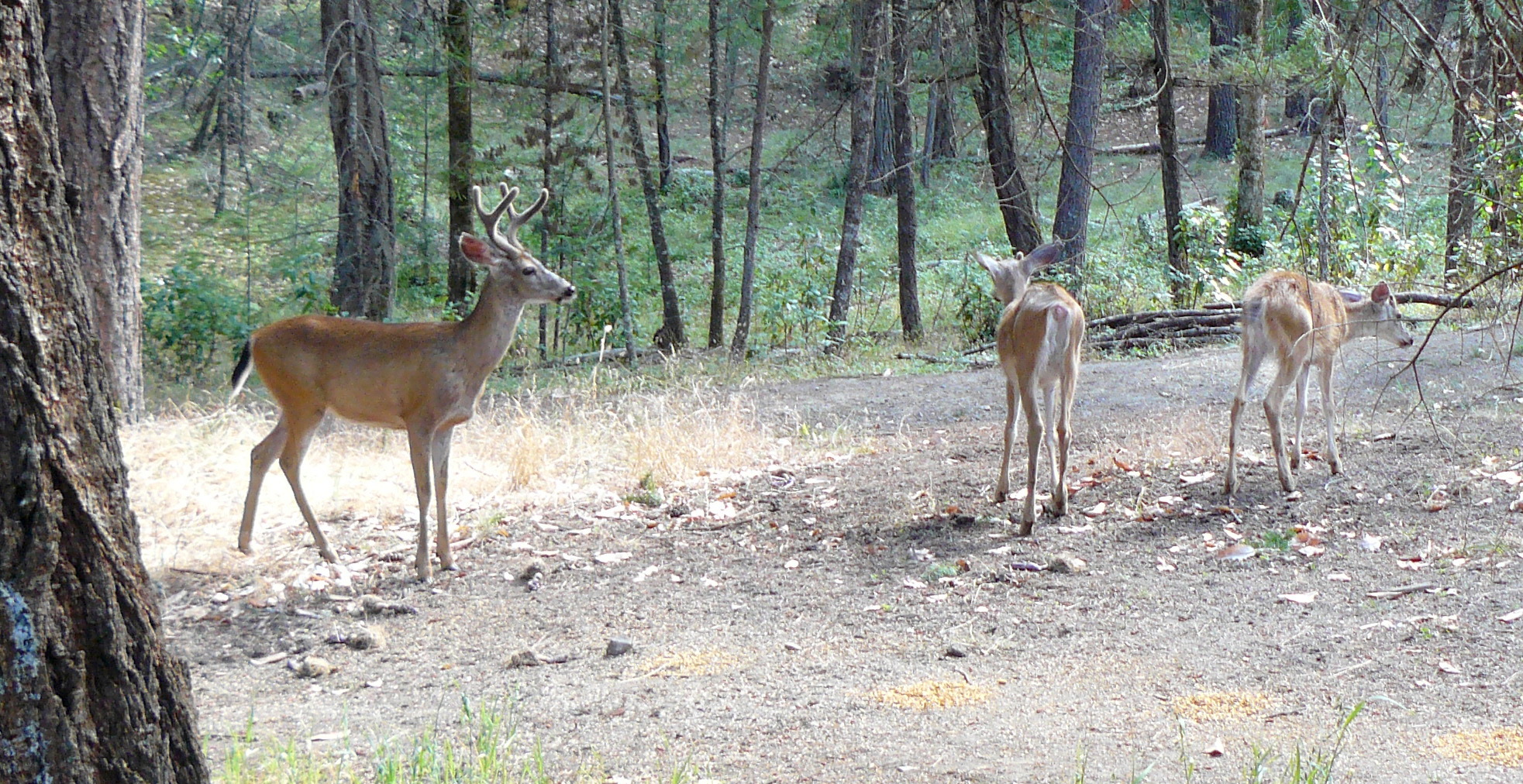
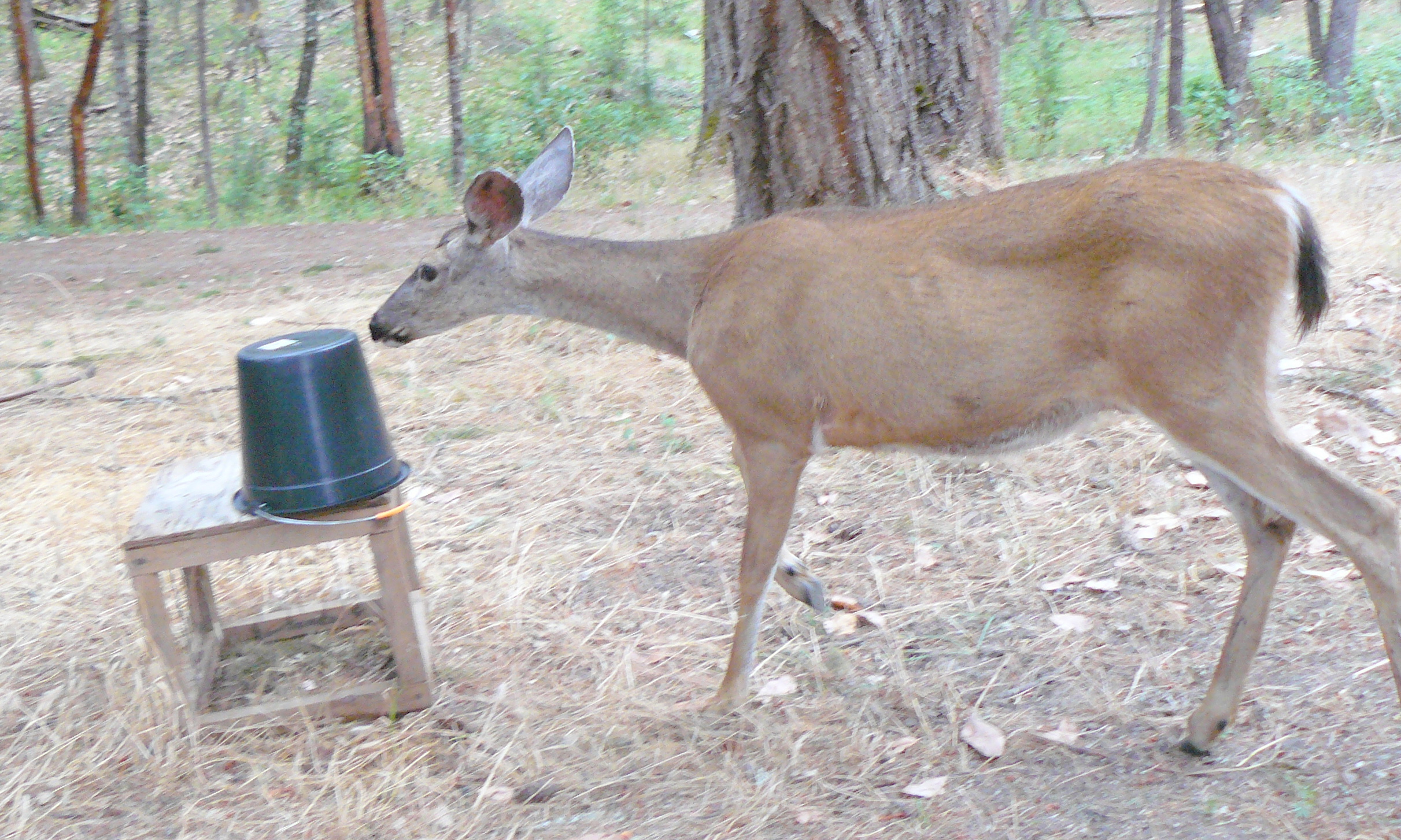
Returning to the photographs of the deer that come to our property.
Feeding the deer has been featured before on Learning from Dogs but I just wanted to devote today and next Sunday to nothing more sophisticated than photographs; all of them taken here at home.
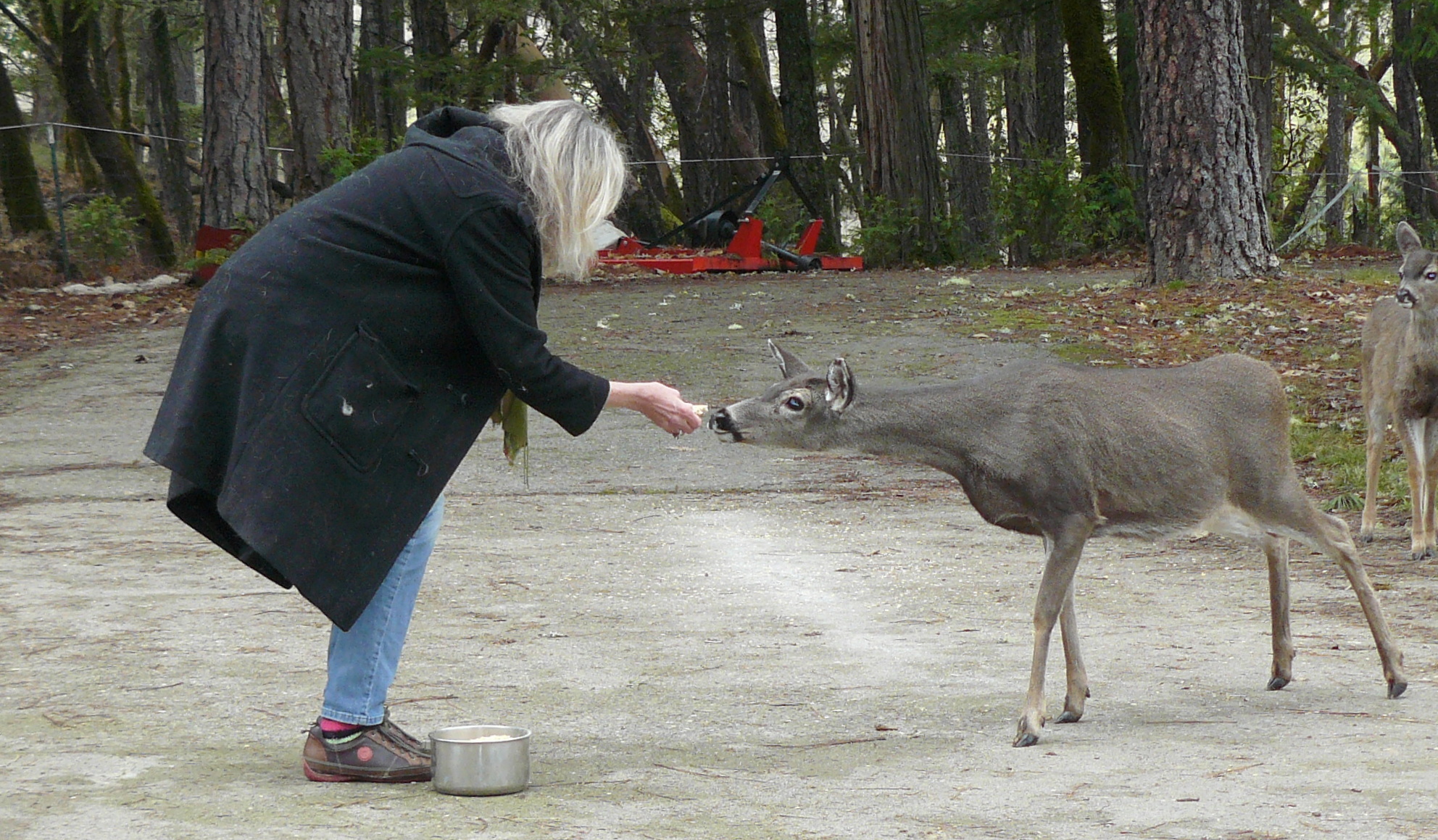
oooo
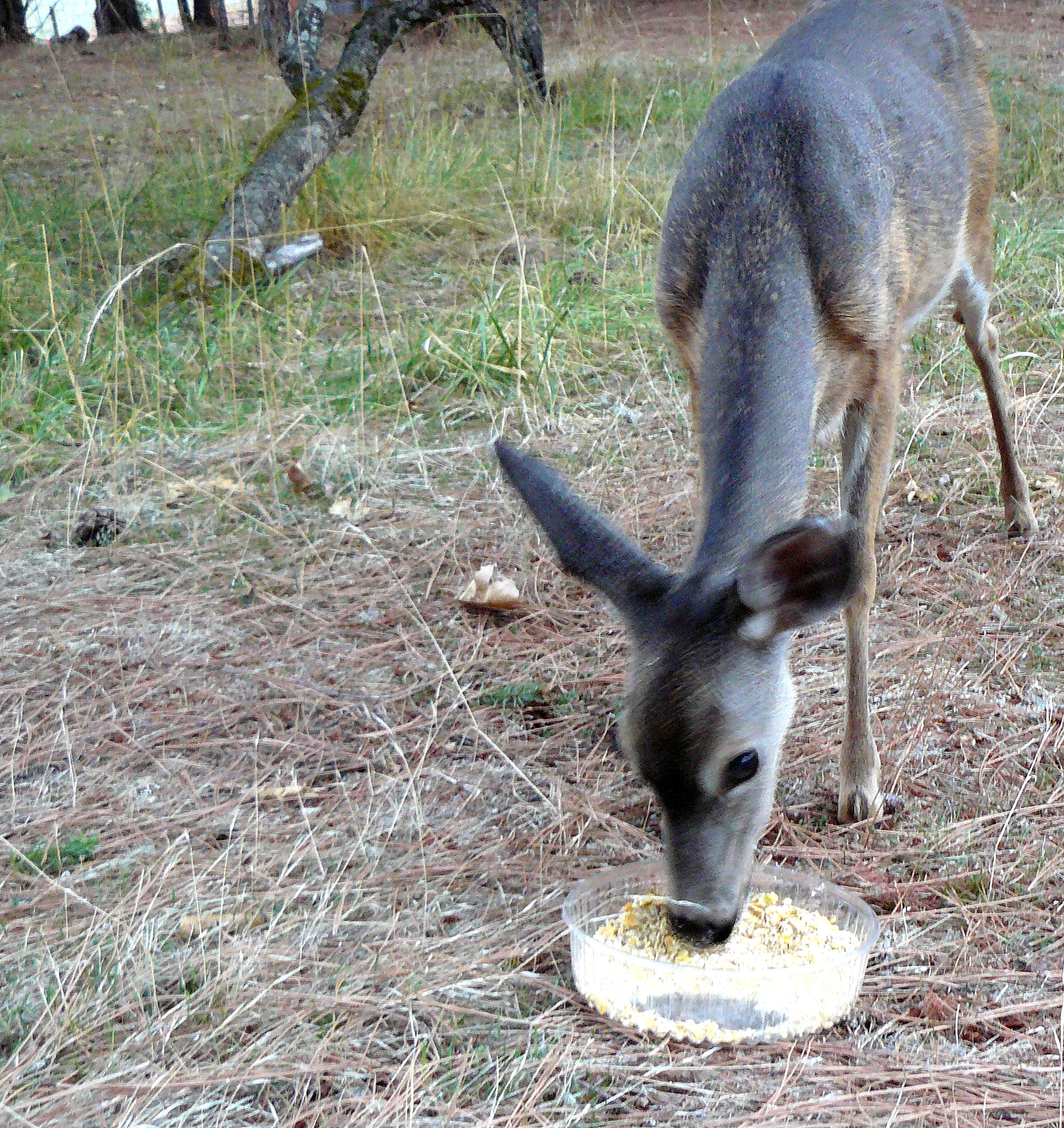
oooo
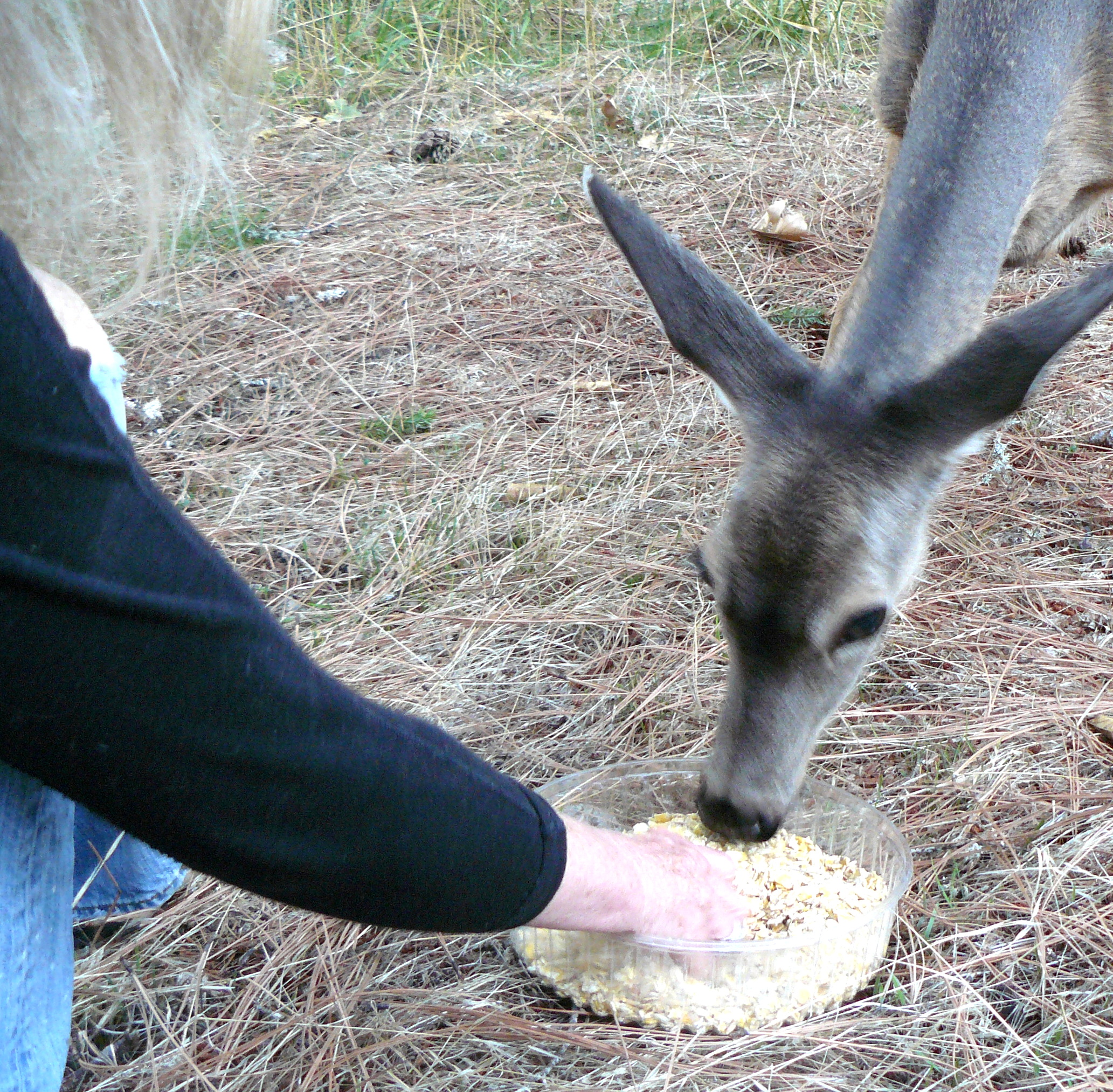
oooo
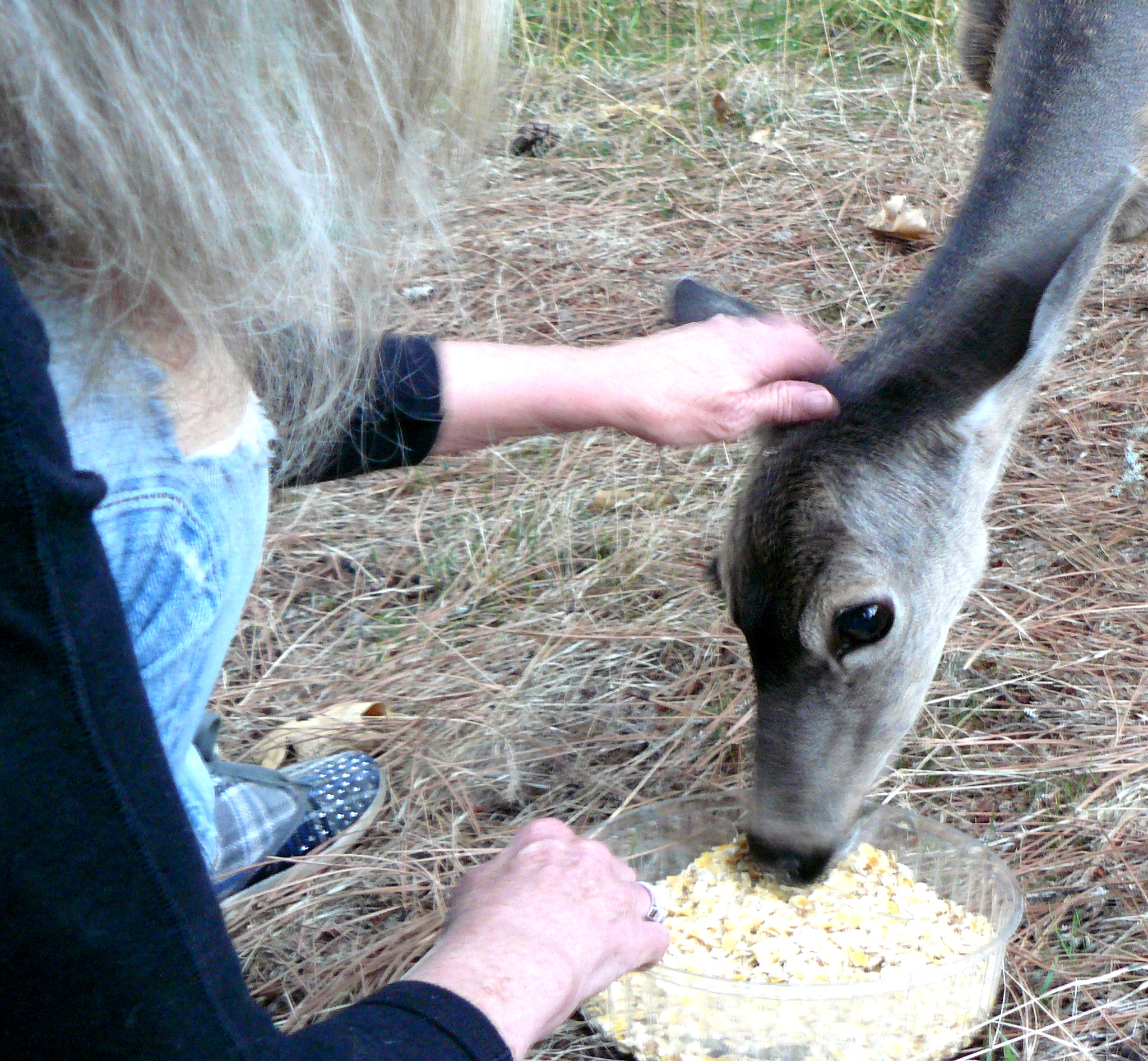
oooo

oooo
oooo
oooo
oooo
oooo
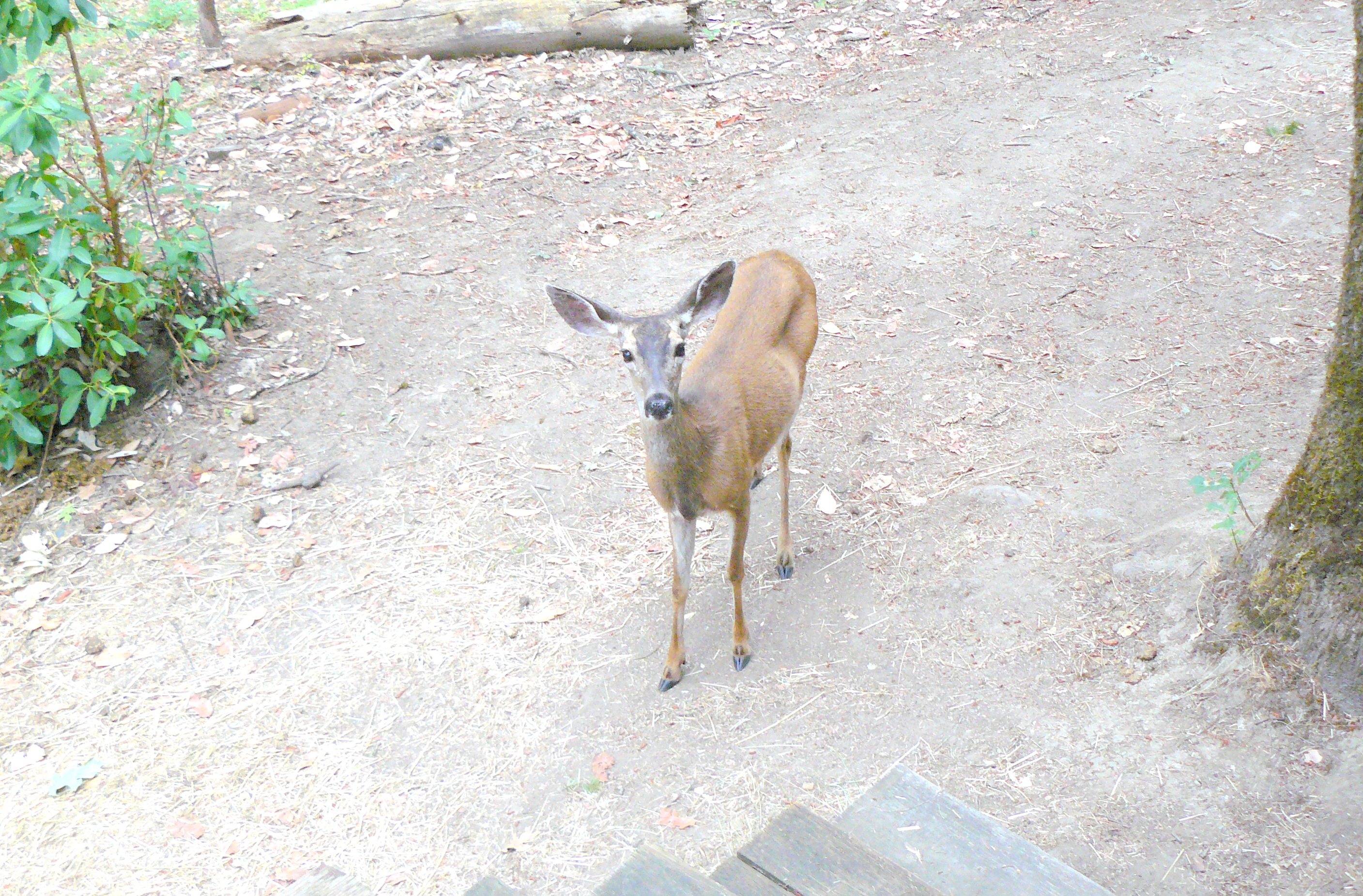
oooo
The photographs continue next Sunday.
An inspirational essay from Arizona.
I was speaking recently with John Hurlburt whom Jean and I knew well when we were living in Payson, AZ. Subsequently, John sent me a wonderful essay with his permission for me to share it with all you good folks!
A quick web search found a photograph of Wildcat Canyon and that is at the end of today’s guest post.
ooOOoo
Midnight in Wildcat Canyon
The dirt road maze in our Arizona forests covers hundreds of miles. It’s quite possible to drive all day without encountering another human being. I once ended up at a place called Wildcat Canyon at midnight after taking a wrong turn on a wet rocky mountain road.
Cell phones are problematical in the high country. It would have helped if there had been a back woods road map on board. Fortunately there was a GPS that worked.
Wildcat Canyon in the moonlight was well worth visiting. The heavens were open above without a trace of man made light. The impact was awe inspiring. As we intuitively agree, everything fits together or we’d be random atoms.
Although, it may seem random to the casual observer, we scientifically know that the cosmos is unified from the quantum level of physics up with the classical level of physics and back again through fundamental forces we have barely begun to understand.
Einstein’s theories prove that the cosmos turns inside out without breaking. Slight earthly energy shifts can modify and potentially eliminate all life on earth. There’s no need to contribute to the problem by aggravating the negative effects of climate shift through either our deliberate negative action or our thoughtless lack of action.
It’s difficult to understand why we’re fussing and fuming as though we owned the earth, the moon, the sun, and the stars. There’s consensus on the body of scientific fact that supports a holistic understanding of our relative insignificance and our corresponding responsibilities as a consciously aware biological species which is presently the dominate life form on a remote garden planet.
Signs of our cultural crisis of consciousness are clear. Science is ignored or denied unless convenient and/or profitable. World economics are systemically corrupt. Slick politicians twist reality on its ear without regard for truth, justice, liberty, or equality.
Knowledge, understanding and wisdom are disparaged.
Insanity, driven by both conscious and unconscious human fears, masquerades as truth and reason. War is profitable and encouraged. Our politicians know better if they have any awareness or compassion at all in their hearts and souls. It seems that even when most politicians are aware of reality to some degree, they simply don’t care for much beyond themselves in the long run. Political ends justify the means without regard and without regret. Hyper concentrated economic power takes no prisoners.
Insanity is cold. We light a fire to keep us warm and to heat our food.
As the flame burns, we realize that matter and energy are interchangeable. We realize that the earth is finite. We know that we’re energized by the universe. We are children of the light. We are the voice of life and the hope of the future and we’ve lost our moral compass.
Nature always wins and doesn’t care about the quarterly bottom line. Peace is a verb.
Without a unifying purpose, surrender and unilateral acceptance are dubious. What could be more unifying than our instinctive need to survive? Our common objective is to sustain our natural balance. Our immediate practical objective is to save our planetary farm.
We don’t become fully consciously aware until we are born. We begin learning about our world in our cribs. Consider that we live in a garden cradle at the edge of the Milky Way. Change is constant as our universe emerges. Adapting to change is the prime directive for all life forms.
Our problems are complex. The simple answer is found in all our human wisdom traditions. “Be of service to the Earth which sustains all planetary life.” The answer to our political quandary is similarly simple. We can vote for the Nature of Creation or we can vote for Mammon.
We can vote for Sanity (Greek: sanos; balance, wholeness and well being) or we can vote for the meaningless night shades of human insanity. We may vote for Nature or we may vote for global corporate financial interests.
It’s important to note that the unaided human mind is limited. Dumb comes with the territory with no additional charge. Our lives are a learning experience with an ongoing purpose of growth and service.
It took about an hour to get back to a main highway from Wildcat Canyon. It was a matter of back tracking through landmarks noted along the way such as the occasional miniature lake in the middle of the trail or a stretch of jagged rocky out cropping. It was a relief to return to an asphalt road about an hour later.
A wave is breaking. Take care and maintain an even strain.
an old lamplighter
ooOOoo

You all have a very peaceful weekend. (Oh, and you may want to drop across to Sustainable Rim Country, a fabulous project that John and others have under way.)
A trip to the Oregon Caves National Monument & Preserve.
A week ago when our family guests were staying with us we decided it would be a treat for all of us to visit the very famous Oregon Caves – it was not a disappointment.

The history of the caves does involve a dog.
Apparently Elijah Davidson discovered the caves in 1874 when he was out with Bruno, his dog, and it disappeared. The dog had fallen down a fissure that Elijah managed to squeeze into and, bingo!, there was the most incredible deep cave ahead of him. (Watch the video below for a fuller description of how the cave was discovered.)

Clearly today’s visitors to the cave enter in a more gentle fashion!
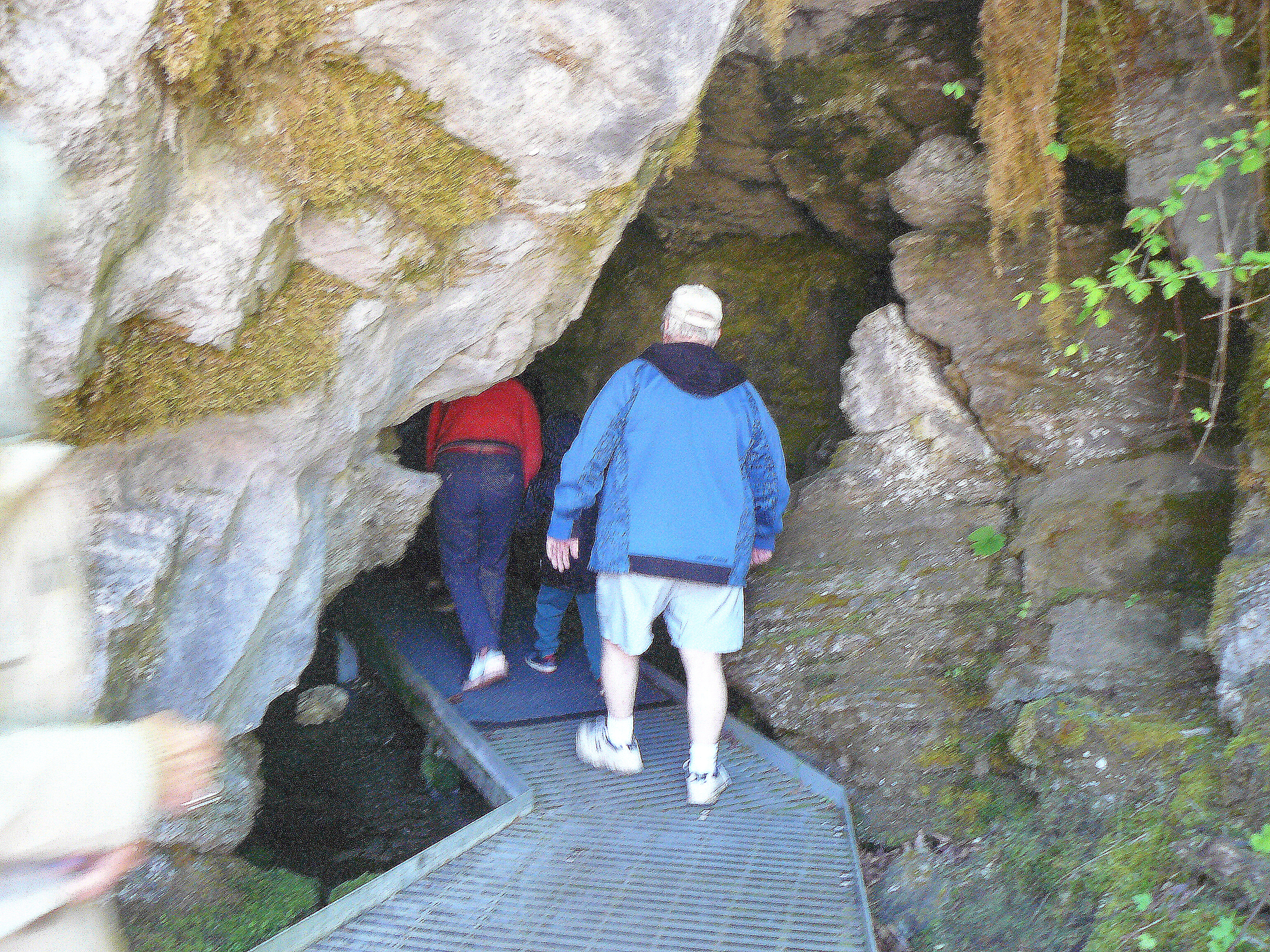 WikiPedia has a very good description of the caves, from which I quote:
Oregon Caves National Monument and Preserve is a National Monument and Preserve in the northern Siskiyou Mountains of southwestern Oregon in the United States. The main part of the 4,558-acre (1,845 ha) park, including the marble cave and a visitor center, is located 20 miles (32 km) east of Cave Junction, on Oregon Route 46. A separate visitor center in Cave Junction occupies 4 acres (1.6 ha) of the total. Both parts of the monument, managed by the National Park Service, are in southwestern Josephine County, near the Oregon–California border. The climate is generally mild even at the cave’s elevation of about 4,000 feet (1,200 m) above sea level, but icicles can form at the cave entrance, and winter snow sometimes blocks the park highway.
Elijah Davidson, a resident of nearby Williams, discovered the cave in 1874. Over the next two decades, private investors failed in efforts to run successful tourist ventures at the publicly owned site. After passage of the Antiquities Act by the United States Congress, President William Howard Taft established Oregon Caves National Monument, to be managed by the United States Forest Service, in 1909. The popularity of the automobile, construction of paved highways, and promotion of tourism by boosters from Grants Pass led to large increases in cave visitation during the late 1920s and thereafter. Among the attractions at the remote monument is the Oregon Caves Chateau, a six-story hotel built in a rustic style in 1934. It is a National Historic Landmark and is part of the Oregon Caves Historic District within the monument. The Park Service, which assumed control of the monument in 1933, offers tours of the cave from mid-April through early November. In 2014, the monument was expanded by about 4,000 acres (1,600 ha) and re-designated a National Monument and Preserve. In addition, the River Styx, which flows through the cave and emerges as Cave Creek, was named to the National Wild and Scenic Rivers System.
Oregon Caves is a solutional cave, with passages totaling about 15,000 feet (4,600 m), that formed in marble. The parent rock was originally limestone that metamorphosed to marble during the geologic processes that created the Klamath Mountains, including the Siskiyous. Although the limestone formed about 190 million years ago, the cave itself is no older than a few million years. Valued as a tourist cave, the cavern also has scientific value; sections of the cave that are not on tour routes contain fossils of national importance.

Between Marius and myself we took a great number of photographs but many of them can’t compare to the quality of photos found on the web.
For example here’s one of my pictures:
 and here’s one taken from the National Parks Service website:

Won’t go on! (But I will post a collection of photographs, both from me and Marius and found online in a future Picture Parade.)
What I will do is to close with this YouTube video. It is 17 minutes long but very interesting and, hopefully, an inspiration to others to come and visit this incredible geological site.
Happy Holidays to all!
Of there being a day where no animal lives out of sight of love.
Of course, when I speak of animals I have in mind those animals that end up in rescue shelters of one form or another: cats; horses; dogs; ponies; birds; and other species.
But on the broader topic of offering love to animals I must share something with you before going on to the main subject of today’s post.
That is that for the last few years we have been feeding the wild deer.
Slowly a number of them have grown to trust Jean and me to the point where one particular young female became such a regular that we named her: Doris. It is Doris that is in the picture above eating the cob that we put out twice a day.
Doris doesn’t warm to strangers plus she doesn’t come every day. When she does it is clear that she is familiar with us and perceives no threat from this ‘neck of the woods’, as the next photograph supports:
In fact, I can now gently stroke her neck when she is feeding and will share those pictures with you all in a future Picture Parade post.
I call the closeness of me and Doris love. I love how this animal trusts me and, in turn, the care and responsibility that is called for from me.
My dream is that the love, care and responsibility offered by people will one day be so widespread and extensive that there comes no call for animal rescue shelters.
OK!
A couple of days ago Cori Meloney signed up to follow Learning from Dogs. Cori is the author of the blog Three Irish Cats. As is my usual way I went across to her blog to leave a ‘thank you’ note for her decision to follow my scriblings. I immediately saw her latest post and knew without doubt that it should be republished here. Cori very promptly gave me permission to so do.
ooOOoo
I volunteer with a small (but mighty!) rescue group here in Southern Maryland called Rescue Angels of Southern Maryland. We mostly deal with cats, though we’ve recently begun to rescue dogs as well.
Most of the cats we find homes for come from owner surrenders, friendly cats and kittens from our feral colonies, and at-risk animals from our local municipal shelter, Tri-County Animal Shelter.
Saturday, Rescue Angels was one of the groups that participated in Tri-County’s annual Clear the Shelters Day celebration. Seventy-seven animals found forever homes that day. Watching the parade of happy animals and their new owners as they left the building was totally worth sweltering in the 95-degree heat.
As the only public animal shelter to serve the three Southern Maryland counties, Tri-County is a busy place. It frequently gets full, and organizations like Rescue Angels and others in the area step in when we can to remove animals from the shelter. This is not a no-kill shelter, so a full shelter means animals will die. New animals come in every day.

Three things struck me when I was at Tri-County last weekend.
The first is that I wish Tri-County could be this busy every Saturday. Granted, adoption fees on Clear the Shelters Day were eliminated or reduced and there was a lot of publicity for this event, but there are always wonderful animals at the shelter that want to go home with a family. Many animals end up there because the owner surrendered them; the reason often given is “did not want.”
The second is that I am increasingly amazed by the dedication of the shelter staff. They have a difficult job, and it often goes without thanks. It’s not easy to be civil to an owner who is dropping off their pet because they don’t want it anymore. It’s not easy to put down perfectly healthy animals because humans have acted irresponsibly. I can only imagine that the staff constantly feels like it is in crisis mode; they may have nearly cleared the shelter on Saturday, but come midweek, those cages and pens will be filled again with animals in need.
The third thought is that we, the community, created this shelter, and we need to fix it. Tri-County has a terrible reputation here in Southern Maryland. The kill rate for cats is more than 50 percent. The facility is small and needs renovation and expansion. It is nearly always full to overflowing. Members of the community sometimes say terrible things about the staff.

But Tri-County is constantly full because the Southern Maryland has let its companion animals down. Cats are not spayed or neutered, and they’re treated as disposable. Need to move? Drop your cat at the shelter, or worse, just leave it behind. Dog getting too big? Don’t feel like dealing with behavior or health issues? Drop the animal at the shelter.
I’ll be honest: My opinion of Tri-County and its staff has not always been positive. What makes it worse is that I had those opinions without actually visiting the shelter. I am ashamed of that fact. Since I started volunteering with Rescue Angels, I have visited the shelter many times to take cats that our rescue was putting into foster care. I have met some of the staff members, and they are always happy to talk with me about their animals. They’re ecstatic when an animal leaves the building. The shelter has a rescue coordinator whose job is to work with local rescue groups to remove animals from the shelter when they are at risk of being killed or when shelter life is impacting their well-being. These folks are animal lovers forced into a terrible situation by a community that treats its animals as disposable and Tri-County as its dumping ground.
So, now that Clear the Shelters Day has passed, I challenge my fellow residents of Southern Maryland: Visit Tri-County Animal Shelter. Talk with the staff. Visit with the cats in the free-roaming room. Take a dog for a walk. Take pictures and share them on Facebook. Volunteer. Follow Tri-County on Facebook and interact with their posts. Foster, which allows rescue groups to remove more animals from the shelter. Rescue Angels can help you become a foster family for dogs or cats.
All three Southern Maryland counties are working on plans to build their own shelter facilities. In the meantime, Tri-County Animal Shelter is our public shelter. It’s our job as the community to support the staff, help care for the animals, and reduce the number of animals killed there.
I hope to see you there, leash in hand.
By: Cori S. Meloney
ooOOoo
So if any reader is within reach of Southern Maryland and wants to offer an animal love, care and responsibility then please make your way across to Rescue Angels of Southern Maryland.
How to draw today’s post to a close?
In searching for inspiration about all animals living in the sight of love I realised that what I was dreaming of was more about compassion than love; albeit the two states of mind being very close to one another.
That led me to perusing the Dalai Lama’s teachings on compassion: Compassion and the Individual. Here’s how that teaching concludes:
Compassion and the world
In conclusion, I would like briefly to expand my thoughts beyond the topic of this short piece and make a wider point: individual happiness can contribute in a profound and effective way to the overall improvement of our entire human community.Because we all share an identical need for love, it is possible to feel that anybody we meet, in whatever circumstances, is a brother or sister. No matter how new the face or how different the dress and behavior, there is no significant division between us and other people. It is foolish to dwell on external differences, because our basic natures are the same.
Ultimately, humanity is one and this small planet is our only home. If we are to protect this home of ours, each of us needs to experience a vivid sense of universal altruism. It is only this feeling that can remove the self-centered motives that cause people to deceive and misuse one another.
If you have a sincere and open heart, you naturally feel self- worth and confidence, and there is no need to be fearful of others.
I believe that at every level of society – familial, tribal, national and international – the key to a happier and more successful world is the growth of compassion. We do not need to become religious, nor do we need to believe in an ideology. All that is necessary is for each of us to develop our good human qualities.
I try to treat whoever I meet as an old friend. This gives me a genuine feeling of happiness. It is the practice of compassion.
Loving animals is very much part of protecting this home of ours.
That is my dream.
At the dog park, Syd decides to utilize the drinking water for another purpose.
(As seen over on the Care2 blogsite.)
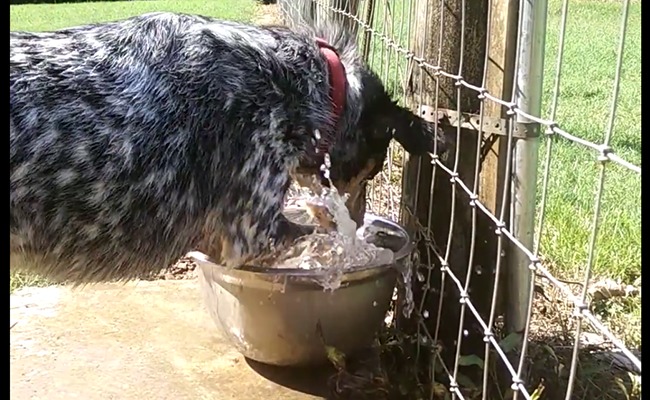
Not just your dogs but all you good folks stay cool out there!
Sharing a recent Care2 story with you.
ooOOoo


“I’m 15 feet away and I can hear a two pound dog crying,” Great Plains SPCA’s Scott Poore says with frustration dripping in his voice, almost as much as the sweat on his brow in the 90 degree sun. “We’re going on about 45 minutes with this little dog in the back seat of this car.”
Standing in the parking lot of a Home Depot in Merriam, Kansas, Scott films a live stream broadcast that gives Facebook fans real-time access to the situation that every animal lover dreads: a dog locked inside a hot car.
But the circumstances of this particular rescue are even more bizarre than usual. First of all, this Home Depot allows dogs inside the store. Second, the puppy inside the vehicle was extremely young, only weeks old. Third, the woman went inside to shop without even slightly cracking the windows of the vehicle (although that would be of little benefit). Fourth, she actually lost her car keys so she wasn’t able to open the vehicle when she arrived.
“When the lady came out, she was absolutely blown away that anybody had an issue with this,” Scott said. “And that’s pretty typical.”
A misguided sense of affection actually seems to be at the root of most instances of dogs being left in hot cars. People bring the dogs along because they feel that the dogs will be lonely at home, but they don’t take into account the very real threat to the dog’s physical welfare.
According to the local news station, KCTV, the puppy was returned to his “owner” who was issued a citation. Watch the video and decide for yourself if the law enforcement action available to police under the current law will be sufficient to safeguard this puppy from additional neglect.
ooOOoo
Words fail me! But well done the police!
The great relationship that can exist between dogs and cheetahs.
Before you read on let me raise my hand in connection with this blog. Or to be clearer, next Monday Jean and I have the very great pleasure in welcoming my daughter, Maija (she of Sonic Journeys from SOUND UK), her husband, Marius, and my grandson Morten. They are staying with us until the 24th July.
Inevitably, and for all the right reasons, I will not be putting in anything like the normal time I usually spend on Learning from Dogs. It did cross my mind to stop blogging for those seven days but that seemed like a step too far.
However, what is certain is that the period from now right through to the last week in July is going to see me lowering the priority of this blog and being more random in nature in terms of if or how I respond to your comments and replies. You will also read a succession of repeats of posts from previous years. I’m hoping that because so many of you will not have been reading this place during my early years that the number of times you see something that you have previously read is kept to a minimum.
So why this note to you all today? Because the rest of this week is going to be pretty busy as we get the house all tidied up and fully prepared for our visitors.
Having got that off my chest do read the following that appeared recently over on Care2.com.
ooOOoo
 By: Laura Goldman July 10, 2016
About Laura Follow Laura at @lauragoldman
Cheetahs, the fastest land animals on Earth, have been disappearing almost as fast as they can run.
But in the African country of Namibia, the cheetah population has grown from 2,500 to 4,000 since 1994. And dogs are helping to keep those numbers rising.
Instead of trapping or shooting cheetahs that wander onto their property and kill livestock, some farmers are relying on Anatolian Shepherds and their fierce barking to scare away the predators.
“You may see in history that this dog can be responsible for saving the cheetah from extinction,” Jack Hanna, director emeritus of the Columbus Zoo, told CBS News. “That is one heck of a story right there.”
The dogs are provided to farmers and ranchers by the Cheetah Conservation Fund (CCF), the world’s leading organization dedicated to saving the lives of cheetahs in the wild.
Since then, the program has placed more than 500 dogs, helping to reduce the loss of livestock from 80 to almost 100 percent. The program is extremely popular — there’s a two-year wait to get in. It not only provides free Anatolian Shepherd puppies, but also training advice and free veterinary care.
“CCF research shows that the people’s attitudes towards predators are changing as a result of this and other CCF programs,” the organization said on its website.
Dogs and Cheetahs Aren’t Enemies in U.S. Zoos
As a way to promote “the life-saving role dogs play for cheetahs in the wild,” according to CBS News, some zoos in the United States are raising puppies with cheetah cubs.
“The number one question up here, this $40 million exhibit: ‘Are the dogs coming out?’” Suzi Rapp, director of the Columbus Zoo’s animal programs, told CBS News. “And I say the Columbus Zoo built the world’s most expensive Labrador retriever exhibit in the world… the biggest dog run.”
Dogs and cheetahs can also be found together at the Cincinnati Zoo. It was there, as you probably remember, where Harambe the gorilla was shot to death when a boy fell into his exhibit. His killing sparked international outrage and concern over keeping wild animals captive in zoos.
What are domesticated animals doing in these zoos? Like the Anatolian Shepherds in Africa, the zoos say, the dogs are helping to prevent cheetahs from becoming extinct. But instead of scaring cheetahs away from livestock, the zoo dogs are best buddies with the cheetahs. Their friendship, which begins when they’re about 3 months old, helps put the skittish cheetahs at ease so they can more easily be bred.
The San Diego Zoo, which has been raising dogs with cheetahs for over 30 years, gets many of its puppies from animal shelters. So in a way, the rescued dogs are paying it forward by helping save the lives of another species.
ooOOoo
That Care2 article by Laura Goldman included a short video from CBS News. However, despite me having a link to that video I couldn’t get it to play.
No problem because YouTube came up with a very good alternative.
Published on Apr 29, 2013CCF Operations Manager Brian Badger explains how our Livestock Guarding Dog program works as part of the whole of CCF’s operations to help save the cheetah in the wild.
In fact, there was more than one interesting video and I couldn’t make up my mind which was best.
So you got two!
Published on Sep 25, 2013In Gobabis, Namibia, these Kangal dogs guard the goats against predators, including the worlds largest population of wild cheetahs. This stops the farmers from targeting the cheetahs. Since the big dogs were introduced to Namibia, the cheetah population has reached a 30-year high ! Hurray!

