Category: Environment

Decisions; decisions.

Things do not change; we change.

That saying from the lips of Henry David Thoreau, the American essayist, poet and philosopher, reminds us that we must be that change before that change comes along.

Thus whatever you or I, or anyone else, thinks is wrong with these times, so eloquently expressed by George Monbiot in his essay republished in this place yesterday, bringing about the changes that you or I, or anyone else, want has to start with the individual.

That, inevitably, requires many to chose which path to follow.

Last Saturday, Sue Dreamwalker of the blog Dreamwalker’s Sanctuary, published a post that truly couldn’t have been better written in terms of following on to yesterday’s post.

Here it is republished with Sue’s kind permission.

ooOOoo

Crossroads~ Which path do you choose?

I felt the need to post something deeper again today, and I could find no better words to write than I have already written as my thoughts go out to the many places around our globe in conflict right now.

I know there are many new subscribers here to Dreamwalker’s Sanctuary this year who may not have read this post.. I thank all in advance for their contributions..

If I am slow getting back to you, it’s because I want some time to paint this weekend and walk out in nature..
So look after each other and choose your Pathway well..
Love and Blessings
Sue❤

Image Source Here
Image Source Here

Much is happening with our Earth Plane at this time of transformation, the Mayans called it

“ A crossroads of time of Great External Changes and Major Internal Upheavals”.

We have seen around the globe how many nations are starting to change, we are also changing ourselves internally through our awareness and intuition and I see many withdrawing into themselves as they seek peace as they set about clearing the debris of our emotional bodies, myself included as we adjust to the vibrations around us.

At times all that is thrown our way is too disturbing to cope with, so we withdraw within our inner sanctuaries finding solace within Nature and our meditations..

I have to remind myself daily of the GOOD in this world as we get constantly bombarded with the BAD… So many things which are UGLY in this world which led me to revisit a post first posted in 2012.. The Good Bad and Ugly.. in which I used the Mayan quote above..

Everything in this world mirrors everything else, and everything is part of everything else, as difficult as that is to comprehend. So while we react with outrage, our rage is joining the tide of Anger already out there which is foaming back and forth in the sea of discontent.

It seems as if our very Earth Mother feels that anger as she too is rumbling ever louder in the bowels of our planet as we have seen how devastating her energies can be in Earthquakes and volcanic eruptions which are now becoming more active again around our globe..

We have to be careful not to be taken down the road of Fear.. Lest it trap us into engaging in giving out more fear by our failure to see how we are all quick to judge and use our own prejudices in labelling that which we are not in alignment with.  Whether that be in our politics, beliefs, or idealisms. None of us is perfect.

We are now ‘Shifting’ from duality to Unity Consciousness, this was brought home again to me on how many of us are thinking similar thoughts even here on WP we see similar themes as we link into the Mass Consciousness as we join together our thoughts as we link subconsciously to the Cosmic web of thoughts..

We need to be aware of the Power of our thoughts and how we can assist in raising our planets vibration and our own collective Consciousness..

Much has been spoken upon Ascension, but first we need to ascend through our own layers as we climb ever higher, leaving behind the things that no longer serve us.

We do that by not getting swept up in conflict.. by being more loving and tolerant and being compassionate rather than  being judgmental holding hate and anger.

We need to put the Care back in the world and if we embrace and choose Love over fear  and we stop looking who to blame, but start to set examples of living in harmony and unity, then the true magnificence of who we really are can begin to manifest that ‘Golden Age’ which was once prophesied to bring about Peace..

But it’s up to us to pledge to change our own lives,and when we each start bringing back that peace within our own Lives, It’s up to each of us which road we want to take. And what dominant energy we want to prevail.. I choose Love.

Blessings

Sue.

ooOOoo

You must take personal responsibility. You cannot change the circumstances, the seasons, or the wind, but you can change yourself. That is something you have charge of.

So said Jim Rohn, the American businessman who died in 2009.

Troubling times.

We all could easily be drinking in ‘the last chance saloon’.

After I published my book, Learning From Dogs, last December I was invited to a number of book signing events. In each case I gave a short talk of about 20 minutes in which I explained the philosophy behind the book. Perhaps no better articulated than by Dr. Jim Goodbrod’s Foreword to the book. Take this paragraph, for instance, from that Foreword:

 Dogs represent to me that innocence lost. Their emotions are pure. They live in the present. They do not suffer existential angst over what they are. They do not covet material wealth. They offer us unconditional love and devotion. Although they certainly have not reached the great heights of intellectual achievement of us humans (I know for a fact that this is true after having lived with a Labrador Retriever for several years), at the same time they have not sunk to the depths of depravity to which we are susceptible. It could be argued that I am being overly anthropomorphic, or that dogs are simply mentally incapable of these thoughts. But nevertheless, metaphorically or otherwise, I believe that dogs demonstrate a simple and uncorrupted approach to life from which we all could benefit.

During my opening talks on each occasion I would ask the audience: “So raise your hands if you are someone who is not worried about the future?”

There was never a raised hand!

My introduction to a recent essay published by George Monbiot that is republished here with Mr. Monbiot’s permission.

ooOOoo

The Drums of War

A very strange cloud!

The endless fascination of the clouds in the sky.

Wherever one is in the world there’s something that will always offer delight, interest and a bit of a weather forecast as a bonus. I’m speaking of clouds.

I have written about clouds before in this place but the reason that I just have to share another post about clouds with you is this image:

garysmith-zippercontrailIt is from The Cloud Appreciation Society’s November newsletter and I’m taking the liberty of sharing the particular news item with you.

cloud-of-month-nov2016November 2016

A Mystery in the Clouds

Earlier this month, a peculiar ring appeared in the clouds over Warwickshire, England. James Tromans, who photographed the formation, asked what might have caused it. Clearly, this was time for some cloud detective work.

The ring was actually more of a curve, or a ‘U’, as there was no other half to it. It appeared to consist of regular lumps, or lobes, hanging down from the underside of a cloud layer. We wondered if this layer was an Altostratus, but off in the distance to the right of the image there appeared to be showers, like those produced by a storm cloud. This suggested that the cloud layer might in fact have been part of the huge canopy that spreads out at the top of a Cumulonimbus storm cloud.

Sometimes, to the rear of a storm, lobes of cloud known as

1. Could ‘mamma’ be involved? Spotted over Wilton, Wiltshire, UK, by William Saberton,

mamma can be seen

hanging from the underside of the canopy (see image 1). There certainly was a general appearance of mamma in the cloud layer. But could some of these mamma cloud lobes have arranged themselves into this strange, regular curved formation? It seemed unlikely.

There was something decidedly unnatural about the cloud’s appearance – as if it were man-made. Then it occurred to us that the photograph was looking towards Coventry Airport. Might this cloud effect have been in some way caused by an aircraft?

As planes fly through clouds made of ‘supercooled’ water droplets, they can encourage these extremely cold droplets to freeze and fall below, leaving behind a gap, known  as a dissipation trail, or ‘distrail’. Such formations are often seen in

2. Or was it to do with an aircraft ‘distrail’, like this spotted over Newcastle, Australia, by Jillian De Martin (Member 12801)?

straight lines where planes ascend or descend through the cloud. But they can also appear in circular shapes when one is flying in a holding pattern as it waits to land (see image 2). James’s cloud wasn’t quite a distrail, but we felt we were getting close.

It was then that we recognised the regular spacing of the lobes. These sometimes appear below aircraft condensation trails (see image 3). They are caused by the interaction between the two swirling vortices produced by the wings. As these rotate in opposite directions in the wake of an aircraft, the two turbulent flows interact and combine to form a periodic pattern of turbulent downdrafts. In the right conditions, they appear as lobes hanging below the condensation trail.

3. The clue was in the turbulence lobes that can appear hanging from an aircraft contrail. You can see these in this strip of contrail spotted over the Smokey Mountains, US, by Gary Smith.

This explained the formation. It was caused by an aircraft, which happened to be flying just above the base of the cloud layer as it turned in a holding pattern above the nearby airport. The plane’s condensation trail was hidden within the cloud layer, but the lobes of cloud descending below it, caused by the turbulence from its wings, appeared extending below the layer.

Phew! With that cleared up, we could finally relax once more.

Turbulence lobes beneath the contrail of an aircraft in holding pattern over Hampton Lucy, Warwickshire, UK, by James Tromans.

ooOOoo

 How very interesting and hope I’m not the only one to think so.

Positive circles!

Or, what goes around, comes around!

Both with animals and with us humans we reap what we sow. Or as I am oft to put it: “Always play with a straight bat for bent bats are practically useless”.

So what has prompted this introspective start to today’s post?

Something that was published on the Care2 blogsite earlier in the month. It was a story about how ex-rescue dogs went on to become dogs that rescued others.  It certainly spoke to me and I feel sure that many of you will be inspired by the story.

ooOOoo

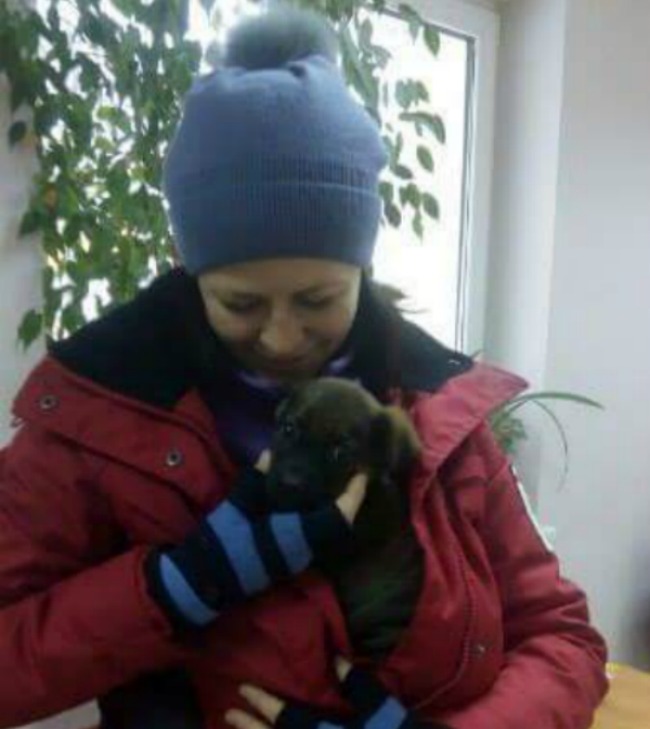
Puppy Rescued Day After Italy’s Latest Quake to Become a Rescue Dog

3193677-largeBy: Laura Goldman November 10, 2016

Among the survivors pulled from the rubble of Italy’s latest major earthquake (Oct. 29) was a border collie puppy who was trapped in the town of Norcia for two days.

The puppy was reunited with his owners, who were so grateful for his rescuers’ work that they decided to let the local fire service adopt him.

Now named Terremoto, which is Italian for – you guessed it – “earthquake,” the pup will be trained to pay it forward by becoming a search-and-rescue dog.

Volunteers from the nonprofit ENPA have been helping nearly 1,000 animals rescued after the earthquakes this year in Italy’s central region. ENPA, an acronym for Ente Nazionale Protezione Animali (National Animal Protection Agency), has been around since 1871. It is Italy’s oldest and largest animal rights organization.

 After the 6.6-magnitude Oct. 29 earthquake, at least 900 animals have received assistance from the organization, according to the ENPA website. Almost 160 of them required veterinary care, including 59 dogs, 63 cats, 13 chickens, 10 tortoises, four parrots, five canaries, two geese, one hedgehog and a hamster. Amazingly, only one animal died: a dog rescued from the rubble alive but in serious condition in the town of Nottoria.

So far, at least 78 animals have been reunited with their owners. Police in Perugia adopted two rescued puppies, The Local reports.

A video captured rescuers using their hands to dig out another dog, Ulysses, after they saw his legs sticking out of the rubble. Like Terremoto, Ulysses had been buried alive when the 6.5 earthquake struck. And, like Terremoto, despite his terrible ordeal, Ulysses was checked out by a veterinarian and found to be in good condition.

About 50 trained search-and-rescue dogs worked with more than 5,000 rescuers after a 6.2 earthquake struck the same region of Italy in August. Among the survivors the dogs sniffed out were two children who’d been stuck in the rubble at separate locations for about 15 hours.

Like these dogs, Terremoto will be trained to bark if he detects a survivor less than 7 feet below the rubble. The rescuers will then dig out the survivor by hand. If Terremoto or other search-and-rescue dogs do not bark, it indicates there are no survivors below. In these cases, heavy machinery is brought in to clear the debris, with care being taken in case there are bodies buried in it.

Search-and-rescue dogs usually stop barking about three days after a disaster like a major earthquake. The rescue efforts then become recovery efforts, since victims would not be able to survive that long without water.

Here in the United States, the National Disaster Search Dog Foundation trains rescued dogs to become search-and-rescue dogs. The dogs are saved from shelters and rescue groups across the country.

While I’d like to wish Terremoto a successful career as a search-and-rescue dog, I’m really hoping he never needs to put those skills to use.

Photo credit: ENPA

ooOOoo

I am going to close today’s post by republishing what you will read if you go across to the home page of the National Disaster Search Dog Foundation website:

From Rescued…to Rescuer

Founded in 1996, the National Disaster Search Dog Foundation (SDF) is a 501(c)(3) non-profit, non-governmental organization based in Santa Paula, California. Our mission is to strengthen disaster response in America by recruiting rescued dogs and partnering them with firefighters and other first responders to find people buried alive in the wreckage of disasters.


What a Moon!

This is a night to be outside! (And that includes you, Susan L.)

It has been receiving quite a lot of publicity in recent days. I’m speaking of the “Supermoon”.

Or in the opening words of a recent Smithsonian Magazine article:

The Biggest Supermoon in 68 Years Will Leave You “Moonstruck”

It hasn’t been this close since 1948 and won’t be again for the next 18 years

(Adrian Scottow via Flickr)

In terms of when this is happening then I will draw on Mother Nature Network:

According to NASA, the full moon that rises on Nov. 13 will be the closest one to Earth since 1948. If viewing conditions are clear, the moon will not only appear 30 percent brighter, but also 14 percent larger. While the nighttime viewing is supposed to be spectacular, the true closest approach of the supermoon will take place on the morning of Nov. 14 at 8:52 a.m. EST.

Just how special is this super supermoon? Humanity won’t get another show like this one until Nov. 25, 2034.

Or as the EarthSky blogsite puts it:

The moon turns precisely full on November 14, 2016 at 1352 UTC. This full moon instant will happen in the morning hours before sunrise November 14 in western North America and on many Pacific islands, east of the International Date Line.

For those of us on Pacific time that equates to 0852 PST.

So the balance of today’s post will comprise the republication, with permission, of a recent essay on The Conversation blogsite.

ooOOoo

Supermoons are big and bright, but not as rare as the hype would suggest.

November 8, 2016

By

Senior Lecturer and Associate Department Head for Undergraduate Programs in Astronomy & Astrophysics, Pennsylvania State University.

As an observational astronomer who teaches students about the behavior of the moon, I’m thankful for anything that inspires people to go out and look at the sky. For me it’s second nature to pay attention to the moon; when my son was born, I would take him out at night to observe with me, and one of his very first words was “moon.”

But I have mixed feelings about what’s being billed as the upcoming “super-supermoon.” Many astronomers do not like using the term because reports overhype the factors that make certain full moons unusual. Most of what you’ve likely read has probably misled you about what you can expect to see on Nov. 14 and just how rare this event is. Beautiful, yes. Worth looking up for, definitely. Once in a lifetime… that’s a bit overblown.

he moon’s phases as it revolves around the Earth. Orion 8, CC BY-SA
The moon’s phases as it revolves around the Earth. Orion 8, CC BY-SA

The moon’s cyclical phases

Just about everyone is familiar with the moon’s changing appearance as it goes through its phases from crescent, to half-illuminated (first quarter), to gibbous, to full, and then back through gibbous, to half-illuminated (third quarter), to crescent, to new.

This pattern occurs because the moon orbits the Earth. When the moon is between the Earth and sun, it’s a new moon, and you don’t see it that day. When the moon is on the opposite side of the Earth from the sun we get a full moon as the sun’s light illuminates almost its entire face. The complete sequence of phases takes about the same amount of time as it does for the moon to orbit the Earth once – just about a month.

As the moon makes its monthly trip around our planet, it travels on an elliptical, not circular, path. Every object in the solar system orbits like this, including the Earth around the sun; over the course of the year, the Earth is sometimes closer to the sun and sometimes more distant. Same for the moon – sometimes it’s closer to us and sometimes farther away.

The changes are proportionally not large; at “perigee” (the closest it gets to the Earth) the moon’s approximately 10 percent closer to the Earth than at “apogee” (most distant point on its orbit). Over the year, the moon’s distance from Earth varies from around 222,000 to 253,000 miles.

 The moon’s orbit is elliptical and changes over time. Rfassbind
The moon’s orbit is elliptical and changes over time. Rfassbind

The time it takes the moon to go from perigee to perigee (about 27.3 days) is shorter than the time it takes to go through a complete set of phases (about 29.5 days). Because these timescales are different, the phase at which perigee occurs varies. Sometimes perigee occurs when the moon is full, but it is just as likely for perigee to occur when the moon is in the first quarter phase, or any other. Whichever phase the moon is in when it’s at perigee will be the one that looks largest to us here on Earth for that month.

At perigee, the moon can appear 14 percent larger and 30 percent brighter than an apogee full moon. But this is complicated by the fact that our eyes play tricks on us and convince us the moon looks larger when it is near the horizon than when it is higher in the sky. Every full moon will look big and bright whether it happens at perigee or apogee.

So what’s a supermoon?

The first time I heard the phrase “supermoon” was in 2011, and someone had to explain the suddenly in vogue term to me. People were using it to describe the full moon that happened to occur within an hour of perigee in March of that year. The moon’s perigee distance also varies a bit, and March 2011 was the moon’s closest perigee of that year.

 A 2013 supermoon as seen from Ireland. John Finn, CC BY-NC-ND
A 2013 supermoon as seen from Ireland. John Finn, CC BY-NC-ND

This was a somewhat rare event – a full moon occurring not just at perigee, but at the closest perigee of the year. But many people got the impression that this was an exceedingly unusual event, and rushed to see and capture images of this supposedly ultra-rare moon. Depending on how closely you require the full moon to occur to perigee in order to call it a supermoon, though, these events happen at least roughly once a year, and often more frequently.

Which brings us to this month’s much ballyhooed “super-supermoon.” News stories are hyping the upcoming full moon as a once-in-a-lifetime viewing opportunity. It’s true that the Nov. 14 full moon is the closest since 1948, and the next time the full moon will be closer is in 2034.

But this month’s full moon is only 0.02 percent closer – a mere 41 miles! – than the March 2011 supermoon. These tiny distances make no noticeable difference in the moon’s appearance.

 Get out there and enjoy this supermoon! AP Photo/Charlie Riedel
Get out there and enjoy this supermoon! AP Photo/Charlie Riedel

Please do go out and observe the November full moon. If you are good with photography, try to document that the moon does appear larger than the other months this year. Just be aware you’ll have other virtually equivalent opportunities to do so pretty much every year for the rest of your life. So don’t worry if you miss it. You can catch the supermoon next time around.

ooOOoo

Fingers crossed our local weather will enable Jean and me to view this moon and I will try and photograph it.

If any readers also get to see this moon do let us know your thoughts and feelings.

Being saved by a dog!

A serendipitous find!

Yesterday, I published a post under the title of Forecasting Wonderful ‘Blu’ Days!

There was an exchange of thoughts between me and Susan Leighton, who is the author of the blog Woman On the Ledge:

(In part:)

Susan: Dogs can be such a comfort when life becomes overwhelming.

Me: For nobody can escape those moments when life becomes overwhelming. A loving partner is precious beyond words at those times, but there’s still something comforting beyond that love when it comes to our dogs.

Susan: Very true, Paul. A dog has saved me many times!

Later on yesterday, when I was looking for something for today’s post, I came across this video:

 Published on Jan 5, 2015

Hantu the White German Shepherd Plays Surrogate Mum to Poncho the Opossum at the Rare Species Fund, South Carolina, USA.
Poncho the opossum was found clinging to his mother’s back after she had been hit by an oncoming vehicle, a common hazard for nocturnal animals. Under veterinary supervision, Poncho was brought to the Rare Species Fund in South Carolina where he has nursed to health. Opossums are the only New World marsupials and, in the wild, spend the first several months of their lives clinging to their mother’s backs. Having had no puppies of her own, Hantu seems a more than willing foster mum and mode of transportation for Poncho. Robert Johnson of the Rare Species Fund says, “They are both playing important roles in each other’s lives. When Hantu goes for her daily walks through the woods, she won’t leave the house until Poncho is securely mounted on her back.”
http://www.RareSpeciesFund.com
http://www.MyrtleBeachSafari.com

Just thought that was a lovely reminder of the unconditional love offered by our dogs; for humans and for other creatures!

Wanderings!

A Victorian Dog Story

Here’s a very delightful guest post coming up. But first to my introduction.

Speke’s Monument, Kensington Gardens


Whatever one feels about London, the city of my birth (Acton; North-West London, to be more precise), there’s no denying that it has some glorious parks.

One of those wonderful parks is Kensington Gardens that is located not that far from the Royal Albert Hall. Or as Wikipedia puts it:

Kensington Gardens, once the private gardens of Kensington Palace, are one of the Royal Parks of London, lying immediately to the west of Hyde Park.

So keep that image in your mind as we turn to today’s guest post.

ooOOoo

A Victorian Dog Story

victoriandog

If you are ever in the UK, wander through Kensington Gardens (past the palace where Princess Diana resided) and go Northeast, behind Victoria Lodge; you will find a pet cemetery. Mentioned by Peter Pan author, J.M. Barrie, in his work The Little White Bird, over 200 dogs, cats and birds have been laid to rest here. All of its inhabitants were once beloved pets.
The cemetery was started by the lodge keeper around 1881; the first dog to be buried in Kensington was her “Cherry”, a Maltese terrier who died of old age. The second dog was “Prince”, once belonging to the Duke of Cambridge (no relation to the present Duchess of Cambridge, Kate Middleton!). Struck by a carriage, this dog’s simple gravestone reads: “Poor Prince.” Though the cemetery is no longer active, contemporary guests can take pictures of the tiny tombstones and read such sentiments as “Maudie, An Old Friend”, “Darling Dolly My Sunbeam, My Consolation”; and “In Loving Memory of Our Faithful Little Friend Wobbles.”
Keeping dogs as pets gained popularity in the 19th century. As sanitation conditions started to be regulated, animals such as pigs, cows and sheep were banned from the streets. So dogs that were once kept outside were now invited by the fire. The dog changed from being a worker to being a member of the family. In 1837 there were about 140 dog nappers; they stole lap dogs from the wealthy and charged hefty ransoms for their return. A Temporary Home for Lost and Starving Dogs opened in 1860; ultimately this became The Battersea Dogs Home, where strays could be adopted. For more information on the Victorian cult of the dog, I would recommend At Home and Astray by Philip Howell. Meanwhile, if you are searching for a name for your new pet puppy, you might want to consider Dandie, Dash or Eos, pronounced ee-oohs–if they were good enough for Queen Victoria’s pooches, they may be good enough for yours!
ooOOoo
Let me close with the words of the author: Annabelle Troy
An American who loves UK culture, I alternate my time between New York City and London. I’m the author of four books available on Amazon: Jane Eyre Gets Real, A Cure for Cecily, The Grace of the Hunchback, and Hansel and Gretel Inside the House of Candy.  Inspiration comes to me through literature, history and magic.
Here’s the cover of that first-named book.
511hedjbc8lI don’t know about Jane Eyre but Annabelle Troy comes over as real enough!

A stopgap!

Rain may stop play!

It is 11:35 Sunday, as in yesterday!

Since the start of the rain on Thursday morning we have received over 9in of rain (23 cms). Since midnight this day, over 2 ins (5 cms) have fallen.

This was empty last Wednesday!

The internet connection is terrible and I have low confidence that it will stay up all day.

So please forgive me for leaving you with just this for now.

p1160529Normal service will be resumed as soon as possible!

Footnote!

By 3pm yesterday over 3 in (7.5 cms) of rain had fallen and Jean and I decided to go and rent a couple of movies to watch for the evening.

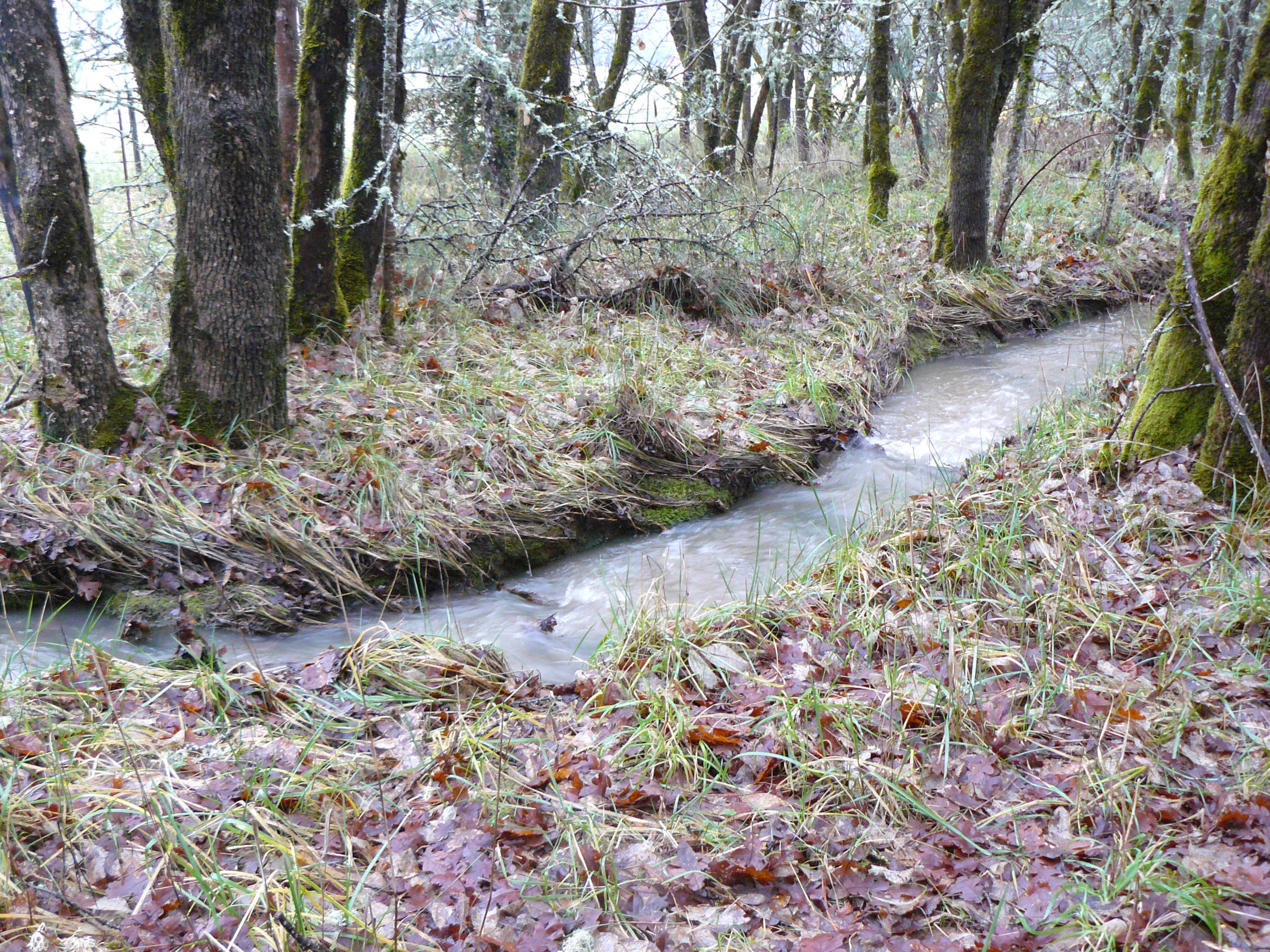
On the way of our driveway, that is a 1/4 mile long from the house to Hugo Road, it crosses over Bummer Creek. I took the following two pictures of the creek from the bridge.

Bummer Creek: looking upstream.

oooo

Bummer Creek: looking downstream.

Farewell the hazy, lazy, dry days of Summer!

Second footnote

The rain paused a little after 5pm and I managed to snap the following rather evocative (well to me, anyway) scenes of a misty outlook.

Mount Sexton to the North-East of us.

oooo

Fairy-tale scene??
Fairy-tale scene??

(Oh, and by 6pm the rain gauge was reading 3.6 in/9.14 cms)

Falling for the Fall!

Thirty seconds of pure joy!

As seen recently on the Care2 site.

Published on Oct 12, 2016
If this dog doesn’t get you excited for fall, nothing will.
Video by: Maggie McCarthy
Video footage provided by: Jukin Media

Apologies for the brevity of the post; just wasn’t sure how long internet connectivity was going to last!

Returning to the wet dogs season!

We most certainly need the rain but …..

Pharaoh playing in Bummer Creek after Autumn rains in 2013.

The weather forecast for the next few days is ‘interesting’!

From Grants Pass Weather:

Thursday Rain. High near 68. East wind 5 to 7 mph becoming calm. Chance of precipitation is 100%. New precipitation amounts between a half and three quarters of an inch possible.
Thursday Night Rain. The rain could be heavy at times. Low around 51. South southeast wind 10 to 18 mph becoming southwest in the evening. Winds could gust as high as 28 mph. Chance of precipitation is 100%. New precipitation amounts between 1 and 2 inches possible.
Friday Rain before 11am, then showers after 11am. High near 65. South southwest wind around 11 mph. Chance of precipitation is 90%. New precipitation amounts between a quarter and half of an inch possible.
Friday Night A chance of showers before 11pm, then rain likely after 11pm. Cloudy, with a low around 53. Chance of precipitation is 70%.
Saturday Rain. High near 65. Chance of precipitation is 100%.
Saturday Night Rain. Cloudy, with a low around 51.

The hydrologic report from the National Weather Service even more interesting (my emphasis and we are in Josephine County about 80 miles inland from the coast):

HYDROLOGIC OUTLOOK
NATIONAL WEATHER SERVICE MEDFORD, OR
333 PM PDT TUE OCT 11 2016

Hydrologic Outlook for significant rises on rivers and streams in
Sisikyou and Modoc counties in California and Coos, Curry, Douglas,
Jackson, Josephine, Klamath and Lake counties in Oregon.

A series of storms will move through the region beginning Thursday.
A strong jet stream stretching across the Pacific Ocean will bring
a steady stream of moisture into the Pacific Northwest with these
storms. This will result in heavy rainfall across the region. The
heaviest rainfall will be with the storm on Saturday as the remnants
of Typhoon Songda are pulled into the stream. Rainfall amounts of
over 6 inches at the coast and western Siskiyou county,to over
thirteen inches on the extreme southern coast can be expected
through Monday. Three to six inches can be expected inland to the
Cascades with one to two inches east of the Cascades from Thursday
to Monday. These forecast totals across the region are equal to or
higher than the totals normally seen through the entire month of
October.

While main stem rivers will experience significant rises due to
these storms, they are not expected to flood. Small streams and
urban areas could experience high water or even flooding where there
is poor drainage. As this is the first large storm of the rainy
season, there is the potential for debris to clog storm drains,
ditches and culverts resulting in flooding.

Another concern is the heavy rain falling on recent burn scars. If
you live downstream of a recent burn scar, or if you are just
driving through a burn scar, stay alert as there is a high risk of
flash flooding and debris flows in and below burned areas.

The exact scenario for flooding and high water remains uncertain.

These forecast totals across the region are equal to or higher than the totals normally seen through the entire month of October.”

As I said in the beginning, we most certainly need the rain, and with rain comes …

486b759b1c97151a9be677ed3974aaeaThank goodness we have nine dogs! 😉