Photos of Rum Creek Fire!
Not all that are available by any means! These were copied from the Facebook page.
oooo
oooo
oooo
oooo
oooo
oooo
oooo
oooo
Well done all those actively involved. We will see what the next week brings.
Dogs are animals of integrity. We have much to learn from them.
Category: Environment
Photos of Rum Creek Fire!
Not all that are available by any means! These were copied from the Facebook page.
oooo
oooo
oooo
oooo
oooo
oooo
oooo
oooo
Well done all those actively involved. We will see what the next week brings.
Just a brief update!
We have had gentle winds for Tuesday and Wednesday and there is good progress on the curtailment. So long as we don’t get more winds in the next 24 hours (writing this yesterday morning) then the firefighters will be able to keep up the good work.
The smoke has been bad and the whole area of Merlin and Grants Pass is affected.
But hopefully conditions will improve later on Thursday and more so on Friday.
The fire update, released around 10am yesterday, says:
MERLIN, Ore. – Overnight, the Rum Creek Fire pushed across the line on the east side of the fire near McKnabe Creek, burning several hundred acres. Resources are being shifted to this area to corral the slop-over and establish new control lines. An increase in fire activity is expected through Friday as the weather shifts to a hotter, drier pattern. Inversions are expected to lift earlier in the day, increasing temperatures and winds while reducing relative humidity.
As of early this morning, the fire was already burning actively on the ridges. Firefighters are expecting potential spot fires, and have shifted resources to continue alternate contingency fire lines to the east.
Last night firefighters successfully conducted burnouts on the south edge of the fire near Taylor Creek, eliminating remaining fuels between the control lines and the fire’s edge. Today, they will work to secure the southeast corner of the fire working toward the north. Hose lays and pumps have been set up along many control lines, including those constructed near Stratton Creek.
On the west edge of the fire, burnout operations near Mount Peavine and the 34 road have secured more of the western edge, and crews built line from Taylor Gulch toward Chrome Ridge. Today, fire personnel will tie the line from Chrome Ridge north to Bear Gulch, and are working near Ridge Gulch. North of the Rogue River, the line tying to the Dad Creek Fire scar is expected to be completed today.
Firefighters working with the OSFM are assisting with active fire suppression as needed. They are also extinguishing all remanent heat spots found within 100 feet of buildings, and continuing to assess structures. Also they are making preparations to include clearing brush and installing sprinklers, to further develop structure protection.
It is starting to look as though an evacuation for us at Hugo Road is more and more unlikely.
There is no post for today!
Although I admit that having this come out at the usual time for a Tuesday rather flies in the face of that sub-heading!
But on Sunday evening Merlin was placed in the first zone of the evacuation instructions. This follows the rapidly expanding Rum Creek Fire that is just West of us. Depending on what defines as the actual location of the fire we are anything from 5 to 9 miles away. Our home is on Hugo Road, Merlin.
The Rum Creek Fire 14 miles northwest of Grants Pass, Oregon has grown to 10,709 acres since it started from lightning on August 17. The fire is burning in very steep, remote, rugged terrain on both sides of the Rogue River. It has spread upriver to Galice and east to Stratton Creek. Spot fires have occurred two miles down range.
(Copied from Wildfire Today.)
So there you are!
There are not many who achieve so much, but Sir David most definately has!
This is our planet. It is the only one we have (stating the obvious!).
This beautiful photograph taken from the Apollo 11 mission says it all. That Commander Neil Armstrong and lunar module pilot Buzz Aldrin landed the Apollo Lunar Module Eagle on July 20, 1969 changed everything.
But one thing that was not on anyone’s mind then; the state of the planet!

How that has changed since 1969.
David Attenborough is a giant of a man, and I say this out of humility and respect for what he has done in his long life, he was born in May, 1926, and he is still fighting hard to get us humans to wake up to the crisis that is upon us.
Wikipedia has an entry that lists all the television shows, and more, that David Attenborough has made. As is quoted: “Attenborough’s name has become synonymous with the natural history programmes produced by the BBC Natural History Unit.”
Please take 45 minutes and watch this film. It is so important.
But before you do please read this extract taken from this site about the film:
For decades David Attenborough delighted millions of people with tales of life on Earth, exploring wild places and documenting the living world in all its variety and wonder. Now, for the first time he reflects upon both the defining moments of his lifetime as a naturalist and the devastating changes he has seen.
Honest, revealing and urgent, the film serves as a witness statement for the natural world – a first-hand account of humanity’s impact on nature, from Australia’s Great Barrier Reef to the jungles of central Africa, the North Pole and Antarctica. It also aims to provide a message of hope for future generations.
“I’ve had a most extraordinary life. It’s only now I appreciate how extraordinary,” Sir David says in the film’s trailer, in which he also promises to tell audiences how we can “work with nature rather than against it”.
The film retraces Sir David’s career, his life stages and natural history films, within the context of human population growth and the loss of wilderness areas. “I don’t think that the theoretical basis for the reason why biodiversity is important is a widely understood one,” he told the Guardian in September.
This autumn, a series of publications warned that “humanity is at a crossroads” in its relationship with nature, culminating in a UN report that the world has failed to meet a single target to stop the destruction of nature in the past decade.
Sir David has been vocal about the threat of climate change in recent years, calling on politicians to take their “last chance” to act rather than continue to “neglect long-term problems”.
“We need to learn how to work with nature, rather than against it”, according to Sir David. In the film, he is going to tell us how.
Now watch the film. Please!
As you can see, in the film Sir David states that the only way out of this mess is a massive focus on rewilding.
Coincidentally, Patrice Ayme last Sunday wrote about rewilding: California Grizzly: Rewilding Is A Moral Duty. In the latter half of that essay, he wrote: “One should strive to reintroduce American megafauna, starting with the more innocuous species (and that includes the grizzly). By the way, I have run and hiked in grizzly country (Alaska), with a huge bear pepper spray cannister at the ready. I nearly used the cannister on a charging moose (with her calf which was as big as a horse). The calf slipped off, and I eluded the mom through a thicket of very closely spaced tough trees. But I had my finger on the trigger, safety off. Moose attack more humans than grizzlies and wolves combined (although a bear attack is more dangerous). In any case, in the US, stinging insects kill around 100, deer around 200 (mostly through car collisions), and lightning around three dozen people, per year.
As it is, I run and hike a lot in California wilderness, out of rescue range. I generally try to stay aware of where and when I could come across bears, lions and rattlers. My last close call with a large rattlesnake, up a mountain slope, was partly due to hubris and not realizing I was moving in dangerous terrain. Fortunately I heard the slithering just in time. Dangerous animals make us aware of nature in its full glory, and the real nature of the human condition. They keep us more honest with what is real, what humanity is all about.
And that should be the primordial sense.“
I will close by offering you this photograph. May it inspire you to rewild, in small ways and also, if you can, in bigger ways. All of us must be involved. Otherwise…

…otherwise… (sentence left unfinished).
It all makes sense now.

“Do what you can, with what you have, where you are.” “Believe you can and you’re halfway there.” “It is hard to fail, but it is worse never to have tried to succeed.”
“It is not the critic who counts; not the man who points out how the strong man stumbles, or where the doer of deeds could have done them better.”
This famous quotation by Teddy Roosevelt (1858-1919), the 26th President of the USA, seems apt for today’s post.
Exactly one week ago I published a post called Musings from a 77 year old! I wrote that the future was uncertain. Summed up at one point by me writing: “I have no idea of the global changes that are afoot and how they will affect us in Merlin. Indeed, I have no idea how long I have to live.“
Margaret (from Tasmania) was one of the many people who responded. She included a video interview of Meg Wheatley by Michael Shaw. It is an hour long. Last Friday afternoon Jean and I watched it in full and it was incredibly interesting. Thank you very much, dear Margaret.
But before I present Meg’s video again I want to show you another video. It is a talk by Richard Grannon about the collapse of our civilisation. Now Richard Grannon is an author, YouTuber and life coach so one needs to remain impartial to his views, certainly before one does further research. But in the 46-minute talk I think there is much sense in what he says. See for yourself:
Moving on! The interview of Meg Wheatley is very good indeed. It’s a broad look at the issues and problems governing society but done in such a way that the people who watch her will also take away a number of tools for avoiding depression and anxiety. Meg places great store on the Hopi Native American Indians: “The Hopi maintain a complex religious and mythological tradition stretching back over centuries.“
Meg quotes one of the more famous Hopi prophecies, that is reproduced below:
This could be a good time! There is a river flowing now very fast. It is so great and swift that there are those who will be afraid. They will try to hold on to the shore. They will feel they are being torn apart and will suffer greatly. Know the river has its destination. The elders say we must let go of the shore, push off into the middle of the river, keep our eyes open, and our heads above the water.
And I say, see who is in there with you and celebrate. At this time in history, we are to take nothing personally, least of all ourselves. For the moment that we do, our spiritual growth and journey come to a halt.
The time of the lone wolf is over. Gather yourselves! Banish the word ’struggle’ from your attitude and your vocabulary. All that we do now must be done in a sacred manner and in celebration.
We are the ones we’ve been waiting for.

Here is that Meg Wheatley interview. (It is an hour long but very interesting; please watch it!)
I want to pick up the topic that was at the end of her interview; that of societal collapse. How would one define it? I chose Wikipedia for a reference.
Societal collapse (also known as civilizational collapse) is the fall of a complex human society characterized by the loss of cultural identity and of socioeconomic complexity, the downfall of government, and the rise of violence.[1]Possible causes of a societal collapse include natural catastrophe, war, pestilence, famine, economic collapse, population decline, and mass migration. A collapsed society may revert to a more primitive state, be absorbed into a stronger society, or completely disappear.
Virtually all civilizations have suffered such a fate, regardless of their size or complexity, but some of them later revived and transformed, such as China, India, and Egypt. However, others never recovered, such as the Western and Eastern Roman Empires, the Maya civilization, and the Easter Island civilization.[1] Societal collapse is generally quick[1] but rarely abrupt.[2] However, some cases involve not a collapse but only a gradual fading away, such as the British Empire since 1918.[3]
Anthropologists, (quantitative) historians, and sociologists have proposed a variety of explanations for the collapse of civilizations involving causative factors such as environmental change, depletion of resources, unsustainable complexity, invasion, disease, decay of social cohesion, rising inequality, secular decline of cognitive abilities, loss of creativity, and misfortune.[1][4] However, complete extinction of a culture is not inevitable, and in some cases, the new societies that arise from the ashes of the old one are evidently its offspring, despite a dramatic reduction in sophistication.[4] Moreover, the influence of a collapsed society, such as the Western Roman Empire, may linger on long after its death.[5]
The study of societal collapse, collapsology, is a topic for specialists of history, anthropology, sociology, and political science. More recently, they are joined by experts in cliodynamics and study of complex systems.[6][4]
The article is much more extensive than I have quoted above and for anyone deeply interested then I do recommend you going to the article and reading it extensively.
Now Meg is of the opinion that it is too late to turn back but next Tuesday I want to talk to you about Sir David Attenborough’s film A Life on our Planet. That he believes there is a chance to undo the harm we are causing to the planet; through rewilding.
Until then!
Where did it all go? That is: Life! Or more accurately my life.
I was born in Acton, London before the end of WWII. I am in my 77th year. Life these days seems to be more or less a paradox.
There are so many challenges at the moment. Not just in the USA nor in the UK but globally. We love where we live here in rural Merlin but we are already in the third year of below normal rainfall.
The contradictions in terms of our life locally and the global scene are huge. This is all leading to me quoting extracts from a recent George Monbiot article. The article starts by saying: “On both sides of the Atlantic, powerful interests seem determined to trigger the collapse of life on Earth. Why?“
A little later on in Geo. Monbiot’s article, he writes: “When I began work as an environmental journalist in 1985, I knew I would struggle against people with a financial interest in destructive practices. But I never imagined that we would one day confront what appears to be an ideological commitment to destroying life on Earth. The UK government and the US supreme court look as if they are willing the destruction of our life support systems.“
Because it does seem as though the political leaders are not taking the future of the planet seriously. As Patrice Ayme concluded recently in a remark to that post: “Biden ought to declare a climate emergency.” But it won’t happen!
(Well I may stand corrected. Yesterday it was widely reported, and I chose Renewable Energy: “The clean energy industry celebrated a moment on August 7 that would have seemed impossible just a few weeks earlier: The Senate passed a budget measure that includes the largest investments in clean energy and climate change in U.S. history.“)
Every morning when I go down to feed our two ex-rescue horses I also feed the wild deer. I have been doing it for many years. Long enough that a young buck has turned into an adult and comes within a few feet of me.
It never ceases to delight.
The contradiction between me going every morning down to the stable area and feeding the horses and the wild deer, and the outcome for the planet is beyond words. In a very real way it is incomprehensible.
Again, Geo. Monbiot writes: “All this might seem incomprehensible. Why would anyone want to trash the living world? Surely even billionaires want a habitable and beautiful planet? Don’t they like snorkelling on coral reefs, salmon fishing in pristine rivers, skiing on snowy mountains? We suffer from a deep incomprehension of why such people act as they do. We fail to distinguish preferences from interests, and interests from power. It is hard for those of us who have no desire for power over others to understand people who do. So we are baffled by the decisions they make, and attribute them to other, improbable causes. Because we do not understand them, we are the more easily manipulated.”
It really is a paradox! And who knows the outcome. All I can say is that, despite me being the age I am, I would not want to be any younger and aware that soon one would be facing the global changes full on.
More words from Geo. Monbiot: “Since 1985, I’ve been told we don’t have time to change the system: we should concentrate only on single issues. But we’ve never had time not to change the system. In fact, because of the way in which social attitudes can suddenly tip, system change can happen much faster than incrementalism. Until we change our political systems, making it impossible for the rich to buy the decisions they want, we will lose not only individual cases. We will lose everything.”
I have no idea of the global changes that are afoot and how they will affect us in Merlin. Indeed, I have no idea how long I have to live.
Jean and I met in December, 2007. We met in Mexico but Jean was also born in London, just a few years after me. How’s that for chance!
Jean’s American husband had died in 2005. She was rescuing dogs off the streets, sorting them out, and finding homes for them, mainly in Arizona.
I went out to Mexico with Pharaoh in 2008. With a one-way ticket!
However of one thing I am sure. Since that meeting in December, 2007 life has been as good as it comes. I have never been happier.
What a contradiction!
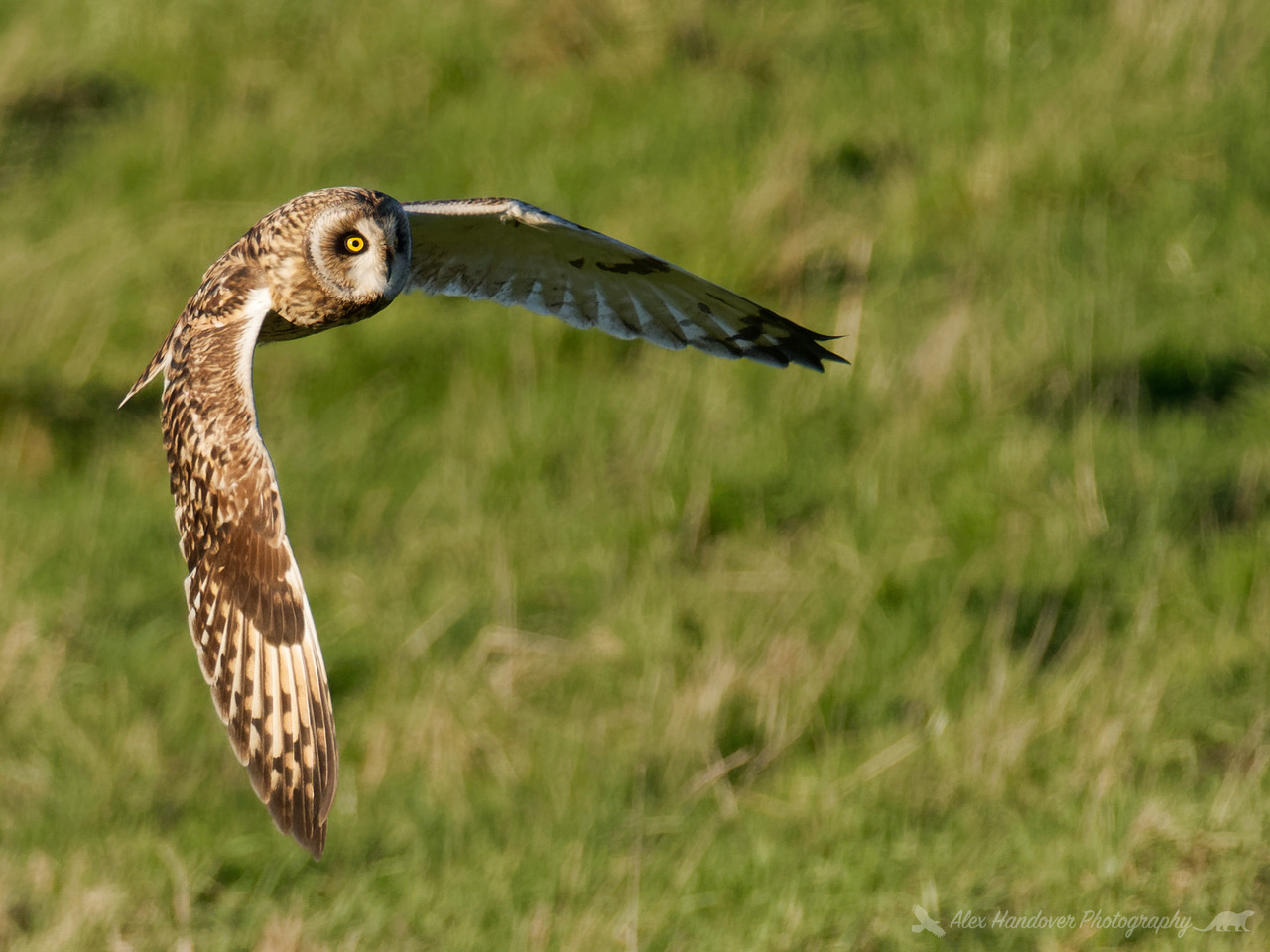
The second selection of my son’s photographs.
oooo
oooo
oooo
oooo
oooo
oooo
Well I for one just loved all these photographs from today and last Sunday. They were taken on the Isle of Mull.
A very special treat! And for those that either haven’t seen the first set of photographs or want to be reminded of what Alex said, here are his words again.
Was very lucky to spot this Otter Family whilst on a guiding trip with Brian Boyes and Lisa Williams on the Isle of Mull, the Mum fed the young pups three fish, we watched from the road and then later using Brian’s advice, quietly settled into the rocks and watched the Mum come right past us, a fantastic encounter and these are only a few of the photos I got.
Without breaking the bank!
Another very useful guest post from Penny Martin who is becoming a very regular contributor to this place. This time Penny writes about being on a budget, aren’t we all, but still keeping your dog safe and happy.
ooOOoo

Six Ways to Make Your Home and Yard Dog-Friendly on a Budget
By Penny Martin.
Dogs add many wonderful things to their owners’ lives; however, owning a dog can be a drain on your bank account. According to statistics, the average American dog owner spends $1,480 per year on dog expenses. These tips can help you make your home and yard more dog-friendly without breaking the bank.
1. Add a Fence
Dogs need exercise, a place to go to the bathroom and a chance to sniff around and be a dog. However, if you don’t have a yard with a secure fence, it isn’t safe to allow your dog outside without a leash. Even a well-trained dog may run off to chase a squirrel, greet a strange dog or go exploring. This puts your dog at risk of being hit by a car, getting in a fight with another dog or animal or becoming lost. Adding a fence to your yard allows you to enjoy time with your pet off leash without risking your pet’s safety.
2. Add a Backyard Pool
Not every dog loves to swim, but many do. You can give your dog a place to cool off and have some fun without spending a lot of money by purchasing a wading pool or a small stock tank. If you think your dog would enjoy more than splashing around, search for a dog-friendly place in your area where you can inexpensively take your dog to swim. However, don’t just toss your pup into the deep end. Not all dogs are natural swimmers. Many facilities that have pools for dogs offer swimming lessons.
3. Create Shady Spots
Dogs love to run and play and on hot days they can easily overheat. Help your dogs stay cool by making sure they have plenty of shady spots to hang out. One inexpensive way to do this is to purchase a portable awning. You can set the awning up anywhere in your yard and put it away when you no longer need it. Trees are also a good source of shade, but it is important to keep your trees maintained.
4. Remove Dead Trees and Branches
Dead trees create a safety hazard and provide a home for pests. Have a professional local tree service remove any dead trees and branches in your yard before they cause an injury or accident. Do not try to remove the tree yourself. Professionals have the right gear, tools and safety training to remove the tree safely and without damaging your property. Read online reviews before you reach out to contractors. Get at least three estimates and make sure to ask whether stump grinding and disposal are included in the price.
5. Buy Trash Cans With Lids
Trash cans are smelly, full of tasty food and plenty of stuff to shred. It is no wonder that most dogs love to root through them. However, spoiled food, sharp objects or toxic materials can injure or sicken your dog. Avoid this problem by purchasing trash cans with lids that lock.
6. Remove Dangerous Plants
Many plants can be harmful to dogs who ingest them. Research the plants in your yard and remove any that could cause a problem.
Owning dogs is not a cheap endeavor. However, you can make your home safe and comfortable for them without spending all your savings by adding a fence and pool, creating shady spots, removing dead trees, purchasing garbage cans with lockable lids, and getting rid of poisonous plants.
ooOOoo
Here at home, because we live in a rural location, dead trees and branches are an ever-present problem. Luckily our dogs don’t seem to be drawn to them but the issue of pests is a different matter. We have thirteen acres of which half is forest and it is all too much for a contractor. Correction: It is all too expensive for us!
For the wider audience of readers this, I am sure, offers very good advice and is another great post from Penny.
A complete change of photos but I guarantee you will love these!
My son, Alex, and his partner, Lisa, recently returned from a vacation on the Isle of Mull. This is a Scottish island lying off the west coast of the mainland. (Home for Alex and Lisa is just outside Bristol in the south-west of England.) Between them they took many photographs.
For the next two Sundays I want to share the photos that Alex took of the otters, eight today and seven next Sunday.
Here is the introduction that Alex wrote on Facebook.
Was very lucky to spot this Otter Family whilst on a guiding trip with Brian Boyes and Lisa Williams on the Isle of Mull, the Mum fed the young pups three fish, we watched from the road and then later using Brian’s advice, quietly settled into the rocks and watched the Mum come right past us, a fantastic encounter and these are only a few of the photos I got.
oooo
oooo
oooo
oooo
oooo
oooo
oooo
These are absolutely gorgeous and that’s an understatement!
More on a recent post from The Dodo.
We watched recently a documentary on Netflix about the special attributes of our pets. It was very good but one thing that we learnt was that dogs have on the tips of their snouts an area that can pick up warmth. Because when dogs are tiny puppies and still blind they find their mothers’ teats by homing in on the warmth of the mother’s body.
Many people are aware of the scenting ability of the dog. To quote: “While humans have about five million olfactory receptors in their noses, dogs are said to have around 300 million.”
(Read that article that I linked above for it is very good.)
ooOOoo
Published on the 6th June, 2022.
One of Hime’s favorite pastimes is a simple one: sit near a nature path and patiently wait for nose boops. The 13-year-old Siberian husky figured out long ago that, eventually, she’ll get what she came for.
“She likes that spot so she can watch the world go by,” David Nagadhana, Hime’s dad, told The Dodo. “But she has other strategies.”
Hime, who was adopted as a puppy, hitches a ride in Nagadhana’s bike trailer to get to the best petting spots.
“I cycle her because of her arthritis,” Nagadhana said. “Gentle in her old age, [Hime] looks for affection anywhere she can find it.”
The husky’s place of choice is by the Thames in Richmond, England, but Nagadhana takes her wherever she seems happiest.
“She loves finding new and interesting and exciting locations so that she may proceed to nap in them,” Nagadhana said. “She finds it relaxing enough to nod off on occasion.”
Nagadhana and Hime do everything together, and it won’t stop anytime soon.
“She was there for me when life ground to a halt during the pandemic,” Nagadhana said. “I’ll be there for her until the end. Raising dogs is like a rainbow. Puppies are the joy at one end, old dogs are the treasure at the other.”
Needless to say, Hime gets endless boops from her favorite person: Dad.
(All photographs by DAVID NAGADHANA.)
ooOOoo
One turns to the American Kennel Club for information about the breed, as in the Siberian Husky, and this is what is found:
Siberian Husky, a thickly coated, compact sled dog of medium size and great endurance, was developed to work in packs, pulling light loads at moderate speeds over vast frozen expanses. Sibes are friendly, fastidious, and dignified. The graceful, medium-sized Siberian Husky’s almond-shaped eyes can be either brown or blue ‘and sometimes one of each’, and convey a keen but amiable and even mischievous expression. Quick and nimble-footed, Siberians are known for their powerful but seemingly effortless gait. Tipping the scales at no more than 60 pounds, they are noticeably smaller and lighter than their burly cousin, the Alaskan Malamute. As born pack dogs, they enjoy family life and get on well with other dogs. The Sibe’s innate friendliness render them indifferent watchdogs. These are energetic dogs who can’t resist chasing small animals, so secure running room is a must. An attractive feature of the breed: Sibes are naturally clean, with little doggy odor.
There!