In Japan, fishermen round up and slaughter hundreds and even thousands of dolphins and other small whales each year.In the small fishing village of Taiji, entire schools of dolphins are driven into a hidden cove after a prolonged chase. Once trapped inside the cove, the fishermen kill the dolphins, slashing their throats with knives or stabbing them with spears. The water turns red with their blood, and the air fills with their screams.
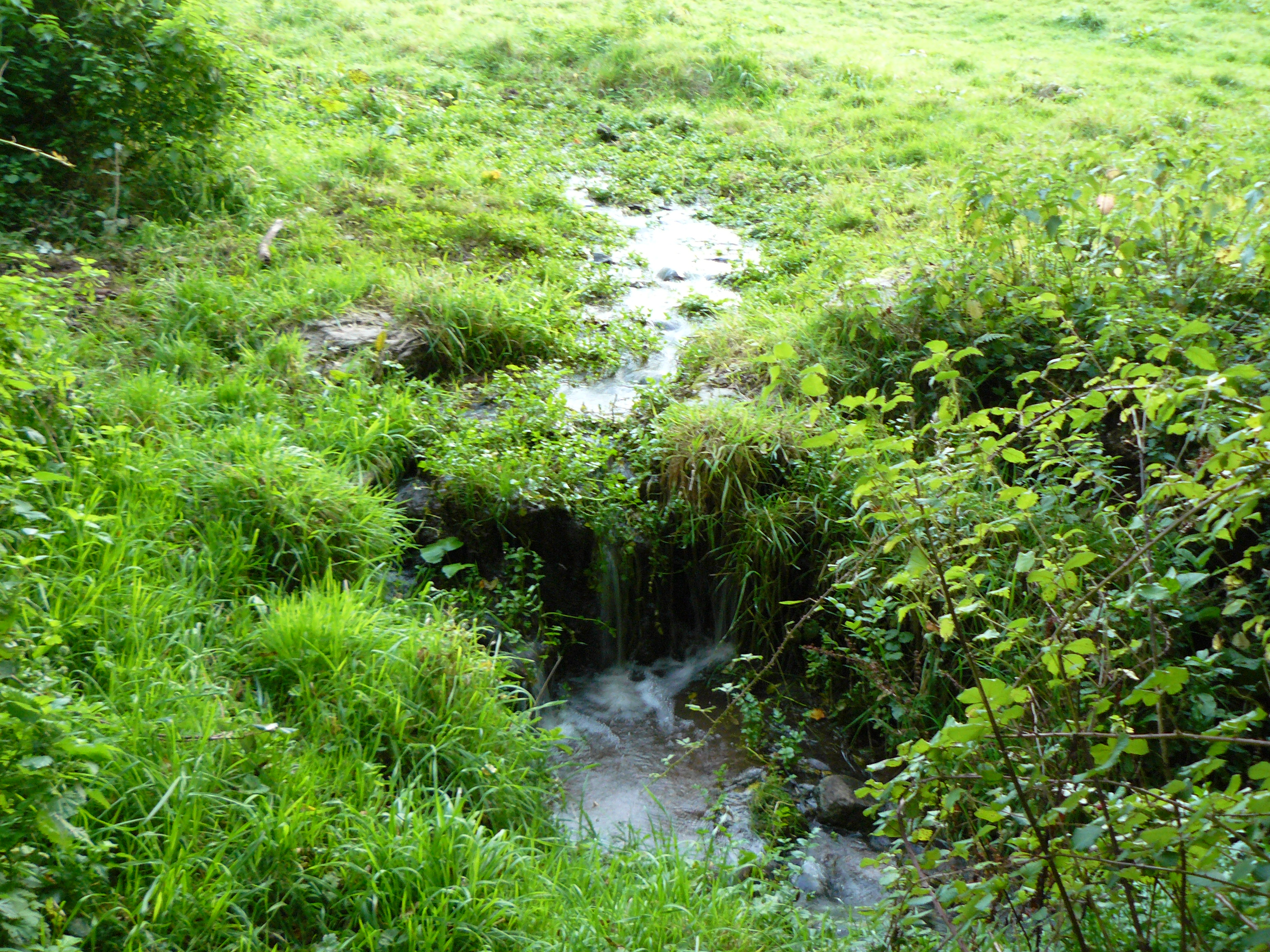
Celebrating the beautiful Planet Earth and a stream running through a field
Evening peace
Today is Blog Action Day and the theme is water. It seemed a worthwhile cause so Learning from Dogs has joined the many thousands of Bloggers ‘speaking’ to millions of combined readers.
I have no idea what aspects of water will be covered by all those many authors but Blog Action Day sets the theme thus:
Why Water?
Right now, almost a billion people on the planet don’t have access to clean, safe drinking water. That’s one in eight of us who are subject to preventable disease and even death because of something that many of us take for granted.
Access to clean water is not just a human rights issue. It’s an environmental issue. An animal welfare issue. A sustainability issue. Water is a global issue, and it affects all of us.
I’m staying over in SW England at present with friends who live in a beautiful part of the County of Devon and that means plenty of lovely walks. Just a few days ago, the setting sun was glorious across the green rolling hills that are so typical of South Devon.
But this day is about water. That bountiful gift from a wonderful planet perfectly positioned from our Sun.
Work to line the top of an escape shaft with metal tubing is expected to finish in the next few hours at the mine where 33 men are trapped in northern Chile.
A winch and pulley will be installed and the shaft tested before the rescue begins, it is hoped, on Wednesday.
Amid the final preparations for the rescue the Chilean health minister said some of the miners were gallantly insisting they should be last to leave.
And some wonderful pictures on the BBC website here.
I’m sure the vast majority of Learning from Dogs readers will be on top of the news that is spreading around the globe reporting that the Chilean miners have been reached. Here’s the BBC:
Rescuers have drilled through to the underground chamber where 33 Chilean miners have been trapped since August.
The breakthrough at the San Jose mine came shortly after 0800 local time (1200 GMT).
It means efforts to remove the miners through the tunnel should begin within days. Tim Willcox was at the mine when the breakthrough happened.
Rescuer workers have broken through to the 33 Chilean miners trapped half a mile underground.
Engineers and relatives of the men began celebrating on Saturday morning after the escape shaft reached the point where the miners have been stuck now for over two months.
Mining minister Laurence Golborne warned though it could take days before attempts start to remove the men from the San Jose mine.
All fabulous news.
Picture from the Daily Mail online.
Contact: Rescue workers broke through to the 33 trapped Chilean miners earlier on Saturday morning
I don’t know about you but I’m picking up more and more ‘vibes’ from all over the place that strongly suggest an increasing awareness of the need for real change in society. Anyway, more of this another time.
My article today is base on an editorial in the Mole Valley Farmers Newsletter
MVF logo
for October 2010 (no. 557). First some background to this organisation.
Mole Valley Farmers was started in 1960 by a small group of farmers around South Molton* who were concerned by the discriminatory practices and the large margins being taken by many of their input suppliers. From the outset it was decided to treat all members equally, subject only to quantity allowance and that the Company would operate on the minimum margin to allow continuity and growth. Today it remains one of a few true co-operatives in the supply industry.
Mole Valley Farmers consists of:
Nine branches in the south west supplying a vast range of goods to farmers and the public alike. These range from farm requirements to clothing, footwear, garden supplies, pet food and accessories, domestic goods and power tools
Our own feed mills for all animal feeds
Fertiliser blending plants
A specialist mineral plant
A quality farm building division
Of special importance are our farmer customers who purchase animal feed, fertilisers and minerals, all manufactured to a high specification by Mole Valley Farmers and delivered direct from point of manufacture to farm or to branches for collection in small lots.
* South Molton is in Devon, England about half-way between Barnstaple and Tiverton and the history of this interesting firm may be found here.
I have to declare a certain interest in that when I lived in Harberton, Devon for a number of years, we were non-farmer Members of Mole Valley Farmers for feed for our chickens and ducks and later on for Pharaoh. So when I arrived to stay recently for a week with friends in Brixham, Devon, my eye quickly picked up the familiar look of the MVF Newsletter lying on the table.
This is the editorial, reproduced in full with the kind permission of the Newsletter editor, from the pen of David Burke, Chairman of MVF.
Commodity trading
Until relatively recently, the price of food was set by the forces of supply and demand for the food itself, which worked reasonably well in developed countries able to purchase in times of shortage. For the last century farmers have been able to reduce some of the market risk by forward selling crops to a trader in that market, at a price that fair to both parties.
This type of trading was tightly regulated and only those who were directly involved could participate and it worked well. At some time in the mid-90s, Goldman Sachs, with other financial institutions, successfully lobbied for the regulations to be abolished.
Forward contracts became derivatives, which could be bought and sold repeatedly by traders, which enabled the financial institutions to become involved. This type of investment really took off when the American and European pension market collapsed, together with that for normally traded derivatives like metals, prior to the recession, although actual food supply and demand remained relatively in balance. Last year Goldman Sachs reportedly made £3.2bn profit from derivatives trading.
In spite of Russia’s grain export ban and some other weather affected harvests, both the EU commission and the International Grains Council report more than adequate reserves of grain to meet demand and that the carry-over stocks are likely to be the second highest for years. The rumoured (but non-existent) wheat shortage that is driving up all feed prices, is entirely due to actions of the world’s principle investment bankers and their investors, which have serious implications throughout the globe. Whilst few in the developed world mostly in the Northern Hemisphere, will go hungry, it is a growing tragedy for the poorer countries in the Southern Hemisphere where three-quarters of the world’s population live. According to the Food and Agricultural Organisation, one third of the population lack food security and 792m people there are undernourished to varying degrees of starvation. But most damning of all, some 12m children die annually of malnourishment. Derivative speculation, which pushes up the cost of grains and in particular wheat, is responsible for food inflation that is proportionally greater for the impoverished nations.
Re-regulation of the basic food market to prevent a recurrence of the spikes of 2007 and 2010 would go some way to stabilising global food costs and help with developing nations, though without a great deal of pressure from compassionate people, this will be difficult, given the influence that the world’s richest investors have over governments. Alternatively, primary food producers worldwide are paid a high enough price for their produce to enable them to invest in research and best practice, as well as in efficient equipment. This concept received the approval of the European Parliament on 9th September and although they are considering legislation to ensure farmers receive a fairer share of the consumer price, it may be difficult to implement other than through a properly funded and regulated CAP.
Well said, Mr Burke.
NB. The web links in Mr Burke’s article have been inserted by me, they were not in the original article.
Fascinating research on how dolphins develop ‘speech’
Once again, I am indebted to Yves Smith for posting a link in the edition of Naked Capitalism published on the 1st October that really caught my eye. This follows nicely after my piece a couple of days ago about how the stray dogs in Moscow are learning new ways to survive.
It was a piece on the BBC Earth website about how dolphins attempt to learn the language of other dolphin groups.
The BBC article starts thus:
Just magnificent
When two dolphin species come together, they attempt to find a common language, preliminary research suggests.
Bottlenose and Guyana dolphins, two distantly related species, often come together to socialise in waters off the coast of Costa Rica.
Both species make unique sounds, but when they gather, they change the way they communicate, and begin using an intermediate language.
That raises the possibility the two species are communicating in some way.
Biologist Dr Laura May-Collado of the University of Puerto Rico in San Juan made the discovery studying dolphins swimming in the Gandoca-Manzanillo Wildlife Refuge of the southern Caribbean coast of Costa Rica.
Later the article says:
As yet, Dr May-Collado cannot be sure if both species are changing the way they communicate, or whether it is one species attempting to call more like the other.
That is because her sound equipment could only record the total calls produced by mixed species groups of dolphins, and could not separate out sounds made by individuals.
“This limits how much I can say about how much they are communicating,” says Dr May-Collado.
However, dolphins are known to have an extraordinary ability to change their calls when ‘talking’ to other individuals, or to ensure they are heard over the din of background noise pollution.
So “I wouldn’t be surprised that they can modify their signals to mimic, and even possibly communicate with other species. Particularly when their home ranges force them to interact on a daily basis, which is the case of this study,” she says.
(With thanks to Dan Gomez for forwarding the email from Bill Wells)
A quick Google search will find lots of links to stories about how stray dogs in Moscow are learning new ways of looking after themselves. My quotes and pictures have been taken from the English-Russia web site.
Russian scientists say that Moscow stray dogs became much smarter. The four legged oldest human’s friends demonstrate real smartness such as riding the Moscow metro every morning to get from their suburban places of living to the fat regions of Moscow center. Once they arrive to the downtown they demonstrate different new, previously unseen for the dog skills. Those skills can include “the hunt for shawarma” for example, the popular among Muscovites eastern cuisine dish. This hunt scene can be seen as this:
Regular Moscow busy street with some small food kiosks. A middle-aged man buys himself a piece of hot fast food and walks aside chewing it without a rush. Then just in a second he jumps up frightened – some doggy has sneaked up on him and barked out loudly. His tasty snack falls out from his hands down to the ground and the dog gets it. Just ten minutes later, on the same place, the teen youngster loses his dinner in exactly the same manner. The modern Russian dogs are on their urban hunt.
“This method of ambushing people from their back is widely exercised by Moscow dogs”, saying A. Poiarkov, working in Ecology and Evolution Institute of Moscow. “The main point here is to define who would drop the food scared and who won’t, but the dogs are great psychologists they can do it better than us”.
Cheap travelling!
Moscow ecologists think that dogs started acquiring this habits in 1990s, when the Soviet union collapsed and Moscow has fell into the hands of new class of Russian capitalists. They understood the true value of the downtown realty underestimated by previous Communist owners and became removing all the industrial complexes Moscow had in its centre to its outskirts. Those places were used by homeless dogs as a shelter often, so the dogs had to move together with their houses, so they had to learn how to travel Moscow subway – first to get to the centre in the morning then back home in the evening, just as us people.
The commercial revolution of Moscow made their usual feeding places like trash bins out of direct reach, so they had to get to know new ways of getting their piece of food. That’s how appeared those “Shawarma hunts”. Sometimes though they use more gentle methods. Young girl sits on the bench to eat her hot dog – a big cute looking dog appears from the surrounding bushes and puts her head on her knees. The girl can’t help herself sharing the hotdog with a dog.
Among some more amazing skill those Moscow dogs are the ability not to miss their stop while going on the subway train. Biologists say dogs have very nice sense of time which helps them not to miss their destination. Another skill they have is to cross the road on the green traffic light. “They don’t react on color, but on the picture they see on the traffic light”, Moscow scientist tells. Also they choose often the last or the first metro car – those are less crowded usually.
It’s funny but the ecologists studying Moscow stray dogs also tell the dogs don’t miss a chance to get some play while on their travel in the subway. They are fond of jumping in the train just seconds before the doors shut closed risking their tails be jammed. “They do it for fun, just they have enough food”, they conclude.
"Wake me up at the next stop, please!"
Here’s a video from YouTube courtesy of the Wall Street Journal – wet eye warning!
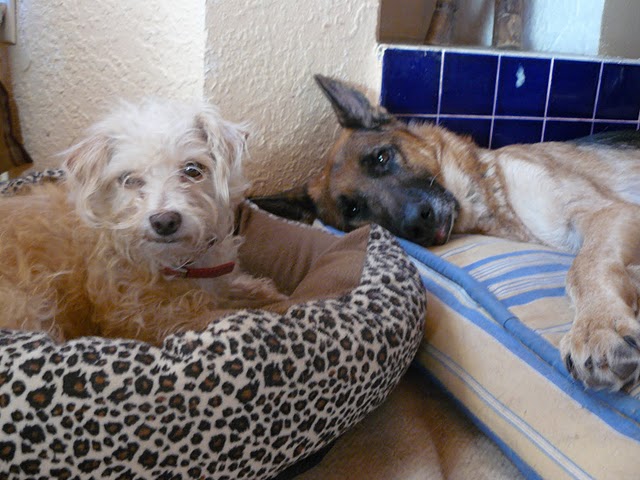
Jeannie and I would be helpless in Moscow! Reason? We have 12 ex-stray Mexican dogs living with us in Payson plus my beautiful German Shepherd dog, Pharaoh, that came with me when I left the UK in 2008. We can’t resist helping these wonderful creatures.
Pharaoh with little Poppy, a stray found on a Mexican building site
See more pictures from that English-Russia web site here.
What would that be? Finding evidence that there is intelligent life on another planet.
With the assumption, of course, that there is intelligent life on Planet Earth 😉
So what prompted this article?
Simply that the British Magazine The New Scientist on its website has a recent article with the intriguing heading of Found: first rocky exoplanet that could host life.
Here are some extracts:
Astronomers have found the first alien world that could support life on its surface. It is both at the right distance from its star to potentially harbour liquid water and probably has a rocky composition like Earth.
The planet orbits a dim red dwarf star 20 light years from Earth called Gliese 581. Four planets were already known around the star, with two lying near the inner and outer edges of the habitable zone, where liquid water – and therefore potentially life – could exist on its surface.
A rocky world has been found squarely in the middle of the star Gliese 581's habitable zone (Image: Lynette Cook)
The discovery suggests habitable planets must be common, with 10 to 20 per cent of red dwarfs and sun-like stars boasting them, the team says. That’s because Gliese 581 is one of just nine stars out to its distance that have been searched with high enough precision to reveal a planet in the habitable zone.
“If you take the number of stars in our galaxy – a few hundred billion – and multiply them by 10 or 20 per cent, you end up with 20 or 40 billion potentially habitable planets out there,” says Vogt. “It’s a very large number.”
For more years than I can imagine, I have always thought that the most amazing scientific find of my lifetime would be the discovery of life on another planet.
I’m 65 at present – wonder what the odds are? But surely this announcement by The New Scientist does increase them?
The Center for the Advancement of Steady State Economy
My post published a short while ago contained a contribution from Carla. This, in part, is what she said:
We have to try to work constructively for change. I keep urging people to check out the potential for an economy based not on constant growth, which is impossible on a finite planet, but on some sane principles of equity and sustainability.
If you go to http://www.steadystate.org and look at their position statement, you can see that people from all over the world are signing on–yes, just three or four people a day–but they are from every continent and just about every country.
Now, can you help this “go viral”?
I spent sufficiently long at the CASSE website to be comfortable that it is well worth supporting. Here are the members of the Executive Board. Here are the staff and here are their advisors. Here’s their Mission:
The mission of CASSE is to advance the steady state economy, with stabilized population and consumption, as a policy goal with widespread public support. We pursue this mission by:
educating citizens, organizations, and policy makers on the conflict between economic growth and (1) environmental protection, (2) ecological and economic sustainability, and (3) national security and international stability;
promoting the steady state economy as a desirable alternative to economic growth;
studying the means to establish a steady state economy.
Even if you don’t want to make a financial subscription to CASSE you can still register your support. Here is their Position Statement:
The CASSE position sets the record straight on the conflict between economic growth and environmental protection. Climate change, biodiversity loss, and pollution are just three powerful examples. And how will the next generation find jobs when the planet can’t support our overgrown economy? The CASSE position calls for a desirable solution – a steady state economy with stabilized population and consumption – beginning in the wealthiest nations and not with extremist tactics. Join the likes of E. O. Wilson, Jane Goodall, and David Suzuki; fill in the information below to sign the position and support a healthy, sustainable economy.
Go for it. After all, one of the definitions of madness is to continue doing the same thing and expect a different result.







 Learning from Dogs