Category: Environment

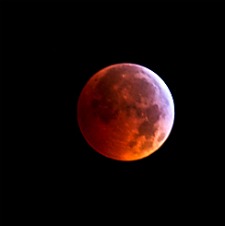
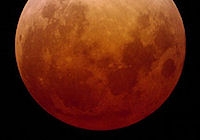
That beautiful lunar eclipse

As it happens, here in Payson at 01:15 am on the morning of Tuesday, 21st December, low broken cloud was obscuring the moon much of the time.  But nonetheless the pale outline of the darkened moon was visible, sitting above the constellation of Orion.  Very, very mystical.

Here’s what it looked like without the cloud, thanks to a Google search for images.

Dec 21st 1638; Dec 21st 2010; Dec 21st 2094

And a late update, thanks to Pete N (via Facebook) who spotted this wonderful video recently placed on YouTube.

which then highlighted this video taken by the Kurdistan Planetarium – these are amazing examples of the power of our new virtual world in sharing images across so many peoples.

Solstice Lunar Eclipse

(Again, thanks to Dan G for highlighting this.)

If you want to see this solar eclipse then read the times carefully – to assist, I am publishing this Post much earlier than normal, at 18:00 US Mountain Time (UTC -7hrs) on Monday, 20th December.  Oh, and more information at Spacedex here.

SOLSTICE LUNAR ECLIPSE
by Dr. Tony Phillips
Reprinted from http://science.nasa.gov ( but this link address is better. Ed.)

Dec. 17, 2010:  Everyone knows that “the moon on the breast of new-fallen snow gives the luster of mid-day to objects below.”

That is, except during a lunar eclipse.

The luster will be a bit “off” on Dec. 21st, the first day of northern winter, when the full Moon passes almost dead-center through

A similar lunar eclipse in Nov. 2003. Credit: Jim Fakatselis.

Earth’s shadow. For 72 minutes of eerie totality, an amber light will play across the snows of North America, throwing landscapes into an unusual state of ruddy shadow.

The eclipse begins on Tuesday morning, Dec. 21st, at 1:33 am EST (Monday, Dec. 20th, at 10:33 pm PST). At that time, Earth’s shadow will appear as a dark-red bite at the edge of the lunar disk. It takes about an hour for the “bite” to expand and swallow the entire Moon. Totality commences at 02:41 am EST (11:41 pm PST) and lasts for 72 minutes.

If you’re planning to dash out for only one quick look — it is December, after all — choose this moment: 03:17 am EST (17 minutes past midnight PST). That’s when the Moon will be in deepest shadow, displaying the most fantastic shades of coppery red.

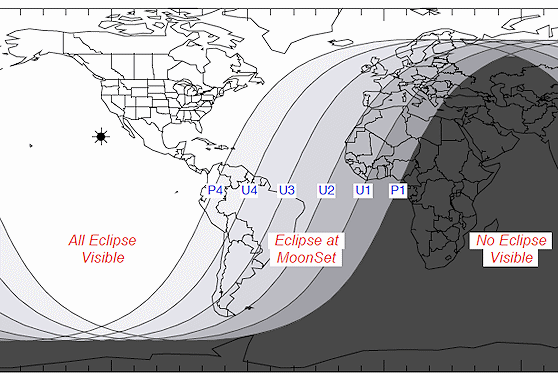
Credit: F. Espenak, NASA/GSFC.

From first to last bite, the eclipse favors observers in North America. The entire event can be seen from all points on the continent. Click to view a world map of visibility circumstances. Credit: F. Espenak, NASA/GSFC.

Why red?

A quick trip to the Moon provides the answer: Imagine yourself standing on a dusty lunar plain looking up at the sky. Overhead hangs Earth, nightside down, completely hiding the sun behind it. The eclipse is underway. You might expect Earth seen in this way to be utterly dark, but it’s not. The rim of the planet is on fire! As you scan your eye around Earth’s circumference, you’re seeing every sunrise and every sunset in the world, all of them, all at once. This incredible light beams into the heart of Earth’s shadow, filling it with a coppery glow and transforming the Moon into a great red orb.

Back on Earth, the shadowed Moon paints newly fallen snow with unfamiliar colors–not much luster, but lots of beauty.

Enjoy the show.

Coincidences (UPDATED): This lunar eclipse falls on the date of the northern winter solstice. How rare is that? Total lunar eclipses in northern winter are fairly common. There have been three of them in the past ten years alone. A lunar eclipse smack-dab on the date of the solstice, however, is unusual. Geoff Chester of the US Naval Observatory inspected a list of eclipses going back 2000 years. “Since Year 1, I can only find one previous instance of an eclipse matching the same calendar date as the solstice, and that is 1638 DEC 21,” says Chester. “Fortunately we won’t have to wait 372 years for the next one…that will be on 2094 DEC 21.

A ‘steady’ relationship with Planet Earth

Perpetual economic growth is neither possible nor desirable. Growth, especially in wealthy nations, is already causing more problems than it solves.

Recession isn’t sustainable or healthy either. The positive, sustainable alternative is a steady state economy.

These are the opening sentences that one sees when going to the CASSE website.  CASSE is an acronym for Centre for the Advancement of the Steady State Economy.  More on this organisation as I spend more time getting to know the background.  But my instinct is to support it, hence the reason it is the subject of a Post on Learning from Dogs.

With the permission of CASSE I am re-publishing something that was on the CASSE Blogsite recently. Well worth signing up to, in my humble opinion.

Anyway, the article is called From Black Friday to a Better Way and is written by Brent Blackwelder who, among other things, was recent President of Friends of the Earth.

From Black Friday to a Better Way

Rethinking Consumer Spending and Enjoying the Holidays

by Brent Blackwelder

The day following Thanksgiving Day in the United States is called Black Friday. For retailers the day marks the beginning of the Christmas shopping season. While the origin of the term is debated, it is today associated with special sales and extraordinary promotions that retailers use to induce shoppers into spending the holiday weekend on a shopping spree.

Our modern economy is structured such that its stability depends upon ever increasing consumer spending. In my first economics course in college in 1961, the professor told the class to go out and shop because it is good for the gross national product (GNP). Then and now, mainstream economics continues to treat the Earth as if it were a business in a liquidation sale.

At a time of high unemployment in the United States, it may seem like an act of madness to question the growth economy, but relentless pursuit of growth has failed to deliver again and again on the promise of economic stability and security. Its recipes are not making people any happier, and it is undermining the ecological life support systems of our planet. It has failed about one third of the world’s population who live on less than $2 per day, while simultaneously producing an exclusive club of gratuitously wealthy individuals. Those of us advocating a steady state economy seek a new way to maintain full employment that does not incentivize employers to seek dirt-cheap labor or to replace people with machines.

Professor Tim Jackson’s 2009 report to the UK Sustainable Development Commission entitled Prosperity without Growth provides an outstanding foundation for any discussion of consumerism and the growth economy. For those interested in a steady state economy, it is worthwhile to think in this holiday season about the nature of shopping in such an economy.

Throughout history religious leaders have expressed concerns about the accumulation of stuff. Two thousand years ago Jesus cautioned about excessive attention to material possessions, saying: “Lay not up for yourself treasures on earth where moth and rust doth corrupt and where thieves break through and steal.”

Over 100 years ago the economist and philosopher John Stuart Mill recognized that eventually humanity would have to move toward a stationary state of capital and wealth, but that condition need not entail a stagnation of human improvement.

Two centuries ago the poet William Wordsworth expressed alarm at the consumerism he witnessed in England: “The world is too much with us, late and soon. Getting and spending we lay waste our powers. Little we see in nature that is ours. We have given our hearts away…”

Today’s economy is five times bigger than in the 1950s, and at current growth rates stimulated by commercial promotions, it is headed to a global economy 80 times as large.

The consumer rampage is in part fueled by slick advertising for novel consumer products, and much of this advertising is targeted at youth. Ralph Nader questions who is watching what young people worldwide are being enticed to buy? He writes: “Undermining parental authority with penetrating marketing schemes and temptations, companies deceptively excite youngsters to buy massive amounts of products that are bad for their safety, health and minds.”

Excessive packaging accompanying today’s products attracts ecological criticism, but it is only the tip of the iceberg in terms of waste. The volume of raw resource extraction required in the manufacture of products dwarfs the packaging waste. For example, many mining operations for valuable metals leave behind as waste over 90% of the material excavated, and such rocky rubble often releases a mass of toxicity onto the land and into the water.

Has happiness been improved by having all these products? Studies over the past two decades have suggested that a certain amount of material comfort and ease provided by various products increases one’s happiness, but beyond a certain point – one study suggested $75,000 income – more stuff doesn’t produce more happiness. In fact, it can yield the perverse result of adding stress, worry and depression.

It is amazing that times of holiday celebration in the United States are frequently the very times of peak stress. What should be a fun and cheerful experience becomes a week or even a month of worry.

The holiday season is a good time to reexamine the kinds of purchases we make to see whether they are reducing the use of natural resources and encouraging more sustainable ways of growing food and conducting commercial business.

Many religious congregations are looking toward a different approach to reclaim the holidays from preoccupation with material gifts. Some offer ways to reduce the volume of purchasing and to make different kinds of purchases that reduce throughput and pollution.

For example, Interfaith Power and Light seeks to get religious congregations to purchase renewable energy and to reduce energy use in their homes and their places of worship. Through Greater Washington Interfaith Power and Light, our family now purchases all our electricity, sourced from wind farms, at a surcharge of about $130 a year.

By voting with their food dollars many Americans have already sent powerful signals in favor of local farm markets and organic food. With some due diligence, people can determine whether their purchases lend further support to child labor and slave conditions, whether the purchases harm women or empower women, and whether the product came from an animal-slum factory farm operation. The Fair Trade label allows consumers to identify imported products that avoid harmful labor and environmental degradation in their manufacture.

We have options.  We can do better than liquidating our natural bounty for consumer novelty, we can refrain from pitching unnecessary products to our children, and we can stop pursuing growth for growth’s sake.  The steady state economy is a better choice than continuous pursuit of economic growth, but the transition starts with better choices about what and how we consume.

If you didn’t read yesterday’s Post touching on the second bitterly cold winter in Europe, then you may care to read it and ponder.

By Paul Handover

Basic geometry

North-West Europe’s Winter weather.

As I write this article, the temperature in London (it’s 5pm on Tuesday 14th.) is 4 deg C/ 38 F heading down to a forecast -2 deg C/28 F overnight.  Similarly cold temperatures are forecast during the rest of the week.

Here’s something that was published in October:

Coldest winter in 1,000 years on its way

04 October, 2010, 22:20

After the record heat wave this summer, Russia’s weather seems to have acquired a taste for the extreme.

Forecasters say this winter could be the coldest Europe has seen in the last 1,000 years.

The change is reportedly connected with the speed of the Gulf Stream, which has shrunk in half in just the last couple of years. Polish scientists say that it means the stream will not be able to compensate for the cold from the Arctic winds. According to them, when the stream is completely stopped, a new Ice Age will begin in Europe.

So far, the results have been lower temperatures: for example, in Central Russia, they are a couple of degrees below the norm.

“Although the forecast for the next month is only 70 percent accurate, I find the cold winter scenario quite likely,” Vadim Zavodchenkov, a leading specialist at the Fobos weather center, told RT. “We will be able to judge with more certainty come November. As for last summer’s heat, the statistical models that meteorologists use to draw up long-term forecasts aren’t able to predict an anomaly like that.”

In order to meet the harsh winter head on, Moscow authorities are drawing up measures to help Muscovites survive the extreme cold.

Read the rest of the article here.

So why the heading for this Post, as in Basic Geometry?

Because places on the Globe are measured using Latitude and Longitude.  Let’s look at the Latitude of some places:

London 51°30′N

Calgary, Alberta 51°03′N

Kiev, Ukraine 50°27′N

Krakow, Poland 50°03′N

Now let’s look at those Cities again with the current temperatures (you have to accept the local time differences):

London 51°30′N +4 deg C

Calgary, Alberta 51°03′N -9 deg C

Kiev, Ukraine 50°27′N -6 deg C

Krakow, Poland 50°03′N -12 deg C

In other words, Britain enjoys, or should enjoy, a much warmer Winter than most other places of the same or similar latitudes because of the effect of the Gulf Stream.

Just a muse!

By Paul Handover


Nature can be very cruel

This is a guest Post from Chris Snuggs, a good friend of Learning from Dogs.

Dog Pack Attacks Alligator In Florida

At times nature can be cruel, but there is also a raw beauty, and even a certain justice manifested within that cruelty. The alligator, one of the oldest and ultimate predators, normally considered the “apex predator”, can still fall victim to implemented ‘team work’ strategy, made possible due to the tight knit social structure and “survival of the pack mentality” bred into the canines.

See the remarkable photograph below courtesy of Nature Magazine.

Note that the Alpha dog has a muzzle hold on the gator preventing it from breathing, while another dog has a hold on the tail to keep it from thrashing.  The third dog attacks the soft underbelly of the gator.


This is pretty gruesome, so I have made a link to it instead
of showing it at once in case you would prefer not to see it.

More about Chris here.

Spices

A fascinating insight and a reminder, courtesy of Alistair Cooke

Jeannie recently gave me the book Alistair Cooke’s America.  The book was published in 1973 and was born out of the scripts that Cooke wrote for the television series America: A Personal History of the United States shown in both countries in 1972.  I can’t recall when I first started listening to the BBC Radio programme Letter from America, broadcast by Cooke, but it was a long time ago considering that the 15-minute programme started to be broadcast on the BBC in March 1946, just 18 months after I was born!


Alistair Cooke Nov 1908 - Mar 2004


Anyway, the motivation to start into the book was born out of a desire to know a lot more about this new country of mine.  But quickly there was a fascinating detour.

Early in Chapter One, The New-found Land, Cooke writes of the consequences of the Turks capturing Constantinople:

In 1453, there was a decisive turn in the centuries of warfare between the Christians of Europe and the Moslems of Asia.  Their common market, bridge, and gateway was Constantinople, our Istanbul.  In 1453, the Turks conquered it, and in so doing shut off the commerce between East and West, the exchange of cloth, leather wines and sword blades of Europe for the silks, jewels, chessmen, and spices of Asia.  All things considered, the stoppage was much harder on the court treasuries of Europe that those of Asia and, in one vital item, harder on all Europeans.  That item was spice.

Cooke then writes about historic change often being caused by the denial of a simple human need.  Shortage of water, total absence of timber for the Egyptians since the time of Solomon, for example.

What I hadn’t realised that for Europeans, spices were regarded as “fundamental to human survival”.  That was simply because in the 15th century spices made food edible.  Cooke writes,

Even in rich houses, the meals came putrid to the table. (Dysentery, by the way, seems to have been considered through most of the last five centuries a hazard as normal as wind and rain.)

Think about that the next time you reach for the pepper!

That led me to think about the enormous benefit that electricity and therefore domestic refrigeration has had on the health and life expectancies of mankind.  It is almost inconceivable to imagine the consequences of a widespread loss of electricity for, say a week, let alone a few months.

Patrice Ayme wrote a guest post for Learning from Dogs that was published on the 26th.  In it he wrote,

But then, after an auspicious start, Mars lost most of most of its atmosphere (probably within a billion years or so). Why? Mars is a bit small, its gravitational attraction is weaker than Earth (it’s only 40%). But, mostly, Mars has not enough a magnetic field. During Coronal Mass Ejections, CMEs, the Sun can throw out billions of tons of material at speeds up to and above 3200 kilometers per seconds. It’s mostly electrons and protons, but helium, oxygen and even iron can be in the mix.

The worst CME known happened during the Nineteenth Century, before the rise of the electromagnetic civilization we presently enjoy. Should one such ejection reoccur now, the electromagnetic aspect of our civilization would be wiped out.It goes without saying that we are totally unprepared, and would be very surprised. Among other things, all transformers would blow up, and they take months to rebuild. we would be left with old books in paper, the old fashion way. A CME can rush to Earth in just one day. (Fortunately the Sun seems to be quieting down presently, a bit as it did during the Little Ice Age.)

So let’s just hope and pray that our continued interest in spices remains a flavouring desire and doesn’t return as a critical need for human survival.

By Paul Handover

Future for Societies

The glass is filled half-way.  Is it half-full or half-empty?

This is a rhetorical question, of course.  It is what comes to mind as I write this simply because of a small half-full/half-empty experience in the last 10 minutes.  Let me explain.

I had started watching a video on TED.com.  This one was entitled Jared Diamond on why societies collapse.  Within a few minutes I started drifting to the comments, and read:

Jared Diamond talks of how societies choose (unwittingly) to collapse. William McDonough with his Cradle to Cradle concept also talks about choices and provides ‘Love of all children of all species for all time’ as a positive conscious choice.

With goals or missions in place (for example profit for businesses) humans have achieved amazing things.

So what would happen if all groups, families and individuals followed a mission of ‘Love of all children of all species for all time’?

I rather liked that.  We always have choices. A positive conscious choice is always better.

So I stopped the Jared Diamond lecture and found the William McDonough one, also on TED.com, and conveniently shared on YouTube.  It’s just 20 minutes long, so settle down somewhere, perhaps with a glass filled half-way with something!

By Paul Handover

Days of Hope

Today, like every day, is a beautiful day of hope!

At 3.30pm US Mountain Time – 10.30pm UK time – the marriage service between me and Jean Susan will commence at the Episcopal Church in Payson, Arizona.  It represents a wonderful day of hope.

But hope is something much bigger than a couple getting married.  See it from this perspective. From the eyes of Shimon Schocken.

There’s that word ‘love’ again.

By Paul Handover

On a Clear Day

An inspirational film with an incredibly relevant message to us all.

I’m not going to yield to the temptation to take a personal view, real life is too complicated.

Just, if you can, watch the film.

Here’s the summary from Wikipedia.  More background to the film is on the IMDB website including this review:

I saw this movie at Sundance, and it was brilliant. Beautiful shots, wonderful acting and such a moving story! It made me cry, it made me laugh (with Billy Boyd as much of the comic relief!), it made me want to see it again! Gaby Dellal’s direction was spot on, and the emotions from each of the characters was so true, that I wanted to cheer Frank (Peter Mullan)) on while swimming the English Channel and console him when he felt like he couldn’t do anything.

The only thing that I had an “issue” with, was that at a few moments, the Scottish accent was so thick that I missed what was said.

Some scenes from the film follow:

Finally, more on Peter Mullan, a very powerful actor.

By Paul Handover

And more on silence

Trying silence out.

Jon’s post yesterday about how silence in more general terms is so important for good mental health got me musing about this.

The first thing that struck me was how good dogs are at doing nothing.  They are naturals at being in the present, especially when being in the present means nothing more than just laying around.

Just doing - nothing!

OK, one could come up with an intellectual rebuff of that.  Dogs aren’t humans, don’t have to go to work, don’t have to struggle to make one’s way in the world, etc., etc. No argument in that, is there.  Or is there?

Let’s take monks. Clearly being a monk is a spiritual vocation that appeals to a very small number of people. But they prove that the ‘work, rush around, struggle with life’ scene is NOT hard-wired into mankind, ultimately it is a choice.

Just read this about a day in the life of a monk at Downside Abbey. Don’t react to what you read, just go through the text and notice how frequently words of silence, faith, reflection and prayer come up.

Now I am not suggesting that we all give up our present daily lives and become monks, but I am underlining the importance of balance, and for the sake of our private and public worlds that probably means spending more time doing nothing!

Let’s take North American Indians, in this case the Navajo.  They too understood the huge importance of meditation and prayer.  This video is just 3:40 long – see if you have the stillness in your mind to watch and listen to this for these few, short minutes.

How did you do?

Now let’s go back to 1966, the year when Simon & Garfunkel released the song, words written by Paul Simon, The Sound of Silence, that later became a huge, global hit.  Here are the lyrics – read them slowly and reflect on the meaning in those words.

The Sound Of Silence (3:08)
P. Simon, 1964

Hello darkness, my old friend
I’ve come to talk with you again
Because a vision softly creeping
Left its seeds while I was sleeping
And the vision that was planted in my brain
Still remains
Within the sound of silence

In restless dreams I walked alone
Narrow streets of cobblestone
‘Neath the halo of a street lamp
I turn my collar to the cold and damp
When my eyes were stabbed by the flash of a neon light
That split the night
And touched the sound of silence

And in the naked light I saw
Ten thousand people maybe more
People talking without speaking
People hearing without listening
People writing songs that voices never shared
No one dared
Disturb the sound of silence

“Fools,” said I, “you do not know
Silence like a cancer grows
Hear my words that I might teach you
Take my arms that I might reach you”
But my words like silent raindrops fell
And echoed in the wells of silence

And the people bowed and prayed
To the neon god they made
And the sign flashed out its warning
In the words that it was forming
And the sign said “The words of the prophets are written on the subway walls
And tenement halls
And whispered in the sound of silence

For your sake, and therefore for the sake of all those around you – find your silence.