Heavier rainfall, fiercer storms and intensifying droughts are likely to strike the world in the coming decades as climate change takes effect, the world’s leading climate scientists said on Friday.
Rising sea levels will increase the vulnerability of coastal areas, and the increase in “extreme weather events” will wipe billions off national economies and destroy lives, according to the Intergovernmental Panel on Climate Change (IPCC), the body of the world’s leading climate scientists convened by the United Nations.
Later on the article includes this,
Simon Brown, climate extremes research manager at theHadley Centre, the climate research unit of the UK’s Met Office, said: “This focus of the IPCC on extremes is very welcome as less emphasis has traditionally been given to these phenomena which are very likely to be the means by which ordinary people first experience climate change. Human susceptibility to weather mainly arises through extreme weather events so it is appropriate that we focus on these which, should they change for the worse, would have wide-ranging and significant consequences. This review will be very helpful in progressing the science by bringing together a wide range of studies – not just on the physical weather aspects of climate extremes but also on how we might adapt and respond to their changes in the future.”
The latest UN climate summit says much about why the world is failing to tackle global warming
Dec 3rd 2011 | from the print edition
IN HARD times governments are consumed by short-term problems. But this does not mean the archetypal long-term problem, climate change, has gone away. Science continues to support the case for curbing greenhouse-gas emissions so as to minimise the risks of catastrophe. Meanwhile it is clear how wretchedly the world is failing to do so. Even if countries honour their promises, the UN reckons that by 2020 emissions will exceed the trajectory for keeping warming under 2°C by up to 11 gigatonnes. That is equivalent to more than double the emissions of every car, bus and truck in 2005.
The concluding paragraph reads,
No one should imagine such a deal would turn the tide on climate change. That tide will rise, and countries will need to adapt to a lot of warming. But by acknowledging that everybody has a responsibility to act, it would represent progress.
‘Countries will need to adapt to a lot of warming.’ Tomorrow, I will publish a recent essay on TomDispatch. As a taster the opening paragraph is,
The good news? While 2010 tied for the warmest year on record, 2011 — according to the U.N.’s World Meteorological Organization (WMO) — is likely to come in 10th once November and December temperatures are tallied. In part, this is evidently due to an especially strong La Niña cooling event in the Pacific. On the other hand, with 2011 in the top ten despite La Niña, 13 of the warmest years since such record-keeping began have occurred in the last 15 years. Think of that as an uncomfortably hot cluster.
Last Friday I published a Post under the title of The power of truth. Just 5 minutes long, the YouTube video was powerful, starkly so. I wrote at the end of that article, “The principal source for the footage was Yann Arthus-Bertrand’s incredible film HOME.”
Jean and I watched Yann Arthus-Bertrand’s film last Friday night and to say that we were moved would be pitiful compared to the emotional impact it really had. Take a look at the film trailer; it’s a little over 3 1/2 minutes long. (But please don’t use that as a substitute for watching the full film, see below!)
Home is a 2009 documentary by Yann Arthus-Bertrand. The film is entirely composed of aerial shots of various places around Earth. It shows the diversity of life on Earth and how humanity is threatening the ecological balance of the planet. The movie was released simultaneously on June 5th in cinemas all over the world, on DVD and on YouTube. Released on the same date in 50 countries is a world record for any film release in history. The film is 100% free, and no profits will be made from its release or future showings.
I wasn’t going to add anything other than a brief introduction to the main film. However, an article in The Economist The World in 2012 caught my eye and seemed especially relevant to promoting the message carried by the film. Sheryl Sandberg, chief operating officer of Facebook, wrote about the power of social media and how it would be even more evident in 2012. This is the paragraph that caught my eye,
Expressing our authentic identity will become even more pervasive in the coming year. Profiles will no longer be outlines, but detailed self-portraits of who we really are, including the books we read, the music we listen to, the distances we run, the places we travel, the causes we support, the videos of cats we laugh at, our likes and our links. And, yes, this shift to authenticity will take getting used to and will elicit cries about lost privacy. But people will increasingly recognise the benefits of such expression. Because the strength of social media is that it empowers individuals to amplify and broadcast their voices. The truer that voice, the louder it will sound and the farther it will reach.
That last sentence jumped out at me, “The truer that voice, the louder it will sound and the farther it will reach.” Mull on that as you watch the film and, please, please, please if you support the need to return to a harmonious relationship with the planet spread the word as far and wide as you can.
Please promise yourself to sit down quietly and watch it uninterrupted. And if you feel so minded to add comments to this Post please do – would be delighted to have your feedback.
We are living in exceptional times. Scientists tell us that we have 10 years to change the way we live, avert the depletion of natural resources and the catastrophic evolution of the Earth’s climate.
The stakes are high for us and our children. Everyone should take part in the effort, and HOME has been conceived to take a message of mobilization out to every human being.
For this purpose, HOME needs to be free. A patron, the PPR Group, made this possible. EuropaCorp, the distributor, also pledged not to make any profit because Home is a non-profit film.
HOME has been made for you : share it! And act for the planet.
Three things cannot be long hidden: the sun, the moon, and the truth.
The above is a quote attributed to the Buddha. It is perfect as an introduction to today’s piece.
When I sat down at my PC yesterday afternoon I was planning to finish off a Post about the BBC’s fabulous Frozen Planet TV series. But a check of my email changed all that. Because there was an email from Merci O., someone in Payson that Jean and I know well. Merci had sent me an email with a link to the following YouYube video.
Watch and be moved.
This is a non-commercial attempt to highlight the fact that world leaders, irresponsible corporates and mindless ‘consumers’ are combining to destroy life on earth. It is dedicated to all who died fighting for the planet and those whose lives are on the line today. The cut was put together by Vivek Chauhan, a young film maker, together with naturalists working with the Sanctuary Asia network (www.sanctuaryasia.com).
Content credit: The principal source for the footage was Yann Arthus-Bertrand’s incredible film HOME http://www.homethemovie.org/. The music was by Armand Amar. Thank you too Greenpeace and http://timescapes.org/
A beautiful story of dog loyalty – to another dog, to another blind dog.
I first received this lovely story last Sunday from Dan G., dear friend of over 30 years. As is my want, did some research to discover the source of the story. It appeared on the website of Ross Parry Agency on the 22nd October, 2011 (note the pics are copyright rossparry.co.uk) But I have taken the liberty of reproducing the story as it appeared in the UK Daily Mail online site, on the same date. Enjoy.
Meet the blind Great Dane in need of a home (but you’ll need to make space for HER huge guide dog)
When illness forced vets to remove Great Dane Lily’s eyes, the prospects of a fulfilling life didn’t look good.
But then no one had reckoned on her pal Maddison stepping in to turn guide dog.
The pair have been inseparable for years but now find themselves looking for a new home because their owner could no longer cope.
The catch for anyone interested is that the Great Danes come as a package. They have been waiting at the Dogs Trust re-homing centre in Shrewsbury since July.
Homeless: Blind Great Dane Lily and her kind-hearted canine carer MaddisonForever friends: Lily, left, being guided while walking with Maddison right. The pair have been inseparable since Lily lost her sight
Manager Louise Campbell said: ‘Maddison is Lily’s guide dog. If they are out and about, for the majority of the time Maddison will lead and Lily will walk nearly touching her so she knows where to go. It’s lovely to watch. Maddison is always looking out for her.’
Lily, six, was barely a puppy when she was struck down by a condition that caused her eyelashes to grown into her eyeballs, damaging them beyond repair.
It was after this traumatic event that her relationship with seven-year-old Maddison developed as she took her under her wing.
The best buddies lived together until their owners decided they couldn’t look after them any more.
Miss Campbell said: ‘With her lack of sight, Lily’s other senses have heightened so although we don’t split them up often she can tell if Maddison is nearby.
‘They curl up together to go to sleep and they are very vocal with each other.
‘We haven’t analysed their different barks but if Lily wants to go forward and Maddison is in her way, the bark will have a different pitch.
‘They are very close to one another and enjoy each other’s company‘.
Playful: Lily's lack of sight has heightened her other senses so she can often tell if Maddison is nearby without the pair touching
Miss Campbell said that Lily does all the things normal dogs do and if you saw her from a distance you wouldn’t realise she had anything wrong with her eyes.
She added: ‘They are really happy with life, the glass is always half full with these two.
‘They have been with us for a considerable amount of time but they are quite happy and go about their daily routine – they are very affectionate.’
She believes the dogs’ size and advancing years, as well as the fact they have to come in a pair, may have put off potential owners and she warned that anyone contemplating taking the dogs in should look at their lifestyle and think of the responsibility involved.
‘They are not gigantic when you see them outside. These are two lovely big girls who deserve to live out the rest of their lives together in comfort‘, she said.
Dogs Trust cares for around 16,000 stray and abandoned dogs every year through a network of 17 re-homing centres.
The Great Dane is seeking an owner who would be willing to give both her and best friend Maddison a new home
Back to me. Must say that it was just fortuitous that Dan’s email came in to me a little while after I posted yesterday’s article by Robert Holden, The Gift of Happiness. Indeed, shortly after I had written, “Perhaps the art of happiness is yet another thing we can learn from dogs!”
Anyone in the UK who wants to contact the Dogs Trust click here.
Let me offer thanks to Resurgence Magazine for the written permission to reproduce this article in full, see terms at the end of the article. More background information about Robert Holden may be obtained from his own website and, finally, the Happiness Project website is here.
Robert Holden was at the forefront of ‘Happiness’ research. Here, he reflects on how that topic – initially laughed off the agenda – has gained credibility and explains why happiness is important
When I set up The Happiness Project, in 1994, the original goal was simple: talk happiness. In my training in psychology, philosophy and psychotherapy my teachers didn’t talk about happiness. We focused solely on the causes of unhappiness. This didn’t feel right to me. After all, how can you know what the causes are if you do not know what happiness is?
My goal, then, was to stimulate a conversation, so as to deepen our appreciation of what happiness is, its benefits, what enables it, and what blocks it. One conversation I focused on was the question of whether happiness is learned and whether it can be taught. To investigate this further, I created an eight-week happiness programme (which still runs today) called Be Happy.
Today happiness is a much more popular conversation than when The Happiness Project began. We are all talking more about happiness than ever before. The conversation is alive and well. Universities, hospitals, economists and governments publish new studies on happiness every week. So, what we have learned? And where does this conversation about happiness need to go next?
Let’s start with what happiness researchers refer to as ‘static happiness’. In a recent US study, it was found that when people in the 1940s were asked, “How happy are you?” the average score was 7.5 out of 10, whereas today the average score is 7.4 out of 10. In other words, in spite of all the ‘progress’ we appear to have made in the last 50 years or so, our happiness levels have remained mostly static. This tells me we need more conversations to clarify what real happiness is. For instance, we need to discern between pleasure, satisfaction and joy; and on my eight-week happiness programme we always begin by asking people, “What is your definition of a happy life?” and, “Are you living it?”
Happiness researchers have also found that most of us are only semi-happy. In 2006, I participated in a BBC documentary called The Happiness Formula. It reported, “the proportion of people saying they are ‘very happy’ has fallen from 52% in 1957 to just 36% today.” Clearly, research like this is questioning our most basic assumptions about what happiness is, and what we think will make us happy. That’s a good thing. An honest inquiry into happiness is an opportunity to rethink your life. It is one of the gifts of happiness.
Do you really know what makes you happy? This is the question both psychologists and economists are asking now. The evidence suggests we do not know. For instance, many of us believe that more money will make us happier. Some money does help, especially to cover the basics of food, rent, clothing, etc. After that, the correlation between more money and greater happiness is vague. Martin Seligman, former president of the American Psychology Association, and one of the founders of the Positive Psychology movement, concludes most forcibly: “The change in purchasing power over the last half century in the wealthy nations carries the same message: real purchasing power has more than doubled in the United States, France and Japan, but life satisfaction has changed not a whit.”
An inquiry into happiness challenges you to rethink everything. For example, almost everyone agrees with the idea that if their life circumstances improve, their levels of happiness will increase. This is the basis for almost every political and economic strategy the world over. And yet scientific research into happiness tells us this is wrong. New Zealand researcher Richard Kammann reports, “Objective life circumstances have a negligible role to play in a theory of happiness.” The same research concludes that your attitude and personal choices have a far greater influence on your happiness levels.
Another popular theory is that a better education will make our children happier. This has resulted in more tests for preschool children, more focus on regular exams, and more money spent on private education. Surely this increases happiness? “Sorry, Mom and Dad, neither education nor, for that matter, a high IQ paves the road to happiness,” states Claudia Wallis, who compiled a report called The New Science of Happiness for TIME magazine.
Happiness challenges us to rethink what is a “better education” for our children. I support the idea of happiness lessons for children at school, as pioneered at Wellington College by psychologist Nick Baylis and college Master Anthony Seldon [read his thoughts on this important topic in his article Stillness in Schools]. One opposing argument for happiness lessons at school is that children should not be “taught” happiness, but that they should be allowed to think about happiness for themselves. However, this is precisely the aim of these happiness lessons. The approach is inquiry, not dictation.
People who attend my happiness programme are always telling me, “I wish I’d learned this at school.” It’s time then for more conversations about happiness in school, and at home with our children. I encourage all my students and clients to talk more about happiness with their families. Why? Because one of the ways we evolve is through conversation. Drawing happiness with our children or talking about happiness with our partner helps us to clarify things, to heal, to come together, and ultimately to live a happier life.
And now, even governments and politicians want to talk about happiness. In Britain, David Cameron has commissioned a new survey called Measuring National Well-being. A new organisation called Action for Happiness [see what founder Richard Layard says about this new movement in his article A Better Way of Life] is working closely with the government to help create better social change in society. Again, some people are concerned that governments should not “tell us” how to be happy. I agree with this, but I don’t think governments are trying to tell us. Like us, they are simply trying to understand what happiness is, and how we can be happier.
In my latest book, Be Happy, I have written: “Your definition of happiness will influence every significant decision in your life.” It is essential, therefore, that individuals and governments alike keep happiness on the agenda because, more than ever before, humanity needs a better understanding of happiness. We have learned so much, about atoms and galaxies and other things, but we still do not understand ourselves very well; we still go to war too often, and there is still too much suffering.
I remain deeply committed to talking about happiness. Why? Because I believe that happiness is our true nature (it is the natural state of our Unconditioned Self), and for that reason happiness brings out the best in us, both individually and collectively. Happiness research has found a strong link between happiness and altruism, for instance. In a recent study by a Charities Commission, it was reported that the highest predictor of generous giving is not your income level: it’s your happiness level.
Good things come from real happiness. Happier people make better choices, which is good for society and the planet. Your happiness is a gift to the world. I believe this with all my heart.
—————————–
Robert Holden is director of The Happiness Project. His latest book, Be Happy;, is published by Hay House. For more about the eight-week happiness programme visit: http://www.happiness.co.uk
The Gift of Happiness features in Resurgence issue 269, November/December 2011.
This article is reprinted courtesy of Resurgence magazine – at the heart of earth, art and spirit. To buy Resurgence, read further articles online or find out about The Resurgence Trust, visit: http://www.resurgence.org
All rights to this article are reserved to Resurgence, if you wish to republish or make use of this work you must contact the copyright owner to obtain permission
—————————–
One final note from yours truly. Perhaps the art of happiness is yet another thing we can learn from dogs!
Big thank you to Dennis L. for forwarding this video
Will say no more – just watch
And if that gives you a buzz, then you might want to read a Post that I published on the 30th July Free as a Bird reproduced in full below,
The wonderful combination of paragliding and flying with hawks.
Thanks to Dan Gomez for passing me a short video about this amazing activity. It was a matter of moments to find out the background. But first a picture.
Copyright Scott Mason
There’s a full description of the history of parahawking, as it is called, on WikiPedia.
Parahawking is a unique activity combining paragliding with elements of falconry. Birds of prey are trained to fly with paragliders, guiding them to thermals for in-flight rewards and performing aerobatic maneouvres.
Parahawking was developed by British falconer Scott Mason in 2001. Mason began a round-the-world trip in Pokhara, Nepal, where many birds of prey – such as the griffon vulture, steppe eagle andblack kite – can be found. While taking a tandem paragliding flight with British paraglider Adam Hill, he had the opportunity to see raptors in flight, and realized that combining the sport of paragliding with his skills as a falconer could offer others the same experience. He has been based in Pokhara ever since, training and flying birds during the dry season between September and March.
The team started by training two black kites, but have since added an Egyptian vulture and a Mountain hawk-eagle to the team. Only rescued birds are used – none of the birds has been taken from the wild.
There’s an interesting website for those that want to take a closer including more details about Scott Mason and his team here.
A quick piece of web research turned up a quote by the famous physicist, Richard P. Feynman, as follows,
“In physics the truth is rarely perfectly clear, and that is certainly universally the case
in human affairs.“
I thought the quote an apt introduction to an article written by Bill McKibben of 350 org fame, recently published on Tom Engelhardt’s TomDispatch blog. As always, a vote of thanks to Tom for giving me permission to reproduce his pieces.
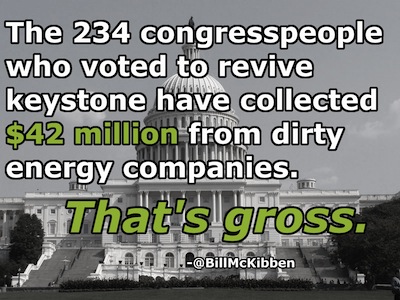
The topic is the Keystone XL pipeline, recently sidelined by Pres. Obama and now generating some interesting musings about the political strategy that may be at play here. I have written previously about this pipeline and a quick search from the home page of Learning from Dogs using the search terms ‘keystone pipeline’ will find these articles.
Do read the full article from Bill McKibben. Despite it’s length it’s full of thought-provoking ideas. As Tom Engelhardt says in the closing sentences of his introduction, “Mark my words on this one: sooner or later, Americans are going to wake up to climate change, just as they have this year on the issue of inequality, and when they do, watch out. There will be political hell to pay.Tom”
Posted by Bill McKibben at 8:07am, November 15, 2011.
What’s the biggest story of the last several weeks? Rick Perry’s moment of silence, all 53 seconds’worth? The Penn State riots after revered coach JoePa went down in a child sex abuse scandal? The Kardashian wedding/divorce? The European debt crisis that could throw the world economy into a tailspin? The Cain sexual harassment charges? The trial of Michael Jackson’s doctor?
The answer should be none of the above, even though as a group they’ve dominated the October/November headlines. In fact, the piece of the week, month, and arguably year should have been one that slipped by so quietly, so off front-pages nationwide and out of news leads everywhere that you undoubtedly didn’t even notice. And yet it’s the story that could turn your lifeand that of your children and grandchildren inside out and upside down.
On the face of it, it wasn’t anything to shout about — just more stats in a world drowning in numbers. These happen to have been put out by the U.S. Department of Energy and they reflected, as an Associated Press headline put it, the “biggest jump ever seen in global warming gases.” In other words, in 2010, humanity (with a special bow to China, the United States, and onrushing India) managed to pump more carbon dioxide into the atmosphere than at any time since the industrial revolution began — 564 million more tons than in 2009, which represents an increase of 6%.
According to AP’s Seth Borenstein, that’s “higher than the worst case scenario outlined by climate experts just four years ago.” He’s talking about the Intergovernmental Panel on Climate Change, or IPCC, which is, if anything, considered “conservative” in its projections of future catastrophe by many climate scientists. Put another way, we’re talking more greenhouse gases than have entered the Earth’s atmosphere in tens of millions of years.
Consider as well the prediction offered by Fatih Birol, chief economist at the International Energy Agency: without an effective international agreement to staunch greenhouse gases within five years, the door will close on preventing a potentially disastrous rise in the planet’s temperature. You’re talking, that is, about the kind of freaky weather that will make October’s bizarre snowstorm in the Northeast look like a walk in the park. (That storm had all the signs of a climate-change-induced bit of extreme weather: New York City hadn’t recorded an October snowfall like it since the Civil War and it managed to hit the region in a period of ongoing warmth when the trees hadn’t yet had the decency to lose their leaves, producing a chaos of downed electrical wires.) And don’t get me started on what this would mean in terms of future planetary hot spells or sea-level rise.
Honestly, if we were sane, if the media had its head in the right place, this would have been screaming headlines. It would have put Rick Perry and Herman Cain and the Kardashians andItaly and Greece and Michael Jackson’s doctor in the shade.
The only good news — and because it unsettled the politics of the 2012 election, it did garner a few headlines — was that the movement Bill McKibben and 350.org spearheaded to turn back the tar-sands pipeline from Hades (or its earthly global-warming equivalent, which is Alberta, Canada) gained traction in our Occupy Wall Street moment. Think of it as a harbinger. Mark my words on this one: sooner or later, Americans are going to wake up to climate change, just as they have this year on the issue of inequality, and when they do, watch out. There will be political hell to pay.Tom
Obama’s Positive Flip and Romney’s Negative Flop
Is Global Warming an Election Issue After All?
By Bill McKibben
Conventional wisdom has it that the next election will be fought exclusively on the topic of jobs. But President Obama’s announcement last week that he would postpone a decision on the Keystone XL pipeline until after the 2012 election, which may effectively kill the project, makes it clear that other issues will weigh in — and that, oddly enough, one of them might even be climate change.
The pipeline decision was a true upset. Everyone — and I mean everyone who “knew” how these things work — seemed certain that the president would approve it. The National Journalruns a weekly poll of “energy insiders” — that is, all the key players in Washington. A month to the day before the Keystone XL postponement, this large cast of characters was “virtually unanimous” in guaranteeing that it would be approved by year’s end.
Transcanada Pipeline, the company that was going to build the 1,700-mile pipeline from the tar-sands fields of Alberta, Canada, through a sensitive Midwestern aquifer to the Gulf of Mexico, certainly agreed. After all, they’d already mowed the strip and prepositioned hundreds of millions of dollars worth of pipe, just waiting for the permit they thought they’d bought with millions in lobbying giftsand other maneuvers. Happily, activists across the country weren’t smart enough to know they’d been beaten, and so they staged the largest civil disobedience actionin 35 years, not to mention ringing the White House with people, invading Obama campaign offices, and generally proving that they were willing to fight.
No permanent victory was won. Indeed, just yesterday Transcanada agreed to reroute the pipeline in Nebraska in an effort to speed up the review, though that appears not to change the schedule. Still, we’re waiting for the White House to clarify that they will continue to fully take climate change into account in their evaluation. But even that won’t be final. Obama could just wait for an election victory and then approve the pipeline — as any Republican victor certainly would. Chances are, nonetheless, that the process has now gotten so messy that Transcanada’s pipeline will die of its own weight, in turn starving the tar-sands oil industry and giving a boost to the global environment. Of course, killing the pipeline will hardly solve the problem of global warming (though heavily exploiting those tar sands would, in NASA scientist James Hansen’s words, mean “game over for the climate.”)
In this line of work, where victories of any kind are few and far between, this was a real win. It began with indigenous activists, spread to Nebraska ranchers, and eventually turned into the biggest environmental flashpoint in many years. And it owed no small debt to the Occupy Wall Street protesters shamefully evicted from Zuccotti Park last night, who helped everyone understand the power of corporate money in our daily lives. That these forces prevailed shocked most pundits precisely because it’s common wisdom that they’re not the sort of voters who count, certainly not in a year of economic trouble.
In fact, the biggest reason the realists had no doubts the pipeline would get its permit, via a State Department review and a presidential thumbs-up of that border-crossing pipeline, was because of the well-known political potency of the jobs argument in bad economic times. Despite endless lazy reporting on the theme of jobs versus the environment, there were actually no net jobs to be had from the pipeline. It was always a weak argument, since the whole point of a pipeline is that, once it’s built, no one needs to work there. In addition, as the one study not paid for by Transcanada made clear, the project would kill as many jobs as it would create.
The Washington Post’s Juliet Eilperin and Steven Mufson finally demonstrated this late in the game with a fine report taking apart Transcanada’s job estimates. (The 20,000 jobs endlessly taken for granted assumed, among other stretches, that modern dance troupes would move to Nebraska, where part of the pipeline would be built, to entertain pipeline workers.) Still, the jobs trope remained, and you can be sure that the Chamber of Commerce will run 1,000 ads during the 2012 presidential campaign trying to hammer it home. And you can be sure the White House knew that, which was why it was such a tough call for them — and why the pressure of a movement among people whose support matters to them made a difference.
Let’s assume the obvious then: that one part of their recent calculations that led to the postponement decision might just be the suspicion that they will actually win votes thanks to the global-warming question in the next election.
For one thing, global warming denial has seen its apogee. The concerted effort by the fossil-fuel industry to underwrite scientific revision met its match last month when a team headed by Berkeley skeptic and prominent physicist Richard Muller–– with funding from the Koch Brothers, of all people — actually found that, what do you know, all the other teams of climate-change scientists were, um, right. The planet was indeed warming just as fast as they, and the insurance companies, and the melting ice had been insisting.
Still, scientific studies only reach a certain audience. Weird weather is a far more powerful messenger. It’s been hard to miss the record flooding along the Mississippi and Missouri Rivers, and across the Northeast; the record drought andfires across the Southwest; the record multi-billion dollar weather disasters across the country this year; the record pretty-much everything-you-don’t-want across the nation. Obama certainly noticed. He’s responsible for finding the cash every time some other state submerges.
As a result, after years of decline, the number of Americans who understand that the planet is indeed warming and that we’re to blame appears to be on the rise again. And ironically enough, one reason may be the spectacle of all the tea-partying GOP candidates for the presidency being forced to swear fealty to the notion that global warming is a hoax. Normal people find this odd: it’s one thing to promise Grover Norquist that you’ll never ever raise taxes; it’s another to promise that you’ll defeat chemistry and physics with the mighty power of the market.
Along these lines, Mitt Romney made an important unforced error last month. Earlier in the primaries, he and Jon Huntsman had been alone in the Republican field in being open to the idea that global warming might actually be real. Neither wanted to do anything about it, of course, but that stance itself was enough to mark them as realists. It was also a sign that Romney was thinking ahead to the election itself, and didn’t want to be pinned against this particular wall.
In late October, however, he evidently felt he had no choice but to pin himself to exactly that wall and so stated conclusively: “My view is that we don’t know what’s causing climate change on this planet.” In other words, he not only flip-flopped to the side of climate denial, but did so less than six months after he had said no less definitively: “I don’t speak for the scientific community, of course, but I believe the world’s getting warmer… And number two, I believe that humans contribute to that.” Note as well that he did so, while all the evidence, even some recently funded by the deniers, pointed the other way.
If he becomes the Republican presidential candidate as expected, this may be the most powerful weathervane ad the White House will have in its arsenal. Even for people who don’t care about climate change, it makes him look like the spinally challenged fellow he seems to be. But it’s an ad that couldn’t be run if the president had okayed that pipeline.
Now that Obama has at least temporarily blocked Keystone XL, now that his team has promised to consider climate change as a factor in any final decision on the pipeline’s eventual fate, he can campaign on the issue. And in many ways, it may prove a surprise winner.
After all, only people who would never vote for him anyway deny global warming. It’s a redoubt for talk-show rightists. College kids, on the other hand, consistently rank it among the most important issues. And college kids, as Gerald Seib pointedout in the Wall Street Journal last week, are a key constituency for the president, who is expected to need something close to the two-thirds margin he won on campus in 2008 to win again in 2012.
Sure, those kids care about student loans, which threaten to take them under, and jobs, which are increasingly hard to come by, but the nature of young people is also to care about the world. In addition, independent voters, suburban moms — these are the kinds of people who worry about the environment. Count on it: they’ll be key targets for Obama’s presidential campaign.
Given the economy, that campaign will have to make Mitt Romney look like something other than a middle-of-the-road businessman. If he’s a centrist, he probably wins. If he’s a flip-flopper with kooky tendencies, they’ve got a shot. And the kookiest thing he’s done yet is to deny climate science.
If I’m right, expect the White House to approve strong greenhouse gas regulations in the months ahead, and then talk explicitly about the threat of a warming world. In some ways it will still be a stretch. To put the matter politely, they’ve been far from perfect on the issue: the president didn’t bother to waste any of his vaunted “political capital” on a climate bill, and he’s opened huge swaths of territory to coal mining and offshore drilling.
But blocking the pipeline finally gave him some credibility here — and it gave a lot more of the same to citizens’ movements to change our world. Since a lot of folks suspect that the only way forward economically has something to do with a clean energy future, I’m guessing that the pipeline decision won’t be the only surprise. I bet Barack Obama talks on occasion about global warming next year, and I bet it helps him.
But don’t count on that, or on Keystone XL disappearing, and go home. If the pipeline story (so far) has one lesson, it’s this: you can’t expect anything to change if you don’t go out and change it yourself.
A timely video from the International Space Station (ISS)
Little did I realise when I posted yesterday’s item that a couple of subsequent actions would make today’s article easy to write (trust me it isn’t always this easy!).
Mike T., a flying buddy from my old days in England, sent me this link to a 5-minute video made up of a series of films shot from the ISS. DO WATCH THE VIDEO IN FULL SCREEN MODE!
The details of how the film was taken and much more interesting information is at the very end of this article.
Then Martin Lack who writes the blog, Lack of Environment, submitted a comment with a link to a piece that he had written on the 19th August that I would like to re-publish in full.
Why are we still waiting for the EU to act?
What can we learn from the fact that the EU has still not stopped buying over 90% of Syria’s oil exports? If nothing else, it tells me that we need fossil fuel too much!
But I think the problem of wrong priorities goes much deeper than that… This is because the Limits to Growth argument (which underlies my concern over AGW) is, even though the protestor-in-the-street may not realise it, the root cause of all the problems we are now seeing in Afghanistan, Bahrain, Cairo, Damascus etc., etc… right through to Zimbabwe: Treating the symptoms of food shortages or corruption (or whatever they may be) will not succeed unless we address the root cause, which is the inevitable consequences of perpetual growth in consumption of resources and/or waste production on a finite planet [see E.F. Schumacher’s Small is Beautiful (1973)].
This 5 minute videomakes sobering viewing, but it also perfectly summarises everything I have learnt in the last 12 months; and all I have posted on my oldMyTelegraph blog in the last 5 months!
It may not be rocket science, but can we reach Escape Velocity?
This stuff is not rocket science, but it is very unwelcome news to people with a vested interest in the continuance of “business as usual”. Unfortunately, we literally cannot go on the way we are; something has got to change…
Extract of paper presented by Dr Myles Allen at 4 Degrees and Beyond Conference (2009)
So a big thank you to Mike T. and Martin Lack for a number of lessons:
how clever man is in terms of space technology besides much more
the beauty of our planet – it’s all we have to live on
the amount of electric light that shines into outer space, as seen by the ISS.
how much of that lighting might be generated by coal and oil!
if we don’t learn to live in harmony, as in sustainably, with this planet of ours, the implications are going to be very serious.
Finally, as mentioned earlier the details of that video on Vimeo.
Time lapse sequences of photographs taken with a 4K-camera by Ron Garan fragileoasis.org/bloggernauts/Astro_Ron and the crew of expedition 28 & 29 onboard the International Space Station from August to October, 2011. All credit goes to them, who to my knowledge shot these pictures at an altitude of around 350 km. I intend to upload a FullHD-version presently.
HD, refurbished, smoothed, retimed, denoised, deflickered, cut, etc. All in all I tried to keep the looks of the material as original as possible, avoided adjusting the colors and the like, since in my opinion the original footage itself already has an almost surreal and aestethical visual nature.
Music: Jan Jelinek | Do Dekor, faitiche back2001 w+p by Jan Jelinek, published by Betke Edition janjelinek.com | faitiche.de
Image Courtesy of the Image Science & Analysis Laboratory, NASA Johnson Space Center, The Gateway to Astronaut Photography of Earth eol.jsc.nasa.gov
1. Aurora Borealis Pass over the United States at Night
2. Aurora Borealis and eastern United States at Night
3. Aurora Australis from Madagascar to southwest of Australia
4. Aurora Australis south of Australia
5. Northwest coast of United States to Central South America at Night
6. Aurora Australis from the Southern to the Northern Pacific Ocean
7. Halfway around the World
8. Night Pass over Central Africa and the Middle East
9. Evening Pass over the Sahara Desert and the Middle East
10. Pass over Canada and Central United States at Night
11. Pass over Southern California to Hudson Bay
12. Islands in the Philippine Sea at Night
13. Pass over Eastern Asia to Philippine Sea and Guam
14. Views of the Mideast at Night
15. Night Pass over Mediterranean Sea
16. Aurora Borealis and the United States at Night
17. Aurora Australis over Indian Ocean
18. Eastern Europe to Southeastern Asia at Night
When putting together the short item for yesterday, Sunday, I was taken by the power of such simple concepts as beauty, harmony, love, the natural world. Then I came across an article published by Tom Engelhardt, of TomDispatch fame, a little over two weeks ago. It was a guest essay by Chip Ward and is reproduced below.
Learning from Dogs is about integrity. In the sense that dogs, both literally and metaphorically, offer mankind an alternative, and more integrous, way of living. As I wrote in one of the background items to Learning from Dogs, over two years ago,
Because of this closeness between dogs and man, we (as in man!) have the ability to observe the way they live. Now I’m sure that scientists would cringe with the idea that the way that a dog lives his life sets an example for us humans, well cringe in the scientific sense. But man seems to be at one of those defining stages in mankind’s evolution where the forces bearing down on the species homo sapiens have the potential to cause very great harm. If the example of dogs can provide a beacon of hope, a incentive to change at a deep cultural level, then the quicker we ‘get the message’, the better it will be.
value and cherish the ‘present’ in a way that humans dream of achieving
are, by eons of time, a more successful species than man.
So with those thoughts in mind, please read Chip’s essay as published on TomDispatch. It is reproduced with the written permission of Tom Engelhardt
Someone Got Rich and Someone Got Sick Nature Is the 99%, Too
By Chip Ward
What if rising sea levels are yet another measure of inequality? What if the degradation of our planet’s life-support systems — its atmosphere, oceans, and biosphere — goes hand in hand with the accumulation of wealth, power, and control by that corrupt and greedy 1% we are hearing about from Zuccotti Park? What if the assault on America’s middle class and the assault on the environment are one and the same?
Money Rules: It’s not hard for me to understand how environmental quality and economic inequality came to be joined at the hip. In all my years as a grassroots organizer dealing with the tragic impact of degraded environments on public health, it was always the same: someone got rich and someone got sick.
In the struggles that I was involved in to curb polluters and safeguard public health, those who wanted curbs, accountability, and precautions were always outspent several times over by those who wanted no restrictions on their effluents. We dug into our own pockets for postage money, they had expense accounts. We made flyers to slip under the windshield wipers of parked cars, they bought ads on television. We took time off from jobs to visit legislators, only to discover that they had gone to lunch with fulltime lobbyists.
Naturally, the barons of the chemical and nuclear industries don’t live next to the radioactive or toxic-waste dumps that their corporations create; on the other hand, impoverished black and brown people often do live near such ecological sacrifice zones because they can’t afford better. Similarly, the gated communities of the hyper-wealthy are not built next to cesspool rivers or skylines filled with fuming smokestacks, but the slums of the planet are. Don’t think, though, that it’s just a matter of property values or scenery. It’s about health, about whether your kids have lead or dioxins running through their veins. It’s a simple formula, in fact: wealth disparities become health disparities.
And here’s another formula: when there’s money to be made, both workers and the environment are expendable. Just as jobs migrate if labor can be had cheaper overseas, I know workers who were tossed aside when they became ill from the foul air or poisonous chemicals they encountered on the job.
The fact is: we won’t free ourselves from a dysfunctional and unfair economic order until we begin to see ourselves as communities, not commodities. That is one clear message from Zuccotti Park.
Polluters routinely walk away from the ground they poison and expect taxpayers to clean up after them. By “externalizing” such costs, profits are increased. Examples of land abuse and abandonment are too legion to list, but most of us can refer to a familiar “superfund site” in our own backyard. Clearly, Mother Nature is among the disenfranchised, exploited, and struggling.
Democracy 101: The 99% pay for wealth disparity with lost jobs, foreclosed homes, weakening pensions, and slashed services, but Nature pays, too. In the world the one-percenters have created, the needs of whole ecosystems are as easy to disregard as, say, the need the young have for debt-free educations and meaningful jobs.
Extreme disparity and deep inequality generate a double standard with profound consequences. If you are a CEO who skims millions of dollars off other people’s labor, it’s called a “bonus.” If you are a flood victim who breaks into a sporting goods store to grab a lifejacket, it’s called looting. If you lose your job and fall behind on your mortgage, you get evicted. If you are a banker-broker whodesigned flawed mortgages that caused a million people to lose their homes, you get a second-home vacation-mansion near a golf course.
If you drag heavy fishnets across the ocean floor and pulverize an entire ecosystem, ending thousands of years of dynamic evolution and depriving future generations of a healthy ocean, it’s called free enterprise. But if, like Tim DeChristopher, you disrupt an auction of public land to oil and gas companies, it’s called a crime and you get two years in jail.
In campaigns to make polluting corporations accountable, my Utah neighbors and I learned this simple truth: decisions about what to allow into the air we breathe, the water we drink, and the food we eat are soon enough translated into flesh and blood, bone and nerve, and daily experience. So it’s crucial that those decisions, involving environmental quality and public health, are made openly, inclusively, and accountably. That’s Democracy 101.
The corporations that shred habitat and contaminate your air and water are anything but democratic. Stand in line to get your 30 seconds in front of a microphone at a public hearing about the siting of a nuclear power plant, the effluent from a factory farm, or the removal of a mountaintop and you’ll get the picture quickly enough: the corporations that profit from such ecological destruction are distant, arrogant, secretive, and unresponsive. The 1% are willing to spend billions impeding democratic initiatives, which is why every so-called environmental issue is also about building a democratic culture.
First Kill the EPA, Then Social Security: Beyond all the rhetoric about freedom from the new stars of the Republican Party, the strategy is simple enough: obstruct and misinform, then blame the resulting dysfunction on “government.” It’s a great scam. Tell the voters that government doesn’t work and then, when elected, prove it. And first on the list of government outfits they want to sideline or kill is the Environmental Protection Agency, so they can do away with the already flimsy wall of regulation that stands between their toxins and your bloodstream.
Poll after poll shows that citizens understand the need for environmental rules and safeguards. Mercury is never put into the bloodstreams of nursing mothers by consensus, nor are watersheds fracked until they are flammable by popular demand. But the free market ideologues of the Republican Party are united in opposition to any rule or standard that impedes the “magic” of the marketplace and unchecked capital.
The same bottom-line quarterly-report fixation on profitability that accepts oil spills as inevitable also accepts unemployment as inevitable. Tearing apart wildlife habitat to make a profit and doing the same at a workplace are just considered the price of doing business. Clearcutting a forest and clearcutting a labor force are two sides of the same coin.
Beware of Growth: Getting the economy growing has been the refrain of the Obama administration and the justification for every bad deal, budget cut, and unbalanced compromise it’s made. The desperate effort to grow the economy to solve our economic woes is what keeps Timothy Geithner at the helm of the Treasury and is what stalls the regulation of greenhouse gasses. It’s why we are told we must sacrifice environmental quality for pipelines and why young men and women are sacrificed to protect access to oil, the lubricant for an acquisitive economic engine. The financial empire of the one percenters and the political order it has shaped are predicated on easy and relentless growth. How, we are asked, will there be enough for everyone if we don’t keep growing?
The fundamental contradiction of our time is this: we have built an all-encompassing economic engine that requires unending growth. A contraction of even a percent or two is a crisis, and yet we are embedded in ecosystems that are reaching or have reached their limits. This isn’t complicated: There’s only so much fertile soil or fresh water available, only so many fish in the ocean, only so much CO2 the planet can absorb and remain habitable.
Yes, you can get around this contradiction for a while by exploiting your neighbor’s habitat, using technological advances to extend your natural resources, and stealing from the future — that is, using up soil, minerals, and water your grandchildren (someday to be part of that same 99%) will need. But the limits to those familiar and, in the past, largely successful strategies are becoming more evident all the time.
At some point, we’ll discover that you can’t exist for long beyond the boundaries of the natural world, that (as with every other species) if you overload the carrying capacity of your habitat, you crash. Warming temperatures, chaotic weather patterns, extreme storms, monster wildfires, epic droughts, Biblical floods, anavalanche of species extinction… that collapse is upon us now. In the human realm, it translates into hunger and violence, mass migrations and civil strife, failed states and resource wars.
Like so much else these days, the crash, as it happens, will not be suffered in equal measure by all of us. The one percenters will be atop the hill, while the 99% will be in the flood lands below swimming for their lives, clinging to debris, or drowning. The Great Recession has previewed just how that will work.
An unsustainable economy is inherently unfair, and worse is to come. After all, the car is heading for the cliff’s edge, the grandkids are in the backseat, and all we’re arguing about is who can best put the pedal to the metal.
Occupy Earth: Give credit where it’s due: it’s been the genius of the protesters in Zuccotti Park to shift public discourse to whether the distribution of economic burdens and rewards is just and whether the economic system makes us whole or reduces and divides us. It’s hard to imagine how we’ll address our converging ecological crises without first addressing the way accumulating wealth and power has captured the political system. As long as Washington is dominated and intimidated by giant oil companies, Wall Street speculators, and corporations that can buy influence and even write the rules that make buying influence possible, there’s no meaningful way to deal with our economy’s addiction to fossil fuels and its dire consequences.
Nature’s 99% is an amazingly diverse community of species. They feed and share and recycle within a web of relationships so dynamic and complex that we have yet to fathom how it all fits together. What we have excelled at so far is breaking things down into their parts and then reassembling them; that, after all, is how a barrel of crude oil becomes rocket fuel or a lawn chair.
When it comes to the more chaotic, less linear features of life like climate, ecosystems, immune systems, or fetal development, we are only beginning to understand thresholds and feedback loops, the way the whole becomes greaterthan the sum of its parts. But we at least know that the parts matter deeply and that, before we even fully understand them, we’re losing them at an accelerating rate. Forests are dying, fisheries are going, extinction is on steroids.
Degrading the planet’s operating systems to bolster the bottom line is foolish and reckless. It hurts us all. No less important, it’s unfair. The 1% profit, while the rest of us cough and cope.
After Occupy Wall Street, isn’t it time for Occupy Earth?
Fabulous news from The President’s Office re the Keystone XL pipeline.
On the 27th October, I introduced an article about the pipeline, thus,
“Have the courage to say no. Have the courage to face the truth. Do the right thing because it is right. These are the magic keys to living your life with integrity.”
The above is attributed to W. Clement Stone, a businessman, philanthropist and author who died in 2002, aged 100. It seemed an appropriate quotation with which to introduce a recent article by Bill McKibben, on the Grist blog, about the proposed Keystone XL pipeline.
A short time ago (Thursday) I received the following from Bill McKibben, 350.org.
Dear Friends,
Um, we won. You won.
Not completely. The President didn’t outright reject the Keystone XL pipeline permit. My particular fantasy — that he would invite the 1253 people arrested on his doorstep in August inside the gates for a victory picnic by the vegetable garden — didn’t materialize.
But a few minutes ago the President sent the pipeline back to the State Department for a thorough re-review, which most analysts are saying will effectively kill the project. The president explicitly noted climate change, along with the pipeline route, as one of the factors that a new review would need to assess. There’s no way, with an honest review, that a pipeline that helps speed the tapping of the world’s second-largest pool of carbon can pass environmental muster.
And he has made clear that the environmental assessment won’t be carried out by cronies of the pipeline company — that it will be an expert and independent assessment. We will watch that process like hawks, making sure that it doesn’t succumb to more cronyism. Perhaps this effort will go some tiny way towards cleaning up the Washington culture of corporate dominance that came so dramatically to light here in emails and lobbyist disclosure forms.
It’s important to understand how unlikely this victory is. Six months ago, almost no one outside the pipeline route even knew about Keystone XL. One month ago, a secret poll of “energy insiders” by the National Journal found that “virtually all” expected easy approval of the pipeline by year’s end. As late as last week the CBC reported that Transcanada was moving huge quantities of pipe across the border and seizing land by eminent domain, certain that its permit would be granted. A done deal has come spectacularly undone.
Our movement spoke loudly about climate change and the President responded. There have been few even partial victories about global warming in recent years so that makes this an important day. We need to let the president and oil companies know that we’re ready to take action should they try to push this pipeline through in a couple of years. There’s a pledge to take bold action against the pipeline up on our site, and I’ll be keeping your names an emails safely stored away so that you’ll be the first to know about anything we need to do down the road.
The President deserves thanks for making this call — it’s not easy in the face of the fossil fuel industry and its endless reserves of cash. The deepest thanks, however, go to you: to indigenous peoples who began the fight, to the folks in Nebraska who rallied so fiercely, to the scientists who explained the stakes, to the environmental groups who joined with passionate common purpose, to the campuses that lit up with activity, to the faith leaders that raised a moral cry, to the labor leaders who recognized where our economic future lies, to the Occupy movement that helped galvanize revulsion at insider dealing, and most of all to the people in every state and province who built the movement that made this decision inevitable.
Our fight, of course, is barely begun. Some in our movement will say that this decision is just politics as usual: that the President wants us off the streets — and off his front lawn — until after the election, at which point the administration can approve the pipeline, alienating its supporters without electoral consequence. The president should know that If this pipeline proposal somehow reemerges from the review process we will use every tool at our disposal to keep it from ever being built; if there’s a lesson of the last few months, both in our work and in the Occupy encampments around the world, it’s that sometimes we have to put our bodies on the line.
In the meantime, since federal action will be in abeyance for a long stretch, we need to figure out how best to support our Canadian brothers and sisters, who are effectively battling against proposed pipelines west from the tar sands to the Pacific. And we need to broaden our work to take on all the forms of ‘extreme energy’ now coming to the fore: mountaintop removal coal mining, deepsea oil drilling, fracking for gas and oil. We’ll keep sending you updates; you keep letting us know what we need to do next.
Last week, scientists announced that the planet had poured a record amount of CO2 into the atmosphere last year; that’s a sign of how desperate our battle is. But we take courage from today’s White House announcement; it gives us some clues about how to fight going forward.
And I simply can’t say thank you enough. I know, because of my own weariness, how hard so many of you have worked. It was good work, done in the right spirit, and it has secured an unlikely victory. You are the cause of that victory; you upended enormous odds.
I’m going to bed tired tonight. But I’ll get up in the morning ready for the next battle, more confident because I know you’re part of this fight too.