Category: Environment

The dirt beneath our feet.

A film about dirt that opens eyes!

dirt-splsh

I have mentioned the website of the Permaculture Research Institute of Australia before.  It’s a fabulous resource for many aspects of moving towards a more sustainable lifestyle, and not just for Australians.

A few days ago, their regular posting included a link to this:

Dirt: The Movie

DIRT! The Movie — directed and produced by Bill Benenson and Gene Rosow — takes you inside the wonders of the soil. It tells the story of Earth’s most valuable and underappreciated source of fertility — from its miraculous beginning to its crippling degradation. The opening scenes of the film dive into the wonderment of the soil. Made from the same elements as the stars, plants and animals, and us, “dirt is very much alive.” Though, in modern industrial pursuits and clamor for both profit and natural resources, our human connection to and respect for soil has been disrupted. “Drought, climate change, even war are all directly related to the way we are treating dirt.”

DIRT! the Movie — narrated by Jaime Lee Curtis — brings to life the environmental, economic, social and political impact that the soil has. It shares the stories of experts from all over the world who study and are able to harness the beauty and power of a respectful and mutually beneficial relationship with soil.

DIRT! the Movie is simply a movie about dirt. The real change lies in our notion of what dirt is. The movie teaches us: “When humans arrived 2 million years ago, everything changed for dirt. And from that moment on, the fate of dirt and humans has been intimately linked.” But more than the film and the lessons that it teaches, DIRT the Movie is a call to action.

Here’s the trailer to the film.

And here’s the movie’s website.

The link to the film on the PRI Australia’s website is here: Dirt: The Movie.

So plan on sitting down somewhere and enjoying a full-length film about dirt.  It will hold you spellbound.

To nurture a garden is to feed not just on the body, but the soul.  Alfred Austin

The power of the bleedin’ obvious!

Musings for a Monday morning!

Let me start with this:

A self-affirmation

For today, I am in charge of my life.

Today, I choose my thoughts.

Today, I choose my attitudes.

Today, I choose my actions and behaviours.

With these, I create my life and my destiny

I hasten to add that I am not the author of these wonderful words; just been aware of them for many years.

OK, to the muse!

I subscribe to Christine’s excellent blog 350 or bust.  Last Friday, Christine published a post that she called: Despite Pleas In Doha, Our Governments Have Failed Us & Our Children.

In that post, Christine included this video,

The lead negotiator for the Philippines at the Climate Conference in Doha, Naderev Saño, could not keep back the tears as he made a passionate appeal for real action on climate change.

“I appeal to all, please, no more delays, no more excuses. Please, let Doha be remembered as the place where we found the political will to turn things around…

The outcome of our work is not about what our political masters want. It is about what is demanded of us by 7 billion people…

I ask of all of us here, if not us, then who? If not now, then when? If not here, then where?”

Christine also included a short video of 19-year-old Syrian-American student Munira Sibai addressing the delegates.

“So let me now speak beyond the negotiators in this room to the people who I represent. Your governments are failing you. They are afraid that offering visionary pathways to low-carbon economies will make them look foolish, that taking responsibility will make them look weak, that standing up to the money and power of polluters will cost them political support. Unchecked, this cowardice will cost lives. Here in the halls of the United Nations, the voices of global citizens are limited, regulated and relegated to these short, symbolic statements. Outside these walls, these walls, there is a global movement, growing up from the grassroots, calling for climate justice. Join us.”

So young Munira Sibai offered the answer to Naderev Saño’s plea, “I ask of all of us here, if not us, then who? If not now, then when? If not here, then where?”  That answer being so beautifully encompassed in the opening self-affirmation.  Stay with me a little longer.

Many of you readers know that a little over 5 weeks ago Jean and I and our 11 dogs and 5 cats moved from Payson in Arizona up to Merlin, Southern Oregon.  The reason I refer to Payson is that not long before we left, a group concerned about the environment and climate change decided to form Transition Town Payson.

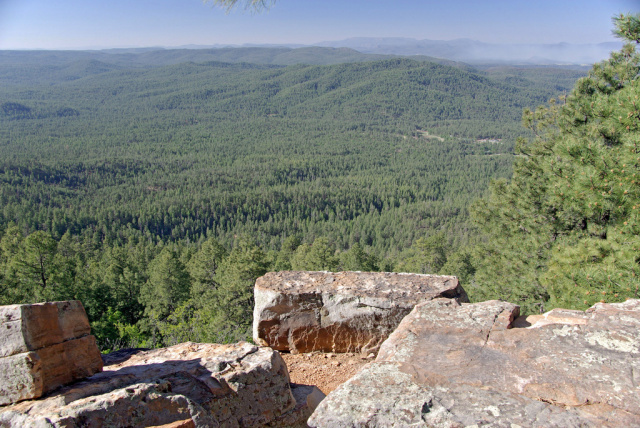
If you go to the ‘About‘ page of their website, you will see this beautiful photograph.

TTPvista

It’s a view from the Mogollon Rim Trail that would inspire anyone to want to care for our planet.  The trail passes close to Payson and is a very popular walking area.

Back to TTP.  If you go to their website and start browsing the articles and seeing what information is already there, you get a clear idea of what a group of people can do.  That key word ‘DO‘!

Last Thursday, I offered a reflection on Learning from Dogs about what feels like a new world order.  The penultimate paragraph offered this:

I sense that we, as in the peoples on this planet, are well into a period of such change that even by the end of 2013, a little over 50 weeks away, the precipice for humanity will be within sight.  I hold out zero hope that any time soon our leaders and politicians will stop ‘playing games’ and focus on doing what’s right.  The time for truth, for integrity, for sound debate is NOW!

However, all the truth, integrity and debate in the world comes to nothing without ACTION.

It really is the bleedin’ obvious!

Another pause!

More beautiful pictures from Cynthia G.

A couple of weeks ago, I published a selection of photographs from a number of pictures that had been sent to me by Cynthia.  I named the post Small pause today and it received 25 ‘Likes’ and favourable comments including one from Pedantry that simply said, “More of the same, please! :)

So to Pedantry and all you other dear readers, here comes more of the same!

cg1

cg2

cg3

cg4

cg5

cg6

cg7

cg8

cg9

cg10

oooOOOooo

Forgive me now for this little indulgence; a couple of pictures from closer to home – literally!

HugoRd

An early morning picture of the woods overlooking our Oregon property.

Jeannie

My lovely Jeannie helping tidy up the bank of the creek.

A few reflections on a new world order

Maybe the power of open communications is our only way forward.

A number of disparate ideas have flown into my ‘in-box’ and left me with these thoughts.

The first was the last essay on TomDispatch.  This one from the hands of Mr. Engelhardt himself.  I’m referring to Tomgram: Engelhardt, The Washington Straitjacket.  As many of you know, Tom has been generous in granting me blanket permission to republish his posts and I frequently so do;  as yesterday’s post written by Professor Michael Klare demonstrated.

Let me give you a idea of where Tom was coming from with this personal essay,

The Barack Obama Story (Updated) 
How a Community Organizer and Constitutional Law Professor Became a Robot President
By Tom Engelhardt

President Barack Obama
The White House
1600 Pennsylvania Avenue, NW
Washington, D.C. 20500

Dear President Obama,

Nothing you don’t know, but let me just say it: the world’s a weird place. In my younger years, I might have said “crazy,” but that was back when I thought being crazy was a cool thing and only regretted I wasn’t.

I mean, do you ever think about how you ended up where you are? And I’m not actually talking about the Oval Office, though that’s undoubtedly a weird enough story in its own right.

The next paragraph opens, thus:

After all, you were a community organizer and a constitutional law professor and now, if you stop to think about it, here’s where you’ve ended up: you’re using robots to assassinate people you personally pick as targets.

Then there’s a comprehensive description of all the outcomes that have taken place in the last few years as in this paragraph,

Still, who woulda thunk it?  Don’t these “accomplishments” of yours sometimes amaze you? Don’t you ever wake up in the middle of the night wondering just who you are? Don’t you, like me, open your eyes some mornings in a state of amazement about just how you ended up on this particular fast-morphing planet? Are you as stunned as I am by the fact that a tanker carrying liquid natural gas is now making a trip from Norway to Japan across the winter waters of the Arctic? Twenty days at sea lopped off an otherwise endless voyage via the Mediterranean Sea, and the Indian and Pacific Oceans. Did you ever think you’d live to see the opening of the Northeast Passage in winter? Don’t you find it ironic that fossil fuels, which helped burn that oceanic hole in the Arctic ice, were the first commercial products shipped through those open waters? Don’t you find it just a tad odd that you can kill someone in distant Yemen without the slightest obstacle and yet you’ve been able to do next to nothing when it comes to global warming? I mean, isn’t that world-championship weird, believe-it-or-not bizarre, and increasingly our everyday reality?

Tom’s essay comes to this conclusion,

And don’t you ever wonder whether a labyrinth of 17 (yes, 17!) major agencies and outfits in the U.S. “Intelligence Community” (and even more minor ones), spending at least $75 billion annually, really makes us either safe or smart? Mightn’t we be more “intelligent” and less paranoid about the world if we spent so much less and relied instead on readily available open-source material?

I mean, there are so many things to dream about. So many ghostly possibilities to conjure up. So many experimental acts that offer at least a chance at another planet of possibility. It would be such a waste if you only reverted to your community-organizer or constitutional-law self after you left office, once “retirement syndrome” kicked in, once those drones were taking off at the command of another president and it was too late to do a thing. You could still dream then, but what good would those dreams do us or anyone else?

It’s a very powerful analysis that I really encourage you to read.

Then thanks to a mailing from the WordPress team, I was drawn to a recent account of life by Ruth Rutherford.  In an essay from the 13th November, Ruth writes about living in the dark, as this sample evocatively describes,

Dating in the dark

Just got back from visiting my ol’ stomping grounds in New Jersey where I spent the weekend with my parents and grandparents, just talking, eating and enjoying good company. And all this was done in the dark. Yep, that’s right. Even nearly two weeks after Hurricane Sandy unleashed her fury, the Garden State is still struggling to recover. And let me tell you: Living without power for that long will quickly make you appreciate the little things.

Like walking into a dark room and then transforming it with just the flip of a switch. Or turning on a faucet and seeing water actually pour out. Or pulling into a gas station on any day you choose, not just the days you’re allowed to based on the numbers on your license plate. Or just using the bathroom without strategically planning your “number twos” based on how much water is in the tank. Or not having to wake up at two o’clock in the morning to wander outside in your pajamas to fill the generator with gas. (Okay, fine. My dad did that part. But still…)

When you’re without electricity for a while, your mind tends to do a lot of thinking. There are no reality shows to turn your brain into mush, no hair dryers to block out the noise of everyday life, and no steaming hot baths to drown your worries in. Basically, it’s you, alone, with a candle, a flashlight and your thoughts. So I spent the time brain blogging.

At the heart of this essay is the concept that ‘dating’ as in finding one’s life partner has become too complex.  This is how Ruth concludes her ideas.

Yep, I’m telling you to be shallow.

Forget the deep end, folks. Jump, cannonball style, into the shallow end and let the fun begin!

Shared interests. Favorite movies. Local hot spots. Interesting hobbies. Recent vacations. Current music playlists. Boring work stories. Embarrassing childhood memories. Stupid jokes. Mutual attraction. Sparks. Chemistry.

Because if you can’t relate on these basic levels, then who the heck cares if you both want two boys, one girl and a yellow Labrador named Minnie?

Start small. Start simple. Grab a lantern and meet during a power outage. It’s amazing what you’ll find out about your date in the dark. (With your clotheson, people! Get your minds out of the gutter.)

~Ruth

Finally, closer to home. Patrice Ayme and Martin Lack have been exchanging views in comments to my recent post Unintended Consequences.  Patrice ended a comment with this: ” If goodness is to win, it has to be smarter than the enemy.

So what’s this all coming to?  According to WordPress there are over 500,000 people blogging about the world as they see it.  The number of others who read all those words must be well into many, many millions.  Even humble old Learning from Dogs received over 45,000 viewings in November alone bringing the total viewings to over 785,000!

As the saying goes, “the only thing required for evil to win, is for good people to do nothing.”

Go and read the latest from Bill McKibben on 350.org.

The_New_York_Times

The article in The New York Times tells the story of students, faculty and alumni around the country who are demanding divestment from fossil fuels. On a few campuses, like Swarthmore, they’ve been at it for semesters — but all of a sudden, as the article says, they find themselves “at the vanguard of a national movement. In recent weeks, college students on dozens of campuses have demanded that university endowment funds rid themselves of coal, oil and gas stocks. The students see it as a tactic that could force climate change, barely discussed in the presidential campaign, back onto the national political agenda.”

The picture that accompanies the article comes from our Minneapolis roadshow last Friday night, and the article concisely lays out the demands and the strategy of the campaign. It’s precisely the boost we need. So please, go read it here: www.nyti.ms/SESrfr

We’re quickly getting traction, but we can get more if we have your help.

So, first things first: please email the article by clicking the “E-Mail” button on the New York Times website — if we can get it on the newspaper’s “most emailed list”, we can help make sure it goes as far as possible, as fast as possible.

For full instructions on how to email the article, click here: www.350.org/nyt

I sense that we, as in the peoples on this planet, are well into a period of such change that even by the end of 2013, a little over 50 weeks away, the precipice for humanity will be within sight.  I hold out zero hope that any time soon our leaders and politicians will stop ‘playing games’ and focus on doing what’s right.  The time for truth, for integrity, for sound debate is NOW!

The sharing of ideas, thoughts and emotions that this ‘virtual’ world of blogging offers (despite me regarding the word ‘blogging’ as ugly) is going to be the only tool, the only channel to carry sufficient weight and power for the wishes and desires of the ‘common man’ to live peacefully and safely to the end of this century and beyond!

No hiding from the truth!

Michael Klare courtesy of Tom Dispatch.

I’m conscious that there have been a number of republications recently. Partly that’s because there has been a run of great articles that have gone down well with you, but also because the ‘task list’ arising from the move into our home in Merlin, Oregon continues to dominate our lives.  Even before Mother Nature demonstrated that our bridge needed repairing!

So onto another republication of a TomDispatch special.  But what a special.  Here’s Tom’s introduction:

Let’s face it: climate change is getting scarier by the week.  In this all-American year, record wildfiresrecord temperatures in the continental U.S., an endless summer, a fierce drought that stillwon’t go away, and Frankenstorm Sandy all descended on us.  Globally, billion-dollar weather events are increasingly dime-a-dozen affairs, with a record 14 of them in 2012 so far.  So is a linked phenomenon, the continuing rise in the volume of greenhouse gases, especially carbon dioxide, especially from burning fossil fuels, that get pumped into the atmosphere.  The latest figures from 2011 indicate that those gases once again made an appearance in record amounts with no indication that abatement is anywhere on the horizon.

With new studies and more data, it seems, come ever more frightening projections of just how much the temperature of this planet is going to rise by 2100.  After all, as Michael Klare, TomDispatch regular and author of the invaluable The Race for What’s Left, points out, the International Energy Agency’s latest study suggests a possible temperature rise by century’s end of 3.6 degrees Celsius.  That should startle the imagination, involving as it would the transformation of this planet into something unrecognizably different from the one we all grew up on.  And keep in mind that it’s by no means the top estimate for temperature disaster.  A new World Bank report indicates that a rise of 4 degrees Celsius is possible by century’s end, a prospect that bank president Jim Yong Kim termed a “doomsday scenario.”

In the meantime, the most comprehensive study to date of how humans have affected the amount of carbon dioxide in the atmosphere predicts that the planet’s temperature could rise by an unimaginable 6 degrees Celsius by 2100.  These days, it increasingly looks like we’ve entered the lottery from hell when it comes to Earth’s ultimate temperature — especially now that a recent report from the United Nations Environment Program suggests carbon in the atmosphere has increased by 20% since 2000 and that “there are few signs of global emissions falling.”

With this in mind, consider the latest “good news” reported (and widely hailed) in the world of fossil fuels, courtesy of Michael Klare.  Tom

oooOOOooo

World Energy Report 2012 
The Good, the Bad, and the Really, Truly Ugly 
By Michael T. Klare

Rarely does the release of a data-driven report on energy trends trigger front-page headlines around the world.  That, however, is exactly what happened on November 12th when the prestigious Paris-based International Energy Agency(IEA) released this year’s edition of its World Energy Outlook.  In the process, just about everyone missed its real news, which should have set off alarm bells across the planet.

Claiming that advances in drilling technology were producing an upsurge in North American energy output, World Energy Outlook predicted that the United States would overtake Saudi Arabia and Russia to become the planet’s leading oil producer by 2020.  “North America is at the forefront of a sweeping transformation in oil and gas production that will affect all regions of the world,”declared IEA Executive Director Maria van der Hoeven in a widely quoted statement.

In the U.S., the prediction of imminent supremacy in the oil-output sweepstakes was generally greeted with unabashed jubilation.  “This is a remarkable change,”said John Larson of IHS, a corporate research firm.  “It’s truly transformative.  It’s fundamentally changing the energy outlook for this country.”  Not only will this result in a diminished reliance on imported oil, he indicated, but also generate vast numbers of new jobs.  “This is about jobs.  You know, it’s about blue-collar jobs.  These are good jobs.”

The editors of the Wall Street Journal were no less ecstatic.  In an editorial with the eye-catching headline “Saudi America,” they lauded U.S. energy companies for bringing about a technological revolution, largely based on the utilization of hydraulic fracturing (“fracking”) to extract oil and gas from shale rock.  That, they claimed, was what made a new mega-energy boom possible.  “This is a real energy revolution,” the Journal noted, “even if it’s far from the renewable energy dreamland of so many government subsidies and mandates.”

Other commentaries were similarly focused on the U.S. outpacing Saudi Arabia and Russia, even if some questioned whether the benefits would be as great as advertised or obtainable at an acceptable cost to the environment.

While agreeing that the expected spurt in U.S. production is mostly “good news,”Michael A. Levi of the Council on Foreign Relations warned that gas prices will not drop significantly because oil is a global commodity and those prices are largely set by international market forces.  “[T]he U.S. may be slightly more protected, but it doesn’t give you the energy independence some people claim,” he told the New York Times.

Some observers focused on whether increased output and job creation could possibly outweigh the harm that the exploitation of extreme energy resources like fracked oil or Canadian tar sands was sure to do to the environment. Daniel J. Weiss of the Center for American Progress, for example, warned of a growing threat to America’s water supply from poorly regulated fracking operations.  “In addition, oil companies want to open up areas off the northern coast of Alaska in the Arctic Ocean, where they are not prepared to address a major oil blowout or spill like we had in the Gulf of Mexico.”

Such a focus certainly offered a timely reminder of how important oil remains to the American economy (and political culture), but it stole attention away from other aspects of the World Energy Report that were, in some cases, downright scary.  Its portrait of our global energy future should have dampened enthusiasm everywhere, focusing as it did on an uncertain future energy supply, excessive reliance on fossil fuels, inadequate investment in renewables, and an increasingly hot, erratic, and dangerous climate.  Here are some of the most worrisome takeaways from the report.

Shrinking World Oil Supply

Given the hullabaloo about rising energy production in the U.S., you would think that the IEA report was loaded with good news about the world’s future oil supply.  No such luck.  In fact, on a close reading anyone who has the slightest familiarity with world oil dynamics should shudder, as its overall emphasis is on decline and uncertainty.

Take U.S. oil production surpassing Saudi Arabia’s and Russia’s.  Sounds great, doesn’t it?  Here’s the catch: previous editions of the IEA report and theInternational Energy Outlook, its equivalent from the U.S. Department of Energy (DoE), rested their claims about a growing future global oil supply on the assumption that those two countries would far surpass U.S. output.  Yet the U.S. will pull ahead of them in the 2020s only because, the IEA now asserts, their output is going to fall, not rise as previously assumed.

This is one hidden surprise in the report that’s gone unnoticed.  According to the DoE’s 2011 projections, Saudi production was expected to rise to 13.9 million barrels per day in 2025, and Russian output to 12.2 million barrels, jointly providing much of the world’s added petroleum supply; the United States, in this calculation, would reach the 11.7 million barrel mark.

The IEA’s latest revision of those figures suggests that U.S. production will indeed rise, as expected, to about 11 million barrels per day in 2025, but that Saudi output will unexpectedly fall to about 10.6 million barrels and Russian to 9.7 million barrels.  The U.S., that is, will essentially become number one by default.  At best, then, the global oil supply is not going to grow appreciably — despite the IEA’s projection of a significant upswing in international demand.

But wait, suggests the IEA, there’s still one wild card hope out there: Iraq.  Yes, Iraq.  In the belief that the Iraqis will somehow overcome their sectarian differences, attain a high level of internal stability, establish a legal framework for oil production, and secure the necessary investment and technical support, the IEApredicts that its output will jump from 3.4 million barrels per day this year to 8 million barrels in 2035, adding an extra 4.6 million barrels to the global supply.  In fact, claims the IEA, this gain would represent half the total increase in world oil production over the next 25 years.  Certainly, stranger things have happened, but for the obvious reasons, it remains an implausible scenario.

Add all this together — declining output from Russia and Saudi Arabia, continuing strife in Iraq, uncertain results elsewhere — and you get insufficient oil in the 2020s and 2030s to meet anticipated world demand.  From a global warming perspective that may be good news, but economically, without a massive increase in investment in alternate energy sources, the outlook is grim.  You don’t know what bad times are until you don’t have enough energy to run the machinery of civilization.  Assuggested by the IEA, “Much is riding on Iraq’s success… Without this supply growth from Iraq, oil markets would be set for difficult times.”

Continuing Reliance on Fossil Fuels

For all the talk of the need to increase reliance on renewable sources of energy, fossil fuels — coal, oil, and natural gas — will continue to provide most of the additional energy supplies needed to satisfy soaring world demand.  “Taking all new developments and policies into account,” the IEA reported, “the world is still failing to put the global energy system onto a more sustainable path.”  In fact, recent developments seem to favor greater fossil-fuel reliance.

In the United States, for instance, the increased extraction of oil and gas from shale formations has largely silenced calls for government investment in renewable technology.  In its editorial on the IEA report, for example, the Wall Street Journal ridiculed such investment.  It had, the Journal’s writers suggested, now become unnecessary due to the Saudi Arabian-style oil and gas boom to come.  “Historians will one day marvel that so much political and financial capital was invested in a [failed] green-energy revolution at the very moment a fossil fuel revolution was aborning,” they declared.

One aspect of this energy “revolution” deserves special attention. The growing availability of cheap natural gas, thanks to hydro-fracking, has already reduced the use of coal as a fuel for electrical power plants in the United States.  This would seem to be an obvious environmental plus, since gas produces less climate-altering carbon dioxide than does coal.  Unfortunately, coal output and its use haven’t diminished: American producers have simply increased their coal exports to Asia and Europe.  In fact, U.S. coal exports are expected to reach as high as 133 million tons in 2012, overtaking an export record set in 1981.

Despite its deleterious effects on the environment, coal remains popular in countries seeking to increase their electricity output and promote economic development.  Shockingly, according to the IEA, it supplied nearly half of the increase in global energy consumption over the last decade, growing faster than renewables.  And the agency predicts that coal will continue its rise in the decades ahead.  The world’s top coal consumer, China, will burn ever more of it until 2020, when demand is finally expected to level off.  India’s usage will rise without cessation, with that country overtaking the U.S. as the number two consumer around 2025.

In many regions, notes the IEA report, the continued dominance of fossil fuels is sustained by government policies.  In the developing world, countries commonly subsidize energy consumption, selling transportation, cooking, and heating fuels at below-market rates.  In this way, they hope to buffer their populations from rising commodity costs, and so protect their regimes from popular unrest.  Cutting back on such subsidies can prove dangerous, as in Jordan where a recent government decision to raise fuel prices led to widespread riots and calls for the monarchy’s abolition.  In 2011, such subsidies amounted to $523 billion globally, says the IEA, up almost 30% from 2010 and six times greater than subsidies for renewable energy.

No Hope for Averting Catastrophic Climate Change

Of all the findings in the 2012 edition of the World Energy Outlook, the one that merits the greatest international attention is the one that received the least.  Even if governments take vigorous steps to curb greenhouse gas emissions, the report concluded, the continuing increase in fossil fuel consumption will result in “a long-term average global temperature increase of 3.6 degrees C.”

This should stop everyone in their tracks.  Most scientists believe that an increase of 2 degrees Celsius is about all the planet can accommodate without unimaginably catastrophic consequences: sea-level increases that will wipe out many coastal cities, persistent droughts that will destroy farmland on which hundreds of millions of people depend for their survival, the collapse of vital ecosystems, and far more.  An increase of 3.6 degrees C essentially suggests the end of human civilization as we know it.

To put this in context, human activity has already warmed the planet by about 0.8 degrees C — enough to produce severe droughts around the world, trigger or intensify intense storms like Hurricane Sandy, and drastically reduce the Arctic ice cap.  “Given those impacts,” writes noted environmental author and activist Bill McKibben, “many scientists have come to think that two degrees is far too lenient a target.”  Among those cited by McKibben is Kerry Emanuel of MIT, a leading authority on hurricanes. “Any number much above one degree involves a gamble,” Emanuel writes, “and the odds become less and less favorable as the temperature goes up.” Thomas Lovejoy, once the World Bank’s chief biodiversity adviser, puts it this way: “If we’re seeing what we’re seeing today at 0.8 degrees Celsius, two degrees is simply too much.”

At this point, it’s hard even to imagine what a planet that’s 3.6 degrees C hotter would be like, though some climate-change scholars and prophets — like former Vice President Al Gore in An Inconvenient Truth — have tried.  In all likelihood, the Greenland and Antarctica ice sheets would melt entirely, raising sea levels by several dozen feet and completely inundating coastal cities like New York and Shanghai.  Large parts of Africa, Central Asia, the Middle East, and the American Southwest would be rendered uninhabitable thanks to lack of water and desertification, while wildfires of a sort that we can’t imagine today would consume the parched forests of the temperate latitudes.

In a report that leads with the “good news” of impending U.S. oil supremacy, to calmly suggest that the world is headed for that 3.6 degree C mark is like placing a thermonuclear bomb in a gaudily-wrapped Christmas present.  In fact, the “good news” is really the bad news: the energy industry’s ability to boost production of oil, coal, and natural gas in North America is feeding a global surge in demand for these commodities, ensuring ever higher levels of carbon emissions.  As long as these trends persist — and the IEA report provides no evidence that they will be reversed in the coming years — we are all in a race to see who gets to the Apocalypse first.

Michael Klare is a professor of peace and world security studies at Hampshire College, a TomDispatch regular, and the author, most recently, ofThe Race for What’s Left (Metropolitan Books).  A documentary movie based on his book Blood and Oil can be previewed and ordered at http://www.bloodandoilmovie.com. You can follow Klare on Facebook by clicking here.

oooOOOooo

Why do I have this inner feeling that 2013 will be bringing some surprises!

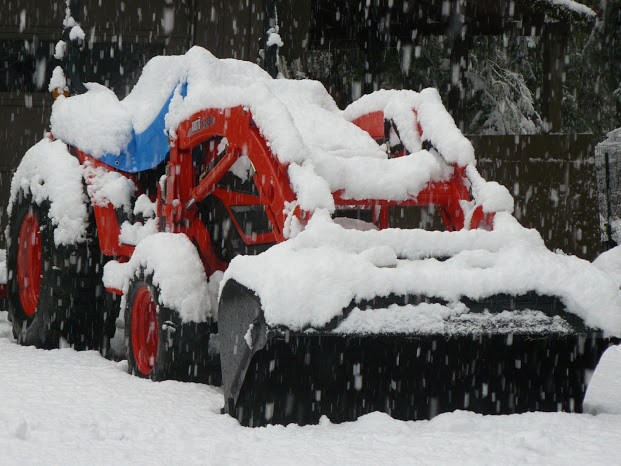
The creek did rise!

Connections!

Our good friend back in Payson, John Hurlburt, is often heard to close a conversation in response to a “Best wishes” with the saying “Good Lord willing and the creek don’t rise.

Well for us the creek did rise last week-end!

creekrise

So when I rang John a couple of days ago and asked him where the expression came from, he was quick to explain that it was a familiar ‘sign-off’ by Red Barber, a former sports broadcaster.

Red Barber
Red Barber

As Wikipedia explains:

Walter Lanier “Red” Barber (February 17, 1908 – October 22, 1992) was an American sportscaster.

Barber, nicknamed “The Ol’ Redhead”, was primarily identified with radio broadcasts of Major League Baseball, calling play-by-play across four decades with the Cincinnati Reds (1934–38), Brooklyn Dodgers (1939–1953), and New York Yankees (1954–1966).

Like his fellow sports pioneer Mel Allen, Barber also gained a niche calling college and professional football in his primary market of New York City.

OK, that’s all for now – off to the shops to get in 10 days of supplies before the bridge is repaired, as reported here!

Unintended Consequences

That pesky ‘law’ regarding the power of unintended consequences.

As many of you are aware, last week was an unusual format for Learning from Dogs in that the whole of the week was dedicated to republishing Dr. Samuel Alexander’s essay The Sufficiency Economy – Envisioning a Prosperous Way Down.  If you missed that, the first chapter was a week ago today under the title of Where less is so much more.

Moving on. Many living in Northern California and South-West Oregon will have had a timely reminder that nature is tapping mankind on the shoulder in new and challenging ways.  I’m referring to the massive storm that was featured in a recent Climate Crocks article that delivered over a foot of rainfall in recent days.  Here in Southern Oregon we received over 10 inches!  Hence the growing awareness that we have to do something!

So with those musings in mind, read the following essay written by Gail Tverberg of the website Our Finite World.  Gail describes herself, thus:

I am an actuary interested in finite world issues – oil depletion, natural gas depletion, water shortages, and climate change. The financial system is also likely to be affected.

I’m very grateful to Gail for so promptly giving me written permission to republish her work.  It is very relevant to all of us.

oooOOOooo

Climate Change: The Standard Fixes Don’t Work

World leaders seem to have their minds made up regarding what will fix world CO2 emissions problems. Their list includes taxes on gasoline consumption, more general carbon taxes, cap and trade programs, increased efficiency in automobiles, greater focus on renewables, and more natural gas usage.

Unfortunately, we live in a world economy with constrained oil supply. Because of this, the chosen approaches have a tendency to backfire if some countries adopt them, and others do not. But even if everyone adopts them, it is not at all clear that they will provide the promised benefits.

Figure 1. Actual world carbon dioxide emissions from fossil fuels, as shown in BP’s 2012 Statistical Review of World Energy. Fitted line is expected trend in emissions, based on actual trend in emissions from 1987-1997, equal to about 1.0% per year.

The Kyoto Protocol was adopted in 1997. If emissions had risen at the average rate that they did during the 1987 to 1997 period (about 1% per year), emissions in 2011 would be 18% lower than they actually were. While there were many other things going on at the same time, the much higher rise in emissions in recent years is not an encouraging sign.

The standard fixes don’t work for several reasons:

1. In an oil-supply constrained world, if a few countries reduce their oil consumption, the big impact is to leave more oil for the countries that don’t. Oil price may drop a tiny amount, but on a world-wide basis, pretty much the same amount of oil will be extracted, and nearly all of it will be consumed.

2. Unless there is a high tax on imported products made with fossil fuels, the big impact of a carbon tax is to send manufacturing to countries without a carbon tax, such as China and India. These countries are likely to use a far higher proportion of coal in their manufacturing than OECD countries would, and this change will tend to increase world CO2 emissions. Such a change will also tend to raise the standard of living of citizens in the countries adding manufacturing, further raising emissions. This change will also tend to reduce the number of jobs available in OECD countries.

3. The only time when increasing natural gas usage will actually reduce carbon dioxide emissions is if it replaces coal consumption. Otherwise it adds to carbon emissions, but at a lower rate than other fossil fuels, relative to the energy provided.

4. Substitutes for oil, including renewable fuels, are ways of increasing consumption of coal and natural gas over what they would be in the absence of renewable fuels, because they act as  add-ons to world oil supply, rather than as true substitutes for oil. Even in cases where they are theoretically more efficient, they still tend to raise carbon emissions in absolute terms, by raising the production of coal and natural gas needed to produce them.

5. Even using more biomass as fuel does not appear to be a solution. Recent work by noted scientists suggests that ramping up the use of biomass runs the risk of pushing the world past a climate change tipping point.

It is really unfortunate that the standard fixes work the way they do, because many of the proposed fixes do have good points. For example, if oil supply is limited, available oil can be shared far more equitably if people drive small fuel-efficient vehicles. The balance sheet of an oil importing nation looks better if citizens of that nation conserve oil. But we are kidding ourselves if we think these fixes will actually do much to solve the world’s CO2 emissions problem.

If we really want to reduce world CO2 emissions, we need to look at reducing world population, reducing world trade, and making more “essential” goods and services locally.  It is doubtful that many countries will volunteer to use these approaches, however.  It seems likely that Nature will ultimately provide its own solution, perhaps working through high oil prices and weaknesses in the world financial system.

Elastic Versus Inelastic Supply

It seems to me that many bad decisions have been made because many economists have missed the point that crude oil supply tends to be very inelastic, while other fuels are fairly elastic. Let me explain.

Elastic supply is the usual situation for most goods. Plenty of the product is available, if the price is high enough. If there is a shortage, prices rise, and in not too long a time, the market is well-supplied again. If supply is elastic, if you or I use less of it, ultimately less of the product is produced.

Coal and natural gas usually are considered to be elastic in their supply. To some extent, they are still “extract it as you need it” products. Supply of natural gas liquids (often grouped with crude oil, but acting more like a gas, so it is less suitable as a transportation fuel) is also fairly elastic.

Crude oil is the one product that is in quite short supply, on a world-wide basis. Its supply doesn’t seem to increase by more than a tiny percentage, no matter how high the price rises. This is a situation of inelastic supply.

Figure 2. World crude oil production (including condensate) based primarily on US Energy Information Administration data, with trend lines fitted by the author.

Even though oil prices have been very high since 2005  (shown in Figure 3, below), the amount of crude oil has increased by only 0.1%  per year (Figure 2, above).

Figure 3. Historical average annual oil prices, (“Brent” or equivalent) in 2011$, from BP’s 2012 Statistical Review of World Energy.

In the case of oil, both supply and demand are quite inelastic. No matter how high the price, demand for oil doesn’t drop back by much. No matter how high the price of oil, world supply doesn’t rise very much, either.1

In a situation of inelastic supply, the usual actions a person might take appear to work when viewed on a local basis, but backfire on a world basis, if not everyone participates. When one country tries to conserve crude oil (whether through a carbon tax, gasoline tax, or higher automobile mileage requirement), it may reduce its own consumption, but there are still plenty of other buyers in the market for the oil that was saved. So the oil gets used by someone else, perhaps at a slightly lower price.  World oil production remains virtually unchanged. Thus, a reduction in oil usage by an OECD country can translate to more oil consumption by China or India, and ultimately more development of all types by those countries.

Adding Substitutes Adds to Carbon Emissions

If we don’t have enough crude oil, one approach is to create substitutes. Because crude oil supply is inelastic, though, these substitutes aren’t really substitutes, though. They are “add ons” to world oil supply, and this is one source of our problem with increasing world emissions.

What do we use to make the substitutes? Basically, natural gas and coal, and to a limited extent oil (because we can’t avoid using oil). The catch is, that to make the substitutes, we need to burn natural gas and coal more quickly than we would, if we didn’t make the oil substitutes. Since the supply of coal and natural gas is elastic, it is possible to pull them out of the ground more quickly. Thus, making the substitutes tends to increase carbon dioxide emissions over what they would have been, if we had never come up with the idea of substitutes.

The increased use of coal and natural gas is pretty clear, if a person thinks about coal-to-liquids or gas-to-liquids. Here, we need to first build the plants used in production, and then with each barrel of substitute made, we need to use more natural gas or coal. So it is very clear that we are extracting a lot of additional coal and natural gas, to make a relatively smaller amount of oil substitute. There is often a substantial need for water to make the process work as well, adding another stress on the system.

But the same issue comes up with biofuels, and with other renewables. These too, are add-ons to the world oil supply, not substitutes. While theoretically they might produce energy with less CO2 per unit than fossil fuel systems, in absolute terms they lead to natural gas and coal being pulled out of the ground more quickly to be used in making fertilizer, electricity, concrete, and other inputs to renewables.2

Carbon Taxes and Competitiveness

Each country competes with others in the world market place. Adding a carbon tax makes products made by the local company less competitive in the world marketplace.  It also signals to potential coal users that the countries adopting the carbon taxes are willing to a leave a greater proportion of world coal exports to those who are not adopting the tax, thus helping to keep the cost of imported coal down.

Asian countries already have a competitive edge over OECD countries in terms of lower wages and lower fuel costs (because of their heavy coal mix), when it comes to manufacturing. Adding a carbon tax tends to add to the Asian competitive edge. This tends to shift production offshore, and with it, jobs.

Figure 4. China’s energy consumption by source, based on BP’s Statistical Review of World Energy data.

China joined the World Trade Organization in 2001. Figure 4 shows clearly that its fuel consumption ramped up rapidly thereafter. It seems likely that the number of Chinese manufacturing jobs and spending on Chinese infrastructure increased at the same time.

Economists seem to have missed the serious worldwide deterioration in CO2 emissions in recent years by looking primarily at individual country indications, including CO2 emissions per unit of GDP. Unfortunately, this narrow view misses the big picture–that total CO2 emissions are rising, and that CO2 emissions relative to world GDP have stopped falling. (See my posts Is it really possible to decouple GDP growth from energy growth and Thoughts on why energy use and CO2 emissions are rising as fast as GDP. See also Figure 1 at the top of the post.)

The Employment Connection

I have shown that in the US there is a close correlation between energy consumption and number of jobs. (For more information, including a look at older periods, see my post, The close tie between energy consumption, employment, and recession.)

Figure 5. Employment is the total number employed at non-farm labor as reported by the US Census Bureau. Energy consumption is the total amount of energy of all types consumed (oil, coal, natural gas, nuclear, wind, etc.), in British Thermal Units (Btu), as reported by the US Energy Information Administration.

There are several reasons why a connection between energy consumption and the number of jobs is to be expected:

(1) The job itself in almost every situation requires energy, even if it is only electricity to operate computers, and fuel to heat and light buildings.

(2) Equally importantly, the salaries that employees earn allow them to buy goods that require the use of energy, such as a car or house. (“Energy demand” is what people canafford; jobs allow “demand” to rise.)

(3) The lowest salaried people can be expected to spend the highest proportion of their salaries on energy-related services (such as food and gasoline for commuting). The wealthy spend their money on high priced goods and services, such as financial planning services and designer clothing that require much less energy per dollar of expenditure.

The thing I find concerning is the close timing between the ramp-up of Asian coal use and thus jobs using coal, and the drop-off of US employment as a percentage of US population, as illustrated in Figure 6 below. Arguably, the ramp up in world trade is just as important, but some aspects of programs that are intended to save CO2 emissions also seem to encourage world trade.

Figure 6. US Number Employed / Population, where US Number Employed is Total Non_Farm Workers from Current Employment Statistics of the Bureau of Labor Statistics and Population is US Resident Population from the US Census. 2012 is partial year estimate.

Of course, the US did not sign the Kyoto Protocol or enact a carbon tax, and it is its jobs that I show falling as a percentage of population. It is more that the CO2 solutions act as yet another way to encourage more international trade, and with it more “growth”, and  more CO2.

Using More Biomass is Not a Fix Either

Burning more wood for fuel and creating “second generation” biofuels from biomass seems like a fix, until a person realizes that we are reaching limits there, as well.

In June 2012, twenty noted scientist published a paper in the journal Nature called Approaching a State Shift in the Earth’s Biosphere. This report indicates that humans have already converted as much as 43% of Earth’s land to urban or agricultural uses. In total, 20% to 40% of Earth’s primary productivity has been taken over by humans. The authors are concerned that we may now be reaching a tipping point leading to a state shift, because of loss of ecosystem services as use of biological products increases. With this state change would come a change in climate. Simulations indicate that this tipping point may occur when as little as 50% of land use is disturbed. This tipping point may be even lower, if world-wide synergies take place.

On Our Current Path – Lacking Good Solutions

While this list of problems relating to current proposed solutions is not complete, it gives a hint of the problems with reducing CO2 emissions using approaches suggested to date. There are many issues I have not covered.

One issue of note is the fact the cost of integrating intermittent renewables (such as wind and solar PV) increases rapidly, as we add increasing amounts to the grid. This occurs because there is more need to transport the electricity long distances and to mitigate its variability through electricity storage or fossil fuel balancing. (See for example, Low Carbon Projects Demand a New Transmission and Distribution ModelGrid Instability Has Industry Scrambling for Solutions, and Hawaii’s Solar Power Flare-Up.)

While the problems noted in these articles are probably solvable, the cost of these solutions has not been built into energy balance analyses. Energy balances (or EROEI estimates) as currently reported do not vary with the proportion of intermittent renewables added to the grid. If energy balance analyses were adjusted to reflect the high cost of adding an increasing proportion of wind or solar PV to the grid, they would likely show a rapidly declining energy balance, above a certain threshold. This would indicate that while adding a little intermittent renewables (as we have done to date) can be a partial solution, adding a lot is likely to have serious cost and energy balance issues.

Another issue that is difficult to deal with is the fact that we are not dealing with a temporary problem with CO2 emissions. The idea is not to slow down the burning of fossil fuels, and burn more later; what we really need to do is to leave unburned fossil fuels in the ground for all time. This is a problem, because there is no way that we can impose our will on people living 10 or 50 years from now. The Maximum Power Principle of H. T. Odum would seem to indicate that any species will make use of whatever energy sources are available to it, to the extent that it can. Even if we temporarily defeat this tendency with respect to humans’ use of fossil fuels, I don’t see any way that we can defeat this tendency for the long term.

Considering all of these issues, it does not appear that most of the “standard” solutions will really work.3 What other options do we have?

Nature’s Solution  

The Earth has been handling the problem of shifting conditions for over 4 billion years. The earth is a finite system. Nature provides that finite systems, such as the Earth, will cycle to new states of equilibrium over time, as conditions change. While we would like to defeat Earth’s tendency in this regard, it is not at all clear that we can. Part of this cycling to a new state is likely to be a change in climate.

A state change is a cause for concern to humans, but not necessarily to the Earth itself.  The Earth has moved from state to state many times in its existence, and will continue to do so in the future. The changes will bring the Earth back into a new equilibrium. For example, if CO2 levels are high, species that can make use of higher CO2 levels (such as plants) are likely to become dominant, rather than humans.

Exactly how this state change might occur is subject to different views. One view is that changing CO2 levels will be a primary driver. The Nature article referenced previously suggested that increased disturbance of natural ecosystems (as with greater use of biomass) might force a state change. My personal view is that a financial collapse related to high oil price may be part of Nature’s approach to moving to a new state. It could bring about a reduction in world trade, a scale back in CO2 emissions, and a general contraction of human systems.4

However the change takes place, it could be abrupt. It will not be to many people’s liking, since most will not be prepared for it.

Steps That Might Work to Slow CO2 Emissions

It would be convenient if we could slow CO2 emissions by working to produce energy with less CO2. This option does not seem to be working well though, so I would argue that we need to work in a different direction: toward reducing humans’ need for external energy. In order to do this, I would suggest two major steps:

(1) Reduce the world’s population, through one-child policies and universal access to family planning services. This step is necessary because rising population adds to demand. If we are to reduce demand, lower population needs to play a role.

(2) Change our emphasis to producing essential goods locally, rather than outsourcing them to parts of the world that are likely use coal to produce them. I would suggest starting with food, water, and clothing, and the supply chains necessary to produce these items.

Changing our emphasis to producing essential goods locally will have a multiple benefits. It will (a) add local jobs, and (b) lead to less worldwide growth in coal usage, (c) save on transport fuel, and (d) add protection against the adverse impact of declining world oil supply, if this should happen in the not too distant future. It should also help reduce CO2 emissions. The costs of goods will likely be higher using this approach, leading to less “stuff” per person, but this, too, is part of reaching reduced CO2 emissions.

It is hard to see that the steps outlined above would be acceptable to world leaders or to the majority of world population. Thus, I am afraid we will end up falling back on Nature’s plan, discussed above.

Notes:

[1] Michael Kumhof and Dirk Muir recently prepared a model of oil supply and demand (IMF working paper: Oil and the World Economy: Some Possible Futures). In it, they assume a long run price-elasticity of oil supply of 0.03, and remark that a paper by Benes and others indicates a range of 0.005 to 0.02 for this variable. The long term price elasticity of oil demand is  assumed to be .08 in the Kumhof and Muir analysis.

[2] I would argue that standard EROEI measurements are defined too narrowly to give a true measure of the amount of energy used in making a particular substitute. For example, EROEI measures do not consider the energy costs associated with labor (even though workers spend their salaries on clothing, and commuting costs, and many other good and services that use fossil fuels), or with financing costs, or of indirect impacts like wear and tear on the roads by transporting corn for biofuel.

Other types of analysis have ways of dealing with this known shortfall. For example, when the number of jobs that a new employer can be expected to add to a community is evaluated, the usual approach seems to be to take the number of jobs that can be directly counted and multiply by three, to estimate the full impact. I would argue that with substitutes, some similar adjustment is needed. This adjustment which would act to increase the energy use associated with renewables, and reduce the EROEI. For example, the adjustment might divide directly calculated EROEI by three.

A calculation of the true net benefit of renewables also needs to recognize that nearly the full energy cost is paid up front, and only over time is recovered in energy production. When renewable production is growing rapidly, society tends to be in a long-term deficit position. Typically, it is only as growth slows that society reaches as net-positive energy position.

[3] I obviously have not covered all potential solutions. Nuclear power is sometimes mentioned, as is space solar power. There are new solutions being proposed regularly. Even if these solutions would work, ramping them up would take time and require use of fossil fuels, so it is wise to consider other options as well.

[4] The way that limited oil supply could interfere with world trade is as follows: High oil prices cause consumers to cut back on discretionary goods. This leads to layoffs in discretionary sectors of the economy, such as vacation travel. It also leads to secondary effects, such as debt defaults and lower housing prices. The financial effects “concentrate up” to governments of oil importing nations, because they receive less tax revenue from laid-off workers at the same time that they pay out more in unemployment benefits, stimulus, and bank bailouts. (We are already at this point.)

Eventually, countries will find that deficit spending is spiraling out of control. If countries raise taxes and cut benefits, this is likely to lead to more lay offs and debt defaults. One possible outcome is that citizens will become increasingly unhappy, and replace governments with new governments that repudiate old debt. The new governments may have difficulty establishing financial relationships with other governments, given that most are major debt defaulters. Such issues could reduce world trade substantially. With the drop of world trade would come much more limited ability to maintain our current systems, such as electricity and long distance transport.

oooOOOooo

Reminds me of that old saying, “The best laid plans of mice and men …” Or as Robbie Burns wrote in 1785,

But Mousie, thou art no thy lane,
In proving foresight may be vain:
The best-laid schemes o’ mice an’ men
Gang aft agley,
An’ lea’e us nought but grief an’ pain,
For promis’d joy!

Another Sunday pause

More beautiful pictures.

Many of you ‘Liked’ the pictures from last Sunday’s Small pause today post.  Those pictures were sent to me by Cynthia, wife of long-time friend Dan Gomez.

So I decided to present another set, this time sent to me by Suzann, who is Dan’s sister.  Again, they are beautiful albeit very different images.

Northern Lights Over Teepees

(NORTHERN LIGHTS, YELLOW KNIFE, CANADA )

sr1

Now check out that thermometer!

sr2

Now more beautiful images.

sr3

sr4

sr5

sr6

sr7

sr8

The next picture is a fire rainbow; the rarest natural phenomenon in the atmosphere.  The picture was taken on the Idaho Washington border and the event lasted for about an hour.

Apparently, the clouds have to be cirrus of an altitude of 20,000 feet with just the right proportion of ice crystals.  Then the sunlight has to illuminate the clouds at precisely 58 degrees to the horizontal.

sr9

Sunset at the North Pole

Another rare picture taken when the moon was closest to the earth. Taken Thursday, the 13th. of March 2011.

sr10

Note how unusual it is to see the sun below the moon!

Thanks Su for sending me the pics.

The naming of creeks!

Funny old world at times!

Last Thursday and yesterday have seen huge amounts of rainfall in this part of Southern Oregon.  In fact it was a swipe from the massive storm that was featured in a recent Climate Crocks article, from which one can read:

Meteorologist Paul Douglas has more:

I’m seeing some signs of a potentially historic storm for portions of the western USA between Friday and Wednesday of next week as a series of very moist storms push inland from the Pacific. I expect some flash flooding (and river flooding) for the San Francisco Bay Area, but the most severe flooding (and mountain snows) will take place from Marin county into the mountains of northern California and the Coastal/Cascade range of Oregon.

The ECMWF model, which seems to be doing the best job overall in this new weather-on-steroids environment, prints out some 16-20″ rainfall amounts over northern California and southern/western Oregon by Sunday; two surges: one Friday, a second front pushing in Sunday. WSI’s high-res RPM model confirms this as well, which increases my confidence level. The ECMWF model prints out 4-5” for San Francisco, but 8-10” for Marin county, just north of SFO.

The driveway from our road to the house, about a quarter-of-a-mile long, within 300 feet crosses a creek that flows right across our property.  Most of the time it’s a quiet, idyllic place for a dog to play.

BummerCk

But when the volume of water reaches the sorts of proportions that we have seen in the last 48 hours, it turns into a nasty torrent.

bummerck2

Not only that, the driveway across the creek relies on a bridge.  Rather, it did rely on a bridge. But Mother Nature, as always, had her say!
bummerck3

Most, if not all, the wooden support structure that held up the steel platform has been swept away.

So all the well-laid plans for the week-end now on hold as we play Marooned!  At least our dogs are taking an active interest …

Oh, Daddy, that looks expensive!

And the name of the creek?

BUMMER CREEK

I kid you not!

Looking out to the horizon

The concluding Part Five of The Sufficiency Economy

So here we are.  Friday and the last part of this stimulating essay by Dr. Samuel Alexander.  I do hope you have found all five chapters not only of interest but also that they have stimulated new ways of thinking.  Because the only way humanity is going to pull itself into a new, sustainable way of living is by thinking ‘outside the box’.

oooOOOooo

THE SUFFICIENCY ECONOMY
ENVISIONING A PROSPEROUS WAY DOWN
Samuel Alexander
Simplicity Institute Report 12s, 2012

Dr Samuel Alexander is co-director of the Simplicity Institute and a lecturer with the Office for Environmental Programs, University of Melbourne.

5. The Ambiguous Charge of Utopiansim

This time, like all times, is a very good one, if we but know what to do with it. – R.W. Emerson

With the notion of a sufficiency economy now broadly sketched out, and some issues about the transition raised for consideration, it may be worthwhile stepping back from the analysis to consider the vision as a whole. This should provide a new perspective and perhaps raise new issues that deserve attention. One objection that can be easily anticipated is that the notion of a sufficiency economy, as I have described it, is fundamentally utopian in its outlook, and in this section I will respond to this objection briefly.

5.1. Four Responses

The charge of utopianism can be dealt with in at least the following four ways. First, if the charge is meant to imply that the goal of economic sufficiency, as opposed to economic growth, is unrealistic, then there is a sense in which that charge must be turned on its head. It is limitless growth on a finite planet that is unrealistic. After all, what could be more utopian, in the pejorative sense, than the neoclassical growth model which takes as ‘given’ certain non-physical parameters (e.g. market price, preferences, technology, wealth distribution, etc.) but on that basis purports to be independent of the biophysical laws of nature? Recognising the biophysical (and other) limits to growth may indeed require a radical new approach to how economies are structured, as I have argued it does; but this would be in recognition of certain realities, not in any attempt to transcend them.

In a second sense, however, the charge of utopianism should be embraced, not as an indictment, but as a defence. ‘Without the hypothesis that a different world is possible,’ Genevieve Decrop has recently stated, ‘there can be no politics, but only the administrative management of men [sic] and things’ (as quoted in Latouche, 2009: 32). In this sense, the sufficiency economy is indeed a utopian vision, arising out of a defiant faith that a different world is possible. But as Serge Latouche (2009: 32) has aptly explained with respect to the degrowth movement, ‘Far from representing a flight of fancy, it is an attempt to explore the objective possibility of its implementation.’ With a nod to Latouche, the sufficiency economy described above should be understood in similar terms. Imagining the alternative is the first step toward its realisation.

But there is a third sense in which the sufficiency economy is not utopian at all – not if ‘utopia’ refers to that which does not and could never exist. Granted, there is no economy that resembles closely the one described above, which is of a growth economy that has gone through the transition to sufficiency. Nevertheless, almost all the features of the sufficiency economy do find reflection in existing economies in the developed world (and elsewhere). Indeed, real-world examples of sufficiency in practice are everywhere bubbling beneath the surface, threatening to expand into the mainstream; some are in the process of doing so, albeit slowly. For example, there are nascent movements based on notions such as voluntary simplicity, eco-villages, permaculture, transition towns, slow food, degrowth, steady-state economics, etc., all of which can be understood to be exemplifying the practice of sufficiency in disparate but overlapping ways. What this indicates is that a sufficiency economy is not at all a utopian fantasy, but rather an embryonic, fragmented reality struggling away beneath the existing economy, trying to replace that economy with something fundamentally different. It is easy to forget that social movements constantly surprise us, often moving from tiny subcultures to the cultural mainstream with startling speed. Rather than despair, we should proceed on the assumption that more surprises could still lie in store of us.

Finally, some might claim that the sufficiency economy is utopian – again, in the pejorative sense – for the reason that it posits a transformation of economy that relies on a cultural embrace of low-consumption lifestyles of sufficiency, or rather lifestyles of ‘voluntary simplicity,’ as the phrase is more widely known. Human beings are essentially consumers with insatiable material desires, the objection might run, and the sufficiency economy will never voluntarily emerge because voluntary simplicity asks people to act against their personal interests. Any response to this point should begin with the social critique of consumer culture, which would be based on the large and robust body of hedonics research ratifying what many people, perhaps, know intuitively, namely, that ‘beyond a certain threshold, more material wealth is a poor substitute for community cohesion, healthy relationships, a sense of purpose, connection with nature, and other dimensions of human happiness’ (Talberth, 2008: 21). Since the evidence suggests that many people in affluent societies are above such a ‘threshold,’ there are strong grounds for thinking that reducing consumption in such cases would actually increase personal happiness. Relying on the expansion of the Voluntary Simplicity Movement would be more problematic, of course, if voluntary simplicity were a living strategy founded solely upon altruism, or if it implied sacrificing personal well-being for the sake of ecological health. But plainly its foundations are less demanding. Although many in the Voluntary Simplicity Movement are indeed motivated by humanitarian and ecological concerns, the most promising sign for the expansion of the movement lies in the fact that almost all those who practise simplicity report being happier in their lifestyle choice, despite a voluntary reduction or restraint in income and consumption (Alexander and Ussher, 2012). A utopian theory of economic transformation seems much less utopian, I would suggest – as would any theory of social reorganisation – when it is based upon a living strategy that is demonstrably in people’s best interests, including their own happiness.

For all these reasons, I contend that the sufficiency economy is not utopian in any problematic sense. The prospects of its imminent realisation, I admit, seem slim; and certainly it will depend on human beings working relatively well together as the challenges ahead intensify. But human beings share a universal desire to work toward a better life, and if that energy can be harnessed and the transition wisely negotiated, then the sufficiency economy will be quite achievable. Seemingly impossible things have happened before.

6. Conclusion

The challenges that will be faced on the path to a sufficiency economy can hardly be overstated. One of them not considered above is our genetic composition, which is not well suited to dealing effectively or thoughtfully with long-term issues. Historically we had to worry about immediate dangers such as tigers, other tribes, staying warm, and getting enough food; now we also have to get our heads around and respond effectively to the seemingly distant and abstract issues of climate change and peak oil. Evidently, this does not come easy to us. Secondly, the very task of decarbonising our economies as far as possible will be much harder and more unsettling than most people think. As you read these words, look around your room and consider what material artefacts are not, in some way, the product of fossil fuels. Is there anything? My point is that the sufficiency economy described above is not about turning off the lights and taking shorter showers. It is about embracing a fundamentally different way of life and a fundamentally different economy. If we do not voluntarily embrace these differences, however, and instead persist with the goal of universal affluence, then soon enough ecological and / or economic systems will collapse and we will be faced with fundamental change all the same, only with much more suffering. As I noted earlier, we can go the easier way (which will not be easy), or the harder way (which will be unspeakably tragic), depending on our attitudes and actions. We are free to choose our fate, and presently we are in the process of doing so.

I have hardly presented the full picture of the sufficiency economy and I acknowledge that various issues, probably most issues, are controversial and will be contested. That is the way it will be, and that is the way it should be. What is important is that the debate gets drawn away from the question of how to maintain the existing system, toward the urgent and necessary question of what new system should replace the existing system. In this sense the humble notion of a sufficiency economy can be seen as the revolutionary proposal that it is. It will not, of course, be easy to build a new, simpler way of life from within industrial civilisation. Everything will conspire against us. But various social movements already in existence provide a glimmer of hope in these dark times, and that glimmer is everyday growing brighter.

In all movements for change, including the broad movements for justice and sustainability, it is important occasionally to hold up for examination what one understands to be the clearest expression of one’s highest hopes and ideals. That is what I have tried to do in this essay, albeit in an incomplete way. No doubt some will find the threads of underlying positivity utterly indigestible, and already I can sense the trolls gathering, waiting to unleash their pure, unconstructive negativity. But let them fester in their own negativity, while the rest of us (including the constructive critics) set about building the new economy out of the emerging ashes of Empire. All we can do is our best, and we should die trying, not because we think we will succeed, but because if we do not try, something noble in our hearts and spirits will be lost.

Notes:

  1. In forming the following views I have been influenced and inspired by many people, the most significant of whom I would like to acknowledge. With respect to material simplicity and ‘the good life,’ Henry Thoreau (1982) has by far been the greatest influence on my world view, followed by William Morris (2004) and the Greek and Roman Stoics (e.g. Seneca, 2004). I am also greatly indebted to my colleagues and fellow authors at the Simplicity Institute – Ted Trainer, Mark Burch, David Holmgren, and Simon Ussher – all of whom, in their own way, have deeply influenced the following discussion (see Simplicity Institute, 2012). The work of Ernst Schumacher (1973) and the Club of Rome (Meadows et al, 2004) first introduced me to the ‘limits to growth’ analysis, and Serge Latouche (2003; 2009) introduced me to the insight that degrowth, not merely zero-growth, is what is needed to achieve sustainability in overdeveloped nations. With respect to energy, Howard and Elisabeth Odum (2001) and Joseph Tainter (1988) have been my biggest influences, showing me how central energy is to the world we live in. I must also mention and thank Rob Hopkins (2008) and the Transition Movement, for providing what I consider to be the most promising framework for bringing about a just and sustainable, post-carbon world.
  2. It may be that tar-sealed roads and existing water infrastructure can be reimagined into decentralised water management systems, but for present purposes I will treat that as a distant possibility on the grounds that the systems for distributing and treating water collected in this manner are still undeveloped. Furthermore, I do not have the knowledge to understand how difficult it would be to secure water for consumption in this manner.
  3. I will not argue against privatisation models here, other than note that in the sufficiency economy I envision, private companies that serve narrow shareholder interests cannot be left in charge of the provision of basic needs. Instead, the universal provision basic needs, such as water, must be considered a social duty that ultimately remains under social control. No one, for example, should be denied water on the grounds that they are too poor.
  4. http://en.wikipedia.org/wiki/Water_supply_and_sanitation_in_the_United_States
  5. http://www.abs.gov.au/ausstats/abs@.nsf/Lookup/CAE301277A675941CA257956000E646E?opendocument
  6. http://www.waterfootprint.org/?page=files/UnitedKingdom
  7. http://hdr.undp.org/en/media/HDR06-complete.pdf p34.
  8. I will currently assume the continuation of some form of monetary economy, an issue that I will give further attention below.
  9. Between 2008-9, water in Australia (where I am writing from) was on average $1.93 per 1,000 litres, and for industry water averaged $0.12 per 1,000 litres. See Australian Bureau of Statistics:
    http://www.abs.gov.au/ausstats/abs@.nsf/Lookup/by%20Subject/1301.0~2012~Main%20Features~Water~279
  10. See http://www.abc.net.au/science/articles/2007/11/28/2103395.htm [accessed 22 December 2011].
  11. See Sustain, ‘Eating Oil: Food Supply in a Changing Climate,’ see:
    http://www.sustainweb.org/pdf/eatoil_sumary.PDF [accessed 2 October 2012].
  12. To provide a real-world example, when oil rose to $147 in 2008, it became cheaper to make steel in the US, since the high price of oil added $90 ton to steel production, making Chinese imports less economic than local production. See Jeff Rubin (2009) 150. See also, Peter North, ‘Eco-localisation as a Progressive Response to Peak Oil and Climate Change – A Sympathetic Critique’ 42 Geoforum (2010) 585.
  13. E.g.,http://www.transport.wa.gov.au/mediaFiles/AT_TS_P_ThetruthabouttravelinPerth.pdf
  14. E.g., http://www.planning.org.au/documents/item/363

References:

  • Alexander, S., ed., 2009. Voluntary Simplicity: The Poetic Alternative to Consumer Culture, Stead & Daughters, Whanganui.
  • Alexander, S., 2010. ‘Deconstructing the Shed: Where I Live and What I Live For’ 18 Concord Saunterer: The Journal of Thoreau Studies 125.
  • Alexander, S., 2011a. ‘The Voluntary Simplicity Movement: Reimagining the Good Life beyond Consumer Culture.’ 7(3) International Journal of Environmental, Cultural, Economic, and Social Sustainability 133.
  • Alexander, S., 2011b. ‘Property beyond Growth: Toward a Politics of Voluntary Simplicity’ (doctoral thesis, Melbourne Law School, University of Melbourne) available at http://papers.ssrn.com/sol3/papers.cfm?abstract_id=1941069 [accessed 5 May 2011]
  • Alexander, S., 2012a. ‘Planned Economic Contraction: The Emerging Case for Degrowth’ 21(3) Environmental Politics, 349. [Working paper available here.]
  • Alexander, S., 2012b, ‘Resilience through Simplification: Revisiting Tainter’s Theory of Collapse’ Simplicity Institute Report 12h.
  • Alexander, S., 2012c, ‘Degrowth, Expensive Oil, and the New Economics of Energy’ Real-World Economics Review 40.
  • Alexander, S., 2012d, ‘The Optimal Material Threshold: Toward an Economics of Sufficiency’ Real-World Economics Review 2.
  • Alexander, S., 2012e, ‘Radical Simplicity and the Middle-Class: Exploring the Lifestyle Implications of a “Great Disruption”’ Simplicity Institute Report 12p.
  • Alexander, S., 2012f ‘Degrowth Implies Voluntary Simplicity: Overcoming Barriers to Sustainable Consumption’ Simplicity Institute Report 12b.
  • Alexander, S., and Ussher, S. 2012. ‘The Voluntary Simplicity Movement: A Multi-National Survey Analysis in Theoretical Context,’ 12(1) Journal of Consumer Culture 66. [Working paper available here.]
  • Alexander, S., Trainer, T., and Ussher, S., 2012. ‘The Simpler Way: A Practical Action Plan for Living More on Less’ Simplicity Institute Report 12a.
  • Astyk, S., 2012. Making Home: Adapting Our Homes and Our Lives to Settle in Place. New Society Publishers, Gabriola Island.
  • Beckerman, W., 2002. A Poverty of Reason: Sustainable Development and Economic Growth, Independent Institute, Oakland, CA.
  • Brown, L. 2011. World on the Edge: How to Prevent Environmental and Economic Collapse. W. W. Norton and Co., New York.
  • Brown, K., and Kasser, T., 2005, ‘Are Psychological and Ecological Well-being Compatible? The Role of Values, Mindfulness, and Lifestyle. Social Indicators Research’, 74, 349-368.
  • Burch, M. 2012a, ‘Simplicity and Economy’ Simplicity Institute Report 12q.
  • Burch, M., 2012b. ‘Mindfulness: The Doorway to Simple Living’ Simplicity Institute Report 12n.
  • Burch, M., 2012c, ‘Educating for Simple Living’ Simplicity Institute Report 12j.
  • Burch, M., 2012d. ‘The Simplicity Exercises: A Sourcebook for Simplicity Educators’ Simplicity Institute Report 12k.
  • Daly, H., 1996, Beyond Growth: The Economics of Sustainable Development, Beacon Press, Boston.
  • Friedrichs, J., 2010. ‘Global Energy Crunch: How Different Parts of the World Would React to a Peak Oil Scenario’ 38 Energy Policy 4562.
  • Gilding, P., 2011. The Great Disruption: How the Climate Crisis will Transform the Global Economy. London, Bloomsbury.
  • Global Footprint Network, 2012. Reports available at:
    http://www.footprintnetwork.org/en/index.php/GFN/ [accessed at 31 March 2012].
  • Greer, J.M., 2008. The Long Descent. New Society Publishers, Gabriola Island.
  • Greer, J.M. 2009. The Ecotechnic Future. New Society Publishers, Gabriola Island.
  • Hansen, J. et al., 2008, ‘Target Atmospheric CO2: Where Should Humanity Aim? Available at http://www.columbia.edu/~jeh1/2008/TargetCO2_20080407.pdf [accessed 31 March 2012].
  • Hicks, J., 1959. Essays in World Economics. Clarendon Press, Oxford.
  • Hirsch R., R., Bezdek, and R. Wendling, (2010) The Impending World Energy Mess. Burlington: Apoge Prime.
  • Heinberg, R. 2011. The End of Growth: Adapting to Our New Economic Reality, New Society Publishers, Gabriola Island.
  • Holmgren, D., 2002, Permaculture: Principles and Pathways beyond Sustainability, Holmgren Design Services, Hepburn.
  • Holmgren, D. 2012. ‘Retrofitting the Suburbs for the Energy Descent Future’ Simplicity Institute Report 12i.
  • Hopkins, R., 2008, The Transition Handbook: From Oil Dependency to Local Resilience, Green Books, Totnes, Devon.
  • Hudson, M., 2012. ‘Debts that Can’t be Repaid, Won’t be.’ Available at: http://michael-hudson.com/2012/04/debts-that-cant-be-paid-wont-be/ [accessed 1 November 2012].
  • International Energy Agency (IEA), 2010a. World Energy Outlook 2010: Executive Summary, IEA Report, available at http://www.iea.org/Textbase/npsum/weo2010sum.pdf (accessed 22 December 2011).
  • International Energy Agency (IEA), 2010b. Key World Energy Statistics. Available at: http://www.iea.org/textbase/nppdf/free/2010/key_stats_2010.pdf [accessed 20 June, 2012].
  • Intergovernmental Panel of Climate Change (IPCC), 2007. ‘Climate Change 2007 – The Physical Science Basis’ available at http://www.ipcc.ch/publications_and_data/publications_and_data_reports.shtml [accessed 29 June 2011.
  • Jackson, T., 2005. ‘Live Better by Consuming Less? Is There a Double Dividend in Sustainable Consumption?’ Journal of Industrial Ecology, 9, 19-36.
  • Jackson, T., 2009. Prosperity without Growth: Economics for a Finite Planet, Earthscan, London.
  • Jeavons, J. 2012 (8th ed). How to Grow More Vegetables. Ten Speed Press, Berkeley.
  • Jenkins, J. 2005, 3rd ed. The Humanure Handbook: A Guide to Composting Human Manure. Chelsea Green Publishing. White River Junction, VT.
  • Kasser, T., 2002. The High Price of Materialism, MIT Press, Cambridge, Mass.
  • Korowics, D., 2012. ‘Trade-Off: Financial System Supply-Chain Cross-Contagion: A Study in Global Systemic Collapse’ (Metis Risk Consulting, 30th June, revised, 2012).
  • Lane, R. 2000. The Loss of Happiness in Market Democracies. Yale University Press, New Haven.
  • Latouche, S., 2003. ‘Would the West actually be Happier with Less? The World Downscaled’ Le Monde Diplomatique (English Version) <http://www.hartford-hwp.com/archives/27/081.html&gt; at 10 November 2011.
  • Latouche, S., 2009. Farewell to Growth Polity Press, Cambridge, UK.
  • MacRae, R. et al. 2010. ‘Could Toronto Provide 105 of its Fresh Vegetable Requirements from within its own Boundaries? Matching Consumption Requirements with Growing Space’ 1(2) Journal of Agriculture, Food Systems, and Community Development.
  • Meadows, D., Randers, J. and Meadows, D., 2004. Limits to Growth: The 30-year Update, White River Junction, Vt., Chelsea Green Pub.
  • Moriarty, P. and D. Honnery, 2008. ‘Low-Mobility: The Future of Transport’ Futures 40: 865.
  • Morris, W. 2004. New from Nowhere and Other Writings. Penguin, London.
  • Murphy, D. and Hall, C., 2011. ‘Energy Return on Investment, Peak Oil, and the End of Economic Growth’ Annals of the New York Academy of Sciences 1219: 52.
  • North, P. 2010. ‘Eco-localisation as a Progressive Response to Peak Oil and Climate Change – A Sympathetic Critique’ 42 Geoforum (2010) 585.
  • Odum, E. and Odum, H., 2001. A Prosperous Way Down: Principles and Policies. University Press of Colorado, Colorado.
  • Percy, E. et al, 2010. ‘Planning for Peak Oil: Learning from Cuba’s “Special Period”’ 163(4) Urban Design and Planning 169.
  • Pickett, K., and Wilkinson, R. 2010. The Spirit Level: Why Greater Equality Makes Societies Stronger, Penguin, London.
  • Princen, T. 2005. The Logic of Sufficiency. Cambridge, Mass., MIT Press.
  • Purdey, S. 2010. Economic Growth, the Environment, and International Relations: The Growth Paradigm. Routledge, New York.
  • Rubin, J., 2009. Why Your World is About to Get a Whole Lot Smaller. London: Virgin.
  • Rubin, J., 2012. The End of Growth: But is that all bad? Random House, Toronto.
  • Schumacher, E., 1973. Small is Beautiful: Economics as if People Mattered. Blond and Briggs, London.
  • Sen, A. 1998. ‘The Living Standard,’ in Crocker, D. and Linden, T. (eds), Ethics of Consumption. Rowman and Littlefield, New York.
  • Seneca, 2004. Letters from a Stoic. Penguin, London.
  • Simplicity Institute, 2012. Reports available at http://www.simplicityinstitute.org/publications [accessed 9 August 2012].
  • Sorrell, S. 2010. 2 ‘Energy, Economic Growth, and Environmental Sustainability: Five Propositions,’ 1784.
  • Suwankitti, W. and Pongquan, S. Enhancement of Rural Livelihoods in Thailand: An Application of Sufficiency Economy Approach in Community Economic Development. Lambert Academic Publishing, Saarbrucken.
  • Tainter, J., 1988. The Collapse of Complex Societies. Cambridge University Press, Cambridge.
  • Talberth, J., 2008. ‘A New Bottom Line for Progress,’ in State of the World <http://www.worldwatch.org/files/pdf/SOW08_chapter_2.pdf&gt; at 10 September 2010
  • Tham, J-C., 2010. Money and Politics: The Democracy We Can’t Afford. University of New South Wales Press, Sydney.
  • Thoreau, H. 1982. The Portable Thoreau, edited by Bode, C. Penguin, New York.
  • Trainer, T. 2010. The Transition to a Sustainable and Just World, Envirobook, Sydney.
  • Trainer, T., 2011. ‘The Radical Implications of Zero Growth Economy’ 57 Real World Economics Review 71.
  • Trainer, T., 2012a. ‘But Can’t Technological Advance Solve the Problems?’ Simplicity Institute Report 12g.
  • Trainer, T., 2012b. ‘Can Renewable Energy Sustain Consumer Societies? A Negative Case.’ Simplicity Institute Report 12e.
  • Trainer, T., 2012c. ‘How Cheaply Could We Live and Still Flourish?’ in Alexander, S., Trainer, T., and Ussher, S., ‘The Simpler Way: A Practical Action Plan for Living More on Less’ Simplicity Institute Report 12a.
  • Trainer, T., 2012d. ‘”Education” under Consumer-Capitalism, and The Simpler Way Alternative’ Simplicity Institute Report 12m.
  • Tverberg, G., 2012a. ‘Oil Supply Limits and the Continuing Financial Crisis’ 37(1) Energy 27-34.
  • United Nations Development Program (UNDP), 2007/8. ‘Human Development Report’ available at: http://hdr.undp.org/en/reports/global/hdr2007-2008/ [accessed 30 April 2011].
  • United Nations Department of Social and Economic Affairs (UNDSEA), 2011. See ‘Global Population to pass 10 billion by 2100, UN Projections indicate’ available at http://www.un.org/apps/news/story.asp?NewsID=38253&Cr=population&Cr1#.UJ3soY5EC5Y [accessed at 10 January 2012].
  • Woodward, D. and Simms, A., 2006. ‘Growth Isn’t Working: The Uneven Distribution of Benefits and Costs from Economic Growth’ available at http://www.neweconomics.org/publications/growth-isn%E2%80%99t-working [accessed 10 April 2010].
  • World Bank, 2009, ‘World Development Indicators’ available at http://data.worldbank.org/indicator [accessed at 29 June 2011].

oooOOOooo

May I close this post by thanking Dr. Alexander and the Simplicity Institute for their support in the republication of this essay in Learning from Dogs.