Category: Electronics

Trip down memory lane

The amazing development of electronics over 50 years.

(A republication of a post first shown on the 13th August, 2009)

The calendar reliably informs me that this is my 65th year.  My brain, of course, lags somewhat in accepting this!

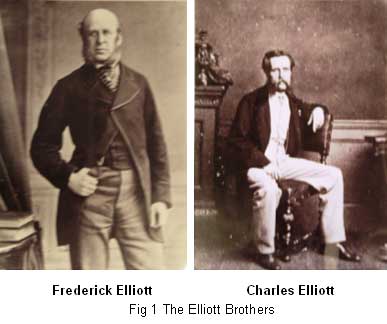
My step-father during my early teenage years worked for Elliott Brothers (the link goes to an interesting history of the firm that started in 1804) in Borehamwood, just north of London.  He encouraged me to fiddle with ‘steam’ radios and
try and understand how these basic circuits worked.  It was then a small step to deciding to become a radio amateur, popularly known as a radio ham!  In those days it was a case of some pretty intensive studying to pass a Theory exam as well as being able to pass an exam in sending and receiving Morse code.

So joining the local radio society seemed like a sensible idea.  That was (and still is!) called the Radio Society of Harrow.  That it is still in existence after all these years is truly delightful.  Those Friday night sessions at the Society and extra-curricular classes on Sunday morning at Ron Ray’s  (G2TA) house, an hour’s bicycle ride away from home, ensured that shortly after my 16th birthday I was granted a Licence, G3PUK.  It was a very proud moment.

Anyway, once granted a licence it was time to build my own radio transmitter.  Most of the details have been lost in the mists of time but what is recalled was that the final amplifier was a pair of 803s driving an 813 (These are radio valve numbers).  It sounds like something from the ark!  But again ploughing the inexhaustible files of the Web, it’s possible to see what these radio valves looked like.  Thanks to the National Valve Museum.

Here are pictures, courtesy of the National Valve Museum of those two radio valves:

803 – The substantial wide glass tube envelope is 58 mm in diameter (2 1/4 in) and, excluding the special five pin base pins, is 216 mm tall (8 1/2 in).

813 The classic envelope is substantial at 60 mm diameter (2 1/3 in) and 170 mm (6 2/3 in) long excluding the special base pins. The anode is 53 mm long and 48 mm wide. The metal is 1 mm thick.

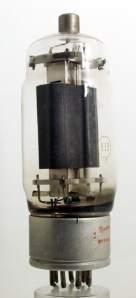
803 radio valve
803 radio valve
813 radio valve
813 radio valve

It’s difficult, today, to imagine devices which are essentially diodes (well, technically the 803 was a pentode and the 813 a tetrode) being between 6 and 8 inches tall!

My own self-build transmitter had not really been successful emitting more heat than light, so to speak.  Literally, in the sense that these large radio valves kept me warm in my converted garden shed at the bottom of the garden.  They also completely wiped out TV reception for those households with a 1/4 mile range that had invested in early television sets!  It was time to move on to the R1155.

Around this era, less than 20 years after the end of the War in Europe in 1945, war-surplus equipment was widely available including ‘compact’ transmitter-receiver units.

One popular one was the RAF R1155 which had been fitted to RAF Lancaster bombers and RAF marine craft.  It was also fitted to the Sunderland flying boat.  This information plus the photos below is from this fascinating web site for those wishing to be ‘geeky’ about this.
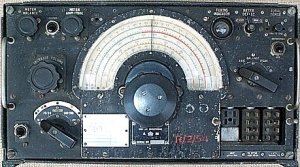
RAF R1155B transreceiver
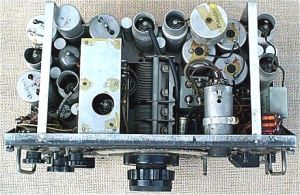
Internal view of the R1155B

Just compare the view on the right to the inside of your domestic radio or your cell phone.

A lot happens in 50 years!

My personal journey now leaps to 1978 and I have just left IBM UK having had 8 fabulous years with them as an Office Products salesman.  My fledging company, Dataview Ltd, has just become the 8th Commodore Computer (CBM) dealer in the UK, based in a small office in Colchester, Essex, about 50 miles north-east of London.

The CBM PET (Personal Electronic Transactor) released in 1977 initially with a calculator type keyboard was useless for any business application but soon came out with a typewriter sized keyboard, making it a more viable business

CBM computer, circa 1978

machine.  Today, as this is typed on an ‘old’ laptop with 2GB RAM, it seems unbelievable that these CBMs were sold with between 4k and 96k of RAM (memory) and no hard disk, although one could purchase an add-on that comprised dual 5 1/2 inch floppy disk drives.

YouTube obligingly finds  a short video on the Commodore PET for those really wishing to enjoy the nostalgia!

So to turn to the 21st century and to run out of understanding.  We appear to live in a world of multi-later printed circuit boards of unimaginable (to me) component density, assuming that the word ‘component’ is even relevant today.
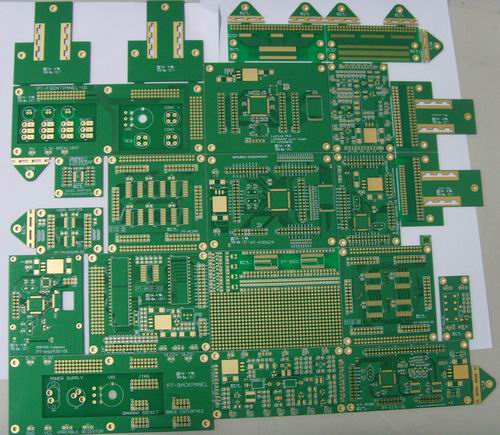
Haven't a clue what this is but it's very modern.
Haven’t a clue what this is but it’s very modern.

What an amazing period it has been!

A long way from yesterday!

Now let me see was it Pin 920 to Pin 140, or Pin14 to Pin 860 connected to Pin 56 ………?

The doomsday virus

Take a few moments and read this.

Thanks to Naked Capitalism for including this item in today’s list of links.  One of those links was to an item in today’s Washington Post from which I quote,

Thousands could lose access to the Internet on July 9 due to a virus, DNSChanger, that once infected approximately 4 million computers across the world.

The Federal Bureau of Investigation first gave details about the virus last November, when it announced the arrest of the malware’s authors. The virus, as its name indicates, affected computers’ abilities to correctly access the Internet’s DNS system — essentially, the Internet’s phone book. The virus would redirect Internet users to fake DNS servers, often sending them to fake sites or places that promoted fake products. Once the FBI shut down the operation, it built a safety net of new servers to redirect traffic from those infected with the virus.

But that safety net is going offline next Monday meaning that anyone who is still infected with the virus will lose access to the Internet unless they remove it from their machine.

The Washington Post then goes to say,

To see if you have the virus, you can head to any number of checker Web sites such as the DNS Changer Working Group or the FBI itself to either enter your IP address or simply click a button to run a check against addresses known to have problems. With any luck, you’ll be free and clear and won’t have to worry about the problem any further.

I chose the FBI website that is here https://forms.fbi.gov/check-to-see-if-your-computer-is-using-rogue-DNS as it seemed to have comprehensive instructions on what to do.

Then chose the URL for English, that is this one http://www.dns-ok.us/ that directed me to a website that instantly confirmed that a) it was the correct website – DNS Changer Check-Up, and b) my result.

DNS Resolution = GREEN 

Your computer appears to be looking up IP addresses correctly!

Had your computer been infected with DNS changer malware you would have seen a red background.  Please note, however, that if your ISP is redirecting DNS traffic for its customers you would have reached this site even though you are infected. For additional information regarding the DNS changer malware, please visit the FBI’s website at:
http://www.fbi.gov/news/stories/2011/november/malware_110911

Seems to me to be a message worth circulating as widely as possible.

Footnote: 9th July, 06:40.

Noticed the following article on the BBC News website this morning, from which I quote:

More than 300,000 people, including many in the US and UK, could lose internet access later as the FBI shuts off servers used by cyber thieves.

The FBI seized the servers in November 2011 during raids to break up a gang of criminals who used viruses to infect more than four million victims.

Victims’ web searches were routed through the servers so they saw adverts that led to the gang being paid.

Many machines still harbour the gang’s malicious code.

Global clean up

The gang racked up more than $14m (£9m) by hijacking web searches and forcing victims to see certain adverts. They managed to do this because their servers were taking over a key web function known as domain name look-up.

Domain names are the words humans use, such as bbc.co.uk, for websites. These are converted into the numerical values that computers use by consulting domain name servers (DNS).

When a person types a name into a browser address bar, often their computer will consult a DNS server to find out where that website resides online.

The gang infected computers with malware called DNS Changer because it altered where a PC went to convert domain names to numbers.

Since the FBI raids the gang’s servers have been run by Californian company ISC. Over the last few months, the FBI has worked with many ISPs and security firms to alert victims to the fact that their PC was infected with DNS Changer. Online tools are available that let people check if they are infected.

This has meant the original population of four million infected machines has been whittled down to just over 300,000, according to statistics gathered by the DNS Changer Working Group.

The largest group of machines still harbouring the infection are in the US but many other nations, including Italy, India, the UK and Germany, have substantial numbers still checking in with the ISC servers.

These servers will be shut down on 9 July.

The result could be that some people lose net access because the PCs that are still victims of DNS Changer will suddenly have nowhere to go when they need to look up the location of a particular domain.

It might take some time for the problems to become apparent, said Sean Sullivan, a security researcher at F-Secure.

“Initially some domains will be cached which will mean web access will be spotty,” he said. “People will be confused about why some things work and some do not.”

Other security experts said it might take time for the remaining infected machines to be cleaned up.

“Reaching victims is a very hard problem, and something we have had issues with for years,” said Johannes Ullrich, a researcher with the Sans security institute.

He expected the impact to be “minimal” because many of these systems were no longer used or maintained.

If you have any doubt, do check your DNS as soon as possible.

Looking down the wrong end of the telescope.

Trying to make sense of the utter nonsense of the Rio+G20 summit.

I share the deep frustration that must be felt by millions around the globe at the outcome of the Rio summit meeting, if outcome is the appropriate word!  Martin Lack summarised his anger in a post last Friday and I’m going to publish an extract from his writings because they so perfectly reflect not only his anger but, I suspect, the anger of millions of others.

Adam Vaughan’s blog from Rio for the Guardian newspaper is not for the faint-hearted.  At 2:07 pm today, [Friday 22 June 2012 12.23 EDT, Ed] he quoted David Nussbaum (WWF-UK) as follows:

“It would have been naïve to pin too many hopes on a single conference, but undeniably we expected more from the outcome document. Entitled ‘The Future We Want’, the text doesn’t live up to the aspirations of the title – it’s more a case of ‘The Future We’ll Get If We Rely On Politicians’. Full of weak phrases, and re-confirmations of previous aspirations which they haven’t realised, the text fails to commit governments to actions, targets, timeframes and finance to which we can hold them accountable….What we have is an agreement within the bounds of what they thought politically possible; what we needed was an agreement to address what is scientifically necessary. This is no way to manage our planet!”

Neither would I recommend George Monbiot’s column today – Rio+20 draft text is 283 paragraphs of fluff; unless you are feeling brave:

“World leaders have spent 20 years bracing themselves to express ‘deep concern’ about the world’s environmental crises, but not to do anything about them…Several of the more outrageous deletions proposed by the United States – such as any mention of rights or equity or of common but differentiated responsibilities – have been rebuffed. In other respects the Obama government’s purge has succeeded, striking out such concepts as “unsustainable consumption and production patterns” and the proposed decoupling of economic growth from the use of natural resources.”

I would like to be able to dismiss this as facile criticism from the liberal left. However, in reality, to do so would be to second-guess the scientists who have been telling us for decades that we need action not words. Our children and grandchildren will not forgive us for failing to act.

BUT a conversation I had with Lew L. here in Payson last Friday afternoon helped crystalise some thoughts that I would like to share with you.

Representative democracy a la British House of Commons

The first is about democracy, or more accurately representative democracy.  Lew pointed out that some US Towns still employ direct democratic processes where all the people who attend a Town meeting vote in person for or against the motion.  The challenge for a representative democratic process is that those elected representatives are vulnerable to a wide range of influences and between elections may be taking decisions that the people would neither support nor approve of.

The idea of direct democracy goes back a very long time, as Wikipedia reveals,

The earliest known direct democracy is said to be the Athenian Democracy in the 5th century BC,

So it could be argued that the fundamental flaw in the Rio+G20 meeting was not the lack of any real progress by our ‘leaders’, but in our expectations, as in the expectations of ‘you and me’, all across the world.  The money and power that must be intertwined in such games of international politics doesn’t bear thinking about.  It was Lord Acton, the British historian, who said: ‘Power tends to corrupt, absolute power corrupts absolutely‘.

So rather than expecting our representatives and leaders to do what we what them to do and being bitterly disappointed, time and time again, there is another equally valid way of bringing about change – create the change you desire by changing yourself.

As my friend Jon Lavin expressed in a very recent email,

People like something solid to relate to in such changing and unpredictable times and a dogs view is brilliant because dogs just are because they are in the present. All that matters is the ‘now’. Most of our problems can be traced back to our lack of ability to be in the ‘now’. Driven by regrets about the past, and a fear of what the future holds, we carry on hoping that all our problems can be solved by amassing material possessions.

Oh, well. The best way to save the world is to work on our selves.

So that leads on to my second thought, the urgency in tackling what is happening to the Earth’s climate.  In Martin’s second angry post over at Lack of Environment, he writes,

Here in the UK, the weather is literally unbelievable. 100mm of rain falling in one day. At the end of June. It’s ridiculous. Just one problem: It is exactly what the climate models predicted.

Global average temperatures are rising. Since the 1980s, every decade has been warmer than the last. 1998 was a very warm year, but global warming has not stopped; it has morphed into Anthropogenic Climate Disruption (ACD). Some even suggest we should call it Human Induced Rapid Global Overheating (HIRGO) but I prefer ACD, because that is what we are experiencing: It will be decades before it becomes obvious that HIRGO is happening and, if we wait for it to be obvious, there will be no way to stop it.

We need to accept that ACD is a reality; it is an inevitable consequence of a warming atmosphere; one with more moisture in it more of the time and – as I said – it is exactly what the climate models have being tell us would happen for decades. That being the case, how is it that our politicians – seemingly led by members of a supposedly left-of-centre Democratic Party administration in the USA – can have such monumental tunnel vision as to offer up the planet itself as a sacrifice upon the altar of the god of Growth?

But do you see the fundamental error?  The idea that our leaders have to create change: “.. how is it that our politicians …. can have such monumental tunnel vision as to offer up the planet itself as a sacrifice upon the altar of the god of Growth?

As Jon Lavin revealed in his email to me, the agency of change is within each of us. It is not a “thing.” There’s a huge amount of information revealed by a simple Google search on change, the change process, change management process, etc., etc., so I’m not going to add to the noise by quoting the experts.  It’s as simple as Jon wrote:

“The best way to save the world is to work on our selves.”

OK, moving on to my second thought, and for this I want to play a little mind-game.

That is what would be the impact if 50% of the combined populations of North America and Europe decided to save the power of one 60-watt lamp, or equivalent, for 36 hours a year, i.e. turning off one 60-watt lamp for less than one hour a day for a year!

Let’s take this a step at a time.

The combined population of the USA, Canada and Europe is 1,090,487,000 people, i.e. a little over 1 billion.

Thus half that population is 545,243,500 persons.

Saving 60 watts for 36 hours a year is 60 X 36 = 2,160 watts.

Thus 545,243,500 people times 2,160 watts = 1,177,725,960,000 watts.  Which is 1.178 trillion watts. (rounded up)

 I say again: 1.178 trillion watts.

How can one get any notion of what that means?  The best I could find from a web search was this:

The U.S. electric power industry’s total installed generating capacity was 1,119,673 megawatts (MW) as of December 31, 2009—a 1.0-percent increase from 2008.

Ergo, in 2009 the USA had the capability of generating 1,119,673 megawatts.  A megawatt is one million watts so 1,119,673 megawatts is 1,119,673,000,000 watts, or 1.119 trillion watts.

Wow! switching off a 60-watt lamp for less than an hour a day would save 1.178 trillion watts, more than the combined generating capacity of the entire USA in 2009 of 1.119 trillion watts.

I suspect that the current USA generating capacity isn’t that much different and, of course, one can’t run away with the idea that all of that is generated by fossil fuels.

But if I have done my mathematics correctly (and do please check my sums), the simple expediency of turning off one 60-watt lamp for 36 hours a year, if done by just half the populations of North America and Europe, would be the equivalent of saving 105% of the total US generating capacity!

So think about the change you want in your life, and  the lives of your children and grandchildren, and get on with it.  Turn out that light!

“The best way to save the world is to work on our selves.”

And I can do no better in terms of reflecting on the power of our minds, than courtesy of this fabulous video which Christine of 350orbust had last Saturday:

Remembering Fred Rogers.

Final thought!  If one thinks of the way that we trust the Internet for so much these days, and the huge number of people that are now ‘wired’, it doesn’t seem to be beyond the wit of man to come up with a reliable, secure method of direct voting electronically.  Wonder why that hasn’t caught on?

Bringing in the New Year

A couple of stupendous spectacules!

Neil K. from South Devon sent me these, a little too late to put in my NY Post that came out yesterday.  But they were too good to leave to next week-end so here they are.  First Berlin.

Beginning with a countdown on a giant hourglass and a greeting from an “Android,” LG’s huge presentation took viewers on a thrilling 3D ride that included — among other things — whales, ice skaters, giant octopi and steaming jungles.

Second London.

One of the most amazing firework displays ever!

Steve Jobs, RIP

The man who put a ding in the universe!

Regular readers of Learning from Dogs know that my pattern is to write a single article each day with a focus on something light and airy over the week-end.  But I’m making an exception this Sunday, for two reasons.  The first was that I spent a couple of hours yesterday catching up on this week’s The Economist and especially liked the tribute to Steve Jobs; a small extract is below with a link to the full article.  The second reason was that friend, Neil K. in South Devon, sent me a lovely graphical tribute that I wanted so much to share with you.

So, first to The Economist article,

Steve Jobs

The magician

The revolution that Steve Jobs led is only just beginning

Oct 8th 2011 | from the print edition

Steve Jobs

WHEN it came to putting on a show, nobody else in the computer industry, or any other industry for that matter, could match Steve Jobs. His product launches, at which he would stand alone on a black stage and conjure up an “incredible” new electronic gadget in front of an awed crowd, were the performances of a master showman. All computers do is fetch and shuffle numbers, he once explained, but do it fast enough and “the results appear to be magic”. Mr Jobs, who died this week aged 56, spent his life packaging that magic into elegantly designed, easy-to-use products.

Read the full article on The Economist website.  The article finishes, thus,

Mr Jobs was said by an engineer in the early years of Apple to emit a “reality distortion field”, such were his powers of persuasion. But in the end he conjured up a reality of his own, channelling the magic of computing into products that reshaped entire industries. The man who said in his youth that he wanted to “put a ding in the universe” did just that.

Copyright © 2011 The Economist

Next, the graphical tribute received from Neil K.,

You may have seen this but what a simple and effective way to celebrate the passing of great man…  N

Spices

A fascinating insight and a reminder, courtesy of Alistair Cooke

Jeannie recently gave me the book Alistair Cooke’s America.  The book was published in 1973 and was born out of the scripts that Cooke wrote for the television series America: A Personal History of the United States shown in both countries in 1972.  I can’t recall when I first started listening to the BBC Radio programme Letter from America, broadcast by Cooke, but it was a long time ago considering that the 15-minute programme started to be broadcast on the BBC in March 1946, just 18 months after I was born!


Alistair Cooke Nov 1908 - Mar 2004


Anyway, the motivation to start into the book was born out of a desire to know a lot more about this new country of mine.  But quickly there was a fascinating detour.

Early in Chapter One, The New-found Land, Cooke writes of the consequences of the Turks capturing Constantinople:

In 1453, there was a decisive turn in the centuries of warfare between the Christians of Europe and the Moslems of Asia.  Their common market, bridge, and gateway was Constantinople, our Istanbul.  In 1453, the Turks conquered it, and in so doing shut off the commerce between East and West, the exchange of cloth, leather wines and sword blades of Europe for the silks, jewels, chessmen, and spices of Asia.  All things considered, the stoppage was much harder on the court treasuries of Europe that those of Asia and, in one vital item, harder on all Europeans.  That item was spice.

Cooke then writes about historic change often being caused by the denial of a simple human need.  Shortage of water, total absence of timber for the Egyptians since the time of Solomon, for example.

What I hadn’t realised that for Europeans, spices were regarded as “fundamental to human survival”.  That was simply because in the 15th century spices made food edible.  Cooke writes,

Even in rich houses, the meals came putrid to the table. (Dysentery, by the way, seems to have been considered through most of the last five centuries a hazard as normal as wind and rain.)

Think about that the next time you reach for the pepper!

That led me to think about the enormous benefit that electricity and therefore domestic refrigeration has had on the health and life expectancies of mankind.  It is almost inconceivable to imagine the consequences of a widespread loss of electricity for, say a week, let alone a few months.

Patrice Ayme wrote a guest post for Learning from Dogs that was published on the 26th.  In it he wrote,

But then, after an auspicious start, Mars lost most of most of its atmosphere (probably within a billion years or so). Why? Mars is a bit small, its gravitational attraction is weaker than Earth (it’s only 40%). But, mostly, Mars has not enough a magnetic field. During Coronal Mass Ejections, CMEs, the Sun can throw out billions of tons of material at speeds up to and above 3200 kilometers per seconds. It’s mostly electrons and protons, but helium, oxygen and even iron can be in the mix.

The worst CME known happened during the Nineteenth Century, before the rise of the electromagnetic civilization we presently enjoy. Should one such ejection reoccur now, the electromagnetic aspect of our civilization would be wiped out.It goes without saying that we are totally unprepared, and would be very surprised. Among other things, all transformers would blow up, and they take months to rebuild. we would be left with old books in paper, the old fashion way. A CME can rush to Earth in just one day. (Fortunately the Sun seems to be quieting down presently, a bit as it did during the Little Ice Age.)

So let’s just hope and pray that our continued interest in spices remains a flavouring desire and doesn’t return as a critical need for human survival.

By Paul Handover

Amazing accuracy

Better navigational accuracy in the air may be approaching its limits.

For passengers travelling with scheduled airlines, times have changed, sadly, and no longer can you visit the flight deck, and see from there the views that pilots get.

New meaning to the term 'on track'.

It was not so long ago, that aircraft navigation was carried out using beacons on the ground, either on VHF, or Medium wavebands.

For longer trips with no ground aids a Navigator would plot your route using Astro (sun or the stars) navigation, until companies like Decca produced other radio systems to give you a position, but these from my memory had their problems.

Today in the modern aircraft we have Inertial Navigation Systems using laser gyros together with radio VHF back up, taking cross cuts from beacons, coupled with Distance measuring equipment to pinpoint your position, and now the magic Global Positioning System (GPS) with it`s startling accuracy.

Often with only 1000 feet between, you can see aircraft either above, or below you, often on the same track. This picture of an Emirates airline Airbus A380 was taken northbound over Turkey. The trails left behind are ice crystals which are left by the water vapour that passes through the engine, and freezes immediately at temperatures of some minus 60 degrees C.

The vortex from the wings causes the rotating trail from each engine to be disturbed, and if you pass through such disturbed air following the wake of another aircraft you often get a bump as your aircraft will be travelling at 500 MPH, some 7 miles per minute, a closing speed of 1000MPH if heading towards each other.

As the accuracy is so good these days, airlines have taken to introducing an offset of one or two miles to the left or right of track, just in case there is an error of timing, or in severe turbulence an aircraft could lose or gain the amount of separation which is between machines.

I think we get the best seats in the house!

By Bob Derham

[Bob is a Captain on a privately operated Airbus A319. Ed.]

Entrepreneurship – Jason Calacanis

Rice picker or samurai? You choose!

There are many people who might represent the subject of entrepreneurship. It is likely that a calm analysis of the candidates would select someone with a broad range of characteristics which had been identified as generally accepted as typical. But this would be to fly in the face of the nature of entrepreneurship itself!

How can the sense of the personal distortion of reality required to see a different path be communicated by someone identified as a “typical” entrepreneur?

With that in mind, the following video captures such a motivational performance that any selection process that might have been used has been abandoned in selecting Jason Calacanis, the controversial and abrasive founder of multiple “dot com” ventures, mainly in the broad area of web publishing.

Say what you like about his activities during his various ventures, and who knows whether it is as unprepared as it appears to be, his performance in this video is pure gold in the annals of motivational presentations for entrepreneurs. He starts slowly, sets the scene, describes his story and steadily builds momentum and intensity. As the stakes increase, so does the passion. Balanced by a substantial level of self-analysis, this is a gripping personal story. If you are interested in entrepreneurship, set aside the next half hour or so, sit back and enjoy this:

Calacanis’ own channel, TWiST (This Week in Start Ups), provides further description of the event portrayed in the video.

While many factors arise in describing entrepreneurs, the one issue that comes up time and again is the simple choice between two different paths. He captured that!

By John Lewis