Staying with the theme of the relationship with humanity’s oldest friend.
Yesterday, I offered the first of two articles forwarded to me by local friend Jim, a vet, about the domestication of the wolf.
Here is the second.
Study narrows origin of dogs
By Krishna Ramanujan/ January 16th, 2014
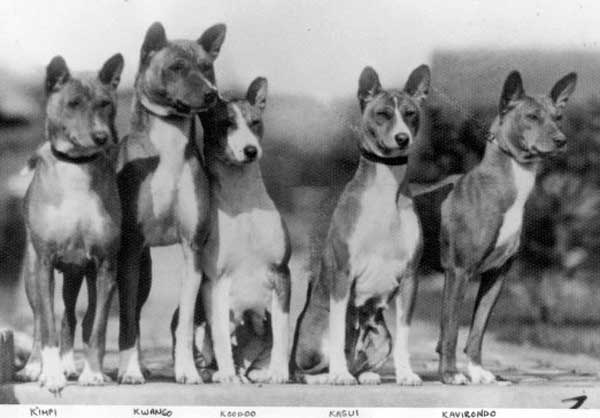
Genomic sequencing of genetically divergent dogs, such as this basenji from the Congo, together with wolves and other wild canids, provides rich information about the history of domestic dogs.
Dogs were domesticated between 9,000 and 34,000 years ago, suggesting the earliest dogs most likely arose when humans were still hunting and gathering – before the advent of agriculture around 10,000 years ago, according to an analysis of individual genomes of modern dogs and gray wolves.
An international team of researchers, who published their report in PLoS Genetics Jan. 16, studied genomes of three gray wolves, one each from China, Croatia and Israel – all areas thought to be possible geographic centers of dog domestication. They also studied dog genomes from an African basenji and an Australian dingo; both breeds come from places with no history of wolves, where recent mixing with wolves could not have occurred.
Their findings revealed the three wolves were more closely related to each other than to any of the dogs. Likewise, the two dog genomes and a third boxer genome resembled each other more closely than the wolves. This suggests that modern dogs and gray wolves represent sister branches on an evolutionary tree descending from an older, common ancestor. The results contrast with previous theories that speculated dogs evolved from one of the sampled populations of gray wolves.
“This is an incredibly rich new dataset, and it has allowed us to carry out the most detailed analysis yet of the genetic history of dogs and wolves,” said Adam Siepel, associate professor of biological statistics and computational biology at Cornell and a co-author of the paper. “There are still many open questions, but this study moves the ball forward,” Siepel added.
Computer methods for analyzing complete genome sequences developed by Ilan Gronau, the paper’s second author and a postdoctoral associate in Siepel’s lab, played a key role in the collaboration. Gronau’s computer program, called G-PhoCS (Generalized Phylogenetic Coalescent Sampler), was previously applied with success in a 2011 Nature Genetics study of early human history and demographics.
In this case, G-PhoCS provided a detailed picture of the demographic changes that occurred during the divergence of dogs from wolves. The analysis revealed there was a sizable pruning in population of early dogs and wolves around the time of domestication. Dogs suffered a sixteenfold cut in population size as they diverged from an early wolf ancestor. Gray wolves also experienced sharp drops in population, suggesting that the genetic diversity among both species’ common ancestors was larger than represented by dogs and modern wolves. In addition, there was considerable gene flow between dogs and wolves after domestication. Accounting for gene flow was a major challenge in the analysis, and Gronau’s research on this topic proved valuable in obtaining an accurate model of canid demography.
The picture emerging from this study will allow researchers to better interpret genetic differences observed between dogs and wolves and to identify differences driven by natural selection. “This paper sets the stage for the next step in the study of dog domestication that tries to determine the genetic changes that enabled this amazing transformation,” said Gronau.
The study’s senior authors included geneticists John Novembre at the University of Chicago and Robert Wayne at the University of California, Los Angeles (UCLA). Adam Freeman, a postdoctoral fellow at UCLA, was the paper’s first author. Adam Boyko, a Cornell assistant professor of biomedical sciences, also co-authored the paper.
The study was funded by various sources, including the National Science Foundation, National Institutes of Health and Life Technologies.
Staying with the theme of our early companions, back on the 28th February, 2015 there was an article in the UK’s Guardian newspaper about the way wolves helped early modern man. Now I don’t have permission to republish the full article but here’s a taste:
How hunting with wolves helped humans outsmart the Neanderthals
Forty thousand years ago in Europe our ancestors formed a crucial and lasting alliance that enabled us to finish off our evolutionary cousins, the Neanderthals.
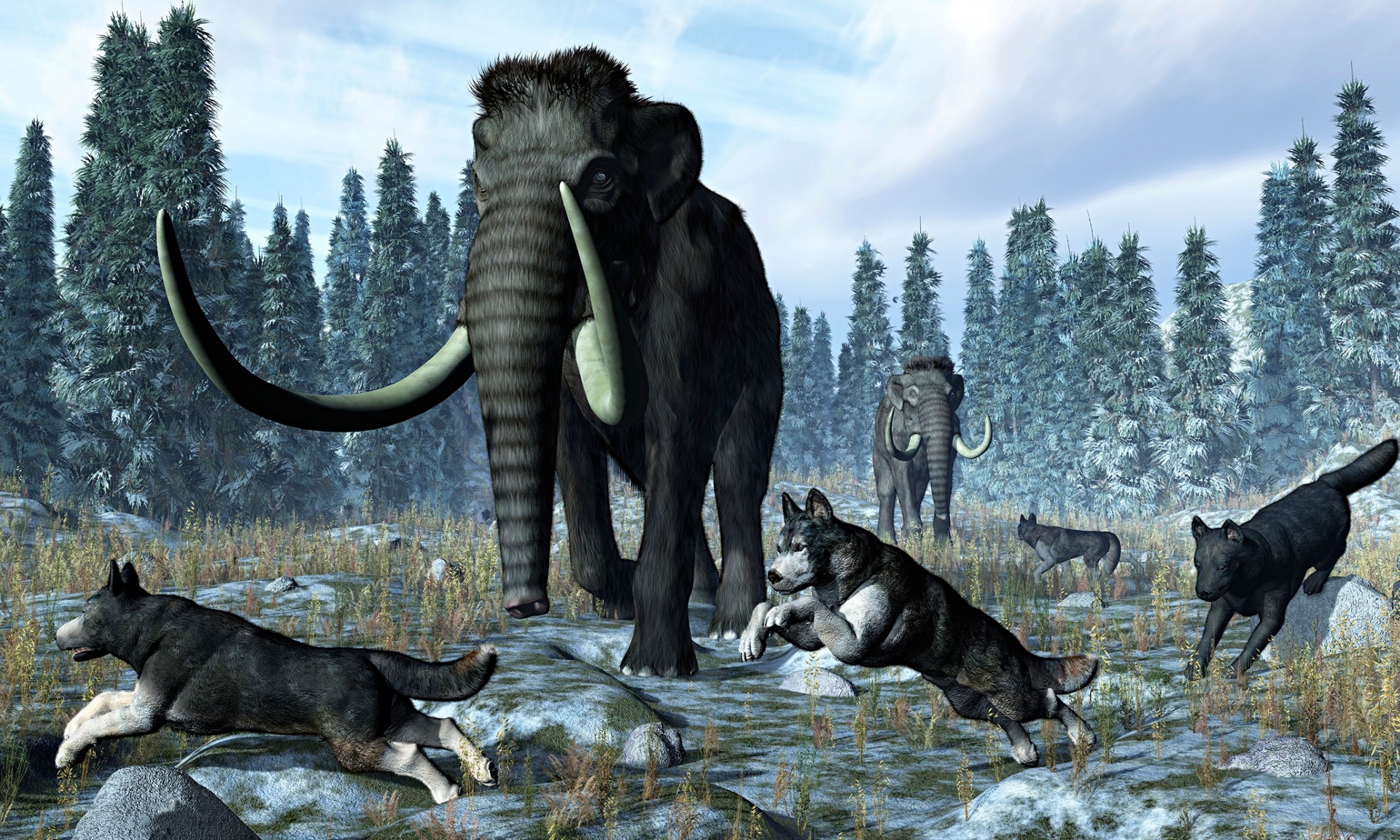
A pack of dire wolves crosses paths with two mammoths during the Upper Pleistocene Epoch. Photograph: Alamy
Dogs are humanity’s oldest friends, renowned for their loyalty and abilities to guard, hunt and chase. But modern humans may owe even more to them than we previously realised. We may have to thank them for helping us eradicate our caveman rivals, the Neanderthals.
According to a leading US anthropologist, early dogs, bred from wolves, played a critical role in the modern human’s takeover of Europe 40,000 years ago when we vanquished the Neanderthal locals.
The Guardian article finishes, thus:
Thus we began to change the wolf’s appearance and over the millennia turned them into all the breeds of dog we have today, from corgis to great Danes. Intriguingly, they may have changed our appearances as well, says [Professor Pat] Shipman, whose book, The Invaders: How Humans and Their Dogs Drove Neanderthals to Extinction, will be published this month. Consider the whites of our eyes, she states. The wolf possesses white sclera as does Homo sapiens though, crucially, it is the only primate that has them.
“The main advantage of having white sclera is that it is very easy to work out what another person is gazing at,” added Shipman. “It provides a very useful form of non-verbal communication and would have been of immense help to early hunters. They would been able to communicate silently but very effectively.”
Thus the mutation conferring white sclera could have become increasingly common among modern humans 40,000 years ago and would have conferred an advantage on those who were hunting with dogs.
By contrast, there is no evidence of any kind that Neanderthals had any relationship with dogs and instead they appear to have continued to hunt mammoths and elks on their own, a punishing method for acquiring food. Already stressed by the arrival of modern humans in Europe, our alliance with wolves would have been the final straw for Neanderthals.
Nor does the story stop in Europe, added Shipman. “I would see this as the beginning of the humans’ long invasion of the world. We took dogs with us wherever we went after our alliance formed in the palaeolithic. We took them to America and to the Pacific Islands. They made hunting easy and helped guard our food. It has been a very powerful alliance.”
RISE AND FALL OF NEANDERTHALS
250,000 years ago The first Neanderthals appear in Europe.
200,000 years The first modern humans appear in Africa.
70,000 years The first modern humans leave Africa.
50-60,000 years Modern humans and Neanderthals share territory in Middle East.
45,000 years Modern humans enter Europe.
40,000 years Neanderthals disappear.
I don’t know about you but I find the history of our, as in man’s, relationship with wolves and thence with dogs to be not just romantic but spiritually significant. To know, as I hug one of our many huggable dogs here at home, that I am bonding my mind and emotions with an animal that has been my partner for tens of thousands of years is beautiful beyond words.
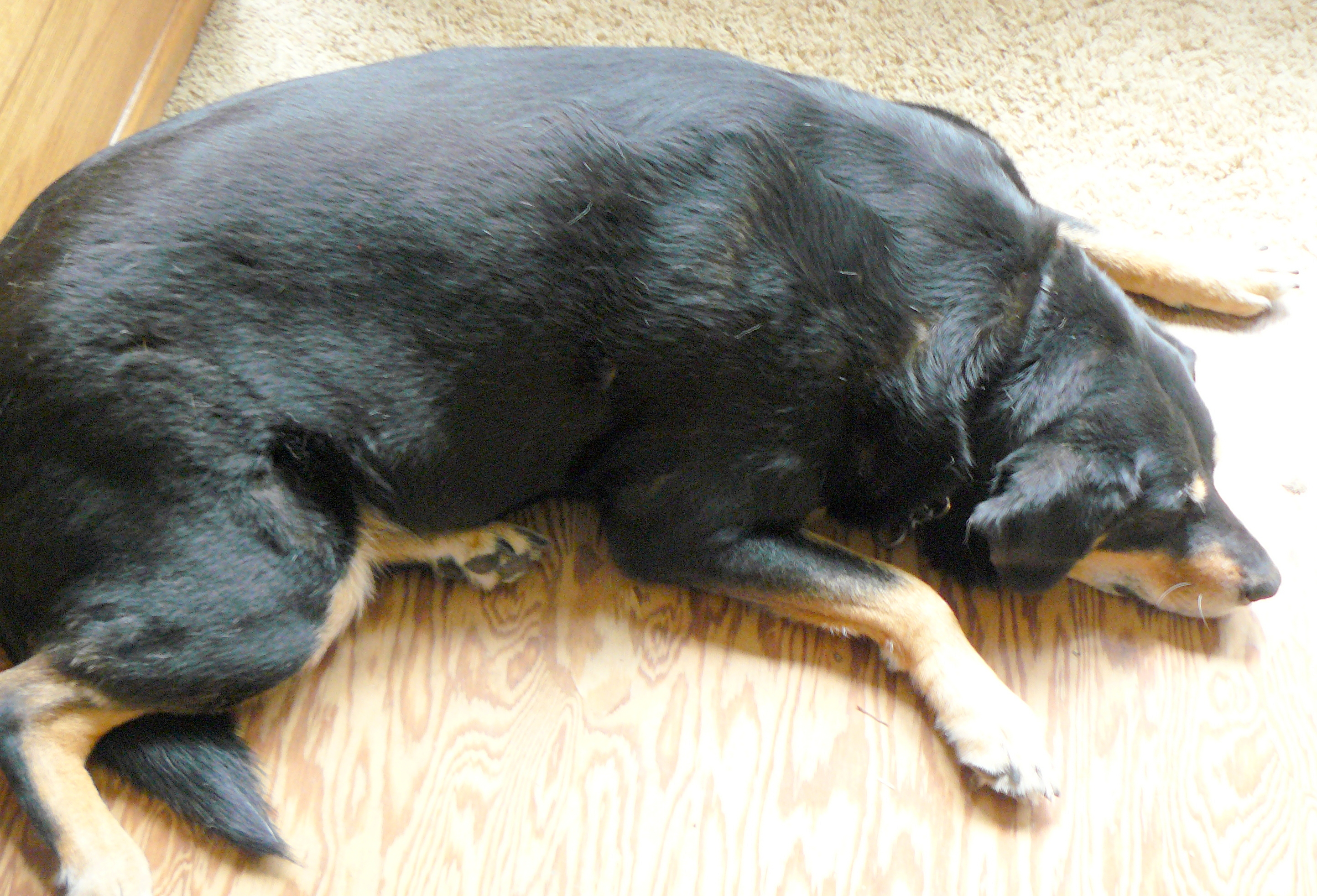
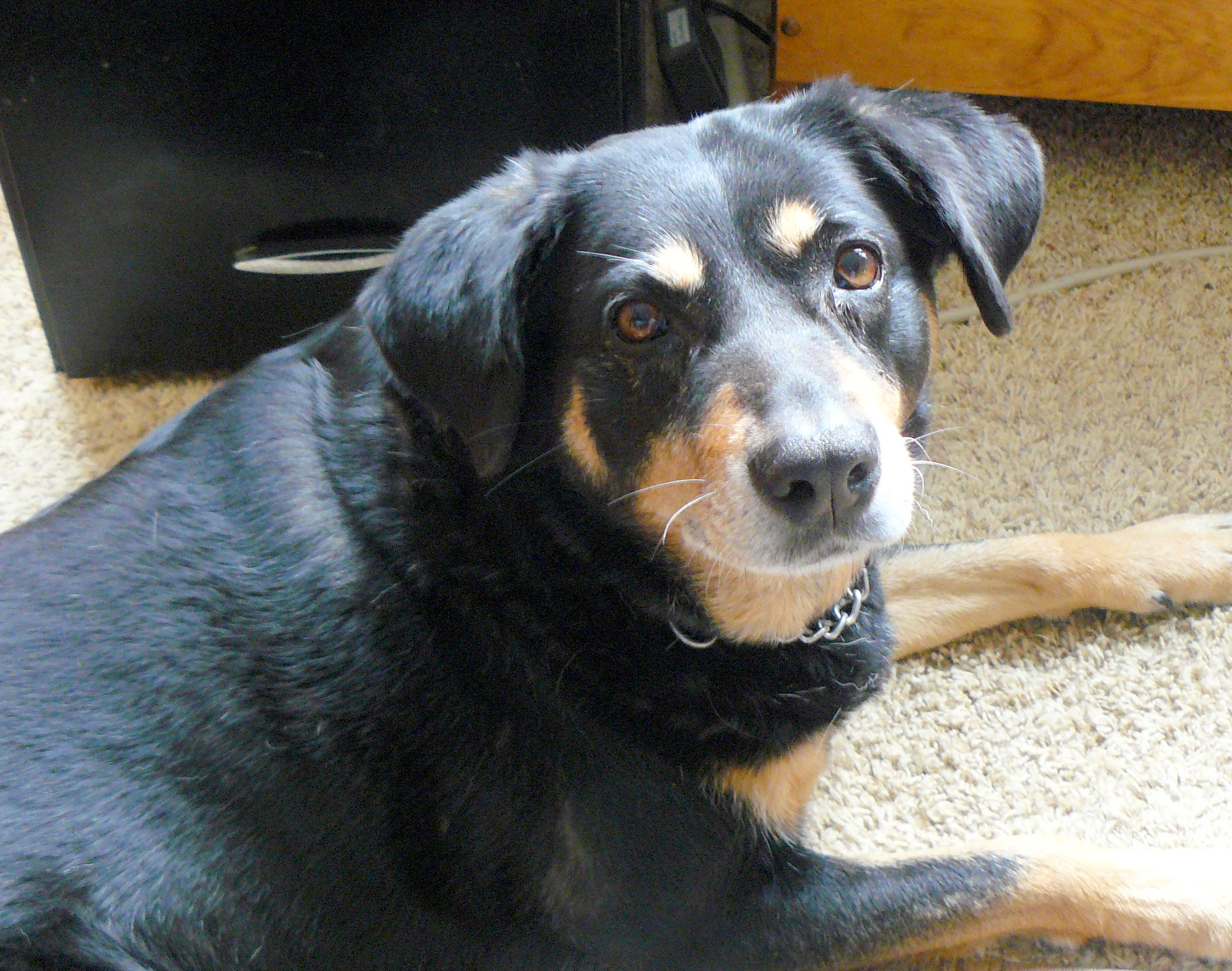
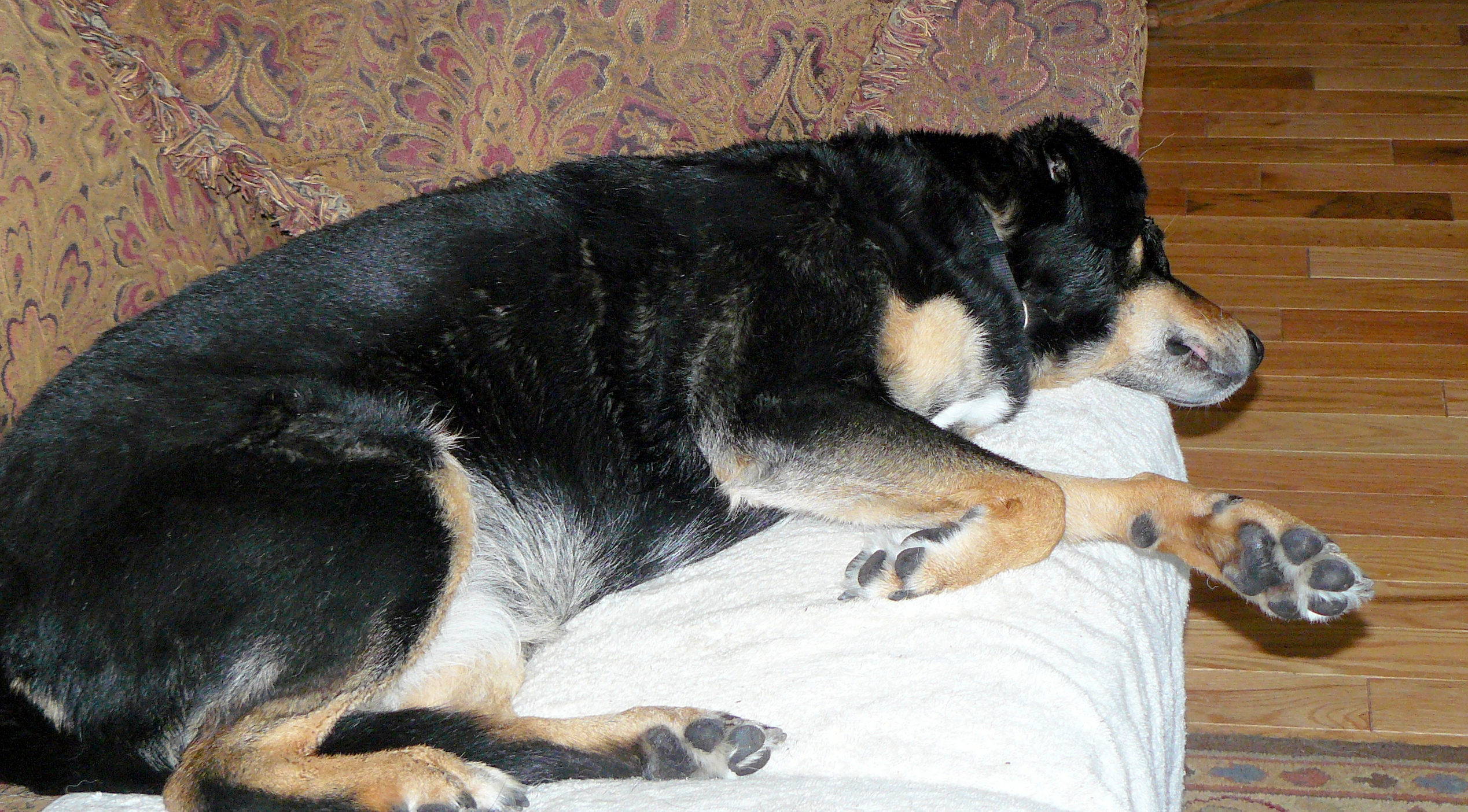
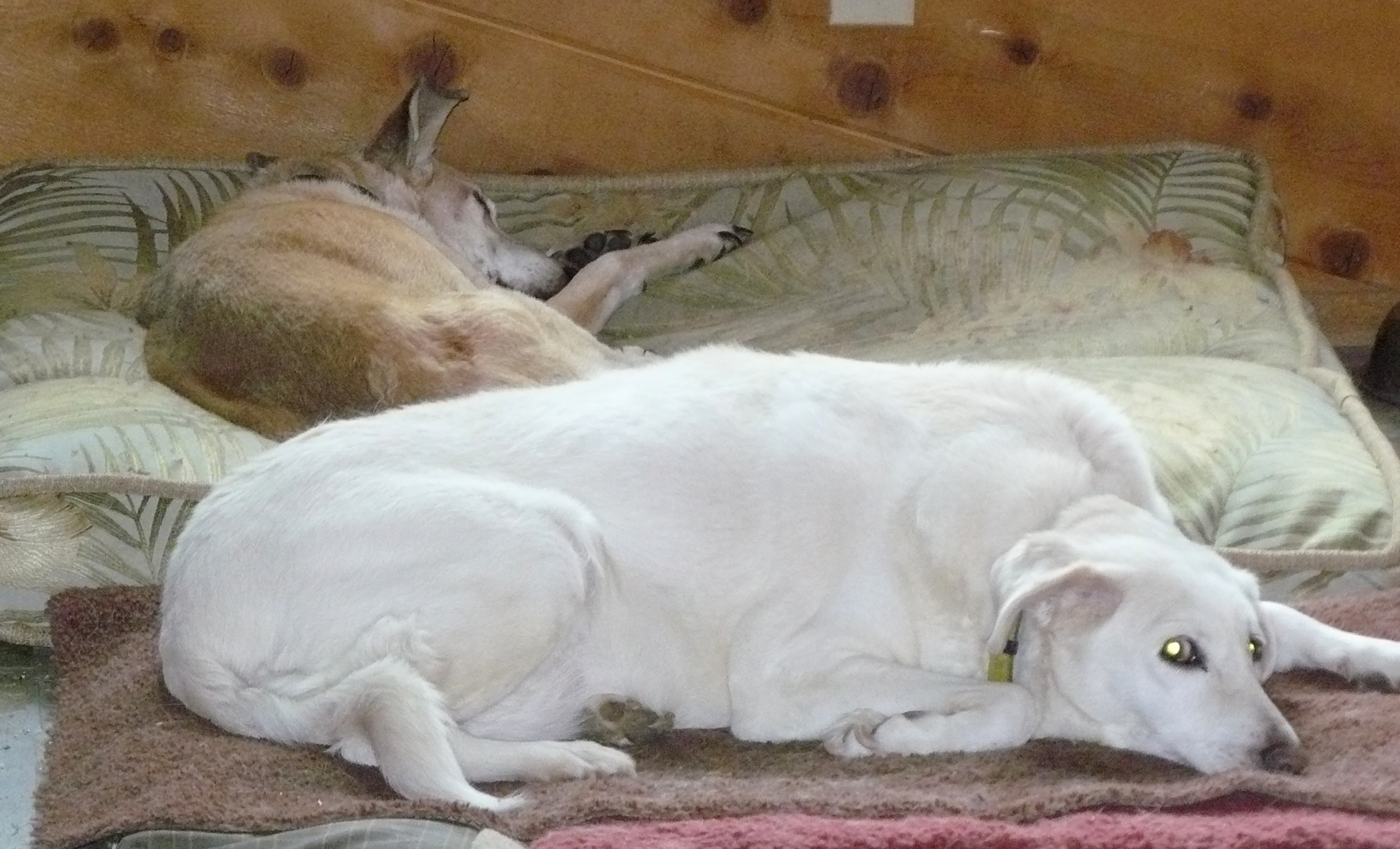
(I took a break of a couple of minutes at this point to grab my camera and take a photograph of Hazel sleeping next to my chair, as she so often does when I am writing. Then one of her when she looked up at me. Here they are:)
oooo
That second photograph reminds me that somewhere I read that dogs are the only animal that can look to where a human is directing a gaze or pointing a finger.
The title of today’s post picks up the theme of yesterday’s post Dog Wisdom, that incorporated a wonderful essay from Mark Rostenko about the wisdom of dogs.
The words in the sub-heading came to me because, unlike wild dog packs, we do not have the luxury of our ‘alpha female’ deciding her pack’s territory is no longer viable and they needed to move on.
All of which serves as an introduction to a recent essay from Martin Lack over on the blog Lack of Environment. Martin is well qualified to write on such matters as climate as he has been a Fellow of the Geological Society (FGS) since 1992 and a Chartered Geologist (CGeol) since 1998. His essay was published on the 15th March and is called Merchants of Doubt need to do the math.
ooOOoo
A feature-length documentary, based on the content of the Merchants of Doubt book by Naomi Oreskes and Erik Conway, went on general release at movie theatres in the USA this weekend.
As Desmogbog.com points out, it has already attracted the attention of an odd mixture of ideologically-motivated deniers of the reality of anthropogenic climate disruption.
I say “odd” because, as per the above link, those who prefer to see climate science as a conspiracy to raise taxes (and install worldwide Communist government via the United Nations, etc.) include both longstanding disputers of inconvenient science like Fred Singer (who questions whether the movie is defamatory) and self-confessed non-experts like James Delingpole.
Both of the above would have done well to watch a recent BBC Four (television) programme – Climate Change by Numbers. In contrast to just about every other programme about climate change that you might have seen, this one is presented by three mathematicians. A 30-second trailer is inserted below but, if you have not seen the full 74-minute programme (opens in a new window), I really would recommend it.
The programme focuses on three numbers:
— 0.85 Celsius – the rise in average global surface temperatures since the 1880s.
— 95% – the certainty of the scientific community that this is primarily human-caused.
— 1 trillion tonnes – humanity’s carbon budget to avoid 0.85 increasing to 2 Celsius.
Along the way, the programme highlights the early work of Svante Arrhenius – who determined that a halving of atmospheric CO2 could cause a 4 Celsius drop in temperature (and therefore that a doubling of CO2 will cause a 4 Celsius rise).
With regard to the accuracy of computer models, the programme highlights the way in which this has been proven by their ability to predict the cooling effects of large volcanic eruptions.
With regard to our carbon budget, the programme highlights the fact that humanity has already burnt 0.5 trillion tonnes and, unless radical changes are made to global trends, will burn the remaining 0.5 trillion tonnes within 30 years. It also points out that, as ongoing events might well suggest, even 2 Celsius could have severe and pervasive impacts (as the IPCC described them last year).
All very inconvenient for libertarians everywhere, I guess.
NB: The link that Martin offers to the full programme is a version on YouTube that is chock-full of adverts; seemingly inserted every ten minutes or so. Unfortunately, other YouTube videos of the same BBC programme also seem to have too many adverts.
Please don’t let that put you off watching a critically important message. Plus, as you watch the video, do stick under your hat the following note from Martin.
Thanks, Paul. There is one thing you might care to add (which I forgot to mention), which is this:
The final third of the programme includes a discussion of ‘extreme value analysis’ (EVA), which Wikipedia helpfully describes as “a branch of statistics… [that] seeks to assess… the probability of events that are more extreme than any previously observed“. Flood defences like the Woolwich Barrier on the Thames estuary were designed using EVA. However, crucially, EVA assumes that average parameter values do not change over time. Therefore, given that climate change invalidates this assumption, it is now accepted that London will need greater protection from flooding in the future. Athough not explicit in my original post, this was why I included a link to the ‘Climate Departure’ reseach of Mora et al., which estimates the regional variation in the date by which future climates will have departed from what has hitherto been considered normal.
Lack of sleep can have a role in obesity and diabetes.
Hazel asleep on the living-room couch at 2pm yesterday.
The sub-heading is taken from an item on the BBC News website that I read yesterday morning. (I’m republishing it in full so that readers are fully informed.)
Lack of sleep can have role in obesity and diabetes, study says
By James Gallagher, Health editor, BBC News website, San Diego
If you need a lie-in at weekends to make up for lack of sleep in the week, you may be at risk of obesity and type 2 diabetes, a study suggests.
The sleeping habits of 522 people found those losing sleep on weekdays were more likely to develop the conditions.
The findings, shown at the Endocrine Society‘s annual meeting, suggested increasing sleep could help patients.
Experts said the findings were interesting and called for the idea to be tested in large trials.
Studies have already shown that shift work can rapidly put healthy people into a pre-diabetic state.
The action of throwing the body clock out of sync is thought to disrupt the natural rhythm of hormones in the body, leading to a host of health problems.
But the pressures of work and social lives mean many people cut their sleep during the week and catch up at the weekend. Researchers are investigating whether there is a health impact.
Widespread
The study, by a team at the University of Bristol in the UK and Weill Cornell Medical College in Qatar, assessed “sleep debt” – a measure of the difference in the nightly hours asleep on weekdays and at the weekend.
“We found that as little as 30 minutes a day sleep debt can have significant effects on obesity and insulin resistance,” said Prof Shahrad Taheri from Weill Cornell.
He added: “Sleep loss is widespread in modern society, but only in the last decade have we realised its metabolic consequences.
“Our findings suggest that avoiding sleep debt could have positive benefits for waistlines and metabolism and that incorporating sleep into lifestyle interventions for weight loss and diabetes might improve their success.”
The study was funded by the UK’s Department of Health, where 10% of healthcare budgets are already spent on treating diabetes.
The disease can lead to blindness, increase the risk of heart attacks and strokes, as well as damaging nerves and blood vessels – dramatically increasing the risk of a foot needing to be amputated.
What the researchers do not know is the impact of improving people’s sleep so they get more on a weeknight and do not need a weekend lie-in.
Dr Denise Robertson, a senior lecturer from the University of Surrey, commented: “This work is interesting and consistent with prospective data found in healthy individuals without type 2 diabetes.
“However, before this association between sleep length, obesity and metabolic status can be used in terms of public health we need the next tier of evidence.
“To date there have been no randomised controlled trials where sleep debt is addressed and a metabolic benefit is observed. However, the potential for such interventions to impact on health is great.”
So while it might be regarded as a little ‘tongue-in-cheek’ to say that we need to learn to sleep more effectively from dogs, the BBC item suggests that it’s not as silly as one might think.
Lilly, to the rear of Paloma, sleeping soundly yesterday afternoon.
In the photograph above of Lilly and Paloma, both Mexican feral dogs rescued by Jean many years ago, sleep and a gentle life have allowed Lilly to achieve the grand old age of 17! In human terms that would be the equivalent of 136-years-old!
Very grateful to Deborah over at Dog Leader Mysteries for today’s post.
The following appeared over on Dog Leader Mysteries last Monday and is republished with Deborah’s permission. Please share this as far and wide as you can.
ooOOoo
1 minute for Irish Greyhounds
Featured by dogleadermysteries
Please help Irish Greyhounds by signing this Care2 petition
Save greyhound dogs’ lives in less than 1 minute
Bring Irish Greyhound Racing Regulations in line with the United Kingdom
I will not submit my readers to the horrors racing greyhounds endure or lose their lives from. I never thought any thing could be worse than dogs bred in puppy mills. After reading the Care2 petition’s explanation of the conditions and animal cruelty in Ireland’s dog racing world, now I feel sadder but an informed and wiser person.
My friend, Rosee Riggs, sent me this petition. The situation and welfare for dogs on Irish racetracks distresses all animal lovers everywhere. Without boring you with research and background, the essence of this petition effort targets raising Irish greyhound racing rules to match those in Great Britain.
4 great things about greyhound dogs
When living in a home with a family
Greyhounds love to snuggle
Greyhounds enjoy being couch potatoes
Rescued track greyhounds often hate to run
Greyhounds cannot swim. They sink due to extremely low body fat
Myth buster: Not true that former track greyhounds become runaway dogs!
This is Rosee’s dog, Speedy. Read more about him on her site Good Dog Practice.
Former Irish greyhound, now safe and happy. Photo credit: Judith Utner
From Care2: legal changes needed to better protect Irish track greyhounds
Have a veterinarian present at all race meetings, trials and sales trials who must inspect every greyhound before it runs;
Provide the veterinarian with appropriate facilities;
Provide suitable kennels, diet, hygiene standards, for all greyhounds that are going to run in a race or trial and for the dogs NOT to be muzzled for 23-24 hours a day; Ensure that the greyhounds have access to an outside area for exercise and be supplied with food and water.
Only allow greyhounds that are healthy, micro-chipped, registered and, were required, tattooed, to run in a race or trial.
Keep up to date records of owners, trainers, greyhounds and any injuries/deaths to greyhounds.
Monitor all licensed and private Breeders to reduce excess Dogs thereby reducing the need to euthanize/kill unwanted puppies.
To regulate Ireland’s greyhound breeders, not governed by the same regulations & welfare stipulations as the UK. All aspects of greyhound dog breeding, training and kennelling.
To provide adequate travel facilities, breaks (on long journeys) and water/food as required.
Speedy came as a racetrack rescue from Ireland. Photo credit: Katrin Bargheer
Delighted to say that at 15:30 PST yesterday, the Care2 Petition site read:
we’ve got 169,061 signatures, help us get to 170,000
and went on to explain the background to the petition:
There are major concerns about animal welfare issues relating to the racing greyhound industry in Ireland. Many puppies and older dogs which don’t perform to racing owner expectations are killed simply because they won’t make money for the owner. They are discovered in mass graves with their tattooed ears hacked off so they can’t be identified – so that their owners can’t be held accountable.
Dogs are generally kennelled, constantly muzzled, for 23-24 hours a day for their entire racing life. There are usually at least two dogs per small kennel, sharing one bed (with straw if they are lucky). The kennels are overcrowded, not properly maintained and badly cramped.
In the UK there are regulations which provide some protection for racing greyhounds. These regulations do not exist in Ireland where most racing greyhounds come from. Changes need to be made to bring the laws in Ireland in line with those in the UK. These rules aren’t perfect but they do offer a lot of improvements to the lives of these beautiful dogs.
Please sign the petition to show the Irish Greyhound Racing Board that the public cares about these dogs, to encourage them to support laws to protect these dogs.
At least 20 greyhounds a day, either puppies, which do not make the track because of lack of “prey drive”, or ‘retired’ dogs, aged between 18 months to 3-4 years, simply ‘disappear’ according to “records”. All dogs should be identifiable by the tattoos & registry records. When they are tattooed the dogs are roughly handled & dragged around by their ears with pincers.
Young Oliver had an upset tummy during the night resulting in the bedroom carpet needing a little ‘sorting out’ after midnight. Thus I was very grateful that a human’s sense of smell is very much inferior to that of the dog!
Oliver sleeping in front of the wood-stove yesterday morning.
I couldn’t escape the irony that today’s post was inspired by an email from friend Dan Gomez. His email included the link to an article on the Brain Links website. It was called How a Dog Actually “Sees” the World Through Smell. Here’s how the article opened:
“The world of scents is at least as rich as the world of sight.”
Even though smell is the most direct of our senses and the 23,040 breaths we take daily drag in a universe of information — from the danger alert of a burning odor to the sweet nostalgia of an emotionally memorable scent — our olfactory powers are not even mediocre compared to a dog’s. The moist, spongy canine nose is merely the gateway into a remarkable master-machine which can detect smells in concentrations one hundred-millionth of what we humans require to smell something, and then transmute them into immensely dimensional and useful information about the world. So magnificent is the dog’s olfactory brawn — including the ability to sniff out skin, breast, bladder, and lung cancers with an astounding degree of accuracy and to literally smell fear — that to our primitive human perception it appears like nothing short of magic.
The article also included this short TED Talk but I have taken the liberty of including the paragraph that preceded the YouTube video.
How that neurobiological magic happens is what cognitive scientist Alexandra Horowitz — who heads the Dog Cognition Lab at Barnard College but has also produced a canon of invaluable insight on how we humans construct our impressions of reality — explains in this short animation from TED-Ed, based on her illuminating book Inside of a Dog: What Dogs See, Smell, and Know (public library):
Mind you, referring back to our overnight doggy incident, I did find one paragraph slightly at odds with my personal views on the subject. It was this one:
We humans tend not to spend a lot of time thinking about smelling. Smells are minor blips in our sensory day compared to the reams of visual information that we take in and obsess over in every moment.
I’m here to tell you that at 1am yesterday morning, my sense of smell was anything other than a minor blip!
OK, before I close, I just want to alert all you dear readers to the fact that from later today until early March my son, Alex, is visiting us. His plans are to find somewhere in Oregon to enjoy some skiing but the very mild Winter so far may put a spanner in those works.
For obvious and natural reasons, writing posts for Learning from Dogs will not be a daily high priority. So if you read a number of posts previously published in earlier times you will understand why. Thank you.
Tomorrow, I want to offer the example of someone who has been sufficiently strong to take one small step back to sanity.
What I am offering is the reposting of an item in 2013 on Transition Network over in the UK. As you read it, do bear in mind that the references to Amazon are, in the main, to Amazon in the United Kingdom.
I’ve done it. I’ve closed my Amazon account. I now stand before you as an ex-Amazon account-holder. I feel curiously shaky, but at the same time empowered, excited even. While opening a new Amazon account is easy as pie, closing one is another matter altogether. I’d like to share with you how, and why, I did it.
Was it the recent Panorama programme about working conditions in those vast Amazon ‘fulfilment centres’ that tipped me across into doing something? Was it the stories about the appallingly low levels of tax Amazon pay in the UK? Was it the recent video showing Amazon’s plans to be delivering across the UK within 30 minutes through the use of drones? Was it hearing the level of taxpayers’ money that goes in sweeteners to attracting Amazon to open up in different communities, while the profits generated pour out of those same places? What actually tipped me across was a conversation I had with a book seller in my town. It was that that led me, finally, to build the steely resolve needed to close down my Amazon account.
Yes, I confess, I had an Amazon account. I buy music from my local record shop, I support my local book shops, but there are times when I need a book quickly, or feel I do, and it’s just easier and more convenient. And, if I’m honest, I love getting exciting parcels in the post. And isn’t it cheap? But as Carole Cadwalladr, who went undercover in Amazon’s Swansea ‘fulfilment centre’ for The Guardian puts it:
Our lust for cheap, discounted goods delivered to our doors promptly and efficiently has a price. We just haven’t worked out what it is yet.
I’ve always had that nagging conscience that it’s not OK really, but I have just had it ticking away in the background and carried on using it on occasion. The conversation that tipped it for me, with my local bookseller, was around “what would it take for you to stop supporting Amazon?” His example was Primark, recently implicated in child labour in the manufacturing of some its clothes. We know that’s the case, but we still shop there. If we knew that 8 year olds work there, would we stop shopping there? Or 5 year olds? If we knew that every day they arrive for work they get hit with a stick, would we still pop in there for a cheap new shirt? And if they got hit 3 times, and then again in the middle of the day? Where do we draw the line?
Our tendency is to draw a line, but then for that line to slip. What swung it for me was thinking that actually, what I already know should be enough to make me withdraw my support. Also, it was thinking about where the world will be in 5 years time if we continue to give Amazon our support. More and more low paid jobs, with little Union protection, in conditions described in the BBC documentary as “… all the bad stuff at once. The characteristics of this type of job, the evidence shows increased risk of mental illness and physical illness.”
We’ll see Amazon ‘fulfilment centres’ that look like a wasp’s nest, with drones flying in and out. High streets swept clean of bookshops, indeed of most shops, as Amazon spread into selling virtually everything that local economies sell, but far cheaper. It made me think about what kind of a world I’m creating for my sons as they enter the work place. What kind of opportunities will Amazon offer them, as they gut local economies and focus economic activity into vast warehouses along the side of motorways?
I give so much of my time every day to trying to create a different, more just, more resilient world, yet my shopping decisions undermine that. There is also an extraordinary arrogance to thinking that it is OK for you to fill peoples’ airspace, the sky above their heads, with your drones, delivering your products to people for your profit. What happens for a company to get so huge that that is considered acceptable? It is about getting too big. Amazon is too big. Far too big. But it clearly sees that it has only just started. That’s not good.
So, decision made, and with a commitment to source those things in other ways, I went to the website to close my account. Closing an account with Amazon is like breaking up with a girlfriend whose level of obsessive denial is such that the possibility you might want to split up with her doesn’t even enter her consciousness. It’s a fascinating process. Opening an account with Amazon is so easy. Closing an account is, as my 15 year-old son might put it, a right mission.
Click on ‘Your account’ and there is no option anywhere of “Close my account”. Nothing. Like it’s not even a possibility that it might entertain. I had to Google (and don’t get me started on them) “closing your Amazon account”. If you search the Amazon site for “close my account” it yields no results. See below:
The Google link took me to their Help section, on pages that bear the slogan “we’re the people with the smile on the box”, prompting the thought that the inside of their box-like warehouses are probably somewhat bereft of smiles. If offers you a drop-down menu under the helpful title “what can we help you with?”. Surely that’s where I’ll find “Close my Account”? No. You get a range of choices, “An order I placed”, “Kindle”, “Digital services” and, er, “Something else”. Guess I’m “something else” then. So I click that.
I’m then given another 4 options, none of which are “Close my account”. I’m asked to “tell us more about your issue”, and given another list where my option is “other non-order question”. Given that still, the idea that I might have got this far could mean I want to close my account is clearly unimaginable, I am then given an option to email, to phone, or to “chat”. So I click on “chat”, and am told “a customer service associate will be here in a moment”.
A charming man then begins to chat with me. Here’s how our conversation went:
Me: I want to close my account please. How do I do that?
Tom (not his real name): Thank you for contacting Amazon.co.uk. My name is Tom. May I know your name, please?
Me: Rob
Tom: Thank you. I’m sorry to hear that you want to close the account. May I know the reason for closing the account please?
Me: Certainly. I am appalled by the way Amazon operate as highlighted in the recent BBC Panorama programme. I am appalled at the recent story on Amazon considering deliveries in future by drone. I am appalled by the low level of tax Amazon pay in the UK. I have been a customer for years, but I feel Amazon has become too big, and eats everything in its path. It is no longer something I wish to support.
Tom: I’m sorry for the situation. For confidentiality reasons, I’m not able to close your account for you in chat, so I’m going to send you an e-mail with the information to close the account. When you receive it, please respond to that e-mail so that we will close your account.
Me: Thank you Tom. I would really like my reasons for leaving to be registered somehow, as I think a lot more people will be closing their accounts for similar reasons, and it would be good for that to be noted by those in charge. Will that be possible?
Tom: Unfortunately we will not be able to comment on this issue. However, I will send you an email regarding the closing of the account. Is there any thing else I can help you with?
Me: I am not asking you to comment on the issue. I am asking you to make sure that the reasons for my closing my account are passed on to management. If I ran a business I would want to know why my customers were closing their accounts. Is that not the case at Amazon?
Tom: Sure, all the information’s will be recorded and forwarded to the appropriate department.
Me: Thank you Tom. I appreciate your help.
Tom: Thanks for your understanding. We hope to see you again soon! Have a Nice Day!
I later received an email from Customer Support to say:
“We appreciate your feedback and have forwarded it to the appropriate team internally. We are proud to provide a safe and positive working environment for all of our associates. Information about working at our fulfilment centres can be found at the following link: www.amazon.co.uk/fcpractices“
Amazon may be cheap, but cheap comes at a cost for someone else. And, after all, much of what is bought on there is throwaway rubbish. As Carole Cadwalladr puts it:
The warehouse is 800,000 square feet, or, in what is Amazon’s standard unit of measurement, the size of 11 football pitches (its Dunfermline warehouse, the UK’s largest, is 14 football pitches). It is a quarter of a mile from end to end. There is space, it turns out, for an awful lot of crap.
Me, I resolve to buy less, but better. Less, but longer-lasting. Less, but local. The thought of where we will end up in 5 years time, 10 years time, 20 years time, if companies like Amazon continue as they are, really frightens me. It’s not good, it’s not right. It’s not about our needs, it’s about the needs of huge investors. I want a different world for my boys.
I can’t, on my own, do that much about it. I can’t insist that the UK government legislate so that, as in Holland, the Recommended Retail Price (RRP) is the legal minimum at which any book can be sold, although I think that is grounds for a really timely campaign. Because of that, Amazon don’t really operate in Holland. Bring back the RRP for books here, and let’s have a level playing field. As I say, I can’t do much, but I can withdraw my support. I just have withdrawn my support. It feels surprisingly unsettling, as one does after ending a relationship, but it was the right thing to do. It may be a drop in the ocean, but if enough people do it….
ooOOoo
As you might expect, I do have an Amazon account but will look closely into alternatives. In that regard, I just want to expand on the link underneath the earlier phrase, “commitment to source those things in other ways“. The link takes you to an article in the Guardian newspaper, online version, dated the 16th May, 2013. Here are the opening paragraphs:
Amazon’s tax bill is in the news again, after a Guardian investigation put the spotlight on its financial arrangements. There’s a growing swell of people who want to use an alternative place to buy – including my colleague Patrick Collinson who wrote about his attempts to kick the Amazon habit in November.
But it is not always easy to find good alternatives online: if you want to buy either the latest Dan Brown novel (and clearly some people do), Mad Men series five on DVD, or even a packet of Pampers nappies, Amazon seems to come top of the search pages.
To close today’s post, just spend four minutes watching the following video.
Why growth and the environment can’t coexist
Published on Feb 9, 2015
Featuring: Sam Bliss
Production: Daniel Penner
Animation + Illustration: Amelia Bates
Music: “Nincompoop (No Vocals)” by Josh Woodward (http://www.joshwoodward.com/)
“Favorite Secrets” by Waylon Thornton (http://waylonthornton.tumblr.com)
Footage: Prelinger Archives
The background to the video, first seen referred to on the Grist blogsite, is republished here:
Watch our juicy explainer about the environment’s growing economics problem.
Consume less, share more. Those are some basic principles behind degrowth, an idea and movement that rejects economic growth as a goal for society. This video explains degrowth with oranges, juice, and peels.
But wait, you ask, isn’t growth a good thing? In an age when we’re conditioned to equate growth with progress, degrowth sounds insane. In reality, pursuing endless exponential expansion of the economy is insane — and impossible. Humans already use resources faster than Earth can replenish them and produce wastes, like carbon emissions, faster than Earth can assimilate them. Hence, degrowth.
Degrowth isn’t about making everyone poorer; it’s about redefining wealth to acknowledge that real well-being can’t be measured in dollars. It’s about breaking down the artificial barrier between life and work; it’s about valuing cooperation over competition; it’s about democracy, autonomy, solidarity, and climate justice. Most importantly, degrowth means sharing society’s surplus for awesome art projects and epic, week-long gatherings.
It is a very common, understandable trait of us humans to put our own lives first. I mean that much more in the psychological sense than in the sense of our daily activities although what we think and feel, inevitably, influences how we behave. One of the fabulous qualities of our dogs is that they are so much more sensitive to the world around them than to their own internal thoughts and feelings. Right from the early years of having Pharaoh in my life I was aware that he ‘read’ my emotions easily and soon became an instinctive ‘friend’, especially when I was troubled.
Years later, all of the dogs love it when Jean and I are in happy, positive places and you can see how our human states of mind link so directly to the mood of our dogs.
All of which is my introduction to an essay recently read over on the Big Think blogsite. Specifically, one about living empathically. The essay is called: Let’s Make 2015 “The Year of Living Empathetically” and here are the opening paragraphs:
Let’s Make 2015 “The Year of Living Empathetically”
I began the new year on a very positive – and inspiring – note after reading Eric Liu’s latest commentary on “Radical Empathy”.
The founder and CEO of Citizen University, Liu shows us that laying aside our egos – our need to be in the right – in favor of standing in the shoes of others, is key to addressing so many of the problems that we (once again) confronted in 2014.
This insight – without question – is a wake-up call to our country as 2015 unfolds.
That’s why I think we should resolve to make 2015 “The Year of Living Empathetically.”
We need to make the practice of empathy our New Year’s exercise regimen, our social-emotional diet for the next 365 days.
Let’s practice empathy at home, with our spouses and kids.
Let’s practice empathy in the workplace, as we give and receive feedback, and credit others’ contributions generously.
Let’s practice empathy in the classroom, especially when kids are struggling and need our support.
Let’s practice empathy in public service, as we encounter people who look different from us, and whose lives matter every bit as much as our own.
Let’s practice empathy as we encounter people on the street, who may be less fortunate, and are just as human.
Let’s practice empathy when resolving conflict, whether interpersonally or on a global-political level.
And let’s practice empathy in local and state governments, and in the halls of Congress, so that we might truly listen in order to solve real problems
If all this sounds like a tall order – you’re right; it is.
As Brene Brown, a research professor at the University of Houston Graduate College of Social Work, points out, empathy is a challenging personal choice that requires us to become vulnerable in an effort to connect with another person.
It is not a long essay, so do drop across to here and finish reading it.
As is the way of ideas, serendipity is always actively working ‘under the hood’.
Why do I say that?
Because as soon as I was clear about what I wanted to offer you for today, in to my ‘in-box’ came the latest TED Talk. A talk from Ben Ambridge entitled: 10 myths about psychology: Debunked. It so resonated with today’s theme and is offered below.
Published on Feb 4, 2015
How much of what you think about your brain is actually wrong? In this whistlestop tour of dis-proved science, Ben Ambridge walks through 10 popular ideas about psychology that have been proven wrong — and uncovers a few surprising truths about how our brains really work.
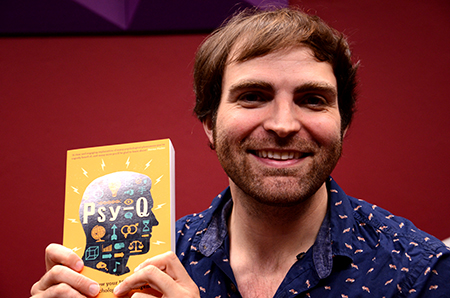
Ben Ambridge is the author of “Psy-Q,” a sparkling book debunking what we think we know about psychology.
Why you should listen?
Ben Ambridge is a senior lecturer in psychology at the University of Liverpool, where he researches children’s language development. He is the author of Psy-Q, which introduces readers to some of the major findings in psychology via interactive puzzles, games, quizzes and tests.
He also writes great newsy stories connecting psychology to current events. His article “Why Can’t We Talk to the Animals?” was shortlisted for the 2012 Guardian-Wellcome Science Writing Prize. Psy-Q is his first book for a general audience.
Dr. Ben Ambridge with his book: Psy-Q.
If you want to learn more about the good Professor, here is his webpage on the University of Liverpool‘s website. And here is Ben Ambridge’s personal webpage that lists many, if not all, of his publications.
I honestly can’t find a better picture to close today’s post about sensitivity and empathy than this one below:
As I have mentioned in the past and undoubtedly will do so again in the future, one of the most wonderful aspects of this world of blogging is the way that connections are made. Just a few weeks ago, a connection was made between Learning from Dogs and Dog Leader Mysteries. DLM’s byline is: Saving dogs’ lives and dog lovers’ sanity. Dog Leader Mysteries is written by author Deborah Taylor-French.
Anyway, out of the exchanges that have taken place between Deborah and myself, came a reference to a post about animal happiness that was published on Deborah’s blog in October, 2013. It is very interesting and I am delighted to be given permission to share it with you.
ooOOoo
Neuroscience key to animal happiness
“…research in neuroscience has been showing that emotions drive behavior, and my thirty-five years of experience working with animals have shown me that this is true. Emotions come first. You have to go back to the brain to understand animal welfare.”
Animals Make Us Human : Creating the best life for Animals
by Temple Grandin & Catherine Johnson
Water dogs having a blast in Spring Lake Park.
By Deborah Taylor-French
Those of us who live and/or work with animals know…
animals have emotions.
Temple Grandin has made the understanding, care and handling of farm animals her life’s work. I refer to her book Animals Make Us Human because not only has she studied farm animals, but she also loves and lives with pets. In her books, especial this one, she insists that we must understand how animals brains work, how they see, hear and smell every sensory detail in their surroundings.
Animals emotions drive their behavior.
To make a better life for our pets, for domestic and wild animals we must understand the main emotions that drive behavior. This will help us to turn on their positive emotions and avoid turning on FEAR, RAGE and GRIEF.
Example: Rabbits and horses are prey animals.
Never chase either rabbits or horses.
Teach your pet rabbit or horse to come to you.
Always reward them for recognizing their name and coming when called.
When you chase a prey animal, you make him or her fearful of you!
Emotions are the gifts of our ancestors. We have them and so do other animals. We must never forget this. When it comes to animal welfare we can always do better. Most of the time “good welfare” is not “good enough.”
The Emotional Lives of Animals by Marc Bekoff.
Dogs Depend on us for freedom from fear and safety
Never tie up your dog unless it is in your company in a human training session.
A dog needs to feel he can flee to safety.
Be sensitive to your dog’s fear signals and show him you will protect and calm him.
Increase your dogs positive emotions by interesting, but not overstimulating activities.
Always stop training before your dog gets tired.
Dogs are the only animals that live with us inside of their flight zone.
Dogs depend on us for positive and playful lives
When you help increase an animal’s curiosity, you turn on his or her positive emotions of SEEKING and PLAY.
Example: Dogs love to play.
Find a time and place when both you and your dog seem relaxed.
Invite your dog to play by doing a play bow or picking up his favorite toy.
Use an excited and happy tone of voice to call your dog.
Run away.
When your dog chases you, stop.
Wait for your dog to run then chase.
Always stop before your dog seems fearful or overexcited.
Dogs love this game, which dog lovers know dogs play every chance they get.
The following were sent to me from Dan Gomez. They offer a fascinating insight into the power of graphically representing any number of ideas. Hope you find them as fascinating as I did!
This map shows the world divided into 7 sections (each with a distinct color) with each section containing 1 billion people.
oooo
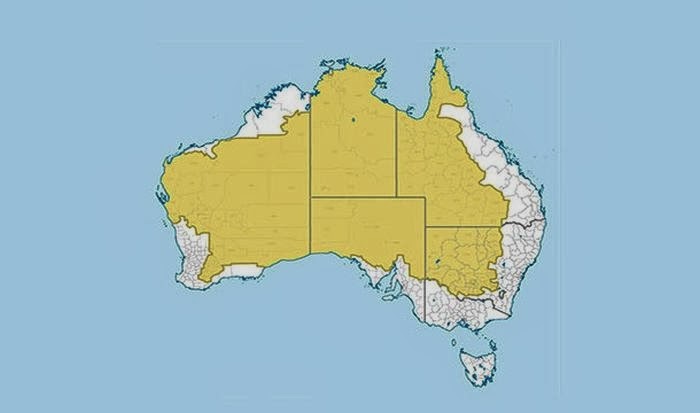
This map shows (in white) where 98 percent of Australia’s population lives.
oooo
It may not come as a surprise but more people live inside the circle than outside of it.
oooo
This map shows what is on the other side of the world from where you are standing. For the most part it will probably be water.
oooo
Apparently you can’t get Big Macs everywhere. This map shows (in red) the countries that have McDonalds.
oooo
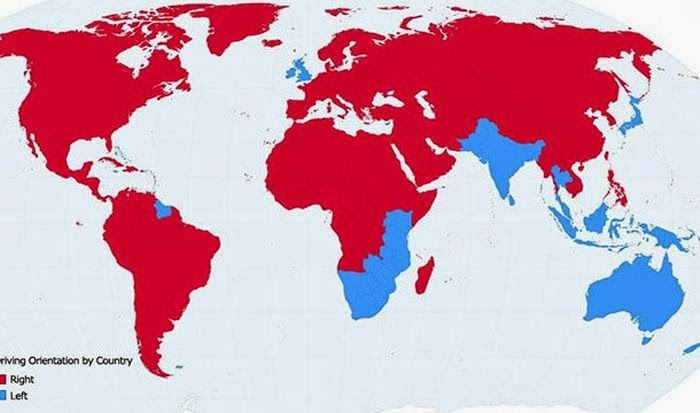
This map shows the countries (in blue) where people drive on the left side of the road.
oooo
This map shows countries (in white) that England has never invaded. There are only 22 of them.
oooo
The line in this map shows all of the world’s Internet connections in 1969.
oooo
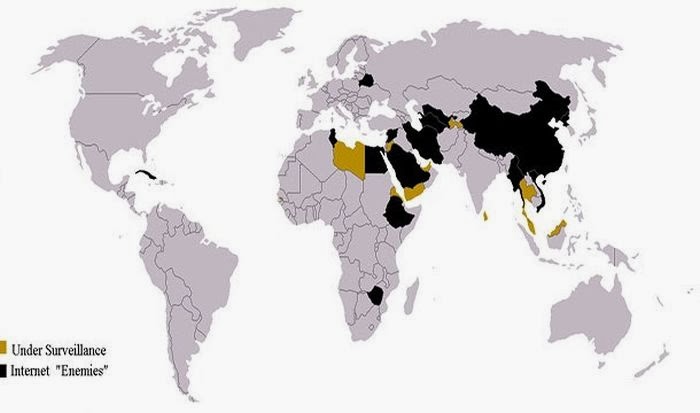
This map shows the countries that heavily restricted Internet access in 2013.
oooo
This map shows (in red) countries that were all Communist at one point in time.
oooo
This map shows (in red) the countries that don’t use the metric system.
oooo
This map shows (in blue) places where Google street view is available.
oooo
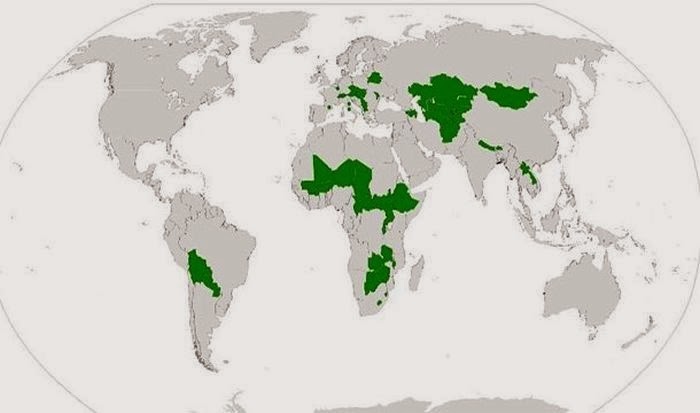
This map shows (in green) all the landlocked countries of the world.
oooo
And this is what the world would look like if all the countries with coast lines sank.
oooo
This is a map of the all the rivers in the United States.
oooo
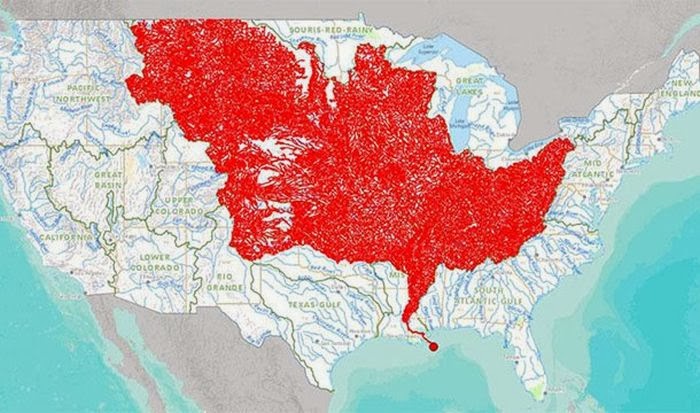
And these are all the rivers that feed into the Mississippi River.
oooo
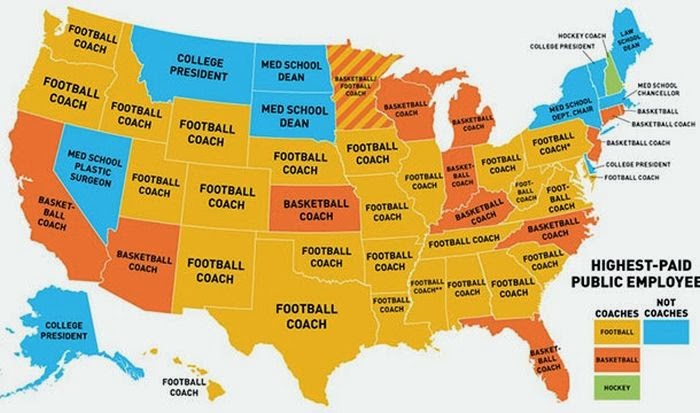
This is a map of the highest paid public employees in the United States.
oooo
This map shows how much space the United States would occupy on the moon.
Would love to hear which of the maps you found most interesting, and why?
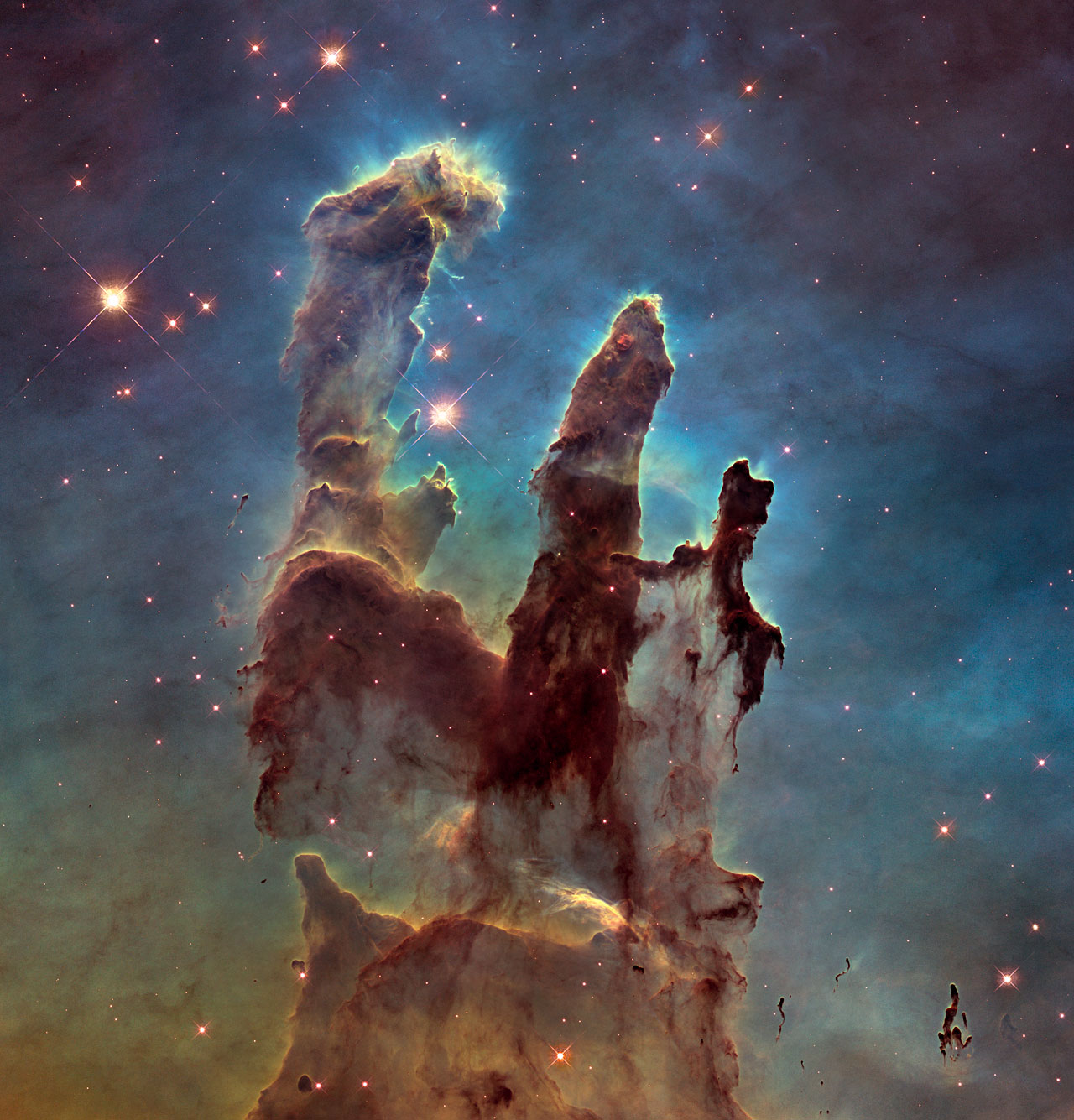
The NASA/ESA Hubble Space Telescope has revisited one of its most iconic and popular images: the Eagle Nebula’s Pillars of Creation. This image shows the pillars as seen in visible light, capturing the multi-coloured glow of gas clouds, wispy tendrils of dark cosmic dust, and the rust-coloured elephants’ trunks of the nebula’s famous pillars. The dust and gas in the pillars is seared by the intense radiation from young stars and eroded by strong winds from massive nearby stars. With these new images comes better contrast and a clearer view for astronomers to study how the structure of the pillars is changing over time.
I subscribe to EarthSky and the link to this image and background information was in yesterday’s daily summary. The mind-blowing facts are that the Eagle Nebula is found in the constellation Serpens and is 6,500 light-years away from our dear planet. To put that into context, that is 38,210 trillion miles from us. The star cluster associated with the nebula is about 5.5 million years old.
EarthSky has the very interesting text of the NASA Press Release regarding this new, high-resolution image.
For me, I just want to let that image wash over me. Not least because it reminds me that I am a very lucky person to be living at a time when one can lose oneself in such sights.
Here’s the image again, this time without the explanation.