Category: Education

You couldn’t make it up!

However hard one tried to!

LfDFrontCoverebook
In Chapter Eight, Behaviours and Relationships, I speak of how the development of humans has been, unsurprisingly, the result of our human behaviours. Adding that it is likely that our behaviours have been damaging, in varying degrees, to the survival of our species and countless others for a very long time. Continuing:

But 2,000 years ago, the global population of man was only 300 million persons[1]. It took 1,200 years for that global population to become 1 billion persons; in 1800. Now track the intervals as we come forward in time.

In 1927, just 127 years later, the two-billionth baby was born. In 1960, only 33 years on, came the birth of the three-billionth baby. Just 16 years later, in 1974, the four-billionth baby was born. In 1987, now only 13 years later, we have a population of five billion persons. Around October 1999, the sixth-billionth baby was born.
The growth rate of global population is slowing[2] but nevertheless it is trending to a billion additional persons every decade. In other words, a 100-million population growth every year, or about 270,000 more persons every single day.

Combine man’s behaviours rooted in times way back with this growth in population and we have the present situation. A totally unsustainable situation for one basic and fundamental reason. We all live on a finite planet.

[1] http://en.wikipedia.org/wiki/Population_growth
[2] According to UN’s 2010 revision to its population projections, world population will peak at 10.1bn in 2100 compared to 7bn in 2011. A 2014 paper by demographers from several universities and the United Nations Population Division forecast that the world’s population will reach about 10.9 billion in 2100 and continue growing thereafter. However, some experts dispute the UN’s forecast and have argued that birthrates will fall below replacement rate in the 2020s. According to these forecasters, population growth will be only sustained till the 2040s by rising longevity but will peak below 9bn by 2050.

A growth of about 270,000 more persons every single day!

I am sure that I am not alone in seeing this growth in our population as something that is both unsustainable and a critical component of long-term damage to our planet.

But George Monbiot in a recent essay, in true Monbiot style, highlights an aspect of our human population and the damage resulting that would have never previously occurred to me.

Read it and see if you don’t agree likewise. (Again, there are just too many links in George’s essay to reconstruct in this republishing and, as the other day, I have highlighted those phrases that are a link to other material in red. Go here if you wish to further investigate those links.)

ooOOoo

Pregnant Silence

19th November 2015

It’s about time we discussed the real population crisis.

By George Monbiot, published in the Guardian 18th November 2015

This column is about the population crisis. About the breeding that’s laying waste to the world’s living systems. But it’s probably not the population crisis you’re thinking of. This is about another one, that we seem to find almost impossible to discuss.

You’ll hear a lot about population in the next three weeks, as the Paris climate summit approaches. Across the airwaves and on the comment threads it will invariably be described as “the elephant in the room”. When people are not using their own words, it means they are not thinking their own thoughts. Ten thousand voices each ask why no one is talking about it. The growth in human numbers, they say, is our foremost environmental threat.

At their best, population campaigners seek to extend women’s reproductive choices. Some 225 million women have an unmet need for contraception. If this need were answered, the impact on population growth would be significant, though not decisive: the annual growth rate of 83 million would be reduced to 62m (1). But contraception is rarely limited only by the physical availability of contraceptives. In most cases, it’s about power: women are denied control of their wombs. The social transformations they need are wider and deeper than donations from the other side of the world are likely to achieve.

At their worst, they seek to shift the blame from their own environmental impacts. Perhaps it’s no coincidence that so many post-reproductive white men are obsessed with human population growth, as it’s about the only environmental problem of which they can wash their hands. Nor, I believe, is it a coincidence that of all such topics this is the least tractable. When there is almost nothing to be done, there is no requirement to act.

Such is the momentum behind population growth, an analysis in the Proceedings of the National Academy of Sciences discovered, that were every government to adopt the one-child policy China has just abandoned, there would still be as many people on Earth at the end of this century as there are today. If two billion people were wiped out by a catastrophe in mid-century, the planet would still hold a billion more by 2100 than it does now.

If we want to reduce our impacts this century, the paper concludes, it’s consumption we must address. Population growth is outpaced by the growth in our consumption of almost all resources. There is enough to meet everyone’s need, even in a world of 10 billion people. There is not enough to meet everyone’s greed, even in a world of 2 billion people.

So let’s turn to a population crisis over which we do have some influence. I’m talking about the growth in livestock numbers. Human numbers are rising at roughly 1.2% a year. Livestock numbers are rising at around 2.4% a year. By 2050, the world’s living systems will have to support about 120m tonnes of extra human, and 400m tonnes of extra farm animals(2).

Raising them already uses three quarters of the world’s agricultural land. One third of our cereal crops are used to feed them. This may rise to roughly half by 2050. More people will starve as a result, because the poor rely mainly on grain for their subsistence, and diverting it to livestock raises the price. Now the grain that farm animals eat is being supplemented by oil crops, particularly soya, for which the forests and savannahs of South America are being cleared at shocking rates.

This might seem counter-intuitive, but were we to eat soya, rather than meat, the clearance of natural vegetation required to supply us with the same amount of protein would decline by 94%. Producing protein from chickens requires three times as much land as protein from soybeans. Pork needs nine times, beef 32 times.

A recent paper in the journal Science of the Total Environment suggests that our consumption of meat is likely to be “the leading cause of modern species extinctions”. Not only is livestock farming the major reason for habitat destruction and the killing of predators, but its waste products are overwhelming the world’s capacity to absorb them. Factory farms in the US generate 13 times as much sewage as the human population. The dairy farms in Tulare county, California produce five times as much as New York City.

Freshwater life is being wiped out across the world by farm manure. In England, as I reported last week, the system designed to protect us from the tide of crap has comprehensively broken down. Dead zones now extend from many coasts, as farm sewage erases ocean life across thousands of square kilometres.

Livestock farming causes around 14% of the world’s greenhouse gas emissions: slightly more than the output of the world’s cars, lorries, buses, trains, ships and planes. If you eat soya, your emissions per unit of protein are 20 times lower than eating pork or chicken, and 150 times lower than eating beef.

So why is hardly anyone talking about the cow, pig, sheep and chicken in the room? Why are there no government campaigns to reduce the consumption of animal products, just as they sometimes discourage our excessive use of electricity? A survey by the Royal Institute of International Affairs found that people are not unwilling to change their diets, once they become aware of the problem, but that many have no idea that livestock farming damages the living world.

It’s not as if eating less meat and dairy will harm us. If we did as our doctors advise, our environmental impacts would decline in step with heart disease, strokes, diabetes and cancer. British people eat, on average, slightly more than their bodyweight in meat every year, while Americans consume another 50%: wildly more, in both cases, than is good for us or the rest of life on Earth.

But while plenty in the rich world are happy to discuss the dangers of brown people reproducing, the other population crisis scarcely crosses the threshold of perception. Livestock numbers present a direct moral challenge, as in this case we have agency. Hence the pregnant silence.

www.monbiot.com

Footnotes:

  1. While the number of unintended pregnancies would fall by 52m (or 70%), this does not mean that the number of babies would fall by the same amount. The Guttmacher/UNFPA report breaks down the outcome thus: “21 million fewer unplanned births; 24 million fewer abortions; six million fewer miscarriages; and 0.6 million fewer stillbirths.”
  2. Additional global meat consumption by this date is estimated to be roughly 200 million tonnes. Boned meat comprises roughly half the weight of a living animal. So total additional livestock biomass will be in the order of 400 million tonnes, or 400 billion kg. The average human weight is 52 kg and the anticipated rise in population by 2050 is 2.3 billion (the median estimate is 9.7 billion by that date). So the additional human weight is likely to be somewhere around 120 billion kg.

ooOOoo

Powerful reasons to turn vegetarian or vegan. And well done if you are already there. Well done, indeed!

Feelings – of both humans and animals.

Five years ago Jean and I were married!

So if we are discussing feelings, as we are today, there is no better place to start than by me expressing my feelings of joy and love that I feel for, and still receive from, my gorgeous Jean. I know five years at our stage of life is far fewer than for many married couples but, nevertheless, they have been beautiful years and I wish for many more.

wedding
Diane Jackson, Bridesmaid, Jean and me, my mother and Dan Gomez, Best Man. November 20th, 2010

I had been pondering these last few days as to what I would write for today. For I wanted to celebrate our anniversary yet wanted a broader theme; so to speak.

There couldn’t have been a better answer to that ponder than a recent video that was presented by TED Talks. It was a talk by Carl Safina about what is going on inside the brains of animals: What are animals thinking and feeling? Or in the fuller words of that TED Talk page:

What’s going on inside the brains of animals? Can we know what, or if, they’re thinking and feeling? Carl Safina thinks we can. Using discoveries and anecdotes that span ecology, biology and behavioral science, he weaves together stories of whales, wolves, elephants and albatrosses to argue that just as we think, feel, use tools and express emotions, so too do the other creatures – and minds – that share the Earth with us.

Safina is very qualified to speak on the subject as his bio on that TED Talk page reveals. However, I couldn’t find a YouTube link for that TED Talk but could find two videos that are very good alternatives.

The first is a short video of Safina promoting his book Beyond Words: What Animals Think and Feel.

The second is a much longer video that is Safina’s presentation at the recent Ransom A. Myers Lecture. If you can spare the time, then do watch it. You will not be disappointed.

Published on Oct 9, 2015
8th Annual Ransom A. Myers Lecture in Science and Society. Thursday, October 1st 2015.

Title: Beyond Words: What animals think and feel
Presented by: Dr. Carl Safina, Marine Ecologist/Author, The Safina Centre

Finally, and please forgive my indulgences, I want to close today’s post with some photographs that for me have “feelings” stamped all over them!

Jeannie, Hazel and cat feeling trust for each other.

oooo

One of our local deer trusting Jeannie.
One of our local wild deer trusting Jeannie.

oooo

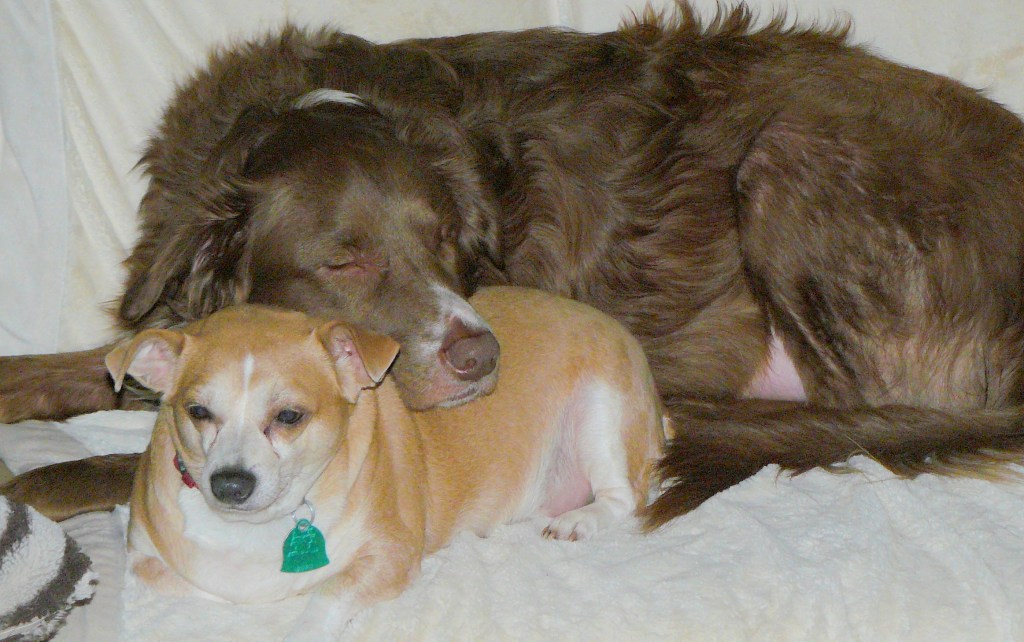
Oliver and Pedy adoring each other.

oooo

Last but not least! Photograph taken two days ago by yours truly reflecting my feelings of wonder at being alive in this world!
Last but not least! A photograph taken two days ago by yours truly reflecting my feelings of wonder at being alive in this world!

Onwards and upwards!

Our changing climate – what is the truth?

A video on YouTube raises some fundamental questions about our changing climate.

Let me say straight away that my belief in Anthropogenic Global Warming (AGW) is based on instinct, and not on me understanding the science, simply because I am not a scientist; far from it! As I share on this blog:

Paul Handover is a child of the post-war era in Great Britain having been born in London a few months before the end of WWII. After a rather shaky attempt at being educated, including 2 years studying for a Diploma in Electrical Engineering, Paul’s first job was as a commercial apprentice at the British Aircraft Corporation. He then joined the sales desk of British Visqueen, a polythene film and products manufacturer located in Stevenage, Hertfordshire, and part of ICI Plastics Division. In 1968, he travelled out to Sydney, Australia and became part of the sales team at ICIANZ’s Inorganic Chemicals Division.

I am a fundamentally a retired salesman/entrepreneur with a very out-of-date knowledge of electrical engineering and radio communications (G3PUK), and now struggling to be an author. 😉

Plus, my generally sceptical view of how countries are governed, my awareness of a terrible lack of integrity in politicians, plays to those instincts of mine that humanity is, indeed, responsible primarily for our changing climate. And there is no shortage of supporting evidence!

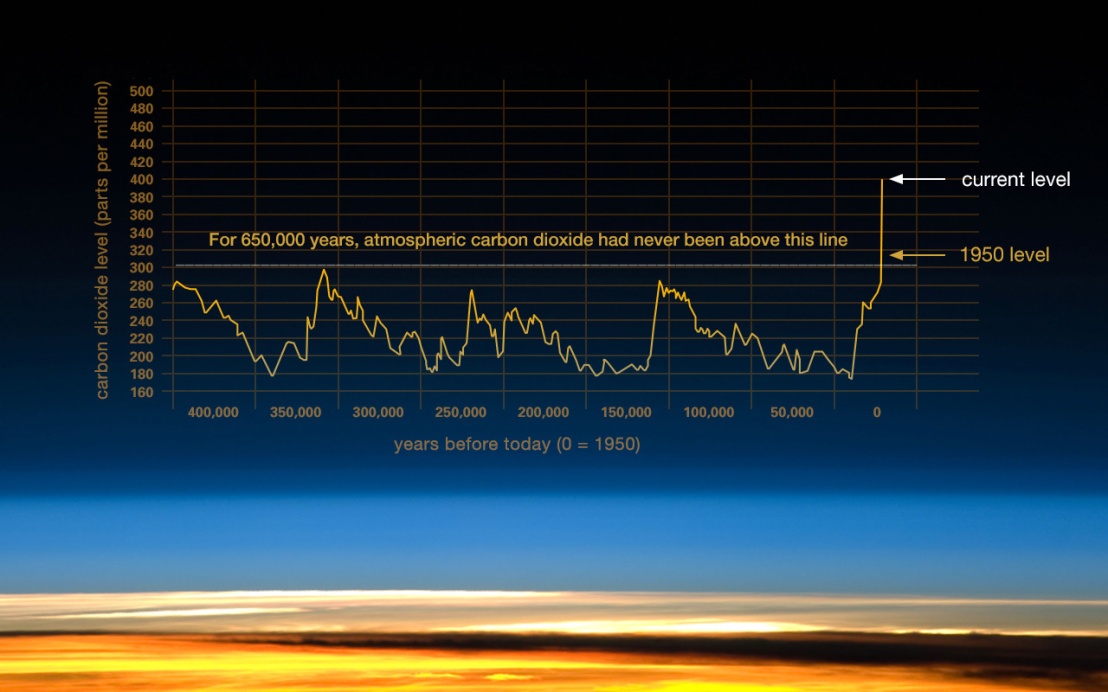
A very quick web search found this NASA site that included the following graph and text (in part):

This graph, based on the comparison of atmospheric samples contained in ice cores and more recent direct measurements, provides evidence that atmospheric CO2 has increased since the Industrial Revolution. (Credit: Vostok ice core data/J.R. Petit et al.; NOAA Mauna Loa CO2 record.)

The Earth’s climate has changed throughout history. Just in the last 650,000 years there have been seven cycles of glacial advance and retreat, with the abrupt end of the last ice age about 7,000 years ago marking the beginning of the modern climate era — and of human civilization. Most of these climate changes are attributed to very small variations in Earth’s orbit that change the amount of solar energy our planet receives.

Scientific Consensus
Ninety-seven percent of climate scientists agree that climate-warming trends over the past century are very likely due to human activities, and most of the leading scientific organizations worldwide have issued public statements endorsing this position.

Click here for a partial list of these public statements and related resources.

However, a dear and close friend of nearly 40 years, Dan Gomez, is sceptical and simply says to me: “Paul, follow the money!” Dan is a very widely-read person and a great thinker.

Plus, among our wonderful neighbours there is a couple, Dordie and Bill, that we get on with extremely well. Bill is a sceptic of AGW and recently sent me the link to the following video.

Please watch it. If you have evidence that all or many of the facts on this video are incorrect then I would love to hear from you.

For this is way too important for the truth not to be widely promoted.

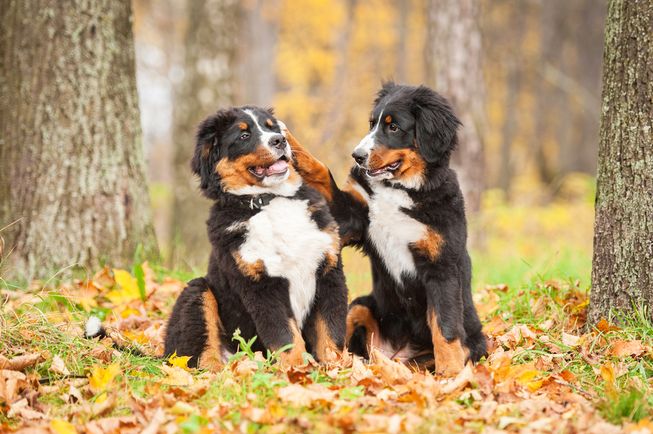
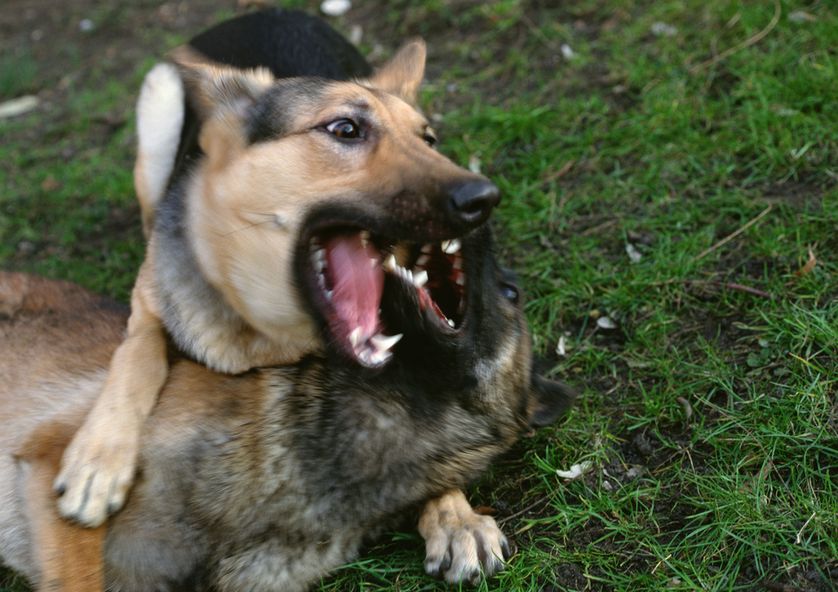
Friendly play between dogs, or what?

An informative article about bullying by dogs.

Another day that almost disappeared as a result of my impending book launch soaking up so much time.

LfDFrontCoverebook

The book should be available for sale by the end of the month, with the launch and book signing taking place locally in Grants Pass on Saturday, December 12th. Followers of this blog will be offered a special discount on the ebook versions once they are released shortly. So if that “rocks your boat” then sign up to follow this blog. Here’s a description of the book:

About the book

There’s a tiny amount of domesticated wolf in all of us. The relationship between canids and humans goes back nearly 40,000 years, when dogs split away from wolves. With our dogs, we have traveled the ancient track from hunter-gatherers to modern humans. However, this track now seems to offer an uncertain future for humankind and society.

Learning from Dogs shows how and why now, more than ever, we humans need to learn from our dogs. At times the book relates personal stories through autobiography, diary, and blog entries. Other times it reinforces a point with speculative and imaginative fictional narrative. Throughout the book, there is a foundation about the history of wolves, dogs, and humans, as the author injects factual research to assist us to more fully understand the importance of this unique relationship.

With just the right blend of humor, story-telling, perception, compassion, and insight, the author shares his unusual perspective and how he came to share what he’s learned through a lifetime of observation and interaction with dogs.

Readers who love dogs, or any animals, will connect with this book and become more fully aware of why our animal friends are valuable to learn from to help us heal the challenges of the 21st century. Occasionally launching into intellectual tangents that will provide intrigue and inspiration for the heart and soul, the book ultimately returns to the central thesis: “What we can (and should) learn from dogs.”

Pat Shipman, retired adjunct professor of anthropology at The Pennsylvania State University, and the author of The Animal Connection and The invaders; How Humans and Their Dogs Drove Neanderthals to Extinction, described the book as, “both wise and thoughtful. It also includes some of the best writing about the intimate and special relationship between dogs and humans I have ever read.”

The Foreword to the book is by well-known local vet, James R. Goodbrod, Master’s Degree, Doctor of Veterinary Medicine.

So with no further ado, here is an informative article that was recently published by Mother Nature News and is republished here with their kind permission.

ooOOoo

Is your dog a playground bully?

What starts out as rambunctious play can quickly turn into a toothy problem.

By: Jaymi Heimbuch, November 12, 2015.

I'm the boss and you'll do as I say! (Photo: Rita Kochmarjova/Shutterstock)
I’m the boss and you’ll do as I say! (Photo: Rita Kochmarjova/Shutterstock)

You’re at the park with your dog as he finds another four-legged buddy to play with. The two dogs seem to be having fun, but something feels amiss. Your dog is extra rambunctious and is really pushing the other dog around. Maybe the other dog is handling your dog’s overly rough-and-tumble attitude with patience. Or perhaps the other dog begins to hide behind or between his owner’s legs, looking for a break from your bossy dog.

Been in this situation? You just might have a bully on your hands.

Bullying behavior is a bigger problem than simply having a rude dog. In the immediate situation, it can lead to an attack or a fight, and in the long run it can cause the dog’s unappreciative play partner to become fear-aggressive, thinking all dogs are bullies. That’s why it’s important to stop bullying behavior the second you see it and train your dog to play appropriately.

Signs of bullying behavior include:

  • Being overly demanding about getting a toy, attention from people, or other resources
  • Continually standing over or pinning another dog to the ground
  • Ignoring signals from a play partner that the play is too rough or unwanted
  • An escalating intensity when the other dog pushes back or tries to leave

If you have a dog that behaves like a bully on the playground, there are steps you can take to fix the situation, which will benefit both your dog and all the other dogs he wants to play with.

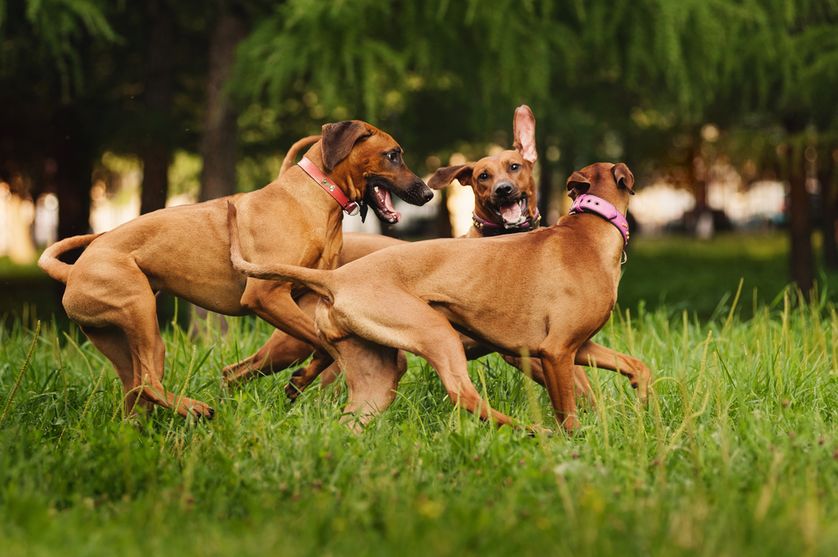
Play can quickly escalate into bullying behavior. Here's how to keep an eye out for it. (Photo: Photick/Shutterstock)
Play can quickly escalate into bullying behavior. Here’s how to keep an eye out for it. (Photo: Photick/Shutterstock)

What causes bullying behavior?

“Over-stimulation often leads to bossy behavior,” says Erin Kramer, an expert dog trainer who specializes in rehabilitating fearful, anxious and aggressive dogs. “This means that as the energy level rises, such as during chasing games, tug of war, or even just enthusiastic wrestling, dogs often become too stimulated and start to ignore signals from other dogs that they are playing too rough or that their interaction is not welcome. Dogs also feed off of each others’ energy, so a group of playing dogs can escalate into over stimulation and bullying behavior faster than a dog would with just one play partner.”

Kramer adds that simply watching how another dog is responding to your dog can tell you if your dog is being a bully. “If the other dogs are attempting to move and stay away, overly submitting by rolling on their backs, or are showing signs of stress or avoidance, that is a good indication your dog may be getting too rough.”

If you aren’t certain if your dog is bullying or if that’s just the play style of the two dogs, Kramer suggests getting a hold of your dog and seeing what happens when you make him take a break from play. If the other dog runs to your dog for more, then the two are getting along fine. But if the other dog maintains space, then the other dog is likely not really enjoying your dog’s rough play behavior and your dog needs to tone it down.

What to do if your dog is the bully

The old advice of letting dogs “work it out themselves” is the source of many problematic behaviors that can take years of training to overcome. Bullies will simply get better at bullying, and the dogs being picked on will likely develop increasingly intense fears about your dog and other dogs. Humans need to step in immediately to break up play that isn’t fun for both dogs, and prevent a bad situation — and bad behavior — from getting worse.

Once you’ve identified that your dog is being unappreciatively assertive with other dogs, it’s important to interrupt the behavior in the moment, then begin training to end the behavior in the long run.

In the moment, call your dog away and have him sit or lie down until he calms down. This can take a long time for a dog easily aroused in a dog park. Your dog is not calm until he can look away from other dogs playing, focus on you and exhibit relaxed body language. If after several minutes, your dog can’t seem to take his eyes off the other dogs and just wants to dive back in, then it’s time to leave the play area as it’s likely your dog won’t be able to tone down his play style.

The next thing is to begin setting your dog up for successful play sessions in such a way that you can easily step in to interrupt bullying behavior the moment it happens.

“If your dog does not have the advanced obedience it takes to perform an off leash ‘come’ out of play — and let’s face it, that’s a really challenging time to respond — then you need to set up your dog to deal with their bullying issues,” advises Kramer. “Have the dog wear a long leash, select a small play area where it’s easy to get control, and practice your obedience training so you are prepared to handle your dog correctly.”

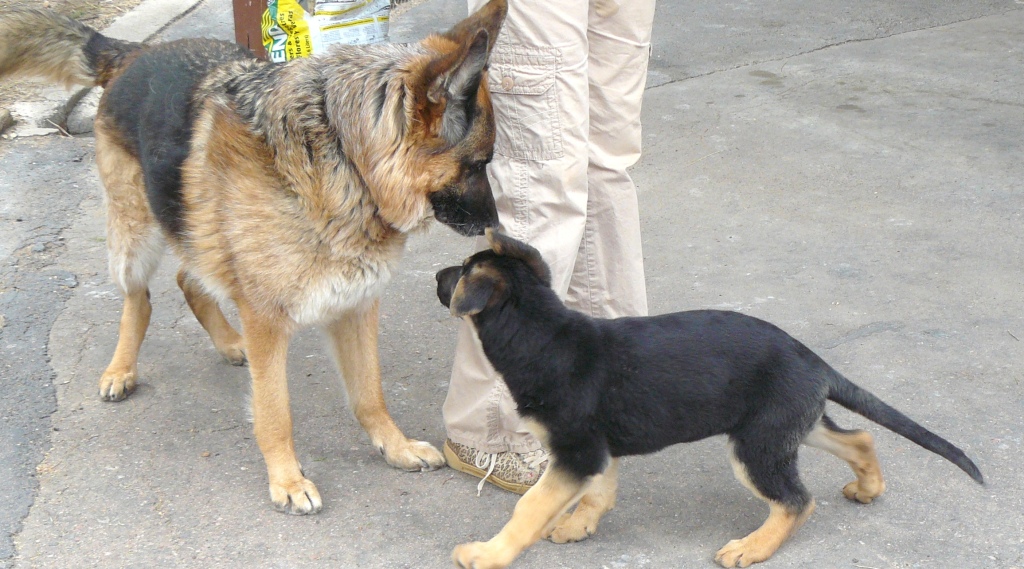
Watch for things that might set your dog into bully mode, including the energy level, the play partner's personality, and other factors. (Photo: Ksenia Raykova/Shutterstock)
Watch for things that might set your dog into bully mode, including the energy level, the play partner’s personality, and other factors. (Photo: Ksenia Raykova/Shutterstock)

During play, look for the timing of your dog’s bullying behavior and see if there are patterns. Kramer notes to watch if it’s a certain type of play partner, such as a high-energy or confident dog, that brings out the bully in your dog, or perhaps it’s simply that your dog bullies more when he hasn’t had as much exercise or training practice.

“If you can find a pattern to what creates or worsens their bullying behavior, then you can take steps to reduce it from happening and set them up for success by choosing more appropriate play partners or getting them increased exercise before play,” says Kramer.

Taking steps to train your dog to end bullying behavior is important, and Atlanta Humane Society has a great article outlining one way to interrupt and retrain your dog to end bullying over the course of many weeks. In addition to solid training addressing bullying during play, it’s important to have other tools to help your dog take the lessons beyond the dog park.

One lesson that Kramer notes is essential for pushy dogs is concept “Nothing In Life Is Free.” Teach your dog that he only gets the rewards he wants most in life when he thinks about what his human wants. Your dog will then continually check in with you, so he can earn what he wants.

“Demanding dogs are often dogs who need to know, ‘what’s in it for me?'” says Kramer. “Start making an asset list of all the things your dog sees as valuable. Remember that there are things that should go on the list outside of just treats and toys such as going through the front door, playing with friends, greeting strangers, even tummy rubs and snuggle time. Instead of giving away all those valuable rewards, ask your dog to earn them by performing commands like sit, down, stay, come, or doing a trick. Your dog will still get access to all of the things he likes, but he’ll have to earn those things from humans and in doing so, he’ll learn that pushy behavior doesn’t get rewarded. Once they learn this skill, they will be less bully-ish in general, and much more willing to listen to people when you need to get their attention.”

You can also implement a “no reward marker” or NRM, which works in the same way as clicker training, but rather than the marker indicating that a reward is coming, the marker indicates a loss of something is coming. Pat Miller writes in Whole Dog Journal, “My preferred NRM, the one I teach and use if/when necessary, is the word ‘Oops!’ [which] simply means, ‘Make another behavior choice or there will be an immediate loss of good stuff.’ An NRM is to be delivered in a non-punitive tone of voice … Timing is just as important with your NRM as it is with your reward marker. You’ll use it the instant your dog’s bully behavior appears, and if the bullying continues for more than a second or two more, grasp his leash … and remove him from play. Don’t repeat the NRM. Give him at least 20 seconds to calm down, more if he needs it, then release him to go play again.”

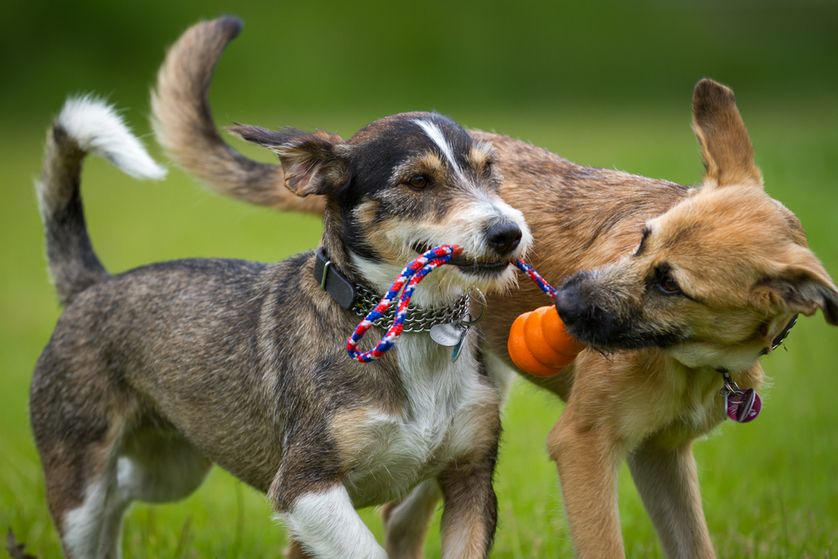
Sharing is caring! (Photo: Bildagentur Zoonar GmbH/Shutterstock)

What to do if your dog is being bullied

You may have an issue with a bullying dog, but it isn’t your dog causing the strife. It’s just as important to step in to interrupt your dog getting picked on. Again, letting dogs “work it out themselves” leads to significant behavioral problems, including a bullied dog becoming excessively fearful or reactive to other dogs because of the bad experience of being bullied.

“This mindset is just much too risky!” says Kramer. “We the humans very often do not know the social skill level of the other dogs involved nor can we successfully know exactly how stressed or scared our own dog is in that situation. I would much rather a dog learn that his humans step in when he is showing signs of discomfort rather than him learning he is forced to defend himself, and that being fear-aggressive is a good strategy to keep himself safe.”

If you see that your dog is getting picked on or is uncomfortable in a play situation, calmly but confidently step in. You can leash your dog and leave, or step between your dog and the other dog to break up play. Staying calm but assertive is key, since your reaction sends a message to your dog. Screaming and yelling at the dogs to break it up tells your dog that this is a scary situation, where as firmly stepping in lets your dog knows that what happened was uncomfortable but nothing to be scared about.

“By demonstrating to your dog that you are responsible and actively engaged in keeping them safe, they will gain confidence in handling tricky social situations and will be less fearful and reactive when negative experiences arise,” says Kramer.

“As a trainer who does a lot of aggression rehabilitation work with dogs who have been bullied or attacked by other dogs, there is a particular joy I get in watching fearful dogs learn that they are no longer responsible for protecting themselves, and that I as their human handler will observe the body language messages they send me and will then take the steps needed to alleviate their discomfort. There is a bond that comes with such a system of partnership that makes a dog a more confident, social, and happy being. Allowing your dog to bully or be bullied means that you are undermining that system, and teaching your dog that they are on their own in learning how to make successful social decisions. With just a bit of observation, intervention and repetition you can help your dog learn the boundaries of positive social interaction and you will not only have a dog who is a better playmate, you will also have a stronger relationship altogether.”

ooOOoo

To my mind, this is a very helpful article and all the links offer a wealth of supporting information.

Pharaoh demonstrating his benevolent status with puppy Cleo. April 2012.

Hug a pet and extend your life!

With seventeen pets here at home Jean and I should live forever!

Another Saturday and another gentle post about the power of our wonderful pets. (Oh, and who, as I did, missed the fact that yesterday was not only a Friday the Thirteenth but the third one this year!)

Anyway, back to the plot!

Last Monday, Mother Nature Network published an item about how good pets are for our health. It seemed the perfect item to share with all of you this Saturday.

ooOOoo

11 studies that prove pets are good for your health

Check out the ways your 4-legged friends enhance your physical and emotional health.

By: Sidney Stevens, November 9, 2015.

Pets strengthen our hearts, calm our nerves and a whole lot more. (Photo: Juanedc.com /flickr)

If you have pets you already know the joy and love they bring to your life. Now science is confirming just how good they really are for you — both mentally and physically.

How do they help? One theory is that pets boost our oxytocin levels. Also known as the “bonding hormone” or “cuddle chemical,” oxytocin enhances social skills, decreases blood pressure and heart rate, boosts immune function and raises tolerance for pain. It also lowers stress, anger and depression.

PHOTO BREAK: 12 astonishing facts about horses

No surprise then that keeping regular company with a dog or cat (or another beloved beast) appears to offer all these same benefits and more. Read on to discover the many impressive ways a pet can make you healthier, happier and more resilient.

1. Pets alleviate allergies and boost immune function

One of your immune system’s jobs is to identify potentially harmful substances and unleash antibodies to ward off the threat. But sometimes it overreacts and misidentifies harmless stuff as dangerous, causing an allergic reaction. Think red eyes, itchy skin, runny nose and wheezing. You’d think that having pets might trigger allergies by kicking up sneeze-and-wheeze-inducing dander and fur. But it turns out that living with a dog or cat during the first year of life not only cuts your chances of having pet allergies in childhood and later on but also revs up your immune system and lowers your risk of eczema and asthma. In fact, just a brief pet encounter can invigorate your disease-defense system. In one study, petting a dog for only 18 minutes raised immunoglobulin A (IgA) levels in college students’ saliva, a sign of robust immune function.

2. Pets up your fitness quotient

This one applies more to dog owners. If you like walking with your favorite canine, chances are you’re fitter and trimmer than your non-dog-walking counterparts and come closer to meeting recommended physical activity levels. One study of more than 2,000 adults found that regular dog walkers got more exercise and were less likely to be obese than those who didn’t walk a dog. In another study, older dog walkers (ages 71-82) walked faster and longer than non-pooch-walkers, plus they were more mobile at home.

Dog owners who take their canine companions on walks tend to be trimmer and fitter than their fellow dog-less peers. (Photo: AMatveev/Shutterstock)

3. Pets dial down stress

When stress comes your way, your body goes into fight-or-flight mode, releasing hormones like cortisol to crank out more energy-boosting blood sugar and epinephrine to get your heart and blood pumping. All well and good for our ancestors who needed quick bursts of speed to dodge predatory saber-toothed tigers and stampeding mastodons. But when we live in a constant state of fight-or-flight from ongoing stress at work and the frenetic pace of modern life, these physical changes take their toll on our bodies, including raising our risk of heart disease and other dangerous conditions. Contact with pets seem to counteract this stress response by lowering stress hormones and heart rate. They also lower anxiety and fear levels (psychological responses to stress) and elevate feelings of calmness.

4. Pets boost heart health

Pets shower us with love so it’s not surprising they have a big impact on our love organ: the heart. Turns out time spent with a cherished critter is linked to better cardiovascular health, possibly due to the stress-busting effect mentioned above. Studies show that dog owners have a lower risk of heart disease, including lower blood pressure and cholesterol. Dogs also benefit patients who already have cardiovascular disease. They’re not only four time more likely to be alive after a year if they own a dog, but they’re also more likely to survive a heart attack. And don’t worry, cat owners — feline affection confers a similar effect. One 10-year study found that current and former cat owners were 40 percent less likely to suffer a heart attack and 30 percent less likely to die of other cardiovascular diseases.

5. Make you a social — and date — magnet

Four-legged companions (particularly the canine variety that pull us out of the house for daily walks) help us make more friends and appear more approachable, trustworthy and date-worthy. In one study, people in wheelchairs who had a dog received more smiles and had more conversations with passersby than those without a dog. In another study, college students who were asked to watch videos of two psychotherapists (depicted once with a dog and once without) said they felt more positively toward them when they had a dog and more likely to disclose personal information. And good news for guys: research shows that women are more willing to give out their number to men with a canine buddy.

A dog can make you appear friendlier and more approachable to others. (Photo: CandyBox Images/Shutterstock)

6. Provides a social salve for Alzheimer’s patients

Just as non-human pals strengthen our social skills and connection, cats and dogs also offer furry, friendly comfort and social bonding to people suffering from Alzheimer’s and other forms of brain-destroying dementia. Several canine caregiver programs now exist to assist at-home dementia patients with day-to-day tasks, such as fetching medication, reminding them to eat and guiding them home if they’ve wandered off course. Many assisted-living facilities also keep resident pets or offer therapy animal visits to support and stimulate patients. Studies show creature companions can reduce behavioral issues among dementia patients by boosting their moods and raising their nutritional intake.

7. Enhances social skills in kids with autism

One in nearly 70 American kids has autism (also known as autism spectrum disorder, or ASD), a developmental disability that makes it tough to communicate and interact socially. Not surprisingly, animals can also help these kids connect better to others. One study found that youngsters with ASD talked and laughed more, whined and cried less and were more social with peers when guinea pigs were present. A multitude of ASD animal-assisted therapy programs have sprung up in recent years, featuring everything from dogs and dolphins to alpacas, horses and even chickens.

Animal-assisted therapy helps kids with autism and other developmental disabilities learn social skills. (Photo: UCI UC Irvine/flickr)

8. Dampens depression and boosts mood

Pets keep loneliness and isolation at bay and make us smile. In other words, their creature camaraderie and ability to keep us engaged in daily life (via endearing demands for food, attention and walks) are good recipes for warding off the blues. Research is ongoing, but animal-assisted therapy is proving particularly potent in deterring depression and other mood disorders. Studies show that everyone from older men in a veterans hospital who were exposed to an aviary filled with songbirds to depressed college students who spent time with dogs reported feeling more positive.

9. Defeats PTSD

People haunted by trauma like combat, assault and natural disasters are particularly vulnerable to a mental health condition called post-traumatic stress disorder (PTSD). Sure enough, studies show that the unconditional love — and oxytocin boost — of a pet can help remedy the flashbacks, emotional numbness and angry outbursts linked to PTSD. Even better, there are now several programs that pair specially trained service dogs and cats with veterans suffering from PTSD.

10. Fights cancer

Animal-assisted therapy helps cancer patients heal emotionally and physically. Preliminary findings of an on-going clinical trial by the American Humane Association shows that therapy dogs not only erase loneliness, depression and stress in kids fighting cancer, but canines can also motivate them to eat and follow treatment recommendations better — in other words participate more actively in their own healing. Likewise, new research reveals a similar lift in emotional well-being for adults undergoing the physical rigors of cancer treatment. Even more astounding, dogs (with their stellar smelling skills) are now being trained to literally sniff out cancer.

11. Puts the kibosh on pain

Millions live with chronic pain, but animals can soothe some of it away. In one study, 34 percent of patients with the pain disorder fibromyalgia reported pain relief (and a better mood and less fatigue) after visiting for 10-15 minutes with a therapy dog compared to only 4 percent of patients who just sat in a waiting room. In another study, those who had undergone total joint replacement surgery needed 28 percent less pain medication after daily visits from a therapy dog than those who got no canine contact.

ooOOoo

When I was setting this post up and copying across all the many links I was aware that there was a mountain of information out there. You may want to take some time and explore those links. For example, the link to HABRI- Human-Animal Research Initiative looks incredibly interesting. Then there was the link to the work being undertaken by the American Humane Association, that link being to this video that I am presenting here to close off today’s post.

Wherever you are in the world look after yourself and care for all those lovely pets out there. Love them so dearly!

Having fun with history.

Nothing to do with dogs but, nonetheless, a neat way to finish the week.

I was looking at a recent George Monbiot essay and getting myself all wound up about it, thinking that it should be today’s post. Then I thought, “Come on, Paul, end the week on a gentle tone.”

So with that in mind, let me offer you an item on British history that Su sent me a week ago. I can’t authenticate the details but my instinct is that everything mentioned is correct.

ooOOoo

There is an old Pub in Marble Arch, London, which used to have a gallows adjacent to it. Prisoners were taken to the gallows (after a “fair” trial of course) to be hanged. The horse-drawn dray, carting the prisoner, was accompanied by an armed guard, who would stop the dray outside the pub and ask the prisoner if he would like ”ONE LAST DRINK.” If he said YES, it was referred to as ONE FOR THE ROAD. If he declined, that prisoner was ON THE WAGON.

So there you go … On with some more history.

They used to use urine to tan animal skins, so families used to all pee in a pot and then once a day the pot was taken and sold to the tannery. If you had to do this to survive you were “piss poor”, but worse than that were the really poor folk, who couldn’t even afford to buy a pot, they “didn’t have a pot to piss in” and were the lowest of the low. The next time you are washing your hands and complain because the water temperature isn’t just how you like it, think about how things used to be.

Here are some more facts about the 1500s:

Most people got married in June, because they took their yearly bath in May and they still smelled pretty good by June. However, since they were starting to smell, brides carried a bouquet of flowers to hide the body odor. Hence the custom today of carrying a bridal bouquet when getting married.

Baths consisted of a big tub filled with hot water. The man of the house had the privilege of the nice clean water, then all the other sons and men, then the women and finally the children. Last of all came the babies. By then the water was so dirty you could actually lose someone in it. Hence the saying, “Don’t throw the baby out with the bath water!”

Houses had thatched roofs, thick straw piled high on the rafters, with no wood underneath. It was the only place for animals to get warm, so all the cats and other small animals (mice, bugs) lived in the roof. When it rained it became slippery and sometimes the animals would slip and fall off the roof. Hence the saying “It’s raining cats and dogs.” There was nothing to stop things from falling into the house.

This posed a real problem in the bedroom, where bugs and other droppings could mess up your nice clean bed. Hence, a bed with four big posts and a sheet hung over the top afforded some protection. That’s how canopy beds came into existence.

The floor was dirt. Only the wealthy had something other than a dirt floor. Hence the saying, “dirt poor.” The wealthy had slate floors that would get slippery in winter when wet, so they spread thresh (straw) on floor to help keep their footing. As the winter wore on they added more thresh until, when you opened the door, it would all start slipping outside. A piece of wood was placed in the entrance. Hence: a threshold.

In those old days, they cooked in the kitchen with a big kettle that always hung over the fire. Every day they lit the fire and added things to the pot. They ate mostly vegetables and did not get much meat. They would eat the stew for dinner, leaving leftovers in the pot to get cold overnight, then start over the next day. Sometimes stew had food in it that had been there for quite a while. Hence the rhyme: ”Peas porridge hot, peas porridge cold, peas porridge in the pot, nine days old.” Sometimes they could get pork, which made them feel quite special. When visitors came over they would hang up their bacon, to show off.

It was a sign of wealth that a man could, “Bring home the bacon.” They would cut off a little to share with their guests and would all sit around talking and ”chew the fat.”

Those with money had plates made of pewter. Food with high acid content caused some of the lead to leach onto the food, causing lead poisoning and death. This happened most often with tomatoes, so for the next 400 years or so, tomatoes were considered poisonous.

Bread was divided according to status. Workers got the burnt bottom of the loaf, the family got the middle, and guests got the top, or ”The Upper Crust.”

Lead cups were used to drink ale or whisky. The combination would sometimes knock the imbibers out for a couple of days. Someone walking along the road would take them for dead and prepare them for burial. They were laid out on the kitchen table for a couple of days and the family would gather around and eat and drink and wait and see if they would wake up. Hence the custom of ”Holding a Wake.”

England is old and small and the local folks started running out of places to bury people, so they would dig up coffins and would take the bones to a bone-house and reuse the grave site. When reopening these coffins, 1 out of 25 coffins were found to have scratch marks on the inside and they realised they had been burying people alive. So they would tie a string on the wrist of the corpse, thread it out through the coffin and up through the ground and tie it to a bell. Someone would have to sit out in the graveyard all night (the graveyard shift) to listen for the a bell; thus someone could be, ”Saved by the Bell ”or was considered a ”Dead Ringer.” And that’s the truth.

Now, whoever said history was boring ! ! !
So ….. get out there and educate someone!

ooOOoo

Just out of curiosity, I did a web search on that Pub in Marble Arch. Quickly came across this, from which I quote, in part:

The site of the Tyburn Tree is said to be at what is now Marble Arch, at the north-east corner of Hyde Park. Some historians give a more precise location as slightly to the north-west at Connaught Square. In fact, many bodies were found there when the square was being built in the 1820s, so it’s possible that some Tyburn victims were buried right where they died.

Mass executions took place on Mondays, when prisoners were transported from Newgate Prison to Tyburn in an open wagon, often in their finest clothes. The procession, which was watched by a large and enthusiastic crowd, wound down Snow Hill, across Holborn Bridge into Holborn, down Broad St Giles into Oxford Street and on to Tyburn.

And it was but a moment to find a photograph of the place.

Tyburn

 You all have a wonderful, relaxing week-end and don’t lose your head over anything!

Rebooting an inmate’s life

This is no conundrum: a direct contrast to yesterday.

The benefits of having a dog or two (or nine) are boundless and have been documented for thousands of years. Indeed, a quick web search revealed that Alexander Pope, the 18th-century English poet, is the attributed author of the quote, “Histories are more full of examples of the fidelity of dogs than of friends.”

Nevertheless, it was still a joy to come across the documentary film Dogs On The Inside.

Filmed in a Massachusetts prison, DOGS ON THE INSIDE follows the birth of a relationship between abandoned rescue dogs and prison inmates as they work together toward a second chance at a better life. Giving a voice to a forgotten dog and a forgotten man, the film is a life-affirming testament to the power of second chances.

The film was released in February 2014, and here is the trailer.

In general, it seems to have gathered good reviews with this one from Amazon being typical of what I have seen.

I had tears in my eyes during several segments of this film. Such a lovely connection between the rescue workers and the dogs. Then, the inmates and the dogs. And, finally, the photos of their forever homes and families. Bravo to all at Don’t Throw Us Away. People like you, who work to save and rehab these animals, are amazing.

You are also recommended to read the review that is on the Ecorazzi website. Here’s a flavour of that review:

Two parties neglected and forgotten become the powerful emotional center of an uplifting new documentary, Dogs on the Inside.

We’re taken to Massachusetts, where there exists a unique, mutually-beneficial rehabilitation program that finds rescue dogs paired with prison inmates.

This documentary, from directors Brean Cunningham and Douglas Seirup, follows a handful of inmates at a correctional facility involved in Don’t Throw Us Away, a program that partners them with neglected dogs. For the animal, benefits include exercise, attention, and care while shelters remain crowded. For the prisoners, they have a chance to form connections and work towards parole.

It’s fascinating throughout watching both sides – scared dogs and (emotionally) guarded inmates – warm to one another, seemingly leaving their past behind.

That’s at the heart of this illuminating, heartwarming film: second chances. Early on, it’s easy to see the parallels between these two groups – with the comparisons handled tactfully throughout a film that never strays from its simple, honest goal. Dogs never preaches or calls for political or social change; it more so asks the viewer to be willing to forgive and welcome in those which have been cast aside. When an inmate says, ‘they come from a bad life, they haven’t seen love in while,’ he isn’t necessarily talking just about the dog.

Let me close with this heart-stirring photograph that was included in the above review.

Candido2-1

So much to learn from our precious, gorgeous dogs!

What a show of fireworks this would be!

Asteroid 2015 TB145 will pass by Planet Earth – just!

Back in my old country, Halloween is not celebrated in the same style that it is here in America. The Brits tend to favour the evening of November 5th and Guy Fawkes Night. That evening, Bonfire Night, sees fireworks parties in many places.

nov5th

However, if one starts to think of the dimensions and distances of outer space then our planet is just being spared the firework show to beat all other shows.

I’m referring to Asteroid TB145, a huge asteroid, that will pass Earth at 310,000 miles (498,896 km) or 1.3 times the Earth-moon distance.

asteroid20151021

UPDATE OCTOBER 30, 2015. A newly found asteroid of notable size – known as asteroid 2015 TB145 – will safely pass Earth on October 31, 2015, according to clocks in North America. It should be visible moving in front of the stars, with the help of a telescope, tonight (October 30). It is the biggest known asteroid that will come this close to Earth until 2027. The asteroid – found as recently as October 10 – will fly past Earth at a safe distance, or about 1.3 times the moon’s distance. Closest approach to Earth will be October 31 at 1 p.m. EDT (1700 UTC). Translate to your time zone here.

Paul Chodas, manager of the Center for Near Earth Object Studies at NASA’s Jet Propulsion Laboratory, Pasadena, California, said:

The trajectory of 2015 TB145 is well understood. At the point of closest approach, it will be no closer than about 300,000 miles – 480,000 kilometers or 1.3 lunar distances. Even though that is relatively close by celestial standards, it is expected to be fairly faint, so night-sky Earth observers would need at least a small telescope to view it.

So how big is this asteroid?

Scientists are continuing to estimate the size at 1,300 feet (400 meters) wide.

If the size is correct, the new found asteroid is 28 times bigger in diameter than the Chelyabinsk meteor that penetrated the atmosphere over Russia in February, 2013. An incoming asteroid’s potential to do damage on Earth depends on various factors, including its size, its angle of entry, and the point on Earth over which it enters the atmosphere. The shock wave from the 2013 Chelyabinsk meteor broke windows and did other damage to some 7,200 buildings in six Russian cities. Some 1,500 people were injured seriously enough to seek medical treatment, mainly from broken glass from windows.

For those of you that want to catch a glimpse of TB145, then:

TB145at350amET0750UT10312015-e1446201004409

Asteroid position at 3:50 a.m. ET (0750 UTC) Point a Go To computerized telescope to HIP 24197 or SAO 94377) a naked-eye star with a magnitude of 5 in Orion. At 3:50 a.m. ET on October 31 (Saturday morning), the space rock passes close to this star. The asteroid will appear as a slowly moving ‘star’ passing very close to this star. By this time the asteroid should appear to move faster because it will be closer to Earth than earlier on the night of October 30. This illustration shows a half degree field of view (about the size of a full moon). A pair of double stars visible in this area should confirm you are pointing at the correct direction. Alternatively, you can point your telescope to these coordinates: RA 05h 11m 41.6s / DEC +16º 02′ 44.5″. Illustration by Eddie Irizarry using Stellarium.

Full details and answers to most of your questions may be found here.

All I can say is I hope the number crunchers have got their sums right!

If not, then it’s goodnight from her and goodnight from me.

o-NASA-ASTEROIDS-facebook

It was nice knowing you all!

P.S. If you think this is all a bit far-fetched, then this video sent to me by Dan Gomez will bring you down to earth.

New insight into the history of our dogs.

Our dogs have come a very long way.

I feel a little guilty at just dropping this full article in your path, and running away, so to speak, but yesterday was one of those days where Jean and I were “full on” for most of the day, and then out from the house from 4pm onwards.

It doesn’t lessen the interest, in my humble opinion, of this essay, that was recently published by The Conversation, and is republished within their terms.

ooOOoo

New DNA analysis says your pooch’s ancestors were Central Asian wolves

October 20, 2015

Author: Laura Shannon, Postdoctoral Research Associate in Biological Sciences, Cornell University

Dogs’ origin story goes something like this: sometime between 16,000 and 30,000 years ago, there were some stressed-out hungry wolves whose hunting territory had been encroached upon by humans. Luckily, these wolves were resourceful and they noticed human beings have a tendency to leave delicious things lying around. Scavenging leftovers seemed significantly easier than going out and hunting, so they hung around the people.

Wolves make unnerving neighbors. However, some are less unnerving than others. The humans were a lot more inclined to tolerate the proximity of less aggressive, more people-oriented wolves. As an added bonus, other predators are less likely to harass you when you are surrounded by wolves. So the people and the nicest wolves came to an agreement – the people tolerated and fed the tamest and most helpful wolves.

Smart, tame wolves have smarter, tamer wolf cubs, and so over time the wolves became more and more pleasant to have around. Obviously, friendly, helpful wolves hanging around people and eating leftovers aren’t really wolves; we have a word for those things – they’re dogs.

That’s biologists’ reasonable guess for how dogs came about. We have some idea when it all happened, but it’s been harder to figure out where. Who first took in scavenging gray wolves and turned them into dogs?

Dogs still know a good thing when they see it – warmth and food with people ‘round the campfire. Camping image via www.shutterstock.com.
Dogs still know a good thing when they see it – warmth and food with people ‘round the campfire. Camping image via http://www.shutterstock.com.

Investigating this wheredunit

Scientists have looked at DNA inherited exclusively from the mother (called mitochondrial) and DNA inherited exclusively from the father (the Y-chromosome) and suggested that dogs were first domesticated in China, south of the Yangtze River.

However, the oldest dog bones anyone has found are from the other end of Eurasia, all the way in Northern Europe. Furthermore, the mitochondria of modern dogs are closely related to the mitochondria of ancient European wolves.

Finally, Middle Eastern wolves share the most genetic sequences with today’s dogs, which makes it seem like maybe Middle Eastern wolves are the ancestral wolf population.

All these threads of evidence broadly agree that dogs are from somewhere in Eurasia. But my colleagues and I wanted to narrow that down a bit – and to do that, we decided we needed DNA from as many dogs as possible for our new study.

Team members sampling a village dog in the Pacific Islands. Adam Boyko, CC BY-ND

Modern dogs cover the globe

Dogs are found almost everywhere people are, and over time we have bred them to do everything from guarding livestock to going fishing. The breeds we’ve created come in many shapes and sizes, ranging from tiny Chihuahuas to giant Great Danes. The vast majority of these breeds are less than 200 years old and come from Europe. But these purebred dogs or even mixes of these breed dogs are the minority of dogs on the planet.

Most dogs are free-ranging village dogs, which live around and among people but aren’t necessarily what you’d think of as pets. You can learn more about ancient dogs by studying these village dogs (as compared to studying breed dogs) because village dogs have more genetic diversity; the number of different versions of the same genes in village dogs is higher than it is in breed dogs.

All dogs were formed from a select group of wolves, and therefore have a subset of the genetic diversity found in wolves. But breeds were formed from a subset of dogs so they have only a further subset of the diversity found in dogs.

In the cradle of dogkind? Coss and Johanna, CC BY-NC

Tracing the trail through DNA sequences

Members of our lab traveled to collect blood or spit from dogs in a variety of locales, and collaborators sent us fluids from places to which we didn’t manage to travel. Village dogs are fairly easy to find for researchers carrying food. In total, we extracted DNA from the fluids of 549 dogs from 38 countries spanning the majority of the globe as well as 4,676 purebred dogs. Our lab at Cornell is conveniently located in the same building as a veterinary hospital, so most of our purebred dogs were patients.

Once we had our samples, we then determined each dog’s genotype at about 180,000 distinct points in the genome. This is the largest data set anyone has used to address the question of dog origins so far.

We were looking for a very specific pattern of historical genetic diversity. When a select group of wolves became dogs, those dogs contained only the genetic diversity present in that subset of wolves. When people took some of the dogs and moved on to new regions of the globe, or traded dogs with people in other regions, they took only a subset of the total dogs, and by extension a subset of the total diversity.

Therefore, we expect the original population of dogs to be the most diverse. There would be a gradient of decreasing diversity in all populations as they move away from the center of origin.

And this is the pattern we observed when we compared the genetics of dogs from different populations. Dogs from Central Asia, Mongolia and Nepal are the most diverse, with genomes that correspond to the early, original variation in the population right after domestication happened. When we look at the same DNA markers in dogs from neighboring regions, diversity decreases. It decreases further corresponding to the location’s increasing distance from Central Asia. This is the pattern we would expect if the people who first took in scavenging gray wolves and turned them into dogs were located in Central Asia.

Even dogs we sampled in the Pacific Islands traced their forebears back to Central Asia. Adam Boyko, CC BY-ND

Looking at the largest data set of dogs amassed so far, we observe a very clear signal that most dogs alive today descended from dogs in Central Asia. However, we only looked at dogs alive right now. We have no information about historical populations of dogs that have no living descendants. Furthermore, the patterns of diversity we observe are reflective of the origins of dogs but also of everything that has happened to dog populations since domestication.

Other research groups are extracting DNA from bones of ancient dogs, and these sequences will provide exciting new insights from time points closer to domestication. However, ancient DNA studies are limited by the availability of ancient dog bones – which is affected by many factors other than the distribution of historic populations; for instance, some environments are more conducive to the preservation of bone and DNA than others, some regions have been more extensively investigated by archaeologists than others, and so on. If we see similar patterns in ancient and modern dogs, that will add clarity to the history of dogs and the people who love them.

ooOOoo

 Ultimately, it doesn’t matter one hoot, in a non-scientific sense, from where our dogs are descended. Just that they did evolve.

For human life without our dogs would be unthinkable.

Dog Treats Recall

Dear Fellow Dog Lover.

Because you signed up on our website and asked to be notified, I’m sending you this special recall alert.

On October 25, 2015, Salix Animal Health of Deerfield, Florida announced it is expanding the recall of its Good ‘n’ Fun Beefhide Chicken Sticks because the product has the potential to be contaminated with Salmonella.

Salmonella is a bacteria that can affect the health of both pets and humans.

To learn which products are affected, please visit the following link:

Good ‘n’ Fun Beefhide Chicken Sticks Dog Chews Recall Expands

Please be sure to share the news of this alert with other pet owners.

Mike Sagman, Editor
The Dog Food Advisor

P.S. Not already on our dog food recall notification list yet? Sign up to get critical dog food recall alerts sent to you by email. There’s no cost for this service.