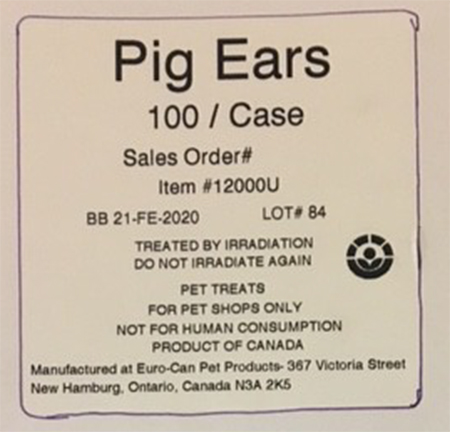
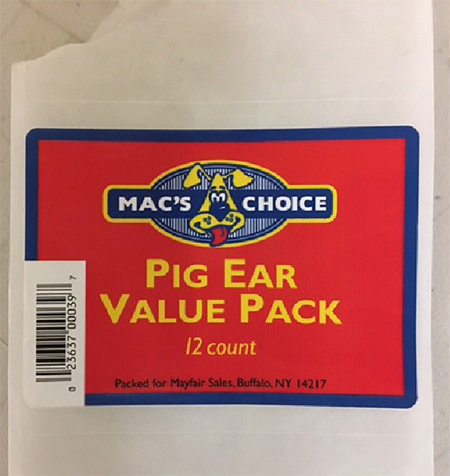
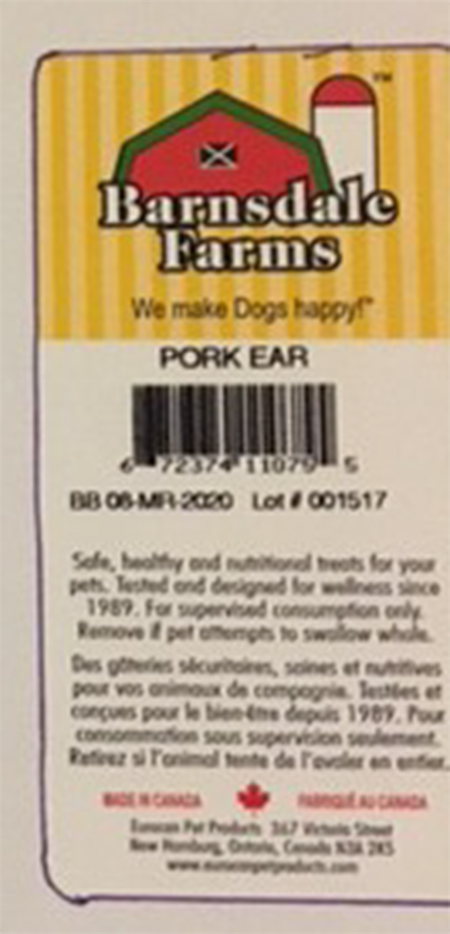
March 20, 2017 — EuroCan Manufacturing is voluntarily recalling one lot of its Barnsdale Farms, HoundsTooth and Mac’s Choice pig ears because they have the potential to be contaminated with Salmonella.
What’s Being Recalled?
The recalled pig ears were distributed throughout the U.S.A. and Canada.
The products were packaged as individually shrink-wrapped, 6-pack, 12-pack and 25-pack bags under the following brands:
Barnsdale Farms
Barnsdale Farms Select
Houndstooth
Mac’s Choice
The recalled products are from Lot 84.
No illnesses of any kind have been reported to date.
About Salmonella
Salmonella can affect animals eating the products and there is a risk to humans from handling contaminated pet products, especially if they have not thoroughly washed their hands after having contact with the products or any surfaces exposed to these products.
Healthy people infected with Salmonella should monitor themselves for some or all of the following symptoms: nausea, vomiting, diarrhea or bloody diarrhea, abdominal cramping and fever.
Rarely, Salmonella can result in more serious ailments, including arterial infections, endocarditis, arthritis, muscle pain, eye irritation, and urinary tract symptoms.
Consumers exhibiting these signs after having contact with this product should contact their healthcare provider.
Pets with Salmonella infections may be lethargic and have diarrhea or bloody diarrhea, fever and vomiting.
Some pets will have only decreased appetite, fever and abdominal pain.
Infected but otherwise healthy pets can be carriers and infect other animals or humans.
If your pet has consumed the recalled product and has these symptoms, be sure to contact your veterinarian.
About the Recall
The potential for contamination was noted after routine testing revealed the presence of Salmonella in the product.
The company has suspended distribution of the product while FDA and the company continue their investigation as to the source of the problem.
What to Do?
Consumers who have purchased any of the affected Barnsdale Farms pig ears should return the product to the place of purchase for a refund.
Those with questions may contact the company Monday to Friday from 9 AM to 5 PM ET Time at 888-290-7606.
U.S. citizens can report complaints about FDA-regulated pet food products by calling the consumer complaint coordinator in your area.
The village of Chalhuani in Peru has a horrific annual tradition where a dog is tied to the back of a bull at a bullfight as punishment for “bad” behavior. Both of the animals are then painfully killed during the fight.
Video posted by the Mirror exposed this cruel Virgen de la Asuncion tradition in action, sparking global outrage. The video shows a dog being forced onto the back of a bull while it yelps and barks in fear. The terrified dog is tied spread-eagle to the bull, with the ropes so tight it cannot move.
The bull then enters the ring, where it is viciously killed. All the while, the dog is trapped on the bull’s back, unable to save itself from an excruciating death.
One villager tried to justify the cruelty in an interview with a local news station:
“We pick a dog that was disobedient over the past 12 months and has caused trouble,” the villager said. “As a community we see this as a fitting punishment for the dog’s bad behavior.”
But “bad” behavior is no excuse for animal cruelty. No dog deserves this horror.
These bullfights are barbaric and must be stopped. Sign this petition to urge the Peruvian ambassador to the United States to end this terrible practice, so no more animals suffer this horrific fate.
This petition will be delivered to: Ambassador Miguel Castilla
ooOOoo
Good people!
This is the letter to be delivered to the Ambassador:
Letter to Ambassador Miguel Castilla
Stop Tying Dogs to Bulls’ Backs in Cruel Bullfighting ‘Punishment’
The village of Chalhuani in Peru has a horrific annual tradition where a dog is tied to the back of a bull at a bullfight as punishment for “bad” behavior. Both of the animals are then painfully killed during the fight.
These bullfights are barbaric and must be stopped. Not only is animal cruelty an unacceptable form of punishment for dogs, but bulls do not deserve to be forced into fights, where they are tortured and killed for entertainment.
I urge the Peruvian government to ban this horrific practice at once, so no more animals must suffer for this cruel “tradition.”
March 18, 2017 — Wellpet of Tewksbury, MA, is voluntarily recalling a limited amount of one canned dog food because it may contain elevated levels of naturally occurring beef thyroid hormone.
What’s Being Recalled?
Recalled product includes:
Wellness 95% Beef Topper for Dogs
Size: 13.2 ounce cans
Best-By Dates: 02 FEB 19, 29 AUG 19 and 30 AUG 19
Best-By dates can be found on the bottom of each can.
No other Wellness products are affected.
About the Recall
Elevated levels of thyroid hormone may affect a dog’s metabolism and can be associated with increased thirst and urinary output, restless behavior and weight loss.
Multiple studies indicate that for the vast majority of pets, symptoms are reversible as soon as the pet stops eating product with elevated thyroid hormone.
Because the recipe is a mixer or topper and intended for intermittent or supplemental feeding only, the likelihood of a dog being affected is remote.
WellPet has received no reports of any health problems as a result of feeding the affected recipe.
However, the company is voluntarily recalling three best-by dates as an extra level of precaution.
What to Do?
If you have any of the 13.2 ounce cans of this specific recipe and marked with one of the three best-by dates, please email the company at wecare@wellpet.com
Or call the company at 877-227-9587.
U.S. citizens can report complaints about FDA-regulated pet food products by calling the consumer complaint coordinator in your area.
Blue Buffalo Dog Food Recall Event Number 2 of March 2017
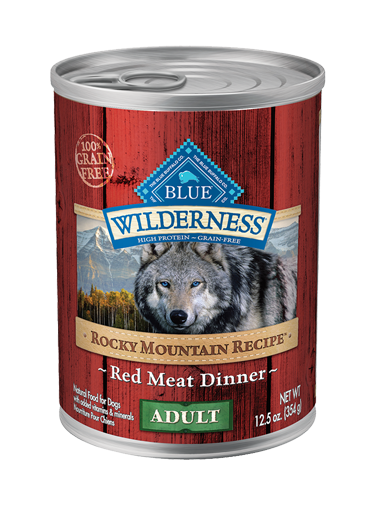
March 17, 2017 — Blue Buffalo Company is voluntarily recalling one production lot of BLUE Wilderness Rocky Mountain Recipe Red Meat Dinner Wet Food for Adult Dogs because the product may contain elevated levels of naturally occurring beef thyroid hormone.
What’s Being Recalled?
The recall is limited to one production lot of the following product:
BLUE Wilderness Rocky Mountain Recipe Red Meat Dinner Wet
Food for Adult Dogs
Size: 12.5 ounce can
UPC Code: 840243101153
Best-By Date: June 7, 2019 (bottom of can)
Affected products were distributed nationally through pet specialty and on-line retailers.
No other Blue Buffalo products are impacted by this issue.
About the Recall
Dogs ingesting high levels of beef thyroid hormones may exhibit symptoms such as increased thirst and urination, weight loss, increased heart rate and restlessness.
These symptoms may resolve when the use of the impacted food is discontinued.
However, with prolonged consumption these symptoms may increase in severity and may include vomiting, diarrhea, and rapid or difficulty breathing.
Should symptoms occur, contact your veterinarian immediately.
Although the Blue Buffalo Customer Care Resource Team has not received any reports of dogs exhibiting these symptoms from consuming this product, the FDA advised Blue Buffalo of a single consumer who reported symptoms in one dog, who has now fully recovered.
Blue Buffalo immediately began an investigation.
However, after working with the FDA, Blue Buffalo decided it would be prudent to recall the one production lot in question.
What to Do?
If your pet has consumed the product listed above and has exhibited any of these symptoms, please discontinue feeding and contact your veterinarian.
Consumers who have purchased the product subject to this recall should dispose of it or return it to the place of purchase for full refund.
Consumers with questions may contact Blue Buffalo at 866-201-9072 from 8 AM to 5 PM Eastern Time Monday through Friday.
Or by email at CustomerCare@bluebuffalo.com.
U.S. citizens can report complaints about FDA-regulated pet food products by calling the consumer complaint coordinator in your area.
Huge pleasure in me introducing Natalie Derham-Weston
Those who take a close interest in this place (you poor, lost souls!) will have noticed from time to time me posting items that have been sent to me by Bob Derham. He and I first met when we were both based in Larnaca, Cyprus in the late 80’s/early 90’s and we have remained good and close friends ever since.
Natalie is Bob’s beautiful daughter and recently contacted me to ask if she might offer a guest post on her traveling experiences. Natalie has ambitions to be a travel writer and, as you are about to see, would make an excellent one.
So, that’s more than enough from me. Over to Natalie.
ooOOoo
Travel Blog: Instalment 1: The Introduction
After having spent much time over the last few years travelling, I have arrived home and really feel at a slight loss. I miss so many aspects of the backpacking lifestyle and writing about it brings it all back so vividly. I have never blogged or publicly documented anything before. However, here goes…
I have always been extremely privileged in the department of exploring, having grown up with a pilot as my father. By 9 months old I was perched on his lap in the flight deck of a BAC 1-11 drinking milk and probably mumbling loudly, on my way to Spain.
Since then, things have only picked up. We have taken family holidays across Europe, America, the UAE and latterly I have completed some independent travel through South East Asia, India, Nepal, South America and Indonesia. I even spent time being schooled in South Africa in my early teens and despite the gruelling slog of their strict education system, we had a blast on a farm at the weekends in the Karoo, racing around on quad bikes and roaming the many acres of raw land they had there.
My mother was an air hostess and my step mum a tours manager on the ocean liners. So I would presume this travelling bug I seem to have caught so ferociously has been somewhat inherited.
As part of my Dads job, he and my Mother used to live in Kenya for some time and I have grown up hearing stories of their escapades and have always been very open to the idea of other cultures and ways of life.
After 17 years of constant education and not confidently knowing which direction to take with my life, I decided backpacking around South East Asia would be a good stop gap. So this plan started to take shape, along with Hannah, my best friend from University. We began as most people do nowadays with some tentative Google searches and tried to create a clearer picture of where we should go and why. This is very difficult to gauge through a screen and since then I have taken this information with a generous pinch of salt. I do peruse the Lonely Planet books and like to have them as reference.
Regardless, we began to tally up costs, buy creams, tablets and lotions to cover every disease known to man and pay through the nose for a concoction of injections promised to keep us safe and which seemed to appease my Mother! I have to say both my parents have been exceedingly supportive every time I spring on them that I am fleeing the country and any responsibilities.
So, struggling under a bag almost as big as me, I met Hannah at Gatwick in March 2015, waved goodbye to Ma and Pa and we pranced off through security, eager to make a start.
We landed in Bangkok and convinced we would be living as cheaply as possible, which included transport, headed for some public transport system. Having vaguely fathomed the measure of the currency, Baht, we found a train to take us further into the depths of the area.
Our destination was Khao San Road, the tourist tapered high street. Our journey was broken into parts and we ended up on a street where we were accosted by a tuk tuk driver. Naively we accepted a lift. I have now learnt to agree on a fee before entering the vehicle!
Anyway, after repeating the address of our hostel more times than I would like to recount, we rocked up outside. Our room was totally terrifying to two novice travellers. Again, another thing I’ve learnt not to be too fussy about. It was a luminescent green, although this was barely visible through the crude graffiti, it was bug ridden and the sheets looked like they had been used to clean the floors. We swiftly requested a change of rooms, which wasn’t much of an improvement and led to Hannah sleeping on her important belongings. In turn, leading to a broken phone. However, this did not dampen our enthusiasm and we immediately immersed ourselves in the heaving road, trying the fresh phad thai, for about 40p made by street vendors and tried our hand at haggling. We finished the day with some local ‘Tiger’ beer.
Over the next few days we ticked off some tourist spots in Bangkok, drinking our weight in water to compensate for the insane temperatures and removing our shoes 80% of the day, an Asian custom.
We had deliberately left our time very free but had one pre planned event in Chang Mai. This was an elephant sanctuary where we would have the chance to feed, wash and ride them. As two animal lovers, we had checked the ethos of the organisation and had found the elephants were ridden bareback to avoid aggravating them with cages and ropes.
However, we had to first make our way there and made our first overnight train journey, a surprisingly comfy affair. We ended up in a cheap hotel in Chang Mai. We checked in and headed upstairs to shower and generally relax. Hannah went in the bathroom first and I was just rifling through some paperwork when I heard a loud crash followed by some mild expletives. Hannah fell out the door looking a little sheepish. I glanced past her and saw the remains of what had been the basin, now strewn all over the floor in bits.
Unluckily, the thing must have been loose before and when Hannah had been brushing her teeth, it had chosen that moment to fall off. We went immediately down to reception to explain the situation and they waved it away as nothing and re-homed us across the corridor. We were very grateful and had a good night’s sleep.
Going downstairs early the next morning ready for the pick-up vehicle to the sanctuary, the reception began laying into us and demanded we pay for the damage. The police were threatened and this was when Hannah became overwhelmed, burst into tears and ran out! I was left to smooth the argument and try to rationally explain there may have been some lapse in due care of their maintenance. We finally escaped unscathed and both look back at this as another of our funny incidences.
The experience of caring for the elephants was extremely special. They had a one year old baby there who was so cheeky and constantly stole bananas. The first day we spent in a group of about 20 but we were the only ones to stay overnight. We both were invited to the nearby camp of the Burmese mahout (elephant guardians) and spent the evening drinking their homemade whisky, playing music with cups and pans and bottles and playing with their children.
The next day the two of us, one mahout and two elephants walked into the jungle. We made a camp fire, and whittled cups and chopsticks from bamboo we cut down and cooked our lunch. It was so raw and adventurous and I loved it.
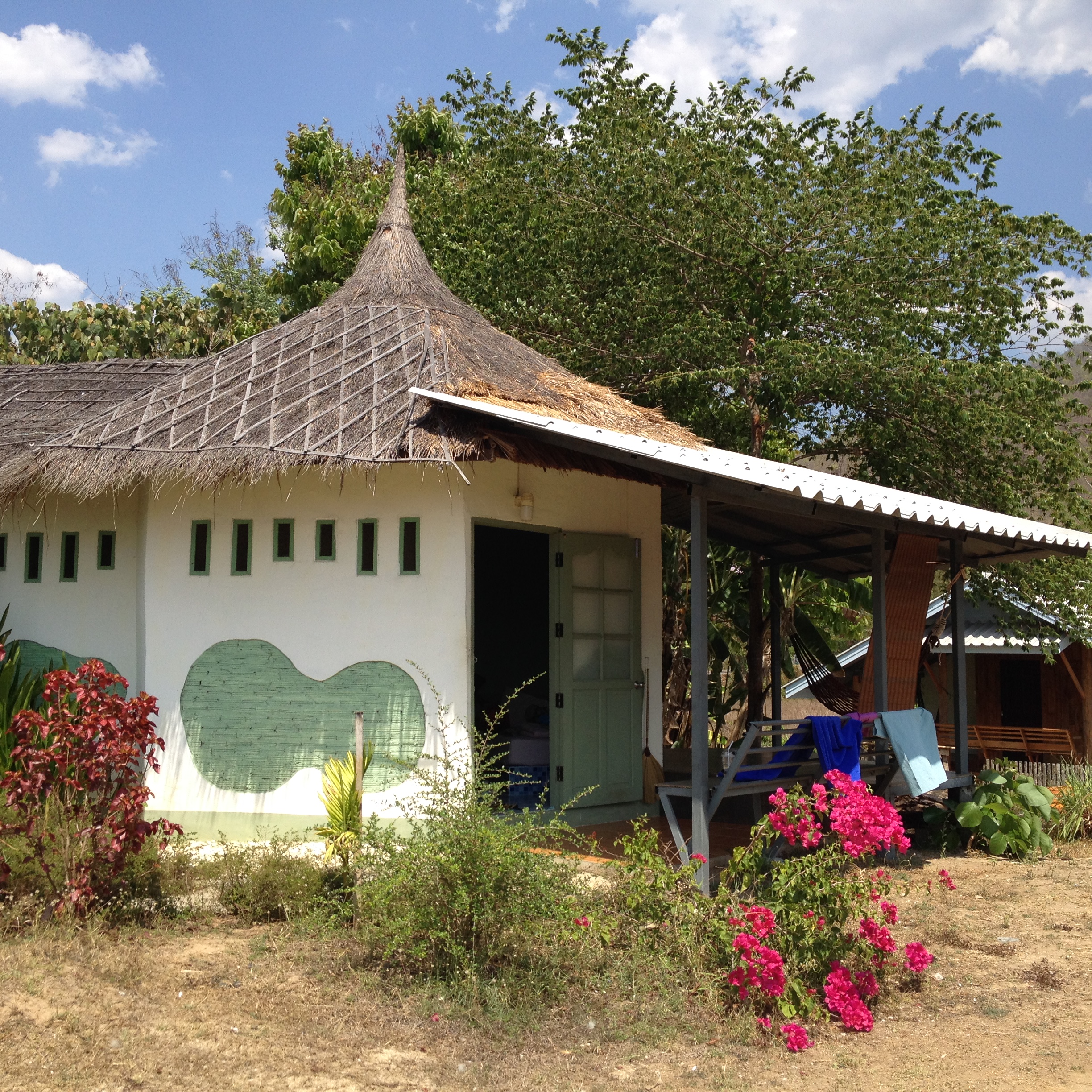
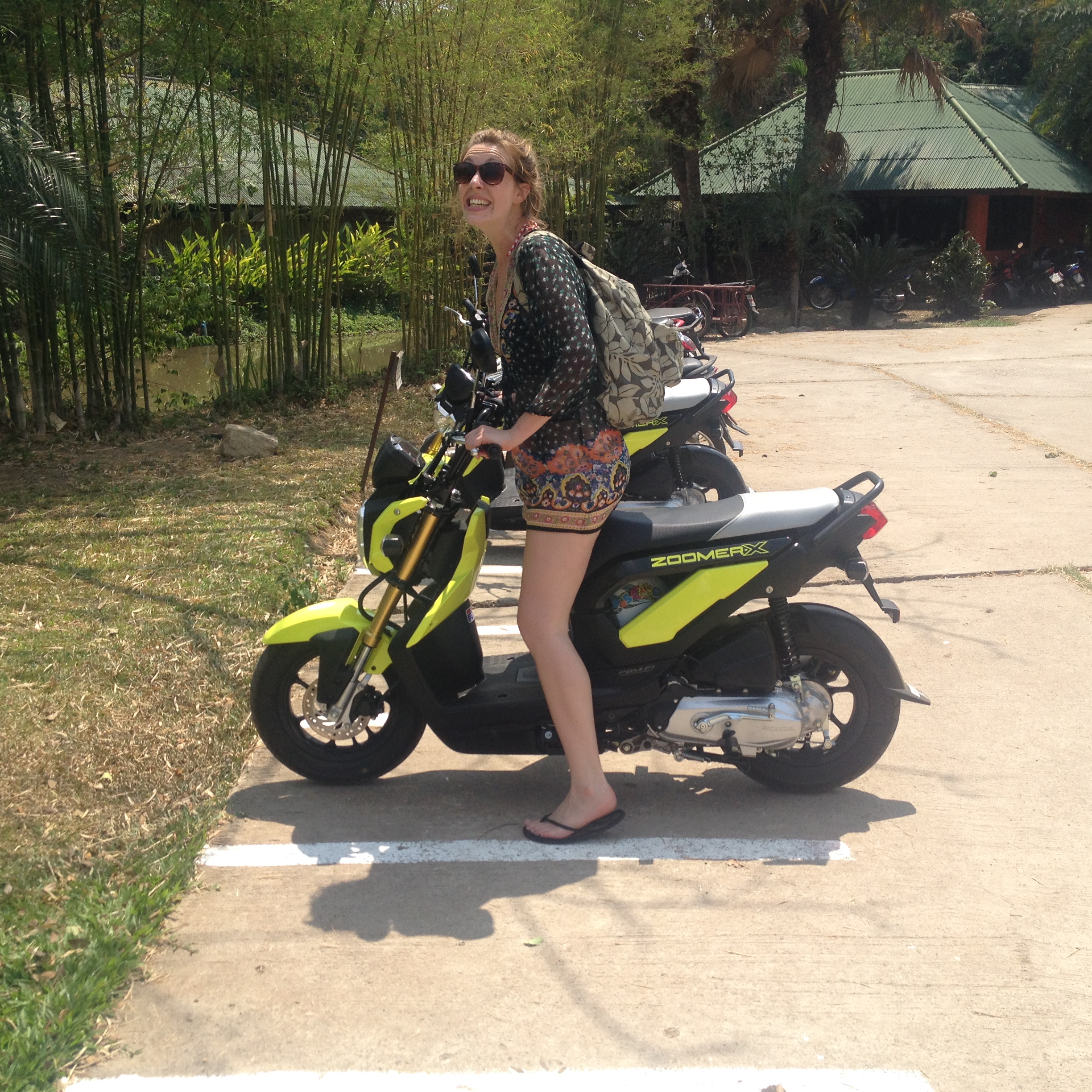
Next, we made our way to Pai, a secluded place tucked away behind some mountains North West of Chang Mai that some fellow travellers had recommended to us. This was one of my favourite stops and life here was spent at a very relaxed pace. We hired mopeds to be independent and discovered natural hot springs, forest parties, waterfalls and otherwise spent time in hammocks on the veranda of our private hut overlooking the incredible landscape.
This really concludes our first couple of weeks and I look back on this with very fond memories. More to follow…
ooOOoo
I know you, as with me, will look forward to Natalie’s second installment.
The love and admiration for this beautiful animal goes on and on!
It seems as though it is almost on a weekly basis that new and incredible facts about our dear, dear dogs come to the surface.
So what prompted this from me today!
Only a wonderful article that was originally published in New Scientist but then was carried by The Smithsonian. I am hoping that by fully linking this post to both the New Scientist article and the essay in The Smithsonian I am at liberty to republish it for all you good people.
ooOOoo
Dogs Use Deception to Get Treats, Study Shows
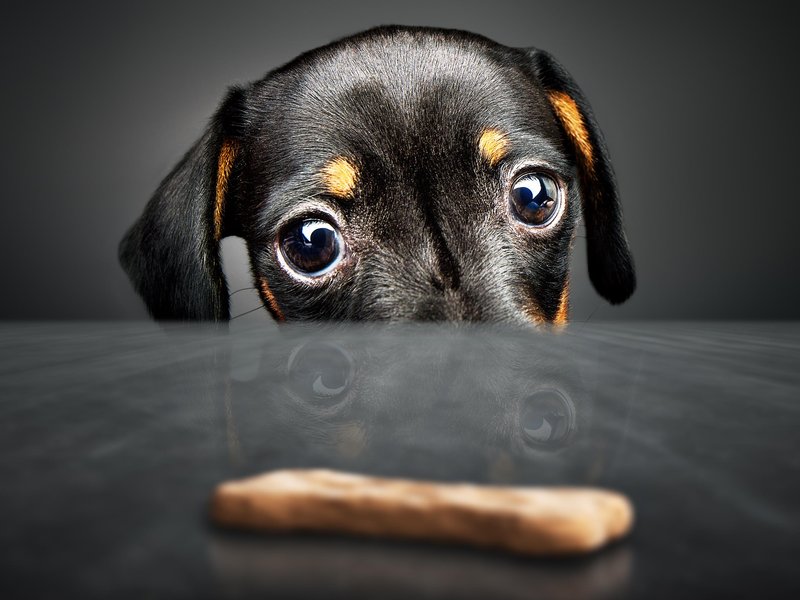
When a human partner withheld tasty snacks, the dogs got sneaky
Would these eyes deceive you? New study says yes. (johan63/iStock)
By Brigit Katz smithsonian.com March 10, 2017
There is plenty of evidence to suggest that dogs, in addition to looking adorable in sweaters, possess fairly sophisticated cognitive abilities. They recognize emotion, for example, and respond negatively to antisocial behavior between humans. Man’s best friend can also get pretty tricksy when it comes to scoring snacks. As Brian Owens reports for New Scientist, a recent study found that dogs are capable of using deceptive tactics to get their favorite treats.
The study, published in the journal Animal Cognition, was led by Marianne Heberlein of the Department of Evolutionary Biology and Experimental Studies at the University of Zürich. Heberlein told Owens that the idea for the study was born when she observed her pet pooches engaging in deceptive behavior; one sometimes pretends to see something interesting outside, prompting the other to give up his sleeping spot.
To find out if dogs engage in similar shenanigans with humans, Heberlein and a team of researchers paired 27 dogs with two different partners, Stanley Coren explains in Psychology Today. One of these partners would repeatedly go to the bowl of a given dog, fish out a treat, and give it to the pup. The other would show the treat to the dog, and then put it in her pocket. Perhaps unsurprisingly, the dogs began to show a preference for the more generous partners, and would approach them spontaneously.
Once one partner had been established as co-operative, the other as competitive, the dogs were taught to lead their partners to one of two boxes, both containing food, with the command “Show me the food.” And the same pattern was repeated: when the dogs led the co-operative partner to a treat, they got to eat it. The competitive partner withheld the treat.
Researchers then showed the dogs three covered boxes. One contained a sausage, the second contained a less-yummy dry biscuit, and the third was empty. Once again, the process of treat giving and withholding was repeated, but this time with a twist: when the dog was reunited with its owner, the owner asked it to choose one of the boxes. If there was a treat inside the box, the dog was allowed to eat it. But “if the dog chose the box which had been opened before,” Coren explains, “the owner just showed the empty box to the dog.”
Over the course of a two-day testing period, the dogs were repeatedly presented with this conundrum. They had been trained to lead both partners to boxes containing food, but they knew that the competitive partner would not let them eat the snacks. They also knew that if any snacks remained inside the boxes once they were reunited with their owners, they would get a chance to eat them. So the dogs got a little devious.
Researchers observed the pooches leading the co-operative partner to the box containing the sausage more often than expected by chance. They led the competitive partner to the sausage less often than expected by chance. And here’s where things get really interesting: the dogs took the competitive partner to the empty box more frequently than the co-operative partner, suggesting that they were working through their options and engaging in deliberate deception to maximize their chances of getting both treats.
“It is as though the dog is thinking, ‘Why should I tell that selfish person where the best treat [is] if it means that I will never get it?’,” writes Coren.
“These results show that dogs distinguished between the co-operative and the competitive partner,” the authors of the study write, “and indicate the flexibility of dogs to adjust their behaviour and that they are able to use tactical deception.”
Rest assured, dog lovers: your pooches may be sneaky, but they still love you more than cats.
Resolving the falsehoods may not be so straightforward as one thinks.
I’m going straight into this last post of my mini-series looking at the state of things. Namely a recent essay published by Professor Ronald Pies:
Professor of Psychiatry, Lecturer on Bioethics & Humanities at SUNY Upstate Medical University; and Clinical Professor of Psychiatry, Tufts University School of Medicine, Tufts University
I am a psychiatrist and ethicist affiliated with SUNY Upstate Medical University, Syracuse, NY; and Tufts University School of Medicine in Boston. I write on a variety of cross-disciplinary topics, ranging from mental health to philosophy of mind to spirituality. Most recently, I have authored the novella, “The Late Life Bloom of Rose Rabinowitz;” and the poetry chapbook, “The Myeloma Year.”
Here is that post, republished within the terms of The Conversation.
ooOOoo
‘Alternative facts’: A psychiatrist’s guide to twisted relationships to truth
March 1, 2017
The phrase “alternative facts” has recently made the news in a political context, but psychiatrists like me are already intimately acquainted with the concept – indeed, we hear various forms of alternate reality expressed almost every day.
All of us need to parse perceived from actual reality every day, in nearly every aspect of our lives. So how can we sort out claims and beliefs that strike most people as odd, unfounded, fantastical or just plain delusional?
Untruths aren’t always lies
First, we need to make a distinction often emphasized by ethicists and philosophers: that between a lie and a falsehood. Thus, someone who deliberately misrepresents what he or she knows to be true is lying – typically, to secure some personal advantage. In contrast, someone who voices a mistaken claim without any intent to deceive is not lying. That person may simply be unaware of the facts, or may refuse to believe the best available evidence. Rather than lying, he’s stating a falsehood.
Some people who voice falsehoods appear incapable of distinguishing real from unreal, or truth from fiction, yet are sincerely convinced their worldview is absolutely correct. And this is our entree into the psychiatric literature.
In clinical psychiatry, we see patients with a broad spectrum of ideas that many people would find eccentric, exaggerated or blatantly at odds with reality. The clinician’s job is, first, to listen empathically and try to understand these beliefs from the patient’s point of view, carefully taking into account the person’s cultural, ethnic and religious background.
Sometimes, clinicians can be wildly mistaken in their first impressions. A colleague of mine once described a severely agitated patient who was hospitalized because he insisted he was being stalked and harassed by the FBI. A few days into his hospitalization, FBI agents showed up on the unit to arrest the patient. As the old joke goes, just because you’re paranoid doesn’t mean they aren’t after you!
We can think of distortions of reality as falling along a continuum, ranging from mild to severe, based on how rigidly the belief is held and how impervious it is to factual information. On the milder end, we have what psychiatrists call over-valued ideas. These are very strongly held convictions that are at odds with what most people in the person’s culture believe, but which are not bizarre, incomprehensible or patently impossible. A passionately held belief that vaccinations cause autism might qualify as an over-valued idea: it’s not scientifically correct, but it’s not utterly beyond the realm of possibility.
On the severe end of the continuum are delusions. These are strongly held, completely inflexible beliefs that are not altered at all by factual information, and which are clearly false or impossible. Importantly, delusions are not explained by the person’s culture, religious beliefs or ethnicity. A patient who inflexibly believes that Vladimir Putin has personally implanted an electrode in his brain in order to control his thoughts would qualify as delusional. When the patient expresses this belief, he or she is not lying or trying to deceive the listener. It is a sincerely held belief, but still a falsehood.
Falsehoods of various kinds can be voiced by people with various neuropsychiatric disorders, but also by those who are perfectly “normal.” Within the range of normal falsehood are so-called false memories, which many of us experience quite often. For example, you are absolutely certain you sent that check to the power company, but in fact, you never did.
As social scientist Julia Shaw observes, false memories “have the same properties as any other memories, and are indistinguishable from memories of events that actually happened.” So when you insist to your spouse, “Of course I paid that electric bill!” you’re not lying – you are merely deceived by your own brain.
A much more serious type of false memory involves a process called confabulation: the spontaneous production of false memories, often of a very detailed nature. Some confabulated memories are mundane; others, quite bizarre. For example, the person may insist – and sincerely believe – that he had eggs Benedict at the Ritz for breakfast, even though this clearly wasn’t the case. Or, the person may insist she was abducted by terrorists and present a fairly elaborate account of the (fictional) ordeal. Confabulation is usually seen in the context of severe brain damage, such as may follow a stroke or the rupture of a blood vessel in the brain.
Lying as a default
Finally, there is falsification that many people would call pathological lying, and which goes by the extravagant scientific name of pseudologia fantastica (PF). Writing in the Psychiatric Annals, Drs. Rama Rao Gogeneni and Thomas Newmark list the following features of PF:
A marked tendency to lie, often as a defensive attempt to avoid consequences. The person may experience a “high” from this imaginative story-telling.
The lies are quite dazzling or fantastical, though they may contain truthful elements. Often, the lies may capture considerable public attention.
The lies tend to present the person in a positive light, and may be an expression of an underlying character trait, such as pathological narcissism. However, the lies in PF usually go beyond the more “believable” stories of persons with narcissistic traits.
Although the precise cause or causes of PF are not known, some data suggest abnormalities in the white matter of the brain – bundles of nerve fibers surrounded by an insulating sheath called myelin. On the other hand, the psychoanalyst Helene Deutsch argued that PF stems from psychological factors, such as the need to enhance one’s self-esteem, secure the admiration of others or to portray oneself as either a hero or a victim.
Who cares about facts anyway?
Of course, all of this presumes something like a consensus on what constitutes “reality” and “facts” and that most people have an interest in establishing the truth. But this presumption is looking increasingly doubtful, in the midst of what has come to be known as the “post-truth era.” Charles Lewis, the founder of the Center for Public Integrity, described ours as a period in which “up is down and down is up and everything is in question and nothing is real.”
Are lies becoming our rose-colored glasses? Christian Bucad, CC BY-NC-ND
Even more worrisome, the general public seems to have an appetite for falsehood. As writer Adam Kirsch recently argued, “more and more, people seem to want to be lied to.” The lie, Kirsch argues, is seductive: “It allows the liar and his audience to cooperate in changing the nature of reality itself, in a way that can appear almost magical.”
Psychiatrists are not in a position to comment on the mental health of public figures they have not personally evaluated or on the nature of falsehoods sometimes voiced by our political leaders. Indeed, the “Goldwater Rule” prohibits us from doing so. Nevertheless, psychiatrists are keenly aware of the all-too-human need to avoid or distort unpleasant truths. Many would likely nod in agreement with an observation often attributed to the psychoanalyst Carl Jung: “People cannot stand too much reality.”
ooOOoo
With Carl Jung’s words echoing in one’s mind the reaction that does come to me and, undoubtedly, to many others, is that the time for limiting what degree of reality we can take on board is rapidly coming to a close.
Or so much more elegantly conveyed by Maya Angelou.
Back to more gentle and soft ideas tomorrow – and that’s the Truth!
This will take us away from the daily beat of life!
On the 18th. February the BBC News website carried an article that I found incredible. It was the story of Naica’s crystal caves in Mexico.
oooo
Naica’s crystal caves hold long-dormant life
By Jonathan Amos, BBC Science Correspondent, Boston, 18 February 2017.
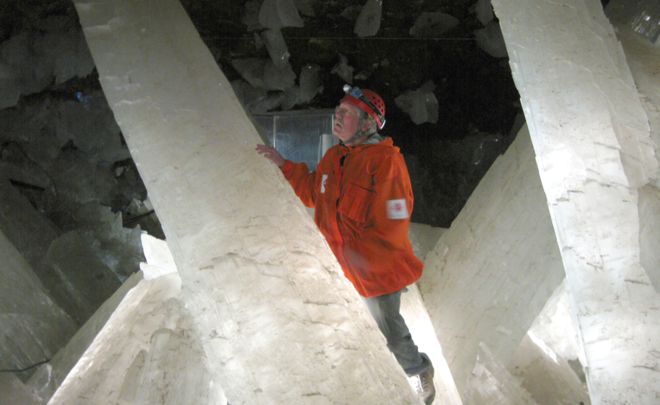
The caves were discovered by miners 100 years ago. Picture credit: Penelope J. Boston
It is a remarkable discovery in an amazing place.
Scientists have extracted long-dormant microbes from inside the famous giant crystals of the Naica mountain caves in Mexico – and revived them. [Ed: my emphasis]
The organisms were likely to have been encased in the striking shafts of gypsum at least 10,000 years ago, and possibly up to 50,000 years ago.
It is another demonstration of the ability of life to adapt and cope in the most hostile of environments.
“Other people have made longer-term claims for the antiquity of organisms that were still alive, but in this case these organisms are all very extraordinary – they are not very closely related to anything in the known genetic databases,” said Dr Penelope Boston.
The new director of Nasa’s Astrobiology Institute in Moffett Field, California, described her findings here at the annual meeting of the American Association for the Advancement of Science (AAAS).
oooo
I was delighted to find more details in many other places on the ‘web’.
Creatures that thrive on iron, sulfur, and other chemicals have been found trapped inside giant crystals deep in a Mexican cave. The microbial life-forms are most likely new to science, and if the researchers who found them are correct, the organisms are still active even though they have been slumbering for tens of thousands of years.
If verified, the discovery adds to evidence that microbial life on Earth can endure harsher conditions in isolated places than scientists previously thought possible. (See “Life Found Deep Under Antarctic Ice for First Time?”)
“These organisms have been dormant but viable for geologically significant periods of time, and they can be released due to other geological processes,” says NASA Astrobiology Institute director Penelope Boston, who announced the find today at a meeting of the American Association for the Advancement of Science. “This has profound effects on how we try to understand the evolutionary history of microbial life on this planet.”
By Neil Shea, National Geographic Staff
In a nearly empty cantina in a dark desert town, the short, drunk man makes his pitch. Beside him on the billiards table sits a chunk of rock the size of home plate. Dozens of purple and white crystals push up from it like shards of glass. “Yours for $300,” he says. “No? One hundred. A steal!” The three or four other patrons glance past their beers, thinking it over: Should they offer their crystals too? Rock dust on the green felt, cowboy ballads on the jukebox. Above the bar, a sign reads, “Happy Hour: 8 a.m. to 9 p.m.”
This remote part of northern Mexico, an hour or so south of Chihuahua, is famous for crystals, and paychecks at the local lead and silver mine, where almost everyone works, are meager enough to inspire a black market. “Thirty dollars.” He leans in. “Ten.” It’s hard to take him seriously. Earlier in the day, in a cave deep below the bar, I crawled among the world’s largest crystals, a forest of them, broad and thick, some more than 30 feet long and half a million years old. So clear, so luminous, they seemed extraterrestrial. They make the chunk on the pool table seem dull as a paperweight.
Nothing compares with the giants found in Cueva de los Cristales, or Cave of Crystals. The limestone cavern and its glittering beams were discovered in 2000 by a pair of brothers drilling nearly a thousand feet below ground in the Naica mine, one of Mexico’s most productive, yielding tons of lead and silver each year. The brothers were astonished by their find, but it was not without precedent. The geologic processes that create lead and silver also provide raw materials for crystals, and at Naica, miners had hammered into chambers of impressive, though much smaller, crystals before. But as news spread of the massive crystals’ discovery, the question confronting scientists became: How did they grow so big?
It takes 20 minutes to get to the cave entrance by van through a winding mine shaft. A screen drops from the van’s ceiling and Michael Jackson videos play, a feature designed to entertain visitors as they descend into darkness and heat. In many caves and mines the temperature remains constant and cool, but the Naica mine gets hotter with depth because it lies above an intrusion of magma about a mile below the surface. Within the cave itself, the temperature leaps to 112 degrees Fahrenheit with 90 to 100 percent humidity—hot enough that each visit carries the risk of heatstroke. By the time we reach the entrance, everyone glistens with sweat.
That article continues here.
Finally, lose yourself in this video. (If the voice doesn’t get to you!)
How to close today’s post?
Both by embracing the power of the natural order of things, life and death, and by reminding us all that there are in the order of over two billion stars in this universe.
That universe must be teeming with life, current and dormant, and the day when we truly confirm that will put everything into perspective!
By Pallab Ghosh Science correspondent, BBC News
Scientists have discovered what they say could be fossils of some of the earliest living organisms on Earth.
They are represented by tiny filaments, knobs and tubes in Canadian rocks dated to be up to 4.28 billion years old.
That is a time not long after the planet’s formation and hundreds of millions of years before what is currently accepted as evidence for the most ancient life yet found on Earth.
The researchers report their investigation in the journal Nature.
As with all such claims about ancient life, the study is contentious. But the team believes it can answer any doubts.
The scientists’ putative microbes from Quebec are one-tenth the width of a human hair and contain significant quantities of haematite – a form of iron oxide or “rust”.
Matthew Dodd, who analysed the structures at University College London, UK, claimed the discovery would shed new light on the origins of life.
This is a very special guest post from a very special person.
My father died on December 20th., 1956. I had turned twelve some six weeks before this day.
My mother, some eighteen years younger than my father, in due course remarried a professional musician, Richard Mills, and in 1959 my mother gave birth to a girl who was named Eleanor. Those who can do the arithmetic will calculate that I was fifteen years the elder brother to Eleanor. Indeed, almost to the day for I was born on November 8th and Eleanor was born on November 16th.
Thus followed a very special relationship as Eleanor grew up regarding me as her big, protective brother. I am so fortunate in having close relationships with both my sisters: Eleanor, who lives in Johannesburg, and Elizabeth, who lives in Tokyo. (Happy Birthday Elizabeth for today, the 21st February.)
Thus it is with very great pleasure indeed that I offer a guest post from Eleanor.
ooOOoo
Zine: The Lover of Many Species
by Eleanor Hamilton, February 21st., 2017
Zina, now well past the puppy days!
We bought Zina as a puppy just over 2 years ago. She was the most adventurous of the litter and a “liver nose” Ridgeback, which is a silky type with no black markings on her face.
We knew from the onset that she was a bright dog, but usually for her own benefit.
She quickly learnt that if she was shut out of the house she should run around the house trying every door in case one was unlocked. She did this by stretching up so her front legs acted like arms on the handle. She also managed to prise open our sliding patio doors to get in on one occasion.
We soon realized and made sure that all doors were locked.
Living in South Africa we have some extra security measures you might not be familiar with. Obviously most people are aware of high walls and electric fences, but some houses have internal security gates (often called slam gates). We use one at the bottom of the stairs just as a precaution as we don’t activate any alarms. Sometimes if we want the dogs downstairs (and off the beds!) we lock this security gate.
We were mystified to find that after a few minutes Zina was jumping up and opening our bedroom door after obviously negotiating the security gate! On one occasion we thought we’d hide and look over the stairs to watch. She had learnt that if she put her paws inside the door frame she could shake the metal and gradually work the lock loose. We hoped the burglars weren’t as clever!
Her intelligence also spreads to her understanding of the other animals in our house and the need to look after them and make sure they are happy. She is quite enthusiastic in licking everything to say hello, which doesn’t always go down too well. Her friend, Dylan the Jack Russell, is well used to her large boisterous nature and puts up with these slobbering kisses!
Our cat usually tolerates the first kiss then decides to gently warn her with a little pat of her paw. After that Zina is a very polite dog.
What is most unusual is her attitude to my bearded dragon. I rescued it from an owner who was mistreating it and although I would never choose one as a pet, I couldn’t bear to see it badly neglected.
Zina always goes over and gives him the usual kiss, which strangely is accepted by Blizzard (the lizard!)
I usually discourage Zina from going on too long with this greeting as although Blizzard is tolerant he can also get fed up.
Since developing her newfound maturity and maternal urges, she has become very loving to all our family of pets. It is lovely to see how caring this dog has become and how she definitely puts herself as alpha female and keeps her pack happy and safe.
[Ed: Those feet bottom right look strangely human!]
oooo
ooOOoo
What a heart-warming account of yet another special, loving dog.
Thank you, Eleanor.
I asked Eleanor if she wanted to offer you dear readers a little of her background. This is what she sent me:
As you may know, I’m Paul’s younger sister. I grew up with cats, as mum never liked dogs. I secretly always wanted a dog and always loved those models of the Labrador which were used to advertise the guide dog association.
After moving to South Africa it was very common to have dogs, frequently 2 or 3, so my first dog was a Labrador, closely followed by a rescue Jack Russell, another rescue Jack Russell then our Ridgeback.
[Ed: I added the following]
Eleanor Hamilton
Studio Music Teacher, Redhill School
Website: http://www.redhill.co.za
The school’s mission is to be a world-class, South African learning community, building leaders for their time.
Redhill School is a Member of the Independent Schools Association of Southern Africa (ISASA).
I’m sure that I voice a hope from me and many others that there will be more animal stories from sister Eleanor.
Or, more specifically, do we believe we have free will?
One of the endless benefits of this wired-up, digital world is how easy it is to have one’s mind opened and stretched a little.
Take this, for instance, as an intriguing start to a new day.
Do we have free will?
This isn’t a question I can answer, but what I am interested in is “what happens if we do (or do not) believe in free will?” In other words, does believing in free will matter in your daily life?
Just let one’s mind float around that idea, not only as it applies to us humans but also to the animals that share our human intuition, such as dogs and horses.
So what’s got me bubbling along today? Nothing less than an article that appeared on The Conversation blog-site back last September.
I found it fascinating and hope you do as well. It is republished within the terms of The Conversation site.
ooOOoo
Believing in free will makes you feel more like your true self
September 1, 2016
By Elizabeth Seto, Ph.D. Candidate in Social and Personality Psychology, Texas A&M University .
Do we have free will? This is a question that scholars have debated for centuries and will probably continue to debate for centuries to come.
This isn’t a question I can answer, but what I am interested in is “what happens if we do (or do not) believe in free will?” In other words, does believing in free will matter in your daily life?
My colleagues and I at the Existential Psychology Lab at Texas A&M University study the psychological outcomes of belief in free will. While contemplating my next research project, I realized at some point in our lives, we all want to understand who we are – it’s human nature. So, we decided to explore how believing in free will influences our sense of self and identity.
Free will is generally understood as the ability to freely choose our own actions and determine our own outcomes. For example, when you wake up in the morning, do you hit snooze? Do you put on your workout gear and go for a run? Do you grab a hot cup of coffee? While those are simple examples, if you believe in free will, you believe there are a limitless number of actions you can engage in when you wake up in the morning, and they are all within your control.
Believing in free will helps people exert control over their actions. This is particularly important in helping people make better decisions and behave more virtuously.
For instance, research has found that promoting the idea that a person doesn’t have free will makes people become more dishonest, behave aggressively and even conform to others’ thoughts and opinions. And how can we hold people morally responsible for their actions if we don’t believe they have the free will to act any differently? Belief in free will allows us to punish people for their immoral behaviors.
So, not only is there a value to believing in free will, but those beliefs have profound effects on our thoughts and behaviors. It stands to reason that believing in free will influences how we perceive ourselves.
You might be thinking, “Of course believing in free will influences how I feel about myself.” Even though this seems obvious, surprisingly little research has examined this question. So, I conducted two studies to suss out more about how believing in free will makes us feel.
What believing in free will makes us feel about ourselves
In the first study, I recruited 304 participants from Amazon Mechanical Turk and randomly assigned them to write about either personal experiences reflecting a high belief in free will, like changing career paths or resisting drugs or alcohol, or experiences reflecting a low belief in free will, such as growing up in poverty or working under an authoritative boss. Then, they were all asked to evaluate their sense of self.
Participants who wrote about experiences reflecting low belief in free will reported feeling less “in touch” with their true selves. In other words, they felt like they did not know themselves as well as the participants who wrote about experiences reflecting high belief in free will.
Then, I conducted a follow-up study testing one’s sense of authenticity, the feeling that one is behaving according to their own beliefs, desires and values.
I recruited another group of participants from Amazon Mechnical Turk, and like the first experiment, randomly assigned them to write about personal experiences demonstrating high belief in free will or low belief in free will. Then, they all completed a decision-making task where they had to make a series of choices about whether to donate money to charity or to keep the money for themselves.
Afterwards, participants were asked how authentic they felt while making their decisions. Participants in the low free will group reported feeling less authentic than participants in the high free will group.
Ultimately, when people feel they have little control over their actions and outcomes in life, they feel more distant from their true, authentic selves. They are less in touch with who they are and do not believe their actions reflect their core beliefs and values.
We believe this is because belief in free will is linked to feelings of agency, the sense that we are the authors of our actions and are actively engaged with the world. As you can imagine, this sense of agency is an important part of a person’s identity.
The importance of feeling like you are in charge of your life applies to significant actions like moving or getting a new job or pondering the big questions in life. But it also applies to the minor decisions we make throughout the day.
Here’s one simple, though relatable, decision I am faced with every morning. When I wake up in the morning and decide to put on my workout gear and go for a run instead of hitting snooze, I might feel like I am the primary decision-maker for this morning routine. Additionally, I am most likely acting on the part of me that values physical health.
But what if I wake up, and I feel like I can’t exercise because I have to go to work or some other external factor is making it difficult to go? I might feel as if someone or something else is controlling my behavior, and perhaps, less like my true self.
So, do you have free will? Do any of us? Remember, the question isn’t whether it exists or not, but whether you believe it does.
ooOOoo
Now thinking of dogs having their own free will might seem a little bizarre, but I do not intend it to be seen as such. Many of you will have dogs (and horses) that have ‘minds of their own’.
For our family here at home, if there’s one of our dogs that exhibits free will it is our Brandy.
Our Brandy is a Pyrenean Mastiff!
Without warning or any other indication, he will suddenly decide it is time to go ‘walk-about’. Mainly during the day but sometimes at night, whatever the weather, he will disappear. He will always return but can be wandering around our thirteen acres for up to an hour.
Against the Grain Pulled Beef with Gravy Dinner for Dogs
12 ounce can
Lot Number: 2415E01ATB12
UPC Code (second half): 80001
Expiration Date: December 2019
About Pentobarbital
Oral exposure to pentobarbital can cause side effects such as drowsiness, dizziness, excitement, loss of balance, nausea nystagmus (eyes moving back and forth in a jerky manner), inability to stand and coma.
To date, no complaints have been reported to Against the Grain for this single lot number nor any of Against the Grain’s pet foods.
Where Was It Distributed?
The recalled product was distributed (in 2015) to independent pet retail stores in the following states:
Maryland
Washington
The company has verified that the affected lot is no longer on any store shelves.
What to Do?
Consumers may return any can with the relevant lot number to their place of purchase and receive a full case of Against the Grain food for the inconvenience.
Customers with questions may contact the company at 800-288-6796 between 11 AM and 4 PM Central Time, Monday through Friday.
U.S. citizens can report complaints about FDA-regulated pet food products by calling the consumer complaint coordinator in your area.










![[Ed: Those feet bottom right look strangely human!]](https://learningfromdogs.com/wp-content/uploads/2017/02/21b5953a-1a83-47f4-9ea8-24e594d5accf2.jpg)






 Learning from Dogs