Category: Education

It stretches the mind beyond imagination!

The most incredible story of all!

I first read the story early yesterday morning in The Guardian Newspaper.

But then I saw another version of the same story on the BBC News site, from which I republish it in its entirety.

ooOOoo

First ever black hole image released

By Pallab Ghosh
Science correspondent, BBC News

The first ever picture of a black hole: It’s surrounded by a halo of bright gas.

Astronomers have taken the first ever image of a black hole, which is located in a distant galaxy.

It measures 40 billion km across – three million times the size of the Earth – and has been described by scientists as “a monster”.

The black hole is 500 million trillion km away and was photographed by a network of eight telescopes across the world.

Details have been published today in Astrophysical Journal Letters.

Prof Heino Falcke, of Radboud University in the Netherlands, who proposed the experiment, told BBC News that the black hole was found in a galaxy called M87.

“What we see is larger than the size of our entire Solar System,” he said.

“It has a mass 6.5 billion times that of the Sun. And it is one of the heaviest black holes that we think exists. It is an absolute monster, the heavyweight champion of black holes in the Universe.”

The image shows an intensely bright “ring of fire”, as Prof Falcke describes it, surrounding a perfectly circular dark hole. The bright halo is caused by superheated gas falling into the hole. The light is brighter than all the billions of other stars in the galaxy combined – which is why it can be seen at such distance from Earth.

The edge of the dark circle at the centre is the point at which the gas enters the black hole, which is an object that has such a large gravitational pull, not even light can escape.

Taking the temperature of black holes

Hawking: Black holes store information

Dozen black holes at galactic centre

DR JEAN LORRE/SCIENCE PHOTO LIBRARY I have suspected that the M87 galaxy has a supermassive black hole at its heart from false colour images such as this one. The dark centre is not a black hole but indicates that stars are densely packed and fast moving.

The image matches what theoretical physicists and indeed, Hollywood directors, imagined black holes would look like, according to Dr Ziri Younsi, of University College London – who is part of the collaboration.

“Although they are relatively simple objects, black holes raise some of the most complex questions about the nature of space and time, and ultimately of our existence,” he said.

“It is remarkable that the image we observe is so similar to that which we obtain from our theoretical calculations. So far, it looks like Einstein is correct once again.”

But having the first image will enable researchers to learn more about these mysterious objects. They will be keen to look out for ways in which the black hole departs from what’s expected in physics. No-one really knows how the bright ring around the hole is created. Even more intriguing is the question of what happens when an object falls into a black hole.

What is a black hole?

  • A black hole is a region of space from which nothing, not even light, can escape
  • Despite the name, they are not empty but instead consist of a huge amount of matter packed densely into a small area, giving it an immense gravitational pull
  • There is a region of space beyond the black hole called the event horizon. This is a “point of no return”, beyond which it is impossible to escape the gravitational effects of the black hole

Presentational white space

Prof Falcke had the idea for the project when he was a PhD student in 1993. At the time, no-one thought it was possible. But he was the first to realise that a certain type of radio emission would be generated close to and all around the black hole, which would be powerful enough to be detected by telescopes on Earth.

He also recalled reading a scientific paper from 1973 that suggested that because of their enormous gravity, black holes appear 2.5 times larger than they actually are.

These two previously unknown factors suddenly made the seemingly impossible, possible. After arguing his case for 20 years, Prof Falcke persuaded the European Research Council to fund the project. The National Science Foundation and agencies in East Asia then joined in to bankroll the project to the tune of more than £40m.

The eventual EHT array will have 12 widely spaced participating radio facilities

It is an investment that has been vindicated with the publication of the image. Prof Falcke told me that he felt that “it’s mission accomplished”.

He said: “It has been a long journey, but this is what I wanted to see with my own eyes. I wanted to know is this real?”

No single telescope is powerful enough to image the black hole. So, in the biggest experiment of its kind, Prof Sheperd Doeleman of the Harvard-Smithsonian Centre for Astrophysics, led a project to set up a network of eight linked telescopes. Together, they form the Event Horizon Telescope and can be thought of as a planet-sized array of dishes.

KATIE BOUMAN Information gathered is too much to be sent across the internet. Instead the data was stored on hundreds of hard drives which were flown to a central processing centre.
JASON GALLICCHIO

Each is located high up at a variety of exotic sites, including on volcanoes in Hawaii and Mexico, mountains in Arizona and the Spanish Sierra Nevada, in the Atacama Desert of Chile, and in Antarctica.

A team of 200 scientists pointed the networked telescopes towards M87 and scanned its heart over a period of 10 days.

The information they gathered was too much to be sent across the internet. Instead, the data was stored on hundreds of hard drives that were flown to a central processing centres in Boston, US, and Bonn, Germany, to assemble the information. Prof Doeleman described the achievement as “an extraordinary scientific feat”.

“We have achieved something presumed to be impossible just a generation ago,” he said.

“Breakthroughs in technology, connections between the world’s best radio observatories, and innovative algorithms all came together to open an entirely new window on black holes.”

The team is also imaging the supermassive black hole at the centre of our own galaxy, the Milky Way.

Odd though it may sound, that is harder than getting an image from a distant galaxy 55 million light-years away. This is because, for some unknown reason, the “ring of fire” around the black hole at the heart of the Milky Way is smaller and dimmer.

Follow Pallab on Twitter

ooOOoo

One of the most remarkable things about this story is that it continues to validate the theories of Albert Einstein (1879-1955). That is doubly impressive.

The film, How to see a Black Hole: The Universe’s Greatest Mystery,    is a most interesting account of the skills that were utilised by the team, and the luck of that same group in pulling it all together.

This is clearly the start of a new journey in astronomy.

I will leave you by repeating the image of the black hole.

The first ever picture of a black hole: It’s surrounded by a halo of bright gas.

The dog’s nose!

Yet another amazing story about the dog’s nose.

There is so much about dogs in general to be amazed at.

But the nose is something to really marvel at.

There are many sources of information about how incredible is the dog’s nose. For example, I am looking at the page on The Dogington Post that speaks of the dog’s nose.

Nature has provided dogs with a nearly perfect sense of smell. If you have a dog, you probably already know that your dog will smell something long before you can. In fact, the average dog has over 300 million olfactory receptors in their noses (compared to a relatively tiny six million for humans). That means, your dog’s sense of smell is over fifty times greater than your own!

It’s a great article, by the way, and one you should read.

But for now read this:

ooOOoo

Very Good Dogs Can Detect the Scent of Seizures, Study Finds

But can they predict seizures before they occur?

(David Osberg / iStock)
smithsonian.com
April 1, 2019
Service dogs can offer vital assistance to those who suffer from epilepsy, helping to prevent injury and signal for help when a seizure episode occurs. Whether dogs can detect seizures before they happen is another, more complicated question; anecdotal reports suggests that they can, but the evidence is inconclusive, and it hasn’t been clear what signals might trigger dogs to anticipate an oncoming seziure. But as Megan Schmidt reports for Discover, a small and intriguing new study suggests that people with epilepsy emit a specific odor when they are having seizures—and dogs can be trained to detect it.
The study’s very good subjects were five service dogs from Medical Mutts in Indianapolis, trained to respond to the bodily odors of people with diabetes, anxiety and epilepsy. To test the dogs’ seizure-detecting abilities, researchers recruited five patients with different types of epilepsy to collect sweat samples at various intervals: either during or right after a seizure, after moderate exercise and at random points in the day during calm activity. Seven samples from each patient were then placed in opaque cans, which the dogs were given a chance to sniff. Each dog underwent nine trials in total: five of those trials were repeat tests with the odor of one patient, and the rest were conducted with samples from the four remaining patients. The dogs had not been exposed to the patients’ scents prior to the experiment.

The results, the study authors write in Scientific Reports “were very clear: all dogs discriminated the seizure odor.” Some of the pooches had a better track record than others—the dogs correctly identified the seizure samples between 67 and 100 percent of the time—but all of their performances were “well above” the margins of chance, according to the researchers.

It’s not entirely surprising that dogs have super-powered noses when it comes to detecting human ailments. Our best animal buddies have been used to sniff out diseases like cancer and diabetes “with some success,” the researchers note. The new study, however, not only shows that dogs can smell seizures, but also offers the first known proof that different types of seizures are associated with common scents; the patients, after all, did not all have the same kind of epilepsy.

Granted, the study was small and limited in scope. It suggests that dogs can smell seizures as they happen, but the verdict is still out on whether the animals can detect seizures that are about to happen. Further research is also needed to determine precisely what bodily chemicals the dogs are smelling in the sweat of epileptic patients. But “[a]s far as implications go, the results are very exciting,” Tim Edwards, a behavioral analyst and senior lecturer at New Zealand’s University of Waikato, who was not involved in the study, tells Scientific American’s Emily Willingham. Perhaps understanding how dogs detect seizures can help pave the way for artificial intelligence technology that is able to do the same.

Additionally, the study authors maintain that their findings dispel the “belief that epilepsy and seizure types were too individual-specific for a general cue to be found.” And this, the researchers say, offers “hope” that people with epilepsy can be warned of oncoming seizures by their furry, faithful friends.

ooOOoo

Wouldn’t that be fabulous! That people with epilepsy could be warned of oncoming seizures. All as a result of a dog’s keen, very keen, sense of smell.

Territtorio de Zaguates

A compelling Netflix documentary.

There is a series on Netflix called Dogs. It consists of a series of 1-hour films showing many different qualities of our special dogs.

Last Monday evening we watched the episode that took the viewer to Costa Rica.

Territorio de Zaguates – Land of the Strays

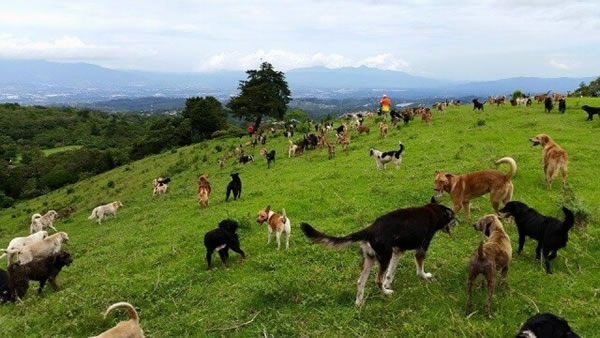
Territorio de Zaguates is an extraordinary dog shelter located in the mountains above Heredia Costa Rica an hour from downtown San José.

Dog Walk at Territorio Zaguates

It was incredible. Almost too much to put into words.

Firstly, there were the huge number of homeless dogs, in all states of health, that roamed Costa Rica.

Secondly, the dog sanctuary was founded by Lya Battle and Alvaro Saumet who are still hard at it.

Thirdly, they have somewhere between 700 and 1,100 dogs in the sanctuary.

Finally, let me let them say it in their own words.

WE ARE…

A non profit organization, founded by Lya Battle and Alvaro Saumet. During the last eight years we’ve been promoting well-being and respect for animals.
HOW WE DO IT?
Veterinarian: We take care of our mutts with deworming, sterilization and any other care they need. The cost of maintaining a dog healthy is $5 per month.

Shelter: Territorio is home for hundreds of doggies. We give them here a safe place to live, free of maltreatment, and full of love. The cost of providing a home is $11 per month for each of our unique specimens.

Food: Each mont we consume thousands of kilos of dog food, to keep our pack healthy. Giving a full small plate to each mutt cost us $20 per month.

There is much, much more on their website that I encourage you to go to. Here are some photographs of the dogs that they rescue.

oooo

oooo

oooo

oooo

oooo

oooo

There are a number of videos on YouTube to watch.

Here’s a short one.

And here’s a slightly longer one by National Geographic.

Finally, if you feel so minded here is the donate page. It’s a good cause and, for example, for just $36 you can sponsor one dog. That’s what Jeannie and I did.

Anyway, we hope you can spare something.


A dog food advisory.

This came in late yesterday.

ooOOoo

Dear Fellow Dog Lover,

Because you signed up on our website and asked to be notified, I’m sending you this special recall alert. If you no longer wish to receive these emails, please click the “unsubscribe” link at the bottom of this message.

Hill’s Pet Nutrition is expanding its recall of specific lots of its Prescription Diet and Science Diet dog foods due to elevated levels of vitamin D.

Very high levels of vitamin D can lead to serious health issues in dogs, including kidney dysfunction.

To learn which products are affected, please visit the following link:

Hill’s Prescription Diet and Science Diet Dog Food Recall Expands

Please share the news of this alert with other pet owners.

Mike Sagman, Editor
The Dog Food Advisor

If one then follows up that link then you will see this:

Hill’s Prescription Diet and Science Diet Dog Food Recall Expands

March 20, 2019 — Hill’s Pet Nutrition is expanding its voluntary recall of canned dog food products due to elevated levels of vitamin D.

This recall expansion relates to the same vitamin premix that led to the January 31 voluntary recall previously announced on The Dog Food Advisor website.

Vitamin D, when consumed at very high levels, can lead to serious health issues in dogs including kidney dysfunction.

What’s Recalled?

The following products and lot numbers are affected by the recall.

Items marked in blue are new SKUs that were added to the list on March 20, 2019.

About Excessive Levels of Vitamin D

While vitamin D is an essential nutrient for dogs, ingestion of elevated levels can lead to potential health issues depending on the level of vitamin D and the length of exposure.

Dogs may exhibit symptoms such as vomiting, loss of appetite, increased thirst, increased urination, excessive drooling, and weight loss.

Pet parents with dogs who have consumed any of the products listed and are exhibiting any of these signs should contact their veterinarian.

In most cases, complete recovery is expected after discontinuation of feeding.

What to Do?

If your SKU, Date and Lot codes are found in the list above, you have an affected product.

You should stop feeding it and should return to the place of purchase for a full refund.

If you have questions, you may contact Hill’s Consumer Affairs at 800-445-5777.

U.S. citizens can report complaints about FDA-regulated pet food products by calling the consumer complaint coordinator in your area.

Or go to https://www.fda.gov/petfoodcomplaints.

Canadians can report any health or safety incidents related to the use of this product by filling out the Consumer Product Incident Report Form.

Get Dog Food Recall Alerts by Email

Get free dog food recall alerts sent to you by email. Subscribe to The Dog Food Advisor’s emergency recall notification system.

ooOOoo

Hopefully, there are not people that are affected by this alert. But, nonetheless, it needs promulgating.

Living harmoniously together!

Another guest post from Emily Parker.

I can’t believe that the last time we had a post from Emily was back in July, 2016.

You may not recall but Emily’s background is a cat parent to 2 lovely cats, Gus and Louis “Gus only has one eye, but we love him all the same!”. She has lived with dogs in the past and can’t wait to add a dog to the family again. She writes about all things cats at her blog, Catological.com.

OK, that’s enough from me.

Here is Emily’s guest post.

ooOOoo

Adapting and Overcoming Stereotypes: How Dogs and Cats Can Live Harmoniously Together

By Emily Parker, Catological.com

For a dog and a cat to live harmoniously in one home is a goal that many pet owners want to achieve. Before this happens, some variables need to be considered to make a good relationship between pets work.

As the pet parent, it’s important to be in tune with the tendencies and personalities of your pre-existing pet, be it a dog or a cat, and the inclinations of your new pet if you want them to live harmoniously together.

Personality is More Important than Breed

While most people pay attention to the breeds of dogs and cats when it comes to the aspect of getting along, experts argue that taking their energy and personalities into account is more important. For example, if you already have a dog that’s known for its aggressive ways don’t adopt a skittish cat. In a similar manner, an aging dog may not enjoy living in one household with a lively and playful kitten who is always interrupting the peace.

If you already have pets whose personalities don’t match, this is where your backup plan should be used. You should set up a living arrangement wherein they are separated as much as possible, while providing them each with as much loving attention as possible.

If you’re adopting a new pet, do your research and ask the caretakers if it has lived with other pets before or if the pet has a hard time getting along with others.

Give a Cat its Own Space Before Introducing it to the Dog

While most dogs are quite extroverted animals, cats need space – something that they can call their own. It’s just their nature, and you should respect that. Make sure that you provide a space that your dog won’t be allowed to navigate, so your cat can confidently mind her own business without triggering a fight with her canine brother.

Cats are natural climbers, so it should be easy to take advantage of your home’s vertical space. Prepare a cat bed atop a shelf or a bookcase, or install a cat tree that your dog can’t reach. This will allow your cat to observe your dog from across a room or from a distance.

Make sure the cat’s litter box is away from the dog, too. Cats have long been observed to hide while doing their business, and there’s also the tendency of dogs to chew on cat poo that you should be concerned about.

You can install baby gates if you must – just make sure to do everything in your power to keep a dog away from a pooping cat!

Make Sure Your Dog Has Plenty of Physical and Mental Exercise

It’s important for dogs to have their energy released someplace else other than your home so they can slow their brains down and practice restraint whenever they’re around your cat.

These are creatures that require a lot of stimulation; otherwise, they might end up chasing the cat. To prevent this from happening, practice high-intensity trick training, lure coursing, or herding-type activities with your dog.

Don’t settle for just walking, if you can help it. You can do a sit several times on each block and do direction changes now and then. You can also practice speed changes.

Dogs should be able to let go of their herding instincts around cats, and you can help them achieve this by ensuring that your pet is always active, both in mind and in body.

Should you lack time for these activities, you can always enroll your dog in daycare or hire a dog walker instead.

Allow Your Pets to Follow Their Noses

Before introducing the dog and the cat to each other, allow them to sniff each other’s toys or beddings first.

This will satisfy their curiosity as to who the other pet is in the house, and serve as an introduction. It can also prevent turf wars in the future.

While your new pet is safely tucked away in a spare room, rub him down with a clean towel, and then present it to your existing pet to sniff, and vice versa.

Plan the First Meeting Properly

As with most humans, first impressions count, so make sure it all turns out well for the dog and the cat.

After you’ve introduced scents, you can have a visual meeting, preferably behind the safety of a baby gate or most-closed door.

After they’ve been able to smell and see each other a few times, it’s time for the main event.

Your cat should always have a clear escape route during this meeting, and you should not force the issue. If possible, take control of your dog without being aggressive about it, to ensure that he doesn’t chase the cat.

You may have to do this multiple times before everyone is comfortable with each other, always making sure you praise your dog for calm behavior, while ensuring the cat isn’t forced into a meeting from which she has no escape.

When it comes to food, the choice you make may depend on how well the two pets get along together, though I’d recommend having meal time in separate places or times if possible.

Separate Each Other’s Toys and Food

Always keep your pets’ separate. Some cats are known to be nonchalant with the company of an eating dog, even walking around the dog while he’s eating to try to eat from the bowl. Many dogs will allow this, but don’t be so sure on your pet. Don’t assume that your dog won’t get overprotective with his food bowl. (Not to mention dog food is not appropriate for cats to eat.) You can prevent mealtime wars by scheduling regular mealtimes and place the bowls in separate parts of the house.
While some pets won’t make an issue of this, you can give yourself the best chance of a peaceful home by making sure their toys don’t get mixed up. Competition over toys can start a fight. Some dogs have taken into catnip as well. So always segregate.

Consider Raising a Cat and Dog Together

Compared to introducing them to each other as adults, it’s easier if each pet meets each other at a young age

Puppies are typically easier to train than adult dogs who have become set in their ways, and they can be taught to not harm a kitten or just to leave it to its own devices. Kittens are incredibly curious and playful, and will associate the dog as a friend and will get used to its company as she grows into a mature cat.

But then again, it never hurts to be cautious!

At the end of the day, your duty as a pet parent is to keep watch over your pets and make sure they’re well fed and safe within your home. With proper guidance, training, and a whole lot of patience, it’s not impossible for a dog and cat to live together peacefully.

ooOOoo

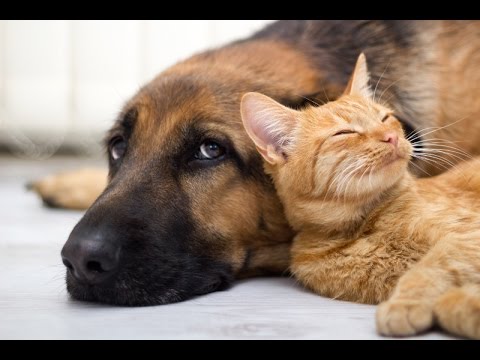
Now I took the following picture from another blog and when you visit that page you can read another account of cats and dogs living together.

But I will close with that image because it is so perfect!

This is just so beautiful!

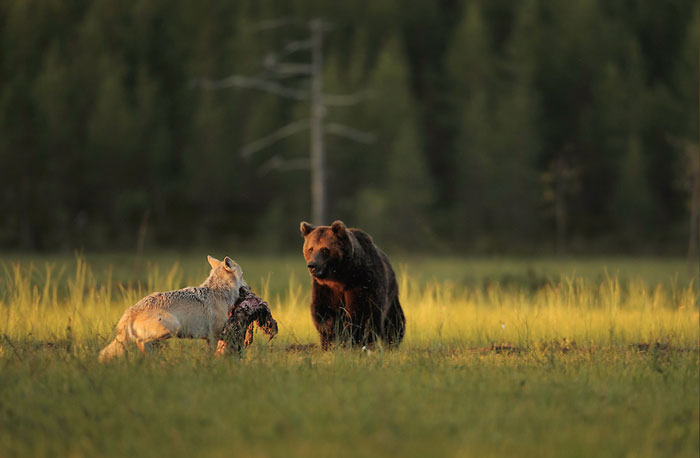
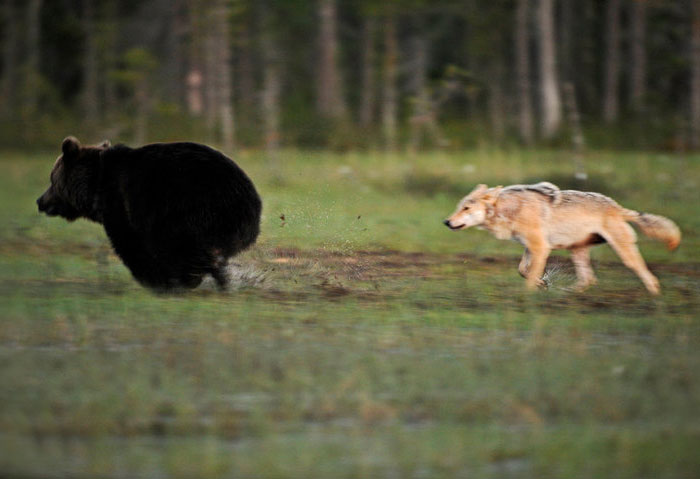
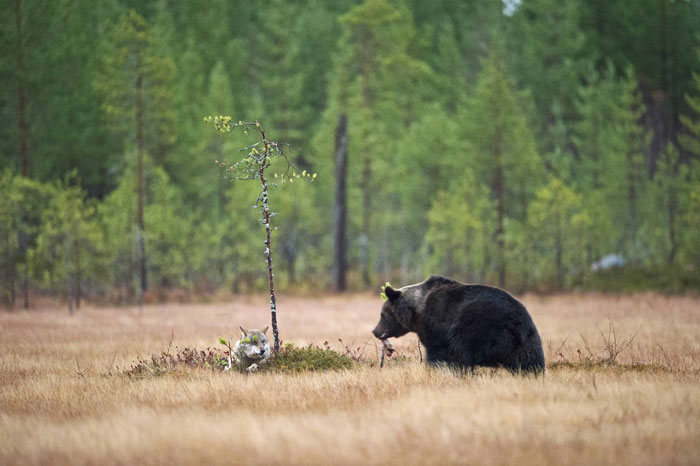
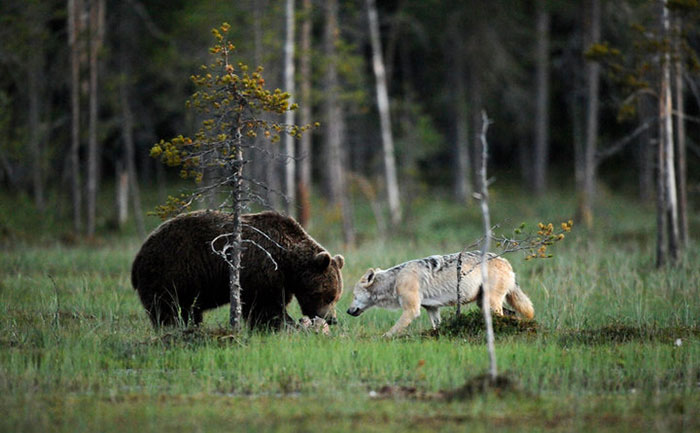
A wolf and a bear!

It’s fair to say that whilst people send me a whole range of items, as yesterday’s post demonstrated, what I am about to republish is the high-water mark for everything! Well it is for me!

But you be the judge!

ooOOoo

Unusual Friendship Between Wolf And Bear Documented By Finnish Photographer

By ​Dainius

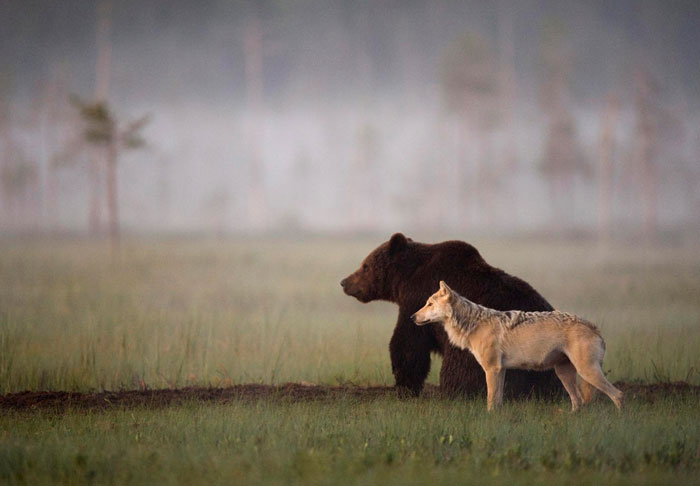
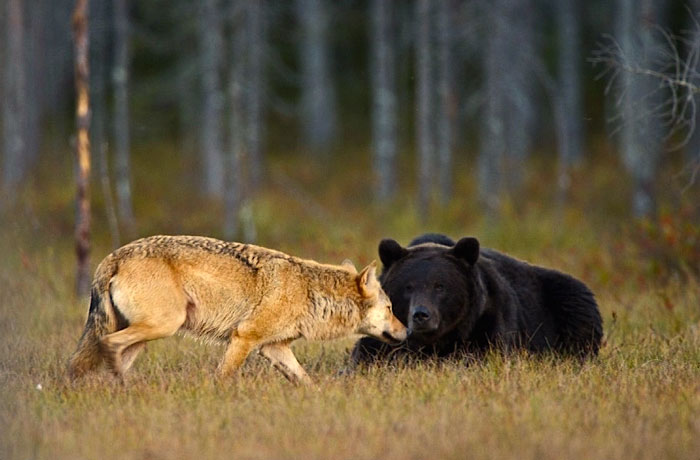
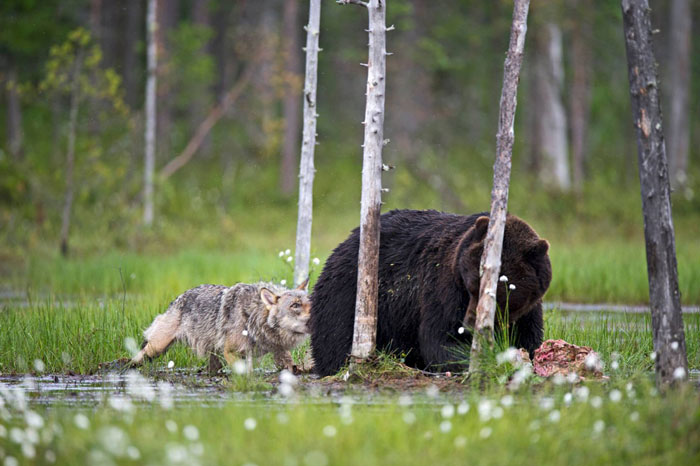
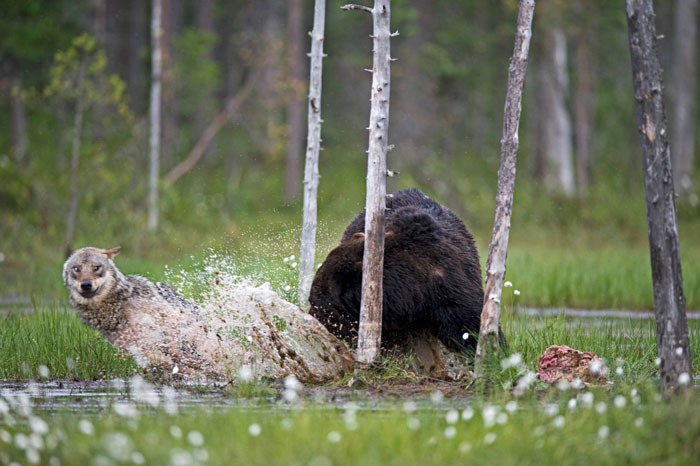
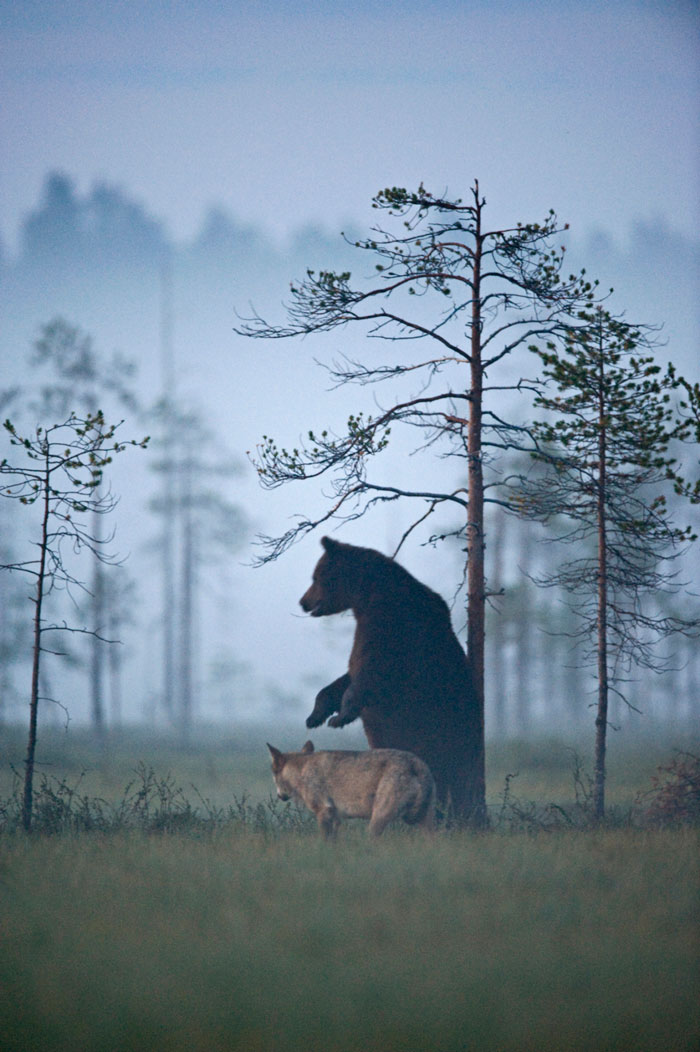
“It’s very unusual to see a bear and a wolf getting on like this” says Finnish photographer Lassi Rautiainen, 56, who took these surprising photos. The female grey wolf and male brown were spotted every night for ten days straight, spending several hours together between 8pm and 4am. They would even share food with each other.

“No-one can know exactly why or how the young wolf and bear became friends,” Lassi told the Daily Mail. “I think that perhaps they were both alone and they were young and a bit unsure of how to survive alone…It is nice to share rare events in the wild that you would never expect to see.”

“It’s very unusual to see a bear and a wolf getting on like this”

This unlikely pair was spotted by Finnish photographer Lassi Rautiainen

He photographed the female grey wolf and male brown bear every night for ten days straight

“No one had observed bears and wolves living near each other and becoming friends in Europe”

The two “friends” were even seen sharing food

“No one can know exactly why or how the young wolf and bear became friends”

“I think that perhaps they were both alone when they were young and a bit unsure of how to survive alone”

“I came across these two and knew that it made the perfect story”

oooo

“It seems to me that they feel safe being together”

ooOOoo

Taken from here but I wouldn’t have known about this beautiful story if Margaret K. hadn’t sent me the link. Thank you, Margaret!

A dog licking you?

A guest post from David Huner.

Here is a guest post. It’s about the reasons that dogs lick us.

Enjoy!

ooOOoo

What Does It Mean When Dog Licks You?

Eight Possible Answers to This Question

By David Huner

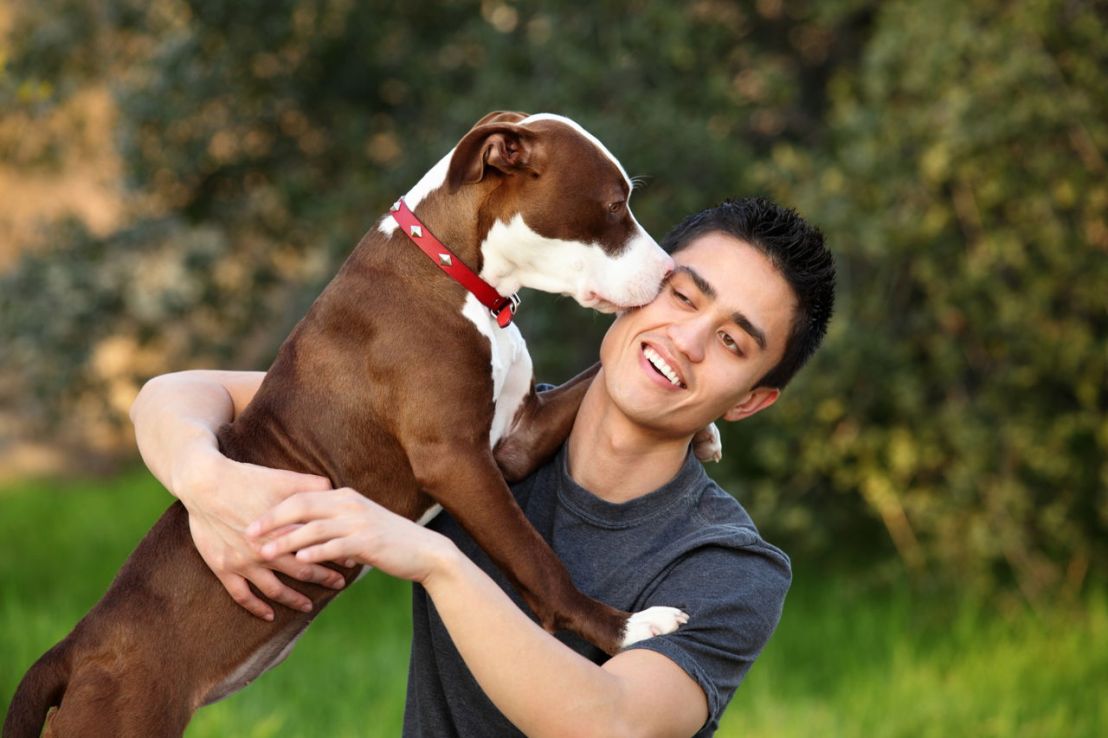
You may think that when your dog is licking you, he’s basically giving you a kiss. But, not all zoologists would agree.

Sure, it’s proven that licking releases endorphins in dogs in basically the same manner kissing releases endorphins in humans. However, getting high on the happiness hormone is not the only reason why dogs do it. Sometimes, dog licks can have many other meanings.

Your dog can’t talk to you, but you can be sure that he’d like to. This is why he has to use other methods to communicate with you. And one of those methods is through licking. The big question is what kind of message he’s trying to send?

Well, there are many potential answers to this question, but whether they’re right depends on the circumstances. In order to be able to figure out what your dog is saying, you better take a look at 8 most common scenarios.

Here are 8 Potential Reasons Why Your Dog is Licking You

1. He’s Just Saying Hello
In most cases, dog licks mean nothing other than saying hello. As he can’t express himself with words, to say hello, he’s got two options before him. The first one is to bark, which can be loud and scary. The second is to give you a gentle lick on the hand.

2. He’s Saying He’s Hungry
Another very plausible scenario is that your dog is politely asking for more food. Actually, whenever you notice that he’s behaving strange, the chances are that his behavior has something to do with food.
After all, food is one of the most important things in the world of dogs.

3. You Taste Delicious
Humans have 6 million olfactory receptors in the nose, which are responsible for picking up smells. Dogs, on the other hand, have 300 million such receptors, which makes their sense of smell 50 times better.

So, even if you’ve washed your hands thoroughly after lunch, your dog is probably going to know what you had just by sniffing your fingers. And if you ate some really awesome food for lunch, he might decide to give it a taste by licking your hand. The one that was in touch with the food, glorious food.

But, even if you were nowhere near any food, it doesn’t mean that your hand doesn’t make him hungry.
No, he doesn’t want to eat your arm off, he wants to lick it as there might be some sweat on it. Sweat is salty, so licking your hand is like eating chips for him.

4. He’s Saying Everything’s Alright
It’s been more than 15,000 years since dogs were domesticated. And for most of that time, the role of the dogs in human society was to provide protection. Essentially, all dogs are guard dogs, even those tiny ones like Chihuahuas.

No matter the breed, you can be sure your dog would give his life to protect you. Hopefully, he won’t ever get in a need to prove his courage, but this doesn’t mean he can fight his nature. He’s always on a watch and in order to tell you he’s got everything under control, he will give you a lick.

5. He’s Saying Not Everything is Alright
Sometimes, the reason why dogs lick their owners is that they feel sad or hurt. In most cases, the reason is emotional – they might feel bored, alone, or miss hanging out with other dogs.
However, sometimes the reason is that they’re feeling physical pain. Because licking releases endorphins that make them feel euphoric, by doing it they can forget about the pain.

6. He’s Being Your Personal Physician
There are certain enzymes in dog saliva that kill off bacteria, while also promoting a faster wound healing. This is why you can often see dogs vigorously licking their wounds or hot spots they might have on their skin.
For the same reason, he might decide to give you a lick or two. Even if there are no visible blisters or wounds on your skin, your dog could still decide that it’s best that his favorite human remains germ-free.

7. He’s Grooming You
Sure, your dog doesn’t have OCD when it comes to cleanliness, but this doesn’t mean dogs are dirty. On the contrary, dogs take really good care of their hygiene. Licking their fur is one of the ways of ensuring it stays clean and beautiful.
Another reason why they lick their fur is that it makes them feel calm and happy. If your dog notices that you’re feeling distressed, he might decide to try to calm down your nerves by grooming you a bit. And he’s gonna do it by licking your hand.

8. He Just Has No Other Business
Sometimes dogs decide to start licking their owners because they got nothing else to do. If he’s feeling bored, he could try to engage you by giving your hand a lick. A single lick could prove to be the first step in an hours’ long play between him and you.

Is Licking Good For You?
It surely is good for your dog, but what about you? Is dog saliva healthy or dangerous for human health?
Well, the answer is a bit complicated. Although it’s true that dog saliva kills off some germs, it’s a fact that some germs live freely in that environment. And if they get into your body, they can cause all sorts of problems.

Playing it safe seems like the best advice you can get. Preventing dog saliva from getting into your mouth is crucial. Germs can’t get in your system through thick layers of skin, but they can get in your body through your mouth.

This is why you should never let the dog lick your face. You also need to wash your hands every time you finish playing with your dog, so that you wouldn’t get germs on your food. And you need to wash your hands thoroughly, by which we mean to rub them vigorously and use anti-bacterial soap.

Author Bio:

David Huner is the founder of the pettrainingtip, where he and his team provides all necessary information related to pet care, supplies, health and even more. His team also always doing research on new pet related article topics to cover information from all bases including training tips.

ooOOoo

Victoria Stillwell has a piece on dog-licking. It only adds to the article that David wrote by including the fact that a mother dog licks her newborn puppies.

Why is the dog licking?  Right from birth that is how the mother communicates with her new puppies, how she stimulates them to start breathing and how she cleans them when they are born, so it’s very important to the survival of puppies.  In the wild and in domestic dogs, you’ll find they will lick around the mother’s mouth as newborns and puppies still retain that instinct.  It’s also sort of a submissive gesture — the more subordinate members of a pack will lick the more dominant members and that’s important in maintaining pack harmony.

Dogs also lick because they like the taste of an owner’s salty skin and out of habit.  Mostly, with domestic dogs, it’s a sign of affection.

Licking releases pleasurable endorphins which gives dogs a feeling of comfort and pleasure — like the feeling people get when they are biting their nails — it relieves stress.  If your dog’s licking is purely a sign of affection, one way to decrease this is to ignore the licking. Licking never gets attention.  If  your dog licks you, then you immediately stand up and walk into another room. You want to teach your dog that licking means the person will leave the room.  When you pet your dog, if he starts to lick, the petting stops and you walk away. With repetition the licking will stop.

If a dog is chronically licking himself, it can be because he is bored, anxious, has skin problems such as allergies, or could be feeling pain either in their paws or elsewhere in their bodies. You should make sure your dog is getting enough stimulation and rule out any infections or allergies by visiting your vet.

Let me know if you found this guest article interesting.

Save the African Pangolin

It’s World Pangolin day tomorrow.

I confess to not having heard of this endangered species before.

But my son, Alex, sent me an email earlier in the week hoping I would post something on the blog.

ooOOoo

Dear Alex

Creating widespread awareness of the four African pangolin species is an important part of our mission, because if people don’t know what a pangolin is, why would they care enough to help save it?

It’s World Pangolin Day this Saturday and here are two easy ways you can get involved right now:

Share this newsletter

Forward this email to all your friends to encourage them to sign up and receive our updates too.
Tag10ForPangolins

Share our latest Facebook campaign tagging at least 10 friends in your post, and help us reach our target of telling 100,000 people about pangolins by Saturday. We’ve just passed the 51,000 mark and with your help we can reach our goal!

With thanks,

Catherine and Team Pangolin

ooOOoo

Every little helps!

And guess what I found:

PANGOLIN – The Most Poached Animal in The World

Pangolins are the most heavily poached animal in the world, despite the fact that most people don’t even know that they exist.

The Pangolin is a small mammal, covered in large overlapping scales. It’s mainly a nocturnal animal with a diet consisting of insects such as ants and termites.

They may look like weird-scaly anteaters, but they are actually not part of the anteater family at all. The 2 most unique features of this animal are, that it is covered in plate armor scales from head to toe, and even though it has four legs, it walks predominantly on it’s hind legs, and uses it’s front legs for griping & digging.

So why are these creatures being so heavily poached? Well It’s all to do with their scales. The Pangolin’s scales & meat are used in traditional medicine, fashion and even eaten in high-end cuisine.

Thanks for watching

And then on Wednesday the BBC News had an extensive item about Pangolins. It’s a long article with a video. Please read it.

It’s not just us!

That can be affected by the weather!

In posting this I must admit to not noticing any changes in our group of ‘buddies’. Correction: I don’t notice any changes in behaviour as a result of cold temperatures. Hot weather is different.

See what you make of the following article that was taken from here.

ooOOoo

How Changes in Weather Can Affect Your Dog’s Mood

By

Have you ever noticed that your dog’s mood shifts with the weather? Storms, heat, cold, and the changing seasons affect our dogs, just like they affect us. Understanding this behavior can help you prepare your canine companion for the forecast ahead.

Changing Seasons

When the temperature heats up, some dogs rejoice, while others seek out cool, shady spots where they can rest. Though all dogs can be susceptible to hot weather hazards, certain dog breeds are less heat tolerant than others. Brachycephalic breeds, such as Bulldogs, French Bulldogs, Pugs, and Boston Terriers, do best when staying cool in hot weather because they can have difficulty breathing in extreme heat. Large breeds are also susceptible to heat, as are longhaired breeds like the Komondor, Afghan Hound, and Alaskan Malamute. If you own a breed like these, you may find that your dog is not as active in hot weather or as willing to engage in play and other activities.

Colder climates, on the other hand, is where Northern breeds like American Eskimo Dogs, Samoyeds, and Siberian Huskies thrive. Longhaired or double-coated breeds like German Shepherd Dogs, Saint BernardsGreat Pyrenees, and Newfoundlands typically enjoy cooler weather, too. They often become more active and playful during the winter months, unlike cold-intolerant breeds such as Italian Greyhounds, Greyhounds, hairless breeds, toy breeds, senior dogs, and dogs with conditions such as hypothyroidism or Cushing’s disease.

Relocating to a New Climate

Seasons change gradually, giving your dog time to adjust. Relocating to an entirely new climate, however, can cause sudden shifts in your pup’s mood. Depending on your dog’s breed, you may notice that he becomes more or less active, and some dogs even show signs of irritation if the weather makes them too uncomfortable.

A move to a cold climate can be shocking for dogs that are not used to chilly temperatures. Some pups seek out warm places, like air vents, blankets, or human contact, and you might notice your canine companion becoming cuddlier in the cold. Understanding the cause of your dog’s sudden lethargy or increased activity can help you determine if his change in mood is circumstantial or medical. Lethargy is a common symptom of many illnesses and should be taken seriously, so make sure your dog is not exhibiting any other abnormal signs. If he is, consult your veterinarian immediately.

Helping Your Dog Adjust

If your dog gets grumpy in the heat, don’t worry. There are things you can do to make him more comfortable and lower his risk of heatstroke.

  • Avoid taking your dog for walks during the hottest parts of the day.
  • Make sure he has plenty of fresh water.
  • Raised canvas platform dog beds offer a cooling alternative to traditional beds, and you can even invest in cooling mats or kiddie pools for particularly heat-intolerant dogs.
  • If you don’t have air conditioning, adjust a fan so that your dog has access to a nice, cool breeze.
  • Never leave a dog unattended in an enclosed vehicle or in a warm environment that does not have good air circulation.

You can also help your dog acclimate to the cold. After all, who doesn’t love a pup in a sweater? With so many dog sweaters, jackets, raincoats, and booties to choose from, keeping your dog warm is easier than ever. However, it’s important to note that you should never leave an item of clothing on an unsupervised dog. And anything you do put on your canine companion should fit properly (not too tight or too loose).

ooOOoo

Understanding this behavior can help you prepare your canine companion for the forecast ahead.” One wonders just how one prepares our canine companions (all six of them) for the forecast.

Maybe we should go back to the drawing board!

Picture Parade Two Hundred and Seventy-Five

A remarkable set of images.

All the more important as for us it was a cloudy night.

These images are taken from here. I sincerely hope I am not infringing copyright by republishing them.

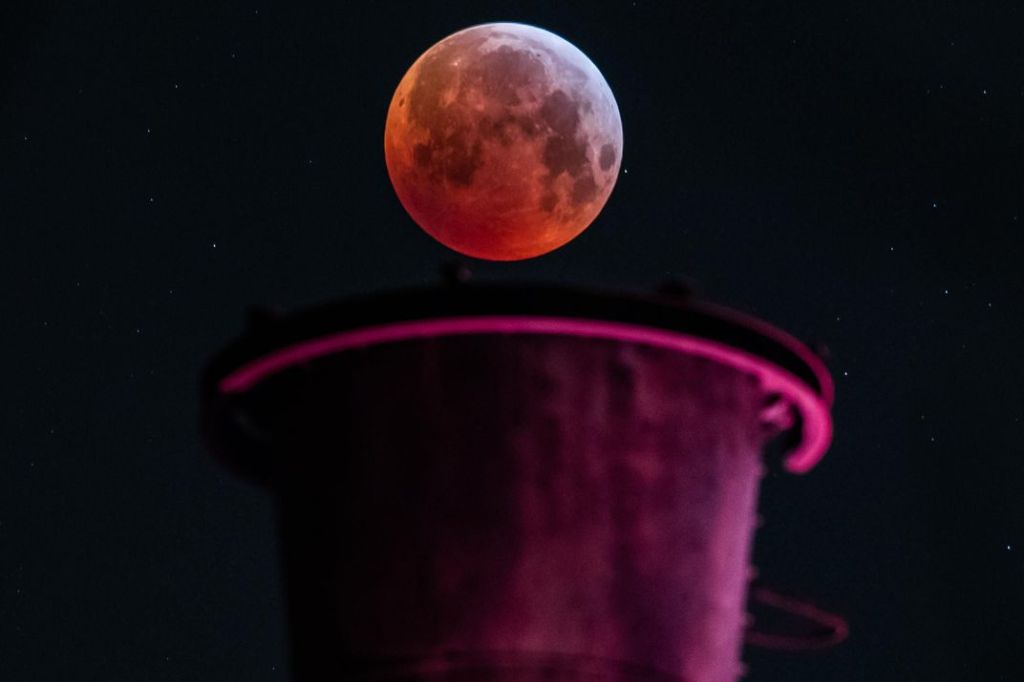
The lunar eclipse on January 21, 2019 before the moon is fully cast in shadow, hovering over the dome of the church St. Elisabeth in Nuremberg, Germany. ( Daniel Karmann / Picture Alliance / Getty Images)

oooo

The moon during the January 21, 2019 total lunar eclipse over the skyline of Frankfurt. (Frank Rumpenhorst / Picture Alliance / Getty Images)

oooo

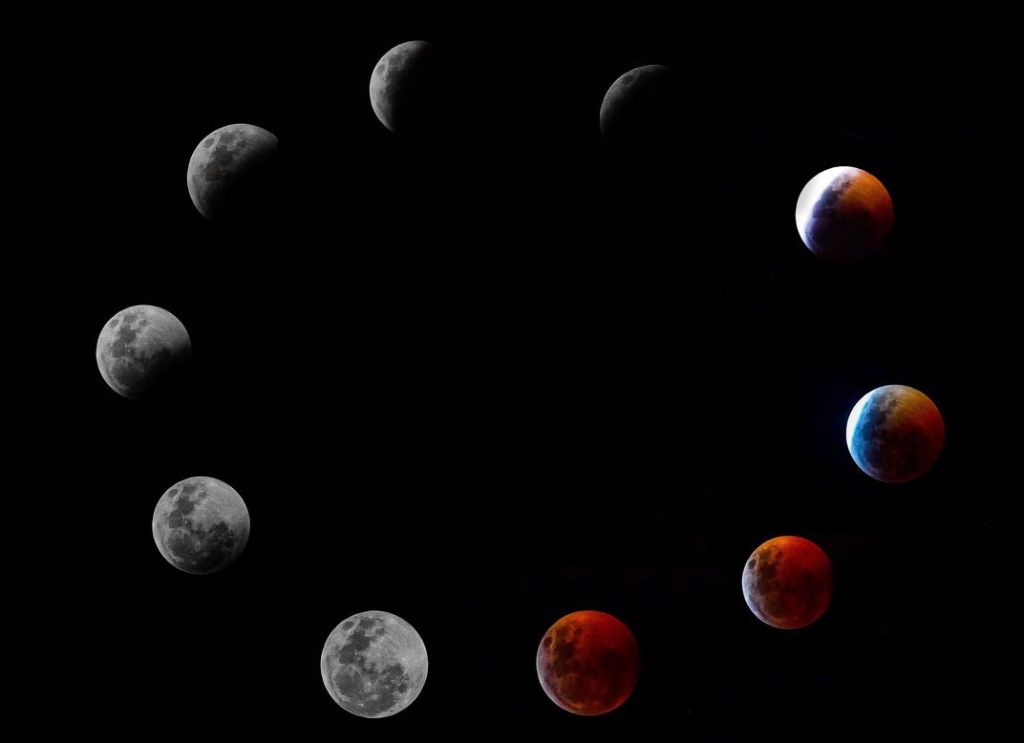
A composite photo shows all the phases of the so-called Super Blood Wolf Moon total lunar eclipse on Sunday January 20, 2019 in Panama City. (Luis Acosta / AFP / Getty Images)

oooo

The moon slips into Earth’s dark umbral shadow during a total lunar eclipse over Angel de la Independencia in Mexico City on January 20, 2019. (Alfredo Estrella / AFP / Getty Images))

oooo

The January 21, 2019 total lunar eclipse as seen over Laatzen, Germany. (Julian Stratenschulte / Picture Alliance / Getty Images)

oooo

A picture taken on January 21, 2019 the Super Blood Moon seen behind the equestrian statue of the Saxon king Johann during a lunar eclipse in Dresden, Germany. ( Sebastian Kahnert / AFP / Getty Images)

oooo

The Super Blood Wolf Moon lunar eclipse passes over One World Trade Center on January 20, 2019 in New York City. (Gary Hershorn / Getty Image)

oooo

A picture taken on January 21, 2019 in Cologne, Germany, shows the Super Blood Moon lunar eclipse above the landmark Dome.

oooo

The January 21, 2019 total lunar eclipse beside Naumburg Cathedral in Germany. (Hendrik Schmidt / Picture Alliance / Getty Images)

oooo

The lunar eclipse on January 21, 2019 before the moon is fully cast in shadow, hovering over the dome of the church St. Elisabeth in Nuremberg, Germany (Daniel Karmann/Picture Alliance/Getty Images)

These are really spectacular and very, very clever!