Category: Education

Yet more of the big question.

Time!

I wasn’t going to publish a post for today but then yesterday I read this article on The Conversation and wanted to share it with you. In fact it shares much of what I posted on the 1st, The Big Question. Because time and infinity are beautifully connected.

ooOOoo

What is time – and why does it move forward?

By Thomas Kitching, Lecturer in Astrophysics, UCL

Imagine time running backwards. People would grow younger instead of older and, after a long life of gradual rejuvenation – unlearning everything they know – they would end as a twinkle in their parents’ eyes. That’s time as represented in a novel by science fiction writer Philip K Dick but, surprisingly, time’s direction is also an issue that cosmologists are grappling with.

While we take for granted that time has a given direction, physicists don’t: most natural laws are “time reversible” which means they would work just as well if time was defined as running backwards. So why does time always move forward? And will it always do so?

Does time have a beginning?

Any universal concept of time must ultimately be based on the evolution of the cosmos itself. When you look up at the universe you’re seeing events that happened in the past – it takes light time to reach us. In fact, even the simplest observation can help us understand cosmological time: for example the fact that the night sky is dark. If the universe had an infinite past and was infinite in extent, the night sky would be completely bright – filled with the light from an infinite number of stars in a cosmos that had always existed.

For a long time scientists, including Albert Einstein, thought that the universe was static and infinite. Observations have since shown that it is in fact expanding, and at an accelerating rate. This means that it must have originated from a more compact state that we call the Big Bang, implying that time does have a beginning. In fact, if we look for light that is old enough we can even see the relic radiation from Big Bang – the cosmic microwave background. Realising this was a first step in determining the age of the universe (see below).

But there is a snag, Einstein’s special theory of relativity, shows that time is … relative: the faster you move relative to me, the slower time will pass for you relative to my perception of time. So in our universe of expanding galaxies, spinning stars and swirling planets, experiences of time vary: everything’s past, present and future is relative. 

So is there a universal time that we could all agree on?

The universe’s timeline. Design Alex Mittelmann, Coldcreation/wikimedia, CC BY-SA

It turns out that because the universe is on average the same everywhere, and on average looks the same in every direction, there does exist a “cosmic time”. To measure it, all we have to do is measure the properties of the cosmic microwave background. Cosmologists have used this to determine the age of the universe; its cosmic age. It turns out that the universe is 13.799 billion years old. 

Time’s arrow

So we know time most likely started during the Big Bang. But there is one nagging question that remains: what exactly is time? 

To unpack this question, we have to look at the basic properties of space and time. In the dimension of space, you can move forwards and backwards; commuters experience this everyday. But time is different, it has a direction, you always move forward, never in reverse. So why is the dimension of time irreversible? This is one of the major unsolved problems in physics. 

To explain why time itself is irreversible, we need to find processes in nature that are also irreversible. One of the few such concepts in physics (and life!) is that things tend to become less “tidy” as time passes. We describe this using a physical property called entropy that encodes how ordered something is.

Imagine a box of gas in which all the particles were initially placed in one corner (an ordered state). Over time they would naturally seek to fill the entire box (a disordered state) – and to put the particles back into an ordered state would require energy. This is irreversible. It’s like cracking an egg to make an omelette – once it spreads out and fills the frying pan, it will never go back to being egg-shaped. It’s the same with the universe: as it evolves, the overall entropy increases.

Unfortunately that’s not going to clean up itself. Alex Dinovitser/wikimediaCC BY-SA

It turns out entropy is a pretty good way to explain time’s arrow. And while it may seem like the universe is becoming more ordered rather than less – going from a wild sea of relatively uniformly spread out hot gas in its early stages to stars, planets, humans and articles about time – it’s nevertheless possible that it is increasing in disorder. That’s because the gravity associated with large masses may be pulling matter into seemingly ordered states – with the increase in disorder that we think must have taken place being somehow hidden away in the gravitational fields. So disorder could be increasing even though we don’t see it.

But given nature’s tendency to prefer disorder, why did the universe start off in such an ordered state in the first place? This is still considered a mystery. Some researchers argue that the Big Bang may not even have been the beginning, there may in fact be “parallel universes” where time runs in different directions

Will time end?

Time had a beginning but whether it will have an end depends on the nature of the dark energy that is causing it to expand at an accelerating rate. The rate of this expansion may eventually tear the universe apart, forcing it to end in a Big Rip; alternatively dark energy may decay, reversing the Big Bang and ending the Universe in a Big Crunch; or the Universe may simply expand forever.

But would any of these future scenarios end time? Well, according to the strange rules of quantum mechanics, tiny random particles can momentarily pop out of a vacuum – something seen constantly in particle physics experiments. Some have argued that dark energy could cause such “quantum fluctuations” giving rise to a new Big Bang, ending our time line and starting a new one. While this is extremely speculative and highly unlikely, what we do know is that only when we understand dark energy will we know the fate of the universe.

So what is the most likely outcome? Only time will tell.

ooOOoo

Let me explain, in part, entropy. Because while I and many others sort of understand it, the principle behind entropy is much more detailed.

It is explained pretty well on WikiPedia, from which I reproduce the first paragraph.

Entropy is a scientific concept, as well as a measurable physical property that is most commonly associated with a state of disorder, randomness, or uncertainty. The term and the concept are used in diverse fields, from classical thermodynamics, where it was first recognized, to the microscopic description of nature in statistical physics, and to the principles of information theory. It has found far-ranging applications in chemistry and physics, in biological systems and their relation to life, in cosmologyeconomicssociologyweather scienceclimate change, and information systems including the transmission of information in telecommunication.[1]

There’s a little bit more to read … 😉

Again, I am going to finish with sharing that image from Unsplash.

Imagine the universe is constant whichever direction one looks in, to 1 in 10,000. That is truly amazing!
Dogs’ Teeth!

Another helpful article.

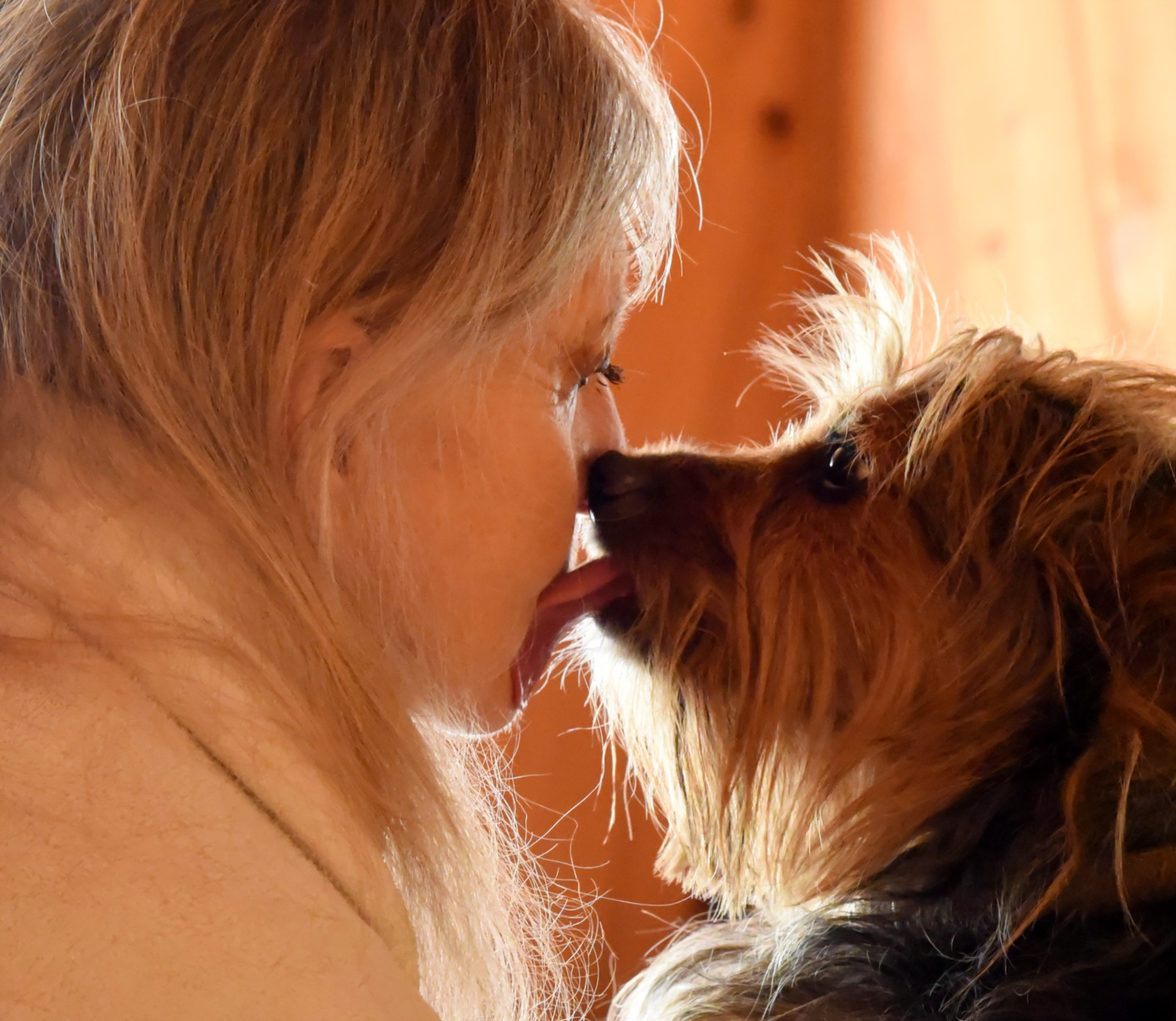
Of course when I want a photograph of the teeth of one of our dogs then none is available. So this photo of Sweeney kissing Jean taken in 2018 will have to do.

But the question of dental care and attention for dogs is yet something else we dog owners need to know. That is why a recent article in The Dodo is a great share for you all today.

ooOOoo

How To Tell If Your Dog Needs Dental Work

And what it means if he has dragon breath 🐉

By SAM HOWELL

Published on the 7th September, 2021

You probably think that if your dog needs dental work, you’ll be able to tell by looking at his teeth — right?

Turns out, that’s not always the case.

The Dodo spoke with Allyne Moon, a registered vet technician with Free Animal Doctor in California, who explained what you need to know about dental work for dogs — and why it’s so important to get regular check-ups.

How to tell if your dog needs dental work

Your dog’s dental health is super important, so you need to be able to identify when your pup’s pearly whites might need some work.

“Pet parents should check their dogs’ teeth regularly,” Moon told The Dodo.

During those check-ins on his chompers, you should know what to do and what to look for.

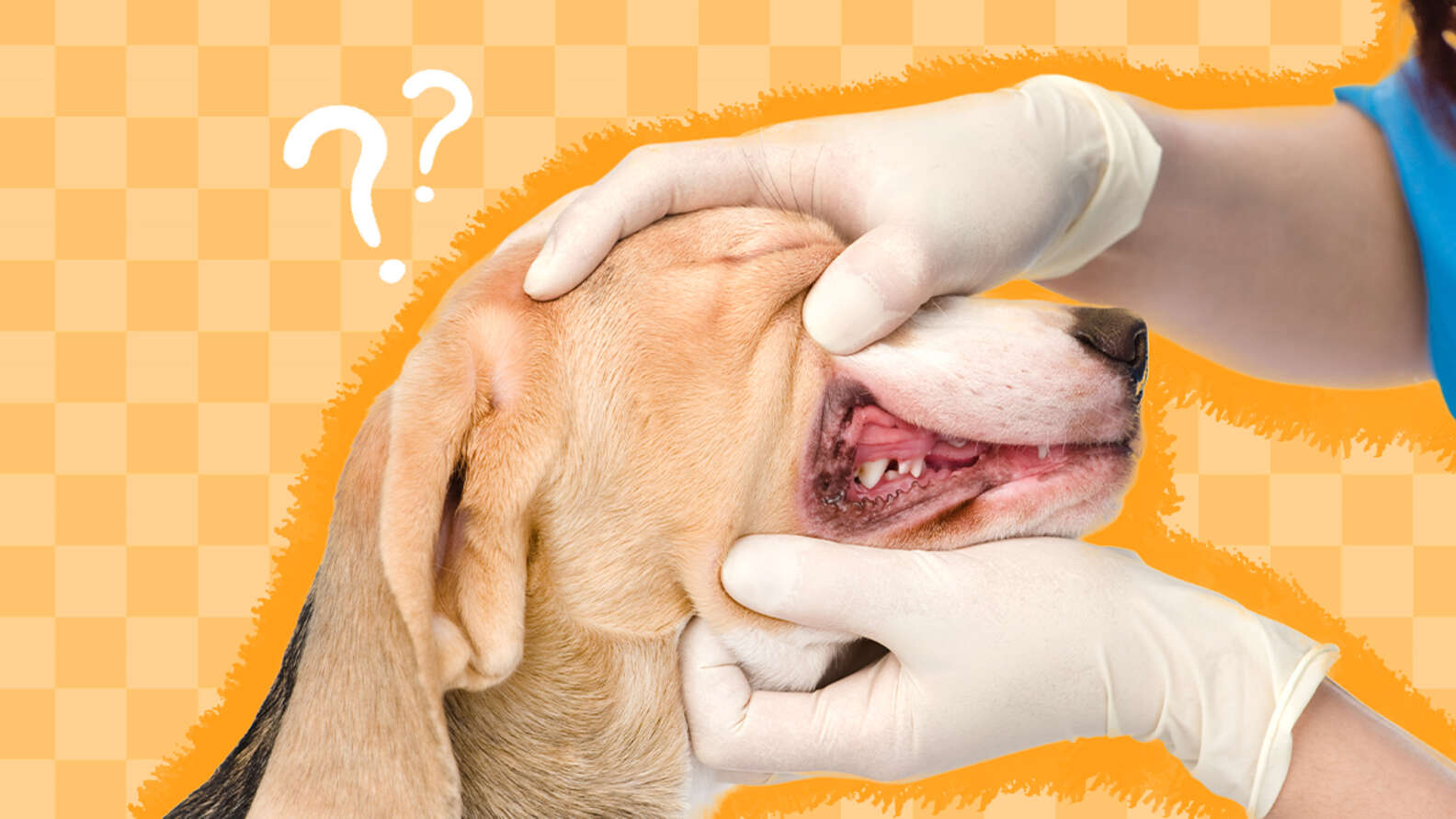
“Look all the way at the back teeth by gently pulling the corner of the lip back,” Moon explained. “If the teeth appear discolored, [if the] gums are very red [or ‘angry’], [if] any blood or [pus or] discharge is present or if teeth are loose, they should seek a consultation with their veterinarian.”

If your pup’s breath is so bad that it almost makes you wish you didn’t have a sense of smell, that’s also a pretty solid indication that your dog needs dental work.

“If your dog’s breath smells bad, even if the teeth look OK, it is also an indication to have your pet evaluated by your veterinarian,” Moon said.

Signs your dog needs dental work

Some general symptoms that might mean your pup needs dental work include:

  • Having bad breath
  • Experiencing excessive drooling
  • Pawing or rubbing his mouth (more than usual)
  • Getting lumps on his face under his eyes
  • Dropping food when eating
  • Eating less
  • Appearing like his mouth is in pain
  • Refusing to let you look in his mouth

If you’re noticing any of these signs, you should give your vet a call.

Common dog dental problems

According to Moon, your dog can be at higher risk for certain dental problems based on his size.

“In my experience, the most common dental problems in … small breed dogs [are] heavy dental tartar, calculus and crowded [or] diseased teeth,” Moon said. “Large breed dogs [can have] broken teeth, requiring … root canal, endodontic therapy or extraction.”

Now, that doesn’t mean that tartar buildup only happens in small dog breeds, or that big dogs are the only pups who have broken teeth.

These problems can happen in any dog, no matter his size or breed.

If your pup is experiencing any of these things, or any of the symptoms above, it’s crucial to bring him directly to the vet ASAP.

“I would absolutely NEVER take your pet to a ‘nonanesthetic pet dentist’ [or] run out [to] a grooming shop,” Moon said. “At best, these people only provide a cosmetic service. At [worst], you’ll be spending a lot of money for something that gives you a false sense of confidence and can ruin your pet’s health … If your pet is lucky, the only thing they will waste is your money.”

How to stay on top of your dog’s dental care

“Unfortunately, once your dog’s teeth have reached the stage of significant tartar buildup, foul breath or loose [or] broken teeth, there’s nothing a pet parent can do at home to help beyond scheduling an appointment with their veterinarian,” Moon said.

However, there are things you can do to try to prevent things from getting to that point.

The best way to keep your dog’s teeth clean at home

According to Moon, it’s key to use an appropriate dog toothpaste.

“The onset of many dental problems can be delayed by having pet parents brush their dogs’ teeth with a pet-approved enzymatic toothpaste,” Moon explained. “The beauty of an enzymatic toothpaste is it works without scrubbing.”

This is great if your pup can’t stand it when you try to get in there with a toothbrush.

“If all you can do is get the enzymatic paste on the gums and teeth, that is fine,” Moon said. “People have gotten good results by just smearing the paste onto their dog’s gums and teeth.”

It’s also important to know what should — and shouldn’t — be in your dog’s toothpaste.

“Whatever product people use, it should be labeled for dogs, work by using enzymes, NOT have fluoride in it and come in a flavor your pet enjoys,” Moon explained.

(Ed: Two entries for products listed on Amazon removed. Please go here if you need to see the details.)

Between regular at-home dental care and cleanings at your vet’s office, there’s so much you can do to keep your pup’s teeth pearly white — and smelling good.

ooOOoo

And I will close with another photograph, this time of Brandy, but again with his mouth tightly closed!

Hope people found this useful!

A beautiful photograph

Of a hummingbird!

Thursday was a chaotic day for me and I only got to my desk at 3pm. Then I found that I didn’t have any posts to share about dogs.

I was mulling what to do and then came across this article on Treehugger and wanted to share it with you.

ooOOoo

Hummingbirds Are Able to Smell Danger

Vultures aren’t the only birds who recognize odors, study finds.

By Mary Jo DiLonardo September 9, 2021

Mary Jo DiLonardo
Tongho58 / Getty Images

Glittery and graceful, hummingbirds hover and flit in midair as they gather nectar. But it’s not just their athleticism that helps them source food. 

New research finds that these tiny birds have a great sense of smell that helps them detect potential danger when they are hunting for nectar.

“In the last 10-15 years, researchers have just now begun to realize the importance of smell in birds in general. For a very long time, it has been known that some birds, such as vultures, have a keen sense of smell and use it to find food,” study co-author Erin Wilson Rankin, an associate entomology professor at the University of California Riverside, tells Treehugger.

“However, the role of olfaction in most birds has only been recently recognized. That may be in part because many birds do not appear to use odor to help them locate food.”

In earlier studies, researchers were unable to show that hummingbirds preferred the smell of flowers that contained nectar. Also, flowers that have been pollinated by birds don’t have strong aromas, like those that have been pollinated by insects. That’s why scientists didn’t believe that birds had the ability to smell odors.

But with this new study, researchers believe otherwise.

For their experiment, Rankin and her colleagues observed more than 100 hummingbirds in the wild and in aviaries. The birds were given the choice between feeders that contained just sugar water, or sugar water with the addition of one of several chemicals with a scent that meant there was an insect present. The feeders otherwise looked exactly the same.

The scents included one deposited on flowers by European honeybees, a chemical produced by Argentine ants, and formic acid, which is released defensively by some formica ants and can injure birds and mammals.

“If a bird has any exposed skin on their legs, formic acid can hurt, and if they get it in their eyes, it isn’t pleasant,” Rankin said in a statement. “It’s also extremely volatile.”

In the experiments, the hummingbirds avoided the feeders with the sugar water that contained the ant-derived chemicals. They didn’t react to the sugar water with the honeybee scent, even though it’s been known to keep other bees from visiting flowers.

To make sure the bees weren’t avoiding the feeders due to a fear of a new smell, the researchers performed an extra test with sugar water and ethyl butyrate, which is a common additive in human food.

“It smells like Juicy Fruit gum, which is not a smell known in nature,” Rankin said. “I did not enjoy it. The birds did not care about it though and didn’t go out of their way to avoid it.”

The results were published in the journal Behavioral Ecology and Sociobiology.

Avoiding Danger 

For hummingbirds, recognizing smells isn’t just about finding a meal. They use their sense of smell much differently than vultures. These birds use the massive olfactory bulb in their brain like an “airborne bloodhound” to detect decaying carcasses.

Instead, hummingbirds use their excellent vision to locate flowers from which they collect nectar.

“Flowers, while specific species may be patchy in distribution, are much more common and numerous than the animal carcasses that vultures rely on. Thus, it is not surprising that vultures use their sense of smell to find carcasses which they then scavenge,” Rankin explains.

Hummingbirds use their ability to smell in a different way.

“Rather than using odors to find flowers, they will avoid flowers or feeders that have specific insect odors on them, such as formic acid or an Argentine ant aggregation pheromone. A hummingbird can use the chemical cues associated with ants to help them determine if the hummingbird should feed from there, or avoid it because it’s already occupied by ants, which can drink the nectar first or potentially harm them,” Rankin says.

“Ants are also very hard for hummingbirds to see until they are up close, so being able to smell them even when they are hidden deep in a flower could be advantageous. By avoiding defensive chemicals, hummingbirds can avoid interactions with ants and focus on feeding at safer food resources.”

ooOOoo

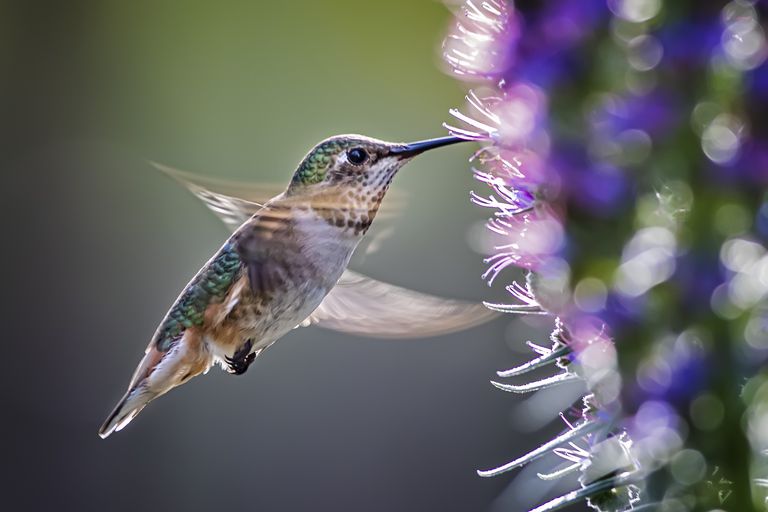
As long as I shall live I will never stop being amazed at what science discovers and then reports. And the photograph is gorgeous!

A short but interesting video

CBS present an item about dogs.

I was a bit tight on time yesterday and just looked for a YouTube video that might please.

Anyway, I quickly came across this from CBS. It goes back 7 years but so what, it is still very pertinent today.

People will tell you it’s not what you say to a dog that counts, it’s how you say it. But now researchers say dogs respond to much more than your tone of voice. They say brain scans confirm that canines can understand exactly what you’re saying. Michelle Miller reports.

The way dogs think

They are incredibly intuitive but not in such a broad way as us humans.

On Friday morning Oliver got lifted up onto the bed. It’s a daily routine and one that Jeannie and I love.

Oliver – He has magnificent eyes.

On this particular early morning I decided to switch the lamp off next to me and snuggle under the covers for a bit more shuteye. At the moment the light went out Oliver moved from his regular position somewhere over my knees to the bottom of the bed in between me and Jean. He has never done that before.

Of all our dogs Oliver is the one that seems to sense what is happening. That is not to say that the other dogs are dumb, far from it, but that Oliver is extra intuitive.

So that’s why this from Science magazine is being republished today. Because it is right on the money, so to speak.

ooOOoo

Dogs Know When You’re Lying to Them

By the BEC Crew, 25th February, 2015

We all know that dogs can sense our emotions, whether happy, sad or angry, but now researchers have found that they can also tell when you’re lying, and will stop following the cues of someone they deem untrustworthy.

Researchers led by Akiko Takaoka from Kyoto University in Japan figured this out by using the old ‘point and fetch’ trick – a human points at the location of something, like a ball, a stick, or some food, and the dog runs off to find it. They wanted to figure out if dogs were just blindly following these cues, or if they were adjusting their behaviour based on how reliable they perceived the person giving the cues to be. And if they didn’t perceive this person as being reliable, how quickly would they learn to mistrust and disobey the humans who pointed in the wrong direction?

Working with 34 dogs, the team went through three rounds of pointing. The first round involved truthfully pointing out to the dogs where their treats and toys were hidden in a container. In the second round, after showing the dogs what’s in the container, they pointed out the location again, but this time, it was a trick – the container was empty. In the third round, the team pointed to the location of the box, which was filled with treats again.

They found that the dogs were following the age-old adage, “Fool me once, shame on you, fool me twice, shame on me,” because by round three, many of them were done believing the actions of the pointing volunteers.

A second experiment was performed in exactly the same way as the first one, except the person was replaced by an entirely new one. The dogs happily started the process all over again, and were fully open to trusting their new ‘friend’. “That suggests, says Takaoka, that the dogs could use their experience of the experimenter to assess whether they were a reliable guide,” Melissa Hogenboom writes for BBC News. “After these rounds, a new experimenter replicated the first round. Once again, the dogs followed this new person with interest.”

What’s going on here, the researchers report in the journal Animal Cognition, is that the dogs were ‘devaluing’ the reliability of the human when they experienced their lies. “Dogs have more sophisticated social intelligence than we thought,” Takaoka told Hogenboom. “This social intelligence evolved selectively in their long life history with humans.” 

The experiment reaffirms what we know about the nature of dogs – they love routine, but they also love new things. In round one, they learnt how the activity goes: the human points, I sniff out something great. But in round two, the rules changed and the dogs became stressed out. But when round three came along, the human who broke the rules was replaced by a different human, and the dogs were happy to trust this one because of their love of trying new things.

“Dogs are very sensitive to human behaviour but they have fewer preconceptions,” Bradshaw told the BBC. “They live in the present, they don’t reflect back on the past in an abstract way, or plan for the future.” And they certainly don’t approach a situation by “thinking deeply about what that entails”, he said. 

Something to think about when you consider inflicting the ‘fake tennis ball’ game on your dog. It might work a few times for hilarious effect, because your dog trusts you way more than the dogs in the experiment trusted the strangers they just met, but how long will it last?

It also explains why dogs are so unsure about magicians:

ooOOoo

So to all the dogs in the world I say this: “Keep on trusting us humans!” And to the millions of dog owners in the world, I say this: “Never lie, especially to a dog!”

Where to pet a dog?

A more informative way to do something most of us don’t think about!

The Dodo recently had an article about petting a dog. I was about to ignore it and then decided to read the article. I am glad I did because The Dodo went to a veterinarian in New York City for the answers.

Here’s the article.

ooOOoo

These Are The Best Places To Pet A Dog, According To A Dog

Your pup will always tell you what’s up 🐶

By DANIELLE ESPOSITO, Published on the 21st July, 2021.

Some dogs love all the pets from all the people, while others can definitely be more finicky.

When it comes to where she’s petted (and who’s petting her), your dog probably has some personal preferences —so it’s important that you learn her boundaries.

Typically, most dogs share safe zones that are OK to pet — as well as areas on their bodies that are totally off-limits.

To help, The Dodo reached out to Dr. Stephanie Austin, a veterinarian at Bond Vet in New York City, who explained the best places to pet a dog — and where to avoid.

Where do dogs love to be petted?

As a general rule of thumb, the neck, chest and shoulders are places that many dogs like to be petted. 

But it’s important to keep in mind that not all dogs are created equal when it comes to where they like to be touched. “For example, some pups love belly scratches or petting on the rump area, while others may be more guarded about those parts of their body,” Dr. Austin told The Dodo. 

How to pet a dog the right way

If you’re not sure what a dog likes or doesn’t like when you first meet her, your best strategy is to let her come to you and sniff your hand. 

“If the dog is friendly and relaxed, try gently petting the neck, chest or shoulders. Don’t reach for their head from above, as this could appear threatening to a dog,” Dr. Austin suggested. 

You can usually tell if a dog is enjoying being petted because she’ll get closer to you, act relaxed and happy and even lean into your hand where you are petting.

“If a dog becomes tense or standoffish, this may be a warning that they aren’t comfortable with the petting,” Dr. Austin said.

Where to not pet a dog

According to Dr. Austin, there are some places — in general — where dogs might be uncomfortable with someone touching.

Questionable spots include:

  • Paws
  • Legs
  • Tail
  • Face

“And even though many pups appreciate a good belly rub, they may also be protective of their belly and the underside of their body,” Dr. Austin said. 

And be wary of any areas on the body that might be particularly sensitive.

“Some dogs may have areas of the body that are sensitive due to underlying health conditions — for example, if a dog’s hips are painful due to arthritis, they might not like someone pressing on or near their hips,” Dr. Austin said.

It’s also important to keep in mind that some dogs just don’t like to be touched by strangers. So if your dog prefers to warm up to people, advocate for her and let others know that she just needs time. Don’t force her to be uncomfortable by accepting unwanted interactions from other pets!

Of course, the best thing you can do when getting to know a dog is to start off slow and check in with her body language. She’ll usually tell you exactly what she’s comfortable with.

And once you figure it out together, your bond will be even stronger!

ooOOoo

Now Jeannie and I are biased because our six dogs love being fondled in so many ways including much of what is cautioned by Dr. Austin. But we certainly agree with the last few word about the bond being even stronger!

This is still good advice because there are so many different personalities with our six dogs and many just have a single dog.

But Dr. Austin’s advice applies to Jeannie and me and we would never be as relaxed when we have visitors. Then the strong advice is to let the dogs chose in their own time when and how to approach the guests.

Paws Give Me Purpose

I am delighted to share this website with you!

If I were to mention the name of Lea Brandspiegel I suspect that many of you wouldn’t have a clue as to whom I was referring to.

But if I were to add that Lea is the CEO and Founder of Paws Give Me Purpose Inc. and to include a little from the About page on the website then that would make you sit up!

Here it is:

ooOOoo

Welcome to Paws Give Me Purpose! We look forward to sharing our purpose, knowledge, laughter and tears with all of you. We hope you enjoy the time you spend here with us.

Paws Gives Me Purpose Incorporated is dedicated to rescuing, rehabilitating, caring for and providing sanctuary to difficult to adopt dogs. We believe that all dogs deserve a second chance at life – especially seniors, those with physical disabilities, terminal illness, behavioral issues, have been abused and need someone to care for, love, and understand them.

Located in Southern New Jersey, we provide for our pups dependent upon the donations of generous friends, family, businesses, individuals and out of our own pockets. We are limited on both space and funding, as well as physical ability. We are able to take in and provide for only a limited number of dogs at any given time. 

We also feature, network and sponsor shelter and rescue dogs looking for their forever homes. All of the dogs we feature here on Paws Give Me Purpose have been waiting far too long for their chance; oftentimes, these dogs do not get the exposure they need, and we want to change that! For us, education is key; this is why one of our ultimate goals is to change the way that humans think of, and treat, dogs with special needs.

Paws Gives Me Purpose exists on the kindness of strangers, dedicated supporters who follow our efforts, the loyalty of friends, veterinarians, hospitals, rescues, shelters, and private individuals who view us as a staple in the rescue community. We are strictly a volunteer-run organization and all donations go directly towards the care of the sanctuary animals. Know that you are helping to make a difference in dogs’ lives and that you are the driving force behind us.

ooOOoo

So there is the introduction and I will have great pleasure in sharing more stories about the dogs that Lea has rescued and found homes for.

Oh, a postscript! If you fancy making a donation then that page is here. (And it really doesn’t need me to say that I have no relationship at all with Paws Give Me Purpose Inc.)

Perfect families!

What are the best dog breeds for families.

Again I am drawn to The Dodo and to an article that was published earlier this year. It is not a long piece but it seems to be full of common sense.

Have a read and tell me your thoughts.

ooOOoo

These Are Some Of The Best Dog Breeds For Families

And why you should find one at a rescue 🐶👪

By SAM HOWELL, Published on the 26th April, 2021

Adopting a dog is one of the most exciting ways to grow your family.

But you might be wondering if certain dog breeds are better for living with families than others.

The Dodo spoke with Iris Ulbrich, a behavior consultant and owner at Trust Your Dog in Los Angeles, who explained why you should actually pay more attention to a pup’s personality than his breed.

The best dog breeds for families

While there are some dog breeds that tend to be a bit more inclined for family life, it’s super important to remember that breed is not everything.

“Yes, there are characteristics that are tied to dog’s breed, but a lot has to do with the quality of breeding as well as the first few months of a puppy’s life,” Ulbrich told The Dodo.

What’s most important is an individual dog’s personality because, ultimately, that will determine whether or not he will work great in a family environment, regardless of his breed.

With that in mind, here are some dog breeds that — on average — tend to have traits that make them good family pets:

  • Labradors
  • Golden retrievers
  • Collies
  • Wheaten terriers

“Both [Labradors and golden retrievers] are very friendly, active, good with kids and eager to please,” Ulbrich explained.

As for wheaten terriers, they don’t shed. So if someone in your family has allergies, these terriers could be a good fit.

“Collies are very devoted family dogs and can be both very active but also know how to relax and be calm at home,” Ulbrich said.

That being said, these are just generalizations! There are some labs out there who are absolutely terrible with kids — and literally millions of individual dogs from breeds not on this list who are perfect family pets. 

Which is why your best bet is to go to a rescue center, where adoption counselors can match you with a pup who has the exact personality you’re looking for.

Personality traits that make a dog the best fit for a family

Since personality is far more important than breed when finding your perfect pup, you should know which traits to look for in your family’s potential new addition.

After all, a rescue is going to help you find a dog that’ll vibe with you and your loved ones, since you’ll be able to pick a pup with a fully formed personality. If you get a puppy from a breeder, on the other hand, you’ll have no idea if he’ll grow up to be a good match for your family.

When it comes to finding the best dog for your family, here’s the personality traits Ulbrich recommends you look for.

“A healthy amount of energy in combination with eagerness to please their owner is usually a great combination,” Ulbrich said.

And since families are all different, it’s actually most important to look for a dog that’ll mesh with your family’s interests, hobbies and lifestyles.

“An active and outdoorsy family with slightly older kids that live in a house would pick a different dog to a family that lives in an apartment and has twin toddlers,” Ulbrich explained.

In those cases, both of those potential pups might not even be any of the breeds listed above, since it all boils down to each individual pup’s personality.

“A dog’s demeanor also plays a big role in [a] successful family integration,” Ulbrich said. “I try and recommend people ask a trainer to temperament test a puppy before making a final decision on breed and particular puppy within a litter.”

And since that individual temperament is so important, any dog breed can be the best dog breed for your family.

ooOOoo

I hadn’t thought of it before but Iris Ulbrich stating that personality was far more important than the breed of the dog. Of course! Perfect sense! And always take in a rescue dog!

Signs of anxiety in dogs

Eight signs for you to keep an eye out for!

Now I have republished items about this subject before but not for some time. This article which appeared on The Dodo was thorough in my opinion and, therefore, worthy of a republication.

ooOOoo

These 8 Signs Might Mean Your Dog Has Anxiety

By DANIELLE ESPOSITO, Published on the 21st July, 2021

Have you ever wondered if dogs can get anxiety?

Turns out, dogs totally can. And it’s important that you know what to look out for when trying to figure out if your dog does have anxiety.

According to Dr. Walter Burghardt, Jr., a veterinarian at BluePearl Specialty and Emergency Pet Hospital in San Antonio, Texas, there’s a spectrum of anxiety-related behaviors in dogs, ranging from mild to severe (just like in humans). 

These are some of the most common signs that your dog has anxiety, according to Dr. Burghardt.

Signs your dog is experiencing mild anxiety

She’s lip-licking

A common sign of mild anxiety — or just being plain uncomfortable — lip-licking usually means that your dog feels uncertain about whatever situation she’s in.

She’s yawning more than usual 

Dogs don’t only yawn because they’re tired. If you’re noticing your pup is yawning more than usual, or not anywhere close to bedtime, it could be because she’s feeling anxious.

She’s more inactive (or active) than usual

If you notice your dog is keeping to herself more than usual — or, on the other hand, if she’s more hyper than normal — this could be a sign that she’s feeling anxious and unsure of how to deal with those feelings.

Signs your dog is experiencing moderate anxiety

She’s tucking her tail

If you notice your dog’s tail is tucked, that’s a sign that she could be experiencing a more moderate case of anxiety.

Her ears are flattened

If you see your dog’s ears are pinned back, it could be a sign that she’s experiencing increased anxiety.

Other signs of moderate anxiety include an increased heart rate, respiration and dilated pupils.

Signs your dog is experiencing severe anxiety

She’s trying to escape

If your dog seems to be doing everything she can to escape or get away from a situation, it could mean she’s feeling severely anxious.

She’s hiding

If you’ve noticed your dog is trying to hide from a scary situation, it could be a sign that her anxiety is severe.

She’s being aggressive

If your dog is showing signs of aggressive behavior, it could mean that she’s feeling very fearful or stressed.

Other signs of very severe anxiety could be that your dog freezes, or just doesn’t move at all.

How to help an anxious dog

If your dog is diagnosed with anxiety, her treatment could depend on a few things:

  • The source of the anxiety
  • The intensity and duration of the anxiety
  • How often your dog’s behavior is affected by anxiety

“For more severe and more frequent cases, anxiety is usually treated with one or more medications to help reduce distress and physiological arousal, environmental changes to reduce the distressing characteristics of a scary event, and behavior modification aimed at improving the patient’s confidence in the scary situation,” Dr. Burghardt said.

If your dog is experiencing more mild anxiety, this can usually be treated by desensitizing your dog to the scary situation and working on building your pup’s confidence — all with the help and advice of your vet or dog behaviorist.

If you suspect your dog is suffering from anxiety, contact your vet to see what you can do to help her feel better.

ooOOoo

Now I left out of the post three recommendations “You can also try some tried-and-true tricks to help calm down an anxious dog” (my italics) because I didn’t think you wanted products from Amazon.

But I would love to hear how common it is to have a dog that shows anxiety. Do you want to leave me a comment?

Multiple Brands Dog Food Recall

It has been a little while since we had a recall.

The following came in on the 30th July and I made the decision to wait until today to share it with you all.

ooOOoo

Six Dog Food Brands Recalled Due to Dangerous Mold Toxin

Corn mold producing dangerous aflatoxin

July 29, 2021 — Sunshine Mills is recalling six dog food brands due to dangerouslevels of aflatoxin.

Aflatoxin is a potentially deadly toxin produced by Aspergillus mold (typically found on corn)… and which can be harmful to pets if consumed in significant amounts.

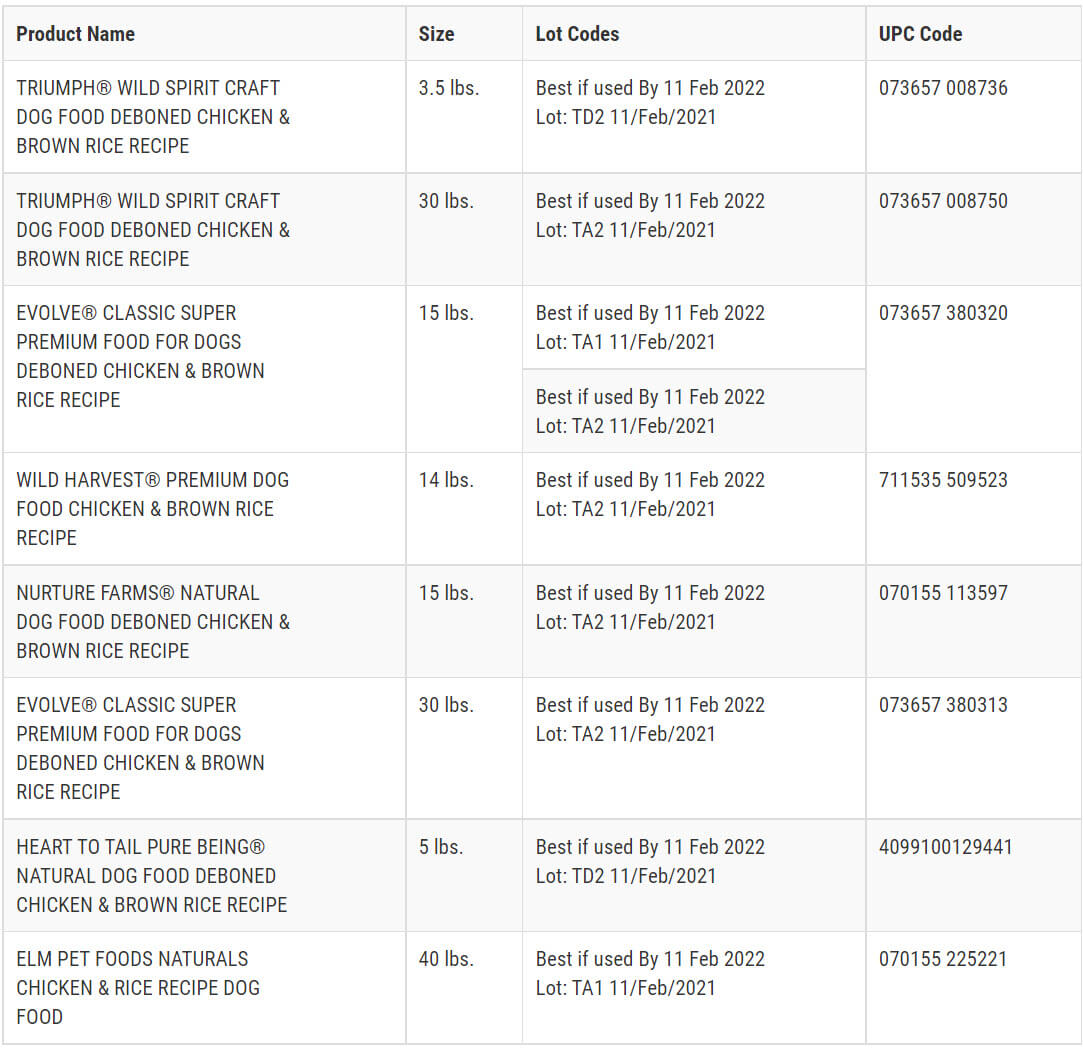
What’s Recalled?

To date, no illnesses have been reported in association with the related products. No other Sunshine Mills pet foods are affected by this announcement.

Sold Nationwide

The affected products were distributed in retail stores nationally. 

Retailers who received the recalled lots have been contacted and asked to pull these lots from their inventory and shelves. 

There are no other Triumph®, Evolve®, Wild Harvest®, Nurture Farms®, Pure Being®, or Elm products or other lot codes of these products affected by this recall.

Message from the Company

“While no adverse health effects related to these products have been reported, Sunshine Mills, Inc. has chosen to issue a voluntary recall of the above-referenced products as a precautionary measure in furtherance of its commitment to the safety and quality of its products.”

What to Do?

Pets that have consumed any of the above recalled products and exhibit symptoms of illness including sluggishness or lethargy combined with a reluctance to eat, vomiting, yellowish tint to the eyes or gums, or diarrhea should be seen by a veterinarian.

Consumers who have purchased the recalled dog food should discontinue use of the product… and may return the unused portion to the place of purchase for a full refund. 

Consumers may contact Sunshine Mills, Inc. customer service at 800-705-2111 from 7 am to 4 pm Central Time, Monday through Friday. 

Or by email at customer.service@sunshinemills.com for additional information.

This is a voluntary recall being conducted in cooperation with the U.S. Food and Drug Administration.

U.S. citizens can report complaints about FDA-regulated pet food products by calling the consumer complaint coordinator in your area.

Or go to the FDA’s “Report a Pet Food Complaint” page.

Canadians can report any health or safety incidents related to the use of this product by filling out the Consumer Product Incident Report Form.

Get Lifesaving Recall Alerts by Email

Get free dog food recall alerts sent to you by email. Subscribe to The Dog Food Advisor’s emergency recall notification system.

There’s no cost. No spam ever. Cancel any time.

ooOOoo

There you go. Please share this with other pet owners.

And stay safe!