Last Saturday, we went to the local Freethinkers meeting in Grants Pass. It was a fascinating presentation by fellow member, Chas Rogers. Chas teaches Earth Science courses for the Rogue Community College and elsewhere.
Here is a taste of what we saw:
The Rare Earth Hypothesis argues that the development of complex life on Earth, not to mention intelligence, was an incredibly improbable thing in terms of the geological and astronomical variables involved, suggesting that the galaxy is not filled with other intelligent life forms waiting to be found.
One important factor is the Drake Equation. Here it is explained on the SETI website:
How many alien societies exist, and are detectable? This famous formula gives us an idea. The Drake Equation, which was the agenda for a meeting of experts held in West Virginia in 1961, estimates N, the number of transmitting societies in the Milky Way galaxy.
Here is that Drake Equation.
N : The number of civilizations in the Milky Way galaxy whose electromagnetic emissions are detectable.
R* : The rate of formation of stars suitable for the development of intelligent life (number per year).
fp : The fraction of those stars with planetary systems.
ne : The number of planets, per solar system, with an environment suitable for life.
fl : The fraction of suitable planets on which life actually appears.
fi : The fraction of life bearing planets on which intelligent life emerges.
fc : The fraction of civilizations that develop a technology that produces detectable signs of their existence.
L : The average length of time such civilizations produce such signs (years).
There is a great deal of information online for those that want to look into the question in much more detail. But I rather like this YouTube video by Carl Sagan.
(Sorry about the funny ending to that video.)
Carl was speaking of the Milky Way. There are plenty of astronomers who believe that the universe holds many galaxies. Plus, the universe is expanding drawn ever outwards by something that is completely unknown!
The first was the closing paragraph in that guest post by Indiana Lee last Thursday. Let me quote him:
It’s already been said, but it’s worth saying again. A happy dog leads to a happy owner. That isn’t just a cute saying, either. People are literally known to live longer and have good mental health if they have a dog in their lives.
The second was a talk at our local (Grants Pass) Freethinker’s meeting, held on Saturday. Jerry had sent out an introduction a few days before and included in that were three videos that we were encouraged to watch.
One, in particular, was excellent. It is a talk by Robert Waldinger, and it is reproduced below.
What keeps us happy and healthy as we go through life? If you think it’s fame and money, you’re not alone – but, according to psychiatrist Robert Waldinger, you’re mistaken. As the director of 75-year-old study on adult development, Waldinger has unprecedented access to data on true happiness and satisfaction. In this talk, he shares three important lessons learned from the study as well as some practical, old-as-the-hills wisdom on how to build a fulfilling, long life.
YouTube
It is just under thirteen minutes long; please watch it!
I am afraid I was too busy to prepare a post for last Tuesday but no-one seemed to notice!
Today’s post is another one of the gorgeous guest posts from Indiana Lee. It is perfect!
ooOOoo
How to Keep Your Dog Happy and Healthy
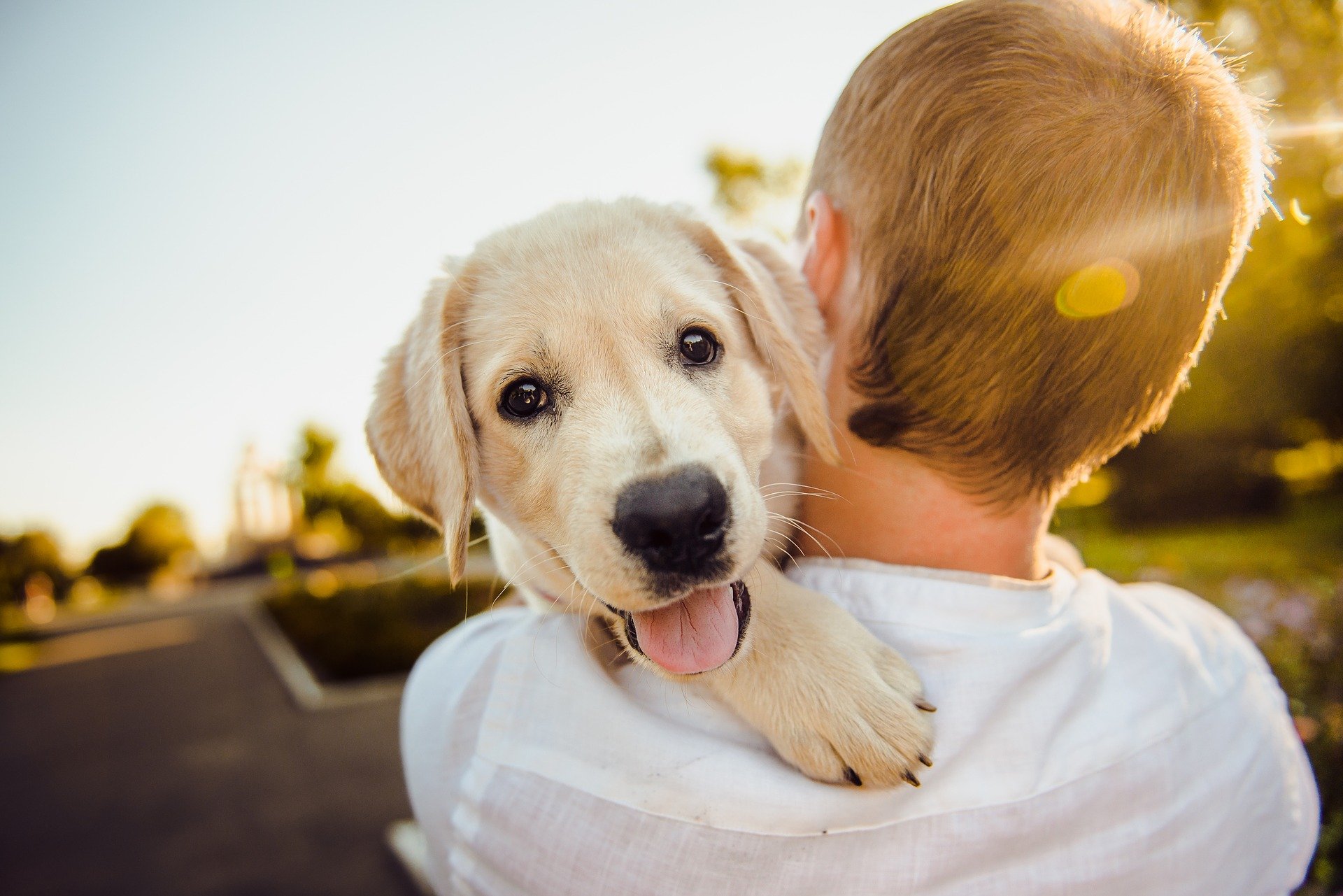
Courtesy of Pixabay
A happy dog typically equates to a happy dog owner. With 1.5 million U.S. households owning at least one pet and nearly a third of all pet owners hailing from the younger millennial generation, it goes without saying that many Americans want their dogs to be happy.
If a member of your family has four legs and some fur, you probably count yourselves amongst the ranks of pet owners looking to raise a happy pup. Here are some basic tips to make sure that you’re helping your canine get everything they need to live a comfortable, healthy, and fulfilling life.
Cover the Basics
Before you start thinking too outside of the box, it’s worth putting a little effort into ensuring that your pup has all of the basic elements required for daily life. This generally centers around three primary areas:
Water: Your dog should always have access to water. Often dogs won’t drink unless they want to. Whenever they decide it’s time to lap up some H2O, they should have water easily accessible.
Food: Dog food is an obvious purchase, but you may want to do a little extra homework. Look for food with quality ingredients and as few fillers as possible. In addition, create a list of approved human foods, like carrots and cucumbers, that you can feed your pooch as a nice treat.
Exercise: Every dog needs consistent exercise. The specific amount depends on your dog’s breed and age. Make sure to schedule in time for your pet to stay fit.
Visit the vet: Finally, make sure you’ve set up regular vet visits. It’s wise to also find a good pet insurance option to help you handle any additional expenses that might crop up during a check-up.
Once you’ve covered these basics, you can start to consider additional ways to cultivate health and happiness in your dog.
Provide Outside Access
One of the simplest-yet-most-impactful pleasures that you can give a dog is allowing them access to the outside on a regular basis. Some dogs will only want to take in Mother Nature for short stints at a time. Others will spend hours at a time outdoors, especially when the weather is nice.
If you can let your dog out regularly, plan on doing so. If you have a contained yard where they can wander without supervision, consider giving them a doggy door sized for them to comfortably fit through, too. That way they can control the number of times they head outside.
Designate Spaces
Along with outside access, make sure your dog has their own indoor space. Chances are, your happy pup will want to spend plenty of time in your company. However, just like humans, there are occasions when a dog needs some alone time.
The best way to facilitate this is to give them their own designated space. This could be the corner of a room. If you have more space, set up an entire pet room for them to occupy when they want to. This can give them the perfect retreat if they’re tired from a long day or even overwhelmed during a social gathering or a similar event hosted at your house.
Cultivating a Happy Dog and a Happy Home
It’s already been said, but it’s worth saying again. A happy dog leads to a happy owner. That isn’t just a cute saying, either. People are literally known to live longer and have good mental health if they have a dog in their lives.
ooOOoo
What a very useful article and that last paragraph is spot on. Jean and I have never been happier. Yes, we are not as young as we were (and that’s saying something) but having our dogs is perfect. So to Brandy, Pede, Cleo, Oliver and Sheena (and all the dogs that went before them) thank you!
Margaret down in Tasmania recently sent me a link to a story about a surfing dog. It was remarkable and I am going to share it with you. (I hope that I am allowed to!)
The Surfing Therapy Dog Helping Those with PTSD and Autism
It’s no secret that dogs are capable of extraordinary things. We’ve seen them predict seizures, detect cancer, sniff out buried truffles, and assist in the conservation of some of our world’s most precious ecosystems. But can a canine heal a wounded soul? Grab your surfboard (and maybe some tissues) because we are about to introduce a dog named Ricochet who is sure to melt your heart and bring on the happy tears. This sweet golden retriever has multiple championship surfing titles under her collar, but it’s the way she uses her unique talents to help others that truly makes her so special.
As many remarkable stories do, Ricochet the Surf Dog’s story began where another journey ended. She was just a lil’ pup when she began training to become a service dog, where part of her training was balancing on a boogie board in a kiddie pool. In 2009 she took her first steps into the ocean, and just a short time later that year she won third place in the Purina Incredible Dog Challenge Surfing Dogs Competition!
Alas, the temptation to chase critters was too great for Ricochet to become a service dog, but her owner Judy decided to focus on what she could do instead.
2009 was a big year for Ricochet, as this was the year she made it clear to the rest of us what her purpose really was. One day out in the water, she decided to jump aboard the board of quadriplegic surfer Patrick Ivison, and it was at this moment that her owners discovered Ricochet’s true potential.
Surfing has been at the forefront of Ricochet’s work, but her true magic lies in the way that she intuitively adapts with each individual she interacts with. According to her owner,
“…It’s her mystifying ability to make immediate, heart-to-heart, soul-to-soul connections with strangers both in and out of the water.”
Ricochet makes deep connections with all types of people, but she is most sensitive to those with PTSD who have served in the military, and children with autism. In the video we’re about to watch by the Smithsonian Channel, you can see for yourself how Ricochet has an instant calming effect on Audrey Estrada, a military veteran who suffers from PTSD and an intense fear of the ocean.
I get by with a little help from man’s best friend.
Many of us suffer from invisible threats that intrude on our mental well-being. In the U.S. alone, 6% of the population have PTSD, that’s approximately 15 million adults each year. 2
It’s a condition that is often hard to explain to other humans, so it makes total sense that a dog would make the perfect confidant. They don’t judge you, they don’t talk back or tell your secrets, they simply feel you. And in turn, carrying the weight of it all feels less heavy.
Ricochet has had such a profound impact on people’s mental health, it’s enough to make one want to ask the doctor to prescribe an empathetic dog with a pink vest. But in addition to being an adorable floof of empathy and innocence, as of 2015, Ricochet is a certified therapy dog and level II Reiki healer!
The story has only just begun.
Our wish for anything pure and good like Ricochet’s story, is that it will continue to fan out over humanity in the best way possible. And in this case, it really has.
Ricochet’s owner Judy started a non-profit called Puppy Prodigies that offers swimming lessons, canine assisted water rescue, dog training, and adaptive surfing! Click here to meet Aqua Dog Cori, a super cute female golden lab who was donated to the group and now uses her natural instinct to perform trained water rescues!
In addition to these programs, Puppy Prodigies also tackles the root of the problem that they see in many of the people they help by creating awareness for PTSD, anti-bullying campaigns, and mentorship programs. Learn more about these branches of their mission and learn how you can contribute by checking out their website here.
Catch a wave and ride that baby for as long as you can!
I hope you found this story as wonder-filled and inspiring as I did. It really made me think about the journeys that we find ourselves traveling, and the people we can help along the way if we look at our abilities through a lens of opportunity.
If you find yourself failing at something, or your plans didn’t turn out the way you had hoped, remember Ricochet. If a golden retriever can find it’s true purpose and have such a life-changing impact on others, I have full confidence that you can, too.
And when you do find it, stand sturdy and ride that wave of goodness!
ooOOoo
What a fantastic video that was. But there are many videos about Ricochet so if you want to stay with him then YouTube is as good as place to start as any.
But as we all know when it comes to dogs each dog is an individual with their own likes and dislikes. Their ability to understand us humans is magical as well. I swear that many of our dogs here at home can understand words spoken by Jean and me. Whether they interpret the words directly or associate the tones expressed with each phrase, rather like a musical sound, is beyond me. I am sure someone knows and if anyone has a link to the researcher who has discovered this about dogs then please let me know.
Suzanne Simard’s compelling book, and compelling life.
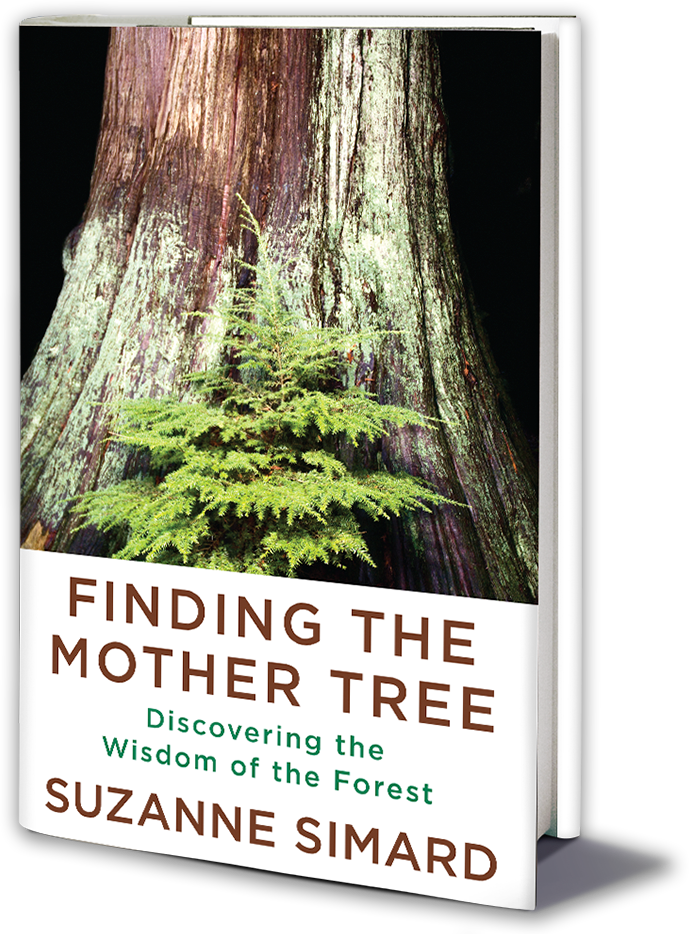
I have just finished reading Suzanne’s book. It is Finding the Mother Tree.
The subtitle might be: This is not a book about how we can save the trees. This is a book about how the trees might save us.
In her first book, Simard brings us into her world, the intimate world of the trees, in which she brilliantly illuminates the fascinating and vital truths – that trees are not simply the source of timber or pulp, but are a complex, interdependent circle of life; that forests are social, cooperative creatures connected through underground networks by which trees communicate their vitality and vulnerabilities with communal lives not that different from our own. Simard writes – in inspiring, illuminating, and accessible ways – how trees, living side by side for hundreds of years, have evolved, how they perceive one another, learn and adapt their behaviors, recognize neighbors, and remember the past; how they have agency about the future; elicit warnings and mount defenses, compete and cooperate with one another with sophistication, characteristics ascribed to human intelligence, traits that are the essence of civil societies – and at the center of it all, the Mother Trees: the mysterious, powerful forces that connect and sustain the others that surround them.
From Suzanne’s website
Luckily, you don’t have to wait for the book, you can learn about Suzanne and her precious scientific work by watching the following TED Talk.
Here are a couple of excerpts.
The first from page 277:
Our modern societies have made the assumption that trees don’t have the same capacities as humans. They don’t have nurturing instincts. They don’t cure one another, don’t administer care. But now we know Mother Trees can truly nurture their offspring. Douglas firs, it turns out, recognize their kin and distinguish them from other members of the community.
And the second from page 283:
I have come full circle to stumble onto some of the indigenous ideals: Diversity matters. And everything in the universe is connected – between the forests and the prairies, the land and the water, the sky and the soil, the spirits and the living, the people and all other creatures.
To say that I was amazed is an understatement. It is a book that will appeal to nature lovers all over the world. But more than that, the trees of the world have the ability to save humankind from accelerating climate change, if only enough people sign up to protecting trees, and soon. If you haven’t read it yet I implore you to read it now.
Finally, in Suzanne’s own words: Turning to the intelligence of nature itself is the key.
Penny first contacted me towards the end of January, 2022. I was going to publish her post not long after. But Penny didn’t realise that I had changed my email address so there was a resend involved. Then I forgot that I had her guest article waiting to be published. Then last Wednesday, the 9th Feb., I got myself ready to publish it the following Thursday, and discovered that it was in Windows format and I was a Mac user.
So that is why I nominated her as Patient Penny!
Here is her post.
ooOOoo
Must-Have Resources and Tips for Fostering or Adopting a Pup
If you want to relieve some of the tension you’ve been feeling over the last year, now may be the perfect time to add a new pet to your life! Here, Learning From Dogs shares some helpful resources to ensure you’re ready to provide health and happiness for your new buddy.
Should You Foster or Adopt?
This is the first question to ask yourself before you welcome a furry companion into your home. Each has its own perks, so read through these tips to decide whether you would prefer to foster a new pet or add a permanent member to your family.
Fostering or adopting a dog during this time of stress and anxiety can be a perfect way to calm those feelings and keep your home from feeling so lonely. As long as you can provide care, food, a few snuggles, and the essentials mentioned above, you should be able to keep your new friend perfectly safe, sound, and happy. So, what are you waiting for? Consider adopting a pup today!
First, Ricky Gervais, then Ella Henderson singing her latest release.
There are many videos on YouTube that are worth watching.
These two are well-worth sharing with you.
The first is Ricky Gervais, a well-known atheist, as are we, presenting an eleven-minute debate on religion.
Though it must be said that my old country has God Save The Queen and my new country has In GodWe Trust and I cannot see those changing in what is left of my lifetime!
The second is a fabulous rendition of Brave by Ella Henderson. Ella is a British singer and this performance is when she was invited to the UK TV programme The Graham Norton Show earlier on in the New Year.
When you’re traveling in the winter, it’s always important to take some extra precautions. If you live in a location that experiences a lot of snow, ice, or cold temperatures, keeping yourself safe should be your top priority.
But, when you’re traveling with your four-legged friend, making sure you’re even more prepared is crucial. Extra considerations should always be taken when you’re on the road with your dog. While no one wants to think about getting stranded or getting into an accident, things like that can (and do) happen. Being prepared, even if you’re only taking a short trip, will make all the difference when it comes to your own health and wellness as well as your pup’s well-being.
Winter travel can be dangerous depending on weather and road conditions. Planning should always be the first thing you do before heading out with your dog. Check your local forecast as well as what the weather is like where you’ll be traveling. If possible, avoid going anywhere when the road conditions are icy or snowy.
If you have to travel or you pick a clear day, it’s still important to make sure your drive is as safe as possible. Always adapt to the conditions you’re going through, and remember to drive slowly and cautiously on icy roads.
You should always have a few extra supplies in your car for your pup, but in the winter it’s even more crucial for their safety – as well as yours. Some of the basic items you should have packed include:
A first aid kit
An extra blanket
Extra clothes/gloves
Handwarmers
Extra food/water
A compact snow shovel
For your canine companion, having an additional blanket, plenty of water for them, and a toy or treat to keep them occupied will make a big difference.
If you get “stranded” anywhere for a while, don’t leave your dog in the car while you go look for help. While most pet owners understand the risks of leaving a dog in a hot car, leaving them in a cold vehicle can cause frostbite or hypothermia in a very short time. Stay with them until help arrives. Having your car stocked with the right items will keep you both safe and warm.
Make the Most of Your Travels
Traveling with your pup is a great way to break away from the potential “winter blues” that many people face. Whether you want to head somewhere warm or just embrace the season as is, getting out can actually improve your overall health and well-being. Spending time outdoors can reduce your stress levels, give you more energy, improve your mood, and even boost your testosterone levels. You don’t even have to chop down a tree to get that last benefit, so it’s really a win-win.
No matter where you’re going, make the most of your travels by sticking to your health and wellness goals. Dogs need exercise just as much as people, so bring your furry friend with you on snowy hikes, or take them cold-weather camping to enjoy nights beneath the stars together. Just make sure to stay hydrated, dress appropriately, and moisturize your skin if you’re spending a lot of time outdoors. Dry, cracked skin can be painful and unsightly. Don’t forget your pup’s paw pads, too!
With a bit of planning, preparing, and packing, you and your dog can enjoy plenty of travels together this winter. They’ll love being able to spend that extra time with you, and you’ll both be able to get as much out of the season as possible.
ooOOoo
I hope some of you are experiencing decent snowfalls. Here in Southern Oregon we had some snow but as soon as it was on the ground the next day it had gone. The outlook for the next ten days is cold and dry!
Among the many dog-related blogs that I read is Treehugger. It covers a wide range of sustainable actions and habits and not infrequently writes about dogs. That is the main reason I follow the blog.
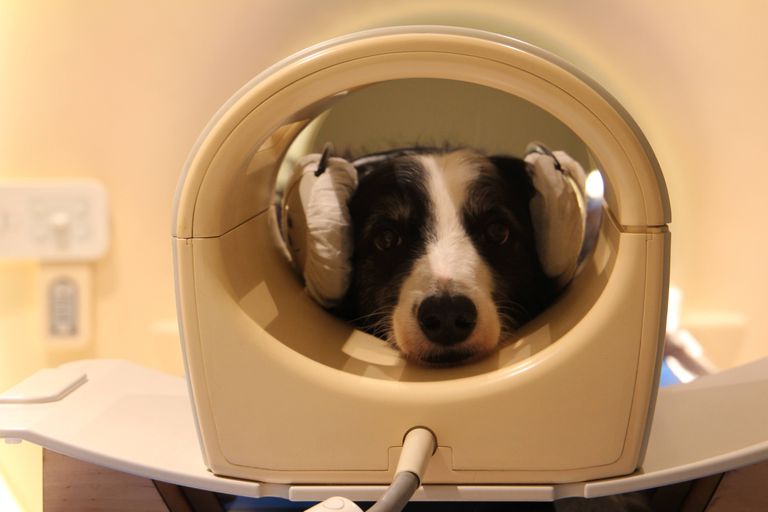
Kun-kun the border collie listens to language in an MRI machine. EnikÅ Kubinyi
You talk to your dog, and of course, you’re convinced your pup understands you. But what if a dog is plopped down in a place where suddenly everyone is speaking a different language?
In a new study, researchers have used brain imaging techniques to find that dogs can differentiate between familiar and unfamiliar languages. Researchers say the findings, from the Department of Ethology at Eötvös Loránd University in Hungary, are the first evidence that shows a non-human brain can distinguish between languages.1
A few years ago, first author Laura V. Cuaya moved from Mexico to Hungary for her postdoctoral research. Before the move, Cuaya’s border collie Kun-kun had only heard Spanish. She was curious whether he would notice that people in Budapest spoke a different language, Hungarian.2
“Like many dogs, Kun-kun tends to pay attention to humans, trying to predict their social environment,” Cuaya tells Treehugger.
“When we moved to Hungary, it was a whole new world for everyone. In Budapest, people are very friendly with dogs. When people talked to Kun-kun, I wondered if he picked up the language difference. And happily, this question fitted with the goals of the Neuroethology of Communication Lab.”
For their study, researchers recruited Kun-kun and 17 other dogs, who had been previously trained to lie still in a brain scanner for functional magnetic resonance imaging (fMRI).1
The dogs were played speech excerpts from “The Little Prince” in Spanish and Hungarian. Each of the dogs had heard only one of the two languages: Hungarian was the familiar language of 16 dogs, Spanish of the other two dogs. That allowed them to compare a very familiar language with a completely unfamiliar one.1
Researchers also played scrambled versions of the excerpts to the dogs. These were nonsensical and completely unnatural. This was to test whether they could tell the difference between speech and nonspeech.1
They compared the brain responses to the two different languages and to speech and nonspeech.
“We found distinct cerebral regions for both processes: for speech detection (speech vs. non-speech), the primary auditory cortex, and for language recognition (familiar language vs. unfamiliar language), the secondary auditory cortex,” Cuaya says.
“Our results may suggest a hierarchy processing in the dog’s brain to process speech. In the first stage, their brain would detect whether a sound is speech or not. Then, in the second stage, their brain would identify whether the speech is a familiar language or not.”
The results were published in the journal NeuroImage.
Exposure and Age
Researchers found that no matter which language the dogs were listening to, the primary auditory cortex of the dogs’ brains could distinguish between speech and scrambled, nonspeech.1
“Dog brains, like human brains, can distinguish between speech and nonspeech. But the mechanism underlying this speech detection ability may be different from speech sensitivity in humans: whereas human brains are specially tuned to speech, dog brains may simply detect the naturalness of the sound,” says Raúl Hernández-Pérez, coauthor of the study.
They also determined that dog brains could differentiate between Spanish and Hungarian. Those patterns were found in a different region of the brain called the secondary auditory cortex.1
Researchers found that the older the dog was, the better their brain was able to tell the difference between a familiar and unfamiliar language. That suggests that the longer dogs live with their people and are exposed to a language, the more they understand how their language sounds.1
“As we could not control the amount of exposure to language in our study, we used the dog age as an indirect measure of the time dogs have been exposed to a given language,” Cuaya says. “I hypothesize that dogs with a closer relationship with humans will better distinguish languages. It could be great if future studies test puppies to control the exposure to a language better.”
Dogs as Models
Researchers are curious whether this language differentiation is unique to dogs or whether other non-human animals may also be able to distinguish between languages.2
“A variety of auditory regularities characterizes each language. For example, sometimes, we cannot identify what language we are listening to. However, we can likely recognize its general origin (e.g., an Asian or Romance language) because of its auditory regularities,” Cuaya explains.
“Detecting regularities is something that brains do very well, not only humans or dogs’ brains. It is highly likely that other species can be trained to differentiate between languages successfully.”
But Cuaya points out that in their study, dogs weren’t “trained.”
“Their brains detected the difference spontaneously, perhaps due to the domestication process,” she says. “While it is likely that other species can differentiate between complex sounds, it is possible that just a few species are interested in the human language.”
Researchers believe the findings are important because by studying dogs, they can have a broader picture of the evolution of speech perception.2
“Dogs are an excellent model because they have been living—and cooperating—with humans for thousands of years. When we wonder if another species cares about what humans do, it is inevitable to think of dogs. In the case of language perception, we can learn, for example, that different brains—with different evolutive paths—can carry out a similar process,” Cuaya says.
“Also, as someone with dogs in my family, it is lovely to know that dogs are picking up subtle cues of their social environment all the time.”
2. first author Laura V. Cuaya from the Department of Ethology at Eötvös Loránd University in Hungary
ooOOoo
Time after time I learn new things about dogs. This is another example of the mystery of a dog’s brain. Thank goodness there is scientific study into our lovely animals.
A good friend of mine, Peter McCarthy, back in the UK, said that he had recently gone on to a supplement called Lion’s Mane. It is a supplement for keeping the cognition working and maintaining good brain function. Peter also mentioned a film called Fantastic Fungi that was available on Netflix.
At home we have Netflix and we watched the film. It was incredible, almost beyond words.
If you want to watch the official trailer then here it is:
The film is about the power of Mycelium. Here is an extract from Fungi Perfecti:
The activities of mycelium help heal and steer ecosystems on their evolutionary path, acting as a recycling mechanism to nourish other members of the ecological communities. By cycling nutrients through the food chain, mycelial networks benefit the soil and allow surrounding networks of plants and animals to survive and thrive.
Increasingly known as the “wood wide web”, mycelium can be found underfoot with nearly every footstep on a lawn, field, or forest floor. It has been concluded that as much as 90% of land plants are in a mutually beneficial relationship with mycelial networks. Without fungi – without mycelium – all ecosystems would fail.
Mycelium and mycological applications have enormous potential to benefit the health of both people and planet. We are committed to continuing our research efforts to find new and innovative ways to build bridges between mycological applications to both human and planetary health.
We can think of it in a way of finding the mother tree.
The film speaks of protecting the old-growth forest trees. So if you have old-growth trees nearby, do everything in your power to protect them.
Forest researcher and university professor Dr. Suzanne Simard has spent years studying trees. Her research led to the discovery that the forest’s plants and trees have an underground communication system, with trees and fungi cooperating. Her Ted talk brought her work to a larger audience, while her 200 articles in peer-reviewed journals shared her research findings with the larger science community. Now, she is releasing her first book Finding the Mother Tree, published by Penguin Random House.
‘This is not a book about how we can save the trees. This is a book about how the trees might save us’.



 Learning from Dogs