Category: Economics

Basel

The Basel Committee on Banking Supervision

I suspect that you, like me, know diddly-squat about the Basel Committee.  As the Bank of International Settlements puts it:

The Basel Committee on Banking Supervision provides a forum for regular cooperation on banking supervisory matters. Its objective is to enhance understanding of key supervisory issues and improve the quality of banking supervision worldwide. It seeks to do so by exchanging information on national supervisory issues, approaches and techniques, with a view to promoting common understanding. At times, the Committee uses this common understanding to develop guidelines and supervisory standards in areas where they are considered desirable. In this regard, the Committee is best known for its international standards on capital adequacy; the Core Principles for Effective Banking Supervision; and the Concordat on cross-border banking supervision.

The Committee’s members come from Argentina, Australia, Belgium, Brazil, Canada, China, France, Germany, Hong Kong SAR, India, Indonesia, Italy, Japan, Korea, Luxembourg, Mexico, the Netherlands, Russia, Saudi Arabia, Singapore, South Africa, Spain, Sweden, Switzerland, Turkey, the United Kingdom and the United States. The present Chairman of the Committee is Mr Nout Wellink, President of the Netherlands Bank.

OK, that’s clear then!

Pers Kurowski

Well, according to a good supporter of and Guest contributor to Learning from Dogs, Pers Kurowski, we really ought to know much, much more about this ‘committee’.

Pers has a Blog called Tea with FT (as in the Financial Times) and there is much to read there that helps us understand why we are in so big a mess with the banks.  Here’s his piece from the 4th May.

Basel Committee, why don´t you just shut up!

Sir who do these Basel Committee regulators really think they are bullying us around with an arrogant “the banks should be sensible and realise that it might backfire if they protest too much”? as reported by Brooke Masters, May 4.

They themselves are the ones who thought everything would be fine and dandy if they just had some few credit rating agencies determine default risks and then gave the banks great incentives, by means of different capital requirements, to follow those credit risk opinions. They themselves are the ones who believing in the abundance of safe triple-A rated lending and investments, caused the world to stampede and fall over the subprime mortgages. They themselves should shut up, because rarely has the world seen such a gullible naive and outright stupid bunch of regulators.

Now the banks, in the midst of a crisis, need to build up the equity they do not have precisely because the Basel Committee did not require them to have; precisely when we need the most the banks to lend. The regulators, instead of bullying banks, should busy themselves day and night finding ways for severely capital stretched banks to be able to lend to those small businesses and entrepreneurs who have had to pay the cost of higher capital requirements but who had absolutely nothing to do in generating this crisis.

And just in case, for the record, I am no banker, only a citizen, very upset with the fact that in the 347 pages of the regulations known as Basel II, there is not one single word that describes the purpose of those regulations. Basel Committee why do you not start defining a purpose for what you are doing? Is that too much to ask?

By Paul Handover

Gold or Dollars?

Is Gold Really A Superior Investment?

I’m sure you’ve heard about the steady rise in gold prices over the last several months. You may have also seen the advertisements from gold investment companies pushing the purchase of gold, or heard predictions about even higher gold prices as world currencies struggle.

And just yesterday, the world’s first “Gold ATM” machine was unveiled in Abu Dhabi (Gold ATM Machine, Financial Times).

Gold dispensing machine in Abu Dhabi

We have to take a step back and ask ourselves about the true underlying value of gold.

Why is it valuable?  Because people demand it, and there is a relatively limited world supply.  Why do people demand gold?

It’s not like gold will sustain you: you can’t eat or drink it, nor does it have utility in and of itself.

No, the reason gold has value is because it can be exchanged for money which, in turn, can be exchanged for goods or services.  So the value of gold is derived from the very same place as is the value of money:  access to underlying goods and services.

The actual value of gold, however, is entirely dependent on other people’s demand for gold, given limited supply, much like fine art.  Unlike money, you cannot actually use gold for transactions:  have you tried to use a bar of gold at your local restaurant or car dealer, for example?

Think about it: if for some reason gold fell out of favor — let’s say someone discovered it was toxic — then gold would no longer be desired as an indirect means of exchange — having to first be exchanged for currency — and its price would drop to nothing, quite independently of the value of money itself.

The value of money it also dependent on its demand, which in turn depends on the acceptability of the currency on the world stage as a unit of exchange.

Dollars are accepted as currency and retain their value as long as the underlying real U.S. economy continues to be productive, and as long as the world supply of dollars does not outstrip the world demand for dollars.

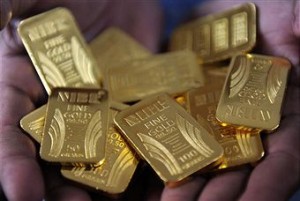
Gold bars

Dollars are suffering at the moment for two primary reasons:  the attack on private industry by Obama’s policies, and the excessive world supply of dollars.  Both of these factors drive down the value of a dollar, and drive up the number of dollars that a bar of gold commands.

by Sherry Jarrell

Euro Crisis Master Plan

STOP PRESS – Now we have a Master Plan!

EU Foreign Ministers meet to draw up a policy re euro crises.

Herman Van Rompuy

European Council President Mr Herman Van Rompuy (aren’t we so lucky to have yet another tier of vastly-expensive management – a President of a country that doesn’t even exist?) said: “Everyone shares the will to go forward together”.

Indeed. It would be rather strange if one or more didn’t share “the will” and preferred to go backwards. But going forwards together infers at the same speed and in the same direction.

The Meeting drew up this plan of action.

  • greater budgetary discipline (will you tell France and almost every other country that never stuck to the 3% budget deficit or shall I?)
  • find ways to reduce the divergences in competitiveness between member states (so German IS going to take over Greece then? What fails in war can be achieved in the economy.)
  • establish an effective economic crisis management mechanism (you mean, prepare to borrow billions more to bail out those who fail in the above two areas?)
  • strengthen economic governance to be able to act quicker and in a more coordinated and efficient manner to deal with any future economic crises (yes, you could get a bit more efficient  than ignoring the rules for 10 years – certainly scope for improvement there.)

Is there any way not to be simultaneously cynical and depressed about Europe at the moment?

By Chris Snuggs

The U.S. Fate, Mr. President?

First General Motors, then Student Loans. What’s next, Mr. President?

In a Bloomberg BusinessWeek article, the most recent seizure of private industry in Venezuela was reported, with as much calm and lack of alarm as one may report on the the weather or a walk in the park.

I fear that this is where the U.S. is headed in the all too near future, given the takeover of the auto and student loan industries, and President Obama’s apparent admiration of President Chavez and all he does.

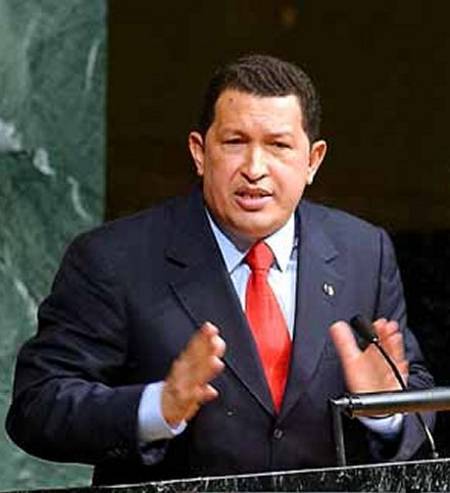
Pres. Chavez

To quote from the article, which speaks for itself:

President Hugo Chavez announced Saturday the expropriation of a group of iron, aluminum and transportation companies in Venezuela’s mining region.

Among the expropriated companies is Materiales Siderurgicos, or Matesi, which is the Venezuelan subsidiary of Luxembourg-based steel maker Tenaris SA.

Venezuela’s socialist president said in a televised that his government was going to take over Matesi because “we couldn’t reach an amicable and reasonable settlement with the owners.”

Chavez said production at the company has been paralyzed since midway through last year, when Venezuela’s president announced plans to nationalize it.

Chavez said he was also going to expropriate Venezuelan-owned Orinoco Iron and aluminum-maker Norpro de Venezuela C.A., which is an affiliate of the U.S. company Norpro in association with France’s Saint Gobain, among other companies.

As well, Venezuela will take over transport companies that ship raw materials in areas southeast of Caracas. He did not name the companies.

Since coming to power more than a decade ago, Chavez has nationalized major companies in the electricity, oil, steel and coffee sectors, as well as other private businesses.

by Sherry Jarrell

LIES and the EURO

MERKEL IN TROUBLE

You eventually pay for LIES and STUPIDITY, even if it takes time. Sadly, the euro was born in a lie and now Merkel has compounded the problems by giving in to French pressure and being stupid. But the German people (in contrast to their leaders) have no desire to be the bankers of all Europe.

What Merkel has done is utter folly and, worse, won’t even fix the problem. The ONLY way to fix a problem is to DO THE RIGHT THING, which is not rescue people from their idiocy but allow them to take the consequences of it. This is not wishing to be cruel but just the way people learn difficult lessons.  As J J Rousseau observed,  “The fastest way to teach a child about the danger of fire is to let him burn himself once”… or words to that effect!

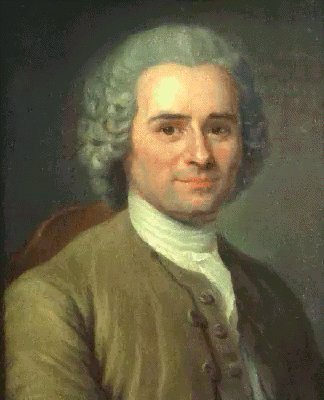
J J Rousseau, philosopher

Besides, the euro WITHOUT Greece would be a damned sight more convincing than WITH it. The Germans gave up the Deutschmark on the PROMISE that the euro would be as strong by following strict rules.  The EU even MADE A RULE that no country could have a budget deficit of more than 3%. This was insisted on by Germany PRECISELY in order to avoid this sort of surreal situation where the Greeks, Portuguese, Irish, etc. (and Britain, but we are not in the euro …) would NOT wildly overspend.

These “strict rules” were breached before they had hardly started, first by letting in Greece and then France a year or so later, justifying the decision by saying that the rules didn’t apply to big countries — in other words, the rules didn’t apply to themselves.  Brussels, and the French and German elites, LIED to the people.

The criminal bit is that these countries just IGNORED the rules. And even more criminal, they (Germany included) just IGNORED what was going on in Greece and elsewhere until, surprise, surprise, it all reared up out of the sand and hit them in the face. Now the Germans have to accept even MORE tax increases, despite being already very highly taxed, just like the French and – increasingly – the British. The British finally got fed up with being lied to and dumped their government. Germany may be going the same way. (France swings wildly from left to right anyway, and each time it seems worse than before.)

Besides, Germany can’t AFFORD to bankroll the whole of Europe. France, too, is ludicrously over-spent and top-heavy with her state. The consequence of all this will no doubt be vast political gains for the left in both countries, but the left have even LESS idea about how to run an economy – see Gordon Brown of “I do know how to run an economy”  fame (perhaps he meant “ruin an economy?!”).

Europe is in deep trouble and I really don’t think the politicians even now understand it. Some say that a gradual decline of Europe is already inevitable as Asia rises; the current mentality of  lying, overspending, over-borrowing, bailing out undeserving basket cases and over-centralisation will only accelerate this decline.

But for some, of course – such as Jose Manuel “Boring”oso –  this crisis is manna from Heaven; a big step towards a United States of Europe and vastly increased power for Brussels. For God’s sake call his  bluff. We don’t WANT an “economic union” run from Brussels. It will be a bureaucratic, tax-heavy nightmare, as in France.

Jose Manuel Barroso, EU President

“Let’s be clear,” said the European Commission president, Jose Manuel Barroso, last week. “You can’t have a monetary union without having an economic union. Member states should have the courage to say whether they want an economic union or not. And if they don’t, it’s better to forget monetary union altogether.” EuroActiv May 12, 2010.

These people are really unbelievable. If Barroso is so sure about not being able to have monetary union without economic union (and, of course, ipso facto political union as well) then why didn’t he say this at the beginning? The pro-USE lobby really kept that quiet, didn’t they. It is all a big LIE.

So, to cure indebtedness, you incur FURTHER vast debts? It is surreal.   Niall Ferguson, an economic historian at Harvard University, put it this way: “This bailout wasn’t done to help the Greeks; it was done to help the French and German banks. They’ve poured some water on the fire, but the fire has not gone out.”  NYT May 17, 2010

The European rescue plan, which totals 750 billion euros thus far and was intended to head off the risk of default, will instead greatly increase borrowing.  That could be the end of Europe’s nascent recovery.

by Chris Snuggs

Derivatives are Not Evil

Are Derivatives Really to Blame?

Derivative securities are not inherently evil, though the media would have you think otherwise. It seems that any

Are they evil?

type of investment that does not directly involve commodities is an easy target these days.

But derivatives are just another type of investment, those whose value is derived from some underlying security or asset or event.   Insurance is a type of derivative investment, as a matter of fact. If the bad event happens (a car accident, flood, or fire, for example), then a claim is made against the policy.  If not, the policy expires.   The value of the policy is derived from the insured asset or event.

If derivatives are bad, then so too is insurance.  If derivatives are bad, then so too are leases with the option to own.  If derivatives are bad, then so too is the equity in any type of company, small or large, private or public, including those that produce real products and commodities, for stock is nothing more than an option to buy the underlying assets of the company for the price of the face value of its debt.  If derivatives are bad, then so too are convertible securities and most every other type of financial innovation we’ve witnessed in the last 30 years, and for decades to come.

by Sherry Jarrell

Merkel Suffers Greek Bailout Backlash

I told you so!

From the BBC…

German Chancellor Angela Merkel’s party and its coalition allies have been defeated in regional elections in North Rhine-Westphalia.

North Rhine-Westphalia, Germany

German Chancellor Merkel appears to have lost the state vote in NRW and may see her control of parliament reduced or eliminated. It’s her own fault.

Germany and in particular NRW (the industrial powerhouse of Germany) are in a serious economic situation with enforced cuts left, right and centre and yet she has loaned (aka given) billions to feckless, idle, corrupt and shambolic Greece.

The Germans have had to tighten their belts and are still paying vast sums to bring East Germany up to speed, yet Merkel feels she can fritter away her people’s money to “save the euro“. It won’t save Greece or the euro.

The Greeks fully deserve to go bankrupt and are incapable of complying with the degree of “cuts” the Germans are demanding. Other European countries will lose money if Greece defaults. Tough.

Better to suffer a one-off loss than an endless shelling-out into a black hole. No bailout of Greece, Portugal, Spain, Ireland or Britain. Did the PEOPLE of ANY of the rest of EU countries have ANY say in this at all?

It seems the French pushed hard for a bailout. What a coincidence that some of their insurance companies have invested heavily in Greece. TOO BAD. Greece’s problems have been well-known for years; which moron poured billions into their black-hole, retire-at-53, inherit-your-sister’s-pension, go-to-work-if-you-feel-like-it economy?

And the Greeks? They seem to feel it is the fault of the REST of us that they have to make cuts. Was a reality check ever more fully needed? Sadly, but inevitably, there will be social breakdown in Greece from which something new will emerge. What that is, one cannot say, but I do not believe it can include membership of the Euro.

The Brussels Overlords think differently. Their little Euro brainchild must be saved at all costs. But they are all personally very well off and have no problems with money, unlike the majority of their constituents thanks to the despicable fraud perpetrated on them by the banks under the appallingly-negligent supervision of a multitude of governments.

I have written about Greece several times in recent weeks since to me it is a symbol of the combination of arrogance and utter folly of many of Europe’s governments – and in particular Brussels – who have overspent wildly, who have allowed their banks to make fraudulent loans and have imposed an ever-increasing burden of bureaucracy, Human rights, paperwork and regulations on the peoples of Europe.

How we are supposed to compete effectively when we A) price ourselves out of the market and B) wildly overspend is a mystery.

Has Europe now to prepare itself for a long period of decline and retrenchment in living standards as Asia maintains its inexorable growth and raw materials rocket in price? I fear so, but it’ll be the ordinary people bearing the brunt of all this, not the increasingly-remote politicians in national governments and Brussels.

Greece is a warning for the rest of us. There is no law that says we cannot go the same way. The UK and France in particular have bloated, feather-bedded public sectors. The chickens always come home to roost, and they are now flocking rapidly towards the hen-house.

By Chris Snuggs

I am scared!

Guest author, Per Kurowski, on a rather sobering topic!

I do not know what worse, the arrogance of the regulators thinking they can squeeze out the risk in banking by imposing different and completely arbitrary capital requirements based on the opinions of some few human fallible credit rating agencies, or their childish innocence not knowing this creates systemic risks of gigantic proportions.

What I do know is that an amazing number of intelligent people have fallen for this absurd and extremely dangerous regulatory paradigm. Honestly… I am truly scared!

How could I not be with regulators who can authorize banks to leverage up 62.5 to 1 on public debts like Greece’s while at the same time placing a 12.5 to 1 ceiling on the lending to the small businesses and entrepreneurs whom we depend so much on for our jobs.

Better hope they don't need funding!

All those financial and regulatory experts who kept mum when they should have spoken out on the financial crisis about to happen are now, quite effectively, circling their wagons in order to promote the myth that no one knew. False many did! In order to benefit from the lessons we must learn, they should not be allowed to succeed.

On October 19, 2004, as an Executive Director of the World Bank (2002-2004) I presented a written formal statement at the Board and that included the following:

We [I] believe that much of the world’s financial markets are currently being dangerously overstretched through an exaggerated reliance on intrinsically weak financial models that are based on very short series of statistical evidence and very doubtful volatility assumptions.

And I was no investment banker, nor a regulator, nor an investor, and so to me it is clear that all of them, had they done their job right, should have known… and that this crisis should have been nipped in the bud much earlier, as

Per Kurowski

the real explosion in truly bad mortgages took off in 2004, when the SEC in April delegated the setting of the capital requirements for the investment banks to the Basel Committee, and the G10 in June approved Basel II.

In order to understand it all don’t follow the money… follow the AAAs.  In case you missed “The Financial Crisis explained to dummies, non-experts and financial regulators” you can read it here.

By Per Kurowski

PS. I have put up a document that resumes most of what I said before and during my term as an Executive Director.

“Wild” Swing in the Dow Jones?

Market Swings are Normal…nay…Desirable!

Roller coaster?

Just to try to help put stock market swings into perspective, consider this:

  • the 347.8 point fall in the Dow Jones Industrial Average last week, from 10868.12 at the start of the trading day on Thursday, May 6, 2010 to 10520.32 at the close of trading, can be COMPLETELY explained by an increase in the perceived cost of capital from 12% to 12.23%.
  • do the math.  Using the constant dividend growth model, a very simplified model of the market value of equity, or Market Value = Current Dividend/(cost of equity capital – dividend growth rate), and assuming a long-term average cost of U.S. equity capital of 12% and average growth rate of 5%, we find that the opening level of 10868.12 = 760.77/(.12 -.05), and the closing level of 10520.32= 760.77/(.1223 -.05).
  • I think it is entirely possible that the chaos in Greece and surrounding nations, and the interconnections between worldwide supplies of liquidity and financial capital, that an increase in the perceived risk and uncertainty of the returns to equity from 12% per year to 12.23% per year makes perfect sense.
  • The market’s are working.  Market participants, from the individual investor using on-line trading at 2:00 in the morning from their living room to the most sophisticated computerized large-scale institutional trader, understands that a borrower’s ability to pay back its investors depends on the real productivity and growth of private industry, whether the borrower is a company or a country.

by Sherry Jarrell

The Fourteenth Banker

What interesting times we live in.

Came across a relatively new Blog with the title The Fourteenth Banker.  Caught my eye because of the similarity to the book written by Simon Johnson and James Kwak of Baseline Scenario fame.  Here’s an extract from the ‘About’ piece of this new Blog.

In response to the comments of folks in the Congress and oversight regimes, I have created this blog as a home for bankers who need to speak out and do not have a central clearinghouse or a safe place to do so.     Big banks now treat their employees like property, bought and owned.     Typically employees must subject themselves to all sorts of potential sanctions, forfeitures of compensation, clawbacks and even lawsuits if they speak in ways we often have thought were protected speech.   I am not talking about revealing confidential customer or proprietary information, I am talking about simply commenting on a company, management philosophy, making general observations or raising concerns.     It makes one appreciate unions even if not historically supportive of unions.   At least management and labor can have a debate.    Not so in today’s large banks.    Gag orders are written in the most intimidating way, included in Codes of Ethics, attached to incentive plans, posted on the company home pages.     We should ask ourselves, what is the big secret?

Do support the Blog by calling by.  Here’s a taste of what they are writing about:

Lying at Leyman

What is a million between friends?

Read this piece from Bloomberg Businessweek How Much Did Lehman CEO Dick Fuld Really Make?

This can only be called what it is. Delusion. Delusion about self, society, morality, values and anything else you can name. These are symptoms of a grave illness which is too common among those in power. In fact, the illness may be the requisite to power.

By Paul Handover