Category: Economics

Sandy’s legacy perhaps?

Will history show in a few years that Hurricane Sandy was a turning point?

Not available to watch in the USA, there’s been a programme on BBC TV under the heading of Sandy: Analysis of a Hurricane.  I am told by those who have watched it that it is chilling in a very frightening way.  It shows the power, both literally and metaphorically, of the effects of much warmer seas off the US eastern seaboard.

Yesterday was the concluding part of Ellen Cantarow’s essay.  If you missed it and want to read it, Part One is here and Part Two here.  In that second part, I included a video showing graphically, in a very creative way, the effect of New York City addeding 54 million metric tons of carbon dioxide (equivalent) to the atmosphere in 2010.  I saw that video in a recent post by Christine of 350orbust fame.

Christine has very kindly given me written permission to republish that post.  I have left out the video as that was included on Learning from Dogs yesterday, as just mentioned.

Our Carbon Pollution: Is It Different From Raw Sewage?

In a very short time – years or at most decades – humans will look back at our spewing of carbon pollution into the atmosphere with the same disgust and disbelief that we now look back on people in the middle ages in Europe who dumped their raw sewage into the streets. Here’s a recent video that makes tangible the carbon emissions that New York City spews out every day.

The good news is that Hurricane Sandy may have started a new discussion in the U.S. on climate change in general, and pricing carbon pollution in particular (sadly, in Canada we are lagging far behind. Our current federal government is intent on dragging us back into the 20th Century):

  • Speaking to Bloomberg News, oil and gas giant Exxon reiterated its support for a carbon tax yesterday. A spokeswoman for the company said that the tool could “play a significant role in addressing the challenge of rising emissions.” Click here to read full article.
  • The right wing American Enterprise Institute recently held a day-long conference on pricing carbon: Yesterday, the American Enterprise Institute hosted a conference to talk about anything and everything related to the economics of carbon taxes.  Normally, a full-day conference with more than a dozen speakers on a tax issue in DC will be lucky to get more than a few dozen attendees, even with a free lunch.  Carbon taxes, though, are different.  The enthusiasm for this issue is such that there were over 200 attendees, many of whom stood for half the day.

What makes carbon taxes different? Simply put, people across the political spectrum now know that putting a price on carbon is an indispensable tool for dealing with our climate and budget problems, and that a carbon tax is the most politically viable path forward.  This dynamic has created an exciting amount of momentum that now needs to be turned into policy. Read more on ThinkProgress.

  • This week, in an open letter, a coalition of the world’s largest investors (responsible for managing $22.5 trillion in assets) called on governments on Tuesday to ramp up action on climate change and boost clean-energy investment or risk trillions of dollars in investments and disruption to economies. They said rapidly growing greenhouse gas emissions and more extreme weather were increasing investment risks globally.
  • The World Bank – now headed by a scientist, for the first time ever – released a report this week calling for urgent action on climate change. “Turn Down the Heat: Why a 4°C Warmer World Must be Avoided,” warns we’re on track for a 4°C warmer world marked by extreme heat-waves, declining global food stocks, loss of ecosystems and biodiversity, and life-threatening sea level rise.
  • On the good news front – the Tesla Model S won the 2013 Car of The Year award, the first electric car to win in the 60 year history of the award! Read more. Also under the heading of  “good news”, Harvard Students have voted to support their university’s divestment from the fossil fuel industry (read more).

It feels like we’re on the edge of a paradigm shift. What do you think?

For all our sakes, I do hope Christine is correct in her judgment.

A plea from the Executive Director of Greenpeace UK

Attention all UK-based Learning from Dogs readers: I received this email today and felt compelled to publish it on my blog – and now here as well (thanks Paul).

For the benefit of new readers (thank you – and welcome – to you all), when you read the email appended below, please bear in mind that I am (or at least have been) a supporter of the Conservative Party.  However, I am very upset by the way in which the Coalition government’s position regarding the Climate Change Act (and our commitments to invest in renewable power generation technologies of all kinds) is being undermined by climate change sceptics who have been encouraging people like John Hayes (Energy Minister) and George Osborne (Chancellor) to question the sense of investing in the Green Economy.

It is also worth pointing out that I do not agree with Greenpeace’s attitude to GMOs or Nuclear Power but, that does not prevent me from supporting them in their attempts to publicise the failure of our politicians to take a strategic long-term decision (to lessen our dependence on fossil fuels) and stick to it.  I therefore hope you will consider adding your name to the online petition to the Prime Minister to get him to face-down the sceptics in his own party; and stick to his election manifesto pledge to lead “the greenest ever government”.

**************************************************

Hi Martin,

I don’t normally email you, but this campaign you’re part of is making headlines.

It’s been front page of the newspapers for two days now and over 35,000 of us have told David Cameron to weed out the climate saboteurs in his party.

But we need many more in our movement if we are to overcome this new anti-climate ‘Tea Party’ trend infecting UK politics.

Please forward the email below to one person you know who will join us. If we all do that, we’ll be 70,000 strong by tomorrow.

Right now we have the opportunity to define our future. If the government does the right thing, we could be getting our energy from renewable sources which would create new jobs, stabilise our bills and help protect the rapidly melting Arctic.

But all that is in danger now as highlighted by our undercover investigation.

If we want a green and a peaceful world the most important thing we can do is source our energy in a way that doesn’t harm the environment. Our only choice is clean energy – let’s demand it from the government.

Please forward the email below to at least one person who will join us.

We’re only getting started,

John Sauven
Executive Director
Greenpeace UK

**************************************************

Hi there,

Over 20,000 people have already told David Cameron to stop Osborne sabotaging progress on climate change.

If these Conservatives have their way, we’ll have more dirty, expensive gas power stations written into the Energy Bill. The bill is crucial in shaping the way our electricity is generated for the next 30 years.

Osborne wants to hand the Energy Bill – and our future – to the gas companies, allowing them to build dozens of new gas power stations. This dash for gas could lead to decades of unrestricted carbon emissions and increasingly volatile household bills, plunging more people into fuel poverty.

We need the opposite, so join the campaign for a future built on clean energy.

A clean Energy Bill would mean almost zero carbon emissions from electricity generation by 2030, a new wave of clean energy and a thriving green economy with tens of thousands of new jobs.

A majority of us – 64% of the British public – want renewable energy powering our lives.

Osborne knows he’s in the minority, and recent investigations shows he’s positioning climate sceptics and anti-wind MPs in key government roles – like pieces on a chessboard – to undermine the progress we’ve made.

But Osborne still answers to the prime minister.

It now falls to David Cameron to respond to the scandal we’ve uncovered and decide where his party – and our country – is going.

At the last election when looking for our votes, Cameron rebranded the Conservative party with the environment at its heart. Our undercover investigation shows he has a fundamental question to answer: will he side with the majority of the British public, or the dirty energy faction led by George Osborne?

Tell David Cameron to listen to the country on clean energy, and please watch the undercover report and share.

Thanks,

Pete and the Energy Team
Greenpeace

Three years on, and ….

Nothing much changes.  This post first published on the 4th November, 2009!

Debt stress in Middle Class America – how may this play out?

On Saturday, October 24th Yves Smith of Naked Capitalism ran a Post on her Blog about an anonymous couple who were over their heads in debt.  (Yves has given me written permission to reproduce the Post.) The story of this couple then generated a huge response of comments. Read the comments, each and every one of them.

Then ask yourself abraham-lincoln-picturewhere this is all heading?  These comments may, almost certainly are, just be the tip of the iceberg.  Seems a long way from Lincoln’s Gettysburg address in which he was reputed  to have used the words: “… government of the people, by the people, for the people, shall not perish from the earth.”

Some days I worry; worry a lot!

The extract from Yves Post about this couple is reproduced below but far better is to go and read the whole Post and all the comments.

UPDATE: Since writing this Post Yves has published a further Post on the topic again generating a huge volume of comments.  That was Sunday, November 1st.  Then bright and early on November 2nd James Kwak of Baseline Scenario weighs in with his version, Do smart, hard-working people deserve to make more money? 150 comments (at the time of writing) for that one.  Interestingly, as the days have gone on the mood of the commentators has become more reflective and thoughtful thus partly negating the theme behind this Post.

This is the original Post from Naked Capitalism:

Some readers like to demonize those who get in over there heads with debt as people who lived high on the hog and had their day of reckoning come upon them. This story, forwarded from a reader, shows the picture is more complicated.

When I was young, savings of six months of living expenses was considered to be a good cushion against risk. Is that true any more? I doubt it. Although this couple didn’t even have that much stashed away, the sort of buffers that worked a generation ago are insufficient now. People spend longer between jobs than in the past, and if/when they do find new work, it is often at a lower level of pay than before.

Job loss and major illness rather than an overly lavish lifestyle are still the biggest causes of bankruptcy. And now that the average tenure at a job has shrunken considerably, people need to have more in the way of savings, yet the high cost of unemployment means it is even harder than before to build up a big enough kitty.

Via one a correspondent:

Just like most everyone I know, my husband and I are in big debt with our credit card companies. My husband was laid off on New Year’s Eve last year. We were in total shock. I am retired from the USAF and receive a small monthly check, and my husband began collecting a meager unemployment check. He searched all over the US and made several trips out west knocking on doors and handing out his resume. NOTHING. Anyway, we had no saving and a little bit of stock which was cashed in at an all time low. No help there. Then we started living off our credit cards. Without them, we would have not made it, period. Our daughter and her family moved in upstairs and her husband was working of a whopping $8.50 an hour. No help there. So basically we were supporting them as well.

We have a mortgage payment of $1175 and $30,000 equity still in our home, but we are unable to refinance at a lower rate BECAUSE my hubby was unemployed!

Getting back to my B of A card, I have NEVER been late on a payment in 10 years (until last month). I have always paid more than the minimum (until January 1st). BUT, my interest rates have inched up and up in the last few months and then, BOW! I tried to use my card about 3 weeks ago at the grocery store and it was denied. Needless to say, I walked out without the food. We don’t waste anything, not money, not food, not heat or lights, nothing, but we are going down fast. The good news is that my husband got a job this week (at a much, much lower wage) and will finally get a pay next week after almost 10 months. The bad news is that B of A is killing me and will ruin me soon. I sent them a “token” $10 payment on the $450 monthly that I owed. The payment was on time, but the $10 sure didn’t make them happy. They slapped a “LATE FEE” of $39 even though my “payment” was not late AND of course the dreaded overdraft fee of $39. Yesterday I got a statement from them saying that my next payment due 11/11 is $950. I can see the snowball at the top of the hill ready to roll. What do I do? Do I revolt and refuse to pay? Do I keep sending them $10 as a promise to pay? OR do I write Kenneth Lewis and say I want some of their TARP/bonus money back so I can apply it to my B of A account? It’s not fair, although I know we lived off our credits cards and much of what I owe is money that I spent on essentials, BUT, the ultrahigh interests rates combined with their slap-on-every-extra-fee-we-can mentality is outrageous. We have worked all our lives to have and keep our excellent credit ratings and now all that is shot.

What do I do? What do we do? Like I mentioned before, my husband just got a job, but he will be making much, much less than he used to. Our mortgage is behind, the bank is on us about that, our credit cards a behind and they want even MORE blood, our kids and their families aren’t making it even though they work and pinch every penny, no insurance is within reach for them or their babies, so we have been shuffling payments to help our grandchildren, the list goes on and on and on and on…

Please, what do we do? How can we stop the madness that has engulfed us? We are good citizens, worked hard all our lives, paid all our bills on time and paid more than the minimum – until lately -, penny pinch, reheat the reheated leftovers, eat toast, never go out, never hurt anyone, love our family and served our country, and now this.

Please, what do we do?

oooOOOooo

Could have been written yesterday!

The death of the USA?

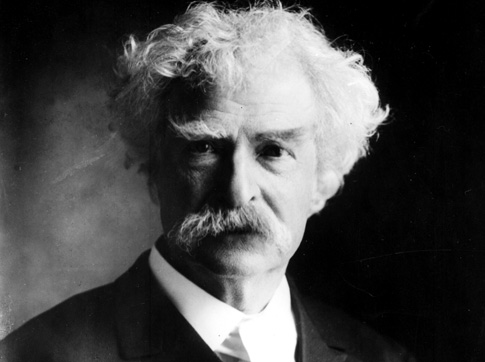
The reports of my death are greatly exaggerated! Mark Twain.

Mark Twain

Origin

Mark Twain quotation after hearing that his obituary had been published in the New York Journal.

Mistaken publications of obituaries aren’t as rare as you might expect. A recent example is of Dave Swarbrick, the British folk/rock violinist, who was killed off mistakenly by the Daily Telegraph in April 1999 when they reported that his visit to hospital in Coventry had resulted in his death. He did at least get the opportunity to read a rather favourable account of his life, not something we all get to do, and to deliver the gag “It’s not the first time I have died in Coventry”.

So why have I opened with this quote from Mark Twain?  Read on and I hope all will be clear.

Integrity is always about getting to the truth!

A little under a week ago I published a couple of posts that proposed that the United States of America is an empire in decline.  The first was What goes up? and the second Might just come down! As a Brit I well know that aspect of British history!

However a recent conversation with a friend of many years back in England, who has also been a shrewd and wise entrepreneur for longer than I care to remember, argued that the evidence for the ‘end of the USA’ could be challenged.

He cited five reasons why he thought the USA would remain, more or less, in its dominant position.  They were:

  1. Spirit of innovation
  2. Relaxed labour laws
  3. The importance of Mexico
  4. The uncertainty of China in terms of the next ’empire’
  5. The likely energy self-sufficiency for the USA in the near-term.

So let me expand on each of those points.

Spirit of innovation

Let me quote from an article in TIME Magazine of the 5th June, 2011,

Innovation is as American as apple pie. It seems to accord with so many elements of our national character — ingenuity, freedom, flexibility, the willingness to question conventional wisdom and defy authority. But politicians are pinning their hopes on innovation for more urgent reasons. America’s future growth will have to come from new industries that create new products and processes. Older industries are under tremendous pressure. Technological change is making factories and offices far more efficient. The rise of low-wage manufacturing in China and low-wage services in India is moving jobs overseas. The only durable strength we have — the only one that can withstand these gale winds — is innovation.

Now there are plenty to argue both ways in terms of the future innovation potential for the USA, as a recent article in The Atlantic does, see American Innovation: It’s the Best of Times and the Worst of Times.  But the spirit of innovation will be a powerful economic potential for the USA for many years to come.

Relaxed labour laws.

Definitely an area that I have little knowledge of except for the subjective notion that compared to many other nations, the laws in the USA are much less of a restraint on economic productivity than elsewhere.

The importance of Mexico.

Importance in the context of providing the USA with a source of cheaper manufacturing facilities.  My English friend thought that this was a significant competitive advantage for the USA.  Now, as it happens, we had a couple staying with us over the week-end of the 6th/7th October.  The husband is a senior manager of Horst Engineering, an American firm based in Guaymas, Sonora County, Mexico.  Here’s a picture from their website,

We are a contract manufacturer of precision machined components and assemblies for aerospace, medical, and other high technology industries. Our core processes include Swiss screw machining, turning, milling, thread rolling, centerless grinding, and assembly. Our extensive supply chain offers our customers a full service logistics solution for managing their precision product requirements. We are ISO9001:2008 and AS9100 registered and proud of our 66 year, three-generation legacy of quality and performance.

I was told that many American and British firms were using Mexico rather than China for a number of reasons.  Not least because Chinese suppliers require full payment before shipment.  Plus that taking into account that financial aspect together with shipping costs and other logistical issues, China wasn’t as ‘cheap’ over all.  Here’s a recent announcement from Rolls Royce,

Rolls-Royce plans new Sonora hub

The burgeoning aerospace industry in Guaymas had its efforts validated recently when the venerable Rolls-Royce chose it as the site for its newest global purchasing office.

Surrounded by several of its aerospace manufacturing suppliers, London-based Rolls-Royce will move into a Guaymas industrial park owned by Tucson-based The Offshore Group to develop a supply hub for commercial jets and military aircraft around the globe.

“Rolls-Royce has very robust booking orders for the next 10 years,” said Joel Reuter, director of communications for Rolls-Royce in North America. “We need to double our production.”

Because a number of Rolls-Royce suppliers already operate in Guaymas, the city was a logical choice, Reuter said.

The uncertainty of China in terms of the next ’empire’

The point made in terms of China taking over ’empire’ status from the USA, as Simon Johnson argues over at Baseline Scenario, is countered by the fact that politically China is an unknown quantity.  Until China endorses some form of democratic process, that unknowingness is not going to disappear.

The likely energy self-sufficiency for the USA in the near-term.

I can’t do better than to ask you to watch this video!  Just 27-minutes long, it is a very interesting review of the energy future of the USA.

As the TED website suggests in terms of why you should listen to Amory Lovins,

Amory Lovins was worried (and writing) about energy long before global warming was making the front — or even back — page of newspapers. Since studying at Harvard and Oxford in the 1960s, he’s written dozens of books, and initiated ambitious projects — cofounding the influential, environment-focused Rocky Mountain Institute; prototyping the ultra-efficient Hypercar — to focus the world’s attention on alternative approaches to energy and transportation.

His critical thinking has driven people around the globe — from world leaders to the average Joe — to think differently about energy and its role in some of our biggest problems: climate change, oil dependency, national security, economic health, and depletion of natural resources.

More on Reinventing Fire may be found here.

So, don’t know about you, but I found those five points deeply convincing.  How about you?  Are the reports of the death of the USA  greatly exaggerated? Do leave a comment.

What goes up?

Civilizations die from suicide, not by murder. Arnold J Toynbee

I’m not sure where to start but as a result of finishing a particular book, plus a recent essay on Tom Dispatch, then another recent essay from Simon Johnson of Baseline Scenario fame, there were so many thoughts bumping around this aged brain that I had no alternative than to offer them to you, dear reader.  You should also be warned that this is going to be two posts, covering today and tomorrow.

So let’s start with the book: The United States of Fear by Tom Engelhardt.  To be brutally honest, I purchased the book more as a gesture of support to Tom who has been very supportive of Learning from Dogs, in particular allowing me permission to reproduce any essays that were published on TomDispatch, as a number have so been.  What an error of judgment!  Tom’s book provided another one of those rare but inspirational occasions where you know the world will never look quite the same again!

The back cover page of the book sets out the theme, thus,

Published 2011

In 2008, when the US National Intelligence Council issued its latest report meant for the administration of newly elected President Barack Obama, it predicted that the planet’s “sole superpower” would suffer a modest decline and a soft landing fifteen years hence. In his new book The United States of Fear, Tom Engelhardt makes clear that Americans should don their crash helmets and buckle their seat belts, because the United States is on the path to a major decline at a startling speed. Engelhardt offers a savage anatomy of how successive administrations in Washington took the “Soviet path”—pouring American treasure into the military, war, and national security—and so helped drive their country off the nearest cliff.This is the startling tale of how fear was profitably shot into the national bloodstream, how the country—gripped by terror fantasies—was locked down, and how a brain-dead Washington elite fiddled (and profited) while America quietly burned.

Think of it as the story of how the Cold War really ended, with the triumphalist “sole superpower” of 1991 heading slowly for the same exit through which the Soviet Union left the stage twenty years earlier.

One of the fascinating aspects of the book is that it was put together from 32 essays previously published online by Tom; the complete list with titles and dates is on pps. 205 & 206.  So giving you a real feel for the book is easy!  I’m going to do that by linking to one of those essays available in the archives of TomDispatch here.  That essay was called Washington’s Echo Chamber and appears in the book starting on page 170 under the sub-heading of Five Ways to Be Tone Deaf in Washington. Let me quote you a little,

So much of what Washington did imagine in these last years proved laughable, even before this moment swept it away.  Just take any old phrase from the Bush years.  How about “You’re either with us or against us”?  What’s striking is how little it means today.  Looking back on Washington’s desperately mistaken assumptions about how our globe works, this might seem like the perfect moment to show some humility in the face of what nobody could have predicted.

It would seem like a good moment for Washington — which, since September 12, 2001, has been remarkably clueless about real developments on this planet and repeatedly miscalculated the nature of global power — to step back and recalibrate.

As it happens, there’s no evidence it’s doing so.  In fact, that may be beyond Washington’s present capabilities, no matter how many billions of dollars it pours into “intelligence.”  And by “Washington,” I mean not just the Obama administration, or the Pentagon, or our military commanders, or the vast intelligence bureaucracy, but all those pundits and think-tankers who swarm the capital, and the media that reports on them all.  It’s as if the cast of characters that makes up “Washington” now lives in some kind of echo chamber in which it can only hear itself talking.

As a result, Washington still seems remarkably determined to play out the string on an era that is all too swiftly passing into the history books.  While many have noticed the Obama administration’s hapless struggle to catch up to events in the Middle East, even as it clings to a familiar coterie of grim autocrats and oil sheiks, let me illustrate this point in another area entirely — the largely forgotten war in Afghanistan.  After all, hardly noticed, buried beneath 24/7 news from Egypt, Bahrain, Libya, and elsewhere in the Middle East, that war continues on its destructive, costly course with nary a blink.

That was published by Tom a little over 18 months ago!  Seems as relevant today as then!  Let me stay with perspectives from 2011.

Chomsky, visiting Vancouver, Canada in March 2004

On the 24th August 2011 Noam Chomsky wrote an essay entitled American Decline: Causes and Consequences.  Chomsky, as Wikipedia relates, is Professor (Emeritus) in the Department of Linguistics & Philosophy at MIT, where he has worked for over 50 years.  Here is how that essay opens,

In the 2011 summer issue of the journal of the American Academy of Political Science, we read that it is “a common theme” that the United States, which “only a few years ago was hailed to stride the world as a colossus with unparalleled power and unmatched appeal — is in decline, ominously facing the prospect of its final decay.” It is indeed a common theme, widely believed, and with some reason. But an appraisal of US foreign policy and influence abroad and the strength of its domestic economy and political institutions at home suggests that a number of qualifications are in order. To begin with, the decline has in fact been proceeding since the high point of US power shortly after World War II, and the remarkable rhetoric of the several years of triumphalism in the 1990s was mostly self-delusion. Furthermore, the commonly drawn corollary — that power will shift to China and India — is highly dubious. They are poor countries with severe internal problems. The world is surely becoming more diverse, but despite America’s decline, in the foreseeable future there is no competitor for global hegemonic power.

So, according to Chomsky, it’s not as ‘black and white’ as Engelhardt sets out.  But do read the full essay.

Nevertheless, the idea that the USA is ‘fiddling while Rome burns’ is supported in an essay published by Mattea Kramer on TomDispatch on the last day of September.  I’m going to end Part One by republishing the essay in full.  (Note that this is being published here after the first ‘debate’ had taken place.)

oooOOOooo

Tough Talk for America

A Guide to the Presidential Debates You Won’t Hear 
By Mattea Kramer

Five big things will decide what this country looks like next year and in the 20 years to follow, but here’s a guarantee for you: you’re not going to hear about them in the upcoming presidential debates. Yes, there will be questions and answers focused on deficits, taxes, Medicare, the Pentagon, and education, to which you already more or less know the responses each candidate will offer. What you won’t get from either Mitt Romney or Barack Obama is a little genuine tough talk about the actual state of reality in these United States of ours. And yet, on those five subjects, a little reality would go a long way, while too little reality (as in the debates to come) is a surefire recipe for American decline.

So here’s a brief guide to what you won’t hear this Wednesday or in the other presidential and vice-presidential debates later in the month. Think of these as five hard truths that will determine the future of this country.

1. Immediate deficit reduction will wipe out any hope of economic recovery: These days, it’s fashionable for any candidate to talk about how quickly he’ll reduce the federal budget deficit, which will total around $1.2 trillion in fiscal 2012. And you’re going to hear talk about the Simpson-Bowles deficit reduction plan and more like it on Wednesday. But the hard truth of the matter is that deep deficit reduction anytime soon will be a genuine disaster. Think of it this way: If you woke up tomorrow and learned that Washington had solved the deficit crisis and you’d lost your job, would you celebrate? Of course not. And yet, any move to immediately reduce the deficit does increase the likelihood that you will lose your job.

When the government cuts spending, it lays off workers and cancels orders for all sorts of goods and services that would generate income for companies in the private sector. Those companies, in turn, lay off workers, and the negative effects ripple through the economy. This isn’t atomic science. It’s pretty basic stuff, even if it’s evidently not suitable material for a presidential debate. The nonpartisan Congressional Research Service predicted in a September report, for example, that any significant spending cuts in the near-term would contribute to an economic contraction. In other words, slashing deficits right now will send us ever deeper into the Great Recession from which, at best, we’ve scarcely emerged.

Champions of immediate deficit reduction are likely to point out that unsustainable deficits aren’t good for the economy. And that’s true — in the long run. Washington must indeed plan for smaller deficits in the future. That will, however, be a lot easier to accomplish when the economy is healthier, since government spending declines when fewer people qualify for assistance, and tax revenues expand when the jobless go back to work. So it makes sense to fix the economy first. The necessity for near-term recovery spending paired with long-term deficit reduction gets drowned out when candidates pack punchy slogans into flashes of primetime TV.

2. Taxes are at their lowest point in more than half a century, preventing investment in and the maintenance of America’s most basic resources: Hard to believe? It’s nonetheless a fact. By now, it’s a tradition for candidates to compete on just how much further they’d lower taxes and whether they’ll lower them for everyone or just everyone but the richest of the rich. That’s a super debate to listen to, if you’re into fairy tales. It’s not as thrilling if you consider that Americans now enjoy the lightest tax burden in more than five decades, and it happens to come with a hefty price tag on an item labeled “the future.” There is no way the U.S. can maintain a world-class infrastructure — we’re talking levees, highways, bridges, you name it — and a public education system that used to be the envy of the world, plus many other key domestic priorities, on the taxes we’re now paying.

Anti-tax advocates insist that we should cut taxes even more to boost a flagging economy — an argument that hits the news cycle nearly every hour and that will shape the coming TV “debate.” As the New York Times recently noted, however, tax cuts might have been effective in giving the economy a lift decades ago when tax rates were above 70%. (And no, that’s not a typo, that’s what your parents and grandparents paid without much grumbling.) With effective tax rates around 14% for Mitt Romney and many others, further cuts won’t hasten job creation, just the hollowing out of public investment in everything from infrastructure to education. Right now, the negative effects of tax increases on the most well-off would be small — read: not a disaster for “job creators” — and those higher rates would bring in desperately-needed revenue. Tax increases for middle-class Americans should arrive when the economy is stronger.

Right now, the situation is clear: we’re simply not paying enough to fund the basic ingredients of prosperity from highways and higher education to medical research and food safety. Without those funds, this country’s future won’t be pretty.

3. Neither the status quo nor a voucher system will protect Medicare (or any other kind of health care) in the long run: When it comes to Medicare, Mitt Romney has proposed a premium-support program that would allow seniors the option of buying private insurance. President Obama wants to keep Medicare more or less as it is for retirees. Meanwhile, the ceaseless rise in health-care costs is eating up the wages of regular Americans and the federal budget. Health care now accounts for a staggering 24% of all federal spending, up from 7% less than 40 years ago. Governor Romney’s plan would shift more of those costs onto retirees, according to David Cutler, a health economist at Harvard, while President Obama says the federal government will continue to pick up the tab. Neither of them addresses the underlying problem.

Here’s reality: Medicare could be significantly protected by cutting out waste. Our health system is riddled with unnecessary tests and procedures, as well as poorly coordinated care for complex health problems. This country spent $2.6 trillion on health care in 2010, and some estimates suggest that a staggering 30% of that is wasted. Right now, our health system rewards quantity, not quality, but it doesn’t have to be that way. Instead of paying for each test and procedure, Medicare could pay for performance and give medical professionals a strong incentive to provide more efficient and coordinated care. President Obama’s health law actually pilot tests such an initiative. But that’s another taboo topic this election season, so he scarcely mentions it. Introducing such change into Medicare and the rest of our health system would save the federal government tens of billions of dollars annually. It would truly preserve Medicare for future generations, and it would improve the affordability of health coverage for everyone under 65 as well. Too bad it’s not even up for discussion.

4. The U.S. military is outrageously expensive and yet poorly tailored to the actual threats to U.S. national security: Candidates from both parties pledge to protect the Pentagon from cuts, or even, in the case of the Romney team, to increase the already staggering military budget. But in a country desperate for infrastructure, education, and other funding, funneling endless resources to the Pentagon actually weakens “national security.” Defense spending is already mind-numbingly large: if all U.S. military and security spending were its own country, it would have the 19th largest economy in the world, ahead of Saudi Arabia, Taiwan, and Switzerland. Whether you’re counting aircraft carriers, weapons systems, or total destructive power, it’s absurdly overmatched against the armed forces of the rest of the world, individually or in combination. A couple of years ago, then-Secretary of Defense Robert M. Gates gave a speech in which he detailed that overmatch. A highlight: “The U.S. operates 11 large carriers, all nuclear powered. In terms of size and striking power, no other country has even one comparable ship.” China recently acquired one carrier that won’t be fully functional for some time, if ever — while many elected officials in this country would gladly build a twelfth.

But you’ll hear none of this in the presidential debates. Perhaps the candidates will mention that obsolete, ineffective, and wildly expensive weapons systems could be cut, but that’s a no-brainer. The problem is: it wouldn’t put a real dent in national defense spending. Currently almost one-fifth of every dollar spent by the federal government goes to the military. On average, Americans, when polled, say that they would like to see military funding cut by 18%.

Instead, most elected officials vow to pour limitless resources into more weapons systems of questionable efficacy, and of which the U.S. already owns more than the rest of the world combined. Count on one thing: military spending will not go down as long as the U.S. is building up a massive force in the Persian Gulf, sending Marines to Darwin, Australia, and special ops units to Africa and the Middle East, running drones out of the Seychelles Islands, and “pivoting” to Asia. If the U.S. global mission doesn’t downsize, neither will the Pentagon budget — and that’s a hit on America’s future that no debate will take up this month.

5. The U.S. education system is what made this country prosperous in the twentieth century — but no longer: Perhaps no issue is more urgent than this, yet for all the talk of teacher’s unions and testing, real education programs, ideas that will matter, are nonexistent this election season. During the last century, the best education system in the world allowed this country to grow briskly and lift standards of living. Now, from kindergarten to college, public education is chronically underfunded. Scarcely 2% of the federal budget goes to education, and dwindling public investment means students pay higher tuitions and fall ever deeper into debt. Total student debt surpassed $1 trillion this year and it’s growing by the month, with the average debt burden for a college graduate over $24,000. That will leave many of those graduates on a treadmill of loan repayment for most or all of their adult lives.

Renewed public investment in education — from pre-kindergarten to university — would pay handsome dividends for generations. But you aren’t going to hear either candidate or their vice-presidential running mates proposing the equivalent of a GI Bill for the rest of us or even significant new investment in education. And yet that’s a recipe for and a guarantee of American decline.

Ironically, those in Washington arguing for urgent deficit reduction claim that we’ve got to do it “for the kids,” that we must stop saddling our grandchildren with mountains of federal debt. But if your child turns 18 and finds her government running a balanced budget in an America that’s hollowed out, an America where she has no chance of paying for a college education, will she celebrate? You don’t need an economist to answer that one.

Mattea Kramer is senior research analyst at National Priorities Project and a TomDispatch regular. She is lead author of the new book A People’s Guide to the Federal Budget.

Copyright 2012 Mattea Kramer

oooOOOooo

Let me close with another quote from Arnold J. Toynbee:

Of the twenty-two civilizations that have appeared in history, nineteen of them collapsed

when they reached the moral state the United States is in now.

Part Two continues tomorrow.

Sands of time

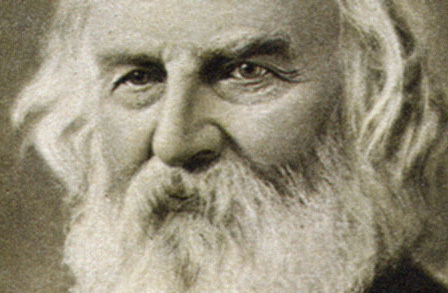
Lives of great men all remind us, we can make our lives sublime, and, departing, leave behind us, footprints on the sands of time.” Longfellow.

Longfellow, the only American writer honored in the Poets’ Corner of Westminster Abbey.

Longfellow has been dead for 130 years, as of last March, but of his many wonderful words that have stayed with us over the last century and more, these must be some of the more familiar.  (Or am I showing my appalling lack of literary knowledge?)

Following on from yesterday’s post about the scary mathematics of climate change,  this really is the ONE thing that we have to learn from dogs; from nature.  If we don’t live in harmony with our planet pretty damn soon, then this particular civilisation is not far from extinction.  Let me remind you of a key paragraph from yesterday,

It’s simple math: we can burn 565 more gigatons of carbon and stay below 2°C of warming — anything more than that risks catastrophe for life on earth. The only problem? Fossil fuel corporations now have 2,795 gigatons in their reserves, five times the safe amount. And they’re planning to burn it all — unless we rise up to stop them.

Ergo, we do not have endless time available to us!

Otherwise the footprints left on those sands of time will be nothing more than the next civilisation pondering from time to time why those Atlantacists that sunk beneath the waves were unable to do anything to save their world!

If you think I’m being a tad excitable, then see what Rob Hopkins wrote recently over at Transition Culture.

New Economics Foundation’s ’100 Months’ campaign today reaches its midway point.  It was launched in August 2008 based on the understanding that the time that remains to us to avoid the likelihood of runaway climate change is limited, and based on the science at the time, there was a closing window of opportunity to do something meaningful about it.

Then adding,

“The question here is “what should we do differently?”  The answer is “pretty much just about everything”.  Nationally and internationally, while the scale and pace of climate change are accelerating, meaningful responses are dwindling.  Part of our collective paralysis comes from the fact that we struggle to imagine a world with less energy, less consumerism, less annual GDP growth.  What will it look like, sound like, feel like?  Does it inevitably mean that you should start seeking out your cave on Dartmoor [Devon in South-West England, PH] as we speak, and developing a taste for slugs?  Of course not.

Shortly before the 100 Months campaign began, I was part of initiating an experiment to see what a self-organised response to climate change might look like, one based on rebuilding community, on the belief that what is needed is people, everywhere, making their communities happier, healthier, lower-carbon, and more resilient, in a huge variety of ways.

Rob Hopkins was also asked to write a piece for the UK’s Guardian Newspaper in recognition that we are half-way through that 100-month campaign.  Here’s how Rob concluded that piece,

Transition Bath set up an energy company which has raised £250,000 in shares from local people. Transition town Totnes’ Transition Streets programme has enabled almost 700 local householders to reduce their carbon emissions while rediscovering a sense of community on their streets. Bristol soon sees the launch of the Bristol Pound, the UK’s first citywide transition complementary currency. Transition Brixton’s Brixton Energy is installing community-owned renewables supported by local people. Check out transitionnetwork.org to get a sense of the amazing projects under way.

At its core, this is about the belief that our best way forward is for communities to build local resilience in order to be able to better face the shocks of the present and the uncertainties of the future, from economic crisis to climate change, seeing increased community resilience as economic development. It’s a process of plugging the leaks in our local economies, seeing every leak as a potential new business, new livelihood, new apprenticeship opportunity.

Of course we need government responses, and international responses, but all of those will struggle without a vibrant bottom-up movement of ordinary people showing what’s possible and how thrilled they are by those possibilities. So although the answer is “pretty much just about everything”, I would argue that seeing this as a once-in-a-lifetime opportunity for entrepreneurship, vision and action is where our successful navigation of the next 50 months lies.

Think about it!  What are you doing today?

An image of the future?

The influence of climate

Changing climate is changing us and the world in significant and fundamental ways.

I wrote this around noon on the 7th September.  That day we awoke to the sky, normally clear blue, covered totally in grey stratus cloud.  Shortly after 9am it started to rain and some three hours later that rain was still steadily falling from the sky.  Don’t get me wrong, the steady rain was vital to the area.

The precipitation statistics for Payson, AZ up to yesterday (6th at the time of writing) are:

Precipitation year to date (ergo to the 6th September) = 8.02 inch (20.37 cms)

Precipitation 30-year average to the end of September = 16.25 inch (41.28 cms)

Year to date as a percentage of 30-year average = 49.4%

The annual 30-year average precipitation for the year for Payson is 21.5 inch. (54.6 cms)

So despite a moderately effective monsoon, there is no way that Payson, Arizona will be even close to the 30-year average for precipitation.

That’s why a recent essay by Chris Martenson, he of Peak Prosperity fame, is so critically worth reading.  I’m very grateful to Adam Taggart, Chris’s business partner, for giving me permission to republish the essay.  (Note that the essay was published before Hurricane Isaac arrived.)

Also note that this is Part One of Chris’s very detailed report and that to read the concluding Part Two you will need to enrol over at Peak Prosperity.  However, Part One is very detailed and covers much. Thus even without Part Two there is much here to ‘exercise the mind’.

oooOOOooo

The U.S. Drought Is Hitting Harder Than Most Realize

Repercussions are everywhere.  By Chris Martenson, Wednesday, August 29, 2012, 8:02 PM

This is an important update on the U.S. drought of 2012, the combined record-setting July land temperatures, and their impact on food prices, water availability, energy, and even U.S. GDP.

Even though the mainstream media seems to have lost some interest in the drought, we should keep it front and center in our minds, as it has already led to sharply higher grain prices, increased gasoline costs (via the pass-through of higher ethanol costs), impeded oil and gas drilling activity in some areas (due to a lack of water), caused the shutdown of a few operating electricity plants, temporarily reduced red meat prices (but will also make them climb sharply later) as cattle are dumped in response to feed- and pasture-management concerns, and blocked and/or reduced shipping on the Mississippi River. All this and there’s also a strong chance that today’s drought will negatively impact next year’s Winter wheat harvest, unless a lot of rain starts falling soon.

The good news from Hurricane Isaac is that he’s traveling on a perfect path to deliver relief to one of the most heavily drought-impacted areas:

There are steps that everyone can and should take to become more food- and fuel-resilient in case the drought persists – as some experts think is quite possible – into next year and perhaps a few more. We’ll get to those steps shortly.

Further, there will be a definite impact to U.S. GDP, which could add to pressures (excuses?) that the Fed may use to justify additional quantitative easing (QE) measures (otherwise known as ‘printing more money’).

U.S. Drought Intensifies

The drought in the U.S. has intensified in the recent weeks, even though it has somewhat dropped from the front pages of mainstream media, possibly because the story is stale or possibly because it’s just too serious to dwell on for long:

Extreme drought in the U.S. intensifies
Aug 17, 2012

The drought in the United States is continuing to intensify, according to the National Oceanic and Atmospheric Administration (NOAA).

The latest Drought Monitor says 61 percent of the contiguous United States faces moderate or worse drought conditions this week.

Nearly 30 percent is experiencing extreme to exceptional drought, exceptional being the most severe category.

Officials say the amount of land that’s currently affected across the U.S. is larger than the entire state of California.

In this next image, it is notable that the areas of the highest drought classification — ‘exceptional’ — have dramatically expanded from the prior week (the August 7, 2012 report).

(Source)

Much of the drought is centered squarely over the U.S. ‘breadbasket’ region and has really dented this year’s harvests in a big way.

Crop Losses

Certainly the number one story around the U.S. drought centers on its impact on grain production, specifically corn and soybeans. In a minute we’ll discuss the other impacts, but we’ll start with the one that has the greatest potential to cause both suffering and strife over the coming months (and possibly years), especially for those on limited budgets.

In 2011, the U.S. reaped a corn harvest of some 314 million tons. In 2012, the USDA has estimated a harvest of 274 million tons – a shortfall of 40 million tons – despite record acreage being planted.

While the USDA has been steadily reducing their crop estimates, practically with every passing week, it seems likely that the USDA remains behind the curve today, as it has been every step of the way. A different source for information comes from the Pro Farmer Midwest Crops Tour, which is coming in slightly under the current USDA estimates:

Crop Tour Points to Sharper Drought Impact on Soy, Corn
Aug 21, 2012

Initial reports from the closely watched Pro Farmer Midwest Crop Tour suggested more crop damage than expected from the drought, raising the potential for diminished soybean production this fall and sending futures sharply higher.

The disappointing crop reports from scouts touring fields on the Pro Farmer crop tour in states such as Ohio and South Dakota make it hard to believe soybean yields will reach current U.S. government crop projections, said Don Roose, president of advisory and brokerage firm U.S. Commodities in West Des Moines, Iowa.

The market is in the “watch and worry” mode on all fronts as shrinking crop forecasts will further tighten supplies already projected to dwindle to precariously tight levels in 2013, Mr. Roose said.

On the annual Pro Farmer tour, analysts and investors walk corn and soybean fields in seven Midwestern states over four days to assess prospects prior to the fall harvest. Pro Farmer is an agricultural advisory firm. The Pro Farmer tour, which wraps up Thursday, reported diminished potential for the soybean crop in both Ohio and South Dakota.

The crop tour doesn’t estimate soybean yields, but it reported an average 584.9 pods per 3-foot-by-3-foot square area in South Dakota, down 47% from a year ago. In Ohio, scouts reported soybean counts at an average of 1,033.72 pods per 3-foot-by-3-foot square area, down from 1,253.2 pods a year ago.

Soybeans entered their critical growing phases in recent weeks, and the crop has benefited in some regions from recent rains across the eastern Farm Belt.

Meanwhile, scouts with the Pro Farmer Midwest Crop Tour on Monday reported an average estimated corn yield in Ohio of 110.5 bushels per acre, down from the tour’s estimate of 156.3 bushels a year ago. In South Dakota, tour scouts reported an average yield estimate of just 74.3 bushels per acre, down from 141.1 bushels a year ago.

While commodities traders and agronomists have braced for weeks for the prospect of a crop decimated by drought, the estimates were lower than many had expected.

The summary here is that the Pro Farmer Tour is reporting crop yields to be 2% – 3% lower than current USDA forecasts, which is a big deal when it comes to food. We’re talking a few tens-of-millions-of-bushels’ difference.

The somewhat sour note in this unfolding drama is the fact that 40% of the nation’s corn crop goes to ethanol producers, which means that food will be burned in the nation’s auto fleet instead of helping to keep prices down for consumers and animal feed. Another 40% goes to animal feed (chicken, cattle, hogs, etc.), and the remaining balance goes to direct human consumption.

However, the ethanol mandate is a congressional requirement for our fuel blenders, so they do not have a choice in the matter. It would literally take an act of Congress to even temporarily suspend the ethanol requirement – and in an election year, that’s just not going to happen, given the powerful constituencies invested in preserving that mandate.

Of course, higher input costs will ripple through the entire chain, so perhaps Bernanke will get the inflation he seeks, although it won’t be the one he wants. The inflation he wants is simple monetary-driven inflation. The inflation he will get is nothing more than a supply/demand mismatch.

Still, the USDA has a handy calculation for estimating the future impacts:

U.S.’s inferior corn crop has supply-chain ramifications
Aug 13. 2012

The USDA has provided considerable information about how the drought’s effects were likely to percolate through the economy. Because of a smaller-than-expected corn crop, the USDA said it can make the general prediction that “we will see impacts within two months for beef, pork, poultry and dairy (especially fluid milk). The full effects of the increase in corn prices for packaged and processed foods (cereal, corn flour, etc.) will likely take 10-12 months to move through to retail food prices.

The USDA has a formula for predicting changes in the rate of inflation caused by gains in prices at the commodity level: if the farm price of corn rises 50%, retail food prices rise by 0.5% to 1% as measured by the Consumer Price Index (CPI).

The price of September corn futures from mid-June until early August advanced 55%, meeting the USDA’s criterion for a measurable increase in the CPI Lapp presented a more extreme scenario than the USDA. He predicted that the damage to the 2012 corn crop will translate into a food inflation rate of 4% to 5% in 2013. In his view, the dollar cost of the drought already was $30 billion, which accrued rapidly over the summer.

“This is a cost that somebody has to bear,” Lapp said. “Some price hikes are fairly quick and others take a while.”

He said high feed costs will have to be absorbed by producers, who will likely liquidate part of their cattle and swine herds and poultry populations. At the retail level, the drought’s effects will translate into narrower margins — and expected higher prices — for processed food and soft drink manufacturers among others.

Lapp offered his opinion that legislation that has effectively required 40% of the corn crop be used in making biofuels has made everything worse.

“The situation has been aided and abetted in a negative way by the biofuels mandates,” he said. “Shame on us for having mandated so much to corn ethanol” without creating contingencies for a bad crop year.

Because corn is the base unit for so many things (especially in the form of high-fructose corn sweetener), and because it’s a primary feed component for finishing cattle and raising chickens and hogs, it tends to have a pretty decent impact on food prices.

However, it takes time for those price hikes to work through the system. So it will not be until 2013 sometime that we really begin to feel it in the U.S. And for the rest of the world that lives more directly on grains? They’re not as lucky. The price hikes hit them almost immediately.

It looks like the harvest in Russia will be below expectations as well:

Russia harvest forecasts cut as drought hits crop in east
Aug 20, 2012

(Reuters) – Two leading Russian agricultural analysts cut their forecasts for Russia’s grain harvest on Monday after harvest data from two drought-stricken eastern growing regions reduced the outlook for the overall crop.

SovEcon narrowed their grain forecast to 71-72.5 million metric tonnes (…)

The government’s official grain harvest forecast is 75-80 million tonnes, of which 45 million tonnes could be wheat. The government has put this season’s exportable surplus at 10-12 million tonnes, a level seen by traders as an informal cap on exports.

The government has tried to reassure markets there will be no repeat of August 2010, when Russia’s government shocked markets with a snap decision to ban grain exports when the scale of losses from major drought became clear.

The government has indicated that protective tariffs could be an option, though only after the end of the calendar year.

But traders widely expect limits to be imposed in some form, perhaps as early as November, after heavy exports in the early months of the season showed Russia could hit the 10-12 million tonne mark sooner than January.

Russia is still officially projecting 75-80 million tonnes but may only get 71 tonnes. If the projected exportable surplus is 10-12 million tonnes, but Russia actually harvests 9 million tonnes less than their hoped-for projection, then its exports will have to decrease to plug that gap.

Here’s the kicker: Russia has already exported a good deal of that amount. That is, the prospect of another Russian export ban this year is quite realistic. If we get one, then we can expect a repeat of the turmoil in the grain markets that we saw in 2010.

But there’s another much more fundamental reason why we can expect higher prices going forward.

Need for Even Higher Prices

The good news is that there’s still plenty of supply to carry us through to the next harvest. However, demand is going to have to go down some, and the way we accomplish that is through the price mechanism.

Right now, physical grain traders are saying that prices are too low and that unless they rise, we’re going to run out of grain before the next harvest. Obviously, that’s not truly going to happen – increasing scarcity will cause prices to rise until current demand levels are reduced.

Fall in corn price disguises real picture (Financial Times)
Aug 20, 2012

Corn prices surged this month to an all-time high of $8.4375 a bushel on the back of the worst drought in the US in nearly half a century. But prices have since fallen roughly 5 per cent. The impression is the rally has run out of steam.

This is far from the real picture. Prices need to rise again – probably setting all-time highs – to dampen consumption that is running ahead of supply.

If demand does not slow down, silos will be all but empty before the next harvest arrives in late 2013.

On paper, the balance sheet for corn supply and demand published by the US Department of Agriculture seems good enough. But in practice, the numbers look a bit shaky. The agency, whose figures are closely watched by the market, first estimates supply and, after that, adjusts the demand data to maintain a minimum level of inventories.

This time the USDA is asking for monumental rationing on the demand side. For example, US corn feed and export demand will need to drop to their lowest levels in nearly 20 years.

The USDA is also forecasting lower ethanol production – and thus corn demand. Ethanol output has fallen, but not nearly enough. Worse, the rise in wholesale petrol prices back above $3 a gallon means that ethanol producers are profitable again, even when paying record corn prices.

Corn is now trading just above $8 a bushel – but traders in the physical market say that prices need to rise to $9-$10 to force demand down enough to meet the consumption levels anticipated by the USDA.

The retreat in corn prices over the past couple of weeks has given inflation watchers a false sense of security. The market should not relax, however. More food inflation is just waiting around the corner.

The idea here is that the cash market will have to lead the futures market higher, an odd situation because it is usually the other way around. With so many hedge funds now playing in the commodity space, one explanation is that they are simply playing paper games with each other – those playing the short side will get a lesson in the importance of keeping one eye on reality.

A truly shocking event would be if the U.S. ever gets to the position of limiting exports of corn or even soybeans. That is a very unlikely proposition to consider, but if the silos get drained because we have dysfunctional markets that saw fit to keep prices bizarrely low while our free trade agreements allow the too-low grains to be exported, threatening domestic supplies, then that possibility notches up a little bit.

Dairy, Meat, and Even Higher Gasoline Costs

While it is clear that basic grain prices are heading higher, the knock-on effects into other soft commodities are a little less clear, but are definitely still important to consider.

The most obvious of these are higher grain feed costs that will hit both livestock and dairy producers especially hard:

The withering crops are translating into higher feed costs for livestock producers. “This is different than anything I’ve ever experienced,” said Kent Pruismann, who raises cattle and hogs on a farm in Sioux County, Iowa, and saw his costs for feed jump by 20% in July.

The higher corn, soybean and wheat prices will reach food makers, exporters and eventually consumers. Drivers already have seen fuel costs climb because of higher prices for ethanol, a corn-based fuel that is blended into gas. The drought also has reignited the debate over whether ethanol production is a drain on global food supplies.

(Source)

Some are already turning to, shall we say, other means to keep their herds fed:

Kentucky cows eat candy instead of corn

Aug 14, 2012

LOUISVILLE, KY (WAVE) – When you think of cattle feed, you probably don’t think of candy, but due to the drought that’s exactly what one farmer chose to do.

At Mayfield’s United Livestock in Western Kentucky, owner Joseph Watson feeds his herd second-hand candy.

Watson started feeding his cattle the candy because corn prices were so high.

He mixes the candy with an ethanol by-product and a mineral nutrient. He monitors the daily intake and said the cows have had no real health issues.

Yes, the higher grain costs are going to hit everything from big cattle feedlot operations to my own two-bags-a-month chicken-feed usage.

However, it will be the cost of and even lack of hay that will really create some big problems later this year. The drought not only harmed the range and pasture lands, forcing greater use of stored hay to offset the decline in forage, but it put a huge crimp in this year’s hay production:

Drought Cripples Hay Feed Industry

Aug 19, 2012

Widespread drought has scorched much of the pastureland and hay fields needed to sustain cattle herds in the U.S., forcing many ranchers to find feed alternatives or sell their animals early into what has become a soft beef market.

The shortage has led to higher hay prices, with some farmers saying they have to pay two to three times last year’s rates.

Despite farmers setting aside more land to grow hay this year, they are still producing a lot less because of the drought, according to a recent Department of Agriculture estimate.

The harvest of alfalfa, generally considered to make the best hay because of its high nutrient levels, is forecast to be the worst since 1953, according to the USDA.

Pasture grass and hay are what most cattle are fed for the roughly two years they live before being slaughtered, but the drought is threatening to starve the animals.

Illinois rancher Steve Foglesong said that most years he could graze his cattle from spring through November on verdant fields that are now brown, buying them hay bales only in the winter. This year, he and his animals have their eyes on withered corn plants.

“It may not have any ears on it, but it makes pretty good cow feed,” he said.

John Erwin, who owns 20 acres of land in Shelbyville, Ill., said he is having trouble growing alfalfa hay, but demand is strong for what he can produce.

I’m getting calls from ranchers as far away as Wyoming,” Mr. Erwin said. “They’re desperate.”

He said he has been offered $250 a ton for his hay, nearly double the $130 a ton in a non-drought year. His fields didn’t produce any hay in July.

A doubling of hay prices is obviously going to create quite a bit of economic hardship for many farming operations, which tend to be marginal profit businesses even when everything is going well.

Here’s another view on the hay situation:

I spoke with Caldwell [of Indiana horse rescue] and a number of other horse-rescue organizations around the country by telephone this week. The relentlessly hot dry weather, amplified in many areas by wildfire, has been devastating to farmers, ranchers and other horse owners.

Everybody is using their winter hay now. The pastures are destroyed and they probably won’t recover before winter,” said Caldwell. “The price of hay has doubled, and the availability is down by 75 percent.”

Caldwell is somewhat sanguine about his own lot, but not optimistic about what lies ahead.

Today the problem is not nearly as bad as it’s going to be,” he told me. “It’s terribly bad today, but it is going to get a lot worse.”

(Source)

The drought has done some very serious harm to the nation’s hay supply that goes beyond the economics of higher hay costs. First there’s the supply of the hay, and then there’s the relatively poor quality of hay that was taken from non-irrigated, drought-stricken fields. All in all, it’s not a good situation.

To add a bit more difficulty into the situation, it turns out that drought-stricken silage and even the corn itself can be harmful to animals:

Drought makes corn dangerous for livestock

Aug 16, 2012

COLUMBIA, MISSOURI, U.S. — Tim Evans, an associate professor of veterinary pathobiology and toxicology section head at the Veterinary Medical Diagnostic Laboratory at the University of Missouri College of Veterinary Medicine, Columbia, Missouri, U.S., warns U.S. farmers and livestock producers that drought-damaged corn plants can pose a risk to animal health.

During severe drought conditions, corn plants, especially those heavily fertilized with nitrogen, can accumulate a chemical called ‘nitrate’,” Evans said.

This chemical can be very harmful to animals, especially cattle, if they eat corn plants or other vegetation containing too much nitrate. Eating plants with too much nitrate can cause damage to red blood cells, resulting in lethargy, miscarriage, and even sudden death.”

Evans says that in normal conditions, corn crops typically absorb nitrate into only the lower 12-18 inches of the stalk, which does not have to be fed to animals. However, during severe drought conditions, high concentrations of nitrate can accumulate in the upper portions of the stalk, which cattle and other livestock often eat.

Evans also says that many naturally growing plants and weeds in grazing pastures can accumulate nitrate during drought conditions, as well. These plants include many types of grasses and some weeds, which animals might be forced to eat because of limited pasture or hay available as forage for livestock.

The key here is that nitrates are safe below 2,000 ppm but toxic above 15,000 ppm, and the levels found in the stalks and how high it travels are a function of whether enough rain fell to allow the plant to take it up. Much of the corn crop was so desiccated that the plants could not even manage to draw up this nutrient, and therefore it is safe as a feed product.

While it’s hard to get a read on at this early stage, there are enough warning signs here pointing to much, much higher grain, food, and meat prices in the future. The worry is whether there will even be enough feed to sustain the animal populations through the Winter and Spring. Given the damage to the harvestable corn, a lot of it is going to be turned into silage

Many ranchers and farmers are faced with a horrible choice here. Saving their herds may be economically unsound or even impossible where hay and safe silage are not available, and so they are selling their herds, one of the most heart-wrenching decisions anyone could have to make.

So many are doing this that recently the price for cattle has dropped, as everyone is selling into an increasingly soft market. My advice is to enjoy these low meat prices while they last, because the next stage of this story involves much higher meat prices.

The problem with understanding just how bad the hay situation might (or might not) be is that there are no national statistics collected that could tell us whether or not there’s even enough hay available to sustain the current commercial and recreational livestock populations.

The Importance of Positioning Yourself

So, with all of these repercussions building during the current drought – to which there’s yet no end in sight – what can you do today to minimize their impact on your budget and lifestyle?

Part II: Positioning for the Drought’s Aftermath looks at the likeliest outcomes in food prices, food availability, energy prices, and macroeconomic consequences (of which there will no doubt be many from this drought). We have a national food distribution system that runs significantly on a just-in-time basis, which leaves it vulnerable to price and inventory shocks when there are supply disruptions. The reduced water levels caused by the drought are handicapping electrical power generation in growing regions in the country; electrical thermal plants are the number one biggest user of water in the U.S.  The global financial markets are similarly tenuous these days, as resources are already taxed in trying to stimulate the moribund U.S. economy and dig Europe out of its massive credit woes.

This is one of those moments where taking simple, prudent steps now can have an outsized effect on preserving your quality of life.

Click here to read Part II of this report (free executive summary; paid enrollment required for full access)

oooOOOooo

It’s not pleasant reading, is it!  But unless we all fully understand the implications of what we are doing to the planet by continuing to pollute the atmosphere, how can we embrace change!
A view from the Radical Middle

Promoting the thoughts of Per Kurowski.

A few days ago, I published a delightful story sent to me by Richard Maugham about Helga’s Bar.  It was a tongue-in-cheek look at the crazy world of finance and banking that we seem to be living in at present.

One of the regular readers of Learning from Dogs is Per Kurowski and he left a couple of comments.  The first being,

As a former ED at the World Bank, 2002-2004, living close to Washington, writing articles and being an assiduous blogger, I’ve been in the middle of many discussions about those many of the challenges our world faces. And my friend, I am sorry to say, our prospects to solve these problems, do not seem good.

One of the main reasons for that negative outlook, is that I have been able to witness how the discussion of many of these problems, no matter how urgent these are, so often get hijacked by a political agenda, or by a group that decides making a business, or a living, out of it.

If we cannot break out of this mold, unfortunately, the world is toast, and this, not only from a global warming perspective.

which was then followed up by,

By the way, I managed to sit down a prominent and important bank regulator in my chair yesterday, though he was invisible and quite silent!

I then replied,

Per, just love that. Any chance of you penning a guest post that could set the background to that video in terms that make it easy for the punter to understand?

So here is Per’s interview (sound volume is a little low) and his views.

oooOOOooo

Paul… well here is “a brief summary of my thoughts on banks and risks”

Capital requirements for banks which are lower when the perceived risk of default of the borrower is low, and higher when the perceived risk is high, distort the economic resource allocation process. This is so because those perceptions of risk have already been cleared for, by bankers and markets, by means of interest rates and amounts of exposures.

All the current dangerous and obese bank exposures are to be found in areas recently considered as safe and which therefore required these banks to hold little capital. What was considered as “risky” is not, as usual, causing any problems. This is not a crisis caused by excessive risk taking by the banks, but by excessive regulatory interference by naïve and nanny type regulators.

And, if that distortion is not urgently eliminated, all our banks are doomed to end up gasping for oxygen and capital on the last officially perceived safe beach… like the US Treasury or the Bundesbank.

Bank regulators have no business regulating based on risk perceptions being right, their role is to prepare for when these perceptions turn out to be wrong.

A nation that cares more for history, what it has got, the haves, the “not-risky”, the AAA rated or the “infallible” sovereigns, than for the future, what it can get, the not-haves, the risky, the small businesses or the entrepreneurs, is a nation on its way down.

Per.

oooOOOooo

You may read more from Per on his blog here, and also read Per’s Tea with FT blog!  So let me close by saying that Per’s summary seems like a blast of sanity in an otherwise crazy world!

Understanding Europe!

A delightful tale sent to me by Richard Maugham.

Richard and I go back too many years!  He has been a dear friend despite the obvious hurdle that when we first met, he declared that he was a typewriter salesman for Olivetti in the UK with me admitting that I was a typewriter salesman for IBM UK!  Here’s the story.

oooOOOooo

WHAT WENT WRONG IN EUROPE – SIMPLY EXPLAINED!

Not Helga’s Bar!!

Helga is the proprietor of a bar. She realizes that virtually all of her customers are unemployed alcoholics and, as such, can no longer afford to patronize her bar. To solve this problem she comes up with a new marketing plan that allows her customers to drink now, but pay later.

Helga keeps track of the drinks consumed on a ledger (thereby granting the customers’ loans).

Word gets around about Helga’s “drink now, pay later” marketing strategy and, as a result, increasing numbers of customers flood into Helga’s bar. Soon she has the largest sales volume for any bar in town.

By providing her customers freedom from immediate payment demands, Helga gets no resistance when, at regular intervals, she substantially increases her prices for wine and beer – the most consumed beverages.

Consequently, Helga’s gross sales volumes and paper profits increase massively. A young and dynamic vice-president at the local bank recognises that these customer debts constitute valuable future assets and increases Helga’s borrowing limit. He sees no reason for any undue concern, since he has the debts of the unemployed alcoholics as collateral.

He is rewarded with a six figure bonus.

At the bank’s corporate headquarters, expert traders figure a way to make huge commissions, and transform these customer loans into DRINKBONDS. These “securities” are then bundled and traded on international securities markets.

Naive investors don’t really understand that the securities being sold to them as “AA Secured Bonds” are really debts of unemployed alcoholics. Nevertheless, the bond prices continue to climb and the securities soon become the hottest-selling items for some of the nation’s leading brokerage houses.

The traders all receive six figure bonuses.

One day, even though the bond prices are still climbing, a risk manager at the original local bank decides that the time has come to demand payment on the debts incurred by the drinkers at Helga’s bar. He so informs Helga. Helga then demands payment from her alcoholic patrons but, being unemployed alcoholics, they cannot pay back their drinking debts. Since Helga cannot fulfil her loan obligations she is forced into bankruptcy. The bar closes and Helga’s 11 employees lose their jobs.

Overnight, DRINKBOND prices drop by 90%. The collapsed bond asset value destroys the bank’s liquidity and prevents it from issuing new loans, thus freezing credit and economic activity in the community.

The suppliers of Helga’s bar had granted her generous payment extensions and had invested their firms’ pension funds in the BOND securities. They find they are now faced with having to write off her bad debt and with losing over 90% of the presumed value of the bonds. Her wine supplier also claims bankruptcy, closing the doors on a family business that had endured for three generations; her beer supplier is taken over by a competitor, who immediately closes the local plant and lays off 150 workers.

Fortunately though, the bank, the brokerage houses and their respective executives are saved and bailed out by a multibillion dollar no-strings attached cash infusion from the government.

They all receive a six figure bonus.

The funds required for this bailout are obtained by new taxes levied on employed, middle-class, non-drinkers who’ve never been in Helga’s bar……………………….!

oooOOOooo

I can add not a single word to this!

YOU are responsible

An intriguing guest post from Schalk Cloete.

Introduction

Schalk is the author of the Blog One in a Billion which describes itself as ‘A DIY guide to saving our world while building a happy, healthy and wealthy life.‘  The Billion in the title refers to ‘the billion wealthiest world citizens, are creating serious global problems through our unsustainable consumption habits.’

As the Blog’s About page explains,

My name is Schalk Cloete, a South African research scientist currently living and working in Norway. Officially, my research is centered around the mathematical modelling of fluidized bed reactors; something which makes nice pictures, but which is not exactly the most brilliant blog material. I will therefore not bore you with further details about the kinetic theory of granular flows.

Nope, the material I write about here; building a happy, healthy, wealthy and sustainable life within our affluent modern society, should be much more interesting. I use the word “building” quite a lot because that is exactly what needs to be done. One literally needs to build the environment within which one functions from day to day with the same level of diligence and attention to detail one would use to build a house.

Anyway, with no further ado, let me go to Schalk’s guest post.

oooOOOooo

YOU are responsible

Not so long ago, Paul left a very thought-provoking comment on my blog: the One in a Billion project, and suggested that my response to that comment was worth publishing as a guest post on Learning from Dogs. Needless to say, I gratefully accepted this generous offer!  Before we go any further though, I’d just like briefly to describe my blog so that the comment can be seen in perspective.

The principle objective of my blog is to advocate personal lifestyle change as a lasting solution to the pressing sustainability problems we are facing today.

The rationale behind this overall theme is threefold:

  1. Our current systems are fundamentally guaranteed to collapse (more about this here)
  2. A personal lifestyle change is the one and only sustainable solution to this impending crisis (further detail can be found here)
  3. Such personal lifestyle changes towards sustainable living are the one and only road to lasting health, wealth and happiness.

So, on that backdrop, here was Paul’s comment:

Any successful attempt at reversing and correcting the perilous journey humanity is on has to focus on the nature of change, how humans change, why the change required in this case is psychologically complex, and how the reward feedback process has to work. In my opinion these are the core issues to be tackled.

And my response:

Change is driven by a complex set of internal and external triggers that influence our consciousness every second of every day. If these triggers collectively indicate to a person (based on his or her unique subjective interpretations and subconscious filters) that some alternative is more attractive or that the current reality is unacceptable, motivation for change is granted. The exact nature of the change that this project requests is a change in day-to-day lifestyle choices which stems from shaping a person’s interpretation and filtering of the various internal and external triggers to accurately represent the reality that a lifestyle aimed at sustainable happiness is infinitely more attractive than one focused on consumerism.

This project tries to motivate people to take action by strongly emphasizing on the immediate personal benefits of making these lifestyle changes, the ease with which these changes can be made (and made permanent), the short and long term hazards of not making these changes and the moral obligation we have to the poor and to future generations to make these changes.

The change is psychologically complex because the entire environment we live in today just begs us to consume at ever increasing rates. This is the reason why this project repeatedly emphasizes on the construction of micro-environments to protect against this toxic macro-environment and make the correct actions natural and automatic. On a higher level, change is psychologically complex because we now have to abandon a system that has raised our standard of living tremendously while we still had abundant cheap fossil fuels and a limitless planet. Our most powerful weapon has turned into our greatest threat and it should come as no surprise that we seem totally unable to handle that.

The reward-feedback process in the One in a Billion initiative is actually quite interesting. As stated before, a lot of emphasis is placed on the immediate rewards of making certain lifestyle choices, but the thing that makes it really interesting is the holistic and complementary nature of this plan. Because it covers such a broad spectrum of areas, one quickly finds that gains in one area start to enhance gains in other areas. From personal experience, this truly is an extremely exciting journey and even becomes addictive, thereby all but guaranteeing further lifestyle changes. As soon as this spiral is started, the mind becomes a lot more open to the wealth of information on sustainability out there and this understanding then stimulates further action. In the end, you end up with a completely self-sustaining upwards spiral towards happy, healthy, wealthy and sustainable living.

In closing, the change that is needed within the developed world today can basically be summarized as follows: hundreds of millions of people must be reconditioned away from a debilitating and self-destructive culture of consumerism and entitlement towards a healthy and fulfilling culture of contribution and personal responsibility. It is my sincere hope that the One in a Billion project can contribute to this change and help overcome the great challenges discussed above.

This really is a dream of mine which I have recently described in more detail under my Dream heading for anyone who might be interested. Please spend a minute or two to think about this philosophy and whether you might consider developing a similar dream of your own.

oooOOOooo

Trust me, Schalk’s blog is full of very interesting propositions.  Yet another sign that opinions are changing across this great interconnected world.