Category: Dogs

A Reunion to break one’s heart.

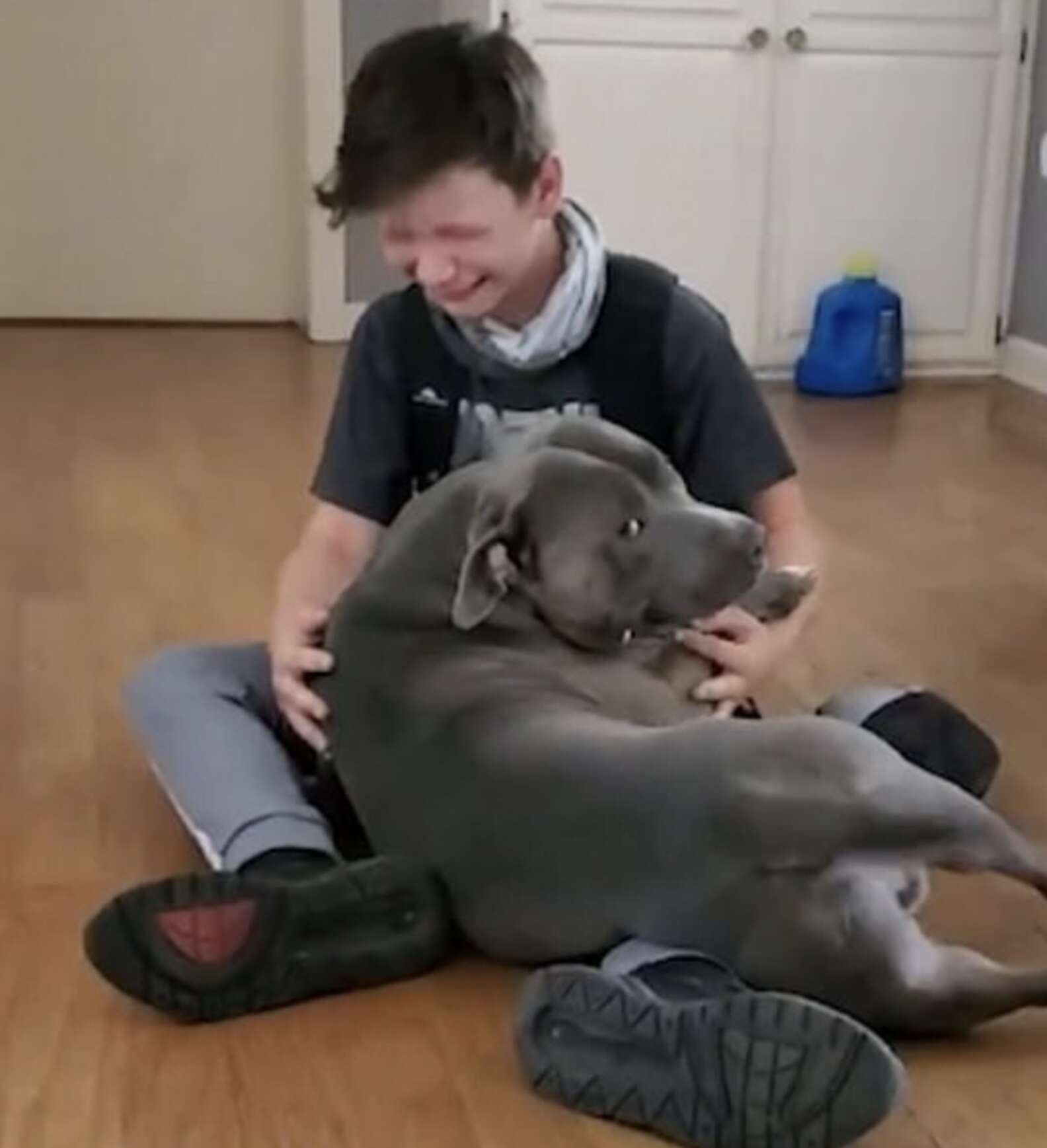
Tyler is reunited with his dog.

I have a folder where I put items that I think would make a good post. I have 1,139 items at present. Now many of them have been shared with you but by no means all of them. They are a constant reminder of the many ways in which the dog has, and is, the perfect companion for us humans.

Take this story that was published in The Dodo in March.

ooOOoo

This Boy’s Reunion With His Dog Will Totally Make Your Day

They never thought they’d see each other again ❤️

By Lily Feinn, Published on the 26th March, 2021

Earlier this month, a 10-year-old boy named Tyler Bandy got the best present he could ask for. As he walked in the door, he was immediately overwhelmed by love and kisses from an old friend — his dog, Bruiser.

STORYFUL/JAMIE BANDY

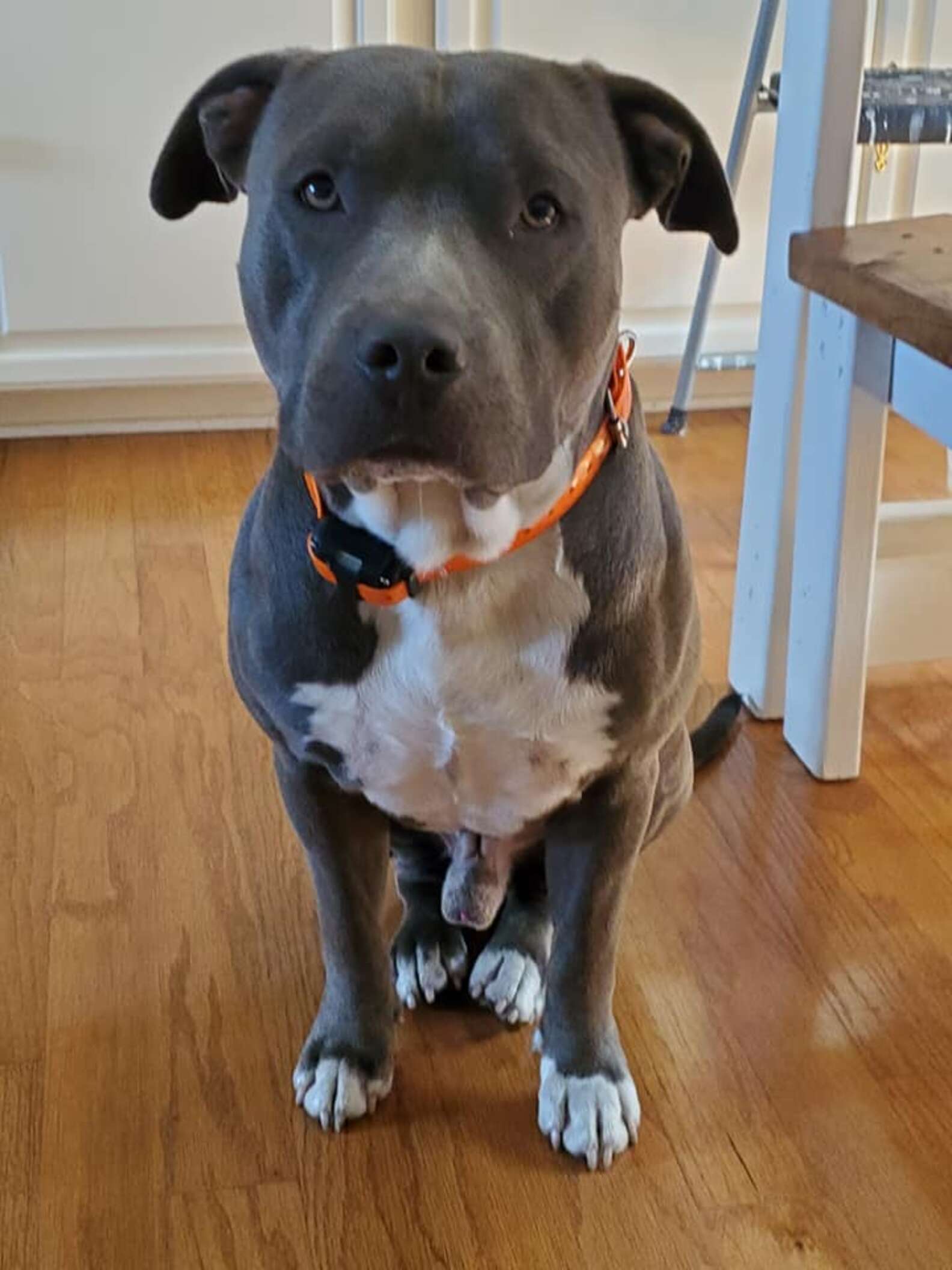
In January, Bruiser, a gray and white pit bull, was on a walk when he ran after a rabbit and got lost.

The Bandy family did everything they could to try and locate Bruiser. They posted fliers around their Florida neighborhood, posted on Facebook, put out old clothes in front of their home so he could smell them and repeatedly checked their local animal control.

FACEBOOK/JAMIE BANDY

But as the weeks passed and no leads were found, the family was “starting to lose hope,” according to Tyler’s mom, Jamie Bandy.“

That’s when the phone rang,” the Highlands County Sheriff’s Office wrote on Facebook. “Turns out their dog had been picked up by somebody on their way to Highlands County and, after a couple of months, it wound up in the hands of our animal services folks.”

STORYFUL/JAMIE BANDY

A staff member at animal services thought the pup looked familiar and, after some digging on social media, she found out why. Bruiser was returned to his parents, but they kept his arrival secret so that they could surprise Tyler.

“To say Bruiser had a joyous homecoming would be putting it lightly,” the Highlands County Sheriff’s Office said. 

You can watch the emotional reunion here:

Tyler was shocked when he came home and saw Bruiser, and both were overjoyed. Tyler immediately started sobbing and hugging his best friend, while Bruiser showered him with licks, wagging his tail as hard as possible.

“[Tyler] was simply overcome when his parents surprised him with his best friend,” the Highlands County Sheriff’s Office said. “The two have been inseparable since.”

ooOOoo

Just another account of a young boy reunited with his dog. But then so much more than that. In this young man’s mind he had lost the one dear creature in his life. Perhaps made worse because Bruiser just disappeared one day. It was what we adults call unfinished business.

Then after a number of weeks fate stepped in and Bruiser was returned and Bruiser and Tyler were reunited. I am going to repeat that sentence towards the end of the piece which shows the response of Bruiser and Tyler. It just doesn’t get any better. “Tyler immediately started sobbing and hugging his best friend, while Bruiser showered him with licks, wagging his tail as hard as possible.”

Beautiful!

What goes around comes around!

Another account of dogs bonding with humans.

Chernobyl is a name that anyone born before, say, 1970 will associate with a terrible nuclear accident in Russia.

As Wikipedia put it:

The Chernobyl disaster was a nuclear accident that occurred on Saturday 26 April 1986, at the No. 4 reactor in the Chernobyl Nuclear Power Plant, near the city of Pripyat in the north of the Ukrainian SSR in the Soviet Union. It is considered the worst nuclear disaster in history both in terms of cost and casualties, and is one of only two nuclear energy accidents rated at seven—the maximum severity—on the International Nuclear Event Scale, the other being the 2011 Fukushima Daiichi nuclear disaster in Japan. The initial emergency response, together with later decontamination of the environment, ultimately involved more than 500,000 personnel and cost an estimated 18 billion Soviet rubles—roughly US$68 billion in 2019, adjusted for inflation.

But recently BBC Future spoke of the bond that the guards and the abandoned dogs made.

Read it below: (Unfortunately you will have to go here to view the stunning photographs because the BBC prevents them being republished! But it is still a very interesting article.)

ooOOoo

The guards caring for Chernobyl’s abandoned dogs

The descendants of pets abandoned by those fleeing the Chernobyl disaster are now striking up a curious relationship with humans charged with guarding the contaminated area.

It wasn’t long after he arrived in the irradiated landscape of the Chernobyl Exclusion Zone that Bogdan realised his new job came with some unexpected companions. From his first days as a checkpoint guard in Chernobyl, he has shared the place with a pack of dogs.

Bogdan (not his real name) is now in his second year of working in the zone and has got to know the dogs well. Some have names, some don’t. Some stay nearby, others remain detached – they come and go as they please. Bogdan and the other guards feed them, offer them shelter, and occasionally give them medical care. They bury them when they die.

All the dogs are, in a sense, refugees of the 1986 disaster in which Reactor No. 4 at the Chernobyl Nuclear Power Plant exploded. In the aftermath, tens of thousands of people were evacuated from the Ukrainian city of Pripyat. They were told to leave their pets behind. (Read more about the long-term toll of the Chernobyl disaster.)

Soviet soldiers shot many of the abandoned animals in an effort to prevent the spread of contamination. But, undoubtedly, some of the animals hid and survived. Thirty-five years later, hundreds of stray dogs now roam the 2,600km (1,000 sq mile) Exclusion Zone put in place to restrict human traffic in and out of the area. Nobody knows which of the dogs are directly descended from stranded pets, and which may have wandered into the zone from elsewhere. But they are all dogs of the zone now.

Their lives are perilous. They are at risk from radioactive contamination, wolf attacks, wildfires and starvation, among other threats. The dogs’ average lifespan is just five years, according to the Clean Futures Fund, a non-governmental organisation that monitors and provides care for dogs living within the Exclusion Zone.

That dogs inhabit this ruined place is well known – some of them have even become minor celebrities on social media. Clean Futures Fund co-founder Lucas Hixson, who gave up a research career to look after the animals, offers virtual tours of the Exclusion Zone featuring the dogs.

But less is known about the local workers who interact with these canines on a daily basis.

Jonathon Turnbull, a PhD candidate in geography at the University of Cambridge, realised it might be worth collecting these people’s stories.

“If I wanted to know the dogs,” he says, “I needed to go to the people who know them best – and that was the guards.”

What he discovered is a heart-warming story of the guards’ relationship with the animals they encounter in this abandoned environment – a tale that provides insights into the deep bond between humans and dogs.

The guards sometimes go to the trouble of helping the dogs by pulling out ticks embedded in their skin, or by giving them rabies injections

For instance, the guards have given several of the dogs nicknames. According to Turnbull, there’s Alpha, whose name refers to a type of radiation, and Tarzan, a dog well-known to Chernobyl tourists, who can do tricks on command and who lives near the famous Duga radar installation built by the Soviets. Then there is Sausage – a short, fat dog that likes to warm herself in the winter by lying on heating pipes. These pipes serve one of the buildings used by workers in the Exclusion Zone who are part of ongoing efforts to decommission and decontaminate the ruined power plant.

Access to the Chernobyl Exclusion Zone requires a permit, so guards are tasked with controlling checkpoints on roads in and out of the area. People who dodge these checkpoints to trespass in the Exclusion Zone are known as “stalkers”. Guards report them to the police.

When Turnbull, who lives in Ukraine’s capital Kyiv, started making regular visits to the zone, he met Bogdan, and other checkpoint guards. They were reluctant to talk at first so he had to win them over. Then he offered them to chance to take part in his research, which he says was a “turning point”. His idea was to give the guards disposable cameras and ask them to take pictures of the dogs – not posed portraits but scenes of everyday life. The guards only had one other request – “please, please – bring food for the dogs”. So Turnbull did.

The photos taken by the guards revealed how much they had developed companionships with the wandering dogs of the Exclusion Zone.

Turnbull published some of the resulting images and material from interviews with the guards in a paper in December. More recently, he interviewed one of the study participants again on behalf of BBC Future. The guard in question has asked not to be identified to avoid disciplinary action at work, so we refer to him here by the pseudonym “Bogdan”.

When Bogdan walks around the abandoned streets of the zone to check for stalkers, the dogs happily accompany him, he says. They always appear eager to see whether he, or a passing tourist, might be carrying food. Should a companion dog get distracted or run off to chase an animal, it always eventually returns to Bogdan, he adds.

You might also like:

The loyalty goes both ways. Turnbull says the guards sometimes go to the trouble of helping the dogs by pulling out ticks embedded in their skin, or by giving them rabies injections.

Wolves, dogs and other animals could in theory carry radioactive contamination, or genetic mutations potentially passed on by breeding, to places outside the Exclusion Zone

Monitoring who comes and goes from the Exclusion Zone sometimes makes for a dull occupation. But there are always dogs nearby.

At some checkpoints, the guards have more or less adopted some of the animals. They feed them and give them shelter. But not all are so tame. During his research, one guard told Turnbull, “We can’t inject Arka because she bites.”

Another participant spoke of one dog that was even more difficult to approach. It refuses to be touched at all. “You should just give her a pan [of food] and go. She waits until you leave and then she eats,” the guard explained.

The dogs sometimes bark at strangers on first sight, that’s their nature, says Bogdan. But so long as they don’t feel threatened, they sometimes calm down and wag their tails. Occasionally it even seems as though they’re smiling, he adds.

Generally, visitors to Chernobyl are advised not to touch the dogs, for fear that the animals may be carrying radioactive dust. It’s impossible to know where the dogs roam and some parts of the Exclusion Zone are more contaminated than others.

There is wildlife living in the Chernobyl Exclusion Zone besides dogs. In 2016, Sarah Webster, a US government wildlife biologist who was working at the University of Georgia at the time, and colleagues published a paper in which they revealed how mammals, from wolves to boars and red foxes, had colonised the Exclusion Zone. Camera trap data showed that the animals’ numbers were not noticeably lower in those areas where radioactive contamination is higher.

Animals living in the Exclusion Zone are not necessarily confined there. A later studyby Webster and colleagues, published in 2018, detailed the movements of a wolf tagged with a GPS device. It travelled 369km (229 miles) from its home range in the zone, taking a long arc to the south-east, then north-east again, eventually entering Russia.

Wolves, dogs and other animals could in theory carry radioactive contamination, or genetic mutations potentially passed on by breeding, to places outside the Exclusion Zone.

“We know it’s happening but we don’t understand the extent or the magnitude,” says Webster.

Turnbull says the guards do not generally worry about radiation, though they might occasionally use dosimeters to check a dog over.

It actually seems as though the dogs, through the companionship they offer, end up reassuring those who interact with them regularly, says Greger Larson, an archaeologist who studies animal domestication at the University of Oxford and who was not involved in Turnbull’s research.

“They’re kind of putting themselves in the shoes of the dogs,” he suggests, referring to the guards. “If the dog is fine, that means you’re fine.”

But in truth, this may only be a false sense of security.

“It’s an uncanny environment,” notes Turnbull. “You can’t see the danger. You’re constantly aware that it might be there but everything looks normal.”

Despite the fact that the dogs could pose a risk in terms of radioactivity, guards like Bogdan instead emphasise the benefits of having them around. For example, he claims to know dogs that bark in noticeably different ways depending on what they have spotted in the distance – a human stranger, a vehicle, a wild animal. Because of these helpful warning signals, Bogdan thinks of the dogs as “assistants”.

What’s happening in the Exclusion Zone is an echo of interactions with dogs that are known to have occurred within human civilisations for thousands of years, says Larson.

“We find this for the last 15,000 years or more, this is what people do, they make very close associations with not just dogs but a lot of domestic animals […] to sort of say, ‘this is our attachment to the landscape’,” he explains.

All over the world, there are dogs that inhabit a similar, in-between state – not quite fully domesticated, not quite fully wild. These are the feral dogs that roam cities and industrial areas looking for food, the ones that may become to some extent adopted by people but still wouldn’t be considered pets.

Chernobyl’s dogs also live in this sort of space, on the edge of domestication, but there is a difference argues Webster, who has participated in a separate study of Turnbull’s in the past.

“The Exclusion Zone is very different in that it’s abandoned by humans,” she says. “The only people in that landscape on a day-to-day basis, really, are the guards.” As such, the dogs’ opportunities for befriending humans are very limited.

While the outside world remains fascinated by the dogs, and their story, for many guards the connection runs much deeper. Bogdan says he is often asked why the dogs ought to be allowed to stay in the Exclusion Zone. “They give us joy,” he replies. “For me personally, this is a kind of symbol of the continuation of life in this radioactive, post-apocalyptic world.”

ooOOoo

What is so fascinating is that this interaction between the dogs and the people is an echo of the first interaction between hunter/gatherers and wolves of, perhaps, 25,000 years ago or more. And the guards of today and the dogs, whom Larson calls his assistants, are perfectly bonded.

It just goes to show that ‘what goes around comes around’!
Yet another dog food advisory

This came out yesterday and is republished below.

ooOOoo

Dear Fellow Dog Lover,

Zuke’s has asked pet food retailers to remove some of its most popular dog treats from retail stores due to “a potential quality issue”.

For full details, please visit the following link: Popular Dog Treats Removed from Retail Stores

Best Dog Food for May 2021


The Dog Food Advisor has recently updated the following best dog food pages:

  • Best Dry Dog Foods
  • Best Puppy Foods
  • Best Large Breed Puppy Foods
  • Best Dog Foods for Small Dogs
  • Best Dog Food for Allergies
  • Best Grain-Free Dog Foods
  • Best Dog Foods Made with Grain
  • Best Budget-Friendly Dog Foods
  • Best Dog Food for Shih Tzus, Labs and 8 Other Breeds
  • Best Senior Dog Foods

See our Best Dog Foods for May 2021 

Please be sure to share this news with other dog and cat owners. 

Mike Sagman, Editor
The Dog Food AdvisorSaving Good Dogs From Bad Dog Food

ooOOoo

Hope it finds some people who needed to be informed!

This is very sweet!

There is something about a baby!

I must admit to leaving preparing a post until late in the day. I was going to leave it blank but then decided that this was such a sweet story that it had to be shared with you all!

ooOOoo

Dog Loves Listening To Her Baby Brother In Mom’s Belly

She won’t stop wagging her tail ❤️️

By Caitlin Jill Anders

Published on the 16th April, 2021

Avon has always been a very hyper dog, but recently she’s gotten a little calmer — and that’s because she suddenly realized that her mom is pregnant. 

“I think she first noticed I was pregnant when I was around 14 [to] 15 weeks because she would normally jump around so much, but she started being more gentle,” Shea Haugen, Avon’s mom, told The Dodo. 

SHEA HAUGEN

Now, Avon loves to rest her head on her Mom’s belly — because she loves listening to her baby brother moving around inside. 

“She definitely lays her head down to listen to him and she gets really excited when he kicks,” Haugen said. “Typically that’s when her tail starts wagging uncontrollably.”

The dog who used to be so hyper and moving around all the time could now lay with her head on mom’s belly and listen to her baby brother forever, and that’s what true love looks like. Avon can’t wait to meet the newest member of her family, and her mom has a feeling he can’t wait to meet her, too. 

“Funny enough, my baby boy seems to like [giving] her a good kick whenever she lays her head on my tummy,” Haugen said. 

Very soon, Avon is going to be a big sister. In the meantime, she’ll keep following Mom around and laying her head on her belly, proving to everyone what an incredible big sister she’s going to be.

ooOOoo

There’s no question at all that the bond between dogs and humans is so, so special.

I’m sorry but I have to dash now!

Picture Parade Three Hundred and Eighty-Six

More dog pictures.

But with a difference as these are from my very good and long-standing friend, Dan and his dog Lexi.

oooo

oooo

oooo

oooo

oooo

oooo

oooo

Perfect!

Dogs are the perfect companions!

A Dog’s Tail

Wonderful video sent across by my son, Alex!

We were out much of the day yesterday so I didn’t have huge time for the blog.

But nevertheless I could let the day go by without sharing this video with you.

Yes, it is an advertising video but so what. It is the most delightful combination of mountain biking and dogs. Alex is a great mountain biking enthusiast.

Here it is!

Picture Parade Three Hundred and Eighty-Five

ooOOoo

ooOOoo

ooOOoo

ooOOoo

These pictures are all from the ‘Unsplash’ site, free of copyright, and I am indebted to the individual photographers.

Jeannie is painting again!

And it is thanks to all of you!

There was such a wonderful response to when I recently posted some of Jeannie’s paintings from previous days that she picked up her paint brushes again.

To say that I was delighted is an understatement.

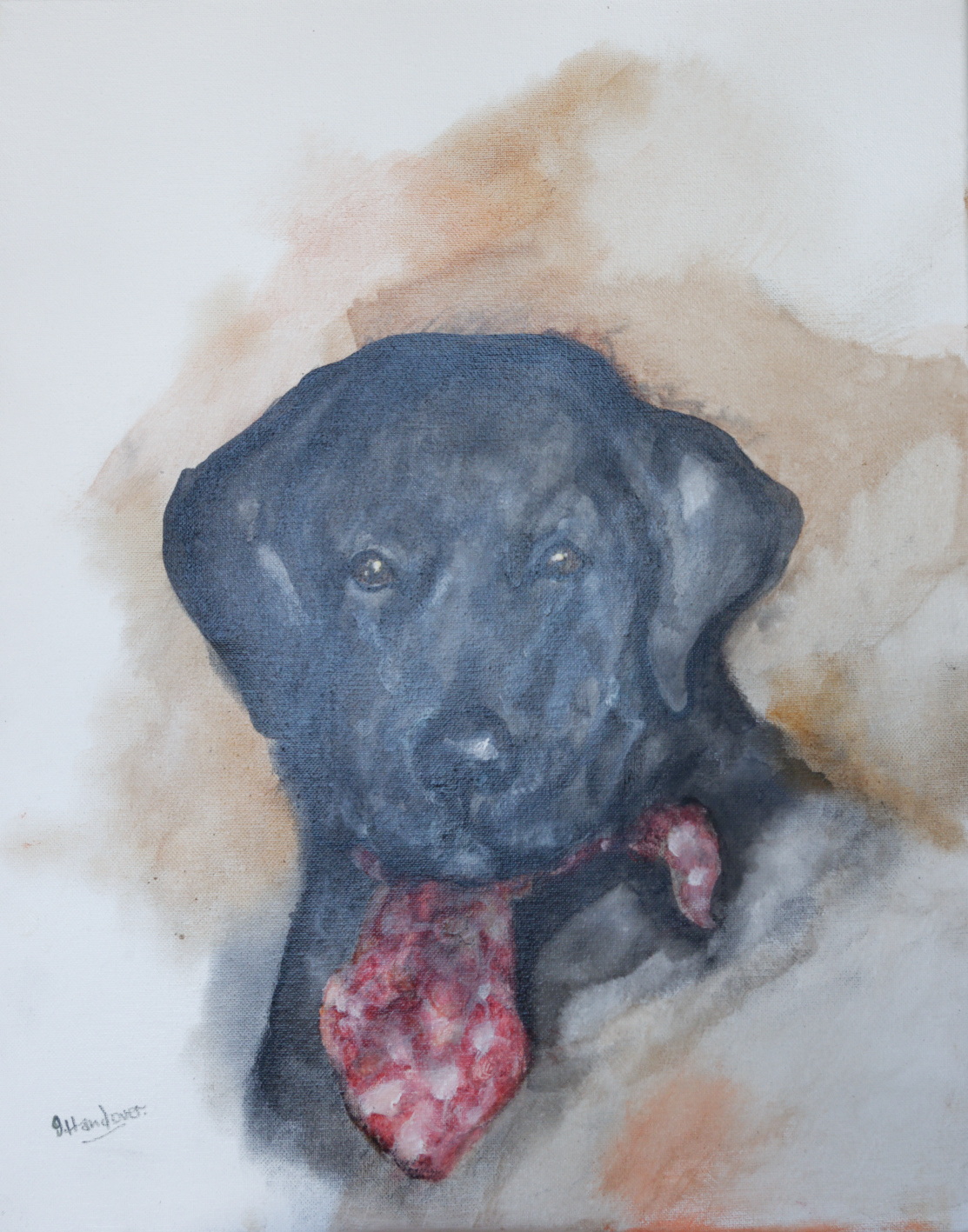
So I present a painting of Louis, a dog belonging to Jim and Janet Goodbrod, when he was a puppy, that’s Louis not Jim!

Jim and Janet used to live just around the corner from us but moved some time ago up to Roseburg. We are going to visit them today and Jean is taking the painting with her as a gift to the Goodbrods.

But to close with another thank you. Because it really made such a difference.

The pain of letting go.

Dogs ought to live far longer!

I have spoken before of the bond that we humans make with our dogs, and vice versa, and the love that flows from such a bond.

But they don’t live long enough! And the end of their lives is a very difficult period for us.

Doug Goodman writes a blog. He is also an accomplished author.

Recently Doug wrote about the most difficult decision he had to make. Doug kindly gave me permission to republish his article.

ooOOoo

The Difficult Decision to Euthanize Ryder.

By Doug Goodman, April 20th, 2021

Unfortunately, all dogs die. There’s no easy way to do this, but it’s a fact of life as a pet owner. For me, the key decision was when is the right time to do it? I don’t want to wait too long so that Ryder suffers, but I’d feel guilty putting Ryder down too early.

We’ve talked about this many times, in fact. Often on walks or long rides in the car, my wife and I go through the bullets, like a checklist of emotional redemption. There are many “easy” decisions when owning a dog: which food? That bag of Purina over there. When do you pick up after the dog? At least twice a week in the spring and summer, sometimes every other day. Should you pet the dog? Well, it’s a German Shepherd, so if it wants to be petted, you better do it now because it may not want to be petted the rest of the day.

Deciding to euthanize is nothing so simple.

Years ago when we went through end-of-life with Mojo, a veterinarian recommended as a litmus test to pick the three things the dog enjoys most in life. When the dog can no longer do one or especially two of those things, it’s time to euthanize.

But that litmus test doesn’t apply to all dogs, and certainly not to Ryder. She’s always been a peculiar dog. She likes her backyard and playing with Koda, and she likes to eat*. She still does those things. For me, it is a pain factor based on arthritis and lack of mobility. People will talk about the dignity of life for a dog, and I think there is some truth to that. I remember laying in bed one day and Mojo walking in and telling me he was ready. A few months later, he again looked at me, and his eyes were full of truth. He wasn’t happy, he didn’t like this anymore. He was ready. Sometimes Ryder gives me that look, but I’m not sure. She’s always had a pained, scared-of-the-world emotion in her eyes.

But there is “pained” and there is “pain.” Ryder can’t put in words her suffering, so it’s up to me to observe her closely. Over the past few months, and certainly over the past year, my family and I have noticed changes to her behavior, physicality, and mental state:

-She had urination problems. She was diagnosed as a UTI and corrected. Alone, this is not a sign that she is close to dying, but I believe it may be a sign of the severity of her back arthritis. She’s not cleaning herself. This is especially troubling considering…

-She has problems holding in poop. Sometimes she’s sitting there, laying in it, and she doesn’t realize she’s pooped herself. Often, she can’t make it through the night without releasing her bowels in the house. If she isn’t able to clean herself, and she isn’t aware that she is going to the bathroom, this can lead to discomfort and additional UTIs.

-She stopped climbing the stairs. This was a subtle one because our dogs aren’t allowed upstairs. But last week we had a major thunderstorm, and as anyone who owns German Shepherds can attest, GSDs only want to be right next to you when the thunder booms and the lightning crashes. Koda busted down the dog gate and ran upstairs for solace. Ryder, who is usually the first one to bump against the bedroom door until we wake up, stayed downstairs and didn’t attempt coming to us. At least, I didn’t see her attempt it. She may have tried, failed, and gone back downstairs. That’s a first in her lifetime, and she wouldn’t have stayed down there if she didn’t absolutely have to remain on the first floor.

-She is stumbling. She often stumbles in the house, especially walking inside and out. She has fallen doing little playful jumps at my daughter. I’ve seen her fall to the floor and not be able to stand for thirty seconds or more.

-This will sound weird, but she sits a lot, and not on purpose. One of the things she does is get in the way of her people (helloooo, herding dog). She backs out when she realizes I want to get through. Now, she backs out, and her butt falls down, and she stares at me like “That wasn’t supposed to happen. What do I do now? Sorry!” until she can get back up.

-She is whining and yelping. This is the big one. My dogs don’t whine or yelp for no reason. They aren’t talkative dogs. For the past year, though Ryder will yelp when roughhousing with Koda. She wants to jump on him, but she’s incapable. Lately, she’s really reduced her roughhousing. Additionally, Koda is being a son of a bitch about this. A few days ago I noticed they were playing their favorite game of “I’ve got a thing and you don’t.” I posted about this when during one of these games, Ryder knocked the poop out of Koda. That old chestnut. But this last time when Koda wanted the random stick, he bumped her rear with his chest so that she went down. I scolded him, he didn’t understand, and eventually Ryder dropped the stick and guarded it with strong play-snaps. Koda wasn’t going to take any further action to take the prized random stick, but the fact that he knows to exploit this indicates to me that one day we could find out he’s hurt her, perhaps broken her back from bumping her, and now you have to put down Ryder immediately in your backyard. Nobody wants that. 

So we have elected to euthanize Ryder. 

Damn, there’s a lot of finality in that statement. She is a family member, and we lover her very much. I picked her up from the tiny town of Buda, Texas and drove her three or four hours back to Houston. She never liked car rides after that. We have a lot of memories with that dog, some I’m sure I will share in the coming weeks, but for now, I want to focus on the decision.

We are reaching out to companies that can euthanize at home. With all of Ryder’s fears, it seems like the best option. Of course, home euthanasias are the popular choice in the pandemic. Earlier in 2020, some of the vets we looked to wouldn’t allow owners to be present for euthanasias. So we will see if we can make the home euthanasia happen.

In the meantime, I give her half an aspirin to help with the pain, and my daughter purchased some CBD-infused peanut butter, too. We’ve had her on joint vitamins, but that only goes so far. We do as much as we can to keep Ryder comfortable, but it’s clear that she’s in near-constant pain and that her hips/back have greatly reduced function. She is an eleven and a half year old GSD, old for one. So as difficult as it is to decide to euthanize, I know that it is a necessary part of ownership. If I’m willing to own a dog, I must be willing to take care of it throughout it’s life, not just the happy puppy parts, but all of it, including her last days. 

*Ryder only eats infrequently over the past few weeks. It is one of her three joys: play, eating, and protection/perimeter walking, and I would argue that food is her highest joy, so not eating is a big clue that her time is soon.

ooOOoo

I met Jean in 2007 in Mexico. Jean was rescuing street dogs, looking after them for a while, and then finding homes for them in the USA; primarily Arizona. I was then living in Devon, England together with my German Shepherd, Pharaoh. Jean loves all dogs irrespective of size. I moved out to Mexico, with Pharaoh, permanently in 2008. Living with so many dogs around the home quickly brought an awareness of the integrity of dogs, of their ability to love unconditionally, and I started this blog in 2009.

Now Jean and I live in Southern Oregon. Indeed we have been here since 2012. We are down to six dogs: Cleo; Brandy; Sheena; Oliver; Pedi and Sweeny. That means we have had many dogs die in the past. I still miss Pharaoh who died in 2017. Or rather it should be said that the decision to euthanise him was in June, 2017.

In the end we have to make that final decision for our beloved dogs. It is, frankly, so much better than leaving dogs to die because the last few weeks or days can be very brutal.

So we know only too well what Doug is going through. Our thoughts are with Doug and Ryder.

The range of human attitudes to dogs.

What a strange species we are!

Two days ago, just 3 miles down the road, someone reported seeing two dogs dumped in a yard and the culprit driving off at high speed. It was on the corner of Hugo Rd and Barker Rd, and Barker I know well because when I ride my bike I do an extra mile along Barker. (And we live on Hugo Rd.)

Then there’s the attitude adopted by the person who took puppies to a shelter. “… the breeder told her the coyotes can always use a meal.” As seen on the website Treehugger. Have a read.

ooOOoo

Rescued Blind and Deaf Puppies Are Incredibly Joyful

Breeder had threatened to feed them to coyotes.

By Mary Jo DiLonardo Updated April 9th, 2021

Mary Jo DiLonardo

Trudy is fearless when she runs. Fred Strobel Photography

As I write this, it sounds like there are hyenas battling it out in my basement. Yelps and screams and torturous cries are storming up the stairs along with a few barks and high-pitched squeals.

It’s just another day in fostering some rambunctious blind and deaf puppies who happen to play very, very loudly.

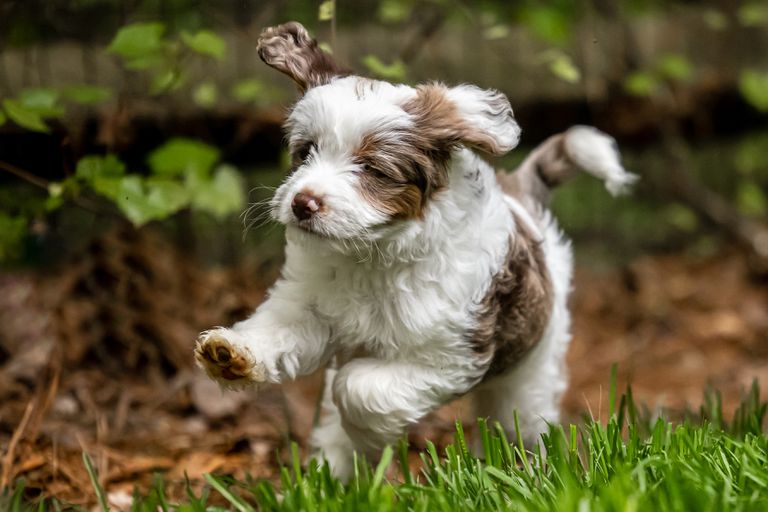
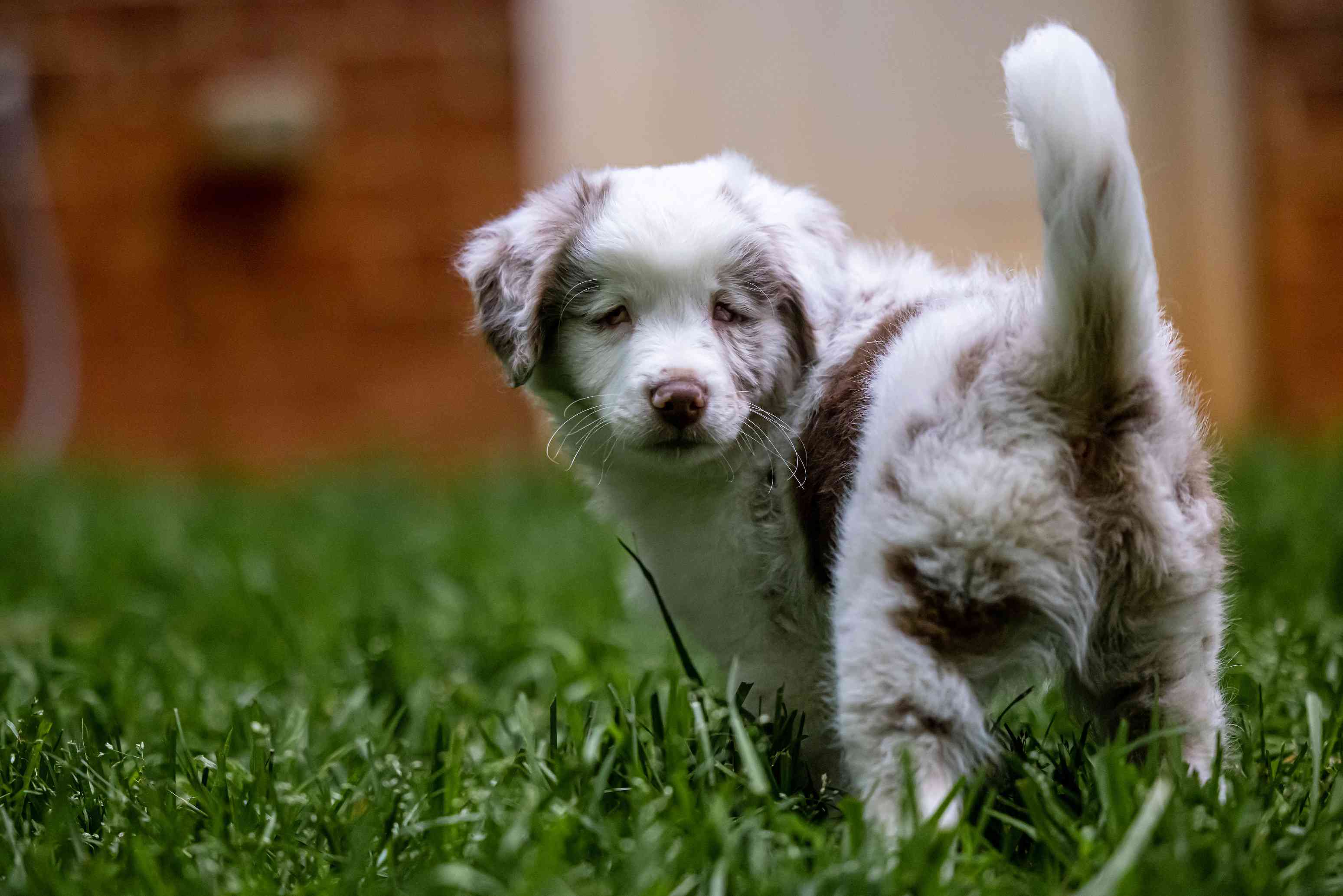
Trudy and Zane are 9-week-old Australian shepherd mixes, maybe Aussiedoodles. They were dropped off at a rural shelter somewhere in Illinois by a breeder. When the beleaguered shelter worker asked what would happen to the puppies if she couldn’t take them, the breeder told her the coyotes can always use a meal. She couldn’t believe it.

The shelter, of course, took them. And Speak! St. Louis, the rescue I volunteer with, of course, stepped up. And somehow the puppies ended up here in Atlanta, playing “WWF Smackdown” in my basement.

Trudy and Zane are double merles like the Treehugger puppies. Merle is a swirly pattern in a dog’s coat that is very lovely and highly prized by breeders and people who want a pretty dog. When two dogs with the merle gene are bred together, there’s a 25% chance that their puppies will be blind, deaf, or both.

Sometimes this happens by accident, but it seems that it happens too often on purpose. In any case, there sure are plenty of puppies that end up needing homes. At least those are the ones that rescue groups hear about. Others just quietly disappear.

I’m pretty sure that Zane and Trudy weren’t handled much by their owner when they got here. They were awfully squirmy and bitey and didn’t want to be held or touched. They wouldn’t eat unless they were touching each other.

So I’ve been working on it. Hold one for a few seconds and put them down before they fidget. Pet them all over a little at a time. Feed them just a little farther apart at each meal.

In just a couple of weeks, they’ve learned that people are pretty cool.

Navigating the World

Zane in a quiet moment.Fred Strobel Photography

I’ve fostered a blind puppy, several deaf puppies, and two blind and deaf puppies including the famous Whibble Magoo, who is now competing in agility contests and is smarter than most people I know.

It’s just amazing to watch how they navigate the world. They quickly map out their area, learning where the walls, bushes, and furniture are. Sure, they bounce off a few things at first but puppy heads are pretty hard. They do a little bit of a cartoon-like head shake where the world, no doubt, spins a little bit inside their heads. Then they jump up and go back to exploring and running and being happy. 

And, boy, are they happy.

People often say they feel sorry when they see blind or deaf puppies. They talk about how awful it must be for them.

But this is the only life they know and they are so joyful! When they go outside, they bounce in the grass like it is the best, most wonderful place in the world. When they play with a toy, it’s the coolest toy ever. When they find my dog, their tails wag so hard because they are ecstatic to be around him.

And when they find a person, they are elated because people are amazing, fun, and they give snuggles and treats.

They’ve come a long way from being just a step away from coyote dinner. Now they’ve learned to sit with two taps on their bottom and they are learning “down” is a tap on the front foot.

They are getting ready to look for their forever homes where their new people will appreciate that they aren’t just deaf and blind puppies. Instead, they are brilliant, silly, playful, gorgeous puppies with wonderful loving, sweet personalities. 

They just happen to play and live with the volume turned up loud.

ooOOoo

Regarding that dog dump in Barker Road, I managed to find out which house it was and later on in the day went for a bike ride that took me that way. There was no sign of anything unusual.

But to get to the matter of today’s post that is all about puppies that are blind or deaf. As I am sure you are aware, dogs are very different to us humans when it comes to their senses. I have written before about the great power of their sense of smell. This is many ways is their leading sense and I have no doubt that in the case of dogs that are blind or deaf their smell allows them to function pretty well.

There are many, many good people in the world. Some are outstanding. But I regret that there are quite a few low lights. Shame but there it is.