Rain after 11pm. Areas of smoke before 11pm. Low around 60. West wind around 6 mph. Chance of precipitation is 90%. New precipitation amounts between a tenth and quarter of an inch possible. Saturday
Rain likely before 11am, then a slight chance of showers after 11am. Partly sunny, with a high near 76. West wind 11 to 14 mph, with gusts as high as 21 mph. Chance of precipitation is 60%. New precipitation amounts of less than a tenth of an inch possible.
If that rain arrives it will break a spell of fifty days since we last had rain. So fingers, and toes, very tightly crossed.
The second reason to be joyful is demonstrated in the following video sent to me by Chris Snuggs.
Enjoy, and wherever you are have a wonderful wet weekend!
Say the word ‘dog’ to me and my immediate thought would be of the domesticated animal, as I’m sure would be the first thought of thousands of others.
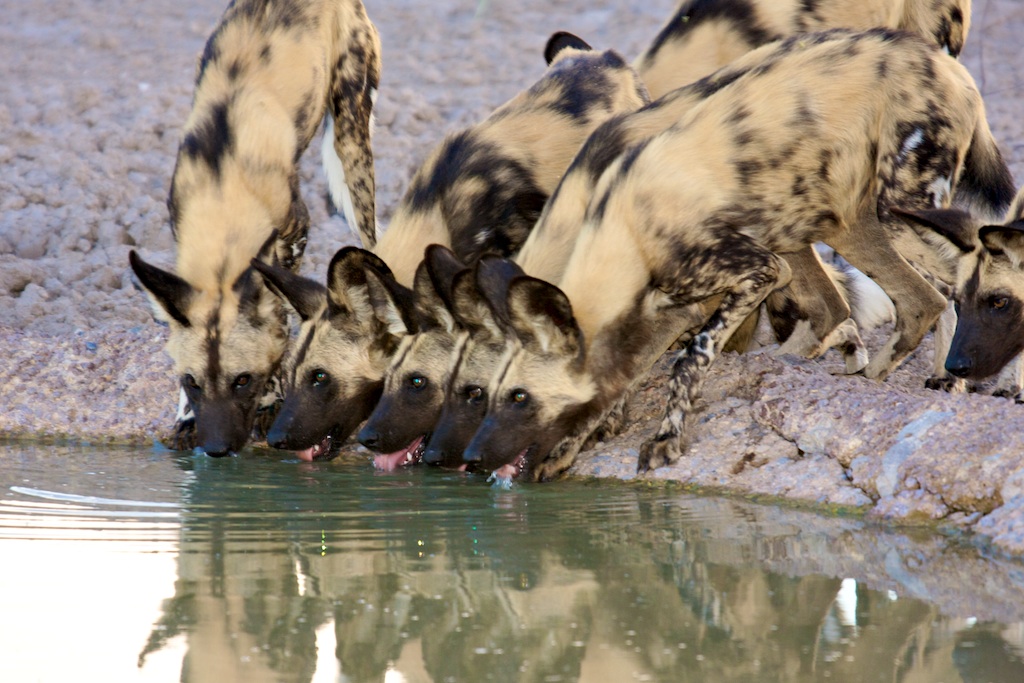
But our wonderful doggie companions came from the wild and in some countries wild dogs still are widely found. There was an article on the Mokolodi Nature Reserve blogsite in November, 2009 specifically about wild dogs, that included the following picture:
Wild hunting dogs drinking.
All of which is a wonderful reminder that wilderness is a critical and essential element in the overall health of our planet, and by extension, of ourselves.
The academic blogsite The Conversation yesterday published an article by William Lynn who is a Research Scientist in Ethics and Public Policy at Clark University. It proposes a wonderful way of keeping our populations of wild animals healthy and vibrant through rewilding. It is republished here within the terms of The Conversation.
ooOOoo
Setting aside half the Earth for ‘rewilding’: the ethical dimension
August 26, 2015 5.50am EDT
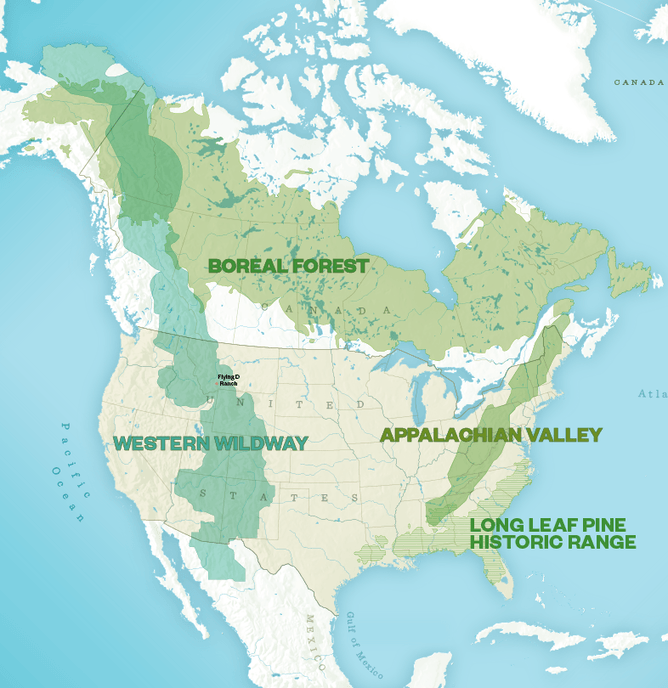
Wildlife corridors: four proposals to ‘rewild’ portions of North America. Smithsonian Institute, CC BY-NC
The famous biologist and naturalist would do this by establishing huge biodiversity parks to protect, restore and connect habitats at a continental scale. Local people would be integrated into these parks as environmental educators, managers and rangers – a model drawn from existing large-scale conservation projects such as Area de Conservación Guanacaste (ACG) in northwestern Costa Rica.
The backdrop for this discussion is that we are in the sixth great extinction event in earth’s history. More species are being lost today than at any time since the end of the dinosaurs. There is no mystery as to why this is happening: it is a direct result of human depredations, habitat destruction, overpopulation, resource depletion, urban sprawl and climate change.
Wilson is one of the world’s premier natural scientists – an expert on ants, the father of island biogeography, apostle of the notion that humans share a bond with other species (biophilia) and a herald about the danger posed by extinction. On these and other matters he is also an eloquent writer, having written numerous books on biodiversity, science, and society. So when Wilson started to talk about half-Earth several years ago, people started to listen.
As a scholar of ethics and public policy with an interest in animals and the environment, I have been following the discussion of half-Earth for some time. I like the idea and think it is feasible. Yet it suffers from a major blind spot: a human-centric view on the value of life. Wilson’s entry into this debate, and his seeming evolution on matters of ethics, is an invitation to explore how people ought to live with each other, other animals and the natural world, particularly if vast tracts are set aside for wildlife.
The ethics of Wilson’s volte-face
I heard Wilson speak for the first time in Washington, DC in the early 2000s. At that talk, Wilson was resigned to the inevitable loss of much of the world’s biodiversity. So he advocated a global biodiversity survey that would sample and store the world’s biotic heritage. In this way, we might still benefit from biodiversity’s genetic information in terms of biomedical research, and perhaps, someday, revive an extinct species or two.
Not a bad idea in and of itself. Still, it was a drearily fatalistic speech, and one entirely devoid of any sense of moral responsibility to the world of nonhuman animals and nature.
What is striking about Wilson’s argument for half-Earth is not the apparent about-face from cataloging biodiversity to restoring it. It is the moral dimension he attaches to it. In several interviews, he references the need for humanity to develop an ethic that cares about planetary life, and does not place the wants and needs of a single species (Homo sapiens sapiens) above the well-being of all other species.
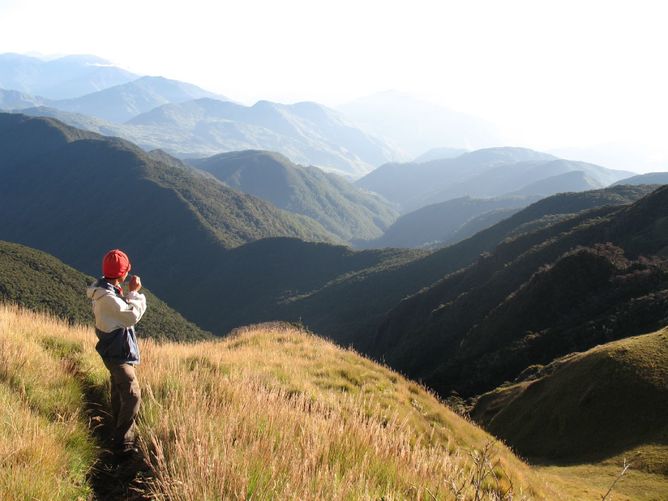
The half-earth proposal prompts people to consider the role of humans in nature. jene/flickr, CC BY-NC-ND
To my ear, this sounds great, but I am not exactly sure how far it goes. In the past, Wilson’s discussions of conservation ethics appear to me clearly anthropocentric. They espouse the notion that we are exceptional creatures at the apex of evolution, the sole species that has intrinsic value in and of ourselves, and thus we are to be privileged above all other species.
In this view, we care about nature and biodiversity only because we care about ourselves. Nature is useful for us in the sense of resources and ecological services, but it has no value in and of itself. In ethics talk, people have intrinsic value while nature’s only value is what it can do for people – extrinsic value.
For example, in his 1993 book The Biophilia Hypothesis, Wilson argues for “the necessity of a robust and richly textured anthropocentric ethics apart from the issues of rights [for other animals or ecosystems] – one based on the hereditary needs of our own species. In addition to the well-documented utilitarian potential of wild species, the diversity of life has immense aesthetic and spiritual value.”
The passage indicates Wilson’s long-held view that biodiversity is important because of what it does for humanity, including the resources, beauty and spirituality people find in nature. It sidesteps questions of whether animals and the rest of nature have intrinsic value apart from human use.
His evolving position, as reflected in the half-Earth proposal, seems much more in tune with what ethicist call non-anthropocentrism – that humanity is simply one marvelous but no more special outcome of evolution; that other beings, species and/or ecosystems also have intrinsic value; and that there is no reason to automatically privilege us over the rest of life.
What kind of a species are we that we treat the rest of life so cheaply? There are those who think that’s the destiny of Earth: we arrived, we’re humanizing the Earth, and it will be the destiny of Earth for us to wipe humans out and most of the rest of biodiversity. But I think the great majority of thoughtful people consider that a morally wrong position to take, and a very dangerous one.
The non-anthropocentric view does not deny that biodiversity and nature provide material, aesthetic and spiritual “resources.” Rather, it holds there is something more – that the community of life has value independent of the resources it provides humanity. Non-anthropocentric ethics requires, therefore, a more caring approach to people’s impact on the planet. Whether Wilson is really leaving anthropocentrism behind, time will tell. But for my part, I at least welcome his opening up possibilities to discuss less prejudicial views of animals and the rest of nature.
The 50% solution
It is interesting to note that half-Earth is not a new idea. In North America, the half-Earth concept first arose in the 1990s as a discussion about wilderness in the deep ecology movement. Various nonprofits that arose out of that movement continued to develop the idea, in particular the Wildlands Network, the Rewilding Institute and the Wild Foundation.
These organizations use a mix of conservation science, education and public policy initiatives to promote protecting and restoring continental-scale habitats and corridors, all with an eye to preserving the native flora and fauna of North America. One example is ongoing work to connect the Yellowstone to Yukon ecosystems along the spine of the Rocky Mountains.
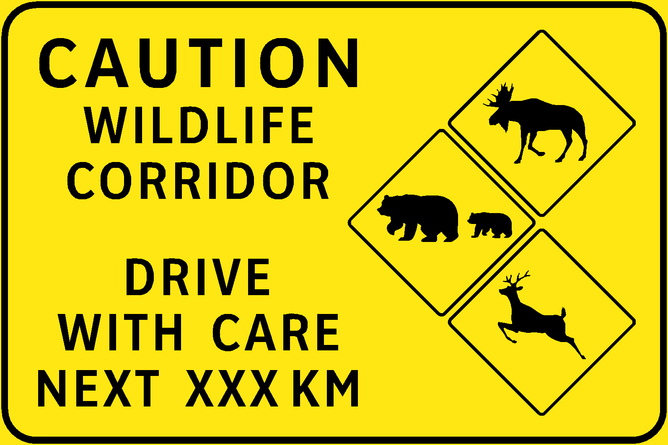
Take it up a notch? The British Columbia Ministry of Transportation recently started to add signs warning motorists when they are likely to encounter wildlife. British Columbia Ministry of Transportation, CC BY-NC-ND
When I was a graduate student, the term half-Earth had not yet been used, but the idea was in the air. My classmates and I referred to it as the “50% solution.” We chose this term because of the work of Reed Noss and Allen Cooperrider’s 1994 book, Savings Nature’s Legacy. Amongst other things, the book documents that, depending on the species and ecosystems in question, approximately 30% to 70% of the original habitats of the Earth would be necessary to sustain our planet’s biodiversity. So splitting the difference, we discussed the 50% solution to describe this need.
This leads directly into my third point. The engagement of Wilson and others with the idea of half-Earth and rewilding presupposes but does not fully articulate the need for an urban vision, one where cities are ecological, sustainable and resilient. Indeed, Wilson has yet to spell out what we do with the people and infrastructure that are not devoted to maintaining and teaching about his proposed biodiversity parks. This is not a criticism, but an urgent question for ongoing and creative thinking.
Humans are urbanizing like never before. Today, the majority of people live in cities, and by the end of the 21st century, over 90% of people will live in a metropolitan area. If we are to meet the compelling needs of human beings, we have to remake cities into sustainable and resilient “humanitats” that produce a good life.
Such a good life is not to be measured in simple gross domestic product or consumption, but rather in well-being – freedom, true equality, housing, health, education, recreation, meaningful work, community, sustainable energy, urban farming, green infrastructure, open space in the form of parks and refuges, contact with companion and wild animals, and a culture that values and respects the natural world.
To do all this in the context of saving half the Earth for its own sake is a tall order. Yet it is a challenge that we are up to if we have the will and ethical vision to value and coexist in a more-than-human world.
ooOOoo
I am sure many will agree that this is a very interesting idea and one that I hope is eventually adopted. For the sake of all our wild animals, including our dogs.
Yesterday, I offered the first of two previous posts about Lilly. Here is the second, originally published in February, 2014.
ooOOoo
Lilly, the second of our nine dogs.
Last week was the start of a series of posts giving you, dear reader, background on each of our nine dogs. Thus last week, Jean wrote about Paloma. Here is Jean’s account of how Lilly came into her life.
ooOOoo
Lilly
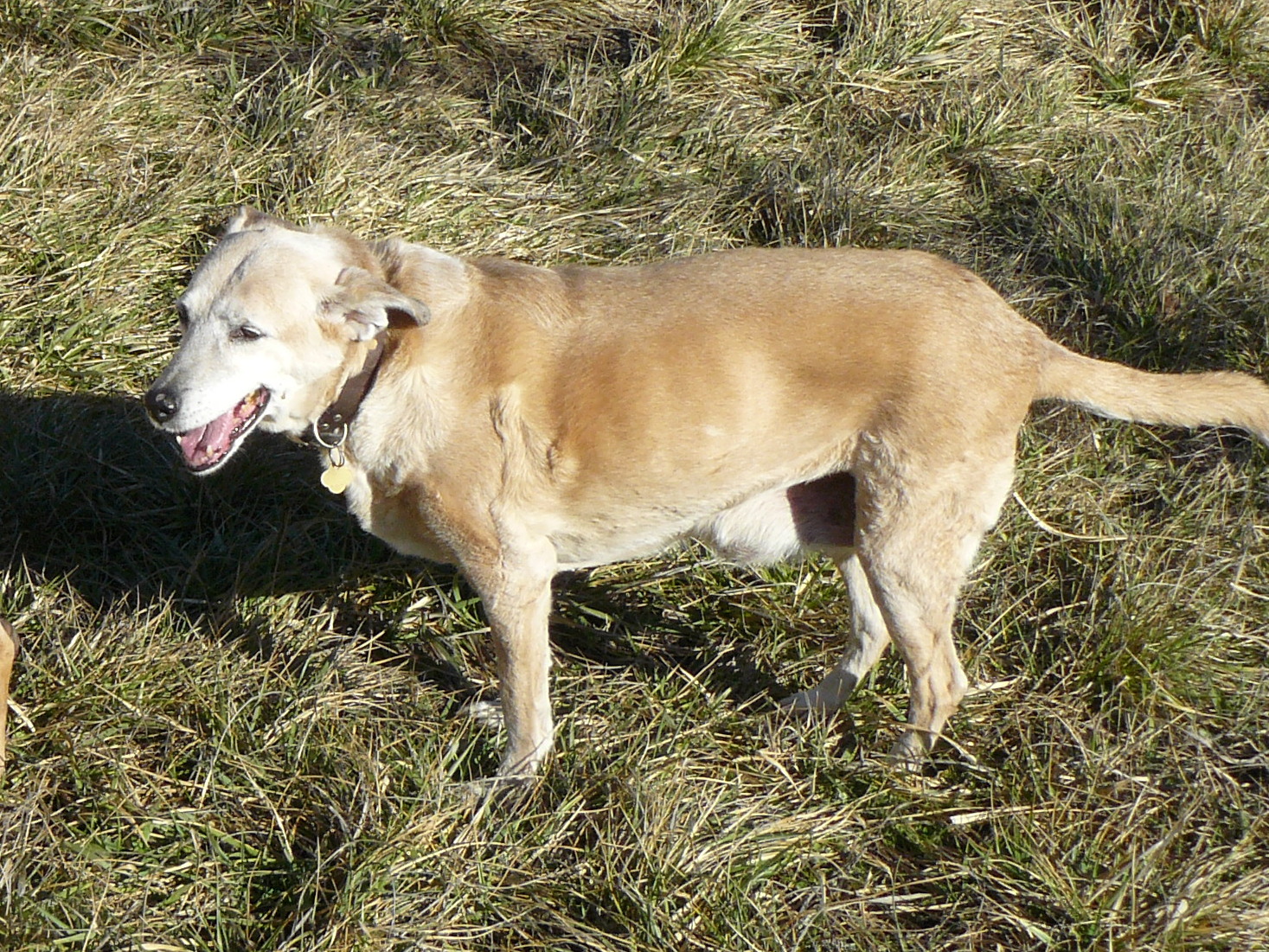
Lilly – Taken 26th January, 2014
Lilly came into my life fourteen years ago. I had taken my car into the mechanics workshop in San Carlos, Mexico for an oil change and was beckoned over to an old junk car in their lot. It had no glass in the windows and in the hatch-back area lay a smallish dog with five young, suckling puppies. She had apparently walked in off the street and chosen the old airy car as a suitable ‘house’ in which to have her babies. The workers had supplied her with an old greasy towel for a mattress.
My girlfriend, Suze, and I immediately set about making her comfortable with a small quilt and plenty of water and good dog food. She had been dining on tacos and tamales scraps up until then.
Suze and I visited frequently and took plenty of food and at the same time went about looking for homes for the pups. However, one day we arrived and found all the beautiful babies gone. The mechanics had given them away. We were shattered and could only hope that they had gone to loving homes.
‘Rabbit’, as she was then called, continued hanging around the workshop and the men seemed to like her. Rabbit had this trick of leaping on her hind legs, twirling and landing on her four legs; hence her name Rabbit, I guess.
Suze and I would see her once a week on average and had also arranged for Rabbit to be spayed. All seemed well until Easter came (I think we are talking of the year 2000). As is common in Mexico, during Easter week in San Carlos everything shuts down. It’s carnival time. The streets are busy with tourists and there is much traffic. I was worried about Rabbit as the mechanic’s shop was locked up tight and Rabbit was outside in the lot by the street. I planned to take her home for the rest of the holiday but fate intervened. On my way to collect her, I was aghast to see her motionless by the side of the road, obviously having been hit by a car. I gently picked her up and took her home. On inspection, it was clear that she had two broken legs on her right-hand side. Her injuries were so bad that I knew the local vet did not have the skills or instruments to heal her. My late husband, Ben, and I ended up driving her two hours South to Obregon where there was an orthopaedic vet. He put pins in both legs and she stoically set about mending herself. Rabbit became Lilly. Irrespective of name, she was an assertive but sweet young dog and settled in nicely with my burgeoning pack; I had twelve rescue dogs in those days. Her legs healed nicely and she resumed her twirling.
Lilly became a particular favourite of Ben, my late husband. When in 2005 Ben lay dying at home, Lilly slept non-stop by his side on the bed, only leaving to eat or go outside. I knew for sure that Ben had died in the night when one morning I awoke to feel Lilly beside me on my bed. Lilly sensed that now I needed her more.
Lilly is still with us. Now a dowager old lady of at least fifteen years of age, she still enjoys going out with her buddies whom she tends to boss somewhat. (Paul thinks that Lilly is an ‘alpha’ dog, in other words has pack leadership in her genes.) But one thing that Lilly doesn’t now do; she doesn’t twirl anymore, but then neither do I.
It will be a very sad day when Paul and I have to say goodbye to this treasure of a dog. [As indeed, it was] In the meantime we endeavour to make each day that she has left as rich as possible.
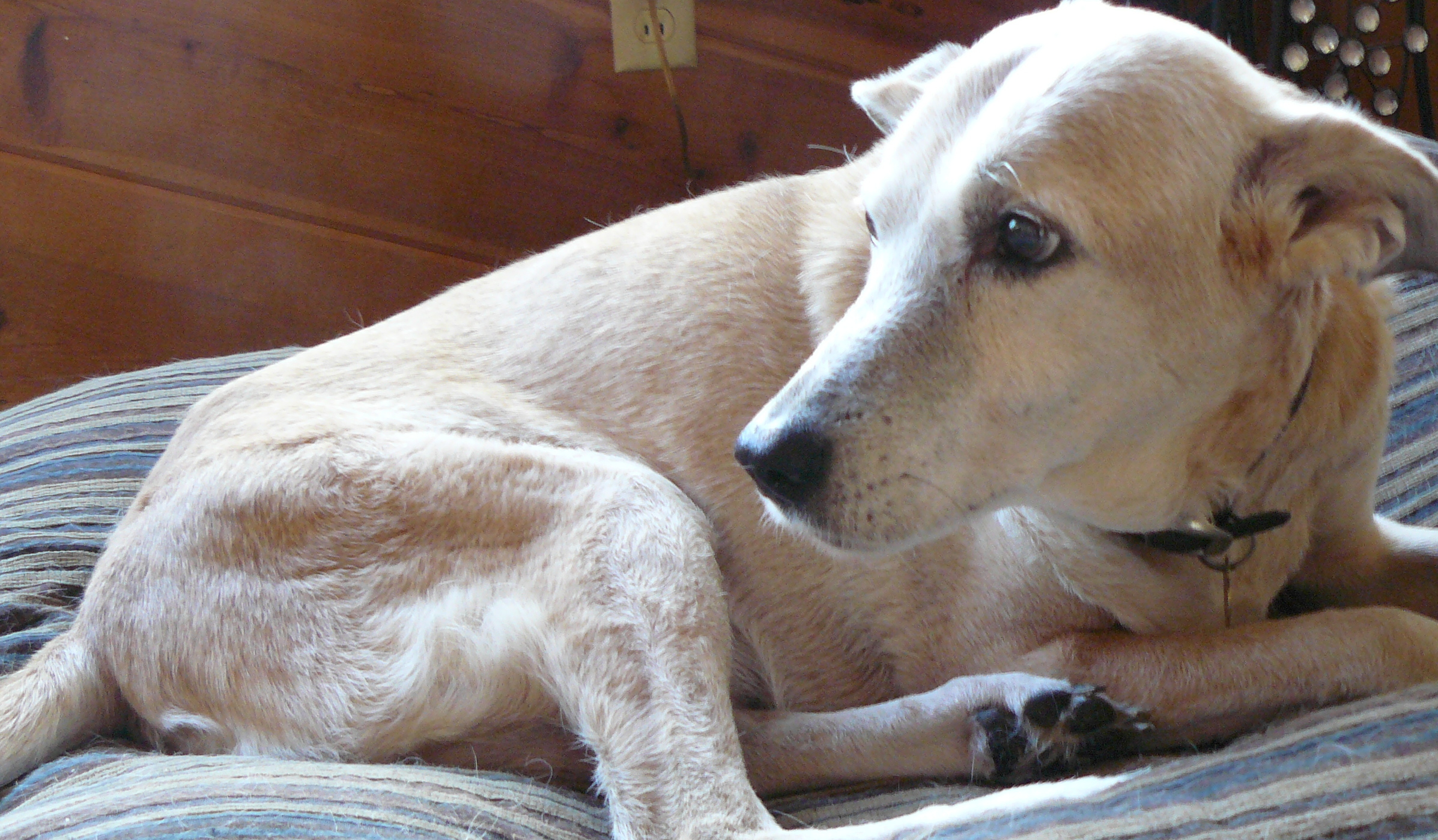
Another very recent photograph of Lilly.
ooOOoo
I think it would wonderful to also include a section from an email that Suzann Reeve, a good friend of this blog, sent to Jeannie yesterday.
The story of Lily and her origins:
(I of course burst into tears when reading your email, Paul.) I knew it was coming. I wish I could have seen her one more time.
Poor baby, I hope she did not suffer much.
In 1998, Don and I went to a junk yard, which at the time was next to the telephone company in San Carlos. As we were talking to the men, out of a shell of an old car behind us popped a small mama dog, heavy with milk. I of course went right over there after hearing puppies cry to see many little baby puppies were mewling for mommy’s milk! The dog was so sweet and jumped around like a rabbit. I brought food and water for her and found her a nice blanket for her and the pups.
I told Jeannie about them and we went back the next day to check it out. We told the men we would care for them, but one day when we came to feed, the puppies were gone! I begged Don to let me take her, but as I lived in an RV, he would not let me, and I also had 3 dogs at the time, Poncho, and his sister and Destina….., plus the men wanted her, which almost led to her death.
After Don and I left town for the summer sometime later, if i remember correctly, Jean and Ben were driving down the main road in town when they saw LLevre (rabbit in Spanish) injured on the road. I believe they took her down to Obregon for an operation right away, and after a successful operation, she was theirs! They saved her life!
She has lived a very full and happy life. I am so sad that she is gone.
A republication of a post from November of last year.
Our dear Lilly offers her special thoughts.
Preface: Lilly is reaching an amazing age for a dog; trully amazing. Lilly was featured back in February this year when we did a series of posts under the generic heading of Meet the dogs.
Yesterday, Jean thought it would be wonderful to hear it from Lilly; so to speak.
So these are Lilly’s words; as whispered to Jeannie!
oooo
The World According to Lilly
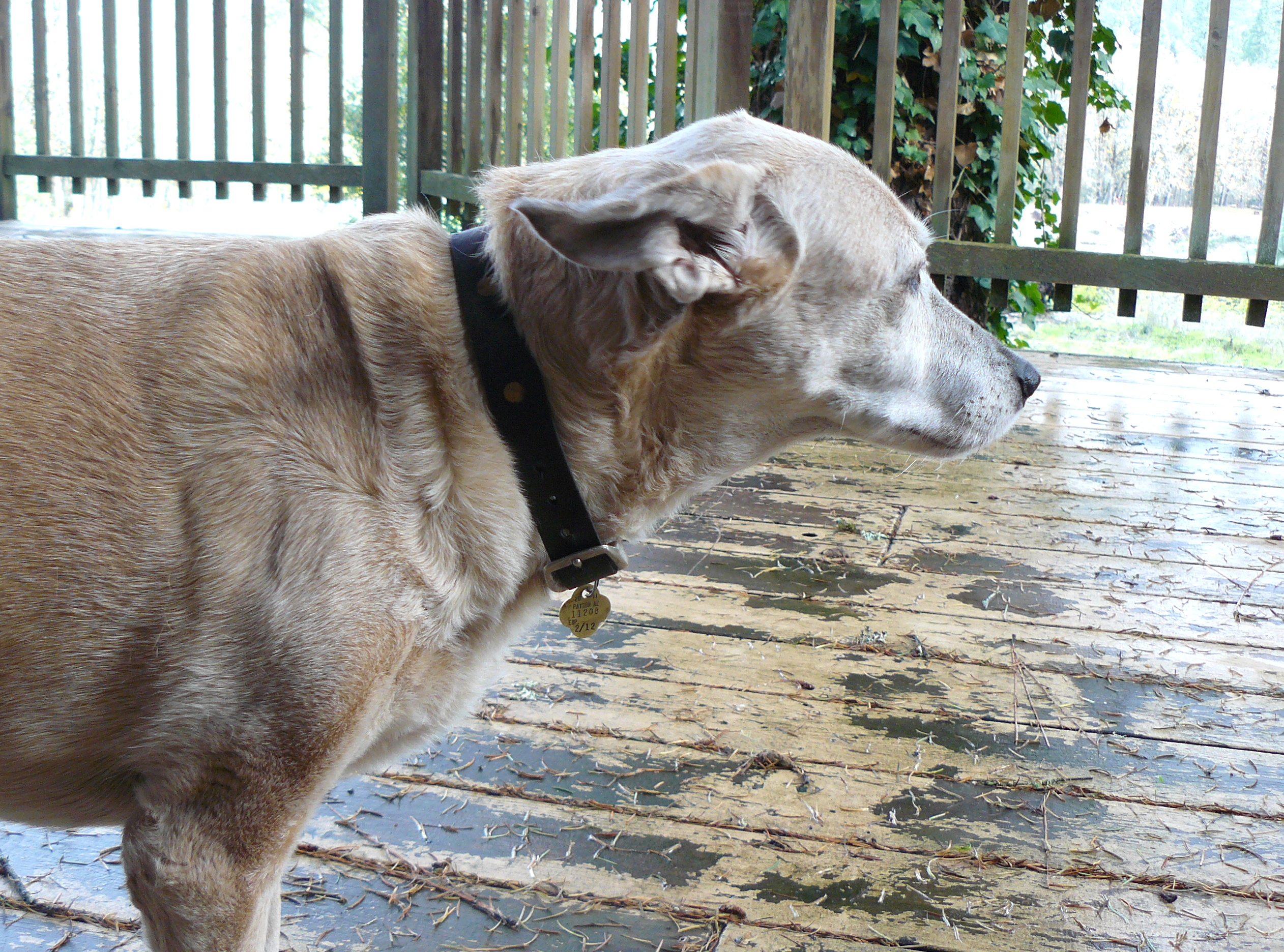
Surveying her domain.
I am sixteen years old! That’s one hundred and twelve people years!
So no-one is going to tell me what to do; especially those bratty young dogs I live with.
I refuse to eat canned dog food and expect Mum to cook fresh meat on a daily basis or I will stop eating and give her the moon eyes. (No real issue as Mum does understand my demands! 😉 ) The only dry food that passes my lips is ‘Canidae’. It’s not cheap but, hey, I’m worth it!
No dog is allowed to snag my food or I will bite their nose; and well the others know that! OK, maybe young Oliver can sneak a nibble or two off my bowl; he is rather cute!
I will only take a pill if it is camouflaged in the fresh marrow of a bone – Mum, bless her, thinks I don’t know it’s there! Ha!
When it’s raining, I refuse to go out. Period! To make Mum happy, sometimes I let her use this sheepskin-lined sling thing to help me tackle the deck steps but many times I can manage on my own – hey! I’m only sixteen! But I know that it makes Mum’s day if she sees herself being useful!
It’s been a good life. OK, I’m rather creaky now but determined to make seventeen. Who knows maybe even eighteen!
Give Dad a run for his money any day! Golly, he has only just turned seventy in people years and to hear him natter on you would think he feels old!
Now where’s my bed …..
Not a bad life for an old dog! (I’m speaking of Dad!)
Fewer than five minutes ago, at 11:52 PDT today, Sunday 23rd August 2015, Jim Goodbrod euthanised our Lilly.
Lilly, aged seventeen, started to decline about a year ago. In the last few weeks she had become progressively weaker, she was hardly eating and had lost much body mass, her kidneys were close to total failure and it was clear to Jean and me that she was close to what could in all likelihood be a painful end. So much better for Lilly that her end should be peaceful and pain-free, as it most clearly was.
Lilly was found by Jean sixteen years ago with her five young, suckling puppies in a car mechanics workshop in San Carlos, Mexico and has been loved and cared for by Jean right up to the end. Most Mexican street dogs barely live for a couple of years.
All of our dogs are special yet the odds of any other of our dogs living seventeen human years is very low.
I intend to republish tomorrow and Tuesday two posts of Lilly in homage of this wonderful, gentle and loving dog.
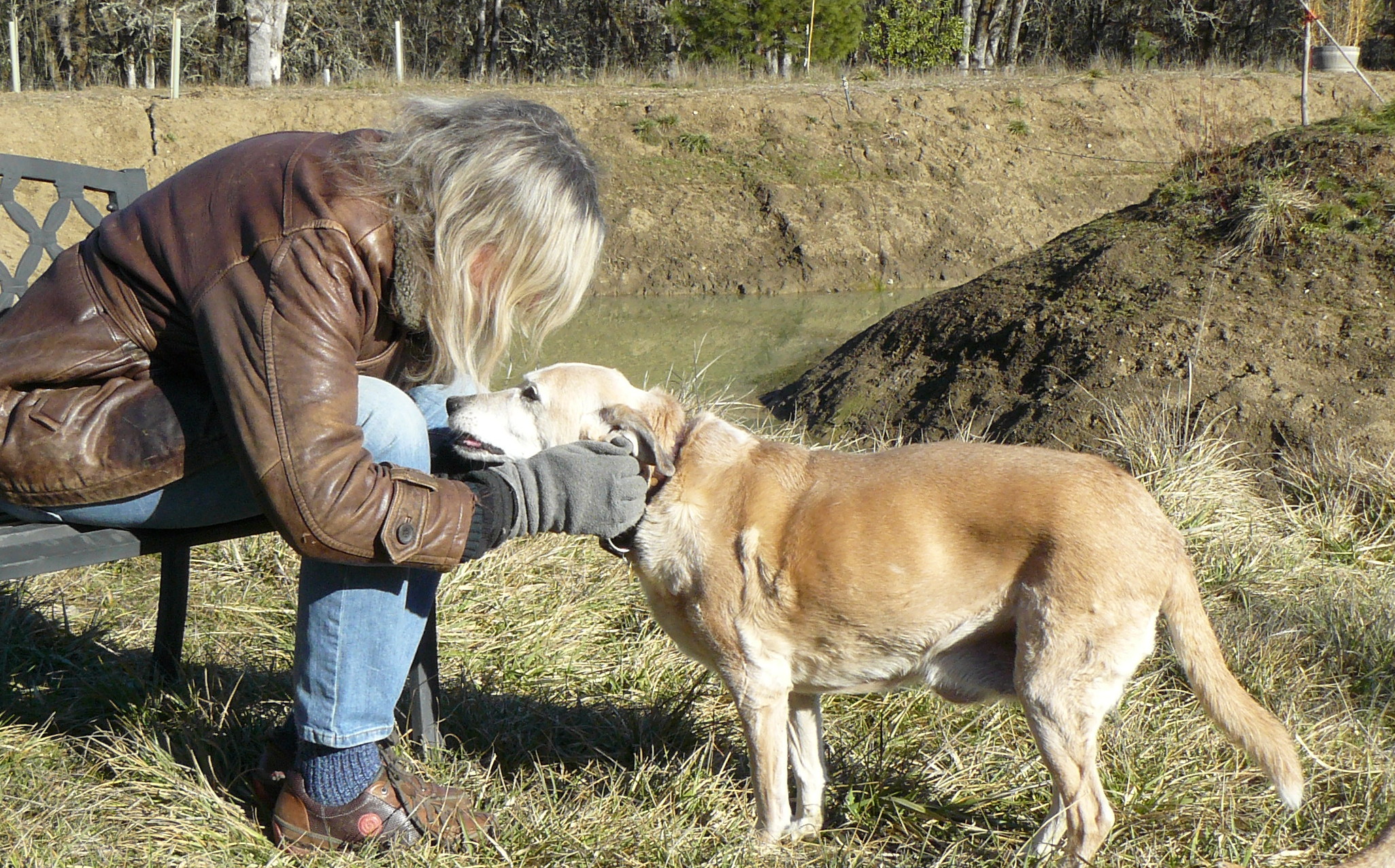
Let me leave you with this photograph of Jean and Lilly from earlier last year.
“Thousands have lived without love, not one without water.”
That sub-heading is a quotation from W. H. Auden and while directed at man it applies to all animal life including our beloved dogs.
The drought that California is experiencing is world-wide news but, possibly, the fact that this drought extends to much of the Pacific West Coast on the United States is not as widely known.
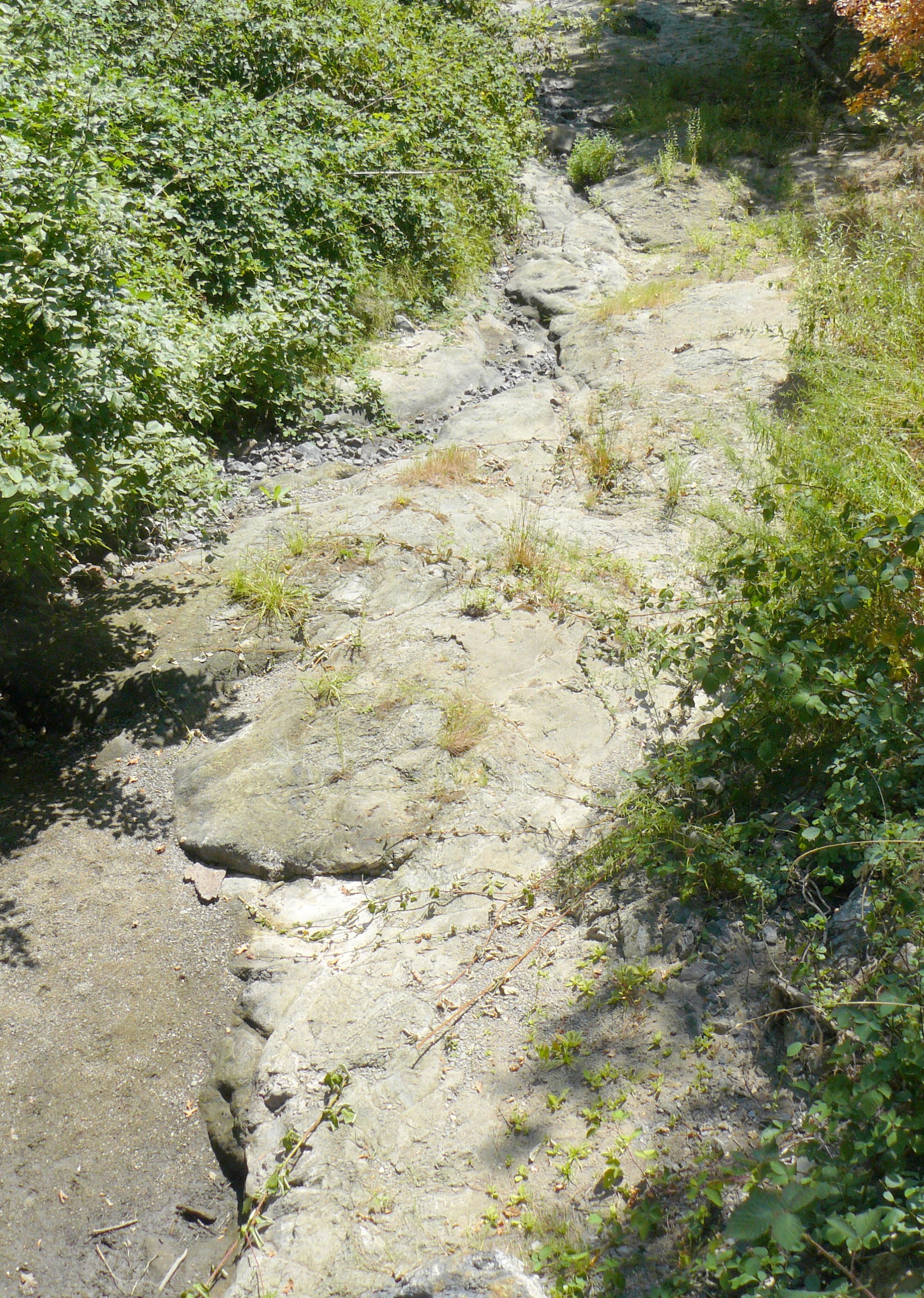
Here in Merlin, Southern Oregon, our own ‘all-year’ creek, Bummer Creek, that flows through our property has been dry for about two weeks. Our grass fields are parched brown and many of the trees are signalling a shortage of water. And let’s not even think about the underground aquifer that supplies our drinking water.
All of which makes a sombre introduction to a recent essay over on TomDispatch, republished here with the very kind permission of Tom Engelhardt. (But see my note at the end of the essay.)
ooOOoo
Tomgram: William deBuys, Entering the Mega-Drought Era in America
Posted by William deBuys at 4:17pm, August 16, 2015.
The other day here in New England it was chilly, rainy, and stormy and I complained. Where was the sun? The warmth? The summer? I happened to be with someone I know from California and he shook his head and said, “It’s fine with me. I like it rainy. I haven’t seen much rain in a while.” It was a little reminder of how insular we can be. California, after all, is in the fourth year of a fearsome drought that has turned much of the North American West, from Alaska and Canada to the Mexican border, into a tinderbox. Reservoirs are low, rivers quite literally drying up, and the West is burning. In rural northern California, where the fires seem to be least under control, the Rocky Fire has already burned 109 square miles and destroyed 43 homes, while the Jerusalem Fire, which recently broke out nearby, quickly ate up almost 19 square miles while doubling in size and sent local residents fleeing, some for the second time in recent weeks.
Fires have doubled in these drought years in California. The fire season, once mainly an autumnal affair, now seems to be just about any day of the year. (This isn’t, by the way, just a California phenomenon. The latest study indicates that fire season is extending globally, with a growth spurt of 18.7% in the last few decades.) In fact, fire stats for the U.S. generally and the West in particular are worsening in the twenty-first century, and this year looks to be quite a blazing affair, with six million acres already burned across the region and part of the summer still to go. And here’s the thing: though “I’m not a scientist,” it’s pretty hard at this point not to notice — though most Republican candidates for president seem unfazed — that this planet is heating up, that today’s droughts, bad as they are, will be put in the shade by the predicted mega-droughts of tomorrow, and that the problem of water in the American West is only going to deepen — or do I mean grow shallower? TomDispatch regular William deBuys, an expert on water in that region and author of A Great Aridness: Climate Change and the Future of the American Southwest, has already written dramatically of a future “exodus from Phoenix.” For clues to what we will all experience sooner or later, he now turns to California, that bellwether state in which, as he writes, the future always seems to play itself out first. Tom
California First
As Both Climate Victim and Responder, the National Style-Setter Leads the Way
By William deBuys
Long ago, I lived in a cheap flat in San Francisco and worked as the lone straight man in a gay construction company. Strangely enough, the drought now strangling California brings back memories of those days. It was the 1970s. Our company specialized in restoring the Victorian “gingerbread” to the facades of the city’s townhouses, and I got pretty good at installing cornices, gable brackets, and window hoods, working high above the street.
What I remember most, though, is the way my co-workers delighted in scandalizing me on Monday mornings with accounts of their weekend exploits.
We were all so innocent back then. We had no idea of the suffering that lay ahead or of the grievous epidemic already latent in the bodies of legions of gay men like my friends, an epidemic that would afflict so many outside the gay community but was especially terrible within it.
It’s unlikely that many of those guys are alive today. HIV was already in the population, although AIDS had yet to be detected or named, and no one had heard of “safe sex,” let alone practiced it. When the epidemic broke out, it was nowhere worse than in trendsetting San Francisco.
By then I had returned to New Mexico, having traded my hammer for a typewriter. When I announced my intention to leave California, the guys all said the same thing. “Don’t go back there,” they protested. “You’ll just have to go through all of this again!”
All of this required no translation. It meant the particular newness of life in that state, which was always sure to spread eastward, as Californian styles, attitudes, problems, tastes, and fads had been spreading to the rest of the country almost since the days of the Gold Rush.
Hippies, flower power, bikers, and cults. The movies we see and the music we listen to. The slang we pick up (I mean like, what a bummer, dude). Wine bars and fern bars, hot tubs and tanning booths, liposuction and boob jobs. The theft of rivers (Forget it, Jake. It’s Chinatown) and the theft of baseball teams (Brooklyn still mourns). Gay rights, car culture, and the Reagan Revolution. Scientology, mega-churches, Buddhist chic, and exercise videos. If they didn’t actually start in California, they got big and came to national attention there. Without the innovations of Silicon Valley, would you recognize your mobile phone or computer? Would you recognize yourself?
It’s the same with climate change. California in the Great Drought is once again Exhibit A, a living diorama of how the future is going to look for a lot of us.
And the present moment — right now in 2015 — reminds me of San Francisco as the AIDS epidemic broke out. Back then we had no idea how bad things were going to get, and that is likely to be true now, as well. As usual, California is giving us a preview of our world to come.
The Arrival of the Bone-Dry New Normal
On the U.S. Drought Monitor’s current map, a large purple bruise spreads across the core of California, covering almost half the state. Purple indicates “exceptional drought,” the direst category, the one that tops both “severe” and “extreme.” If you combine all three, 95% of the state is covered. In other words, California is hurting.
Admittedly, conditions are better than at this time last year when 100% of the state was at least “severe.” Recent summer rains have somewhat dulled the edge of the drought, now in its fourth year. Full recovery, however, would require about a foot of rain statewide between now and January, a veritable deluge for places like Fresno, which in good times only get that much rain in a full year.
To be clear, the current drought may not have been caused by climate change. After all, California has a long history of periodic fierce droughts that arise from entirely natural causes, some of them lasting a decade or more. Even so, at a minimum climate change remains a potent factor in the present disaster. The fundamental difference between California’s current desiccation and its historical antecedents is that present conditions are hotter thanks to climate change, and hotter means drier since evaporation increases with temperature. Moreover, the relationship between the two is non-linear: as temperature creeps up, evaporation gallops. Bottom line: the droughts of the future will be much more brutal — and destructive — than those of the past.
California is already on average about 1.7° Fahrenheit hotter than a century ago, and its rate of warming is expected to triple in the century ahead. The evaporative response to this increase will powerfully amplify future droughts in unprecedented ways, no matter their causes.
Throughout the state, draconian cutbacks in water use remain in force. Some agricultural districts are receiving 0% of the federally controlled irrigation water they received in past years, while state water deliveries are running at about 15% of normal.
Meanwhile, a staggering 5,200 wildfires have burned in the state’s forests and chaparral country this year, although timely rains everywhere but in the northern parts of California and the rapid responses of a beefed-up army of firefighters limited the burning to less acreage than last year — at least until recently. The blow-up of the Rocky Fire, north of San Francisco, in the early days of August — it burned through 20,000 acres in just a few hours — may change that mildly promising statistic. And the fire season still has months to go.
So how is this a trendsetter, a harbinger for lands to the east? California’s drought is deep and long — we don’t yet know how long — and the very long-term forecast for an immense portion of western North America, stretching from California to Texas and north to South Dakota, is for a future of the same, only worse. Here is the unvarnished version of that future (on which an impressive number of climate models appear to agree) as expressed in a paper that appeared in Science Advances last February: “The mean state of drought in the late 21st century over the Central Plains and Southwest will likely exceed even the most severe mega-drought periods of the Medieval era in both high and moderate emissions scenarios, representing an unprecedented fundamental shift with respect to the last millennium.”
Let’s unpack that a little bit: principal author Benjamin Cook of NASA and his colleagues from Columbia and Cornell universities are saying that climate change will bring to the continent a “new normal” more brutally dry than even the multiple-decades-long droughts that caused the Native American societies of Chaco Canyon and Mesa Verde to collapse. This, they add, is now expected to happen even if greenhouse gas emissions are significantly lowered in the decades to come. The impact of such droughts, they conclude, will exceed the bounds of anything known in the history of the continent or in its scientifically reconstructed pre-history.
In other words, the California drought of recent years offers only a foretaste of what is to come. Incidentally, Cook, et al. are by no means outliers in the literature of climate prediction. Other important studies with similar forecasts support a steadily broadening consensus on the subject.
And North American droughts will have to compete for attention with countless other climate change impacts, especially the hundreds of millions of refugees worldwide who will be put into motion by rising sea levels and other forces that will render their present homes unlivable.
A User’s Guide to Climate Change
If California points the way to dry times ahead, it also gives us an early glimpse of how a responsible society will try to live with and adjust to a warmer future. The state has imposed stringent new limits on water use and is actively enforcing them, and in general, individual consumers have responded positively to the new requirements, in some cases even exceeding mandated conservation goals.
In a similar spirit, the state has augmented its wildland fire-fighting capacity to good effect, even as the fire danger has approached levels never before seen.
Perhaps most impressively the state has adopted its own pioneering cap-and-trade program aimed at rolling back total greenhouse gas emissions to 1990 levels. Under cap-and-trade, carbon polluters have to obtain permits to continue their emissions, and only a finite number of such permits are made available. A coal-burning power plant or a refinery has to buy its permit from the state or from another company that already has one. This way, a ceiling is established for total greenhouse gases emitted by the most energy-intensive sectors of the economy.
Although the jury may still be out on how well the program meets its goals, there is no debating its positive impact on the state treasury. In the fiscal year just begun, the auction of permits under California’s cap-and-trade program will net approximately $2.2 billion, a windfall that will be spent on mass transit, affordable housing, and a range of climate-adaptation programs. And by the way, the warnings of nay-sayers and climate deniers that cap-and-trade would prove a drag on the economy have proved groundless.
In a manner similar to the U.N.’s prestigious Intergovernmental Panel on Climate Change, California now publishes an assessment every three years of both its vulnerability to climate change and the steps it plans to take to mitigate or adapt to its effects. The report is a model of its kind and draws on copious California-specific scientific research, some of which is funded by the state.
You might think California’s neighbors would follow suit, and eventually, as with most things Californian, they undoubtedly will. If President Obama’s just-announced “Clean Power Plan” withstands the expected court challenges, it will prove a powerful spur in that direction as it mandates state-by-state reductions in power plant carbon emissions that will, in the end, drive them 32% below 2005 levels. Many states will undoubtedly have to adopt cap-and-trade systems in order to comply. As they set about devising their own programs, where do you think they will look for a workable example? You guessed it: California.
An “Island” Again, or Nearly So
In the seventeenth century, Spanish cartographers thought California was an island separated from the rest of North America by the legendary Straits of Anian. In some ways, nothing has changed. In late July, while California Governor Jerry Brown was at the Vatican joining Pope Francis in calling for urgent global action to combat climate change, his opposite numbers across the putative straits continued to assume the posture of startled ostriches.
Doug Ducey, the Republican governor of Arizona, admits that the climate may indeed be changing but doubts that humans play a causal role in it. Susana Martinez of New Mexico, also a Republican, continues to insist that climate science is inconclusive, while former governor of Texas and current presidential candidate Rick Perry adamantly remains “not a scientist,” although he knew enough to inform us in his 2012 campaign screed Fed Up that climate change science is “a contrived phony mess.”
In general, when it comes to climate change, the leadership of statehouses across the country remains as troglodytic as the House of Representatives. Only in Hawaii, Oregon and Washington on the West Coast, Minnesota in the Midwest, and a handful of Northeastern states will governors even acknowledge the importance of acting to curb climate change as well as adapt to it.
This year, the deniers may get a boost from an unlikely source. Warm surface waters seem to be brewing something special in the Pacific Ocean. Says one researcher, “The El Niño event currently ongoing in the eastern and central Pacific is strengthening. The only question is whether it will be just a significant event, or a huge one.”
El Niño draws the winter Pacific storm track southward, bringing precipitation to southern California, Arizona, and points eastward. If the southern tier of states has a wet winter, the Republican rain-dancers will feel confirmed in their official doubt and denialism, much as a broken clock is right at least twice a day.
Occasional El Niños, however, will not avert the long-term new normal for California and much of the West. As that state is showing, adaptation will soften some of the blows, and possibly, if we act soon enough and strongly enough, we may manage to cap the overall changes at some still livable level. The jury will be out on that for quite some time.
Meanwhile, as in pre-AIDS San Francisco, we are all still in a state of at least semi-innocence. Maybe we can imagine in an intellectual way what it might be like to lose the forests across half of the continent, but can any of us conjure the feeling of how that would be?
After many missteps and halting starts, the medical and public health establishments finally came to the assistance of the victims of AIDS. As difficult as that was, it was easy compared to the remedies climate change will demand. And for much of the damage there will be no remedy. Get ready.
William deBuys, a TomDispatch regular, is the author of eight books, the most recent of which is The Last Unicorn: A Search for One of Earth’s Rarest Creatures. He has written extensively on water, drought, and climate in the West, including A Great Aridness: Climate Change and the Future of the American Southwest.
Follow TomDispatch on Twitter and join us on Facebook. Check out the newest Dispatch Book, Nick Turse’s Tomorrow’s Battlefield: U.S. Proxy Wars and Secret Ops in Africa, and Tom Engelhardt’s latest book, Shadow Government: Surveillance, Secret Wars, and a Global Security State in a Single-Superpower World.
Copyright 2015 William deBuys
ooOOoo
Again, there are far too many links for me to bring across to this republication but I do recommend that if you have an extra special interest in William deBuys essay that you check through all the links in the original version to be read here.
This is an article that I saw on Mother Nature Network in the middle of June and thought at the time it would interest readers of this place.
ooOOoo
2,500-year-old tree witnessed Magna Carta signing
The Ankerwycke Yew in Berkshire, England, has been an important meeting spot for hundreds of years.
By: Michael d’Estries
June 15, 2015,
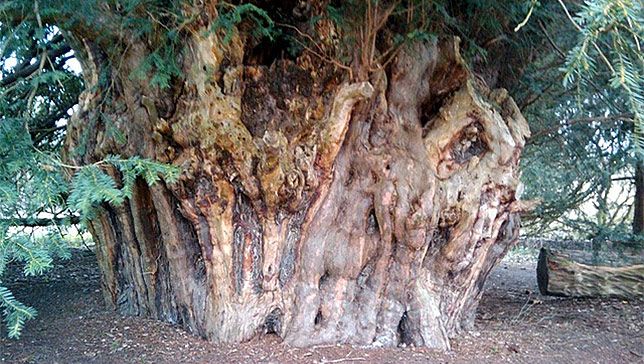
The Ankerwycke yew is estimated to be between 2,000-2,500 years old. (Photo: Wiki Creative Commons)
As the world celebrates the 800th anniversary of the signing of the Magna Carta, [Ed. That was on June 15th, 2015] a document that laid the foundation for modern liberties and law, it’s worth remembering that one silent witness to that historical event remains alive and well.
According to some historians, King John signed the Magna Carta beneath the Ankerwycke yew, a 30-foot-wide behemoth, which in June 1215 was already a well-known ancient landmark. Estimates of its age today range from 2,000-2,500 years — making it one of oldest trees in the United Kingdom and the world.
The famous yew is located along the banks of the River Thames on grounds previously occupied by a 12th-century nunnery called St. Mary’s Priory. Historians point to a 19th-century reference to the nunnery, now in ruins, that hints at its importance in the signing of the Magna Carta.
Here the confederate Barons met King John, and having forced him to yield to the demands of his subjects they, under the pretext of securing the person of the King from the fury of the multitude, conveyed him to a small island belonging to the nuns of Ankerwyke [the island], where he signed the Magna Carta, wrote J.J. Sheahen in 1822.
History credits the yew as playing host to several other important meetings, from a place of council for Saxon kings to secret meetings between Henry VIII and a young Anne Boleyn. Earlier this year, saplings grown from the cuttings of famous yews from all over the U.K., including the Ankerwycke, were planted in a hedge in Edinburgh’s Botanic Gardens.
‘We are losing ancient yews all the time, to climate change, development and vandalism,” said Martin Gardner, who is leading the preservation initiative. “These are the most iconic trees in the world. We have to conserve every single one.”
Published on Apr 9, 2013
A short film about a remarkable ancient tree in England. It is the oldest known tree on National Trust land and is believed to be the location where the Magna Carta was signed in 1215. Surrounded by myth and legend, this tree is also believed to be the place where King Henry VIII began his first liaisons with his future (ill-fated) wife, Anne Boleyn in the 1530’s.
ooOOoo
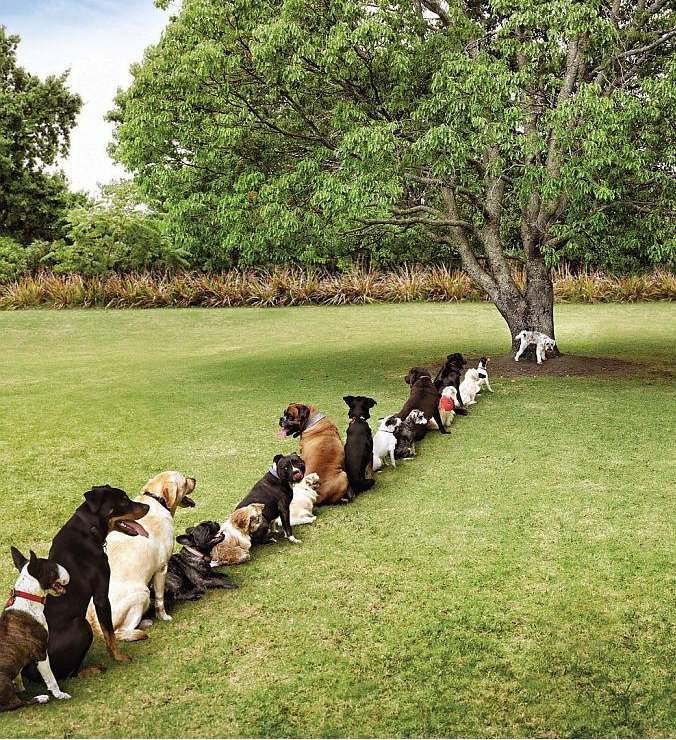
I will close the post with this much-circulated picture reinforcing the fact that trees have been an important meeting spot for hundreds of years.
One of the most important lessons we can learn from our dogs: coping with death.
In writing about the lesson of death that we can learn from our dogs I am, of course, speaking of our own death, of the inevitability of our death. That largely unspoken truth that Sharon Salzberg described in her book Faith: “What does it mean to be born in a human body, vulnerable and helpless, then to grow old, get sick and die, whether we like it or not?” [page 34.]
Anyone who has loved a dog has most likely been intimately involved in the end of that dog’s life. It is, to my mind, the ultimate lesson that dogs offer us: how to be at peace when we die and how to leave that peace blowing like a gentle breeze through the hearts of all the people who loved us.
Our beloved dogs have much shorter life spans than us, thus almost everyone who has loved a dog will have had to say goodbye to that gorgeous friend at some point in their lives. Very sadly, perhaps, saying goodbye to more than one loved dog.
All of which is my introduction to a recent essay published on The Conversation blogsite. The essay is written by Bernard Rollin, Professor of Philosophy, Animal Sciences and Biomedical Sciences at Colorado State University. The essay is called: When is it ethical to euthanise your pet?
ooOOoo
When is it ethical to euthanize your pet?
August 12, 2015 6.18am EDT
In the 1960s, I knew people who, before going on vacation, would take their dogs to a shelter to be euthanized. They reasoned that it was cheaper to have a dog euthanized – and buy a new one upon returning – than pay a kennel fee.
Two decades later, I was working at Colorado State’s veterinary hospital when a group of distraught bikers on Harley-Davidsons pulled up carrying a sick chihuahua. The dog was intractably ill, and required euthanasia to prevent further suffering. Afterwards, the hospital’s counselors felt compelled to find the bikers a motel room: their level of grief was so profound that the staff didn’t think it was safe for them to be riding their motorcycles.
These two stories illustrate the drastic change in how animals have been perceived. For thousands of years, humans have kept animals as pets. But only during the past 40 years have they come to be viewed as family.
While it’s certainly a positive development that animals are being treated humanely, one of the downsides to better treatment mirrors some of the problems the (human) health care system faces with end-of-life care.
As with humans, in many cases the lives of pets are needlessly prolonged, which can cause undue suffering for the animals and an increased financial burden for families.
The growth of veterinary medicine and ethics
In 1979, I began teaching veterinary medical ethics at Colorado State University’s veterinary school, the first such course ever taught anywhere in the world.
A year later, the veterinary school hired an oncologist to head up a new program on animal oncology. Soon, our clinic was applying human therapeutic modalities to animal cancer. The visionary head of the veterinary program also hired a number of counselors to help pet owners manage their grief – another first in veterinary circles.
I’d been under the impression that people would be reluctant to spend much money on animal treatments, so I was genuinely shocked when the following April, the Wall Street Journal reported individuals spending upwards of six figures on cancer treatments for their pets.
As a strong advocate for strengthening concern for animal welfare in society, I was delighted with this unprecedented turn of events. I soon learned that concern for treating the diseases of pets besides cancer had also spiked precipitously, evidenced by a significant increase in veterinary specialty practices.
One of the family
So what’s behind the shift in how pets are perceived and treated?
For one, surveys conducted over the last two decades indicate an increasing number of pet owners who profess to view their animals as “members of the family.” In some surveys, the number is as high as 95% of respondents, but in nearly all surveys the number is higher than 80%.
In addition, the breakdown of nuclear families and the uptick of divorce rates have contributed to singles forming tighter bonds with companion animals.
Such attitudes and trends are likely to engender profound changes in societal views of euthanasia. Whereas before, many owners didn’t think twice about putting down a pet, now many are hesitant to euthanize, often going to great lengths to keep sick animals alive.
Vets caught in the middle
However, veterinarians continue to experience extensive stress as they experience two opposite – but equally trying – dilemmas: ending an animal’s life too soon, or waiting too long.
In a paper that I published entitled Euthanasia and Moral Stress, I described the significant stress experienced by veterinarians, veterinary technicians and humane society workers. Many chose their profession out of a desire to improve the lot of animals; instead, they invariably ended up euthanizing large numbers of them, often for unethical reasons.
These ranged from “I got the dog to jog with me, and now it’s too old to run,” to “If I die, I want you to euthanize the animal because I know it can’t bear to live without me.”
In other cases, the animal is experiencing considerable suffering, but the owner is unwilling to let the animal go. With owners increasingly viewing pets as family members, this has become increasingly common, and many owners fear the guilt associated with killing an animal too soon.
Ironically this, too, can cause veterinarians undue trauma: they know the animal is suffering, but there’s nothing they can do about it unless the owner gives them permission.
The consequences are manifest. One recent study showed that one in six veterinarians has considered suicide. Another found an elevated risk of suicide in the field of veterinary medicine. Being asked to kill healthy animals for owner convenience doubtless is a major contribution.
How to manage the decision to euthanize
Here is my suggestion to anyone who is thinking about getting a pet: when you first acquire it, create a list of everything you can find that makes the animal happy (eating a treat, chasing a ball, etc). Put the list away until the animal is undergoing treatment for a terminal disease, such as cancer. At that point, return to the list: is the animal able to chase a ball? Does the animal get excited about receiving a treat?
If the animal has lost the ability to have positive experiences, it’s often easier to let go.
This strategy can be augmented by pointing out the differences between human and animal consciousness. As philosopher Martin Heidegger has pointed out, for humans much of life’s meaning is derived from balancing past experiences with future aspirations, such as wishing to see one’s children graduate or hoping to see Ireland again.
Animals, on the other hand, lack the linguistic tools to allow them to anticipate the future or create an internal narrative of the past. Instead, they live overwhelmingly in the present. So if a pet owner is reluctant to euthanize, I’ll often point out that the animal no longer experiences pleasant “nows.”
In the end, managing euthanasia represents a major complication of the augmented status of pets in society. Ideally, companion animal owners should maintain a good relationship with their general veterinary practitioner, who has often known the animal all of its life, and can serve as a partner in dialogue during the trying times when euthanasia emerges as a possible alternative to suffering.
ooOOoo
So much to learn from these beautiful creatures and so many ways to return the unlimited love we receive from them.
Jean and I were out for much of yesterday resulting in me not sitting down to compose today’s post until nearly 5pm (PDT) in the afternoon. I must admit I didn’t have a clue as to what to write about. Then sitting in my email inbox was another email from Chris Gomez with this short but valuable sentence, “Love is real….Check this out! (via ABC7 Los Angeles local news iOS app) Study reveals scientific reason your dog is happy to see you.” Chris included a link to the ABC7 news item. I’m republishing it here.
ooOOoo
STUDY REVEALS SCIENTIFIC REASON YOUR DOG IS HAPPY TO SEE YOU
A new study explains why your dog gets so happy to see you. (Shutterstock)
Tuesday, August 11, 2015 11:04AM
Is your dog overwhelmed with joy anytime you walk through the door? There’s a scientific reason behind their excitement, a new study shows, and it’s not just because you feed them.
Researchers at Emory University used functional magnetic resonance imaging (fMRI) to scan dogs’ brains for activity when they were shown images of dog faces, human faces and ordinary objects.
The dogs’ temporal lobes lit up “significantly more” when presented with the faces than with the objects. These findings suggest that dogs may recognize both human and dog faces.
Facial recognition causes dog brains to activate in the same areas as in monkey and human brains, the study found. This is separate from the “reward areas” that would be triggered by anticipation of food.
“What we’re finding with the imaging work is that dogs love their humans-and not just for food,” researcher Gregory Berns told io9. “They love the company of humans simply for its own sake.”
“The existence of a face-selective region in the temporal dog cortex opens up a whole range of new questions to be answered about their social intelligence,” the researchers explained, such as whether dogs can understand different facial expressions and whether they can read body language.
This isn’t the first time scientists have explored what makes dogs’ tails wag with excitement when reunited with their owners. A January study that Berns was also involved in found that dogs have a positive reaction to the scent of familiar humans compared with other smells, even those of other dogs.
The results of that study “suggested that not only did the dogs discriminate that scent [of familiar humans] from the others, they had a positive association with it.”
A 2013 behavioral study found that dogs can show when they’re happy to see their owners by lifting their eyebrows. Their left eyebrow went up when they saw their respective owners, the study found. They didn’t have this reaction for other things that may excite them, such as attractive toys.
ooOOoo
Granted there was some overlap with Monday’s post but there was more than enough in the ABC7 article to warrant sharing it with you.
Unlike a certain companion animal that will go unnamed, dogs lose their minds when reunited with their owners. But it’s not immediately obvious why our canine companions should grant us such an over-the-top greeting—especially considering the power imbalance that exists between the two species. We spoke to the experts to find out why.
Call of the Wild
In order to gain an appreciation for dog behavior, it’s important to understand that dogs are descended from wolves (or at least a common wolf-like ancestor). Clearly, the two species, separated by about 10,000 to 15,000 years, share a lot in common.
Like dogs, wolves greet each other with vigorous face licking (Credit: Sander van der Wel CC A-SA 2.0)
That reference to wolves seemed like as good a reason as any to write further about the wonderful wolf. Or more specifically about the wolves of Oregon.
It’s been a busy last few days for Oregon’s wolves and those working to protect them, with new places, new dates, and new pups!
When I wrote to you last, it was about an important Oregon Department of Fish and Wildlife (ODFW) Commission meeting in Seaside. But there’s been a change! The agenda for that meeting has moved and the ODFW Commission will now be taking comments on whether to delist gray wolves on Friday, Oct. 9th in Florence, Oregon. Please sign up to attend and testify on behalf of Oregon’s wolves. After all, they can’t testify for themselves!
I also shared with you a video of the Rogue Pack yearlings playing, caught by trail cam. These were Journey’s pups from last year, but it was also reported that he and his mate had produced another litter this year. Thanks to the US Fish and Wildlife Service, we have a look at these new pups.
Here’s that video:
Published on Jul 8, 2015
A camera captured images of three yearling wolves playing in June, providing biologists with confirmation the offspring of Oregon’s wandering wolf OR7 and his mate have survived.
I can well imagine that the majority of the readers of Learning from Dogs will not be able to attend that ODFW Commission meeting in Florence, OR, on the 9th October (as we can’t) but that doesn’t stop you from wanting to support wolf recovery here in Oregon by signing and sharing the Oregon Wild petition.


 Learning from Dogs