Category: Dogs

Hug a pet and extend your life!

With seventeen pets here at home Jean and I should live forever!

Another Saturday and another gentle post about the power of our wonderful pets. (Oh, and who, as I did, missed the fact that yesterday was not only a Friday the Thirteenth but the third one this year!)

Anyway, back to the plot!

Last Monday, Mother Nature Network published an item about how good pets are for our health. It seemed the perfect item to share with all of you this Saturday.

ooOOoo

11 studies that prove pets are good for your health

Check out the ways your 4-legged friends enhance your physical and emotional health.

By: Sidney Stevens, November 9, 2015.

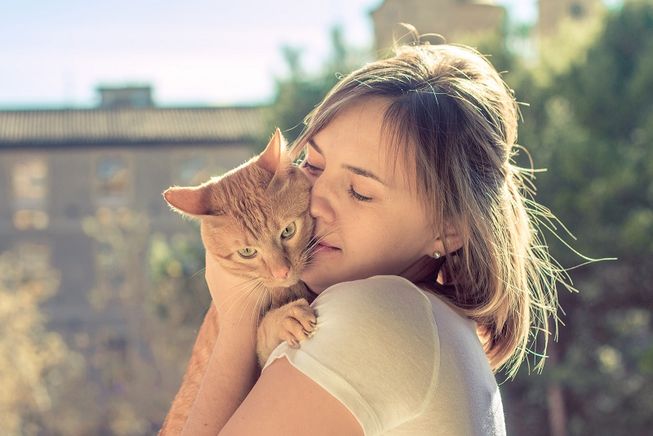
Pets strengthen our hearts, calm our nerves and a whole lot more. (Photo: Juanedc.com /flickr)

If you have pets you already know the joy and love they bring to your life. Now science is confirming just how good they really are for you — both mentally and physically.

How do they help? One theory is that pets boost our oxytocin levels. Also known as the “bonding hormone” or “cuddle chemical,” oxytocin enhances social skills, decreases blood pressure and heart rate, boosts immune function and raises tolerance for pain. It also lowers stress, anger and depression.

PHOTO BREAK: 12 astonishing facts about horses

No surprise then that keeping regular company with a dog or cat (or another beloved beast) appears to offer all these same benefits and more. Read on to discover the many impressive ways a pet can make you healthier, happier and more resilient.

1. Pets alleviate allergies and boost immune function

One of your immune system’s jobs is to identify potentially harmful substances and unleash antibodies to ward off the threat. But sometimes it overreacts and misidentifies harmless stuff as dangerous, causing an allergic reaction. Think red eyes, itchy skin, runny nose and wheezing. You’d think that having pets might trigger allergies by kicking up sneeze-and-wheeze-inducing dander and fur. But it turns out that living with a dog or cat during the first year of life not only cuts your chances of having pet allergies in childhood and later on but also revs up your immune system and lowers your risk of eczema and asthma. In fact, just a brief pet encounter can invigorate your disease-defense system. In one study, petting a dog for only 18 minutes raised immunoglobulin A (IgA) levels in college students’ saliva, a sign of robust immune function.

2. Pets up your fitness quotient

This one applies more to dog owners. If you like walking with your favorite canine, chances are you’re fitter and trimmer than your non-dog-walking counterparts and come closer to meeting recommended physical activity levels. One study of more than 2,000 adults found that regular dog walkers got more exercise and were less likely to be obese than those who didn’t walk a dog. In another study, older dog walkers (ages 71-82) walked faster and longer than non-pooch-walkers, plus they were more mobile at home.

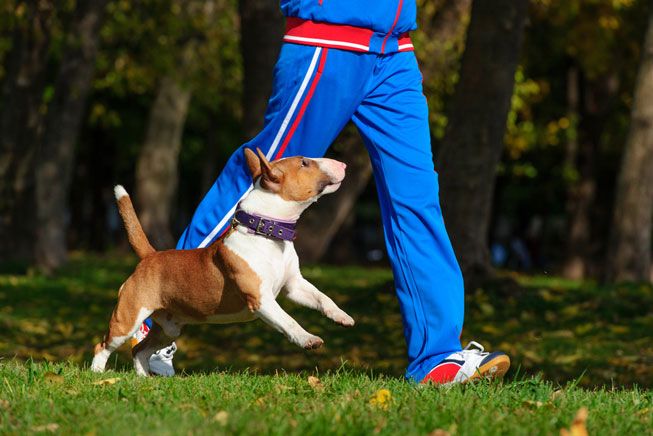
Dog owners who take their canine companions on walks tend to be trimmer and fitter than their fellow dog-less peers. (Photo: AMatveev/Shutterstock)

3. Pets dial down stress

When stress comes your way, your body goes into fight-or-flight mode, releasing hormones like cortisol to crank out more energy-boosting blood sugar and epinephrine to get your heart and blood pumping. All well and good for our ancestors who needed quick bursts of speed to dodge predatory saber-toothed tigers and stampeding mastodons. But when we live in a constant state of fight-or-flight from ongoing stress at work and the frenetic pace of modern life, these physical changes take their toll on our bodies, including raising our risk of heart disease and other dangerous conditions. Contact with pets seem to counteract this stress response by lowering stress hormones and heart rate. They also lower anxiety and fear levels (psychological responses to stress) and elevate feelings of calmness.

4. Pets boost heart health

Pets shower us with love so it’s not surprising they have a big impact on our love organ: the heart. Turns out time spent with a cherished critter is linked to better cardiovascular health, possibly due to the stress-busting effect mentioned above. Studies show that dog owners have a lower risk of heart disease, including lower blood pressure and cholesterol. Dogs also benefit patients who already have cardiovascular disease. They’re not only four time more likely to be alive after a year if they own a dog, but they’re also more likely to survive a heart attack. And don’t worry, cat owners — feline affection confers a similar effect. One 10-year study found that current and former cat owners were 40 percent less likely to suffer a heart attack and 30 percent less likely to die of other cardiovascular diseases.

5. Make you a social — and date — magnet

Four-legged companions (particularly the canine variety that pull us out of the house for daily walks) help us make more friends and appear more approachable, trustworthy and date-worthy. In one study, people in wheelchairs who had a dog received more smiles and had more conversations with passersby than those without a dog. In another study, college students who were asked to watch videos of two psychotherapists (depicted once with a dog and once without) said they felt more positively toward them when they had a dog and more likely to disclose personal information. And good news for guys: research shows that women are more willing to give out their number to men with a canine buddy.

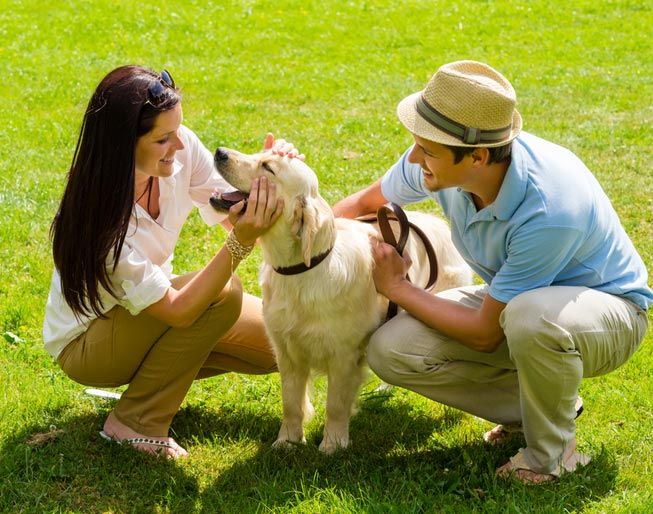
A dog can make you appear friendlier and more approachable to others. (Photo: CandyBox Images/Shutterstock)

6. Provides a social salve for Alzheimer’s patients

Just as non-human pals strengthen our social skills and connection, cats and dogs also offer furry, friendly comfort and social bonding to people suffering from Alzheimer’s and other forms of brain-destroying dementia. Several canine caregiver programs now exist to assist at-home dementia patients with day-to-day tasks, such as fetching medication, reminding them to eat and guiding them home if they’ve wandered off course. Many assisted-living facilities also keep resident pets or offer therapy animal visits to support and stimulate patients. Studies show creature companions can reduce behavioral issues among dementia patients by boosting their moods and raising their nutritional intake.

7. Enhances social skills in kids with autism

One in nearly 70 American kids has autism (also known as autism spectrum disorder, or ASD), a developmental disability that makes it tough to communicate and interact socially. Not surprisingly, animals can also help these kids connect better to others. One study found that youngsters with ASD talked and laughed more, whined and cried less and were more social with peers when guinea pigs were present. A multitude of ASD animal-assisted therapy programs have sprung up in recent years, featuring everything from dogs and dolphins to alpacas, horses and even chickens.

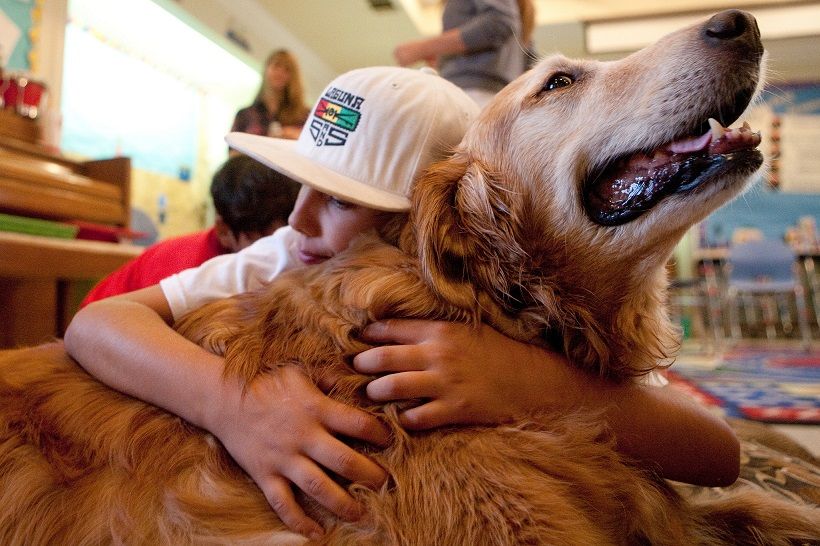
Animal-assisted therapy helps kids with autism and other developmental disabilities learn social skills. (Photo: UCI UC Irvine/flickr)

8. Dampens depression and boosts mood

Pets keep loneliness and isolation at bay and make us smile. In other words, their creature camaraderie and ability to keep us engaged in daily life (via endearing demands for food, attention and walks) are good recipes for warding off the blues. Research is ongoing, but animal-assisted therapy is proving particularly potent in deterring depression and other mood disorders. Studies show that everyone from older men in a veterans hospital who were exposed to an aviary filled with songbirds to depressed college students who spent time with dogs reported feeling more positive.

9. Defeats PTSD

People haunted by trauma like combat, assault and natural disasters are particularly vulnerable to a mental health condition called post-traumatic stress disorder (PTSD). Sure enough, studies show that the unconditional love — and oxytocin boost — of a pet can help remedy the flashbacks, emotional numbness and angry outbursts linked to PTSD. Even better, there are now several programs that pair specially trained service dogs and cats with veterans suffering from PTSD.

10. Fights cancer

Animal-assisted therapy helps cancer patients heal emotionally and physically. Preliminary findings of an on-going clinical trial by the American Humane Association shows that therapy dogs not only erase loneliness, depression and stress in kids fighting cancer, but canines can also motivate them to eat and follow treatment recommendations better — in other words participate more actively in their own healing. Likewise, new research reveals a similar lift in emotional well-being for adults undergoing the physical rigors of cancer treatment. Even more astounding, dogs (with their stellar smelling skills) are now being trained to literally sniff out cancer.

11. Puts the kibosh on pain

Millions live with chronic pain, but animals can soothe some of it away. In one study, 34 percent of patients with the pain disorder fibromyalgia reported pain relief (and a better mood and less fatigue) after visiting for 10-15 minutes with a therapy dog compared to only 4 percent of patients who just sat in a waiting room. In another study, those who had undergone total joint replacement surgery needed 28 percent less pain medication after daily visits from a therapy dog than those who got no canine contact.

ooOOoo

When I was setting this post up and copying across all the many links I was aware that there was a mountain of information out there. You may want to take some time and explore those links. For example, the link to HABRI- Human-Animal Research Initiative looks incredibly interesting. Then there was the link to the work being undertaken by the American Humane Association, that link being to this video that I am presenting here to close off today’s post.

Wherever you are in the world look after yourself and care for all those lovely pets out there. Love them so dearly!

Our caring dogs.

Staying with the theme of our lives being “rebooted” by our dogs.

Again, as so often occurs, a thought or reply left by someone to a previous post kicked off a new post for me.

So it was yesterday when Hariod commented: “This is the organisation that brought dogs into the care home my father lived in: http://www.petsastherapy.org/

That website is full of great information and any readers living in the UK who have not come across them before are highly recommended to have a good browse. One item that caught my eye was the Precious Memories link.

The loss of a pet is always a devastating and traumatic experience but even more so for the owner of a PAT dog or cat who has brought much love and companionship to many people, as well as to their owners.

This page contains lasting memorials to some PAT dogs and PAT cats who have given much to society by regularly visiting in Hospitals, Hospices, Residential homes or Day Care Centres.

PETS AS THERAPY

They will not be forgotten.

Here is one of those memories:

Baggy

Baggy

Baggy was a Finnish Lapphund and a wonderful and loving companion. She enjoyed taking part in many canine events including passing the KCGC Bronze, Silver & Gold awards, agility, showing and heel work to music, Baggy loved to go on a camping trip in the caravan or a trip down the river in our boat.

Baggy had two litters of puppies and two sons one from each litter are PAT dogs and her grand daughter is also a PAT dog. Baggy was my first PAT dog and she loved to go visiting in our local Residential home bringing joy and love to many people.

We love and miss Baggy so much our special sweet little friend.

Sheila Hall

The last aspect of the Pets As Therapy site that I want to refer to is their blog: Dog Dog Dog. Do drop in there and read some of the wonderful stories of those caring dogs.

That very nicely leads on to two videos that I quickly came across.

The first is described, thus:

Published on Dec 19, 2013
Follow Fraser, a black lab-golden mix, who has been a part of HCA Virginia’s unique Pet Therapy program since 2007. For several years, Fraser has spread comfort, compassionate care and joy to the faces of countless patients and staff at Chippenham and Johnston-Willis Hospitals from Tucker Pavilion and the Thomas Johns Cancer Hospital to many other areas. Catch a glimpse of how pet therapy is a source of alternative care for those in need.

While the second is about the therapy dog test.

Published on Dec 16, 2012
Achilles, my German Shepherd Dog, taking the Therapy Dog International test for certification.

Having this certification will allow Achilles and I to visit people in the hospital and other health care facilities.

Achilles is an AKC Obedience trained competitor and was able to pass the TDI test using that training and experience rather than special training for the test.

If you are interested in making your dog a TDI Therapy Dog go to their web site for information on how to accomplish that.

Here is the website for Therapy Dogs International, who are based in New Jersey, USA.

Can’t get those words from Per out of my mind: It is all about those huge small things. The huge consequences that flow from a small, adorable puppy.

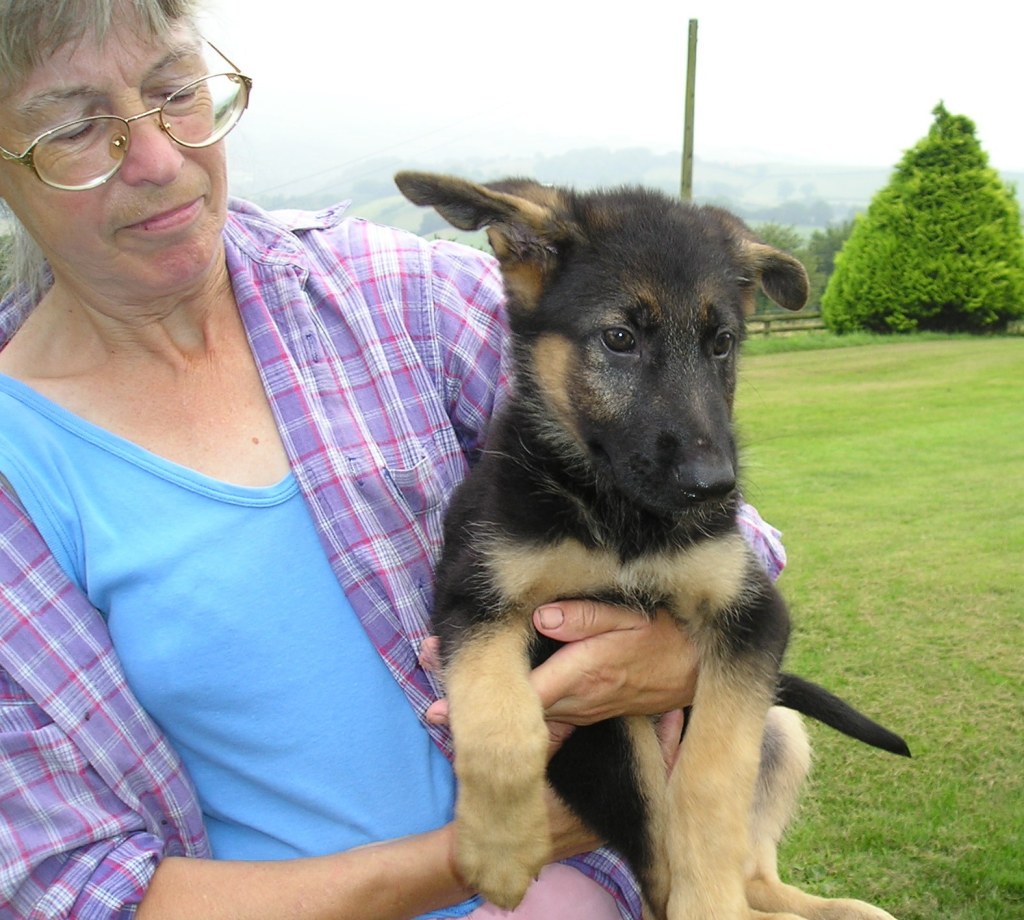
Puppy Pharaoh in the arms of Sandra Tucker of Jutone Breeders in Devon, UK. September, 2003.


Rebooting an inmate’s life

This is no conundrum: a direct contrast to yesterday.

The benefits of having a dog or two (or nine) are boundless and have been documented for thousands of years. Indeed, a quick web search revealed that Alexander Pope, the 18th-century English poet, is the attributed author of the quote, “Histories are more full of examples of the fidelity of dogs than of friends.”

Nevertheless, it was still a joy to come across the documentary film Dogs On The Inside.

Filmed in a Massachusetts prison, DOGS ON THE INSIDE follows the birth of a relationship between abandoned rescue dogs and prison inmates as they work together toward a second chance at a better life. Giving a voice to a forgotten dog and a forgotten man, the film is a life-affirming testament to the power of second chances.

The film was released in February 2014, and here is the trailer.

http://www.youtube.com/watch?v=S7ZjxPqL_EQ

In general, it seems to have gathered good reviews with this one from Amazon being typical of what I have seen.

I had tears in my eyes during several segments of this film. Such a lovely connection between the rescue workers and the dogs. Then, the inmates and the dogs. And, finally, the photos of their forever homes and families. Bravo to all at Don’t Throw Us Away. People like you, who work to save and rehab these animals, are amazing.

You are also recommended to read the review that is on the Ecorazzi website. Here’s a flavour of that review:

Two parties neglected and forgotten become the powerful emotional center of an uplifting new documentary, Dogs on the Inside.

We’re taken to Massachusetts, where there exists a unique, mutually-beneficial rehabilitation program that finds rescue dogs paired with prison inmates.

This documentary, from directors Brean Cunningham and Douglas Seirup, follows a handful of inmates at a correctional facility involved in Don’t Throw Us Away, a program that partners them with neglected dogs. For the animal, benefits include exercise, attention, and care while shelters remain crowded. For the prisoners, they have a chance to form connections and work towards parole.

It’s fascinating throughout watching both sides – scared dogs and (emotionally) guarded inmates – warm to one another, seemingly leaving their past behind.

That’s at the heart of this illuminating, heartwarming film: second chances. Early on, it’s easy to see the parallels between these two groups – with the comparisons handled tactfully throughout a film that never strays from its simple, honest goal. Dogs never preaches or calls for political or social change; it more so asks the viewer to be willing to forgive and welcome in those which have been cast aside. When an inmate says, ‘they come from a bad life, they haven’t seen love in while,’ he isn’t necessarily talking just about the dog.

Let me close with this heart-stirring photograph that was included in the above review.

Candido2-1

So much to learn from our precious, gorgeous dogs!

There’s another year gone!

Yesterday was my 71st birthday.

Consequently, writing a blog post for today wasn’t high on my list of things to do.

So this is to offer my thanks to everyone who sent me greetings; it was wonderful to hear from so many friends, old and new.

Thus my post today is to share three items that came from family back in England.

First, my mother, who is still teaching piano and oboe at the age of 95, sent me this:

Secondly, my son, Alex, and his long-term partner, Lisa, sent me this in an card chosen from the Friends of the Earth selection:

dog cake
(All dog owners know, I’m sure, that dogs must never eat chocolate.)

Lastly, my grandson, Morten, who despite being just five-years-old, is already a dab hand with an iPhone and sent me the following picture of himself with Dad in the background:

photo

Finally, my love and gratitude to Jeannie for making me feel special yesterday, as she has done every day since we first met.

Picture parade one hundred and twenty-one.

The second welcome to the season of mists and autumnal colours.

With thanks to Mother Nature Network where these wonderful photographs were published. Last week’s set are here.

mix8
Photo: Scott Kinmartin/flickr

oooo

Photo: Tanya Uralova/Shutterstock

oooo

Photo: Tanya Uralova/Shutterstock
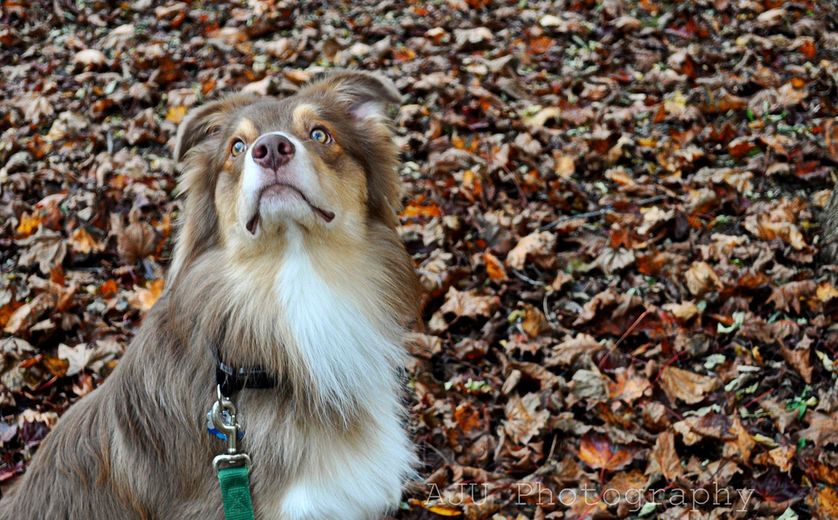
Photo: AJU_photography/flickr

oooo

Photo: Kichigin/Shutterstock

oooo

Photo: Josh McGinn/flickr

oooo

Photo: otsphoto/Shutterstock

oooo

Photo: Mark Jones/flickr

The third and final welcome will be in a week’s time.

You all take care out there.

Saturday smile

Just think what it would be like if all our nine dogs were as helpful as this!

http://www.youtube.com/watch?v=lPeLAkafz1c

Please, all of you dear readers, have a happy and relaxed weekend.

Friday frolics.

Let’s end the week on a light-hearted note.

There have been some pretty serious posts in recent days and I wanted to close off the week with something completely different!

The following was sent to me from Dan earlier on this week. It is socially incorrect and, for the sake of clarity, I don’t subscribe to this form of gender bias in any way.

But it sure is funny!

Why Some Men Have Dogs And Not Wives:

dogs1

1. The later you are, the more excited your dogs are to see you.

dogs2

2. Dogs don’t notice if you call them by another dog’s name.

dogs3

3. Dogs like it if you leave a lot of things on the floor.

dogs4

4. A dog’s parents never visit.

dogs5

5. Dogs agree that you have to raise your voice to get your point across.

dogs6

6. You never have to wait for a dog; they’re ready to go 24 hours a day.

dogs7

7. Dogs find you amusing when you’re drunk..

dogs8

8. Dogs like to go hunting and fishing.

dogs9

9. A dog will not wake you up at night to ask, “If I died, would you get another dog?”

dogs10

10. If a dog has babies, you can put an ad in the paper and give them away.

dogs11

11. A dog will let you put a studded collar on it without calling you a pervert.

dogs12

12. If a dog smells another dog on you, they don’t get mad. They just think it’s interesting.

dogs13

13. Dogs like to ride in the back of a pickup truck.

And last, but not least:

14. If a dog leaves, it won’t take half of your stuff.

To test this theory:

Continue reading “Friday frolics.”

The saving of Zuzi.

An antidote of happiness between the stories of despair.

Yesterday’s post about Indonesia was a dark reflection of humanity. So, I regret, will be Thursday’s post.

So it seemed really nice to offer you this video.

Published on Jun 1, 2015

Please SHARE Zuzi’s story and help us find a loving forever home.
Estimated age 4 yrs, vaccinated, microchipped.
For more info or adoption requests please contact us on: contact@howlofadog.org; visit our Facebook page: https://www.facebook.com/HowlOfADog or our website: http://www.howlofadog.org
Thank you!
——————–
UPDATE: We have some very happy news: Zuzi was adopted and will be living from now on in Canada. Her adoptive family came to Romania and they returned to Canada with one extra passenger: Zuzi 🙂
Zuzi’s adoptive family knew the situation dogs from Romania have to deal with everyday and the suffering they have to endure, so they decided to adopt a dog and save a life.

——————–

If we can’t save the planet, at least we can carry on saving the animals!

Picture parade one hundred and twenty

Welcome to the season of mists and autumnal colours.

With thanks to Mother Nature Network where these wonderful photographs were published.

mix1

oooo

mix2

oooo

mix3

oooo

mix4

oooo

mix5

oooo

mix6

oooo

mix7

oooo

Happy November 1st to you all.

New insight into the history of our dogs.

Our dogs have come a very long way.

I feel a little guilty at just dropping this full article in your path, and running away, so to speak, but yesterday was one of those days where Jean and I were “full on” for most of the day, and then out from the house from 4pm onwards.

It doesn’t lessen the interest, in my humble opinion, of this essay, that was recently published by The Conversation, and is republished within their terms.

ooOOoo

New DNA analysis says your pooch’s ancestors were Central Asian wolves

October 20, 2015

Author: Laura Shannon, Postdoctoral Research Associate in Biological Sciences, Cornell University

Dogs’ origin story goes something like this: sometime between 16,000 and 30,000 years ago, there were some stressed-out hungry wolves whose hunting territory had been encroached upon by humans. Luckily, these wolves were resourceful and they noticed human beings have a tendency to leave delicious things lying around. Scavenging leftovers seemed significantly easier than going out and hunting, so they hung around the people.

Wolves make unnerving neighbors. However, some are less unnerving than others. The humans were a lot more inclined to tolerate the proximity of less aggressive, more people-oriented wolves. As an added bonus, other predators are less likely to harass you when you are surrounded by wolves. So the people and the nicest wolves came to an agreement – the people tolerated and fed the tamest and most helpful wolves.

Smart, tame wolves have smarter, tamer wolf cubs, and so over time the wolves became more and more pleasant to have around. Obviously, friendly, helpful wolves hanging around people and eating leftovers aren’t really wolves; we have a word for those things – they’re dogs.

That’s biologists’ reasonable guess for how dogs came about. We have some idea when it all happened, but it’s been harder to figure out where. Who first took in scavenging gray wolves and turned them into dogs?

Dogs still know a good thing when they see it – warmth and food with people ‘round the campfire. Camping image via www.shutterstock.com.
Dogs still know a good thing when they see it – warmth and food with people ‘round the campfire. Camping image via http://www.shutterstock.com.

Investigating this wheredunit

Scientists have looked at DNA inherited exclusively from the mother (called mitochondrial) and DNA inherited exclusively from the father (the Y-chromosome) and suggested that dogs were first domesticated in China, south of the Yangtze River.

However, the oldest dog bones anyone has found are from the other end of Eurasia, all the way in Northern Europe. Furthermore, the mitochondria of modern dogs are closely related to the mitochondria of ancient European wolves.

Finally, Middle Eastern wolves share the most genetic sequences with today’s dogs, which makes it seem like maybe Middle Eastern wolves are the ancestral wolf population.

All these threads of evidence broadly agree that dogs are from somewhere in Eurasia. But my colleagues and I wanted to narrow that down a bit – and to do that, we decided we needed DNA from as many dogs as possible for our new study.

Team members sampling a village dog in the Pacific Islands. Adam Boyko, CC BY-ND

Modern dogs cover the globe

Dogs are found almost everywhere people are, and over time we have bred them to do everything from guarding livestock to going fishing. The breeds we’ve created come in many shapes and sizes, ranging from tiny Chihuahuas to giant Great Danes. The vast majority of these breeds are less than 200 years old and come from Europe. But these purebred dogs or even mixes of these breed dogs are the minority of dogs on the planet.

Most dogs are free-ranging village dogs, which live around and among people but aren’t necessarily what you’d think of as pets. You can learn more about ancient dogs by studying these village dogs (as compared to studying breed dogs) because village dogs have more genetic diversity; the number of different versions of the same genes in village dogs is higher than it is in breed dogs.

All dogs were formed from a select group of wolves, and therefore have a subset of the genetic diversity found in wolves. But breeds were formed from a subset of dogs so they have only a further subset of the diversity found in dogs.

In the cradle of dogkind? Coss and Johanna, CC BY-NC

Tracing the trail through DNA sequences

Members of our lab traveled to collect blood or spit from dogs in a variety of locales, and collaborators sent us fluids from places to which we didn’t manage to travel. Village dogs are fairly easy to find for researchers carrying food. In total, we extracted DNA from the fluids of 549 dogs from 38 countries spanning the majority of the globe as well as 4,676 purebred dogs. Our lab at Cornell is conveniently located in the same building as a veterinary hospital, so most of our purebred dogs were patients.

Once we had our samples, we then determined each dog’s genotype at about 180,000 distinct points in the genome. This is the largest data set anyone has used to address the question of dog origins so far.

We were looking for a very specific pattern of historical genetic diversity. When a select group of wolves became dogs, those dogs contained only the genetic diversity present in that subset of wolves. When people took some of the dogs and moved on to new regions of the globe, or traded dogs with people in other regions, they took only a subset of the total dogs, and by extension a subset of the total diversity.

Therefore, we expect the original population of dogs to be the most diverse. There would be a gradient of decreasing diversity in all populations as they move away from the center of origin.

And this is the pattern we observed when we compared the genetics of dogs from different populations. Dogs from Central Asia, Mongolia and Nepal are the most diverse, with genomes that correspond to the early, original variation in the population right after domestication happened. When we look at the same DNA markers in dogs from neighboring regions, diversity decreases. It decreases further corresponding to the location’s increasing distance from Central Asia. This is the pattern we would expect if the people who first took in scavenging gray wolves and turned them into dogs were located in Central Asia.

Even dogs we sampled in the Pacific Islands traced their forebears back to Central Asia. Adam Boyko, CC BY-ND

Looking at the largest data set of dogs amassed so far, we observe a very clear signal that most dogs alive today descended from dogs in Central Asia. However, we only looked at dogs alive right now. We have no information about historical populations of dogs that have no living descendants. Furthermore, the patterns of diversity we observe are reflective of the origins of dogs but also of everything that has happened to dog populations since domestication.

Other research groups are extracting DNA from bones of ancient dogs, and these sequences will provide exciting new insights from time points closer to domestication. However, ancient DNA studies are limited by the availability of ancient dog bones – which is affected by many factors other than the distribution of historic populations; for instance, some environments are more conducive to the preservation of bone and DNA than others, some regions have been more extensively investigated by archaeologists than others, and so on. If we see similar patterns in ancient and modern dogs, that will add clarity to the history of dogs and the people who love them.

ooOOoo

 Ultimately, it doesn’t matter one hoot, in a non-scientific sense, from where our dogs are descended. Just that they did evolve.

For human life without our dogs would be unthinkable.