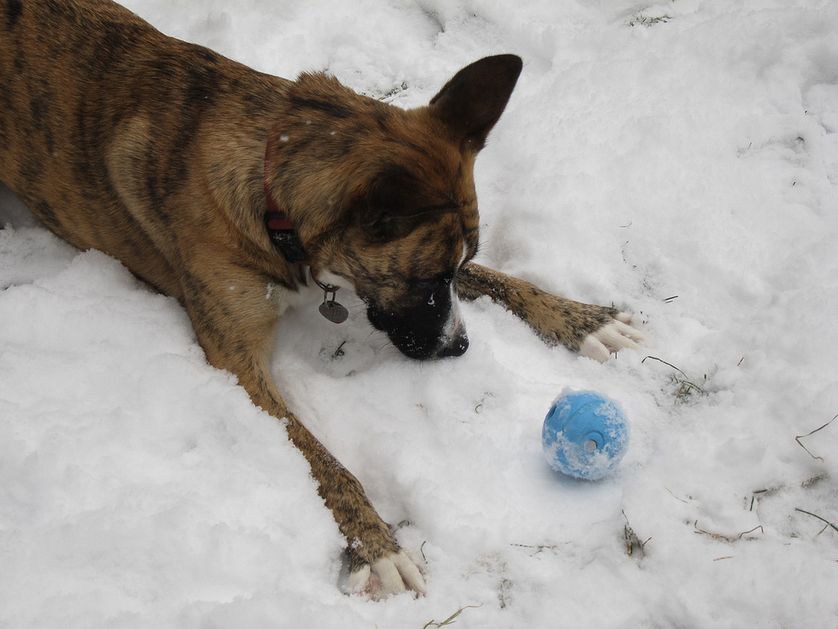
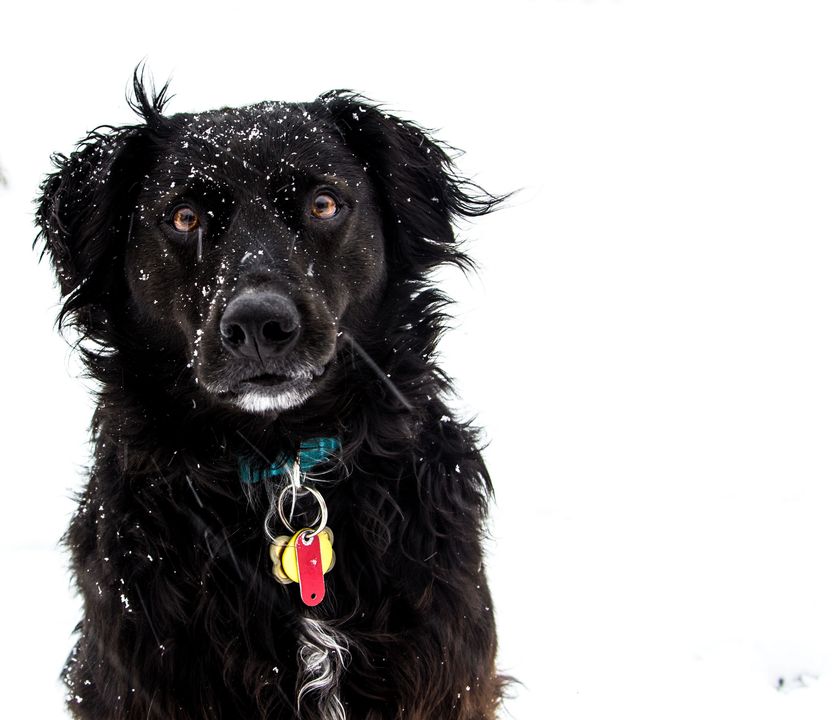
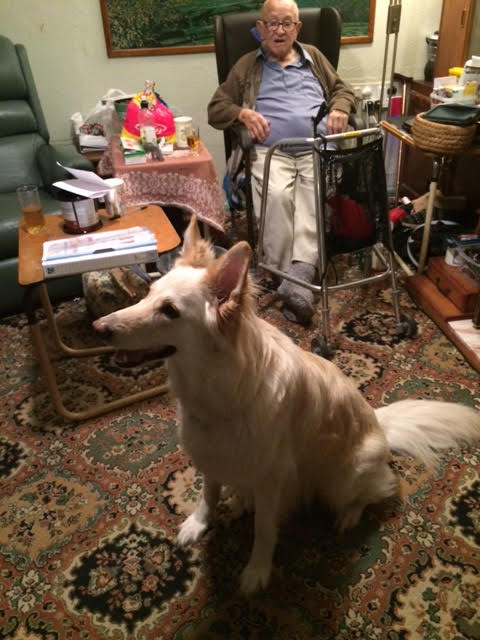
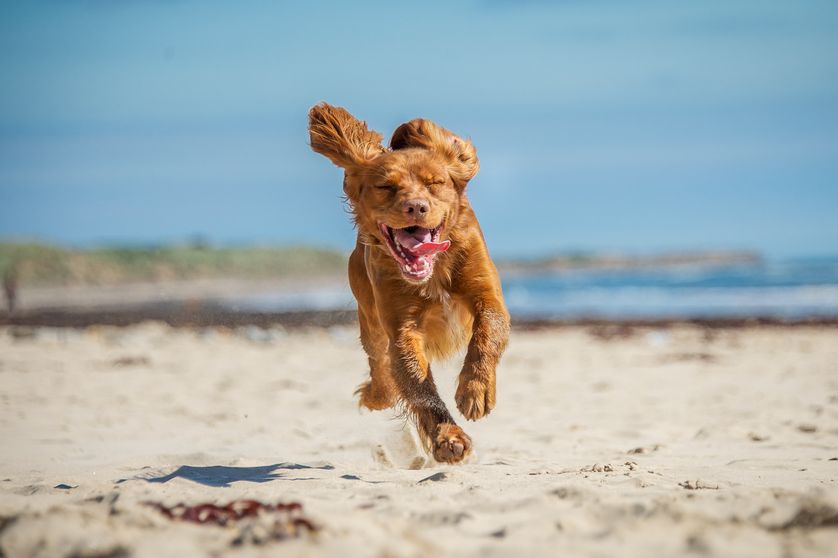
The following seemed very appropriate for this time of the year!
(As seen on Mother Nature Network)

oooo

oooo

oooo

oooo

oooo

oooo

Wherever you are in the world; whatever the weather you and your dogs stay warm and happy!
Dogs are animals of integrity. We have much to learn from them.
Category: Dogs
The following seemed very appropriate for this time of the year!
(As seen on Mother Nature Network)

oooo

oooo

oooo

oooo

oooo

oooo

Wherever you are in the world; whatever the weather you and your dogs stay warm and happy!
The concluding part to yesterday’s post.
ooOOoo
Open a door
Your dog can cue to you open the door by ringing a bell, but how about taking it to the next level and teaching your dog to open the door by himself? In fact, there’s a handy trick built into this that we will introduce later on! This video walks you through all the steps to opening doors and drawers:
Hold an object
If your dog likes to play fetch or tug, it may be a great idea to teach him how to hold and carry an object. It’s a new way for a dog to think about holding a toy, since once the dog has a grip on it, he needs to wait for you to give the cue to release it. This trick is also included in a more complicated trick, which is next on our list. But first, here’s a video that shows you how to master this trick:
Fetch something from the fridge or cupboard
When you have the training down for touch, opening the door, knowing the names of objects, and holding an object, it’s just a matter of putting the steps together to teach your dog to fetch an item from somewhere in the house. A popular version of this trick is of course to fetch a beer from the fridge! But maybe start out with a less fizzy drink option, just in case.
Back up
An interesting trick to teach your senior dog is how to walk backwards. It’s a great one to help with getting him to think about using his body a little differently. Most dogs aren’t really aware of where their hind end is — it’s just the part that follows their front end. By teaching your dog to walk backward, you’re teaching him to be aware of where his back legs are going. It’s great for both mental and physical agility.
Find it
Keep life interesting for your dog by creating a game around using his nose to find a reward. This is a great trick especially for dogs whose hearing or sight has diminished with age. The trick teaches them to use their noses even more purposefully, using scent work to find the hidden treat or toy. Once you teach your dog how to find it, you can have the “it” be something different every time you play to keep your dog at the top of his game. This video shows an older Labrador learning the steps to the “find it” game and having fun playing:
Tuck himself in bed
It’s surprising how much fun you can have with a trick that only requires your dog to grab a blanket and roll over. This adorable trick is great for dogs of any age, and is an easy (and cozy) trick for your senior dog to learn. You simply teach your dog to lie down on a blanket, grab and hold the corner of it, and roll over so he tucks himself into bed. For senior dogs who like to snooze in extra warm blankets, this is a dream trick. Here’s how it works:
ooOOoo
So there you are. Plenty to keep you and your senior dogs engaged for a long time. Once again, if you missed part one then that was published yesterday.
Eleven tricks you can teach a senior dog.
The household here in Oregon has a number of seniors, both dogs and humans. And while I’m pretty sure that this senior human is practically past the point of learning new tricks, apparently it doesn’t apply to our old dogs.
So enjoy this recent article that appeared on Mother Nature News.
oooooh
By: Jaymi Heimbuch, November 30, 2015

The old saying goes that you can’t teach an old dog new tricks, but we know a lot of old sayings are wrong — this one included. Of course we can teach old dogs new tricks! In fact, it’s a great way to keep your dog mentally stimulated and having fun throughout his life.
One important thing to keep in mind about teaching senior dogs new tricks and behaviors is the dog’s level of physical ability. Many senior dogs are perfectly able, but if your dog is getting achy in the joints or has other limitations that come with age, keep these in mind. Older dogs may have joint pain or arthritis and have a harder time jumping or even sitting for long periods. They may also have dental issues which may limit the tricks they can do using their mouths. And they may also have hearing or vision problems which alter not only what kinds of tricks you want to teach them but also the way in which you teach them. So it’s important to know what your dog’s physical limitations are when you’re thinking up new tricks, and not push him to the point of possible injury.
While your dog may be past the days of learning to jump through hoops or leap over walls, there is a huge range of tricks that keep mobility issues in mind, and which senior dogs will have a lot of fun learning. Some of the tricks listed here build on each other and gain complexity, so you can keep things interesting for your dog for weeks at a time while training.
Touch
This is such a great trick to use as a foundation for other tricks, from flipping light switches on or off to coming back to your side. And it’s incredibly easy for your dog to learn and do. This is great for older dogs because you can make it really simple at first and build complexity into it after your dog has it down. To start out, you train your dog to do hand targeting. Here’s a video that shows not only how to train your dog to touch your hand, but many of the uses of the behavior:
http://www.youtube.com/watch?v=RWSJVwZybwo
Yawn
Teaching your dog to yawn is all about “capturing behavior” with clicker training. It’s much like training your dog “touch” but this time, you have to wait for your dog to offer the behavior and capture it when it happens. Click — or say a key word like “Yes” — whenever you catch your dog yawning, and then reward him with treats or a game with a toy. After awhile, your dog begins to associate the yawn as being a trick that earns a reward. Here’s a video that demonstrates capturing different behaviors that you can turn into cute tricks, including yawning on command:
http://www.youtube.com/watch?v=ybL0mkN0ZYA
Put toys away
Even when you’re a grown-up, you have to pick up your toys when you’re done playing. Teaching your dog this tidy behavior will keep him or her a little more active in a low-key way, and thus help loosen up those stiff joints and muscles without putting a strain on their body. Plus, it’s a fun game that you can play over and over, not just on clean-up duty.
http://www.youtube.com/watch?v=LjfjzhErIF4
Names of objects
Stretch your dog’s mental abilities by teaching him the name of different objects or toys. This is a great way to teach your dog to fetch certain items from the toy box or even various objects from around house. You can start off with a few items from the toy box or simply get rolling with items you may want him to fetch for you, including hats, keys, shoes, blankets and so on.
Though it may take a while for your dog to truly grasp the name for each item at first, soon he will catch on to what the name game is all about and will likely grasp names faster when introduced to new objects.
Here’s a video that shows how to begin teaching a dog the name of an item, and how to add more items into the mix:
http://www.youtube.com/watch?v=9cDzgEa4Ado
Ring a bell to go out
Your senior dog may be house-trained, but is he also trained to tell you precisely when he wants or needs to go out? You can give your older dog a great tool to tell you what he needs by teaching him to ring a bell as a cue to go outside. This video shows the progression of teaching a dog to touch the bell, and then eventually transition to learning that ringing the bell means their human opens the door for them.
http://www.youtube.com/watch?v=cjve4nuw7So
oooooh
The balance of this fascinating article comes out tomorrow.
Please share this widely, as always.
Dear Fellow Dog Lover,
Dave’s Pet Food of Agawam, Massachusetts, has confirmed it is voluntarily recalling one production lot of its Dave’s Simply the Best dry dog food due to the presence of an “off odor”.
To learn which products are affected, please visit the following link:
Dave’s Dog Food Recall of December 2015
Please be sure to share the news of this alert with other pet owners.
Mike Sagman, Editor
The Dog Food Advisor
Serendipity at work.
Chapter 8 of my book is entitled: Behaviours and Relationships. It opens thus:
“It is all to do with relationships.”
I heard this many years before the idea of writing this book came to me. Heard it from J, who was referred to in the previous chapter. J was speaking of what makes for happy people in all walks of life. It’s one of those remarks that initially comes over as such an obvious statement, akin to water being wet or the night being dark, that it is easy to miss the incredible depth of meaning behind those seven words.
Humans are fascinating. Every aspect of who we are can be seen in our relationships. How we relate to people around us, whether it be a thirty-second exchange with a stranger or a long natter with friends whom we have known for decades, including our partners and family relations. The core relationship, of course, the relationship that drives so many of our behaviours is the relationship that we have with ourself. That being rooted in our relationship experiences with the adults around us when we were young people.
When one looks at the performance of successful companies one often sees, nay one always sees, people being valued. The directors and managers of those companies understand that if people are valued then a myriad of benefits flow from that approach to relationships. Moving out of the workplace, the relationships that people have are always stronger and happier if those individual persons know they are valued. Moving beyond people, our dogs, and many other animals, are always stronger and happier if they feel valued. It’s the difference between empathy and sympathy.
Recently over on Mother Nature Network there was an essay presented by Russell McLendon who is science editor for MNN. It is about happiness.
ooOOoo
Scientists say they’ve found where happiness happens in the brain. What does that mean?
By: Russell McLendon, November 24, 2015

Everyone wants to be happy. Yet despite all our efforts in pursuit of this prized emotion, it can be a surprisingly nebulous goal. What is “happiness,” exactly?
That question has puzzled philosophers for thousands of years, and it’s still tricky for anyone to tackle. But recent advances in neuroscience have finally begun to shed light on it, and now a new study claims to have found an answer. Being told happiness is “all in your head” may seem both obvious and dismissive, but in this case the specifics are also empowering. The more we know about how (and where) happiness happens, the less helpless we’ll be to summon it when we need it.
By comparing magnetic resonance imaging (MRI) with questionnaires about emotional states, researchers from Kyoto University in Japan say they’ve traced the experience of happiness to a specific part of the human brain. Overall happiness, they conclude, occurs when positive emotions combine with a sense of life satisfaction in the precuneus, a region of the medial parietal lobe that’s linked to important brain tasks like episodic memory, self-reflection and consciousness.
Psychologists already distinguish between broad life satisfaction and “subjective well-being,” since happiness often seems to fade during bad moods without necessarily plunging us into deeper existential despair. But by revealing the neural mechanics of how these feelings combine to create overall happiness, the authors of the new study hope to make it easier to objectively quantify this mysterious and elusive emotion.
“Over history, many eminent scholars like Aristotle have contemplated what happiness is,” lead author Wataru Sato says in a press release. “I’m very happy that we now know more about what it means to be happy.”

To pinpoint the location of happiness, Sato and his colleagues first used MRI to scan the brains of their study subjects. Those participants then took a survey, which asked about their general sense of happiness, the intensity of their emotions and the degree of their overall life satisfaction.
After analyzing the data, the researchers discovered that those who scored higher on the happiness survey also had more gray matter mass in the precuneus. That means this brain region is larger in people who feel happiness more intensely, feel sadness less intensely and who are better able to find meaning in life.
“To our knowledge, our study is the first to show that the precuneus is associated with subjective happiness,” the researchers write in the journal Scientific Reports.
Complex phenomena like happiness rarely boil down to a single brain region, but other recent research also points to an outsized role for the precuneus. A study published this month links impaired connectivity in the precuneus to depression, for example, and a 2014 study suggests the region is a “distinct hub” in the brain’s default-mode network, which is active during self-reflection and daydreaming.
All this may seem like an esoteric quest for neuroscientists, but it’s about more than just academic curiosity. By knowing which parts of the human brain generate our sensation of happiness, we might develop more accurate ways to test methods of becoming happier, like travel, exercise or meditation.
“Several studies have shown that meditation increases grey matter mass in the precuneus,” Sato says. “This new insight on where happiness happens in the brain will be useful for developing happiness programs based on scientific research.”
ooOOoo
It’s an unscientific opinion from me but I truly believe that humans have a bias towards happiness. And if there’s one animal that we can learn happiness from, it’s the dog!

An insight into the eating behaviours of cats and dogs.
As it happens, Jean and I are vegetarians; Jean going way back in years to when she first turned away from meat. Thus the only meat that we purchase is from Cartwrights’, a local butcher in Grants Pass, where we buy hearts and liver for the dogs. The cats are fed on dried cat biscuits and canned cat food.
All owners of cats and dogs know that they have very different eating habits, and behaviours.
So to put some flesh on the bone, so to speak, about the eating behaviours of cats and dogs I am going to republish a recent essay that appeared over on The Conversation. As always, it is republished within the terms of The Conversation.
ooOOoo
by Hannah Rowland, Lecturer in Ecology and Evolution & Research Fellow at Zoological Society of London, University of Cambridge
November 13, 2015
Anyone who’s watched a cat throwing up after munching on grass knows that our feline friends aren’t natural plant eaters. So you might be surprised to discover that these carnivorous animals share some important genes that are more typically associated with herbivores. And this might help explain why cats aren’t always easy to please when it comes to food.
New research suggests that cats possess the genes that protect vegetarian animals from ingesting poisonous plants by giving them the ability to taste bitter. Animals use their sense of taste to detect whether a potential food is nutritious or harmful. A sweet taste signals the presence of sugars, an important source of energy. A bitter taste, on the other hand, evolved as a defence mechanism against harmful toxins commonly found in plants and unripe fruits.
Evolution has repeatedly tweaked animals’ taste buds to suit various dietary needs. Changes in an animal’s diet can eliminate the need to sense certain chemicals in food, and so receptor genes mutate, destroying their ability to make a working protein.

One example of this comes from strictly meat-eating cats, who can no longer taste sweetness. But if bitter detection evolved to warn of plant toxins, then it stands to reason that cats, which (usually) eschew plants, shouldn’t be able to taste bitter either. Humans and other vegetable-munching animals can taste bitter because we possess bitter taste receptor genes. If cats have lost the ability to taste bitterness, we should find that their receptor genes are riddled with mutations.
Geneticists at the Monell Chemical Senses Center in Philadelphia scoured the genome of cats and other carnivorous mammals like dogs, ferrets, and polar bears to see if our carnivorous cousins have bitter genes. They were surprised to find that cats have 12 different genes for bitter taste. Dogs, ferrets, and polar bears are equally well endowed. So, if meat eating animals are unlikely to encounter any bitter morsels, why do they boast genes for tasting bitterness?
To find out, Peihua Jiang, a molecular biologist at Monell, put cat taste buds to the test. He inserted the cat taste receptor gene into human tissue cells in the lab. When combined, the cell and the gene act as a taste receptor that responds to chemicals dropped onto it.
Jiang discovered that the cat’s taste receptors responded to bitter chemicals found in toxic plants and to compounds that also activate human bitter receptors. The cat bitter taste receptor, known as Tas2r2, responded to the chemical denatonium benzoate, a bitter substance commonly smeared on the fingernails of nail-biting children.
So why have cats retained the ability to detect bitter tastes? Domestic cats owners know how unpredictable cats’ dietary choices can be. Some of the “presents” cats bring to their owners include frogs, toads, and other animals that can contain bitter and toxic compounds in their skin and bodies. Jiang’s results show that bitter receptors empower cats to detect these potential toxins, giving them the ability to reject noxious foods and avoid poisoning.

But how often do meat-loving cats actually get exposed to bitter and toxic compounds in their diet, compared with the plethora of plant toxins that their vegetarian counterparts have to contend with? Jiang suggests this is not enough to explain why cats have retained such an arsenal of receptors.
Instead, cat taste receptors may have evolved for reasons other than taste. In humans, bitter taste receptors are found not only in the mouth, but also in the heart and in the lungs, where they are thought to detect infections. It remains to be seen if feline bitter receptor genes also double-up as disease detectors.
The discovery of feline bitter receptors might explain why cats have got a reputation as picky eaters. But their unfussy canine counterparts have a similar number of bitter taste receptors – so why are cats so finicky? One answer might lie in how the cat receptors detect bitter-tasting compounds. Research published earlier this year by another team of researchers showed that some of the cat taste receptors are especially sensitive to bitter compounds, and even more sensitive to denatonium than the same receptor in humans.
Perhaps cats are also more sensitive to bitter chemicals than dogs, or they may detect a greater number of bitter compounds in their everyday diet. Food that tastes bland to us or to a dog could be an unpleasant gastronomic experience for cats. So rather than branding cats as picky, perhaps we should think of them as discerning feline foodies.
ooOOoo
Once again, I find it wonderful and incredible that there is so much knowledge and experience “out there” and how quickly a few clicks of a computer mouse can make it available to all of you wonderful readers!
And with that, it’s time to go off and feed the dogs. (Only showing off – Jean is the one who feeds both our dogs and our cats!)
Speaking of Jean – it’s her birthday today!
Please share.
Dear Fellow Dog Lover,
According to a notice posted at PetSmart retail stores, Hill’s Science Diet is in the process of conducting a voluntary market withdrawal of some of its canned dog food products for unspecified reasons.
To learn which products are affected, please visit the following link:
Hill’s Science Diet Dog Food Market Withdrawal
Please be sure to share the news of this alert with other pet owners.
Mike Sagman, Editor
The Dog Food Advisor
P.S. Not already on our dog food recall notification list yet? Sign up to get critical dog food recall alerts sent to you by email. There’s no cost for this service.
More than a photograph, less than a film!
Enjoy these for today’s picture parade:
Published on Nov 6, 2015
Another try at a slow motion video of Abbey shaking the water off after a bath
Published on Apr 24, 2014
Stunning, Perfection, Breathtaking – just a few words that describe this 3 minute surfing clip that shows Ian Walsh catching huge waves and making it look effortless.
Well over two million viewings.
Music: Versailles
Warner // Chappell Production Music
Published on Oct 22, 2014
This is a clip from our movie “THE SECRET LIFE OF TREES”.
More on www.homan.pl
That homan.pl web link is well worth a visit – stunning stuff!
Finally, back to slow animal shakes! (And I must acknowledge Mother Nature News for the idea for today’s picture parade.)
Published on Mar 21, 2013
Why do wet furry mammals shake? Si and Sam give some of their favourite animals a shower to uncover the science behind the ‘wet dog shake’. Sam caught up with Andrew Dickerson from Georgia Institute of Technology to find out more about the science… we’ll have the full interview for you soon.
I know I did say about taking a day off but this was so easy to share.
ooOOoo
Dear Fellow Dog Lover,
On November 25, 2015, Blue Buffalo announced the recall of one lot of its Cub Size Wilderness Wild dog chews because the product has the potential to be contaminated with Salmonella.
Salmonella is a bacteria that can affect the health of both pets and humans.
To learn which products are affected, please visit the following link:
Blue Buffalo Dog Chews Recall of November 2015
Please be sure to share the news of this alert with other pet owners.
Mike Sagman, Editor
The Dog Food Advisor
ooOOoo
That link offers the following:
Blue Buffalo Dog Chews Recall of November 2015
November 25, 2015 — Blue Buffalo Company is voluntarily recalling one lot of its Cub Size Wilderness Wild Chews Bones because it has the potential to be contaminated with Salmonella.
What’s Recalled?
The recalled product comes individually shrink-wrapped in plastic with the UPC number 840243110087 printed on a sticker affixed to the product.
It has an expiration date of November 4, 2017 — printed as “exp 110417” on the shrink-wrap.Consumers should look at the UPC Code and expiration date on the product package to determine if it is subject to the voluntary recall.
The voluntary recall is limited to the following product and production lot:
- Cub Size Wilderness Wild Chews Bone
- UPC Code: 840243110087
- Expiration Date: November 4, 2017
Where Was It Distributed?
The product was distributed starting November 19, 2015 in PetSmart stores located in the following 9 states:
California
Kansas
Michigan
Minnesota
Montana
Nevada
Oregon
Utah
WashingtonWhat Caused the Recall?
Routine testing at the manufacturing site revealed the presence of Salmonella in the product.
No illnesses have been reported to date and no other Blue Buffalo products are affected.About Salmonella
Salmonella can affect animals eating the product and there is risk to humans from handling contaminated pet products, especially if they have not thoroughly washed their hands after having contact with the products or any surfaces exposed to these products.
Healthy people infected with Salmonella should monitor themselves for some or all of the following symptoms: nausea, vomiting, diarrhea or bloody diarrhea, abdominal cramping and fever.
Rarely, Salmonella can result in more serious ailments including arterial infections, endocarditis, arthritis, muscle pain, eye irritation and urinary tract symptoms.
Consumers exhibiting these signs after having contact with this product should contact their healthcare provider.
Pets with Salmonella infections may have decreased appetite, fever and abdominal pain. Other clinical signs may include lethargy, diarrhea or bloody diarrhea, and vomiting.
Infected but otherwise healthy pets can be carriers and infect other animals or humans.
If your pet has consumed the recalled product and has these symptoms, please contact your veterinarian.
What to Do?
Consumers who have purchased the product subject to this recall are urged to dispose of the product or return it to the place of purchase for full refund.
Consumers with questions may contact Blue Buffalo at: 888-641-9736 from 8 AM to 5 PM ET Monday through Friday and the weekend of November 28, 2015.Or by email at Bluebuffalo4260@stericycle.com for more information.
U.S. citizens can report complaints about FDA-regulated pet food products by calling the consumer complaint coordinator in your area.
Or go to http://www.fda.gov/petfoodcomplaints.
Canadians can report any health or safety incidents related to the use of this product by filling out the Consumer Product Incident Report Form.
ooOOoo
Truly hope no readers of Learning from Dogs are affected. (Perhaps better put as no readers’ dogs!)
Couldn’t resist these!
When putting together yesterday’s post, based heavily on a recent article over on Mother Nature Network, I couldn’t help noticing a link on that MNN item to this: 13 photos of dogs that got invited to the wedding. Wanted to share some of the photographs with you for today’s picture parade.
oooo
oooo
oooo
oooo
oooo
oooo
oooo
Sources for all the pictures may be looked up here.
Final picture for today is the one of Jean and me at our anniversary lunch taken at The Twisted Cork in Grants Pass on Friday. Not quite newly-weds but still not that long ago!
Best wishes to everyone!