Setting a fabulous example of what an animal shelter should be like!
The chances are that the great majority of domestic animal lovers have an impression of the standard animal shelter. The chances are that this impression is not one of wall-to-wall approval. It is tragic that animal shelters are required but it is a fact of life that they are needed. Many of them depend heavily on volunteers and donated money.
But that’s not to say that there can’t be a shelter setting a very high example of how a shelter should be.
The words “county animal services” don’t really evoke thoughts of luxury, comfort or state of the art anything, but Miami-Dade is about to change that.
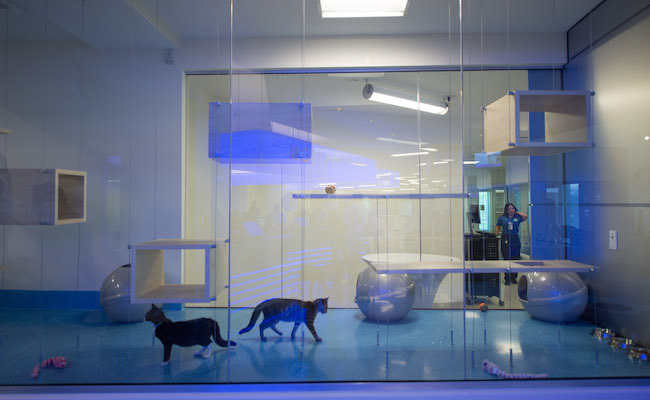
In June, the county opened its first ever “adoption mall,” an air-conditioned, high tech building where potential adopters can “shop” for their new furry best friend without even realizing they’re in a shelter.
“The old shelter was outdated and we wanted more capacity and to improve the wellness of the shelter pets,” explains Alex Muñoz, Director of the Animal Services Department about the project. “We have both cages and free roaming rooms and all areas for pets are air-conditioned.”
The Miami-Dade Animal Services Pet Adoption and Protection Center is a massive 72,000 square-foot facility that sits on five acres. Instead of sitting in kennels that don’t have much more than a small bed or sometimes just a couple of blankets on the concrete floor, adoptable dogs have plenty of space to move around and they stay stimulated in the outdoor canine exercise areas. When they’re done playing they can then retreat inside where the temperature controlled rooms keep them safe from the Florida heat.
For the kitties, a lounge area filled with toys allows them to play or just communally nap–after all, they are cats.
In 2015, Miami-Dade became a no-kill county, reaching a 90 percent save rate for all animals going into its shelters. Now with the larger building, the department was also able to expand the number of animals it houses. The new facility has 25 percent more dogs and 50 percent more cats than the previous shelter.
Since disease outbreaks are not uncommon in shelters, the new facility was built to prevent the spread of viruses among the animals.
“The HVAC System includes multiple air exchanges per hour to clean the air in order to avoid air borne diseases,” says Muñoz adding that “dogs are separated in different pods to avoid cross contamination.”
With the new spiffy location, the county is also hoping to fight the association people make of shelters being depressing and its animals sad or broken.
A 2013 study done by Best Friends Animal Society found that 46 percent of people considered shelter pets second-rate compared to dogs from breeders and only 31 percent of young people were willing to consider a shelter adoption.
In addition to happier and more comfortable animals, the building also houses professionals and volunteers who will spearhead programs advocating for rescuing, fostering, caring for neonatal kittens and working with Miami-Dade County Public Schools to teach kids about responsible pet care.
This new type of shelter comes with a hefty price tag of $15 million but Muñoz says it could definitely be implemented anywhere.
And, please, if anyone who reads this is thinking of getting another cat or dog then do make a visit to your nearest shelter your first step. For if all the dogs and cats in shelters were found good homes there would be no need for shelters. An idyillic dream, I know!
Yesterday, Val published a post over on her blog Find Your Middle Ground that really ‘spoke’ to me. That’s not to imply, by the way, that her other posts don’t very often reach out to me and, undoubtedly, to many others.
Val’s post was called The Depths of our Relationships and explored the different levels of relationships that we have with others in and around our lives.
Instinctively most people would regard us humans as far more complex than our animal companions. As the old Devon (South-West England) expression goes, “There’s now’t so queer as folk.”
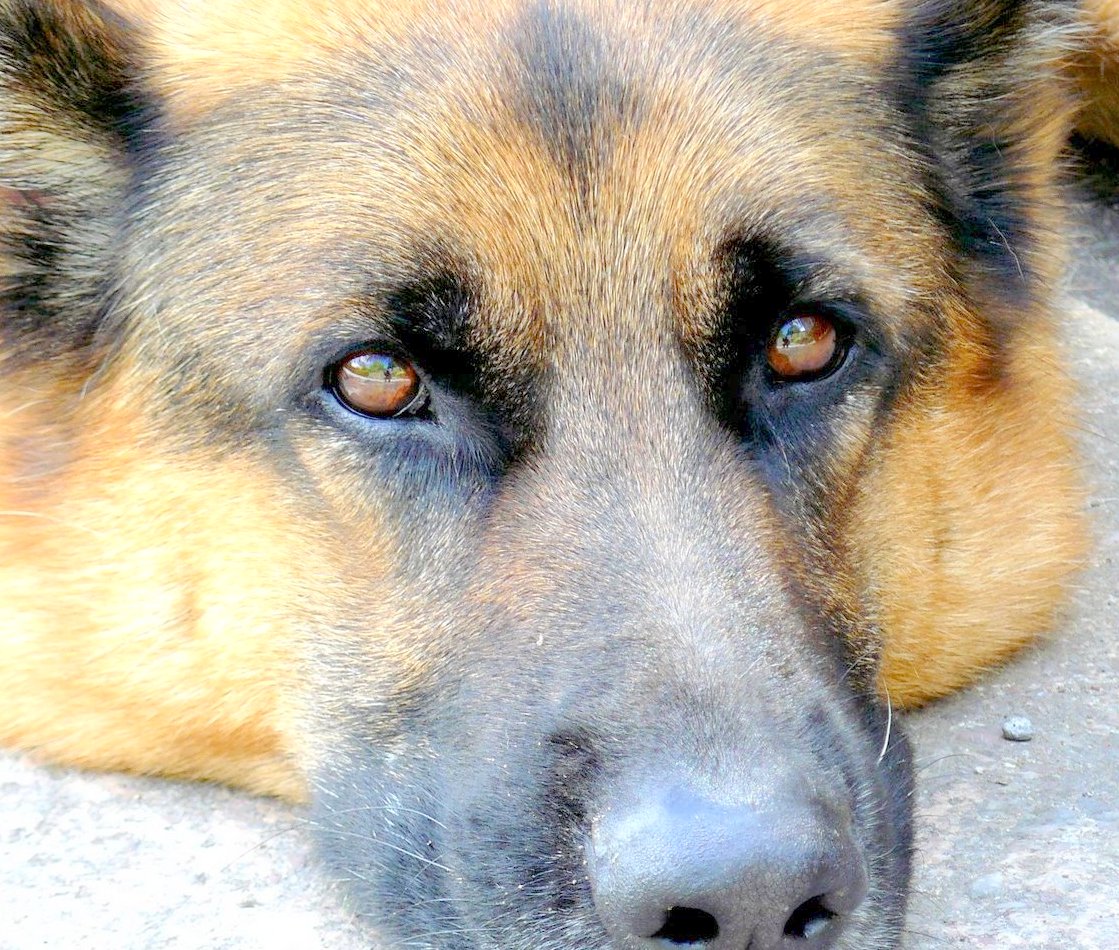
Yet, once we have really got to know a dog there will be many who will see behind those fabulous eyes a sense of a depth of character, a soul comes to mind, that suggests that the brain of the dog offers a canine psychological complexity most of us don’t allow for.
To support that proposition just look at the eyes of Pharaoh in this photograph going back to June, 2007.
However, today I am republishing Val’s recent post and I do so with great pleasure.
I read an interesting article some time ago by coach Michael Neill on how there are different levels in our relationships with others. I’m not talking about literal closeness, for example a brother is closer than a colleague at work, but more about our ability to truly connect in an authentic way with another person.
Have you noticed that you can feel a deep connection almost immediately with a stranger? Or feel like a member of your family is hiding behind a mask and being superficial? … That’s what I am talking about.
Surface Level – How we pretend to be
On the surface, people present themselves to the world in whatever ways they would like to be seen. They may be clever or cynical, light and cheerful or intellectual and deep. This is our persona or the “mask” of our personality, often revealing our fears, judgments, and insecurities in the very attempt to hide them.
Whether we enjoy or dislike someone’s personality is fairly arbitrary – an accidental coming together of our own innocently acquired preferences and prejudices from a young age.
But like it or not, at some point the mask slips and we see through to…
One Level Deep – The selfish self
Underneath the masks of personality, we’re continually navigating the world through a swirl of thought. Because we feel that thinking is coming at us from the outside world, we tend to see our actions, as one of my clients once put it, as being ‘the only sane response to an insane world’.
This is how we justify our ambition and ruthlessness; our cruelty to ourselves and others. After all, if it wasn’t a dog eat dog world out there, who would ever want to eat a dog?
When we see through someone’s “nice person” or “tough guy” mask, we often see only as far as this level. And it’s difficult for most of us to feel warmly towards someone who is seemingly only out for their own self-aggrandizement or self-preservation.
Until, that is, we see through to…
Two Levels Deep – Doing the best we can as we’re all in this together
There is a quote often attributed to Philo of Alexandria that we should “Be kind, for everyone you meet is fighting a hard battle.” This is not only true in the physical world, where our bodies begin to decay long before our thoughts are ready to let go, but also in our innate psychology.
Every human being I know wants to love and be loved; to be happy more and suffer less; and to feel like in some way their life had meaning and value. How they go about achieving these aims is a product of their level of understanding and experience of the world.
It’s easy to love people “two levels deep”, because we see ourselves reflected in them. We all have a natural compassion for the suffering of others and an abiding conscience which ensures that while we may at times act in ways that are harmful to ourselves and others, we do it in spite of and not because of who we are at core.
Loving people at this level doesn’t mean we have to live with them or let them get away with murder, literally or figuratively. It just means that we don’t get so upset by their humanness or carried away by our own delusions that we can escape the human condition.
While seeing through to people’s innate humanity makes for richer and more wholesome relationships, there is a level beyond even that which takes us past the illusion of separation which allows us to play judge and jury to our fellow humans…
Three Levels Deep – Who we are before the fact of thought
Who are you before thought comes into the equation? Mystics throughout time have described our essential nature as being made of spirit – a name for the invisible life force that makes up the visible world of form.
It’s difficult to even talk about “loving someone” at this level because rather than two or seven or even seven billion separate people, there is simply the presence of Love with a capital “L” – and as we dissolve and surrender into that Love, we fulfill the age-old proverb that “we are that which we seek”.
We are one in shared consciousness and spirit.”
p.s. This makes me think about how that pesky neighbor, or annoying colleague and Donald Trump appear one level deep for many of us.
ooOOoo
Val concluded her post with the proverb “we are that which we seek”. I used a very similar idea as the title to today’s post, “We are what we think of most!“. I am clear in my own mind that those two sayings are opposite sides of the same coin.
All of which reinforces in spades the benefits that flow from open and honest self-awareness.
If only for the wonderful quality of a deep sleep that results from that self-awareness.
Anyone who has been close to dogs in their lives knows that they are frequently very vocal creatures. Likewise, anyone who has been close to a dog or two quickly learns to understand the basic emotions being conveyed by a dog’s vocal sounds.
But, nonethless, there was an item over on the Care2.com site recently that provided a comprehensive tutorial on listening and interpreting the sounds from our dogs. I wanted to share it with you today.
Your dog communicates with you and other dogs in a variety of ways — including growling. Depending on the context, a growl can be anything from a sign of enthusiastic play to a warning of an impending attack. It is important to understand why your dog growls and when you should be concerned about this behavior.
A growl doesn’t always signal an unfriendly dog. Here are some common reasons your dog might growl and some situations where you may need to seek outside help.
Growling in Play
Dogs often growl during friendly play with other canines. This type of growling is typically higher pitched and shorter in length than other growls. To ensure that play is friendly, watch for the proper play signals and keep arousal levels low by taking frequent breaks.
Your dog may also growl when he plays with you. Pay attention to your dog’s body language during play — sometimes growling can indicate discomfort. Avoid rough play with hands and physical wrestling. If you are unsure about the distinction between acceptable play interactions and aggression, seek help from a professional.
Growling as a Warning
A dog who is afraid of something may growl to fend off potential harm; the message he’s sending is that he will defend himself if necessary. Some dogs may growl at any unfamiliar person, while others may respond only to specific types of people, like men with beards, or to sights they are uncomfortable with, such as a horse. If your dog growls only at specific people or things, remedial socialization help is needed.
Or your dog may growl at another dog as a way to tell him to back off before a confrontation occurs. Many times, the other dog will heed the growl and give your dog the space he desires. There are dogs, however, who will not back down when they are growled at; in this situation, a fight may ensue.
If your dog’s warnings to back off go unheeded, his growling may increase into other aggressive behaviors, making it difficult for him to be around other canines. Some dogs do best with only select doggy playmates, while others should be limited to socializing only with humans.
Growling for Medical Reasons
If your dog suddenly starts to growl when he is approached or touched, it may be a sign that he is in pain. Dogs with arthritis, abscessed teeth or other forms of illness or injury may experience increased pain when they are moved or touched and may growl to avoid it. A pet in pain is also more likely to bite than a healthy pet.
Pregnant or lactating dogs, or dogs in false pregnancy, are more likely to be protective and defensive with people and other animals, and are also more likely to growl at approaching humans. If you think your dog is growling for medical reasons, talk to your veterinarian.
Growling Out of Frustration
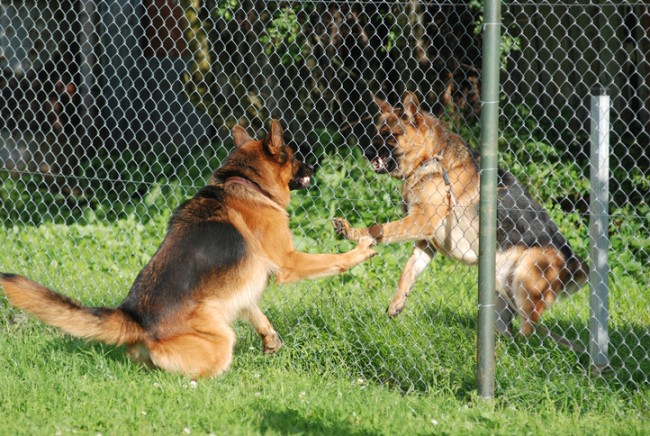
Your otherwise-friendly dog may growl as an expression of barrier frustration. A dog may growl or bark when he is on leash or behind a fence, even if he is comfortable with other dogs when he is off leash. Dogs who growl in these situations need to be trained to relax when on a leash or behind a fence, as territorial or frustration-based behavior can escalate over time. Your dog should never be chained up outside, as this can lead to extreme territorial and protective behavior, which puts the dog, other animals and people in danger.
When to Seek Outside Help
Growling is a way of communicating — for instance, his way of saying, “Give me space,” “Stop it,” or “Back off.” But certain situations — growling when approached or handled, and growling as part of resource guarding — require professional help. A dog who is engaging in resource guarding may be protecting food, toys or people, or his favorite places, like a sleeping space. Even with the best management plan in place, a guarding dog may escalate his aggression, which is why this behavior calls for professional intervention.
Your dog may also growl when he is handled, either because he is uncomfortable or afraid. He may growl when his collar is grabbed, his toenails are trimmed, his ears are touched or his mouth is opened. He may also be uncomfortable with direct eye contact, a person leaning over him, hugs or other forward greetings. Again, this behavior can escalate to something much more dangerous.
Talk with your veterinarian about these behaviors as soon as possible; have your pet’s health evaluated and, if necessary, ask for a referral to a behaviorist or trainer who can help you teach your dog strategies for coping with these situations.
By Mikkel Becker | Vetstreet.com
ooOOoo
You can imagine that with nine dogs here in the house there are times when Jean and I struggle to hear each other over the top of the doggy conversations.
Another day yesterday where my creative juices had evaporated; if that’s what creative juices do!
But that doesn’t devalue the following article in the slightest! An article that was recently read on the Care2 blogsite and is republished here for your pleasure.
ooOOoo
Prisoners Care for Deaf Dogs Displaced by Wildfire
The so-called Sand Fire that burned for over a week near Los Angeles didn’t only threaten wildlife sanctuaries. Soon after the wildfire started on July 22, Mark and Lisa Tipton, owners of Deaf Dog Rescue of America (DDRA), a non-profit organization that rescues, trains and rehomes hearing-impaired dogs, decided it was better to be safe than sorry. They evacuated the rescue ranch’s nearly 50 residents.
“It was no small feat to assemble crates, pack them into trucks and trailers, and load the dogs,” Lisa wrote on the DDRA Facebook page. “Backbreaking and stressful. We have wonderful paid kennel staff here which is why we were able to evacuate the dogs so smoothly. Nobody got bitten, no loose dogs, no drugs were used. They stayed with us in our time of need and they were rock stars.”
The Tiptons were eventually able to find a temporary home for the dogs at the California state prison in Lancaster, which invited them to bring the dogs there. Mark happens to operate the Karma Rescue Paws for Life dog-training program for the prison’s inmates. It is California’s first and only dog program in a high-security prison. Many of the participants are serving life sentences.
In this program, dogs rescued from high-kill shelters around Los Angeles County live full-time with the participating inmates. Over a 12-week period, the inmates learn how to train the dogs for Canine Good Citizen certification. This certification helps the dogs become more adoptable and, in turn, helps save more dogs from shelters. The inmates benefit by learning real-world skills and giving back to society by helping these dogs get another chance at life.
“Paws for Life restored my faith in humanity that I’m a person, that I matter,” inmate trainer Jon Grobman told KABC. “It gave me the opportunity to care for something, love something.”
In the two years the program has been offered at the Lancaster prison, 75 former death-row dogs have found forever homes.
‘They Were Thriving Under Their Care’
After the Tiptons dropped off the dogs, they returned to the DDRA ranch to check on the fire, get some sleep and gather up more supplies for the dogs.
“The dogs were bewildered and watched us walk out the gates,” Lisa wrote on Facebook. “The looks on their faces made me cry when things quieted down and I had time to think about it. I have to admit that I felt guilty leaving them there.”
The couple returned to the prison the next morning with food for the dogs – which, along with the feelings of guilt, wasn’t necessary.
“The inmates had handled breakfast beautifully,” Lisa wrote. “They were getting the dogs out for exercise and cleaning their runs… I have never, ever seen anyone clean up dog poop with such glee.”
Nor had she ever seen the dogs so comfortable around strangers. “[They] were thriving under their care,” Lisa wrote, “and had wagging tales and smiles on their faces.”
Thankfully, DDRA survived the Sand Fire. All the dogs returned to their home July 30.
“Can pretty much guarantee that when they are all safely in their kennels snoring,” Lisa wrote, “I’m going to melt into a huge puddle of tears from sheer thankfulness and relief.”
Coincidentally, while the inmates at the Lancaster prison were caring for the displaced deaf dogs, L.A. County Supervisor Michael D. Antonovich proposed that, to help with overcrowding in animal shelters, a new one should be built at the Pitchess Detention Center in Castaic.
“Such a program could be a cost-effective and progressive way to integrate the needed care of animals with positive benefits to our inmates,” he wrote.
The feasibility of such a shelter is being analyzed by county animal welfare officials and the sheriff’s department. A report on their findings is expected later this month.
Or a particular dog in this instance: Luna the Husky!
We were out much of the day and I only sat down a little before 4pm to offer you dear people something for today’s post. Had a look through my ‘blog’ folder and was reminded of this wonderful video.
It’s very short but that won’t take anything away for you. Enjoy!
Published on May 25, 2016
Watch how Luna the husky begs her owner for more affection during a car ride. How can you say no to that face?!
A trip to the Oregon Caves National Monument & Preserve.
A week ago when our family guests were staying with us we decided it would be a treat for all of us to visit the very famous Oregon Caves – it was not a disappointment.
Morten and Marius gathering information.
The history of the caves does involve a dog.
Apparently Elijah Davidson discovered the caves in 1874 when he was out with Bruno, his dog, and it disappeared. The dog had fallen down a fissure that Elijah managed to squeeze into and, bingo!, there was the most incredible deep cave ahead of him. (Watch the video below for a fuller description of how the cave was discovered.)
Joaquin Millers Chapel This is a room seen on the cave tour. It is called Joaquin Miller’s Chapel and it is named after the author, Joaquin Miller because he wrote about Oregon Caves in Sunset magazine.
Clearly today’s visitors to the cave enter in a more gentle fashion!
Oregon Caves National Monument and Preserve is a National Monument and Preserve in the northern Siskiyou Mountains of southwestern Oregon in the United States. The main part of the 4,558-acre (1,845 ha) park, including the marble cave and a visitor center, is located 20 miles (32 km) east of Cave Junction, on Oregon Route 46. A separate visitor center in Cave Junction occupies 4 acres (1.6 ha) of the total. Both parts of the monument, managed by the National Park Service, are in southwestern Josephine County, near the Oregon–California border. The climate is generally mild even at the cave’s elevation of about 4,000 feet (1,200 m) above sea level, but icicles can form at the cave entrance, and winter snow sometimes blocks the park highway.
Elijah Davidson, a resident of nearby Williams, discovered the cave in 1874. Over the next two decades, private investors failed in efforts to run successful tourist ventures at the publicly owned site. After passage of the Antiquities Act by the United States Congress, President William Howard Taft established Oregon Caves National Monument, to be managed by the United States Forest Service, in 1909. The popularity of the automobile, construction of paved highways, and promotion of tourism by boosters from Grants Pass led to large increases in cave visitation during the late 1920s and thereafter. Among the attractions at the remote monument is the Oregon Caves Chateau, a six-story hotel built in a rustic style in 1934. It is a National Historic Landmark and is part of the Oregon Caves Historic District within the monument. The Park Service, which assumed control of the monument in 1933, offers tours of the cave from mid-April through early November. In 2014, the monument was expanded by about 4,000 acres (1,600 ha) and re-designated a National Monument and Preserve. In addition, the River Styx, which flows through the cave and emerges as Cave Creek, was named to the National Wild and Scenic Rivers System.
Oregon Caves is a solutional cave, with passages totaling about 15,000 feet (4,600 m), that formed in marble. The parent rock was originally limestone that metamorphosed to marble during the geologic processes that created the Klamath Mountains, including the Siskiyous. Although the limestone formed about 190 million years ago, the cave itself is no older than a few million years. Valued as a tourist cave, the cavern also has scientific value; sections of the cave that are not on tour routes contain fossils of national importance.
Daughter Maija, grandson Morten and yours truly just having exited the cave.
Between Marius and myself we took a great number of photographs but many of them can’t compare to the quality of photos found on the web.
These are formations known as soda straws and like soda straws they are hollow tubes. They are made up of the mineral calcite.
Won’t go on! (But I will post a collection of photographs, both from me and Marius and found online in a future Picture Parade.)
What I will do is to close with this YouTube video. It is 17 minutes long but very interesting and, hopefully, an inspiration to others to come and visit this incredible geological site.
After a quick check to make sure that Emily wasn’t promoting a business I said that I would be delighted to publish a guest post from her.
So who is Emily? This is a short introduction to her:
Emily Parker is a cat parent to 2 lovely cats, Gus and Louis (Gus only has one eye, but we love him all the same!). She has lived with dogs in the past and can’t wait to add a dog to the family again. She writes about all things cats at her blog, Catological.com.
Don’t ask me how late February became late July but that doesn’t diminish in the slightest the quality of Emily’s guest post.
Before you read on let me present you with a picture of one of our cats that we have here at home.
ooOOoo
Cats, Dogs, and Kids: Who Teaches Who.
by Emily Parker, Catological.com
You’ve heard it as a kid, and if you have children of your own, you may have told your kids this.
“Having a dog is a big responsibility.”
This is absolutely true. A dog can teach kids how difficult it can be to take care of another living being, all while teaching them valuable life skills.
But little do we know that raising a dog is not a one-way street. Not only do dogs teach kids, but kids teach dogs, too. And if you’re a cat owner, it creates another web of teaching. Let’s break it down.
What Dogs Teach Kids
The Importance of Feeding, and Nutrition
What a dog will teach a kid is the importance of regular feeding. However, a kid can’t just dump some dog food in a bowl and call it a day. To raise a dog properly, the child needs to make sure the pup is getting the adequate nutrition it needs, all while not overeating.
If you have a kid, you must teach the child that proper nutrition is a must when feeding the dog. He or she will need to measure out the serving size, pay attention to ingredients, and become acquainted with the macronutrient profiles most beneficial for their dog. This can bleed into the child’s own eating habits as they learn to eat healthy and measure out portions.
Also, feeding a dog will teach a child that rewarding yourself is good if it’s done on occasion. Nothing wrong with the occasional treat!
Just be sure to keep up on the latest recalls.
Exercising
A child needs to have at least an hour each day dedicated to getting outside and playing. There are many ways to get a child outside, but perhaps the best way is to have a dog.
A dog needs to be walked every day, and by having your kid walk the dog, they’ll be getting exercise and learning to enjoy the great outdoors. Plus, it can get even more physical. Kids can chase dogs. Dogs can chase kids. Kids can run with their pets. The possibilities, as it turns out, are endless.
That Taking Care of a Pet Can Get Messy
This applies to cats as well. Children will have to scoop a cat’s litter, though it may seem a bit cleaner than picking up after a dog, who will of course be doing its business as the child takes it out for a walk, and the child will have to pick up after their pet.
It can seem a little a messy, and it will teach the child how to handle an animal’s waste, (which works out great if they ever decide to have children).
What Cats Teach Kids
The Importance of Consent
Most dogs are all over you, while some cats tend to want you to pet them at certain times.
Yes, we know that not all cats are like that, but a majority are. Sometimes, a cat doesn’t want to be held, pet, or bothered in general. And that’s okay!
You should teach your kid that sometimes, an animal, or indeed a human, needs their personal space, and that needs to be respected.
The Importance of Sleeping
Cats can sleep almost twice as much as humans can.
While your kid isn’t going to be sleeping for 16 hours a day, they still need 8 hours in most cases (or more if the child is younger), and may be neglecting that.
Having a cat around, who sleeps all the time, can teach the kid that sleep is important to anyone’s life, and they may soon be sleeping along with the kitty.
The Importance of Curiosity
Cats are always curious about their surroundings. If something changes, the cat will examine the surroundings incessantly. While some say that curiosity kills the cat, we believe that being curious about everything around you is a good thing, and should be taught to children.
As Fluffy examines her surroundings, kids will soon learn to examine what is around them. They’ll be aware of the people around them, look around their room when trying to find something, and be aware at all times. All of these are valuable tools for a child to have.
What Kids Teach Cats
How to Have a Little Fun
Despite learning the cat’s boundaries, some kids will still pick the kitty up, pet them excessively, and bother them. The cat may soon learn to be more sociable. They may have points where they don’t want to be bothered, sure, but they can learn to let loose once in a while.
What Dogs Teach Cats
How to Tolerate Each Other
Sure, cats and dogs can get along great, but at the end of the day, they are two different species with two different ways of behavior. Sometimes, an antisocial, sleeping cat can get annoyed by Fido’s constant need for attention. A dog may be confused by Fluffy scratching it whenever it tries to chase her.
Dogs and cats soon learn, however, to get along, or at least tolerate each other’s differences. This can teach children that they may have to be acquaintances with someone who is different than them and who may annoy them to death, like a coworker or a classmate. You may have to be with some people who are different than you. You’ll have to tolerate it. Heck, you may even grow fond of them after a while.
The Importance of Eating What is Yours
Cats can get into dog food, and vice versa. While cat food isn’t going to harm a dog and dog food won’t hurt a cat, the food doesn’t meet the nutritional needs of the opposite species. Dogs and cats will soon have to learn where their food is and not get into another animal’s food (though you should keep their feeders and dishes far apart from each other to prevent confusion and territorial fights). It’s a valuable lesson to learn for any pet.
Finally…
A kid raising a pet isn’t just a learning experience for the child. It can be a learning experience to the pet, as well as a learning experience from one pet to another. In life, you’ll learn different things from different people, and those who aren’t human can ironically be the best teachers.
ooOOoo
Wise words indeed, and a pleasure to publish. Thanks Emily.
Of there being a day where no animal lives out of sight of love.
Of course, when I speak of animals I have in mind those animals that end up in rescue shelters of one form or another: cats; horses; dogs; ponies; birds; and other species.
But on the broader topic of offering love to animals I must share something with you before going on to the main subject of today’s post.
That is that for the last few years we have been feeding the wild deer.
Slowly a number of them have grown to trust Jean and me to the point where one particular young female became such a regular that we named her: Doris. It is Doris that is in the picture above eating the cob that we put out twice a day.
Doris doesn’t warm to strangers plus she doesn’t come every day. When she does it is clear that she is familiar with us and perceives no threat from this ‘neck of the woods’, as the next photograph supports:
In fact, I can now gently stroke her neck when she is feeding and will share those pictures with you all in a future Picture Parade post.
I call the closeness of me and Doris love. I love how this animal trusts me and, in turn, the care and responsibility that is called for from me.
My dream is that the love, care and responsibility offered by people will one day be so widespread and extensive that there comes no call for animal rescue shelters.
OK!
A couple of days ago Cori Meloney signed up to follow Learning from Dogs. Cori is the author of the blog Three Irish Cats. As is my usual way I went across to her blog to leave a ‘thank you’ note for her decision to follow my scriblings. I immediately saw her latest post and knew without doubt that it should be republished here. Cori very promptly gave me permission to so do.
ooOOoo
Every Day Should Be Clear the Shelters Day
July 25, 2016
Silly kitty Shadow.
I volunteer with a small (but mighty!) rescue group here in Southern Maryland called Rescue Angels of Southern Maryland. We mostly deal with cats, though we’ve recently begun to rescue dogs as well.
Most of the cats we find homes for come from owner surrenders, friendly cats and kittens from our feral colonies, and at-risk animals from our local municipal shelter, Tri-County Animal Shelter.
Saturday, Rescue Angels was one of the groups that participated in Tri-County’s annual Clear the Shelters Day celebration. Seventy-seven animals found forever homes that day. Watching the parade of happy animals and their new owners as they left the building was totally worth sweltering in the 95-degree heat.
As the only public animal shelter to serve the three Southern Maryland counties, Tri-County is a busy place. It frequently gets full, and organizations like Rescue Angels and others in the area step in when we can to remove animals from the shelter. This is not a no-kill shelter, so a full shelter means animals will die. New animals come in every day.
Gorgeous husky Damien.
Three things struck me when I was at Tri-County last weekend.
The first is that I wish Tri-County could be this busy every Saturday. Granted, adoption fees on Clear the Shelters Day were eliminated or reduced and there was a lot of publicity for this event, but there are always wonderful animals at the shelter that want to go home with a family. Many animals end up there because the owner surrendered them; the reason often given is “did not want.”
The second is that I am increasingly amazed by the dedication of the shelter staff. They have a difficult job, and it often goes without thanks. It’s not easy to be civil to an owner who is dropping off their pet because they don’t want it anymore. It’s not easy to put down perfectly healthy animals because humans have acted irresponsibly. I can only imagine that the staff constantly feels like it is in crisis mode; they may have nearly cleared the shelter on Saturday, but come midweek, those cages and pens will be filled again with animals in need.
The third thought is that we, the community, created this shelter, and we need to fix it. Tri-County has a terrible reputation here in Southern Maryland. The kill rate for cats is more than 50 percent. The facility is small and needs renovation and expansion. It is nearly always full to overflowing. Members of the community sometimes say terrible things about the staff.
Beautiful Nadine, who found a forever home on Clear the Shelters Day.
But Tri-County is constantly full because the Southern Maryland has let its companion animals down. Cats are not spayed or neutered, and they’re treated as disposable. Need to move? Drop your cat at the shelter, or worse, just leave it behind. Dog getting too big? Don’t feel like dealing with behavior or health issues? Drop the animal at the shelter.
I’ll be honest: My opinion of Tri-County and its staff has not always been positive. What makes it worse is that I had those opinions without actually visiting the shelter. I am ashamed of that fact. Since I started volunteering with Rescue Angels, I have visited the shelter many times to take cats that our rescue was putting into foster care. I have met some of the staff members, and they are always happy to talk with me about their animals. They’re ecstatic when an animal leaves the building. The shelter has a rescue coordinator whose job is to work with local rescue groups to remove animals from the shelter when they are at risk of being killed or when shelter life is impacting their well-being. These folks are animal lovers forced into a terrible situation by a community that treats its animals as disposable and Tri-County as its dumping ground.
So, now that Clear the Shelters Day has passed, I challenge my fellow residents of Southern Maryland: Visit Tri-County Animal Shelter. Talk with the staff. Visit with the cats in the free-roaming room. Take a dog for a walk. Take pictures and share them on Facebook. Volunteer. Follow Tri-County on Facebook and interact with their posts. Foster, which allows rescue groups to remove more animals from the shelter. Rescue Angels can help you become a foster family for dogs or cats.
All three Southern Maryland counties are working on plans to build their own shelter facilities. In the meantime, Tri-County Animal Shelter is our public shelter. It’s our job as the community to support the staff, help care for the animals, and reduce the number of animals killed there.
I hope to see you there, leash in hand.
By: Cori S. Meloney
ooOOoo
So if any reader is within reach of Southern Maryland and wants to offer an animal love, care and responsibility then please make your way across to Rescue Angels of Southern Maryland.
How to draw today’s post to a close?
In searching for inspiration about all animals living in the sight of love I realised that what I was dreaming of was more about compassion than love; albeit the two states of mind being very close to one another.
That led me to perusing the Dalai Lama’s teachings on compassion: Compassion and the Individual. Here’s how that teaching concludes:
Compassion and the world
In conclusion, I would like briefly to expand my thoughts beyond the topic of this short piece and make a wider point: individual happiness can contribute in a profound and effective way to the overall improvement of our entire human community.
Because we all share an identical need for love, it is possible to feel that anybody we meet, in whatever circumstances, is a brother or sister. No matter how new the face or how different the dress and behavior, there is no significant division between us and other people. It is foolish to dwell on external differences, because our basic natures are the same.
Ultimately, humanity is one and this small planet is our only home. If we are to protect this home of ours, each of us needs to experience a vivid sense of universal altruism. It is only this feeling that can remove the self-centered motives that cause people to deceive and misuse one another.
If you have a sincere and open heart, you naturally feel self- worth and confidence, and there is no need to be fearful of others.
I believe that at every level of society – familial, tribal, national and international – the key to a happier and more successful world is the growth of compassion. We do not need to become religious, nor do we need to believe in an ideology. All that is necessary is for each of us to develop our good human qualities.
I try to treat whoever I meet as an old friend. This gives me a genuine feeling of happiness. It is the practice of compassion.
Loving animals is very much part of protecting this home of ours.
The concluding photographs from the 10th annual Dog Photographer of the Year competition.
The first set were published a week ago, together with this introduction:
Incredible, prize-winning, images of dogs.
The following was read over on Mother Nature News on June 30th. They just have to be shared with you.
However, to ensure the integrity of republication and the identity of the photographers, I’m going to include the photographs and the words of the original MNN piece, and split it across today and next Sunday.
Trust me you will adore these photographs.
Here are the concluding photographs.
ooOOoo
These prize-winning images of dogs will steal your heart.
10th annual Dog Photographer of the Year competition drew entries from photographers in 90 countries.
Winner of the ‘I Love Dogs Because…’ category (Photo: Jade Hudson/Dog Photographer of the Year Competition)
Hugo the puppy is the subject of this winning image by 16-year-old Jade Hudson.
Winner of the Oldies category (Photo: Kevin Smith/Dog Photographer of the Year Competition)
The gray faces of old dogs speak to all the love and friendship they’ve provided over the years as Lizzie, a 12-year-old mixed breed dog, shows us. Curling up with a cracking fire and your four-legged BFF is one of life’s great joys.
Winner of the Dog Portrait category (Photo: Jamie Morgan/Dog Photographer of the Year Competition)
This portrait of two Afghan hounds named Ozzie and Elvis took first place for the Dog Portrait category. The setting is the idyllic Ashdown Forest in Sussex.
Winner of the Puppy category (Photo: Linda Storm/Dog Photographer of the Year Competition)
And finally, the winner of the Puppy category is little rescue puppy Buddy enjoying a bowl of milk. The photo was taken by Colorado-based photographer Linda Storm.
“The entries for this year’s Dog Photographer of the Year competition were some of the best we have ever seen,” says Rosemary Smart, Kennel Club chief executive. “Choosing the winners was an incredibly challenging task and we commend every photographer who entered. Each of the winning photographers beautifully captured the essence of their canine subjects on camera, demonstrating how important dogs are to us in every walk of life.”
If you’re a photographer who loves dogs as your subject, keep an eye on the opening date for next year’s competition!
ooOOoo
Going to repeat the words of Rosemary Smart as I can’t even come close to the power of what she said:
The entries for this year’s Dog Photographer of the Year competition were some of the best we have ever seen.
Choosing the winners was an incredibly challenging task and we commend every photographer who entered. Each of the winning photographers beautifully captured the essence of their canine subjects on camera, demonstrating how important dogs are to us in every walk of life.
Thus it seemed entirely appropriate to republish this lovely item that first appeared on Learning from Dogs in October, 2011.
ooOOoo
When I was living back in South-West England, in the Totnes area, I had plenty of time to get to know Neil K. Neil has the most wonderful sense of humour and an ability to look at the world rather differently than the rest of us. I offer this tribute in acknowledgement of the great items that Neil passes to me for inclusion in Learning from Dogs. This one is no exception.
——————–
The Story of Adam & Eve’s Pets
Adam and Eve said, ‘Lord, when we were in the garden, you walked with us every day. Now we do not see you any more. We are lonesome here, and it is difficult for us to remember how much you love us.’
And God said, I will create a companion for you that will be with you and who will be a reflection of my love for you, so that you will love me even when you cannot see me.
Regardless of how selfish or childish or unlovable you may be, this new companion will accept you as you are and will love you as I do, in spite of yourselves.’
And God created a new animal to be a companion for Adam and Eve.
And it was a good animal and God was pleased.
And the new animal was pleased to be with Adam and Eve and he wagged his tail.
And Adam said, ‘Lord, I have already named all the animals in the Kingdom and I cannot think of a name for this new animal.’
And God said, ‘I have created this new animal to be a reflection of my love for you, his name will be a reflection of my own name, and you will call him DOG.’
And Dog lived with Adam and Eve and was a companion to them and loved them.
And they were comforted.
And God was pleased.
And Dog was content and wagged his tail.
After a while, it came to pass that an angel came to the Lord and said, ‘Lord, Adam and Eve have become filled with pride. They strut and preen like peacocks and they believe they are worthy of adoration. Dog has indeed taught them that they are loved, but perhaps too well.’
And God said, I will create for them a companion who will be with them and who will see them as they are. The companion will remind them of their limitations, so they will know that they are not always worthy of adoration.’
And God created CAT to be a companion to Adam and Eve.
And Cat would not obey them. And when Adam and Eve gazed into Cat’s eyes, they were reminded that they were not the supreme beings.