One can never have too much play time!
The following was first seen on the Care2 site. (But we did only watch the video up to the seven-minute mark!)
You all have a very playful weekend!
Dogs are animals of integrity. We have much to learn from them.
Category: Dogs
One can never have too much play time!
The following was first seen on the Care2 site. (But we did only watch the video up to the seven-minute mark!)
You all have a very playful weekend!
The good news keeps coming in.
A week-and-a-half ago I published a post called Little by Little. It was the story of “9 Dogs Successfully Rescued From Backyard Breeder Thanks to George and Amal Clooney.”

Well a few days ago there was an email that contained more wonderful news about these nine dogs.
ooOOoo
UPDATES on the nine dogs rescued from the backyard breeder (now known as the “Mojave 9 dogs”)
It’s been all kinds of hectic with the intake of nine dogs all at once. What we were most unprepared for was that every single one of these dogs had never been to a vet in their entire lives.
The medical bills have been piling up so quickly and we’ve been asking for donations for the last several weeks.
Abigail, the girl with the massive mammary tumors that were hanging down and dragging on the ground, she had a bi-lateral mastectomy and her biopsies came back clear! Yaaay!
Piper had her cherry eye surgery, and a half of a mastectomy for some smaller mammary tumors up and down her right side of her mammary chains. Her biopsies just came back clear as well (whew!).

McKenna just had a double ear ablation surgery (ouchie!). There was no avoiding this, her ear drums were destroyed and her middle ears were so painful from years of untreated infections, it’s amazing she is still such a sweet doggie.

Hunter is on the waiting list for a right ear ablation surgery.
Abigail just had her dental this week and needed 19 teeth extracted! (dogs have 42 teeth) Her mouth is going to be feeling a whole lot better once the bacteria and inflammation goes away. Poor girl, she really has had it the worst of all these dogs, yet she is happy and wagging her tail and so eager to get any human interaction.
All nine dogs have needed dentals (several are on the upcoming schedule in the next few weeks, we’ve had to stage everything so we can raise donations). Six spay surgeries, a cherry eye surgery, a full mastectomy, a half mastectomy, two ear ablation surgeries, blood work, urinalysis, thyroid tests, deep ear cleanings/antibiotics, it’s all turning out to be one of THE most expensive rescues ever in the history of Camp Cocker.
We need your help now more than ever!
Please consider making a donation and no amount is too small.
For the rest of the month of May, we have a matching donation campaign going on, click HERE to DONATE!

ooOOoo
Please don’t go until you have watched this video of the surgeries that have been carried out so far.
There are so many good people out there!
A dog’s nose, of course!
We all know how good are the noses of our dogs. Yet, I suspect, many do not know how truly good is that nose. The Science ABC site has a detailed account of Why Do Dogs Have Such A Great Sense of Smell?
Here’s part of that article:
Dog Nose vs. Human Nose
When we try to smell something, we inhale air with our nose and we use the same passage in our nose to exhale that air. Therefore, all the smell that we get when we are inhaling is lost when we exhale that air. However, a dog has two different air passages, one for breathing and another for smelling. This means that dogs are able to store the smell in their nose even while breathing out the air!
When dogs exhale, they send air out through the slits of their nose, but the manner in which this air is exhaled through their nose helps the dogs to draw in new odor molecules. This also helps dogs capture more smells when sniffing.
You must have noticed that dogs’ noses are always wet, but have you ever wondered why? The mucus on the dog’s nose helps it smell by capturing scent particles. A dog also has the ability to smell independently from each nostril, this helps the dog to understand from which direction the smell is coming.
The passage through which dogs smell the air contains highly specialized olfactory receptor cells, which are responsible for receiving smells. A dog contains about 225-300 million smell receptors, as compared to just 5 million of these receptors being present in a human nose.
Dog Brain vs. Human Brain
By now, we clearly know that dogs have a nose that can smell about 1,000-10,000 times better than a human, but how are dogs able to remember all the different smells that they have sensed throughout their life?
The answer lies in the difference between the brains of dogs and humans. A human brain has a larger visual cortex than dogs, whereas a dog’s brain has a much larger olfactory cortex than humans. The visual cortex is responsible for processing visual information, whereas the olfactory cortex is responsible for processing the sense of smell. A dog’s olfactory cortex is about 40 times larger than that of a human.
Read the full science article here.
All of which makes a slightly longer introduction than normal to a fascinating article over on Mother Nature Network published two days ago.
ooOOoo
May 16, 2017 Jaymi Heimbuch

Working dogs are an amazing asset not only for people, but for wildlife, endangered species and even threatened habitats. Expanding on the skills dogs have for tracking down scents and guarding something important, we humans have enlisted their help in many ways for conservation.
Here are five ways dogs are contributing to environmental protection efforts.
It’s amazing the amount of information that can be sussed out of an animal’s poop. We can determine diet, health, genetics — even whether or not an animal is pregnant. Scat is really important to biologists studying elusive, sensitive or endangered species. Putting dogs on the track is an ideal solution.
Take cheetahs, for example. Scientists in Africa are using dogs and their unparalleled sniffing power to find cheetah poop, all in an effort to get an accurate count on the endangered big cats. (Only 7,000 cheetahs are left in the African wild, according to estimates.) And it’s working. Two trained dogs found 27 scats in an area of 2,400 square kilometers in western Zambia, according to a study published in the Journal of Zoology. Humans, looking for cheetah tracks over the same area, found none.
Groups like Conservation Canines (a handler and dog from the program pictured above), Working Dogs for Conservation and Green Dogs Conservation specialize in this area. Conservation Canines rescues highly energetic, “last chance” dogs from shelters and trains them to track down the scat of dozens of species, from wolves to moose to owl. Even things that are nearly impossible for humans to find — the minuscule scat of endangered pocket mice or orca scat floating on the ocean surface — dogs can track down. They are able to make huge contributions to scientific studies, all without ever bothering the wildlife being studied.
Whether it’s sniffing out invasive species like giant snails in the Galapagos or detecting disease in beehives, dogs’ noses can be put to work in searching out what shouldn’t be there so that humans can act.
Dogs are able to sniff out particular plant species, pointing ecologists to tiny patches of invasive mustard so that the plants can be removed before they take over an area.
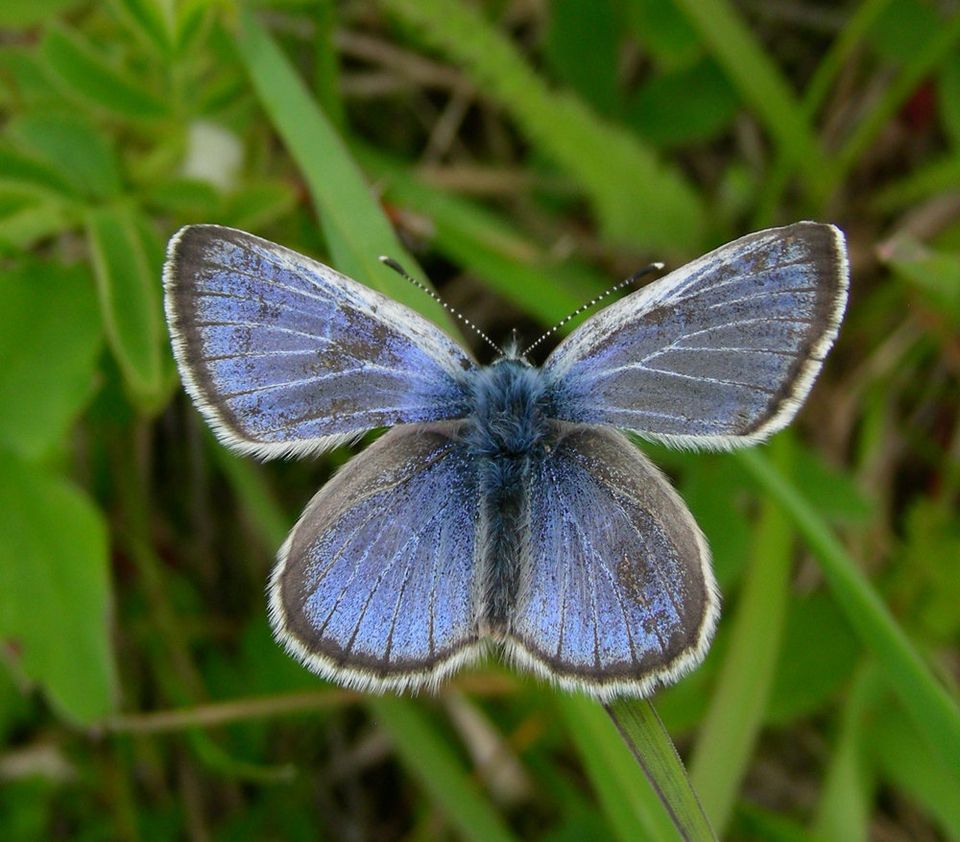
Conversely, dogs can sniff out rare or endangered native plants so that the species can be protected. Rogue is one such dog. The Nature Conservancy writes, “The 4-year-old Belgian sheepdog is part of a Nature Conservancy collaborative project to test the efficacy of using dogs to sniff out the threatened Kincaid’s lupine. The plant is host to the endangered Fender’s blue butterfly, found only in Oregon’s Willamette Valley.”
Surveying for the plant species is difficult work for people. It can only be done when the plant is in bloom so people can visually identify it. However, dogs like Rogue can sniff out the plant even when not in bloom, which can potentially double the length of the field season.
“More refined regional mapping of Kincaid’s lupine could promote the butterfly’s recovery and delisting — and contribute to larger habitat goals and wildlife impacts.”
The trade in rare or endangered wildlife is a lot tougher for traffickers thanks to wildlife detector dogs. Trained to smell anything from tiger parts to ivory to South American rosewood, dogs are used in shipping ports, airports, border crossings and other locations to sniff out smuggled products.
It doesn’t stop there. Trained dogs can lead rangers to armed poachers in the wild, tracking down the culprits over long hours through heat and rain. They can catch poachers in the act, rather than just the products.
“Canine sleuths aren’t limited to the plains of East Africa, either,” reports National Geographic. “In the Democratic Republic of the Congo, bloodhounds are assisting in the fight against poaching in forested Virunga National Park, where the world’s last remaining mountain gorillas live. In South Africa, Weimaraner and Malinois dogs are helping to find wounded animals and track poachers on foot through the reserves around Kruger National Park.”
Dogs are also useful in putting their protective nature to use for endangered species.
Livestock protection dogs are trained to keep predators like cheetahs, lions and leopards safe, which then reduces conflict between ranchers and big cats and minimizes the instances of snaring or retaliatory killing of big cats. Cheetah Conservation Fund has a successful livestock protection dog program, which places Anatolian shepherd and Kangal dogs with ranchers. That not only has significantly reduced the number of livestock killed by predators but is also improving the attitude of local people toward cheetahs.
Sometimes the dogs are put to work guarding the endangered species themselves. One such successful program uses Maremma shepherd dogs to protect colonies of little penguins from foxes.
Karelian bear dogs are trained to keep bears from becoming too comfortable around people. A program by Wind River Bear Institute named Partners-in-Life uses a technique called bear shepherding. This specialized breed of hunting dog is used to scare bears away, and are an important part of the “adverse conditioning” work that keeps bears from becoming habituated. The ultimate goal is to protect bears from becoming habituated, a problem that leads to their being relocated or euthanized.
“Our Wind River Bear Institute mission, with the effective training and use of Karelian Bear Dogs, is to reduce human-caused bear mortality and conflicts worldwide to ensure the continued survival of all species of bears for future generations,” states the program.
This list is only a handful of ways that dogs help us with environmental conservation every day. More and more, we are figuring out new ways to put their skills to work, and more and more the dogs are proving they’re ready for the task!
Editor’s note: This story was originally published in July 2016 and has been updated with more recent information.
ooOOoo
Closing words from that Science ABC piece:
A dog does not care how you look or dress, but if he gets good vibes from your smell, then a dog will love you. The world is truly a better place because of these wonderful creatures that we are lucky enough to welcome into our lives.
Why not make the world smell a bit more beautiful for them?
Belay that!
Closing picture taken from the OregonLive website. A stunning picture of the “Fender’s blue butterfly, found only in Oregon’s Willamette Valley.”

It doesn’t get more beautiful than this!
On the 11th I penned a post under the title of Feathers and Socks.
I included a photo of Socks and wished him the very best of luck in finding a home.

Well, miracles of miracles, when I came to my emails last Saturday morning awaiting me was this email from John Zande.
Paul and Jean, Socks has a wonderful new home!
I really don’t want to jinx it by writing this email (I am the superstitious naked ape, after all), but the morning started out with not much hope as we drove and drove out into the countryside, wondering where on earth this petshop was that was hosting the adoption fair.
When we eventually found it, it was a tiny storefront, little more than a dog-bath business. We thought, “nothing is going to come from this.” They were just opening as we arrived and met the young girl who runs it. Lovely person. Literally two minutes later a family walk up the road dropping off their two dogs for a bath. We got to talking. They fell in love with Socks.
After a phone call to the woman’s husband (a serious, serious dog lover, we’re told, as she is too) we heard the words we did not think we’d hear: “If it’s OK, we’d love to give him a home.”
Ten minutes later we were in their house, which was about 50 meters down the road. Nice place, lots of room, and Socks has full run of the outside, and a huge enclosed laundry-come-Socks-home for the night. He won the lotto! Three young boys full of energy. He took to them like a champion. I still can’t believe it. It’s like this every time we find a home. It just doesn’t seem real.
Anyway, I’ve attached two short videos of Socks and his new home, and a photo. And yes, the family is keeping Jean’s name, Socks. They loved it. I’m sure G will write you later tonight, but you both played a huge role in this. Your help paid for his neutering, and for that we’re eternally grateful.

Hello Paul and Jean – I guess you’ve been cheering since John’s e-mail, right? So have we, since this morning.Well, I have to say I still can’t believe how lucky we (and Socks) have been. Virginia and Fabiano and their three boys: Lago (11 or 12 y.o, not sure); Marcos (turning 8 tomorrow, Sunday) and Raphael, 6. Lovely family, she invited us to go to their place (he was working), showed us around.
Be happy good people.

oooo

oooo

oooo

oooo

oooo

oooo
And the final photograph for this week’s Picture Parade is of Socks being cuddled by a member of his new family home. Socks has been adopted!! (Full story about this wonderful happening on Tuesday.)

Keep loving those animals of yours out there!
Such a wonderful and obvious thing to do!
Yet despite it being so obvious it hadn’t crossed my mind before.
I’m referring to the wonderful idea of using those people, who through circumstance have found themselves homeless, to care for animals via an animal shelter.
This fabulous project came to me when reading a recent item on the Democracy Now website. Do watch the video.
ooOOoo
http://democracynow.org – Pulitzer Prize-winning journalist Glenn Greenwald unveils his plans to build an animal shelter in Brazil with his husband David Miranda, a city council member in Rio de Janeiro. The shelter will be staffed by homeless people who live on the streets with abandoned pets.
ooOOoo
If you, like me, needed to be reminded as to Mr. Greenwald’s background there’s plenty online.
He has his own website here. Over at The Intercept website one reads:
Glenn Greenwald is one of three co-founding editors of The Intercept. He is a journalist, constitutional lawyer, and author of four New York Times best-selling books on politics and law. His most recent book, No Place to Hide, is about the U.S. surveillance state and his experiences reporting on the Snowden documents around the world. Prior to co-founding The Intercept, Glenn’s column was featured at The Guardian and Salon. He was the debut winner, along with Amy Goodman, of the Park Center I.F. Stone Award for Independent Journalism in 2008, and also received the 2010 Online Journalism Award for his investigative work on the abusive detention conditions of Chelsea Manning. For his 2013 NSA reporting, he received the George Polk award for National Security Reporting; the Gannett Foundation award for investigative journalism and the Gannett Foundation watchdog journalism award; the Esso Premio for Excellence in Investigative Reporting in Brazil (he was the first non-Brazilian to win), and the Electronic Frontier Foundation’s Pioneer Award. Along with Laura Poitras, Foreign Policy magazine named him one of the top 100 Global Thinkers for 2013. The NSA reporting he led for The Guardian was awarded the 2014 Pulitzer Prize for public service.
Plus, there is more information about Glenn Greenwald on WikiPedia.

Well done, that man, and the rest of the team!!
More importantly, well done all those special people who are loving those dogs.
Another great move for dogs in Brazil.
As in our baby goslings and Socks the dog.
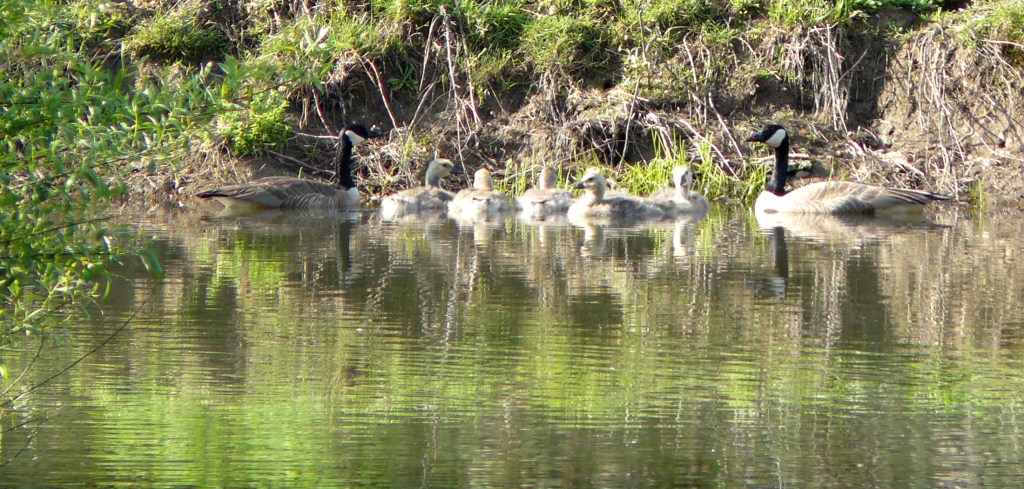
Our baby Canadian geese were born a month ago today.
These pictures were taken yesterday morning.

oooo

oooo

Here’s a photograph of them taken the day they were born.

Moving on! (With “moving” being the key word.)
Remember my post of two days ago when I included some photographs of a very happy Socks?
This was one of the photos:

Now want to see a short video of that Very Happy Socks!!
Here it is! Sent in by John Zande yesterday.
If one ever wanted proof of the goodness of rescuing a homeless dog then Socks is it!
The dog, that is, not what we wear on our feet!
On the 26th April I published a post promoting the Vista Verde Help Fund for Strays. (And well done! That fund is very close to achieving the goal.)
That post in April also included a picture of a recent stray supported by the Fund. He was named Socks by Jean.

Anyway, a few days ago Dionete sent me an email that I wanted to share with you.
Hello Paul – how’s things with you & Jean & dogs? Fine, I hope.
We’ve got some news: Socks has just been neutered. We picked him up at the clinic an hour ago and took him to a temporary shelter. Unfortunately it is just for a couple of nights but at least he is safe and can recover from the grogginess tonight.
Here are the pics we’ve taken.
Thank you very much (again) for allowing it to happen.
All the very best,
Here are those photographs of Socks.

oooo

oooo

Socks has a really gentle look in those eyes. Hopefully, he will find a new loving home before too long.
It takes so little good news to uplift one’s heart!
For reasons I can’t readily put my finger on it’s been feeling like a bit of a struggle recently. But that’s enough of that! For our gorgeous dogs have yet another lesson for me: How little it takes for a dog to wag it’s tail!
I so frequently share stuff that I read over on the Care 2 site and why not because as the home page declares:
40,107,687 members: the world’s largest community for good
Just three days ago there was a wonderful article shared on the Care 2 site about some dogs being rescued from a so-called backyard breeder. Better than that, it highlighted the wonderful consequence of a donation from George and Amal Clooney.
Here’s the story.
ooOOoo

By: Alicia Graef May 5, 2017
About Alicia Follow Alicia at @care2
Nine lucky dogs have just had their world turned upside down in the best way possible.
Camp Cocker Rescue, based in California, just took in the “Mojave 9″ who were being kept by a backyard breeder. They’ll be getting all the love and veterinary care they desperately need thanks to a generous donation made by George and Amal Clooney.
The nine dogs have had little human contact, and are all in need of extensive veterinary treatment for health issues ranging from mammary tumors and dental disease to skin and ear infections to ingrown toenails. The organization relies on donations, and expenses for this rescue operation were quickly rising.
“We literally didn’t know how we were even going to begin to start paying for all of these new dogs that we took in on the same day,” Camp Cocker’s founder Cathy Stanley told PEOPLE.
Now, the organization is celebrating a generous and unexpected donation of $10,000 made by George and Amal Clooney, who are parents to two adopted cocker spaniels from Camp Cocker — Einstein and Louie.
Their donation is going to help cover the cost of care for these dogs, who have never been to a vet. The Clooney’s will also be matching donations up to $10,000 for the rest of May.
“After we all did happy dances and cried with happiness for this unbelievable matching donation offer – we then asked the donors if (and only if they gave us their permission) . . . if we could reveal their names to our supporters in order to help us reach our big goal this month. They were so very gracious to give us permission to reveal their names,” Camp Cocker wrote in an update.
While this was a huge boost for them, Camp Cocker is quick to point out that no donation is too small to help.
“We have a philosophy where we want to be very inclusive of all of our supporters and it’s important to us that no matter how small of a donation, every person feels like their donation is meaningful and that we appreciate them,” Stanley added.
Hopefully news about the Mojave 9 and the attention it’s getting will help raise awareness about rescue and inspire more people to get involved … and will help find each of these precious dogs their perfect forever home.
For more on how to help, and info on how to adopt one of these dogs, check out Camp Cocker Rescue and follow updates on Facebook.
Photo credit: Thinkstock
ooOOoo
Here’s the video that accompanied that story.
And there’s only one way to close.
By thanking George and Amal for their wonderful generosity and their love for ex-rescue dogs!

So little good news makes such a huge positive difference!
More from Janet ….
But first a couple from closer to home.


oooo

oooo

oooo

oooo

oooo

oooo

Yet more to come in a week’s time.
You and your lovely animals please take care out there!