Category: Dog lessons

The book! Part Five: Openness

I searched around for some meaning, some idea of what openness was really about. It’s such a quick word to run off the tongue, seemingly so easy to grab at the meaning of the word, that it isn’t until one pauses and asks oneself do I really, truly know what the word openness means, what it really conveys, that the doubt creeps in.

The dictionary didn’t help that much. Openness noun 1. The condition of being laid open to something undesirable or injurious. 2. Ready acceptance of often new suggestions, ideas, influences, or opinions.

No, that still didn’t offer a clear meaning of the sense of openness that I see in dogs, especially our dogs.

Then my eye wandered up the dictionary page to the entry immediately above openness; to open-mindedness: noun Ready acceptance of often new suggestions, ideas, influences, or opinions : openness, receptiveness, receptivity, responsiveness.

Bingo! Responsiveness, receptiveness! Those terms did speak to me. That’s how I saw the openness in our dogs.

Dogs don’t appear to engage in introspection, they don’t seem to worry about who they are. Their emotions are clear to us! One might say that dogs wear their emotions on their paws. They engage with the human world about them regardless of our human moods and more-or-less impartial to our situations or our choices. We call them and expect them to come. Perhaps, ask them to go to a part of the house if we are going out, or to stay in a place until we tell them they can move. Dogs appear simply to be there for us, as if only on our terms. As much as each day is unique and different, dogs offer a constancy, a reliability, that feels unmatched by us humans.
We depend on our dogs, as do the vast majority of people who have dogs in their lives. They calm us down in times of trouble; give us a better perspective of life’s ‘big picture’. We can so openly share a sense of joy with our dogs. Dogs give us permission to be silly with them, to hug them, to rub their tummies, to roll around on the floor with them. It is possible, easily so, to learn something from a dog every single day simply from observing sufficiently close these beautiful animals. Dogs ask only in return for food, water and affection.

The openness of dogs has been celebrated in many ways, in song and verse, for centuries. It is still to be celebrated today, for today that wonderful quality of openness is still vibrant in our dogs. It seems so much more than just the product of some evolution of nature. Reflect on the incredible range of species, on all that selective breeding, on the many differences in the environments in which dogs live out their lives. So many dogs and yet every one of them coming to us, to meet us, to be with us, just as they are, with no apologies and no covert agendas. As the author Susan Kennedy[1] once said, “Dogs are miracles with paws.

I have had a dog in my life, my beloved Pharaoh, since 2003. I have had a great number of dogs in my life since meeting Jean in 2007. As many as sixteen and regrettably now down to nine at the time of writing[2] these words. I can’t imagine my life without our dogs. They truly provide unconditional love and they do so without hesitation. It is a simple yet immensely beautiful relationship. That love that we receive from our dogs comes from their openness. A dog’s openness is a gift. A precious, remarkable gift.

Now how on earth can one translate that across to the quality that we humans have to learn; to learn from our dogs? Are there any practical benefits for us in trying to practice the openness we see in dogs? By using the word ‘trying’ I’m admitting some degree of doubt about answering that question in the affirmative. Not doubting that there are benefits, just unclear about how to describe them. Unclear how we humans could ever match the openness of dogs.

So what I am going to do is to try flipping the issue on its head. Just stay with me a little longer.

I have referred to Jon Lavin many previous times in this book. In his world, his world of counselling and therapy, Jon speaks like this. Namely, that in the world of solutions focussed therapy, the area that Jon practices in professionally, the way forward with the person who has come to see Jon is always to focus “on what is working“. Jon explains that while one would initially allow the problems to be voiced, this negativity would always be a tiny piece of the overall process, say less than 5% of the session. That even if a client’s whole world seemed to be failing, there would always be something that was alright, always a 1% that was working, and that would be the place to start.

No better endorsed by the website of the organisation Good Therapy[3]. I quote [my emphasis]:

Solution focused brief therapy (SFBT[4]) targets the desired outcome of therapy as a solution rather than focusing on the symptoms or issues that brought someone to therapy. This technique only gives attention to the present and the future desires of the client, rather than focusing on the past experiences. The therapist encourages the client to imagine their future as they want it to be and then the therapist and client collaborate on a series of steps to achieve that goal.

Returning to the example of openness that we see in our dogs, maybe rather than wringing our hands because we will never be as open as those wonderful dogs around us, perhaps we should flip the idea on its head. Ergo, not strive to be the same as our dogs, just to follow their lead.

In other words, just be more mindful of the need for openness, to practice openness as a conscious idea, and to develop the habits of openness. Holding our dogs up as a marvellous pillar, as a wonderful example, of the goal of greater openness that we all seek.

1,039 words Copyright © 2014 Paul Handover

[1] I am indebted to Susan Kennedy’s writings for inspiring many of the ideas in this chapter.
[2] November, 2014
[3] http://www.goodtherapy.org
[4] Solution focused therapy was developed by Steve De Shazer, Insoo Kim Berg, and their team at the Brief Family Therapy Family Center in Milwaukee, USA.

The book! Part Five: Forgiveness.

Dogs offer a multitude of examples of forgiveness that many of us probably don’t see. Well, do not see that quality of forgiveness of dogs in such a clear, specific way. Yet think of dogs that are treated cruelly, often over months or years, and then find a new, loving home. Think of dogs that have spent weeks and months in confinement at the local humane centre. Or more terrible to comprehend are those dogs that have simply been abandoned; just thrown away by a so-called human.

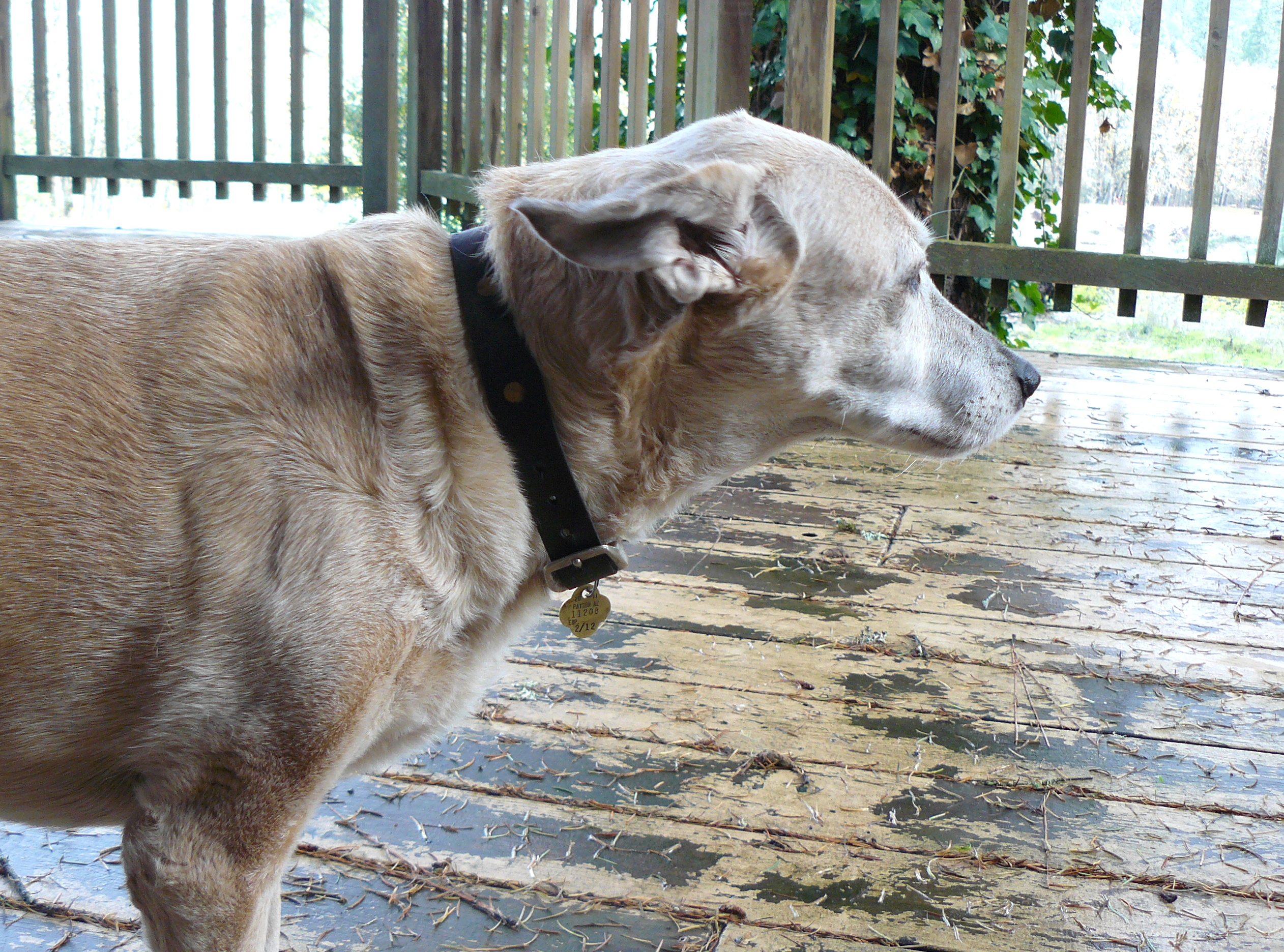
We take it totally for granted, when dogs find that new loving home, that they will adjust quickly and easily. For example, one of the dogs that we have here at home is Casey. He was found in the local dog rescue unit down in Payson, Arizona, when we were living in that part of America. Casey had been confined in the dog rescue unit for coming up to a year, and probably hadn’t found a new home because he was a Pit Bull mix, and looked it. Two weeks before he was due to be ‘put down’, classified as being unadoptable, Jean brought him home.

The speed at which he settled in to his new home including, not too much later, a house move from Payson to Southern Oregon, was just wonderful. Casey never for a moment displayed any cautiousness or nervousness towards Jean and me, or, even more importantly, didn’t reveal any anti-social inclinations towards visitors who came to the house. Casey has a wonderful temperament and is a happy, lively, affectionate dog. Clearly, Casey harbours no grudges from past experiences. His forgiveness of the way his life had been dominated by the actions of humans is flawless.

With Payson in mind, there’s another example of how a dog so quickly puts past experiences behind them and embraces their new life.

For in Payson we knew the author, Trish Iles, who has the blog Contemplating Happiness[1]. Here is a lovely story from Trish, in her own words:

What the dog knew!

I was pondering the eternal question: why does two weeks of relaxing vacation seem like so much more time than two weeks of working like my pants are on fire, here at my desk? My sweet husband and I talked about it a little bit, but came to no definitive answer. I chatted with friends about it. No insights. Google had no opinion, either.

Chloe came to us from a rescue organization. I think sometimes about what her experiences have been in her young life. She started out as an abandoned puppy on a reservation in New Mexico and was soon in the pound where she was on the euthanasia list. A kind woman rescued her and took care of her until she found us: just when Chloe was becoming at home with the rescue lady, she was uprooted again and sent home with two new people. What must she have been thinking?

Chloe didn’t close her heart to us, though. She watched for a few days. When she decided we weren’t going to make dinner out of her and that she was really staying with us, she threw her whole being into becoming one of the family. She let herself trust us.

I’m not sure I would have had the courage to trust a new set of people again. I’m doubly not sure that I give a rat’s patootie what those new people thought of or wanted from me. Chloe was willing not only to trust us, but to love us. She forgave us immediately for ripping her from the home she knew, and she adopted us right back.

Chloe was born knowing. She knows about joy. She knows about living a life in balance. She knows about forgiveness, trust, exuberance, a passion for learning and the power of a good nap. I think that when I grow up, I want to be just like her.

Chloe knows about forgiveness.

Moving on. Much too late to make me realise the inadequacies of my own parenting skills, I learnt an important lesson when training Pharaoh, a German Shepherd, who came into my life as a puppy back in 2003; the first dog I had ever had. What I learnt was that putting more emphasis into praise and reward for getting it right ‘trains’ the dog much more quickly than telling it off. The classic example being scolding a dog for running off when instead there should be lots of hugs and praise for the dog returning home. The scolding simply teaches the dog that returning home isn’t pleasant whereas praise reinforces the belief in the dog that home is the place to be. Summed up by a phrase that I read somewhere: “Catch them in the act of doing right!

Like so many things in life, so very obvious once understood! There is no doubt in my mind that this approach, this philosophy, works with youngsters in just the same positive way.

Let’s focus now on the nature of forgiveness in people; in us humans.

There are, essentially, two options that we can choose to act out when we are hurt by someone. We can hang on to those feelings of anger and resentment, and possibly have thoughts of revenge, or respond with forgiveness. The first leads to wounds of anger, bitterness and resentment. The second leads to healing, to the rewards of peace, hope, gratitude and joy.

H’mm – deciding upon the best option could be tough decision! Apologies, I couldn’t avoid that flippancy!

The powerfully positive outcome from acting with forgiveness is that the act that caused the hurt loses, or is denied, any real emotional force upon one. You quickly put it behind you and focus on other, more positive parts of your life. That’s not to say that a significant act of hurt is forgotten, possibly not so for some time, it’s just that it lessens its grip on us, often significantly so. Indeed, quite often, forgiveness can give birth to feelings of understanding, empathy and compassion for the one who hurt us.

Moreover, forgiveness doesn’t mean that you are blind to, or deny, the other person’s responsibility for causing you to be hurt, nor does it minimise, let alone justify, the wrongness of the act. The person can be forgiven, without excusing the act. Forgiveness brings a kind of peace that helps you and I get on with our lives.

Actually, the benefits of forgiveness are even more tangible than the subjective meaning of peace.

There is real evidence to show that the letting go of grudges and bitterness, of offering forgiveness can lead to:

◦ Healthier relationships
◦ Greater spiritual and psychological well-being
◦ Less anxiety, stress and hostility
◦ Lower blood pressure
◦ Fewer symptoms of depression
◦ Stronger immune system
◦ Improved heart health
◦ Higher self-esteem

Beats a few bottles of pills in spades!

Now, as I read back over those last few sentences it struck me as having the slight tone of a Sunday sermon. That what needs to be added to those stirring ideas is how does one learn to forgive, learn to forgive in a practical manner.

Psychotherapists, and others from similar backgrounds, say that forgiveness is the result of change; or more accurately put, a commitment to a process of change.

To put some flesh on the bones of that last idea, that forgiveness is the commitment to a process of change, what now follows are five recommendations. Resist the temptation to read on without pause, indeed just say to yourself that after you have read each of the five recommendations coming up, you will reflect for sufficient time for your head to embrace the meaning of each recommendation, and still remaining paused, give your heart time to engage with your head. I hope that’s clear.

Bring up in your mind an episode where someone else caused you hurt. It can be a recent episode or one from long ago that still has the potential to hurt you. Dwell on it for a while.

So to the first recommendation: Consider the values of forgiveness to you, not at a theoretical level, but to you in terms of where you are at this point in your life, and by implication, how important those values of forgiveness are to you at this given time.

Stop! Look away from the page! Reflect on what that means. Think it with your head, feel it with your heart.

So to number two: Reflect on the situation, the real facts of what happened, how it came about, how you reacted, and to what degree the situation has affected your life, health and well-being; or has the potential to so do.

Stop! Look away from the page! Reflect on what that means. Think it with your head, feel it with your heart.

Here is the third recommendation: Actively choose to forgive the person who hurt you. Possibly by re-reading this chapter down to this point. Actively chose to forgive that person now!

Stop! Look away from the page! Reflect on what that means. Think it with your head, feel it with your heart.

Number four, the penultimate recommendation: Stop seeing yourself as a victim of the hurtful event. Understand that by continuing to feel victimised, you are unable to release the control and power that the offending person, and/or the situation, has over you.

Stop! Look away from the page! Reflect on what that means. Think it with your head, feel it with your heart.

The final recommendation; number five: As you let go of the pain, of the hurt, of your grudges, your life is now no longer defined by how you have been hurt. Better than that, the letting go opens your heart to finding compassion and understanding for the other person.

Think it with your head, feel it with your heart.

There is no question that forgiveness can be challenging at times, especially if the person who’s hurt you doesn’t admit wrong or doesn’t ever speak of his or her sorrow. But never allow yourself to become stuck. Reflect on the times when you have hurt others and when those others have forgiven you. Share your burden of finding forgiveness, such as writing in a journal, or through pray or guided meditation; even better open up to someone you’ve found to be wise and compassionate, such as a spiritual leader, a mental health provider, or an impartial loved one or friend. Nearly forgot: share your burden with your dog! They are such great listeners!

Never forget that finding forgiveness is a process and even small hurts may need to be forgiven over and over again.

In the vast majority of cases, forgiveness can lead to reconciliation. Especially so when the hurtful event involved someone whose relationship you really value; for example someone emotionally close to you. However, there is one case where reconciliation is impossible. That is the case where the person who hurt you has died. However, even if reconciliation isn’t possible, forgiveness always is.

A quick afterthought tells me that there is a second case where reconciliation is impossible: when the person who hurt you refuses to communicate with you. As they say, it takes two to tango, and you always have the choice to walk away, to move on, to reflect that someone who hurts you and then stands in the way of reconciliation may possibly be better off disconnected from you; temporarily or permanently.

Never forget to respect yourself, to keep an open heart and mind and do what seems best for you in the specific situation.

The final thought for this chapter on forgiveness is not to think that it is about the other person needing to change; that isn’t the point of forgiveness. Forgiveness is about us, how it can change our lives through bringing peace, happiness, and emotional and spiritual healing. It also helps, enormously so, in allowing us to recognise our own faults, our own mistakes, and the times when we have hurt others, so that we can offer our apologies in an open and honest manner.

Forgiveness is one of the many precious qualities that we can learn from dogs.

2,036 words Copyright © 2014 Paul Handover

[1] http://contemplatinghappiness.blogspot.com/p/my-books.html

The book! Part Five: Sharing

Dogs share so much of themselves in such an easy fashion. Here’s a story that made me laugh.

A man in a casino walks past three men and a dog playing poker.
“Wow!” he says, “That’s a very clever dog!“
“He’s not that clever,” replies one of the other players.
“Every time he gets a good hand he wags his tail!“

This very clever dog playing poker couldn’t hide his happiness and had to wag his tail!

One of the remarkable things that is noticed by those that have a number of dogs in their lives is the very natural way that they share so much. In our own case, we live with nine dogs, seven of whom are ex-rescue dogs. It would be fair to imagine that any dog that had come either straight off the street, a feral dog in other words, or from a dog rescue centre, would have some behavioural issues. To a small extent, this has been noticed by us; that some dogs come to us with a few minor, anti-social issues.

But the way that existing dogs in the home quickly assess and welcome a new dog, how they instinctively know that they are going to fit in, is a model of openness and acceptance. But more on that in the forthcoming chapters on those topics of openness and acceptance. Here, I want to stick specifically to sharing.

Sharing is synonymous with selflessness. One couldn’t openly share much of our life if it wasn’t easy to push to the back of one’s mind, one’s consciousness, our need for self. In more easy terms, our egos. For if our egos are dominant then selfless sharing would be very difficult; some might say impossible.

A dog seems to know with certainty that its best interest lays down the pathway of getting on with other dogs in the family. Inevitably, the boundaries of sharing, from the perspective of the dog, indeed from a philosophical angle of this quality in the dog, are intermingled with all the other qualities previously written about, and many of the qualities coming up in the next few chapters. So we observe how dogs will lick each other, snuggle up and sleep together, play together and share; all the attributes of a trustful, loving community.

That natural sharing sense of a dog links effortlessly with our human need for sharing. I had to look up and remind myself who it was that coined the expression: “No man is an island.” It was the English poet John Dunne[1], by the way. A beautiful, masterful reflection on our human need for sharing.

There are numerous benefits for having a dog, or two, in one’s life but possibly the core benefit is the one of never feeling alone. Think how often one sees a homeless person by the side of the road begging for food, money or for a lift somewhere else, and nearby is their dog. Irrespective of the fact, the certainty, that being homeless is tough, is the added certainty that it is a great deal tougher if there is a dog to feed and look after. My strong sense is that the sharing of the lives of two creatures, man and dog, more than offsets the added challenges of having a dog in your life if you have no permanent home.

No better underlined than by an article seen on the online presence of Flagpole Magazine[2], the “locally owned, independent voice of Athens, Northeast Georgia.”

The article[3] was called: Dogs and Their Homeless Owners Share Love, if not Shelter, and was written by Stephanie Talmadge. It opened:

If you walk down Clayton Street, specifically near the College Avenue intersection, you may have received a furry greeting from a little brown, scraggly pup. Usually a blur, due to near-constant wagging, this tiny dog, Malika, spends many of her days guarding that corner for her owners, David and Dorothy Gardener, who are experiencing temporary homelessness.

Though the Gardeners are homeless, little Malika is far from it. She’s not in the pound, waiting to be adopted or rescued before her time runs out. She’s not running around in the streets or woods, fending for herself.

Stephanie Talmadge then makes an important point towards the end of her piece:

Homeless or not, owning a pet is a huge responsibility, and obviously it can be extremely rewarding, well worth the complications it creates. Plus, a person doesn’t have to be homeless to have financial barriers to providing good care. Plenty of dogs who live in permanent housing are neglected and mistreated daily.

Just because someone’s homeless shouldn’t mean they’re not allowed to have a companion animal,” Athens-Clarke County Animal Control Superintendent Patrick Rives says, “And there may be some good reasons for them to [have one]… There is a psychological impact of having a companion animal, and I wouldn’t want to take that away from someone.”

Around 1870, Senator George C. Vest delivered a powerful and moving eulogy for the dog; delivered to the jury at the Old Courthouse in Warrensburg. It was in response to his dog, Old Drum, being shot the previous year. Here are his words:

The best friend man has in the world may turn against him and become his enemy. His son, or daughter, that he has reared with loving care, may prove ungrateful. Those who are nearest and dearest to us, those whom we trust with our happiness and good name may become traitors to their faith. The money a man has he may lose. It flies away from him, perhaps when he needs it most. A man’s reputation may be sacrificed in a moment of ill-considered action. The people who are prone to fall on their knees when success is with us may be the first to throw the stone of malice when failure settles its cloud upon our head.

The one absolutely unselfish friend that man can have in this selfish world, the one that never deserts him, the one that never proves ungrateful or treacherous, is his dog. A man’s dog stands by him in prosperity and poverty, in health and in sickness. He will sleep on the cold ground when the wintry winds blow and the snow drives fiercely, if only to be near his master’s side. He will kiss the hand that has no food to offer, he will lick the wounds and sores that come in encounters with the roughness of the world. He guards the sleep of his pauper master as if he were a prince.

When all other friends desert, he remains. When riches take wing, and reputation falls to pieces, he is as constant in his love as the sun in its journey through the heavens.

If fortune drives his master forth, an outcast in the world, friendless and homeless, the faithful dog asks no higher privilege than that of accompanying him, to guard him against danger, to fight against his enemies. And when that last scene of all comes, and death takes his master in its embrace and his body is laid away in the cold ground, no matter if all other friends pursue their way, there, by the graveside will the noble dog be found, his head between his paws, his eyes sad, but open in alert watchfulness, faithful and true, even in death.

Now when it comes to us humans learning the quality of sharing from our dogs, there is no shortage of examples of humans engaged in wonderful acts of sharing. In undertaking research, I came across an article in the Houston Chronicle[4] headed: What makes us human? Teaching, learning and sharing.

We wanted to understand how all of these behaviors came about specifically for humans,” said Steven Schapiro, an M.D. Anderson professor at the Bastrop facility. “And we wanted to understand why our closest living relatives can’t do all of the kinds of things we do.”

Professor Schapiro went on to explain: “To address their question the scientists devised a series of puzzles with escalating difficulty, the solving of which would produce rewards – stickers of increasing attractiveness for kids; carrots, apples and then grapes for the monkeys.

Then observing:

During the experiment the researchers observed that the children treated the puzzles as a social exercise, working them together and giving verbal instruction to one another. When successful, they shared the rewards.

In contrast the chimpanzees and capuchins appeared to only see the puzzles as a means to obtain rewards, and worked mostly independently and did not learn from their efforts. They never shared.

Humans, then, have ratcheted up their culture by teaching one another, imitating the successful behaviours of others and altruism.

When successful, they shared the rewards.

Who knows if us humans uniquely having dogs in our lives over thousands of years, way back to the times when we depended on our survival through hunting and gathering, if learning to share the hunting and the gathering with our dogs, embedded within us the sharing of rewards? I would like to think so.

I want to end this chapter by promoting two wonderful modern examples of a culture of sharing. Firstly, I’m referring to the Buy Nothing Project[5] that has as it’s subheading: Random Acts of Kindness All Day Long.

As the ‘About’ page[6] explains:

Buy Nothing. Give Freely. Share Creatively.

The Buy Nothing Project began as an experimental hyper-local gift economy on Bainbridge Island, WA; in just 8 months, it has become a social movement, growing to over 25,000 members in 150 groups, in 4 countries. Our local groups form gift economies that are complementary and parallel to local cash economies; whether people join because they’d like to quickly get rid of things that are cluttering their lives, or simply to save money by getting things for free, they quickly discover that our groups are not just another free recycling platform. A gift economy’s real wealth is the people involved and the web of connections that forms to support them. Time and again, members of our groups find themselves spending more and more time interacting in our groups, finding new ways to give back to the community that has brought humor, entertainment, and yes, free stuff into their lives. The Buy Nothing Project is about setting the scarcity model of our cash economy aside in favor of creatively and collaboratively sharing the abundance around us.

It has become a social movement …. collaboratively sharing the abundance around us.

Secondly, to a completely different example, that of software. Let me explain or, better, let me quote from the home-page of the website Open Source Initiative[7]: “Open source software is software that can be freely used, changed, and shared (in modified or unmodified form) by anyone.” [My emphasis]

Here’s the opening paragraph of an article[8] in Forbes Magazine; written by George Bradt.

Why Open Leadership Has Become Essential

You would not be reading this if open source software did not exist. Without open source standards, the Internet would not exist. This article would not exist. Those of you whose parents met on Match.com would not exist. All of you should be thankful for open source software. Now, as the world has changed, open source software’s principles of openness, transparency and meritocracy have become essential standards for leadership in general.

… principles of openness, transparency and meritocracy have become essential standards for leadership in general.” Not just for leadership but for all of mankind! Sharing seems like the way to go!

If I was a dog, it would be impossible to stop my tail wagging!

1,930 words Copyright © 2014 Paul Handover

[1] It was a famous line from “Meditation XVII,”
[2] http://www.flagpole.com/about-us
[3] http://www.flagpole.com/news/news-features/2014/10/08/dogs-and-their-homeless-owners-share-love-if-not-shelter
[4] http://www.chron.com/news/houston-texas/article/What-makes-us-human-Teaching-learning-and-3375389.php
[5] http://buynothingproject.org
[6] http://buynothingproject.org/about/
[7] http://opensource.org
[8] http://www.forbes.com/sites/georgebradt/2014/11/25/why-open-leadership-has-become-essential/

The book! Part Five: Trust

A dog offers loyalty, trust and love in exchange for being treated with integrity and compassion.

What do we mean by trust? Roget’s Thesaurus defines the word (in part): “Trust – noun: Absolute certainty in the trustworthiness of another: belief, confidence, dependence, faith, reliance.”

Accepting that this is a book called Learning from Dogs doesn’t prevent me from using two examples of trust from other animals, a wolf and a horse, before offering a personal experience of a dog learning to trust.

This true story was told to me by DR when we were living in Payson, Arizona. An amazing true story of a relationship between a wild wolf and a man. A story of a particular event in the life of Tim Woods; brother of DR.

It revolves around the coming together of a man sleeping rough, with his dog, on Mingus Mountain, and a fully grown female Grey Wolf. Mingus is in the Black Hills mountain range between Cottonwood and Prescott in the State of Arizona, USA.

DR and his brother, Tim, belong to a large family; there are 7 sons and 2 daughters. Tim had a twin brother, Tom, and DR knew from an early age that Tim was different.

As DR explained,

“Tim was much more enlightened than the rest of us. I remember that Tim and Tom, as twin brothers, could feel each other in almost a mystical manner. I witnessed Tom grabbing his hand in pain when Tim stuck the point of his knife into his (Tim’s) palm. Stuff like that! Tim just saw more of life than most other people.”

The incident involving the wolf was when Tim was in his late 40s and, as mentioned, was living rough in an old shack up in the Black Hill mountains. The shack was simply a plywood shelter with an old couch and a few blankets for the cold nights. The dog was a companion to Tim, his guard and a means of keeping Tim in food; the dog was a great hunter. But Tim was no stranger to living in the wild.

DR again,

“Tim was ex-US Army and a great horseman. There was a time when he was up in the Superstition Mountains, sleeping rough, riding during the day. At night Tim would get the horse to lay down and Tim would sleep with his back next to the horse for warmth.

Tim was up on Mingus Mountain using an old disk from an agricultural harrow as both a cook-pan and plate. After he had finished eating, Tim would leave his ‘plate’ outside his shack. It would be left out in the open over night.

Tim gradually became aware that a creature was coming by and licking the plate clean and so Tim started to leave scraps of food on the plate. Then one night, Tim was awakened to the noise of the owner of the ‘tongue’ and saw that it was a large, female grey wolf.”

DR went on to explain that the wolf became a regular visitor and Tim became sure that the wolf, now having been given the name Luna by Tim, was aware that she was being watched by a human.

Then DR continued, “Over many, many months Luna built up sufficient trust in Tim that eventually she would take food from Tim’s outstretched hand. It was only now a matter of time before Luna started behaving more like a pet dog than the wild wolf that she was. From now on, Luna would stay the night with Tim and his dog, keeping watch over both of them.

Not that I doubted DR’s retelling of the account of Tim and the wolf but, nevertheless, the next action by DR had me in floods of tears. For DR then showed me an unaltered photograph taken in 2006 showing Tim lying back on a blanket with his dog across his waist and there, sitting on its haunches just behind Tim and the dog, was Luna the wolf.

DR underlined this miraculous story by saying that he remembered Tim being distraught because, without warning, Luna stopped coming by. Then a few months later back she was. Tim never did know what lay behind her absence but guessed it might have been because she went off to have pups.

Unfortunately, this wonderful tale does have a sad ending.

Back to DR, “About two years ago, what would have been 2007, Tim lost his dog. He was awakened to hear a pack of coyotes yelping and his dog missing. Then tragically some 6 months later Tim contracted a gall bladder infection. Slowly it became worse. By the time he realised that it was sufficiently serious to require medical treatment, it was too late. Despite the best efforts of modern medicine, Tim died on June 25th, 2009, just 51 years young.

DR’s closing words to me were: “So if you are ever out on Mingus Mountain and hear the howl of a wolf, reflect that it could just be poor Luna calling out for her very special man friend.

One would have to go a very long way to come across a better story of such fabulous trust from an animal towards a human.

The second example of trust from an animal other than a dog is from the Spring of 2014. About that time, we decided that we had sufficient acres of pasture to have a horse. We were put in touch with a horse rescue centre, Strawberry Mountain Rescues, near Roseburg in Oregon; about an hour north from where we lived. Soon after arriving at Strawberry Mountain we took a liking to a 15-year-old gelding. His name was Ranger and he had been found abandoned in the Ochoco National Forest in central Oregon, subsequently arriving at Roseburg. Ranger had a delightful temperament plus his age was a bonus as both Jean and I were the wrong age to be taking on a horse that might outlive us.

A week before Ranger was brought down to us, there was a telephone call from Darla, who runs Strawberry Mountain, asking us if we could take two horses.

This other horse, Ben, was a younger horse that had been ‘rescued’ on the orders of Darla’s local Sheriff because of Ben being in private ownership. It turned out that Ben had been subjected to starvation, to beating and there was evidence that he had been fired at repeatedly in the chest with an air-gun. The Sheriff’s office took away Ben and placed him under the care of Darla. Very quickly, Ben had formed a close relationship with Ranger and Darla was in no doubt that Ben’s relationship with Ranger was part of his journey of returning to a healthy, confident horse. We couldn’t say no to taking both Ben and Ranger despite Darla explaining that Ben was a very wary horse, especially nervous of men and that I should never make any sudden movements around Ben, as much for my own safety.

Unlike Jean who had owned and ridden horses in her younger days, I hardly knew the front from the back of a horse. I decided to approach Ben as I would a new rescue dog.

In less than three weeks, Ben had recovered sufficient trust in men to allow me to stroke his neck. Six months after having Ben and Ranger with us, I can put my face against Ben’s muzzle and stroke the area on his chest that is covered in scars from the air-gun pellets fired into him.

If only us humans could learn to trust in such a manner. Indeed, many persons would harbour anger and distrust in their hearts forever.

So now to dogs.

It’s easy for me to understand the trust in a dog when I look at Pharaoh, my German Shepherd. For he has been part of my life since a few weeks after he was born in South Devon, England, on June 3rd, 2003.

So my experience of Pharaoh doesn’t really offer any insight as to how a dog that has been cruelly treated by other people learns to trust a new home. I had to wait until 2010 to learn the lesson of trust from a dog.

I first met Jean, my wife, in Mexico; to be precise, in San Carlos, Sonora, Mexico. We met just a few days before Christmas, 2007. Despite Jean, as with me, having been born in London, indeed we were born just twenty-three miles from each other, she had been living in Mexico for many years; since Jean and her American husband, Ben, moved down there twenty-five years previously. (Ben died in 2005.)

Very quickly I became aware that Jean was well-known for rescuing Mexican feral dogs. At that time that Jean and I met, she had sixteen dogs, all of them rescues off the streets in and around San Carlos.

In September, 2008, I travelled out to Mexico with my Pharaoh and, subsequently, in the February of 2010, we made plans to move from San Carlos to Payson, in Arizona; some 80 miles North-East of Phoenix. Primarily, because we wanted to be married, and to be married in the USA.

Just a few days before we were due permanently to leave San Carlos with all our animals and belongings and journey the 513 miles (827 km) to Payson, AZ, Jean went outside to the front of the house to find a very lost and disorientated black dog alone on the dusty street. The dog was a female who in the last few weeks had given birth to puppies that had been weaned. That was obvious to Jean because the dog’s teats were still somewhat extended.

The dog had been abandoned outside in the street. A not uncommon happening because many of the local Mexicans knew of Jean’s rescues over many years and when they wanted to abandon a dog it was done outside her house. The poor people of San Carlos sometimes resorted to selling the puppies for a few Pesos and casting the mother dog adrift.

Of course, the dog was taken in and we named her Hazel. Now, rationally, we humans can’t even start to imagine the emotional and psychological damage that a mother dog would incur from having had all her puppies stolen from her. It’s very unlikely that we could imagine the damage a human mother would receive from the violent loss of her young baby.

The one thing that it would be reasonable to assume is that our latest addition to our dog family, Hazel, would initially be a bit wary of ’the species that walks on two legs’!

Once Hazel had been fed and watered by Jean, her coat inspected for ticks and generally checked all over, the next step was to introduce her to some of the other dogs. It all went very smoothly. Then in the evening, when we were sitting down after our evening meal, Hazel came over to the settee and looked up at my eyes. In a way that couldn’t be put clearly into words, I sensed a lost soul in Hazel’s eyes and a desperate need for some loving. Those thoughts were paramount in my mind and, I hoped, available for Hazel to read via my eyes.
Then after a pause of half-a-minute or so, our eyes still locked together, Hazel climbed up next to me on the settee and carefully and cautiously settled her head and front paws across my lap. I caressed and stroked her for much of the rest of the evening. When Jean and I went to bed, Hazel jumped up and went to sleep, and stayed alongside my legs for the whole of the night. Setting a pattern that has continued to this very day.

How did Hazel know to trust me? Only Hazel knows the answer to that one. But ever since that day, nearly five years ago as I write this, the bond between Hazel and me has been perfect. In fact, as I write these words, Hazel is asleep on the rug just behind my chair.

Our society only functions in a civilised manner when there is a predominance of trust around and about us. When we trust the socio-politico foundations of our society. When we trust the legal processes. When we trust that while greed and unfairness are never absent, they are kept well under control.

Having trust in the world around us is an intimate partner to having faith in our world. For without trust there can be no faith and without trust there can be no love.

Unlike the previous chapter on love, no list of behaviours come to mind that allow the growth of unbridled trust. Maybe trust flows from the actions of love. As in one only gets back what you put out.

All that does come to mind is never wavering from offering trust to others and never accepting anything other than trustworthy actions from others.

For eventually that would lead, lead inexorably, to a world where trust was accepted as if it was the air we breathed.

The final thing that comes to mind is always remembering this lesson from our dogs and, by implication, from their ancient ancestor, the wolf.

Returning to that beautiful story of Tim and his wolf, Luna, may I plead that if you ever hear the howl of a wolf, please will you allow yourself to disappear into your inner thoughts for a few precious moments and know that tens of thousands of years ago there was another Tim and another wolf: the start of the long relationship between man and dog.

Or, perhaps, the next time you gaze deeply into your dog’s eyes, sense that first Tim cuddling up to that first Luna and know how far trust has brought us and our dogs.

2,318 words Copyright © 2014 Paul Handover
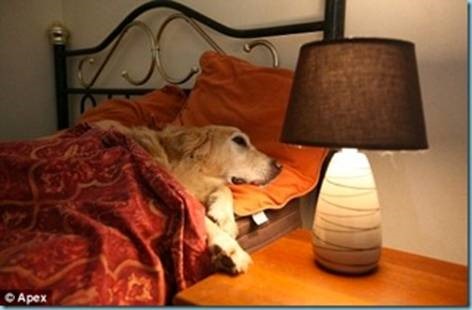
Picture parade seventy-three

With grateful thanks to Tricia for sending these on.

Trish1

The following goes with the picture above. It has been published before but so what! It deserves repeated postings!

“Dogs Welcome”

A man wrote a letter to a small hotel in a Midwest town he planned to visit on his vacation. He wrote:

I would very much like to bring my dog with me. He is well-groomed and very well behaved. Would you be willing to permit me to keep him in my room with me at night?”

An immediate reply came from the hotel owner, who wrote:

SIR: “I’ve been operating this hotel for many years. In all that time, I’ve never had a dog steal towels, bedclothes, silverware or steal pictures off the walls or use them as a coloring book. I’ve never had to evict a dog in the middle of the night for being drunk and disorderly. And I’ve never had a dog run out on a hotel bill.

Yes, indeed, your dog is welcome at my hotel. And, if your dog will vouch for you, you’re welcome to stay here, too.”

 Trish2

oooo

Trish3

oooo

Trish4

oooo

Trish5

oooo

You all have a great week and keeping loving those dogs of yours!

The book! Part Five: What we need to learn.

A new future.

The title to Part Five, What we need to learn and the last section of the book, carries a strong assumptive tone: that we humans have a need to learn. Back in Part Three – Mankind in the 21st Century, I wrote towards the end of the Chapter: Setting the stage, that I believed that these modern times are so very dangerous times for humanity, and much else in the natural world, and that we, as in mankind, have to find a way forward to living sustainably on Planet Earth.

There are many voices out there in the big wide world that are offering both a chorus of all the things that are wrong with these times and all the things that we need to do to save ourselves. Of course, in one sense, this book has come pretty close to those calls via a part of the book that lists all the challenges for mankind in these present times, and a subsequent part of the book that explores us changing our thoughts and deeds.

Given those two previous parts, it could be argued that examining the qualities of dogs is a duplication of Part Four: Of change in thoughts and deeds. I hope it isn’t seen in that way.

Because for millions of people who have dogs in their lives, re-examining their dogs in the light of the dog being a banner of a ‘moral and ethical principle’, of a standard bearer of change, of a beacon of integrity, may give the lead and inspiration for us to embrace both the will and the ways of change: now!

Said again, in fewer words: seeing the behaviours of our dogs as examples for how we need to live today.

In the following eleven chapters, I will describe each attribute that our dogs display, each quality as it were, and then attempt to predict the effect on our society resulting from mankind adopting that particular quality. Apologies, that previous sentence was gross. Far too safe!

Let me try again.

In the following chapters, I will describe the sorts of actions that will make a difference. I will give a personal view, some might say an opinionated view, as to why each of us, including me, has to incorporate each of the behavioural changes into our lives and then what flows from us so doing.

Now please don’t misunderstand me. This is not a case of “do as I say, not as I do!” The writing of this book is as much about me understanding how I have to change and why, as it is about telling a story about the most beautiful world of dogs.

447 words Copyright © 2014 Paul Handover

Thanksgiving theme: Love

The power of love

Today’s post is inspired by a comment left by Virginia Hamilton to a post that was published in this place back on 27th September, 2009. The post was called Sticks and stones. This is a flavour of the post.

oooo

I make no apologies for today’s post being more emotional and sentimental.

The phrase ‘sticks and stones may break my bones but names will never hurt me‘ is well known throughout the English-speaking world and surprisingly goes back some way.  A quick web search found that in the The Christian Recorder of March 1862, there was this comment:

Remember the old adage, ‘Sticks and stones will break my bones, but words will never harm me’. True courage consists in doing what is right, despite the jeers and sneers of our companions.

So if in 1862 the saying was referred to as an ‘old adage’ then it clearly pre-dated 1862 by some degree.

A few days ago, Dusty M., here in Payson, AZ, sent me a short YouTube video called The Power of Words.  I’m as vulnerable as the next guy to needing being reminded about what’s important in this funny old world.  Then I started mulling over the tendency for all of us to be sucked into a well of doom and gloom.  Take my posts on Learning from Dogs over the last couple of days, as an example.

There is no question that the world in which we all live is going through some extremely challenging times but anger and negativity is not going to be the answer.  As that old reference spelt out so clearly, “True courage consists in doing what is right, despite the jeers and sneers of our companions.

So first watch the video,

then let me close by reminding us all that courage is yet something else we can learn from dogs.

oooo

Then this is the comment from Virginia left to that post just a few days ago:

Our sermon today was about sticks and stones which is perfect timing because my sixth graders are throwing words at each other and it is hurting. So I looked up the phrase and found you. We were shown the video in a faculty meeting and since you tie into dogs I was hoping to find “the answer.” When you look at the website you’ll see out community project where I have twenty schools training in three shelters. One would think that because these kids are so loving to the animals that they could pass that kindness to each other. Any words of wisdom? Also check this video out. Thank you, Virginia

Virginia is a gifted teacher in Indialantic, FL. She uses her love of animals to teach students about giving back and community service. Her students volunteer at animal shelters and help train dogs so they are more easily adoptable. By doing this they get outside of the classroom and learn important life skills.

oooo

My reply to Virginia was: “Virginia, I took a break from the writing and saw your comment to this post and was blown away to use the vernacular! Thank you so much. Don’t know about me offering words of wisdom but I am going to publish a new post based entirely around your comment, and the question. Before the end of the week! Thank you so much for dropping by.”

To that end, I am going to do nothing more than quote a chunk from a forthcoming chapter of my book: Learning from Dogs. The chapter is the first in Part Five: Dog qualities we have to learn. What follows is the last 400 words of that chapter.

Let’s turn to the world of novels. Some book authors make a distinction between unconditional love and conditional love. In the sense that conditional love is love that is earned through conscious or unconscious conditions being met by the lover. Whereas in unconditional love, love is given to the loved one no matter what. Loving is primary: an acting of feelings irrespective of will.

There’s another aspect of unconditional love that relates commonly between individuals and their dogs. That is that our love for a dog encompasses a desire for the dog to have the very best life in and around us humans. Take the example of acquiring a new puppy. The puppy is cute, playful, and the owner’s heart swells with love for this adorable new family member. Then the puppy urinates on the floor. One does not stop loving the puppy but recognises the need to modify the puppy’s behaviour through love and training than, otherwise, continue to experience behaviours that would be unacceptable in a particular situation.

Having explored the concept of love and how dogs offer us the beauty of unconditional love, how should we adopt a loving approach to the world, and why?

It’s the little things that count is a famous truism and one no better suited to the world of love. Little things that we can do in countless different ways throughout the day. Sharing a friendly word and a smile with a stranger, dropping a coin or two into a homeless person’s hands or, better still, a loaf of bread or a chocolate bar. Being courteous on the road, holding a door open for someone at your nearby store, showing patience in a potentially frustrating situation. Never forgetting that we have two ears and one mouth and should use them in that proportion, be more attentive when a loved one is speaking with us, engineer periods of quiet contemplation, understand that the world will not come to an end if the television or ‘smartphone’ is turned off for a day. The list of loving actions is endless.

Why?

Because this world of ours so desperately needs a new start and that start must come from a loving attitude to each other, to the plants and animals, and to the blue planet that sustains us.

We need our hearts to open; open enough to tell our heads about the world of love.

Copyright 2014: Paul Handover

It would be lovely, Virginia, if this could be read out to your classes. Even better if young peoples’ thoughts, responses, and questions could be posted here as comments.

A very Happy Thanksgiving to all.

The book! Part Three: Greed, inequality and poverty

Note:

I read this out aloud to Jeannie last night, as I do with every post that is published, and found this chapter really didn’t flow.  I’m making the mistake of including too many words of direct quotations, many of which are not easy to follow.

So just wanted to let you know that if this strikes you the same way, you are not alone! 😉

It is, of course, just the first draft, but nonetheless …. wanted you to read this first.

oooo

Greed, inequality and poverty

Just three words: greed; inequality; poverty.

Just three words that metaphorically come to me like a closed, round, wooden lid hiding a very deep, dark well. That lifting this particular lid, the metaphorical one, exposes an almost endless drop into the vastness of where our society appears to have fallen.

That this dark well, to stay with the metaphor, is lined with example after example of greed, inequality and poverty is a given.

One might conclude that examining any of those examples is pointless, not in terms of the reality of our world, but in terms of influencing the views of a reader. If you are a reader who is uncertain about the current levels of greed, inequality and poverty then it’s unlikely that a few examples, or a few hundred examples, are going to change minds. (One might argue that you wouldn’t be reading this book in the first place!)

Thus when I was digging around, looking for insight into how and why we, as in society, are in such times, I was looking for core evidence. Very quickly, it struck me that the chapter title really should simply have been: Inequality. Because inequality, by implication, is the result of greed and results in poverty.

In November, 2014, at the time I was drafting this book, a new report was issued by the Center of Economic Policy Research (CEPR) on the latest (American) Survey of Consumer Finances. It painted a picture very familiar to many: the rich becoming richer while those with less wealth are falling further and further behind.

David Rosnick of the CEPR, and one of the report co-authors, made this important observation:

The decline in the position of typical households is even worse than the Consumer Finances survey indicates. In 1989, many workers had pensions. Far fewer do now. The value of pensions isn’t included in these surveys due to the difficulty of determining what they are worth on a current basis. But they clearly are significant assets that relatively few working age people have now.

Sharmini Peries, of The Real News Network, in an interview with David Rosnick, asked:

PERIES: David, just quickly explain to us what is the Consumer Finance Survey. I know it’s an important survey for economists, but why is it important to ordinary people? Why is it important to us?

ROSNICK: So, every three years, the Federal Reserve interviews a number of households to get an idea of what their finances are like, do they have a lot of wealth, how much are their house’s worth, how much they owe on their mortgages, how much they have in the bank account, how much stocks do wealthy people own. This gives us an idea of their situations, whether they’re going to be prepared for retirement. And we can see things like the effect of the housing and stock bubbles on people’s wealth, whether they’ve been preparing for eventual downfalls, how they’ve reacted to various economic circumstances, how they’re looking to the long term. So it’s a very useful survey in terms of finding out how households are prepared and what the distribution of wealth is like.

PERIES: So your report is an analysis of the report. And what are your key findings?

ROSNICK: So, largely over the last 24 years there’s been a considerable increase in wealth on average, but it’s been very maldistributed. Households in the bottom half of the distribution have actually seen their wealth fall, but the people at the very top have actually done very well. And so that means that a lot of people who are nearing retirement at this point in time are actually not well prepared at all for retirement and are going to be very dependent on Social Security in order to make it through their retirement years.

PERIES: So, David, address the gap. You said there’s a great gap between those that are very wealthy and those that are not. Has this gap widened over this period?

ROSNICK: It absolutely has. As, say, the top 5 percent in wealth, the average wealth for people in the top 5 percent is about 66 percent higher in 2013, the last survey that was completed, compared to 1989. By comparison, for the bottom 20 percent, their wealth has actually fallen 420 percent. They basically had very little to start with, and now they have less than little.

PERIES: So the poorer is getting poorer and the richer is getting extremely richer.

ROSNICK: Very much so.

To my way of thinking, if in the period 1989 through to 2013 “the average wealth for (American) people in the top 5 percent is about 66 percent higher” and “for the bottom 20 percent, their wealth has actually fallen 420 percent” it’s very difficult not to see the hands of greed at work and a consequential devastating increase in inequality.

In other words, the previous few paragraphs seemed to present, and present clearly, the widening gap between the ‘haves’ and the ‘have-nots’, comparatively speaking, and that it was now time for society to understand the trends, to reflect on where this is taking us, if left unchallenged, and to push back as hard as we can both politically and socially.

I wrote that shortly before another item appeared in my email ‘in-box’ in the middle of November (2014), a further report about inequality that, frankly, emotionally speaking, just smacked me in the face. It seemed a critical addition to the picture I was endeavouring to present.

Namely, on the 13th October, 2014, the US edition of The Guardian newspaper published a story entitled: US wealth inequality – top 0.1% worth as much as the bottom 90%. The sub-heading enlarged the headline: Not since the Great Depression has wealth inequality in the US been so acute, new in-depth study finds.

The study referred to was a paper released by the National Bureau of Economic Research, Cambridge, MA, based on research conducted by Emmanuel Saez and Gabriel Zucman. The paper’s bland title belied the reality of the research findings: Wealth Inequality in the United States since 1913.

As the Guardian reported:

Wealth inequality in the US is at near record levels according to a new study by academics. Over the past three decades, the share of household wealth owned by the top 0.1% has increased from 7% to 22%. For the bottom 90% of families, a combination of rising debt, the collapse of the value of their assets during the financial crisis, and stagnant real wages have led to the erosion of wealth. The share of wealth owned by the top 0.1% is almost the same as the bottom 90%.

The picture actually improved in the aftermath of the 1930s Great Depression, with wealth inequality falling through to the late 1970s. It then started to rise again, with the share of total household wealth owned by the top 0.1% rising to 22% in 2012 from 7% in the late 1970s. The top 0.1% includes 160,000 families with total net assets of more than $20m (£13m) in 2012.

In contrast, the share of total US wealth owned by the bottom 90% of families fell from a peak of 36% in the mid-1980s, to 23% in 2012 – just one percentage point above the top 0.1%.

The report was not exclusively about the USA. As the closing paragraphs in The Guardian’s article illustrated:

Among the nine G20 countries with sufficient data, the richest 1% of people (by income) have increased their income share significantly since 1980, according to Oxfam. In Australia, for example, the top 1% earned 4.8% of the country’s income in 1980. That had risen to more than 9% by 2010.

Oxfam says that in the time that Australia has held the G20 presidency (between 2013 and 2014) the total wealth in the G20 increased by $17tn but the richest 1% of people in the G20 captured $6.2tn of this wealth – 36% of the total increase.

I find it incredibly difficult to have any rational response to those figures. I am just aware that there is a flurry of mixed emotions inside me and, perhaps, that’s how I should leave it. Nonetheless, there’s one thing that I can’t keep to myself and that this isn’t the first time that such inequality has arisen, the period leading up the the Great Depression of the 1930s comes immediately to mind, and I doubt very much that it will be the last.

Unless!

Unless the growing catalogue of unsustainable aspects of this 21st century, a few of which have been the focus of this Part Three, brings about, perhaps in many different ways, a force for change that is unstoppable.

But before that is explored in Part Four, there is the one final element of the greed, inequality and poverty theme of this chapter that must be aired; the issue of poverty.

Contrary to my anticipation, the figures for poverty trends can be read in many ways and don’t give a clear-cut uniform picture. Nevertheless, it does’t take a genius to work out that the future, especially for young people, could be alarming.

Today, the poor people are the young. Today, the young are heading into a future that has many frightening aspects.

Take the present population numbers, the mind-boggling scale of the use of energy in these times, not to mention the levels of debt across so many countries (on the 14th November, 2014, the Federal Debt of the USA was about $18,006,100,032,000), possible unsustainable global climate change trends, and is it any wonder that those born in the period 1928 to 1945 (I was born in 1944), the generation that has been called the Silent Generation, must be wondering what the future holds for their children and grandchildren and what they or anyone can do today and tomorrow, to prevent these future generations sinking into oblivion.

I came across a quotation from Simon Caulkin, the award winning management writer: “It’s all the product of human conduct!”

Yes, Simon is right. Only human conduct will find that sustainable, balanced relationship with each other and, critically, with the planet upon which all our futures depend. Yet, something nags at me; a half-conscious doubt that starts with the word ‘but!’ Not that it doesn’t all come down to human conduct; not a moment’s hesitation on that one. But there’s still that half-conscious doubt. A doubt that starts to take shape on the back of that wonderful quotation from Einstein: “Insanity: doing the same thing over and over again and expecting different results.

Then from that half-conscious place in one’s head comes another word. The word: Faith. Faith in us, as in faith in humanity. Faith that not only can we change our relationship with ourselves, with our communities and, above all, with our planet, but that we will. Faith that we, as in mankind, will embrace the many beautiful qualities of the animal that is so special to so many millions of us: our dogs. Not just embrace but pin our future on the premise that adopting the qualities of love, trust, honesty, openness and more, qualities that we see daily in our closest animal companions, is our potential salvation.

Thus comes the end of this set of depressing aspects of our 21st century. Time to move on in this story of learning from dogs and envelope ‘Of change in thoughts and deeds’; the title of the next section of this book. For we truly need a change to a better future.

1923 words Copyright © 2014 Paul Handover
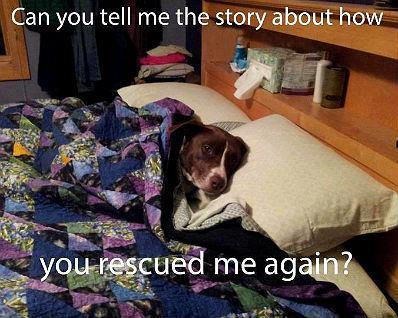
The world according to Lilly

Our dear Lilly offers her special thoughts.

Preface: Lilly is reaching an amazing age for a dog; trully amazing. Lilly was featured back in February this year when we did a series of posts under the generic heading of Meet the dogs.

Yesterday, Jean thought it would be wonderful to hear it from Lilly; so to speak.

So these are Lilly’s words; as whispered to Jeannie!

oooo

The World According to Lilly

Surveying her domain.

I am sixteen years old! That’s one hundred and twelve people years!

So no-one is going to tell me what to do; especially those bratty young dogs I live with.

I refuse to eat canned dog food and expect Mum to cook fresh meat on a daily basis or I will stop eating and give her the moon eyes. (No real issue as Mum does understand my demands! 😉 ) The only dry food that passes my lips is ‘Canidae’. It’s not cheap but, hey, I’m worth it!

No dog is allowed to snag my food or I will bite their nose; and well the others know that! OK, maybe young Oliver can sneak a nibble or two off my bowl; he is rather cute!

I will only take a pill if it is camouflaged in the fresh marrow of a bone – Mum, bless her, thinks I don’t know it’s there! Ha!

When it’s raining, I refuse to go out. Period! To make Mum happy, sometimes I let her use this sheepskin-lined sling thing to help me tackle the deck steps but many times I can manage on my own – hey! I’m only sixteen! But I know that it makes Mum’s day if she sees herself being useful!

It’s been a good life. OK, I’m rather creaky now but determined to make seventeen. Who knows maybe even eighteen!

Give Dad a run for his money any day!  Golly, he has only just turned seventy in people years and to hear him natter on you would think he feels old!

Now where’s my bed …..

Not a bad life for an old dog! (I'm speaking of Dad!)
Not a bad life for an old dog! (I’m speaking of Dad!)

The power of stillness

The value of doing nothing!

Like many who read yesterday’s post about this possibly being an age of loneliness I was struck by a terrible sense of sadness in George Monbiot’s words. Take these sentences:

Three months ago we read that loneliness has become an epidemic among young adults. Now we learn that it is just as great an affliction of older people. A study by Independent Age shows that severe loneliness in England blights the lives of 700,000 men and 1.1m women over 50, and is rising with astonishing speed.

Ebola is unlikely ever to kill as many people as this disease strikes down. Social isolation is as potent a cause of early death as smoking 15 cigarettes a day; loneliness, research suggests, is twice as deadly as obesity. Dementia, high blood pressure, alcoholism and accidents – all these, like depression, paranoia, anxiety and suicide, become more prevalent when connections are cut. We cannot cope alone.

It’s my proposition that not being able to cope with being alone derives from being unable to be fully at peace with oneself.

Yet, as dogs remind us so incredibly well, the ability to be on one’s own, to allow the brain to quieten down, to meditate in other words, is essential to our mental well-being.  It is an essential part of the journey to find and like oneself.  (I hasten to add that I write this without the benefit of any relevant professional knowledge!)

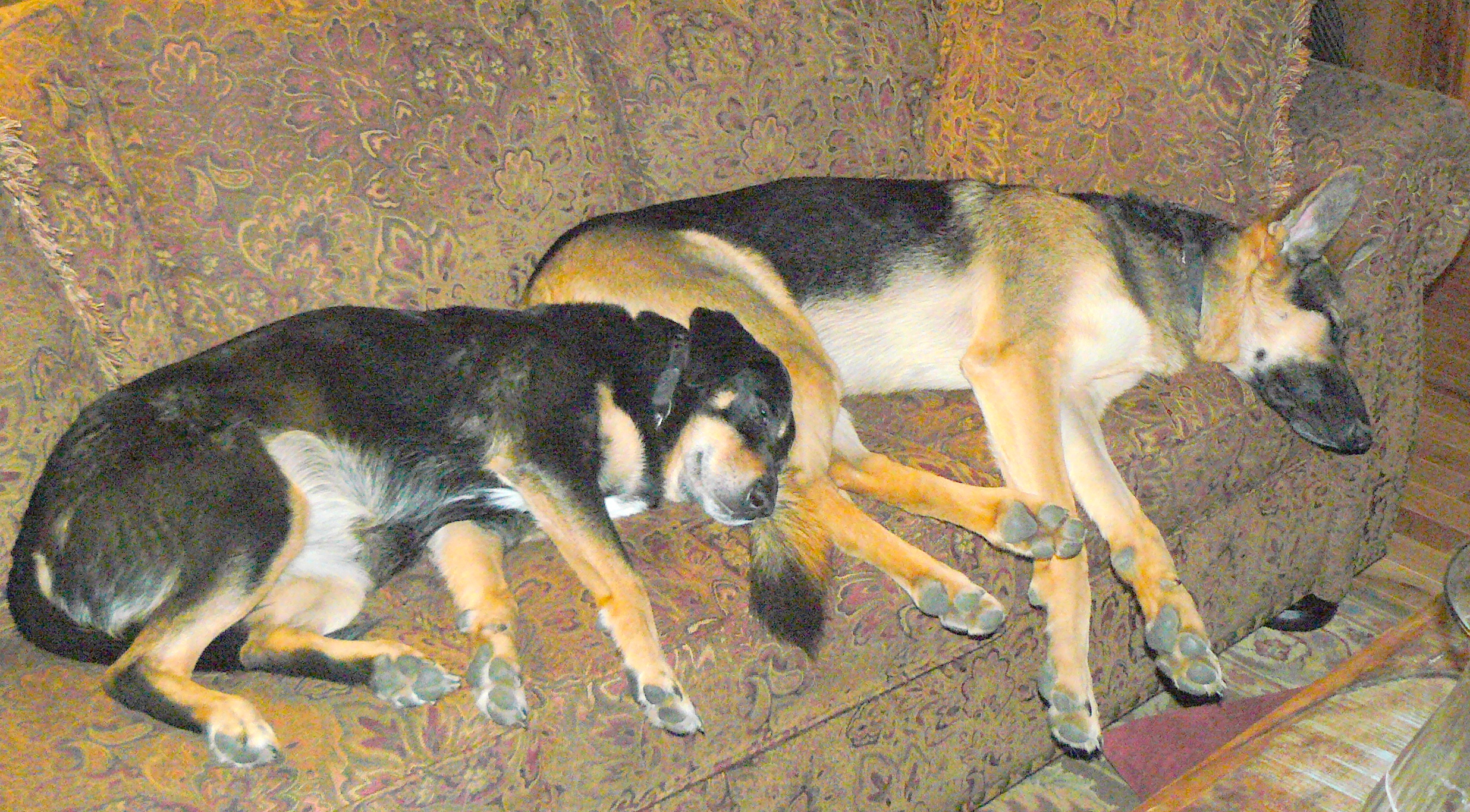
Hazel asleep alongside Cleo. (Hazel to the left.)

For a while I have subscribed to the newsletter called Just One Thing published, freely, by Dr. Rick Hanson.  On Dr. Hanson’s About page, he explains:

I am a neuropsychologist and have written and taught about the essential inner skills of personal well-being, psychological growth, and contemplative practice – as well as about relationships, family life, and raising children.Probably like you, there’s been a lot of to-ing and fro-ing in my life these days. Change can be interesting, exciting, and fun – but after awhile you start to long for something quieter, more stable.

A couple of weeks ago, the Just One Thing newsletter was all about stillness.  It is republished below.

ooOOoo

Just One Thing (JOT) is the free newsletter that suggests a simple practice each week for more joy, more fulfilling relationships, and more peace of mind.

A small thing repeated routinely adds up over time to produce big results.

Just one thing that could change your life.

(© Rick Hanson, 2014)

What doesn’t change?

The Practice

Find stillness.

Why?

Things keep changing. The clock ticks, the day unfolds, trees grow, leaves turn brown, hair turns gray, children grow up and leave home, attention skitters from this to that, the cookie is delicious but then it’s all gone, you’re mad about something for awhile and then get over it, consciousness streams on and on and on.

Many changes are certainly good. Most people are glad to put middle school behind them. I’m still happy about shifting thirty years ago from single to married. Painkillers, flush toilets, and the internet seem like pretty good ideas. It’s lovely to watch grass waving in the wind or a river passing. Fundamentally, if there were no change, nothing could happen, reality would be frozen forever. I once asked my friend Tom what he thought God was and he said “possibility.”

On the other hand, many changes are uncomfortable, even awful. The body gets creaky, and worse. We lose those we love and eventually lose life itself. Families drift apart, companies fail, dictators tighten their grip, nations go to war. The planet warms at human hands, as each day we pour nearly a billion tons of carbon into the atmosphere. Countless species go extinct. As William Yeats wrote: “Things fall apart; the centre cannot hold.”

And change itself is often – maybe innately – stressful. When you really open to the fact always in front of our noses that each moment of now decays and disappears in the instant it arises – it can feel rather alarming. Life and time sweep us along. As soon as something pleasant occurs in the mind’s flow we reach for it but whoosh it passes away right through our fingers leaving disappointment behind. Inherently, anything that changes is not a reliable basis for enduring contentment and fulfillment.

Yet it is also true that some things remain always the same. In their stillness you can find a refuge, an island in the stream of changes, a place to stand for perspective and wisdom about events and your reactions to them, a respite from the race, quiet amidst the noise. Perhaps even find a sense of something transcendental, outside the frame of passing phenomena.

How?

Stillness, a sense of the unchanging, is all around, and at different levels. Look for it, explore its effects on you, and let it sink in.

For example, it’s not the ultimate stillness, but there is that lovely feeling when the house is quiet and you’re sitting in peace, the dishes are done and the kids are fine (or the equivalent), and you can really let down and let go. In your character, you have enduring strengths and virtues and values; situations change, but your good intentions persist. In relationships, love abides – even for people who drive you crazy!

More subtly, there is the moment at the very top of a tossed ball’s trajectory when it’s neither rising nor falling, the pause before the first stroke of the brush, that space between exhalation and inhalation, the silence in which sounds occur, or the discernible gap between thoughts when your mind is quiet.

In your mind there is always an underlying calm and well-being that contains emotional reactions, like a riverbed that is still even as the flood rushes over it (if you’re not aware of this, truly, with practice you can find and stabilize a sense of it). There is also the unchanging field of awareness, itself never altered by the thoughts passing through it.

More abstractly, 2+2=4 forever; the area of a circle will always be pi times the radius squared; etc. The fact that something has occurred will never change. The people who have loved you will always have loved you; they will always have found you lovable. Whatever is fundamentally true – including, ironically, the truth of impermanence – has an unchanging stillness at its heart. Things change, but the nature of things – emergent, interdependent, transient – does not.

Moving toward ultimate matters, and where language fails, you may have a sense of something unchangingly transcendental, divine. Or, perhaps related, an intuition of that which is unconditioned always just prior to the emergence of conditioned phenomena.

Wherever you find it, enjoy stillness and let it feed you. It’s a relief from the noise and bustle, a source of clarity and peace. Give yourself the space, the permission, to be still – at least in your mind – amidst those who are busy. To use a traditional saying:

May that which is still
be that in which your mind delights.

ooOOoo

Still-Waters-header