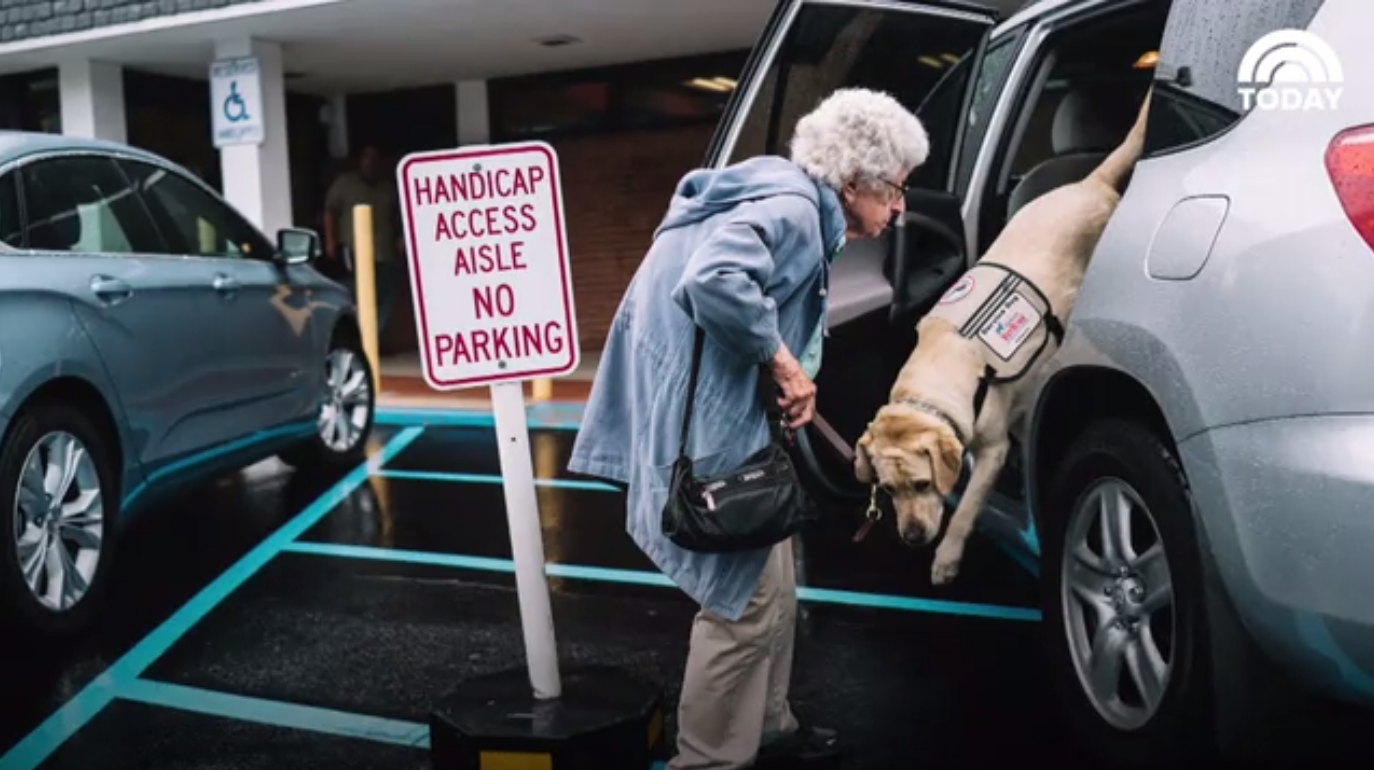
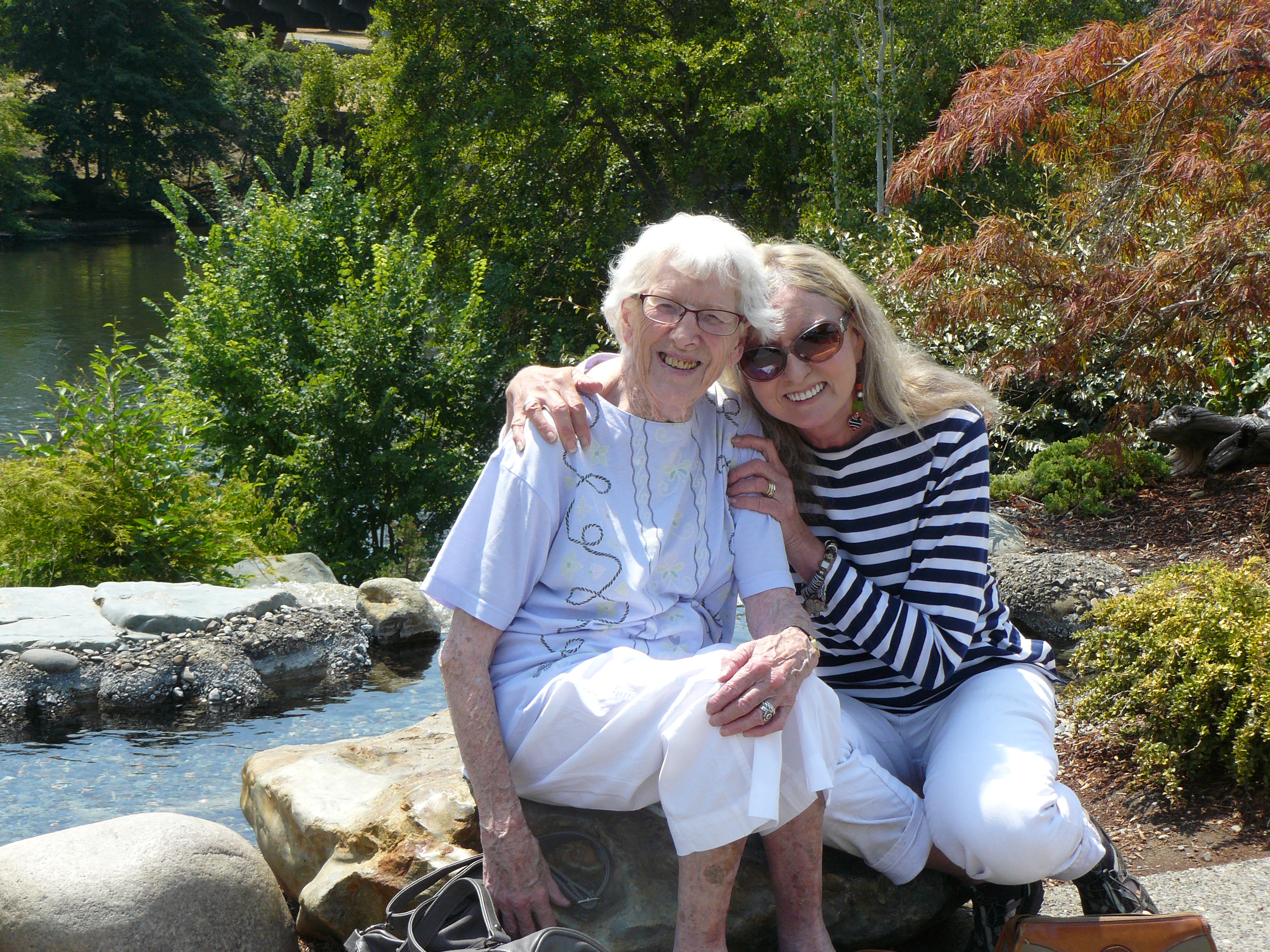
92-year-old Annabelle Weiss and her service dog, Joe, are absolutely inseparable.
At the age of 20, Weiss enlisted in the U.S. Marines, where she served for two years as a driver and plane engine inspector until she was discharged in 1946. Later, she worked as a nurse, and won a battle against thyroid cancer.
In 2013, Weiss learned about America’s VetDogs, which pairs veterans with trained service animals. They got her in touch with Joe, the yellow Labrador, and since then the two have become the best of friends.
Source: Today
The pair live together in their Long Island home, and fill their days with activities. Joe has been very helpful in increasing Weiss’s mobility—with Joe by her side, her daily outings are much more comfortable and pleasant.
“He changed my life, he really did,” Wiess told TODAY. “Without him I would be at the house a lot. Now people call me and I’m never home!”
Weiss lives by herself, but she’s by no means alone thanks to Joe’s loyal company. At home, Joe opens and closes doors, picks up fallen items, and acts as a brace for when Weiss gets up from a chair or climbs stairs. He also fetches the phone, and opens drawers with cloths attached to the handles.
Source: Today.com
The two relax at home in the morning, and then spend their afternoon out on the town.
“In the house, he’s a dog,” Weiss said. “When he’s outside, he has his vest on, and he’s on the job like a cop.”
When the two go out on car rides, Joe enjoys laying down for a nap in the back of the car.
Source: Today.com
One of Weiss and Joe’s favorite spots is the Lindenhurst Memorial Library, where the two like to pick out good reads together. Joe is friendly to the library staff, and puts his paws on the desk while Weiss checks out books. The two attend a reading club at the library, and Weiss calls Joe the unofficial mascot.
Source: Today.com
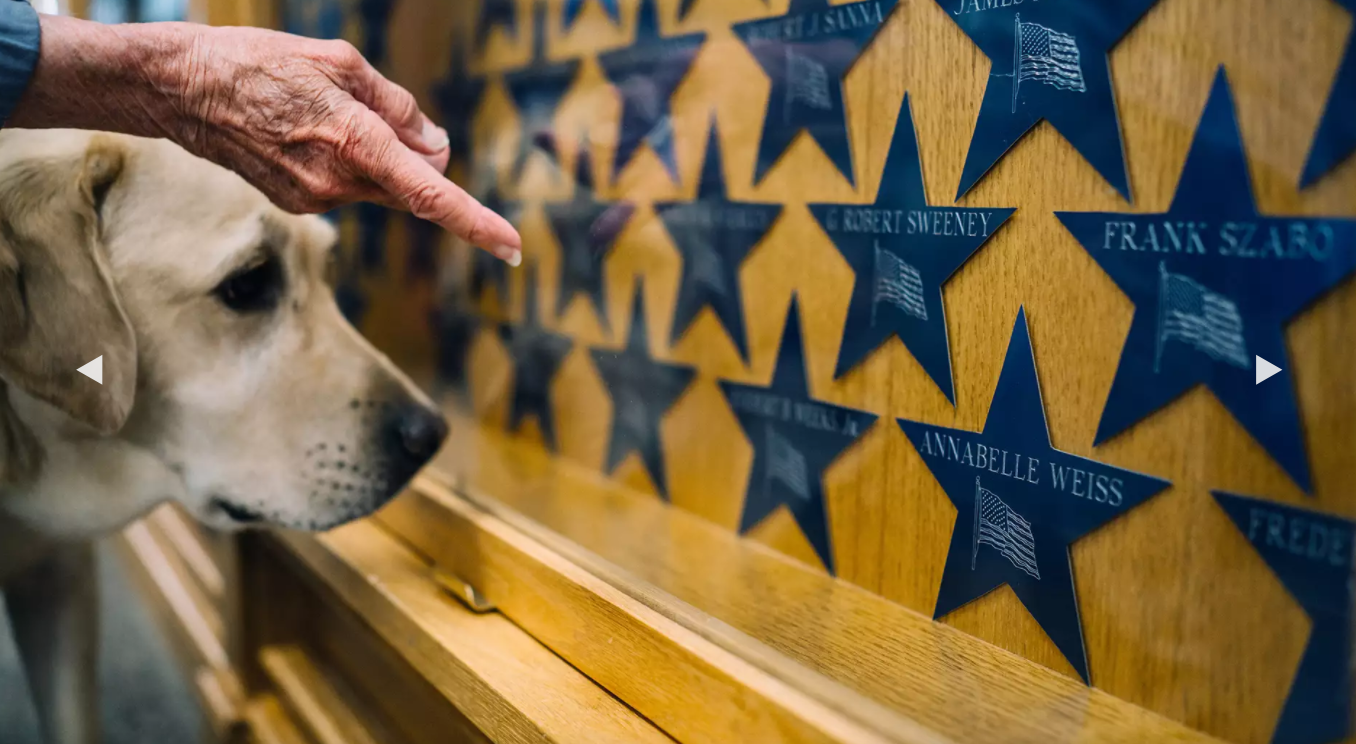
Incidentally, the library has a display honoring veterans, in which Weiss’s name is proudly featured.
Source: Today.com
When lunchtime comes around, the Lindenhurst Diner is their go-to place. They eat at the diner once or twice a week, and Weiss says all the workers—including the owner—treat Joe like one of the regulars.
While Weiss eats, Joe settles down under the table for a nap, but not before checking for crumbs to make sure his spot is clean.
Source: Today.com
Weiss recalled an occasion when she explained to a worker at the diner just how much Joe means to her:
“The first time I brought Joe in, there was a young man cleaning the tables — he doesn’t speak English; he speaks Spanish — and he saw me with the dog, and he said, ‘Oh, perro.’ I corrected him and said ‘hijo!’ I speak a little Spanish. I told him, ‘He’s not my dog, he’s the son I never had.’”
Source: Today.com
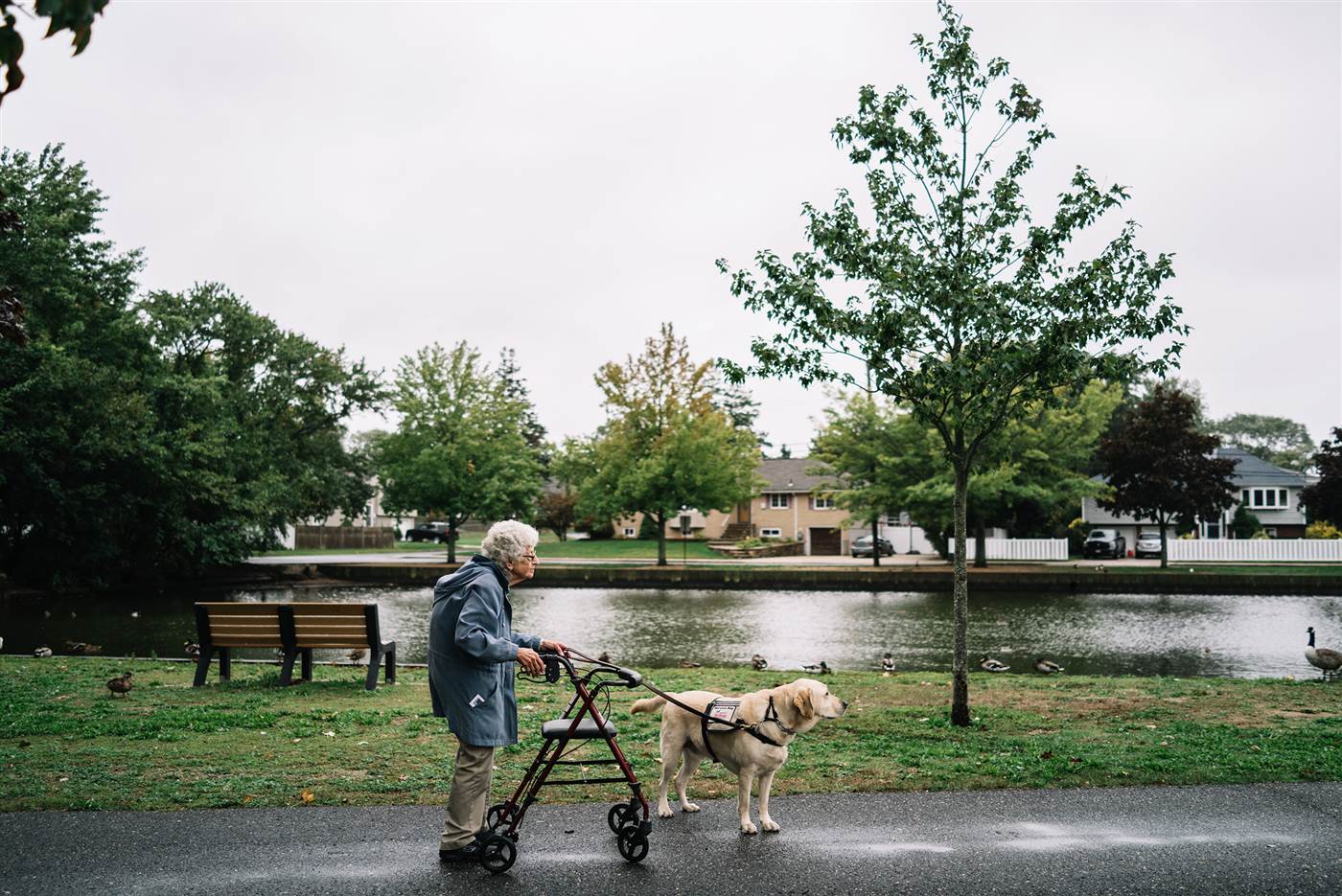
As the day winds down, Weiss and Joe go on a walk in a park near their home—Joe loves the park so much, they visit almost every day! He enjoys being around birds, even if they might be afraid of him.
Source: Today
Rain or shine, indoor or outdoors, Joe stays faithfully by Weiss’s side as her helper and friend. He inspires his owner to stay active and together the two go on small adventures and seize each day to the fullest.
Weiss loves having Joe around, and says “He’ll follow me to the end of the earth.”
Please SHARE this with your friends and family.
ooOOoo
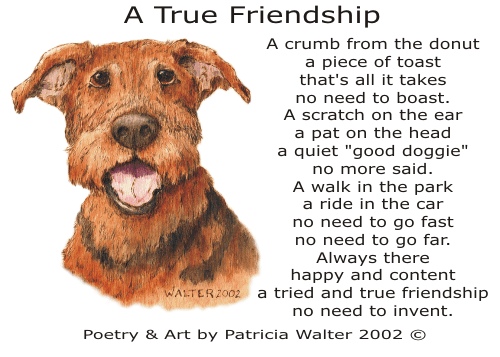
I want to close today’s post with this poem that was found on the ‘web’.
That saying from the lips of Henry David Thoreau, the American essayist, poet and philosopher, reminds us that we must be that change before that change comes along.
Thus whatever you or I, or anyone else, thinks is wrong with these times, so eloquently expressed by George Monbiot in his essay republished in this place yesterday, bringing about the changes that you or I, or anyone else, want has to start with the individual.
That, inevitably, requires many to chose which path to follow.
Last Saturday, Sue Dreamwalker of the blog Dreamwalker’s Sanctuary, published a post that truly couldn’t have been better written in terms of following on to yesterday’s post.
Here it is republished with Sue’s kind permission.
I felt the need to post something deeper again today, and I could find no better words to write than I have already written as my thoughts go out to the many places around our globe in conflict right now.
I know there are many new subscribers here to Dreamwalker’s Sanctuary this year who may not have read this post.. I thank all in advance for their contributions..
If I am slow getting back to you, it’s because I want some time to paint this weekend and walk out in nature..
So look after each other and choose your Pathway well..
Love and Blessings
Sue❤
Much is happening with our Earth Plane at this time of transformation, the Mayans called it
“ A crossroads of time of Great External Changes and Major Internal Upheavals”.
We have seen around the globe how many nations are starting to change, we are also changing ourselves internally through our awareness and intuition and I see many withdrawing into themselves as they seek peace as they set about clearing the debris of our emotional bodies, myself included as we adjust to the vibrations around us.
At times all that is thrown our way is too disturbing to cope with, so we withdraw within our inner sanctuaries finding solace within Nature and our meditations..
I have to remind myself daily of the GOOD in this world as we get constantly bombarded with the BAD… So many things which are UGLY in this world which led me to revisit a post first posted in 2012.. The Good Bad and Ugly.. in which I used the Mayan quote above..
Everything in this world mirrors everything else, and everything is part of everything else, as difficult as that is to comprehend. So while we react with outrage, our rage is joining the tide of Anger already out there which is foaming back and forth in the sea of discontent.
It seems as if our very Earth Mother feels that anger as she too is rumbling ever louder in the bowels of our planet as we have seen how devastating her energies can be in Earthquakes and volcanic eruptions which are now becoming more active again around our globe..
We have to be careful not to be taken down the road of Fear.. Lest it trap us into engaging in giving out more fear by our failure to see how we are all quick to judge and use our own prejudices in labelling that which we are not in alignment with. Whether that be in our politics, beliefs, or idealisms. None of us is perfect.
We are now ‘Shifting’ from duality to Unity Consciousness, this was brought home again to me on how many of us are thinking similar thoughts even here on WP we see similar themes as we link into the Mass Consciousness as we join together our thoughts as we link subconsciously to the Cosmic web of thoughts..
We need to be aware of the Power of our thoughts and how we can assist in raising our planets vibration and our own collective Consciousness..
Much has been spoken upon Ascension, but first we need to ascend through our own layers as we climb ever higher, leaving behind the things that no longer serve us.
We do that by not getting swept up in conflict.. by being more loving and tolerant and being compassionate rather than being judgmental holding hate and anger.
We need to put the Care back in the world and if we embrace and choose Love over fear and we stop looking who to blame, but start to set examples of living in harmony and unity, then the true magnificence of who we really are can begin to manifest that ‘Golden Age’ which was once prophesied to bring about Peace..
But it’s up to us to pledge to change our own lives,and when we each start bringing back that peace within our own Lives, It’s up to each of us which road we want to take. And what dominant energy we want to prevail.. I choose Love.
Blessings
Sue.
ooOOoo
You must take personal responsibility. You cannot change the circumstances, the seasons, or the wind, but you can change yourself. That is something you have charge of.
So said Jim Rohn, the American businessman who died in 2009.
We all could easily be drinking in ‘the last chance saloon’.
After I published my book, Learning From Dogs, last December I was invited to a number of book signing events. In each case I gave a short talk of about 20 minutes in which I explained the philosophy behind the book. Perhaps no better articulated than by Dr. Jim Goodbrod’s Foreword to the book. Take this paragraph, for instance, from that Foreword:
Dogs represent to me that innocence lost. Their emotions are pure. They live in the present. They do not suffer existential angst over what they are. They do not covet material wealth. They offer us unconditional love and devotion. Although they certainly have not reached the great heights of intellectual achievement of us humans (I know for a fact that this is true after having lived with a Labrador Retriever for several years), at the same time they have not sunk to the depths of depravity to which we are susceptible. It could be argued that I am being overly anthropomorphic, or that dogs are simply mentally incapable of these thoughts. But nevertheless, metaphorically or otherwise, I believe that dogs demonstrate a simple and uncorrupted approach to life from which we all could benefit.
During my opening talks on each occasion I would ask the audience: “So raise your hands if you are someone who is not worried about the future?”
There was never a raised hand!
My introduction to a recent essay published by George Monbiot that is republished here with Mr. Monbiot’s permission.
ooOOoo
The Drums of War
24th November 2016
The combination of automation, complexity and climate change is dangerous in ways we haven’t even begun to grasp.
By George Monbiot, published in the Guardian 23rd November 2016
Wave the magic wand and the problem goes away. Those pesky pollution laws, carbon caps and clean power plans: swish them away and the golden age of blue-collar employment will return. This is Donald Trump’s promise, in his video message on Monday, in which he claimed that unleashing coal and fracking will create “many millions of high-paid jobs”. He will tear down everything to make it come true.
But it won’t come true. Even if we ripped the world to pieces in the search for full employment, leaving no mountain unturned, we would not find it. Instead, we would merely jeopardise the prosperity – and the lives – of people everywhere. However slavishly governments grovel to corporate Luddism, they will not bring the smog economy back.
No one can deny the problem Trump claims to be addressing. The old mining and industrial areas are in crisis throughout the rich world. And we have seen nothing yet.
I have just re-read the study published by the Oxford Martin School in 2013 on the impacts of computerisation. What jumps out today, to put it crudely, is that jobs in the rustbelts and rural towns that voted for Trump are at high risk of automation; while the professions of many Clinton supporters are at low risk.
The jobs most likely to be destroyed are in mining, raw materials, manufacturing, transport and logistics, cargo handling, warehousing and retailing, construction (pre-fabricated buildings will be assembled by robots in factories), office support, administration and telemarketing. So what, in the counties that voted for Trump, will be left?
Farm jobs have mostly gone already. Service and care work, where hope for some appeared to lie, will be threatened by a further wave of automation, as service robots – commercial and domestic – take over. Yes, there will be jobs in the green economy, more and better than any that could be revived in the fossil economy. But they won’t be enough to fill the gaps, and many will be in the wrong places.
At lower risk is work that requires negotiation, persuasion, originality and creativity. The management and business jobs that demand these skills are comparatively safe from automation; so are lawyers, teachers, researchers, doctors, journalists, actors and artists. The jobs that demand the highest educational attainment are the least susceptible to computerisation. The divisions tearing America apart will only widen.
Even this bleak analysis does not capture in full the underlying reasons why good, abundant jobs will not return to the places that need them most. As Paul Mason argues in Postcapitalism, the impacts of information technology go way beyond simple automation: it is likely to destroy the very basis of the market economy and the relationship between work and wages.
And, as the independent thinker Paul Arbair notes in the most interesting essay I have read this year, beyond a certain level of complexity, economies become harder to sustain. There’s a point at which further complexity delivers diminishing returns; society is then overwhelmed by its demands and breaks down. He argues that the political crisis in Western countries suggests we may have reached this point.
In the same video address on Monday, Trump announced that he will withdraw America from the Trans-Pacific Partnership (TPP). He is right to do so, for the wrong reasons. Like TTIP and CETA, the TPP is a fake trade treaty, whose primary impact is to extend corporate property rights at the expense of both competition and democracy. But withdrawal will not, as he claims, “bring jobs and industry back to American shores”. The work in Mexico and China that Trump wants to reclaim will evaporate long before it can be repatriated.
As for the high-quality, high-waged working class jobs he promised, these are never handed down from on high. They are secured through the organisation of labour. But the unions were smashed by Ronald Reagan, and collective bargaining has been suppressed ever since by casualisation and fragmentation. So how is this going to happen? Out of the kindness of Trump’s heart? Kindness, Trump, heart?
But it’s not just Trump. Clinton and Sanders also made impossible promises to bring back jobs. Half the platform of both parties was based on a delusion. The social, environmental and economic crises we face require a complete reappraisal of the way we live and work. The failure by mainstream political parties to produce a new and persuasive economic narrative, that does not rely on sustaining impossible levels of growth and generating illusory jobs, provides a marvellous opening for demagogues everywhere.
Governments across the world are making promises they cannot keep. In the absence of a new vision, their failure to materialise will mean only one thing: something or someone must be found to blame. As people become angrier and more alienated; as the complexity and connectivity of global systems becomes ever harder to manage; as institutions like the European Union collapse and as climate change renders parts of the world uninhabitable, forcing hundreds of millions of people from their homes, the net of blame will be cast ever wider.
Eventually the anger that cannot be assuaged through policy will be turned outwards, towards other nations. Faced with a choice of hard truths or easy lies, politicians and their supporters in the media will discover that foreign aggression is among the few options for political survival. I now believe that we will see war between the major powers within my lifetime. Which ones it will involve, and on what apparent cause, remains far from clear. But something that once seemed remote now looks probable to me.
A complete reframing of economic life is needed not “just” to suppress the existential risk that climate change presents (a risk marked by a 20°C anomaly reported in the Arctic Ocean while I was writing this article), but other existential threats as well – including war. Today’s governments, whether they are run by Trump or Obama or May or Merkel, lack the courage and imagination even to open this conversation. It is left to others to conceive of a more plausible vision than trying to magic back the good old days. The task for all those who love this world and fear for our children is to imagine a different future, rather than another past.
On my desk in front of me is a small booklet of business quotations that was published by Speedwing Training Ltd, part of the British Airways Group of Companies. I have had it for years. I randomly opened the booklet and there on page 7 is this quotation (and the emboldening is mine):
Our task is not to fix the blame for the past, but to fix the course for the future.
John F. Kennedy
Mr. Monbiot speaks for the millions of people who need that course for the future NOW!
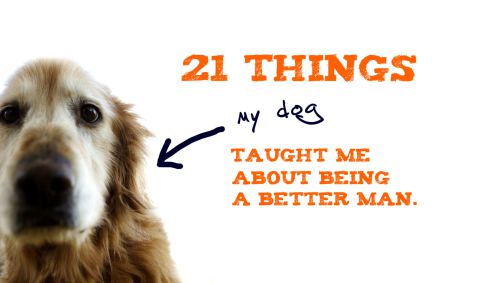
Twenty-one things my dog taught me about being a better man.
June 7, 2010 by Olivier Blanchard
We had to put our golden retriever to sleep this weekend, our friend of fifteen years, our family’s faithful guardian and companion, and one of the kindest, most loyal and giving souls I have ever met. True to her breed, Sasha was courageous, tender and selfless until the end.
I was trying to figure out how to give her a worthy send-off here on The BrandBuilder blog, and settled on some of the things she taught me over the years. Or rather, the things I didn’t realize she had taught me until this past week, much of which I spent caring for her, as she could no longer take care of herself. She and I had some long chats, in our own way, and the old girl was much wiser than I gave her credit for.
Are there business lessons in this list? Yes. There are. But all are deeply human lessons at the core. If being human can make a business better, if it can fuel its soul (or even simply give it one), then yes, let these be business lessons. But don’t ever forget that what makes a business truly great isn’t technology or design or a fancy logo. Those are expressions of something deeper. Something more visceral and powerful and true. What makes a business great, what makes it special, worthy of a connection, worthy of trust and loyalty, admiration and respect, even love, always starts with a beating heart, not a beeping cash register. (One is the cause, and the other one of many effects. Don’t lose sight of that distinction. Horse before cart: Soul drives love. Love drives business.)
It’s so easy to lose sight of what’s important in our lives. And this isn’t me being overly sentimental because I just lost my dog. I mean, yes, sure, okay… But there’s also something to this: That sentimentality, that emotion, these things that make us connect with other souls is at the heart of EVERYTHING this blog has been about these last few years: Business, design, marketing, social media, communications, corporate responsibility, best practices… No company can ever be great unless it can tap into the very essence of what makes us want to connect with each other, and no executive or business manager or cashier can ever truly be great at their jobs unless they also tap into the very thing that makes genuine human connections possible. If ever there was a secret to successfully building a brand, a lovebrand, the kind that people will fight for and whose mark they will tattoo on their bodies, it is this. The rest is merely execution.
If you only walk away with one bit of wisdom from this post, let it be this: You cannot build a better business unless you first become a better human being. Everything that strips you of your humanity, of your empathy, of your ability to connect with others is bad for business. It’s bad practice. It is doomed to fail in the end.
As my good friend John Warner noted yesterday, “If more people were as loyal and loving as dogs the world would be a better place.” (source) And he’s right. How do you become a better human being then? Well, that’s up to you, but if you had asked Sasha, she might have given you a few pointers of her own. Granted, she was never a Fortune 500 C.M.O. She didn’t design the iPad. She didn’t invent the internet or write a book. She never presented at a conference. All she did was hang out with me and Chico. We went on car rides. She watched me work. She lived the simple life of a dog, uncluttered by Twitter followers and Hubspot rankings and the drive to publish and present case studies. She was a dog, and so her perspective is a little different from what you may be used to. At any rate, here are twenty-one she and I discussed at length last week. I hope they will be as valuable to you as they now are to me.
Twenty-one things my dog taught me about being a better man:
1. Be true to your own nature. There’s no point in faking it. A golden retriever isn’t a chihuahua or a pug or a greyhound, and for good reason. Being comfortable in your own skin is 90% of the trick to rocking out your life. Not everyone is meant to be Rintintin or a seeing-eye dog or an Iditarod racer. It’s okay. Find yourself and embrace your nature. That’s always a great place to start.
2. Be true to the ones you love. Your friends, your family, your tribe, your pack. A life lived for others is a life well-lived. Selfish pursuits aside, ambition often grows hollow when turned inwardly instead of outwardly. It’s one thing to want to be pack leader, but there is just as much value and honor in serving than in leading. When in doubt, see item number one.
3. Never say no to a chance to go on a car ride. When the days grow short, I guarantee you’ll wish you’d have gone on more car rides.
4. Leashes are the enemy. Avoid them at all cost.
5. People are strange. So much potential, yet here they are, doing everything they can to complicate rather than simplify their lives. It’s puzzling.
6. Belly scratches.
7. The end isn’t pretty, but if you can face it with dignity and grace, none of your body’s weaknesses will matter. Your heart, your courage, your spirit is what people will see and remember. This isn’t only applicable in your last days and weeks. It’s applicable every day of your life. Adversity happens. It’s how you deal with it that matters.
8. Forgiveness is easier for dogs than for humans, but humans have opposable thumbs and the ability to speak, so it all balances out in the end.
9. Your bark is your own. No one has one quite like yours. Own it. Love it. Project it.
10. Trust your instincts. They rarely steer you wrong. The feeling in your gut though, that’s probably just something you ate.
11. Just because you’re meant to live on land doesn’t mean you can’t feel at home in water. Play outside the safety zone. Swim in the deep end. Dive in. We’re all designed to do more than the obvious.
12. Play more. The game is irrelevant. Just play. Tip: Exploring is play. Having adventures is play. Finding out what’s behind the next hill is play.
13. Your body growing old doesn’t mean you can’t be a puppy at heart. Actually, the first should have no impact on the latter. If you find that it does, take a step back, regroup, and restart. Always be a puppy at heart.
14. Humans aren’t all bad. But they aren’t all good either. Choose yours wisely.
15. Always keep that 20% wolf in you. If you ever give it up, you’re done. A dog without a little wildness in the blood isn’t a dog. It’s a furry robot. The beauty of a great dog doesn’t lie in its obedience but in its loyalty. Loyalty is a choice. Dogs choose to be dogs and not wolves. That’s what makes them so special.
16. Running full bore across a field in the rain.
17. There are no mysteries. Take cats, for example: Half rat, half badger. Crap in a box. Eat rodents. Where’s the mystery in that? If you look hard enough, you can figure most things out for yourself. The world isn’t as complicated as it sometimes seems.
18. Sometimes, you have to back up your growl with a bite. Go with it. Some people like to test your bark-to-bite ratio. With those “inquisitive” types, a little education goes a long way. As much as it sucks to have to go there, it is sometimes necessary. (It’s what the fangs are for.) Your territory, your space, your safety… They’re worth defending. Make a show of it once, and chances are you’ll never have to teach anyone a lesson again.
19. Being alone is no way to go through life. We’re pack animals. Humans, dogs, same thing. We need others to make all of this worthwhile. As an aside, if we live through others, why not also live for others, even if only a little bit? It isn’t that much of a stretch.
20. When you chase the ball, CHASE the fucking ball. Two reasons: a) It’s a chase. You don’t half-ass a chase. You go all out. It’s what you do. It’s the point. b) You don’t want some other mutt to get to the ball before you and slobber it all up, do you?
21. In the end, you will revisit your adventures, your battles, your chases, your voyages and all the excitement of your life with bemused pride, but it’s the quiet moments with loved ones that your mind will settle on. The comfort of those days when all you did was spend lazy hours with them, your head on their lap, their’s on yours, taking in the afternoon sun and the hundreds of fleeting stories carried like whispers on the breeze, those are the memories that will stay with you to the end and beyond.
Never give up on your thirst for life, on the beauty subtle moments, and on chasing that ball as hard and fast as your legs and heart will carry you.
Godspeed, Sasha.
Sasha (1995 – 2010) R.I.P.
ooOOoo
Shortly after completing today’s post, I read the following. It seemed appropriate to include it today.
When you talk, you are only repeating what you know,
I am always amazed at how things turn out. Call it serendipity or what!
Because, as much as I love publishing a daily post in this place, not infrequently I think what on earth am I going to find to write about; or republish!
As it was yesterday morning. Not only did I have a heap of things to do around the house but also other ‘office’ work that had to come first.
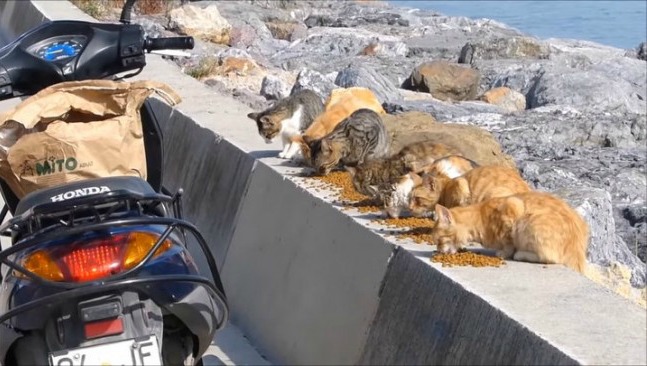
Murat Şahin climbs onto his dusty motorbike and holds his breath as he turns the key, hoping the engine will start. His trip is important because he’s going to feed more than 100 dogs in the forest of Aydos in Istanbul, Turkey. Dozens of cats living along the rocky coastal walls are waiting for him too.
Watch Murat Feed the Animals
Murat’s mission is important to him, it’s a spiritual calling in fact, and he is deeply devoted to serving the hungry animals as you will see in the uplifting video below.
Murat does take some animals to the veterinarian for spay/neuter, but it isn’t always feasible. Some of the animals are wild, and without a car, he can’t bring a trap or transport them easily. He also doesn’t have the funds to do sponsor spay/neuter on a wide scale on his own.
“Murat has never asked for any help,” fellow volunteer Anna Efe explains. “He has always used his own money and collected food at a restaurant and a local canteen. Also, some butchers were giving him leftovers free of charge. But this year the situation has changed. The butchers stopped giving leftovers for free and, on top of that, Murat’s old motorbike was stolen. It was his only way to deliver food to the forest dogs.”
Though Murat did manage to find a very low-priced bike to replace the stolen one, the replacement bike frequently breaks down. In fact, it broke down immediately after the filming of the video on this page.
Better Days Ahead
The Harmony Fund charity, based in the U.S., is working on a surprise for Murat. The group is attempting to raise funds to purchase a reliable, used car for Murat’s rescue work and would be shared by Murat and his fellow volunteers working together as an authorized rescue team in Turkey. The car would have several advantages over the bike including carrying larger quantities of food, transporting animals to the veterinarian and safer transportation during bad weather.
ooOOoo
If anyone reading this post can find it in their hearts to make a donation, then this link on the Harmony Fund website is the place to go. You can specifically nominate that your gift goes to Murat out in Turkey. (And Jean and I have made a modest donation to Harmony to be passed to Murat.)
Both with animals and with us humans we reap what we sow. Or as I am oft to put it: “Always play with a straight bat for bent bats are practically useless”.
So what has prompted this introspective start to today’s post?
Something that was published on the Care2 blogsite earlier in the month. It was a story about how ex-rescue dogs went on to become dogs that rescued others. It certainly spoke to me and I feel sure that many of you will be inspired by the story.
ooOOoo
Puppy Rescued Day After Italy’s Latest Quake to Become a Rescue Dog
Among the survivors pulled from the rubble of Italy’s latest major earthquake (Oct. 29) was a border collie puppy who was trapped in the town of Norcia for two days.
The puppy was reunited with his owners, who were so grateful for his rescuers’ work that they decided to let the local fire service adopt him.
Now named Terremoto, which is Italian for – you guessed it – “earthquake,” the pup will be trained to pay it forward by becoming a search-and-rescue dog.
Volunteers from the nonprofit ENPA have been helping nearly 1,000 animals rescued after the earthquakes this year in Italy’s central region. ENPA, an acronym for Ente Nazionale Protezione Animali (National Animal Protection Agency), has been around since 1871. It is Italy’s oldest and largest animal rights organization.
After the 6.6-magnitude Oct. 29 earthquake, at least 900 animals have received assistance from the organization, according to the ENPA website. Almost 160 of them required veterinary care, including 59 dogs, 63 cats, 13 chickens, 10 tortoises, four parrots, five canaries, two geese, one hedgehog and a hamster. Amazingly, only one animal died: a dog rescued from the rubble alive but in serious condition in the town of Nottoria.
So far, at least 78 animals have been reunited with their owners. Police in Perugia adopted two rescued puppies, The Local reports.
A video captured rescuers using their hands to dig out another dog, Ulysses, after they saw his legs sticking out of the rubble. Like Terremoto, Ulysses had been buried alive when the 6.5 earthquake struck. And, like Terremoto, despite his terrible ordeal, Ulysses was checked out by a veterinarian and found to be in good condition.
About 50 trained search-and-rescue dogs worked with more than 5,000 rescuers after a 6.2 earthquake struck the same region of Italy in August. Among the survivors the dogs sniffed out were two children who’d been stuck in the rubble at separate locations for about 15 hours.
Like these dogs, Terremoto will be trained to bark if he detects a survivor less than 7 feet below the rubble. The rescuers will then dig out the survivor by hand. If Terremoto or other search-and-rescue dogs do not bark, it indicates there are no survivors below. In these cases, heavy machinery is brought in to clear the debris, with care being taken in case there are bodies buried in it.
Search-and-rescue dogs usually stop barking about three days after a disaster like a major earthquake. The rescue efforts then become recovery efforts, since victims would not be able to survive that long without water.
Here in the United States, the National Disaster Search Dog Foundation trains rescued dogs to become search-and-rescue dogs. The dogs are saved from shelters and rescue groups across the country.
While I’d like to wish Terremoto a successful career as a search-and-rescue dog, I’m really hoping he never needs to put those skills to use.
Founded in 1996, the National Disaster Search Dog Foundation (SDF) is a 501(c)(3) non-profit, non-governmental organization based in Santa Paula, California. Our mission is to strengthen disaster response in America by recruiting rescued dogs and partnering them with firefighters and other first responders to find people buried alive in the wreckage of disasters.
Back in North-West London (Preston Road, Wembley) my two sisters, Elizabeth and Eleanor, are today hosting a party to celebrate my mother’s life. Many family members and friends will be at the house.
My contribution was to record a eulogy that I will broadcast to everyone using a ‘FaceTime’ link between here and Alex’s tablet that he will have with him at the party.
I wanted to share that eulogy with all you good people.
Flick!
Just like that!
How is it that I am sitting at a computer keyboard writing these words in this my seventy-second year of my life!
Where did it all go?
What did I learn?
But this is what I do know.
That it is only as we get into our ‘senior’ years that we can start to put our lives into some form of perspective.
When I look back at my life I can see many things that, in hindsight, I didn’t handle all that well. Yet that same backward gaze also reveals many things that I would never have changed.
That is the person that I am.
Or to put it in a more introspective way, that is the person that I was brought up to be. For each and every one of us rises to adulthood wearing a rather colourful psychological overcoat. Our life’s journey hopefully offers us the opportunity to undo our overcoat from time to time and take note of the shape and style of our underclothes.
That is the true legacy of my father, of my step-father and, most importantly, of my mother.
I was very privileged to have them as my guardians and parents.
Mum and Jeannie – photo taken 31st July, 2014 here in Oregon.
They have been days of a great jumble of emotions.
But the over-riding emotion has been one of feeling very loved and cared for. Not only by Jeannie, of course, and by my son, Alex, and daughter, Maija, but also by so many of you from my Learning from Dogs ‘family’.
A dear friend, Richard, living in England was incredibly supportive. Richard and I go back nearly 40 years to when we first met. We were both selling Commodore computers for our respective companies back in the early 1980’s. (Richard used to be a typewriter salesman for Olivetti UK and I was an ex-IBM Office Products salesman.)
Anyway, Richard pointed me to this beautiful song by Beth Nielsen-Chapman How We Love.
It sums up perfectly what all your ‘Likes’ and responses to my post The End Of An Era meant to me.
Love you all! I will return to daily posts from this Saturday.
I will not forget your kindness when I needed it so much.
Wonderful reminders of how so many offer so much love to our animals.
On Saturday Jean and I spent the day at PetSmart’s store in Medford, OR., supporting another of their wonderful pet adoption events.
There were many dogs and cats available and even more wonderful people coming to find a new dog or a new cat for their homes (the final figures not available at the time of writing this post).
Yes, there are a great deal of people who are unloving and uncaring towards our beautiful animals. But never let that cloud the fact that there are countless people who will put their love for animals way ahead of their own needs.
So when Marg emailed me a link to a recent story on ABC News not only did I want to share it with you good people but it was the perfect story to follow Saturday’s adoption event. Here it is:
ooOOoo
#WalkWithWalnut: Hundreds tread Cornwall beach to mark final walk for 18yo whippet
Before a trip to doggy heaven, 18-year-old whippet Walnut was joined by hundreds of people and their pups for a walk along an English beach.
Walnut’s owner Mark Woods posted details about the dog’s final walk along the beach on Facebook, inviting dog owners to join him on a beach in Newquay, Cornwall to celebrate his pet’s life.
“He has had an incredible life and having reached the grand age of 18 is ready for his final sleep,” Mr Woods wrote.
“I would love it if dog lovers/owners and friends would join us for a celebration of Walnut on his favourite Porth Beach.”
Hundreds of pooches left paw marks on the sand and supporters used the hashtag #WalkWithWalnut on social media to pay tribute to the animal, who also became a media star in his final days.
“If #walkwithwalnut has done something, it’s restored my faith in the compassion of humanity, in a particularly dreary year,” one tweeted.
“Meanwhile, at Porth Beach Newquay, humans demonstrate proper love and solidarity on their #walkwithwalnut and Mark,” tweeted another supporter.
Mr Woods carried Walnut across the beach as his ill health meant he was no longer able to walk.
He told local media Walnut had provided much comfort over the years, seeing him through two marriages and three engagements.
After Walnut was euthanased the evening after the walk, Mr Woods posted a thank you to all who attended.
Photo: “He went very quickly and in my arms,” Mark Woods said in a Facebook post on the day they euthanased Walnut. (Facebook: Mark Woods)
“Walnut passed away this morning at 11.56am … he went very quickly and in my arms,” Mr Woods wrote on his Facebook page.
“Thank you to the hundreds of people that attended the walk this morning and to all those that had their own walks with their beloved pets around the world.”
The whippet breed originated in England and have an average lifespan of 12 to 15 years.
ooOOoo
There were many videos taken of the walk lots of them being uploaded to YouTube. I chose the following one to share with you. Be warned, this will bring tears to your eyes!
Finally, let me return to the overall theme of today’s post: how much we return the love our dogs give us.
By including the following photograph of this woman, whose name we missed, chatting to Jean at the PetSmart event. Not only had this loving lady taken in many rescue dogs she also fostered other dogs as they awaited their new home. The terrier mix in her arms is her dog and, of course, was one time a homeless dog that she rescued.
Don’t our wonderful pets bring out the best in us!
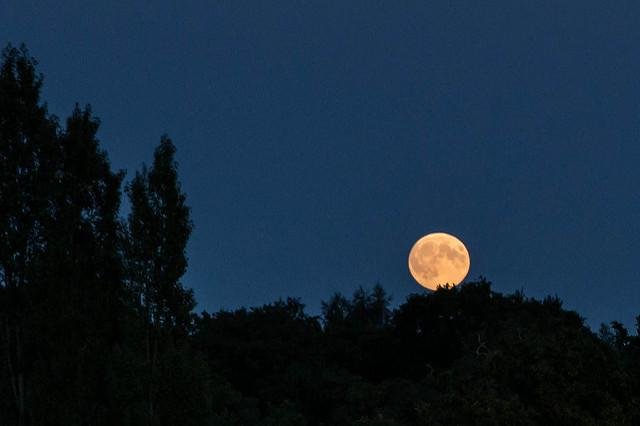
According to NASA, the full moon that rises on Nov. 13 will be the closest one to Earth since 1948. If viewing conditions are clear, the moon will not only appear 30 percent brighter, but also 14 percent larger. While the nighttime viewing is supposed to be spectacular, the true closest approach of the supermoon will take place on the morning of Nov. 14 at 8:52 a.m. EST.
Just how special is this super supermoon? Humanity won’t get another show like this one until Nov. 25, 2034.
The moon turns precisely full on November 14, 2016 at 1352 UTC. This full moon instant will happen in the morning hours before sunrise November 14 in western North America and on many Pacific islands, east of the International Date Line.
For those of us on Pacific time that equates to 0852 PST.
So the balance of today’s post will comprise the republication, with permission, of a recent essay on The Conversation blogsite.
ooOOoo
Supermoons are big and bright, but not as rare as the hype would suggest.
Senior Lecturer and Associate Department Head for Undergraduate Programs in Astronomy & Astrophysics, Pennsylvania State University.
As an observational astronomer who teaches students about the behavior of the moon, I’m thankful for anything that inspires people to go out and look at the sky. For me it’s second nature to pay attention to the moon; when my son was born, I would take him out at night to observe with me, and one of his very first words was “moon.”
But I have mixed feelings about what’s being billed as the upcoming “super-supermoon.” Many astronomers do not like using the term because reports overhype the factors that make certain full moons unusual. Most of what you’ve likely read has probably misled you about what you can expect to see on Nov. 14 and just how rare this event is. Beautiful, yes. Worth looking up for, definitely. Once in a lifetime… that’s a bit overblown.
The moon’s phases as it revolves around the Earth. Orion 8, CC BY-SA
The moon’s cyclical phases
Just about everyone is familiar with the moon’s changing appearance as it goes through its phases from crescent, to half-illuminated (first quarter), to gibbous, to full, and then back through gibbous, to half-illuminated (third quarter), to crescent, to new.
This pattern occurs because the moon orbits the Earth. When the moon is between the Earth and sun, it’s a new moon, and you don’t see it that day. When the moon is on the opposite side of the Earth from the sun we get a full moon as the sun’s light illuminates almost its entire face. The complete sequence of phases takes about the same amount of time as it does for the moon to orbit the Earth once – just about a month.
As the moon makes its monthly trip around our planet, it travels on an elliptical, not circular, path. Every object in the solar system orbits like this, including the Earth around the sun; over the course of the year, the Earth is sometimes closer to the sun and sometimes more distant. Same for the moon – sometimes it’s closer to us and sometimes farther away.
The changes are proportionally not large; at “perigee” (the closest it gets to the Earth) the moon’s approximately 10 percent closer to the Earth than at “apogee” (most distant point on its orbit). Over the year, the moon’s distance from Earth varies from around 222,000 to 253,000 miles.
The moon’s orbit is elliptical and changes over time. Rfassbind
The time it takes the moon to go from perigee to perigee (about 27.3 days) is shorter than the time it takes to go through a complete set of phases (about 29.5 days). Because these timescales are different, the phase at which perigee occurs varies. Sometimes perigee occurs when the moon is full, but it is just as likely for perigee to occur when the moon is in the first quarter phase, or any other. Whichever phase the moon is in when it’s at perigee will be the one that looks largest to us here on Earth for that month.
At perigee, the moon can appear 14 percent larger and 30 percent brighter than an apogee full moon. But this is complicated by the fact that our eyes play tricks on us and convince us the moon looks larger when it is near the horizon than when it is higher in the sky. Every full moon will look big and bright whether it happens at perigee or apogee.
So what’s a supermoon?
The first time I heard the phrase “supermoon” was in 2011, and someone had to explain the suddenly in vogue term to me. People were using it to describe the full moon that happened to occur within an hour of perigee in March of that year. The moon’s perigee distance also varies a bit, and March 2011 was the moon’s closest perigee of that year.
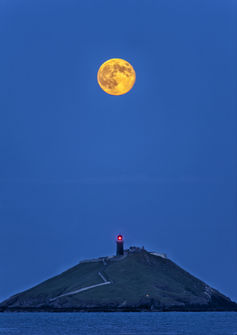
A 2013 supermoon as seen from Ireland. John Finn, CC BY-NC-ND
This was a somewhat rare event – a full moon occurring not just at perigee, but at the closest perigee of the year. But many people got the impression that this was an exceedingly unusual event, and rushed to see and capture images of this supposedly ultra-rare moon. Depending on how closely you require the full moon to occur to perigee in order to call it a supermoon, though, these events happen at least roughly once a year, and often more frequently.
Which brings us to this month’s much ballyhooed “super-supermoon.” News stories are hyping the upcoming full moon as a once-in-a-lifetime viewing opportunity. It’s true that the Nov. 14 full moon is the closest since 1948, and the next time the full moon will be closer is in 2034.
But this month’s full moon is only 0.02 percent closer – a mere 41 miles! – than the March 2011 supermoon. These tiny distances make no noticeable difference in the moon’s appearance.
Get out there and enjoy this supermoon! AP Photo/Charlie Riedel
Please do go out and observe the November full moon. If you are good with photography, try to document that the moon does appear larger than the other months this year. Just be aware you’ll have other virtually equivalent opportunities to do so pretty much every year for the rest of your life. So don’t worry if you miss it. You can catch the supermoon next time around.
ooOOoo
Fingers crossed our local weather will enable Jean and me to view this moon and I will try and photograph it.
If any readers also get to see this moon do let us know your thoughts and feelings.