Category: Culture

Dark money.

Back to politics of the bigger order.

I stopped and pondered whether I should share this with you but then I decided to so do. Reason is that this is …. well, let me put it in the words of the essay: “Dark money is among the greatest current threats to democracy. It means money spent below the public radar, that seeks to change political outcomes. It enables very rich people and corporations to influence politics without showing their hands.

Enough said!

ooOOoo

You Want It Darker?

10th December 2018

The remarkable story of how the hard-right Koch brothers funded a Trotskyite splinter group.

By George Monbiot, published in the Guardian 7th November 2018

Dark money is among the greatest current threats to democracy. It means money spent below the public radar, that seeks to change political outcomes. It enables very rich people and corporations to influence politics without showing their hands.

Among the world’s biggest political spenders are Charles and David Koch, co-owners of Koch Industries, a vast private conglomerate of oil pipelines and refineries, chemicals, timber and paper companies, commodity trading firms and cattle ranches. If their two fortunes were rolled into one, Charles David Koch, with $120bn, would be the richest man on Earth.

In a rare public statement – an essay published in 1978 – Charles Koch explained his objective. “Our movement must destroy the prevalent statist paradigm.” As Jane Mayer records in her book Dark Money, the Kochs’ ideology – lower taxes and looser regulations – and their business interests “dovetailed so seamlessly it was difficult to distinguish one from the other.”

Over the years, she notes, “the company developed a stunning record of corporate malfeasance”. Koch Industries paid massive fines for oil spills, illegal benzene emissions and ammonia pollution. In 1999, a jury found that it had knowingly using a corroded pipeline to carry butane, which caused an explosion in which two people died. Company Town, a film released last year, tells the story of local people’s long fight against pollution from a huge papermill owned by the Koch brothers.

The Koch’s chief political lieutenant, Richard Fink, developed what he called a three-stage model of social change. Universities would produce “the intellectual raw materials”. Think tanks would transform them into “a more practical or useable form”. Then “citizen activist” groups would “press for the implementation of policy change.”

To these ends the Kochs set up bodies in all three categories themselves, such as the Mercatus Center at George Mason University, the Cato Institute and the “citizens’ group” Americans for Prosperity. But for the most part they funded existing organisations that met their criteria. They have poured hundreds of millions of dollars into a network of academic departments, thinktanks, journals and movements. And they appear to have been remarkably successful.

As researchers at Harvard and Columbia universities have found, Americans for Prosperity alone now rivals the Republican party in terms of size, staffing and organisational capacity. It has pulled ”the Republican party to the far-right on economic, tax, and regulatory issues.” It was crucial to the success of the Tea Party Movement, the ousting of Democrats from Congress, and the staffing of Trump’s transition team. The Koch network has helped secure massive tax cuts, the smashing of trade unions and the dismantling of environmental legislation.

But their hands, for the most part, remain invisible. A Republican consultant who has worked for Charles and David Koch told Jane Mayer that “to call them under the radar is an understatement. They are underground.”

Until now, there has been no evidence that Charles and David Koch have directly funded organisations based in the UK. But a few weeks ago, a reader pointed me to one line he found in a form submitted to the US government by the Charles Koch Foundation, which showed money transferred to a company that appears to be the US funding arm of a UK organisation. Once I had grasped its significance, I set up a collaboration with the investigative group DeSmog UK. We could scarcely believe what we were seeing.

The organisation the Charles Koch Foundation has chosen to fund is at first sight astounding: a US organisation established by an obscure magazine run by former members of a tiny Trotskyite splinter group. Some of its core contributors still describe themselves as Marxists or Bolsheviks. But the harder you look at it, the more sense the Koch donations appear to make.

The name of the magazine is Spiked. It emerged from a group with a comical history of left factionalism. In 1974, the International Socialists split after a dispute over arithmetic in Volume 3 of Das Kapital. One of the new factions formed the Revolutionary Communist Group. In 1976, it split again, and one of the splinters became the Revolutionary Communist Tendency. It was led by a sociologist at the University of Kent called Frank Furedi. In 1981 it changed its name to the Revolutionary Communist Party.

In 1988, the party launched a magazine called Living Marxism (later LM). By then, it had abandoned many of its former convictions. Among the few discernible traces of its revolutionary past was an enthusiasm for former communists in the Balkans, such as Slobodan Milošević. In 2000, it closed after losing a libel case: it falsely claimed that ITN had fabricated evidence of Serb atrocities against Bosnian Muslims. But as soon as the magazine folded, a network of new groups, with the same cast of characters – Frank Furedi, Claire Fox, Mick Hume, Brendan O’Neill, James Heartfield, Michael Fitzpatrick, James Woudhuysen – sprang up to replace it. Among these organisations were the Institute of ideas, the Academy of Ideas, the Manifesto Club and a new magazine, Spiked. It had the same editor as LM (Mick Hume) and most of the same contributors.

We found three payments over the past two years from the Charles Koch Foundation. They amount to $170,000, earmarked for “general operating support”. The payments were made to Spiked US Inc. On Spiked’s “Donate” page is a button that says “In the US? Donate here”. It takes you to the PayPal link for “Spiked US, Inc”. Spiked US, in other words, appears to be its American funding arm. Beyond a postal address is Hoboken, New Jersey, it is hard to see what presence it has in the US. It appears to have been established in 2016, the year in which the Koch donations began.

When I asked Spiked what the money was for and whether there had been any other payments, its managing editor, Viv Regan, told me that the Charles Koch Foundation has now given Spiked US a total of $300,000, “to produce public debates in the US about free speech, as part of its charitable activities.” She claims the foundation supports projects “on both the left and the right”. The Koch Foundation has funded “a free-speech oriented programme of public debates on campus titled the Unsafe Space Tour” and four live events, the first of which is titled ‘Should we be free to hate?’. She told me “We’re very proud of our work on free speech and tolerance, and we are proud to be part of the programme.”

But I have been unable to find any public acknowledgement of this funding. Neither on the videos of the debates, in the posters advertising them or in reports of the events in Spiked magazine is there any mention of the Charles Koch Foundation. From what I could see of the title slides in the videos, they acknowledged an organisation called the Institute for Humane Studies, but not the Foundation. Spiked has yet to reply to my questions on this matter.

The Koch brothers are famously careful with their money. According to Jane Mayer, they exert “unusually tight personal control over their philanthropic endeavours”. David Koch told a sympathetic journalist, “If we’re going to give a lot of money, we’ll make darn sure they spend it in a way that goes along with our intent. And if they make a wrong turn and start doing things we don’t agree with, we withdraw funding.” So what might have attracted them to this obscure organisation?

Spiked magazine, now edited by Brendan O’Neill, appears to hate left-wing politics. It inveighs against the welfare state, against regulation, the Occupy movement, anti-capitalists, Jeremy Corbyn, George Soros, #MeToo, “black privilege” and Black Lives Matter. It does so in the name of the “ordinary people”, whom, it claims, are oppressed by the “anti-Trump and anti-Brexit cultural elites”, “feministic elites”, “green elites” and “cosmopolitan politicians”.

It repeatedly defends figures on the hard right or far right: Katie Hopkins, Nigel Farage, Alex Jones, the Democratic Football Lads’ Alliance, Tommy Robinson, Toby Young, Arron Banks, Brett Kavanaugh, Viktor Orban. They are portrayed as victims of “McCarthyites” trying to suppress free speech. It demands the hardest of possible Brexits, insisting that “No Deal is nothing to fear”, as it would allow the UK to scrap EU regulations.

But what it appears to hate most is environmentalism. It rails against “climate scaremongering”, and has called for fracking and coal production to be ramped up. It blames the Grenfell Tower disaster on “the moral fervour of the climate change campaign”. It mocks the idea that air pollution is dangerous and has proposed abolishing the planning system. “We need to conquer nature, not bow to it,” it contends. “Let’s make the ‘human footprint’ even bigger”.

Spiked’s writers rage against exposures of dark money. It calls the Observer’s Carole Cadwalladr, who has won a string of prizes for exposing the opaque spending surrounding the Brexit vote,the closest thing the mainstream British media has to an out-and-out conspiracy theorist”. It carries numerous articles by writers from the obscurely-funded Institute of Economic Affairs and from the Cato Institute, that was founded by Charles Koch. Its editor, Brendan O’Neill, also writes for Reason Magazine, owned by the Reason Foundation, which has received $1 million from the Charles Koch Foundation over the past two years.

Bizarrely, Spiked still uses Leon Trotsky to justify its positions. It claims to have built its philosophy on his objective of “increasing the power of man over nature and … the abolition of the power of man over man”. This means, it says, that “we should fight for greater human dominion over the natural world”, and that regulatory power should not be used to prevent anyone from exercising their agency. The result appears to turn Trotsky’s objective on its head: without constraint, those with the greatest agency can exercise uninhibited power over others.

Its enthusiasm for Trotsky is highly selective. As one of Spiked’s writers noted in 2002, his central message was that “the retreat behind national boundaries is a recipe for reaction”. Yet the magazine’s defence of both Brexit and Viktor Orban, Hungary’s right-wing prime minister, is founded on the notion of national sovereignty. Spiked seems to have remembered everything Leon Trotsky wrote that could be recruited to the cause of corporate capital and the hard right, and forgotten all his, shall we say, less enthusiastic musings about those forces.

Above all, its positions are justified with the claim to support free speech. But the freedom all seems to tend in one direction: freedom to lambast vulnerable people. The Unsafe Space tour that the Charles Koch Foundation financed was heavily slanted towards this line. Yet, when I exercised my freedom of speech in sending my questions to Spiked, I was denounced on the front page of the magazine as a “McCarthyite”. This is its favourite insult, which it uses prolifically to dismiss legitimate inquiries and critiques. The usual term for asking awkward questions about powerful interests is journalism. Open information and transparency are crucial to free speech: the more we know, the freer we become. Spiked has also called for schools, universities and governments to be “cleansed” of “the malign influence” of green NGOs, which it denounces as “the environmentalist enemy within.” Some friends of free speech, these.

The Kochs are mentioned in several Spiked articles, but no corresponding interests are declared. An article in 2016, when Spiked received $170,000 from the Charles Koch Foundation, attacked the Standing Rock protests against the Dakota Access Pipeline, in which the Koch brothers have a major interest.

Is this the extent of the Koch brothers’ funding of groups based in the UK? Who knows? I have not yet had a response from the Charles Koch Foundation. But I see these payments as part of a wider pattern of undisclosed funding. Democracy without transparency is not democracy.

http://www.monbiot.com

ooOOoo

If I was a younger man I would be very active in trying to stop this threat to our open society.

But I am not!

All I can do is to republish this insightful essay by George Monbiot and hope that a few of you didn’t realise this thing was going on, and are concerned!

The disaster of empire?

The view of Alfred McCoy

Despite Tom Engelhardt giving me permission years ago to republish his essays I rarely go down that path. Not because many of his essays aren’t deeply interesting but because he doesn’t to the best of my knowledge write about dogs!

However, a recent TomDispatch was sufficiently concerning that I am republishing it for you.

It’s quite a long article.

ooOOoo

Tomgram: Alfred McCoy, Grandmasters of the Universe

Posted by Alfred McCoyat, December 2, 2018.
Follow TomDispatch on Twitter @TomDispatch.

Whether you realize it or not, we are in a new age of imperial geopolitics on a grand — and potentially disastrous — scale. TomDispatch regular Alfred McCoy, author of In the Shadows of the American Century: The Rise and Decline of U.S. Global Power, lays out devastatingly just what that is likely to mean in the age of Donald Trump. And once you’ve read his piece on a century-plus of geopolitical thinkers who helped reorganize this planet in genuinely discordant ways, perhaps you’ll feel it’s time for us to imagine a new kind of geopolitics, one that finally addresses the disaster of empire and the ways in which such geopolitical thinking now intersects with another kind of disaster: climate change. For catastrophic as the previous versions of geopolitics may have been, just wait until such imperial and national follies, including the drive of China and India to build new coal plants galore, meet global warming.  By this century’s end, that phenomenon may leave significant parts of the planet facing six nightmarish crises at once, ranging from mega-droughts and mega-fires to rising sea levels and catastrophic flooding. Or what about the possibility that intense heat waves (sparked in part by the massive burning of coal) will, later in this century, make the north China plain, now the most heavily populated part of that country, uninhabitable and do the same for parts of northern India and South Asia? Or what about the recent estimate in a congressionally mandated report on climate change (carefully released by the Trump administration on Black Friday in an attempt to bury it) that this country will also be deeply affected, as, for instance, wildfires of the kind that just devastated parts of California will triple, and the U.S. economy will be downsized by 10% or more by 2100?

We are now on a planet guaranteed, barring a miracle of coordinated human action, to find itself in a set of geo-ruins of an unprecedented sort by 2100, ruins that will remain so on a time scale anything but historical or in any way human. With that in mind, consider McCoy’s account of the “architects of imperial disaster” who got us to just this spot and to an American president whose goal in life is to do everything humanly possible to pump more greenhouse gases in the atmosphere. Tom

Trump’s Trade Czar, The Latest Architect of Imperial Disaster
Five Academics Who Unleashed the “Demon” of Geopolitical Power
By Alfred W. McCoy

As Washington’s leadership fades more quickly than anyone could have imagined and a new global order struggles to take shape, a generation of leaders has crowded onto the world stage with their own bold geopolitical visions for winning international influence. Xi Xinping has launched his trillion-dollar “Belt and Road Initiative” to dominate Eurasia and thereby the world beyond. To recover the Soviet Union’s lost influence, Vladimir Putin seeks to shatter the Western alliance with cyberwar, while threatening to dominate a nationalizing, fragmenting Eastern Europe through raw military power. The Trump White House, in turn, is wielding tariffs as weapons to try to beat recalcitrant allies back into line and cripple the planet’s rising power, China. However bizarrely different these approaches may seem, they all share one strikingly similar feature: a reliance on the concept of “geopolitics” to guide their bids for global power.

Over the past century, countless scholars, columnists, and commentators have employed the term “geopolitics” (or the study of global control) to lend gravitas to their arguments. Few, though, have grasped the true significance of this elusive concept. However else the term might be used, geopolitics is essentially a methodology for the management (or mismanagement) of empire. Unlike conventional nations whose peoples are, in normal times, readily and efficiently mobilized for self-defense, empires, thanks to their global reach, are a surprisingly fragile form of government. They seem to yearn for strategic visionaries who can merge land, peoples, and resources into a sustainable global system.

The practice of geopolitics, even if once conducted from horseback, is as old as empire itself, dating back some 4,000 years. Until the dawn of the twentieth century, it was the conquerors themselves — from Alexander the Great to Julius Caesar to Napoleon Bonaparte — whose geopolitical visions guided the relentless expansion of their imperial domains. The ancient Greek historian Plutarch tried to capture (or perhaps exaggerate) the enormity of Caesar’s conquest of Gaul — a territory that comprises all of modern France and Belgium — by enumerating the nine years of war that “took by storm more than eight hundred cities, subdued three hundred tribes, and fought pitched battles… with three million men, of whom he slew one million… and took as many more prisoners.”

In his own account, however, Caesar reduced all of this to its geopolitical essentials. “All Gaul is divided into three parts,” he wrote in that famous first sentence of his Gallic Wars. “Of all these, the Belgae are the bravest, because… they are the nearest to the Germans, who dwell beyond the Rhine, with whom they are continually waging war; for which reason the Helvetii also surpass the rest of the Gauls in valor, as they contend with the Germans in almost daily battles.” When those formidable Helvetii marched out of their Alpine cantons to occupy Gallic lowlands in 58 BC, Caesar deployed geopolitics to defeat them — seizing strategic terrain, controlling their grain supplies, and manipulating rival tribes. Instead of enslaving the vanquished Helvetii as other Roman generals might have, Caesar, mindful of the empire’s geopolitical balance, returned them to their homelands with generous provisions, lest the German “barbarians” cross the Rhine and destabilize Gaul’s natural frontier.

In more modern times, imperial expansion has been guided by professional scholars who have made the formal study of geopolitics a hybrid field of some significance. Its intellectual lineage is actually remarkably straightforward. At the end of the nineteenth century, an American naval historian argued that seapower was the key to national security and international influence. A decade later, a British geographer observed that railroads had shifted the locus of global power landward into the interior of the vast Eurasian continent. In the succeeding century, a succession of scholars would draw on these two basic ideas to inspire bold geopolitical gambits by Nazi Germany, Cold War Washington, post-Soviet Russia, and even Donald Trump’s White House.

There is, in fact, a common thread in those disparate scholarly lives: in each case, the study of geopolitics seemed to change the trajectory of their careers, lifting them from the margins of society to the right hand of power. There, at moments when the empire they lived in was experiencing a crisis, their unconventional, even eccentric, ideas won influence — often in what would prove in the long term a nightmarish fashion.

Over the last century or so, while the actual application of such thinking regularly proved problematic at best and genuinely horrific at worst, geopolitics would remain a seductive concept with a persistent power to entice would-be practitioners. It would also prove an enormously elusive style of thinking, making it difficult to distinguish between the banal and the brilliant, between the imperially helpful and the imperially devastating.

Charting the interplay of land, people, and resources inside any empire, much less in a clash between such behemoths, is impossibly difficult. Admittedly, geopolitics in the hands of a grandmaster has, in the past, led to the crushing of armies and the conquest of continents. But seemingly similar strategies have also produced searing defeat and disaster. Caesar’s deft geopolitical balancing of Gaul and Germany on the fulcrum of the Rhine survived for some four centuries; Napoleon’s similar attempt lasted all of seven years.

Telling the difference, in the historical moment, is a daunting task and one that hasn’t turned out well in the last century. With that in mind, let’s now approach the careers of five modern “grandmasters” of geopolitics with an appropriate skepticism.

America’s Strategic Visionary

In 1890, as the industrial boom of the Gilded Age prepared the nation for a debut on the world stage, Captain Alfred Thayer Mahan, arguably America’s only original strategic thinker, published his famed Influence of Seapower Upon History. In it, he argued that naval power was the determining factor in the fate of nations. Born at West Point, where his father taught military tactics to Army cadets, Mahan came to the study of strategy almost by birthright. After graduating from the Naval Academy and having an indifferent career at sea, he became the head of the Naval War College in 1886. There, he developed novel geopolitical ideas that would revive a stalled career.

By analyzing sea power through a wide range of factors, including the defensibility of ports, national technological prowess, and the nature of good government, Mahan would produce the first serious study of geopolitics in the guise of a guide to naval strategy. In the process, he became an international celebrity, influencing admirals from London to Tokyo and inspiring leaders worldwide to join a naval arms race that would drain their treasuries to build costly battleships. The admiral who headed Germany’s navy, for instance, distributed 8,000 copies of Mahan’s history in translation and in the process won passage of the country’s first naval bill in 1898, funding his fateful challenge to British sea power.

As Europe’s empires continued to spread globally in the 1890s, Mahan’s prolific prose persuaded Washington that national defense required the creation of a genuine blue-water navy and bases in both the Caribbean and the Pacific. So important were such bases for the nation’s defense that, as Mahan gravely concluded, “No European state should henceforth acquire a coaling position within three thousand miles of San Francisco” — a distance that encompassed the Hawaiian Islands, soon to become U.S. possessions.

Like many advocates of geopolitics to come, Mahan would use seemingly precise strategic concepts to project his country’s current position into a murky future. As his geopolitical principles took physical form after 1898, they would produce an indefensible string of bases stretching across the Pacific from Panama to the Philippines.

Following his doctrine, the Navy ordered Admiral George Dewey’s squadron to seize Manila Bay during the Spanish-American War of 1898, which he did by sinking the Spanish fleet. Within five years, however, Japan’s stunning victory over the Russian fleet in the Sea of Japan forced Washington to withdraw much of its navy from the Western Pacific. In 1907, President Theodore Roosevelt began building a new Pacific bastion at Pearl Harbor in Hawaii, not in Manila Bay, saying that the Philippines, by then an American colony, is “our heel of Achilles.” Making matters worse, the Versailles peace settlement at the end of World War I conceded the Mariana Islands in the Western Pacific to Japan, allowing its navy to block the sea-lanes from Pearl Harbor to Manila Bay — a geopolitical reality that would doom General Douglas MacArthur’s Philippine command to a searing defeat at the start of World War II.

At that war’s end, however, Washington finally resolved this geopolitical conundrum by conquering Japan and building a chain of more than 100 bases from that country to the Philippines, making the Pacific littoral the strategic fulcrum for the defense of one continent (North America) and dominion over another (Eurasia).

Sir Halford Propagates Geopolitics

Little more than a decade after Mahan wrote his influential studies of seapower, Sir Halford Mackinder, head of the London School of Economics (LSE), published a seminal article that shifted the focus of geopolitics from sea to land. Writing in 1904, as the 5,700 miles of the Trans-Siberian Railway was still being built from Moscow to Vladivostok, Mackinder argued that future rail lines would knit Eurasia into a unitary landmass that he dubbed “the world island.” When that day came, Russia, perhaps in alliance with another land power like Germany, could control Eurasia’s sprawling “heartland,” allowing “the use of vast continental resources for fleet-building, and the empire of the world would be in sight.”

This path-breaking analysis came at a fortuitous time in Mackinder’s academic career. After teaching geography at Oxford for 10 years, he had failed to win a professorship and his marriage collapsed. At this low ebb in his life, he tried to establish himself as an exploratory geographer by making the first recorded ascent of Mount Kenya. Using the “moral suasion of my Mauser” rifle to force his 170 African bearers to “obey like the faithful dogs they are,” Mackinder moved through the famine-stricken foothills leading to that mountain by extracting food from hungry villages at gunpoint. Then, in September 1899, at the cost of 10 porters shot and many more whipped for “malingering,” he traversed glaciers to reach the summit at 17,000 feet. His triumph before a cheering crowd at the Royal Geographical Society in London was, however, marred not by his treatment of those bearers but by his failure to bring back significant findings or scientific specimens.

So, in yet another career change, Mackinder joined the LSE where he produced that influential article on geopolitics. At the end of World War I, he turned it into a book that contained his most memorable maxim: “Who rules East Europe commands the Heartland; Who rules the Heartland commands the World-Island; Who rules the World-Island commands the World.”

Mackinder’s expertise in imperial geopolitics helped launch his political career, including gaining him a seat in Parliament. In 1919, amid the turmoil of the Russian revolution, Britain was shipping arms to anti-Bolshevik forces there under General Anton Denikin. At Winston Churchill’s behest, the cabinet then appointed Mackinder as a special high commissioner for southern Russia. In a unique test of his “heartland” theory, Mackinder made an abortive attempt to rally the Czarist forces by meeting General Denikin inside his railcar in the Caucasus to propose an alliance with Poland and promise a mass evacuation in the event of defeat. Upon return to London, ignoring the general’s role in slaughtering some 100,000 Jews, Mackinder recommended recognizing his government and providing aid — advice the cabinet quickly dismissed.

From that brief moment at the apex of power, Mackinder soon fell into obscurity — losing his seat in Parliament, retiring from the LSE, and settling into a sinecure as chairman of the Imperial Shipping Committee. Were it not for the surprising later appeal of his ideas in Nazi Germany and Vladimir Putin’s Russia, his name would have been largely forgotten.

The Sorcerer’s Nazi Apprentice

As the Versailles peace conference of 1919 stripped Germany of its colonial empire and placed its Rhineland frontier under foreign occupation, Karl Haushofer exchanged his general’s baton for a geography professorship at Munich University. There, he would apply Mackinder’s concepts in an attempt to assure that his fatherland would never again engage in the sort of strategic blunders that, in World War I, had led to such a humiliating defeat.

While Mackinder himself was courting the powerful in postwar London, Haushofer was teaching geopolitics to future top Nazis in Munich — first to his graduate assistant Rudolf Hess (later to become the deputy Führer), and then to Adolf Hitler himself while he was writing Mein Kampf during his incarceration at Munich’s Landsberg Prison in 1924. Both Haushofer and his son Albrecht, who would train Nazi diplomats in the geopolitics of European conquest, were later rewarded with influential positions in the Third Reich. By dressing the British don’s idea of the Eurasian heartland as the pivot of world power in the local garb of Lebensraum (or “the Greater German Reich’s dazzling ascent by war… for extension of its living space”), Haushofer helped propagate an enticing logic of expansion that would send Hitler’s army on the road to defeat.

In 1942, Hitler dispatched a million men, 10,000 artillery pieces, and 500 tanks to breach the Volga River at Stalingrad and capture Russia’s heartland for lebensraum. In the end, the Reich’s forces would suffer 850,000 casualties — killed, wounded, and captured — in a vain attempt to break through the East European rimland into the world island’s heartland.

Appalled by the attack on Russia, Haushofer’s son joined the underground’s attempt to assassinate Hitler and was imprisoned. Before he was finally shot by the SS (on the day the Allies captured Berlin), he would compose mournful sonnets about geopolitical power, which he saw metaphorically as buried deep under the sea until “my father broke the seal” and “set the demon free to roam throughout the world.” A few months later, Karl Haushofer and his Jewish wife committed suicide together when confronted with the possibility that the victorious allies might prosecute him as a senior Nazi war criminal.

The Liberator of Eastern Europe

As the United States recoiled from its searing defeat in Vietnam, Zbigniew Brzezinski, an émigré Polish aristocrat and autodidact when it came to geopolitics, went from teaching international relations in New York to being President Jimmy Carter’s national security advisor in Washington. There, his risky geopolitical gambits gained an attentive audience after the Soviet Red Army invaded Afghanistan in 1979.

As an intellectual acolyte of Mackinder, Brzezinski embraced his concept of the Eurasian heartland as the “pivot” of global power. But in marked contrast to Mackinder’s failure in southern Russia in 1920, Brzezinski would prove adept at applying that geopolitician’s famous dictum on the dynamic that tied Eastern Europe to Eurasia’s heartland. (In the end, however, his Afghan moves would help give rise to Osama bin Laden, al-Qaeda, the 9/11 attacks, and the never-ending war on terror of this century.)

Wielding a multi-billion-dollar CIA covert operation in Afghanistan like a sharpened wedge, Brzezinski drove radical Islam deep into the heart of Soviet Central Asia. In the process, he drew Moscow into a debilitating decade-long Afghan war, so weakening it that Eastern Europe would finally break free from the Soviet empire in 1989. Asked about the enormous human suffering his strategy inflicted on Afghanistan and his role in creating a militant Islam hostile to the United States, he would remain coolly unapologetic. “What is most important to the history of the world?” he responded in 1998. “The Taliban or the collapse of the Soviet empire? Some stirred-up Moslems or the liberation of Central Europe and the end of the Cold War?”

In retirement, Brzezinski resumed his study of Mackinder’s theory, doing a better job as an armchair analyst than he had as a presidential adviser. In a 1998 book, he warned that dominance over Eurasia remained “the central basis for global primacy.” To control that vast region, Washington, he insisted, would have to preserve its “perch on the Western periphery” of Europe and hold its string of “offshore bases” along the Pacific littoral. Should these conditions change, he predicted with some prescience, “a potential rival to America might at some point arise.”

Putin’s Geopolitical Visionary

In the aftermath of the Soviet Union’s collapse, a Russian rightist ideologue, Alexander Dugin, would revive Mackinder’s ideas yet again to promote expansion into Eurasia. In the process, he would become “a major influence” on Russian President Vladimir Putin.

In the 1980s, as the Soviet Union was beginning to unravel, Dugin was still moving in Moscow’s bohemian circles as a dabbler in the occult and a fringe member of the “ultra-nationalist and anti-Semitic organization Pamiat.” After the Soviet collapse, he became chief ideologue for an eclectic alliance of patriotic and punk-rock groups called the New Bolshevik Party, serving as its candidate for a seat in the 1995 Duma legislative elections and winning just 1% of the vote.

At this political nadir for both him and his country, Dugin recycled Mackinder’s long-forgotten writings in a 1997 bestseller, The Foundation of Geopolitics: Russia’s Geopolitical Future. As his book moved into its fourth printing and he “became a pole star for a broad section of Russian hardliners,” he began teaching geopolitics to military officers at the General Staff Academy, later lecturing on it to elite students at Moscow State University, and anchoring Landmarks, a weekly television show on the subject. In those years, Moscow bookstores even opened special sections for geopolitics, the legislature formed a geopolitics committee, and the Russian leadership began to embrace Dugin’s vision of expansionist nationalism.

Drawing on Haushofer’s German writings, he argued that Russia should become a Eurasian bastion against “the conspiracy of ‘Atlanticism’ led by the United States and NATO… aimed at containing Russia within successive geographic rings” of the former Soviet republics. To achieve the destiny envisioned by Mackinder, Russia needed, in Dugin’s view, to dominate Eurasia — annexing Ukraine, conquering Georgia, incorporating Finland, and bringing the Balkan states (Serbia, Romania, and Bulgaria) under its rule as an Orthodox “Third Rome.” To advance such ideas, Dugin founded the Eurasia Youth Union of Russia in 2005, first to serve as “human shields” to fight against the Orange revolution in Ukraine and later to counter the “degeneration” caused by American cultural influence.

For the past decade, he has been a forceful advocate for Russian expansionism. During that country’s war with Georgia in 2008, he was photographed with a rocket launcher in South Ossetia and quoted in the national press calling for its annexation. After serving as “the brains behind Vladimir Putin’s wildly popular annexation of Crimea” in March 2014, Dugin embraced the Russian minority in eastern Ukraine, prodding the Russian president to openly support their separatist militia.

While advocacy of aggressive geopolitics has given Dugin significant political influence and Putin unprecedented popularity in Russia, it is still unclear whether in the long run such expansionism, in defiance of international norms, will prove a geopolitical masterstroke or a diplomatic debacle.

The Geopolitics of Trump’s Trade War

Most recently, a dissident economist and failed California politician named Peter Navarro has parlayed his hostility toward China into the role of key architect of Donald Trump’s “trade war” against Beijing. Like his Russian counterpart Alexander Dugin, Navarro is another in a long line of intellectuals whose embrace of geopolitics changed the trajectory of his career.

Raised by a single mom who worked secretarial jobs to rent one-bedroom apartments where he slept on the couch, Navarro went to college at Tufts on a scholarship and earned a doctorate in economics from Harvard. Despite that Ivy League degree, he remained an angry outsider, denouncing the special interests “stealing America” in his first book and later, as a business professor at the University of California-Irvine, branding San Diego developers “punks in pinstripes.” A passionate environmentalist, in 1992 Navarro plunged into politics as a Democratic candidate for the mayor of San Diego, denouncing his opponent’s husband as a convicted drug-money launderer and losing when he smirked as she wept during their televised debate.

For the next 10 years, Navarro fought losing campaigns for everything from city council to Congress. He detailed his crushing defeat for a seat in the House of Representatives in a tell-all book, San Diego Confidential, that dished out disdain for that duplicitous “sell out” Bill Clinton, dumb “blue-collar detritus” voters, and just about everybody else as well.

Following his last losing campaign for city council, Navarro spent a decade churning out books attacking a new enemy: China. His first “shock and awe” jeremiad in 2006 told horror stories about that country’s foreign trade; five years later, Death By China was filled with torrid tales of “bone-crushing, cancer-causing, flammable, poisonous, and otherwise lethal products” from that land. In 2015, a third book turned to geopolitics, complete with carefully drawn maps and respectful references to Captain Mahan, to offer an analysis of how China’s military was pursuing a relentless strategy of “anti-access, area denial” to challenge the U.S. Navy’s control over the Western Pacific.

To check China, the Pentagon then had two competing strategies — “Air-Sea Battle,” in which China’s satellites were to be blinded, knocking out its missiles, and “Offshore Control,” in which China’s entire coastline was to be blockaded by mining six maritime choke points from Japan to Singapore. Both, Navarro claimed, were fatally flawed. Given that, Navarro’s third book and a companion film (endorsed by one Donald Trump) asked: What should the United States do to check Beijing’s aggression and its rise as a global power? Since all U.S. imports from China, Navarro suggested, were “helping to finance a Chinese military buildup,” the only realistic solution was “the imposition of countervailing tariffs to offset China’s unfair trade practices.”

Just a year after reaching that controversial conclusion, Navarro joined the Trump election campaign as a policy adviser and then, after the November victory, became a junior member of the White House economic team. As a protectionist in an administration initially dominated by globalists, he would be excluded from high-level meetings and, according to Time Magazine, “required to copy chief economic adviser Gary Cohn on all his emails.” By February 2018, however, Cohn was on his way out and Navarro had become assistant to the president, with his new trade office now the co-equal of the National Economic Council.

As the chief defender of Trump’s belief that “trade wars are good and easy to win,” Navarro has finally realized his own geopolitical dream of attempting to check China with tariffs. In March, the president slapped heavy ones on Chinese steel imports and, just a few weeks later, promised to impose more of them on $50 billion of imports. When those started in July, China’s leaders retaliated against what they called “typical trade bullying,” imposing similar duties on American goods. Despite a warning from the Federal Reserve chairman that “trade tensions… could pose serious risks to the U.S. and global economy,” with Navarro at his elbow, Trump escalated in September, adding tariffs on an additional $200 billion in Chinese goods and threatening another $267 billion worth if China dared retaliate. Nonetheless, Beijing hit back, this time on just $60 billion in goods since 95% of all U.S. imports had already been covered.

Then something truly surprising happened. In September, the U.S. trade deficit with China ballooned to $305 billion for the year, driven by an 8% surge in Chinese imports — a clear sign that Navarro’s bold geopolitical vision of beating Beijing into submission with tariffs had collided big time with the complexities of world trade. Whether this tariff dispute will fizzle out inconsequentially or escalate into a full-blown trade war, wreaking havoc on global supply chains and the world economy, none of us can yet know, particularly that would-be geopolitical grandmaster Peter Navarro.

The Desire to be Grandmaster of the Universe

Though such experts usually dazzle the public and the powerful alike with erudition and boldness of vision, their geopolitical moves often have troubling long-term consequences. Mahan’s plans for Pacific dominion through offshore bases created a strategic conundrum that plagued American defense policy for a half-century. Brzezinski’s geopolitical lunge at the Soviet Union’s soft Central Asian underbelly helped unleash radical Islam. Today, Alexander Dugin’s use of geopolitics to revive Russia’s dominion over Eurasia has placed Moscow on a volatile collision course with Europe and the United States. Simultaneously, Peter Navarro’s bold gambit to contain China’s military and economic push into the Pacific with a trade war could, if it persists, produce untold complications for our globalized economy.

No matter how deeply flawed such geopolitical visions may ultimately prove to be, their brief moments as official policy have regularly shaped the destiny of nations and of empires in unpredictable, unplanned, and often dangerous ways. And no matter how this current round of geopolitical gambits plays out, we can be reasonably certain that, in the not-too-distant future, another would-be grandmaster will embrace this seductive concept to guide his bold bid for global power.

Alfred W. McCoy, a TomDispatch regular, is the Harrington professor of history at the University of Wisconsin-Madison. He is the author of The Politics of Heroin: CIA Complicity in the Global Drug Trade, the now-classic book which probed the conjuncture of illicit narcotics and covert operations over 50 years, and the recently published In the Shadows of the American Century: The Rise and Decline of U.S. Global Power (Dispatch Books).

Follow TomDispatch on Twitter and join us on Facebook. Check out the newest Dispatch Books, John Feffer’s new dystopian novel (the second in the Splinterlands series) Frostlands, Beverly Gologorsky’s novel Every Body Has a Story, and Tom Engelhardt’s A Nation Unmade by War, as well as Alfred McCoy’s In the Shadows of the American Century: The Rise and Decline of U.S. Global Power and John Dower’s The Violent American Century: War and Terror Since World War II.

Copyright 2018 Alfred W. McCoy

ooOOoo

We are now on a planet guaranteed, barring a miracle of coordinated human action, to find itself in a set of geo-ruins of an unprecedented sort by 2100, ruins that will remain so on a time scale anything but historical or in any way human.

Indeed!

Back to dogs tomorrow!

Facing up to the end!

It comes to all of us: dogs and humans.

The following article looks deeply into the dog’s life. Or rather the end of the dog’s life.

For the fact of the matter is that we all have this coming to us. Some turn to religion; some know that we are on our own. Every living creature shares the same fate as us humans.

Yet there is something very special about the dog. Something that sets the dog apart. Something that elevates the dog into more than an animal, despite how silly that is to write. But you know what I mean.

Enough from me. Let me turn to the following article that was published on The Conversation website and is republished within the terms of that site.

ooOOoo

Why losing a dog can be harder than losing a relative or friend

By    Cornelia H. Dudley, Professor of Psychology, Knox College

March 9, 2017

Recently, my wife and I went through one of the more excruciating experiences of our lives – the euthanasia of our beloved dog, Murphy. I remember making eye contact with Murphy moments before she took her last breath – she flashed me a look that was an endearing blend of confusion and the reassurance that everyone was ok because we were both by her side.

When people who have never had a dog see their dog-owning friends mourn the loss of a pet, they probably think it’s all a bit of an overreaction; after all, it’s “just a dog.”

However, those who have loved a dog know the truth: Your own pet is never “just a dog.”

Many times, I’ve had friends guiltily confide to me that they grieved more over the loss of a dog than over the loss of friends or relatives. Research has confirmed that for most people, the loss of a dog is, in almost every way, comparable to the loss of a human loved one. Unfortunately, there’s little in our cultural playbook – no grief rituals, no obituary in the local newspaper, no religious service – to help us get through the loss of a pet, which can make us feel more than a bit embarrassed to show too much public grief over our dead dogs.

Perhaps if people realized just how strong and intense the bond is between people and their dogs, such grief would become more widely accepted. This would greatly help dog owners to integrate the death into their lives and help them move forward.

An interspecies bond like no other

What is it about dogs, exactly, that make humans bond so closely with them?

For starters, dogs have had to adapt to living with humans over the past 10,000 years. And they’ve done it very well: They’re the only animal to have evolved specifically to be our companions and friends. Anthropologist Brian Hare has developed the “Domestication Hypothesis” to explain how dogs morphed from their grey wolf ancestors into the socially skilled animals that we now interact with in very much the same way as we interact with other people.

Perhaps one reason our relationships with dogs can be even more satisfying than our human relationships is that dogs provide us with such unconditional, uncritical positive feedback. (As the old saying goes, “May I become the kind of person that my dog thinks I already am.”)

This is no accident. They have been selectively bred through generations to pay attention to people, and MRI scans show that dog brains respond to praise from their owners just as strongly as they do to food (and for some dogs, praise is an even more effective incentive than food). Dogs recognize people and can learn to interpret human emotional states from facial expression alone. Scientific studies also indicate that dogs can understand human intentions, try to help their owners and even avoid people who don’t cooperate with their owners or treat them well.

Not surprisingly, humans respond positively to such unqualified affection, assistance and loyalty. Just looking at dogs can make people smile. Dog owners score higher on measures of well-being and they are happier, on average, than people who own cats or no pets at all.

Like a member of the family

Our strong attachment to dogs was subtly revealed in a recent study of “misnaming.” Misnaming happens when you call someone by the wrong name, like when parents mistakenly calls one of their kids by a sibling’s name. It turns out that the name of the family dog also gets confused with human family members, indicating that the dog’s name is being pulled from the same cognitive pool that contains other members of the family. (Curiously, the same thing rarely happens with cat names.)

It’s no wonder dog owners miss them so much when they’re gone.

Psychologist Julie Axelrod has pointed out that the loss of a dog is so painful because owners aren’t just losing the pet. It could mean the loss of a source of unconditional love, a primary companion who provides security and comfort, and maybe even a protégé that’s been mentored like a child.

The loss of a dog can also seriously disrupt an owner’s daily routine more profoundly than the loss of most friends and relatives. For owners, their daily schedules – even their vacation plans – can revolve around the needs of their pets. Changes in lifestyle and routine are some of the primary sources of stress.

According to a recent survey, many bereaved pet owners will even mistakenly interpret ambiguous sights and sounds as the movements, pants and whimpers of the deceased pet. This is most likely to happen shortly after the death of the pet, especially among owners who had very high levels of attachment to their pets.

While the death of a dog is horrible, dog owners have become so accustomed to the reassuring and nonjudgmental presence of their canine companions that, more often than not, they’ll eventually get a new one.

So yes, I miss my dog. But I’m sure that I’ll be putting myself through this ordeal again in the years to come.

ooOOoo

I don’t want to think of losing any more of our family but it will surely happen. As night follows day!

Going to close with this:

Pharaoh, relaxing in a Devon garden.

This is the reality, folks, for us all.

A very sombre read from George Monbiot.

I read this essay first thing in the morning last Wednesday while still in bed. It struck me with a whole range of feelings and emotions; not positive ones I should add. Then I read it aloud to Jeannie with the feeling that this speaks of what it is, what it’s going to be, and how little time we have to make the sorts of gigantic changes that we all need.

Sorry to be down-in-the-dumps about the following; published with George Monbiot’s kind permission.

ooOOoo

Hopeless Realism

No effective means of stopping climate breakdown is deemed “politically realistic”. So we must change political realities.

By George Monbiot, published in the Guardian 14th November 2018.

It was a moment of the kind that changes lives. At a press conference held by Extinction Rebellion last week, two of us journalists pressed the activists on whether their aims were realistic. They have called, for example, for carbon emissions in the UK to be reduced to net zero by 2025. Wouldn’t it be better, we asked, to pursue some intermediate aims?

A young woman called Lizia Woolf stepped forward. She hadn’t spoken before, and I hadn’t really noticed her, but the passion, grief and fury of her response was utterly compelling. “What is it that you are asking me as a 20-year-old to face and to accept about my future and my life? … this is an emergency – we are facing extinction. When you ask questions like that, what is it you want me to feel?”. We had no answer.

Softer aims might be politically realistic, but they are physically unrealistic. Only shifts commensurate with the scale of our existential crises have any prospect of averting them. Hopeless realism, tinkering at the edges of the problem, got us into this mess. It will not get us out.

Public figures talk and act as if environmental change will be linear and gradual. But the Earth’s systems are highly complex, and complex systems do not respond to pressure in linear ways. When these systems interact (because the world’s atmosphere, oceans, land surface and lifeforms do not sit placidly within the boxes that make study more convenient) their reactions to change become highly unpredictable. Small perturbations can ramify wildly. Tipping points are likely to remain invisible until we have passed them. We could see changes of state so abrupt and profound that no continuity can be safely assumed.

Only one of the many life support systems on which we depend – soils, aquifers, rainfall, ice, the pattern of winds and currents, pollinators, biological abundance and diversity – need fail for everything to slide. For example, when Arctic sea ice melts beyond a certain point, the positive feedbacks this triggers (such as darker water absorbing more heat, melting permafrost releasing methane, shifts in the polar vortex) could render runaway climate breakdown unstoppable. When the Younger Dryas period ended 11,600 years ago, Greenland ice cores reveal temperatures rising 10°C within a decade.

I don’t believe that such a collapse is yet inevitable, or that a commensurate response is either technically or economically impossible. When the US joined the Second World War in 1941, it replaced a civilian economy with a military economy within months. As Jack Doyle records in his book Taken for a Ride, “In one year, General Motors developed, tooled, and completely built from scratch 1000 Avenger and 1000 Wildcat aircraft … Barely a year after Pontiac received a Navy contract to build antishipping missiles, the company began delivering the completed product to carrier squadrons around the world.” And this was before advanced information technology made everything faster.

The problem is political. A fascinating analysis by the social science professor Kevin Mackay contends that oligarchy has been a more fundamental cause of the collapse of civilisations than social complexity or energy demand. Oligarchic control, he argues, thwarts rational decision-making, because the short-term interests of the elite are radically different to the long-term interests of society. This explains why past civilizations have collapsed “despite possessing the cultural and technological know-how needed to resolve their crises.” Economic elites, that benefit from social dysfunction, block the necessary solutions.

The oligarchic control of wealth, politics, media and public discourse explains the comprehensive institutional failure now pushing us towards disaster. Think of Trump and his cabinet of multi-millionaires, the influence of the Koch brothers, the Murdoch empire and its massive contribution to climate science denial, the oil and motor companies whose lobbying prevents a faster shift to new technologies.

It is not just governments that have failed to respond, though they have failed spectacularly. Public sector broadcasters have deliberately and systematically shut down environmental coverage, while allowing the opaquely-funded lobbyists that masquerade as thinktanksto shape public discourse and deny what we face. Academics, afraid to upset their funders and colleagues, have bitten their lips. Even the bodies that claim to be addressing our predicament remain locked within destructive frameworks.

For example, last Wednesday I attended a meeting about environmental breakdown at the Institute for Public Policy Research. Many of the people in the room seemed to understand that continued economic growth is incompatible with sustaining the Earth’s systems. As the author Jason Hickel points out, a decoupling of rising GDP from global resource use has not happened and will not happen. While 50 billion tonnes of resources used per year is roughly the limit the Earth’s systems can tolerate, the world is already consuming 70 billion tonnes. Business as usual, at current rates of economic growth, will ensure that this rises to 180 billion tonnes by 2050. Maximum resource efficiency, coupled with massive carbon taxes and some pretty optimistic assumptions, would reduce this to 95 billion tonnes: still way beyond environmental limits. A study taking account of the rebound effect (efficiency leads to further resource use) raises the estimate to 132 billion tonnes. Green growth, as members of the Institute appear to accept, is physically impossible.

On the same day, the same Institute announced a major new economics prize for “ambitious proposals to achieve a step-change improvement in the growth rate.” It wants ideas that will enable economic growth rates in the UK at least to double. The announcement was accompanied by the usual blah about sustainability, but none of the judges of the prize has a discernible record of environmental interest.

Those to whom we look for solutions trundle on as if nothing has changed. They continue to behave as if the accumulating evidence has no purchase on their minds. Decades of institutional failure ensures that only “unrealistic” proposals – the repurposing of economic life, with immediate effect – now have a realistic chance of stopping the planetary death spiral. And only those who stand outside the failed institutions can lead this effort.

Two tasks need to be performed simultaneously: throwing ourselves at the possibility of averting collapse, as Extinction Rebellion is doing, slight though this possibility may appear. And preparing ourselves for the likely failure of these efforts, terrifying as this prospect is. Both tasks require a complete revision of our relationship with the living planet. Because we cannot save ourselves without contesting oligarchic control, the fight for democracy and justice and the fight against environmental breakdown are one and the same. Do not allow those who have caused this crisis to define the limits of political action. Do not allow those whose magical thinking got us into this mess to tell us what can and cannot be done.

www.monbiot.com

ooOOoo

I have a son and daughter who live in England. My daughter and her husband have a seven-year-old boy, my grandson, and I hope that I live long enough to have some decent conversations with him.  Now whether or not those conversations will turn to his future and what fears he has only time will tell.

But that doesn’t stop me from worrying, worrying big time, just what world we are leaving for him and the thousands of others of his age as they grow up. I truly fear that it is going to be a very different planet than the one we have at present.

I hope with all my heart that I am wrong!

This is the woman I love!

Today is our anniversary.

Yes, November 20th, 2010 was the day we became married.

And in celebration of that day, and more generally in meeting Jean some three years previously, I want to republish the following. For when I met my darling Jeannie she had been vegetarian for many years and in turn we both became vegan.

ooOOoo

Why people become vegans: The history, sex and science of a meatless existence

By    Assistant Professor of Marketing, University of Oregon

November 19, 2018

At the age of 14, a young Donald Watson watched as a terrified pig was slaughtered on his family farm. In the British boy’s eyes, the screaming pig was being murdered. Watson stopped eating meat and eventually gave up dairy as well.

Later, as an adult in 1944, Watson realized that other people shared his interest in a plant-only diet. And thus veganism – a term he coined – was born.

Flash-forward to today, and Watson’s legacy ripples through our culture. Even though only 3 percent of Americans actually identify as vegan, most people seem to have an unusually strong opinion about these fringe foodies – one way or the other.

As a behavioral scientist with a strong interest in consumer food movements, I thought November – World Vegan Month – would be a good time to explore why people become vegans, why they can inspire so much irritation and why many of us meat-eaters may soon join their ranks.

Early childhood experiences can shape how we feel about animals – and lead to veganism, as it did for Donald Watson. HQuality/Shutterstock.com

It’s an ideology not a choice

Like other alternative food movements such as locavorism, veganism arises from a belief structure that guides daily eating decisions.

They aren’t simply moral high-grounders. Vegans do believe it’s moral to avoid animal products, but they also believe it’s healthier and better for the environment.

Also, just like Donald Watson’s story, veganism is rooted in early life experiences.

Psychologists recently discovered that having a larger variety of pets as a child increases tendencies to avoid eating meat as an adult. Growing up with different sorts of pets increases concern for how animals are treated more generally.

Thus, when a friend opts for Tofurky this holiday season, rather than one of the 45 million turkeys consumed for Thanksgiving, his decision isn’t just a high-minded choice. It arises from beliefs that are deeply held and hard to change.

Sutton and Sons is a vegan fish and chip restaurant in London. Reuters/Peter Nicholls

Veganism as a symbolic threat

That doesn’t mean your faux-turkey loving friend won’t seem annoying if you’re a meat-eater.

The late celebrity chef Anthony Bourdain famously quipped that meat avoiders “are the enemy of everything good and decent in the human spirit.”

Why do some people find vegans so irritating? In fact, it might be more about “us” than them.

Most Americans think meat is an important part of a healthy diet. The government recommends eating 2-3 portions (5-6 ounces) per day of everything from bison to sea bass. As tribal humans, we naturally form biases against individuals who challenge our way of life, and because veganism runs counter to how we typically approach food, vegans feel threatening.

Humans respond to feelings of threat by derogating outgroups. Two out of 3 vegans experience discrimination daily, 1 in 4 report losing friends after “coming out” as vegan, and 1 in 10 believe being vegan cost them a job.

Veganism can be hard on a person’s sex life, too. Recent research finds that the more someone enjoys eating meat, the less likely they are to swipe right on a vegan. Also, women find men who are vegan less attractive than those who eat meat, as meat-eating seems masculine.

The fake meat at one Fort Lauderdale restaurant supposedly tastes like real meat. AP Photo/J. Pat Carter

Crossing the vegan divide

It may be no surprise that being a vegan is tough, but meat-eaters and meat-abstainers probably have more in common than they might think.

Vegans are foremost focused on healthy eating. Six out of 10 Americans want their meals to be healthier, and research shows that plant-based diets are associated with reduced risk for heart disease, certain cancers, and Type 2 diabetes.

It may not be surprising, then, that 1 in 10 Americans are pursuing a mostly veggie diet. That number is higher among younger generations, suggesting that the long-term trend might be moving away from meat consumption.

In addition, several factors will make meat more costly in the near future.

Meat production accounts for as much as 15 percent of all greenhouse gas emissions, and clear-cutting for pasture land destroys 6.7 million acres of tropical forest per year. While some debate exists on the actual figures, it is clear that meat emits more than plants, and population growth is increasing demand for quality protein.

Seizing the opportunity, scientists have innovated new forms of plant-based meats that have proven to be appealing even to meat-eaters. The distributor of Beyond Meat’s plant-based patties says 86 percent of its customers are meat-eaters. It is rumored that this California-based vegan company will soon be publicly traded on Wall Street.

Even more astonishing, the science behind lab-grown, “cultured tissue” meat is improving. It used to cost more than $250,000 to produce a single lab-grown hamburger patty. Technological improvements by Dutch company Mosa Meat have reduced the cost to $10 per burger.

Watson’s legacy

Even during the holiday season, when meats like turkey and ham take center stage at family feasts, there’s a growing push to promote meatless eating.

London, for example, will host its first-ever “zero waste” Christmas market this year featuring vegan food vendors. Donald Watson, who was born just four hours north of London, would be proud.

Watson, who died in 2006 at the ripe old age of 95, outlived most of his critics. This may give quiet resolve to vegans as they brave our meat-loving world.

ooOOoo

Well all I can say is that if Donald Watson can do it then so can Jeannie and me.

Returning to Sabrina.

These next couple of weeks are going to be challenging!

So ….. I am returning to a post I published a year ago.

Sabrina’s Loyalty

Lisa Mae DeMasi offers you all a beautiful guest post.

ooOOoo

How this Handler and Service Dog Nurture One Another

by Lisa Mae DeMasi

At two years old, Lady’s ribs protruded from her coat and her belly was swollen with milk.

Like the thirteen other Labs that had arrived at a rest stop in Union, CT on the straight 12½-hour drive from Muncie, IN, she was presented to us on a crisp autumn day amid the chaos of respective adopters.

My husband Dennis had never experienced the warmth and companionship of having a dog and well, I surprised him with Lady, who we quickly renamed to Sabrina. The very afternoon we picked her up, we raced to the park, wanting her to feel the joy of freedom and play. My husband’s face lit up and while I was thrilled at the opportunity to befriend and care for Sabrina; it meant closing the 20-year gap since our beloved German Shepard from my childhood passed away.

Until laying my eyes on Sabrina’s profile, my heart couldn’t entertain loving another dog.

And what canine isn’t after the same love?

 In Sabrina’s case, she couldn’t know of the family members that awaited to embrace her presence. Within days of the initial hair-raising excitement, the cat sought out occasions to groom her ears. Our pet rat was free to waddle the kitchen floor un-bothered, and the pair of bonded bunnies in want of company stretched out beside her on the living room floor.

Dog, cat, rat, rabbit?
You bet.
And Dennis and me?
Like kids again.
Sabrina settled into the folds of our lives, well-nourished and exercised in Boston’s epic snowfall in the winter of 2009-2010, taking careful watch over all of us. The fear expressed in her eyes pre-adoption disappeared.

Eight years later, she watches over me in particular. Thirty years ago, I was struck and thrown from the passenger side of a car until my abdomen collided with the steering wheel—blunt force that called for iterative repair to my digestive system  and caused permanent damage to the nerves that signal my bladder is full.

Today when I’m busy working away, Sabrina will alert me to get up every couple of hours to make a trip to the restroom by gently placing her head in my lap.

When I suffer acute intestinal cramping, Crohns-like symptoms, she’ll sit at my side and lean her body against mine. Her calm and steady source of nurturing, helps me to relax and mitigates the cramps.

In 2008, the Department of Justice amended the Americans with Disabilities Act (ADA). This was amended to include digestive, bowel and bladder impairments that limit major life activities as the disabled, calling for employers to make reasonable accommodations and if the individual elects, to allow task-oriented service animals [dog or miniature horse] to accompany them on the job.

Sabrina, serving in the capacity of a sensory/medical assist – alerting me to get up and take care of myself –  qualifies.

The HR Director, Debra Susler of Reputation Institute in Cambridge, MA this past April would not allow Sabrina to accompany me on-the-job. I sent her an elaborate email explaining my condition and Sabrina’s certification. She did not reply to me but to my supervisor.

She said “no”.

My response?

I walked out of the place

Sabrina: rescue dog to devoted helper dog.

Respectively, Sabrina’s competencies and understanding of language cease to astound us and her behavior on-the-job at Dell EMC is so well-mannered, coworkers never run out of compliments.

And bystanders in public? The grocery store, pharmacy, gym, dentist, doctor?

Gazes from cell phones are broken, conversations fall short.

Then, come the smiles. A question. Praises. The feel-good moment.

Sabrina brings people together.
I recently read a distressing post from a woman who said every time she looks into a service dog’s eyes, she sees sadness. Even Ingrid Newkirk, CEO and Co-Founder of PETA, has told me, “the life of a typical service dog is a terrible one.”

It’s true. Any canine enslaved to servitude is doomed a dog’s life unlived.

Service animals are working animals, not pets.

The ADA confirms it.

But that’s not the relationship Sabrina and I share [and I understand it can’t be the same with other handlers and service dogs]. In addition to being my devoted helper, Sabrina teaches me to exist in the moment — just like she does. To enjoy the sight of the sun shimmering through the trees, the call of the birds, the fragrance of wildflowers, the feel of the soft soil I tread a few yards behind her when we’re on our hikes.

What more could a dog do for a girl?

ooOOoo

There is something rather special about Lisa’s guest post; special in an introspective way!

That will be better appreciated if you go across to Lisa’s blog site at Nurture Is My Nature.
In particular when you read, via her ‘About’ link, what Lisa offers about herself. Republished here in full.

ooOOoo

As time goes by and you’re getting older and stuff like that—getting older sucks. You know, I hear all this crap about, ‘Oh, you can age with dignity.’ Really? —Mickey Rourke

Lisa’s creative work has recently placed second in Fiftiness’s 2017 Writing Contest (Why I Love Bike Commuting in Boston) and been featured in the anthologies, Unmasked, Women Write About Sex & Intimacy After Fifty (9/17, print) and The Best of Vine Leaves Literary Journal (11/17, print). Her essays have been published in the lit journals and several other media outlets. She considers Massachusetts her home, but has lived in Connecticut, Vermont, New York State and two other planets called Wyoming and Arizona. She earned a B.A. from Regis College and an MBA from Babson College, and holds a Master certificate in Reiki.

Lisa is seeking a development editor [that gets her] to work on her collection of essays and her memoir.

Published work:

Contests:

Why I Love Bike Commuting in Boston, Fiftiness, Second Place Winner, 5/23/17

Anthologies:

  1. The Kickass Formula that Restored My Libido, Unmasked, Women Write About Sex & Intimacy After Fifty, print, 9/17
  2. Grievances, Vine Leaves Vignette Collection (coffee table book), 11/1/17

Literary journals:

  1. This Writer’s Secret (Fiction Southeast, 11/1/170
  2. Snowflake (Crux Magazine, 9/17) [FINALLY got picked up!]
  3. Ain’t Misbehavin’ (Gravel, 12/4/16)
  4. T-boned (Gravel, 12/4/16)
  5. Forgive Me (Slippery Elm, 12/16)
  6. What More Is There to Ask? (Foliate Oak, 9/1/16)
  7. Becoming Our Fathers (East Bay Review, 2/23/16)
  8. The Subversive Writer (Shark Reef, 7/9/14)

Media Outlets:

  1. Not Having Children Was My Perfect Path (Fiftiness, 12/16)
  2. What More Is There to Ask? (Huffpost, 9/16)
  3. The Secret to Doing What You Love (The Artist Unleashed 9/16; HuffPost 3/15)
  4. The Kickass Formula That Restored My Libido (HuffPost 2/16; Rebelle Society 4/15)
  5. My Dear Friend, the Dirty (HuffPost 1/16; Elephant Journal, 12/14)
  6. She, Mother. Me, Daughter. (Huffpost 2/16; Elephant Journal, 1/15)
  7. What the Wrong Job Can Teach You (HuffPost 1/16)
  8. What Happened When I Performed Reiki on My Conservative Mother (Elephant Journal, 1/15)
  9. Why Regret Is So Deliciously Fun (HuffPost 1/16; Midlife Boulevard 8/15)

 Write to me at lisa dot demasi at gmail

ooOOoo

Now please watch “Just Like Heaven,” the video Lisa filmed of Sabrina, post-adoption in 2009.

A Letter to Mr. Cosmos, Page Two

The concluding part of my letter to Mr. Cosmos.

Your Universe, Mr. Cosmos, is an enormous place.

Just the view at night from one small planet, the one that I happen to live on, Planet Earth, reveals millions upon millions of stars. It is then beyond inconceivable that there are not, in turn, countless numbers of other planets.

Extending this line of thought and recognising that a ‘mere’ billion years after the formation of our solar system and Planet Earth, some 4.54 billion years ago, the earliest life appeared, we can’t surely be alone!

Granted it was only cyanobacteria, as in blue-green algae, but, but, but ……… that this evolution of life on Planet Earth, and that evolution eventually leading to intelligent life, including the gift to us humans of the genetic separation of the dog from the wolf some 100,000 years ago, has not occurred on other planets is also totally inconceivable.

So, dear Mr. Cosmos, why have we not detected any signs of that intelligent life. Where are they?

Mr. Cosmos, back in June this year there was an article on the Big Think site that asked just this question.

Are we alone in the universe? New Drake equation suggests yes

A fresh take on the decades-old Drake equation incorporates new factors and greater uncertainty, suggesting a high likelihood that humanity is alone in the universe.

By , 25th June, 2018

At the Los Alamos National Laboratory in 1950, physicist Enrico Fermi famously posed to his colleagues a simple question borne of complex math: ‘Where are they?’

He was asking about aliens—intelligent ones, specifically. The Italian-American scientist was puzzled as to why mankind hasn’t detected any signs of intelligent life beyond our planet. He reasoned that even if life is extremely rare, you’d still expect there to be many alien civilizations given the sheer size of the universe. After all, some estimates indicate that there is one septillion, or 1,000,000,000,000,000,000,000,000, stars in the universe, some of which are surrounded by planets that could probably support life.

So, where are they, and why aren’t they talking to us?

Now, as the article reveals, there is a lot to tackling this question, much of it involving statistics and mathematics, but it does prove one very important fact: Finding another planet as good for life and humanity as this one is just about impossible.

This is our only home!!

My wish, dear Mr. Cosmos, to you is this: That before I die it becomes clear beyond question that the peoples of this sweet Planet, from the lone individual living on some island out in the wilderness to the Governments of the most powerful nations on Earth, understand that nothing is more important than loving, caring for and looking after Planet Earth.

I remain, dear Mr. Cosmos, your respectful servant.

Paul H.

Picture Parade Two Hundred and Fifty-Eight

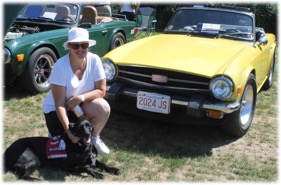
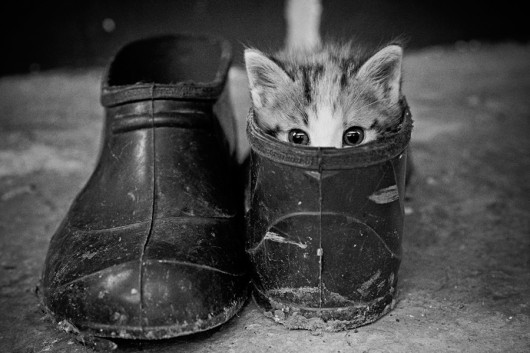
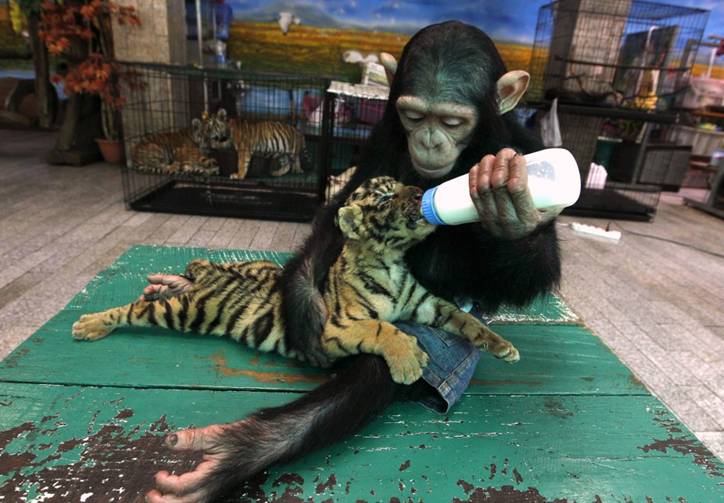
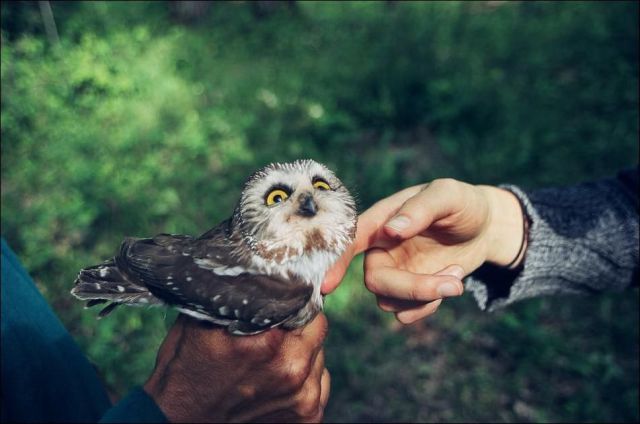
The last of dear Su’s photos.

oooo

oooo

oooo

oooo

oooo

oooo

oooo

So, so beautiful! Especially loved the photo of the chimp bottle feeding the tiger.

How about your favourite?

P.S. Later on yesterday, at 13 minutes past 4pm to be precise, we had rain. Thus ended 111 days without rain.

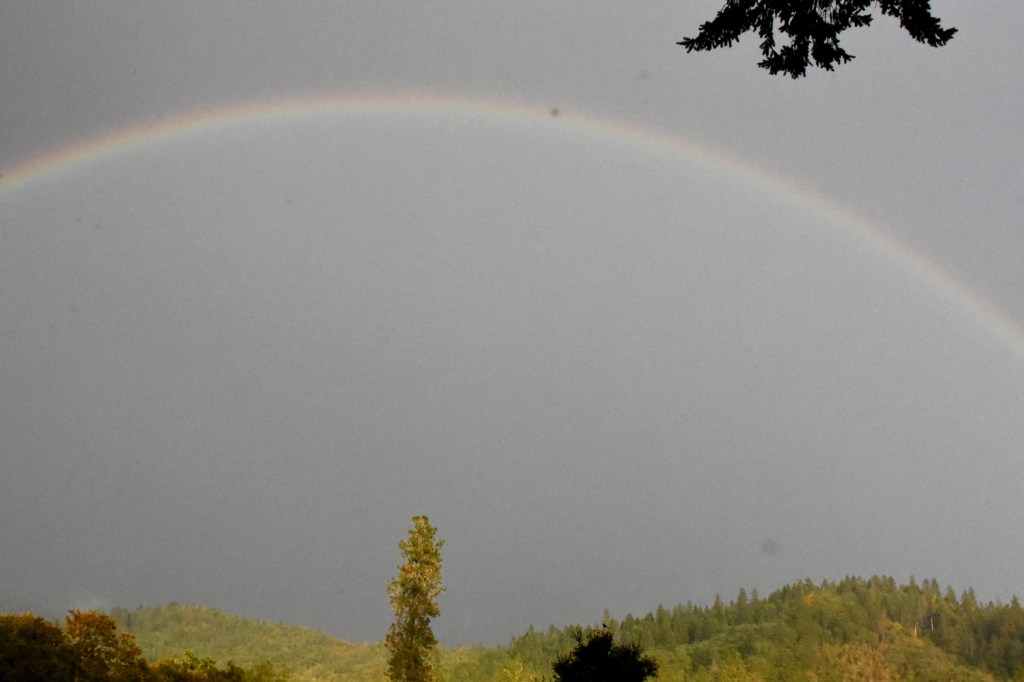
Then shortly after we had eaten supper and I was washing the dishes, I looked up to see the most beautiful rainbow over the hills to the East of us.

This photo doesn’t do it justice!

More benefits of four legs!

Look what dear Monty found!

I shall cut my waffling and just say that I saw this item on The Smithsonian ‘Smart News’ section last week and just knew it should be shared with you!

ooOOoo

Who’s a Good Archaeologist? Dog Digs Up Trove of Bronze Age Relics

While on a walk outside a small Czech village, Monty the dog and his owner found nearly two dozen 3,000-year-old artifacts

Monty, the dog that found the Bronze Age relics, unearthed 13 sickles, two spear points, three axes and several bracelets. (Hradec Králové Region)

Some archaeologists carry tools and painstakingly chip away at historic sites. Others might have fluffy bodies, keen senses of smell and an affinity for digging stuff up.

As Tom McEnchroe reports for Radio Praha, a very good dog named Monty recently unearthed a rare trove of Bronze Age artifacts near the Czech village of Kostelecké Horky. Monty was walking with his human, identified as “Mr. Frankota,” in a field when he began pawing frenetically at the ground. Soon, thanks to Monty’s hard work, metallic objects began to emerge in the soil.

The cache of relics includes 13 sickles, two spear points, three axes and several bracelets. The objects have been dated to the Urnfield period around 3,000 years ago. This late European Bronze Age culture is marked by the transition from inhumation burials to cremations; the remains of the dead were interred in urns, giving the era its name. According to Encyclopaedia Britannica, Urnfield culture first appeared in east-central Europe and northern Italy, but eventually spread “to Ukraine, Sicily, Scandinavia, and across France to the Iberian peninsula.”

It is rare to find a cluster of intact Urnfield objects, according to a press release. “The culture that lived here at the time normally just buried fragments, often melted as well,” Martina Beková, an archaeologist at the Museum and Gallery of Orlické who studied the artifacts after they were discovered by Monty, tells McEnchroe. So she suspects that the relics were tied to a ritual—“most likely a sacrifice of some sorts,” Beková says.

Additional evidence could help pin down the function of the objects, and according to Michelle Starr of Science Alert, local archaeologists have been searching the area in the hopes of finding more relics. They haven’t uncovered anything yet, but Sylvie Velčovská, a spokeswoman for the region, tells McEnchroe that there have been, considerable changes to the surrounding terrain over the centuries, so it is possible that the deeper layers are still hiding some secrets.

The newly uncovered objects will be on display at the Museum and Gallery of Orlické Mountains in the town of Rychnov until October 21, after which point they will undergo conservation and be moved to a permanent exhibition in the village of Kostelec.

Frankota, Monty’s owner, was awarded 7860 Czech Koruna (around $360) for his role in alerting archaeologists to the ancient treasures. One can only hope that Monty was given many treats and pets for his superb fieldwork

Read more: https://www.smithsonianmag.com/smart-news/dog-uncovers-trove-bronze-age-relics-czech-republic-180970324/#HE8cRkejVQOPDlzk.99
Give the gift of Smithsonian magazine for only $12! http://bit.ly/1cGUiGv
Follow us: @SmithsonianMag on Twitter

oooo

Brigit Katz is a freelance writer based in Toronto. Her work has appeared in a number of publications, including NYmag.com, Flavorwire and Tina Brown Media’s Women in the World.

Read more from this author |

ooOOoo

Where would we be without our dear dogs!!

Sweet Oliver surveying the new sights and smells down by the stables!

Picture Parade Two Hundred and Fifty-Seven

Yet more of those wonderful photographs sent to me by Su.

oooo

oooo

oooo

oooo

oooo

oooo

oooo

Next Sunday will see the final set of these great pictures!