Category: Culture

Learning from the play of dogs.

A recent newspaper article offers yet more learning from dogs.

I can’t recall how I came across the article but so what!  What I do recall was reading a recent item in The Washington Post and thinking that has to be reported here on Learning from Dogs.

The article, written by David Grimm, was entitled: In dogs’ play, researchers see honesty and deceit, perhaps something like morality. Here’s how it opened:

A shaggy brown terrier approaches a large chocolate Labrador in a city park. When the terrier gets close, he adopts a yogalike pose, crouching on his forepaws and hiking his butt into the air. The Lab gives an excited bark, and soon the two dogs are somersaulting and tugging on each other’s ears. Then the terrier takes off and the Lab gives chase, his tail wagging wildly. When the two meet once more, the whole thing begins again.

Watch a couple of dogs play, and you’ll probably see seemingly random gestures, lots of frenetic activity and a whole lot of energy being expended. But decades of research suggest that beneath this apparently frivolous fun lies a hidden language of honesty and deceit, empathy and perhaps even a humanlike morality.

Now I don’t have permission to reproduce the entire article but will draw your attention to this further piece:

All of this suggests that dogs have a kind of moral code — one long hidden to humans until a cognitive ethologist named Marc Bekoff began to crack it.

A wiry 68-year-old with reddish-gray hair tied back in a long ponytail, Bekoff is a professor emeritus at the University of Colorado at Boulder, where he taught for 32 years. He began studying animal behavior in the early 1970s, spending four years videotaping groups of dogs, wolves and coyotes in large enclosures and slowly playing back the tapes, jotting down every nip, yip and lick. “Twenty minutes of film could take a week to analyze,” he says.

The data revealed insights into how the animals maintained their tight social bonds — by grooming each other, for example. But what changed Bekoff’s life was watching them play. The wolves would chase each other, run, jump and roll over for seemingly no other reason than to have fun.

Few people had studied animal play, but Bekoff was intrigued. “Play is a major expenditure of energy, and it can be dangerous,” he says. “You can twist a shoulder or break a leg, and it can increase your chances of being preyed upon. So why do they do it? It has to feel good.”

Suddenly, Bekoff wasn’t interested just in behavior; he was interested also in emotions and, fundamentally, what was going on inside these animals’ heads.

Marc Bekoff’s name rang a bell with me and, sure enough, I found that previously he was mentioned here.  It was a post called Daisy offers a lesson for all,:

Animal Emotions

Do animals think and feel?
by Marc Bekoff – Professor Emeritus of Ecology and Evolutionary Biology at the University of Colorado, Boulder.

Daisy: The Injured Dog Who Believed She’d Walk Again and Did

Anthrozoology, also called human-animal studies (HAS), is a rapidly growing and expanding interdisciplinary field. A recent and comprehensive review of this wide-ranging discipline can be found in Paul Waldau’s book titled Animal Studies: An IntroductionMany of the essays I write for Psychology Today have something to do with anthrozoology in that they focus on the wide variety of relationships that humans establish with nonhuman animals (animals). Some essays also discuss what we can learn from other animals, including traits such as trust, friendship, forgiveness, love, and hope.

Often, a simple video captures the essence of the deep nature of the incredibly close and enduring bonds we form with other animals and they with us. As a case in point, my recent essay called “A Dog and His Man” showed a dog exuberantly expressing his deep feelings for a human companion he hadn’t seen for six months. Another essay titled “My Dog Always Eats First: Homeless People and Their Animals” dealt with the relationship between homeless people and the animals with whom they share their lives.

Daisy: An unforgettable and inspirational symbol of dedication and hope

I just saw another video called “Daisy – the Little Pup Who Believed” that is well-worth sharing widely with others of all ages. There is no way I can summarize the depth of five-month old Daisy’s resolve to walk again after she was injured or of the devotion of the woman, Jolene, who found her on the side of a road – scared, malnourished, unable to walk or wag her tail, the people who contributed money to help her along, or the wonderful veterinarians and staff at Barrie Veterinary Hospital in Ontario, Canada, who took care of her. You can also read about Daisy’s remarkable and inspirational journey here.

Please take five minutes out of your day to watch this video, read the text, listen to the song that accompanies it, and share it widely. I am sure you will get teary as you watch Daisy go from an injured little ball of fur living in a ditch on the side of a road with a broken spine to learning to walk in water to romping around wildly as if life had been that proverbial pail of cherries from the start.

I’ve watched Daisy’s journey many times and every single time my eyes get watery. Among the many lessons in this wonderful video is “stay strong and never give up”. Clearly dogs and many other animals can truly teach us about traits such as trust, friendshipforgiveness, love, and hope.

Back to that Washington Post article.

Bekoff’s recent work suggests another remarkable canine skill: the ability to know what another animal is thinking — a so-called “theory of mind.”

Dogs seem to display a rudimentary form of this skill during play. He has noticed, for example, that one dog won’t begin trying to play with another dog until he has her attention. To get her to notice, he may nip the other dog or run into her field of view. That, Bekoff says, shows that the one wanting to play knows that she’s not paying attention to him. Though this may seem like a simple skill, it’s incredibly important to our species. Without it, we can have a hard time learning or interacting with the world around us.

So will leave you with this video and return to the theme tomorrow.
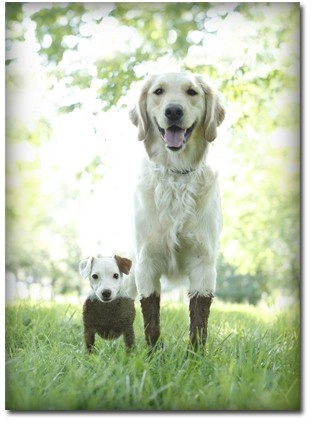
Picture parade forty-six.

Going to spoil you today! The complete set of pictures sent to me by Suzann.

Why it's good to be tall!
Why it’s good to be tall!

oooo

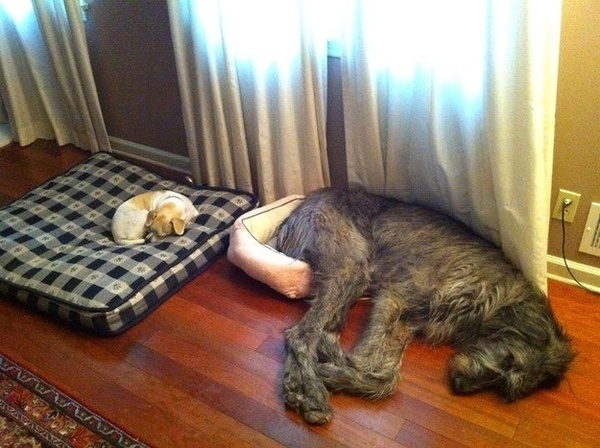
Are you sure this is my bed?

oooo

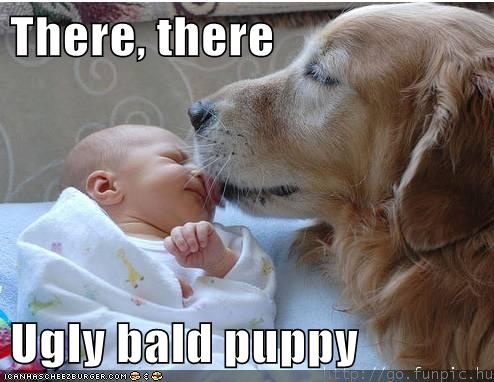
Can I keep it?
Can I keep it?

oooo

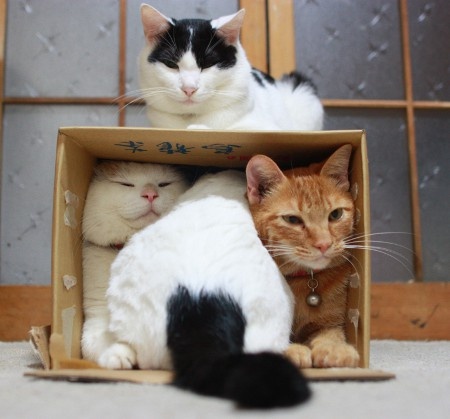
I can't wait till they deliver the new stove! We need a new box!
I can’t wait till they deliver the new stove! We need a new box!

oooo

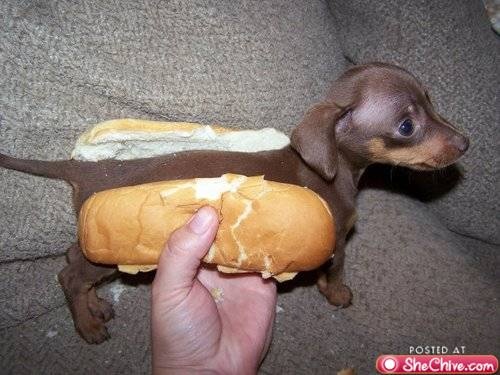
Bake for 20 minutes, then turn over...
Bake for 20 minutes, then turn over…

oooo

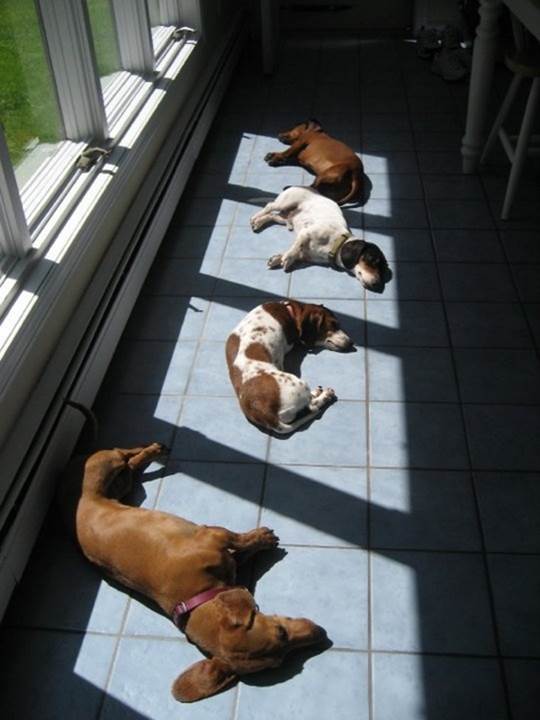
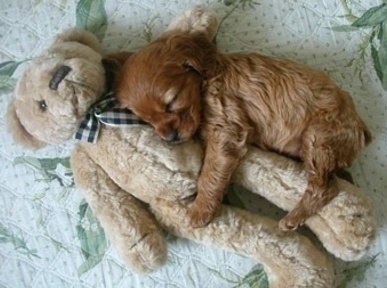
Everybody needs a good sleep toy!

oooo

Frankly, I don't think it's funny!
Frankly, I don’t think it’s funny!

oooo

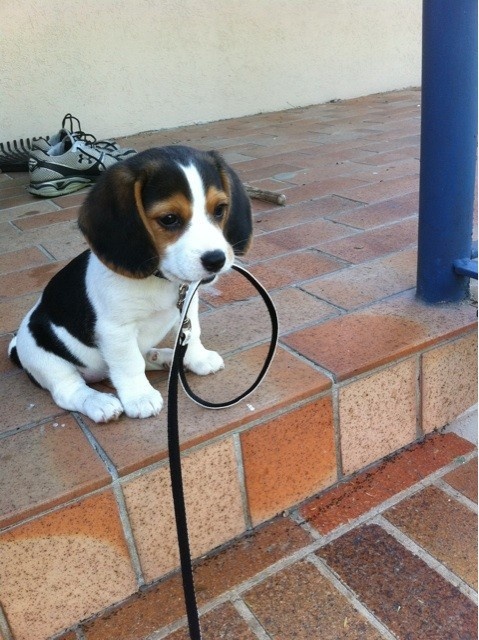
I'm ready for my walk!
I’m ready for my walk!

oooo

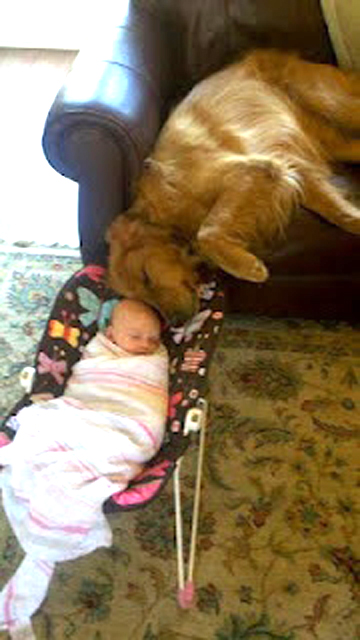
I love my new human! I think I'€™ll keep it.
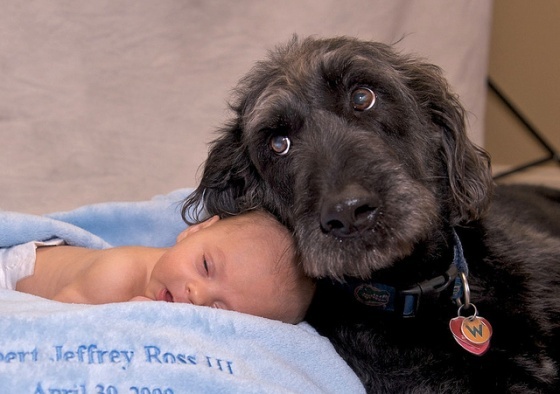
I love my new human! I think I’ll keep it.

oooo

Suz10

oooo

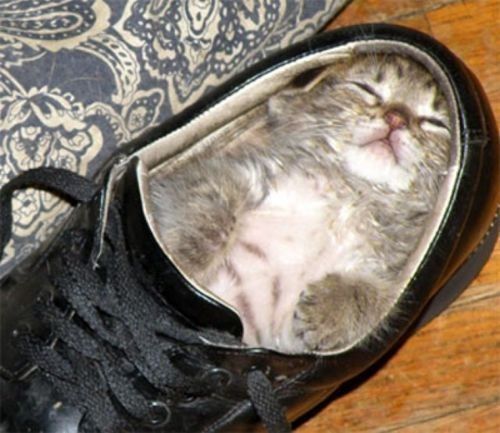
Always check before putting on your shoes!

oooo

Thanks Su!

All of you have a good week.

Saturday smile!

If you are a lawyer, please turn away!

Richard M., a close friend for more than forty years, recently sent me a hilarious story. Richard prefaced the story with a quotation from the late Bernard Levin.

Some of the readers of Learning from Dogs may not be familiar with Mr. Levin. I can do no better than to quote the WikiPedia entry:

Henry Bernard Levin CBE (19 August 1928 – 7 August 2004) was an English journalist, author and broadcaster, described by The Times as “the most

Bernard Levin c. 1980

famous journalist of his day”. The son of a poor Jewish family in London, he won a scholarship to the independent school Christ’s Hospital and went on to the London School of Economics, graduating in 1952. After a short spell in a lowly job at the BBC selecting press cuttings for use in programmes, he secured a post as a junior member of the editorial staff of a weekly periodical, Truth, in 1953.

Levin reviewed television for The Manchester Guardian and wrote a weekly political column in The Spectator noted for its irreverence and influence on modern parliamentary sketches. During the 1960s he wrote five columns a week for The Daily Mail on any subject that he chose. After a disagreement with the proprietor of the paper over attempted censorship of his column in 1970, Levin moved to The Times where, with one break of just over a year in 1981–82, he remained as resident columnist until his retirement, covering a wide range of topics, both serious and comic.

Levin became a well-known broadcaster, first on the weekly satirical television show That Was The Week That Was in the early 1960s, then as a panellist on a musical quiz, Face the Music, and finally in three series of travel programmes in the 1980s. He began to write books in the 1970s, publishing 17 between 1970 and 1998. From the early 1990s, Levin developed Alzheimer’s disease, which eventually forced him to give up his regular column in 1997, and to stop writing altogether not long afterwards.

Anyway, that quotation from Bernard Levin was, “You’ll never see a thin lawyer or a fat litigant.” In the case of the following story, no doubt both lawyers were paid!

Enjoy!

 ooOOoo

Not the cigars in the story!

This took place in Charlotte, North Carolina.

A lawyer purchased a box of very rare and expensive cigars, then insured them against, among other things, fire.

Within a month, having smoked his entire stockpile of these great cigars, the lawyer filed a claim against the insurance company.

In his claim, the lawyer stated the cigars were lost ‘in a series of small fires.’  The insurance company refused to pay, citing the obvious reason, that the man had consumed the cigars in the normal fashion.

However, the lawyer sued and WON!

Delivering the ruling, the judge agreed with the insurance company that the claim was frivolous. The judge stated nevertheless, that the lawyer held a policy from the company, in which it had warranted that the cigars were insurable and also guaranteed that it would insure them against fire, without defining what is considered to be unacceptable ‘fire’ and was obligated to pay the claim.

Rather than endure a lengthy and costly appeal process, the insurance company accepted the ruling and paid $15,000 to the lawyer for his loss of the cigars that perished in the ‘fires’.

BUT IT DIDN”T END THERE!

After the lawyer cashed the check, the insurance company had him arrested on 24 counts of ARSON!!! With his own insurance claim and testimony from the previous case being used against him, the lawyer was convicted of intentionally burning his insured property and was sentenced to 24 months in jail and a $24,000 fine.

(This true story won First Place in last year’s Criminal Lawyers Award contest.)

ooOOoo

Perhaps this offers a small clue as to why this Englishman, having now lived in America for more than four years, still finds his new homeland a little strange!

Have a great week-end!

The future of food.

Eating oil!

Yesterday’s introduction to today’s essay was predominantly the film made by Rebecca Hosking investigating how to transform her family’s farm in Devon into a low-energy farm for the future.  Rebecca discovering, unsurprisingly, that nature holds the key.

The film highlighted the degree to which our modern system of food production and distribution is dependent on oil.  I am sure that Jean and I were far from alone in not fully appreciating just how much oil is used in agriculture.  Let’s start with the UK.

Following the oil crisis in 1973, a book was published in 1978 by B.M. Green under the title of Eating Oil (1). In 2005, Norman Church wrote an essay over at the website 321energy.com in which he referred to that book.  Here’s some of what he wrote.

The aim of the book [Eating Oil] was to investigate the extent to which food supply in industrialised countries relied on fossil fuels. In the summer of 2000 the degree of dependence on oil in the UK food system was demonstrated once again when protestors blockaded oil refineries and fuel distribution depots. The fuel crises disrupted the distribution of food and industry leaders warned that their stores would be out of food within days. The lessons of 1973 have not been heeded.

Today the food system is even more reliant on cheap crude oil. Virtually all of the processes in the modern food system are now dependent upon this finite resource, which is nearing its depletion phase.

church040205

The article is a ‘must-read’ for anyone who wants to understand better the approaching crisis and the madness of present behaviours.  Take this, for example (my emphasis):

One indicator of the unsustainability of the contemporary food system is the ratio of energy outputs – the energy content of a food product (calories) – to the energy inputs.

The latter is all the energy consumed in producing, processing, packaging and distributing that product. The energy ratio (energy out/energy in) in agriculture has decreased from being close to 100 for traditional pre-industrial societies to less than 1 in most cases in the present food system, as energy inputs, mainly in the form of fossil fuels, have gradually increased.

However, transport energy consumption is also significant, and if included in these ratios would mean that the ratio would decrease further. For example, when iceberg lettuce is imported to the UK from the USA by plane, the energy ratio is only 0.00786. In other words 127 calories of energy (aviation fuel) are needed to transport 1 calorie of lettuce across the Atlantic. If the energy consumed during lettuce cultivation, packaging, refrigeration, distribution in the UK and shopping by car was included, the energy needed would be even higher. Similarly, 97 calories of transport energy are needed to import 1 calorie of asparagus by plane from Chile, and 66 units of energy are consumed when flying 1 unit of carrot energy from South Africa.

Just how energy inefficient the food system is can be seen in the crazy case of the Swedish tomato ketchup. Researchers at the Swedish Institute for Food and Biotechnology analysed the production of tomato ketchup (2). The study considered the production of inputs to agriculture, tomato cultivation and conversion to tomato paste (in Italy), the processing and packaging of the paste and other ingredients into tomato ketchup in Sweden and the retail and storage of the final product. All this involved more than 52 transport and process stages.

References:

1: Green, B. M., 1978. Eating Oil – Energy Use in Food Production. Westview Press, Boulder, CO. 1978.
2: Andersson, K. Ohlsson, P and Olsson, P. 1996, Life Cycle Assessment of Tomato Ketchup. The Swedish Institute for Food and Biotechnology, Gothenburg.

But, surprise, surprise, it’s no different here in the USA!

Dale Allen Pfeiffer
Dale Allen Pfeiffer

Dale Allen Pfeiffer‘s (1) book Eating Fossil Fuels: Oil, Food and the Coming Crisis in Agriculture makes it clear (my emphasis):

The miracle of the Green Revolution was made possible by cheap fossil fuels to supply crops with artificial fertilizer, pesticides, and irrigation. Estimates of the net energy balance of agriculture in the United States show that ten calories of hydrocarbon energy are required to produce one calorie of food. Such an imbalance cannot continue in a world of diminishing hydrocarbon resources.

References:

1: Dale Allen Pfeiffer is a geologist and writer from Michigan, U.S. who has investigated and written about energy depletion and potential future resource wars.

Over at The Wolf at the Door British website (1) author Paul Thompson, another Devonian, offered this article about peak oil and farming (and 1 hectare is 2.47 acres):

AGRICULTURE

When we think of the problems associated with peak oil, our first thoughts may turn to transport, electricity, or plastics. The use that tends not to come to mind, yet could be the most devastating of them all, is agriculture.

The Diesel Farm

tractor

Tractor Oil and gas are essential to modern farming. The most obvious use is to run the tractors and machines. Car drivers can switch to public transport, lorries can move their goods (partially, at least) to railways, but the only option for a tractor or combine harvester is a horse or an ox. Clearly modern agriculture could not switch to an animal-power-based system and hope to continue with modern yields. A tractor can plough in an hour an area that a horse would take a day to (0.9–1 hectare). The horse also needs more skill and you have to put aside some of your crop to feed it. Imagine trying to gather the harvests of the vast fields of maize and wheat of the USA using only horse- and human-power.

But diesel is only one of the uses for oil and gas. Another, possibly more important use, is petrochemicals.

Petrochemicals

Nitrogen is one of the most important elements in fertilisers. In the most common method, the Haber-Bosch process, hydrogen is combined with nitrogen to form ammonia. It requires high temperatures and strong atmospheric pressure, therefore a great deal of energy. The nitrogen is taken from the atmosphere while the hydrogen is obtained from natural gas. The process became economical in the 1920s and since then, fertilisers have become indispensable. Worldwide use of commercial fertiliser more than doubled between the late 1960s and early 1980s.

The use of fertilisers allows farmers to grow the same crops each year, rather than rotating (previously farmers planted fields with legumes that restored nitrogen to the soil.)

Oil and gas are also used in the production of many herbicides and pesticides.

References:

1: There is a note from Paul on the home page, “I created this site several years ago and do not have the time any longer to keep it updated. Therefore you will find that the data is only relevant up to around 2006 and some of the links will no longer be correct. However the principles of peak oil still apply and I have left the site online as a useful introduction to the problem that hasn’t gone away.

Alright! That’s enough to upset anyone!

Thankfully, there are a number of positive moves going on all over the world and tomorrow I will conclude the essay with details of those positive happenings!

In the meantime, think about what you eat!

The future of food – introduction.

How food and carbon-based energy are irresistibly woven together.

Farm-for-Future

Jean and I watched this BBC Nature programme the other evening.  Not directly from the BBC but because it has been uploaded to YouTube and thence was promoted on Top Documentary Films.

The film is 48-minutes long and, frankly, there’s not much point in reading the rest of the post until you have viewed the film!

Wildlife film maker Rebecca Hosking investigates how to transform her family’s farm in Devon into a low energy farm for the future, and discovers that nature holds the key.

With her father close to retirement, Rebecca returns to her family’s wildlife-friendly farm in Devon, to become the next generation to farm the land. But last year’s high fuel prices were a wake-up call for Rebecca. Realising that all food production in the UK is completely dependent on abundant cheap fossil fuel, particularly oil, she sets out to discover just how secure this oil supply is.

Alarmed by the answers, she explores ways of farming without using fossil fuel. With the help of pioneering farmers and growers, Rebecca learns that it is actually nature that holds the key to farming in a low-energy future.

Nature holds the key!

So, rather than tempt you to read on and not watch the film, that’s all you are getting for today! 😉

Settle yourself down somewhere comfortable and watch the film.

Trust me, it will open your eyes!

My main essay follows tomorrow!

Lest we forget!

Today is Memorial Day for all Americans that have died while serving their country.

Just a short preamble.

I was born in London six months to the day before the day on which the second world war ended.  On that day in early May, 1945 my mother breathed a sigh of relief and knew I was going to live!  The fact that I am writing this post does rather confirm that! 😉

Not only is this the year of my seventieth birthday (but, PLEASE, don’t remind me!) but my mother is also still alive and well and is coming to see Jean and me in our Oregon home in ten weeks time.

I served as a Radio Operator in the Royal Naval Reserve between 1963 and 1968. That is the totality of my military experiences.  Ergo, I have been more than fortunate not to have experienced military conflict at any time in my life.

So today’s post is just something gentle to remind us all of the advantages of freedom for humans and animals alike.

The Bear

An orphan bear cub hooks up with an adult male as they try to dodge human hunters.

Director: Jean-Jacques Annaud
Writers: James Oliver Curwood (novel), Gérard Brach (screenplay)
Stars: Tchéky Karyo, Bart the Bear, Youk the Bear

See full cast and crew details here.

Sometimes less says more: a growl or a snarl can be worth a thousand words. Without any verbal dialogue, the raw emotions of the wilderness are vivid in this segment of The Bear, a film about the actions of animals in relation to humans. In this suspenseful part of the story, a cub is hunted by a mountain lion who shows no mercy. Without any verbal dialogue, the raw emotions of the wilderness shine through.

Film Reviews:

Storytelling doesn’t get much purer than this–a film with virtually no dialogue and not a minute that isn’t fascinating, either for the plot it pursues or the way director Jean-Jacques Annaud gets his ursine stars to do what he wants. The story deals with a young cub who, after his mother is killed in a landslide, bonds to a lumbering male Kodiak. The two of them then must cope with an invasion of hunters into their territory – and Annaud makes it clear whose side he’s on. Aside from stunning scenery, the film offers startlingly close-up looks at bear behavior. They say the best actors are the ones that let you see what they’re thinking, a trick Annaud manages with his big, furry stars. – Marshall Fine

The Bear has all the marks of a classic. Lauded by animal rights groups for its respect for the integrity of all species, it manages to speak out eloquently against the senseless hunting of wildlife without having to depict killing to make its point. Instead, it emphasizes the ties that bind the human and animal worlds together. – Frederic and Mary Ann Brussat

May your day wherever you are in the world be a peaceful one.

Picture parade forty-five.

Just a few this week for you that have caught my eye.

From Suzann:

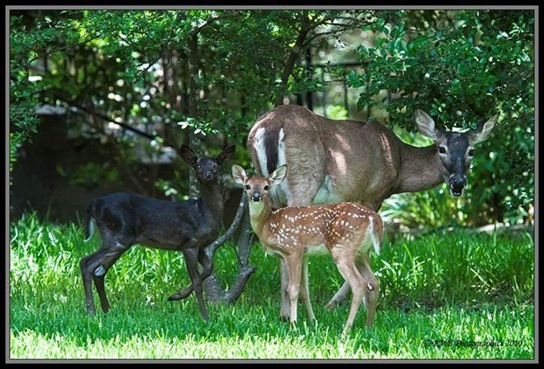
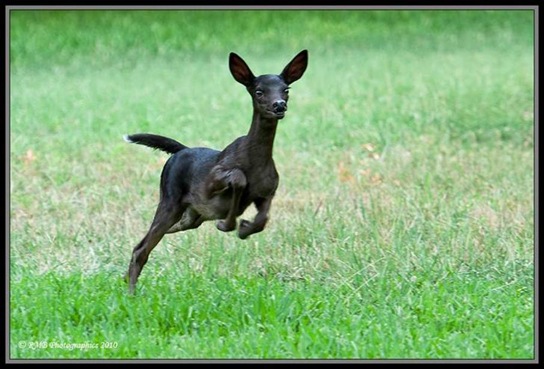
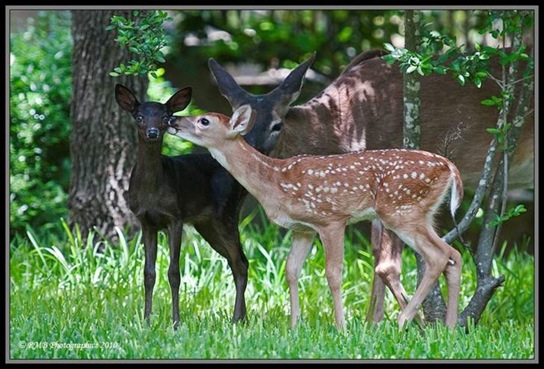
A black deer – unbelievably gorgeous!

All three pictures taken by RJ Verge near Beamsville, Ontario, Canada. Black deer are more rare than albinos.

Deer1

oooo

deer2

oooo

deer3

oooo

For all animal lovers a rare and beautiful set of pictures.

ooOOoo

Now three ‘nanosecond’ pictures sent to me by John Hurlburt.

nano3

oooo

nano10a

oooo

nano12

oooo

More of these another Sunday.

ooOOoo

Finally, one from a great set that Dan Gomez sent me.

Dan1

ooOOoo

More from Dan and John over the coming Sundays.

The genuine you!

Do you or I know you or I?

OK, I accept that the sub-heading is slightly provocative but so what!

The fascination in truly knowing who we are is endless!

Back in January of this year, I penned an essay under the title of 20:20 self-awareness.  Here’s a snippet from that post:

The single biggest problem in communication is the illusion that it has taken place.” George Bernard Shaw is reputed to have once said!

Today’s essay on the challenges of speaking clearly to another, perhaps better described as communicating in a clear and unambiguous fashion, came out of a recent conversation with Jon Lavin, a good friend from my Devon days.  (Jon offers services for business owners and entrepreneurs under his business banner of The People Workshop.)

Jon was explaining that the number one hurdle for businesses that are managing change, and for so many businesses managing change is practically a constant, is having clear communications within the team.

The essence of that, and other posts over the years, is that knowing others, communicating with others, is so much easier when we know ourself well.

Not just relevant to us humans, by the way.  Dogs love knowing us sufficiently well that they can trust and understand our behaviours.

So all of that is an introduction to an article that was recently on the website of London-based Harley Therapy. The article is called How to Be Your Authentic Self. I have taken the liberty of republishing it in full here on Learning from Dogs. (See copyright statement at the end.)

ooOOoo

It’s a little after 6am.

I awoke this morning with the terrible realisation that I didn’t have permission to republish that article and, therefore, have ‘amended’ today’s post and removed the item..

Apologies to my readers.

Paul.

Taking a pause!

Ran out of time to write anything of value.

And this joke sent to me by Chris Snuggs was too good to put off sharing with you.

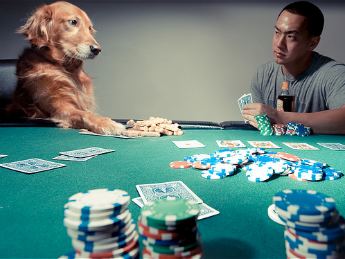
dog-playing-poker-345jl110210

A man in a casino walks past three men and a dog playing poker.

Wow!” he says, “That’s a very clever dog!

He’s not that clever,” replies one of the other players.


Every time he gets a good hand he wags his tail!

smilingdog


Not seeing the wood for the trees!

A postscript to the last two days.

This week is taking on a life of it’s own, so far as Learning from Dogs is concerned!

For when I penned Monday’s post, Running on Empty, I had not yet read George Monbiot’s essay Are We Bothered?. When I did so, it struck me as the perfect sequel to Monday’s post and formed the crux of yesterday’s post The nature of delusions.  That second post also included a personal account of my delusion with regard to ocean sailing and seemed sufficiently wordy not to be extended by my further reflections.

Thus the decision to run over to a third day!

Let me offer, first of all, my own reflections to George Monbiot’s concerns. That I distill, using his words, to: “The more we consume, the less we care about the living planet.” Expanded in his concluding paragraph:

So the perennially low level of concern, which flickers upwards momentarily when disaster strikes, then slumps back into the customary stupor, is an almost inevitable result of a society that has become restructured around shopping, fashion, celebrity and an obsession with money. How we break the circle and wake people out of this dreamworld is the question that all those who love the living planet should address. There will be no easy answers.

When I first read Mr. Monbiot’s essay, I found myself nodding in agreement. Yet, upon further reflection, I became less sure that “a society that has become restructured around shopping, fashion, celebrity and an obsession with money.” was the core of the issue.  I think it is a symptom.

Stay with me awhile I take a small deviation. To dogs, and other animals.

Many creatures have a powerful and instinctive means of assessing danger.  One only needs to observe the wild black-tailed deer that frequent our property to know that the slightest hint of danger or the unknown has them dashing away to safety.

A young black-tailed deer seen at home last September.

Dogs are the same in that they will run early on from a danger.

Humans also have the propensity to be cautious about a clear and present danger.  However, it’s my proposition that when the danger is unclear and when that danger threatens the very essence of who we are and the world that we have constructed around us, we can be blind to the point of madness. I can think of many examples in support of that thesis and I’m sure you can too.

Yes, we have “a society that has become restructured around shopping, fashion, celebrity and an obsession with money.” But I contend only because of the power of capitalism, of the power of modern marketing and advertising and the allure of being ‘one of the crowd’.

So back to my proposition.  It is this.

That when our lives are threatened by something unclear, complex and, ultimately, of devastating impact, we are very reluctant to embrace it and even more reluctant to both embrace it and escape to safety; whatever the latter implies.

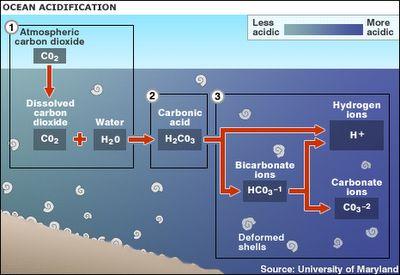
Mankind’s effect on the environment, the rising CO2 levels in the atmosphere, the increasing acidification of the oceans, the growing concerns about global weather, and on and on, are the most unclear, the most complex and the most devastating of futures to embrace.

(Thanks to Patrice for using this recently.)
(Thanks to Patrice for referring to this recently.)

So it really is no surprise to see mankind in general behaving as though this is a bit of a hangover, and an aspirin and a good night’s sleep will sort it! Especially when there is so much money and control invested in selling the same message; the message that there really is nothing to worry about.

There will be a so-called ‘tipping point’. A point in our awareness where the urgency to prevent the destruction of the biosphere will be paramount. And it will be a miracle if when that point arrives it isn’t far too late to save us.

I truly hope that I am wrong.

oooo

Remember what I wrote in yesterday’s post? About experiencing an Atlantic gale?

Fewer than 48-hours before my estimate of coming into Horta Marina on the Azores island of Faial, Songbird of Kent was struck by an early, fierce Winter gale. I seem to recall it was touching Force 10 Beaufort Scale (54 – 63 mph or 48 – 55 knots).

Anyway, it just about finished me off: literally as well as psychologically! I was so frightened, so utterly scared that I could think of nothing else other than getting to Horta and never going sailing again.

It revealed my delusion!

That was my ‘tipping point’ when it came to ocean sailing.

The gale subsided and I motor-sailed the 150-odd miles to Horta without any break for sleep or rest. Came into the harbour early in the morning after the second night since the gale. As soon as I was securely berthed, I closed the boat up and found a local hotel where a hot shower and a clean bed could restore a part of me.

Within a week, I had engaged a crew to sail the boat to Plymouth in South-West England and I flew back to England on a commercial airline.

Once Songbird of Kent arrived at Plymouth, she was put up for sale at a price that wouldn’t delay matters and that was that!

Oh, and I have never read any more books about single-handed ocean sailing. (But see my P.S.!)

oooo

P.S.

In yesterday’s post, I referred to Les Powells. Remember when I was in Larnaca, Cyprus? This is what I wrote:

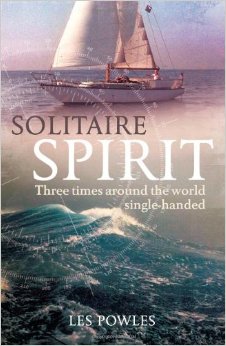
Living on a boat close to me was Les Powles. Many will not have heard of Les but this quiet, softly-spoken man knows a thing or two about solo ocean sailing. As an article in The Guardian newspaper explained (in part):

In the 1980s and 90s a British man called Les Powles sailed three times round the world – always single-handedly, once non-stop. He couldn’t afford a radio transmitter, and on his greatest adventure he didn’t speak to anyone for 329 days. At 84, his ­circumnavigating days are now behind him, but he still lives on his boat, the Solitaire. What’s the ­appeal of sailing, I asked him. “It’s the solitude. When you’re out at sea on your own, there’s no government or bankers to worry about. You’re not ­responsible to anyone but yourself.”

Three times around the world – solo!

Thus getting to know Les was a great inspiration in getting me over the hurdle of can I really do this! (Les once said to me “the first three days are the worst!”)

Anyway, I have discovered that Les is living happily on his boat in Lymington, England and has written a book about his sailing life.

Les Powells book

It has been ordered and arrives today. This one will be read – from the comfort and safety of our rural home in Oregon!