Category: Culture

A chance in love.

Our neighbourhood watch garage sale has Jean and me fully occupied for these next two days.

Plus much of yesterday afternoon was spent getting our ‘site’ all set up ready for today.

I have taken the opportunity of showing you two videos, one today and one tomorrow.

This was sent to me by Suzann and will melt your heart in a very big way.

►If watching the flowering of love could inspire love, then “The Story Of The Weeping Camel” would forever alter the world…

►The Story of the Weeping Camel.
Mongolian: Ингэн нулимс, Ingen nulims, “Tears of the Camel” is a 2003 German docudrama released internationally in 2004.

►During Spring, a family of nomadic shepherds in the Gobi Desert, South Mongolia, assists the births of their camel herd. The last camel to calve this season has a protracted labor that persists for two days. With the assistance and intervention of the family, a rare white bactrian camel (Camelus bactrianus) calf is born.
This is the mother camel’s first calving. Despite the efforts of the shepherds, the mother rejects the newborn, refusing it her milk and failing to establish a care-bond with it. The family resolve to secure the services of an indigenous ‘violinist’ to play the music for a Mongolian ‘Hoos’ ritual.

When repeatedly intoned the calming sounds and beautiful melody of the violin, the mother camel starts to weep, tears visibly streaming from her eyes. Immediately after the rite the mother and calf are reconciled and the calf draws milk from her teat.

►Added music: Sad Romance – Thao Nguyen Xanh

The core subject of integrity.

Integrity really is at the heart of all that we are – or it should be.

The fundamental premise behind this blog is my discovery back in 2007, when I was living in South Devon, England with Pharaoh, that dogs are creatures of integrity. As is written elsewhere in this place:

Dogs are part of the Canidae, a family including wolves, coyotes and foxes, thought to have evolved 60 million years ago.  There is no hard evidence about when dogs and man came together but dogs were certainly around when man developed speech and set out from Africa, about 50,000 years ago.  See an interesting article by Dr. George Johnson.

Because of this closeness between dogs and man, we (as in man!) have the ability to observe the way they live.  Now I’m sure that scientists would cringe with the idea that the way that a dog lives his life sets an example for us humans, well cringe in the scientific sense.  But man seems to be at one of those defining stages in mankind’s evolution where the forces bearing down on the species homo sapiens have the potential to cause very great harm.  If the example of dogs can provide a beacon of hope, an incentive to change at a deep cultural level, then the quicker we ‘get the message’, the better it will be.

Dogs:

  • are integrous ( a score of 210) according to Dr David Hawkins
  • don’t cheat or lie
  • don’t have hidden agendas
  • are loyal and faithful
  • forgive
  • love unconditionally
  • value and cherish the ‘present’ in a way that humans can only dream of achieving
  • are, by eons of time, a more successful species than man.

And have poetry written for them:

Inner Peace

If you can start the day without caffeine,

If you can always be cheerful, ignoring aches and pains,

If you can resist complaining and boring people with your troubles,

If you can eat the same food every day and be grateful for it,

If you can understand when your loved ones are too busy to give you any time,

If you can take criticism and blame without resentment,

If you can conquer tension without medical help,

If you can relax without liquor,

If you can sleep without the aid of drugs,

You are probably the family dog!

So an essay that I came across in undertaking research for ‘the book’ really struck a chord. An essay written by Stephanie Staples (see footnote), and you can learn more about her at this place.  Her essay was entitled Reflections On The Value of Integrity and is republished here with Stephanie’s very kind permission.

ooOOoo

Your Life, Unlimited

Stephanie Staples

Reflections on The Value of Integrity?

Integrity comes into play in everything we do.
In fact, it’s more than everything we do,
it’s everything we are.

Having a high level of integrity is one of the most important characteristics we can possess. It is a core value, a choice, and something we can nurture. Integrity is modeled all around us, yet its value in our society seems to be underrated.

Coming from a place of integrity means being truthful and honest. It means being reliable. It means trying to build rather than break, help rather than hurt, connect rather than crumble. Coming from a place of integrity means being authentic—the same you, whether people are watching or not.

We will not always be right or do right, but when we have integrity, we step up; we accept responsibility for our actions, we feel remorse, we have an understanding of what went wrong and why it happened so that we can put a plan in place to ensure it won’t happen again.

You know how a bad reputation follows you around? Well, the fabulous thing about living life brimming with integrity is that it actually precedes you. If you tell the truth even when you don’t have to, do the right thing even when nobody is around to notice, honestly do your best, keep your promises, etc., then that is what people will assume of you. Your actions define your character. This comes in handy so when you do make a mistake, people tend to give you the benefit of the doubt, and perhaps forgive more easily. You see how the reputation comes first? Can you see how it could work in reverse as well? If you lack integrity, people will not trust, value or respect you.

Think about how integrity plays a role in your life, in the life of your family, and in your career. Think about what sort of values you are modeling, how you are modeling them, and how you can live a life of integrity.

This could mean being honest and saying your son is 12, even if he looks 11, and 12 years olds have to pay. This may mean answering a call light of a patient who is not ‘yours.’ It might mean accommodating a request even if you don’t want to. Perhaps it is giving credit where credit is due? What might it mean to you?

If you are not getting what you want out of your life, then look inside and see exactly what’s going on in your life. I know if you focus on being a person of integrity, your character will be strengthened, your relationships at home and at work will be strengthened, and your life will be strengthened. Start by being honest and true to yourself, and the rest will follow.

One final point—it is not just the big things that count, it is the hundreds of little things we do every day that mould our character, that develop our integrity, and that help us live our lives, unlimited!


ooOOoo

Of all the qualities that we have to learn from dogs, the one of integrity is the most important, by a mile. Stephanie’s essay gets to the heart of what integrity really means in a way that I have not previously come across. I am very grateful to have been given her permission to republish it.

Footnote

Stephanie Staples New Picture

Stephanie Staples is a member of Rockford Kingsley’s Advisory Board

and is a proud Canadian coach and speaker who helps audiences

around North America shift their perspective and kick up the quality of their life!

A posh night out!

Mustn’t let life get too serious!

Sent in to me by Cynthia Gomez, and it’s just gorgeous.

Marieles Dinner – Funny dog eats elegant at table

Published on Nov 22, 2013

Mariele, the German Shorthaired Pointer is the top model. She likes to eat in high-class places.

This little show took place in summer 2013. Mariele is sitting at the table and is looking forward to getting served. It took just a few training lessons for Mariele to get used to the situation because there is nothing further to do for her as to sit quite comfortable on a cushion and wait patiently for the food to come. Mariele is 12 years old and in younger years she worked as a rescue dog. She loves to make new experiences and she is very gentle. The temptation to wolf down sausages and meat would have been too strong to her. So we decided to serve carrots and potatoes which she likes too — but not too much…

We got inspired by TWO DOGS DINING — thank you very much.

Consequences.

I can’t resist this essay from George Monbiot.

As regular followers of Learning from Dogs will know, I frequently republish essays written by George Monbiot. I do so because there is only so much one can write about dogs, Mr. Monbiot is a great writer, and the gentleman has generously given me blanket permission to republish his essays! 😉

Plus, while many of my posts are directly about dogs, the underlying theme of this blog is to use the qualities of dogs as emblems, or metaphors, for how mankind has to behave if we are to have any chance of survival into the longterm. Or in the words of my essay on Dogs and integrity:

Because of this closeness between dogs and man, we (as in man!) have the ability to observe the way they live.  Now I’m sure that scientists would cringe with the idea that the way that a dog lives his life sets an example for us humans, well cringe in the scientific sense.  But man seems to be at one of those defining stages in mankind’s evolution where the forces bearing down on the species homo sapiens have the potential to cause very great harm.  If the example of dogs can provide a beacon of hope, an incentive to change at a deep cultural level, then the quicker we ‘get the message’, the better it will be.

All of which is my way of introducing Mr. Monbiot’s latest essay on the recent shenanigans involving Greece, in particular, and the EU, in general.

ooOOoo

Breaking Faith

13th July 2015

The European Union is becoming ever harder for progressives to love. Is it time to get out?

By George Monbiot, published on the Guardian’s website, 10th July 2015

Had I been asked a couple of years ago how I would vote in the referendum on whether or not the UK should stay in the European Union, my answer would have been unequivocal.

The EU seemed to me to be a civilising force, restraining the cruel and destructive tendencies of certain member governments (including our own), setting standards that prevented them from destroying the natural world or trashing workers rights, creating a buffer between them and the corporate lobby groups that present an urgent threat to democracy.

Now I’m not so sure. Everything good about the European Union is in retreat; everything bad is on the rampage.

I accept the principle of sharing sovereignty over issues of common concern. I do not accept the idea of the rich nations combining to crush the democratic will of the poorer nations, as they are seeking to do to Greece.

I accept the principle that the European Union should represent our joint interests in creating treaties for the betterment of humankind. I do not accept that it has a right to go behind our backs and quietly negotiate a treaty with the United States – the Transatlantic Trade and Investment Partnership (TTIP) – that transfers power from parliaments to corporations.

I accept the principle that the EU could distribute money to the poor and marginalised. I do not accept that, as essential public services are cut, €57bn a year should be sloshed into the pockets of farmers, with the biggest, richest landowners receiving the largest payments. The EU’s utter failure to stop this scandal should be a source of disillusionment even to its most enthusiastic supporters.

While these injustices, highly damaging to the reputation of the European Union among people who might otherwise be inclined to defend it, are taking place, at the same time the EU’s restraints on unaccountable power are in danger of being ripped away.

The slippage began with the disastrous abandonment last year of the Soil Framework Directive, at the behest of agricultural lobbyists and the British government. It’s the first time a directive has been derailed.

The directive would have obliged the member states to minimise soil erosion and compaction, maintain the organic matter contained in the soil, prevent landslides and prevent soil from being contaminated with toxic substances. Could any sentient person object to these aims? And can anyone who has studied the complete failure of current soil protection measures in countries like the United Kingdom, where even Farmer’s Weekly admits that “British soils are reaching crisis point” fail to see that further measures are required?

The National Farmers Union, who appear to regard it as their mission to vandalise the fabric of the nation, took credit for the decision.

Now the same industries are trying to sink the directives protecting the natural world. In some European countries, the nature directives are just about all that prevent the eradication of the wildlife that belongs to everyone and no one. Thanks to the capture and cowardice of the European Commission, there is now a real danger that the industrial lobbyists who want to destroy our common heritage will get their way.

The European Union’s two nature directives – the Birds Directive and the Habitats Directive – are often all that stand between our wildlife and the industries that would destroy them.

Look, for example, at what’s happening to our harbour porpoises. These beautiful creatures, that enhance the lives of everyone who has seen them leaping and playing the sea, are being caught and killed in fishing nets, starved to death by overfishing, mashed up by propellers and driven out of their feeding grounds by a cacophony of underwater noise from boats.

The only way in which they can be protected is through creating areas in which these activities are restricted, particularly in places such as the Hebrides, the outer Moray Firth and in parts of Cardigan Bay. But the only site the government has proposed is a tiny speck of sea off the coast of Northern Ireland.

The one defence this species has against the mailed fist of the fishing industry, which appears to be locked around the sensitive parts of the UK’s environment department, is an appeal under the Habitats Directive, of which this country is blatantly in breach.

Or look at the continued massacre of birds of prey by grouse shooting estates, which operate as black holes in which hen harriers, peregrines, eagles and other species disappear without trace: shot, trapped or poisoned by an industry that exists to serve the ultra-elite, while damaging the common heritage of humankind. There’s no point in asking nicely: representing the interests of the ultra-elite while damaging the common interests of humankind appears to be the government’s mission. So the only possible restraint is an appeal under the Birds Directive, which the UK government signed and still claims to uphold.

Badly and erratically as we protect our precious species and the places in which they live, they would be in a much worse state were it not for the restraining influence of European law.

I happen to think that there is quite a lot wrong with the Habitats Directive. Some of the places it protects, at the behest of national governments, are highly degraded ecosystems, and it locks them into their depleted state, ensuring that they can recover neither the wealth of species that might live there, nor much of the dynamism and ecological function that could otherwise have been restored.

The irrational way in which upland heather moors are protected is one example. Like the strikingly similar landscapes of low wiry vegetation that you can now see in some former rainforest areas in the tropics, these habitats have been created through repeated cycles of cutting and burning. This destruction is necessary to keep these wastelands in their current state, by preventing trees from returning.

While we decry these processes when we see them take place abroad, here we treat them as if they were essential conservation tools. It’s a form of madness which afflicts everyone from grouse moor owners to conservationist groups, and it reflects an astonishing loss of perspective on the part of those who should be protecting the natural world. The Habitats Directive is one of the legal instruments that has turned this continued destruction into a legal requirement.

But the European Commission’s proposals to “reform” the directives, are likely to make them worse, not better. The danger is that it will leave their irrational aspects intact, while stripping away the essential protections they offer to our wildlife.

No one is in any doubt that the “reform” being proposed is the kind that is usually enacted with a can of petrol and a box of matches. In November last year, Jean-Claude Juncker, the president of the European Commission, instructed the Environment Commissioner to “overhaul” the directives and to examine the possibility of merging them. A reliable if sometimes eccentric set of protections is now at mortal risk.

A public consultation on these proposals is taking place at the moment, and it closes on July 24. I’ll repeat that because the only hope these directives possess is a huge public response calling for their defence. The consultation closes on July 24. Please send in your views. Already, 270,000 people have done so, prompted by campaigning organisations such as the RSPB. Let’s turn this into half a million.

The ostensible purpose of this proposed vandalism is to reduce the costs to business. But when the Conservative former president of Bavaria, Edmund Stoiber, was asked by the European Commission to conduct a review of all European legislation, with a view to deregulating it, he discovered that the combined impact of all seven of the EU’s environmental directives (of which birds and habitats are just two) is less than 1% of the total cost to business caused by European law. In other words it is utterly insignificant.

In fact, changing these directives could be costly for businesses, as they have already adapted their practices to meet them, and they would have to start all over again if the laws are changed.

The threat to the directives arises not from a demand by business as a whole, but from pressure by two of the most destructive industries in the European Union, Big Farmer and the construction lobby. That the European Commission should have chosen to listen to them while ignoring the views of everyone else cuts to the heart of what is going wrong there.

So when the referendum comes, I will find myself in a struggle I never anticipated. I am an internationalist. I think it’s essential that issues which transcend national borders are tackled together, rather than apart. I recognise the hideous history of conflict in Europe, and the extraordinary achievement of peace that the European Union represents. I feel nothing in common with the Eurosceptics of the right, who appear to see the EU as interfering with their god-given right to exploit other people and destroy their surroundings.

My feelings towards the EU are now similar to my feelings towards the BBC: a sense that I ought to join the defence of this institution against reactionary forces, but that it has succumbed so catastrophically to those forces that there is little left to defend. If the nature directives go down, while TTIP and the fiscal waterboarding of countries like Greece proceed, it will not be obvious what continued membership has to offer us.

http://www.monbiot.com

ooOOoo

 Difficult to add anything of value to these powerful words from GM other than to remind everyone, both in the EU and outside (for the survey accepts non-EU resident contributions), to complete the survey highlighted by George Monbiot. The link is here.

The origins of the dog

Dogs and humans go back even further than previously thought.

Humans and dogs were constant companions well before our ancestors settled in villages and started growing crops 10,000 years ago

I have no doubt that thousands of dog owners all around the world must be enthralled by the way that dogs relate to us and, in turn, how we humans relate to dogs. More than once a day, one of our dogs will do something that has me and Jean marvelling at their way of living so close to us.

Then when one starts to reflect on how long dogs and humans have been together, perhaps it could be seen as the direct result of that length of relationship.

Now there’s nothing new in me writing this, after all the home page of Learning from Dogs states:

Yet they have been part of man’s world for an unimaginable time, at least 30,000 years. That makes the domesticated dog the longest animal companion to man, by far!

Back in May the website Livescience published an article that revealed more about the length of our relationship with dogs. This is how it opened:

Ancient Wolf DNA Could Solve Dog Origin Mystery

by Becky Oskin, Senior Writer

Humans and dogs were constant companions well before our ancestors settled in villages and started growing crops 10,000 years ago, a new study suggests.

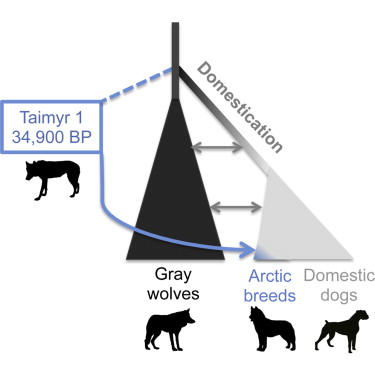
Genetic evidence from an ancient wolf bone discovered lying on the tundra in Siberia’s Taimyr Peninsula reveals that wolves and dogs split from their common ancestor at least 27,000 years ago. “Although separation isn’t the same as domestication, this opens up the possibility that domestication occurred much earlier than we thought before,” said lead study author Pontus Skoglund, who studies ancient DNA at Harvard Medical School and the Broad Institute in Massachusetts. Previously, scientists had pegged the wolf-dog split at no earlier than 16,000 years ago.

The Livescience article referred to results that were published in the journal Current Biology on May 21st this year. One needs a subscription to read the full report but here is their summary:

The origin of domestic dogs is poorly understood [ 1–15 ], with suggested evidence of dog-like features in fossils that predate the Last Glacial Maximum [ 6, 9, 10, 14, 16 ] conflicting with genetic estimates of a more recent divergence between dogs and worldwide wolf populations [ 13, 15, 17–19 ]. Here, we present a draft genome sequence from a 35,000-year-old wolf from the Taimyr Peninsula in northern Siberia. We find that this individual belonged to a population that diverged from the common ancestor of present-day wolves and dogs very close in time to the appearance of the domestic dog lineage. We use the directly dated ancient wolf genome to recalibrate the molecular timescale of wolves and dogs and find that the mutation rate is substantially slower than assumed by most previous studies, suggesting that the ancestors of dogs were separated from present-day wolves before the Last Glacial Maximum. We also find evidence of introgression from the archaic Taimyr wolf lineage into present-day dog breeds from northeast Siberia and Greenland, contributing between 1.4% and 27.3% of their ancestry. This demonstrates that the ancestry of present-day dogs is derived from multiple regional wolf populations.

That summary page also includes the following Graphical Abstract:

fx1

I don’t have permission to republish the Livescience article in full but would like to offer the closing paragraphs of this fascinating report.

“It is a very well-done paper,” Perry [George Perry, an expert in ancient DNA at Pennsylvania State University] told Live Science. “This topic is a critical one for our understanding of human evolution and human-environment interactions in the Paleolithic. Partnership with early dogs may have facilitated more efficient hunting strategies.”

If dogs first befriended hunter-gatherers, rather than farmers, then perhaps the animals helped with hunting or keeping other carnivores away. For instance, an author of a new book claims humans and dogs teamed up to drive Neanderthals to extinction. Skoglund also suggested the Siberian husky followed nomads across the Bering Land Bridge, picking up wolf DNA along the way.

“It might have been beneficial for them to absorb genes that were adapted to this high Arctic environment,” Skoglund said.

This is the first wolf genome from the Pleistocene, and more ancient DNA from prehistoric fossils could provide further insights into the relationship between wolves, dogs and humans, the researchers said.

Yes, our dogs have been part of man’s world for an unimaginable time – and Jean and I, as with tens of thousands of others, can’t imagine a world without dogs.

Picture parade one hundred and four.

The final set of these incredibly popular photographs.

Hiding in Plain Sight

Danny33

oooo

Danny34

oooo

Danny35

oooo

Danny37

oooo

Danny38

oooo

Danny39

oooo

Danny40

ooooDanny41

oooo

The first in the series was published here.

The photographs were sent to me by Dan Gomez, underlining the wonderful way that so much is shared in this funny old world of blogging. Thank you, Dan!

Learning about last breaths from our dog.

The wisdom of a six-year-old.

Very grateful to Chris Snuggs for sending this on to me. As seen on the BoredBug website:

ooOOoo

They Told This Little Boy His Dog Was Going To Be Put Down. His Response STUNNED Them.

On Belker’s last day, Shane seemed calm, petting the old dog as if he understood that he was saying a last “goodbye”. Within minutes, Belker slipped peacefully away. Shane seemed to accept Belker’s transition without any difficulty or confusion.

Saying-Good-Bye

They all sat together after Belker’s death, wondering aloud how sad it is that animals lives are shorter than humans. Shane, who had been listening quietly, spoke ”I know why! People are born so that they can learn how to live a good life, like loving everybody all the time and being nice, right?” The six-year-old continued, ”Well, dogs already know how to do that, so they don’t have to stay as long.”

Shanes-Wise-Explanation

ooOOoo

You all have a good, loving weekend.

The link between dogs and the world of caring.

A story about a Pit Bull that will touch the soul.

The Pit Bull dog breed gets a very bad press thanks to the despicable way that these dogs were associated with dog fighting many years ago. But take away man’s disgraceful involvement and most times you will find a gorgeous, loving dog.

We have a Pit Bull mix here at home.

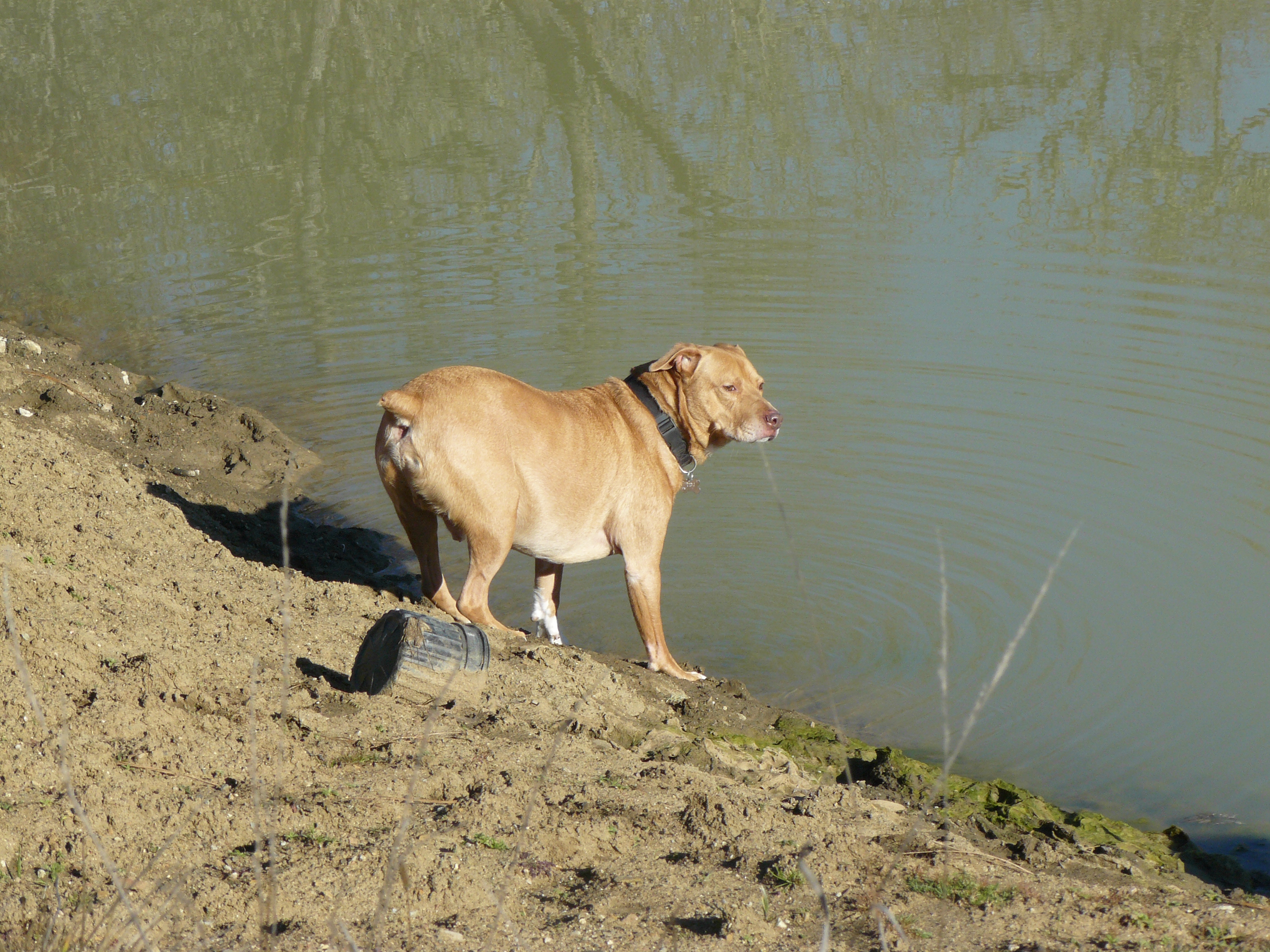
Casey, at home; picture taken a month ago.
Casey, at home; picture taken January, 2014.

He is the most wonderful of dogs.

Now read this article, as seen on Mother Nature Network.

ooOOoo

Rescued pit bull helps autistic teen open his heart

The first time Joey Granados gave his mother a kiss on the cheek was when they adopted Roxy.

By: Jenn Savedge
June 4, 2015, 10:34 a.m.


The best part about Roxy and Joey's friendship? No judgments. Just love. (Photo: Amanda Granados/Instagram)
The best part about Roxy and Joey’s friendship? No judgments. Just love. (Photo: Amanda Granados/Instagram)

Pit bulls often get a bad rap. So do kids with autism.

Both are misunderstood. But what happens when you put the two of them together? Magic.

Just ask Amanda Granados of Los Angeles. Her son, Joey, has autism. From an early age, Joey turned away from his mom’s hugs and kisses. He would not let his mom hold his hand. He preferred to be alone. According to his mom, Joey had a really difficult time adjusting in social situations.

But Joey has recently met a new friend that has opened up his heart to his mom and others in his world. That friend is Roxy, a goofy, loving pit bull who knows how it feels to have people look at you and think you are something you are not.

Fourteen-year-old Joey had been asking his mom for a dog for some time to help him deal with the loneliness of his life with autism. Just after Thanksgiving, Amanda was perusing the website for the local animal shelter when she came across Roxy’s picture and just knew that this would be a good match.

As Joey tells it, when he and his mom went down to the shelter to look at Roxy, the dog walked right passed Amanda and jumped on Joey’s lap. The two have been best friends ever since. And Roxy has opened up Joey’s world to the love and affection of others.

“I get emotional thinking about it,” Amanda Granados recently told “Today.” “For all those years, he wouldn’t hold my hand, he wouldn’t hug me — it was all part of the autism — but this dog has taught him how to give and show affection. He holds my hand now! He hugs me! The first time I got a kiss on the cheek was when Roxy came home.”

Joey told “Today” that Roxy has made it easier for him to give and receive affection.

“I didn’t have too many friends growing up, but then we got Roxy and I’ve been able to make friends ever since,” Joey said. “At home, I’ve been able to hold my mom’s hand, kiss her, hug her and do a lot of things that I hadn’t been able to do growing up.

“She’s opened up my heart.”

According to Amanda, the best part about the bond between Roxy and Joey is that there are no judgments. Just true friendship. And lots and lots of love.

Want to see this adorable pair in action? Check it out:

ooOOoo

“Just true friendship and lots and lots of love.”

Those are our dogs in all corners of the world.

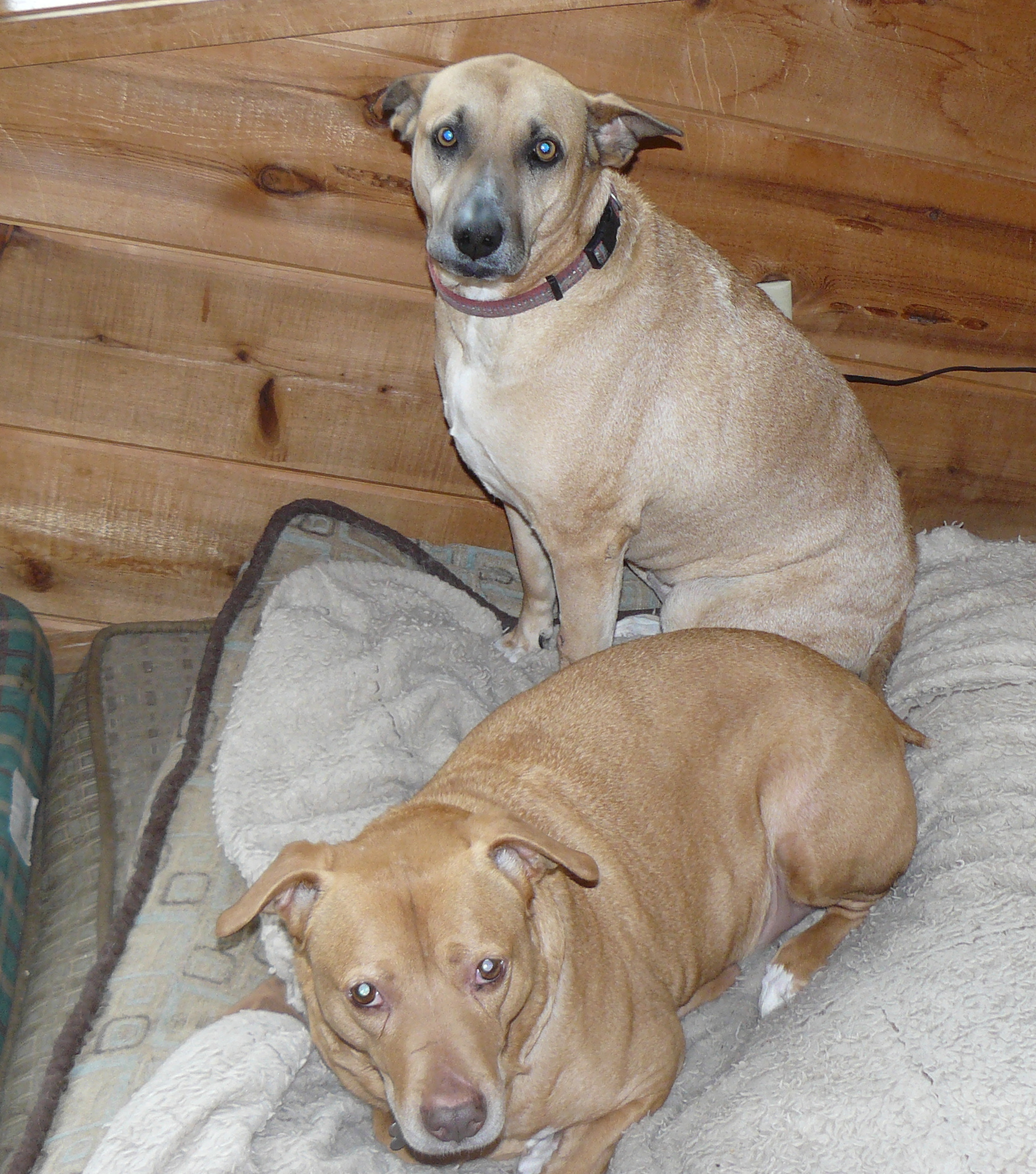
Ruby behind Casey.
Ruby behind Casey.

Just doing one thing at a time.

The way a dog focuses on the immediate task holds a very important lesson for us.

It’s a safe bet to claim that any dog owner has, from time to time, envied the way a dog so perfectly lives in the present. Then let’s not even go to the comparison between dogs and humans when it comes to relaxing!

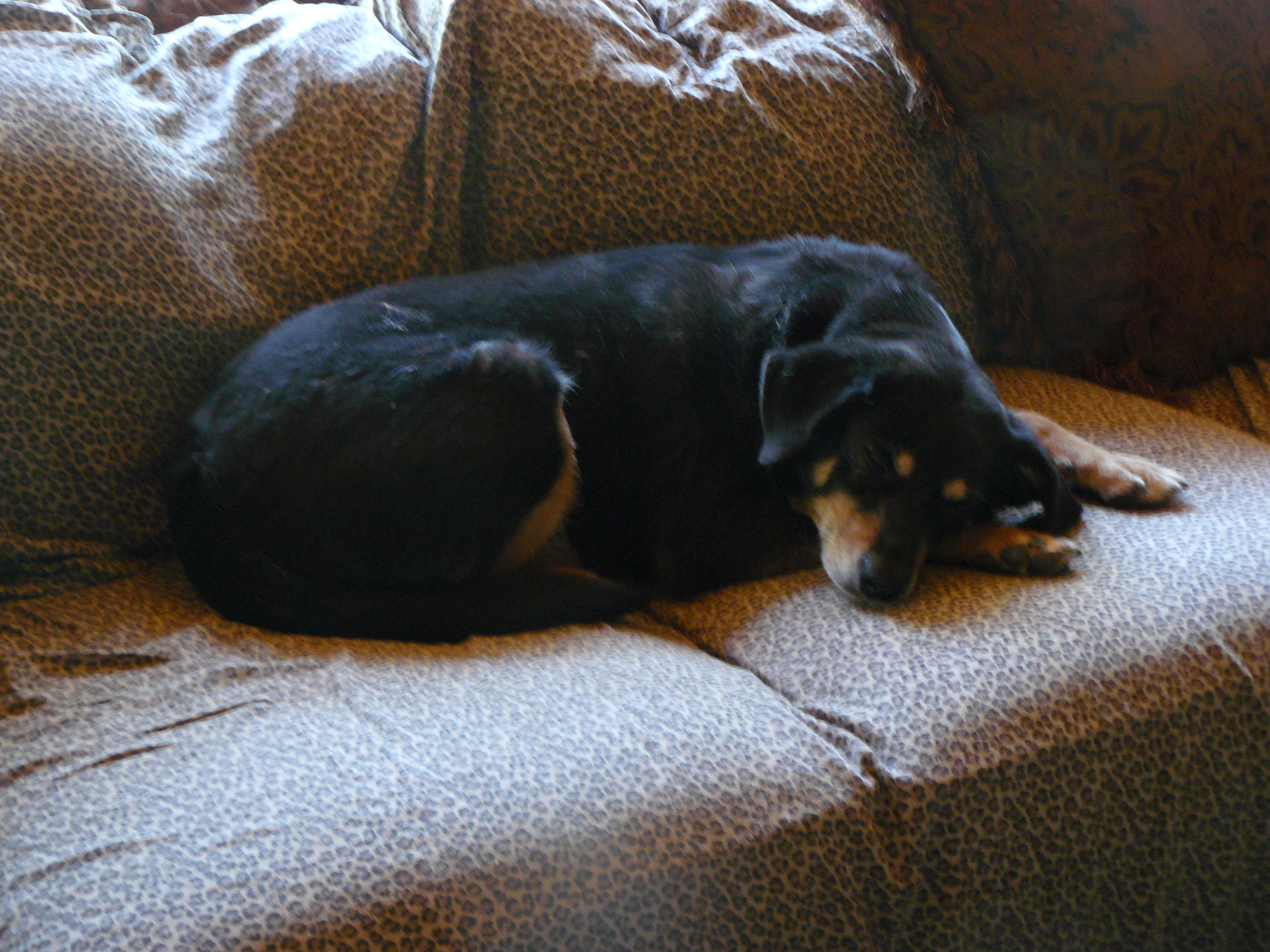
Hazel taking a mid-morning break yesterday.
Hazel taking a mid-morning break on Tuesday.

These opening thoughts were prompted by a recent article that was published on The Conversation. The article criticised, rightly in my opinion, the madness (my word) of how many of us live these days, and with particular respect to ‘multi-tasking’. It’s a sobering reminder of the value of letting go and is republished here within the terms of essays published on The Conversation.

ooOOoo

The value of unplugging in the Age of Distraction

July 7, 2015 4.59am EDT

Author: John Rennie Short – Professor, School of Public Policy at University of Maryland, Baltimore County.

Small device, but very demanding. aciej_ie/flickr, CC BY-NC-ND

A common experience: you are walking down the street and someone is walking in the opposite direction toward you. You see him but he does not see you. He is texting or looking at his cellphone. He is distracted, trying to do two things at the same time, walking and communicating.

There is also the telltale recognition of a car driver on a phone; she’s driving either too slowly or too fast for the surrounding conditions, only partly connected to what is going on around her. Connected to someone else in another place, she is not present in the here and now.

These types of occurrences are now common enough that we can label our time as the age of distraction.

A dangerous condition

The age of distraction is dangerous. A recent report by the National Safety Council showed that walking while texting increases the risk of accidents. More than 11,000 people were injured last year while walking and talking on their phones.

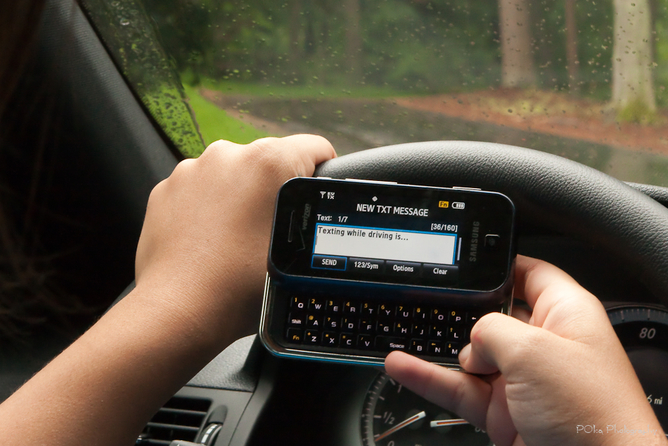
Really bad idea: texting while driving.  Paul Oka/flickr, CC BY-NC
Really bad idea: texting while driving. Paul Oka/flickr, CC BY-NC

Even more dangerous is the distracted car driver. Distracted drivers have more fluctuating speed, change lanes fewer times than is necessary and in general make driving for everyone less safe and less efficient.

Texting while driving resulted in 16,000 additional road fatalities from 2001 to 2007. More than 21% of vehicle accidents are now attributable to drivers talking on cellphones and another 5% were text messaging.

Cognitive impairment

Multitasking relatively complex functions, such as operating handheld devices to communicate while walking or driving, is not so much an efficient use of our time as a suboptimal use of our skills.

We are more efficient users of information when we concentrate on one task at a time. When we try to do more than one thing, we suffer from inattention blindness, which is failing to recognize other things, such as people walking toward us or other road users.

Digital devices, which are proliferating in our lives, encourage multitasking, but does this really help our performance?  Thomas Hawk/flickr, CC BY-NC-SA
Digital devices, which are proliferating in our lives, encourage multitasking, but does this really help our performance? Thomas Hawk/flickr, CC BY-NC-SA

Multitaskers do worse on standard tests of pattern recognition and memory recall. In a now classic study, researchers at Stanford University found that multitaskers were less efficient because they were more susceptible to using irrelevant information and drawing on inappropriate memories.

Multitasking may not be all that good for you either. A 2010 survey of over 2,000 8- to 12-year-old girls in the US and Canada found that media multitasking was associated with negative social indicators, while face-to-face contact was associated with more positive social indicators such as social success, feelings of normalcy and hours of sleep (vital for young people).

Although the causal mechanism has yet to be fully understood – that is, what causes what – the conclusion is that media multitasking is not a source of happiness.

Distraction-seeking creatures?

There are a number of reasons behind this growing distraction.

One often-cited reason is the pressure of time. There is less time to accomplish all that we need to do. Multitasking then is the result of the pressure to do more things in the same limited time. But numerous studies point to the discretionary use of time among the more affluent, and especially more affluent men. The crunch of time varies by gender and class. And, paradoxically, it is less of an objective constraint for those who often articulate it most.

Although the time crunch is a reality, especially for many women and lower-income groups, the age of distraction is not simply a result of a time crunch. It may also reflect another form of being. We need to reconsider what it means to be human, not as continuous thought-bearing and task-completing beings but as distraction-seeking creatures that want to escape the bonds of the here-and-nowness with the constant allure of someone and somewhere else.

Media theorist Douglas Rushkoff asserts that our sense of time has been warped into a frenzied present tense of what he calls “digiphrenia,” the social media-created effect of being in multiple places and more than one self all at once.

There is also something sadder at work. The constant messaging, emailing and cellphoning, especially in public places, may be less about communicating with the people on the other end as about signaling to those around that you are so busy or so important, so connected, that you exist in more than just the here and now, clearly a diminished state of just being.

There’s greater status in being highly connected and constantly communicating. This may explain why many people speak so loudly on their cellphones in public places.

Reactions

The age of distraction is so recent we have yet to fully grasp it. Sometimes art is a good mediator of the very new.

A video art installation by Siebren Verstag is entitled Neither There nor There. It consists of two screens. On one side a man sits looking at his phone; slowly his form loosens as pixels move to the adjacent screen and back again. The man’s form moves from screen to screen, in two places at one time but not fully in either.

One study that looked at the effect of banning cellphones in schools found that student achievement improved when cellphones were banned, with the greatest improvements accruing to lower-achieving students, who gained the equivalent of an additional hour of learning a week.

On many college campuses, faculty now have a closed-laptop policy after finding students would use their open laptops to skim their emails, surf the web and distract their neighbors. This was confirmed by studies that showed that students with open laptops learned less and could recall less than students with their laptops closed.

We are witnessing a cultural shift occurring with the banning of devices, cellphone usage being curtailed in certain public places and policies banning texting while driving. This is reactive. We also need a new proactive civic etiquette so that the distracted walker, driver and talker have to navigate new codes of public behaviors.

Many coffee stores in Australia, for example, do not allow people to order at the counter when they are on the cellphone, more golf clubs are banning the use of cellphones while on the course and it is illegal in 38 states in the US for novice drivers to use a cellphone while driving.

There is also the personal decision available to us all, one foreshadowed by writer and social critic Siegfried Kracauer, who lived from 1889 to 1966. In a newspaper article on the impact of modernity, first published in 1924, he complained of the constant stimulation, the advertising and the mass media that all conspired to create a “permanent receptivity” that prefigures our own predicament in a world of constant texting, messaging and cellphones.

One response, argued Kracauer, is to surrender yourself to the sofa and do nothing, in order to achieve a “kind of bliss that is almost unearthly.”

One radical response is to unplug and disconnect, live in the moment and concentrate on doing one important thing at a time. Try it for an hour, then for a day. You can even call your friends to tell them about your success – just not while walking or driving, or working on your computer screen or speaking loudly in a public place.

ooOOoo

Oh, did someone mention unplugging and disconnecting?

P1150708
Cleo – unplugged and disconnected.

Fire, forensics and a dog’s nose!

Fire dogs; another aspect of Man’s Best Friend.

A colleague back in England was speaking to me recently about a series on BBC Television about forensics. The series is called Catching History’s Criminals: The Forensics Story.

Apparently, the third in the series Instruments of Murder (For UK readers the link is here.) included fire being used as a criminal act. That episode featured a dog named Gunner who was a fire forensics dog. To the surprise of both Jean and me, while we were very aware of the sniffer dogs used by the police in many countries, neither of us had previously been aware that dogs were used, at times, in the determination of the cause of fire.

Now listen to Nikki Harvey of Hertfordshire Fire and Rescue Service in this YouTube video:

Published on Jul 23, 2013

Trained from a puppy by his partner in crime and handler, Nikki Harvey, Reqs (pronounced Rex) qualified as Hertfordshire Fire and Rescue Service’s new fire investigation dog in April this year. At a special event on Monday (22 July) Reqs launched his Twitter account and demonstrated his skills at Longfield Training Centre, Stevenage.

The 22-month-old black Labrador is taking over responsibility for helping to investigate the cause of fires in Hertfordshire and surrounding counties. His predecessor, seven year old CC, will work alongside Reqs until he retires.

Richard Thake, Cabinet Member for Community Safety and Planning said: “The work that Reqs does is critical in assisting the Hertfordshire Fire and Rescue Service team and it plays an integral part in community fire safety. Reqs is exceptionally valuable and receives the same high degree of training that we afford all frontline fire personnel.”

From six months old Reqs was trained to sniff out traces of ignitable liquids such as petrol, white spirit and lighter fluid which can remain present even after the most severe fire. Fire investigation officers use Reqs to assist them in determining the cause and origin of fires – whether deliberate or accidental. At the event he proudly gave a demonstration of sniffing out accelerants in a house and a car, as well as riding on an Arial Ladder Platform (ALP) that reaches up to seven floors, can be used as a water tower to extinguish large fires, and forms a safe platform for working at height.

Hertfordshire’s Chief Fire Officer Roy Wilsher said: “Reqs helps out on serious and non-serious cases and knowing what starts a fire helps us enormously in getting important fire safety messages out to the public. We want to prevent fires and keep people safe and now that Reqs is on Twitter his followers will learn a lot of useful tips to prevent accidental fires.

“I use Twitter myself (@HertsFireChief) and social networking is a great way to spread our safety messages across Hertfordshire.”

Fire investigation dogs are used for their speed and accuracy and are proving very successful in their work. Reqs and CC have assisted in many high profile incidents including suicides, fatal fires, arson attacks and murder investigations.

Reqs’ handler, Nikki Harvey said: “We’ve been training together for nearly two years now, which has given us the opportunity to get to know each other and build up trust which is essential. Ongoing training is now part of Reqs’ daily routine and it’s important that he always enjoys the ‘game’. I’m really looking forward to putting Reqs’ new skills to use.”

Reqs is the third fire investigation dog for Hertfordshire Fire and Rescue Service and is sponsored by Hatfield based company Computacenter UK Ltd, who also sponsor CC and his predecessor Browza. Clare Rafferty, Head of Corporate Events, Computacenter (UK) Ltd said: “The Fire investigation dog is a valuable asset to the Fire and Rescue Service and we are yet again delighted to extend that sponsorship to Reqs who is very worthy of stepping into CC’s shoes.”

And to demonstrate that these wonderful dogs undertake these roles both sides of the “pond”, here is a video from Denver, Colorado:

Published on Feb 23, 2015

Victoria travels to Denver, Colorado to check in on experienced arson investigator Jerry Means and his third arson dog, Riley. Jerry shows Victoria how he continues to train Riley, visits his office at the Colorado Bureau of Investigation, and takes her to a burn building to demonstrate live fire and extended training for Riley. Part 1 of 2

All of which seems like a great nudge for me to republish a post from Learning from Dogs from September, 2012 that explained a little more about the incredible power of the dog’s nose! See you tomorrow.