Category: Culture

Please adopt your next dog.

Continuing the message of that special bond between us humans and our dogs.

Yesterday’s post regarding the dog saved from the Texas floods came to mind when earlier today (Tuesday) I was reading the Fall issue of The Bark magazine.
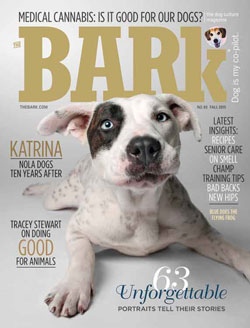
Cover of the Fall 2015 issue.

Reading the magazine took me across to The Bark website and from there I ended up reading about dogs being mentioned in people’s obituaries. Here’s a snippet of that article:

Dogs in Obituaries

Included as cherished family members
Karen B. London, PhD | September 18, 2015

dogorbits

It’s been a long time since the majority of people with dogs considered them property, but the inclusion of them in the celebrations and events of life associated with family continues to grow. Birthday parties and gifts for dogs have become increasingly common in recent years, and the number of dogs included in family photos or in signatures on greeting cards is bigger than ever. It’s really old news to say that many people consider dogs to be family members, but interesting studies of the ways in which that’s true continue to be published.

Earlier this year, a study called Companion Animals in Obituaries: An Exploratory Study was published in the journal Anthrozoös. The study illuminated the importance of companion animals, including dogs, based on the frequency and manner in which they were mentioned in obituaries.

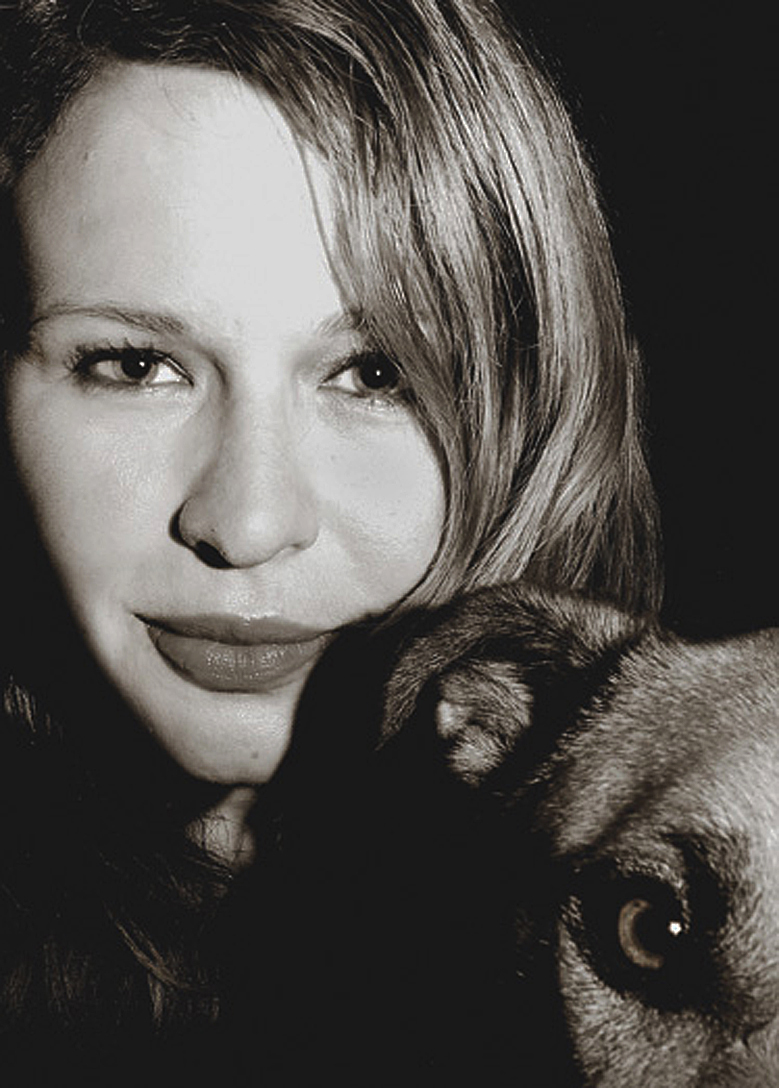
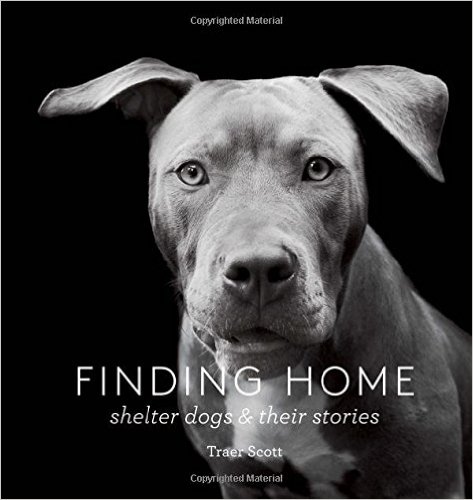
Another article in that same issue of The Bark was by photographer Traer Scott. Scott is the author of the book Shelter Dogs and has just launched a new book called Finding Home: shelter dogs & their stories. (Her blogsite is here.) As is detailed on her website:

Traer Scott is an award winning fine art and commercial photographer and author of six books including “Nocturne: Creatures of the Night” (Princeton Architectural Press, 2014) and her newest release “Finding Home; Shelter Dogs and Their Stories” (Princeton Architectural Press, Fall 2015). Her work has been exhibited in several countries and featured in National Geographic, Life, Vogue, People, O, on the NY Times Lens Blog, “Behold” and dozens of other national and international print and online publications. Her first solo museum show Natural History opens at the University of Maine Museum of Art in October 2015. Traer was the recipient of the Rhode Island State Council for the Arts 2010 Photography Fellowship Grant and the 2008 Helen Woodward Humane Award for animal welfare activism. She lives in Providence, Rhode Island with her husband, daughter and adopted dogs: a pit bull and a baby basset hound.
A quick mouse-click took me to Amazon and to Scott’s latest book. Where one reads:

scottbook

Bold, retiring, serious, sparkling, quirky, or lovable—the dogs in Traer Scott’s remarkable photographs regard us with humor, dignity, and an abundance of feeling. Scott began photographing these dogs in 2005 as a volunteer at animal shelters. Her first book, Shelter Dogs, was a runaway success, and in this follow-up, Scott introduces a new collection of canine subjects, each with indomitable character and spirit: Morrissey, a pit bull, who suffered from anxiety related behaviors brought on by shelter life until adopted by a family with four children; Chloe, a young chocolate Lab mix, surrendered to a shelter by a family with allergies; Gabriel and Cody, retired racing greyhounds; and Bingley, a dog who lost his hearing during a drug bust but was brought home by a loving family that has risen to the challenge of living with a deaf dog. Through extended features we become better acquainted with the personalities and life stories of selected dogs and watch as they experience the sometimes rocky and always emotional transition to new homes. The portraits in Finding Home form an eloquent plea for the urgent need for more adoptive families, as well as a tribute to dogs everywhere.
Further down that Amazon page there was a review by The Bark magazine and what they wrote is the perfect way of heading to the close of today’s post. [My emphasis]

“Photographer Traer Scott follows up her groundbreaking book Shelter Dogs with a new work of equal grace and sensitivity. The portraits in Finding Home not only showcase a collection of canines with indomitable character and spirit, they are also an eloquent plea for more adoptive families, and a tribute to all dogs everywhere.” – The Bark

Please, howsoever you can, share the benefits of adopting a dog from your nearest animal care centre.
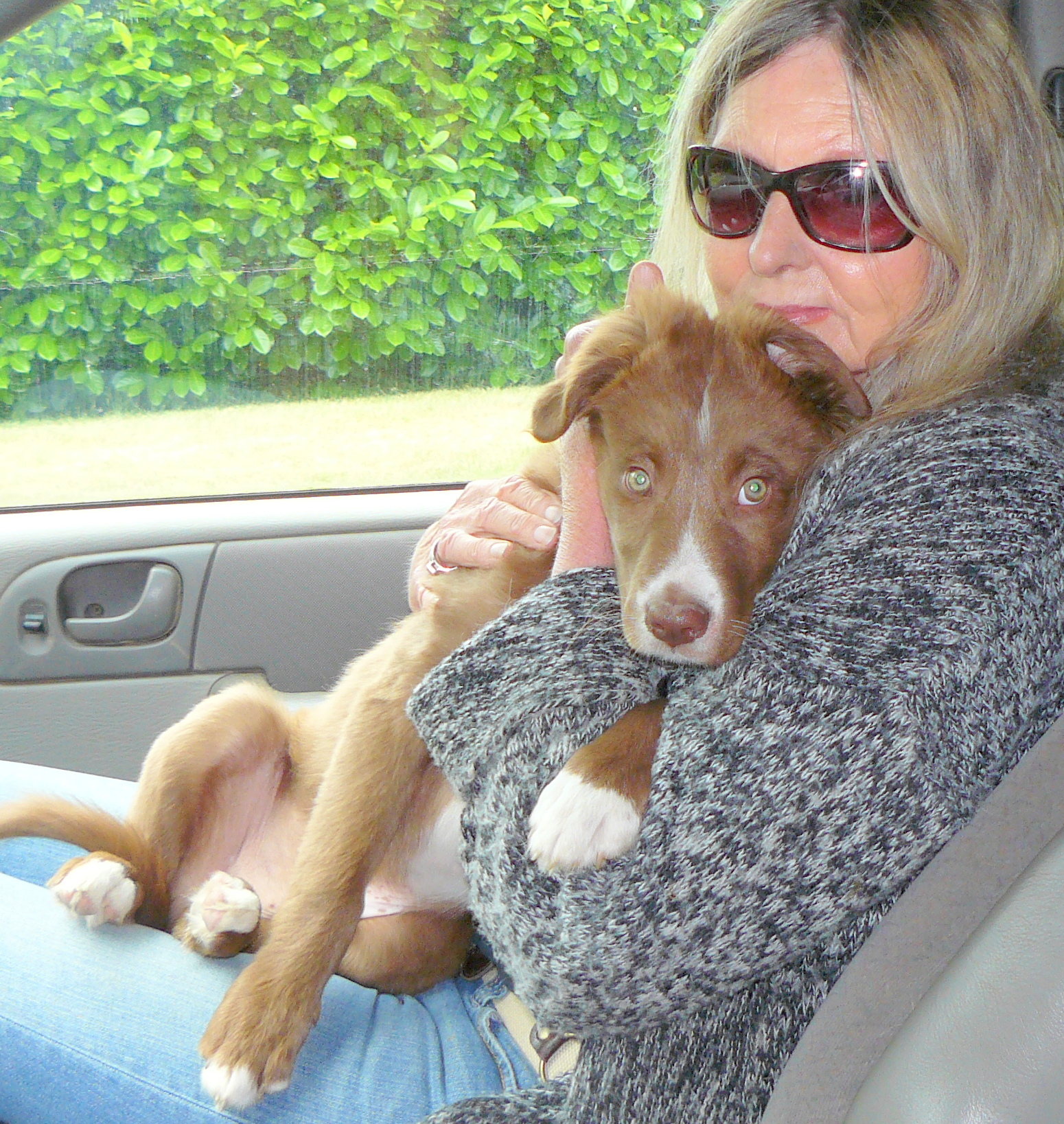
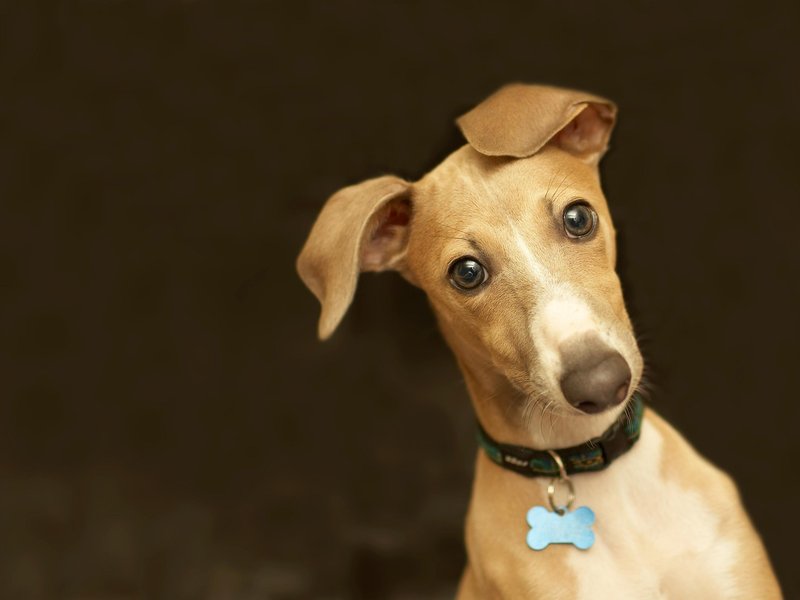
No avoiding those eyes (and I'm not referring to Jean!).
Proof positive of the love that flows between Jean and our Oliver.

A scientific view of domestication.

Of our dogs, of course!

You may recall that back on the 15th of this month, I posted a Note to Readers that spoke about my need to be focused on the editing of my manuscript. Here’s part of that note:

Dear readers, we are talking hours of revisions that I need, and want, to make.

All of which is my way of saying that if my posts over the next couple of weeks more strongly lean on the republishing of other material then you will understand why. In all cases I will endeavour to republish articles that are likely to interest you, of course!

Late yesterday, I completed the many revisions to the manuscript recommended by Joni Wilson but still have more days of formatting changes ahead.

Thus another republication of an item, this time an article that appeared on the Smithsonian website.

ooOOoo

Domestication Seems to Have Made Dogs a Bit Dim

Thanks to their relationship with us, dogs are less adept at solving tricky puzzles than their wolf relatives

It's OK, buddy. We're here to help. (stelo/iStock)
It’s OK, buddy. We’re here to help. (stelo/iStock)

By Rachel Nuwer, smithsonian.com, September 15, 2015

Dogs are considered some of the most intelligent animals on the planet. Thanks to a relationship with humans that dates back tens of thousands of years, dogs can respond to emotions, recognize numerous words and be trained to follow commands.

Notably, these seemingly smart accomplishments all hinge on the partnership between our two species. Now, however, tests of canine problem-solving skills indicate that dogs rely on humans so much that we actually seem to be dumbing them down.

Most studies that investigate dog intelligence assume that certain interactions with humans are indicative of higher cognitive function. In one experiment, for example, dogs and human-socialized wolves were presented with a canine version of the Kobayashi Maru — an unopenable box that contained food.

When confronted with a difficult task, dogs often turn to us—their human masters—for guidance, indicating their puzzlement with a cock of the head and eyes that seem to implore for help. Indeed, the dogs in the study quickly gave up and simply stared at the nearest human. The wolves, on the other hand, sought out no such help and persisted at trying to solve the impossible puzzle on their own.

Researchers usually interpret such findings as a sign of dogs’ intelligence; the wolves kept trying to win the no-win scenario, while the dogs knew that humans could help out with tasks they themselves could not solve.

But depending on humans for help is not necessarily a cognitive asset, points out Monique Udell, an assistant professor of animal and rangeland sciences at Oregon State University.

If dogs only turn to humans when presented with an impossible task—not a solvable one—then their “look back” behavior would indeed be advantageous. On the other hand, if they simply throw their paws up at the slightest hint of cognitive challenge, then that could indicate “a conditioned inhibition of problem-solving behavior,” as Udell puts it. Like a child whose parents always give away the answers to homework, dogs may be overly reliant on us, she surmised.

To test this hypothesis, Udell presented ten pet dogs and ten human-socialized wolves with a solvable puzzle. Sausage was placed inside a sealed plastic tub with a lid that included a bit of rope. With some paw and mouth finagling, the lid could be opened.

She also included ten shelter dogs in the study, because past research shows that shelter dogs are initially less responsive to humans compared to established pets. These animals acted as a sort of intermediary between hyper-socialized dogs and wolves.

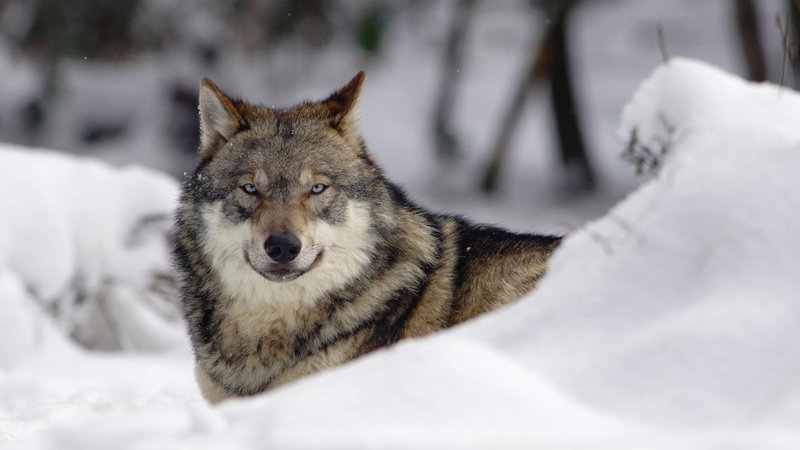
Crazy smart, like a wolf. (Kaphoto/iStock)

Udell presented the canines with the puzzle box both in the presence of humans—an owner, caretaker or familiar person—and without any person nearby. Each time, the animals had two minutes to figure out how to get at the sausage. Subjects that failed in both trials were given a third and final try in which they also received verbal encouragement from their human friend.

Udell’s findings, reported today in the journal Biology Letters, were telling. In the presence of humans, just one pet dog and none of the shelter dogs managed to open the box. Eight out of ten of the wolves, however, succeeded in enjoying the sausage treat inside.

Wolves also spent more time chipping away at the problem and more time staring at the box, as if working out how to open it. Both pet and shelter dogs, on the other hand, did the opposite—they gave up more quickly and stared at humans instead of the box, seemingly asking for help.

When humans were not around, the findings were similar—nearly all of the wolves figured out how to open the box, while just one shelter dog and no pet dogs succeeded. In the third and final trial, dogs that had failed in both of the prior tests performed a bit better when humans encouraged them.

With some human cheerleading, four of nine shelter animals and one of eight pet dogs opened the box, and all spent more time trying to open the box and looking at the box than they did when they were either alone or when their human friends remained silent.

Udell’s results indicate that dogs do seem to be overly dependent on us compared to their wild relatives, although the cause of this—whether biological, environmental or both—still needs to be worked out.

Lucky for pet pooches, however, we humans will no doubt always be there to help them navigate all of life’s tricky plastic containers.

ooOOoo

Read more here.

Picking up on that last sentence, luckily for us humans our dogs will always be there to help us in innumerable ways, especially giving us unconditional love.


Picture parade one hundred and fourteen

The final set of Dan’s wonderful pictures.

(Last week’s set is here.)

wow37

oooo

wow38

oooo

wow39

oooo

wow40

oooo

wow41

oooo

wow42

oooo

What an incredible run of pictures. I wonder if I will be able to match them with equally fine pictures in a week’s time!

Be careful all of you.

Yet another Saturday smile

You will love this!

I came across the following video as a result of my brother-in-law, Warwick Hamilton, posting it on his Facebook page. In turn, it had been published by Jason Fechner on his FB page, describing it:

Your Tuesday Moment of Zen — Diesel, the English Bulldog who has found a new toy… and won’t let go! 🙂

Why, oh why?

The obscene effects of hunting.

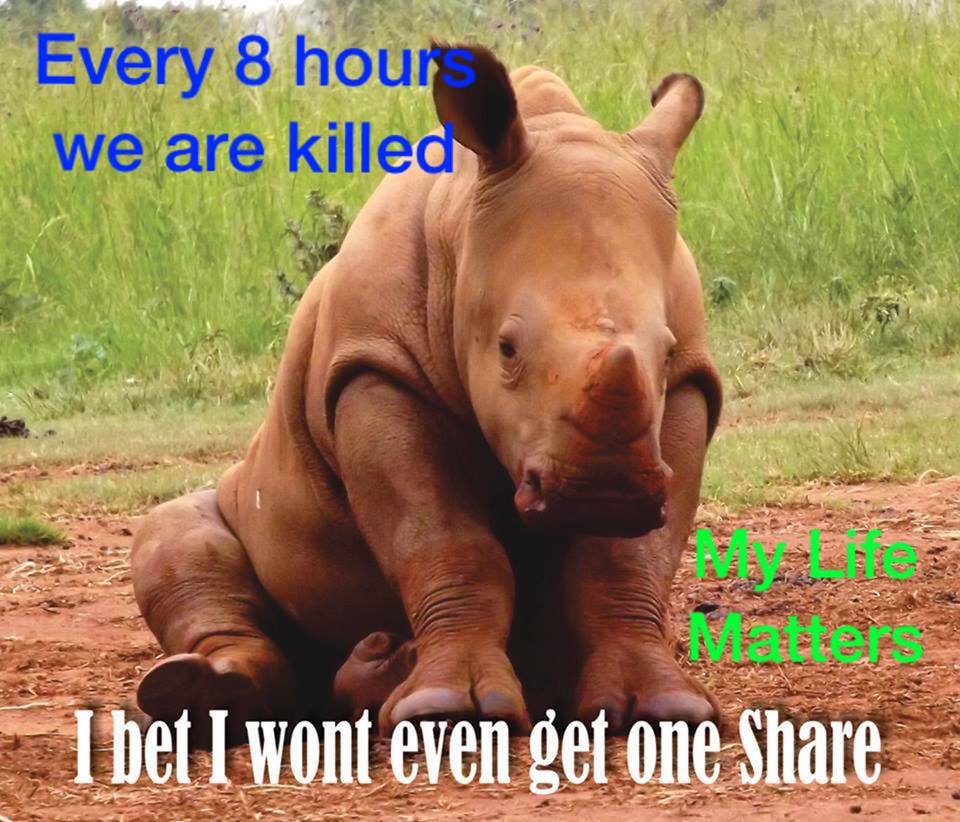
Chris Snuggs, friend from my English days, linked to an item on his Facebook page about the appalling loss of elephants and rhinos. The item included this picture:

FB rhino

The reason I am writing about this today is to give readers notice that on Saturday, October 3 from 10:30am – 3:00pm there is a march, a global march, for Elephants and Rhinos. The item on Facebook details the location as Jefferson Square, 1101 Eddy St, San Francisco, California 94109.

If we lived closer to San Francisco we would most definitely attend.

So can you be there?

If not, can you share the message!

march

Back to Chris.  His blogsite Nemo Insula has a link to this wonderful photograph:

11

Back to Chris’ Facebook entry where he subsequently wrote:

I am flattered! I thought it was just my usual bilious rant! Actually, the killing of rhinos, tigers, elephants and so on is so surreally-pointless and evil as to be almost beyond belief. You might like this photo of a rhino I saw in Senegal from about 20 metres away! Magnificent and totally innocent creatures, unlike Homo Sapiens I fear.

Jean and I feel the same way about the hunting of any animals for any purpose other than feeding oneself.

More on adopting dogs.

A smart partnership introduces hard-to-home dogs to high-energy humans.

Note to Readers

Last week I completed the final edit of my book of the same name as this blog, Learning from Dogs. I am learning the truth of what one experienced author said to this new author and that was that writing the book is the easy part! For the next stage is the professional editing of the manuscript. I was previously referred to Joni Wilson and I am so pleased that she is undertaking the task. Well, I think I am pleased! 😉 That last sentence comes from me utterly misjudging just how much work is being created for me as I start to go through hundreds, literally, of ‘recommendations’ from Joni. Dear readers, we are talking hours of revisions that I need, and want, to make.

All of which is my way of saying that if my posts over the next couple of weeks more strongly lean on the republishing of other material then you will understand why. In all cases I will endeavour to republish articles that are likely to interest you, of course!

So with those words in mind, here is another article from Mother Nature Network that stays with yesterday’s theme of adopting those dogs that are not necessarily the easiest to so do.

ooOOoo

Outdoorsy dogs find their perfect matches

A smart partnership introduces hard-to-home dogs to high-energy humans.

By: Jaymi Heimbuch, September 11, 2015

Anniston is on her way to her new home, thanks to a brilliant campaign to match high-energy dogs with high-energy humans. (Photo: Ruffwear)

A couple weeks ago, Outdoor Retailer held an adoption event for shelter dogs. But it wasn’t just any event — this was specifically for high-energy, adventure-loving dogs seeking high-energy, adventure-loving humans. This matchup can be tough to find at a rescue or shelter, but what if the adoption event takes place where outdoorsy folks shop? Wouldn’t the potential for love at first wag be higher? It turns out that’s exactly what happens.

Ruffwear and Best Friends Animal Society created the Ruff Adventure Dog Adoption Program to place usually hard-to-home dogs — dogs that need a lot of exercise and outdoor activity and require a home with someone who wants a companion for trail runs, hiking, camping and other fun activities. They put the program to the test at Outdoor Retailer.

Among those who found a home are:

Jennifer finds Krone

Jennifer and Krone bond after meeting at an Outdoor Retailer event. (Photo: Ruffwear)

Huck finds Gerald

It's a match made in outdoor-loving heaven for Huck the dog and Gerald, his new owner. (Photo: Ruffwear)
It’s a match made in outdoor-loving heaven for Huck the dog and Gerald, his new owner. (Photo: Ruffwear)

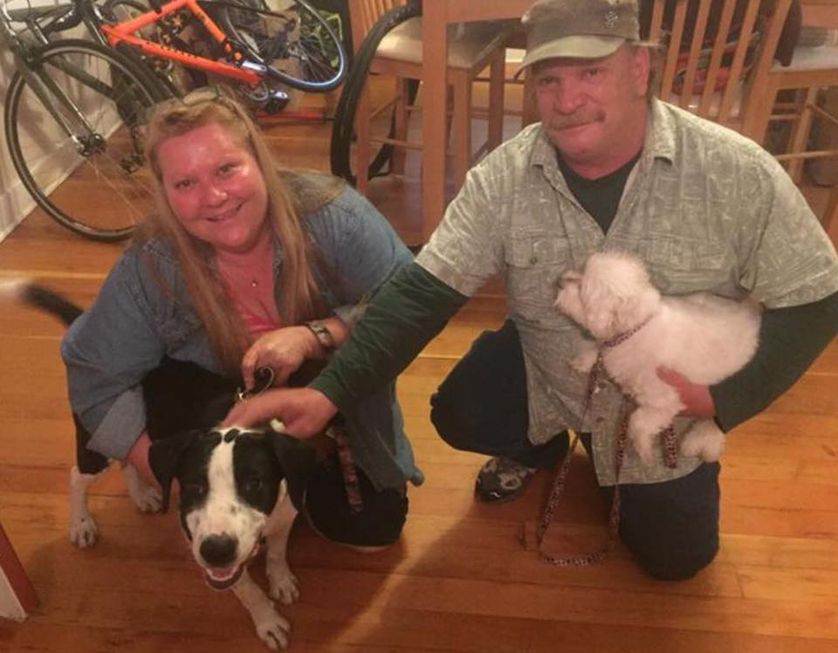
Niko finds his future parents

A future of happy tail-wagging adventure awaits for Niko, the black and white dog pictured at left. (Photo: Ruffwear)

“Over the course of two days, Best Friends’ Salt Lake City partner, Rescue Rovers, brought in eight fresh air-seeking, adventure-ready dogs to the Salt Palace. [I]t wasn’t long before people stopped by the Ruffwear booth to hand in their adoption requests. Of the eight dogs who attended, six were adopted,” says the press release from Ruffwear.

“People expect us to have dogs at the booth, and they’re always a draw. But we had no idea how receptive show attendees would be to actually adopting these dogs. Rescue Rovers did a great job bringing dogs that would pair well with our active, outdoorsy crowd. I think the first application came in just hours after the dogs arrived and by the end of the first day, nearly all dogs present had applications pending; it was amazing,” said Greg Freyberg, Ruffwear’s Brand Manager.

The happy tale doesn’t end with this event. Ruffwear and Best Friends continue to match these trail-loving dogs with their perfect humans. Since the program launched in May, 13 dogs have been matched, with Ruffwear covering the cost of adoption fees as well as airfare to get the dogs to their new homes.

Check out this super feel-good video explaining the adoption partnership and the wonderful service it provides to high-energy dogs:

ooOOoo

Once again, remember: Don’t Shop: Adopt!

Now where was I an hour ago???

“they” is plural, but in the previous sentence you have “dog” which is singular, so I changed this to be singular.

The word “over” usually has to do with physical properties—the cow jumped over the Moon, or standing over something.

Fast forward without a hyphen is a noun, while the hyphen makes it a verb

Ernest Hemingway apparently stated, “There is nothing to writing. All you do is sit down at a typewriter and bleed.”  Well, Mr. Hemingway is correct in that while the apparatus of typing has changed out of all recognition since his days, the bleeding has not!


Picture parade one hundred and thirteen

Dan’s wonderful pictures keep on flowing.

(Last Sunday’s set is here.)

wow31

oooo

wow32

oooo

wow33

oooo

wow34

oooo

wow35

oooo

wow36

oooo

The final set of six pictures in a week’s time.

You all take care out there!

Honouring our rescue dogs.

In this case, honouring one particular one.

As many know, yesterday was the fourteenth anniversary of when those two planes struck the towers of the World Trade Centre. Thus it seemed beautifully appropriate to recognise the life of the last living 9/11 rescue dog by republishing the article just published on Mother Nature News.

ooOOoo

Last living 9/11 rescue dog rewarded with epic day

Bretagne traveled to NYC to be honored for her weeks of service at Ground Zero.

By: Laura Moss, September 11, 2015.

At 16, Bretagne is a senior dog, but that hasn't slowed her down. She now volunteers at schools. (Photo: BarkPost)
At 16, Bretagne is a senior dog, but that hasn’t slowed her down. She now volunteers at schools. (Photo: BarkPost)

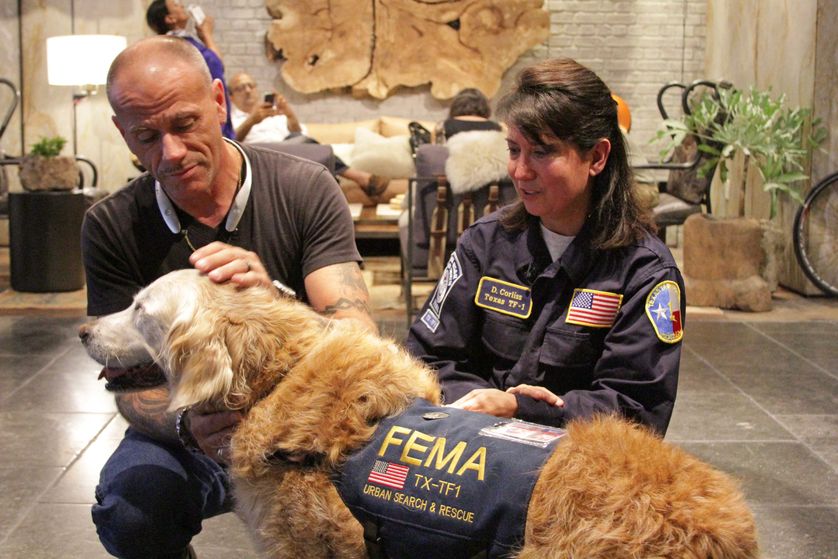
About 100 search-and-rescue dogs scoured the twisted steel beams and crumbled concrete of the World Trade Center in the aftermath of the 9/11 attacks, and today, Bretagne (pronounced “Brittany”) is the last known living 9/11 search-and-rescue dog. And she just had the best day ever.

To honor Bretagne for her service and celebrate her 16th birthday, BarkPost teamed up with the dog-friendly 1 Hotel Central Park to give the golden retriever a “Dog’s Best Day” that included a full day of treats and activities in New York City.

When Bretagne arrived in New York with her owner and handler Denise Corliss, she was greeted by a personalized billboard in Times Square.

Photo: BarkPost
Photo: BarkPost

Then she was off to play in the water at Hudson River Park, where she was presented with the doggie version of the Key to the City.

Former search-and-rescue teammates attended Bretagne’s sweet-16 party later that day, where she received a variety of toys and treats — and her very own birthday cake.

Photo: BarkPost
Photo: BarkPost

Corliss was also presented with a $1,000 donation for Texas Task Force 1, Bretagne’s search-and-rescue team, which is the most active one in the country.

In addition to her recovery work at Ground Zero, Bretagne and Corliss also worked in New Orleans following Hurricane Katrina, and today, the senior dog serves her community by volunteering at school programs that teach children to read.

Corliss adopted Bretagne as an 8-week-old puppy in 1999, and after undergoing rigorous training, the two joined Texas Task Force 1. Their first deployment was to Ground Zero, where a search for survivors quickly turned into a search for human remains.

Bretagne with a firefighter and her owner and handler, Denise Corliss during her "Dog's Best Day." (Photo: BarkPost)
Bretagne with a firefighter and her owner and handler, Denise Corliss during her “Dog’s Best Day.” (Photo: BarkPost)

For two weeks, the golden retriever tirelessly worked 12-hour shifts at the former site of the World Trade Center, and one day, Bretagne walked away from Corliss, ignoring commands to come back. The 2-year-old dog made her way to a firefighter sitting on the ground, laid next to him and put her head in his lap.

“When we deploy to some of the disasters, what I didn’t anticipate is the role that they take on as a therapy dog,” Corliss told BarkPost. “It provides an opportunity for people to have support from the dog and comfort from the dog in a real difficult environment.”

Watch Bretagne enjoy her best day in the video below.

ooOOoo

Don’t these wonderful, fabulous animals just make your heart ache!

Jean and I salute Bretagne and all the other Search & Rescue dogs both here in America and all around the world.

Two views of the United Kingdom

The very good and the very ugly.

Yesterday was the moment when Queen Elizabeth II became the longest-reigning UK monarch. As the BBC reported (in part) yesterday:

Queen Elizabeth II becomes longest-reigning UK monarch

The Queen has thanked well-wishers at home and overseas for their “touching messages of kindness” as she becomes Britain’s longest-reigning monarch.

Speaking in the Scottish Borders, the 89-year-old monarch said the title was “not one to which I have ever aspired”.

At 17:30 BST she had reigned for 23,226 days, 16 hours and approximately 30 minutes – surpassing the reign of her great-great-grandmother Queen Victoria.

David Cameron said the service the Queen had given was “truly humbling”.

Dressed in turquoise with her trusty black handbag at her side, the Queen spoke briefly to the gathered crowds earlier.

“Inevitably a long life can pass by many milestones – my own is no exception – but I thank you all and the many others at home and overseas for your touching messages of great kindness,” she said.

Newly released official photographs show the Queen with her official red box, containing the day's policy papers, cabinet documents, Foreign Office papers and other letters.
Newly released official photographs show the Queen with her official red box, containing the day’s policy papers, cabinet documents, Foreign Office papers and other letters.

Here’s a video that is worth viewing:

So that was the ‘good’ news.

Now here is the ‘ugly’ news; the latest essay by George Monbiot republished here with Mr. Monbiot’s kind permission.

ooOOoo

Britain’s Mafia State

8th September 2015

Where does legitimate business end and organised crime begin?

By George Monbiot, published in the Guardian 9th September 2015

Be reasonable in response to the unreasonable: this is what voters in the Labour election are told. Accommodate, moderate, triangulate, for the alternative is to isolate yourself from reality. You might be inclined to agree. If so, please take a look at the reality to which you must submit.

To an extent unknown since before the First World War, economic relations in this country are becoming set in stone. It’s not just that the very rich no longer fall while the very poor no longer rise. It’s that the system itself is protected from risk. Through bail-outs, quantitative easing and delays in interest rate rises, speculative investment has been so well cushioned that, as Larry Elliott puts it, financial markets are “one of the last bastions of socialism left on earth.”

Public services, infrastructure, the very fabric of the nation: these too are being converted into risk-free investments. Social cleansing is transforming inner London into an exclusive economic zone for property speculation. From a dozen directions, government policy converges on this objective. The benefits cap and the bedroom tax drive the poor out of their homes. The forced sale of high-value council houses creates a new asset pool. An uncapped and scarcely regulated private rental market turns these assets into gold. The freeze on council tax banding since 1991, the lifting of the inheritance tax threshold and £14 billion a year in breaks for private landlords all help to guarantee stupendous returns.

And for those who wish simply to sit on their assets, the government can help here too, by ensuring that there are no penalties for leaving buildings empty. As a result, great tracts of housing are removed from occupation. Agricultural land has proved an even better punt for City money: with the help of capital gains, inheritance and income tax exemptions, as well as farm subsidies, its price has quadrupled in 12 years.

Property in this country is a haven for the proceeds of international crime. The head of the National Crime Agency, Donald Toon, notes that “the London property market has been skewed by laundered money. Prices are being artificially driven up by overseas criminals who want to sequester their assets here in the UK.”

It’s hardly surprising, given the degree of oversight. Private Eye has produced a map of British land owned by companies registered in offshore tax havens. The holdings amount to 1.2 million acres, including much of our prime real estate. Among those it names as beneficiaries are a cast of Russian oligarchs, oil sheikhs, British aristocrats and newspaper proprietors. These are the people for whom government policy works, and the less regulated the system that enriches them, the happier they are.

The speculative property market is just one current in the great flow of cash that sluices through Britain while scarcely touching the sides. The financial sector exploits an astonishing political privilege: the City of London is the only jurisdiction in the UK not fully subject to the authority of parliament. In fact, the relationship seems to work the other way. Behind the Speaker’s chair in the House of Commons sits the Remembrancer, whose job is to ensure that the interests of the City of London are recognised by the elected members. (A campaign to rescind this privilege – Don’t Forget the Remembrancer – will be launched very soon). The City has one foot in the water: it is a semi-offshore state, a bit like the UK’s Crown dependencies and overseas territories, tax havens legitimised by the Privy Council. Britain’s financial secrecy undermines the tax base while providing a conduit into the legal economy for gangsters, kleptocrats and drug barons.

Even the more orthodox financial institutions deploy a long succession of scandalous practices: pension mis-selling, endowment mortgage fraud, the payment protection insurance con, Libor rigging. A former minister in the last government, Lord Green, ran HSBC while it engaged in money laundering for drugs gangs, systematic tax evasion and the provision of services to Saudi and Bangladeshi banks linked to the financing of terrorists. Sometimes the UK looks to me like an ever-so-civilised mafia state.

At next month’s Conservative party conference, corporate executives will pay £2,500 to sit with a minister. Doubtless, because we are assured that there is no link between funding and policy, they will spend the day discussing the weather and the films they have seen. If we noticed such arrangements overseas, we might be inclined to regard them as corruption. But that can’t be the case here, not least because the invitation explains that “fees associated with business day & dinner are considered a commercial transaction and therefore do not constitute a political donation.”

The government also insists that there is no link between political donations and seats in the House of Lords. But a study by researchers at Oxford University found that the probability of so many major donors arriving there by chance is 1.36 x 10-38: roughly “equivalent to entering the National Lottery and winning the jackpot 5 times in a row”. Why does the Lords remain unreformed? Because it permits plutocratic power to override democracy. Both rich and poor are kept in their place.

Governed either by or on behalf of the people who fleece us, we cannot be surprised to discover that all public services are being re-engineered for the benefit of private capital. Nor should we be surprised when governments help to negotiate, without public consent, treaties such as TTIP and CETA (the Comprehensive Economic and Trade Agreement), which undermine the sovereignty of both parliament and the law. Aesop’s observation that “we hang the petty thieves and appoint the great ones to public office” remains true in spirit, though hanging has been replaced by community payback.

Wherever you sniff in British public life, something stinks: I could fill this newspaper with examples. But, while every pore oozes corruption, our task, we are told, is merely to trim the nails of the body politic.

To fail to confront this system is to collaborate with it. Who on the left would wish to stand on the sidelines as this carve-up continues? Who would vote for anything but sweeping change?

www.monbiot.com

ooOOoo

Going to close with this picture:

Ma'am's best friend: The Queen has owned corgis for more than 60 years. Picture seen on in the UK's Daily Mail newspaper.
Ma’am’s best friend: The Queen has owned corgis for more than 60 years. Picture seen in the UK’s Daily Mail newspaper.

Taking the two stories together, all that comes to mind is that we could do much better if the United Kingdom, and other countries, were governed by dogs!

More on that nose!

An article in The Guardian is worth highlighting.

I have long been an admirer of The Guardian newspaper way back before I became a US resident. Thus an article that appeared on the website of The Guardian US newspaper seemed perfect for a mention in this place. It was an article entitled Cadaver dogs: attending camp with the canines trained to smell death and written by Liz Lucking.  Here’s a tiny extract from the article:

A dog’s sense of smell is estimated to be somewhere between 100 and 1,000 times greater than a human’s, depending on the breed. But despite their formidable noses, these dogs still need assistance, direction and training to reach their full potential.

The Penn Vet Working Dog Center does exactly that. Founded in 2007 and part of the University of Pennsylvania, the training centre and research program is dedicated to helping advance the success of working dogs.

I then went across to the Penn Vet Working Dog Centre website that was full of interesting information, including details of their Internships, Externships & Fellowships. So if that strikes a chord with a reader then that’s great.

That Guardian article also mentioned the American Rescue Dog Association and their website is full of fabulous information, as this extract from their welcome page endorses:

The American Rescue Dog Association® (ARDA®) is comprised of highly skilled volunteer search and rescue units across the United States that operate in conjunction with local law enforcement or other applicable emergency services agencies to assist in the location of missing persons. ARDA units provide specially trained dogs to locate missing persons in wilderness, disaster, human remains and water search and rescue/recovery missions. Each member unit is required to adhere to the Association’s rigid standards and undergo a rigorous two-day field evaluation every three years to ensure these standards are being maintained.

Units are available 24-hours a day to respond to requests for services from applicable local, state or federal responsible agencies.

Our search and rescue canine teams deploy in many circumstances, at several levels, at no cost to Federal and Local departments. ARDA resources operate solely as volunteers, and rely on donations for our continued operations.

Finally, searching YouTube for ARDA produced the following.

Another day: Another example of what our fabulous dogs provide to humans.