Category: Core thought

Interconnections Three

Is there a case for optimism? You bet there is!

To be honest, at a personal level I just don’t know the answer to that question. It seems to depend on the mood that Jean and I are in at any particular time. All I can fall back on is that well-used saying from me: “Never underestimate the power of unintended consequences”.

In other words, we shouldn’t underestimate the strength of millions of good people when their demands start reaching out to those in power. (And whatever your reaction to this post, please don’t miss watching the inspirational Al Gore speech towards the end of this post.)

Recently over on the Grist site there was an article about the critical changes that each and every one of us should be making. I want to share it with you in full.

ooOOoo

Want to fight climate change? Here are the 7 critical life changes you should make

Make a leap!

Celestial rhythms

This seemed a rather appropriate post for today, February 29th.

Republished from here within the terms of The Conversation.

ooOOoo

Leap day: fixing the faults in our stars

The number 2016 divided by 4 equals 504, exactly – with no remainder, which makes the year 2016, like the upcoming years 2020, 2024 and 2028 (and beyond), a leap year. We will get an “extra” day, February 29.

This pattern will repeat until 2100, when the cycle breaks. Though 2100 is exactly divisible by 4, there is an exception – for years whose number is exactly divisible by 100. (On top of that, there’s another exception – for years exactly divisible by 400. So 2400 will be a leap year. Mark your calendars now.)

Where do these quadrennial liberties with our calendar originate?

In the stars, of course.

Celestial rhythms

One of the simplest joys of life is to watch the stars, night after night, month after month, year after year. They become old friends. They spend a season, and then move on. Or rather, it is we who move on – ever advancing around the sun toward next week’s deadlines, new constellations, new fashions and new ideas.

Orion, the annual visitor. Mouser, CC BY-SA

I imagine myself late one night, eight months from now, remembering the overfull recycling bin, at midnight on trash day. As I try to quietly dump wine bottles into the yellow-topped container, there striding over the eastern skyline is Orion. Back again is my ancient friend, telling me that winter is near, and that I have ridden this miraculous rock almost another full lap around my home star. Rigel shimmers its blue-white light, the twinkle in the eye (the knee, actually) of a companion who has visited me, annually, every place on Earth I have lived since childhood. Even to the Southern Hemisphere, the steady Orion came for a summer visit – cartwheeling upside down, feet over hands.

It is from these celestial cycles that our concepts of time originate, and, ultimately, from which we gain the leap day.

The sidereal year is the length of time it takes for the Earth to return to the same place with respect to the “fix’d” and “constant” stars, so that Orion appears exactly in the same place in the sky, at exactly midnight, 365.2563 days later. Stellar friends like that don’t stand you up; they keep their appointments to seven-digit precision (and more).

Right over the equator: A diagram showing the sun’s position relative to the Earth at the vernal equinox. Tfr000, CC BY-SA

Our Western calendar is tied to the tropical year – the time between successive vernal equinoxes. At that moment, the sun’s position in the sky is exactly where the ecliptic (the plane of the solar system and the path that the planets take as they move through the constellations) crosses the celestial equator (the projection of the Earth’s own equator onto the celestial sphere). Straddling the celestial equator, the sun splits its time exactly between the day side and the night side of the Earth. It returns to that place again in roughly 365.24219 days. Roughly.

Now you can see where those alternating “divisible by 4, 100 and 400” leap year rules originate.

Making up the differences

At the end of 365 days, there are still 0.24219 days (just shy of six hours) to go before Earth gets back to the equinox line.

After four years, however, this fractional 0.24219 of a day adds up to 0.96876, which is pretty close to one full day. If we were using only a 365-day calendar, the stars, and more importantly the months, corresponding to the seasons – crucial for agricultural societies – would slip behind. This was apparent to the Romans in the first century, as well as to the Olmecs and the Maya on the other side of the world.

Thus decreed Julius Caesar in 46 B.C.: that every four years an extra day would be added to February. It was called the Julian calendar. But adding one day every four years, in order to make up for that 0.96876 of a day in orbital spare change, is overcompensating. Caesar’s “every four” leap year prescription adds 0.03124 of a day too much. This makes the Julian calendar run fast by just over 600 seconds per year.

Exception after exception: Christopher Clavius, in a line engraving by E de Boulonois. Wellcome Trust, CC BY

Like with the spare coin jar in our house, small change like that takes a while to add up. It wasn’t until the age of Pope Gregory XIII, in 1582, that this mismatch was becoming a problem. After consultation, presumably with God, but particularly with his astronomer, Christopher Clavius, the pope adopted Clavius’ clever solution.

The Julian calendar runs fast by 0.03124 of a day every four years; multiply both sides by 100, and see an excess of about three days after 400 years. Clavius’ solution was to make centuries exceptions – but that would lose too much, four days in 400 years, not three. So Clavius added one back, once every 400 years, starting in 1600.

This Gregorian calendar, which we use today, has the following rules:

  • Every year divisible by 4: add February 29
  • Every century (1800, 1900, 2000, 2100): do not add February 29
  • Every century divisible by 400: add February 29

Still finer measurements

Even with this refinement, there is still orbital change left over. But now we are talking about temporal shavings that are quite small. At this level of precision, other wobbles in the relation of the Earth’s rotational period (the day) and its revolution period (the year) have to be taken into account.

When a leap second is added, digital clocks tick past 23:59:59 but don’t go directly to 00:00:00. Twid

Keeping track of minute effects like this is the job of the International Earth Rotation and Reference Systems Service, which controls the addition (or deletion) of leap seconds. For example, a second was added to Coordinated Universal Time by the service on June 30, 2015, due largely to the slowing of the Earth’s rotation by the gravitational pull of the moon.

There are other sources of calendar slip: the 8.9 magnitude earthquake that triggered the Japanese tsunami on March 11, 2011, for example, shifted the planet’s mass distribution enough to decrease the length of a day by 1.8 microseconds. This will add up to about a second after 1,500 years.

Using that ‘extra’ time

Personally, I think we should make February 29, leap day, a global holiday. It should be considered a gift to ourselves, like taking that accumulated spare change to the grocery store coin-counting machine, and trading it for some easier-to-spend bills. It should be a day of celebration, a reward for saving that quarter of a day over the last four years, to be spent on something frivolous. Or it could be a special day to realign our sense of hourly routines, weekly trash pickups, the race to fulfill monthly quotas, to the celestial schedule.

Without that extra day every fourth year, our ancient friends would begin to miss their annual appointments, and start to fall behind in wishing us prompt birthday greetings, like forgetful Facebook friends. Without February 29, roughly, every four years, the “constant stars” would cease to be constant.

ooOOoo

So there! Now you know!

You all spend this extra day peacefully and happily.

Picture parade one hundred and thirty-six

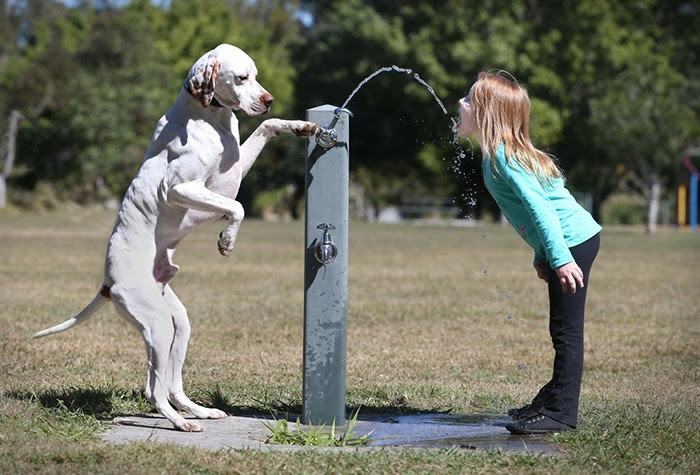
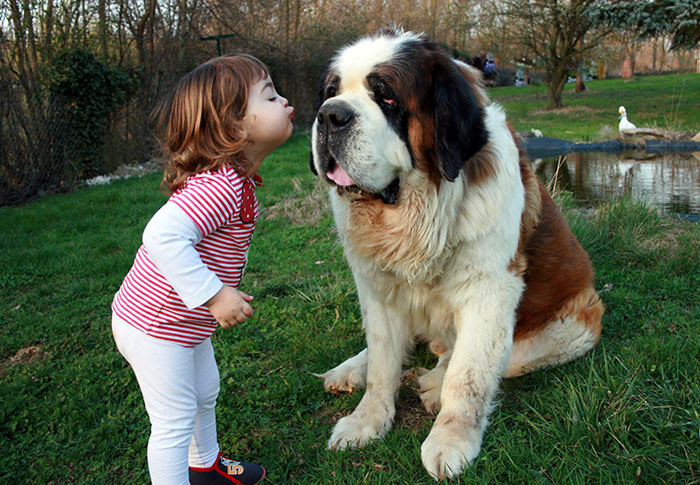
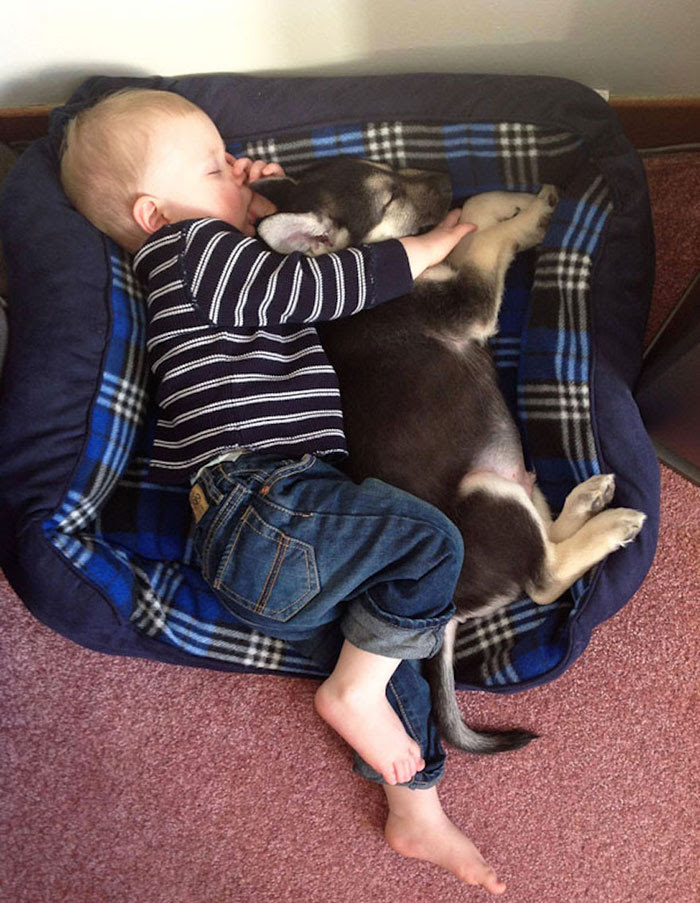
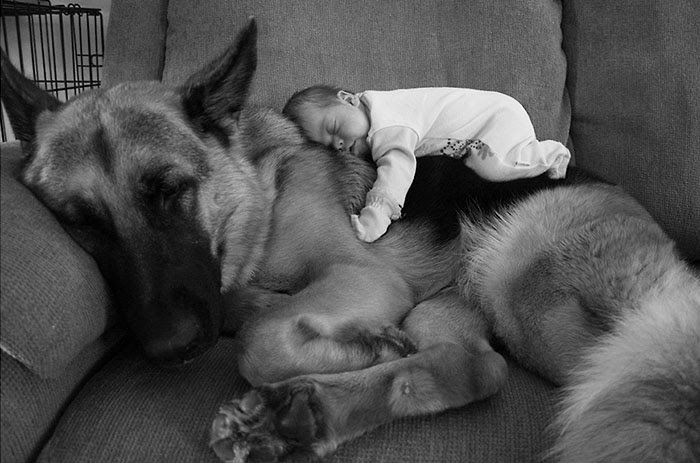
The final set of gorgeous child and pet photographs.

The second set is here (that includes a link to the first set.)

dl12oooo

dl13oooo

dl14oooo

dl15oooo

dl16oooo

They will take some beating but come back here in a week’s time to see what I came across!

Keep on looking after yourselves and your wonderful animals.

The Song Dog

The North American Coyote

When we let the dogs out last thing on Tuesday evening there was a local pack of coyotes not far from our fence line. Cleo started barking and some of the coyotes responded with their spine-chillingly beautiful howls. The sound really does transport one back thousands of years in a mystical sense.

howling-coyote-picturesI started doing some research as to whether we, as in us humans, had studied what the song of the coyote means. I came across The Natural History of the Urban Coyote website and therein was an article called Translating the Song Dog. It’s a fabulously interesting article and I do hope it’s OK to share with you.

ooOOoo

The scientific name for the coyote is Canis latrans, which translates to “barking dog,” a perfect name for this species which has been called the most vocal of North America’s mammals.

Less formally, the coyote is known as the song dog, and one listen to a group howl by a pack of coyotes makes it clear why. Rather than the simple but soul-haunting sound of a wolf’s howl, the coyote’s howl can be made up of high-pitched howls, barks, and yips that make it clear the coyote has a whole lot of lyrics in a single song. But what exactly do those lyrics say?

The coyote has a range of vocalizations depending on social context and message. In 1978, Philip N. Lehner published his research of coyote communication and what the various vocalizations mean, which has been included in Coyotes: Biology, Behavior, and Management.

“The vocal repertoire of the adult coyote contains eleven vocalizations, several of which are also given by pups. These vocalizations grade into one another such that their separation into eleven types is somewhat arbitrary based on their different sounds, behavior context, and physical characteristics.”

In other words, the coyote language is complex and depends on the social situation, the coyote’s body language in addition to the sounds, the intensity of the vocalization, and other factors. This makes sense considering that when one digs a little into hunting forums, some coyote hunters are convinced they know more than eleven calls for coyotes. Indeed, there are likely more vocalizations when one looks at subtleties.

If you have paid close attention the vocalizations of domestic dogs, especially those more talkative breeds, you’ll likely find it easy to decode coyote sounds. There is a lot of overlap in the sounds dogs, coyotes and other canid species make – from a startled huff to a whine of greeting, from an antagonistic growl to a bark of alarm. But coyotes take the language of canids to another level with their extensive list of sounds, especially the yips, howls, and of course their choral group howls.

Though Lehner notes that it’s a bit arbitrary to categorize coyote sounds, we can at least begin to understand them by breaking them down into the types of sounds they make along with their purpose. So he created the following 11 categories, which can also be considered sign-posts on a gradient of meaning and intensity.

Types of Coyote Vocalizations

1. Growl – This vocalization holds no mystery. A growl is used as a threat, specifically for something within close range.

2. Huff – This is the expulsion of air through the nose and mouth, and is also used as a high-intensity threat in close proximity. Huffs are used, for instance, when there’s bickering over carrion.

3. Woof – This vocalization is made as both a low-intensity threat and as an alarm. It’s a sound made when a coyote is startled and unsure of exactly what is happening, but knows it is not comfortable with whatever it is.

4. Bark – The bark is a long-distance threat or alert of low to medium intensity.

5. Bark-Howl – This is when the coyote gets serious about a threat. The bark-howl is used as a long-distance high-intensity threat or alarm. It starts with a bark and blends into a howl.

What is interesting about the bark and the bark-howl is that research suggests that the varying intensity and frequency of barks could contain different information. More recent research by Brian R. Mitchell has shown that coyotes likely identify individuals by their barks and bark-howls.

“By analyzing spectrograms of howls and barks,” writes Mitchell, “I was able to determine that both of these vocalizations do indeed contain individually specific information.  Because of the tremendous advantage of being able to determine individual identities, I presume that coyotes use the information in barks to identify individuals they are familiar with.”

“Another interesting aspect of coyote barks and howls,” he continues, “is that howls stably convey information for distances of at least one kilometer.  Barks, on the other hand, rapidly attenuated and did not appear suitable for transmitting information.  Barks likely serve other purposes, such as attracting information and providing information that listeners could use to estimate distance to the barking animal.”

Barks and bark-howls, then, can serve in saying, “I’m here, and here’s how I’m feeling” and allow listening coyotes to recognize if those individuals are family or strangers. Mitchell underscores that a coyote recognizing an individual by their howl isn’t about the howling coyote shouting his own name again and again; rather it is akin to how we can recognize a family member or friend by the sound of their voice no matter what they’re saying, because of their unique pitch, timbre, cadence and even accent.

6. Whine – This sound is used to express submission and is usually given by a subordinate coyote to a more dominant coyote.

7. Yelp – The yelp takes the whine up a notch and represents high-intensity submission. However, it can also be a response to being startled. As is the case with several other of these vocalizations, this categorization shows that coyote communication is more of a gradient. Lehner writes, “A yi-e-e-e often precedes or follows the yelp portion and resembles a high-frequency bark [and] appears on a sonogram like a short howl chopped into segments.”

8. Woo-oo-wow – This is the “greeting song” of coyotes, and is used during high-intensity greeting displays. The vocalization modulates in frequency and amplitude as a coyote’s motivation shifts, Lehner notes, and so can fluctuate from a whine to a growl.

9. Lone Howl – The lone howl is just what you probably already know it to be: a howl by a single coyote, which is often started with a series of barks that reseracher R. M. Mengel called “herald barks.” As mentioned above, coyotes can distinguish individuals based on their unique howl, and the purpose of the howl is to announce one’s location to others in their social group. Often, the lone howl gets an answer, and the coyotes can find each other to meet up.

10. Group Howl – A group howl is sent up when two or more coyotes come together after being apart, or it could be given as a response to the howls of distant coyotes. It is, according to Lehner, essentially two or more coyotes giving their own lone howls either successively or simultaneously, as a way of giving out location information to any listeners.

11. Group Yip-Howl – This is what coyotes are really known for. The group yip-howl is sent up when coyotes reunite, or just before they separate to go off hunting individually. As more coyotes join in, the more intense the vocalizations become, increasing in frequency and amplitude. Lehner notes that the group yip-howl includes sounds that researcher H. McCarley called screams, gargles and laughs. In other words, the many variations of coyote vocalizations show up in this chorus.

According to Lehner, the group yip-howl probably strengthens social bonds, may help to synchronize mood, and may also reaffirm social status within the pack. He also notes that the group yip-howl “may be most important in announcing territorial occupancy and preventing visual contact between groups of coyotes.”

The chorus tells any nearby coyote packs about whose turf this is, and thus keeps other coyotes away. It also reveals (or hides) how many coyotes are in the area and may help regulate coyote density through reproductive rate. Research has shown that female coyotes will produce larger litters when there is little competition, and smaller litters when there is a high density of coyotes in the habitat. This is one of the secrets to the coyote’s success at spreading across the continent in the last century.

[Note: This is also why indiscriminate killing of coyotes to decrease their density doesn’t work as a management strategy. Coyotes repopulate an area quickly and easily when competition is eliminated, with the population rebounding or even expanding in a very short time. Perhaps a more effective, cost-cutting and non-lethal strategy for reducing the number of coyotes in an area would be playing recorded group yip-howls to make resident coyotes think there is more competition for resources. This is something several researchers have expressed interest in exploring, specifically in order to reduce conflicts with ranchers. If we can discover more about what specific messages are embedded in certain howls or barks, ranchers could play specific recordings to keep coyotes away from livestock as well as minimize the number of coyotes living in an area.]

Mitchell writes, “Group yip-howls are produced by a mated and territorial pair of ‘alpha’ coyotes, with the male howling while the female intersperses her yips, barks, and short howls. ‘Beta’ coyotes (the children of the alpha pair from previous years) and current year pups may join in if they are nearby, or respond with howls of their own. And once one group of coyotes starts howling, chances are that any other alpha pairs nearby will respond in kind, with chorus after chorus of group yip-howls rippling across the miles.”

In Talking to Coyotes with the Song Dog, a pamphlet about using a coyote caller, Major L. Boddicker, Ph.D. brings up a personal experience with such a chain reaction.  After sending up what he calls a “Joy of Life Call” which is a group yip-howl, “It sounded like every coyote in the USA responded in the musical see-saw coyote chant which went on and on for 3-5 minutes. I later called a friend in Steamboat Springs, Colorado (150 miles away) to check for the time when the coyotes started to sing there. Given the time it took sound to travel and coyotes to react, I very likely started the chorus.” Whether or not the chorus traveled that far, it is indeed possible to start a chain of coyotes sending up group yip-howls.

Boddicker discusses Lehner’s list of vocalizations in his pamphlet, and brings in two more vocalizations that he or experienced coyote callers have heard. He notes that these my fall into the umbrella categories identified by Lehner, but are distinct enough to point out anyway. They are:

Whoop – This sound is used as part of more complex sounds such as the group howl or group yip-howls.

Yodel – This is when a howl tapers up and ends abruptly, rather than tapering down in a typical howl, which gives the howl a sound like the coyote is asking a question. Boddicker notes that this happens when coyotes howl for an unusual reason such as for a lost family member.

How Many Coyotes Are Howling?

“When people hear coyote howls, they often mistakenly assume that they’re hearing a large pack of animals, all raising their voices at once,” writes Mitchell. “But this is an auditory illusion called the ‘beau geste’ effect.”

Coyotes howl both to reunite and to keep trespassers at bay. It may be in their favor that if they howl, they sound like a bigger pack than they really are. They accomplish complicated and confusing howls by a smart strategy of using wavering howls and changing their pitch rapidly. This, combined with the howls bouncing off objects in the environment such as rocks, trees, or the far side of a valley may make it hard for a listener to know if they are hearing one coyote or several howling simultaneously.

When two or three coyotes howl together, they can sound like a pack of six or ten or more, which perhaps makes them seem much more formidable to any nearby competitors or predators.

Coyotes May Have Local Accents

We know that coyotes vary in size and build depending on their location, as the difference between western and eastern coyotes clearly demonstrates. Does their location also mean they have accents? We know that other species with complex communication such as whales have different accents, so it makes sense that coyotes may also have regional accents. And does that affect how they might interpret or respond to strangers?

Sara Waller, associate professor of philosophy at Montana State University in Bozeman, told the Bozman Gazette, “We know that dogs have ‘accents’ just as people do — we can reliably tell the difference between British dog barks and American dog barks. When we have enough recordings to really compare Eastern and Western coyotes, we may find that like dogs, and people, they have regionally based differences in the way they communicate with each other. This would show that coyote vocalizations are impacted by social and environmental factors just as human speech is.”

What Can Coyotes Teach Us About Language?

There is still so much to learn about what coyotes are saying through their complex and varied vocalizations. The more we learn about the way coyotes communicate as social predators, the more we can learn about not just their species, but our own as well.

Coyotes can sense things we humans can’t, and Waller questions, “How does that impact the way they think? They are social, communicative predators, and so are very like humans in many ways. If we could figure out what some of these vocalizations mean, it would give us insight into how our own language works, and how human minds differ from those of other social predators.”

Examples of Coyote Vocalizations

In the video below, two coyotes give barks and bark-howls as an alarm against the person recording the video:

The person who uploaded this video notes that the coyotes had been hanging around a lot and ventured a guess that is because her dog was in heat. However, the date on the video is in late May, which is about the time when coyote pups are emerging from the den and becoming active around the den site. So it is possible that these are the parents and/or helper coyote keeping a watch on the person taking a video and giving alarm, warning them away from a nearby den.

In the video below, coyotes send up a group yip-howl. Note that the howls do not begin with a bark, like the previous video. As Lehner notes, the group yip-howl starts usually with the dominant individual of the pack. That seems to happen here as the coyote in the video joins in after another coyote begins the howl:

The video below is a coyote group yip-howl, likely started with reunion of group members, and includes yips, whines and other vocalizations on the coyote-sounds spectrum as the members interact. There is so much great behavior and body language captured in this video, showing the group dynamics of submissive members with more dominant members of the pack:

Listen to more coyote vocalizations on Soundboard or The Social Predator Vocalization Project.

References:
Coyotes: Biology, Behavior and Management
Talking to Coyotes with the Song Dog
Information Content of Coyote Barks and Howls
Coyotes: Decoding Their Yips, Barks, and Howls

ooOOoo

And that beautiful photograph of the howling coyote at the start of today’s post? That came from this website that also included the following that I will use to close this post.

“when the end comes there will be coyotes and coach roaches left in the world and the coyote will eat the coach roach and that will be that!”   Some say that “Cher” will still be on tour though.

Picture parade one hundred and thirty-five

More on that wonderful bond between child and pet.

The first set of pictures were here.

dl7oooo

dl8oooo

dl9oooo

dl10oooo

dl11oooo

The final set of these wonderful photographs in a week’s time.

In the interim, you all take care of yourself and your gorgeous dogs and cats.

Friday fondness

A rather personal posting for today.

My dear, sweet wife is struggling with a personal issue that I am not going to share with you dear readers; for obvious reasons. The issue is not to do with our relationship, not at all, but part of the journey of getting a little older day by day.

Yesterday morning, sitting up in bed after breakfast, accompanied by many of our dogs fast asleep around us, Jean had a bit of a weepy session. Today Jean and I are off to see a medical consultant to ascertain the nature of the issue. Not going to say any more than that.

So back to yesterday morning, me reflecting on Jean’s tears, and me musing about what to write for today’s post. There in my email inbox was an item in the latest Big Think newsletter that was perfect. It was called The Science behind Maintaining a Happy Long-Term Relationship and it was by Dr. Helen Fisher, senior research fellow at the Kinsey Institute.

Here is how that article by Dr. Fisher opens:

Plenty of people are pessimistic about the state of relationships in society. Dr. Helen Fisher, senior research fellow at the Kinsey Institute, isn’t one of them. She sees trends like extended periods of cohabitation before marriage and a persistent fear of divorce not only as interrelated, but also signs of a healthy change in attitude toward love. While marriage was once the start of a long-term relationship, she says, today it’s the finale. And that’s a good way to cope with a brain whose primitive regions are driven intensely toward short-term relationships. Dr. Fisher also explains how to maintain novelty, the fuel of romantic love, and how to be aware of the brain regions that affect satisfaction in a relationship.

Now I don’t have permission to republish the full transcript but I see that the video, that was included in the Big Think article, is on YouTube.

I count myself incredibly lucky to have met Jean back in December, 2007 and that out of that meeting came a loving relationship that is more beautiful than words. Well more beautiful than my words so I will let E. E. Cummings say it how it should be said.

love is more thicker than forget
more thinner than recall
more seldom than a wave is wet
more frequent than to fail
it is most mad and moonly
and less it shall unbe
than all the sea which only
is deeper than the sea
love is less always than to win
less never than alive
less bigger than the least begin
less littler than forgive
it is most sane and sunly
and more it cannot die
than all the sky which only
is higher than the sky
Share this text …?

E.E. Cummings, “[love is more thicker than forget]” from Complete Poems 1904-1962, edited by George J. Firmage. Copyright 1926, 1954, 1991 by the Trustees for the E.E. Cummings Trust. Copyright © 1985 by George James Firmage. Reprinted with the permission of Liveright Publishing Corporation.

Source: Poetry (January 1939). (Taken from here)

That is my love for Jean.

The core relationship; with ourself.

A reposting of an item from this place some three years ago.

On Sunday, in recognition of Valentine’s Day, I posted a selection of articles under the post title of Loving Relationships.

Then yesterday my day that should have been quiet and uneventful turned out to be anything other than that! So it was well after 3pm that I sat down in front of my PC wondering what to publish today. I thought that as there had been a steady flow of new readers signing up to follow this place (and a huge thank you – it really does mean a lot to me) I might see what I published three years ago.

To my surprise it was a post about the most important relationship of all; the one with ourself.

So please do enjoy what was published on February 15th, 2012.

ooOOoo

Do you or I really know who we are?

The strangeness of this species Homo sapiens.

My writings of the previous three days have explored the nature of man. The many ways that we struggle to understand so many issues in our lives. In particular the biggest issue of them all since we abandoned the life of the hunter-gatherer. Our very survival.

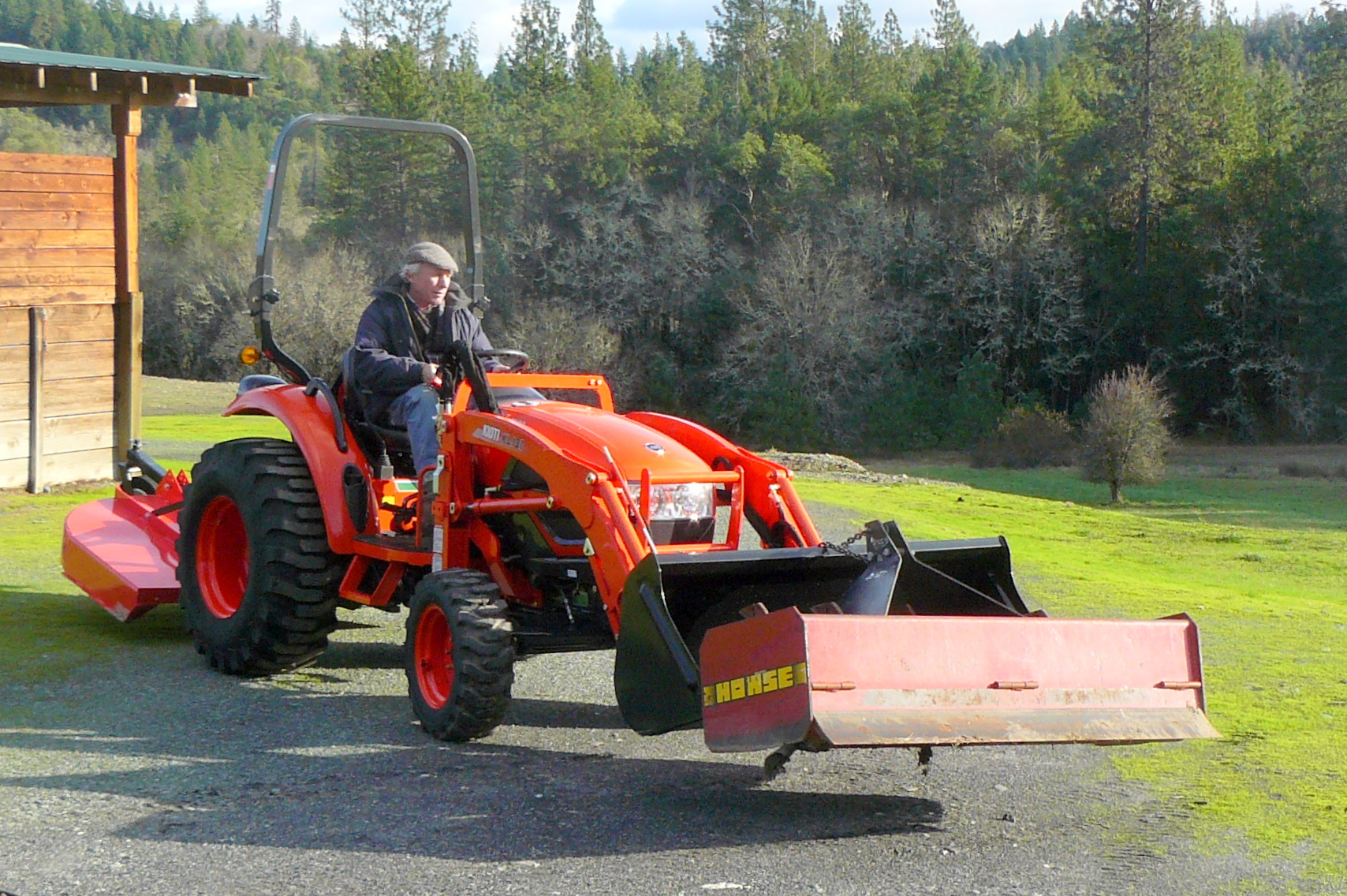
It would be so easy to beat oneself up. To stare in the mirror and despair at all the unfinished ideas that one has about being ‘sustainable’ shortly before jumping on one’s shiny new tractor, yet another symbol of our industrial civilisation. The hypocrisy, the double standards!

New tractor being delivered last December.
New tractor delivered last December.

But the mistake in any attempt at self-awareness is the assumption that you know who you are! Therein lays the problem.!

Marcus Peter Francis du Sautoy is a very smart person. This is how WikiPedia describes him.

sautoy
Prof. Marcus Sautoy

Marcus Peter Francis du Sautoy, OBE (born in London, 26 August 1965)[3] is the Simonyi Professor for the Public Understanding of Science and a Professor of Mathematics at the University of Oxford. Formerly a Fellow of All Souls College, and Wadham College, he is now a Fellow of New College. He is President of the Mathematical Association.

Prof. Sautoy came to the realisation that the thoughts that make us feel as though we know ourselves are easy to experience. But where do those thoughts come from? Marcus Sautoy acknowledged that they are notoriously difficult to explain.

So, in order to find out where they come from Marcus subjects himself to a series of probing experiments. With the help of a hammer-wielding scientist, Jennifer Aniston and a general anaesthetic, Professor Marcus du Sautoy goes in search of answers to one of science’s greatest mysteries: how do we know who we are?

He learns at what age our self-awareness emerges and whether other species share this trait.

Next, he has his mind scrambled by a cutting-edge experiment in anaesthesia. Having survived that ordeal, Marcus is given an out-of-body experience in a bid to locate his true self. And in Hollywood, he learns how celebrities are helping scientists understand the microscopic activities of our brain.

Finally, he takes part in a mind-reading experiment that both helps explain and radically alters his understanding of who he is.

All of this is covered in a fabulously interesting episode from Horizon, the excellent and long-running BBC TV science and philosophy series. Thankfully, it made its way onto YouTube.

(NB: In the intervening period, that BBC Horizon programme has been removed from YouTube for copyright reasons. That’s a great shame. However, the following documentary from the good Professor will, I am sure, be equally fascinating.)

The Secret Rules of Modern Living Algorithms

Published on Oct 30, 2015

Without us noticing, modern life has been taken over. Algorithms run everything from search engines on the internet to satnavs and credit card data security – they even help us travel the world, find love and save lives.
Mathematician Professor Marcus du Sautoy demystifies the hidden world of algorithms. By showing us some of the algorithms most essential to our lives, he reveals where these 2,000-year-old problem solvers came from, how they work, what they have achieved and how they are now so advanced they can even programme themselves.

As Confucius reportedly wrote: Real knowledge is to know the extent of one’s ignorance.

ooOOoo

In defence of sovereignty and democracy.

The challenges facing the European Union ripple out across the whole of the free world.

I note that this is the second Friday where there is an abrupt change from the run of posts during the previous few days. For last Friday I republished a George Monbiot article on Rigging the Market and today there is another Monbiot article that I want to share with you; shared with you with the kind permission of Mr. Monbiot.

Unlike last Friday’s Monbiot article that clearly had global implications, at first sight this article about the European Union has no relevance to those of us not living with EU boundaries. But that would be wrong. For the importance of protecting a country’s sovereignty and the democratic processes within that country is supreme across all democratically elected governments.

ooOOoo

The Lesser Evil

Picture parade one hundred and thirty-four.

You are going to adore these!

(Big thanks to neighbour Dordie who sent these to me.)

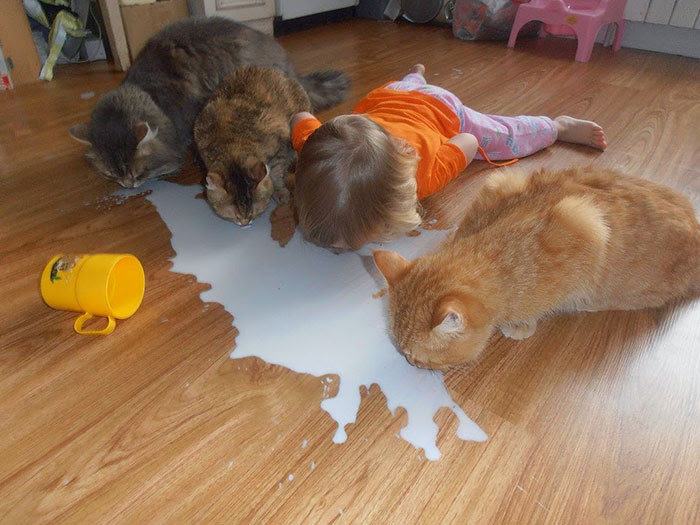
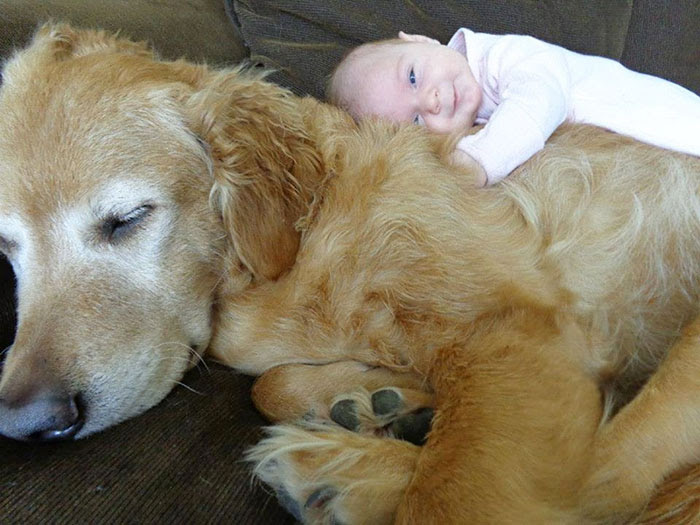
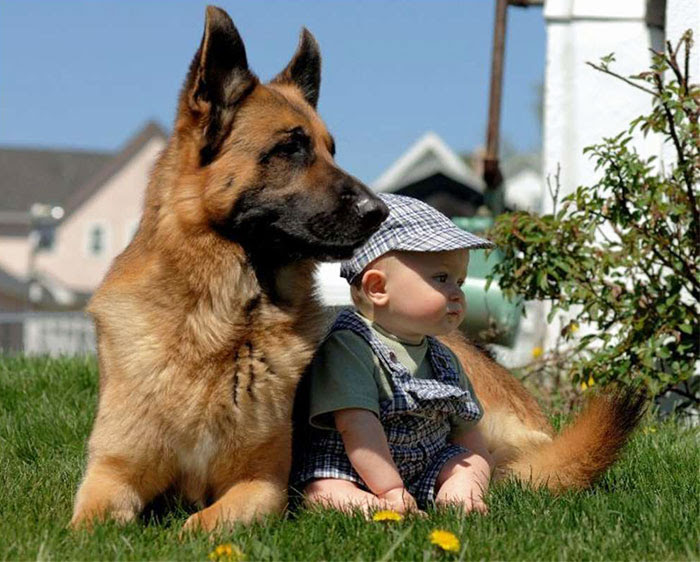
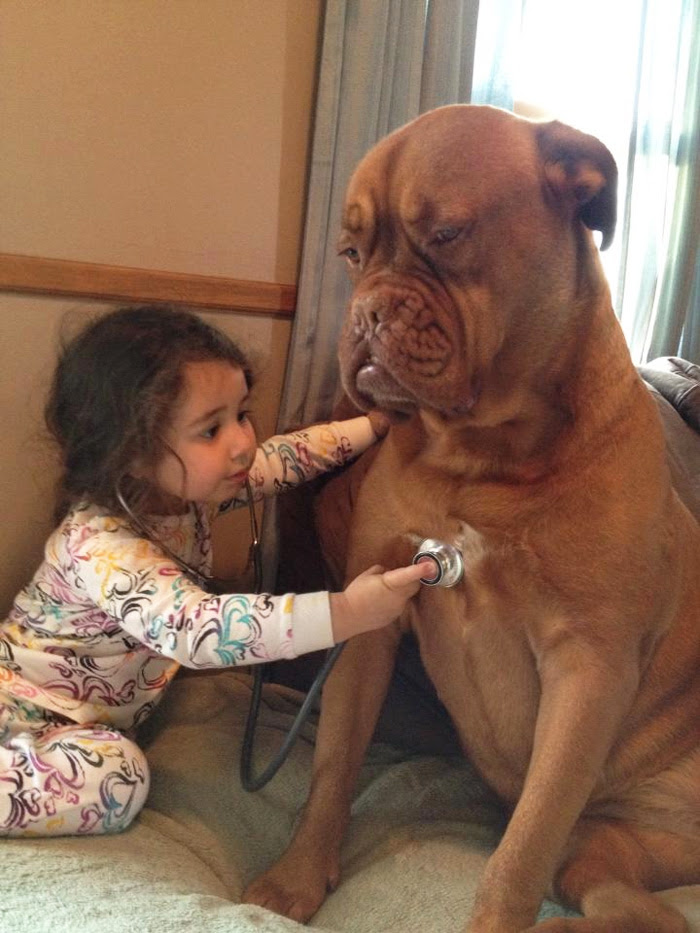
Few friendships can compare to the bond between a child and their pet. Pets provide companionship, they help kids learn, they encourage nurturing, they keep them healthy and help build beautiful family bonds. Let’s take a look at some of the cutest kid-and-pet pictures around.


dl1oooo

dl2oooo

dl3oooo

dl4oooo

dl5oooo

dl6oooo

The second set will not be next Sunday owing to that day being Valentine’s Day and I have plans for that day! 😉 So part two of this wonderful three-part series of photographs will be Sunday, 21st February.

The love of a German Shepherd.

Towards a baby elephant!

The following beautiful example of the unconditional love of a dog was seen by my on the Care2 Petitions and Causes site.  It just had to be shared with you, dear reader, because it is such a powerful reminder of what love and caring for others delivers.  It was originally seen here and is republished within the terms of Care2.

ooOOoo

Baby Elephant, Rejected By His Herd, Finds Hope Again With German Shepherd

3166406.largeBy: Judy M. January 31, 2016

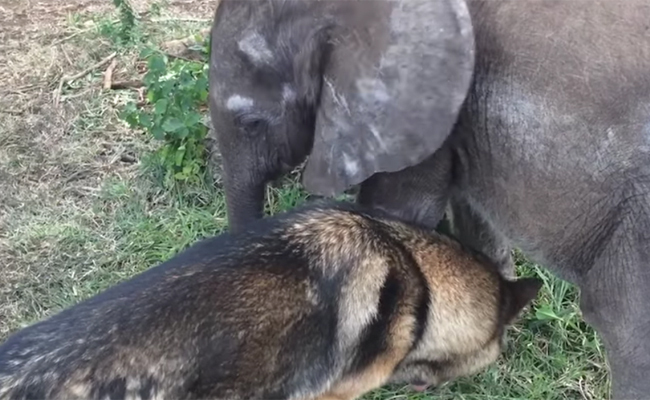
In Zululand, South Africa, an unlikely pair has become best friends: a baby elephant and a German Shepherd.

Ellie the baby elephant was shunned and rejected by his herd, and he also had big health problems. For most young elephants, all of this would mean an early death. Luckily for him, he was discovered by the Thula Thula Rhino Orphanage in South Africa, and he made a new best friend: Duma, the German Shepherd puppy.

When Ellie arrived at the rhino orphanage he was critically ill with an umbilical hernia and had little chance of survival.

The game reserve usually rehabilitates baby rhinos, victims of South Africa’s poaching crisis, but is also home to other African wildlife like elephants, buffalo, leopards, giraffes, zebras, hyenas, and crocodiles.

 So why is Ellie here? He was brought to the orphanage after he was rejected by his herd, in spite of numerous attempts to reunite him with his family.

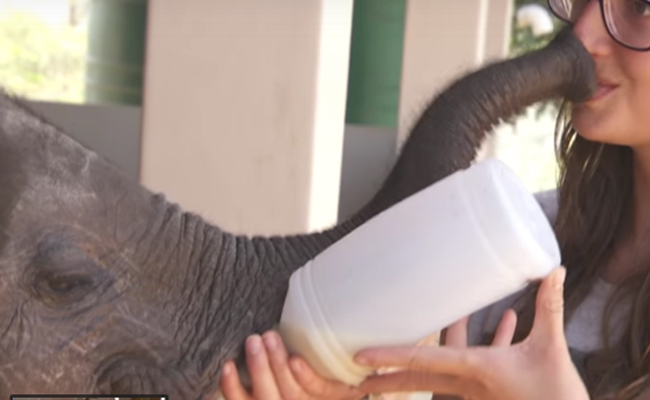
When Ellie the elephant first arrived, his rescuers didn’t think he would make it, but they nursed him day and night.

Photo Credit: Screenshot from Youtube video

As Maren Trendler, a rehabilitation and crisis response expert at the orphanage, explains, “He also had a huge umbilical hernia and abscess. … In about 99 percent of these cases an umbilical abscess of that nature is fatal. … Against all odds, this little elephant is still with us.” 

Ellie had an intolerance to milk and nothing seemed to work. So the orphanage decided to make him a special milk formula, and he slowly started to stabilize.

Eventually Ellie’s physical health improved, but his mental health did not, because elephants are social animals and known to be hard to raise away from a herd. He was depressed and lethargic until Duma, the German shepherd hero, swooped in.

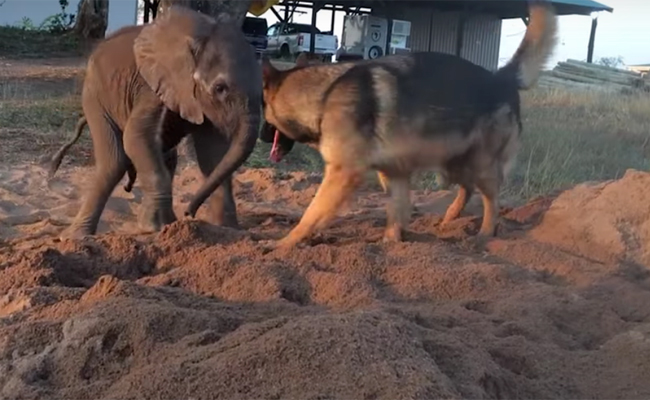
With the arrival of Duma, a former service and sniffer dog, things seemed to turn around for Ellie. The young elephant had been lethargic, not interested in anything, until the orphanage introduced the two at a sand pile. Immediately Ellie started being interested in life again. Duma and Ellie became friends, bonding in spite of their many differences.

Photo Credit: Screenshot from Youtube video

For the past few weeks, their relationship has been growing so much that the carers have a “hard time keeping Duma away from the elephant,” Trendler explains.

Ellie’s future is still uncertain, since elephants generally need to be part of a herd to develop and grow. But right now, Ellie and Duma are happy together.

Published on Jan 14, 2016

Everyone loves a canine companion, and this baby elephant is no exception! The tiny pachyderm arrived at the Thula Thula Rhino Orphanage in South Africa after being rejected by his herd. Critically ill, the youngster had very little chance of survival. But thanks to round-the-clock care from sanctuary staff, and a bit of help from a special canine companion, the baby elephant is on the road to a full recovery.
http://www.earthorganization.org/proj…
https://www.facebook.com/rhinoorphanage

ooOOoo

Time and time again, the world of dogs reminds us humans of what we need to learn, and to learn reasonably quickly, if we are to leave a sustainable, fair and equitable world for our grandchildren.

Talk about fiddling while Rome burns!

romeburns