Normal service may not be possible for the next few weeks!
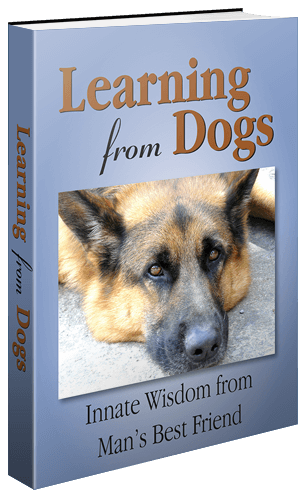
As many of you know last December I published my first book Learning from Dogs.
That book had been the result of me getting my head down in the Novembers of 2013 and 2014. Why November? Because that is the month of NaNoWriMo, or to use the long-form: National Novel Writing Month.
Having brought book number one the light of the day, it was only natural that my mind started to turn to a sequel. At first, I thought of another book about dogs; perhaps Learning About Dogs? But for a variety of reasons I just couldn’t get started and it all came to a head last Wednesday during one of our regular group cycle rides. As follows:
Jim Goodbrod, he who wrote the foreword to my first book, asked how book number two was coming along.
“Oh Jim,” I replied, “I have left it far too late to contact the many academics that I have come across, to seek permission to quote their works and to find out if they have more scientific information of potential interest.”
“I have this terrible feeling that I’m setting myself up to fail!”
Jim then opened a wonderful window for me; metaphorically speaking. But before describing what Jim went on to say I should explain to you, dear reader, the connection between Jim and Janet, his wife, and Jean and me. Jim and Janet live about half-a-mile from us in Merlin, Southern Oregon, and right from the moment when we moved into our home back in 2012 they have been very good friends indeed. That friendship built upon Jim and Janet sharing very many similar outlooks on life to Jeannie and me. Plus Jim is a professional veterinarian doctor at a vet’s practice in Grants Pass, our local town some 12 miles from home, but has frequently given us advice ‘out of hours’ when one of our pets at home has gone down with something beyond Jean’s extensive experience.
So the four of us have spent much time together socially and I am embarrassed to admit that quite a few of my stories from past years have been told by me.
Back to that conversation during that bike ride. “Paul, Janet and I were only saying the other day that we would really love to see your next book being something autobiographical. You have had so many interesting experiences in so many parts of the world that we truly believe that they would be of interest to many others.”
It felt slightly uncomfortable to hear that. Uncomfortable in the sense that immediately responding by saying what a good idea that was carried too much egotism, was too self-indulgent. But at the same time I knew that Jim and Janet would offer a genuine recommendation and that it would most certainly get me out of my present difficult situation. I thanked Jim profusely. Jim then went on the describe the style that he and Janet would enjoy: “Janet and I have long loved reading books where each chapter was a self-contained story. In other words, a book that one could pick up and dip into and still feel that it was a good read.”
When I returned home and spoke about this to Jeannie she immediately said that it was something that she had been urging me to consider. An hour later I was speaking on the phone to my sister Eleanor and she, too, encouraged me to go down this route.
So that’s how it has come about that book number two is going to be semi-autobiographical, and it already has a name: Four Dogs On My Bed.
Or as the byline reads: On Life; On Love; and On Dogs.
All of which is a rather wordy way of saying that from now until the end of November my first priority is going to be book writing. How that will impact my attention to this blog and all you wonderful readers is uncertain. But if you see a string of re-posts from earlier times, if I don’t provide the most fulsome introduction to a guest author that they deserve, if my replies to comments are not as quick as I normally try to be, then you will know the reason why.
Back in September, I received an email from a Paige Johnson. He offered to write a guest post for Learning from Dogs. Now I love guest posts simply because I think that different perspectives are always valuable, and let’s face it you get enough of me ‘rabbiting on’ most days.
This is what Paige’s email said:
I reached out to your recently with a guest article offer and just wanted to send a quick note to follow up.
I’ve had my dog, GG, since my early 20s, and though it wasn’t easy — in fact, it was quite the trial and error process for both of us! — I’m happy to report that she has become a well-trained pup, great with kids, adults, and other animals.
That said, GG and I are about to face another challenge together. Moving. I know that uprooting her from the only home she’s ever known won’t be easy for her so I’ve been doing some research on how to make the process go as smoothly as possible for both of us.
I run LearnFit.org with some friends, and collectively, we love helping readers find balance in their life. Adding a dog to the mix definitely brings happiness, but it can be a tough adjustment, especially when you face another big life event, like moving or having a child.
Who wouldn’t warm to that approach!
So here is Paige’s guest post.
ooOOoo
4 Tips for New Dog Owners Who Need to Break Up with Your Vet
When you become a new dog owner, you worry about what to feed him, how often to bathe him, the best type of flea and tick treatment to use to protect him, and a litany of other things involved in caring for him. You also need to make sure that your veterinarian is on the same page with you so that you are comfortable with relying on him to deliver the best quality care for him and advice for you. Sometimes, however, you need to break up with your vet for one reason or another. If you are a new dog owner who needs to break up with your vet, we offer four tips to help you do it as quickly and painlessly as possible.
1. Consider all of the interactions you have had with your veterinarian
If you are having a difficult time deciding whether to leave your veterinarian, think about how you have been treated by the vet and his office staff and how your new dog has been cared for at the office. If your vet has been pushing you to purchase pet food and care products from him, or he has a policy that you must board your dog only at his office when you go out of town, you most likely are justified in thinking that it is time to break up with him. Vets who try to monopolize services unfortunately are in the business more for making money than for providing quality animal care.
As a new dog owner, you need to be aware of your right to feed your dog whatever food you feel is best for his nutrition and health and not just what your vet sells. You also have the right to choose a dog boarding provider who will provide one-to-one care for your dog while you are out of town, rather than put your dog in an impersonal kennel at the vet’s office. When you leave the vet, you should consider all of the interactions you have had with him, and if you feel that you are being pushed into choosing products and services that he offers without having a freedom of choice, you should break up with him.
2. Break up sooner, rather than later
As soon as you feel that you need to break up with your vet, you should take action. Breaking up with your vet sooner rather than later will make the process much easier on you. Prolonging your relationship with your vet when you are considering cutting ties with him will increase your uneasiness and make an awkward situation even more uncomfortable.
You especially need to break up with your vet as soon as your instincts tell you to do so if you are concerned that he is not providing adequate care for your dog. The last thing you want is to put your dog’s health in jeopardy because you are afraid to break up with your vet. As a new dog owner, it is your responsibility to put your dog’s health above everything else when you deal with your veterinarian and make decisions regarding his treatment and care.
3. Ask office personnel to transfer your records to a new veterinarian
You want to be sure you have a new veterinarian on board with your new dog before you leave your old vet’s office, so that your dog’s health is never at risk during the transition. Call your current veterinarian’s office and politely ask office personnel to transfer your records to your new vet. Even if you have had issues with office staff before, it is well within your rights as a pet owner to switch vets and have your records sent to the vet of your choice. The staff should treat you with professional courtesy as long as you are straightforward and polite as well during the interaction.
4. Explain the situation to your veterinarian if you are leaving because of extenuating circumstances
Sometimes, even people who love their veterinarians need to break up with them because of extenuating circumstances. For example, you may be moving to a new town and cannot take the time to drive to your current vet’s office from your new home. If you have been happy with the care from your veterinarian and are sad to leave his care, explain the situation to him and ask for some recommendations for your new area. Your vet may be able to refer you to a new office that shares his level of care and commitment to your new dog. Your vet also may be able to refer you to other services for your dog in your new area, such as reputable dog walkers or accommodating dog parks.
Breaking up with your veterinarian is not a fun thing to do for new dog owners, especially if you love your vet and don’t want to leave his care. However, you need to put your dog’s health first, and if your current veterinarian cannot meet your dog’s needs, it is time to break up and go elsewhere. Our four tips will make the process easier for you.
Another fascinating insight into the behaviours of dogs.
Every dog owner knows how dogs appear to have their mouths directly linked to their emotions. From licking to growling, from dribbling to holding stuff, we humans don’t really have a clue as to the role of the canine mouth over and above eating food.
Some dogs seem to love to entertain. When guests come to the door, these dogs become delighted hosts, racing to greet their visitors with something — anything — they find to put in their mouths.
What’s behind this amusing behavior?
Vetstreet checked in with Dr. Wailani Sung, a veterinary animal behaviorist, to find out.
There are several different reasons your dog might be doing this, she says. Among them: They’re offering a gift, they’re looking for attention or they want to show us they’re happy.
“I think some dogs are so excited to see a visitor because it may represent a new person who will play with him/her, so the dog grabs a toy to try to entice the person to play, whether it is tug or throwing the object,” Dr. Sung explains.
A Welcome Distraction?
For other dogs, it may be a behavior that the owners taught them or encouraged to give them something more appropriate to do in place of jumping on people or barking.
“Other owners have recognized that their dogs may appear anxious or worried, but if they get the dog engaged with their toys, they appear less concerned about new visitors in the house,” she says. “Some dogs may naturally grab a toy on their own, whether to solicit play or to have something to do.”
The dog may also be reacting to your own excitement and responding in kind.
Dr. Sung has seen the behavior mainly in Retrievers but said it’s something any breed might exhibit.
Avoiding an Embarrassing Moment
In some cases, owners report some rather embarrassing situations — like when the first thing their pooch spotted to grab was dirty laundry or other “unmentionables.”
Dr. Sung says it’s best to be sure those things are out of the dog’s reach. But if the arrival is a surprise and the dog does get something he shouldn’t have, the owner should try to keep calm and get the dog to exchange the contraband for another toy or treat.
“They should distract the dog, redirect to a more appropriate behavior, such as come and sit, and then ask the dog to drop it,” Dr. Sung said. “Sometimes people forget and raise their voices or go chasing after their dog and it becomes a game to the dog. Then the next time visitors arrive, the dog remembers how much fun he had last time people arrived and grabbed an item.”
It can be flattering to be the source of a canine host’s excitement — unless he’s so thrilled, he’s jumping or running into people. In those cases, Dr. Sung recommends putting him in another room or in his kennel or bed while guests arrive to try to avoid the excitement.
By Amy Sinatra Ayres | Vetstreet.com
ooOOoo
Anyone got any wonderful stories about what their dog has put in their mouth? (That you would like to share!!)
NB: Regular readers will find that today’s post is rather different to my usual run of things. But I do hope that you end up sharing my feelings of mystery; sharing what seems to me utterly incomprehensible. I am speaking of The Infinite.
Let me start with this quotation:
The infinite has always stirred the emotions of mankind more deeply than any other question.
The infinite has stimulated and fertilised reason as few other ideas have. But also the infinite, more than another other notion, is in need of clarification.
Let me now take you back many years, back to the Autumn of 1969 when I left Gibraltar bound for The Azores on my yacht Songbird of Kent. I was sailing solo.
My home for five years – Songbird of Kent; a Tradewind 33.
Despite me being very familiar with my boat, and with sailing in general, there was nonetheless a deep sense of trepidation as I headed out into a vast unfamiliar ocean.
On the third or fourth night, I forget which, when some four hundred miles into the Atlantic and therefore far from the light pollution from the land, I came on deck and was emotionally moved in a way that has never ever been surpassed.
For way up in the heavens above me was the Andromeda galaxy, clearly visible with the naked eye.
Josh Blash captured this image of the Andromeda galaxy.
Although a couple of dozen minor galaxies lie closer to our Milky Way, the Andromeda galaxy is the closest major galaxy to ours. Excluding the Large and Small Magellanic Clouds, which can’t be seen from northerly latitudes, the Andromeda galaxy – also known as M31 – is the brightest galaxy in all the heavens. It’s the most distant thing you can see with your unaided eye, at 2.3 million light-years. To the eye, it appears as a smudge of light larger than a full moon.
Not only could I not take my mind off seeing the Andromeda galaxy, I couldn’t easily comprehend seeing the stars come all the way down to the horizon; all 360 degrees about me. Right down to the edge of my ocean horizon; a swirling blackness out to where it kissed that glorious night sky.
That image of that dome of stars would be forever burnt into my memory. An image that both made no sense, yet made every sense
Fast forward forty-seven years to now!
Recently we have had some beautiful clear nights here in Southern Oregon. Just the other night, before the moon had risen, there up in the night sky just a short distance from the constellation Cassiopeia was Andromeda. Immediately, my memory of that dark night sky out in the Atlantic came rushing back at me
The Andromeda galaxy is 2.3 million light-years away. But how can one possibly comprehend the distance? The fact that light travels at 186,000 miles per second or 671 million miles per hour (the exact value is 299,792,458 metres per second (approximately 3.00×10⁸ m/s) has no meaning whatsoever. Think about it! Light is traveling at the equivalent speed of going around our planet 7.46 times every second!
But if you can’t fathom the distance to the Andromeda galaxy try this!
Back in March, 2016 a new galaxy that has been named GN-z11 was spotted by the Hubble space telescope 13.4 billion light years away. That’s approximately 5,830 times more distant than the Andromeda galaxy!
Now it is starting to become very difficult to comprehend.
But it was episode eight that made me lose my mind. Just like that night so many years ago on Songbird of Kent.
For that episode was called The Cosmos. You can listen to it here. Please, please do so! This is how that episode is presented:
Does space go on for ever? Are there infinitely many stars? These are some of the questions Adrian Moore explores in the eighth episode in his series about philosophical thought concerning the infinite.
With the help of the theories of the Ancient Greeks through to those of modern cosmologists, Adrian examines the central question of whether our universe is finite or infinite.
For most of us, looking up at the stars gives us a sense of infinity but, as Adrian discovers, there is a strong body of opinion which suggests that space is finite, albeit unbounded. This is a difficult idea to grasp, but by inviting us to think of ourselves as ants, astrophysics professor Jo Dunkley attempts to explain it.
Adrian also tackles the idea of the expanding universe and the logic that leads cosmologists to argue that it all started with a big bang, and may all end with a big crunch.
Finally, we discover from cosmologist John Barrow how the appearance of an infinity in scientists’ calculations sends them straight back to the drawing board. The infinite, which the Ancient Greeks found so troubling, has lost none of its power to disturb.
A Juniper production for BBC Radio 4.
If you find that episode compelling beyond belief then all the episodes are available on the BBC iPlayer and may be found here.
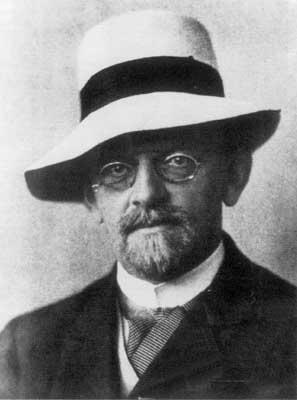
I started with a quotation that is the opening of the final episode. It is a quotation from the German mathematician David Hilbert. As Wikipedia explains, in part:
David Hilbert (German: [ˈdaːvɪt ˈhɪlbɐt]; 23 January 1862 – 14 February 1943) was a German mathematician. He is recognized as one of the most influential and universal mathematicians of the 19th and early 20th centuries.
I will return to that first sentence in Hilbert’s quotation:
The infinite has always stirred the emotions of mankind more deeply than any other question.
For me that sight of the Andromeda galaxy and the stars back in 1969 was in every meaning of the word a sight of the infinite and it has forever stirred my emotions very deeply indeed!
Just recently, on the 20th to be precise, I added a comment to the ‘About’ page of the blog: Beyond The Flow.
This is what I wrote”
Hi Rowena, I’m the author of the blog Learning from Dogs and recently one of my followers “RoughseasintheMed” recommended one of your posts: https://beyondtheflow.wordpress.com/2016/09/19/a-different-type-of-rescue-dog/Apart from the pleasure in making the connection, I would love to have your permission to republish your post over on LfD.Look forward to hearing from you.
Paul H.
Rowena is a blogger, mother and wife and explains a little about her blog, thus:
Beyond the Flow documents our journey through life’s ups and downs from a fairly philosophical and hopefully humourous perspective so hopefully you’ll laugh, cry and think a bit as you share in our adventures.
Based on the Australian East-Coast just North of Sydney, this motley cast and crew features:
Myself-Rowena
Anyway, Rowena very promptly offered me permission and it is my pleasure to republish this wonderful account of a Newfoundland (the dog that is not the country).
ooOOoo
A Different Type of Rescue Dog.
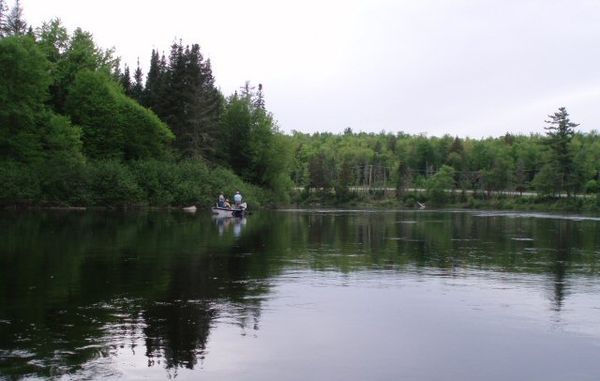
Welcome to Rumford, Maine where we’re chatting with ferry master Jerry Putnam and his dog, Major beside the Androscoggin River. Major is a New Foundland or “Newfie” and while I’m used to big dogs, Major is more like a bear crossed with a tank and yet he’s very friendly.
Androscoggin River, New Hampshire, sadly renowned for its poor water quality.
Please be advised that you’ll be needing to set you watch back more than just a couple of hours to join me on this trip. You see, we’re traveling back to 1885 or thereabouts to hear this tale. By the way, I apologise if the details get a little sketchy on this trip. You see, I’ve never been to America and I’ve never seen a Newfoundland dog beyond Googles images. However, I’ve never let that stop me from spinning a yarn before and it won’t stop me now. I stumbled across this story online in a small Australian country newspaper from 1885. I have no idea how it found its way there but it seems that after all these years, I’ll be sending the story all the way back to Rumford, Maine where I hope it finds a new home.
As you might be aware Newfoundlands are excellent and enthusiastic swimmers and are famed as the lifesavers of the sea. Indeed, there have even been some famous and very impressive rescues carried out by Newfoundlands:
In 1881 in Melbourne, Australia, a Newfoundland named Nelson helped rescue Thomas Brown, a cab driver who was swept away by flood waters in Swanston Street on the night of 15 November. While little is known about what became of Nelson, a copper dog collar engraved with his name has survived and 130 years after the rescue it was acquired by the National Museum of Australia and is now part of the National Historical Collection.
In the early 20th century, a dog that is thought to have been a Newfoundland saved 92 people who were on the SS Ethie which was wrecked off the Northern Peninsula of Newfoundland during a blizzard. The dog retrieved a rope thrown out into the turbulent waters by those on deck, and brought the rope to shore to people waiting on the beach. A breeches buoy was attached to the rope, and all those aboard the ship were able to get across to the shore including an infant in a mailbag. Wreckage of the ship can still be seen in Gros Morne National Park. E. J. Pratt‘s poem, “Carlo”, in the November 1920 issue of The Canadian Forum commemorates this dog.
In 1995, a 10-month-old Newfoundland named Boo saved a hearing-impaired man from drowning in the Yuba River in Northern California. The man fell into the river while dredging for gold. Boo noticed the struggling man as he and his owner were walking along the river. The Newfoundland instinctively dove into the river, took the drowning man by the arm, and brought him to safety. According to Janice Anderson, the Newfoundland’s breeder, Boo had received no formal training in water rescue.
You can watch some Newfoundlands going through their rescue paces here:
By now, I’m sure I’ve whetted your appetites sufficiently and you’re all just longing to find out what Major did. What act of great heroism plucked this ordinary dog out of obscurity and onto the pages of a distant Australian newspaper?
However, there’s an exception to every rule. Just because some dog’s profiles read like a brochure from the Kennel Club, there’s always an exception. Just as people don’t like being categorized, stereotyped or told how they should conform to type, dogs can be much the same.Not that Major almost drowned but he did have a different interpretation of what constitutes a “rescue”.
Or, did he?
After all, what constitutes a rescue? Is it just about saving that drowning person from the surging waters? Or, is it also about encouraging someone to overcome their fear of drowning, let go of the edge and finally learn to swim? What if that person doesn’t respond to “encouragement”? Is it okay to add a bit of persuasion? A nudge? A tug or even the proverbial cattle prod?
Well, you don’t need to ask Major. When it came to helping his canine counterpart overcome his fear, he was a Dog of Action with no time for philosophising, desensitization or phoning a friend. When a brindle hound was too scared to swim out to its owner on the ferry and was howling on the shore, Major grabbed it by the scruff and threw it in the water so it either had to sink or swim.
You’ve got to laugh and who hasn’t been tempted to do that to someone we know, but a bit of compassion doesn’t go astray either.
So, even if another dog is having a full blown panic attack about getting their precious paws wet, you don’t grab him by the scruff and throw him in the drink. After all, most breeds of dog don’t have a Newfoundland’s webbed paws, innate love of swimming and other special design features. They chase sheep.
I’m not putting my paws in there!
Of course, this includes the Border Collie. While our last Border Collie loves chasing sticks through the surf, Bilbo rarely gets his paws wet and it’s taken a lot of angst for him to get to the point where he sometimes now retrieves his ball out of the wash on the beach.
Indeed, Bilbo has had a few newsworthy water avoidances and he could well have been cast as that miserable mutt Major threw into the river.
Finally some assistance. Miss puts Bilbo out of his misery!
A few years ago, when Bilbo saw us all kayaking from the backyard at Palm Beach, he also started howling and fretting just like that other poor hound. Bilbo chewed through the back gate, jumped the back fence and we were about a kilometre from home when we looked out and kids said: “Someone else has a Border Collie”. As we paddled closer, our fears were confirmed. It was our freaked out mutt, giving us the paw: “What do you think you’re doing going out there on that crazy contraption? OMG!!!! You could fall in. Drown!!!! Then, who’s going to feed me?” His heart was racing. He was puffing. The dog was a wreck…so was the gate!
I would never have thrown Bilbo into the water to get him used to it. Yet, over time, he accidentally fell in the pool chasing his ball. He also fell out of the kayak and took our son into the water with him. That could’ve been nasty because he tried grabbing on to Mister which could’ve pulled him under. However, through all of this knockabout exposure and by being part of our family, Bilbo isn’t quite so anxious anymore. He’s stepped out and started filling out those paws, becoming a brave dog.
Meanwhile, here’s the original newspaper story about Major:
A Dog Story.
When Jerry Putnam had charge of the ferry at Rumford, Me., over the Androscoggin River, he owned one of the handsomest Newfoundland dogs I ever saw, and the dog was as intelligent as he was handsome. Like all of his kind, he was fond of the water, and further than that, he manifested an absolute contempt for those of his species who shrank from the aqueous element, and it is of one of those contemptuous manifestations that I wish to tell, for I was there and saw.
The ferryboats, of various sizes, to accommodate different burdens, were impelled by means of a stout cable stretched from shore to shore, as that was the only device by which the heavy boats could be kept to their course in times of strong currents, and during seasons of freshet I have seen a current there that was wonderful.
One warm summer day, while a few of us were sitting in the shade of an old apple tree, between Jerry’s house and the river, two gentlemen, with implements for hunting and fishing, came down to be set across, and straightway one of the boys went to answer the call. He selected a light gondola, the two gentlemen stepped onboard, and very soon they were off ; but before they had got far away from the shore a common brindle house dog came rushing down upon the landing, where he stood and barked and howled furiously— furiously at first, and then piteously.
The boat was stopped, and from the signs made we judged that the strange dog belonged to one of the passengers. Yes, the owner was calling to him to come.
‘Come Ponto! Come !Come! ‘
But Ponto didn’t seem inclined to obey. Instead of taking to the water, he stood there, on the edge of the landing, and howled and yelped louder than before.
Presently old Major — our Newfoundland; who had been lying at our feet, got up and took a survey of the scene. Jerry said only this—’What is it, Major! What dy’e think of it?”
The dog looked around at his master, and seemed to answer that he was thoroughly disgusted. And then he started for the boat-landing — started just as the boy in the boat, at the earnest solicitation of his passenger, had begun to pull back. With dignified step, Major made his way down upon the landing, proceeded directly to the yelping cur, took him by the nape of the neck; and threw him — he did not drop him — but gave him a vigorous, hearty throw, far out into the water ; and when he had done that he stood his ground as though to prevent the noisy, cowardly animal from landing. He stood there until he had seen the cur turn and swim towards the boat — until he had been taken on board by his master— after which he faced about, with military dignity and precision, and came back to his place beneath the apple tree.
— N. Y. Ledger.
The Burrowa News (NSW : 1874 – 1951)Friday 13 March 1885 p 3 Article
Have you ever been to Rumford, Maine or had any experiences with Newfoundlander Dogs? We’d love to hear your tales!
xx Rowena
ooOOoo
Let me add to Rowena’s wish to hear your experiences with Newfoundland Dog’s, or any other dogs!
Back on the 13th September, I published a post under the title of Listening to our pets in more difficult times. I mentioned that Pharaoh was suffering pain in his rear hip joints and struggling at times to get up on all four feet and that we had started giving him Rimadyl.
Don’t wait around for a vet to tell you that your dog is in pain. You live in a state with legal MJ plus hemp oil is legal in all 50 states. I give CBD oil to my BC X Aussie 12 year old dog. He could not get up and yelped in pain before I began giving him 0.7ml daily that I drizzle over his food., After second dose he could stand up without help. Now he walks and runs with fluid movements of all limbs. It is totally safe and doesn’t require expensive tests, The danger of Rimadyl and other meds in that class used to treat arthritis, is that these types of meds cause kidney damage and your pet will have a shortened life span. Hemp oil works like a charm with no side effects.
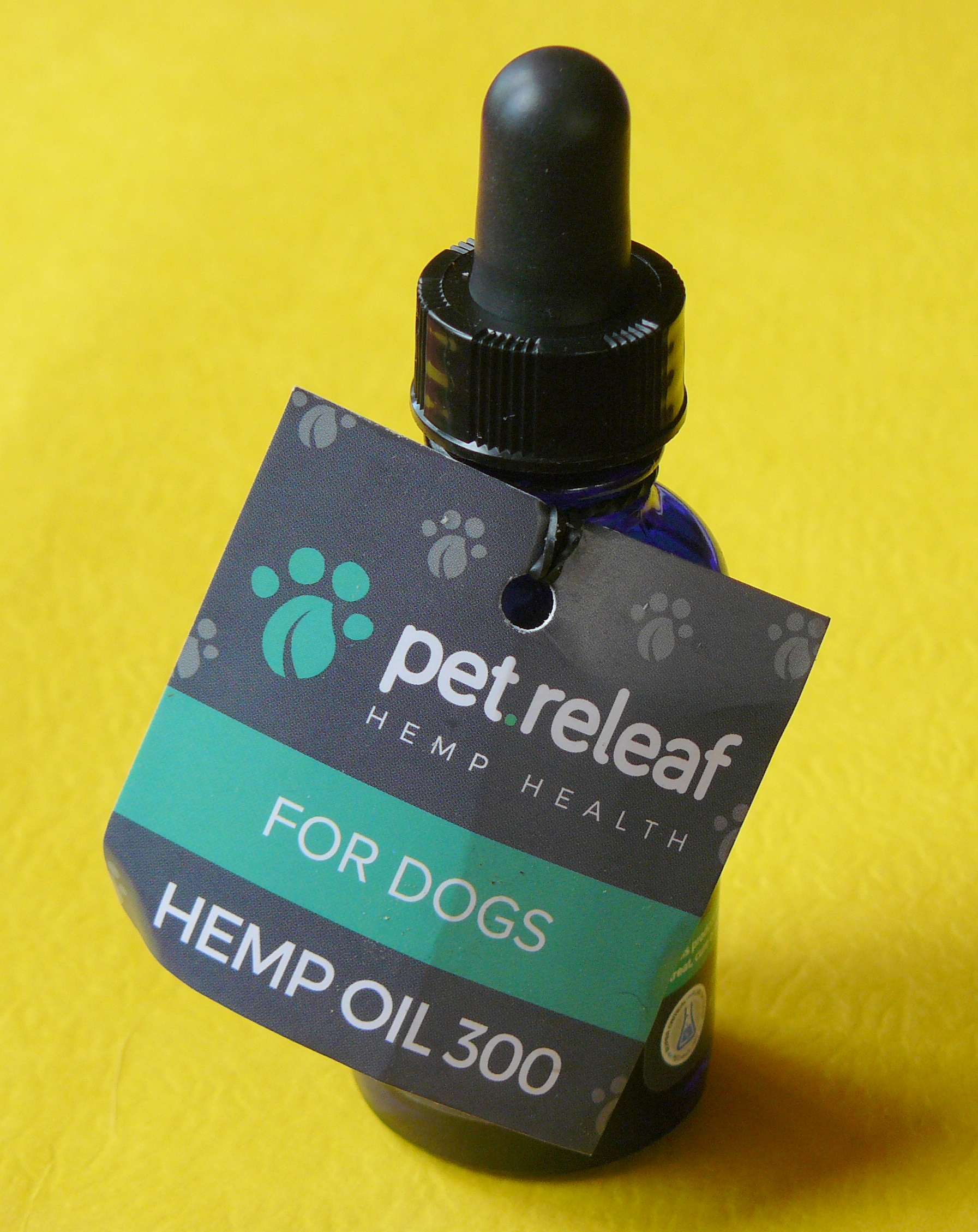
We did some research and came across the following brand of Hemp (CBD) Oil specifically for dogs. We ordered it and it arrived last Saturday. Jean did not delay in adding* it twice a day to the food for both Pharaoh and Paloma.
Here we are at the end of Tuesday, at the time of writing this post, and already we can see observable improvements in both dogs.
Yes, it’s early days but I wanted to share this with you now.
There will be a more extensive report from me once these dogs have been using the oil for a few weeks.
One dropperful twice a day for Pharaoh, approx. 105 lbs, and half a dropperful twice a day for Paloma, approx. 45 lbs.
Returning to the fascinating topic of how dogs understand us humans.
At the beginning of the month I published a post called Be Careful What You Say. It featured an item on BBC Radio Four regarding the science report from a team in Hungary seeking better to understand how dogs process human vocal sounds, as in speech. (The science report was rapidly featured in many other media outlets.)
Anyway, I am delighted to say that the Rights & Permissions Department of the AAAS pointed out that:
Virginia’s article is freely available on our open news website (http://www.sciencemag.org/news) so rather than post, please link to it (http://www.sciencemag.org/news/2016/08/video-your-dog-understands-more-you-think). Your site visitors will encounter no barriers to viewing the article on our website. We welcome hyperlinks to Science articles provided a plain text link is used and providing our content is not framed. We also ask that the text surrounding the hyperlink not imply any endorsement of your website, products or services by AAAS/Science.
The article, written by Virginia Morell, primarily features a video (see below) but I will just republish Virginia’s opening paragraphs.
It’s the eternal question for pet owners: Does your dog understand what you’re saying? Even if Fido doesn’t “get” your words, surely he gets your tone when you let loose about another accident on the carpet. But a new imaging study shows that dogs’ brains respond to actual words, not just the tone in which they’re said. The study will likely shake up research into the origins of language, scientists say, as well as gratify dog lovers.
“It’s an important study that shows that basic aspects of speech perception can be shared with quite distant relatives,” says Tecumseh Fitch, a cognitive biologist at the University of Vienna, who was not involved in the work.
The new results add to scientists’ knowledge of how canine brains process human speech. Dogs have brain areas dedicated to interpreting voices, distinguishing sounds (in the left hemisphere), and analyzing the sounds that convey emotions (in the right hemisphere).
The finding “doesn’t mean that dogs understand everything we say,” says Julie Hecht, who studies canine behavior and cognition at City University of New York in New York City and who was not involved in the study. “But our words and intonations are not meaningless to dogs.” Fitch hopes that similar studies will be done on other domestic animals and on human-raised wolves to see how much of this ability is hardwired in dogs and how much is due to growing up among talking humans.
What a wonderful relationship dogs and humans have with each other!
As I explained yesterday, I am distracted from all things blogging right through to the end of this week-end.
So I’m republishing a post from June, 2013 that, hopefully, will be a fresh read for many of you.
ooOOoo
More on Pharaoh’s life.
First published June 4th, 2013.
What a wonderful relationship it has been.
Years ago if I was ever to own a dog, it had to be one breed and one breed only: a German Shepherd Dog.
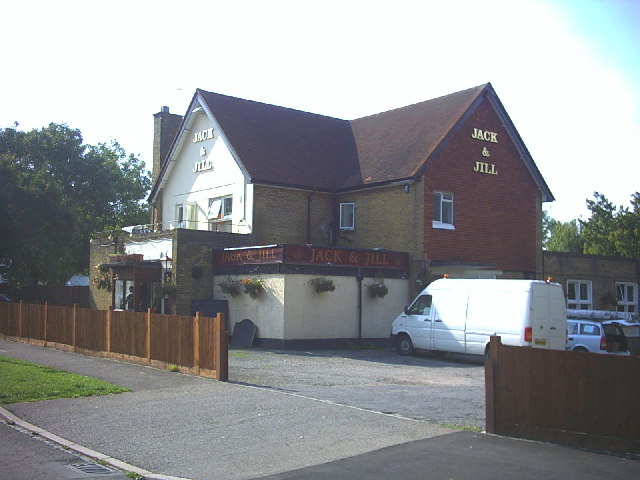
The reason for this was that back in 1955 my father and mother looked after a German Shepherd dog called Boy. Boy belonged to a lovely couple, Maurice and Marie Davies. They were in the process of taking over a new Public House (Pub); the Jack & Jill in Coulsdon, Surrey. My father had been the architect of the Jack & Jill.
Jack & Jill, Longlands Avenue, Coulsdon, Surrey
As publicans have a tough time taking holidays, it was agreed that the move from their old pub to the Jack & Jill represented a brilliant opportunity to have that vacation. My parents offered to look after Boy for the 6 weeks that Maurice and Marie were going to be away.
Boy was the most gentle loveable dog one could imagine and I quickly became devoted to him; I was 11 years old at the time. So when years later it seemed the right time to have a dog, there was no question about the breed. Boy’s memory lived on all those years, and, as this post reveals, still does!
Pharaoh was born June 3rd, 2003 at Jutone Kennels up at Bovey Tracy, Devon, on the edge of Dartmoor, South-West England. As the home page of the Jutone website pronounces,
The Kennel was established in 1964 and it has always been the aim to breed the best German Shepherd Dogs for type and temperament. To this end the very finest German bloodlines are used to continue a modern breeding programme.
and elsewhere on that website one learns:
Jutone was established by Tony Trant who was joined by Sandra Tucker in 1976. Sandra continues to run Jutone since Tony passed away in 2004. Both Tony and Sandra qualified as Championship Show judges and Sandra continues to judge regularly. Sandra is the Secretary and a Life Member of the German Shepherd Dog Club of Devon.
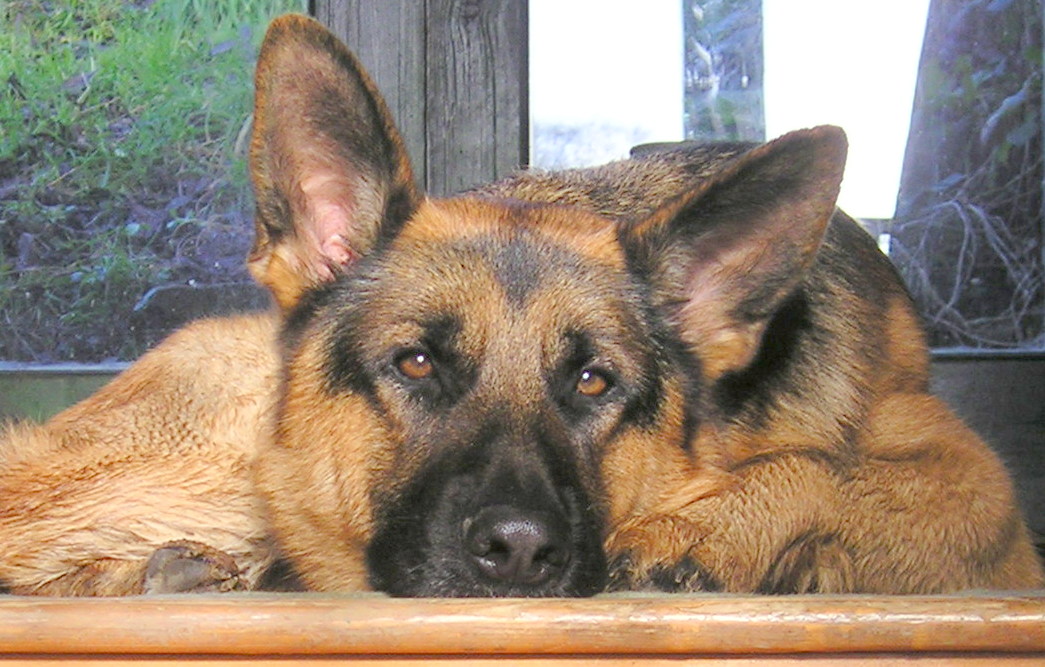
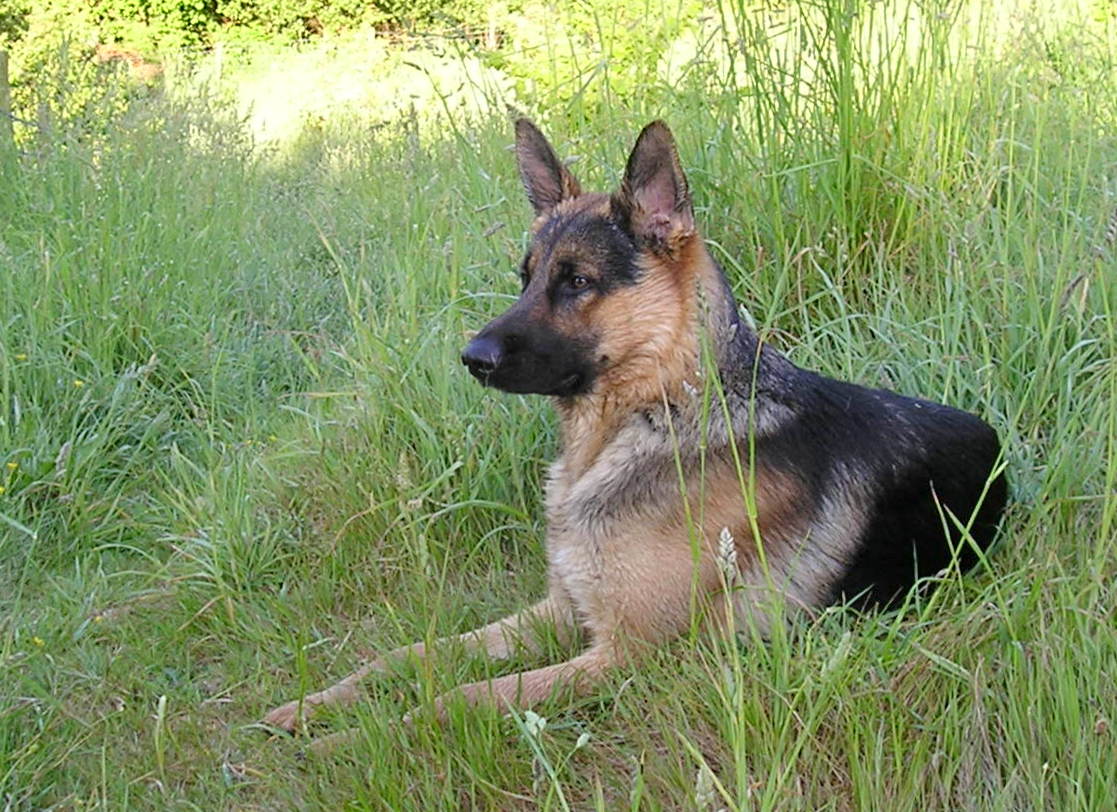
Turning to Pharaoh, here are a few more pictures over the years.
Pharaoh, nine months old.
oooOOOooo
One year old: June 3rd 2004.
The next picture of Pharaoh requires a little background information.
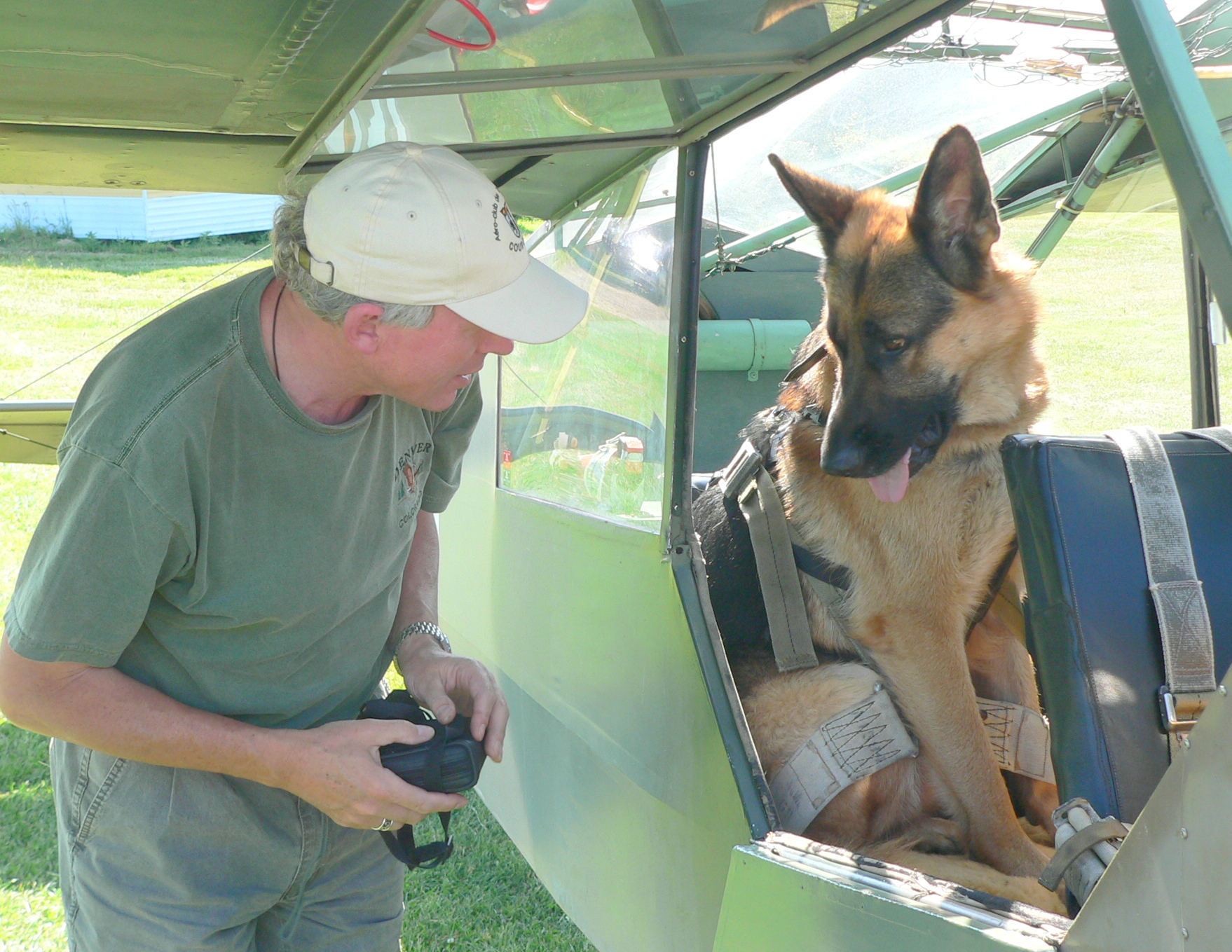
For many years I was a private pilot and in later days had the pleasure, the huge pleasure, of flying a Piper Super Cub, a group-owned aircraft based at Watchford Farm in South Devon. The aircraft, a Piper PA-18-135 Super Cub, was originally supplied to the Dutch Air Force in 1954 and was permitted by the British CAA to carry her original military markings including her Dutch military registration, R-151, although there was a British registration, G-BIYR, ‘underneath’ the Dutch R-151. (I wrote more fully about the history of the aircraft on Learning from Dogsback in August 2009.)
Piper Cub R151
Anyway, every time I went to the airfield with Pharaoh he always tried to climb into the cockpit. So one day I decided to see if he would sit in the rear seat and be strapped in. Absolutely no problem with that!
Come on Dad, let’s get this thing off the ground!
My idea had been to fly a gentle circuit in the aircraft. First I did some taxying around the large grass airfield that is Watchford to see how Pharaoh reacted. He was perfectly behaved.
Then I thought long and hard about taking Pharaoh for a flight. In the Cub there is no autopilot so if Pharaoh struggled or worse it would have been almost impossible to fly the aircraft and cope with Pharaoh. So, in the end, I abandoned taking him for a flight. The chances are that it would have been fine. But if something had gone wrong, the outcome just didn’t bear thinking about.
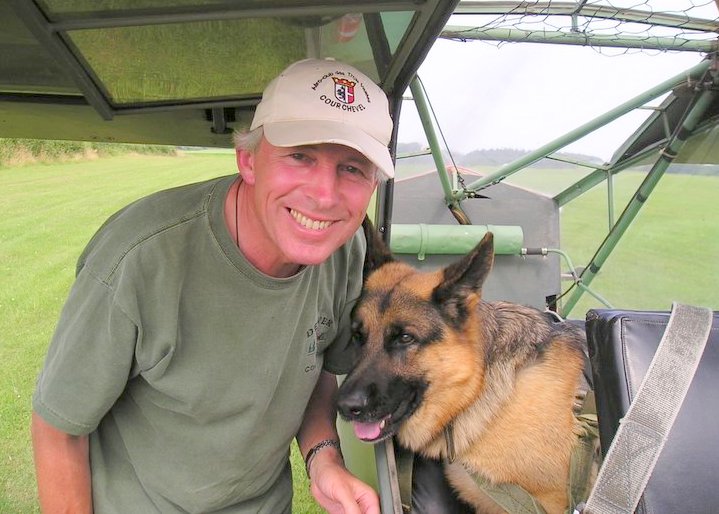
So we ended up motoring for 30 minutes all around the airfield which, as the next picture shows, met with doggie approval. The date was July 2006.
That was fun!
What a dear dog he has been over all the years and, thankfully, still is!
As if to reinforce the fabulous dog he still is, yesterday it was almost as though he knew he had to show how youthful he still was.
Because, when I took his group of dogs out around 7.30am armed with my camera, Pharaoh was brimming over with energy.
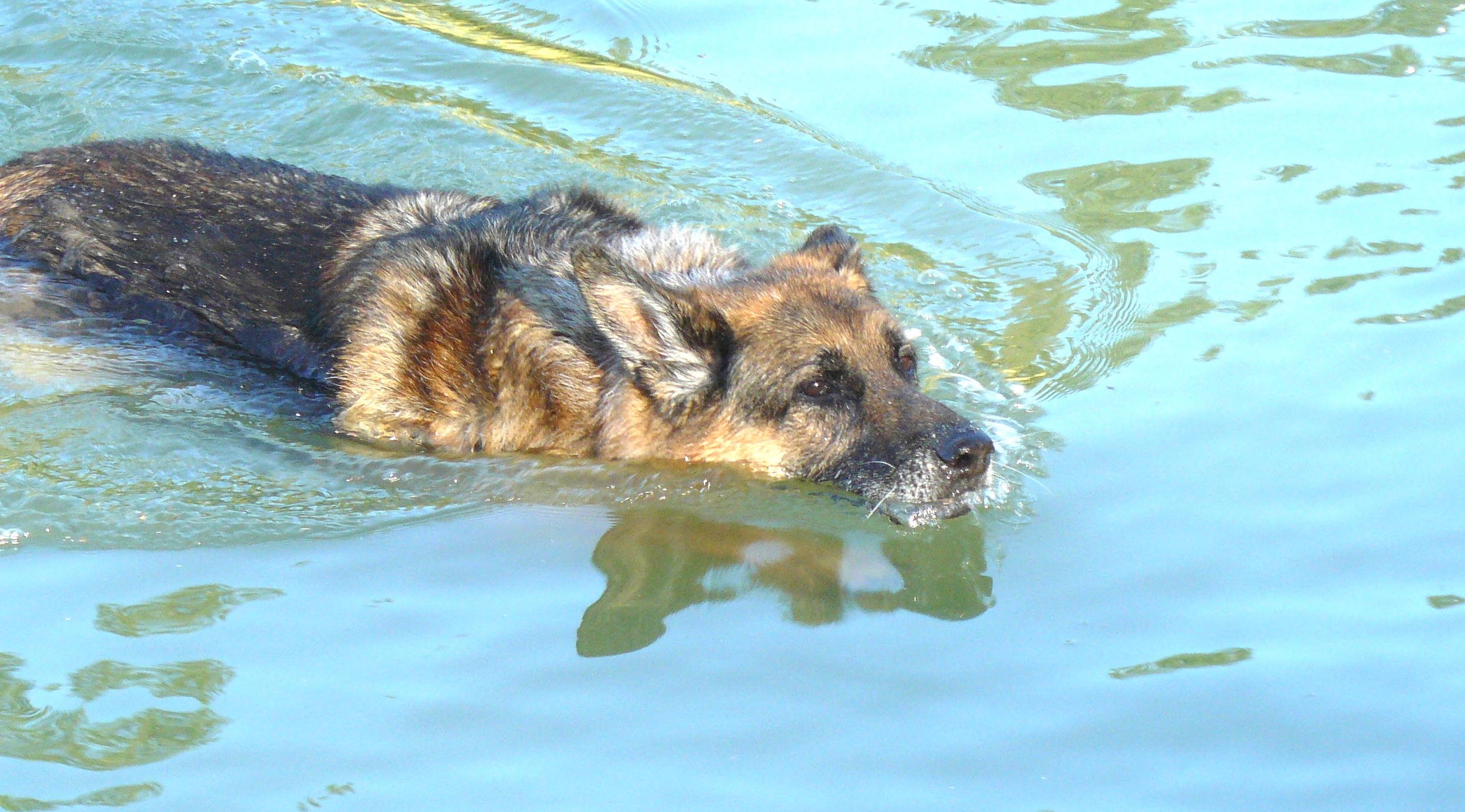
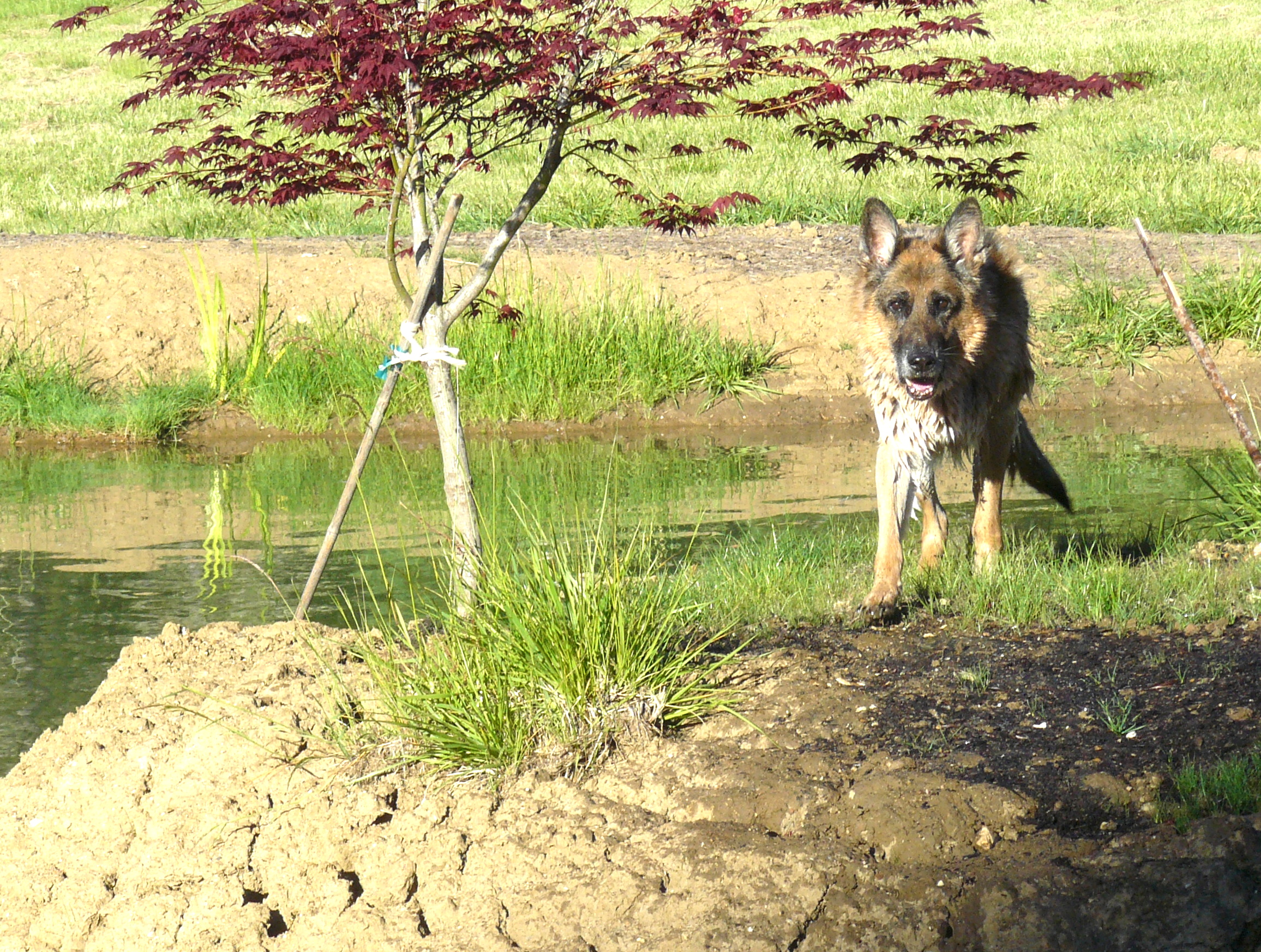
First up was a swim in the pond.
Ah, an early birthday dip! Bliss!
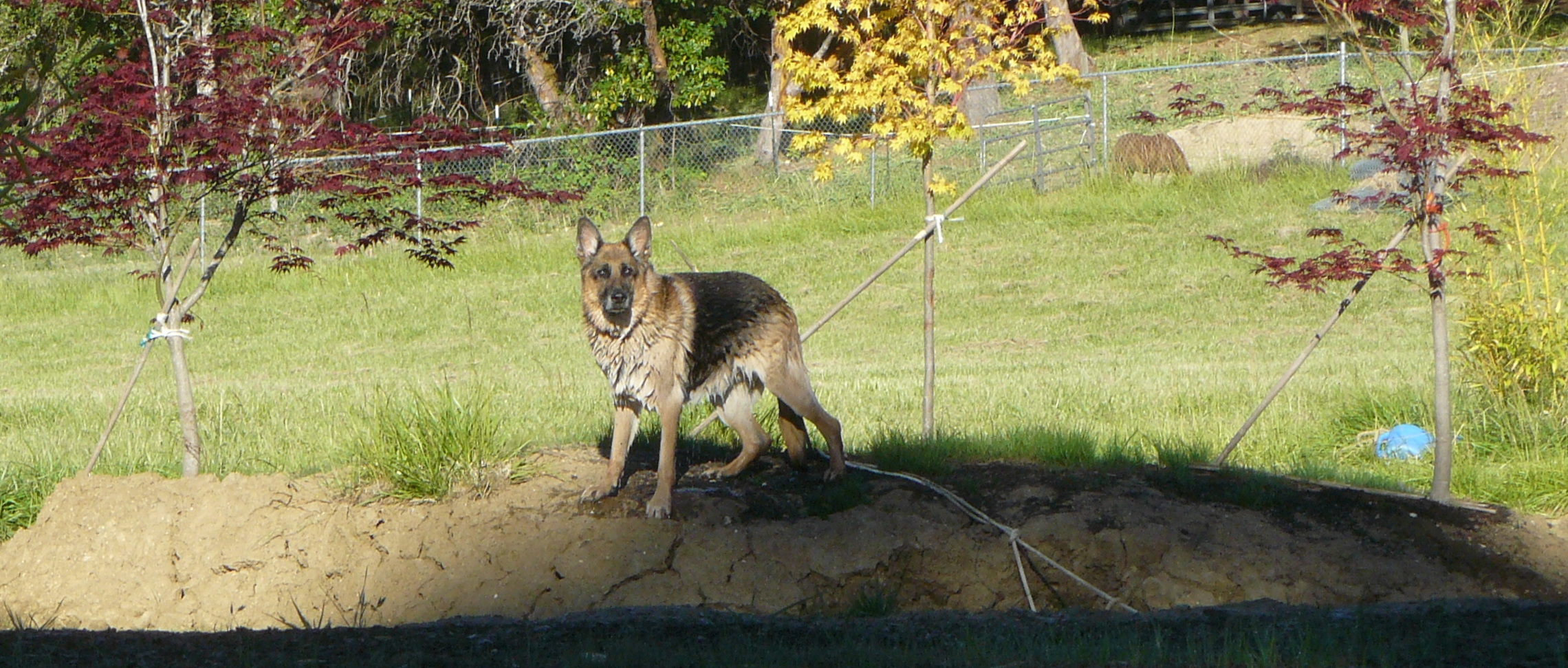
Then in a way he has not done before, Pharaoh wanted to play ‘King of my Island’, which is in the middle of the pond.
Halt! Who goes there!
ooo
This is my island! So there!
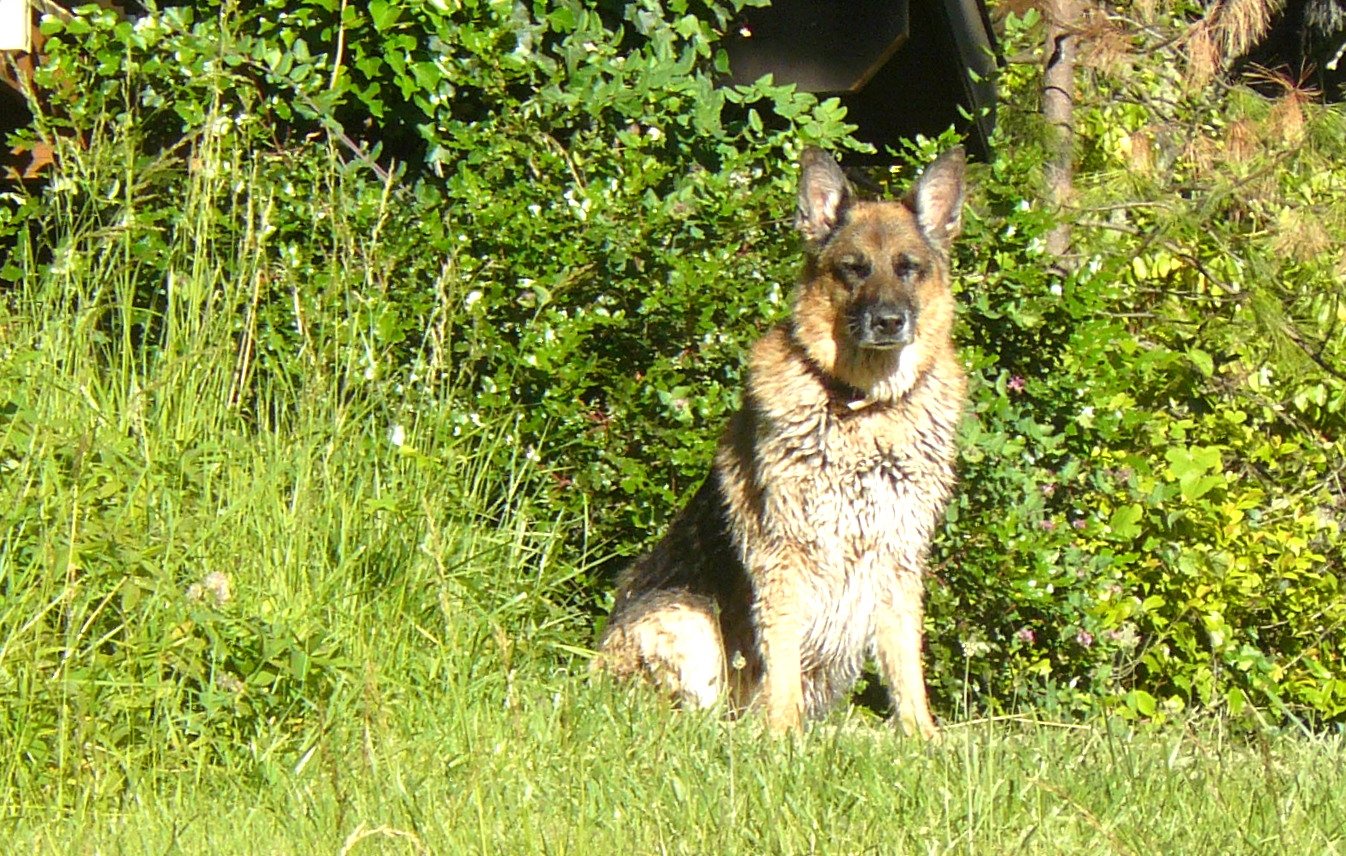
Then a while later, when back on dry land, so to speak, it was time to dry off in the morning sunshine.
Actually, this isn’t a bad life!
Long may he have an enjoyable and comfortable life.
ooOOoo
Long may we all have enjoyable and comfortable lives!
Coping with an emergency includes looking after our dogs.
Most of us live our daily lives without paying too much attention to the likelihood of an emergency. But as Hurricane Hermine and the recent explosion of that SpaceX rocket show the unexpected does come along.
All of which is my preamble to a recent item over on the Mother Network Nature site that reviewed taking care of our beloved pets when an emergency does strike.
I have pleasure in sharing it with you.
ooOOoo
5 steps to ensure your pet is cared for in an emergency
Jaymi Heimbuch August 31, 2016
When an unexpected problem pops up, have a back-up plan for your pet. (Photo: Africa Studio/Shutterstock)
A car crash, an arrest, a natural disaster or a medical emergency. While no one wants to think about these awful possibilities, sometimes we should to protect and provide for those we love, in case one day we can’t make it home as planned. And those we love include our pets.
Imagine something happens to you and you can’t get home to your dogs, cats, birds or other critters. You need a way to not only alert others to the fact that you have pets at home, but also the information they need to care for your pets in your absence. Here are five ways you can ensure that your pets will be looked after.
Carry a card in your wallet
Create a card that you can carry in your wallet or purse. If you’re ever in a medical emergency, a rescue worker or paramedic looking through your wallet for identification will also know that there are animals at your home that need care.
The card can be as simple as a note that you have pets at home on one side, and on the other side lists contact information for friends or family members you’ve designated to care for them. Or it can be detailed, listing how many pets you have at home, their names and the kind of animal each pet is, your address, and emergency contact information for two people you trust to care for your pets. How much information you want to include is entirely up to you.
You can create your own card, download a free template online to print out, or buy cards online that you can fill in information with a pen.
Add a sign on your door or windows to save your pet
Another place to put an alert card is in your window or on the door to your home. An emergency pet alert sticker is ideal when you can’t get to your home but someone like a firefighter or rescue worker can.
Like a wallet card, a sticker should list how many pets are inside and what species they are, so any rescue worker would know if they’d found all the animals inside.
This is a small but potentially life-saving step in preparing for emergency situations such as after an earthquake, tornado, fire or flood, so that someone who is searching through homes can rescue your pet even if you can’t — or aren’t allowed — to get back to your home.
Ensure at least 2 separate people you trust have access to your home
Your emergency wallet card states contact information for people you trust to care for your pet if you’re in an emergency situation and can’t get home to them. The next step is ensuring they can get to your pet when needed.
Make sure each person listed as an emergency guardian has a set of keys, or that they know the secret hiding place for your spare set of keys. If you have an alarm system on your home, you’ll need to provide these friends with the access code.
Because these friends or family members not only have access to your home but also will take responsibility for your animal companion, you’ll need to put some thought into who you’ll have in place as a temporary caregiver or as a permanent caregiver.
When choosing a temporary caregiver, consider someone who lives close to your residence. He or she should be someone who is generally home during the day while you are at work or has easy access to your home. When selecting a permanent caregiver, you’ll need to consider other criteria. This is a person to whom you are entrusting the care of your pet in the event that something should happen to you. Be sure to discuss your expectations at length with a permanent caregiver, so he or she understands the responsibility of caring for your pet.
You may want to put down temporary caregiver contact information on your emergency cards, and ensure they know who is designated as the permanent caregiver should you not be able to return home to your pets for a long time, or at all.
An emergency kit with your pet’s medical information, extra food and other supplies will help rescuers. (Photo: rSnapshotPhotos/Shutterstock)
Create a kit for your pet
A disaster preparedness kit is a great idea both for you and your pet. This also benefits your pet not just for a natural disaster, but if you’re in an emergency and can’t get to them.
An emergency supply kit should include a document that a temporary caregiver or potential permanent guardian can use to understand your pet’s needs. This includes:
vet and vaccination records
pet insurance details
information about any medications your pet needs
an extra leash and collar
a carrier if you have a smaller pet
information on any behavior problems, quirks or habits that a caregiver should know about
Be sure to tell your emergency contacts and temporary caregivers where this information is located in your home, so they can access it should they need it.
Make formal long-term arrangements for your pet
We briefly discussed designating someone as a permanent caregiver for your pet should you not be able to return to them. You may want to consider setting up a formal arrangement for this to ensure that your pet definitely goes to the person you’ve designated and receives the care they need.
This could be a formal written arrangement with a permanent caregiver or it may be part of your will. You might also consider creating a trust or other financial arrangement to ensure your pet is cared for if you’re incapacitated. However, Petfinder notes:
Before making formal arrangements to provide for the long-term care of your pet, seek help from professionals who can guide you in preparing legal documents that can protect your interests and those of your pet. However, you must keep in mind the critical importance of making advance personal arrangements to ensure that your pet is cared for immediately if you die or become incapacitated. The formalities of a will or trust may not take over for some time.
Such a document may at first seem like a lot to handle for a “what if” situation, but by taking the appropriate precautions ahead of time, you can be sure that your pets are immediately cared for should something occur that prevents you from returning home to them.
ooOOoo
This all seems like very sound advice and, believe me, advice that Jeannie and I will review and adopt wherever we can.
Please, good people, do take care of yourselves including all your pets.
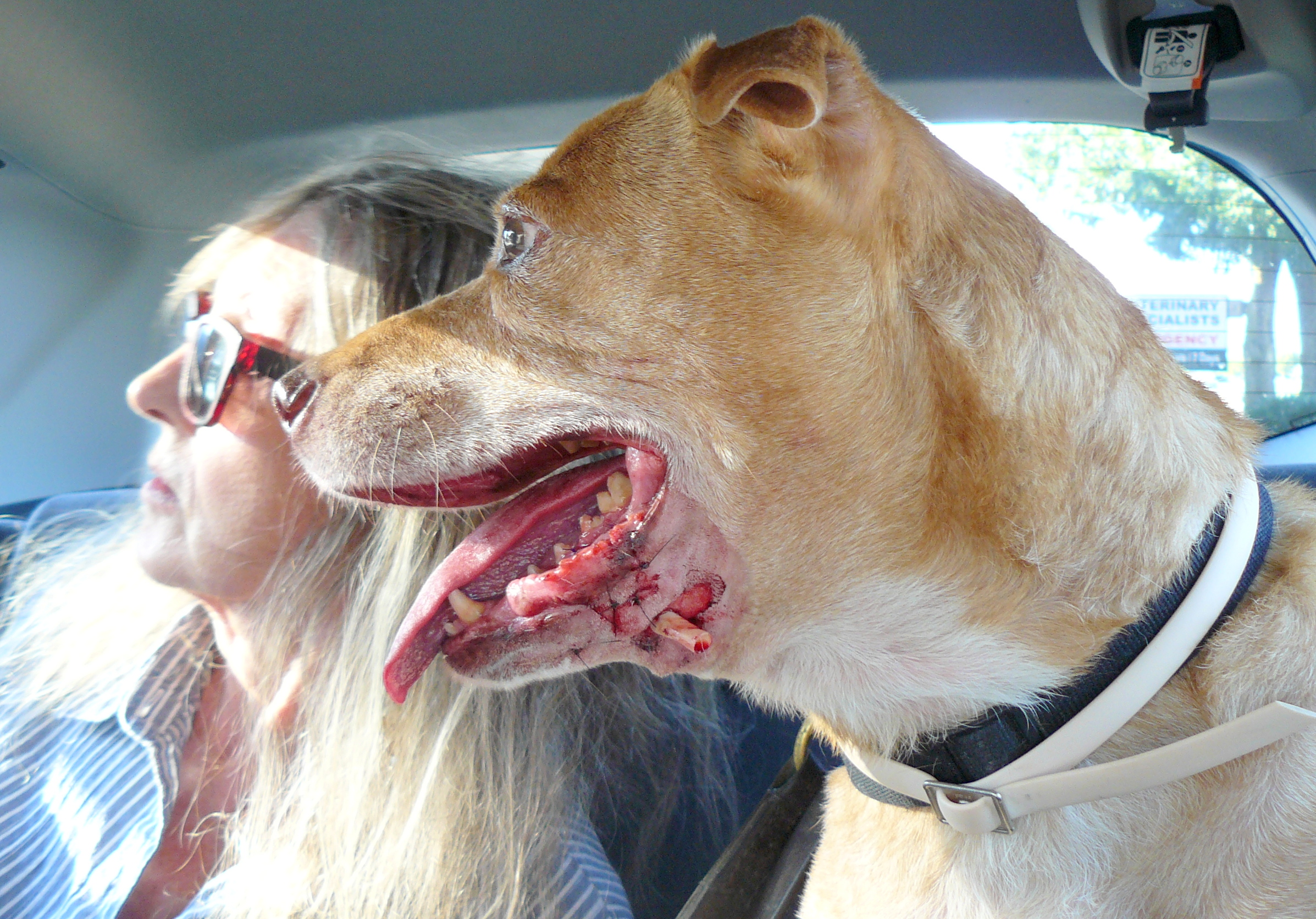
On the 17th August I published a post Life’s Lottery that was about an injury that our Casey had suffered on the 14th August. It included this photograph:
I’m delighted to say that yesterday morning Casey returned to Lincoln Road Vet Clinic and the sutures were removed.
The drain was removed last Monday.
Jean and I were not with Casey for the five minutes it took to remove the sutures but the picture below shows a very happy Casey just 15 minutes after we arrived.
(If I could better drive the Apple photos app on my new iMac I would have shown you a closer image! Revised image inserted on Saturday morning as a result of me playing with the app.)
 As many of you know last December I published my first book Learning from Dogs.
 By Vetstreet.com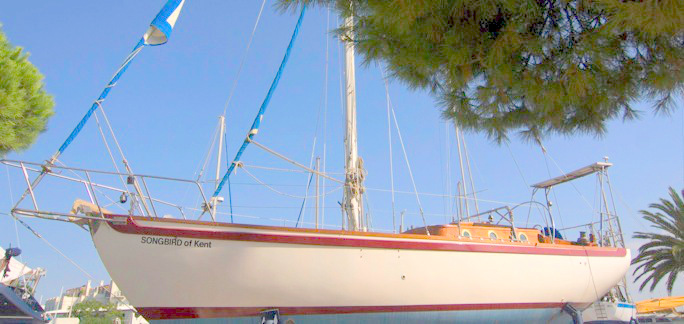







 Learning from Dogs