Category: Core thought

The Cave of Crystal Giants

This will take us away from the daily beat of life!

On the 18th. February the BBC News website carried an article that I found incredible. It was the story of Naica’s crystal caves in Mexico.

oooo

Naica’s crystal caves hold long-dormant life

By Jonathan Amos, BBC Science Correspondent, Boston, 18 February 2017.
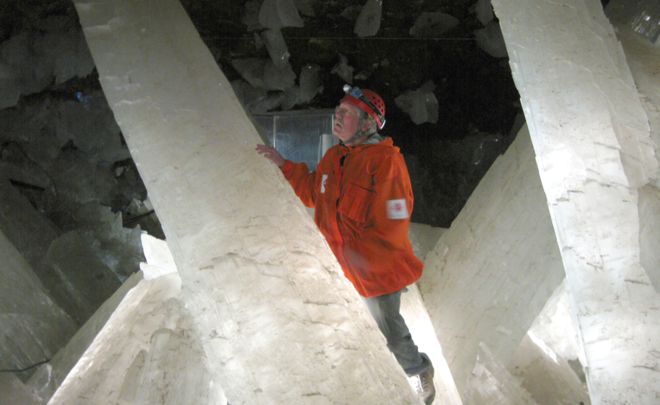
 The caves were discovered by miners 100 years ago
The caves were discovered by miners 100 years ago. Picture credit: Penelope J. Boston

It is a remarkable discovery in an amazing place.

Scientists have extracted long-dormant microbes from inside the famous giant crystals of the Naica mountain caves in Mexico – and revived them. [Ed: my emphasis]

The organisms were likely to have been encased in the striking shafts of gypsum at least 10,000 years ago, and possibly up to 50,000 years ago.

It is another demonstration of the ability of life to adapt and cope in the most hostile of environments.

“Other people have made longer-term claims for the antiquity of organisms that were still alive, but in this case these organisms are all very extraordinary – they are not very closely related to anything in the known genetic databases,” said Dr Penelope Boston.

The new director of Nasa’s Astrobiology Institute in Moffett Field, California, described her findings here at the annual meeting of the American Association for the Advancement of Science (AAAS).

oooo

I was delighted to find more details in many other places on the ‘web’.

Such as this one on the National Geographic website:

By Victoria Jaggard

PUBLISHED February 17, 2017

Boston, Massachusetts

Creatures that thrive on iron, sulfur, and other chemicals have been found trapped inside giant crystals deep in a Mexican cave. The microbial life-forms are most likely new to science, and if the researchers who found them are correct, the organisms are still active even though they have been slumbering for tens of thousands of years.

If verified, the discovery adds to evidence that microbial life on Earth can endure harsher conditions in isolated places than scientists previously thought possible. (See “Life Found Deep Under Antarctic Ice for First Time?”)

“These organisms have been dormant but viable for geologically significant periods of time, and they can be released due to other geological processes,” says NASA Astrobiology Institute director Penelope Boston, who announced the find today at a meeting of the American Association for the Advancement of Science. “This has profound effects on how we try to understand the evolutionary history of microbial life on this planet.”

Then there’s another article on that NatGeo website: (Apologies for some duplication in the message.)

By Neil Shea, National Geographic Staff
In a nearly empty cantina in a dark desert town, the short, drunk man makes his pitch. Beside him on the billiards table sits a chunk of rock the size of home plate. Dozens of purple and white crystals push up from it like shards of glass. “Yours for $300,” he says. “No? One hundred. A steal!” The three or four other patrons glance past their beers, thinking it over: Should they offer their crystals too? Rock dust on the green felt, cowboy ballads on the jukebox. Above the bar, a sign reads, “Happy Hour: 8 a.m. to 9 p.m.”

This remote part of northern Mexico, an hour or so south of Chihuahua, is famous for crystals, and paychecks at the local lead and silver mine, where almost everyone works, are meager enough to inspire a black market. “Thirty dollars.” He leans in. “Ten.” It’s hard to take him seriously. Earlier in the day, in a cave deep below the bar, I crawled among the world’s largest crystals, a forest of them, broad and thick, some more than 30 feet long and half a million years old. So clear, so luminous, they seemed extraterrestrial. They make the chunk on the pool table seem dull as a paperweight.

Nothing compares with the giants found in Cueva de los Cristales, or Cave of Crystals. The limestone cavern and its glittering beams were discovered in 2000 by a pair of brothers drilling nearly a thousand feet below ground in the Naica mine, one of Mexico’s most productive, yielding tons of lead and silver each year. The brothers were astonished by their find, but it was not without precedent. The geologic processes that create lead and silver also provide raw materials for crystals, and at Naica, miners had hammered into chambers of impressive, though much smaller, crystals before. But as news spread of the massive crystals’ discovery, the question confronting scientists became: How did they grow so big?

It takes 20 minutes to get to the cave entrance by van through a winding mine shaft. A screen drops from the van’s ceiling and Michael Jackson videos play, a feature designed to entertain visitors as they descend into darkness and heat. In many caves and mines the temperature remains constant and cool, but the Naica mine gets hotter with depth because it lies above an intrusion of magma about a mile below the surface. Within the cave itself, the temperature leaps to 112 degrees Fahrenheit with 90 to 100 percent humidity—hot enough that each visit carries the risk of heatstroke. By the time we reach the entrance, everyone glistens with sweat.

That article continues here.
Finally, lose yourself in this video. (If the voice doesn’t get to you!)

How to close today’s post?

Both by embracing the power of the natural order of things, life and death, and by reminding us all that there are in the order of over two billion stars in this universe.

That universe must be teeming with life, current and dormant, and the day when we truly confirm that will put everything into perspective!

oooo

Talk about synchronicity!

For yesterday, around 10am PST, the BBC News website carried this big news item: Earliest evidence of life on Earth ‘found’.

Here’s how that article opens:

Earliest evidence of life on Earth ‘found’

By Pallab Ghosh Science correspondent, BBC News
Scientists have discovered what they say could be fossils of some of the earliest living organisms on Earth.
They are represented by tiny filaments, knobs and tubes in Canadian rocks dated to be up to 4.28 billion years old.
That is a time not long after the planet’s formation and hundreds of millions of years before what is currently accepted as evidence for the most ancient life yet found on Earth.

The researchers report their investigation in the journal Nature.

As with all such claims about ancient life, the study is contentious. But the team believes it can answer any doubts.

The scientists’ putative microbes from Quebec are one-tenth the width of a human hair and contain significant quantities of haematite – a form of iron oxide or “rust”.

Matthew Dodd, who analysed the structures at University College London, UK, claimed the discovery would shed new light on the origins of life.

Do read the full article including viewing some wonderful photographs.
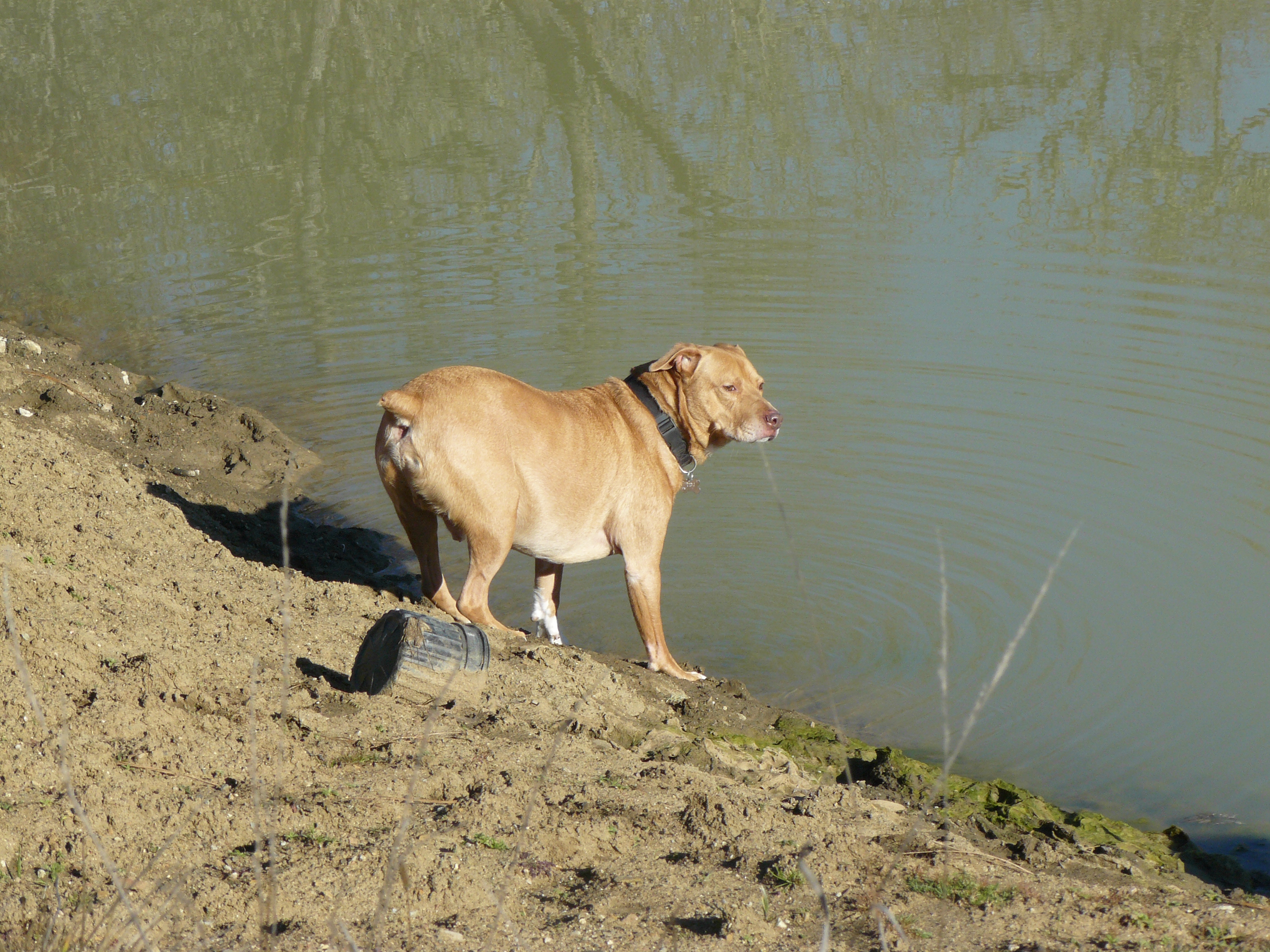
In memory of Casey

Casey: September, 2005 – February, 2017

Dear Casey was put to sleep yesterday morning.

I am going to republish a ‘Meet the dogs” essay that was written and first published February 25th, 2014.

But before doing so, Jean and I would like to extend our very great thanks to all the staff at the Southern Oregon Vet Specialty Center (SOVC) who have been so professional and so loving and caring.

Here is that essay. It is worth noting that we moved from Payson, AZ to Merlin, OR in 2012.

ooOOoo

Casey

by Jean Handover.

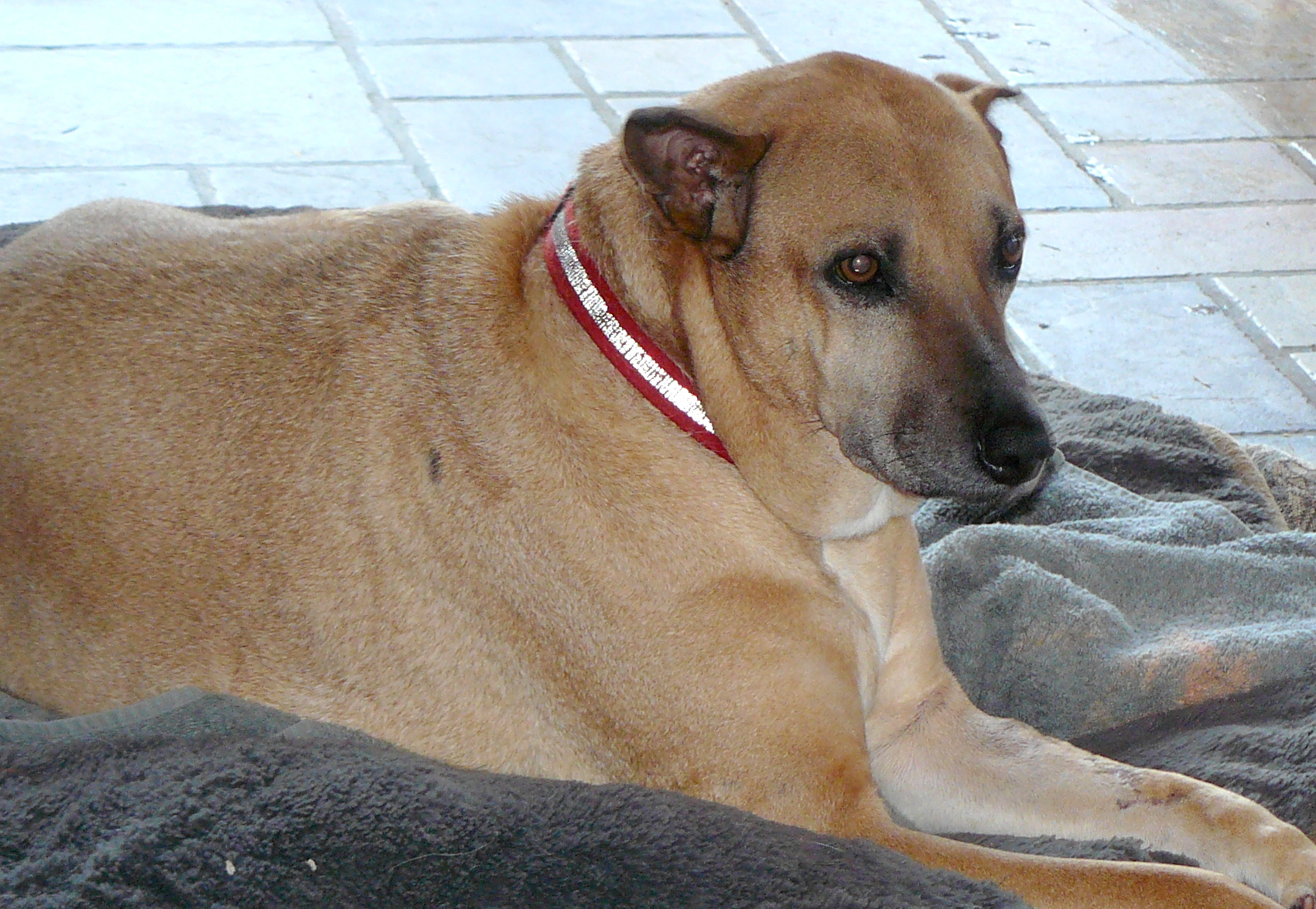
Casey, at home; picture taken a month ago.

It is 2011.

Every Friday, the Payson Roundup newspaper would devote a full page to the Humane Society, displaying some of the cats and dogs they had for adoption. I would read about each animal and quietly wish I could bring them all home.

I was particularly taken with one dog that had appeared several times in this Friday page. His name was Casey and he was a six-year-old Pit Bull mix. Unfortunately, at home we were ‘maxed out’ with a total of 14 dogs in three different sections of our house. We just couldn’t take Casey.

I had volunteered to be a dog-walker at the Humane Society dog shelter. But after two sessions walking dogs, I just couldn’t look at these sad little faces without breaking down in tears. I switched my efforts to working at the Society’s Thrift Store. That was great fun and, at least, it felt as though I was still helping the animals. Nonetheless, I was very impressed with the animal shelter. They did their utmost to re-home the animals in their care.

Ruby’s ‘pack’ here at home included Phoebe and Tess, rescue dogs from Mexico. Recently, Phoebe had died with leukaemia and Tess with bone cancer leaving Ruby on her own. Ruby was a dog that didn’t mix at all well with the other dogs, as was explained in last week’s post.

The next Friday, the Payson Roundup showed the Society’s ‘lonely hearts club’, highlighting animals that had been in care for a long time. The first dog shown was Casey. I telephone Chandra, the lady responsible for adoptions, and asked if Paul and I could bring Ruby to the shelter to find a companion for her. When we were at the shelter, Chandra asked us if we had anything against Pit Bulls. Of course we didn’t. Ruby was introduced to Casey and, as they say, the rest was history. Casey and Ruby right from the start were just wonderful together.

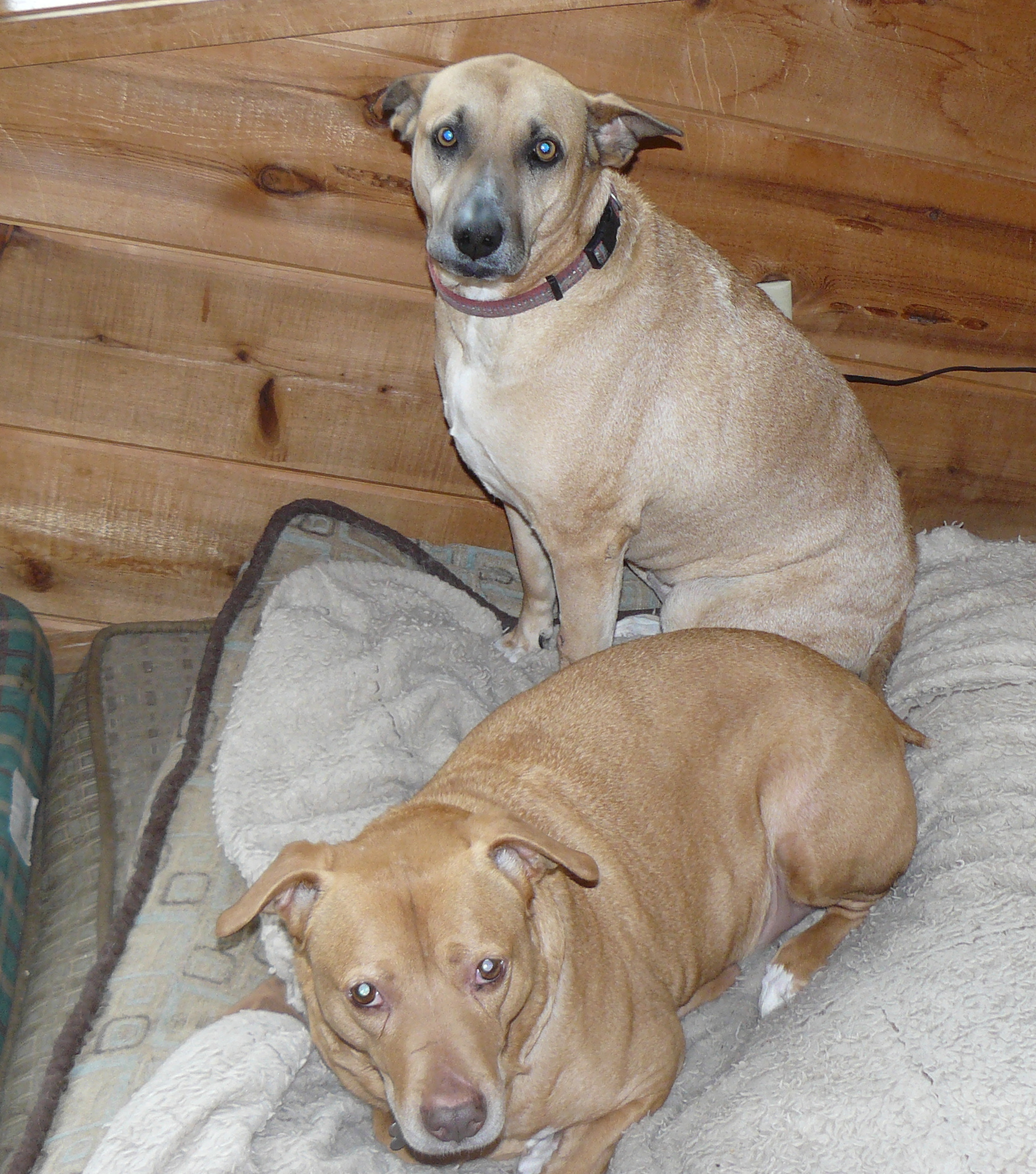
Ruby behind Casey.
Ruby behind Casey.

Subsequently, I learned from Chandra that Casey had been in care for over a year and, had we not taken him home, his days were numbered at the shelter. There were many cheers and tears when I signed the adoption paper for Casey.

Fast forward to the year 2012 to when we are now living at Merlin, OR.

Casey now lives in the kitchen group here in Oregon: Paloma, Ruby, Lilly and Casey. As with all our dogs, Casey is so happy to have our 14 acres to play in. He is also the sweetest natures of dogs and will try to climb on to your lap at the first opportunity. I have always been a great advocate of Pit Bulls and Pit Bull mixes and have never come across a mean one.

Thus, if you are in the position to adopt a dog, please consider Pit Bulls and Pit Bull mixes for the Pit Bull is a much-maligned breed.

Casey demonstrating a dog's focussing skills!
Casey demonstrating a dog’s focussing skills!

ooOOoo

This is how Casey will be remembered.

Finally, recalling how close and good friends Ruby was with Casey, one couldn’t see a clearer expression on a dog’s face that Casey was being missed than on the face of Ruby. The picture was taken just before 6pm yesterday evening.

p1160918Trust me, Ruby’s normal face truly has a smile on it.

Feeding the correct wolf!

A very heart-touching guest post

Yesterday I used as a sub-heading “I will never, ever tire of the wonderful connections made by this blog!

I wrote that before Sydney sent in a guest post which reached out to me, to Jeannie and, undoubtedly, will reach out to many others. Sydney further validated the power of the wonderful connections that blogging brings.

Here’s how it came about.

Not that long ago, there was a new follower to this place. As is so frequently the case that new follower was also a blogger. Their blog is called very beautifully: Recovery For All Of My Heart. As I always try to do, I went across to leave a ‘thank you’ note. I also read the About page that I want to republish here by way of my introduction to Sydney.

Hello, I am in recovery from an eating disorder, depression and anxiety. The way I got to the best place in my mind is by changing my perspective.

In this blog, I use my new open-mindedness to show the world the beauty I see in hopes that others will then see the beauty in themselves. For me, all it took was to see the beauty in myself, but I needed someone to help me see it first. My hope is to be that person for others.

There is a way to see the good in every piece of you. You can get your mindset to see what others love about you. The proof of everyone’s beauty lies in changing your perspective and this blog hopes to put into light the beauty in everyone that ever existed.

So now to Sydney’s post. (And if you want to understand why I chose the title to this post, then please read right down to the end.)

ooOOoo

Mindfulness and a dog named Bailey

By Sydney R. February 23rd., 2017

Bailey
Bailey

When I was 21 years old, I got a hound boxer puppy named Bailey. Previously, I had a dog my mom and I raised when I was seven; she was named Rachel.

I only speak of Bailey in this post because of a certain situation I want to talk about, but I also wanted to mention how amazing Rachel was too.

Anyway, I raised Bailey to be the sweet almost two-year-old he is today. He is not a normal dog to me. This is because I believe him to be extraordinary (so original for dog owners, I know), and also because I have struggled with my mental health.

I have struggled with depression and he has changed my life for the better. One day last year I was having a very hard time with my depression. I wanted to just lay in bed and quit my job and begin isolating again. I wanted to just sleep and not fight the thoughts and just let them rattle on inside of my mind while I lay there.

I grabbed my dog as he was lying next to me and held onto him ready to remain in my negative thoughts for all eternity. Then something changed: I felt his fur. I felt my cheek against his fur. I heard his sweet little breathing that used to put me to sleep when he laid on my chest when he was a puppy. I was being mindful without even realizing it.

I was aware of everything I was feeling when holding this thing that is so dear to my heart.

Suddenly, all the pain went away. I was reminded of this feeling I can have while holding my dog. I can fight this depression and I can have a wonderful life. If you ever are feeling extremely sad or have any type of negative urges, and this can be about anything, grab your furry little one and just stay in the moment until they pass.

And why is this?

Research has shown that if you look into your dogs eyes, the hormonal response is activated just like the one that is activated when you look at infants. Scientists took blood samples of dogs and their owners before and during time spent petting. The results were that the levels of oxytocin went up in humans during a petting session of a dog and it was at very similar levels of new mothers and their infants.

Even more amazing, dogs had the same levels in their blood as well, showing how happy they are around their owners. During my depression that night, holding onto my dog was not just helping me overcome my sadness, he was having a nice time as well.

Now what I am guessing is that if you are sitting down, petting your dog, but not really paying much attention, your dog will be happy, but your oxytocin levels will not be as high as they could be. When you are mindful and staying in the moment whilst petting your dog, you could be seriously happy, to the point where your oxytocin levels from your dog stops you from ruminating on your negative thoughts.

Don’t just pet your dog when you are upset…make sure you are completely in the moment.

Notice your body and notice what your hands and arms are feeling as you wrap your arms around your dog. Let your hands and all of your arms feel the fur. Use all of your senses. Make sure you hear your dog and do not let your thoughts block out being in the moment. Regular petting of the dog is enjoyable. Mindful petting of a dog could change your life, like it did mine.

Now I will always know that I have something to go to when I feel depressed. This is extremely important because one huge part of depression is hopelessness. This is the feeling that you will always feel depressed.

With a dog, you have hope to get out of those feelings. I know that I have my dog to go to and I will never fear being sad forever again. I always have the mindful petting of Bailey or Rachel that will make the negative thoughts drain away.

ooOOoo

Good people, I am genuinely humbled by both Sydney’s desire to share this with you, and by the magic of having a dog in our life.

So let me close like this.

BBC Television in the UK currently have on their iPlayer site a drama series called Death in Paradise: The programme website is here.

Detective drama series set on a Caribbean island.

In a recent episode there was this profoundly wise observation made by the detective, Jack Mooney, played by Ardal O’Hanlon.

Detective Jack Mooney

There are always two wolves deep inside us.

One is a hateful, angry, selfish wolf that doesn’t hesitate to try and do you harm.

The other wolf is a soft, gentle creature that responds to love and always wants to love you back.

So which wolf is in charge?

The wolf we feed!

Footnote:

This came to my ‘inbox’ a short time ago (as of 09:30 Sunday morning):

unnamed2

Greetings Anne Cooper

I will never, ever tire of the wonderful connections made by this blog!

Connections brought about by the almost universal love for dogs! But not to the exclusion of cats. For we still have three cats, all ex-rescues from our days in Mexico, and it is a cat story that Anne presents for you all today.

It went back to an email that came in to me earlier this February:

Hi Paul,

My name is Annie and I blog at catobsessed.com.  Since I am a new-ish blogger (well, my cat site is new but I’ve been writing elsewhere for years), I’m hoping to make connections with more established pet bloggers to help get my name out there.

I love your site Learning From Dogs – although I’m obviously more of a cat person, our family has a mini schnauzer back in Canada.  I miss her! Your website vision is very thought-provoking, I hadn’t really considered how much we learn from our pets before.  I was wondering if you’d consider accepting a guest post from me?

I was trying to think of a topic that would bridge our two websites and I had an idea – something about pets and human relationships?  I met my husband through his cat, to be honest!  The fact that he was an animal lover was one of the main reasons I accepted a date with him.  The schnauzer in Canada was a gift to his parents too, so I knew he was a keeper!

I haven’t got a strict post outline in mind but I’m excited to ponder more on the topic of cats, dogs and human relationships.  Since my husband was a pet owner, I could explain the type of personality traits I inferred from that.  We also have the fact that I’m a huuuuge cat person and he is a dog guy so we had to compromise (if having two cats is a compromise LOL)

What do you think?  If this doesn’t suit, I could come up with something else 🙂

Looking forward to hearing from you,
Annie

Well, how could one resist such a charming request. Not me!

So it is with great pleasure that I present Anne’s guest post.

ooOOoo

Why Pet Owners Make Good Life Partners.

by Anne Cooper, February 22nd., 2017.
loveFirst of all, I want to thank Paul for inviting me to share my thoughts on his wonderful blog. Reading through his past posts got me thinking on the topic of pet ownership and human relationships.  You see, I met my husband through his cat.  It sounds funny I know but let me explain.

Back in 2013, I had just ended a serious long-term relationship.  It ended for many reasons but one thing which made me particularly sad is that the guy didn’t want any pets.  Animals are one of my top three passions in life.  My former partner would get annoyed when I’d bring strays inside for a quick bite to eat and a bowl of water.  It didn’t happen that often but what filled me with joy was just an annoyance for him.

So when I was back on the dating market, settling down with an animal lover was a top priority.  Sure, I could live without pets, but I’d rather not.  They really improve my quality of life, cheer me up when I’m feeling down, and allow me to be part of the lovely pet blogging community online.

Thus, when browsing through dating profiles, one really caught my attention.  Not only did he sound like he had a lot in common with me – he actually owned a cat!  She was a kitten at the time.  A lovely white fluff-ball.  I arranged to meet him immediately.

The rest is history.  We were married in November 2015 and have now expanded our feline family to two.  We’re hoping to add a dog to the mix soon.  What I want to talk about here is why I was so eager to set up that first date, and the qualities I inferred from the fact that my future husband owned a cat.

  • Pet owners are responsible

Unless you own a pet yourself, it’s hard to understand the amount of commitment involved.  You can’t just take a weekend away to visit friends anymore.  You need to arrange a sitter for the cat, and if you can’t, you’re staying put.  You also need to research practical things like pet insurance, safe toys and snacks … the list is almost endless.

  • They have a nurturing instinct

Taking in an animal – especially a helpless kitten – is an act of kindness. Cats don’t always give much affection back to their owners so I knew that my hubby was a generous and giving soul.

Don’t get me wrong, dogs are amazing too, but there are lots of great reasons to own a dog.  They help you get fit by making you walk with them outdoors.  They protect you and shower you with love on a daily basis.  Cats on the other hand are happy to take your affection but some won’t even sit on your lap!  I think it’s safe to say that most cat owners don’t mind giving without receiving.

  • They don’t mind cleaning up a mess

As much as I love our little Saus, she was a nightmare in her first year.  She had a hard time using the litter tray and used to pee all over our house.  Shedding fur is an ongoing issue too. Don’t even get me started on fleas and worms!  Instead of letting it get out of control, my husband armed himself with a super-powered vacuum cleaner and a cupboard full of pet-friendly solutions and sprays to keep everything spotless.  Pet owners aren’t scared of a little mess – I knew I could depend on him to help out around the house.

  • They don’t let other people’s opinions get to them

I don’t know about where you’re from, but in Ireland where my husband and I met, there’s a massive stigma against cat owners.  As a cat lover myself, I was branded with the “crazy cat lady” stereotype.  I was openly jeered in work.  In the early days of dating my hubby, I turned on the car radio to hear a talk show saying that single men who own cats are basically weirdos.  I couldn’t believe it!  It makes me so angry, but sadly it’s the pervasive opinion in my home country.

The fact that my husband owned a cat and proudly shared her photos on social media showed me that he was confident and self-assured.  Owning and loving a pet is nothing to be ashamed of, and anyone who thinks so can take a hike.

  • They’re patient

In her early days, Saus loved using her claws and teeth.  I was her favorite victim!  I don’t think she was being malicious – rather she didn’t know how to play safely.  Instead of getting angry with her, my husband was patient.  We needed to keep her claws short to prevent damage but using the clipper on her was a battle!  We had to wrap her up in a towel to stop her attacking us.

kitty

So that’s my take on what makes pet owners so special. What do others think?

Annie Cooper blogs at catobsessed.com.  She lives in Australia with her husband and two very fluffy felines.  Apart from cats, Anne loves traveling, DIYing and all things cute.

ooOOoo

Wasn’t that a great guest post! Sincerely hope we will be hearing more from the “crazy cat lady”.

P.S. The following photograph was taken here at home last night.

Araña, one of our three cats, sleeping next to Pedy. (Araña is the Spanish word for spider.)

Araña is one of the remaining three cats from the original seven ex-Mexican rescue cats that came with us back in 2010 when we moved from San Carlos, Mx. to Payson in Arizona.

Who pulls the strings?

Or, more specifically, do we believe we have free will?

One of the endless benefits of this wired-up, digital world is how easy it is to have one’s mind opened and stretched a little.

Take this, for instance, as an intriguing start to a new day.

Do we have free will?

This isn’t a question I can answer, but what I am interested in is “what happens if we do (or do not) believe in free will?” In other words, does believing in free will matter in your daily life?

Just let one’s mind float around that idea, not only as it applies to us humans but also to the animals that share our human intuition, such as dogs and horses.

So what’s got me bubbling along today? Nothing less than an article that appeared on The Conversation blog-site back last September.

I found it fascinating and hope you do as well. It is republished within the terms of The Conversation site.

ooOOoo

Believing in free will makes you feel more like your true self

September 1, 2016

By Elizabeth Seto, Ph.D. Candidate in Social and Personality Psychology, Texas A&M University .

image-20160830-28235-1xkam7s
Believing in free will makes us feel more like ourselves. Man walking via http://www.shutterstock.com

Do we have free will? This is a question that scholars have debated for centuries and will probably continue to debate for centuries to come.

This isn’t a question I can answer, but what I am interested in is “what happens if we do (or do not) believe in free will?” In other words, does believing in free will matter in your daily life?

My colleagues and I at the Existential Psychology Lab at Texas A&M University study the psychological outcomes of belief in free will. While contemplating my next research project, I realized at some point in our lives, we all want to understand who we are – it’s human nature. So, we decided to explore how believing in free will influences our sense of self and identity.

 One way or another? Feet image via www.shutterstock.com.
One way or another? Feet image via http://www.shutterstock.com.

What is free will?

Free will is generally understood as the ability to freely choose our own actions and determine our own outcomes. For example, when you wake up in the morning, do you hit snooze? Do you put on your workout gear and go for a run? Do you grab a hot cup of coffee? While those are simple examples, if you believe in free will, you believe there are a limitless number of actions you can engage in when you wake up in the morning, and they are all within your control.

Believing in free will helps people exert control over their actions. This is particularly important in helping people make better decisions and behave more virtuously.

For instance, research has found that promoting the idea that a person doesn’t have free will makes people become more dishonest, behave aggressively and even conform to others’ thoughts and opinions. And how can we hold people morally responsible for their actions if we don’t believe they have the free will to act any differently? Belief in free will allows us to punish people for their immoral behaviors.

So, not only is there a value to believing in free will, but those beliefs have profound effects on our thoughts and behaviors. It stands to reason that believing in free will influences how we perceive ourselves.

You might be thinking, “Of course believing in free will influences how I feel about myself.” Even though this seems obvious, surprisingly little research has examined this question. So, I conducted two studies to suss out more about how believing in free will makes us feel.

What believing in free will makes us feel about ourselves

In the first study, I recruited 304 participants from Amazon Mechanical Turk and randomly assigned them to write about either personal experiences reflecting a high belief in free will, like changing career paths or resisting drugs or alcohol, or experiences reflecting a low belief in free will, such as growing up in poverty or working under an authoritative boss. Then, they were all asked to evaluate their sense of self.

Participants who wrote about experiences reflecting low belief in free will reported feeling less “in touch” with their true selves. In other words, they felt like they did not know themselves as well as the participants who wrote about experiences reflecting high belief in free will.

Then, I conducted a follow-up study testing one’s sense of authenticity, the feeling that one is behaving according to their own beliefs, desires and values.

I recruited another group of participants from Amazon Mechnical Turk, and like the first experiment, randomly assigned them to write about personal experiences demonstrating high belief in free will or low belief in free will. Then, they all completed a decision-making task where they had to make a series of choices about whether to donate money to charity or to keep the money for themselves.

Afterwards, participants were asked how authentic they felt while making their decisions. Participants in the low free will group reported feeling less authentic than participants in the high free will group.

 Up and at it. Female runner image via www.shutterstock.com.
Up and at it. Female runner image via http://www.shutterstock.com.

So, what does this all mean?

Ultimately, when people feel they have little control over their actions and outcomes in life, they feel more distant from their true, authentic selves. They are less in touch with who they are and do not believe their actions reflect their core beliefs and values.

We believe this is because belief in free will is linked to feelings of agency, the sense that we are the authors of our actions and are actively engaged with the world. As you can imagine, this sense of agency is an important part of a person’s identity.

The importance of feeling like you are in charge of your life applies to significant actions like moving or getting a new job or pondering the big questions in life. But it also applies to the minor decisions we make throughout the day.

Here’s one simple, though relatable, decision I am faced with every morning. When I wake up in the morning and decide to put on my workout gear and go for a run instead of hitting snooze, I might feel like I am the primary decision-maker for this morning routine. Additionally, I am most likely acting on the part of me that values physical health.

But what if I wake up, and I feel like I can’t exercise because I have to go to work or some other external factor is making it difficult to go? I might feel as if someone or something else is controlling my behavior, and perhaps, less like my true self.

So, do you have free will? Do any of us? Remember, the question isn’t whether it exists or not, but whether you believe it does.

ooOOoo

Now thinking of dogs having their own free will might seem a little bizarre, but I do not intend it to be seen as such. Many of you will have dogs (and horses) that have ‘minds of their own’.

For our family here at home, if there’s one of our dogs that exhibits free will it is our Brandy.

Our Brandy is a Pyrenean Mastiff!

Without warning or any other indication, he will suddenly decide it is time to go ‘walk-about’. Mainly during the day but sometimes at night, whatever the weather, he will disappear. He will always return but can be wandering around our thirteen acres for up to an hour.

Does he have free will?

Does he believe he has free will?

Do we believe he has free will?

What, dear reader, do you think?

The history of dogs and humans

The secret life of the dog.

No, that subtitle is wrong. It should be: Science brings to light the wonderful history of dogs and humans!

Approximately seven years ago I published a series of posts. Each post was a segment of a BBC Horizon documentary entitled: The Secret Life of the Dog. Inevitably as so often happens when BBC programmes unofficially find their way on to YouTube those videos have long disappeared from sight.

So imagine the joy when Jean and I were browsing the web site Top Documentary Films to find that the full BBC Horizon episode was available.

The documentary is an hour long and is unmissable viewing for anyone who is interested in the history of mankind back in the days of hunting and gathering. If you are also a lover of dogs and you haven’t seen the programme then, in two words WATCH IT!

Here’s a clip from the Horizon episode. A deeply emotional and moving clip.

Now I can’t insert the Top Documentary video as I can with a YouTube video.

But I can link to it, and republish the written introduction.

Here it is: BBC Horizon: The Secret Life of the Dog

Storyline

secret-life-dogWe have an extraordinary relationship with dogs – closer than with any other animal on the planet. But what makes the bond between us so special?

Research into dogs is gaining momentum, and scientists are investigating them like never before. From the latest fossil evidence, to the sequencing of the canine genome, to cognitive experiments, dogs are fast turning into the new chimps as a window into understanding ourselves.

Where does this relationship come from? In Siberia, a unique breeding experiment reveals the astonishing secret of how dogs evolved from wolves. Swedish scientists demonstrate how the human/dog bond is controlled by a powerful hormone also responsible for bonding mothers to their babies.

Why are dogs so good at reading our emotions? Horizon meets Betsy, reputedly the world’s most intelligent dog, and compares her incredible abilities to those of children. Man’s best friend has recently gone one step further – helping us identify genes responsible for causing human diseases.

Trust me, if you haven’t seen this documentary and you have dogs in your life it will change the way you appreciate and love your wonderful dogs.

I’m going to close this post with a photograph you have seen many times before, via the home page of this blog.

Simply because I know for thousands of you who have dogs in your lives there is nothing more special, nothing more intimate, nothing more magical than the eye-to-eye bond between your dog and you.

Pharaoh - just being a dog!

Pharaoh!

Knowing you is special beyond words!

Our best friend is really here to help

The most incredibly relationship we humans have ever had with an animal.

Tomorrow, I am going to repeat a post that first appeared on Learning from Dogs seven years ago. A beautiful documentary explaining in clear, scientific ways how important has been the relationship between the dog and humans.

But for today, as a ‘warm up’ to tomorrow’s post, I wanted to share an essay that appeared on The Conversation blogsite a little over a week ago and is republished within the terms of The Conversation site.

ooOOoo

How man’s best friend is helping cancer treatment

By    Professor of Veterinary Medicine, Colorado State University

February 2, 2017
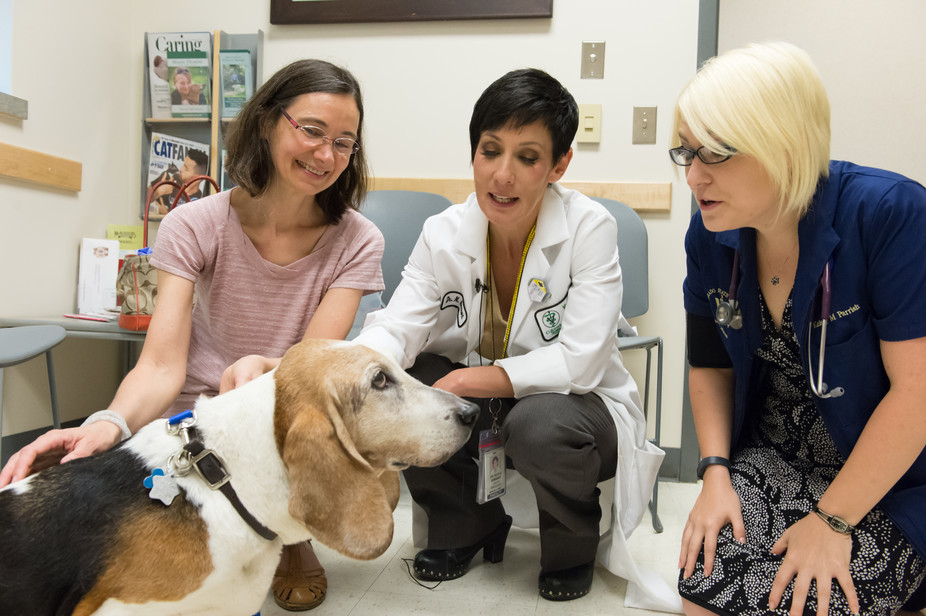
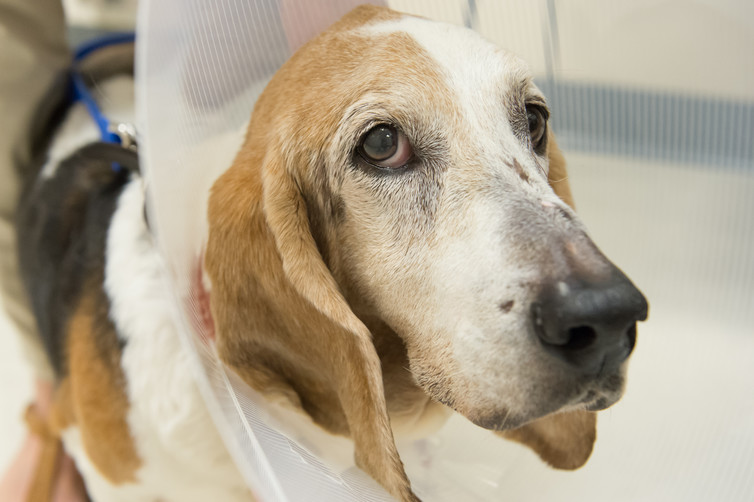
The author, center, and Dr. Anna Conti, left, and student Kelsey Parrish with Conti’s Basset hound, Picasso, who had surgery for cancer. Via Colorado State University. William Cotton/CSU Photography, Author provided

“A person can learn a lot from a dog, even a loopy one like ours. Marley taught me about living each day with unbridled exuberance and joy, about seizing the moment and following your heart… Mostly, he taught me about friendship and selflessness and, above all else, unwavering loyalty.”

John Grogan, “Marley and Me: Life and Love With the World’s Worst Dog.”

Isn’t it true? We learn so much from our dogs. But beyond what man’s best friend can teach us about enjoying life, they share something else with us. Cancer diagnoses in dogs are on the rise, as are cancer diagnoses in people. In fact, canine cancer is the leading cause of death in pets over the age of 10 years.

This confluence, it turns out, can be beneficial to cancer research. A field of study known as “comparative oncology” has recently emerged as a promising means to help cure cancer. Comparative oncology researchers study the similarities between naturally occurring cancers in pets and cancers in people in order to provide clues to treat cancer more effectively.

In fact, phase 1 and 2 clinical trials in comparative oncology are underway at 22 sites across the country, including Colorado State University, where I conduct research and am a surgical oncologist for animals.

Research in this field, involving veterinarians, physicians, cancer specialists and basic scientists, is leading to improved human health and more rapid access to effective cancer treatment than has been previously possible through traditional cancer research approaches.

More like your dog than you know

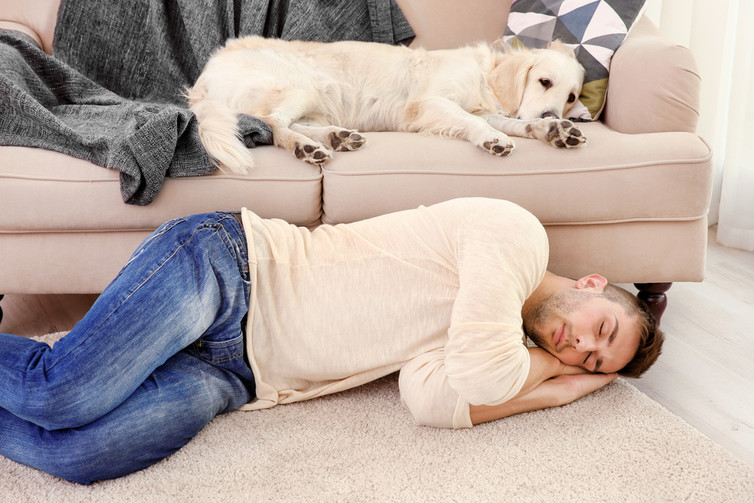
 Man and his best friend. From www.shutterstock.com
Man and his best friend. From http://www.shutterstock.com

As a species, dogs have strong physiologic and genetic similarities to people, much more so than mice, who do not typically live long enough for us to know whether they naturally get cancer. We do know that some rodent species, such as pet rats, can get cancer, but predators typically end a field mouse’s life while it is still young. The laboratory mice typically used by scientists are injected with cancer rather than it occurring naturally in their bodies.

Just as scientists officially mapped the human genome, or the complete set of genetic instructions, in 2003, scientists decoded the canine genome. They discovered that dogs have greater than 80 percent genetic similarity to humans, versus only 67 percent for mice.

In addition, cancers such as bone cancer, lymphoma and bladder cancer that spontaneously arise in pet dogs are microscopically and molecularly identical to cancers in people. Many of the genetic mutations that drive cells to become cancerous in people are the same mutations that cause cancer in dogs. In fact, when viewed under a microscope, it is impossible to distinguish between a tumor from a human and a dog.

In addition, dogs provide a large and varied population to study, important in the study of medicine. Individual dogs who develop cancer are as different from one another as are humans. Whereas laboratory mice are essentially identical twins to each other and live in a highly regulated environment, the variation among different dog breeds, home environments, diet and overall lifestyle translate into a population diversity very similar to that in humans.

Today, most pet dogs receive high-quality health care into old age and dog owners are highly motivated to seek out improved options for the management of cancer in their companions, and are also motivated to minimize side effects.

Similarities in response to treatment, too

 Picasso at the James L. Voss Veterinary Teaching Hospital, Colorado State University. Author provided., Author provided
Picasso at the James L. Voss Veterinary Teaching Hospital, Colorado State University. Author provided., Author provided.

This genetic diversity and sharing of similar DNA, physiology, microscopic structure and molecular features between dogs and humans has presented cancer researchers with a key opportunity. Dogs not only develop similar types of cancers as humans, but their cancer responds to treatments in similar ways.

This means that new cancer treatments first shown to be effective in canine cancers can frequently be predicted to have a similar benefit in human cancer patients. As a result, researchers now recognize that new drug trials in dogs with cancer will result in therapeutic discoveries that are highly “translatable”; that is, more likely to predict “real-life” medical responses in human cancer patients.

By studying how cancer responds in dogs, scientists are gaining a better understanding of how new cancer drugs not only treat the cancer but also influence the patient’s overall quality of life during treatment. This benefits dog owners, by providing access to promising new cancer treatments for their pets with cancer, and benefits human cancer patients by providing a rapid way to collect crucial data needed for FDA approval.

Dogs with cancer are helping kids

For example, a bone cancer known as osteosarcoma is so similar between dogs and people that

 The author performing surgery on a dog. Author provided. Colorado State University., Author provided.
The author performing surgery on a dog. Author provided. Colorado State University., Author provided.

intensive research in canine osteosarcoma has led to several breakthroughs in treating osteosarcoma in children. Limb-saving surgical techniques for safe and effective reconstruction following bone tumor surgery in dogs are now the standard of care in children following bone tumor surgery.

More recently, a form of immunotherapy was shown to drastically improve survival in dogs with bone cancer by delaying or altogether preventing spread of the cancer to the lungs. As a result of the success in dogs, the FDA granted fast-track status to the same treatment for use in humans last April.

Fast-tracking was developed by the FDA to support accelerated approval for promising treatments, especially for serious and life-threatening conditions. A clinical trial in children with osteosarcoma is scheduled to begin this year at multiple pediatric cancer centers throughout the United States.

These types of discoveries demonstrate that our furry companions have a crucial role in teaching us new ways to help all victims in the war against cancer – with two legs or four.

ooOOoo

As I said in my introduction, more on this theme tomorrow.

What a fabulous relationship!

Evanger’s Dog Food Recall Alert

This came in late yesterday afternoon, Pacific Time.

This was the email that was sent out.

Evanger’s Dog and Cat Food Company of Wheeling, Illinois, has announced it is voluntarily recalling specific lots of its pet food due to its potential to be contaminated with pentobarbital.

To learn which products are affected, please visit the following link:

Evanger’s Dog Food Recall of February 2016

Please be sure to share the news of this alert with other pet owners.

Mike Sagman, Editor
The Dog Food Advisor

P.S. Not already on our dog food recall notification list yet? Sign up to get critical dog food recall alerts sent to you by email. There’s no cost for this service.

If one goes to that Evanger’s Recall Link then this is what you will read. It is republished in full.

ooOOoo

Evanger’s Dog Food Recall of February 2017

February 3, 2017 — Evanger’s Dog and Cat Food Company, Inc. of Wheeling, Illinois, is voluntarily recalling specific lots of its Hunk of Beef product due to potential contamination with the deadly drug, pentobarbital.

Pentobarbital can affect animals that ingest it, and possibly cause side effects such as drowsiness, dizziness, excitement, loss of balance or nausea — or in extreme cases, death.

evangers-hunk-of-beef-recall-canWhat’s Being Recalled?

Although pentobarbital was detected in a single lot, the company is recalling all related Hunk of Beef products manufactured the week of June 6 through June 13, 2016.

The affected lots numbers that start with 1816E03HB, 1816E04HB, 1816E06HB, 1816E07HB, and 1816E13HB, and have an expiration date of June 2020.

The second half of the barcode reads 20109, which can be found on the back of the product label.

Where Was the Product Sold?

The affected products were sold both online and also distributed to retail locations only in the following states:

  • California
  • Florida
  • Georgia
  • Illinois
  • Indiana
  • Maryland
  • Massachusetts
  • Michigan
  • Minnesota
  • New York
  • Ohio
  • Pennsylvania
  • South Carolina
  • Washington
  • Wisconsin

About the Recall

The recall affects 5 lots of food that were produced from its supplier’s lot of beef, which is specifically used for the Hunk of Beef product and no other products.

To date, five dogs reportedly became ill. And one of the five dogs died after consuming the product with lot number 1816E06HB13. [Ed: My emphasis]

Evanger’s is proactively issuing a recall so as not to risk potential exposure to pentobarbital in the product.

According to Evanger’s, all suppliers of meat products are USDA approved.

The insists the beef supplier provides the company with beef chunks from cows that are slaughtered in a USDA facility.

Evanger’s continues to investigate how the contaminant entered its raw material supply.

Because it sources its meat products from suppliers that are USDA approved and since no other products have reported any problems, the company is not extending the recall to other supplier lots.

According to Evanger’s, this is the first recall event for the company in its 82 years of manufacturing.

What to Do?

Although it has been verified that little or no product remains on store shelves, consumers are asked to return recalled product to the place of purchase for a full refund.

Consumers with questions may contact the company at 847-537-0102 between 10 AM and 5 PM Central Time, Monday through Friday.

U.S. citizens can report complaints about FDA-regulated pet food products by calling the consumer complaint coordinator in your area.

Or go to http://www.fda.gov/petfoodcomplaints.

Canadians can report any health or safety incidents related to the use of this product by filling out the Consumer Product Incident Report Form.

Get Dog Food Recall Alerts by Email

Get free dog food recall alerts sent to you by email. Subscribe to The Dog Food Advisor’s emergency recall notification system.

ooOOoo

I will, of course, continue to publish every dog food alert that comes into my in-box. But don’t let that stop you from signing up for recall alerts on your own account.

Finally, if any of you are users of Evanger’s Hunk of Beef dog food and want to share your experiences then I shall be very happy to publish them here for the wider benefit of every single person who loves dogs!

Memories of Diego

Another reminder of what our dogs mean to us.

Or, more specifically, what Diego meant for Laura Bruzzese. (This will be the second in the series We Shall Not Forget Them.)

ooOOoo

Dog Love In August

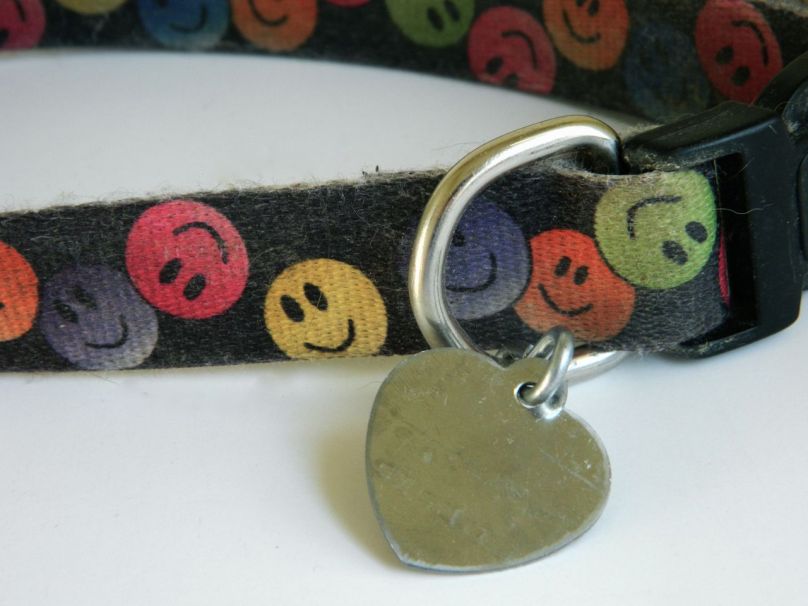
collarAugust is the start of the dying season. Garden things begin their slow shrink into the earth, the days grow shorter and cooler, lazy ocean- or mint-scented summer days snap into rigid schedules of work and school.

August is also the month that I lost Diego, my first dog. You can get acquainted with Diego here, a post I wrote a few days before he died. But I would like to share a little more now, on the second anniversary of his departure.

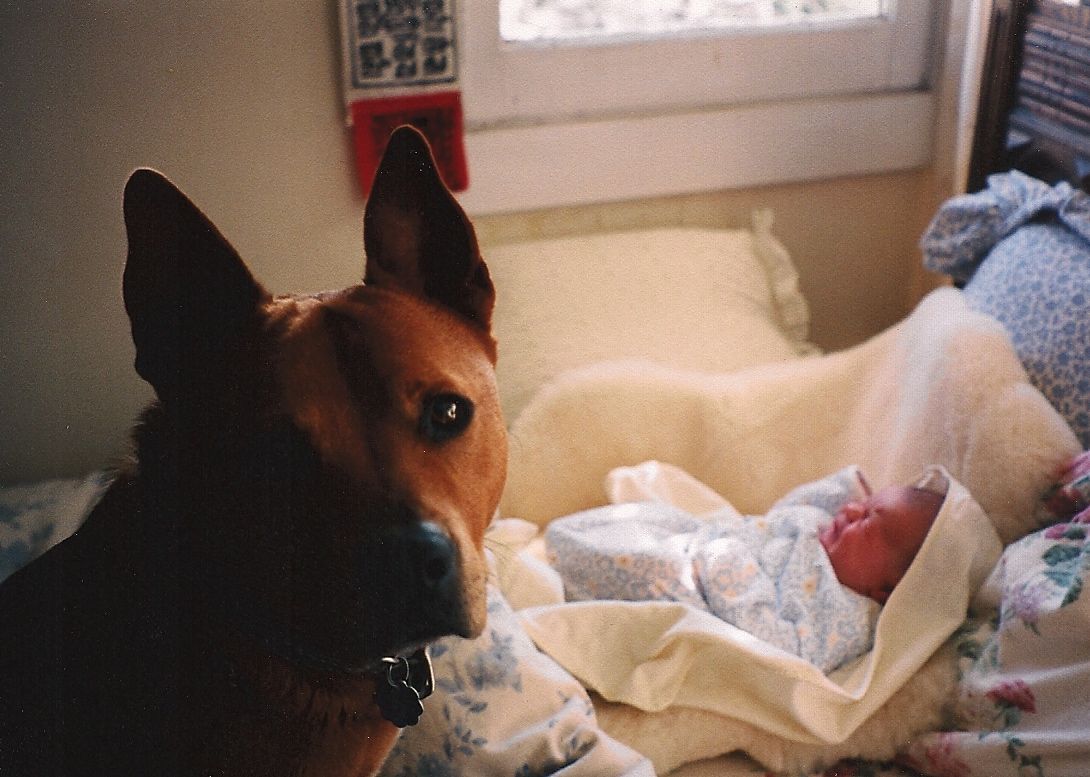
Diego was a poser, in a very literal sense of the word. He loved having his picture taken; in fact, he insisted on it whenever he saw me holding the camera. This picture, for example: it was taken the day I brought my daughter home from the hospital, the day after 21 hours of hard labor produced an eight-and-a-half-pound baby who actually stopped halfway out of my body, looked around, and scowled before resuming her reluctant journey onto the planet. (She was 12, twelve days overdue, FYI all you mothers out there who can surely feel my pain.)

There is something screaming in the bed. Please make it stop before it explodes.

I laid baby Isabella down, stepped back with the camera, looked up, and there he was: Diego, staring. Fifty-eight pounds of solid, unmoving dog. Insisting that I photograph him, too, with this creature that he wasn’t sure if he should guard against or lick. This child who personified the singular emotion of furious for the first nine weeks of her life (if she was not sleeping or eating, she was screaming).

Oh, hi Aunt Rosie. I know you’ve passed on, but I’ll bet you can still hear that screaming baby wherever you are.

When my doula told me that the colic or distemper or petite innards or whatever it was making Isabella so unhappy would resolve itself in about nine weeks, I said oh, that’s nice. But I won’t be alive for nine weeks of this. I’ll be in an asylum acquainting myself with a selection of opiates, or at the bottom of the mighty Rio Grande; so behold, an orphan.

But somehow, I survived. And Diego was part of it.

You see, from the very beginning, it was just us — the two of us, the three of us.  I was abandoned by my husband before Isabella was born, a painful time that I don’t often write about.

Within a matter of weeks, the married-and-expecting life I’d known was gone, and I was left to fumble around with the pieces, a wreckage sitting on a pile of broken glass in the dark. The small hours of it were the worst, waking up alone and panicked in the middle of the night wondering how (or if) I would live through the next weeks and years. And Diego was always there, a silent and comforting presence curled at the foot of the bed or coming up to lick my tears if I was crying, which was basically all the time. He was always there.

dog-and-babyI have a teenager now and those days seem ancient. While I rebuilt my life, Isabella grew up and Diego grew old. And finally, in his sixteenth year, he began to deteriorate to the point of pain. I knew he wouldn’t be with me much longer and I had already called the vet to ask her how it worked — when do you know it’s time? Do I take him to the office, or do you come to the house? Will he feel anything? I planned to schedule an appointment soon; I hadn’t had to make this decision before and it was a very painful.

On the morning of August 9 before I left for work, I told Diego that we would have to say good-bye soon because his body wasn’t working right anymore. I told him that I loved him and it was okay for him to go. Over and over I told him I loved him.

Less than two hours later, he drowned in the pond.

I think it was his way of avoiding the vet (he hated the clinic), and maybe sparing me that particular pain. I’m not going to say that I wasn’t devastated. But rather than remembering the urgent phone call at work from Isabella, or the vision of him when I got home, or my step-father struggling to carry the terrible weight of him away, I like to imagine Diego simply being received by the fish and toads. Delivered from his pain by warm water, wrapped in a blanket of lilies.

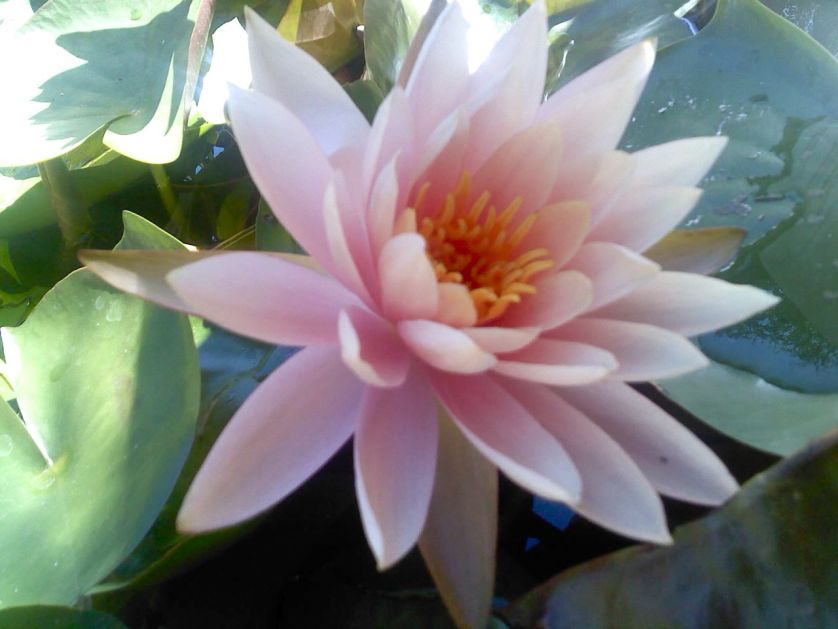
lilyAnyone who has cared for pets perhaps knows that there is one, a special one, who will always occupy the largest piece of real estate in your heart, though others may follow. That was Diego for me.

But now we’re lucky enough to share our lives with another dog, the rascally, neurotic, road trip-loving Velma. I’ll end this post with a short video of her that reminds me of exactly what I love about dogs: their absolute and abundant connection with life, free of judgement, agenda, or desire to be anything other than what they are. That’s what I think of every time I see Velma in her Writhe of Exquisite Happiness. Perfect contentment of being.

ooOOoo

Laura wrote and published this back in August, 2012. But her words, emotions and feelings are those that never age. Indeed, I would add her courageous words.

Happy Birthday, Maggie

A further guest post for the first of February.

I was emailed as follows back on the 25th January:

Hi Paul,
I hope all is well with you and Jean and the furry kids. About a month ago, you had mentioned that you would welcome a post about Maggie in honor of her 9th birthday.

Maggie was very enthusiastic about this venture and managed to write a little blog with her advice on aging. I have enclosed the result for your review.

Her birthday is on 2/3. Thank you so much for giving us this opportunity.  Take care!

Kind Regards,

Susan & Maggie

Ergo, this coming Friday is Maggie’s birthday.

ooOOoo

Maggie’s Advice on Aging

img_cdt7j2

Hello! My name is Maggie.

I have a much longer AKC registered moniker that Mom & Dad christened me with but it’s ridiculous so I just shortened it.

Anyway, Paul was so gracious to invite me to do a post for all of you good folks at Learning from Dogs. Since I have a birthday coming up (in case you are wondering, I’ll be 9), I thought what better topic to write about than aging.

To me, age is just a number. I know that is a cliché but it’s the truth! I don’t know what other dogs my age do but I’m not ready to just lay down on the couch. Not me! I’ve got too many things to do and way too many places to see.

Here are some of my tips on how you can feel like a puppy:

  1. Take your vitamins – I will admit. After Mom and Dad replaced my favorite brand of fish oil with another one that didn’t taste so good, I refused to take the pill. They would try and hide it in my food but I would just find it and set it to the side. I mean, who do they think they are dealing with? They finally wised up and now I am back to my brand. Some of you might be thinking, fish oil, yuck! Seriously, I swear by it. It promotes heart health and it keeps my coat silky smooth. I also have these tasty Milk Bone vitamins that help me to stay healthy and they even improve joint mobility! That way I will be keeping the ‘rents on their toes for years to come.
  2. Get off the couch – Yes, I like couch time with my Mom and Dad but I love nothing more than to lollygag in our gigantic backyard playing ball. I will do this for hours! My bipeds on the other hand, they have their limits. I also enjoy going for walks in this cool, new park near our house. It’s in the woods and I love all the places I can explore. Just being active is not only good for you but it keeps you engaged and learning new things all the time.
  3. Annual checkups – Going to the vet isn’t fun. I don’t know anyone that enjoys it. However, I know that everything they do for me keeps me healthy. The ‘rents see to it that I get my yearly vaccinations and physical. It keeps me in tip top shape so I will be barking at them for years to come. Mom loves it when I yell at her.
  4. Watch your diet – Okay. I will admit this one bites. If I had my way, I would be chowing down on all kinds of good things like meat, cheese, bacon…. the list goes on and on. I need to watch my girlish figure! I eat the best food with no preservatives and it’s also chockful of vitamins. Believe it or not, I love my yummy meals, they taste good!
  5. It’s the little things – This is what happiness is for me. I love nothing more than playing with the really cool stuffed teddies Dad got me or going for rides in the car with Mom. I really like family time when we watch movies and cuddle on the couch. Just being with my two favorite people in the world keeps me going. We spend quite a bit of time hanging out and I wouldn’t have it any other way!

I hope you found these tips helpful. It was fun spending time with all of you. Take care and give your parents a hug! They deserve it.

XXOO,

Maggie

advice-on-agingooOOoo

That’s one hell of a smart dog!