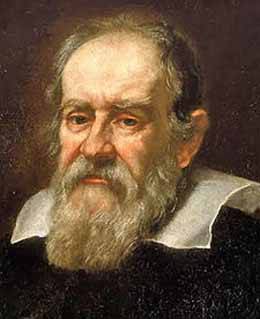
“All truths are easy to understand once they are discovered; the point is to discover them.”
Galileo
Thus said Galileo Galilei.
Why do I start this Post in this fashion?
Simple! Discovering the truth is always the challenge.
But before I go any further, I want to say thanks to my son who drew my attention to the video that is linked to in the next paragraph. (As a professional pilot he clearly takes a more than casual interest in the weather).
Here’s a link to that video by Joe Bastadi about the big changes to the planet’s weather. The video is summarised thus, “Temperature is a measure of kinetic energy, and the dirty little secret of the whole AGW debate is that total kinteic energy of the Earth over the longer term is not changing, but is cyclical.”
Joe is a professionally trained forecaster (Penn State University) but also a controversial figure. He is a member of the AccuWeather team.
Anyway, do watch that video – the link is here. Bottom line is that global weather patterns and longer-term trends are hugely driven by the earth’s natural rhythms and the influence of mankind is minimal in comparison.
Please click the video link above because that is much more current than an earlier interview of Joe Bastardi on YouTube that follows.
OK?
Now go here – ClimateProgress.org. It’s an important long article that concludes thus:
CONCLUSION: Unrestricted emissions of greenhouse gases threaten multiple catastrophes, any one of which justifies action. Together, they represent the gravest threat to humanity imaginable. The fact that the overwhelming majority of the mainstream media ignored the overwhelming majority of these studies and devoted a large fraction of its climate ‘ink’ in the last 12 months to what was essentially a non-story is arguably the single greatest failing of the science media this year.
So, if you are like me and so many others in wanting to understand the truth about our planet’s climatic future – this Post is going to disappoint you!
“When the student is ready, the teacher will appear.”Buddhist quote.
A number of thoughts and experiences came together to prompt the writing of this Post. It’s a much longer and more reflective post than usual but is offered in the loving hope that there can be no caring without sharing.
Firstly, good American friends, Gordon and Linda, whom Jean and I got to know in Mexico, recently sent us a Happy New Year
George Carlin
email, that included a slide presentation entitled Philosophy of Old Age. It was based on the writings and wisdom of George Carlin, one of the all-time great comedians of the world. But George Carlin (1937-2008) was much more than a great comedian. Much of his humour was a playful but very sharp form of social commentary on the ‘big world’. (P.S. George Carlin’s website is here, a rather strange experience in the sense of a virtual life after death.)
Anyway, back to the slide presentation from Gordon and Linda.
The slide presentation felt worthy of a post on Learning from Dogs but, thankfully, it was available in a better format for a WordPress Blog, a YouTube video. Here it is.
You can see that there are some very deep but simple messages about what, in the end, are the really important things in life. Top of the list is ‘love’. Especially unconditional love.
That takes me to second element of what motivated me to write this piece.
Just 14 days ago, I participated in a memorial service described as ‘A Memorial Service For the Lives of Loved Ones Lost‘ at our local St Paul’s Episcopal Church here in Payson. The idea came out of a comment from friend, mentor and fellow Blog author, Jon Lavin, who had noted that the language that I used when speaking of my father, now dead for well over 50 years, was the language of a child who hadn’t been ‘released’ from that event (I was just 12 at the time) rather than that of an adult who accepts that death is part of the natural order of the world.
Losing a loved one is tough, incredibly tough, and full of pain and anguish in a very deep-seated and personal manner. That’s the perspective from the loved ones left behind with more life ahead of them. But if one thinks of it in reverse, what is the one thing that we would want to leave behind when we die?
It is, without doubt, that our death does not leave in the hearts and souls of those left behind, whom we loved and who loved us, pain and anguish that isn’t embraced and dealt with healthily.
It was that collective unresolved pain and anguish that brought all of us together at that Service on the 20th. It was a wonderful release for all present. During the Service the Advent Wreath candles were lit. Here are selection of the thoughts that were voiced and released as the four candles were lit.
This first candle we light is to remember those whom we have loved and lost. We pause to remember their name, their face, their voice, the memory that binds them to us in this season.
This second candle we light is to redeem the pain of loss; the loss of relationships, the loss of jobs, the loss of health. We pause to gather up the pain of the past and offer it to God, asking that from God’s hands we receive the gift of peace.
This third candle we light is to remember ourselves this Christmas time. We pause and remember these past weeks and months and years; the disbelief, the anger, the down times, the poignancy of reminiscing, the hugs and handshakes of family and friends, all those who stood with us.
This fourth candle is lit to remember our faith and the gift of hope which the Christmas story offers us.
Light defeats darkness.
Go back and see those words that accompanied the lighting of the third candle. It included “to remember ourselves“. Once again, it’s loving ourselves, accepting that we spend our lives doing our best; in other words the answers to the unresolved issues that can haunt us is simple acceptance of who you are and being at peace with you!
Now I’m conscious that this is running on a bit but I pray that this is reaching out to others – we all need better clarity at times in our lives. So before I go on to the third and last element which has me in front of this keyboard, let me share what I wrote, privately, a few days before the Service on the 20th in trying to make sense of my own feelings about the loss of my father.
If we don’t embrace who we are and why we are who we are, i.e. real self awareness, we are condemned to being emotionally dysfunctional to a greater or lesser degree for a long time. If we understand and love ourselves, avoiding the ‘easy’ route of constantly reminding ourselves what is ‘wrong’ with us, not being a victim to guilt, and on and on, then we see a better, softer, more loving world though our eyes. Then the world reflecting back what we think about most rewards us with a better, softer, more loving world.
Loving ourselves, letting go, opening our arms to peace and joy is the true gift that we have really been given by the ‘loss’ of the loved one.
What I am embracing is that the emotional consequences of my father’s death, all those many, many years ago, created degrees of emotional dysfunction that went on for far too long. Being free to walk clear of those emotional ‘hooks’ is not only so much better for me and those who love me, it is exactly what my father would have wanted!
Being clear of deep emotional burdens allows us to love ourselves and from that comes the greatest personal gift of all – unconditional love for others. There’s that love word again!
OK, now to the third and final element! Wake up at the back there!
The year 2010 was for me and Jean the epitome of a joyous journey that started, coincidentally, on a December 20th, this one in 2007. On that evening in a bar/nightclub in San Carlos, Mexico, six days after I had arrived to stay with friends who had known Jean for many years, that I asked Jean for a dance, put my arm around her waist, and experienced something mystical – I knew she was the woman I would love to my last breath.
Thirty-five months later, on November 20th 2010, Jean and I were married in St. Paul’s Episcopal Church, Payson, Arizona. We had been living together in Mexico since September 2008 and in Payson since February, 2010. In Payson we have found a wonderfully interesting, generous and supportive community and our 13 dogs just love our rural home tucked into the forest; it is a very beautiful existence.
Frankly, I find it almost impossible to get my head around in any rational way as to how life can be so randomly alluring – we really have so little control over it all! Save for how we accept and love ourselves. Thus my own haltering and challenging steps to better self-awareness have given me more than I could ever have dreamed of. This realisation has left me feeling pretty emotional over the Christmas period.
From those emotions has come, for the first time in my life, the awareness of mortality. Not in some sort of intellectual homage to the notion that it doesn’t go on forever. No, this is a real, hard-edged, realisation that I am going to die! It’s a clear vision, as clear as those beautiful stars shining out from the brittle cold, night sky over Payson very early on New Year’s Day. My mortal life is going to end.
And that, my dear readers is that. Go back and watch that video from George Carlin, think about those past loved ones in your life and what they gifted you and, above all, feel your own love for you, savour it, and share it around.
“When the student is ready, the teacher will appear.”Buddhist quote.
Just wanted to add my best wishes to all Learning from Dog readers to those of Paul from yesterday.
Plus I did want to expand, just a touch, on what Paul wrote yesterday, more or less reflecting on an article by Leo Babauta. In that post, Paul quoted Leo writing:
The thing I’ve learned, and it’s not some new truth but an old one that took me much too long to learn, is that if you learn to be content with who you are and where you are in life, it changes everything.
In a very real sense what Leo is saying is that if you don’t love yourself you can’t possibly ‘love’ the world around you. Now this is incredibly easy to consider, too easy in fact, because the truth of loving oneself first is, for the vast majority of people, a complex, confusing and unclear journey, as in ‘self-journey’. Read that quote from Leo again and see how he writes, ‘an old one [as in truth] that took me much too long to learn‘.
I’m sure when Leo writes ‘too long to learn‘ he is, in effect, acknowledging the very individual circumstances that lead to a person developing the awareness that is expressed in that quote ‘if you learn to be content with who you are and where you are in life, it changes everything‘.
So if 2011 is going to be a challenging year then hang on to the only rock in your life – yourself! Embrace the reality that you, like all of us, do your best. Be good and kind to you.
I started writing this new Post on the 30th December with my mind full of predictions of a terribly difficult year ahead for millions of people. Indeed, there is no question that there are endless accounts of what calamities may be ahead of us in this New Year. But, as is said, it is what it is! The challenge, as always, is how we deal with it. As my fellow author, Jon, has often said, “The world reflects back what we think about most!”
In other words how we relate to the exterior world is really, and fundamentally, a reflection of how we relate to ourselves. Jon has penned a few words on this theme for tomorrow.
But serendipitously I came across a nice piece on Leo Babauta’s blog, Zen Habits called ‘you’re already perfect’. The link to it is here.
Here are some extracts:
A lot of people come to Zen Habits (and read other personal development blogs and books) because they want to improve something about themselves. They’re not satisfied with their lives, they’re unhappy with their bodies, they want to be better people.
I know, because I was one of those people.
This desire to improve myself and my life was one of the things that led to Zen Habits. I’ve been there, and I can say that it leads to a lot of striving, and a lot of dissatisfaction with who you are and what your life is.
A powerful realization that has helped me is simply this: You’re already good enough, you already have more than enough, and you’re already perfect.
and later Leo writes:
The thing I’ve learned, and it’s not some new truth but an old one that took me much too long to learn, is that if you learn to be content with who you are and where you are in life, it changes everything.
Consider what changes:
You no longer feel dissatisfied with yourself or your life.
You no longer spend so much time and energy wanting to change and trying to change.
You no longer compare yourself to other people, and wish you were better.
You can be happy, all the time, no matter what happens in the world around you.
Instead of trying to improve yourself, you can spend your time helping others.
You stop spending so much money on things that will supposedly improve your life.
And this scribe wishes you all a very Happy New Year.
As was famously quoted by Yogi Berra, “It’s tough to make predictions, especially about the future.”
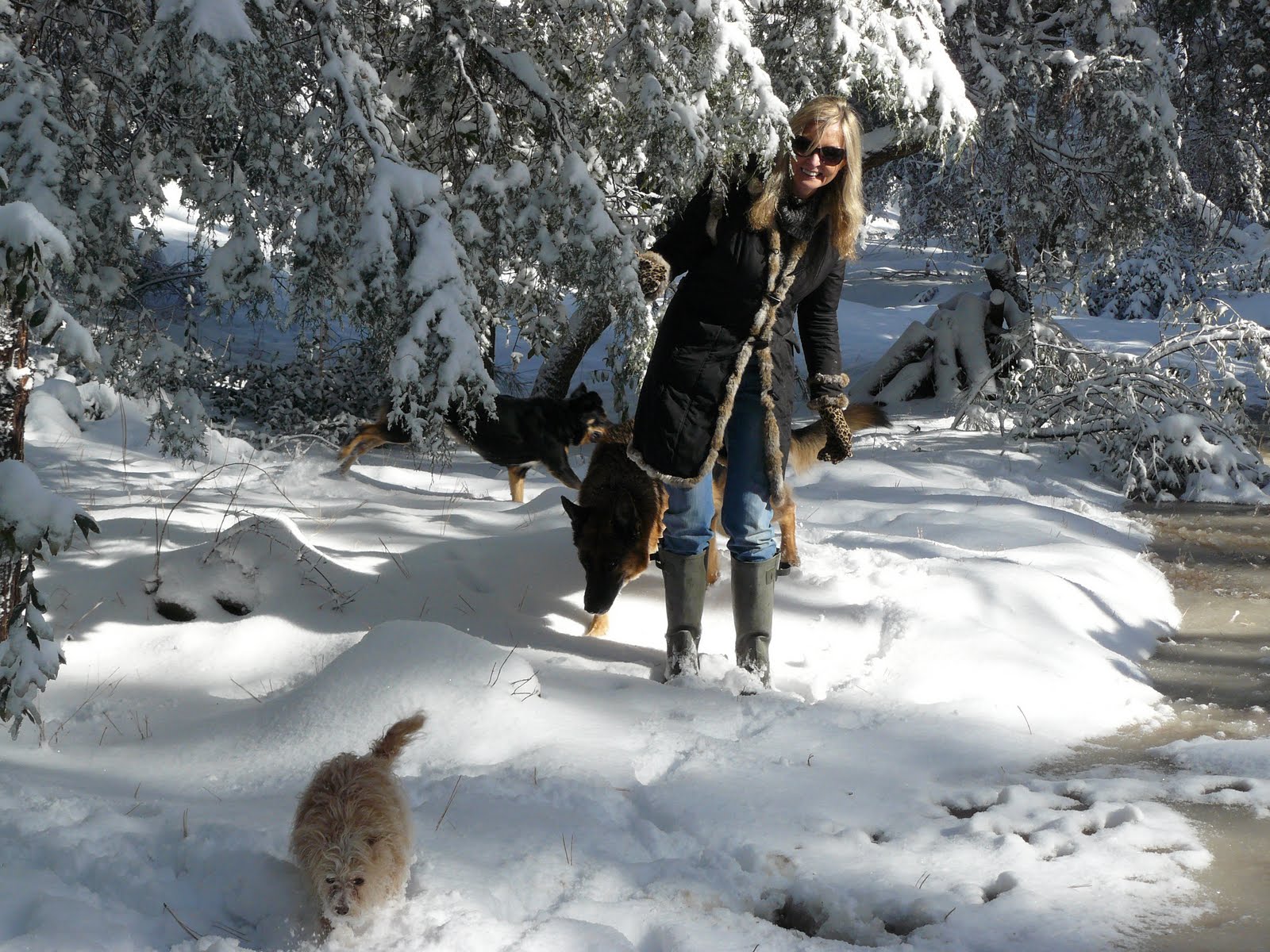
So I will just leave it at that but crave your indulgence by including a recent photograph of Mrs H and some of the dogs enjoying the recent heavy snowfall that fell on Payson and Northern Arizona on the 30th.
New Year greetings from a snowy day in Payson, AZ.
A few days ago I published an article that had first appeared on the CASSE Blog site entitled Top Ten Songs for a Steady State. A long-term contributor to this Blog, Per Kurowski, then added a comment to that post that I thought deserved being made into a separate item on Learning from Dogs. Here it is.
This is also a contender:
Where Do the Children Play?
Cat Stevens, Tea for the Tillerman (1970)
Well I think it’s fine, building jumbo planes.
Or taking a ride on a cosmic train.
Switch on summer from a slot machine.
Yes, get what you want to if you want, ’cause you can get anything.
Chorus: I know we’ve come a long way,
We’re changing day to day,
But tell me, where do the children play?
Well you roll on roads over fresh green grass.
For your lorry loads pumping petrol gas.
And you make them long, and you make them tough.
But they just go on and on, and it seems that you can’t get off.
Well you’ve cracked the sky, scrapers fill the air.
But will you keep on building higher
’til there’s no more room up there?
Will you make us laugh, will you make us cry?
Will you tell us when to live, will you tell us when to die?
By the way the following song should also classify as a contender… though excuse me if when I also use music to keep sane… I might drive others insane
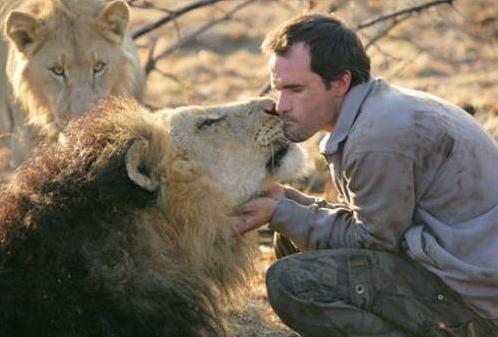
Almost a year ago, Learning from Dogs published an article about the ‘Lion Whisperer‘; Kevin Richardson. Here’s a small extract from that blog Post which has remained the most popular piece on this blog ever since it was first published.
His name is Kevin Richardson and there is an interesting account of how he works and some of his ‘experiences’ in Revolution Magazine, luckily with online content. That article is here. It starts thus:
To do this he does not use the common methods of breaking the animal’s spirit with sticks and chains, instead he uses love, understanding and trust. With this unusual method of training he has developed some exceptionally personal bonds with his students. He sleeps with lions, cuddles newborn hyenas, swims with lionesses. Kevin can confidently look into their eyes, crouch to the their level and even lie down with them – all taboos in the normal world of wild animal handling – yet he doesn’t get mauled or attacked.
The article goes on to say that Kevin often works with the animals when they are very young. Thus he is demonstrating very powerfully that how we behave, especially with our children when they are young, creates the environment for building trust out of consistency of deed and thought.
Just beautiful!
Anyway, I thought to look in on Kevin’s website, http://www.lionwhisperer.co.za/ once again and to view some of the videos posted on that website. Here’s an example – enjoy!
(Well I say ‘guest’ in the sense that Patrice has very kindly allowed me to publish a post he recently published on his own Blog. It’s very much appreciated. I should add that the minor changes that I have made, in my editorial role, are gently to improve the clarity of this fine piece of work, not in any way to amend meaning. Ed.)
THE PRIVATIZATION OF MONEY CREATION IS THE ENGINE OF PLUTOCRACY.
To understand the present financial and economic crisis, we need the clarity of deep philosophy.
The situation is actually simple, in its grossest outline. To create public money, the money everybody uses (be it cash, electronic transfers, swaps, whatever) we use a private system, with proprietary money creating devices inside (say subprime, or derivatives). Civilization has never worked this way before, as the state previously was careful to stay the one and only money creator.
Now society, worldwide, uses a privately-managed public-money ‘system’ creating what is known as a fractional reserve system. [Wikipedia explanation of fractional reserve system, Ed]
That puts huge power in the hands of underground private individuals we don’t even know the names of. Those cloaked powers in turn corrupt the visible political socio-economy, from below. The whole metastasis is not even described, because intellectuals would have to do so, but most are paid by institutions subservient to the present global corruption.
We saw a similar situation in the Roman empire, when the intellectual class was at its richest, but its critical ability had been corrupted.
The modern banking system is a Faustian bargain (as in a deal with the Devil) with the bankers; in exchange for the immense powers the private bankers were given with money creation, they were supposed to loan it back to society for its development.
This worked reasonably well in the Nineteenth Century. But in the Twentieth Century, bankers observed they could support fascism regimes, and get away with it (only Dr. Schacht, one of the “Lords of Finance”, sat in Nuremberg tribunal, and he was exonerated). Now bankers think they can engineer a depression, and get even richer from it: just keep the profits, and make taxpayers pay for the losses.
By Patrice Ayme
Note 1: Paul Krugman observes, with many others, that the crisis of the West needs “intellectual clarity” to be resolved, and, meanwhile we are “overmatched“. I made preceding comment in answer to Krugman’s cogent remarks. (The New York Times had the kindness to publish what I wrote within two minutes! )
Note 2: HOW THE FINANCIAL CRISIS IS TURNING CIVILIZATIONAL:
China just established another train speed record for “unmodified’ train sets (481 km/h). OK, some will claim China stole a lot of Japanese and European technology. And some French engineers have sneered that the very high speed system in China is not as high performing as it looks (France has much higher average speeds, the highest in the world). However, this is not the point. The point is that China is trying very hard to progress and improve. Meanwhile some of the colossal technological edge of the West is eroding away quickly. The result will be world war, or global plutocratic peace (as plutocracy furthers its deal with China).
How does China improve so much and so fast? Because Chinese banks, the largest in the world, operate according to the fiduciary duty, the Faustian bargain, that the fractional reserve system ought to impose, and used to impose in the West.
Top Chinese bankers know all too well that if they cheated, they may end up with a bullet in their skull. China is led by scientists and engineers who turned to politics, but know that they cannot make mistakes in their calculations. Mao made many mistakes, and dozens of millions died.
The history of China, in the 26 centuries before that, was spoiled by a well meaning, but meek philosophy, which left too small a place to deliver progress of the material, and intellectual kinds.
Civilization is not about “leaving it at that”, the way Confucius mostly had it. Civilization is also about the dream, and implementing it. Indeed, civilization cannot stand still, anymore than a biker can stand still, because resources run out always (as Rome and the Mayas found out). Thus moving on is the price of sustainability. Progress is the price of sustainability.
Note 3: It may seem a curious thing that Karl Marx did not make a strident version of the preceding critique (instead he modestly accused tangentially bankers of “monopoly” powers).
But this Marxist discretion proves the point I alluded to above, namely that bankers were better behaved in the 19C. So Marx talked about other things.
Ironically, early American presidents had perfectly well seen the danger bankers posed, and worried more about them than Marx himself! And let no one call Andrew Jackson a communist: that would be serious mistake…
In the 21st Century, by capturing the states (USA, EU), and various institutions above them (IMF, World Bank, BIS), the bankers have established a monopoly of power early American presidents rightly feared (and Jackson, wounded at 13 by an English sword, later a proud carrier of several bullets, and a general in the field, feared very little). The wise know what to fear. The mentally simple just smile, thinking only about themselves, as they can’t think much further than that.
*********************************
From the Ed.
Dear Readers, I really hope that you read Patrice’s post in full and in a quiet place where you could reflect on the meaning and underlying implications of what Patrice is saying. Those in the UK may have been able to watch a typically fabulous BBC Television series, Ancient Worlds. It’s still available on BBC iPlayer.
What comes out from the message of mankind over the centuries is that wonderful French expression plus ça change, plus c’est la même chose – the more that changes, the more it stays the same thing. But where we are as we approach the New Year of 2011 A.D. is possibly at a cross-roads – and I intend to write a little more on this idea over the coming days.


 Learning from Dogs