Category: Core thought

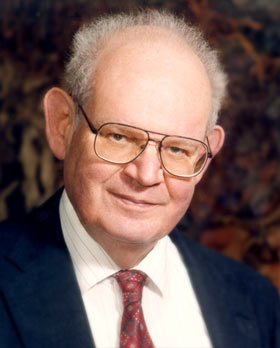
Benoit Mandelbrot and the roughness of life.

There is so much about the lives of humans that is astoundingly beautiful.

Before I get started on this article, a few words about the Blog in general.  In recent times, the readership of Learning from Dogs has increased, frankly, to quite amazing levels.  Not really sure why but grateful, nonetheless.

Readers will recognize that articles written specifically about dogs are in the minority.  Even using dogs as a metaphor would still limit what could be published.  But as is written elsewhere on the Blog, ‘The underlying theme of Learning from Dogs is about truth, integrity, honesty and trust in every way.’  Dogs are integrous creatures; that’s all the example required.

We are at a point in the history of man where truth, integrity, honesty and trust are critically important (they have always been important but the economic and ecological pressures bearing down on us all make these values critical to mankind’s survival).  Thus the aspiration of Learning from Dogs is to offer insights on truth from as many perspectives as possible – and to make your experience as a reader sufficiently enjoyable that you will wish to return!

OK!  On to the topic for today!

There are many aspects of the world in which we live that are mysterious beyond our imagination.  Take the circle.  Practically everyone is aware that to calculate either the area or the circumference of a circle one needs to use a mathematical constant π or ‘pi’.  As a mathematician would put it,  π (sometimes written pi) is a mathematical constant whose value is the ratio of any circle’s circumference to its diameter; this is the same value as the ratio of a circle’s area to the square of its radius. π is approximately equal to 3.14159.

Note the word ‘approximately’!  Now read this,

(PhysOrg.com) — A computer scientist in France has broken all previous records for calculating Pi, using only a personal computer. The previous record was approximately 2.6 trillion digits, but the new record, set by Fabrice Bellard, now stands at almost 2.7 trillion decimal places.

Bellard, of Paris Telecom Tech, made and checked the calculation by running his own software algorithms for 131 days. The previous record calculation, set by Daisuke Takahashi at the University of Tsukuba in Japan in August 2009, took only 29 hours to complete, but used a super-computer costing millions of dollars, and running 2000 times faster than Bellard’s PC.

Full article is here.

Apart from the wonderful aspect of the need of a human being to go on determining the n’th value of π there is a deeper and more beautiful aspect (well to me there is!) and that is the acknowledgement that something as simple as, say, that round coin in your hand is an expression of the infinite.

Now to Benoit Mandelbrot, who died a little over six months ago, but in his lifetime also explored the wonder and magic of the infinite.

Here’s a video of Mandelbrot recorded in February 2010 in what would be his last year of his life on earth.

If you found that video fascinating then try this series of six videos presented by the one and only Arthur C. Clarke.

Benoit Mandelbrot died on the 14th October, 2010, a little over a month before his eighty-sixth birthday (born 20th November, 1924).  Here’s a nice tribute from the The New York Times.

Tomorrow, some more insights into the mysterious beauty of fractals.

Benoit Mandelbrot

Amazing man!

More on Bill McKibben’s book, eaarth.

Some very telling points.

I first mentioned this book on the 13th May when I was about a third of the way in.  Because I thought there might be material useful to the course that has been running here in Payson, I did skip around the book looking for ‘attention-grabbing’ points.  It wasn’t difficult to find numerous extracts.

Try this on page 214 from the Chapter Afterword.

As it turns out, however, the BP spill was not the most dangerous thing that happened in the months after this book was first published.  In fact, in the spring and summer of 2101, the list of startling events in the natural world included:

  • Nineteen nations setting new all-time high temperature records, which in itself is a record.  Some of those records were for entire regions – [then some of the details]
  • Scientists reported that the earth had just come through the warmest six months, the warmest year, and the warmest decade for which we have records; it appears 2010 will be the warmest calendar year on record.
  • The most protracted and extreme heat wave in a thousand years of Russian history (it had never before topped 100 degrees in Moscow) led to a siege of peat fires that shrouded the capital in ghostly, deadly smoke.  [Then goes on to mention the effect of this heat on global grain prices.]
  • Since warm air holds more water vapour that cold air, scientists were not surprised to see steady increases in flooding.  Still, the spring and summer of 2010 were off the charts.  We saw “thousand-year storms” across the globe [goes into details]
  • Meanwhile, in the far north, the Petermann Glacier on Greenland calved an iceberg four times the size of Manhattan.
  • And the most ominous news of all might have come from the pages of the eminent scientific journal Nature, which published an enormous study of the productivity of the earth’s seas. [More details follow – not good news!]
That last point can be read in more detail from Nature‘s website.  It’s here.
The book closes thus (referring to how the BP oil spill was, ultimately, an accident),
But the greatest danger we face, climate change, is no accident.  It’s what happens when everything goes the way it’s supposed to go.  It’s not a function of bad technology, it’s a function of a bad business model: of the fact that Exxon Mobil and BP and Peabody Coal are allowed to use the atmosphere, free of charge, as an open sewer for the inevitable waste from their products.  They’ll fight to the end to defend that business model, for it produces greater profits that any industry has ever known.  We won’t match them dollar for dollar: To fight back, we need a different currency, our bodies and our spirit and our creativity.  That’s what a movement looks like; let’s hope we can rally one in time to make a difference.
Powerful stuff from a powerful book.
Fired up?  Then go and join:  350.org

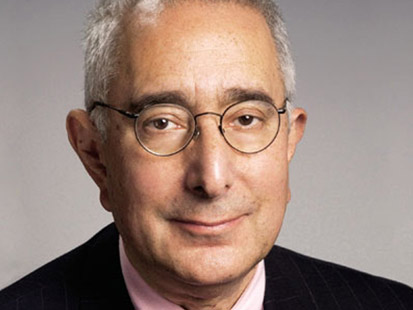
Get a dog, the Ben Stein way.

Just lovely!

Ben Stein

I have to admit to not having come across the name or the personage of Ben Stein before.

But that has been an omission on my part.  This is Ben’s website.

This is Ben’s view on dogs!

Greece, or grease?

The agony of watching a country (and a planet) slip.

Readers will be aware that I very rarely stroll through the tangled pastures of international politics and finance.  The only reason that I do so today is on the back of a very impressive letter published in the German newspaper  Handelsblatt.  That was brought to my attention by my subscription to Mike Shedlock’s (Mish) Blog Mish’s Global Economic Trend Analysis.  You will see that I muse at two levels about where we are today.

Earlier, I had read in last Saturday’s, The Economist a leader on Greece’s debt crisis, entitled Trichet the intransigent.   That started thus,

The European Central Bank’s refusal to consider a restructuring of Greek debt could wreck the euro zone
May 12th 2011 | from the print edition

IF THE stakes were not so high, Europeans’ incompetence in the euro-zone debt crisis would be comic.

and concluded thus,

It is time for the Germans and the IMF to call the ECB’s bluff. Together they should demand, and instigate, a restructuring of Greek debt. Germany should push other European governments to cough up money to support Greek banks and, if necessary, to make whole the ECB. The fund, which knows how to restructure debt, must ensure the process is run in a competent manner. The ECB will then be faced with a choice: go along with an orderly restructuring, or trigger a much greater mess by in effect forcing Greece out of the euro zone. Surely Mr Trichet does not want that to be his legacy.

So with that as background, the letter to Georgios Papandreou, Prime Minister of Greece written by Gabor Steingart is powerful and hard hitting.  Here it is in full.

Mr. Prime Minister,

Dear Mr. Papandreou,

With the greatest respect, the Western world is monitoring your efforts to master your country’s debt crisis. No other democratic country has ever managed anything like that in peacetime. You are shrinking the state apparatus; you are fighting corruption; you are teaching your fellow countrymen how to become honest tax-payers.

You are a modern hero. You are attempting the impossible. As the son of a persecuted and ostracized politician who was chased by the military junta you grew up close to danger. When the officers were looking for your father who was hiding in the attic, they threatened you by putting an unlocked pistol to your forehead and challenged you to betray your father. You denied your father’s presence until he, worried about his son’s life, left his hiding place.Later you fled with him to America where you spent your adolescence. You are alarger-than-life-character.

Preceding governments almost ruined your country. Debts amounting to 340 billion Euros are burdening the Greek state,equaling 155 times the profit of the 60 largest companies of your country and 1.5 times the amount of debts the Maastricht Treaty allows. A year ago, this newspaper, Germany’s biggest Business Daily, appealed to the public to buy Greek government bonds in order to give to the country what Greece needs just as urgently as money: confidence. We also wanted to assist in breaking through the negative spiral of growing doubt and increasing interest rates. Everyone who granted you guarantees and loans wanted it, the European Union, the International Monetary Fund, the heads of state and government.

But since then, the spiral has picked up in speed instead of slowing down. In May 2010 the interest rate at which your country was given money on a ten year basis was at eight per cent. Today, it is at 16 per cent. And in all probability, it will be going up further. The bitter truth to which you and all parties who wanted to help Greece have to admit is that the help doesn’t help. Your country is getting deeper and deeper into the mess. Debts are growing, the gross national product will decrease by at least three per cent in 2011. But it would have to grow by three per cent instead if you were to lower your debt to the allowedlimit until 2040. This is becoming more and more unrealistic. You can’t starve and build up your muscles at the same time.

The truth that Greece has to cut back and save has turned into an untruth. The right thing has turned into the wrong thing. You already cut pensions, lowered the salaries of civil servants by 30 per cent and raised the prices of gas by almost 50 per cent. You can’t restore the health of your country by saving. And the European Union can’t restore your country’s health by again and again injecting new loans.

Soon, the day will come when the tortured body will surrender. The Greek construction industry already shrank by 70 per cent. Sales of car dealers sank by half. A daily export volume of 50 million Euros Greece is achieving  far too little.  Soon the day will come which investors fear in their nightmares. Then the word “insolvency” will be on everyone’s lips.

But it is also the day when a new truth will be born: Don’t save but invest, they will tell you – so that the Greek economy will grow again. Do not service debt with debt, you then will be recommended, but spread out the debt service, cut it and maybe even completely suspend it for a while. It will be a day of impositions, especially for those who lendmoney to you and your people. Financial markets will grind to a halt in horror – and then they will turn to embrace the future. Because Argentina in 2001, Mexico at the beginning of the eighties and Germany after World War II taught us that there is a life after death – at least, in the case of highly indebted states.

Mr. Papandreou, so far, you attempted the impossible. Now you should do the possible. Just as you deceived the officers as a boy and denied to know where your father was hiding you now must repudiate the pride of the Greeks – in order to save your country. Come to meet the new uncomfortable truth before it knocks at your door. It’s already on its way.

Respectfully yours,

Gabor Steingart

The author is an award winning Journalist, the former White House Correspondent of “Der Spiegel” and now Handelsblatt’s  Editor-in-Chief.  His book “The war for wealth. The true story of globalization or while the flat world is broken” was  published in the US, GB, China and several other countries by McGraw Hill, New York, in 2008.

You may contact him at

steingart@handelsblatt.com


Powerful, as I said.

In a sense, in a very real sense, this illustration of the end game of our love affair with debt is symptomatic of the end game in terms of mankind’s love affair with, well with mankind.  The following was written by an inmate of Oklahoma Prison in 1998.

At the root of my humanity lies a potentially insatiable self-centredness.  Given its way, it can become unquenchable. Nothing, not even the richest of imagination, will put out its fire.

This ‘what’s in it for me’ mindset is at the root of all my problems and is where my fears live.  From those fears come anger, greed, intolerance, and a host of other shortcomings.

It is no accident that all religions point to the forgetting of self, because all religions know salvation lies in self-forgetting.

As we head relentlessly towards a level of 400 parts per million (PPM) of carbon dioxide in the atmosphere, 50 PPM above the highest safe limit determined by climate scientists, the time for mankind to move on from the debt-laden, over-leveraged, disconnected life from Planet Earth, is now.

That’s now!

The Anthropocene period

Is this a new geological age?

Before moving to the thrust of this article, let me say that of the few things that I miss now living in Arizona, British draft beer and BBC Radio 4 are top of the list.  Radio 4 have long broadcast a splendid 30-minute summary of science matters under the banner of Material World.  It was the broadcast on May 12th that had a very powerful except that I will present here.  The programme is available to listen online.  This is how the BBC wrote up the summary,

Researchers from all over the world and various disciplines gathered together in London for a conference called “The Anthropocene: A New Epoch of Geological Time?” The term “Anthropocene” was coined by Professor Paul Crutzen of the Max Planck Institute in 2002 to suggest human activity has had such an irreversible affect on our planet, that we have entered into a new geological period, influenced by humans. The conference aimed to discuss the various research projects studying the Anthropocene, as well as to discuss whether or not it should be formalised as a geological “Epoch”. What actually is the Anthropocene, why are so many disciplines researching it and what difference will it make if it is formalized? Quentin finds out from Leicester University geologist Dr. Jan Zalasiewicz, and ecologist Professor Erle Ellis from the University of Maryland, Baltimore County.

Elsewhere on the BBC website, a fuller summary of the conference was written up by Howard Falcon-Lang, Royal Holloway, University of London.  I have taken the liberty of publishing that summary, minus the photographs, below, simply because it’s so important a read.

Anthropocene: Have humans created a new geological age?

By Howard Falcon-Lang Royal Holloway, University of London, 10th May 2011

Human civilisation developed in a cosy cradle.

Over the last 11,700 years – an epoch that geologists call the Holocene – climate has remained remarkably stable. This allowed humans to plan ahead, inventing agriculture, cities, communication networks and new forms of energy.

Some geologists now believe that human activity has so irrevocably altered our planet that we have entered a new geological age.

This proposed new epoch – dubbed the Anthropocene – was discussed at a major conference held at the Geological Society in London on Wednesday. Yet some experts say that defining this “human age” is much more than about understanding our place in history. Instead, our whole future may depend on it.

The term, the Anthropocene, was coined over a decade ago by Nobel Laureate chemist, Paul Crutzen. Professor Crutzen recalls: “I was at a conference where someone said something about the Holocene. I suddenly thought this was wrong. The world has changed too much. No, we are in the Anthropocene. I just made up the word on the spur of the moment. Everyone was shocked. But it seems to have stuck.”

But is Professor Crutzen correct? Has the Earth really flipped into a new geological epoch – and if so, why is this important?

Back to the beginning

Dr Jan Zalasiewicz of the University of Leicester is one of the leading proponents of the Anthropocene theory. He told BBC News: “Simply put, our planet no longer functions in the way that it once did. Atmosphere, climate, oceans, ecosystems… they’re all now operating outside Holocene norms. This strongly suggests we’ve crossed an epoch boundary.” Dr Zalasiewicz added: “There are three ideas about when the Anthropocene began. Some people think it kicked off thousands of years ago with the rise of agriculture, but really those first farmers didn’t change the planet much. Others put the boundary around 1800. That was the year that human population hit one billion and carbon dioxide started to significantly rise due to the burning of fossil fuels in the Industrial Revolution,” he explained. Dr Zalasiewicz continued, “However, the really big changes didn’t get going until the end of the Second World War – and that’s another candidate for the boundary.”

To formally define a new epoch, geologists must show how it can be recognised in the layers of mud that will eventually form rocks. As it turns out, there is enormous practical advantage in fixing 1945 as the beginning of the Anthropocene.

“1945 was the dawn of the nuclear age,” explained Dr Zalasiewicz. “Sediments deposited worldwide that year contain a tell-tale radioactive signature from the first atom bomb tests in the States”. So, thousands of years from now, geologists (if any still exist) will be able to place their finger on that very layer of mud.

Extraordinary times?

Nonetheless, the choice of 1945 for start of the Anthropocene is much more than just convenient. It coincides with an event that Professor Will Steffen of the Australian National University describes as the “Great Acceleration”. Professor Steffen told the BBC: “A few years ago, I plotted graphs to track the growth of human society from 1800 to the present day. What I saw was quite unexpected – a remarkable speeding up after the Second World War”.

In that time, the human population has more than doubled to an astounding 6.9 billion. However, much more significantly, Professor Steffen believes, the global economy has increased ten-fold over the same period.

“Population growth is not the big issue here. The real problem is that we’re becoming wealthier and consuming exponentially more resources,” he explained.

This insatiable consumption has placed enormous stresses on our planet. Writing in the prestigious journal Nature, Professor Steffen and colleagues recently identified nine “life support systems” essential for human life on Earth. They warned that two of these – climate and the nitrogen cycle – are in danger of failing, while a third – biodiversity – is already in meltdown.

“One of the most worrying features of the Great Acceleration is biodiversity loss,” Professor Steffen said. “Species extinction is currently running 100 to 1000 times faster than background levels, and will increase further this century. When humans look back… the Anthropocene will probably represent one of the six biggest extinctions in our planet’s history.” This would put it on a par with the event that wiped out the dinosaurs.

But perhaps more alarming is the possibility that the pronounced global warming seen at the start of the proposed Anthropocene epoch could be irreversible. “Will climate change prove to be a short-term spike that quickly returns to normal, or are we seeing a long term move to a new stable state?” asked Professor Steffen. “That’s the million dollar question.”

If the Anthropocene does develop into a long-lived period of much warmer climate, then there may be one very small consolation: the fossil record of modern human society is likely to be preserved in amazing detail.

Dr Mike Ellis of the British Geological Survey told BBC News: “As a result of rising sea level, scientists of the future will be able to explore the relics of whole cities buried in mud”.

Preserved buildings

In New Orleans, large areas of the city are already below sea level. The disastrous combination of rising sea level and subsidence of the Mississippi Delta on which it is built suggest that it will succumb at some point in the future. Although the Intergovernmental Panel on Climate Change (IPCC) predicts less than a metre of sea level rise over the next 90 years, more than five metres of sea level rise is possible over the coming centuries as the Greenland and West Antarctic ice caps melt.

Sea level rise of this magnitude will mean that the lower storeys of buildings will be preserved intact. Such “urban strata will be a unique, widespread and easily recognisable feature of the sedimentary deposits of the human age”, Dr Ellis commented.

Geologists of the future may also hunt for other, more unusual, “markers” of the Anthropocene epoch, such as the traces of plastic packaging in sediments.

But geologists like Dr Mark Williams from the University of Leicester hold much more serious concerns: “One of the main reasons we developed the Anthropocene concept was to quantify present-day change and compare it with the geological record,” he explained. “Only when we do so, can we critically assess the pace and degree of change that we’re currently experiencing.”

Dr Williams added that while the Anthropocene has yet to run its course, “all the signs are that the human age will be a stand-out event in the 4.5 billion year history of the Earth”.
We certainly do live in interesting times!

The plight of wild tigers

The power of our interconnected world.

My article yesterday about Tony the Tiger and what looks like a very happy ending to his dismal existence led me on to more sites regarding the situations about tigers.

Again, pressure on time means that this post is more about sharing links than expressing my own feelings, although most readers will know where I am coming from – having a Blog called Learning from Dogs is a bit of a clue!

The first website is Free Tony The Tiger and clearly has been an essential part of the force needed to get the win in court for Toby.  On that website, they set out their stance thus,

Free Tony The Tiger is dedicated to raising awareness to Tony’s situation as well as gaining support for Tony. The objective is to have Tony released to an accredited big cat sanctuary so he can receive the care, home, diet, enrichment, medical care and respect he deserves. It is also the mission of Free Tony The Tiger to bring attention to the severe problem of privately owned tigers in the United States.

Tony represents one of thousands of privately owned tigers in the United States whose numbers are greater than tigers in the wild. Captive U.S. tigers are used in roadside zoos and attractions, photo ops and exhibitions, entertainment shows, pseudo-sanctuaries, bred for profit or are owned as “pets.” Others end up in canned hunts or on the black market.

This is a serious situation that must be addressed and resolved and the more this issue is exposed , the better the chance to put an end to this abuse and exploitation. There is no conservational value in privately breeding tigers. The only sanctioned tiger breeding program in the United States is the Species Survival Plan in which AZA accredited zoos participate. Not all animal rescue centers and sanctuaries are what they claim to be. A true sanctuary would never buy, sell, trade, breed, or cart their animals to malls, fairs, etc. Such majestic and magnificent cats like tigers should be respected and protected. Visit End Tiger Farming In The U.S. and take action for tigers.

Please view this very important and informative video from Big Cat Rescue – Tampa Florida addressing this issue. Carole Baskin, Founder and CEO of Big Cat Rescue of Tampa FL , the world’s largest accredited sanctuary, that is devoted entirely to exotic cats speaks out about:

1. Where do big cats go when they are no longer profitable cubs?
2. If the good sanctuaries are full, where do the big cats go?
3. Should we be building bigger and more sanctuaries for the unwanted cats?
4. What is the best way to prevent the abuse of lions, tigers and other big cats?
5. Does banning private possession of exotics work?
6. Who tracks maulings, killings and escapes by tigers and other big cat species?
7. Do USDA and state inspections make sure breeders and dealers are being humane?
8. When did the big cat crisis in America start?
9. Are there laws to prevent exotic cats from being traded for their meat, skin and bones?
10. How is the public to blame for the worst acts toward tigers and their cubs?
11. What happens to breeders, dealers and other wild animal exploiters when they run out of money?
12. What are some of the most lax states when it comes to wildcat standards and enforcement?
13. Why doesn’t the government do something about all of the abuse of tigers, lions, leopards, jaguars & other big cats?
14. Are there illegal activities operating in the shadow of legal uses of tigers?
15. What kind of tracking is done and what needs to be done to end the abuse of exotic wild cats?

More important links from the above can be found here.

The Big Cat Rescue organisation, as referred to above, may be found here.  Finally, on the Free Tony website is much information about the efforts to save wild tigers, thus,

Please support Tony’s “wild cousins” by visiting http://www.savetigersnow, a global campaign by World Wildlife Fund and Leonardo DiCaprio whose objective is to build political, financial and public support to double the number of wild tigers by 2022, the next Year of the Tiger.

There are an estimated 3,200 tigers left in the wild – in the USA there are approximately 5,000 privately owned tigers. View the videos below courtesy of The World Wildlife Fund and Big Cat Rescue – Tampa, Florida and for more information: http://www.worldwildlife.org/species/finder/tigers/captive-tigers/

Here are those videos.  A short video setting out WWF’s stance and promoting their campaign.

Then Carole Baskin, Founder and CEO of Big Cat Rescue, the world’s largest accredited sanctuary, that is devoted entirely to exotic cats speaks out.

Nature, big business and the future

Just maybe, economic activity and financial capital could align itself with the planetary demands!

A collection of items crossed my screen in the last few days that reinforced the interconnectedness of all life on Planet Earth.

First I saw an item on the BBC News website that demonstrated that climate change, global warming, or however one wants to describe man’s relationship with the planet, is not some crazy, fuzzy idea of a few liberal environmentalists.  This was a report of the significant drop in global wheat yields.

The report was entitled, Climate shifts ‘hit global wheat yields’ and was written by Mark Kinver, Science and environment reporter, BBC News.  Here’s a taste of what was written.

Shifts in the climate over the past three decades have been linked to a 5.5% decline in global wheat production, a study has suggested.

A team of US scientists assessed the impact of changes to rainfall and temperature on four major food crops: wheat, rice, corn and soybeans.

Climate trends in some countries were big enough to wipe out gains from other factors, such as technology, they said.

Professor David Lobell from Stanford University went on to say,

“In particular, you have to assume how non-linear the response will be and how different the crops of tomorrow will be from the crops of today,” he said.

He added that the study focused on historical data in order to strengthen confidence in the existing projections.

“I think it is very clear that climate is not the predominant driver of change over long periods of time in crop production.

“Across the board, you see crop yields going up over the past 30 years, but the question is how much is climate modified (and) what would have happened if the climate was not changing.

“In some countries, we see that climate has only affected things by a few percent. In other countries, we see that yields would have been rising twice as fast.

“On a global average, we see that wheat production would be about 5% higher if we had not seen the warming since 1980. We see about the same for maize or corn.

“Yet for rice and soybean, we actually find that production is about the same as if climate had not been trending.”

The report may be accessed here.

Sort of moving on, most people, when they stop and think about it, must realise that 6.9 billion people living (i.e. depending) on Planet Earth have to be causing changes.  The Inside Science News Service published a reminder from last December of a calculation that,

By Mary Caperton Morton, ISNS Contributor
Inside Science News Service

STRASBURG, Pa. — Next month, representatives from more than 190 nations will gather in Japan at the Nagoya Biodiversity Summit to develop a global strategy for staunching habitat and biodiversity loss around the world.

The statistics are sobering: Every 20 minutes a species goes extinct. At that rate — estimated to be a thousand times faster than pre-human impact background levels – in 300 years, half of all living species of mammals, birds, fish, reptiles and plants will be gone. [My italics]

This alarming decline has not gone unnoticed. In 1992, the United Nations Convention on Biological Diversity — or CBD — one of the most widely ratified treaties in the world, established lofty conservation goals to be met by 2010. But since then the decline in biodiversity has not slowed. Nearly 16,000 species are still listed as threatened, with more than 200 of them described as “possibly extinct.”

What we need, some might ask, is for big business to get behind and push!  Perhaps not so far fetched.

Last October, the British Guardian newspaper, published a very telling reminder that nothing ever in life stays the same.

The article was presented thus,

Biodiversity loss seen as greater financial risk than terrorism, says UN

Loss of ecosystems perceived by banks and insurance companies to be a greater economic risk than terrorism, finds UN report.

Written by Jonathan Watts in Nagoya.

A controlled burn of oil from the Deepwater Horizon well in the Gulf of Mexico. The report cites the Gulf of Mexico oil spill as an extreme example of the potential impact of inadequate environmental controls. Photograph: Ann Heisenfelt/EPA

The financial risks posed by the loss of species and ecosystems have risen sharply and are becoming a greater concern for businesses than international terrorism, according to a United Nations report released today.

From over-depletion of fish stocks and soil degradation caused by agricultural chemicals to water shortages and mining pollution, the paper – commissioned by the UN Environment Programme and partners – said the likelihood has climbed sharply that declines in biodiversity would have a “severe” $10bn (£6bn) to $50bn impact on business.

With the European Union and other regions increasingly holding companies liable for impacts on ecosystem services, it suggests banks, investors and insurance companies are starting to calculate the losses that could arise from diminishing supplies, tightened conservationcontrols and the reputational damage caused by involvement in an unsound project.

Achim Steiner, UN under-secretary general and Unep executive director, said: “The kinds of emerging concerns and rising perception of risks underlines a fundamental sea change in the way some financial institutions, alongside natural resource-dependent companies, are now starting to glimpse and to factor in the economic importance of biodiversity and ecosystems”.

The briefing paper cites the 55% crash of BP’s share price and the decline of its credit rating in the wake of the Gulf of Mexico oil spill as an extreme example of the potential impact of inadequate environmental controls.

Read the full article in the Guardian here.

The United Nations Environment Programme report may be found here.  The cover page says this,

“ As the global financial sector recovers and moves into the post financial crisis era,
there is one notion that crystallises before our eyes more acutely than ever: we need
to understand systemic risk in a much more holistic way. This CEO Briefing underscores
the critical natural capital that underpins our economic activity and financial capital.”
Richard Burrett, Partner in Earth Capital Partners
Co-Chair, UNEP Finance Initiative

Well put!

As I wrote at the very start, just maybe, economic activity and financial capital could align itself with the planetary demands!

Mind power!

The power of film, and the power of the mind!

If this sub-heading seems a little mysterious, it’s with due cause!  I am being deliberately obtuse, for a deliberate reason.

Watch the film, then click on the Read More link where I will explain all.

But don’t cheat!  The film is only 5 minutes and 29 seconds long and very captivating.  Watch it all to the very end.

Then read the rest of this Post.

Continue reading “Mind power!”

Beautiful minds; two further reflections.

Further to the guest post from Patrice Ayme, an introduction to John Hurlburt.

I wrote on the 2nd May that an unintended consequence of my beautiful minds articles about Hugh Everett and Stephen Hawking was a recognition that the need for ‘beautiful’ thinking is more important than ever before.  I wrote,

The French philosopher Voltaire was reputed to have said, “Think for yourselves and let others enjoy the privilege to do so, too.”  In these days where ‘spin’ and ‘counter-spin’, to put it kindly, are so widely used, and millions live in a culture where our societies’ communication outlets compete for the maximum provocation (sorry audience!) it is challenging, to say the least, to think independently.

But of course as you, dear reader, will instantly acknowledge, these are just THE times when independent thinking is so, so important.  Thus I want to acknowledge two completely different and totally disconnected people who set such wonderful examples of the power of a beautiful mind.

Unlike Patrice Ayme whom neither do I know nor have I met (Patrice Ayme is a pseudonym),  today’s guest post is from someone that lives here in Payson and whom I have met on numerous occasions.  What John writes about couldn’t be more different to Patrice’s article but that isn’t the point.  Well, to be honest, that is the point!  It goes towards underlining my proposition that these are times where we need a huge variety of thinkers who can be honest about their approach to life, and not hostage to any particular ‘group think’.

John’s essay is entitled, What’s for Dinner?

What’s for Dinner?

Ancient man had a legitimate fear about being gobbled up for dinner by a ravenous beast.  The vestigial fear remains in spite of the reality that mankind has become a ravenous beast which is gobbling up nature for dinner.  It’s interesting to note that although God and Nature can get along without earth or man, man and earth could not and would not exist without God and Nature.  After all, God is Nature.

We get careless when we don’t stop to think about what we are, where we are and who we are.  We don’t have to make a choice between God and money.  We can invest in the business of God which includes education, formation, transformation and the well being of the earth which sustain us all.

Walking the way we talk means having the courage of our convictions.  What can we do that is possible, plausible, practical and probable to protect ourselves and our descendents from the results of ravaging mother earth for personal profit?

Wisdom is neither an individual conclusion nor an opinion.  We live in a world that is financially dominated by economic interests which are gambling with humanity’s future.  It’s time to end the game.  We grow best when we live and learn together in harmony with God, nature and each other.  Saving the Earth from which we come and which sustains all planetary life is called conservation.  That’s as conservative as life gets.

There is a fraction of our population which prefers fear, hate and ignorance to faith, love and our common well-being; both as a nation and as a world.  What does this say about the United States of America?  Well, for one thing, it says that we’re hell bent toward our own destruction and can’t get our act together because of the influences of money, power and tribalism.

The facts of nature can not be ignored indefinitely.  While our nation becomes divided and we continue to face economic collapse four years after a journey to the brink of a world economic abyss, the environment which is our source, our natural birthright and our home continues to be stolen from us by those who seek personal gain and aggrandizement.

Let’s go back to the beginning and keep it simple. We hold these truths to be self evident.

1.    The bible tells us the same thing as all sacred scriptures; love God and each other.

2.    We are a country that is chartered as one nation under God.  The powers of our government come from “We the people”.

3.    Economics: a pump won’t work when the well runs dry.

These fundamental truths of faith, humanity, economics and the American vision transcend petty bickering and are ignored at our common peril.  Considering recent world events, it would seem that we have a window of opportunity to refocus our priorities.  We pray for God’s guidance.


An old lamplighter

Amen to that!

So two wonderful examples that illustrate the power of beautiful minds and how, in my opinion, we need the minds of Ayme, Hurlburt and countless others to pick our way out of this self-defeating mess that we are all in and lead us to a true long-term sustainable future for the Planet Earth and all of God’s creatures for whom this is the only home we will ever have.

I wrote on the 2nd May of the French philosopher Voltaire who was reputed to have said, “Think for yourselves and let others enjoy the privilege to do so, too.”   Let me end with a quote from President Abraham Lincoln, “All my life I have tried to pluck a thistle and plant a flower wherever the flower would grow in thought and mind.

Think!

Musings about Planet Earth

Could Planet Earth really be avenging the disregard shown by man?

This is such a meaty subject that, frankly, all this article can do is to set the scene for further muses.  The trigger for the theme was a piece written by Michael Klare that I read on the Tom Dispatch blogsite.  But before going to that piece by Michael Klare, let’s step back for a moment.

Planet Earth from Apollo 8

The idea that the Planet is not a piece of rock covered in a thin layer of air, water and life but something much more deeply connected with all living organisms including the ‘higher order’ forms of life is not new.  But it was Professor James Lovelock who catapulted the idea of the living, breathing planet into the psyche of modern man as in his Gaia hypothesis.  Here’s a link to Lovelock’s original explanation of that idea.  From which is quoted,

Most of us sense that the Earth is more than a sphere of rock with a thin layer of air, ocean and life covering the surface. We feel that we belong here as if this planet were indeed our home. Long ago the Greeks, thinking this way, gave to the Earth the name Gaia or, for short, Ge. In those days, science and theology were one and science, although less precise, had soul. As time passed this warm relationship faded and was replaced by the frigidity of the schoolmen. The life sciences, no longer concerned with life, fell to classifying dead things and even to vivisection. Ge was stolen from theology to become no more the root from which the disciplines of geography and geology were named. Now at last there are signs of a change. Science becomes holistic again and rediscovers soul, and theology, moved by ecumenical forces, begins to realise that Gaia is not to be subdivided for academic convenience and that Ge is much more than just a prefix.

That article concludes thus,

If we are “all creatures great and small,” from bacteria to whales, part of Gaia then we are all of us potentially important to her well being. We knew in our hearts that the destruction of a whole range of other species was wrong but now we know why. No longer can we merely regret the passing of one of the great whales, or the blue butterfly, nor even the smallpox virus. When we eliminate one of these from Earth, we may have destroyed a part of ourselves, for we also are a part of Gaia.

There are many possibilities for comfort as there are for dismay in contemplating the consequences of our membership in this great commonwealth of living things. It may be that one role we play is as the senses and nervous system for Gaia. Through our eyes she has for the first time seen her very fair face and in our minds become aware of herself. We do indeed belong here. The earth is more than just a home, it’s a living system and we are part of it.

So back to Michael Klare.

On the 14th April, Tom Engelhardt wrote a piece on Tom Dispatch that opened as follows:

Last Monday, Yukio Edano, chief cabinet secretary, defended the Japanese government’s response to the nuclear disaster at Fukushima, insisting that the plant complex is in “a stable situation,relatively speaking.”  That’s somewhat like the official description of 11,500 tons of water purposely dumped into the ocean waters off Fukushima as “low-level radioactive” or “lightly radioactive.”  It is, of course, only “lightly” so in comparison to the even more radioactive water being stored at the plant in its place.  But that’s the thing with descriptive words: they can leave so much to the eye of the beholder — and the Japanese government hasn’t been significantly more eager than the Tokyo Electric Power Company (Tepco), which runs the complex, to behold all that much when it comes to Fukushima.

Engelhardt then sets the scene for the guest post by Michael Klare.

The Planet Strikes Back
Why We Underestimate the Earth and Overestimate Ourselves 

By Michael T. Klare

In his 2010 book, Eaarth: Making a Life on a Tough New Planet, environmental scholar and activist Bill McKibben writes of a planet so devastated by global warming that it’s no longer recognizable as the Earth we once inhabited.  This is a planet, he predicts, of “melting poles and dying forests and a heaving, corrosive sea, raked by winds, strafed by storms, scorched by heat.”  Altered as it is from the world in which human civilization was born and thrived, it needs a new name — so he gave it that extra “a” in “Eaarth.”

It would be wrong to do more that selectively offer extracts but here’s how Klare sets the scene,

It’s not enough to think of Eaarth as an impotent casualty of humanity’s predations.  It is also a complex organic system with many potent defenses against alien intervention — defenses it is already wielding to devastating effect when it comes to human societies.  And keep this in mind: we are only at the beginning of this process.

To grasp our present situation, however, it’s necessary to distinguish between naturally recurring planetary disturbances and the planetary responses to human intervention.  Both need a fresh look, so let’s start with what Earth has always been capable of before we turn to the responses of Eaarth, the avenger.

Michael Klare conclude thus,

Bill McKibben is right: we no longer live on the “cozy, taken-for-granted” planet formerly known as Earth.  We inhabit a new place, already changed dramatically by the intervention of humankind.  But we are not acting upon a passive, impotent entity unable to defend itself against human transgression.  Sad to say, we will learn to our dismay of the immense powers available to Eaarth, the Avenger.

Michael T. Klare is a professor of peace and world security studies at Hampshire College, a TomDispatch regular, and the author, most recently, ofRising Powers, Shrinking Planet. A documentary movie version of his previous book, Blood and Oil, is available from the Media Education Foundation.

To close, here’s an interview of Michael Klare by Tom Engelhardt.