Category: Core thought

Dogs and human health

There’s no shortage of good news about the benefits of a dog in your life.

I have been reading recently about how having a dog, or six, in your life is linked to that life being extended. As I shall be 75 in eleven days time this was not a casual thought.

The reading was as a result of two new studies being published recently: Cardiovascular Quality and Outcomes. I was going to ‘top and tail’ one of these articles and publish it in this place.

But then I decided to do my own research and first off went to the American Heart Association website.

I was blown away by the results. Using their own search facility I put in the word ‘dog’ and received 313 responses. Top of the list were the two articles that I just mentioned.

But first a word about the Association. As their History page very comprehensively says (just a small extract from me):

Before the American Heart Association existed, people with heart disease were thought to be doomed to complete bed rest — or destined to imminent death.

But a handful of pioneering physicians and social workers believed it didn’t have to be that way. They conducted studies to learn more about heart disease, America’s No. 1 killer. Then, on June 10, 1924, they met in Chicago to form the American Heart Association — believing that scientific research could lead the way to better treatment, prevention and ultimately a cure. The early American Heart Association enlisted help from hundreds, then thousands, of physicians and scientists.

“We were living in a time of almost unbelievable ignorance about heart disease,” said Paul Dudley White, one of six cardiologists who founded the organization.

In 1948, the association reorganized, transforming from a professional scientific society to a nationwide voluntary health organization composed of science and lay volunteers and supported by professional staff.

Since then, the AHA has grown rapidly in size and influence — nationally and internationally — into an organization of more than 33 million volunteers and supporters dedicated to improving heart health and reducing deaths from cardiovascular diseases and stroke.

Here is a timeline of American Heart Association milestones in more than 90 years of lifesaving history:

Read more if you want to here.

Now I’m going to republish the first two articles from that long list of published items. The first is Do dog owners live longer?

ooOOoo

Do dog owners live longer?

As dog lovers have long suspected, owning a canine companion can be good for you. In fact, two recent studies and analyses published in Circulation: Cardiovascular Quality and Outcomes, a scientific journal of the American Heart Association, suggest your four-legged friend may help you do better after a heart attack or stroke and may help you live a longer, healthier life. And that’s great news for dog parents!

Dog owners have better results after a major health event.

The studies found that, overall, dog owners tend to live longer than non-owners. And they often recover better from major health events such as heart attack or stroke, especially if they live alone.

Some exciting stats for dog owners:

  • Heart attack survivors living by themselves had a 33% reduced risk of death if they owned a dog, while survivors living with someone else (a partner or child) had a 15% reduced risk.
  • Stroke survivors living by themselves had a 27% reduced risk of death if they owned a dog, while survivors living with someone else (a partner or child) had a 12% reduced risk.
  • Dog owners are 31% less likely to die from a heart attack or stroke than non-dog owners.

Learn more about what the research shows.

Move more, stress less.

Interacting with dogs can boost your production of “happy hormones” such as oxytocin, serotonin and dopamine. This can lead to a greater sense of well-being and help lower levels of the stress hormone cortisol. And having a dog can help lower blood pressure and cholesterol, ease depression and improve fitness.

Studies show that people who walk their dogs get significantly more exercise than those who don’t. And there’s a bonus: our pets can also help us feel less social anxiety and interact more with other humans. Maybe that’s why dog owners report less loneliness, depression and social isolation.

Make the most of dog ownership.

Here are some tips to make the most of your four-legged companion time:

  • Playing and interacting with your pooch will bring the most health benefits for both of you.
  • Get out with your pet. Not only are the walks good for both of you, you may find yourself meeting other dog owners in your area. And socializing can be a good thing!
  • Some dogs love to travel. Research pet-friendly hotels so you and your furry friend can have all sorts of adventures together.
  • Everybody loves a good snuggle. Give lots of scratches behind the ears, belly rubs or good old-fashioned head pats. The more you love your pet, the more they’ll love you back.

\Source:

Dog ownership associated with longer life, especially among heart attack and stroke survivors, Circulation: Cardiovascular Quality and Outcomes Journal Report, October 2019

ooOOoo

The second is also very recent, about the findings from Sweden.

ooOOoo

Here’s more evidence your dog might lengthen your life

By American Heart Association News

(filadendron/E+, Getty Images)

Letting your health go to the dogs might turn out to be a great idea: New research bolsters the association between dog ownership and longer life, especially for people who have had heart attacks or strokes.

Earlier studies have shown dog ownership alleviates social isolation, improves physical activity and lowers blood pressure. The new work builds on that, said Dr. Glenn N. Levine, who led a committee that wrote a 2013 report about pet ownership for the American Heart Association.

“While these non-randomized studies cannot prove that adopting or owning a dog directly leads to reduced mortality, these robust findings are certainly at least suggestive of this,” he said in a news release.

The two new studies were published Tuesday in Circulation: Cardiovascular Quality and Outcomes.

One study, from Sweden, compared dog owners and non-owners after a heart attack or stroke. Records of nearly 182,000 people who’d had heart attacks and nearly 155,000 people who’d had strokes were examined. Dog ownership was confirmed with data from the Swedish Board of Agriculture, where registration of dog ownership has been mandatory since 2001, and the Swedish Kennel Club, where pedigree dogs have been registered since 1889.

When compared with people who didn’t own dogs, owners who lived alone had a 33% lower risk of dying after being hospitalized for a heart attack. For dog owners who lived with a partner or child, the risk was 15% lower.

Dog-owning stroke survivors saw a similar benefit. The risk of death after hospitalization for those who lived alone was 27% lower. It was 12% lower if they lived with a partner or child.

What’s behind the canine advantage?

“We know that social isolation is a strong risk factor for worse health outcomes and premature death,” said study co-author Dr. Tove Fall, a doctor of veterinary medicine and a professor at Uppsala University in Sweden. “Previous studies have indicated that dog owners experience less social isolation and have more interaction with other people. Furthermore, keeping a dog is a good motivation for physical activity, which is an important factor in rehabilitation and mental health.”

The second set of researchers reviewed patient data from more than 3.8 million people in 10 separate studies.

Compared to non-owners, dog owners had a 24% reduced risk of dying from any cause; a 31% reduced risk of dying from cardiovascular-related issues; and a 65% reduced risk dying after a heart attack.

The study did not account for factors such as better fitness or an overall healthier lifestyle that could be associated with dog ownership, said co-author Dr. Caroline Kramer, an endocrinologist and clinician scientist at Leadership Sinai Centre for Diabetes at Mount Sinai Hospital in Toronto. “The results, however, were very positive.”

As a dog owner herself, Kramer said adopting her miniature Schnauzer, Romeo, “increased my steps and physical activity each day, and he has filled my daily routine with joy and unconditional love.”

Tove, however, cautioned more research needs to be done before people are prescribed dogs for health reasons. “Moreover, from an animal welfare perspective, dogs should only be acquired by people who feel they have the capacity and knowledge to give the pet a good life.”

If you have questions or comments about this story, please email editor@heart.org.

American Heart Association News Stories

American Heart Association News covers heart disease, stroke and related health issues. Not all views expressed in American Heart Association News stories reflect the official position of the American Heart Association.

Copyright is owned or held by the American Heart Association, Inc., and all rights are reserved. Permission is granted, at no cost and without need for further request, to link to, quote, excerpt or reprint from these stories in any medium as long as no text is altered and proper attribution is made to the American Heart Association News. See full terms of use.

HEALTH CARE DISCLAIMER: This site and its services do not constitute the practice of medical advice, diagnosis or treatment. Always talk to your health care provider for diagnosis and treatment, including your specific medical needs. If you have or suspect that you have a medical problem or condition, please contact a qualified health care professional immediately. If you are in the United States and experiencing a medical emergency, call 911 or call for emergency medical help immediately.

ooOOoo

Case made; hook, line and sinker!

The treasure that is a pit bull

This is the true nature of this breed.

Pit Bulls have such a bad reputation. But in our experience if they are cared for and loved and not used for fighting then they are great dogs.

No better illustrated than by this story that appeared on The Dodo website.

ooOOoo

Dog Refuses To Leave Mom’s Hospital Room After Saving Her Life

SUCH a good girl 👏🐕💕
BY

PUBLISHED ON 10/10/2019

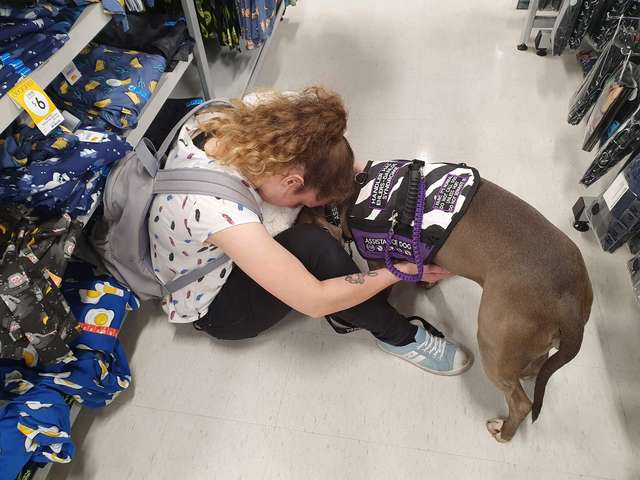
When Shauna Darcy first brought Ruby home, the plan was to have Ruby act as a service dog to help her with anxiety, depression and agoraphobia. Ruby was an incredible service dog and companion from the very beginning — and quickly showed Darcy just how far she would go to help her.

Shauna Darcy

“While she was training to be a service dog I noticed that she started picking up on changes in my heart rate and would act funny — for example, paw at me, try to get my attention, get on top of me, etc.,” Darcy told The Dodo.

Picking up on Ruby’s cues, Darcy went to the doctor and discovered she had health issues she hadn’t known about, including a rare heart condition called vascular Ehlers-Danlos syndrome. Ruby had known something was wrong even before Darcy did, and her main focus as a service dog quickly switched to Darcy’s cardiac issues.


Shauna Darcy

Every day, Ruby helps her mom with things like monitoring her heart rate and blood pressure, helping her during panic attacks and retrieving emergency medications. She also carries groceries, picks up dropped items and gets things her mom can’t reach, and is trained in deep pressure therapy.

“When I pass out she gets on top of me and applies all her pressure on me and licks my hands and face until I come around,” Darcy said.

Shauna Darcy

Ruby is there for her mom every single day — even when she doesn’t realize she needs her.

Last week, when Ruby started alerting her mom that something was wrong, she had no idea why. At that point, Darcy was feeling fine, but decided to trust Ruby and call an ambulance anyway, just in case.

“It turns out my heart was going into atrial fibrillation,” Darcy said. “By the time the paramedics came, I was in pain and barely conscious.”

Shauna Darcy

As the paramedics rushed Darcy to the hospital, she realized that Ruby had saved her life that day.

While Darcy was in the hospital and the doctors worked to get her stable again, Ruby refused to leave her mom’s side. Even while Darcy was unconscious, Ruby lay in her hospital bed, pressed up against her, hoping her mom could sense she was there and that her presence would make her feel safe.

Shauna Darcy

During their stay at the hospital, so many people stopped by to meet Ruby. She’s always very popular whenever she and her mom are at the hospital and loves saying hi to everyone — but also makes sure that she’s never too far away from her mom. She loves her so much, and her mom loves her just as much right back.

Shauna Darcy

Without Ruby, Darcy’s life would be very different. Ruby helps her mom stay healthy and safe every single day, and her mom is so grateful for everything she’s done for her.

“I wouldn’t be alive without her,” Darcy said.

ooOOoo

“I wouldn’t be alive without her,”

I’m emboldening that last statement.

This is a wonderful story.

For Darcy has articulated what millions of other dog lovers know in their hearts. That the relationship between a dog and a human is extra special!

This is perfect!

A fabulous elephant story!

ooOOoo

Wild Elephant Brings Her Newborn To Meet The People Who Saved He

Such an incredible moment ❤️️

BY

PUBLISHED ON 09/13/2019
To Loijuk the elephant, nothing is more important than family — especially now that she is starting one of her own.
In 2006, the orphaned elephant was found all alone at only 5 months old, and was rescued by the Sheldrick Wildlife Trust (SWT) in Kenya. She was hand-raised by SWT until she was old enough to return to the wild.
Years have passed, but Loijuk still has a close bond with her human family. She returns to the grounds of the sanctuary every month to visit. But in September, Loijuk surprised her former caretakers with a newborn elephant calf in tow.

Sheldrick Wildlife Trust

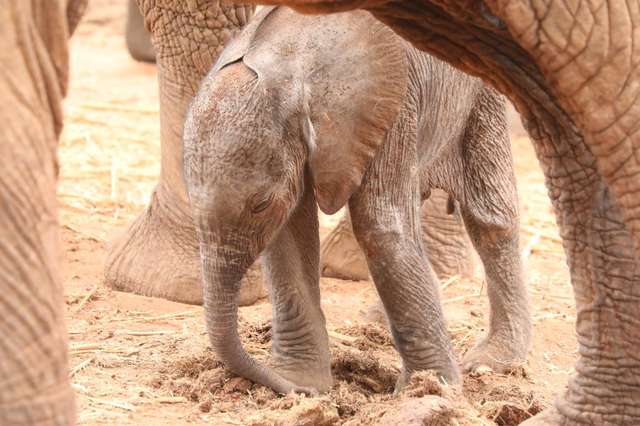
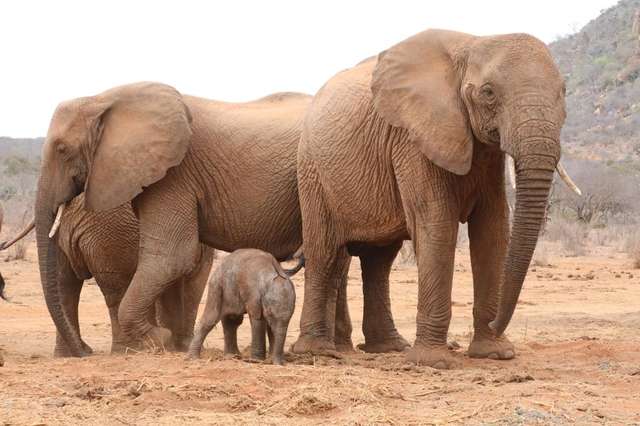
It was clear the proud elephant mom couldn’t wait to show off her baby. The calf, who has since been named Lili, was only hours old — likely born only the night before.

Loijuk has never forgotten the kindness of those who helped her. She even invited Benjamin Kyalo, the head keeper, to have a special moment with her newborn calf.

Sheldrick Wildlife Trust

“Benjamin was able to get close to Lili (who nestled into his legs), stroke her delicate newborn skin and breathe into her trunk, thereby letting her know who he was via his scent,” Rob Brandford, executive director of SWT, told The Dodo. “Elephants have an incredible memory and sense of smell and our keepers will often breathe into the orphans’ trunks so they can recognize who they are.”

You can watch a video of Loijuk and Lili’s touching visit here:

Lili was quite wobbly on her feet during the meeting, but over the course of the week, Kyalo watched as she got stronger and stronger.

“Loijuk has stayed close to the area around the unit, allowing our keepers to watch over her and check how she’s getting on,” Brandford said. “Considering September is the peak of the dry season in Tsavo, not the most favorable of conditions for a new baby, we are delighted that Loijuk has returned close to home so that we can help supplement her diet when she visits.”

Sheldrick Wildlife Trust

In the wild, calves are raised with the help of female relatives within the herd. Loijuk has played nanny to other babies before giving birth to Lili, and now her calf has nannies of her very own — two other wild orphans named Naserian and Ithumbah.

Lili will remain with her mom’s herd in the wild for life, and if she is ever in need, she now knows there is a safe place she can always return to.

Sheldrick Wildlife Trust

Lili is the 31st calf born to female orphaned elephants raised by SWT now living wild, and she is a beacon of hope for threatened elephant populations everywhere.

“Moments like these are momentous,” Brandford said. “In saving one orphaned elephant’s life, we are not only seeing that orphan thrive but start a family.”

“Lili has a brighter future ahead of her than many elephants,” Brandford added, “and we look forward to watching this little girl grow up in the wild.”

ooOOoo

Absolutely wonderful!

Starting to be sidetracked by stuff!

A bit of a topsy-turvy moment at present.

We are not going away until the 23rd. We are taking Brandy with us!

But it seems as though getting our ducks in a row is going to become a high priority this week.

Plus, I am pleased to say that I am writing my second book. I had a meeting with H. Ní Aódagaín during the week and she has set me on the straight and narrow, so to speak.

H. Ní Aódagaín

She has her website here and although she promotes herself as a writer she is quite an editor and writing counsellor. I had over 20,000 words already written but had got myself completely lost and confused. Under her guidance I believe I got myself sorted.All of which is to say that the blog is taking a slightly backward step between now and the 14th October. I’m not saying that nothing will be published but at the present time I don’t have a clue as to what I shall do!

Hope you understand!

Finally, there should be plenty of photographs to share with you at some time after we are back.

It’s not all hugs and smiles.

A sobering article about the unacceptable face of dogs!

Jim Goodbrod recently sent me an email that included a copy of a recent article in the Washington Post.

Here’s what Jim wrote:

Hey Paul…..

I read this article in the Washington Post a couple weeks ago: it’s not something we want to hear or admit to, but I thought you’d find it interesting nonetheless.
Regards,  Jim

Jim got it in one when he said that it’s not something we want to admit to.

But it deserves sharing with you.

ooOOoo

The dog is one of the world’s most destructive mammals. Brazil proves it.

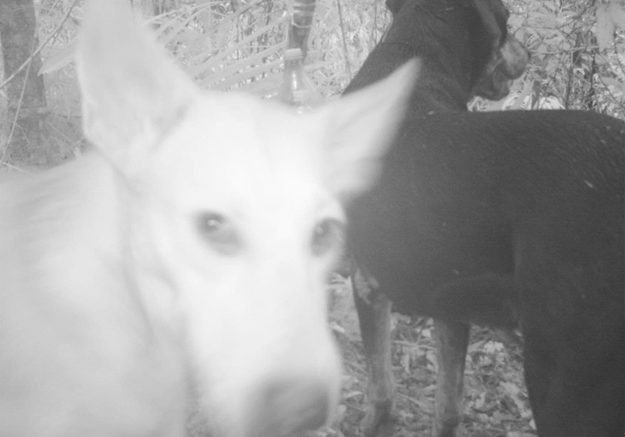
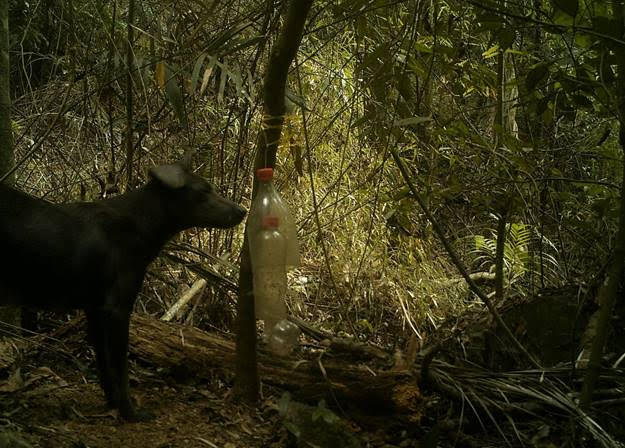
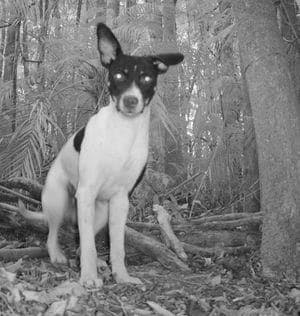
Surveillance cameras placed by researchers in Brazil’s Tijuca National Park capture a pair of dogs. (Courtesy of Katyucha Silva)

By Terrence McCoy

August 20

RIO DE JANEIRO — High above this Brazilian city, in a jungle blanketing a mountain, the turtles were out, and the scene was hopeful.

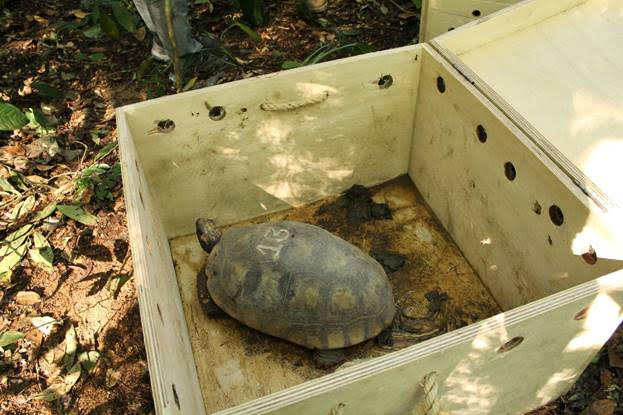
Scientists were reintroducing 15 mud-caked tortoises to this urban forest where they had once been plentiful. Children were running around. People were oohing and aahing. A stern-looking security guard appeared to briefly smile.

But not government biologist Katyucha Silva. She was thinking about dogs.

What would they do to these turtles? What were they doing to Brazil?

It’s a question more researchers are beginning to ask in a country where there are more dogs than children — and where dogs are quickly becoming the most destructive predator. They’re invading nature preserves and national parks. They’re forming packs, some 15 dogs strong, and are hunting wild prey. They’ve muscled out native predators such as foxes and big cats in nature preserves, outnumbering pumas 25 to 1 and ocelots 85 to 1.

Every year, they become still more plentiful, spreading diseases, disrupting natural environments, goosing scientists who set up elaborate camera systems to photograph wild animals, only to come away with pictures of curious canines.

“It’s a difficult thing for people to hear,” said Isadora Lessa, a Rio de Janeiro biologist who wrote her doctoral dissertation on domestic dogs causing environmental mayhem. “They love dogs too much.”

How the dog became one of the world’s most harmful invasive mammalian predators is as much a global story as a Brazilian one. Over the last century, as the human population exploded, so did the dog population, growing to an estimated 1 billion.

That has been great for people — and even better for dogs — but less so for nature, according to a growing body of academic research implicating canines, particularly the free-roaming ones, in environmental destruction.

“The global impacts of domestic dogs on wildlife are grossly underestimated,” researchers concluded in a 2017 study published in the journal Biological Conservation. The researchers, based in Australia, convicted dogs in the extinction of 11 species and declared them the third-most-damaging mammal, behind only cats and rodents.

The International Union for Conservation of Nature maintains a list of animals whose numbers dogs are culling. There are 191, and more than half are classified as either endangered or vulnerable. They range from lowly iguanas to the famed Tasmanian devil, from doves to monkeys, a diversity of animals with nothing in common beyond the fact that dogs enjoy killing them. In New Zealand, the organization reported, a single German shepherd once did in as many as 500 kiwis — and that was the conservative estimate.

“Unfortunately, we have a big problem,” said Piero Genovesi, chair of the agency’s invasive species unit. “There is a growing number of dogs.”

People all over the world are — begrudgingly — beginning to take note.

In Chile, stray dogs were the top concern among city dwellers surveyed this year, topping deteriorating sidewalks and theft. In New Zealand, some communities moved last year to restrict the movement of dogs in a gambit to save little blue penguins. In India, farmers are complaining about stray dogs killing their livestock, just as other predators once had.

And in Brazil, atop a mountain outside of Rio de Janeiro, 15 tortoises were nestling into the forest floor, oblivious to the danger of the forest’s leading predator.

‘A complex problem’

And in Brazil, atop a mountain outside of Rio de Janeiro, 15 tortoises were nestling into the forest floor, oblivious to the danger of the forest’s leading predator.

Researchers estimate there are more than 100 dogs in Tijuca National Park outside Rio de Janeiro, where they hunt and kill wild animals in packs. (Courtesy of Katyucha Silva)

Brazil is home to an estimated 52 million dogs, according to the most recent government statistics — more than anywhere in Latin America — but their lives vary widely. In a nation defined by inequality, where the rich fly in helicopters over the poor in the favelas below, the dog has become one more way of understanding the divide.

In wealthy cities, the dog is everywhere, strolling through fancy shopping malls, sitting in the laps of restaurant patrons, even riding paddle boards out on the surf. Some people wheel their dogs around in little strollers.

“The dog brings to Brazilians some things that Brazilians appreciate in themselves,” said Alexandre Rossi, a television personality more commonly known as Dr. Pet. “To be friendly, to want to socialize with everyone . . . and be there and be close to your family. These are perceived as very good Brazilian qualities.”

On the streets of trendy Ipanema one recent afternoon, few people could believe that a dog — or at least their dog — could be much of predator.

“The dog is a friend!” sputtered Philipe Soares, the furball Bobby at his feet. “No, I’ve never thought of him that way.”

“Difficult to imagine,” said Carlos Alberto Vicente, peering down at his own pooch.

“In her case,” said Flavio Vilela, a shirtless man striding through a park with a small mutt named Nicoli, “they’d hunt her.”

The problem, researchers say, isn’t these dogs, who lead the coddled lives of European or American pets.

The problem is the dogs in poorer and more rural communities, where the life of the dog is more frequently the life of hunger. They prowl the streets day and night with neither a collar nor an owner, looking for food wherever it can be found — in trash heaps, alongside roads, and in forests and fields, where they form packs to hunt and kill.

“It’s a very complex problem,” said Silva, the government biologist.

A stunning discovery

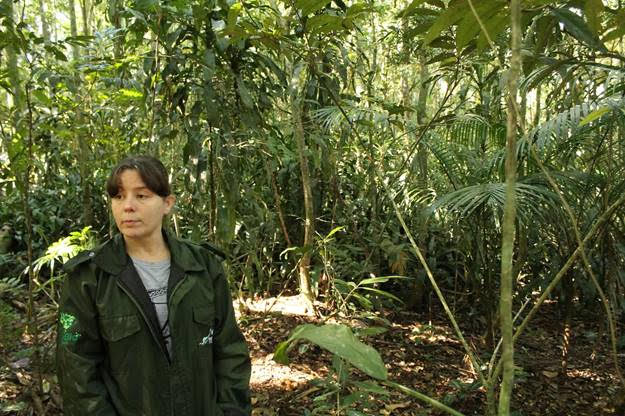
Katyucha Silva, a government researcher, has discovered dozens of dogs in Tijuca National Park. (Terrence McCoy/The Washington Post)

Ana Maria Paschoal, a researcher at the Federal University of Minas Gerais, remembers when she first started thinking about the dog differently. She was out in the Atlantic Forest in Southeast Brazil around a decade ago when she noticed there were an awful lot of them.

She wondered: How many dogs are using the protected areas? Are these feral or domestic dogs? Is their presence changing the occurrence of wild species?

So she set up cameras across 2,400 acres of forest to find out. What she discovered, published in 2012 in the scientific journal Mammalia, stunned her.

The dog wasn’t just the most-recorded carnivore; it was the most-recorded animal of the 17 mammals the cameras captured.

“The presence of the domestic dog is a threat,” Paschoal and her co-authors concluded.

The research, subsequently confirmed in a larger survey, laid the groundwork for a growing field of study here. One researcher linked Brazil’s dogs to the spread of diseases. Another accused the dogs in the National Park of Brasilia, where they hunted in massive packs, of scaring off natural predators. It was found that the closer humans lived to a nature preserve, the more likely dogs had penetrated it.

The International Union for Conservation of Nature has counted 191 species whose numbers dogs are culling. More than half are endangered or vulnerable. (Courtesy of Katyucha Silva)

But perhaps most striking? The dogs were neither feral nor domestic — but somewhere in between.

“All the dogs we detected had an ‘owner’ or a person that the animal has a bond with,” Paschoal said. “The species population increases following human populations, exacerbating their potential impact on wildlife.”

It was something Fernando Fernandez, an ecology professor at the Federal University of Rio de Janeiro, learned the hard way. For the last decade, he has been reintroducing native animals to the Tijuca forest, one of the world’s largest urban woodlands, which spills across Rio de Janeiro’s mountains.

First came the agouti, a squirrel-like rodent. Then followed a problem: “Dogs.”

They started killing the agouti, and not for food. It was just for fun.

Fernandez and Silva wanted to learn more. They set up cameras and discovered dozens of dogs in the forest. They estimated more than 100 dogs were in the park — not residents, it turned out, so much as frequent visitors, tracking in from nearby favelas.

“These are people who are very poor,” said Silva, who has six dogs at home. “They don’t have money to build walls. . . . When the owners leave for work, the dog leaves, too, and only returns when the owner comes back to the house from work.”

The owners often have no idea what their dogs are up to. Even if they were told, Rob Young said, they almost certainly wouldn’t believe it.

Young, chairman of wildlife conservation at the University of Salford in Britain, witnessed the psychology at work after seeing dogs kill flightless birds in the state of Minas Gerais.

“We’d do interviews with the farmers: ‘Have you seen these dogs?’

“And they’d say, ‘Yeah, but my dogs aren’t the problem; it’s my neighbor’s dogs.’

“Every farmer would say the same thing.”

These factors — inability to see aggression in dogs, in­trac­table inequality, the rapid expansion of humanity — left Silva feeling apprehensive as she watched the tortoises being reintroduced into the Tijuca forest.

In the long term, she didn’t know how the problem of dogs laying waste to the world’s environments would realistically improve.

And in the short term: Could dogs kill these tortoises, just as they’d dispatched a few agouti?

“Yes,” she said. “They could.”

Silva worries that tortoises reintroduced in the park could fall prey to dogs. (Terrence McCoy/The Washington Post)

ooOOoo

It’s a tough read and there doesn’t appear to be a solution, not in the short-term at least.

As was reported in the article it is as much a global problem with something of the order of a billion dogs roaming the planet.

Does anyone have any ideas for a solution?

How dogs are so good for children.

A delightful guest post from Holli.

A short while ago I was emailed by Holli Burch who asked me if I was ready for another guest post. Was I! I love to receive guest posts. From regular contributors, such as Holli, and people who are new to Learning from Dogs.

There was a quick exchange of emails and then yesterday in came Holli’s latest. It’s brilliant!

ooOOoo

How Dogs are Good For Kids

By Holli Burch. 22nd August, 2019
Many kids dream of having a dog.

While we know that dogs teach kids loyalty and unconditional love, there are also many other reasons that dogs are good for kids! I feel so grateful to be able to have both human and canine kids at home. I have always had dogs around me as a child also. My dad had hunting dogs and my mom liked the smaller poodle terrier dog breeds.

According to an article in the Washington Post, a recent study found that children who had strong bonds with their dog also had more secure stronger bonds with their parents and with their (human) best friends. I find this so extremely important, especially in adolescent age when kids struggle the most!

They had another study regarding how dogs effect children’s emotions during stressful times. They found that when the children had their dog with them, they were much more calm. Suggesting that the contact they have with their dog enhances positive affect.
More reasons dogs are good for our kids…

  • Dogs can help kids with behavioral problems – A dog can calm a hyperactive child and have been shown to be especially beneficial to those with special needs. Having a therapy dog can help ease parent worries a little by knowing the dog will protect them and can be trained to react to certain behaviors, including wandering.
  • Dogs can help ease anxiety- Petting your dog or cuddling with them releases the “feel good” hormones in their body called oxytocin. This soothes the anxiety mind and helps to calm them down
  • Dogs teach kids responsibility- Dogs need to be fed, walked and given love daily. When a child gets a dog they learn to take care of something other than themselves. This also creates empathy and self confidence.
  • Dogs keep kids in better health- Dogs can help overweight children and help get kids active. Parents need to make sure both are getting daily exercise. A study from Psychology today found that children who walked their dogs were 50% less likely to become obese. Not only that but according to LiveScience, kids that grow up around dog dust have less chance of developing allergies and asthma! It helps them develop a strong immune system.
  • Protection- A dog will always protect those it feels are family. This can mean protecting your child from bullies or helping them to feel safe while home alone. Kids often feel more safe during scary events if they have their dog by their side.
  • Dogs are best friends- They are always willing to play with your child and lift their spirit. Dogs can help with loneliness and depression because they won’t go away, they give unconditional love no matter what, so kids feel wanted and loved. They don’t fight with them, hit or yell. Kids can share anything with them with no judgement. Dogs often can help kids recover from trauma because they can confide in them.

We rescued Tuffy (above) from a shelter, as a puppy, after my daughter lost her horse in a traumatic accident. It’s been a couple years now and Tuffy has also helped her through more. We are blessed to have her and she follows my daughter everywhere. I know she will always keep her safe. Their bond is so strong and if she is ever feeling down, Tuffy knows and is right there to lift her spirit.

Each of my children have one of our dogs that they call theirs, except my 5 year old. Although, he did just ask me the other day if he can get his own dog. He is good at helping me walk them everyday and loves to cuddle with them. When we recently lost Jesse in April, it was also a hard lesson for the kids on loss. We miss her everyday. That’s her below.
One last thing I want to mention is how important it is to teach your child to respect their dog. First few things to teach is to respect their boundaries, how dogs communicate and how to interact when the dog is new to the family.
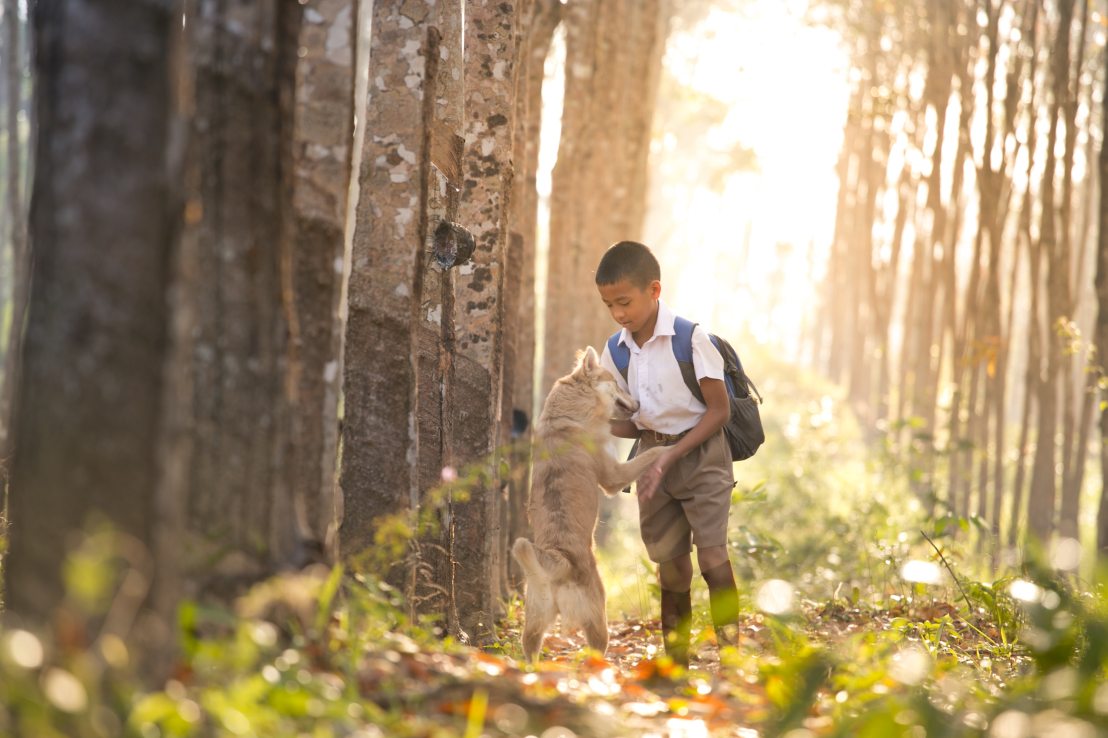
I would love to hear your comments and stories about how your dogs have helped your kids!
Dog Bless!~ The Dog Connection

oooo

A little bit about Holli.

As a mother of 4 canines and 4 humans, I am here to help the connection between dogs and humans; mind, body & soul.  My purpose is providing inspiration and information to dog lovers on health, training and bonding.

Holli – The Dog Connection
Blog link: https://mysecretdog.blog

Dog Bless!❤🐾

ooOOoo

Time and time again we see a bonding between a human and a dog. It’s precious and the need to involve children from a young age is crucial. Young people growing up today will be facing a whole raft of issues, many of them extremely serious. All the more reason to have a young person bond with a dog, because that’s so important for that young person.

So go on, how old is your dog?

An explanation of how old is that pet of yours.

One of the most frequent questions dog and cat owners get asked is how old is he or she. The pet that is!

And one of the most frequent concerns we have for our pets is how long will they live, as in what is their natural life span. Certainly, most of us realise that the larger dogs live slightly shorter lives but is that borne out in practice.

Well a recent professional article on The Conversation blogsite answered those questions.

ooOOoo

How old is my pet in dog years or cat years? A veterinarian explains

By

Clinical Instructor of Veterinary Medicine, Mississippi State University

July 23rd, 2019

“Just how old do you think my dog is in dog years?” is a question I hear on a regular basis. People love to anthropomorphize pets, attributing human characteristics to them. And most of us want to extend our animal friends’ healthy lives for as long as possible.

It may seem like sort of a silly thing to ponder, born out of owners’ love for their pets and the human-animal bond between them. But determining a pet’s “real” age is actually important because it helps veterinarians like me recommend life-stage specific healthcare for our animal patients.

There’s an old myth that one regular year is like seven years for dogs and cats. There’s a bit of logic behind it. People observed that with optimal healthcare, an average-sized, medium dog would on average live one-seventh as long as its human owner – and so the seven “dog years” for every “human year” equation was born.

Not every dog is “average-sized” though so this seven-year rule was an oversimplification from the start. Dogs and cats age differently not just from people but also from each other, based partly on breed characteristics and size. Bigger animals tend to have shorter life spans than smaller ones do. While cats vary little in size, the size and life expectancy of dogs can vary greatly – think a Chihuahua versus a Great Dane.

Human life expectancy has changed over the years. And vets are now able to provide far superior medical care to pets than we could even a decade ago. So now we use a better methodology to define just how old rule of thumb that counted every calendar year as seven “animal years.”

Based on the American Animal Hospital Association Canine Life Stages Guidelines, today’s vets divide dogs into six categories: puppy, junior, adult, mature, senior and geriatric. Life stages are a more practical way to think about age than assigning a single number; even human health recommendations are based on developmental stage rather than exactly how old you are in years.

Canine life stages

Veterinarians divide a dog’s expected life span into six life stages based on developmental milestones. These age ranges are for a medium-sized dog; smaller dogs tend to live longer, while larger dogs tend to have shorter life expectancies.

STAGE
AGE (YEARS)
CHARACTERISTICS
Puppy 0 – 0.5 Birth to sexual maturity
Junior 0.5 – 0.75 Reproductively mature, still growing
Adult 0.75 – 6.5 Finished growing, sexually and structurally mature
Mature 6.5 – 9.75 From middle to last 25% of expected lifespan
Senior 9.75 -13 Last 25% of life expectancy
Geriatric over 13 Beyond life span expectation

A no-kill approach!

Funny how things come around!

I just happened to click on the ‘signature’ of a follower that took me to a blog where I was truly enthralled. It was called Who Will Let the Dogs Out? and I was fascinated by what was being written.

Now I already follow this blog but had been very reluctant to go across to their place and read the posts. Shame on me! I have no idea why!

How about this post, that I am taking the liberty of republishing.

ooOOoo

No Kill is Not Rocket Science.

BY CARA SUE ACHTERBERG

July 25th, 2019

Ian and I are still processing what we saw and what we learned in Tennessee, each in our own way.

He is taking a break and feels he can’t look at the pictures for a bit. His pictures capture the emotion of the dogs caught in our human failure, and that is hard to look at. I know eventually he will be ready to edit them and to hopefully share more here on the blog. He took thousands of pictures. My big son has a very big heart, and it truly broke in Tennessee.

For me, seeing the conditions in western Tennessee made me furious. This should not be happening. We should not be leaving the responsibility for lost and surrendered animals to a handful of citizens who are quite literally standing in the gap left by a government that neglects its duties and an unaware public.

I cannot look away. So, I am doing what I do– writing and talking and making a nuisance of myself. I’m working on articles, blog posts (like this one), and even a book. I am in the midst of signing a publishing contract for 100 Dogs and Counting, a follow up to Another Good Dog: One Family and Fifty Foster Dogs that will recount more of our fostering adventures, and then take the reader south to discover where these dogs come from and what they can do about it.

I am also planning another trip in September– this time back to Tennessee, and then on to Alabama. Ian will be in school, but I will bring along another talented photographer and excellent co-pilot, Nancy Slattery.

One of the people I am excited to see on this next trip is a rescue hero of mine — Aubrie Kavanaugh. I’m excited to introduce you to her today in the following interview. Aubrie is not only an expert in the fight for a No-Kill nation, but a talented writer, a wickedly smart and funny person, and a dog-hearted woman relentlessly and methodically committed to changing the situation.

Enjoy!

The biggest first – the question everyone asks me – Why are there so many unwanted dogs in the south?

I honestly try to avoid the word “unwanted” because it implies that no one wants the animals when that is not necessarily true. Having said that, we have so many in need of homes for a host of reasons, some of which I’ll explain.

In many locations, there is a complete disconnect between animal control agencies/animal shelters which have animals needing new homes and the general public who could provide those homes. The shelters presume no one wants the animals and the public presumes the animals all find homes. The chasm between the agencies and the public is wide and leads to animals who otherwise may be saved being destroyed.

We have issues with most municipalities who manage animal shelters continuing to use the outdated “catch and kill” method of sheltering because they have not learned about or embraced No Kill programs and philosophies which could both reduce shelter intake and increase shelter output. Rather than educate themselves on how to keep animals alive which still ensure public safety, they hold firm to the status quo with the mindset of, “its’ not broken, so don’t fix it.” But the shelter system is broken and it does need to be fixed.

Many people are quick to ascribe what has been called “The Bubba Factor” to the south which essentially means that people here are too woefully stupid or callous to care about what happens to animals in need. We do have cultural differences regarding the value of animals in our lives (“it’s just a dog”) or where animals live (inside v. outside) and there are some people who could care less about animal welfare. Most people, however, do care at most about the welfare of animals and at least about how their tax dollars are spent. People can be informed not only about how their tax dollars can be best used, but also about how they can make better personal choices which affect how shelters operate (like the value of spay/neuter, how to keep pets contained, how to rehome pets in the event of their death or some life crisis, etc.). Many see themselves as stewards of the species we have domesticated and for them this is an issue of ethics, but they need to be informed of the need to address the need.

In many parts of the south, there is also very limited access to spay/neuter at all, let alone at a reasonable cost. This means that in some places, pet populations are not contained and just continue to grow over time. The more animals there are in any particular community, the more animals are apt to end up in animal control systems.

Define what ‘no-kill’ means to you.

No kill means we don’t kill healthy and treatable shelter animals using our tax dollars or donations.

Some try to portray the phrase as controversial or complicated when it really is not. When we use the intended meanings of words like “euthanasia” and “kill,” the phrase makes more sense.

If you have ever made The Terrible Decision to euthanize a beloved pet who is suffering, you know exactly what euthanasia means. It is an act of mercy to end or alleviate suffering. If a shelter ends the life of a healthy dog, that is not euthanasia no matter how many times we call it that. If someone outside an animal shelter setting were to end the lives of healthy animals, we would not say those animals were euthanized. We would say they were killed. We should not alter the meaning of words based on the location where the act takes place.

There will always be animals in shelters who are suffering and for whom euthanasia is the only responsible action as an act of mercy. There will also always be a very small number of dogs who are so broken as to be genuinely dangerous (as opposed to scared, traumatized or undersocialized) and who cannot be adopted out because they present a public safety risk and those dogs must, unfortunately, be euthanized. No Kill does not mean animals do not die. It means we keep the healthy and treatable animals alive because that’s what the public expects and because it is possible using a progressive business model.

I blogged about this topic recently for No Kill Movement and the blog explains a bit more about what No Kill is and what it is Not.

What made you get involved in no-kill advocacy?

We had our 16-year old German Sheppard mix euthanized on Earth Day of 2006. We knew for years that the day was coming, but it was heart-wrenching. I found I was not coping well in the wake of our loss. I began donating to the animal shelter in the city where I work in her honor and to help me cope with the loss by doing something positive.

I was on the shelter website a few months later when I came across a promotional video which began harmlessly but then transitioned to footage of an outwardly healthy dog being taken from his kennel to be killed. It shocked me. I had no real clue prior to that that the shelter was destroying healthy and treatable animals. When I later asked if the dog in the video had actually died, I was told five words that changed my life: “nobody wants Beagles these days.”

I got upset, then I got angry and then I began educating myself about why this was happening not just in my area, but all over the country. I wanted to do all I could to make it stop. I now consider myself an unapologetic No Kill advocate. For me, this is an issue about free speech and municipal accountability. I see my advocacy as a moral imperative. Shelters operate using tax dollars and it is up to us to hold those places accountable for how they spent our money and in our name (while sometimes blaming us for the process). As a country, we are better than this.

Is no-kill truly possible and if so, what will it take?

I absolutely believe that any community can become a No Kill Community and that as more places take this step, we move closer to a time when the killing of healthy and treatable animals will become part of our shameful past. Change can come in one of two ways. Municipalities can get ahead of this issue by adopting progressive programs. If they will not do so, the burden passes to citizens to educate themselves and then speak out to demand better of elected and appointed officials. If elected officials will not listen to the will of the people, they need to be replaced.

I support and promote the No Kill Equation which is a one-size-fits-all DIY solution for any community which was first published by Nathan Winograd in 2007. It is an all-in series of programs which work in concert with each other to reduce shelter intake and then move animals who are in the shelter through the system as quickly as possible. I group them into “keep them out” and “get them out” programs. Anyone can learn about the No Kill Equation by reading Nathan’s book, “Redemption: The Myth of Pet Overpopulation and the No Kill Revolution in America.” They can also read about the equation on numerous websites including those for the No Kill Advocacy Center, No Kill Movement, No Kill Learning, my Paws4Change website or our No Kill Huntsville website. I also go into a lot of detail about the Equation in my book and explain a bit about how each of the programs works.

What can someone who is not in the rural south do to help?

Every area can improve. If you live outside the south, find out how your local shelter is functioning using your tax dollars. Many shelters claim to have high release rates when, in fact, they are playing a numbers game or are using words in different ways than they are used by the public to condone or excuse killing. If you don’t like what you learn, speak out and ask for better. Only when more places across our country change will those changes ultimately become infectious everywhere, including in the south.

Even if your local area is doing a great job, you can connect with people you know in the south and encourage them to educate themselves and perhaps become politically active about their local shelter. It often falls to the public to speak out and demand better. Only those who live in the area can speak out for better use of their tax dollars in ways which are consistent with their values.

If you don’t know anyone in the south, you can help rescue and advocacy organizations in the south which are doing some of the heavy lifting to keep animals alive. If that is the help you choose to provide, please also encourage the rescue group or advocates with whom you engage to speak out to seek better. While I have the utmost respect for people “in the trenches,” who are keeping animals alive, they are doomed to provide that role indefinitely unless the system is forced to change through public demand. I have a section in my book called “For Rescuers,” which addresses this need to go beyond saving X dog and Y cat to becoming a catalyst for change so there are fewer animals in need of rescue or help. As simple as it sounds, nothing will change unless something changes to alter the process.

I love the title of your book because that’s what I’ve concluded, too – It’s not Rocket Science. Tell me a little about why you wrote the book and what you hope people take from it.

I formed an advocacy group called No Kill Huntsville in 2012 to speak with one voice to persuade the City of Huntsville, Alabama, to stop destroying healthy and treatable animals using tax dollars. The live release rate at the shelter at the time was about 34% and my individual efforts going back to 2008 to bring about change had failed. Fast forward a few years and things have changed remarkably. The live release rate at the shelter has been above 90% for more than four years and while there is still work to be done, the culture at our shelter has changed. It was an incredible struggle for a long time. It got ugly with some strong opposition from some unlikely sources. But we’re proud of what we did working together as a coalition.

One day last fall after a city council meeting which set some new guidelines for the shelter, I was thinking back to all the times people have contacted us asking for help or asking what we recommend. People contact us from the south, from other regions and even from other countries. I decided to write the book to help others learn from our path. We didn’t get everything we wanted and our work is not over, but the worst is behind us and I think people may learn something from our methods and from our mistakes. I think the content in the book about the opposition we faced is almost as important as the No Kill Equation we promoted and still promote. If advocates are not prepared to counter opposition, their arguments in support of animal shelter reform may fall short.

Anything else you’d like to add?

The phrase No Kill is on the public radar and is not going away. We do better to educate people on what it means and to help people learn how to promote change than to try to sugarcoat what is happening in our shelters using our money. We should be respectful in our advocacy, but there truly is no polite way to say, “please stop killing healthy and treatable animals using our money.” No Kill advocates are not the enemy of shelters any more than the public is the enemy. I always encourage people to focus not on the messenger, but the fact that the message is necessary in the first place.

There are some who use the phrase No Kill and do so in ways which are inconsistent with our social movement. Some of these people engage in criminal acts for which they should be prosecuted. We should absolutely call out those bad actors when we find them. Those people who co-opt the phrase No Kill for illegal or unethical purposes are no more representative of our social movement than unethical breeders of animals represent all breeders. If an organization calls itself No Kill and destroys a lot of animals, keeps them for years, or does not provide for their care, they are using the words without the actions to support them. My book covers this topic and I touch on it in the No Kill Movement blog.

I believe a time will come when all shelters in America will be No Kill shelters. How long that takes is up to all of us. We must educate ourselves on what his happening in our own communities so we can decide if our money is being spent in ways of which we approve. When it is not, it is up to us to ask for better and, when necessary, be advocates for change. The lives of animals depend on it.

Aubrie Kavanaugh is an Army veteran who has worked for decades as a litigation paralegal doing defense work; her clients are mostly municipalities and law enforcement officials.

Aubrie became an animal welfare advocate in 2006 after learning about the deaths of animals at her local animal shelter. She manages the Paws4Change educational website, blogs on animal welfare issues, creates video productions and public service announcements for animal shelters and nonprofit organizations across the country, and is involved in advancing animal welfare legislation on the local and state level. She also leads an advocacy group called No Kill Huntsville. She lives in northern Alabama with her husband, their dog, and the enduring inspiration of their dogs to whom they have said farewell for now.

Her book, “Not Rocket Science: A Story of No Kill Animal Shelter Advocacy in Huntsville, Alabama” is available on Amazon. It is priced to print.

ooOOoo

Well done, Aubrey!

And if you go to that Amazon Books page you will read this:

America is an animal friendly society. Approximately sixty-eight percent of U.S. households own a pet – about 85 million families. Most of us consider our companion animals family members. We recognize that they enrich our lives in countless ways, improve our physical and mental health, and make us better people. We value the fact that they don’t care what we look like, where we live, what we do for a living or how much money we make; their love for us is unconditional. And we agonize over our decisions when the time comes to say farewell to them due to advanced age or disease.

But there is a dark side to our relationship with companion animals which is our collective shame. We destroy millions of healthy and treatable animals in our tax-funded animal shelters every year. Many people simply do not know about what happens at their local animal shelter using their money and in their name. Some who know about this tragedy believe there is no other way to function. There is.

“Not Rocket Science” is a story of no kill animal shelter advocacy in Huntsville, Alabama, which explains how a group of animal welfare advocates joined forces to speak with one voice to save the lives of healthy and treatable animals in the municipal animal shelter. This advocacy helped change the shelter from one which destroyed more than half of the animals entrusted to its care to a shelter which saves the lives of all healthy and treatable animals instead.

Any community can be a no kill community. Sometimes it just takes the courage to try something new. And sometimes it just takes a group of people willing to band together and speak out with one voice to say “enough. We are better than this.”

The book is priced at $5.52. I have ordered a copy!

Picture Parade Three Hundred

I don’t know; it feels like a milestone!

I am republishing what made up Picture Parade Two Hundred and One.

ooOOoo

 Margaret (MargfromTassie) comes up with wonderful pictures for you.

These will make today’s Post and the next three Picture Parades. And there was me worrying about where I would find more Picture Parades!!

(Note that on the original Powerpoint images some of them had neat sayings as overlays. In the conversion from pps to jpg formats those were not carried across. I have them as introductions to each picture.)

MAN’s BEST FRIEND!

oooo

“A life without a dog is a mistake” – Karl Zuckmayer

oooo

“Women and cats will do what pleases them, dogs and men should relax and get used to the idea” – Robert A. Heinlein

oooo

“The love for animals, enhances the cultural level of the people.”F. Salvochea

oooo

When you leave a dog behind because he “grew old”, your children will learn the lesson. Maybe they will do the same to you when you are an old man. Think about it….

oooo

“The dog has made man their God, if the dog was an atheist, it would be perfect” – Paul Valery

oooo

“Love is when your dog licks your face, even if you leave it alone the whole day” – Anita, 4 years old

oooo

“It doesn’t matter if an animal can reason. It matters only that it is capable of suffering and that is why I consider it my neighbor” – Albert Schweitzer

Another glorious set from ‘Marg’ next week

ooOOoo

These are so great!

Dogs teach us so much!

But the single most important lesson is integrity.

Again, another post from previous times. Albeit just a couple of years ago.

ooOOoo

Another tribute to dear Pharaoh.

The most profound thing that I learned from Pharaoh is that dogs are creatures of integrity. That goes back to a day in June, 2007. Some six months before I met Jeannie in Mexico in December, 2007. I was sitting in Jon’s home office just a few miles from where Pharaoh and I were then living in South Devon.

It was a key chapter in Part Four of my book where I examine all the qualities that we humans need to learn from our dogs.

So here is Chapter 13 from my book Learning from Dogs. (Written in ‘English’ English!)

ooOOoo

Chapter 13
Integrity

In the Introduction to this book I mentioned how the notion of “learning from dogs” went back to 2007 and me learning that dogs were creatures of integrity. Let me now elaborate on that.
It is a Friday morning in June in the year 2007. I am sitting with Jon at his place with Pharaoh sleeping soundly on the beige carpet behind my chair. I didn’t know it at the time but it was to become one of those rare moments when we gain an awareness of life that forever changes how we view the world, both the world within and the world without.

“Paul, I know there’s more for me to listen to and I sense that we have established a relationship in which you feel safe to reveal your feelings. However, today I want to talk about consciousness. Because I would like to give you an awareness of this aspect of what we might describe under the overall heading of mindfulness.”
I sat quietly fascinated by what was a new area for me.

“During the years that I have been a psychotherapist, I’ve seen an amazing range of personalities, probably explored every human emotion known. In a sense, explored the consciousness of a person. But what is clear to me now is that one can distil those different personalities and emotions into two broad camps: those who embrace truth and those who do not.”

Jon paused, sensing correctly that I was uncertain as to what to make of this. I made it clear that I wanted him to continue.

“Yes, fundamentally, there are people who deny the truth about themselves, who actively resist that pathway of better self-awareness, and then there are those people who want to know the truth of whom they are and seek it out when the opportunity arises. The former group could be described as false, lacking in integrity and unsupportive of life, while the latter group are diametrically opposite: truthful, behaving with integrity and supportive of life.”
It was then that Jon lit a fire inside me that is still burning bright to this day. For he paused, quietly looking at Pharaoh sleeping so soundly on the carpet, and went on to add, “And when I look at dogs, I have no question that they have a consciousness that is predominantly truthful: that they are creatures of integrity and supportive of life.”
That brought me immediately to the edge of my seat, literally, with the suddenness of my reaction causing Pharaoh to open his eyes and lift up his head. I knew in that instant that something very profound had just occurred. I slipped out of my chair, got down on my hands and knees and gave Pharaoh the most loving hug of his life. Dogs are creatures of integrity. Wow!

****

Later, when driving home, I couldn’t take my mind off the idea that dogs were creatures of integrity. What were those other values that Jon had mentioned? It came to me in a moment: truthful and supportive of life. Dogs have a consciousness that is truthful, that they are creatures of integrity and supportive of life: what a remarkable perception of our long-time companions.
I had no doubt that all nature’s animals could be judged in the same manner but what made it such an incredibly powerful concept, in terms of dogs, was the unique relationship between dogs and humans, a relationship that went back for thousands upon thousands of years. I realised that despite me knowing I would never have worked it out on my own, Jon’s revelation about dogs being creatures of integrity was so utterly and profoundly obvious.

As I made myself my usual light lunch of a couple of peanut butter sandwiches and some fruit and then sat enjoying a mug of hot tea, I still couldn’t take my mind off what Jon had revealed: dogs are examples of integrity and truth. I then thought that the word “examples” was not the right word and just let my mind play with alternatives. Then up popped: Dogs are beacons of integrity and truth. Yes, that’s it! Soon after, I recognised that what had just taken place was an incredible opening of my mind, an opening of my mind that didn’t just embrace this aspect of dogs but extended to me thinking deeply about integrity for the first time in my life.

Considering that this chapter is titled “Integrity”, so far all you have been presented with is a somewhat parochial account of how for the first time in my life the word “integrity” took on real meaning. That until that moment in 2007 the word had not had any extra significance for me over the thousands of other words in the English language. Time, therefore, to focus directly on integrity.

If goodness is to win, it has to be smarter than the enemy.

That was a comment written on my blog some years ago, left by someone who writes their own blog under the nom-de-plume of Patrice Ayme. It strikes me as beautifully relevant to these times, times where huge numbers of decent, law-abiding folk are concerned about the future. Simply because those sectors of society that have much control over all our lives do not subscribe to integrity, let alone giving it the highest political and commercial focus that would flow from seeing integrity as an “adherence to moral and ethical principles; soundness of moral character; honesty.” To quote my American edition of Roget’s Thesaurus.

Let me borrow an old pilot’s saying from the world of aviation: “If there’s any doubt, there’s no doubt!”

That embracing, cautious attitude is part of the reason why commercial air transport is one of the safest forms of transport in the world today. If you had the slightest doubt about the safety of a flight, you wouldn’t board the aircraft. If you had the slightest doubt about the future for civilisation on this planet, likewise you would do something! Remember, that dry word civilisation means family, children, grandchildren, friends, and loved ones. The last thing you would do is to carry on as before!

The great challenge for this civilisation, for each and every one of us, is translating that sense of wanting to change into practical, effective behaviours. I sense, however, that this might be looking down the wrong end of the telescope. That it is not a case of learning to behave in myriad different ways but looking at one’s life from a deeper, more fundamental perspective: living as a person of integrity. So perfectly expressed in the Zen Buddhist quote: “Be master of mind rather than mastered by mind.” Seeing integrity as the key foundation of everything we do. Even more fundamental than that. Seeing integrity as everything you and I are.

It makes no difference that society in general doesn’t seem to value integrity in such a core manner. For what is society other than the aggregate of each and every one of us? If we all embrace living a life of integrity then society will reflect that.

Integrity equates to being truthful, to being honest. It doesn’t mean being right all the time, of course not, but integrity does mean accepting responsibility for all our actions, for feeling remorse and apologising when we make mistakes. Integrity means learning, being reliable, and being a builder rather than a destroyer. It means being authentic. That authenticity is precisely and exactly what we see in our dogs.

The starting point for what we must learn from our dogs is integrity.

ooOOoo

The face of integrity!

ooOOoo

Dogs don’t lie!

They offer unconditional love!

Their world is relatively straightforward.

That is all that we need to know about them.