Way back before I came into Jean’s life, or perhaps I should expand on that by saying way before Pharaoh and I came into the life of Jean, her 12 dogs and 6 cats, Jean had come across a feral litter of pups.
This was in 1998 when Jean was living with her husband, Ben, in San Carlos, Sonora State, Mexico. Jean had already been rescuing feral dogs for a number of years. This litter of four puppies had been born underneath a trailer parked on a dirt road near Ben and Jean’s house. They were all cute, healthy little pups and Jean quickly found homes for three of them. However, the fourth had ended up being taken in by Jean and Ben and named Sammy.
The picture below shows Jean holding Sammy when she was around 3 months old.
Jean and Sammy
Thus, as it does for all of us, time passed to the point where last Friday, Sammy’s back legs had become so arthritic that she was unable to walk without a great deal of pain and, at the grand old age of 13 1/2, it was time for her to go to that big dog prairie in the sky.
Sammy, January 6th 2012 - now forever out of pain.
For Jean especially, this was a tough loss as Ben had loved Sammy so much. Sammy was the most sweet and gentle of dogs. I know that all of you who have had experience of putting a dog or cat to sleep will share the angst that Jean endured last Friday.
Thank you Sammy for being such a loving animal throughout your entire life.
This was emailed to me a couple of weeks ago. Have no background information as to where the photograph was taken and, indeed, what type of bird it is! But, nonetheless, just a beautiful reminder of the wonderfully, precious planet that we all, and I mean all, live on.
Something new for the New Year – stories about dogs!
Preface.
Before I met Jean in December 2007, she had been rescuing feral dogs in the Mexican beach town of San Carlos for many, many years. Over those years, Jean must have rescued and found homes for 60 dogs or more. In the month that I met Jean, she had 12 dogs and 6 cats at her home. Ten months later, September 2008, I flew out to be permanently with Jean with my German Shepherd, Pharaoh – that’s him on the home page of Learning from Dogs – taking the total up to 13 dogs.
When we moved up to Payson, Arizona in February, 2010 we brought all 13 dogs and 6 cats with us, much to the amazement of the US Immigration officers at the US-Mexican border town of Nogales! Indeed, our particular officer left his booth excitedly to explain to his colleagues that our dogs and cats represented a border crossing record!
So many of the dogs that have passed through Jean’s loving arms have stories to tell. Thus over the coming months, Jean and I will offer you, dear reader, those stories.
Here’s the first, written by ‘Dog Lady’ Jean about gorgeous, sweet Paloma who, despite her age (Paloma that is!), is alive and well here in Payson.
* * * * * * * * * * *
Paloma, December 29th 2011
Paloma
The old white dog padded down the dusty pavement. Sway-backed and dull-eyed, her teats, heavy with milk, grazed the ground. An anonymous creature in a cruel world. The pavement sizzled in the afternoon Mexican summer sun blistering her tired feet, but she could not hurry. She had to conserve her energy. Her pups were soon coming and finding a safe place to give birth to them was her priority. The beach that had been her home was not a good place. .. needed cool shelter. She would find it.
She was alone among a sea of human legs in this scruffy Mexican beach town. No-one noticed her plight. No-one cared. She was used to it. She had long been adept at finding dried fish, discarded tortillas, sometimes a tasty morsel thrown by a tourist sunning in front of the big hotel.
This would be her eighth litter and she was very tired. As a puppy she belonged to a family with small children. There were plenty of leftovers. But when she became pregnant they drove her to the beach, threw her out and left her to fend for herself.
Her babies were always beautiful. She had Labrador in her genes donating a coat that was pure white. Humans always took her pups; she could only ever hope their fate was always a better one than hers.
Anonymity. She had perfected the art; never make eye contact, move low to the ground, escape the stray kick with a quick sideways leap.
She remembered at the very end of the long beach there was a house with a pool. Plenty of water. Onward she padded.
The lawn surrounding the pool was moist with sprinklers and the hibiscus hedge close to the house made a safe nest. Soon she had dug into the damp earth a big enough hole to curl into; it was cool under the canopy of red flowers.
A human voiced shouted, “Carlos, get that dog out of the hedge.” Then the long hose filling that tempting pool was turned on her and a burst of water hit her in the face. She uttered a low growl. Carlos, the gardener, backed away, “Señor, the dog, she is having babies.”
The owner of the house turned abruptly and went inside. He picked up his phone, made a call to the local English lady who over the years had acquired the nickname ‘Dog Lady’. He practically shouted down the phone, “I have a dog in my hedge having pups. You had better do something about it or I shall dispose of them, and I won’t be pretty about it!”
‘Dog Lady’ was used to this. Had been many years since she took on the practically impossible task of rescuing Mexican feral dogs and she was well-known for never turning a dog away. In less than 15 minutes, she had walked to the fine house overlooking the beach and quietly looked under the hedge. As anticipated, the dog was incapable of being moved, her focus entirely now on the safe birth of her pups. With appropriate feminine wiles, the white dog’s human saviour persuaded the disgruntled owner to allow the mother dog a stay of a few days. ‘Dog Lady’ promised that she would take them away as soon as possible.
“She’s a mean and wild dog, you’ll never tame her,” came the angry response from the house owner.
‘Dog Lady’ just smiled and said nothing.
But every day she took food to the white dog then sat quietly close by on the grass reading her book. The white dog had just the one pup, which ‘Dog Lady’ called Solovino, the Spanish for ‘comes alone’. The mother dog she called Paloma, Spanish for ‘Dove’. Many white dogs in Mexico were called Paloma and maybe years earlier that was what the children named her as the name did seem to resonate with this gentle dog.
Patiently, ‘Dog Lady’ moved closer and closer until Paloma would take meat from her hand, rapidly followed by allowing her ears to be caressed. Ten days later, while Paloma was eating, ‘Dog Lady’ picked up the little Solovino and put him into her car. Paloma’s response was immediate; she frantically ran to her child, her mothering instinct so great that she leapt without hesitation into this strange vehicle. Paloma and Solovino were safe.
The house owner graciously admitted that he had been taught a lesson in empathy and how sorry he was for being so rude and cruel.
Back at ‘Dog Lady’s’ home, a quiet sanctuary for so many dogs over the past years, Paloma and Solovino were quickly settled into a cool room. Paloma soon utterly trusted her ‘Dog Lady’ human companion and became the tame and loving dog she always wanted to be. Her shining eyes embraced her new world and she even regained her figure! Solovino grew quickly and found a wonderful family home in Tucson, Arizona.
Now some 6 years after ‘Dog Lady’ rescued Paloma from under that hedge, she is a beloved part of the Handover family. Indeed, she travelled in peace in February 2009 with her twelve dog friends from her sanctuary in San Carlos, Mexico to this dog paradise in the Arizonan forest just outside Payson.
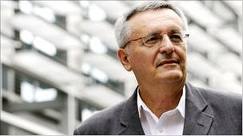
Over a week ago there was a fascinating and very thought-provoking BBC radio broadcast by Mr. John Gray, the political philosopher and author of the book False Dawn: The Delusions of Global Capitalism, .
Mr. John Gray
The BBC website then carried a further article by John Gray. But before quoting from that article, I do recommend that you put aside just 14 minutes to listen to that broadcast. If you click here you will be taken to the BBC podcast page for the Point of View series and then scroll down to the item that is headlined: The End, yet again? 26 Dec 2011.
There will see that a simple ‘right click & save target as’ allows you to download the audio file so you can listen at your pleasure.
Indeed, having listened to Point of View over the many years when living in England, I can thoroughly recommend them. Described on the website, “Weekly reflections on topical issues from a range of contributors including historian Lisa Jardine, novelist Sarah Dunant and writer Alain de Botton.”
Here are some extracts from the John Gray article that appeared on the BBC website.
A Point of View: The endless obsession with what might be
If we can stop thinking about what the future might bring and embrace the present for what it is, we would be a lot better off, writes John Gray.
It’s been some time now since history didn’t end. Twenty-odd years ago, when the Berlin Wall was coming down, there were many who believed that there would be no more serious conflicts.
The American writer Francis Fukuyama, who promoted the idea of the end of history in the autumn of 1989, declared that the chief threat in future would be boredom. A new era, different from any before, had arrived.
Of course it hadn’t. The end of the Soviet Union was followed by conflicts and upheavals of the sort that happen when empires fall apart – war in the Caucasus and economic collapse in Russia, for example.
In any realistic perspective the idea that a single event – however large – could mark the end of human conflict was absurd. But those who were seduced by the idea were not thinking in realistic terms.
They were swayed by a myth – a myth of progress in which humanity is converging on a universal set of institutions and values. The process might be slow and faltering and at times go into reverse, but eventually the whole of humankind would live under the same enlightened system of government.
When you’re inside a myth it looks like fact, and for those who were inside the myth of the end of history it seems to have given a kind of peace of mind. Actually history was on the move again. But since it was clearly moving into difficult territory, it was more comfortable to believe that the past no longer mattered.
Then later on in the article, John writes,
Life’s framework
The implication is that sudden shifts are relatively rare in history. But consider continental Europe over the past 70 years – until recently a normal human lifetime. Unless they were Swedish or Swiss, an ordinary European man or woman lived during that period under several quite different systems of government.
Nearly all of Europe, some of it democratic, succumbed for a time to Nazism or fascism. Half of Europe moved from Nazism to communism with only a brief interval of democracy. Most of that half, though not Russia, became functioning democracies after the end of the Cold War.
Not only have political forms changed during a normal lifetime, systems of law and banking have come and gone along with national currencies. The entire framework in which life was lived has changed not once, but several times. In any longer historical perspective discontinuities of these kinds are normal.
The article then concludes, thus,
We seem to be approaching one of those periods of discontinuity that have happened so often in the past. It may seem unthinkable that the European banking system could implode, or that a global currency like the euro could dissolve into nothing.
Yet something very much like that was the experience of citizens of the former Soviet Union when it suddenly melted down, and there is nothing to say something similar could not happen again.
For believers in progress it must be a dispiriting prospect. But if you can shake off this secular myth you will see there is no need to despair. The breakdown of a particular set of human arrangements is not after all the end of the world.
Surely we would be better off if we put an end to our obsession with endings. Humans are sturdy creatures built to withstand regular disruption. Conflict never ceases, but neither does human resourcefulness, adaptability or courage.
We tend to look forward to a future state of fulfilment in which all turmoil has ceased. Some such condition of equilibrium was envisioned by the American prophet of the end of history with whom I began.
As Fukuyama admitted, it’s not an altogether appealing vision. But living in fear of the end is as stultifying as living in hope of it. Either way our lives are spent in the shadow of a future that’s bound to be largely imaginary.
Without the faith that the future can be better than the past, many people say they could not go on. But when we look to the future to give meaning to our lives, we lose the meaning we can make for ourselves here and now.
The task that faces us is no different from the one that has always faced human beings – renewing our lives in the face of recurring evils. Happily, the end never comes. Looking to an end-time is a way of failing to cherish the present – the only time that is truly our own.
I have extracted more than perhaps I ought, and there was so much more to read than is presented here. So please go to the BBC website and read it in full; it’s a very powerful essay.
Finally, let me take you back to a piece that I wrote back in September about Transitions. I closed that piece thus,
There is significant evidence, real hard evidence, that the patterns of mankind’s behaviours of the last few decades cannot continue. Simply because mankind will go over the edge of self-extinction. Darwin’s evidence and all that! We have to accept that humans will see the bleedin’ obvious before it is too late. We have to keep the faith that our species homo sapiens is capable of huge and rapid change when that tipping point is reached, so eloquently written by Paul Gilding in his book, The Great Disruption, reviewed by me here. We have to embrace the fact that just because the world and his wife appears to be living in total denial, the seedlings of change, powerful change, are already sprouting, everywhere, all over the world.
So let’s welcome those changes. Let’s nurture those seedlings, encourage them to grow and engulf our society with a new richness, a new fertile landscape.
Let’s embrace the power of now, the beauty of making today much better and letting go of tomorrow.
For today, I am in charge of my life,
Today, I choose my thoughts,
Today, I choose my attitudes,
Today, I choose my actions and behaviours.
With these, I create my life and my destiny.
It’s very difficult to make predictions, especially when they involve the future!
For reasons that I am not clear about, there is a mood of pessimism about my person. Whether it is the scale of global issues that I see ahead that drags me down, whether the year of an American Presidential election will remind me of the loss of reason that afflicts so many modern democracies, whether the messages in Kunstler’s book The Long Emergency still resonate in my mind well, who knows?
But when one does look at the broader picture of modern society, there is much that troubles.
So forgive me if I provide a couple of examples of these troubles. I do so on the grounds of communication – the more that understand the risks ahead of us, the more likely we, as in the peoples of this planet, will say to our leaders, “Enough of this! For the sake of my children, my grandchildren and all of humanity we have to change our priorities, and soon!”
Climate change increases the risk of record-breaking extreme weather events that threaten communities across the country. In 2011, there were at least 2,941 monthly weather records broken by extreme events that struck communities in the US.
That was backed up by an article on the Onearth website that opened,
By many measures, 2011 was the most extreme weather year for the United States since reliable record-keeping began in the 19th century — and the costs have been enormous. According to the National Oceanic and Atmospheric Administration, 2011 set a record for the most billion-dollar disasters in a single year. There were 12, breaking the old record of nine set in 2009. The aggregate damage from these 12 events totals at least $52 billion, NOAA found.
And that just for the USA. But will climate change be the Number One political issue in 2012? And if not in 2012, when will it be?
Let me move on to my second example, very different from the one above but, in a sense, just as scary. This is an interview that was in a recent article on the Food Freedom website ( brilliant website, by the way). Dr. Joseph Mercola, the leading natural health practitioner, interviews Dr. Don M. Huber, one of the senior scientists in the U.S about the area of science that relates to genetically modified organisms (GMO). Here’s an extract from the article on Food Freedom,
Toxic botulism in animals linked to RoundUp
Dr Mercola recently interviewed Dr Don Huber, whose letter to the USDA warning that Monsanto’s RoundUp, a broad-spectrum “herbicide” that has been linked with spontaneous abortion in animals, continues to be ignored by food and environmental safety authorities. In this important hour-long discussion, Huber, a plant pathologist for over 50 years, explains how RoundUp is destroying our healthy soils by killing needed microorganisms.
Not only did his team discover a new soil pathogen, but he reports that animals are coming down with over 40 new diseases, like toxic botulism. Huber explains that before the widespread use of herbicides, pesticides and genetically modified food and feed, natural probiota would have kept Clostridium botulinum in check
The video, below, of the interview is included in the article. Please don’t be put off by the length, the material covered is riveting and critical to our general knowledge about the threats to our society.
So that’s enough from me for one day! On Monday, I shall include another video relating to the RoundUp issue that reveals, both directly and metaphorically, how the only solution to pessimism is to embrace the need to make change happen. Be inspired by this poem by Sam Keen, included in the latest Sabbath Moment from Terry Hershey,
I Want to Surrender
God, I want to surrender
to the rhythm of music and sea,
to the seasons of ebb and flow,
to the tidal surge of love.
I am tired of being hard,
tight, controlled,
tensed against tenderness,
afraid of softness.
I am tired of directing my world,
making, doing, shaping.
Tension is ecstasy in chains.
The muscles are tightened to prevent trembling.
Nerves strain to prevent trust,
hope, relaxation….
Surrender is a risk no sane man may take.
Sanity never surrendered
is a burden no man may carry.
God give me madness
that does not destroy
wisdom,
responsibility,
love.
I can’t recall how I came across this story but I’m so glad I did. Just watch this video and be very moved.
September 2010 Ellen welcomed Zak & Michelle Anderegg to the show to talk about Zak’s amazing rescue of an abandoned puppy. He saved the young pup, Riley, from 350 feet down a canyon — and then brought him here to meet Ellen!
The event being over a year ago doesn’t change anything – it was, is, and forever will be a wonderful example of what dogs bring out in us.
NBC — A puppy rescued from the bowels of a deep Utah canyon is now recovering in Salt Lake City.
The man who rescued him documented much of the incredible story with his own video camera. They don’t know his real name, so they just call him Puppy.
He’s now a temporary shop-dog at The Wrench-It Center, owned by Zak & Michelle Anderegg.
“He was completely starved,” Zak Anderegg said. “He was, my best guess, 24 to 48 hours from being dead.
“That was last week in a slot canyon near the Utah-Arizona border.It’s so deep and narrow and twisted, some sections are dark in the middle of the day.
Zak was rappelling when he suddenly saw a dog, starving and dehydrated. “I cannot believe I found this guy down in this frickin’ pothole in this canyon,” he said.
He climbed out to get water. On the way back down he wondered how the puppy got there. “The rim of the canyon is 350 feet above us, so falling from the rim would have killed him,” Zak said. “Every single time I work it through my head, I come up with the same answer: someone put him there — left, abandoned“.
He climbed out again and drove to Page, Arizona to recruit a rescue team. “They told me flat-out, ‘We’re certainly not going to send out the fire department or the sheriff’s department to help you.‘ So I said, ‘All right, I’ll manage on my own.'”
The next morning he was back with a cat carrier and a plan, using ropes in a one-man rescue operation.
“I took risks,” Zak said, “but none above what I do anyway.”
He rigged up a system to attach the cat carrier to his ropes and stabilize it. Then he climbed back out.
The Page Animal Hospital saved Puppy’s life. Most of the costs were covered by the hospital’s Angel Fund. “The rate of improvement is just incredible,” Zak said. “I’d say within two weeks he’ll be at his weight.”
Michelle and Zak still haven’t decided whether to keep him, since they’re already a pet-heavy family. They’re welcoming inquiries from qualified people who can give him a good home, and they’re encouraging contributions to the Angel Fund for future emergencies. (Website is here.)
Well, Michelle and Zak did decide to keep Puppy, indeed Puppy has his own Facebook page here – http://www.facebook.com/canyonpuppy from which this photograph was taken.
A very happy and lucky Puppy!
Finally, I took the liberty of calling the Wrench-It Center and to my great pleasure the call was answered by Michelle. So if you are ever within reach of the Wrench-It Center 1245 South 700 West, Salt Lake City, Utah 84104, Tel : 801-977-7500, give them your business.
A reminder that other people in other places may not be so fortunate as you.
In that sub-heading is an assumption that everyone who calls by Learning from Dogs enjoys a life where they are, relatively speaking, free to make their own life decisions. My apologies if that is a false assumption.
Amnesty International have a December campaign Write for Rights. It is so worth supporting. Here are some details from that website,
YOUR WORDS CAN CHANGE LIVES.
Your words can be a SPOTLIGHT that exposes the dark corners of the torture chamber. They can bring POWER to a human rights defender whose life is in jeopardy. They can IGNITE hope in a forgotten prisoner.
Your words can SAVE LIVES.
Join hundreds of thousands of people around the world in marking International Human Rights Day this December by taking part in Amnesty International’s Write for Rights Global Write-a-thon – the world’s largest human rights event. Through letters, cards and more, we take action to demand that the human rights of individuals are respected, protected and fulfilled. We show solidarity with those suffering human rights abuses, and work to bring about positive change in people’s lives.
Will you write a letter to save a life?
Sign up now to Write for Rights!
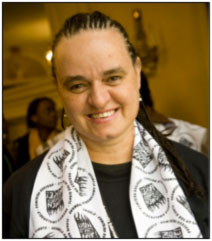
Jenni Williams
“I am alive today, after 34 arrests, because members of Amnesty International spoke out for me.”
– Jenni Williams, human rights defender in Zimbabwe
It really doesn’t make any difference which Amnesty case you support – just pick one and do it before the end of the month.
Amnesty also offer a full suite of resources, obtainable from here, to assist you with producing your letter.
Jean and I have decided to write in support of Jabbar Savalan, as described here and below,
AZERBAIJAN – Jabbar Savalan / Youth activist detained after using facebook
Jabbar Savalan
Hours after he posted a note on Facebook calling for protests against the government, Jabbar Savalan told his family that he was being followed. The next evening, February 5, 2011, police arrested him without explanation and took him to the Sumgayit police station, where they “discovered” marijuana in his outer coat pocket. Police questioned him without a lawyer for two days, reportedly hitting and intimidating him to make him sign a confession.
Authorities in Azerbaijan have a history of using trumped-up drug charges to jail perceived critics. Jabbar maintains that he does not use drugs and that the marijuana was planted on him. In May 2011, he was was convicted of possessing illegal drugs and sentenced to two-and-a-half years in prison. Amnesty International believes that authorities fabricated the drug charges against Jabbar to silence him. Amnesty considers him to be a prisoner of conscience.
A history student in college, Jabbar was an active member of an opposition political party. In January 2011, he posted on Facebook a newspaper article that described Azerbaijan’s President Ilham Aliyev as corrupt.
On February 4, Jabbar was inspired by the protests in the Middle East and North Africa to use Facebook to call for a “Day of Rage” to protest the government in Azerbaijan. The next day, police arrested him. He was 19 years old at the time.
In a sense the discovery of a potential life-supporting planet isn’t news.
What do I mean by that sub-heading?
Many (and I mean ‘many’) years ago I was a student at Faraday House Electrical Engineering College in Southampton Row, London. The College was closely associated with London University and one year there was an invite to attend a lecture by the famous British astronomer, Sir Bernard Lovell.
Sir Bernard Lovell and the Jodrell Bank radio telescope
Despite that lecture being about 45 years ago, I still recall Sir Bernard explaining the statistics of the universe to demonstrate that the odds of another planet somewhere ‘out there’ that could support life were huge. (Just as an aside do read this interesting story of Jodrell Bank picking up signals from the Russian Lunar 15 just as Neil Armstrong and Buzz Aldrin prepared to leave the moon’s surface.)
So with the positive identification of this planet some 600 light-years away, Sir Bernard’s speculation has been proved spot-on.
But in another very real sense, the discovery of Kepler 22b is astounding. Step outside the science of the find and just cogitate a little about the implications; the deep philosophical issues that Kepler 22b raises. Here’s an extract from Northern Voices Online news,
The excitingly named Kepler 22b, a planet believed to have been discovered orbiting a star a mere 600 light years away, is being hailed as a “New Earth”. But sci-fi fans shouldn’t get too excited just yet: as always with these stories, the likelihood is that we have not met the neighbours. Or, if we have, they probably aren’t very exciting conversationalists.
Talking about the likelihood of intelligent life on Kepler 22b, Dr Lewis Dartnell, of the Centre for Planetary Sciences at UCL, said, “There are big hurdles that life has to get over, and we don’t know how big a hurdle the origin of life itself is. You simply can’t tell with a single datum – you can’t do stats when N=1.”
The N that Dr Dartnell mentioned was earth: the only known planet inhabiting intelligent life forms, or better still, life forms of any kind.
Dr Dartnell further adds, “The interesting thing will be when we go to Mars and Europa and see whether there are bacteria there. It would be enormously significant if life is found there. But the next step, once Kepler has looked at a lot of planets, will be to see what their atmospheres are made of, using infrared spectroscopy.
“If one or two of them have oxygen in the atmosphere, it may be a transient thing – like Venus, undergoing a runaway greenhouse effect – but if we find, say, 20 Earth-like planets, all with the signature of oxygen in their atmosphere, then that would be very unlikely. Life would be the more reasonable explanation,” concluded Dr Dartnell.
There are many news reports online but this short video caught my eye.
The latest NASA report is here from which is quoted,
NASA’s Kepler Mission Confirms Its First Planet in Habitable Zone of Sun-like Star
NASA’s Kepler mission has confirmed its first planet in the “habitable zone,” the region where liquid water could exist on a planet’s surface. Kepler also has discovered more than 1,000 new planet candidates, nearly doubling its previously known count. Ten of these candidates are near-Earth-size and orbit in the habitable zone of their host star. Candidates require follow-up observations to verify they are actual planets.
The newly confirmed planet, Kepler-22b, is the smallest yet found to orbit in the middle of the habitable zone of a star similar to our sun. The planet is about 2.4 times the radius of Earth. Scientists don’t yet know if Kepler-22b has a predominantly rocky, gaseous or liquid composition, but its discovery is a step closer to finding Earth-like planets.
Previous research hinted at the existence of near-Earth-size planets in habitable zones, but clear confirmation proved elusive. Two other small planets orbiting stars smaller and cooler than our sun recently were confirmed on the very edges of the habitable zone, with orbits more closely resembling those of Venus and Mars.
“This is a major milestone on the road to finding Earth’s twin,” said Douglas Hudgins, Kepler program scientist at NASA Headquarters in Washington. “Kepler’s results continue to demonstrate the importance of NASA’s science missions, which aim to answer some of the biggest questions about our place in the universe.”
So let me leave you with this tantalising thought. One day it will be confirmed that there is intelligent life on a planet out there in the universe. That is likely to be one of the astounding events ever in the history of man on this planet. Even trying some wild guesses about how that will change mankind’s self-perception is more than difficult – yet it will change the way we look at ourselves irrevocably!
I pray that I am still alive when that happens, as I’m sure many others must do.
Last Friday I published a Post under the title of The power of truth. Just 5 minutes long, the YouTube video was powerful, starkly so. I wrote at the end of that article, “The principal source for the footage was Yann Arthus-Bertrand’s incredible film HOME.”
Jean and I watched Yann Arthus-Bertrand’s film last Friday night and to say that we were moved would be pitiful compared to the emotional impact it really had. Take a look at the film trailer; it’s a little over 3 1/2 minutes long. (But please don’t use that as a substitute for watching the full film, see below!)
Home is a 2009 documentary by Yann Arthus-Bertrand. The film is entirely composed of aerial shots of various places around Earth. It shows the diversity of life on Earth and how humanity is threatening the ecological balance of the planet. The movie was released simultaneously on June 5th in cinemas all over the world, on DVD and on YouTube. Released on the same date in 50 countries is a world record for any film release in history. The film is 100% free, and no profits will be made from its release or future showings.
I wasn’t going to add anything other than a brief introduction to the main film. However, an article in The Economist The World in 2012 caught my eye and seemed especially relevant to promoting the message carried by the film. Sheryl Sandberg, chief operating officer of Facebook, wrote about the power of social media and how it would be even more evident in 2012. This is the paragraph that caught my eye,
Expressing our authentic identity will become even more pervasive in the coming year. Profiles will no longer be outlines, but detailed self-portraits of who we really are, including the books we read, the music we listen to, the distances we run, the places we travel, the causes we support, the videos of cats we laugh at, our likes and our links. And, yes, this shift to authenticity will take getting used to and will elicit cries about lost privacy. But people will increasingly recognise the benefits of such expression. Because the strength of social media is that it empowers individuals to amplify and broadcast their voices. The truer that voice, the louder it will sound and the farther it will reach.
That last sentence jumped out at me, “The truer that voice, the louder it will sound and the farther it will reach.” Mull on that as you watch the film and, please, please, please if you support the need to return to a harmonious relationship with the planet spread the word as far and wide as you can.
Please promise yourself to sit down quietly and watch it uninterrupted. And if you feel so minded to add comments to this Post please do – would be delighted to have your feedback.
We are living in exceptional times. Scientists tell us that we have 10 years to change the way we live, avert the depletion of natural resources and the catastrophic evolution of the Earth’s climate.
The stakes are high for us and our children. Everyone should take part in the effort, and HOME has been conceived to take a message of mobilization out to every human being.
For this purpose, HOME needs to be free. A patron, the PPR Group, made this possible. EuropaCorp, the distributor, also pledged not to make any profit because Home is a non-profit film.
HOME has been made for you : share it! And act for the planet.




 Learning from Dogs