A lifting of the importance of integrity is the key to our survival.
Let me start by reflecting on the difference between ‘truth’ and ‘integrity’.
Here’s one of the definitions of Truth: conformity with fact or reality; verity: the truth of a statement.
Here’s one of the definitions of Integrity: adherence to moral and ethical principles; soundness of moral character; honesty.
So while in yesterday’s article, I frequently referred to the word ‘truth‘, determining the ‘fact or reality‘ of a wide range of issues associated with anthropogenic climate change is not always straightforward. Many of us probably have a strong intuition of the ’cause and effect’ of man’s footprint on this planet but a strong intuition is not the same as truth.
Then let’s turn to the notion of integrity. This is a much bigger issue, to my mind, the appalling lack of integrity! Illustrated by one simple example. How many leading politicians from any number of countries have demonstrated soundness of moral character; honesty with regard to the changing climate, even offering something as simple as “I don’t know!”
There’s a saying that pilots use, “If there’s any doubt, there’s no doubt!” Come on, politicians and leaders, at the very least there is doubt!
OK, let me move on!
If integrity is partly defined as honesty, then while it’s easy to take a pot-shot at the world’s politicians maybe we need to look closer at home; ourselves. Are we as honest with our own self as we now need to be?
Here’s an example that supports that question.
A few days ago there was a report on the website The Daily Impact about the crash of US fisheries. Let me show you how that report opens,
Report: US Fisheries Crashing
We live in a country in which every household has two TV sets, most of them receiving hundreds of channels, and two cell phones, many of them “smart.” One of every two households has a computer connected to the Internet. This country is currently in the middle of a hotly contested presidential election. And yet among the things that have almost completely escaped public attention is this: last week the US government declared fisheries disasters on four coasts.
Reflect on that paragraph. Surely it’s a reflection about the lack of integrity, of honesty, about our society?
The report ends thus,
The disaster declaration covering all these dire situations makes them eligible for Congressional aid, along with drought-stricken farmers in the Midwest and Southwest, flooded-out homeowners in New Orleans and along the Gulf, the fire-ravaged states of the far West, and the derecho-pounded Northeast. Congress will no doubt be delighted by the opportunity to help.
We eat nearly five billion pounds of seafood every year — about 16 pounds for each of us — and 85 per cent of it is imported (according to NOAA). Yet in the wake of this grim assessment of a large proportion of the domestic industry, and the questions it raises about the future sources of seafood, there is no discussion of “fisheries independence” or “peak fish” in politics or the media. Only in such outposts as this website and Mother Jones will the dire warning from the Commerce Department be reported as what it is — a dire warning.
Then there was a recent article on the Australian Permaculture news website about the US food and dairy industry. Here’s how that opened,
Americans’ right to access fresh, healthy foods of their choice is under attack. Farmageddon tells the story of small, family farms that were providing safe, healthy foods to their communities and were forced to stop, sometimes through violent action, by agents of misguided government bureaucracies, and seeks to figure out why.
Filmmaker Kristin Canty’s quest to find healthy food for her four children turned into an educational journey to discover why access to these foods was being threatened. What she found were policies that favor agribusiness and factory farms over small family-operated farms selling fresh foods to their communities. Instead of focusing on the source of food safety problems — most often the industrial food chain — policymakers and regulators implement and enforce solutions that target and often drive out of business small farms that have proven themselves more than capable of producing safe, healthy food, but buckle under the crushing weight of government regulations and excessive enforcement actions.
I’m not going to insert that YouTube video into this post but you can link to both the full article and the film here. For anyone interested in the fate of the family farm in the USA, the film is a ‘must see’! Once again, the theme of integrity, of adherence to moral and ethical principles; honesty, comes to mind!
How I do want to close this rather personal reflection on present times (some may call it an indulgent reflection!) is by including a video from this seasons TED Talks. It was brought to my attention by Christine over at her excellent blog 350 or bust. The video is about resolving conflict,
William Ury, author of “Getting to Yes,” offers an elegant, simple (but not easy) way to create agreement in even the most difficult situations — from family conflict to, perhaps, the Middle East.
The reason why this seems like a very appropriate way to close this is because the way things are going at the moment, avoiding conflict could become rather important, rather soon!
This is not the first time that I have wandered through this subject. Indeed, Learning from Dogs would never have seen the light of day if, all those years ago, Jon Lavin hadn’t raised the fascinating idea that dogs are integrous animals. As the quote says in the sidelink Purpose of Learning from Dogs;
There is nothing to fear except the persistent refusal to find out the truth, the persistent refusal to analyse the causes of happenings. Dorothy Thompson.
So what is it that has rocked my boat again? A number of things, to be honest. So much so, please forgive me for running these musings over to tomorrow!
Regular readers may have noticed that both Tuesday’s post Modelling the future and yesterday’s A study of man’s behaviours explored determining truth; frequently a fickle beast to track down! Then last Monday, I read the latest post from Climate Denial Crock of the Week that was about Sea Ice Slowing to Minimum. It was yet another reminder that embracing the truth of what is happening to our planet is vital, I mean VITAL, for anyone who has a reasonable expectation to be alive in 20 years time.
Here’s how Peter opened that post (published with Peter’s kind permission):
Not there yet, but in an interview with Dr. Jennifer Francis of Rutgers last week, the message was clear – the ice has retreated so much that at this point, we will already be experiencing the impacts of a low or no-ice arctic minimum, including “very interesting” weather in the northern hemisphere this fall and winter. Wow. I can’t wait.
Peter then included an update in that post, a reference to a report published in the Australian newspaper The Sydney Morning Herald. I requested permission to republish the SMH article but that wasn’t granted, well to be factual it was offered at a fee of $420.75 – say no more. Here is how that report from on board the Greenpeace ice-breaker Arctic Sunrise opened,
We are a few hundred miles from the north pole. The air temperature is -3C, the sea freezing. All around us in these foggy Arctic waters at the top of the world are floes – large and small chunks of sea ice that melt and freeze again with the seasons.
Arne Sorensen, our Danish ice pilot, is 18 metres up in the crow’s nest of the Arctic Sunrise vessel. Visibility is just 200 metres and he inches the 1,000-tonne Greenpeace ice-breaker forward at two knots through narrow passages of clear water.
A few paragraphs later come this:
More than 600,000 sq km more ice has melted in 2012 than ever recorded by satellites. Now the minimum extent has nearly been reached and the sea is starting to refreeze.
‘‘This is the new minimum extent of the ice cap,’’ [Sorensen] says – the frontline of climate change. ‘‘It is sad. I am not doubting this is related to emitting fossil fuels to a large extent. It’s sad to observe that we are capable of changing the planet to such a degree.’’
British, Italian and American scientists on the Arctic Sunrise say they are shocked at the speed and extent of the ice loss.
Over at the Guardian newspaper, their reporter John Vidal, also aboard the Arctic Sunrise, reports:
One of the world’s leading ice experts has predicted the final collapse of Arctic sea ice in summer months within four years.
In what he calls a “global disaster” now unfolding in northern latitudes as the sea area that freezes and melts each year shrinks to its lowest extent ever recorded, Prof Peter Wadhams of Cambridge University calls for “urgent” consideration of new ideas to reduce global temperatures.
In an email to the Guardian he says: “Climate change is no longer something we can aim to do something about in a few decades’ time, and that we must not only urgently reduce CO2 emissions but must urgently examine other ways of slowing global warming, such as the various geoengineering ideas that have been put forward.”
Professor Peter Wadhams is head of the Cambridge University Polar Ocean Physics Group, from which one may learn,
Sea ice covers 7% of the surface of our planet. It is one of the most important and variable components of the planetary surface and is the key to understanding many basic questions about the energy balance of the Earth. The ice-covered seas represent the cold end of the enormous heat engine that enables the Earth to have temperatures suitable for human life over most of its surface.
Just go back and re-read, “.. the enormous heat engine that enables the Earth to have temperatures suitable for human life over most of its surface.”
So determining the truth of what is happening to our planet is not some elegant academic exercise, it is about determining the likelihood of human life surviving or not!
Doesn’t that put everything else we are doing into some form of perspective? Let me rant on tomorrow!
A reflection on why living in harmony with Planet Earth seems so challenging.
John Hurlburt is the ‘mover and shaker’ behind a series of talks and discussions under the overall title of Everything Fits Together, part of the adult education umbrella of St Paul’s Episcopal Church here in Payson, AZ. John generously asked if I would lead the discussion tonight (19th) along the theme of Nature and Faith. I plan to close the session with these words and the compelling video that was on Learning from Dogs last Friday A planet worth protecting.
oooOOOooo
Man – a study in behaviours.
The relationship between Planet Earth and man goes back a very long way. But what of today?
There is little doubt that many people, even with the minimum of awareness about the world in which we live, are deeply worried. On so many fronts there are forbidding and scary views. It feels as though all the certainty of past times has gone; as if all the trusted models of society are now broken. Whether we are talking politics, economics, employment or the environment, nothing seems to be working.
Why might this be?
It would be easy to condemn man’s drive for progress and an insatiable self-centredness as the obvious causes of our society failing in widespread ways. But in my view that’s too simple an explanation. It’s much more complex.
I propose that the challenges we all face today have their roots in the dawning of our evolution. Let’s remind ourselves how far back that goes.
The earliest documented members of the genus Homo are Homo habilis which evolved around 2.3 million years ago. Homo habilis was the first species for which we have positive evidence of the use of stone tools.
A theory known as Recent African Ancestry theory, postulates that modern humans evolved in Africa possibly from Homo heidelbergensis and migrated out of the continent some 50,000 to 100,000 years ago, replacing local populations of Homo erectus and Homo neanderthalensis.
Thus for tens of thousands of years, the behaviours of humans have served our species well, by definition. Ergo, mankind has evolved as the result of mankind’s behaviours. Behaviours that may have changed little over those countless years.
So one might speculate that these behaviours have been potentially damaging to the ultimate survival of our species, perhaps hugely damaging, for a very long time. But because man’s population footprint has been so small for 99% of eternity the consequences have not impinged on the planet until now. Let’s reflect on those population figures.
Until the development of agriculture, around the 11th millennium BC, the world population was stable at around one million persons, as man lived out a subsistence hunter-gatherer existence. By about 2000 years ago the global population of man had climbed to around 300 million. It took another 1,200 years for that global population to reach the first billion, as it did in 1804.
However, just 123 years later, in 1927, the two-billionth baby was born. The three-billionth baby was born in 1960, just 33 years later! Only a further 14 years slip by for the four-billionth baby to be born in 1974. Another blink of the geological eyelid and 13 years later, in 1987, along comes the five-billionth bundle of joy. Around October 1999, the sixth-billionth baby is born! It is likely that we are in a world where there are now seven billion people! Indeed, the world population clock estimates that on September 12th, a week ago, the world population was 7,039,725,283 persons.
About a billion every decade. The equivalent of a growth of 100 million each and every year, or around 270,000 every single day! Or if you prefer 11,250 an hour (Remember that’s the net growth, births minus deaths, of the population of humans on this planet!)
Combine man’s behaviours with this growth of population and we have the present situation. A totally unsustainable situation on a planet that is our only home.
The only viable solution is to amend our behaviours. To tap into the powers of integrity, self-awareness and mindfulness and change our game.
All of us, no exceptions, have to work with the fundamental, primary relationships we have with each other and with the planet upon which we all depend. We need the birth of a new level of consciousness; of our self, of each other and of the living, breathing planet. A new consciousness that will empower change. We need spiritual enlightenment. We need a spiritual bond with this beautiful planet.
Over eons of time, Planet Earth has favoured our evolution. Now, today, not tomorrow, it is time to favour our beautiful planet with our love and with our faith. It is the ultimate decision for our species.
oooOOOooo
If you need a reminder of how beautiful our planet is (and I’m sure the majority of LfD readers don’t require that reminder) then go back and watch David Attenborough’s video and voice-over to the song What a Wonderful World.
I will close by inserting into this post, the video that Martin Lack included in a recent comment to my post The wind doth blow!
Science may just be starting to make some sense of this cruelest of diseases.
It used be to the dreaded ‘C’ word; cancer. But now that ‘C’ word has a companion, the dreaded ‘A’ word. The incidence of Alzheimer’s disease seems to be on a terrible rise. Indeed, my wife, Jean, lost her late husband to Alzheimer’s disease. My half-sister back in England is now very ill with the disease. Just chatting to some people here in Payson a few days ago revealed many who had friends or relations suffering.
So a recent item first seen on the website of The Permaculture Research Institute of Australia really jumped off the ‘page’! It was an article by George Monbiot entitled The Mind Thieves. I dropped Mr. Monbiot a quick email requesting permission to republish the article and very promptly received a positive answer. Thank you, Sir.
So before moving to the article, first a little background on George M. From his website, one quickly reads,
George Monbiot
I had an unhappy time at university, and I now regret having gone to Oxford, even though the zoology course I took – taught, among others, by Richard Dawkins, Bill Hamilton and John Krebs – was excellent. The culture did not suit me, and when I tried to join in I fell flat on my face, sometimes in a drunken stupor. I enjoyed the holidays more: I worked on farms and as a waterkeeper on the River Kennet. I spent much of the last two years planning my escape. There was only one job I wanted, and it did not yet exist: to make investigative environmental programmes for the BBC.
I’m not going to copy the full ‘About George‘ description but do urge you to pop across to here and read it yourself; George has had, trust me, a fascinating life journey that I suspect is far from over. This is how that About description closes,
Here are some of the things I love: my family and friends, salt marshes, arguments, chalk streams, Russian literature, kayaking among dolphins, diversity of all kinds, rockpools, heritage apples, woods, fishing, swimming in the sea, gazpacho, sprinting up the pitch in ultimate frisbee, ponds and ditches, growing vegetables, insects, pruning, forgotten corners, fossils, goldfinches, etymology, Bill Hicks, ruins, Shakespeare, landscape history, palaeoecology and Father Ted.
Here are some of the things I try to fight: undemocratic power, corruption, deception of the public, environmental destruction, injustice, inequality and the misallocation of resources, waste, denial, the libertarianism which grants freedom to the powerful at the expense of the powerless, undisclosed interests, complacency.
Here is what I fear: other people’s cowardice.
I still see my life as a slightly unhinged adventure whose perpetuation is something of a mystery. I have no idea where it will take me, and no ambitions other than to keep doing what I do. So far it’s been gripping.
The article was first published in the British Guardian newspaper (there’s an online link to it here) as the article mentions below. But I am republishing, in full thanks to George, the copy that appeared on George’s website on the 10th September last, including the references.
oooOOOooo
The Mind Thieves
September 10th, 2012
The evidence linking Alzheimer’s disease to the food industry is strong and growing.
By George Monbiot, published in the Guardian, 11th September 2012
When you raise the subject of over-eating and obesity, you often see people at their worst. The comment threads discussing these issues reveal a legion of bullies, who appear to delight in other people’s problems.
When alcoholism and drug addiction are discussed, the tone tends to be sympathetic. When obesity is discussed, the conversation is dominated by mockery and blame, though the evidence suggests that it can be driven by similar forms of addiction(1,2,3,4). I suspect that much of this mockery is a coded form of snobbery: the strong association between poor diets and poverty allows people to use this issue as a cipher for something else they want to say, which is less socially acceptable.
But this problem belongs to all of us. Even if you can detach yourself from the suffering caused by diseases arising from bad diets, you will carry the cost, as a growing proportion of the health budget will be used to address them. The cost – measured in both human suffering and money – could be far greater than we imagined. A large body of evidence now suggests that Alzheimer’s is primarily a metabolic disease. Some scientists have gone so far as to rename it. They call it diabetes type 3.
New Scientist carried this story on its cover last week(5): since then I’ve been sitting in the library trying to discover whether it stands up. I’ve now read dozens of papers on the subject, testing my cognitive powers to the limit as I’ve tried to get to grips with brain chemistry. While the story is by no means complete, the evidence so far is compelling.
Around 35 million people suffer from Alzheimer’s disease worldwide(6); current projections, based on the rate at which the population ages, suggest that this will rise to 100 million by 2050(7). But if, as many scientists now believe, it is caused largely by the brain’s impaired response to insulin, the numbers could rise much further. In the US, the percentage of the population with diabetes type 2, which is strongly linked to obesity, has almost trebled in 30 years(8). If Alzheimer’s, or “diabetes type 3”, goes the same way, the potential for human suffering is incalculable.
Insulin is the hormone which prompts the liver, muscles and fat to absorb sugar from the blood. Diabetes 2 is caused by excessive blood glucose, resulting either from a deficiency of insulin produced by the pancreas, or resistance to its signals by the organs which would usually take up the glucose.
The association between Alzheimer’s and diabetes 2 is long-established: type 2 sufferers are two to three times more likely to be struck by this dementia than the general population(9). There are also associations between Alzheimer’s and obesity(10) and Alzheimer’s and metabolic syndrome (a complex of diet-related pathologies)(11).
Researchers first proposed that Alzheimer’s was another form of diabetes in 2005. The authors of the original paper investigated the brains of 54 corpses, 28 of which belonged to people who had died of the disease(12). They found that the levels of both insulin and insulin-like growth factors in the brains of Alzheimer’s patients were sharply reduced by comparison to those in the brains of people who had died of other causes. Levels were lowest in the parts of the brain most affected by the disease.
Their work led them to conclude that insulin and insulin-like growth factor are produced not only in the pancreas but also in the brain. Insulin in the brain has a host of functions: as well as glucose metabolism, it helps to regulate the transmission of signals from one nerve cell to another, and affects their growth, plasticity and survival(13,14).
Experiments conducted since then appear to support the link between diet and dementia(15,16,17,18), and researchers have begun to propose potential mechanisms. In common with all brain chemistry, these tend to be fantastically complex, involving, among other impacts, inflammation, stress caused by oxidation, the accumulation of one kind of brain protein and the transformation of another(19,20,21,22). I would need the next six pages of this paper even to begin to explain them, and would doubtless get it wrong (if you’re interested, please follow the links on my website).
Plenty of research still needs to be done. But if the current indications are correct, Alzheimer’s disease could be another catastrophic impact of the junk food industry, and the worst discovered so far. Our governments, as they are in the face of all our major crises, appear to be incapable of responding.
In this country as in many others, the government’s answer to the multiple disasters caused by the consumption of too much sugar and fat is to call on both companies and consumers to regulate themselves. Before he was replaced by someone even worse, the former health secretary, Andrew Lansley, handed much of the responsibility for improving the nation’s diet to food and drinks companies: a strategy that would work only if they volunteered to abandon much of their business(23,24).
A scarcely-regulated food industry can engineer its products – loading them with fat, salt, sugar and high fructose corn syrup – to bypass the neurological signals which would otherwise prompt people to stop eating(25). It can bombard both adults and children with advertising. It can (as we discovered yesterday) use the freedoms granted to academy schools to sell the chocolate, sweets and fizzy drinks now banned from sale in maintained schools(26). It can kill the only effective system (the traffic light label) for informing people how much fat, sugar and salt their food contains. Then it can turn to the government and blame consumers for eating the products it sells. This is class war: a war against the poor fought by the executive class in government and industry.
We cannot yet state unequivocally that poor diet is a leading cause of Alzheimer’s disease, though we can say that the evidence is strong and growing. But if ever there was a case for the precautionary principle, here it is. It’s not as if we lose anything by eating less rubbish. Averting a possible epidemic of this devastating disease means taking on the bullies: those who mock people for their pathologies and those who spread the pathologies by peddling a lethal diet.
References:
1. Caroline Davis et al, 2011. Evidence that ‘food addiction’ is a valid phenotype of obesity. Appetite Vol. 57, pp711–717. doi:10.1016/j.appet.2011.08.017
2. Paul J. Kenny, November 2011. Common cellular and molecular mechanisms in obesity and drug addiction. Nature Neuroscience, Vol. 12, pp 638-651. doi:10.1038/nrn3105
3. Joseph Frascella et al, 2010. Shared brain vulnerabilities open the way for nonsubstance addictions: Carving addiction
at a new joint? Annals of the New York Academy of Sciences, Vol. 1187, pp294–315. doi: 10.1111/j.1749-6632.2009.05420.x
4. Ashley N. Gearhardt et al, 2010. Can food be addictive? Public health and policy implications. Addiction, 106, 1208–1212. ad. d_3301 1208..1212 doi:10.1111/j.1360-0443.2010.03301.x
5. Bijal Trivedi, 1st September 2012. Eat Your Way to Dementia. New Scientist.
6. Sónia C. Correia et al, 2011. Insulin-resistant brain state: The culprit in sporadic Alzheimer’s disease? Ageing Research Reviews Vol. 10, 264–273. doi:10.1016/j.arr.2011.01.001
7. Fabio Copped`e et al, 2012. Nutrition and Dementia. Current Gerontology and Geriatrics Research, Vol. 2012, pp1-3. doi:10.1155/2012/926082
8. See the graph in Bijal Trivedi, 1st September 2012. Eat Your Way to Dementia. New Scientist.
9. Johanna Zemva and Markus Schubert, September 2011. Central Insulin and Insulin-Like Growth Factor-1 Signaling – Implications for Diabetes Associated Dementia. Current Diabetes Reviews, Vol.7, No.5, pp356-366. doi.org/10.2174/157339911797415594
10. Eg Weili Xu et al, 2011. Midlife overweight and obesity increase late life dementia risk: a population-based twin study. Neurology, Vol. 76, no. 18, pp.1568–1574.
11. M. Vanhanen et al, 2006. Association of metabolic syndrome with Alzheimer disease: A population-based study. Neurology, vol. 67, pp.843–847.
12. Eric Steen et al, 2005. Impaired insulin and insulin-like growth factor expression and signaling mechanisms in Alzheimer’s disease – is this type 3 diabetes?. Journal of Alzheimer’s Disease, Vol. 7, pp.63–80.
13. Konrad Talbot et al, 2012. Demonstrated brain insulin resistance in Alzheimer’s disease patients is associated with IGF-1 resistance, IRS-1 dysregulation, and cognitive decline. The Journal of Clinical Investigation, Vol.122, No.4, pp.1316–1338. doi:10.1172/JCI59903.
14. Naoki Yamamoto et al, 2012. Brain insulin resistance accelerates Aβ fibrillogenesis by inducing GM1 ganglioside clustering in the presynaptic membranes. Journal of Neurochemistry, Vol. 121, 619–628. doi: 10.1111/j.1471-4159.2012.07668.x
15. Eg:
Wei-Qin Zhao and Matthew Townsend, 2009. Insulin resistance and amyloidogenesis as common molecular foundation for type 2 diabetes and Alzheimer’s disease.
Biochimica et Biophysica Acta, Vol.1792, pp.482–496. doi.org/10.1016/j.bbadis.2008.10.014,
16. Sónia C. Correia et al, 2011. Insulin-resistant brain state: The culprit in sporadic Alzheimer’s disease? Ageing Research Reviews Vol. 10, 264–273. doi:10.1016/j.arr.2011.01.001
17. T. Ohara et al, 2011. Glucose tolerance status and risk of dementia in the community, the Hisayama study. Neurology, Vol. 77, pp.1126–1134.
18. Karen Neumann et al, 2008. Insulin resistance and Alzheimer’s disease: molecular links & clinical implications. Current Alzheimer Research, Vol.5, no.5, pp438–447.
19. Eg: Lap Ho et al, 2012. Insulin Receptor Expression and Activity in the Brains of Nondiabetic Sporadic Alzheimer’s Disease Cases. International Journal of Alzheimer’s Disease, Volume 2012. doi:10.1155/2012/321280
20. Suzanne M. de la Monte, 2012. Contributions of Brain Insulin Resistance and Deficiency in Amyloid-Related Neurodegeneration in Alzheimer’s Disease. Drugs, Vol. 72, no.1, pp. 49-66. doi: 10.2165/11597760
21. Ying Liu et al, 2011. Deficient brain insulin signalling pathway in Alzheimer’s disease and diabetes. Journal of Pathology, Vol. 225, pp.54–62. doi: 0.1002/path.2912
22. Konrad Talbot et al, 2012. Demonstrated brain insulin resistance in Alzheimer’s disease patients is associated with IGF-1 resistance, IRS-1 dysregulation, and cognitive decline. The Journal of Clinical Investigation, Vol.122, No.4, pp.1316–1338. doi:10.1172/JCI59903.
Don’t know about you but the above is a fine example of investigative reporting. It deserves the widest circulation because if it is proved that there is a link between diet and Alzheimer’s disease then, once again, it shows how taking personal responsibility for our health has huge implications for us, our families and for society at large.
There have been a couple of hard-hitting posts this week, first about the implications of climate, with respect to the massive drought across the USA this year, and the efforts of Polly Higgins of the Eradicating Ecocide movement to make ecocide a crime against humanity.
This short but very compelling video shows why the planet is so worth protecting. Enjoy!
This was sent to me recently. It has been doing the rounds big time, and rightly so!
oooOOOooo
Before going on to today’s post, I feel the need to explain something. That is that over the last week or so I have been republishing many more items rather than writing my own creative stuff. This is an unfortunate consequence of us having our house here in Payson up for sale, which is generating more work than usual. Plus we are packing. All this to do with us moving from Arizona to Oregon in the first week of November.
oooOOOooo
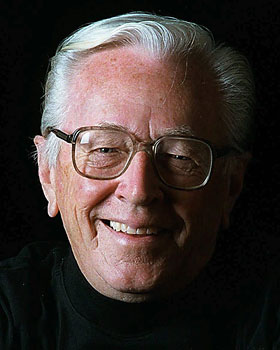
Charles Schulz
The following is the philosophy of Charles Schulz, the creator of the ‘Peanuts’ comic strip.
You don’t have to actually answer the questions. Just ponder on them. It will make very good sense!
Here’s A Little Quiz
You don’t have to actually answer the questions. Just read them straight through, ponder a tad, and you’ll get the point.
Name the five wealthiest people in the world.
Name the last five Heisman trophy winners.
Name the last five winners of the Miss America pageant.
Name ten people who have won the Nobel or Pulitzer Prize.
Name the last half dozen Academy Award winners for best actor and actress.
Name the last decade’s worth of World Series Winners.
How did you do?
The point is, none of us remember the headliners of yesterday. These are no second-rate achievers. They were the best in their fields.
But the applause dies. Awards tarnish over time. Achievements are forgotten and accolades and certificates are buried with their owners.
Here’s another quiz. See how you do on this one:
List a few teachers who aided your journey through school.
Name three friends who have helped you through a difficult time.
Name five people who have taught you something worthwhile.
Think of a few people who have made you feel appreciated and special!
Think of five people you enjoy spending time with.
Did you find that Easier? Of course you did!
So here’s the lesson!
The people who make a difference in your life are not the ones with the most credentials, or the most money…or the most awards…they simply are the ones who care the most.
“You don’t stop laughing when you grow old, you grow old when you stop laughing.” George Bernard Shaw.
Recently sent to me by Lindy C. from Devon, England.
This is dedicated to all of us who are seniors, to all of you who know seniors, and to all of you who will become seniors.
“WHERE is my SUNDAY paper?” The irate customer calling the newspaper office, loudly demanded to know where her Sunday edition was.
“Madam“, said the newspaper employee, “today is Saturday. The Sunday paper is not delivered until tomorrow, on SUNDAY.”
There was quite a long pause on the other end of the phone, followed by a ray of recognition as Madam was heard to mutter under her breath, “Well, shit, that explains why there was no one at church either!”
oooOOOooo
As British comedian Bob Monkhouse is reputed to have said, “Growing old is compulsory; growing up is optional.” (NB. More fabulous quotations from this naturally very funny man may be found here.)
On the subject of Bob Monkhouse, let me close with this video of Norman Wisdom appearing on the Bob Monkhouse Show back in 1983. As one of the YouTube commentators put it, “Two of Britains funniest men; we will never seek their likes again.“
I admit to being too free with my silly clichés including, “I can predict anything unless it involves the future!” So now that millions of informed people have the benefit of “20:20 hindsight“, why is it years since the banking crisis first erupted and we are still without a root and branch overhaul of the governance of the industry?
Did you see Per Kurowski’s interview with a leading regulator on Learning from Dogs yesterday? Aren’t we so slow to learn!
Anyway, I waffle on! Let me get to the point of today’s post.
Back on the 1st September, there was a post called Understanding Europe. One of the resulting commentators was Pendantry who is author of a blog called Wibble. He included a link to a poem that he wrote on the 28th February, 2009! The fact that the poem is still so relevant (and when we see what’s happening in Europe perhaps even more relevant now!) is truly shocking. I wanted to republish it which I do with the kind permission of Pendantry. Here it is.
oooOOOooo
House of cards
When the inevitable strikes,
when the house falls down,
do you patch up the walls,
fix the holes in the roof,
shore it all up,
splash it with paint?
No.
You learn from the mistakes.
You start from scratch.
You call in the architects.
You rebuild the foundations.
You use new materials;
replace wattle and daub
with a sounder design.
Unless:
Because you’re lost outside the box,
and your mates demand
to regain their riches (and, now!):
You set up the same as before,
perhaps with a few bells and whistles
(spun to persuade that they’ll work).
And… in the end, we’ll believe
that your clothing is not invisible.
“Who is more foolish?
The fool, or the fool who follows him?”
oooOOOooo
Written over three years and five months ago. Shame on us all!
Like millions of others on this planet, I was held spellbound by the historic and epic moment of man placing his mark on another heavenly body, the Moon. I had been so wrapped up in NASA’s space missions that I took a holiday from work (I was working at the time for ICIANZ in Sydney, Australia) for the week of July 16th, 1969.
It was, of course, July 16th when the Apollo 11 Mission launched from the Kennedy Space Center culminating at precisely 20:17:39 UTC on July 20, 1969, the moment when the Lunar Module made lunar contact.
But in terms of me writing my own obituary for Neil, what could I offer?
Then a couple of items changed my mind.
Neil Armstrong (August 5, 1930 – August 25, 2012)
The first was reading the obituary printed in The Economist. I have long admired the many, many beautiful obituaries that have been published by this newspaper and this one was no exception. Take this extract from the Neil Armstrong obituary,
He had an engineer’s reserve, mixed with a natural shyness. Even among the other astronauts, not renowned for their excitability, he was known as the “Ice Commander”. Mike Collins, one of his crew-mates on the moon mission, mused that “Neil never transmits anything but the surface layer, and that only sparingly.” He once lost control of an unwieldy contraption nicknamed the Flying Bedstead that was designed to help astronauts train for the lunar landing. Ejecting only seconds before his craft hit the ground and exploded, he dusted himself off and coolly went back to his office for the rest of the day. There was work to be done.
Then the beautiful words that bring the obituary to a close,
Earth’s beauty
Over half a century, the man who never admitted surprise was surprised to observe the fading of America’s space programme. The Apollo project was one of the mightiest achievements of the potent combination of big government and big science, but such enterprises came to seem alien as well as unaffordable. Mr Armstrong, who after his flight imagined bases all over the moon, sadly supposed that the public had lost interest when there was no more cold-war competition.
Yet the flights had one huge unintended consequence: they transformed attitudes towards Earth itself. He too had been astonished to see his own planet, “quite beautiful”, remote and very blue, covered with a white lace of clouds. His reserve, after all, was not limitless. One photograph showed him in the module after he and Buzz Aldrin had completed their moon-walk, kicking and jumping their way across the vast, sandy, silver surface towards the strangely close horizon. He is dressed in his spacesuit, sports a three-day beard, and is clearly exhausted. On his face is a grin of purest exhilaration.
” … they transformed attitudes towards Earth itself. He too had been astonished to see his own planet, “quite beautiful”, remote and very blue, covered with a white lace of clouds.” For that reason alone, we need to celebrate the achievement of the Apollo 11 mission for putting our own planet into perspective within the enormity of the universe.
The second item that persuaded me to write this was a wonderful historic insight into how a potential catastrophy on the surface of the Moon would have been handled by President Nixon. This historic item was published on Carl Milner’s blog the other day, the specific item being What if the Moon Landing Failed? Republished with the very kind permission of Carl.
When Richard Nixon was the President of the United States, they had a speech ready for him to deliver to the world just in case the 1969 moon landing had ended in disaster. In fact many experts believed there was a big chance that Neil Armstrong and Edwin ‘Buzz’ Aldrin could have really gotten stuck on the moon. It’s something we don’t really think about now because we all know it was such a success. American Archives have unearthed the speech that would have been delivered if the late great Armstrong and Aldrin had never made it back to earth. This is such a great piece of history that I thought I might never see.
Give it a read, It’s such a moving and well prepared speech, and such a good thing that President Nixon never had to delivered it.
So, as with millions of others, I am delighted that this speech remained unspoken and instead we experienced: “At 5:35 p.m. (US EDT), Armstrong and Aldrin successfully docked and rejoined Collins, and at 12:56 a.m. on July 22 Apollo 11 began its journey home, safely splashing down in the Pacific Ocean at 12:50 p.m. on July 24.”
Neil Armstrong’s legacy is not only being part of the wonderful team that allowed man to make the first footprint on the Moon but also bringing into our human consciousness that this blue, wonderful planet we all live on is the only home we have.
First Full-View Photo of Earth Photograph courtesy NASA Johnson Space Center This famous “Blue Marble” shot represents the first photograph in which Earth is in full view. The picture was taken on December 7, 1972, as the Apollo 17 crew left Earth’s orbit for the moon. With the sun at their backs, the crew had a perfectly lit view of the blue planet.
Strikes me that celebrating July 20th each year as Blue Planet Day might not be a bad idea! Any takers? Now that would be a legacy for Neil!
Looking at the human-animal relationship, from the perspective of the animal.
This is a guest post from Virginia Ingram. Virginia is becoming more involved in the animal rescue movement. As such, she knows only too well how vital it is to give so many precious animals a second chance.
In a very real sense we, as in mankind, owe our humanity to dogs and other animals. As I wrote here in the essay What is love?
“But understanding animals and empathizing with them also triggered other changes in humanity’s evolution, Shipman said.
All those things allow people to live with people. Once people have domesticated animals, they start to live in stable groups. They have fields, crops and more permanent dwellings.”
We owe so much!
So with that in mind, here is Virginia’s guest post.
oooOOOooo
WE CAN MAKE A DIFFERENCE
Recently I started to question the time I spend on the internet reading articles, essays and recommendations of books about all things concerned with animals. I receive animal stories from friends, acquaintances and business associates from all corners of the globe. I love to get them because, well….. hey, I really enjoy them!
After I read them I forward them to others who I think will also enjoy them. They make me feel warm and fuzzy. They are enlightening, poignant, humorous, inspiring and sometimes heart-rending. I find I cannot ignore any cute email containing animal pictures even though I may have already seen it a dozen times before. Give me a story about a dog who ate a popsicle and to me ‘that’s entertainment’ as they say. We human beings love to feel moved by great stories and these communications are full of it. I am such a sap when it comes to animal stories; so many of us are.
But here is the rub. What do the animals get out of it?
We chuckle and get our jollies from these incredible beings from a distance on the World Wide Web but the fact of the matter is that so many of these wonderful creatures end up unwanted, uncared for or even starved and beaten in shelters across the world.
Unknown and uncared for!
What gives? Why is there such a disconnect? How can we love animals from a distance and not be concerned with the abuses that go on in our own environment?
We know that there are those who don’t understand that animals have feelings and emotions, that they experience deep loss and sadness as well as happiness and joy. What can we do raise to the consciousness of human beings who don’t get it?
I think it involves sticking our collective necks out. I think that we need to be ready to risk some things. It might involve changing or damaging a relationship with someone who is acting in irresponsible ways towards animals. We need to be ready to risk it.
Do you see it on your own street? Maybe it’s a neighbor who leaves their dog on a chain in the yard on weekends regardless of weather or exposure to other animals. Maybe it’s the guy next door who ‘forgets’ to feed his animal.
Let’s stand up for these animals who have no voice. Let’s be advocates for these amazing creatures who cannot be their own advocate. Let’s hold humans accountable. Let’s risk a friendship and say something, make that difficult phone call on behalf of a animal. Let’s talk to people about animal issues and problems. Let’s try to change the weak laws that do not properly address animal cruelty. Let’s summon our courage and do the unpopular things which will enhance the quality of life for these precious beings.
Can you imagine how animals feel when they have been turned over to an animal shelter by the person whom they loved more than themselves? Trust me, the sense of abandonment and fear, the bewilderment in their eye is excruciating to observe. I have seen it not from the distance of my computer but in person. Let’s DO something to change all this. It’s time to get involved.
By all means keep the cute emails going but for every minute we spend on the internet, reading the books and enjoying the emails let’s put the same amount of time into getting something done to improve the lives of animals. Stand up, walk out the door, volunteer or donate money. We can help the suffering. We can make a difference.
oooOOOooo
Powerful words indeed. Don’t know about you but I read a strength of feeling that was very moving. A clear message that we must never turn the head, never just ‘tut tut’ but do something. Even if only befriending a stray animal. Because one might argue that even that feral dog without a home is demonstrating something all of us on this green planet need to understand; living a sustainable life!
Finally, living proof of what we can give an animal when we care and love it. The dog in the picture below is Loopy, a dog that Jean rescued in Mexico many years ago. She was so badly hurt by humans that it took Jean six months before Loopy would let Jean touch and hug her.
When I came on the scene, my gender was against me. It took me twelve months before Loopy trusted me. Now she will come to me and let me place my face against hers in the most loving, caring embrace that one can imagine.
So why the fearful look on Loopy’s face as she turns away from the camera? Somehow the camera is reminding Loopy of some sort of weapon that was used to beat her!
Loopy
As Virginia so lovingly wrote, “We can help the suffering. We can make a difference.“




 Learning from Dogs