Just a wonderful set of very heart-warming pictures.
Note: These were sent to me by John H. back on the 13th October, our penultimate Saturday in Arizona. I thought they would make a perfect start to our first November week-end in Merlin, Oregon.
There are twenty-two in total; eleven today and the rest tomorrow.
oooOOOooo
oooOOOooo
The concluding glorious eleven photographs tomorrow.
Operation Migration has played a leading role in the reintroduction of endangered Whooping cranes into eastern North America since 2001. In the 1940s the species was reduced to just 15 birds.
Operation Migration is a founding partner of the Whooping Crane Eastern Partnership (WCEP), the coalition of non-profit organizations and government agencies behind the project to safeguard the endangered Whooping crane from extinction.
The widely reported story of a dog saving the life of a baby.
Although this story came into prominence a week ago, this is the first opportunity for inserting it on Learning from Dogs. That doesn’t detract one little bit from the power of the tale, so watch this video!
Today, Jean and I together with our 11 dogs and 5 cats start the 1,200 mile journey to Merlin, Oregon. While we have only lived in Payson since February, 2010, it has been a time of fantastic experiences. I had to work through the long process of getting a fiancee visa from the American Embassy in London. Until that was issued my ‘residence’ in Payson was that of a British tourist with me having to leave the USA every 90 days.
The visa was issued in October, 2010 and I flew immediately to Arizona. On the 8th November, 2010 Jean and I were issued with a Marriage License Certificate and we were married on the 20th November at St. Paul’s Episcopal Church in Payson.
Fr. Dan Tantimonaco with the newly weds!
We have made many very dear friends here in Payson but Oregon feels like the start of our home in every sense of the word, not just because it is the first home that Jean and I have bought jointly.
One of those dear friends here in Payson has been John Hurlburt, a devoutly spiritual man. A little over a week ago, he sent me a very thoughtful essay and I wanted to include it today as a guest post in recognition of the way that John and many, many others have embraced these couple of Brits over the last 32 months. Thank you all.
oooOOOooo
Unity
Everything fits together
The species of animals we know as human beings is a part of everything that exists. We are a very young consciously-aware species that does not begin to know all the answers. What little we do know has a Natural pattern. It would seem that there’s a lamplighter and a navigator in all of us. The lamplighter is our fundamental awareness of being and provides nature’s guidance along life’s pathways.
Our natural navigator is designed for evolutionary competition. There’s a biological survival kit in our DNA. Extreme demand for limited resources generates deadly combat; both within and between species. As a result of competition taken to wretched excess, our global economy is leveraged 22 times beyond any earthly foundation. The unspoken intent to destroy each other over what remains of our planet is becoming increasingly evident.
The human species is engaged in a global war over money, ideals and disappearing finite resources. Ninety-seven percent of the world scientific community has confirmed that the natural effects of heat and discharges generated by human machines and related human activities are the primary cause of recent rapid climate change.
These dedicated scientists are opposed in the media by three percent of their corporate energy-financed peers. An oppressive worldwide network of often offensive politicians is similarly supported and managed accordingly. Nature couldn’t care less about politics, emotions or idealistic arguments.
Human squabbles mean very little in the totality of universal life. The drumbeat of local natural disasters increases steadily. There are no two ways about it. No amount of human ifs or buts can or will change reality. Our human species is in deep serious trouble.
It has been six million years since the first humanoids emerged and two million years since the rise of human civilization. What a sorrow it is to realize what we have done to the earth in just the past two hundred and fifty years. We’ve reached the moon and are exploring Mars. It’s well past time to clean house and re-grow our local garden.
As an old navigator, there’s a sense of urgency regarding the course life on earth has taken. For those who continue to care about facts, the prognosis is not encouraging. We have the know-how for an alternative. We can avoid the perfect storm of going over the edge of an economic cliff and the crush of an environmental crisis in the midst of a war-fuelled, profit-driven, global, corporate fight to the end. The alternative is that we have the know-how to transition rapidly to a reality-based economy and a way of living that’s gentle to the earth. The solution is global, it’s industrial, it’s natural and it’s our best hope. It may well be our only hope. It’s time to light some lamps.
Conscious human awareness emerges as we relax, contemplate, meditate, and communicate openly. These are levels of awareness beyond the limits of our daily human musings. The wisdom which flows from enlightened awareness embraces humility, experience, knowledge, understanding, and faith. Life has never been easy. We’re fragile biological beings. Our mutual growth is the result of sustained efforts over millions of years.
Yet despite attaining a higher level of conscious awareness our human culture continues to operate on a material basis rather than a moral basis. We have become confused by our own importance or the apparent lack thereof. We all too often retreat into a rut, furnish it and turn on the electronics.
By definition, natural processes support species growth in harmony with all natural life. Those natural processes are indistinguishable from the planetary support systems within which all life interacts. Human interaction is local. We spend much of our lives unaware that we are unaware; initially as infants and throughout our lives in deep sleep. When caught up in the pressures of our daily lives, it’s easy to be unaware of being unaware.
It’s time to wake up. Cosmology is an eternal spring from which the waters of the earth still flow. When we turn ourselves inside-out and achieve higher awareness, we discover who, what and where we really and truly are. In a trinity of spirituality, nature and science, we’re cosmically energized beings; spiritual beings sharing a transitory human existence.
Ninety-eight percent of the human population believes in a power beyond species and self. The simplest understanding of this belief is that we humans did not originally create ourselves. All human wisdom and understanding leads to the conclusion that human beings don’t own the earth. We’re caretakers and we’re only passing through. Given that we have a systemic crisis, what do we have to work with?
We have a species that’s squabbling over diminishing resources, an environment and an infrastructure which both desperately require attention, a sustaining objective of equitable global employment, a world economy that’s about to collapse for lack of any real foundation, a burgeoning population which further strains the system and the clear need for a unifying purpose.
Put it all together and what do we have? The navigator is our guide to growth. The navigator shares our wholeness. The lamplighter is our guide to unity. Everything fits together. Each of us is a part of the unity of life. Unity has a natural purpose. It’s time to build a life boat.
John Hurlburt is a former U.S. Navy aviator and successful corporate executive who presently serves as a senior Christian educator and a founding member of an international Transition Town in Payson, Arizona.
oooOOOooo
Don’t know about you, dear reader, but I find those incredibly powerful words. Words that provide the truth. A truth the whole world needs. John set out in a personal email to me the three simple fundamentals of our lives. Just a few more words to sum up the truth.
“There’s an environmental crisis. There’s an inevitable global economic abyss touching us all on a daily basis. The need for a green economic transformation is obvious.“
Carrots in the car park. Radishes on the roundabout. The deliciously eccentric story of the town growing ALL its own veg
Admittedly, it sounds like the most foolhardy of criminal capers, and one of the cheekiest, too.
Outside the police station in the small Victorian mill town of Todmorden, West Yorkshire, there are three large raised flower beds.
If you’d visited a few months ago, you’d have found them overflowing with curly kale, carrot plants, lettuces, spring onions — all manner of vegetables and salad leaves.
Today the beds are bare. Why? Because people have been wandering up to the police station forecourt in broad daylight and digging up the vegetables. And what are the cops doing about this brazen theft from right under their noses? Nothing.
Follow the links on the left to see in detail what we’re up to. Or you can get involved yourself. Our growing around town is organised by our community growers’ group: find out about that here.
From our beginnings with herb gardens, we’ve taken to planting and growing veggies and trees round town we’ve planted several orchards and there are more to come, and we’re working with public bodies round town to use their land – like the fire station and the railway station – or to work with them on their own Incredible ideas – like social landlord Pennine Housing.
We’re reaching back into local memories and knowledge with our History project.
Our campaigns aim to make different futures happen, through local campaigns like Every Egg Matters, and by spreading the word locally, regionally and nationally.
We hope to make a difference with major projects. We now have Lottery funding for our food hub at Tod High School and are just waiting for the final planning permission. That bid included the work of a food-inspirer a position now held by Sally.
We have also branched out to greenfield sites, working on donated land in Walsden to create a major resource for growing and learning, and on donated land in Gorpley to develop ideas about hill-top farming. More about them here
Growing herbs at the Station – of course!
What an absolutely fabulous example to the rest of the world!
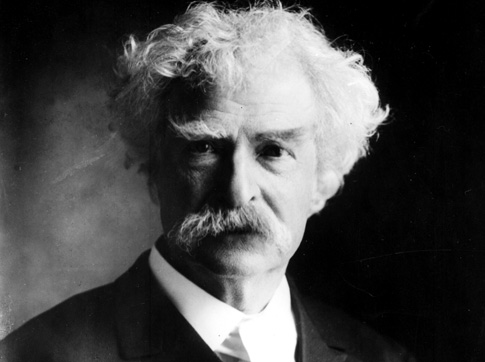
Mark Twain quotation after hearing that his obituary had been published in the New York Journal.
Mistaken publications of obituaries aren’t as rare as you might expect. A recent example is of Dave Swarbrick, the British folk/rock violinist, who was killed off mistakenly by the Daily Telegraph in April 1999 when they reported that his visit to hospital in Coventry had resulted in his death. He did at least get the opportunity to read a rather favourable account of his life, not something we all get to do, and to deliver the gag “It’s not the first time I have died in Coventry”.
So why have I opened with this quote from Mark Twain? Read on and I hope all will be clear.
Integrity is always about getting to the truth!
A little under a week ago I published a couple of posts that proposed that the United States of America is an empire in decline. The first was What goes up? and the second Might just come down! As a Brit I well know that aspect of British history!
However a recent conversation with a friend of many years back in England, who has also been a shrewd and wise entrepreneur for longer than I care to remember, argued that the evidence for the ‘end of the USA’ could be challenged.
He cited five reasons why he thought the USA would remain, more or less, in its dominant position. They were:
Spirit of innovation
Relaxed labour laws
The importance of Mexico
The uncertainty of China in terms of the next ’empire’
The likely energy self-sufficiency for the USA in the near-term.
So let me expand on each of those points.
Spirit of innovation
Let me quote from an article in TIME Magazine of the 5th June, 2011,
Innovation is as American as apple pie. It seems to accord with so many elements of our national character — ingenuity, freedom, flexibility, the willingness to question conventional wisdom and defy authority. But politicians are pinning their hopes on innovation for more urgent reasons. America’s future growth will have to come from new industries that create new products and processes. Older industries are under tremendous pressure. Technological change is making factories and offices far more efficient. The rise of low-wage manufacturing in China and low-wage services in India is moving jobs overseas. The only durable strength we have — the only one that can withstand these gale winds — is innovation.
Now there are plenty to argue both ways in terms of the future innovation potential for the USA, as a recent article in The Atlantic does, see American Innovation: It’s the Best of Times and the Worst of Times. But the spirit of innovation will be a powerful economic potential for the USA for many years to come.
Relaxed labour laws.
Definitely an area that I have little knowledge of except for the subjective notion that compared to many other nations, the laws in the USA are much less of a restraint on economic productivity than elsewhere.
The importance of Mexico.
Importance in the context of providing the USA with a source of cheaper manufacturing facilities. My English friend thought that this was a significant competitive advantage for the USA. Now, as it happens, we had a couple staying with us over the week-end of the 6th/7th October. The husband is a senior manager of Horst Engineering, an American firm based in Guaymas, Sonora County, Mexico. Here’s a picture from their website,
We are a contract manufacturer of precision machined components and assemblies for aerospace, medical, and other high technology industries. Our core processes include Swiss screw machining, turning, milling, thread rolling, centerless grinding, and assembly. Our extensive supply chain offers our customers a full service logistics solution for managing their precision product requirements. We are ISO9001:2008 and AS9100 registered and proud of our 66 year, three-generation legacy of quality and performance.
I was told that many American and British firms were using Mexico rather than China for a number of reasons. Not least because Chinese suppliers require full payment before shipment. Plus that taking into account that financial aspect together with shipping costs and other logistical issues, China wasn’t as ‘cheap’ over all. Here’s a recent announcement from Rolls Royce,
Rolls-Royce plans new Sonora hub
The burgeoning aerospace industry in Guaymas had its efforts validated recently when the venerable Rolls-Royce chose it as the site for its newest global purchasing office.
Surrounded by several of its aerospace manufacturing suppliers, London-based Rolls-Royce will move into a Guaymas industrial park owned by Tucson-based The Offshore Group to develop a supply hub for commercial jets and military aircraft around the globe.
“Rolls-Royce has very robust booking orders for the next 10 years,” said Joel Reuter, director of communications for Rolls-Royce in North America. “We need to double our production.”
Because a number of Rolls-Royce suppliers already operate in Guaymas, the city was a logical choice, Reuter said.
The uncertainty of China in terms of the next ’empire’
The point made in terms of China taking over ’empire’ status from the USA, as Simon Johnson argues over at Baseline Scenario, is countered by the fact that politically China is an unknown quantity. Until China endorses some form of democratic process, that unknowingness is not going to disappear.
The likely energy self-sufficiency for the USA in the near-term.
I can’t do better than to ask you to watch this video! Just 27-minutes long, it is a very interesting review of the energy future of the USA.
As the TED website suggests in terms of why you should listen to Amory Lovins,
Amory Lovins was worried (and writing) about energy long before global warming was making the front — or even back — page of newspapers. Since studying at Harvard and Oxford in the 1960s, he’s written dozens of books, and initiated ambitious projects — cofounding the influential, environment-focused Rocky Mountain Institute; prototyping the ultra-efficient Hypercar — to focus the world’s attention on alternative approaches to energy and transportation.
His critical thinking has driven people around the globe — from world leaders to the average Joe — to think differently about energy and its role in some of our biggest problems: climate change, oil dependency, national security, economic health, and depletion of natural resources.
So, don’t know about you, but I found those five points deeply convincing. How about you? Are the reports of the death of the USA greatly exaggerated? Do leave a comment.
For every case of cruelty towards animals there is an example of boundless love.
I first saw this story on the popular Grist website, from which I quote,
Watch rescued ducks discover the water for the first time in this heartwarming video
These ducks were rescued from a hoarder, who was keeping over 160 fowl in filthy, overcrowded conditions. The neglected birds had never even seen a pond. But the Woodstock Farm Animal Sanctuary has nursed them back to health, repairing infections, injured feet, and nutritional deficiencies — and now you can watch these newly rehabilitated duckies learn to swim. They’re a bit confused about it at first, but eventually, they take to it like a … well, you know.
Just be warned that the embedded link to that story about the hoarder is a tough read. Although it does have a happy ending, a very happy ending.
Rescue: Over 130 Neglected Birds from Hoarding Case
Almost a year after our initial efforts to rescue over 160 ducks, geese, turkeys and chickens that were living with a hoarder in appalling conditions, we were finally able to bring them to safety. They are now enjoying sunshine on their feathers, water to swim in, clean bedding, warmth, grass under their feet and room to roam for the very first time. Initially, we tried working with their owner towards an amicable surrender, pleading with her to consider the quality of life for the birds and used many of our own resources to help provide a cleaner environment for them. The hoarder’s initial intentions were good and her love for the animals apparent, but she neglected to see how their overcrowding, over-breeding, lack of shelter and space and filthy conditions were hurting them. She also continued to buy chicks and ducklings online and mail ordered to her.
We are treating all of their health issues by providing veterinary care, nutritional supplements, quality food and vitamins daily in their water. They are beginning to thrive with their new freedom. It’s a joy for us to see and we’re so happy to be able to give these animals the lives they deserve. YOUR SUPPORT helps in many cases like this and give them life-long shelter and the care and love they need and so deserve.
Much gratitude to the ASPCA for a grant to help to care for all of these very-deserving animals.
Many of these birds are up for adoption, please contact us if interested.
So back to the ducks!
Probably my favorite part is when the ducks keep running away from the water in what, as one Woodstock worker points out, looks just like a Benny Hill routine. Or maybe it’s the part where the sanctuary workers go for the “tough love uncle” approach to swimming lessons, and just chuck the birds in the pond. Or maybe it’s watching that first duck figure out that the water is amazing. Or maybe it’s watching ALL of them figure out that the water is amazing! What I’m saying is that I could, and will, watch this video all day.
I can’t recall who it was that mentioned this TED video which is a great shame as I really should pay credit to a wonderful examination of the business of being creative.
“Telling people how to be creative is easy – being creative is difficult.” John Marwood Cleese (born 27 October 1939) is an English actor, comedian, writer and film producer. He achieved success at the Edinburgh Festival Fringe and as a scriptwriter and performer on The Frost Report.
In the late 1960s he became a member of Monty Python, the comedy troupe responsible for the sketch show Monty Python’s Flying Circus and the four Monty Python films: And Now for Something Completely Different, The Holy Grail, Life of Brian and The Meaning of Life. In the mid 1970s, Cleese and his first wife, Connie Booth, co-wrote and starred in the British sitcom Fawlty Towers. Later, he co-starred with Kevin Kline, Jamie Lee Curtis and former Python colleague Michael Palin in A Fish Called Wanda and Fierce Creatures.
He also starred in Clockwise, and has appeared in many other films, including two James Bond films as Q, two Harry Potter films, and three Shrek films. With Yes Minister writer Antony Jay he co-founded Video Arts, a production company making entertaining training films. It was founded in 1972 by John Cleese, Sir Antony Jay, and a group of other television professionals. The videos feature well known British actors, and humorously explain business concepts. Productions include Meetings, Bloody Meetings and More Bloody Meetings, and have featured Cleese, Dawn French, Prunella Scales, Hugh Laurie, and Robert Hardy.
In December 1977, Cleese appeared as a guest star on The Muppet Show. Cleese was a fan of the show, and co-wrote much of the episode. He appears in a “Pigs in Space” segment as a pirate trying to hijack the spaceship Swinetrek, and also helps Gonzo restore his arms to “normal” size after Gonzo’s cannonball catching act goes wrong. During the show’s closing number, Cleese refuses to sing the famous show tune from Man of La Mancha, “The Impossible Dream”. Kermit the Frog apologises and the curtain re-opens with Cleese now costumed as a Viking trying some Wagnerian opera as part of a duet with Sweetums. Once again, Cleese protests to Kermit, and gives the frog one more chance. This time, he is costumed as a Mexican maraca soloist. He has finally had enough and protests that he is leaving the show, saying “You were supposed to be my host. How can you do this to me? Kermit — I am your guest!”. The cast joins in with their parody of “The Impossible Dream”, singing “This is your guest, to follow that star…”. During the crowd’s applause that follows the song, he pretends to strangle Kermit until he realises the crowd loves him and accepts the accolades. During the show’s finale, as Kermit thanks him, he shows up with a fictional album, his own new vocal record John Cleese: A Man & His Music, and encourages everyone to buy a copy. This would not be Cleese’s final appearance with the Muppets. In their 1981 film The Great Muppet Caper, Cleese does a cameo appearance as Neville, a local homeowner. As part of the appearance, Miss Piggy borrows his house as a way to impress Kermit the Frog. Cleese won the TV Times award for Funniest Man On TV — 1978-79.
Many people think you are either born with creativity or you aren’t. But John Cleese explains how to become creative and in the video, he talks about such thing as the unconscious mind.
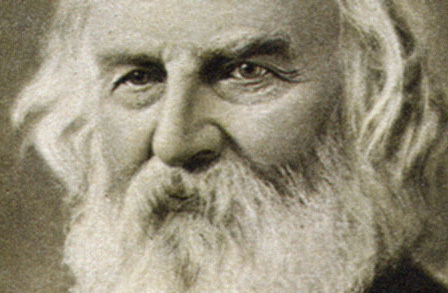
“Lives of great men all remind us, we can make our lives sublime, and, departing, leave behind us, footprints on the sands of time.” Longfellow.
Longfellow, the only American writer honored in the Poets’ Corner of Westminster Abbey.
Longfellow has been dead for 130 years, as of last March, but of his many wonderful words that have stayed with us over the last century and more, these must be some of the more familiar. (Or am I showing my appalling lack of literary knowledge?)
Following on from yesterday’s post about the scary mathematics of climate change, this really is the ONE thing that we have to learn from dogs; from nature. If we don’t live in harmony with our planet pretty damn soon, then this particular civilisation is not far from extinction. Let me remind you of a key paragraph from yesterday,
It’s simple math: we can burn 565 more gigatons of carbon and stay below 2°C of warming — anything more than that risks catastrophe for life on earth. The only problem? Fossil fuel corporations now have 2,795 gigatons in their reserves, five times the safe amount. And they’re planning to burn it all — unless we rise up to stop them.
Ergo, we do not have endless time available to us!
Otherwise the footprints left on those sands of time will be nothing more than the next civilisation pondering from time to time why those Atlantacists that sunk beneath the waves were unable to do anything to save their world!
If you think I’m being a tad excitable, then see what Rob Hopkins wrote recently over at Transition Culture.
New Economics Foundation’s ’100 Months’ campaign today reaches its midway point. It was launched in August 2008 based on the understanding that the time that remains to us to avoid the likelihood of runaway climate change is limited, and based on the science at the time, there was a closing window of opportunity to do something meaningful about it.
Then adding,
“The question here is “what should we do differently?” The answer is “pretty much just about everything”. Nationally and internationally, while the scale and pace of climate change are accelerating, meaningful responses are dwindling. Part of our collective paralysis comes from the fact that we struggle to imagine a world with less energy, less consumerism, less annual GDP growth. What will it look like, sound like, feel like? Does it inevitably mean that you should start seeking out your cave on Dartmoor [Devon in South-West England, PH] as we speak, and developing a taste for slugs? Of course not.
Shortly before the 100 Months campaign began, I was part of initiating an experiment to see what a self-organised response to climate change might look like, one based on rebuilding community, on the belief that what is needed is people, everywhere, making their communities happier, healthier, lower-carbon, and more resilient, in a huge variety of ways.
Rob Hopkins was also asked to write a piece for the UK’s Guardian Newspaper in recognition that we are half-way through that 100-month campaign. Here’s how Rob concluded that piece,
Transition Bath set up an energy company which has raised £250,000 in shares from local people. Transition town Totnes’ Transition Streets programme has enabled almost 700 local householders to reduce their carbon emissions while rediscovering a sense of community on their streets. Bristol soon sees the launch of the Bristol Pound, the UK’s first citywide transition complementary currency. Transition Brixton’s Brixton Energy is installing community-owned renewables supported by local people. Check out transitionnetwork.org to get a sense of the amazing projects under way.
At its core, this is about the belief that our best way forward is for communities to build local resilience in order to be able to better face the shocks of the present and the uncertainties of the future, from economic crisis to climate change, seeing increased community resilience as economic development. It’s a process of plugging the leaks in our local economies, seeing every leak as a potential new business, new livelihood, new apprenticeship opportunity.
Of course we need government responses, and international responses, but all of those will struggle without a vibrant bottom-up movement of ordinary people showing what’s possible and how thrilled they are by those possibilities. So although the answer is “pretty much just about everything”, I would argue that seeing this as a once-in-a-lifetime opportunity for entrepreneurship, vision and action is where our successful navigation of the next 50 months lies.
Scientists have given animals consciousness. Not through complex manipulation of the brain or through genetic manipulation, but by publicly acknowledging the consensus, for the first time in such a straightforward way, that non-human animals, including some of our evolutionarily distant cousins, have awareness and experience like we do.
The declaration, called The Cambridge Declaration On Consciousness, was signed at the Francis Crick Memorial Conference of Consciousness in Human and Non-Human Animals in the presence of Stephen Hawking in July in Cambridge, U.K. by an international group of scientists including cognitive neuroscientists, neuropharmacologists, neurophysiologists, neuroanatomists and computational neuroscientists.
What do they mean by consciousness? The Declaration treats it as the same as the phrase, “subjective experience.” Philosophers who share this view of consciousness with the scientists often say that something is conscious if there is “something that it is like” to be that thing. So, according to this, a rock is not conscious, because there is nothing “that it is like to be a rock.”
The signing marked the first formalization of the scientific consensus about the consciousness of several non-mammals, including birds, octopuses and even bees.
We declare the following: “The absence of a neocortex does not appear to preclude an organism from experiencing affective states. Convergent evidence indicates that non-human animals have the neuroanatomical, neurochemical, and neurophysiological substrates of conscious states along with the capacity to exhibit intentional behaviors. Consequently, the weight of evidence indicates that humans are not unique in possessing the neurological substrates that generate consciousness. Nonhuman animals, including all mammals and birds, and many other creatures, including octopuses, also possess these neurological substrates.”
The full document is really worth reading, by the way.
There is much more about the conference including some remarkable videos here, from which I will select two. The first one, in particular, is very moving, and upsetting! Be warned!
OK, forgive me but I’m going to state the obvious! Just read the entry on Wikipedia about Orangutans.
Orangutans are among the most intelligent primates and use a variety of sophisticated tools, also constructing elaborate sleeping nests each night from branches and foliage. The apes have been extensively studied for their learning abilities. There may even be distinctive cultures within populations. Field studies of the apes were pioneered by primatologist Birutė Galdikas. Both orangutan species are considered to be Endangered with the Sumatran orangutan being Critically Endangered. Human activities have decimated the populations and ranges of both species. Threats to wild orangutan populations include poaching, habitat destruction and the illegal pet trade. There are several conservation and rehabilitation organisations dedicated to the survival of orangutans in the wild.
‘Among the most intelligent primates‘! Yet again, an example of mankind treating the planet as a disposable item! A quick web search came across the Orangutan Foundation so as well as being saddened and angry, there is something we can do; support them.
The second video from that Conference website is about the intelligence of dolphins – enjoy!
The signatories have indicated that we cannot, at least certainly not for the reasons we have been giving, ignore the fact that animals have the same type of experiences that gives us a reason to treat other humans humanely.
Beyond the ethical ramifications, this declaration is another step in a long line of conclusions that the animal brain displays remarkable plasticity and is able to accomplish highly complex tasks in multiple ways.
While anyone who has gone to a zoo or owned a pet has at least temporarily thought of animals as conscious, there is still a large contingent that strongly believes that humans are exceptional in some morally and scientifically significant way. But, as Christof Koch, who co-presented the declaration notes, “The belief in human exceptionalism, so strongly rooted in the Judeo-Christian view of the world, flies in the face of all evidence for the structural and behavioral continuity between animals and people.”






 Learning from Dogs