Category: consciousness

Happy Christmas!

To all you readers of Learning from Dogs – have a peaceful and wonderful Christmas Day.

Just going to offer you two wonderful images.

The first is a cartoon from the hands of Neil Kelly, a friend from my previous days in South Hams, Devon.

NeilK

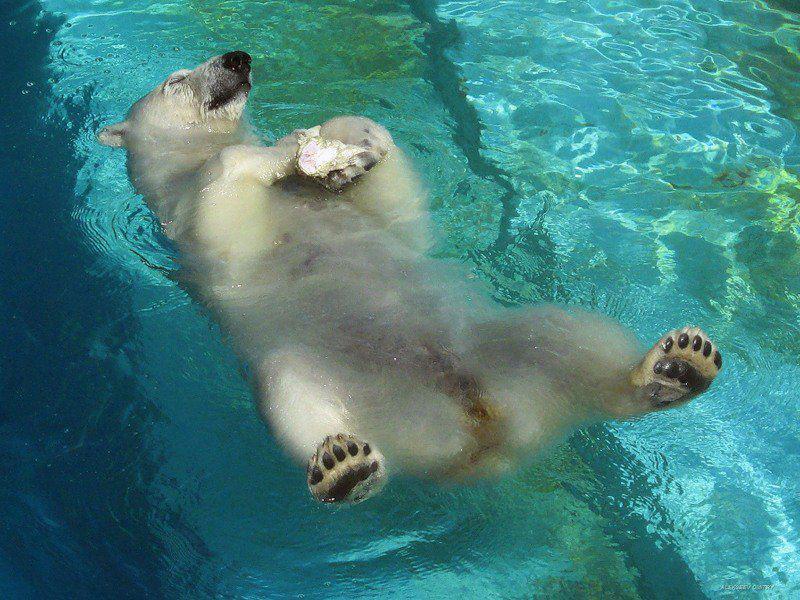
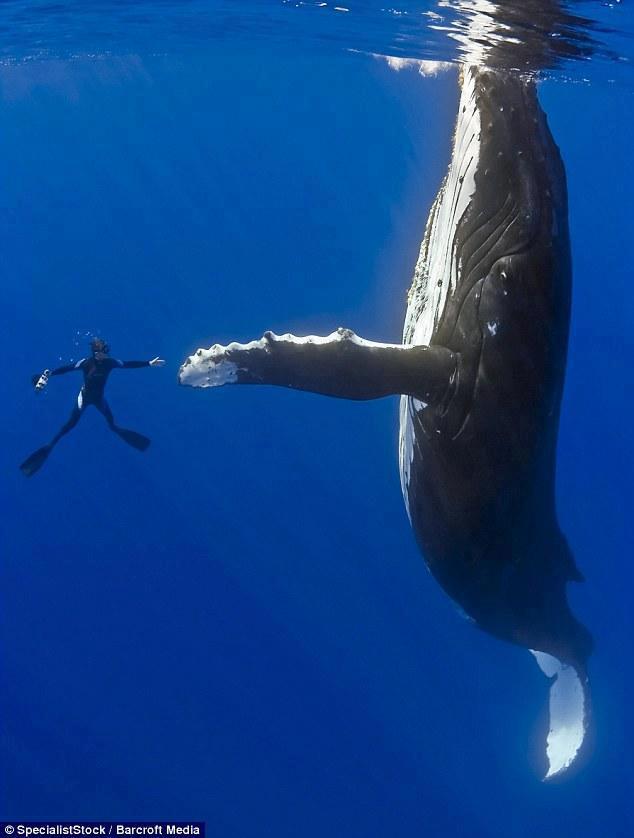
The second came as an attachment to a Christmas greeting email from my son, Alex, and his partner Lisa.  Don’t know the background to the picture but what a reminder of the beauty of all the animals in the world.

photo (2)

Enjoy your day wherever you are in the world.

Be that change!

A most beautiful message from Paul Chefurka This republication of a recent item on The Permaculture Research Institute website comes with the written permission of their editor, for which I am very grateful.  Nothing from me will add to this very personal essay, so with no more ado here it is.

oooOOOooo

Enough!

Society — by Paul Chefurka December 20, 2012

Meditation_on_rock

Whenever I contemplate the spectacular mischief that we humans have wreaked on our world, I am compelled to ask how this could have possibly happened. The despoilment of our planet seems to be the exact opposite of how I would expect a thinking, feeling, caring creature to treat their home. What could have driven us to this, and what perverse qualities could have allowed us to ignore the consequences of our actions for so very long?

At first blush, our problems seem decidedly physical. Dangerous gases drift in the air; acidity rises slowly in the ocean as the fish disappear from its depths; garbage and detritus of all kinds fouls the land where lush forests and grasslands once ruled. All these disturbances point back to human actions.

The proximate causes of this planet-wide distress include economics, politics, and personal and corporate greed – all facilitated by a technological cleverness that rests on a bed of dispassionate science.

I have spent over 50 years of my life trying in vain to understand our environmental problems as purely physical problems. When I viewed them in those terms, the fact that such problems even existed in a rational, scientific culture seemed nonsensical. However, when I recently began to understand them as consequences of a rupture in the human spirit they finally began to make sense to me. Yes, they are compounded by political and economic forces, but in my view even politics and economics are simply consequences of the same qualities of the human psyche.

Since the dawn of consciousness, human societies have been driven by a complex web of factors with their roots embedded deep in our evolved human nature. Power relationships and hierarchies, kinship and xenophobia, selfishness and altruism, competition and cooperation, curiosity and apathy, and countless other polarities mingle together to form the infinite variety of human dynamics.

Underneath it all, though, lurks our self-awareness. Human self-awareness is the root of our sense of separation from the natural world, and from each other for that matter. It’s the crowning paradox of the human condition – at once both our greatest glory and our fatal flaw. It is behind the dualism – the perceptual split into subject and object – that gave us science. It’s the source of our ability to see others as “different yet the same”, giving us the power to act altruistically. It’s also behind the sense of self and other that has allowed us to assume dominion over all we survey, whether animal, vegetable, mineral or human. Our sense of separation is the rupture of the human spirit that has allowed our current predicament to develop.

If this is the case, then no physical, political or economic remediation will heal the wound. The solution to our predicament is not – cannot be – material, political, economic, or simply philosophical. If a “solution” exists at all, it’s orthogonal to all those domains. Only by healing our belief in our separateness will we be able to finally and fully restore our balance with Nature.

When I began to view the situation like this, I was finally able to see that there are in fact solutions, where none had previously been visible. These new solutions don’t attack the predicament directly as a series of material, political, economic or technological problems. Instead, they seek to effect change from the center, by encouraging people to mature into an inter-connected adulthood and assume personal responsibility for their actions.

This approach follows Gandhi’s dictum, “Be the change you wish to see in the world.

The mischievous idea of science and technology as a post-modern “religion of salvation” with Ray Kurzweil’s transhuman singularity playing the role of the Rapture and an economist making a cameo appearance as the Devil (think infinite growth on a finite planet…) resonates very strongly with me.

But to be a little more precise, it’s not exactly science that has failed us. We have been undone by a toxic stew of classical economics, technological cleverness, love of progress, an attitude of Manifest Destiny and an unwillingness to accept any limits on our growth.

Technology lets us use scientific discoveries to satisfy human desires of all kinds. When we harness scientific knowledge to human ends, the outcomes we choose to implement are based on our wishes. If our wish is dominion over nature, we will use scientific principles to invent technology like mining machinery, continental energy grids, factory farming and the automobile.

Of course, each of those inventions is presented within our cultural narrative as an obvious, irrefutable boon. One of the points of having a cultural narrative is to put a positive spin on human activity. The spin is always in line with the narrative – or more precisely, in line with the wishes of those who create and sustain the narrative. The fact that these inventions, the technological expressions of science, have a subtext of dominion over nature is carefully camouflaged, and the idea that this might possibly be a bad idea is thoroughly discouraged.

None of this would have been so damaging if people didn’t have such a natural ability to delude themselves into believing that whatever they wish for hard enough is possible. It’s kind of like clapping for Tinkerbell. “The future is always going to be better than the past,” and “My kids will have better jobs, bigger houses and faster cars than I did,” are examples of such magical thinking at its finest.

Those two kinds of wishing – the wish to improve the human condition and the wish to see the human milieu keep growing forever – are not inherently different. I see them more as two points on a continuum. On one end is simple desire; on the other end is unreasonable desire. They are distinguished less by any intrinsic difference than by the attitude and realism of the one doing the wishing.

It can be very difficult to tell when the reasonable morphs into the unreasonable.”I wish to own a small piece of land” becomes “I wish to own an entire island” which inflates into “I wish to claim a continent for my King” and eventually becomes “I wish to rule the world.” The underlying desire is the same; it’s just the scale and reasonableness of the wish that changes.

Whether or not a wish is realistic or deluded depends very much on the one doing the wishing. There are people who wish for our (and by extension, their own) material wealth to continue growing forever. There is no shortage of economists who will tell them that such a strange thing is possible. Are the dreamers deluded? Are the economists deluded? What laws of nature would need to be violated for such a delusion to become reality? How is the worship of the Charging Bull of Wall Street materially different from worshiping the Golden Calf of the Bible, when both imply a violation of the laws of nature?

The world changes only when enough people have made a choice to change themselves. At what point will we each say, “Enough!” and choose a different path? Is anything keeping you from making that choice right now?

As you finish reading this article I invite you to say it quietly to yourself.

Enough!

If you listen closely with your heart, you may be able to hear the life that shares our planet say, “Thank you.

oooOOOooo

You can read more of Paul Chefurka’s writings on the PRI website here. Do, also, visit Paul’s website here.  You will not be disappointed.

Finally, let me do two things before closing.

The first is to highlight a sentence towards the end of this beautiful essay. This one. “The world changes only when enough people have made a choice to change themselves.

The second is to highlight on Paul’s website his Public Domain Notice statement: Any article on this web site may be reproduced by anyone, in whole or in part , in any manner and for any purpose whatsoever, with no restrictions.

Spread the word about you, me and all of us being the change the world needs – and needs now.  Thank you.

Just very grateful.

Yet another aspect of what we learn from dogs.

This is Hazel.

Hazel

As I write these words, Hazel is laying down on the carpet just next to me.  She was dumped on the street outside Jean’s Mexican house back in early 2010.  Hazel was still in milk and probably had had her puppies taken from her and sold for a few pesos.  Who knows!

But her gratitude for being rescued by Jean is boundless.  Most nights she sleeps on our bed, curled up tightly behind my back.  Her love for her world here in Oregon is beautiful and pure.  As they say, dogs do not lie about love.

So what’s this leading up to?

Simply setting the scene for a wonderful TED video by Louie Schwartzberg, first seen by me on Christine’s blog 350 or bust.

Watch and be grateful for all the beautiful things in the world.

louieschwartzberg

Louie Schwartzberg is an award-winning cinematographer, director, and producer whose notable career spans more than three decades providing breathtaking imagery for feature films, television shows, documentaries and commercials.

This piece includes his short film on Gratitude and Happiness. Brother David Steindl-Rast’s spoken words, Gary Malkin’s musical compositions and Louie’s cinematography make this a stunningly beautiful piece, reminding us of the precious gift of life, and the beauty all around us.

As a visual artist, Louie has created some of the most iconic and memorable film moments of our time. He is an innovator in the world of time-lapse, nature, aerial and “slice-of-life” photography – the only cinematographer in the world who has literally been shooting 24 hours a day, 7 days a week continuously for more than 30 years.

Louie was recognized as one of the top 70 Cinematographers for the On Film Kodak Salute Series. He is a member of the Directors Guild of America and the Academy of Motion Pictures Arts and Sciences.

Louie is credited by many with pioneering the contemporary stock footage industry by founding Energy Film Library, a global company with a network of 12 foreign offices, which was acquired by Getty Images in 1997. Motion picture clients of his cinematic artistry include Sex in the City, The Bourne Ultimatum, Die Hard 4, Syriana, Crash, Men in Black and classics such as American Beauty, Koyaanisqatsi and E.T. among others.

Louie went on to found BlackLight Films, a creative production company specializing in producing original theatrical feature, large format films, HD and TV programming.

In 2004, BlackLight Films completed production of the theatrical feature film, America’s Heart &Soul, distributed theatrically by Walt Disney Pictures. In 2006, BlackLight Films completed a series of HD shorts, Louie Films, for the launch of Buena Vista Home Entertainment’s Blu-Ray DVD releases. In 2007, the company produced a 1-hour special, Chasing the Light, which aired nationally on PBS.

Past projects include the 35mm film Seasons of the Vine for Disney’s California Adventure Theme Park and a 26-half hour series, America!, for The Hallmark Channel.

Louie has won two Clio Awards for Best Environmental Broadcast Spot, an Emmy nomination for Best Cinematography for the Discovery Channel Special, Oceans of Air, and the Heartland Film Festival’s Truly Moving Picture Award for Walt Disney Pictures’ feature film release America’s Heart & Soul.

Louie completed production on a feature length nature documentary, Wings of Life, to be theatrically released worldwide, under Walt Disney Pictures’ new production banner, Disneynature. The film was released in France (March 2011) under the title Pollen and won the Roscar Award for Best Cinematography at the 2011 Wild Talk Africa Film Festival.

Louie spoke at the TED 2011 conference in Long Beach, CA and has been a regular presenter at the annual Bioneers Conference in San Francisco. Currently, Louie is in production with National Geographic to produce Hidden Worlds, a 3D Imax film.

To underline the gratitude that I have to be here surrounded by such beautiful countryside, let me close with this picture recently taken from our bedroom window.

Deer

The wisdom of Jefferson

Interesting insights into the American Founding Father.

Big thanks to Bob Derham who sent me this yesterday.  I’m sure many Americans know this as they know their own mother.  But for this recent resident of the USA I found it fascinating.

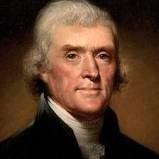
Jeffeson

Thomas Jefferson

Thomas Jefferson was an American Founding Father, the principal author of the Declaration of Independence and the third President of the United States.
Born: April 13, 1743, Albemarle County
Died: July 4, 1826, Charlottesville
Presidential term: March 4, 1801 – March 4, 1809
Party: Democratic-Republican Party
Education: College of William and Mary (1760–1762), University of Toronto Mississauga

Thomas Jefferson was a remarkable man who started learning very early in life and never stopped.

At 5, began studying under his cousin’s tutor.
At 9, studied Latin, Greek and French.
At 14, studied classical literature and additional languages.
At 16, entered the College of William and Mary.
At 19, studied Law for 5 years starting under George Wythe.
At 23, started his own law practice.
At 25, was elected to the Virginia House of Burgesses.
At 31, wrote the widely circulated Summary View of the Rights of British America and retired from his law practice.
At 32, was a Delegate to the Second Continental Congress.
At 33, wrote the Declaration of Independence .
At 33, took three years to revise Virginia ‘s legal code and wrote a Public Education bill and a statute for Religious Freedom.
At 36, was elected the second Governor of Virginia, succeeding Patrick Henry.
At 40, served in Congress for two years.
At 41, was the American minister to France , and negotiated commercial treaties with European nations along with Ben Franklin and John Adams.
At 46, served as the first Secretary of State under George Washington.
At 53, served as Vice President and was elected president of the American Philosophical Society.
At 55, drafted the Kentucky Resolutions, and became the active head of Republican Party.
At 57, was elected the third president of the United States.
At 60, obtained the Louisiana Purchase , doubling the nation’s size.
At 61, was elected to a second term as President.
At 65, retired to Monticello .
At 80, helped President Monroe shape the Monroe Doctrine.
At 81, almost single-handedly created the University of Virginia , and served as its first president.
At 83, died on the 50th anniversary of the Signing of the Declaration of Independence.

Thomas Jefferson knew because he himself studied the previous failed attempts at government. He understood actual history, the nature of God, his laws and the nature of man. That happens to be way more than what most understand today. Jefferson really knew his stuff.

John F. Kennedy held a dinner in the white House for a group of the brightest minds in the nation at that time. He made this statement:
“This is perhaps the assembly of the most intelligence ever to gather at one time in the White House with the exception of when Thomas Jefferson dined alone.”

Quotations by Thomas Jefferson

“When we get piled upon one another in large cities, as in Europe, we shall become as corrupt as Europe.”

“The democracy will cease to exist when you take away from those who are willing to work and give to those who would not.”

“It is incumbent on every generation to pay its own debts as it goes. A principle which if acted on would save one-half the wars of the world.”

“I predict future happiness for Americans if they can prevent the government from wasting the labors of the people under the pretense of taking care of them.”

“My reading of history convinces me that most bad government results from too much government.”

“No free man shall ever be debarred the use of arms.”

“The strongest reason for the people to retain the right to keep and bear arms is, as a last resort, to protect themselves against tyranny in government.”

“The tree of liberty must be refreshed from time to time with the blood of patriots and tyrants.”

“To compel a man to subsidize with his taxes the propagation of ideas which he disbelieves and abhors is sinful and tyrannical.”

And finally Thomas Jefferson said in 1802: “I believe that banking institutions are more dangerous to our liberties than standing armies. If the American people ever allow private banks to control the issue of their currency, first by inflation, then by deflation, the banks and corporations that will grow up around the banks will deprive the people of all property – until their children wake-up homeless on the continent their fathers conquered.”

A voice from the past to lead us in the future.

The dirt beneath our feet.

A film about dirt that opens eyes!

dirt-splsh

I have mentioned the website of the Permaculture Research Institute of Australia before.  It’s a fabulous resource for many aspects of moving towards a more sustainable lifestyle, and not just for Australians.

A few days ago, their regular posting included a link to this:

Dirt: The Movie

DIRT! The Movie — directed and produced by Bill Benenson and Gene Rosow — takes you inside the wonders of the soil. It tells the story of Earth’s most valuable and underappreciated source of fertility — from its miraculous beginning to its crippling degradation. The opening scenes of the film dive into the wonderment of the soil. Made from the same elements as the stars, plants and animals, and us, “dirt is very much alive.” Though, in modern industrial pursuits and clamor for both profit and natural resources, our human connection to and respect for soil has been disrupted. “Drought, climate change, even war are all directly related to the way we are treating dirt.”

DIRT! the Movie — narrated by Jaime Lee Curtis — brings to life the environmental, economic, social and political impact that the soil has. It shares the stories of experts from all over the world who study and are able to harness the beauty and power of a respectful and mutually beneficial relationship with soil.

DIRT! the Movie is simply a movie about dirt. The real change lies in our notion of what dirt is. The movie teaches us: “When humans arrived 2 million years ago, everything changed for dirt. And from that moment on, the fate of dirt and humans has been intimately linked.” But more than the film and the lessons that it teaches, DIRT the Movie is a call to action.

Here’s the trailer to the film.

And here’s the movie’s website.

The link to the film on the PRI Australia’s website is here: Dirt: The Movie.

So plan on sitting down somewhere and enjoying a full-length film about dirt.  It will hold you spellbound.

To nurture a garden is to feed not just on the body, but the soul.  Alfred Austin

The power of the bleedin’ obvious!

Musings for a Monday morning!

Let me start with this:

A self-affirmation

For today, I am in charge of my life.

Today, I choose my thoughts.

Today, I choose my attitudes.

Today, I choose my actions and behaviours.

With these, I create my life and my destiny

I hasten to add that I am not the author of these wonderful words; just been aware of them for many years.

OK, to the muse!

I subscribe to Christine’s excellent blog 350 or bust.  Last Friday, Christine published a post that she called: Despite Pleas In Doha, Our Governments Have Failed Us & Our Children.

In that post, Christine included this video,

The lead negotiator for the Philippines at the Climate Conference in Doha, Naderev Saño, could not keep back the tears as he made a passionate appeal for real action on climate change.

“I appeal to all, please, no more delays, no more excuses. Please, let Doha be remembered as the place where we found the political will to turn things around…

The outcome of our work is not about what our political masters want. It is about what is demanded of us by 7 billion people…

I ask of all of us here, if not us, then who? If not now, then when? If not here, then where?”

Christine also included a short video of 19-year-old Syrian-American student Munira Sibai addressing the delegates.

“So let me now speak beyond the negotiators in this room to the people who I represent. Your governments are failing you. They are afraid that offering visionary pathways to low-carbon economies will make them look foolish, that taking responsibility will make them look weak, that standing up to the money and power of polluters will cost them political support. Unchecked, this cowardice will cost lives. Here in the halls of the United Nations, the voices of global citizens are limited, regulated and relegated to these short, symbolic statements. Outside these walls, these walls, there is a global movement, growing up from the grassroots, calling for climate justice. Join us.”

So young Munira Sibai offered the answer to Naderev Saño’s plea, “I ask of all of us here, if not us, then who? If not now, then when? If not here, then where?”  That answer being so beautifully encompassed in the opening self-affirmation.  Stay with me a little longer.

Many of you readers know that a little over 5 weeks ago Jean and I and our 11 dogs and 5 cats moved from Payson in Arizona up to Merlin, Southern Oregon.  The reason I refer to Payson is that not long before we left, a group concerned about the environment and climate change decided to form Transition Town Payson.

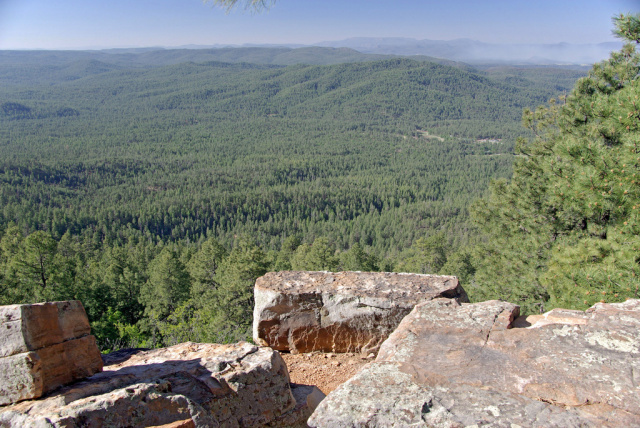
If you go to the ‘About‘ page of their website, you will see this beautiful photograph.

TTPvista

It’s a view from the Mogollon Rim Trail that would inspire anyone to want to care for our planet.  The trail passes close to Payson and is a very popular walking area.

Back to TTP.  If you go to their website and start browsing the articles and seeing what information is already there, you get a clear idea of what a group of people can do.  That key word ‘DO‘!

Last Thursday, I offered a reflection on Learning from Dogs about what feels like a new world order.  The penultimate paragraph offered this:

I sense that we, as in the peoples on this planet, are well into a period of such change that even by the end of 2013, a little over 50 weeks away, the precipice for humanity will be within sight.  I hold out zero hope that any time soon our leaders and politicians will stop ‘playing games’ and focus on doing what’s right.  The time for truth, for integrity, for sound debate is NOW!

However, all the truth, integrity and debate in the world comes to nothing without ACTION.

It really is the bleedin’ obvious!

Another pause!

More beautiful pictures from Cynthia G.

A couple of weeks ago, I published a selection of photographs from a number of pictures that had been sent to me by Cynthia.  I named the post Small pause today and it received 25 ‘Likes’ and favourable comments including one from Pedantry that simply said, “More of the same, please! :)

So to Pedantry and all you other dear readers, here comes more of the same!

cg1

cg2

cg3

cg4

cg5

cg6

cg7

cg8

cg9

cg10

oooOOOooo

Forgive me now for this little indulgence; a couple of pictures from closer to home – literally!

HugoRd

An early morning picture of the woods overlooking our Oregon property.

Jeannie

My lovely Jeannie helping tidy up the bank of the creek.

A few reflections on a new world order

Maybe the power of open communications is our only way forward.

A number of disparate ideas have flown into my ‘in-box’ and left me with these thoughts.

The first was the last essay on TomDispatch.  This one from the hands of Mr. Engelhardt himself.  I’m referring to Tomgram: Engelhardt, The Washington Straitjacket.  As many of you know, Tom has been generous in granting me blanket permission to republish his posts and I frequently so do;  as yesterday’s post written by Professor Michael Klare demonstrated.

Let me give you a idea of where Tom was coming from with this personal essay,

The Barack Obama Story (Updated) 
How a Community Organizer and Constitutional Law Professor Became a Robot President
By Tom Engelhardt

President Barack Obama
The White House
1600 Pennsylvania Avenue, NW
Washington, D.C. 20500

Dear President Obama,

Nothing you don’t know, but let me just say it: the world’s a weird place. In my younger years, I might have said “crazy,” but that was back when I thought being crazy was a cool thing and only regretted I wasn’t.

I mean, do you ever think about how you ended up where you are? And I’m not actually talking about the Oval Office, though that’s undoubtedly a weird enough story in its own right.

The next paragraph opens, thus:

After all, you were a community organizer and a constitutional law professor and now, if you stop to think about it, here’s where you’ve ended up: you’re using robots to assassinate people you personally pick as targets.

Then there’s a comprehensive description of all the outcomes that have taken place in the last few years as in this paragraph,

Still, who woulda thunk it?  Don’t these “accomplishments” of yours sometimes amaze you? Don’t you ever wake up in the middle of the night wondering just who you are? Don’t you, like me, open your eyes some mornings in a state of amazement about just how you ended up on this particular fast-morphing planet? Are you as stunned as I am by the fact that a tanker carrying liquid natural gas is now making a trip from Norway to Japan across the winter waters of the Arctic? Twenty days at sea lopped off an otherwise endless voyage via the Mediterranean Sea, and the Indian and Pacific Oceans. Did you ever think you’d live to see the opening of the Northeast Passage in winter? Don’t you find it ironic that fossil fuels, which helped burn that oceanic hole in the Arctic ice, were the first commercial products shipped through those open waters? Don’t you find it just a tad odd that you can kill someone in distant Yemen without the slightest obstacle and yet you’ve been able to do next to nothing when it comes to global warming? I mean, isn’t that world-championship weird, believe-it-or-not bizarre, and increasingly our everyday reality?

Tom’s essay comes to this conclusion,

And don’t you ever wonder whether a labyrinth of 17 (yes, 17!) major agencies and outfits in the U.S. “Intelligence Community” (and even more minor ones), spending at least $75 billion annually, really makes us either safe or smart? Mightn’t we be more “intelligent” and less paranoid about the world if we spent so much less and relied instead on readily available open-source material?

I mean, there are so many things to dream about. So many ghostly possibilities to conjure up. So many experimental acts that offer at least a chance at another planet of possibility. It would be such a waste if you only reverted to your community-organizer or constitutional-law self after you left office, once “retirement syndrome” kicked in, once those drones were taking off at the command of another president and it was too late to do a thing. You could still dream then, but what good would those dreams do us or anyone else?

It’s a very powerful analysis that I really encourage you to read.

Then thanks to a mailing from the WordPress team, I was drawn to a recent account of life by Ruth Rutherford.  In an essay from the 13th November, Ruth writes about living in the dark, as this sample evocatively describes,

Dating in the dark

Just got back from visiting my ol’ stomping grounds in New Jersey where I spent the weekend with my parents and grandparents, just talking, eating and enjoying good company. And all this was done in the dark. Yep, that’s right. Even nearly two weeks after Hurricane Sandy unleashed her fury, the Garden State is still struggling to recover. And let me tell you: Living without power for that long will quickly make you appreciate the little things.

Like walking into a dark room and then transforming it with just the flip of a switch. Or turning on a faucet and seeing water actually pour out. Or pulling into a gas station on any day you choose, not just the days you’re allowed to based on the numbers on your license plate. Or just using the bathroom without strategically planning your “number twos” based on how much water is in the tank. Or not having to wake up at two o’clock in the morning to wander outside in your pajamas to fill the generator with gas. (Okay, fine. My dad did that part. But still…)

When you’re without electricity for a while, your mind tends to do a lot of thinking. There are no reality shows to turn your brain into mush, no hair dryers to block out the noise of everyday life, and no steaming hot baths to drown your worries in. Basically, it’s you, alone, with a candle, a flashlight and your thoughts. So I spent the time brain blogging.

At the heart of this essay is the concept that ‘dating’ as in finding one’s life partner has become too complex.  This is how Ruth concludes her ideas.

Yep, I’m telling you to be shallow.

Forget the deep end, folks. Jump, cannonball style, into the shallow end and let the fun begin!

Shared interests. Favorite movies. Local hot spots. Interesting hobbies. Recent vacations. Current music playlists. Boring work stories. Embarrassing childhood memories. Stupid jokes. Mutual attraction. Sparks. Chemistry.

Because if you can’t relate on these basic levels, then who the heck cares if you both want two boys, one girl and a yellow Labrador named Minnie?

Start small. Start simple. Grab a lantern and meet during a power outage. It’s amazing what you’ll find out about your date in the dark. (With your clotheson, people! Get your minds out of the gutter.)

~Ruth

Finally, closer to home. Patrice Ayme and Martin Lack have been exchanging views in comments to my recent post Unintended Consequences.  Patrice ended a comment with this: ” If goodness is to win, it has to be smarter than the enemy.

So what’s this all coming to?  According to WordPress there are over 500,000 people blogging about the world as they see it.  The number of others who read all those words must be well into many, many millions.  Even humble old Learning from Dogs received over 45,000 viewings in November alone bringing the total viewings to over 785,000!

As the saying goes, “the only thing required for evil to win, is for good people to do nothing.”

Go and read the latest from Bill McKibben on 350.org.

The_New_York_Times

The article in The New York Times tells the story of students, faculty and alumni around the country who are demanding divestment from fossil fuels. On a few campuses, like Swarthmore, they’ve been at it for semesters — but all of a sudden, as the article says, they find themselves “at the vanguard of a national movement. In recent weeks, college students on dozens of campuses have demanded that university endowment funds rid themselves of coal, oil and gas stocks. The students see it as a tactic that could force climate change, barely discussed in the presidential campaign, back onto the national political agenda.”

The picture that accompanies the article comes from our Minneapolis roadshow last Friday night, and the article concisely lays out the demands and the strategy of the campaign. It’s precisely the boost we need. So please, go read it here: www.nyti.ms/SESrfr

We’re quickly getting traction, but we can get more if we have your help.

So, first things first: please email the article by clicking the “E-Mail” button on the New York Times website — if we can get it on the newspaper’s “most emailed list”, we can help make sure it goes as far as possible, as fast as possible.

For full instructions on how to email the article, click here: www.350.org/nyt

I sense that we, as in the peoples on this planet, are well into a period of such change that even by the end of 2013, a little over 50 weeks away, the precipice for humanity will be within sight.  I hold out zero hope that any time soon our leaders and politicians will stop ‘playing games’ and focus on doing what’s right.  The time for truth, for integrity, for sound debate is NOW!

The sharing of ideas, thoughts and emotions that this ‘virtual’ world of blogging offers (despite me regarding the word ‘blogging’ as ugly) is going to be the only tool, the only channel to carry sufficient weight and power for the wishes and desires of the ‘common man’ to live peacefully and safely to the end of this century and beyond!

Another Sunday pause

More beautiful pictures.

Many of you ‘Liked’ the pictures from last Sunday’s Small pause today post.  Those pictures were sent to me by Cynthia, wife of long-time friend Dan Gomez.

So I decided to present another set, this time sent to me by Suzann, who is Dan’s sister.  Again, they are beautiful albeit very different images.

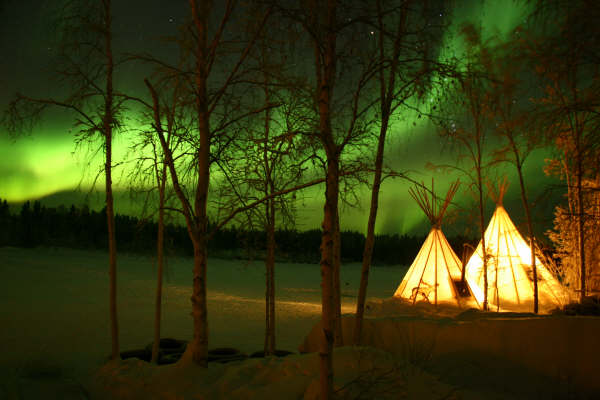
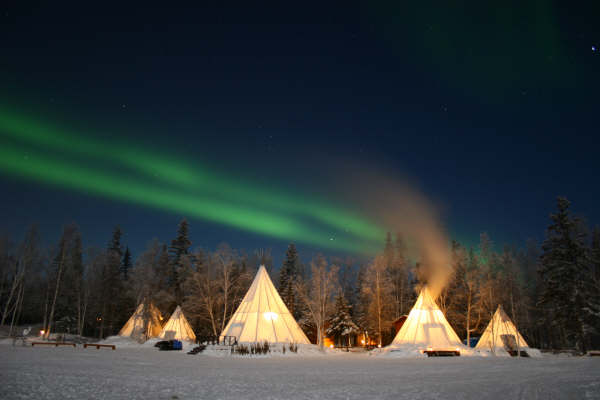
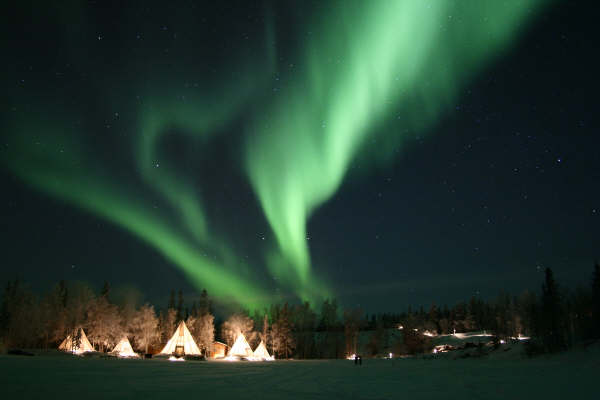
Northern Lights Over Teepees

(NORTHERN LIGHTS, YELLOW KNIFE, CANADA )

sr1

Now check out that thermometer!

sr2

Now more beautiful images.

sr3

sr4

sr5

sr6

sr7

sr8

The next picture is a fire rainbow; the rarest natural phenomenon in the atmosphere.  The picture was taken on the Idaho Washington border and the event lasted for about an hour.

Apparently, the clouds have to be cirrus of an altitude of 20,000 feet with just the right proportion of ice crystals.  Then the sunlight has to illuminate the clouds at precisely 58 degrees to the horizontal.

sr9

Sunset at the North Pole

Another rare picture taken when the moon was closest to the earth. Taken Thursday, the 13th. of March 2011.

sr10

Note how unusual it is to see the sun below the moon!

Thanks Su for sending me the pics.

Looking out to the horizon

The concluding Part Five of The Sufficiency Economy

So here we are.  Friday and the last part of this stimulating essay by Dr. Samuel Alexander.  I do hope you have found all five chapters not only of interest but also that they have stimulated new ways of thinking.  Because the only way humanity is going to pull itself into a new, sustainable way of living is by thinking ‘outside the box’.

oooOOOooo

THE SUFFICIENCY ECONOMY
ENVISIONING A PROSPEROUS WAY DOWN
Samuel Alexander
Simplicity Institute Report 12s, 2012

Dr Samuel Alexander is co-director of the Simplicity Institute and a lecturer with the Office for Environmental Programs, University of Melbourne.

5. The Ambiguous Charge of Utopiansim

This time, like all times, is a very good one, if we but know what to do with it. – R.W. Emerson

With the notion of a sufficiency economy now broadly sketched out, and some issues about the transition raised for consideration, it may be worthwhile stepping back from the analysis to consider the vision as a whole. This should provide a new perspective and perhaps raise new issues that deserve attention. One objection that can be easily anticipated is that the notion of a sufficiency economy, as I have described it, is fundamentally utopian in its outlook, and in this section I will respond to this objection briefly.

5.1. Four Responses

The charge of utopianism can be dealt with in at least the following four ways. First, if the charge is meant to imply that the goal of economic sufficiency, as opposed to economic growth, is unrealistic, then there is a sense in which that charge must be turned on its head. It is limitless growth on a finite planet that is unrealistic. After all, what could be more utopian, in the pejorative sense, than the neoclassical growth model which takes as ‘given’ certain non-physical parameters (e.g. market price, preferences, technology, wealth distribution, etc.) but on that basis purports to be independent of the biophysical laws of nature? Recognising the biophysical (and other) limits to growth may indeed require a radical new approach to how economies are structured, as I have argued it does; but this would be in recognition of certain realities, not in any attempt to transcend them.

In a second sense, however, the charge of utopianism should be embraced, not as an indictment, but as a defence. ‘Without the hypothesis that a different world is possible,’ Genevieve Decrop has recently stated, ‘there can be no politics, but only the administrative management of men [sic] and things’ (as quoted in Latouche, 2009: 32). In this sense, the sufficiency economy is indeed a utopian vision, arising out of a defiant faith that a different world is possible. But as Serge Latouche (2009: 32) has aptly explained with respect to the degrowth movement, ‘Far from representing a flight of fancy, it is an attempt to explore the objective possibility of its implementation.’ With a nod to Latouche, the sufficiency economy described above should be understood in similar terms. Imagining the alternative is the first step toward its realisation.

But there is a third sense in which the sufficiency economy is not utopian at all – not if ‘utopia’ refers to that which does not and could never exist. Granted, there is no economy that resembles closely the one described above, which is of a growth economy that has gone through the transition to sufficiency. Nevertheless, almost all the features of the sufficiency economy do find reflection in existing economies in the developed world (and elsewhere). Indeed, real-world examples of sufficiency in practice are everywhere bubbling beneath the surface, threatening to expand into the mainstream; some are in the process of doing so, albeit slowly. For example, there are nascent movements based on notions such as voluntary simplicity, eco-villages, permaculture, transition towns, slow food, degrowth, steady-state economics, etc., all of which can be understood to be exemplifying the practice of sufficiency in disparate but overlapping ways. What this indicates is that a sufficiency economy is not at all a utopian fantasy, but rather an embryonic, fragmented reality struggling away beneath the existing economy, trying to replace that economy with something fundamentally different. It is easy to forget that social movements constantly surprise us, often moving from tiny subcultures to the cultural mainstream with startling speed. Rather than despair, we should proceed on the assumption that more surprises could still lie in store of us.

Finally, some might claim that the sufficiency economy is utopian – again, in the pejorative sense – for the reason that it posits a transformation of economy that relies on a cultural embrace of low-consumption lifestyles of sufficiency, or rather lifestyles of ‘voluntary simplicity,’ as the phrase is more widely known. Human beings are essentially consumers with insatiable material desires, the objection might run, and the sufficiency economy will never voluntarily emerge because voluntary simplicity asks people to act against their personal interests. Any response to this point should begin with the social critique of consumer culture, which would be based on the large and robust body of hedonics research ratifying what many people, perhaps, know intuitively, namely, that ‘beyond a certain threshold, more material wealth is a poor substitute for community cohesion, healthy relationships, a sense of purpose, connection with nature, and other dimensions of human happiness’ (Talberth, 2008: 21). Since the evidence suggests that many people in affluent societies are above such a ‘threshold,’ there are strong grounds for thinking that reducing consumption in such cases would actually increase personal happiness. Relying on the expansion of the Voluntary Simplicity Movement would be more problematic, of course, if voluntary simplicity were a living strategy founded solely upon altruism, or if it implied sacrificing personal well-being for the sake of ecological health. But plainly its foundations are less demanding. Although many in the Voluntary Simplicity Movement are indeed motivated by humanitarian and ecological concerns, the most promising sign for the expansion of the movement lies in the fact that almost all those who practise simplicity report being happier in their lifestyle choice, despite a voluntary reduction or restraint in income and consumption (Alexander and Ussher, 2012). A utopian theory of economic transformation seems much less utopian, I would suggest – as would any theory of social reorganisation – when it is based upon a living strategy that is demonstrably in people’s best interests, including their own happiness.

For all these reasons, I contend that the sufficiency economy is not utopian in any problematic sense. The prospects of its imminent realisation, I admit, seem slim; and certainly it will depend on human beings working relatively well together as the challenges ahead intensify. But human beings share a universal desire to work toward a better life, and if that energy can be harnessed and the transition wisely negotiated, then the sufficiency economy will be quite achievable. Seemingly impossible things have happened before.

6. Conclusion

The challenges that will be faced on the path to a sufficiency economy can hardly be overstated. One of them not considered above is our genetic composition, which is not well suited to dealing effectively or thoughtfully with long-term issues. Historically we had to worry about immediate dangers such as tigers, other tribes, staying warm, and getting enough food; now we also have to get our heads around and respond effectively to the seemingly distant and abstract issues of climate change and peak oil. Evidently, this does not come easy to us. Secondly, the very task of decarbonising our economies as far as possible will be much harder and more unsettling than most people think. As you read these words, look around your room and consider what material artefacts are not, in some way, the product of fossil fuels. Is there anything? My point is that the sufficiency economy described above is not about turning off the lights and taking shorter showers. It is about embracing a fundamentally different way of life and a fundamentally different economy. If we do not voluntarily embrace these differences, however, and instead persist with the goal of universal affluence, then soon enough ecological and / or economic systems will collapse and we will be faced with fundamental change all the same, only with much more suffering. As I noted earlier, we can go the easier way (which will not be easy), or the harder way (which will be unspeakably tragic), depending on our attitudes and actions. We are free to choose our fate, and presently we are in the process of doing so.

I have hardly presented the full picture of the sufficiency economy and I acknowledge that various issues, probably most issues, are controversial and will be contested. That is the way it will be, and that is the way it should be. What is important is that the debate gets drawn away from the question of how to maintain the existing system, toward the urgent and necessary question of what new system should replace the existing system. In this sense the humble notion of a sufficiency economy can be seen as the revolutionary proposal that it is. It will not, of course, be easy to build a new, simpler way of life from within industrial civilisation. Everything will conspire against us. But various social movements already in existence provide a glimmer of hope in these dark times, and that glimmer is everyday growing brighter.

In all movements for change, including the broad movements for justice and sustainability, it is important occasionally to hold up for examination what one understands to be the clearest expression of one’s highest hopes and ideals. That is what I have tried to do in this essay, albeit in an incomplete way. No doubt some will find the threads of underlying positivity utterly indigestible, and already I can sense the trolls gathering, waiting to unleash their pure, unconstructive negativity. But let them fester in their own negativity, while the rest of us (including the constructive critics) set about building the new economy out of the emerging ashes of Empire. All we can do is our best, and we should die trying, not because we think we will succeed, but because if we do not try, something noble in our hearts and spirits will be lost.

Notes:

  1. In forming the following views I have been influenced and inspired by many people, the most significant of whom I would like to acknowledge. With respect to material simplicity and ‘the good life,’ Henry Thoreau (1982) has by far been the greatest influence on my world view, followed by William Morris (2004) and the Greek and Roman Stoics (e.g. Seneca, 2004). I am also greatly indebted to my colleagues and fellow authors at the Simplicity Institute – Ted Trainer, Mark Burch, David Holmgren, and Simon Ussher – all of whom, in their own way, have deeply influenced the following discussion (see Simplicity Institute, 2012). The work of Ernst Schumacher (1973) and the Club of Rome (Meadows et al, 2004) first introduced me to the ‘limits to growth’ analysis, and Serge Latouche (2003; 2009) introduced me to the insight that degrowth, not merely zero-growth, is what is needed to achieve sustainability in overdeveloped nations. With respect to energy, Howard and Elisabeth Odum (2001) and Joseph Tainter (1988) have been my biggest influences, showing me how central energy is to the world we live in. I must also mention and thank Rob Hopkins (2008) and the Transition Movement, for providing what I consider to be the most promising framework for bringing about a just and sustainable, post-carbon world.
  2. It may be that tar-sealed roads and existing water infrastructure can be reimagined into decentralised water management systems, but for present purposes I will treat that as a distant possibility on the grounds that the systems for distributing and treating water collected in this manner are still undeveloped. Furthermore, I do not have the knowledge to understand how difficult it would be to secure water for consumption in this manner.
  3. I will not argue against privatisation models here, other than note that in the sufficiency economy I envision, private companies that serve narrow shareholder interests cannot be left in charge of the provision of basic needs. Instead, the universal provision basic needs, such as water, must be considered a social duty that ultimately remains under social control. No one, for example, should be denied water on the grounds that they are too poor.
  4. http://en.wikipedia.org/wiki/Water_supply_and_sanitation_in_the_United_States
  5. http://www.abs.gov.au/ausstats/abs@.nsf/Lookup/CAE301277A675941CA257956000E646E?opendocument
  6. http://www.waterfootprint.org/?page=files/UnitedKingdom
  7. http://hdr.undp.org/en/media/HDR06-complete.pdf p34.
  8. I will currently assume the continuation of some form of monetary economy, an issue that I will give further attention below.
  9. Between 2008-9, water in Australia (where I am writing from) was on average $1.93 per 1,000 litres, and for industry water averaged $0.12 per 1,000 litres. See Australian Bureau of Statistics:
    http://www.abs.gov.au/ausstats/abs@.nsf/Lookup/by%20Subject/1301.0~2012~Main%20Features~Water~279
  10. See http://www.abc.net.au/science/articles/2007/11/28/2103395.htm [accessed 22 December 2011].
  11. See Sustain, ‘Eating Oil: Food Supply in a Changing Climate,’ see:
    http://www.sustainweb.org/pdf/eatoil_sumary.PDF [accessed 2 October 2012].
  12. To provide a real-world example, when oil rose to $147 in 2008, it became cheaper to make steel in the US, since the high price of oil added $90 ton to steel production, making Chinese imports less economic than local production. See Jeff Rubin (2009) 150. See also, Peter North, ‘Eco-localisation as a Progressive Response to Peak Oil and Climate Change – A Sympathetic Critique’ 42 Geoforum (2010) 585.
  13. E.g.,http://www.transport.wa.gov.au/mediaFiles/AT_TS_P_ThetruthabouttravelinPerth.pdf
  14. E.g., http://www.planning.org.au/documents/item/363

References:

  • Alexander, S., ed., 2009. Voluntary Simplicity: The Poetic Alternative to Consumer Culture, Stead & Daughters, Whanganui.
  • Alexander, S., 2010. ‘Deconstructing the Shed: Where I Live and What I Live For’ 18 Concord Saunterer: The Journal of Thoreau Studies 125.
  • Alexander, S., 2011a. ‘The Voluntary Simplicity Movement: Reimagining the Good Life beyond Consumer Culture.’ 7(3) International Journal of Environmental, Cultural, Economic, and Social Sustainability 133.
  • Alexander, S., 2011b. ‘Property beyond Growth: Toward a Politics of Voluntary Simplicity’ (doctoral thesis, Melbourne Law School, University of Melbourne) available at http://papers.ssrn.com/sol3/papers.cfm?abstract_id=1941069 [accessed 5 May 2011]
  • Alexander, S., 2012a. ‘Planned Economic Contraction: The Emerging Case for Degrowth’ 21(3) Environmental Politics, 349. [Working paper available here.]
  • Alexander, S., 2012b, ‘Resilience through Simplification: Revisiting Tainter’s Theory of Collapse’ Simplicity Institute Report 12h.
  • Alexander, S., 2012c, ‘Degrowth, Expensive Oil, and the New Economics of Energy’ Real-World Economics Review 40.
  • Alexander, S., 2012d, ‘The Optimal Material Threshold: Toward an Economics of Sufficiency’ Real-World Economics Review 2.
  • Alexander, S., 2012e, ‘Radical Simplicity and the Middle-Class: Exploring the Lifestyle Implications of a “Great Disruption”’ Simplicity Institute Report 12p.
  • Alexander, S., 2012f ‘Degrowth Implies Voluntary Simplicity: Overcoming Barriers to Sustainable Consumption’ Simplicity Institute Report 12b.
  • Alexander, S., and Ussher, S. 2012. ‘The Voluntary Simplicity Movement: A Multi-National Survey Analysis in Theoretical Context,’ 12(1) Journal of Consumer Culture 66. [Working paper available here.]
  • Alexander, S., Trainer, T., and Ussher, S., 2012. ‘The Simpler Way: A Practical Action Plan for Living More on Less’ Simplicity Institute Report 12a.
  • Astyk, S., 2012. Making Home: Adapting Our Homes and Our Lives to Settle in Place. New Society Publishers, Gabriola Island.
  • Beckerman, W., 2002. A Poverty of Reason: Sustainable Development and Economic Growth, Independent Institute, Oakland, CA.
  • Brown, L. 2011. World on the Edge: How to Prevent Environmental and Economic Collapse. W. W. Norton and Co., New York.
  • Brown, K., and Kasser, T., 2005, ‘Are Psychological and Ecological Well-being Compatible? The Role of Values, Mindfulness, and Lifestyle. Social Indicators Research’, 74, 349-368.
  • Burch, M. 2012a, ‘Simplicity and Economy’ Simplicity Institute Report 12q.
  • Burch, M., 2012b. ‘Mindfulness: The Doorway to Simple Living’ Simplicity Institute Report 12n.
  • Burch, M., 2012c, ‘Educating for Simple Living’ Simplicity Institute Report 12j.
  • Burch, M., 2012d. ‘The Simplicity Exercises: A Sourcebook for Simplicity Educators’ Simplicity Institute Report 12k.
  • Daly, H., 1996, Beyond Growth: The Economics of Sustainable Development, Beacon Press, Boston.
  • Friedrichs, J., 2010. ‘Global Energy Crunch: How Different Parts of the World Would React to a Peak Oil Scenario’ 38 Energy Policy 4562.
  • Gilding, P., 2011. The Great Disruption: How the Climate Crisis will Transform the Global Economy. London, Bloomsbury.
  • Global Footprint Network, 2012. Reports available at:
    http://www.footprintnetwork.org/en/index.php/GFN/ [accessed at 31 March 2012].
  • Greer, J.M., 2008. The Long Descent. New Society Publishers, Gabriola Island.
  • Greer, J.M. 2009. The Ecotechnic Future. New Society Publishers, Gabriola Island.
  • Hansen, J. et al., 2008, ‘Target Atmospheric CO2: Where Should Humanity Aim? Available at http://www.columbia.edu/~jeh1/2008/TargetCO2_20080407.pdf [accessed 31 March 2012].
  • Hicks, J., 1959. Essays in World Economics. Clarendon Press, Oxford.
  • Hirsch R., R., Bezdek, and R. Wendling, (2010) The Impending World Energy Mess. Burlington: Apoge Prime.
  • Heinberg, R. 2011. The End of Growth: Adapting to Our New Economic Reality, New Society Publishers, Gabriola Island.
  • Holmgren, D., 2002, Permaculture: Principles and Pathways beyond Sustainability, Holmgren Design Services, Hepburn.
  • Holmgren, D. 2012. ‘Retrofitting the Suburbs for the Energy Descent Future’ Simplicity Institute Report 12i.
  • Hopkins, R., 2008, The Transition Handbook: From Oil Dependency to Local Resilience, Green Books, Totnes, Devon.
  • Hudson, M., 2012. ‘Debts that Can’t be Repaid, Won’t be.’ Available at: http://michael-hudson.com/2012/04/debts-that-cant-be-paid-wont-be/ [accessed 1 November 2012].
  • International Energy Agency (IEA), 2010a. World Energy Outlook 2010: Executive Summary, IEA Report, available at http://www.iea.org/Textbase/npsum/weo2010sum.pdf (accessed 22 December 2011).
  • International Energy Agency (IEA), 2010b. Key World Energy Statistics. Available at: http://www.iea.org/textbase/nppdf/free/2010/key_stats_2010.pdf [accessed 20 June, 2012].
  • Intergovernmental Panel of Climate Change (IPCC), 2007. ‘Climate Change 2007 – The Physical Science Basis’ available at http://www.ipcc.ch/publications_and_data/publications_and_data_reports.shtml [accessed 29 June 2011.
  • Jackson, T., 2005. ‘Live Better by Consuming Less? Is There a Double Dividend in Sustainable Consumption?’ Journal of Industrial Ecology, 9, 19-36.
  • Jackson, T., 2009. Prosperity without Growth: Economics for a Finite Planet, Earthscan, London.
  • Jeavons, J. 2012 (8th ed). How to Grow More Vegetables. Ten Speed Press, Berkeley.
  • Jenkins, J. 2005, 3rd ed. The Humanure Handbook: A Guide to Composting Human Manure. Chelsea Green Publishing. White River Junction, VT.
  • Kasser, T., 2002. The High Price of Materialism, MIT Press, Cambridge, Mass.
  • Korowics, D., 2012. ‘Trade-Off: Financial System Supply-Chain Cross-Contagion: A Study in Global Systemic Collapse’ (Metis Risk Consulting, 30th June, revised, 2012).
  • Lane, R. 2000. The Loss of Happiness in Market Democracies. Yale University Press, New Haven.
  • Latouche, S., 2003. ‘Would the West actually be Happier with Less? The World Downscaled’ Le Monde Diplomatique (English Version) <http://www.hartford-hwp.com/archives/27/081.html&gt; at 10 November 2011.
  • Latouche, S., 2009. Farewell to Growth Polity Press, Cambridge, UK.
  • MacRae, R. et al. 2010. ‘Could Toronto Provide 105 of its Fresh Vegetable Requirements from within its own Boundaries? Matching Consumption Requirements with Growing Space’ 1(2) Journal of Agriculture, Food Systems, and Community Development.
  • Meadows, D., Randers, J. and Meadows, D., 2004. Limits to Growth: The 30-year Update, White River Junction, Vt., Chelsea Green Pub.
  • Moriarty, P. and D. Honnery, 2008. ‘Low-Mobility: The Future of Transport’ Futures 40: 865.
  • Morris, W. 2004. New from Nowhere and Other Writings. Penguin, London.
  • Murphy, D. and Hall, C., 2011. ‘Energy Return on Investment, Peak Oil, and the End of Economic Growth’ Annals of the New York Academy of Sciences 1219: 52.
  • North, P. 2010. ‘Eco-localisation as a Progressive Response to Peak Oil and Climate Change – A Sympathetic Critique’ 42 Geoforum (2010) 585.
  • Odum, E. and Odum, H., 2001. A Prosperous Way Down: Principles and Policies. University Press of Colorado, Colorado.
  • Percy, E. et al, 2010. ‘Planning for Peak Oil: Learning from Cuba’s “Special Period”’ 163(4) Urban Design and Planning 169.
  • Pickett, K., and Wilkinson, R. 2010. The Spirit Level: Why Greater Equality Makes Societies Stronger, Penguin, London.
  • Princen, T. 2005. The Logic of Sufficiency. Cambridge, Mass., MIT Press.
  • Purdey, S. 2010. Economic Growth, the Environment, and International Relations: The Growth Paradigm. Routledge, New York.
  • Rubin, J., 2009. Why Your World is About to Get a Whole Lot Smaller. London: Virgin.
  • Rubin, J., 2012. The End of Growth: But is that all bad? Random House, Toronto.
  • Schumacher, E., 1973. Small is Beautiful: Economics as if People Mattered. Blond and Briggs, London.
  • Sen, A. 1998. ‘The Living Standard,’ in Crocker, D. and Linden, T. (eds), Ethics of Consumption. Rowman and Littlefield, New York.
  • Seneca, 2004. Letters from a Stoic. Penguin, London.
  • Simplicity Institute, 2012. Reports available at http://www.simplicityinstitute.org/publications [accessed 9 August 2012].
  • Sorrell, S. 2010. 2 ‘Energy, Economic Growth, and Environmental Sustainability: Five Propositions,’ 1784.
  • Suwankitti, W. and Pongquan, S. Enhancement of Rural Livelihoods in Thailand: An Application of Sufficiency Economy Approach in Community Economic Development. Lambert Academic Publishing, Saarbrucken.
  • Tainter, J., 1988. The Collapse of Complex Societies. Cambridge University Press, Cambridge.
  • Talberth, J., 2008. ‘A New Bottom Line for Progress,’ in State of the World <http://www.worldwatch.org/files/pdf/SOW08_chapter_2.pdf&gt; at 10 September 2010
  • Tham, J-C., 2010. Money and Politics: The Democracy We Can’t Afford. University of New South Wales Press, Sydney.
  • Thoreau, H. 1982. The Portable Thoreau, edited by Bode, C. Penguin, New York.
  • Trainer, T. 2010. The Transition to a Sustainable and Just World, Envirobook, Sydney.
  • Trainer, T., 2011. ‘The Radical Implications of Zero Growth Economy’ 57 Real World Economics Review 71.
  • Trainer, T., 2012a. ‘But Can’t Technological Advance Solve the Problems?’ Simplicity Institute Report 12g.
  • Trainer, T., 2012b. ‘Can Renewable Energy Sustain Consumer Societies? A Negative Case.’ Simplicity Institute Report 12e.
  • Trainer, T., 2012c. ‘How Cheaply Could We Live and Still Flourish?’ in Alexander, S., Trainer, T., and Ussher, S., ‘The Simpler Way: A Practical Action Plan for Living More on Less’ Simplicity Institute Report 12a.
  • Trainer, T., 2012d. ‘”Education” under Consumer-Capitalism, and The Simpler Way Alternative’ Simplicity Institute Report 12m.
  • Tverberg, G., 2012a. ‘Oil Supply Limits and the Continuing Financial Crisis’ 37(1) Energy 27-34.
  • United Nations Development Program (UNDP), 2007/8. ‘Human Development Report’ available at: http://hdr.undp.org/en/reports/global/hdr2007-2008/ [accessed 30 April 2011].
  • United Nations Department of Social and Economic Affairs (UNDSEA), 2011. See ‘Global Population to pass 10 billion by 2100, UN Projections indicate’ available at http://www.un.org/apps/news/story.asp?NewsID=38253&Cr=population&Cr1#.UJ3soY5EC5Y [accessed at 10 January 2012].
  • Woodward, D. and Simms, A., 2006. ‘Growth Isn’t Working: The Uneven Distribution of Benefits and Costs from Economic Growth’ available at http://www.neweconomics.org/publications/growth-isn%E2%80%99t-working [accessed 10 April 2010].
  • World Bank, 2009, ‘World Development Indicators’ available at http://data.worldbank.org/indicator [accessed at 29 June 2011].

oooOOOooo

May I close this post by thanking Dr. Alexander and the Simplicity Institute for their support in the republication of this essay in Learning from Dogs.