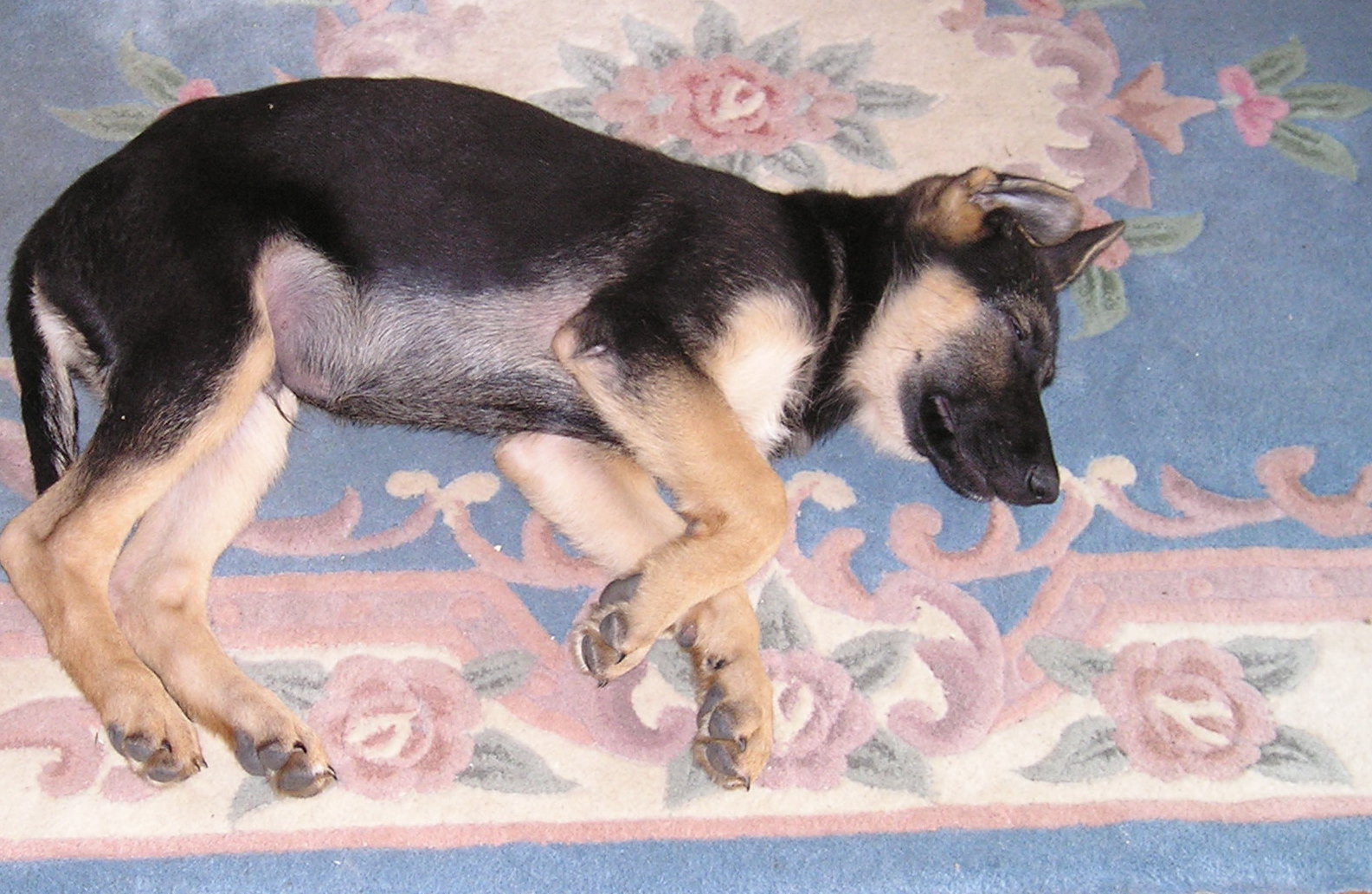
A young Pharaoh already embracing contentment. September, 2003.
Sidney Bloch, who is Emeritus Professor in Psychiatry at the University of Melbourne, recently published an essay over on the blogsite The Conversation. (Greatly recommended, by the way.)
His essay was about happiness versus contentment and certainly touched a few spots in this old Englishman’s psyche, contented as I am in this rural part of Oregon. However, until now I had never stopped to think about the difference between being happy and being contented.
So, I think you are going to enjoy Professor Bloch’s views, that now follow. His essay is republished, with permission, just as it was presented on The Conversation.
ooOOoo
Happiness is an illusion, here’s why you should seek contentment instead.
June 29, 2015 4.07pm EDT
Feeling content means having a deep-seated, abiding acceptance of oneself and one’s worth, together with a sense of self-fulfilment, meaning and purpose. James Theophane/Flickr, CC BY-SA
I want to share a personal view of what it is to be happy and how it differs from feeling content. Let me begin with a clinical story.
They met at a party; it was love at first sight just like one reads about in romantic novels. They married following an exhilarating courtship, and since they shared an eagerness to raise a family, Jennifer soon announced the joyful news of her pregnancy. They called their baby Annie after Adam’s late mother.
They felt blessed; every moment since their first encounter had been nothing but pleasurable. Everyone who knew them concurred that their lives as a couple had been replete with happiness.
Tragically, it was not to endure. Their first setback occurred only days after Annie’s birth. She was sleeping fitfully and her colic stubbornly persisted. Jennifer felt utterly demoralised as a new mother. Her mounting sense of guilt and melancholy led to her admission to a psychiatric ward (her first ever encounter with psychiatry); the fear of her harming Annie or herself spread through the family and circle of friends.
And then, quite shockingly, despite the most diligent medical and nursing care, Jennifer met her death after jumping off a second floor balcony. Her family and friends plunged into deep grief; the medical professionals who had looked after her were similarly bereft.
An elusive goal
Having worked as a psychiatrist for over four decades and got to know dozens of men, women, and children of diverse backgrounds and with unique life stories, I have witnessed many a sad narrative, although suicide has mercifully been a rare event.
These experiences, in tandem with a lifelong fascination with what makes people tick, have led me most reluctantly to the judgement that while we may savour happiness episodically, it will invariably be disrupted by unwelcome negative feelings. Still, most of humankind will continue to harbour the expectation of living happily and remain oblivious that this wishful fantasy is an unconscious way of warding off the threat of psychic pain.
Rather than confront and demoralise those who have sought my help, I have gently but honestly responded to their plaintive yearning (“all I want is just to be happy”), by highlighting an inherent human sentiment. Namely that clinging to the fiction of being able to avoid suffering and enjoying a continuing state of pleasure is tantamount to self-deception.
I have offered them the hope – but not a guarantee – that they have the potential to lead a more fulfilling life than hitherto by participating in a challenging, and at times even distressing process of self-exploration whose purpose is to enhance self understanding and acceptance of the reality-bound emotional state I call contentment.
You may retort: “But you treat people who are miserable, pessimistic and self-deprecating, surely you must be hopelessly biased.” I would readily understand your reaction but suggest that all of us, not just those in treatment, crave happiness and are repeatedly frustrated by its elusiveness.
Most of humankind continues to harbour the expectation of living happily and remains oblivious that this wishful fantasy is an unconscious way of warding off the threat of psychic pain. Kate Ter Haar/Flickr, CC BY-SA
As the father of psychoanalysis Sigmund Freud emphasised in his 1930 essay, Civilization and Its Discontents, we are much more vulnerable to unhappiness than its opposite. That’s because we are constantly threatened by three forces: the fragility of our physical self, “doomed” by ageing and disease; the external world, with its potential to destroy us (through floods, fires, storms and earthquakes, for example); and our unpredictably complicated relationships with other people (regarded by Freud as the most painful source of unhappiness).
So, am I simply a misanthrope? I hope not but I am inclined to agree with Elbert Hubbard, the American artist and philosopher, who said, “Life is just one damn thing after another“.
We only have to think about the 50 million people who are currently displaced and unlikely to find a secure haven anytime soon, or the 2.2 billion people – including millions of children – who live on less than US$2 a day to appreciate the validity of that remark.
A better option
Given the formidable obstacles to chasing after happiness or promoting its sustainability if we are lucky enough to come by it, what options do human beings have? I have not come across any meaningful approach to this question, even from the unswervingly confident proponents of the contemporary school of positive psychology.
So, I espouse the following: given that we have the means to distinguish between happiness and contentment, we can examine how they differ and, in so doing, identify an alternative to the futile pursuit of happiness.
Happiness, derived from the Norse word hap, means luck or chance; the phrase happy-go-lucky illustrates the association. Many Indo-European languages similarly conflate the feeling of happiness and luck. Glück in German, for instance, can be translated as either happiness or chance, while eftihia, the Greek word for happiness, is derived from ef, meaning good, and tixi, luck or chance.
Thus, a mother may have the good fortune to feel ecstatic when responding to her infant’s playfulness, only to see it evaporate a couple of years later and be replaced by the initial features of autism. In the story we started this article with, Jennifer may have persevered had her baby slept peacefully and not been assailed by colicky pain in her first few weeks of life.
Contentment is derived from the Latin contentus and usually translated as satisfied. No multiple meanings here to confuse us. In my view, feeling content refers to a deep-seated, abiding acceptance of one’s self and one’s worth together with a sense of self-fulfilment, meaning and purpose.
And, most critically, these assets are valued and nurtured whatever the circumstances, or even especially when they are distressing or depressing.I have had the privilege of knowing men and women who suffered grievously as children in the ghettoes and concentration camps of Nazi Europe but emerged from their nightmare to face the challenge of seeking strengths, emotional and spiritual, within themselves. With the passage of time, many succeeded in achieving a sense of deep-seated contentment.
What these survivors have clearly demonstrated is that accepting and respecting oneself, coupled with determining what is personally meaningful, stand a greater chance of accomplishment, even if never completed, than a relentless and ultimately futile pursuit of happiness. What’s more, contentment has the potential to serve as a robust foundation upon which episodes of joy and pleasure can be experienced and cherished.
ooOOoo
I read the essay on The Conversation out aloud to Jeannie yesterday morning and we both found it a very wise and insightful reflection.
Seems to me that there’s another aspect of life that we could learn from our wonderful dogs!
Believers and non-believers alike owe Pope Francis a giant ‘thank you’.
As regular followers of this place will have heard before, one of the roles of the ‘alpha’ dog, or more accurately referred to these days as the Mentor dog, in other words the female dog that in the days before domestication was the leader of her pack, was to move her pack if she intuited that the pack’s home range was not sustaining them. (Her other role was pick of the male dogs!)
Thus the title of today’s post came to me as just possibly the metaphorical equivalent. That the global human ‘pack’ has been sharply reminded by one of the world’s key religious leaders that ‘more of the same’ isn’t going to work for much longer.
Quite rightly, there has been a huge amount of reporting and analysis of last week’s Papal Encyclical. But one of the most beautiful and profoundly eloquent came from the writer Jennifer Browdy. If you haven’t come across her before then do drop across to her website; you will love what she presents! I have been a subscriber to her blog posts for some time and that was how I came across her post called: And the Walls Came Tumbling Down: Pope Francis Shows Us the Way. Jennifer very kindly gave me permission to republish her post today.
ooOOoo
And the Walls Came Tumbling Down: Pope Francis Shows Us the Way
By Jennifer Browdy
The Encyclical on climate change and the environment released by Pope Francis this week has all the magic of the fall of the Berlin Wall in 1991. Back then, the antagonism between the U.S. and the U.S.S.R. seemed implacable and unresolvable, a fight to the death. And then suddenly the wall came down and the world walked through, marveling, into a new era.
Now we have another abrupt shift, this time of a religious order. The leaders of the Catholic Church can hardly be accused of being “radical tree-huggers.” And yet here is Pope Francis, solemnly exhorting his flock of a billion Catholics worldwide to be respectful to Mother Earth and all the living beings she supports. In the blink of an eye, the language of Native American spirituality has been taken up by the same Catholic Church that once tortured and executed indigenous peoples precisely because of their different religious beliefs.
I urge you to read the entire Encyclical for yourself. It is a truly remarkable document, worth serious study. Of many passages I’d like to underline, here are two:
228 Care for nature is part of a lifestyle which includes the capacity for living together and communion. Jesus reminded us that we have God as our common Father and that this makes us brothers and sisters. Fraternal love can only be gratuitous; it can never be a means of repaying others for what they have done or will do for us. That is why it is possible to love our enemies. This same gratuitousness inspires us to love and accept the wind, the sun and the clouds, even though we cannot control them. In this sense, we can speak of a “universal fraternity”.
229 We must regain the conviction that we need one another, that we have a shared responsibility for others and the world, and that being good and decent are worth it. We have had enough of immorality and the mockery of ethics, goodness, faith and honesty. It is time to acknowledge that light-hearted superficiality has done us no good. When the foundations of social life are corroded, what ensues are battles over conflicting interests, new forms of violence and brutality, and obstacles to the growth of a genuine culture of care for the environment.
Here we find spiritual ecology enshrined as Catholic doctrine. And one thing about the Catholic Church—it is big on obedience. For believers, to ignore the Pope is to risk hellfire and damnation. In this case, though, the hellfire and damnation will be earthly, if we do not listen to the wise advice of Pope Francis and curb the insanity of industrial growth that goes beyond the limits of the planet to support.
Scientists appeal to our sense of reason, presenting compelling evidence that if we continue on our present path of wasteful consumption of the Earth’s resources, we will destroy our own future as a flourishing species. Religious leaders appeal to human beings’ moral conscience in invoking the responsibility of current parents and grandparents to leave a livable world to our descendants. It is up to the politicians, though, to translate vision into practice.
For too long, Christian conservatives in the U.S. have played the role of the ideological wing of Big Business, using money, manipulation and scare tactics to buy politicians and votes. In the face of the new Papal Encyclical, can American Christians really continue in good conscience to support the worst of the planet’s polluters and plunderers? Can they continue to elect mercenary politicians who hold our country hostage to the highest bidder?
If all good people who love our Earth and its creatures were to translate our love into action, as Pope Francis has just done so forcefully, I have no doubt the seemingly invincible wall of the industrial growth society we’ve been living with these past 200 years would melt away, revealing the path into a green, prosperous future.
“Where there’s a will, there’s a way,” the saying goes. Pope Francis has just shown us the will, and the way. It is now the task of us ordinary citizens to break the stranglehold of Big Business on politics and insist that our politicians follow his lead.
I close with an excerpt from the Pope’s “Christian Prayer in Union with Creation,” a vision of ecological interdependence if ever there was one:
“Triune Lord, wondrous community of infinite love,
teach us to contemplate you
in the beauty of the universe,
for all things speak of you.
“Awaken our praise and thankfulness
for every being that you have made.
Give us the grace to feel profoundly joined to everything that is.
God of love, show us our place in this world
as channels of your love
for all the creatures of this earth,
for not one of them is forgotten in your sight.
Enlighten those who possess power and money
that they may avoid the sin of indifference,
that they may love the common good, advance the weak,
and care for this world in which we live.”
Amen.
And the meek shall inherit the Earth…. Photo by J. Browdy, 2015
ooOOoo
I am sure that, whatever your religious or spiritual persuasion, you will agree with me with regard to the beauty of Jennifer’s essay. I know there are millions and millions of people who will want to look back in a few years time and see how Pope Francis’ legacy literally saved our lives.
Dear people, a very unreliable and intermittent internet connection meant it sensible to repeat a post from last year – An article from Mark Derr that is just beautiful.
That the dog is descended from the wolf—or more precisely, the wolf who stayed—is by now an accepted fact of evolution and history. But that fact is about all that is agreed to among the people who attempt to answer fundamental questions about the origins of the dog—specifically, the who, where, when, how and why of domestication.
Dates range from the dog’s earliest appearance in the archaeological record around 14,000 years ago to the earliest estimated time for its genetic sidestep from wolves around 135,000 years ago. Did the dog emerge in Central Europe, as the archaeological record suggests, or in East Asia, where the genetic evidence points? Were they tame wolves whose offspring over time became homebodies, or scavenging wolves whose love of human waste made them increasingly tame and submissive enough to insinuate themselves into human hearts? Or did humans learn to follow, herd and hunt big game from wolves and in so doing, enter into a complex dance of co-evolution?
Despite the adamancy of adherents to specific positions, the data are too incomplete, too subject to wildly different interpretations; some of the theories themselves too vague; and the physical evidence too sparse to say with certainty what happened. Nonetheless, some models—and not necessarily the most popular and current ones—more clearly fit what is known about dogs and wolves and humans than others. It is a field in high flux, due in no small measure to the full sequencing of the dog genome. But were I a bettor, I would wager that the winning view, the more-or-less historically correct one, shows that the dog is the result of the interaction of wolves and ancient humans rather than a self-invention by wolves or a “conquest” by humans.
Our views of the dog are integrally bound to the answers to these questions, and, for better or worse, those views help shape the way we approach our own and other dogs. It is difficult, for example, to treat as a valued companion a “social parasite” or, literally, a “shit-eater.” To argue that different breeds or types of dogs represent arrested stages of wolf development both physically and behaviorally is not only to confuse, biologically, description with prescription but also to overlook the dog’s unique behavioral adaptations to life with humans. Thus, according to some studies, the dog has developed barking, a little-used wolf talent, into a fairly sophisticated form of communication, but a person who finds barking the noise of a neotenic wolf is unlikely to hear what is being conveyed. “The dog is everywhere what society makes him,” Charles Dudley Warner wrote in Harper’s New Monthly Magazine in 1896. His words still hold true.
Since the dog is both a cultural and a biological creation, it is worth noting here that these opposing views of the dog’s origin echo the old theory that the sniveling, slinking pariah dogs and their like—“southern breeds”—derived from jackals, while “northern breeds”—Spitz-like dogs and Huskies—descended directly from the wolf. Darwin thought as much, so did the pioneering ethologist Konrad Lorenz until late in his life, when he accepted that the wolf was the sole progenitor of the dog. In the theories of Raymond Coppinger and others—and I think this transference is unconscious—the scavenging jackal becomes a camp-following, offal-eating, self-domesticating weenie of a tame wolf. In turn, those wolves become the ur-dog, still manifest in the pariahs of India and Asia, from which the dog we know is said to have emerged. It’s a tidy, convenient, unprovable story that has an element of truth—dogs are accomplished scavengers—but beyond that, it is the jackal theory with a tattered new coat. In dropping humans from the process, the scavenging, self-domesticating wolf theory ignores the archaeological record and other crucial facts that undercut it.
Fossils found at Zhoukoudian, China, have suggested to archaeologists such as Stanley Olsen, author of Origins of the Domestic Dog, that wolves and Homo erectus were at least working the same terrain as early as 500,000 years ago. The remains of wolves and Homo erectus dating to around 300,000 years ago have also been found in association with each other at Boxgrove in Kent, England, and from 150,000 years ago at Lauzerte in the south of France. It seems more likely that this omnivorous biped, with its tools and weapons, lived and hunted in proximity to that consummate social hunter, the wolf, through much of Eurasia, than that their bones simply fell into select caves together. Who scavenged from whom, we cannot say.
Wolves were far more numerous then than now, and they adapted to a wide range of habitats and prey. On the Eurasian steppes, wolves learned to follow herds of ungulates—in effect, to herd them. Meriwether Lewis observed the same behavior during his journey across North America in the opening years of the 19th century; he referred to wolves that watched over herds of bison on the Plains as the bisons’ “shepherds.” Of course, those “shepherds” liked it when human hunters attacked a herd because they killed many more animals than the wolves, and although the humans carried off the prime cuts, they left plenty behind.
Ethologists Wolfgang M. Schleidt and Michael D. Shalter refer to wolves as the first pastoralists in “Co-evolution of Humans and Canids,” their 2003 paper in the journal Cognition and Evolution. Early humans, they argue, learned to hunt and herd big game from those wolves; thus, the dog emerged from mutual cooperation between wolves and early humans, possibly including Neanderthal. There is no evidence yet of Neanderthal having tame wolves, much less dogs, but the larger point is that when modern humans arrived on the scene, they found wolves already tending their herds, and they immediately began to learn from them. That was long before humans began, in some parts of the world, to settle into more permanent villages, some 12,000 to 20,000 or 25,000 years ago.
Schleidt and Shalter based their model on wolf behavior and on genetic studies that have consistently shown that dogs and wolves diverged between 40,000 and 135,000 years ago. The first of those studies emerged from the lab of Robert K. Wayne, an evolutionary biologist at the University of California at Los Angeles who had already made headlines by showing definitively that the dog descended from the wolf alone. In a paper appearing in the June 13, 1997, issue of Science, Wayne and his collaborators said that dogs could have originated around 135,000 years ago in as many as four different places. They also argued that genetic exchanges between wolves and dogs continued—as they do to this day, albeit in an age during which dogs have become ubiquitous and wolves imperiled.
Since that paper appeared, the dog genome has been fully sequenced and provides a time frame for domestication of 9,000 generations, which the authors of a paper on the sequencing in the December 8, 2005, issue of Nature pegged at 27,000 years. But except for that, subsequent studies of mitochondrial DNA, which is most commonly used to date species divergence, have pointed to a time frame of 40,000 to 135,000, with 40,000 to 50,000 years ago looking like the consensus date.
Most of this work has been conducted in Wayne’s lab; in the Uppsala University lab of Carles Vilà, his former student and the lead researcher on the 1997 paper; and in the lab of Peter Savolainen of the Royal Institute of Technology, Stockholm, another collaborator on the original paper.
A signal problem with the early date is that it doesn’t appear to match the archaeological record. The dog is not only behaviorally but also morphologically different from the wolf, and such an animal first appears in the fossil record around 14,000 years ago in Bonn-Oberkassel, Germany. Archaeologists nearly universally peg the origin of the dog to that time.
Wayne, Vilà and their supporters have suggested from the start that behavioral change could predate morphological change, which would have occurred when humans began to create permanent settlements, thereby cutting—or at least reducing—their wolf-dogs’ contact with wild wolves. People might also have begun attempting to influence the appearance of their dogs at this point.
But those Germans get in the way again. Bonn-Oberkassel, site of the consensus first fossil dog, is not a permanent settlement.
Trying to square genetic and archaeological dates, Peter Savolainen resurveyed the mitochondrial DNA of dogs and wolves, recalibrated the molecular clock and proposed in a paper in Science, November 22, 2002, that the dog originated in East Asia 15,000 to 40,000 years ago. It was a good try, but now it appears that his “40,000 years ago” date was more accurate. Also, the earliest known dog appears in Germany, not East Asia, a region to which other genetic evidence points as well.
In many ways, the dispute over dates and places is just a precursor for the debate over how that happened. Archaeologists and evolutionary biologists who want the first dogs to look like dogs have tended to argue that the transition is a result of a biological phenomenon called “paedomorphosis.” That basically means that the animal’s physical development is delayed relative to its sexual maturation. It produces dogs with more domed heads; shorter, broader muzzles; and overall reduced size and slighter build than a wolf. Accelerated physical development relative to sexual maturation (hypermorphosis), on the other hand, produces dogs larger than the progenitor wolf.
When maturation is stopped early enough, the resulting animal is said to resemble a “neotenic,” or perpetually juvenilized, wolf. Coppinger and others have carried the argument further to argue that behaviorally, the dog resembles a neotenic wolf, with some breeds being more immature or less developed than others. There is general agreement that, beginning in the late 19th century when the dog began to move into the city as a pet, breeders sought to soften and humanize the appearance of some breeds to make them look like perpetual puppies. But beyond that, it is more correct to view the dog as an entity different from the wolf.
Currently, many researchers like to invoke an experiment in domestication launched in 1959 at the Institute of Cytology and Genetics in Novosibirsk, Siberia, by Dmitry Belyaev and continued after his death by Lyudmila Trut and her colleagues. Belyaev selectively bred foxes for “tameness” alone, defined as their level of friendliness toward people. He ended up with foxes that resembled dogs. A number of them had floppy ears, piebald coats, curly tails and a habit of submissively seeking attention from their human handlers with whines, whimpers and licks. (I wouldn’t want such a dog.)
Anthropologist Brian Hare tested the tame foxes in 2004 and found that they, like dogs, had the capacity to follow a human’s gaze, something wolves and wild foxes, not to mention chimpanzees, won’t do.
A number of researchers have embraced these tame foxes as a template for dog domestication. While they doubtless cast insight on the problem, I doubt that they will answer all questions. Arguments by analogy are suspect science and should be even more so in this case, since the selection criteria for these foxes were also against aggression—hardly the case for dogs—and foxes clearly are not wolves.
That said, the experiment does appear to confirm that selective breeding for behavior alone can also produce morphological changes similar to what the wolf experienced in becoming a dog.
Coppinger has invoked the fox experiment to support his theory that wolves that became dogs self-domesticated. As humans in some areas moved into permanent settlements, their refuse heaps became feeding grounds for wolves who were tame enough—or least-frightened enough—to feed near humans. Subsequent generations became more tame, and people began to allow them to wander their camps, eating feces, hunting rodents. From that group, people took some animals for food. Then, when the animals were thoroughly self-tamed, people began to train them to more wolfish behaviors, like hunting.
What he and others overlook in citing the fox experiment is that those animals were subjected to intense artificial selection by people. They also ignore the fact that the first dog appears in a seasonal camp, not a permanent settlement.
In their book, Dogs, Coppinger and his wife, Lorna, argue that these early protodogs would have resembled the ownerless dogs of Pemba Island, a remote part of the Zanzibar archipelago. As a model, Pemba suffers numerous problems, as does Coppinger’s theory. It is an Islamic island, and Islam has scarce place for dogs, believing them filthy, largely because they scavenge and eat excrement.
Beyond that, Pemba was a wealthy island in the 18th and 19th centuries due to its clove plantations, which were worked by African slaves and overseen by Arabs. The plantations have long since fallen into disrepair, on an island populated by the descendants of free slaves, where poverty is the rule. Attempting to read the past by looking at the present is a well recognized form of historical fallacy. It can’t be done, especially in a place where there is no strong cultural tradition.
Elsewhere in the developing world, free-ranging dogs are often more than scavengers or food. Some are fed; they protect territories or vendors’ carts. A few might be taken in, but, again, these dogs must be studied and understood in their current context and then placed in a broader historical context, if possible.
Moreover, Coppinger ignores the entire tradition of dogs and people in Europe, Japan and Korea—wherever dogs were employed from an apparently early date for a purpose, including companionship and ritual. Archaeologist Darcy F. Morey clearly demonstrated in the February 2006 issue of The Journal of Archaeological Science that people have been burying dogs and treating them with reverence and respect from the beginning, hardly the fate of scavengers.
People will argue, but I think the question of whether the dog is a juvenilized wolf is best answered with this observation: The dog follows human gaze, according to Hare, and is so attentive to people that it can imitate them, according to Vilmos Csányi, and it does so from an early age. No wolf of any age can replicate that basic behavior. It is far better to look at the dog as a differently developed wolf than as a developmentally retarded wolf.
Similarly, until shown otherwise, it seems more accurate to view domestication as a dynamic process involving wolves and people. At a time when the boundaries between human and wild were much more porous than now, people doubtless took in animals, especially young animals of all kinds, especially wolf pups, since in many places, they were hunting the same game and perhaps scavenging from each other.
As those pups matured, they returned to the wild to breed, with the naturally tamest among them denning close to the camp where they had been raised and, yes, could scavenge. Over the past year, researchers have shown that the area of the brain known as the amygdala is quite active when “fear of the other” begins to develop. In 2004, a team of researchers from Uppsala University, including Vilà, reported in the journal Molecular Brain Research on changes they had found in gene expression in the frontal lobe, hypothalamus and amygdala of wolves, coyotes and dogs. More than 40 years ago, J.P. Scott and John L. Fuller showed that the dog pup had a lengthened socialization period before fear of the other set in, compared with the wolf pup.
No one knows how fast the change happened, but in some places, tame wolves—dogs—resulted from this process. They provided territorial defense, helped with hunting (which they do well), scavenged, and were valued for companionship and utility. Some could be trained to carry packs. That early dog probably remained nearly indistinguishable from the wolf except in places where their gene pool became limited by virtue of some isolating event. The smaller gene pool forced inbreeding that, along with changing environmental conditions, somehow “destabilized” the genome.
Vilà and two colleagues suggested in an article published online on June 29, 2006, in Genome Research, that domestication relaxed “selective constraint” on the dog’s mitochondrial genome, and if that relaxation extended to the whole genome, as it appeared to, “it could have facilitated the generation of novel functional genetic diversity.”
European and North American breeders have taken full advantage of that or some other mechanism to create the most morphologically diverse mammal around. But other cultures did not follow that path.
There are other theories afloat in what is an exciting time for people who study dogs. But the one that succeeds will reflect the dynamic relationship between human and dog.
This article first appeared in The Bark, Issue 38: Sep/Oct 2006
Mark Derr is the author of A Dog’s History of America, Dog’s Best Friend, The Frontiersman: The Real Life and Many Legends of Davy Crockett, Some Kind of Paradise, and numerous articles on science, environment and transportation.
ooOOoo
Thank you, Mark.
Time and time again, I marvel at how this modern, wired world creates such beautiful connections.
“In defending the natural world, we should be honest about our motivations – it’s love that drives us, not money.”
Not my words but the opening line from a brilliant essay published yesterday by George Monbiot.
I can add very little to the power of Mr. Monbiot’s essay other than to ‘top and tail’ his words with a couple of photographs taken here at home. Plus not forgetting to add that the essay is republished with George Monbiot’s very kind permission.
A view of our property looking out to the North-East. Our boundary is the other side of the line of trees. (Photo taken July, 2012)
ooOOoo
Channelling the Joy
17th June 2015
In defending the natural world, we should be honest about our motivations – it’s love that drives us, not money.
By George Monbiot, published in the Guardian 17th June 2015
Who wants to see the living world destroyed? Who wants an end to birdsong, bees and coral reefs, the falcon’s stoop, the salmon’s leap? Who wants to see the soil stripped from the land, the sea rimed with rubbish?
No one. And yet it happens. Seven billion of us allow fossil fuel companies to push shut the narrow atmospheric door through which humanity stepped. We permit industrial farming to tear away the soil, banish trees from the hills, engineer another silent spring. We let the owners of grouse moors, 1% of the 1%, shoot and poison hen harriers, peregrines and eagles. We watch mutely as a small fleet of monster fishing ships trashes the oceans.
Why are the defenders of the living world so ineffective? It is partly, of course, that everyone is complicit; we have all been swept off our feet by the tide of hyperconsumption, our natural greed excited, corporate propaganda chiming with a will to believe that there is no cost. But perhaps environmentalism is also afflicted by a deeper failure: arising possibly from embarrassment or fear, a failure of emotional honesty.
I have asked meetings of green-minded people to raise their hands if they became defenders of nature because they were worried about the state of their bank accounts. Never has a hand appeared. Yet I see the same people base their appeal to others on the argument that they will lose money if we don’t protect the natural world.
Such claims are factual, but they are also dishonest: we pretend that this is what animates us, when in most cases it does not. The reality is that we care because we love. Nature appealed to our hearts, when we were children, long before it appealed to our heads, let alone our pockets. Yet we seem to believe we can persuade people to change their lives through the cold, mechanical power of reason, supported by statistics.
I see the encyclical by Pope Francis, which will be published on Thursday, as a potential turning point. He will argue that not only the physical survival of the poor, but also our spiritual welfare depends on the protection of the natural world; and in both respects he is right.
I don’t mean to suggest that a belief in God is the answer to our environmental crisis. Among Pope Francis’s opponents is the evangelical Cornwall Alliance for the Stewardship of Creation, which has written to him arguing that we have a holy duty to keep burning fossil fuel, as “the heavens declare the glory of God; and the firmament proclaims his handiwork”. It also insists that exercising the dominion granted to humankind in Genesis means tilling “the whole Earth”, transforming it “from wilderness to garden and ultimately to garden city”.
There are similar tendencies within the Vatican. Cardinal George Pell, its head of finance, currently immersed in a scandal involving paedophile priests in Australia, is a prominent climate change denier. His lecture to the Global Warming Policy Foundation was the usual catalogue of zombie myths (discredited claims that keep resurfacing), nonsequiturs and outright garbage, championing, for example, the groundless claim that undersea volcanoes could be responsible for global warming. There are plenty of senior Catholics seeking to undermine the Pope’s defence of the living world; which could explain why his encyclical was leaked.
What I mean is that Pope Francis, a man with whom I disagree profoundly on matters such as equal marriage and contraceptives, reminds us that the living world provides not only material goods and tangible services, but is also essential to other aspects of our well-being. And you don’t have to believe in God to endorse that view.
In his beautiful book The Moth Snowstorm, Michael McCarthy suggests that a capacity to love the natural world, rather than merely to exist within it, might be a uniquely human trait. When we are close to nature, we sometimes find ourselves, as Christians put it, surprised by joy: “a happiness with an overtone of something more, which we might term an elevated or, indeed, a spiritual quality.”
He believes we are wired to develop a rich emotional relationship with nature. A large body of research suggests that contact with the living world remains essential to our psychological and physiological well-being. (A paper published this week, for example, claims that green spaces around city schools improve children’s mental performance).
This does not mean that all people love nature; what it means, McCarthy proposes, is that there’s a universal propensity to love it, which may be drowned out by the noise that assails our minds. As I’ve found while volunteering with the outdoor education charity Wide Horizons, this love can be provoked almost immediately, even among children who have never visited the countryside before. Nature, McCarthy argues, remains our home, “the true haven for our psyches”, and retains an astonishing capacity to bring peace to troubled minds. Acknowledging our love for the living world does something that a library full of papers on sustainable development and ecosystem services cannot: it engages the imagination as well as the intellect. It inspires belief; and this is essential to the lasting success of any movement.
Is this a version of the religious conviction from which Pope Francis speaks? Or could his religion be a version of a much deeper and older love? Could a belief in God be a way of explaining and channelling the joy, the burst of love that nature sometimes provokes in us? Conversely, could the hyperconsumption that both religious and secular environmentalists lament be a response to ecological boredom: the void that a loss of contact with the natural world leaves in our psyches?
Of course, this doesn’t answer the whole problem. If the acknowledgement of love becomes the means by which we inspire environmentalism in others, how do we translate it into political change? But I believe it’s a better grounding for action than pretending that what really matters to us is the state of the economy. By being honest about our motivation we can inspire in others the passions that inspired us.
This is a repost of what appeared over on Alex Jones’ blog Liberated Way last Thursday. It resonated so wonderfully with all the young plants and trees around us here at home in Merlin, and the numerous oak saplings making their way into the world! Republished with Alex’s kind permission.
ooOOoo
Things prosper when cared for!
The joy of caring for something.
These oak saplings prosper because of care.
Today, I moved my eight oak saplings into the full sun, added a new layer of quality compost to their pots, and watered them. In their second year of life these oak saplings prosper because of care.
Caring for something means one must pay attention to the small details. For instance, I remove the caterpillars from the oak leaves, and the weeds that grow in the pots. If I did not concentrate on the small details, the little problems could grow into larger problems, the caterpillars destroying the oak saplings, the weeds stealing their nutrients in the pots.
Also, the individual spends time on the thing cared about, establishing regular activities, such as in my case, watering the oak saplings every few days. The individual looks for ways that the cared for thing might benefit, just as I moved my oak saplings into the full sun, added new compost to them, and infected them with a type of symbiotic fungus that aids oak sapling growth.
The thing cared for becomes special, for instance there are millions of oak trees in Britain, but only eight of those, my saplings, are special to me. In such a caring relationship, both sides come to depend upon the other. My oak saplings need my care and attention to survive, I need my oak saplings to feel good about myself when life is hard.
If the individual has nothing to care for, their life becomes empty and meaningless. I love the book by Antoine De Saint-Exupery called The Little Prince, which explores ideas around friendship and caring for things. In The Little Prince is the following beautiful quote:
“You are beautiful, but you are empty. One could not die for you. To be sure, an ordinary passerby would think that my rose looked just like you — the rose that belongs to me. But in herself alone she is more important than all the hundreds of you other roses: because it is she that I have watered; because it is she that I have put under the glass globe; because it is she that I have sheltered behind the screen; because it is for her that I have killed the caterpillars; because it is she that I have listened to, when she grumbled, or boasted, or even sometimes when she said nothing. Because she is my rose.”
ooOOoo
Can’t recommend too highly you dropping in on Alex’s blog Liberated Way – even signing up as a ‘follower’!
A couple of weeks ago, an email arrived in my ‘in-box’, as follows:
Hi Karla and Paul,
I hope this email finds you both well. I recently met Karla on an Oregon Wild hike last weekend in the Gorge. Karla is a longtime Oregon Wild supporter, passionate wildlife advocate and published author. She recently wrote a really lovely article on the human connection to wolves that I found quite inspiring.
I wanted you two to connect as Paul is also a wildlife advocate, now living in southern Oregon with his wonderful partner Jean. Paul, I thought you might be able to recommend a place, online or otherwise, Karla might be able to submit this article. I think you’ll quite enjoy it.
Thank you both for supporting our work for so many years,
Bridget
Clearly, I was able to recommend a place where Karla could submit her article! Here on Learning from Dogs!
Karla and I made contact and, bingo!, here is her remarkable essay.
ooOOoo
Reintroducing Ourselves to the Wolf
Karla Powell
Is it possible that by reconciling our troubled relationship with the North American wolf, we may come to better know our own nature as well as theirs? In the realm of natural history, wolves have long been left to myth and superstition. “Well into the 20th century, even science lagged behind in its knowledge of wolves and retained certain biases,” says award-winning nature writer, Barry Lopez, in his definitive book Of Wolves and Men. Even in the 21st century, science still can be skewed towards special interests. Yet the relative merits of facts notwithstanding, it is opinions about wolves that hold sway, points out Lopez.
As a lifelong urban creature, I had neither opinions nor knowledge when it came to the existence of wolves. Then in mid-life I found myself living alone in a cabin in rural Oregon and running a Junior Rangers program for the local state park. I also oversaw the weekend evening family programs. One such program featured hybrid wolves who’d found shelter in a nearby sanctuary and were presented for educational purposes. It was the closest I’d ever come to the real thing. So the next day I incorporated the theme of wolves into my Jr. Ranger activity.
I began by encouraging my young charges to howl along with me. I’d been practicing in the car on the way and it felt great! (I can see why they say wolves may howl at times for sheer pleasure.) My Jr. Rangers eagerly entered the fray, and every dog in the campground soon followed. Contrast this youthful exuberance to the dispiriting recollection of Joseph Marshall, author of The Wolf: A Native American Symbol. Marshall’s tale is recounted in the book War Against Wolf. “As a seven-year-old, I knew that there were no wolves left in my world, and I knew why. One day my grandfather… told me that the spirits of all the dead wolves … would wait until the time was right for them to return and walk again on the earth.”
Marshall, a Sicangu Lakota, believed that the 1995 reintroduction of wolves in Yellowstone heralded that this day had arrived. Yet we’re still a far cry from the sustainable recovery of a species we nearly annihilated. Reintroduction efforts in several western states contend with tired old beliefs. This vocal minority seem to me not far removed from those distant ancestors whose hysteria about the animal went so far as to conjure human “werewolves,” who were hunted and burned alive.
The folklore that led to such extremes was ultimately carried to our shores. In the book Vicious: Wolves and Men in America, the author tells of “Euro-American colonists who captured live wolves and tortured them for fun, ignoring the animals’ cowering for clemency.” Yet canines at home could display similar signals, which their masters sympathetically interpreted.
None other than John James Audubon casually recorded the maniacal torture and vicious killing of a pack of wolves by an Ohio farmer in 1814. Audubon and other observers, including trappers, sometimes noted the meek submittal of wolves to human aggression. Yet even a naturalist at that time couldn’t extrapolate this to meaningful analysis of wolves’ socialization, which includes “signaling” postures as a plea for mercy.
“This is not predator control,” says Lopez in his chapter on the gruesome excesses of “wolf fever” in the settling of our continent. “It is the violent expression of a terrible assumption: that men have the right to kill other creatures not for what they do, but for what we fear they may do.” Lopez then goes on to discuss “theriophobia” or “fear of the beast as an irrational, violent, insatiable creature.” The author continues: “At the heart of theriophobia is the fear of one’s own nature.”
Some 200 years before Christ, the Roman dramatist Plautus pithily depicted the beast we humans carry within by saying, “Man is wolf to man.” A glance at today’s headlines reveals that man’s dual nature is far from reconciled. Our legacy with the wolf is equally dualistic. In conquest, labels of savagery or demonization of the “other” are commonly projected by the oppressor onto those whom they, in turn, savagely treat. Wilderness and wildlife also are targets of such dominating impulses.
The most basic familiarity with human psychology recognizes that if we repress or deny our own capacity for shadowy motives, we invariably project such motives onto scapegoats. In America’s nation-building, the 19th century campaign to exterminate the wolf indicates we were far more guilty of depradation upon them than they upon us.
The ever-popular Saint Francis of Assisi also lived in a time of conquest run amok. An allegory about a wolf in Gubbio, Italy, has Francis and this village interloper come to an amical agreement that restored harmony for all. A contemporary visionary can be found in environmental activist George Monbiot. His 2013 TEDGlobal talk addresses the trophic cascade that resulted from the reintroduction of wolves into Yellowstone.
This phenomenon begins at the top of the food chain and tumbles down, says Monbiot. The return of wolves to Yellowstone has restored the entire ecosystem to a more healthful balance, recalling the “complex, lost, natural food chains that once prevailed,” explains Monbiot. This trophic cascade brought about by wolves simply being wolves has regenerated entire valleys and even changed the behavior of a river, he points out.
Just as St. Francis struck a deal with the wolf of Gubbio by promising he’d be fed by the villagers, we moderns too might benefit from a more cooperative pact. The wolf was a source of fascination to Homo sapiens when they also existed as communal hunters. Some theorize that prehistoric man’s social structure was modeled on how effectively wolves assured their packs’ common good.
The advent of an agrarian society disrupted this complex food chain that formerly prevailed. An agrarian society also emphasized the notion of property. The most common argument against wolves in agricultural communities is they kill animals that are human property. Yet since we’ve eradicated the natural habitat and prey of our indigenous wolf, their only guilt is they must eat to survive. This is no sin, as St. Francis demonstrated at Gubbio.
Top predators such as wolves needed time to adapt to such “quirky and aggressive killers {as man},” says Vicious author Jon T. Coleman. “The short supply of energy at the top of the food pyramid denied them this time. Euro-American colonists attacked animals in a vulnerable niche, creatures stuck with few options in a thermodynamic dead end.”
Consider that the very term “civilizing forces” is an oxymoron. Judging from how we have in some ways devolved into morbid obesity and epidemic diet-related diseases (many of them induced by altering food’s integrity), is it not possible for us to restore more wonder into our world by “rewilding” somewhat, as Monbiot and others propose? Not a return to the Stone Age. But perhaps a truly evolutionary step. One that restores us to a future that can reimagine coexistence as an effective survival strategy.
As an archetype in differing cultures, the wolf has been both revered and demonized. Yet whether seen as good or evil, it is still being objectified. Can we not instead view it as a living being worthy of both reason and regard? Despite more data about wolves than ever before, reason still lags behind, Lopez notes in the afterword to his original book. “Some folklore is so deeply entrenched that its adherents completely shut out emerging insights … In their rigid stances, they are impervious even to reason.”
As for regard, I suggest some discernment that takes us beyond even the necessary rational analysis. No less than Kepler, Darwin and Einstein have said that intuition is key to the scientific process, Lopez points out. He then suggests that we remind ourselves, “There could be more, there could be things we don’t understand.” Such a reminder may be our only hope for the wolf— as well as for us.
ooOOoo
I have no doubt that everyone who reads Karla’s wonderful essay will be enthralled by the beautiful messages.
After yesterday’s tribute to Pharaoh, a timely reminder came in from Suzann in an email about the many, many dogs in much less fortunate circumstances.
Let me first include what Su said in her email.
Pablo,
Here is Jax, a pup I rescued at 3 1/2 weeks old with one partial leg missing and bleeding.
I sent him to my amiga J9 and she has had him for a while now and is having a benefit for him to raise money for a prosthetic for him to save his back.
Is this the kind of thing that I can put on your website?
Let me know.
He is a precious little guy and needs this desperately to help him find a great home as well.
Let me know.
Suzann
I rang Su immediately and confirmed that this was perfect for Learning from Dogs.
What Su also included in her email was the following information.
So, please, share this post just as far and wide as you can. (And if you can spare a few pennies to help, then all the better!)
Jax’s Story:
Jax was living with his feral mom on the desert of Mexico and was only 3-1/2 weeks old when he got his leg stuck in some fencing. Mom tried and tried to free him… eventually chewing off his paw in order to save his life. Coyotes roamed the area and a small puppy would not have been able to protect himself from them. Thankfully, a wonderful man saw what had happened and rushed the bleeding puppy to the nearest rescue for care, which happened to be our sister organization in San Carlos, Mexico, Ambos Rescue.
Jax was taken to a local vet, who then determined that the pup’s lower leg needed to be amputated. This was done with the hopes that Jax would be able to receive a prosthetic leg in the future, which is why they did not do a full amputation, thus limiting his choices.
But now Jax runs the risk of throwing his back out with the little stub he flaps around… and he needs either a full amputation, or a prosthetic leg before he permanently does damage to his spine. Amputation is always an option but we would like to try a prosthetic first.
This Garage Sale is for Jax… PLEASE SUPPORT HIM!
Saturday, June 6th – 7:30 am
(Until 2:30… or maybe 3:00)
1010 Olympic Way, Nipomo, CA
Anyone who wishes to donate
directly to Jax’s Fund
can mail a check to:
P.O. Box 2952, Orcutt, CA 93457
Pharaoh has been my dearest companion every day for these last 12 years.
I’m choosing today to recognise what Pharaoh has meant to me since I took him in my arms, both literally and emotionally, in August, 2003.
Pharaoh, nine months old.
oooo
The story of a great dog!
Pharaoh, as of 25th March, 2013.
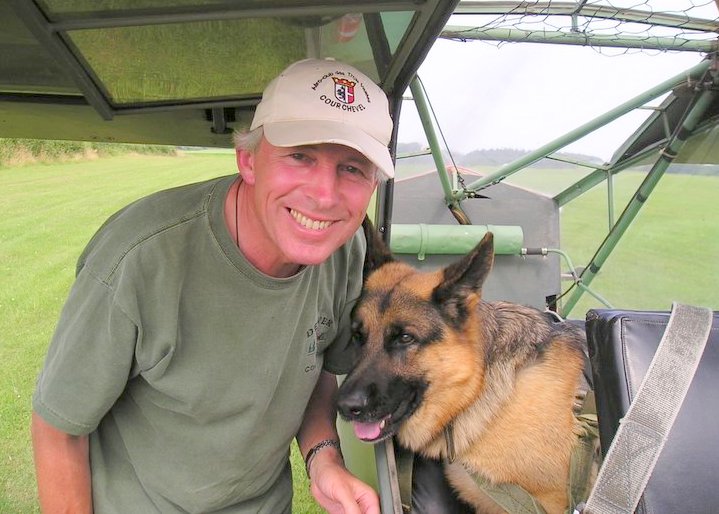
The biggest, single reward of having Pharaoh as my friend goes back quite a few years. Back to when I was living in Devon, South-West England, and to the time when Jon Lavin and I used to spend hours talking together. Pharaoh was always contentedly asleep in the same room as Jon and me.
It was Jon who introduced me to Dr. David Hawkins and his Map of Consciousness. It was also Jon, who one day when looking down at the sleeping Pharaoh, pointed out that Dr. Hawkins offered evidence that dogs are creatures of integrity with a ‘score’ on that Map of between 205 and 210. (Background is here.)
So this blog, Learning from Dogs, and me writing a book of the same name flow from that awareness of what dogs mean to us humans and what Pharaoh specifically means to me. No, more than that! As a result of that mix of Jon, Dr. David Hawkins, experiencing unconditional love from an animal living with me day-in, day-out, came a journey into myself. From that journey came the self-awareness that allowed me truly to like who I was, to be openly loved by this dog of mine, and be able to love openly in return. As is said: “You cannot love another until you love yourself.”
Trying to pick out a single example of the bond that Pharaoh and I have had is practically impossible. I have to rely on photographs to remind me of the thousands of times that a simple look or touch between Pharaoh and me ‘speaks’ to me in ways that words fail. Here’s an extract from my celebration of Pharaoh’s tenth birthday in June, 2013. It perfectly illustrates the friendship bond between us.
oooo
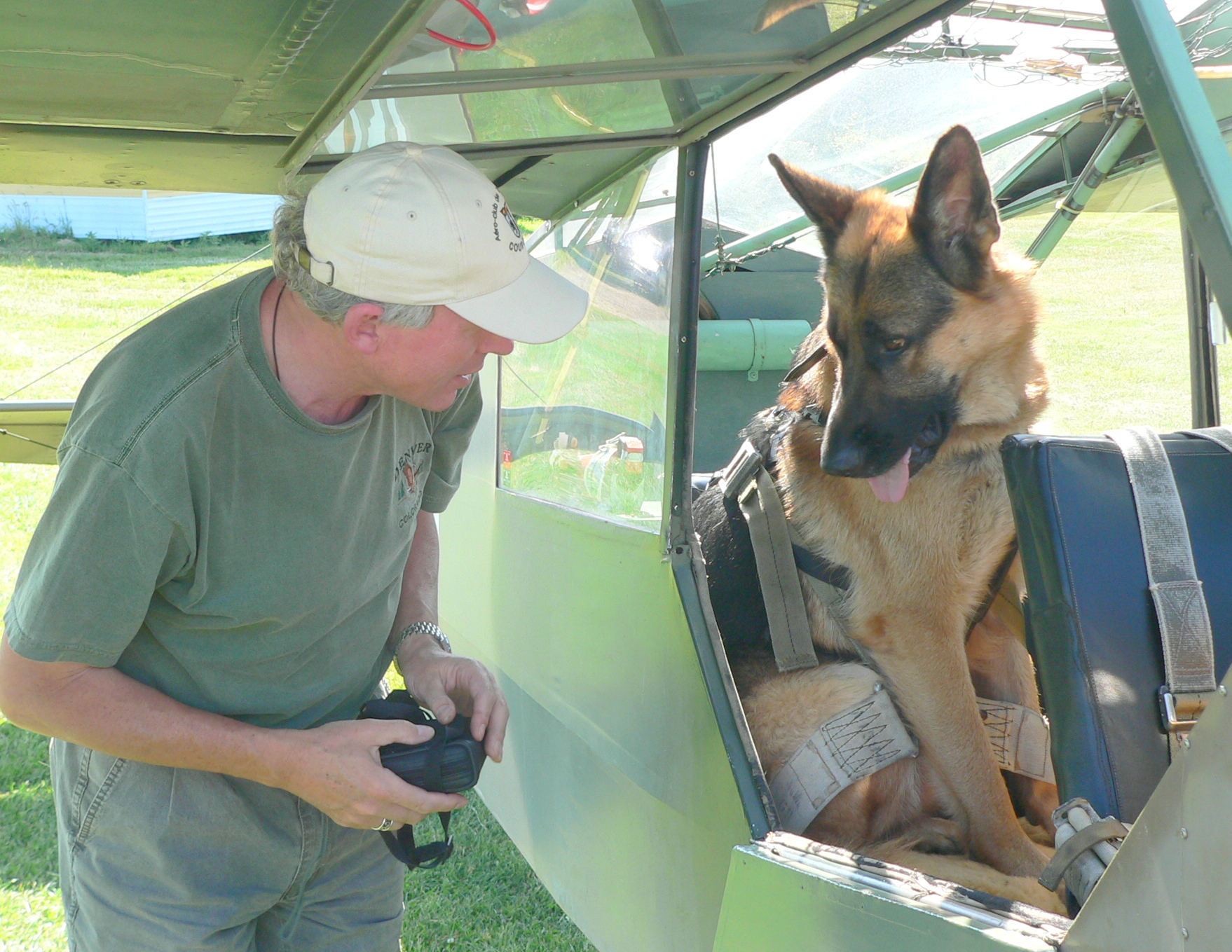
For many years I was a private pilot and in later days had the pleasure, the huge pleasure, of flying a Piper Super Cub, a group-owned aircraft based at Watchford Farm in South Devon. The aircraft, a Piper PA-18-135 Super Cub, was originally supplied to the Dutch Air Force in 1954 and was permitted by the British CAA to carry her original military markings including her Dutch military registration, R-151, although there was a British registration, G-BIYR, ‘underneath’ the Dutch R-151. (I wrote more fully about the history of the aircraft on Learning from Dogsback in August 2009.)
Piper Cub R151
Anyway, every time I went to the airfield with Pharaoh he always tried to climb into the cockpit. So one day, I decided to see if he would sit in the rear seat and be strapped in. Pharaoh had absolutely no problem with that!
Come on Dad, let’s get this thing off the ground!
My idea had been to fly a gentle circuit in the aircraft. First, I did some taxying around the large grass airfield that is Watchford to see how Pharaoh reacted. He was perfectly behaved.
But then I thought long and hard about taking Pharaoh for a flight. In the Cub there is no autopilot so if Pharaoh struggled it would have been almost impossible to fly the aircraft and cope with Pharaoh. So, in the end, I abandoned the idea of taking him for a flight. The chances are that it would have been fine. But if something had gone wrong, the outcome just didn’t bear thinking about.
So we ended up motoring for 30 minutes all around the airfield which, as the next picture shows, met with doggie approval. The date was July 2006.
That was fun!
oooo
Moving on again. This time to another flying experience. To the day when Pharaoh and I flew out of London bound for Los Angeles and a new life with Jeannie and all her dogs (16 at that time) down in San Carlos, Sonora, Mexico. The date: September 15th, 2008. Just ten months after I had met Jean in Mexico and realised that this was the woman that I was destined to love! (Now you will understand why earlier on I described the Jon Lavin, Dr. Hawkins, Pharaoh mix as the biggest, single reward of having Pharaoh as my friend!)
There followed wonderful happy days for me and Pharaoh. It was gorgeous to see how Pharaoh became so much more a dog, if that makes sense, from having his own mini-pack around him. Those happy days taking us all forwards to Payson, AZ, where Jean and I were married, and then on to Merlin, Oregon arriving here in October, 2012.
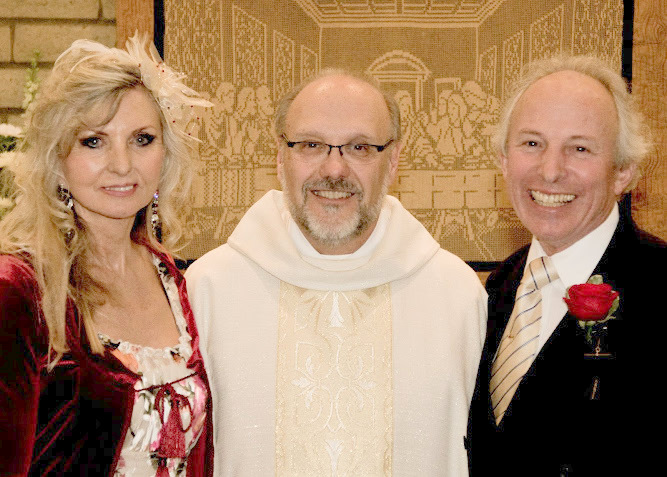
Fr. Dan Tantimonaco with the newly weds!
oooo
Pharaoh ‘married’ to his dearest friends in Oregon. December, 2013.
oooo
Smelling the flowers! Pharaoh and Cleo with Hazel in the middle.
I could go on! Hopefully, you get a sense, a very strong sense, of the magical journey that both Pharaoh and I have experienced since I first clasped him in my arms back in September, 2003.
Both Pharaoh and I are in the Autumn of our lives; he has just turned 12, I am now 70, and we both creak a little. But so what! Pharaoh has been my greatest inspiration of the power of unconditional love; of the need to smell the flowers in this short life of ours.
One very great animal! (March 25th, 2014)
Thank you, my dear, dear friend!
Can’t close today’s tribute without adding one last photograph of this great dog; a photograph of Pharaoh greeting Cleo, back in 2012.
First meeting between Pharaoh and Cleo; April 7th, 2012.
Nor can I close without including a quotation from the author, Suzanne Clothier:
“There is a cycle of love and death that shapes the lives of those who choose to travel in the company of animals. It is a cycle unlike any other. To those who have never lived through its turnings or walked its rocky path, our willingness to give our hearts with full knowledge that they will be broken seems incomprehensible. Only we know how small a price we pay for what we receive. Our grief, no matter how powerful it may be, is an insufficient measure of the joy we have been given.
Writing in his essay, “The Once Again Prince,” animal lover and gifted writer Irving Townsend summed it up:
We who choose to surround ourselves with lives even more temporary than our own, live within a fragile circle easily and often breached. Unable to accept its awful gaps, we still would live no other way. We cherish memory as the only certain immortality, never fully understanding the necessary plan. It is a fragile circle. But it goes round and round without end.”
Yes, twelve years ago today Pharaoh was born at Jutone Kennels.
Here’s the photograph of Sandra Tucker, owner of Jutone Kennels in Devon, England, holding puppy Pharaoh the day I first met him: 12th August, 2003.
Because this wonderful dog, this treasured friend since August, 2003, has meant so much to me, I am going to devote the rest of the week to memories of these gorgeous years.
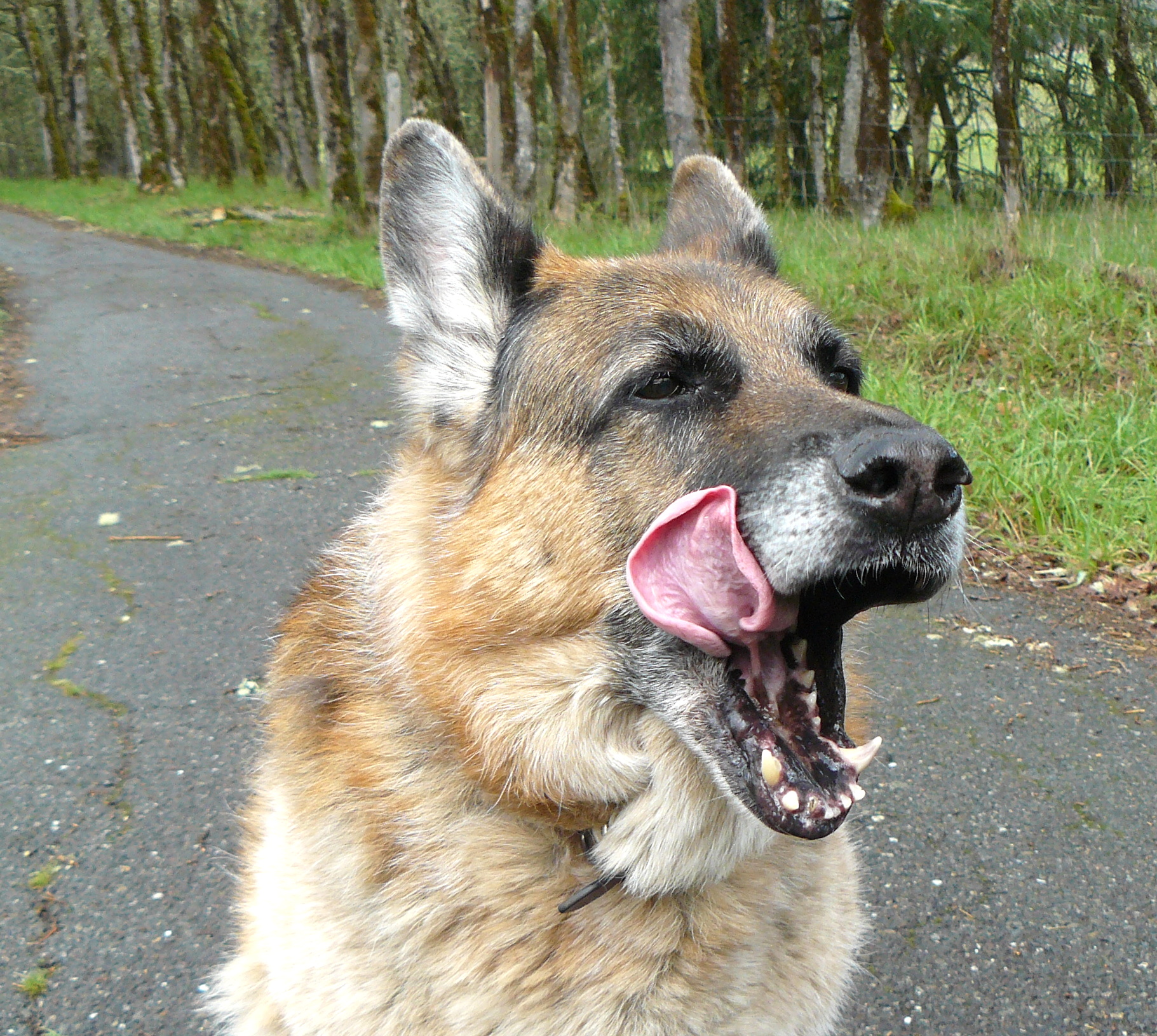
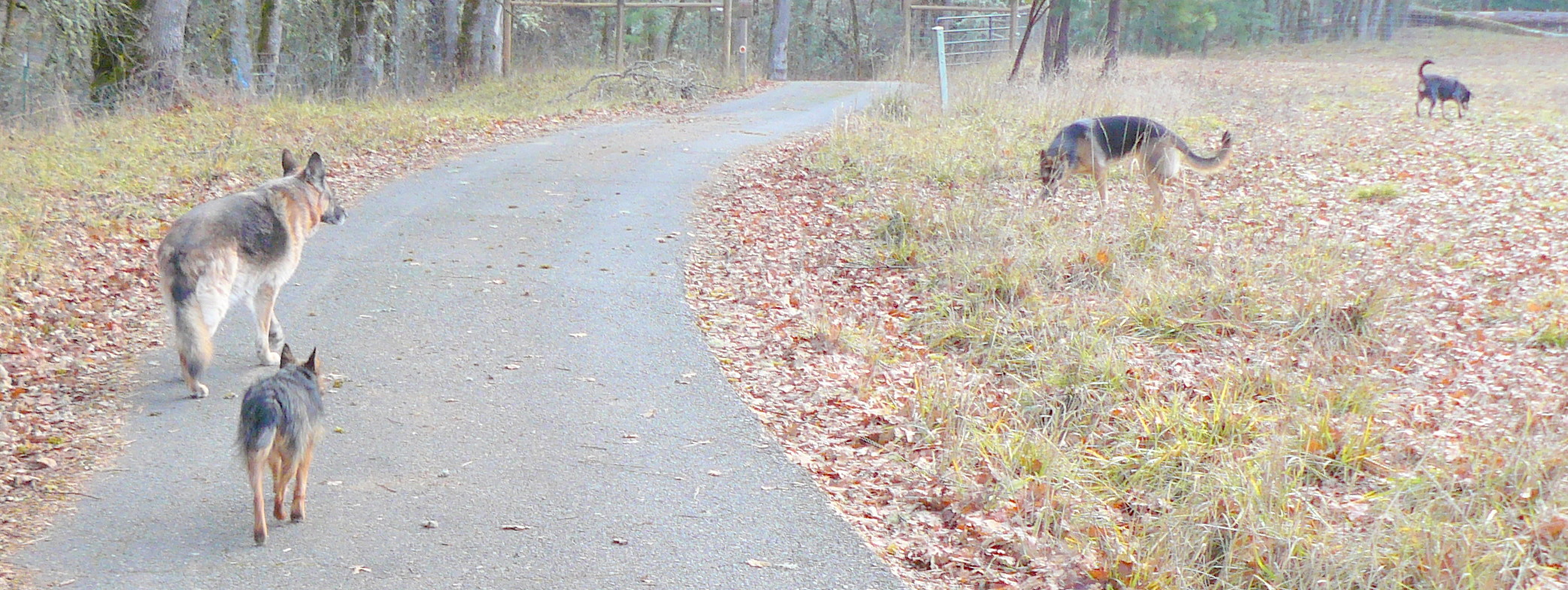
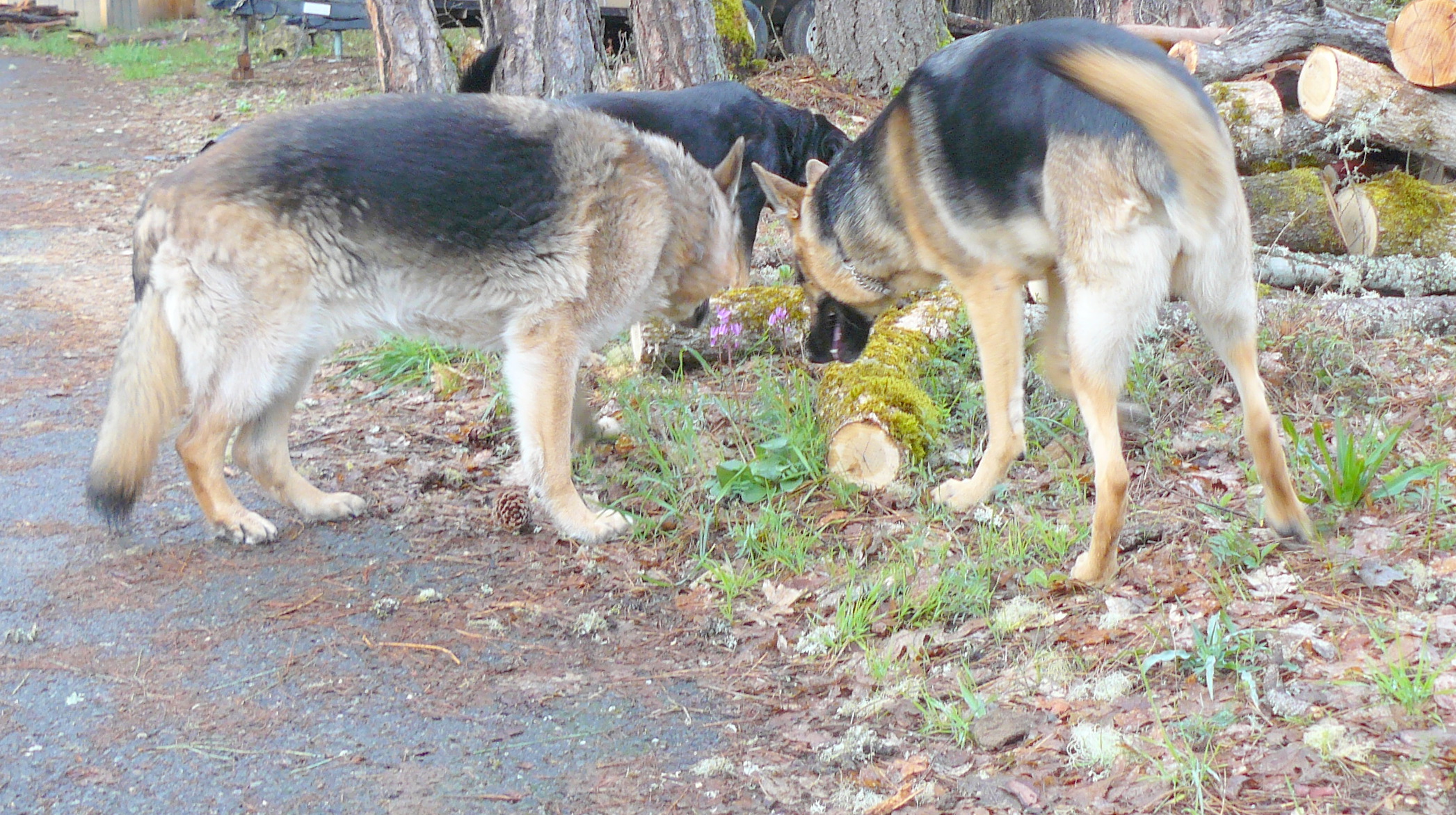
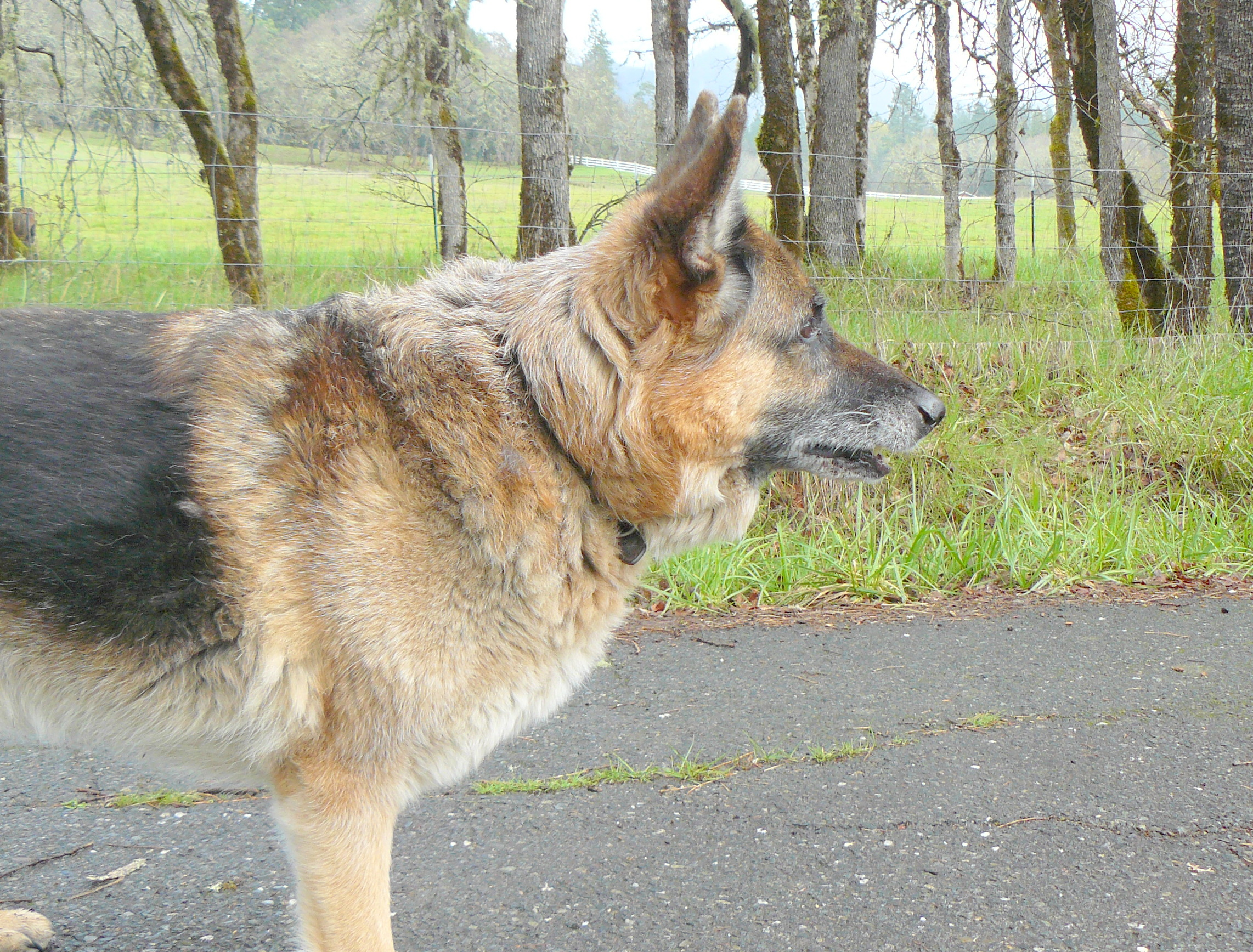
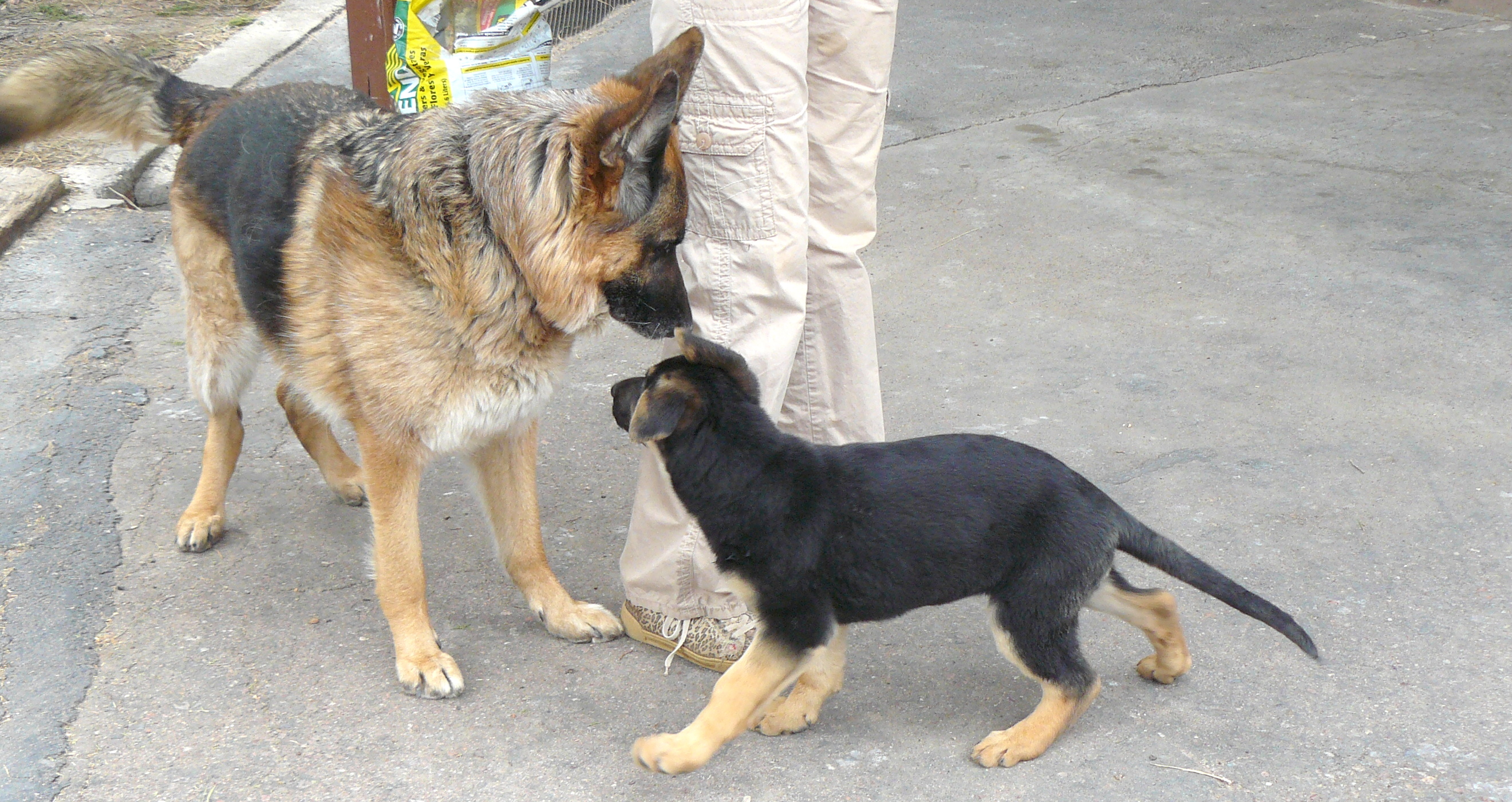
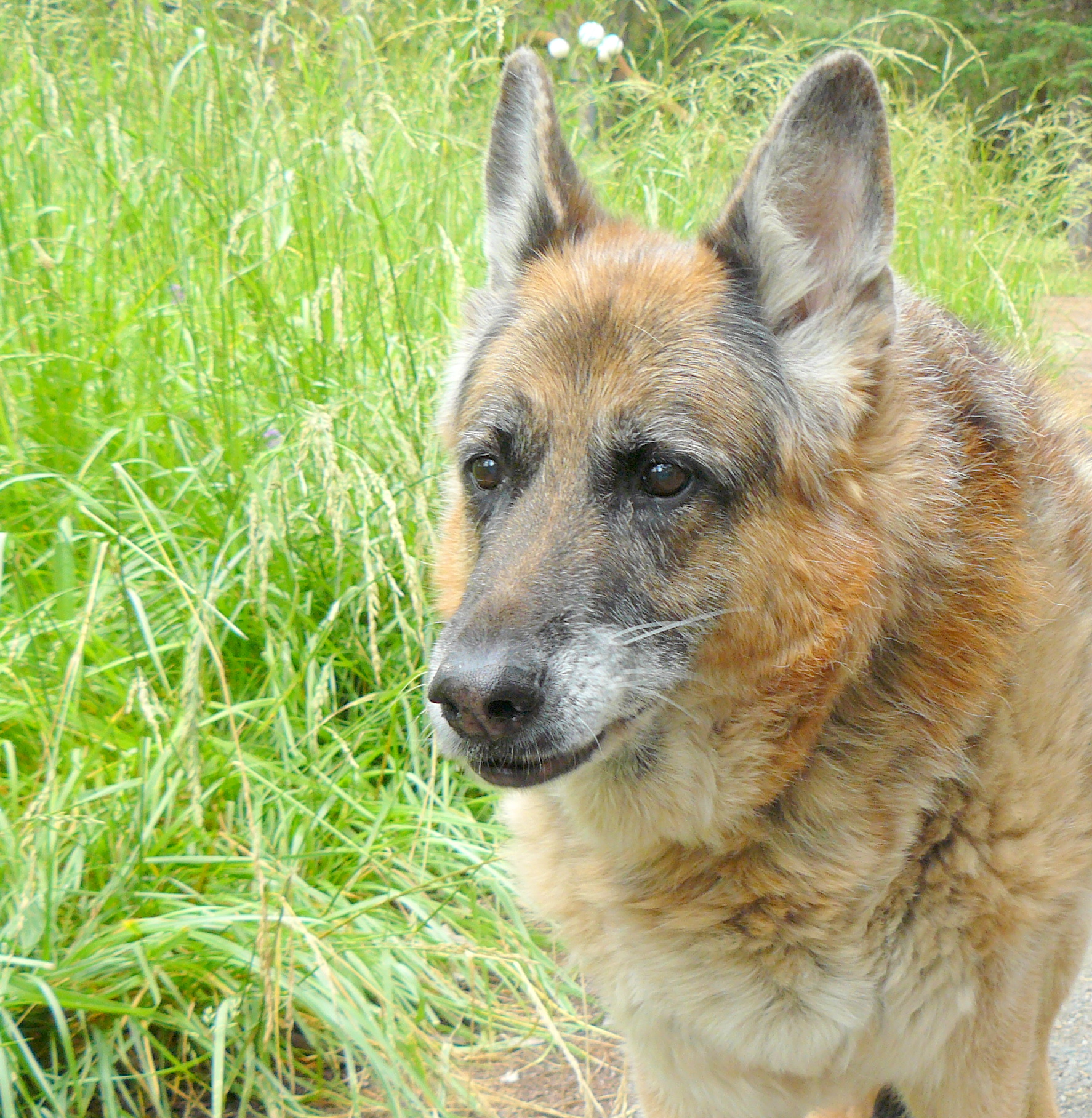
For today, I will close with a few photographs taken of Pharaoh when we were all out walking yesterday afternoon.












 Learning from Dogs