Happy Birthday to grandson Morten who is five today!
Indirectly there is a connection between my sub-title, above, and today’s post about squeezing cute creatures. For Morten will already have enjoyed many hugs and, hopefully, will grow up feeling very comfortable at giving and receiving hugs.
Thankfully, Jean is a great hugger and has opened my eyes to the power of giving in to a hug. Not suprising when one thinks of Jean’s years of hugging dogs way before she and I met back in 2007.
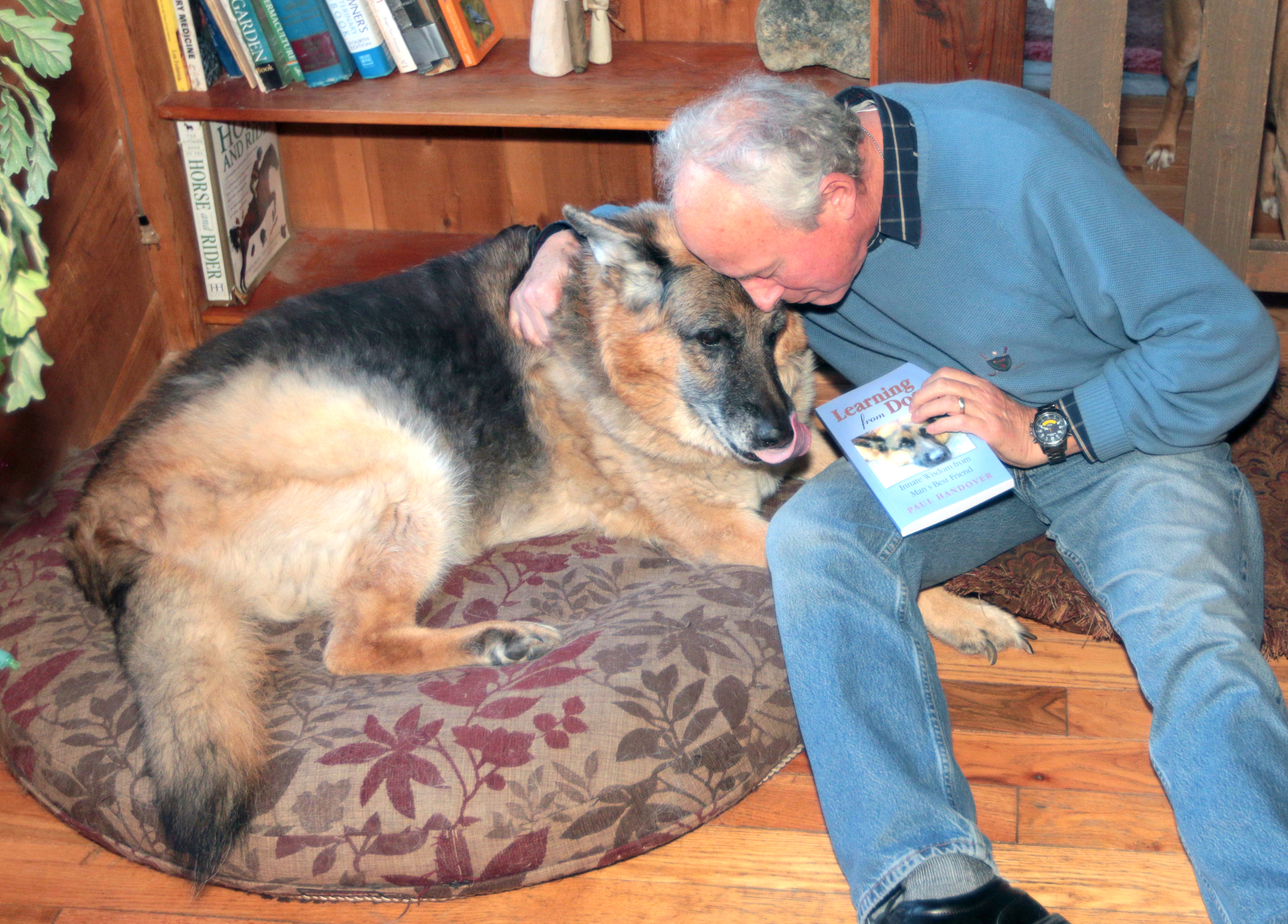
Dear old Pharaoh, as he has aged, (he will be 13 this coming June) clearly enjoys more hugs than when he was a more active, fitter German Shepherd and always on the go.
When The Daily Courier, our local newspaper, came to the house last December Timothy Bullard, the paper’s photographer, took the following photograph of Pharaoh and me having a ‘love in’.
TIMOTHY BULLARD/Daily Courier – Paul Handover with Pharaoh, a 12year-old German Shepard that he uses on the cover of his new book about man’s best friend.
So this recent article from the Care2 website seems an appropriate follow-on to my introductory remarks.
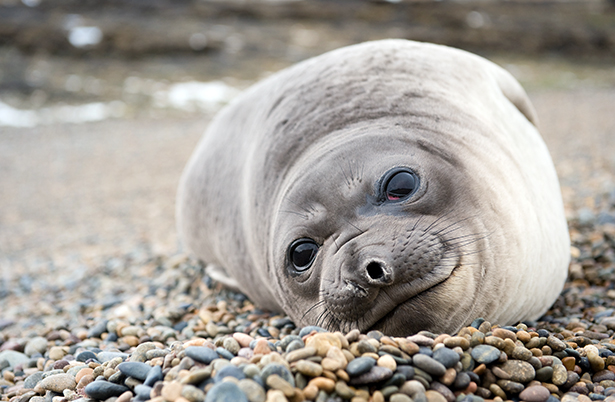
If any of the collected photographs you see here cause you to emit high-pitched noises or ache to cradle the pictured animal tight in your arms, you might be experiencing a bout of “cute aggression.”
The phrase refers to a phenomenon during which we catch sight of a living thing deemed “cute,” usually a baby or an animal or — double-whammy — a baby animal, and feel an overwhelming desire to play with the subject’s features; a compulsion to tickle its feet; the need to tease its rumples or bulges of fat; the want to bury our faces into its belly.
fluffy mouse ball
Granted, not all voiceless lifeforms enjoy being tugged at or played with in an intrusive manner, which is why this behavior is referred to, in part, as “aggressive.” While we might mean absolutely no harm to the creature we long to hold and hug, our near-hyperactive responses to its presence often seem beyond our control, what some have called the “squee” effect.
Yale researchers studied this “dimorphous expression” — the need to manhandle living creatures for which we feel only positive emotions — in 2014. Part of the experimental regimen involved asking some participants to pop bubble wrap while viewing images of “cute baby animals;” others did the same while looking at images of adult species. The results: Those who viewed the infants popped more bubbles by far.
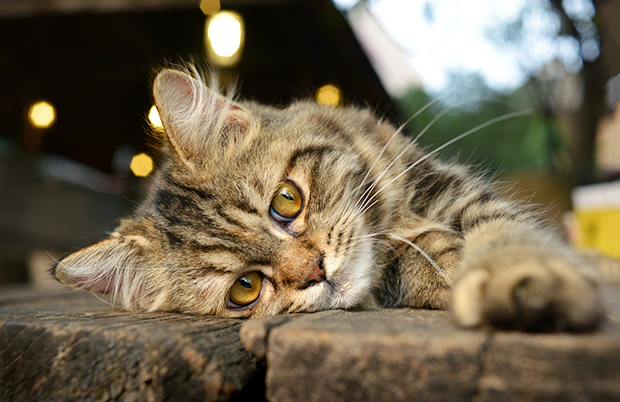
baby maine coon cat feeling
One of the researchers, psychologist Oriana Aragón, said that participants would have likely squeezed whatever they had in their hands or arms while viewing images of the “cute” animals, be it a purse or a pillow. Had something alive, however, actually been in those arms, the strength with which the participants freed their fuzzy feelings might have been worrisome to the researchers.
But Aragón says that strong human emotions are often balanced by “an expression of what one would think is an opposing feeling.” This is similar to what happens when we cry while angry or laugh while nervous. Our actual expressions “scramble and temper” whatever feeling got us into such a tizzy in the first place, helping to restore our emotional equilibrium, “tamping down or venting” feelings that cause us to become too excited.
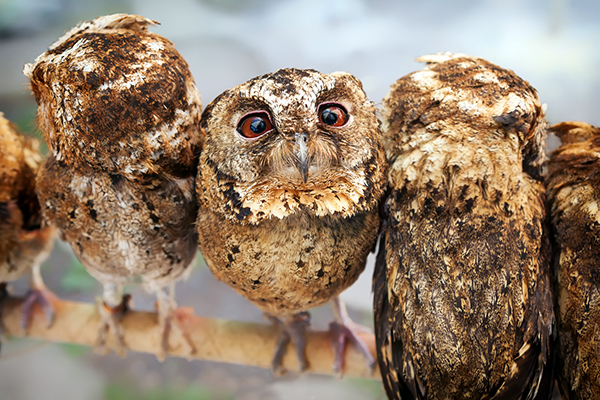
Funny portrait of curious baby owl
While wanting to squish what could be one’s own offspring might seem an evolutionary misfire, a 2012 study in the journal PLOS ONE indicates that cuteness creates a powerful “approach motivation,” the very thing that drives us to scoop up puppies and kittens in adoption kennels and squeeze them close to our chests and nuzzle them against our faces. It seems the need to be touchy-feely toward cuteness provokes precisely the kind of nurturing that keeps helpless creatures alive.
As for animals, those worthy of this treatment, appealing to us as “cute,” mimic physical characteristics of human babies — “a large head; rounded, soft, and elastic features; big eyes relative to the face; protruding cheeks and forehead; and fuzziness.” The same, in fact, seems to be true for Great Apes, as has been documented with Koko the gorilla and an Internet celebrity orangutan shown interacting with tiger cubs, though the scene remains controversial.
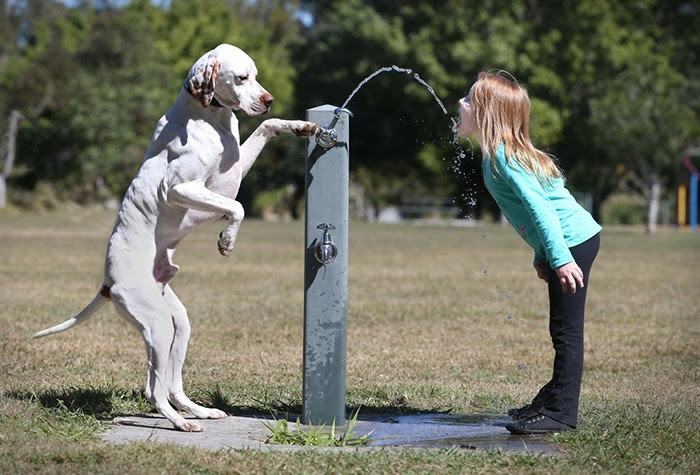
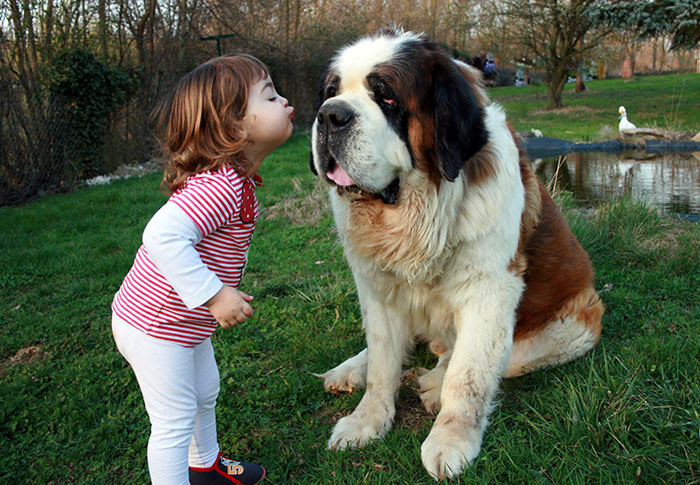
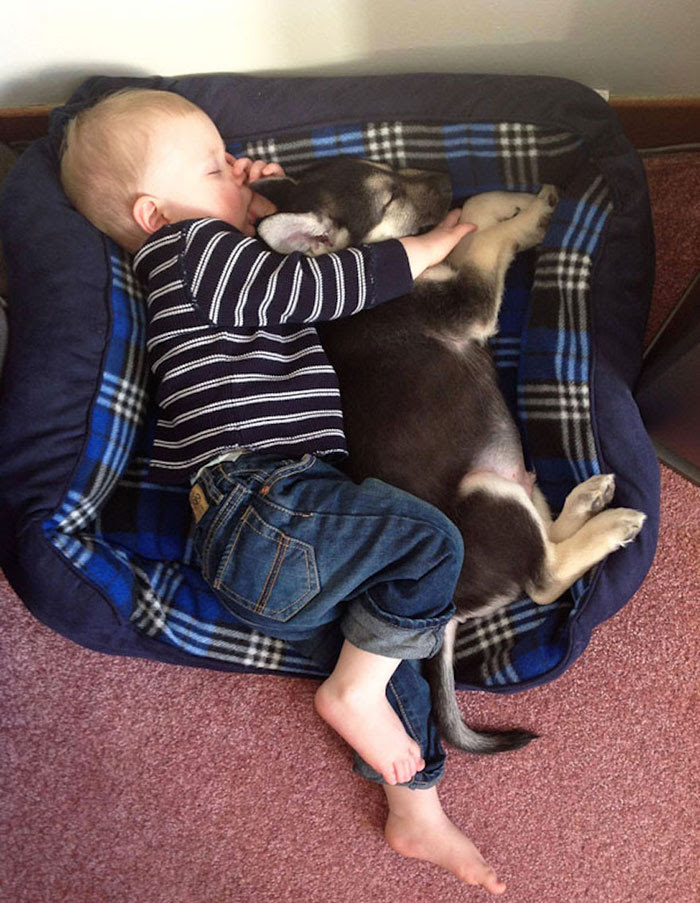
And so it seems the power of cuteness is made all the more apparent when humans (or elevated primates) respond to a rabbit or a duckling the way they might respond to their own kin. Our desire to squeeze is so powerful, in fact, that it “spills over” into interactions with other species. Thus, we have Web sites like Cute Overload that exist only for the compelling pull to exercise that need to feed our “cute aggression,” be the temptation a pleasure or a pain.
ooOOoo
Demonstrating that cuteness can come in all sizes, let me close today’s post with this photograph.
Ben and Jeannie having a quiet one-to-one moment.
Don’t go too long without giving or receiving a hug!
Recently, she posted a beautiful poem to commemorate the nine years of having Susami in their lives. It is republished here with Bela’s kind permission.
ooOOoo
There is a presence, here
and now; the bellows of breath,
warmth of blood, the feeling,
even if imagined,
that we are connected, one
to the other.
We each have our memories,
after all.
Your passing removes that utterly,
and somehow the same hand
lying on the same fur and flesh
will sense void, not even spirit,
not even that.
One can forgive the athiest,
or even theist their doubts,
props, religions. For this
at least is real:
This. Here. Now.
Tomorrow it will be gone.
And no matter in visions I linger
in the numinous; despite
in the garden I witness the alchemy
of decay transforming
into green and vibrant,
the loss of a loving companion
is egregious, indeed.
ooOOoo
Bela explained how Susami came to them:
This sweet being has been with us only nine years, since she was about 10-12 weeks old. Her previous steward, a multiply-pierced and -tattooed young woman, had to find a home for her. We were on our way to the east coast to deal with some business, and I had taken our good friend Kevin with me to the local feed store to get the horse stocked up on alfalfa pellets (it was during a long drought). I saw the pup with a bandage on her leg before, and asked the gal what was wrong with her. I later learned from the store owner (who thanked me many, many times for giving Susami a good home) that the dog had been severely abused. (She never did tell me specifics, so I was left to wonder.) The young woman tried her best, but there were forces beyond her control in her environment. When I saw Susami again, we had to take her, but how? I asked Kev if he would watch yet one more animal for us while we were gone, and he happily agreed! So she joined our chocolate Lab who we brought with us to Hawaii from northern Maine (a Non-rescue). He was Thrilled to have that little creature’s companionship.
Going to close with the exquisite words from Suzanne Clothier that Dr. Jim Goodbrod used in the foreword to my book:
There is a cycle of love and death that shapes the lives of those who choose to travel in the company of animals. It is a cycle unlike any other. To those who have never lived through its turnings or walked its rocky path, our willingness to give our hearts with full knowledge that they will be broken seems incomprehensible. Only we know how small a price we pay for what we receive. Our grief, no matter how powerful it may be, is an insufficient measure of the joy we have been given.
(Suzanne Clothier: Bones Would Rain from the Sky: Deepening Our Relationships with Dogs.)
Suzanne’s words cannot be bettered when it comes to the death of a beloved dog.
Celebrating the life and times of Albert Einstein.
Yesterday was the centenary of the birth of Albert Einstein (14 March 1879 – 18 April 1955). It has been widely reported. For example, a piece on the EarthSky blog:
March 14, 1879. This is the anniversary of the birth of Albert Einstein, undoubtedly the most famous scientist of the modern era.
Einstein was born in Ulm, Germany, where an uncle – Jakob Einstein, an engineer – introduced him to science and math. At age 17, he enrolled in the Swiss Polytechnic Institute after failing the entrance exam the previous year. He graduated in 1900, and in 1902 he became a junior patent examiner in the Swiss Patent Office in Bern, Switzerland, where he specialized in electrical devices.
The year 1905 came to be known as Einstein’s Miracle Year. He was 26 years old, and in that year he published four papers that reshaped physics.
Now before you read on let me proclaim that today’s post has absolutely nothing to do with dogs! (Unless dogs exist in parallel universes!)
But a recent documentary that was published on Top Documentary Films was really fascinating and incredibly well presented. Thus, in terms of the likes of you and I better understanding what Einstein revealed about our universe, I couldn’t resist sharing it with you all today. It is just 29 minutes long.
STORYLINE
One hundred years have passed since Albert Einstein first unleashed his highly influential Theory of General Relativity unto the world. These revelations charted a future course of scientific pursuit, and never cease to inform our understanding of the universe today. In celebration of that impressive legacy, the documentary short Einstein’s Extraordinary Universe travels to three research facilities in different regions across the globe, and shows us how Einstein’s work continues to challenge, shape and inspire the scientific discoveries of tomorrow.
The film opens in Tuscany. Under the shadows of Galileo’s groundbreaking work on gravity research, a group of astrophysicists are exploring Einstein’s theories related to the occurrence of gravitational waves through space and time. Can modern technologies and advanced scientific intellect result in actual proof of such waves?
Viewers are then taken to the world’s largest underground laboratory. Hidden far beneath Italy’s Gran Sasso mountains, the lab serves as a home to researchers who work tirelessly to prove another of Einstein’s grandiose theories: the existence of dark matter. The vast majority of our universe is made up of materials that we have not yet been able to detect through forces of light and energy. The dedicated team who toil away in this impressive underground lair hope they can lay the groundwork in changing that.
The filmmakers’ next stop is Switzerland, where they are given a tour of one of the most impressive displays of scientific testing technology on the planet. Housed by the European Organization for Nuclear Research, or CERN, the Large Hadron Collider is the most powerful particle accelerator on the planet, and is being used to question and examine the substance of all matter in our universe.
Through each destination on this incredible journey, what amazes most is how prescient Einstein’s theories have proven even after a century has passed. His work continues to test the limits of our scientific understanding, and sets a groundwork from which researchers still strive for answers. Featuring a plethora of illuminating interviews with many top figures in the fields of scientific study, Einstein’s Extraordinary Universe is certain to delight seasoned science geeks and novices alike.
Let’s embrace those who seek out and love our lost dogs!
Just going to include today two videos from the Hope for Paws charity both of them about rescuing and restoring love to Pit Bulls.
Pit Bull rescue on the beach
Mountain rescue of an abandoned injured Pit Bull
I can’t close this post without thinking of the amazing quality of forgiveness that our dogs demonstrate. It would be a rare person who suffered this pain and rejection and wasn’t scarred for the rest of their days.
Last week, author and blogger (4am Writer) Kate Johnston published a post about getting 1 million supporters to help save the monarch butterfly. Kate was very happy for me to republish that here on Learning from Dogs. Please read it and sign up.
World Wildlife Fund has set a goal – getting 1 million supporters to help save the monarch butterfly.
Threatened by illegal logging, global warming, herbicide use, and vanishing food source (milkweed) for caterpillars, monarchs are in serious danger.
“Now more than ever, Mexico, the United States, and Canada should increase their conservation efforts to protect and restore the habitat of this butterfly along its migratory route,” said Omar Vidal, Director General for WWF-Mexico.
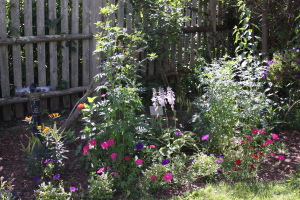
Last year, I began planting my own butterfly garden in an effort to help provide a habitat for monarch butterflies, and any other form of wildlife that might seek food and shelter there.
BEFORE
Ready for planting!
AFTER
Not very organized and probably have too much in there, but I didn’t expect everything to take off the way it did!
Turtles come through my backyard every summer to lay their eggs in the same place. Each generation of turtle somehow knows the exact route, like they have their own inner GPS.See the butterfly in the middle of the milkweed? This is not a monarch, as it has no white spots. I think it might be a fritillary, maybe the variegated species.This is a harmless garter snake, and they love my garden!Just a baby, though. Hubs still took off, so my son had to take the pics.Hubs nearly ran over this guy with the mower. I had to come and get it ‘cuz it’s a snapping turtle!
Spring is just around the corner in the US, and the monarch butterflies will be heading along their migratory route, back to their northern homes. They will be in search of food and shelter. They will need milkweed, the only plant on which they lay their eggs and the one food source for their babies.
If you have a backyard, won’t you consider providing a home for some beautiful monarchs? Even if you’re sans yard, you can still fight for their survival.
Back on the 24th of February I published a post under the title of Personal Journeys. It opened thus:
Life is a one-way track.
Those of you who follow this place on a regular basis know that last Friday I published a post under the title of Friday Fondess. You will also know that later that same day I left this comment to that post:
Sue, and everyone else, we returned from seeing Dr. Lee, the neurologist, a little under two hours ago. Dr. Lee’s prognosis is that Jean is showing the very early signs of Parkinson’s disease, and Jean is comfortable with me mentioning this.
Everyone’s love and affection has meant more than you can imagine. I will write more about this next week once we have given the situation a few ‘coatings of thought’.
Jean sends her love to you all!
Thus, as heralded, I am going to write some more.
You would not be surprised to hear that the last few days have been an emotional roller-coaster, for both Jean and me. Including on Monday Jean hearing from our local doctor here in Grants Pass, OR, that a recent urine test has shown that Jean has levels of lead in her bones some three times greater than the recommended maximum. While our doctor is remaining open-minded it remains to be seen whether Jean is exhibiting symptoms of lead poisoning, whether the lead is a possible cause of the Parkinson’s disease (PD), see this paper, or whether it is a separate issue to be dealt with.
Both my son and my daughter, Alex and Maija, have been very supportive. Alex has even decided to ride in the Ride London 2016 and raise funds for the notable charity Parkinson’s UK. Parkinson’s Disease is affecting more and more people and there is a great incentive to help any charity in pushing back against this disease. As the sub-title on that Parkinson’s UK home page declares, “CHANGE ATTITUDES, FIND A CURE, JOIN US.”
Alex has started a little blog to record his preparation for his charity ride:
ooOOoo
This is my blog about training for Ride London 2016, on it I will detail what I get up to, who I’m raising money for and also cycling kit reviews as well.
So I entered the ballot for ride London this year and was unlucky, probably as I’m one of 20,000 odd middle aged men in Lycra (MAMIL) who try to get in every year, so I got my lovely rejection magazine and a cycling top as well.
I then found out that my stepmum Jean, has just been diagnosed with Parkinson’s disease, so I thought I would enter on a charity place and raise some much needed funds for research into this disease. Found out last week that I have been lucky to get onto a charity place and so the training begins…
Please, please if anyone would like to chip in anything at all you can trust me that it will be greatly appreciated by Alex and all those around him. Donations, both from within the UK and overseas, may be made by going here.
We found Kalu lying in a hole at a construction site in Udaipur on October 7, 2015. His face looked like a bomb had exploded between his forehead. The horrific gaping hole was infested with maggots that were literally eating him alive. As soon as our rescuers Ganpat and Kalu Singh brought him back to Animal Aid we decided that euthanizing him would be the best decision. But as Kalu stood there on the examining table, something in his spirit stopped us in our tracks and we knew we had to give him a chance.
So we began treatment on the most heartbreaking wound we had ever before seen.
We put a powder into the wound that kills the maggots and gave him IV fluids while we waited for the powder to do it’s job.
A few hours later we put Kalu under sedation and began to remove the dead maggots, debride and clean the wound.
Over the course of the next 3 months, Kalu astounded us with him strength of will, his incredible healing and all the love he had to give.
Click here to sponsor Kalu’s life-long sanctuary at Animal Aid.
If you would like to make a donation then the charity’s home page is here.
Animal Aid is a vital rescue center, hospital and sanctuary for injured and ill street animals in Udaipur, Rajasthan, India. We rescue thousands of hurt and sick animals each year and provide sanctuary to those who need life-long care.
According to YouTube that video has already been watched over 6.6 million times.
When we let the dogs out last thing on Tuesday evening there was a local pack of coyotes not far from our fence line. Cleo started barking and some of the coyotes responded with their spine-chillingly beautiful howls. The sound really does transport one back thousands of years in a mystical sense.
I started doing some research as to whether we, as in us humans, had studied what the song of the coyote means. I came across The Natural History of the Urban Coyote website and therein was an article called Translating the Song Dog. It’s a fabulously interesting article and I do hope it’s OK to share with you.
ooOOoo
The scientific name for the coyote is Canis latrans, which translates to “barking dog,” a perfect name for this species which has been called the most vocal of North America’s mammals.
Less formally, the coyote is known as the song dog, and one listen to a group howl by a pack of coyotes makes it clear why. Rather than the simple but soul-haunting sound of a wolf’s howl, the coyote’s howl can be made up of high-pitched howls, barks, and yips that make it clear the coyote has a whole lot of lyrics in a single song. But what exactly do those lyrics say?
The coyote has a range of vocalizations depending on social context and message. In 1978, Philip N. Lehner published his research of coyote communication and what the various vocalizations mean, which has been included in Coyotes: Biology, Behavior, and Management.
“The vocal repertoire of the adult coyote contains eleven vocalizations, several of which are also given by pups. These vocalizations grade into one another such that their separation into eleven types is somewhat arbitrary based on their different sounds, behavior context, and physical characteristics.”
In other words, the coyote language is complex and depends on the social situation, the coyote’s body language in addition to the sounds, the intensity of the vocalization, and other factors. This makes sense considering that when one digs a little into hunting forums, some coyote hunters are convinced they know more than eleven calls for coyotes. Indeed, there are likely more vocalizations when one looks at subtleties.
If you have paid close attention the vocalizations of domestic dogs, especially those more talkative breeds, you’ll likely find it easy to decode coyote sounds. There is a lot of overlap in the sounds dogs, coyotes and other canid species make – from a startled huff to a whine of greeting, from an antagonistic growl to a bark of alarm. But coyotes take the language of canids to another level with their extensive list of sounds, especially the yips, howls, and of course their choral group howls.
Though Lehner notes that it’s a bit arbitrary to categorize coyote sounds, we can at least begin to understand them by breaking them down into the types of sounds they make along with their purpose. So he created the following 11 categories, which can also be considered sign-posts on a gradient of meaning and intensity.
Types of Coyote Vocalizations
1. Growl – This vocalization holds no mystery. A growl is used as a threat, specifically for something within close range.
2. Huff – This is the expulsion of air through the nose and mouth, and is also used as a high-intensity threat in close proximity. Huffs are used, for instance, when there’s bickering over carrion.
3. Woof – This vocalization is made as both a low-intensity threat and as an alarm. It’s a sound made when a coyote is startled and unsure of exactly what is happening, but knows it is not comfortable with whatever it is.
4. Bark – The bark is a long-distance threat or alert of low to medium intensity.
5. Bark-Howl – This is when the coyote gets serious about a threat. The bark-howl is used as a long-distance high-intensity threat or alarm. It starts with a bark and blends into a howl.
What is interesting about the bark and the bark-howl is that research suggests that the varying intensity and frequency of barks could contain different information. More recent research by Brian R. Mitchell has shown that coyotes likely identify individuals by their barks and bark-howls.
“By analyzing spectrograms of howls and barks,” writes Mitchell, “I was able to determine that both of these vocalizations do indeed contain individually specific information. Because of the tremendous advantage of being able to determine individual identities, I presume that coyotes use the information in barks to identify individuals they are familiar with.”
“Another interesting aspect of coyote barks and howls,” he continues, “is that howls stably convey information for distances of at least one kilometer. Barks, on the other hand, rapidly attenuated and did not appear suitable for transmitting information. Barks likely serve other purposes, such as attracting information and providing information that listeners could use to estimate distance to the barking animal.”
Barks and bark-howls, then, can serve in saying, “I’m here, and here’s how I’m feeling” and allow listening coyotes to recognize if those individuals are family or strangers. Mitchell underscores that a coyote recognizing an individual by their howl isn’t about the howling coyote shouting his own name again and again; rather it is akin to how we can recognize a family member or friend by the sound of their voice no matter what they’re saying, because of their unique pitch, timbre, cadence and even accent.
6. Whine – This sound is used to express submission and is usually given by a subordinate coyote to a more dominant coyote.
7. Yelp – The yelp takes the whine up a notch and represents high-intensity submission. However, it can also be a response to being startled. As is the case with several other of these vocalizations, this categorization shows that coyote communication is more of a gradient. Lehner writes, “A yi-e-e-e often precedes or follows the yelp portion and resembles a high-frequency bark [and] appears on a sonogram like a short howl chopped into segments.”
8. Woo-oo-wow – This is the “greeting song” of coyotes, and is used during high-intensity greeting displays. The vocalization modulates in frequency and amplitude as a coyote’s motivation shifts, Lehner notes, and so can fluctuate from a whine to a growl.
9. Lone Howl – The lone howl is just what you probably already know it to be: a howl by a single coyote, which is often started with a series of barks that reseracher R. M. Mengel called “herald barks.” As mentioned above, coyotes can distinguish individuals based on their unique howl, and the purpose of the howl is to announce one’s location to others in their social group. Often, the lone howl gets an answer, and the coyotes can find each other to meet up.
10. Group Howl – A group howl is sent up when two or more coyotes come together after being apart, or it could be given as a response to the howls of distant coyotes. It is, according to Lehner, essentially two or more coyotes giving their own lone howls either successively or simultaneously, as a way of giving out location information to any listeners.
11. Group Yip-Howl – This is what coyotes are really known for. The group yip-howl is sent up when coyotes reunite, or just before they separate to go off hunting individually. As more coyotes join in, the more intense the vocalizations become, increasing in frequency and amplitude. Lehner notes that the group yip-howl includes sounds that researcher H. McCarley called screams, gargles and laughs. In other words, the many variations of coyote vocalizations show up in this chorus.
According to Lehner, the group yip-howl probably strengthens social bonds, may help to synchronize mood, and may also reaffirm social status within the pack. He also notes that the group yip-howl “may be most important in announcing territorial occupancy and preventing visual contact between groups of coyotes.”
The chorus tells any nearby coyote packs about whose turf this is, and thus keeps other coyotes away. It also reveals (or hides) how many coyotes are in the area and may help regulate coyote density through reproductive rate. Research has shown that female coyotes will produce larger litters when there is little competition, and smaller litters when there is a high density of coyotes in the habitat. This is one of the secrets to the coyote’s success at spreading across the continent in the last century.
[Note: This is also why indiscriminate killing of coyotes to decrease their density doesn’t work as a management strategy. Coyotes repopulate an area quickly and easily when competition is eliminated, with the population rebounding or even expanding in a very short time. Perhaps a more effective, cost-cutting and non-lethal strategy for reducing the number of coyotes in an area would be playing recorded group yip-howls to make resident coyotes think there is more competition for resources. This is something several researchers have expressed interest in exploring, specifically in order to reduce conflicts with ranchers. If we can discover more about what specific messages are embedded in certain howls or barks, ranchers could play specific recordings to keep coyotes away from livestock as well as minimize the number of coyotes living in an area.]
Mitchell writes, “Group yip-howls are produced by a mated and territorial pair of ‘alpha’ coyotes, with the male howling while the female intersperses her yips, barks, and short howls. ‘Beta’ coyotes (the children of the alpha pair from previous years) and current year pups may join in if they are nearby, or respond with howls of their own. And once one group of coyotes starts howling, chances are that any other alpha pairs nearby will respond in kind, with chorus after chorus of group yip-howls rippling across the miles.”
In Talking to Coyotes with the Song Dog, a pamphlet about using a coyote caller, Major L. Boddicker, Ph.D. brings up a personal experience with such a chain reaction. After sending up what he calls a “Joy of Life Call” which is a group yip-howl, “It sounded like every coyote in the USA responded in the musical see-saw coyote chant which went on and on for 3-5 minutes. I later called a friend in Steamboat Springs, Colorado (150 miles away) to check for the time when the coyotes started to sing there. Given the time it took sound to travel and coyotes to react, I very likely started the chorus.” Whether or not the chorus traveled that far, it is indeed possible to start a chain of coyotes sending up group yip-howls.
Boddicker discusses Lehner’s list of vocalizations in his pamphlet, and brings in two more vocalizations that he or experienced coyote callers have heard. He notes that these my fall into the umbrella categories identified by Lehner, but are distinct enough to point out anyway. They are:
Whoop – This sound is used as part of more complex sounds such as the group howl or group yip-howls.
Yodel – This is when a howl tapers up and ends abruptly, rather than tapering down in a typical howl, which gives the howl a sound like the coyote is asking a question. Boddicker notes that this happens when coyotes howl for an unusual reason such as for a lost family member.
How Many Coyotes Are Howling?
“When people hear coyote howls, they often mistakenly assume that they’re hearing a large pack of animals, all raising their voices at once,” writes Mitchell. “But this is an auditory illusion called the ‘beau geste’ effect.”
Coyotes howl both to reunite and to keep trespassers at bay. It may be in their favor that if they howl, they sound like a bigger pack than they really are. They accomplish complicated and confusing howls by a smart strategy of using wavering howls and changing their pitch rapidly. This, combined with the howls bouncing off objects in the environment such as rocks, trees, or the far side of a valley may make it hard for a listener to know if they are hearing one coyote or several howling simultaneously.
When two or three coyotes howl together, they can sound like a pack of six or ten or more, which perhaps makes them seem much more formidable to any nearby competitors or predators.
Coyotes May Have Local Accents
We know that coyotes vary in size and build depending on their location, as the difference between western and eastern coyotes clearly demonstrates. Does their location also mean they have accents? We know that other species with complex communication such as whales have different accents, so it makes sense that coyotes may also have regional accents. And does that affect how they might interpret or respond to strangers?
Sara Waller, associate professor of philosophy at Montana State University in Bozeman, told the Bozman Gazette, “We know that dogs have ‘accents’ just as people do — we can reliably tell the difference between British dog barks and American dog barks. When we have enough recordings to really compare Eastern and Western coyotes, we may find that like dogs, and people, they have regionally based differences in the way they communicate with each other. This would show that coyote vocalizations are impacted by social and environmental factors just as human speech is.”
What Can Coyotes Teach Us About Language?
There is still so much to learn about what coyotes are saying through their complex and varied vocalizations. The more we learn about the way coyotes communicate as social predators, the more we can learn about not just their species, but our own as well.
Coyotes can sense things we humans can’t, and Waller questions, “How does that impact the way they think? They are social, communicative predators, and so are very like humans in many ways. If we could figure out what some of these vocalizations mean, it would give us insight into how our own language works, and how human minds differ from those of other social predators.”
Examples of Coyote Vocalizations
In the video below, two coyotes give barks and bark-howls as an alarm against the person recording the video:
The person who uploaded this video notes that the coyotes had been hanging around a lot and ventured a guess that is because her dog was in heat. However, the date on the video is in late May, which is about the time when coyote pups are emerging from the den and becoming active around the den site. So it is possible that these are the parents and/or helper coyote keeping a watch on the person taking a video and giving alarm, warning them away from a nearby den.
In the video below, coyotes send up a group yip-howl. Note that the howls do not begin with a bark, like the previous video. As Lehner notes, the group yip-howl starts usually with the dominant individual of the pack. That seems to happen here as the coyote in the video joins in after another coyote begins the howl:
The video below is a coyote group yip-howl, likely started with reunion of group members, and includes yips, whines and other vocalizations on the coyote-sounds spectrum as the members interact. There is so much great behavior and body language captured in this video, showing the group dynamics of submissive members with more dominant members of the pack:
And that beautiful photograph of the howling coyote at the start of today’s post? That came from this website that also included the following that I will use to close this post.
“when the end comes there will be coyotes and coach roaches left in the world and the coyote will eat the coach roach and that will be that!” Some say that “Cher” will still be on tour though.
 By: Rebecca Bauman March 8, 2016 –About Rebecca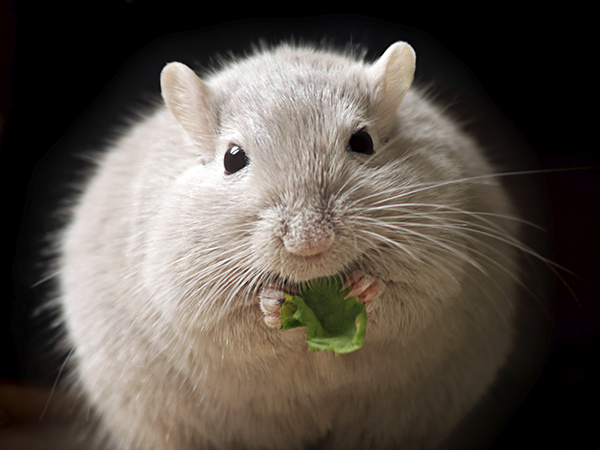
 And so it seems the power of cuteness is made all the more apparent when humans (or elevated primates) respond to a rabbit or a duckling the way they might respond to their own kin. Our desire to squeeze is so powerful, in fact, that it “spills over” into interactions with other species. Thus, we have Web sites like Cute Overload that exist only for the compelling pull to exercise that need to feed our “cute aggression,” be the temptation a pleasure or a pain.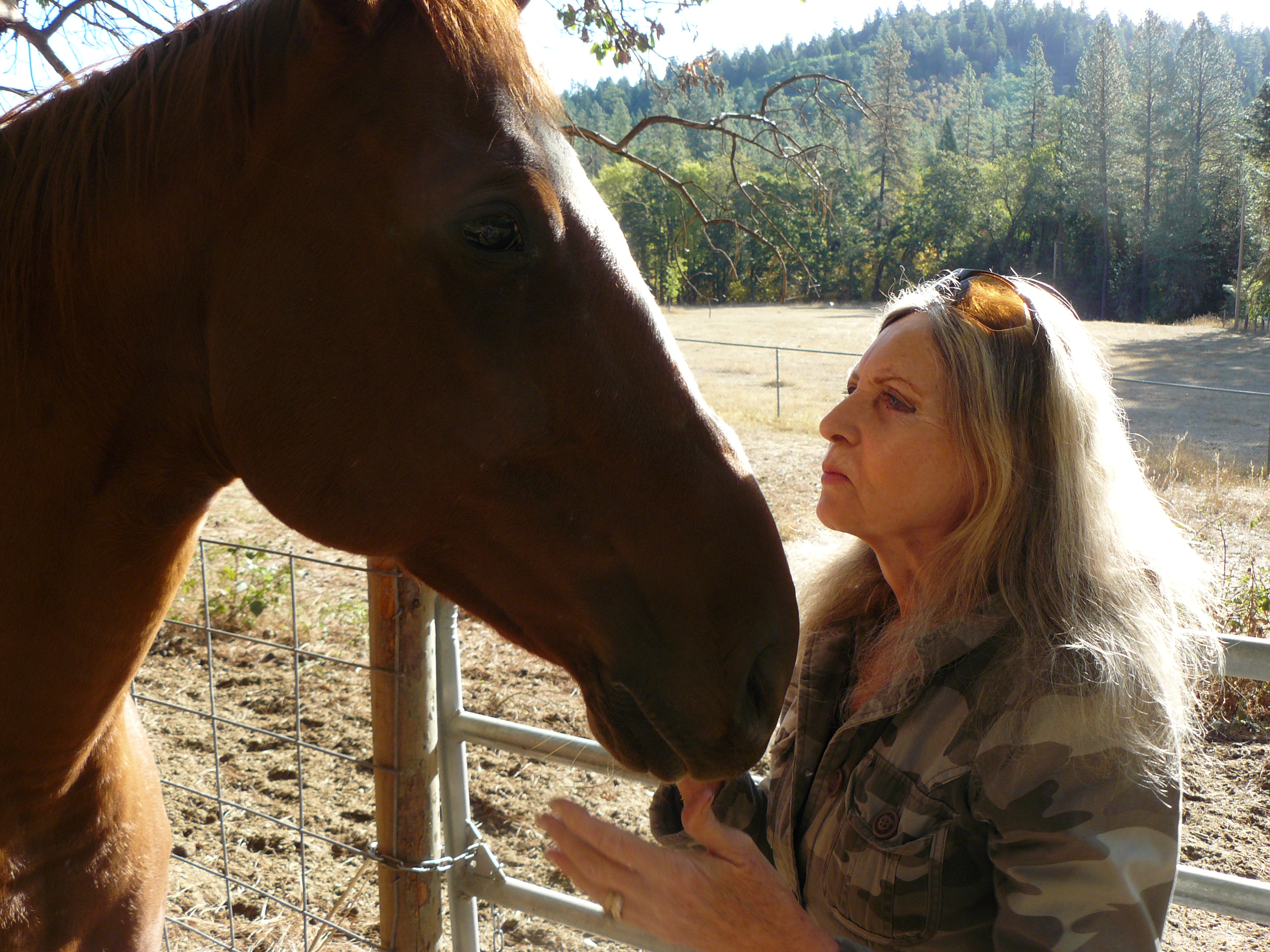






Sue, and everyone else, we returned from seeing Dr. Lee, the neurologist, a little under two hours ago. Dr. Lee’s prognosis is that Jean is showing the very early signs of Parkinson’s disease, and Jean is comfortable with me mentioning this.
Everyone’s love and affection has meant more than you can imagine. I will write more about this next week once we have given the situation a few ‘coatings of thought’.
Jean sends her love to you all!